A facile, one-pot and eco-friendly synthesis of gold/silver nanobimetallics smartened rGO for enhanced catalytic reduction of hexavalent chromium

Balakumar Vellaichamy and Prakash Periakaruppan*
Department of Chemistry, Thiagarajar College, Madurai-625 009, Tamil Nadu, India. E-mail: kmpprakash@gmail.com; Fax: +91 4522312375; Tel: +91 9842993931

Received 23rd April 2016 , Accepted 30th May 2016

First published on 1st June 2016


Abstract

A one-pot synthesis of rGO, AgNPs, rGO/AgNPs, AuNPs, rGO/AuNPs, Ag-AuNPs and rGO/Ag-AuNPs using Albizia saman leaf extract as a reducing and stabilizing agent is reported herein. The obtained nanomaterials were characterized by UV-Vis, FT-IR, XRD, TEM and EDX analyses, and were involved as innovative catalysts in the conversion of toxic Cr6+ to benign Cr3+, using formic acid as a reducing agent. The green synthesized rGO/Ag-AuNPs show superior catalytic activity, stability and reusability, due to the synergistic effect of rGO and Ag-AuNPs, compared to rGO, AgNPs, rGO/AgNPs, AuNPs, rGO/AuNPs and Ag-AuNPs. The kinetics, efficiency and mechanism of catalytic depollution process have been investigated and discussed. Hybrid materials of this kind are easy to prepare and can be used in the environmental remediation process.

Introduction

Deterioration of water quality due to the presence of toxic heavy metals in environmental water resources introduced by industrial pollution is a serious matter of concern today. High valent chromium (Cr6+) is considered as a priority pollutant because of its high toxicity to plants and animals. Chromium predominantly exists in two common oxidation states in aqueous systems, i.e., the trivalent (3+) and hexavalent (6+) states;1 however, these oxidation states are characterized markedly by different physical/chemical behaviors and toxicity. Cr6+ is commonly believed to be the third most abundant pollutant at hazardous waste sites, as well as the second most common inorganic contaminant, after lead.2 Moreover, Cr6+ exhibits high mobility in most neutral to alkaline soils, thus posing a great threat to surface water and groundwater.3 World Health Organization (WHO) and Bureau of Indian Standards (BIS) have strictly regulated that Cr6+ levels must be below 0.05 mg L−1 for drinking water, with no relaxation on the permissible limit.4 This natural and anthropogenic pollutant is produced in wastewaters by several industrial processes, including mining, leather tanning, cement industries, electroplating, wood preservation, photographic material, corrosive paints and production of pigment and steel.4–8 In India, there are a large number of tanneries scattered all over the country and nearly 80% of these tanneries are engaged in the chrome tanning processes. Most of them discharge untreated wastewater into the environment.9 As a result, effluents from these industries often contain elevated levels of Cr6+, which causes severe health problems including lung cancer, kidney, liver, gastric damage, skin irritation, pulmonary congestion, vomiting and ulceration.10–12 It is well known that Cr6+ enhances the risk of lung cancer via chronic inhalation.5 Therefore, it is necessary to scavenge Cr6+ ions from industrial effluents before their discharge into the environment, in order to prevent the deleterious impact of Cr6+ ions on the ecosystem and public health. Various methods have been employed to remove toxic metal ions from aqueous solutions. They include chemical precipitation,13 ion exchange,14 reverse osmosis,15 solvent extraction,16 reduction17 and adsorption.18 Most of these methods need high capital cost and recurring expenses, which are not suitable for small-scale industries. As one of the most promising techniques for Cr6+ removal from wastewaters, catalytic conversion is successful in efficiently removing Cr6+ compounds from the contaminated water via a reduction reaction.

Nanometals have received widespread recognition due to their unique applications in various fields, especially in catalysis. Bimetallic nanoparticles exhibit fascinating electronic, optical, magnetic and chemical or biological properties, due to new bifunctional or synergistic effects.19,20 The bimetallic nanoparticles involving two different metal elements in the form of core–shell, alloy or hetero-structures, demonstrate high catalytic properties, but they are undesirable for industrial and environmental applications because of a number of drawbacks, such as easy aggregation or precipitation, reduction in catalytic activities, difficulty in product separation and catalyst recycling. In order to improve these properties, consideration has been given to bimetallic nanoparticles comprising rGO.21 rGO is an excellent supporting material for the augmentation of the properties of bimetallic nanoparticles. Such nanomaterials have emerged as new star materials after the discovery of graphene, and have been explored extensively for various applications, because of their extraordinary mechanical strength,22 tunable optical properties,23 quantum Hall effect,24 high electron mobility,25 and fast heterogeneous electron transfer rate.26 Therefore, it is of great interest to prepare reduced graphene oxide (rGO) based bimetallic nanoparticles with excellent catalytic activity. rGO supported bimetallic nanoparticles not only improve the catalytic properties of the alloy, but also induce synergistic effects, due to their excellent conducting nature, high specific surface area, high carrier mobility and potentially low manufacturing cost.27 The incorporation of metal nanoparticles within GO sheets with high loading and uniform distribution can provide greater efficiency in carrying out catalytic processes.

The hybrid of metal nanoparticles and rGO can be synthesized by various methods. Although chemical synthesis has been widely adopted for the preparation of a variety of nano-materials, the cost effectiveness and the generation of organic substances that are hazardous to human health and the environment negatively affect the applications of NPs and also the dream of a green world.28 As such, there is a tremendous demand to replace the existing chemical methods with clean, non-toxic, eco-friendly and acceptable green chemistry.

Herein, we report the green chemistry approach to the synthesis of rGO, AgNPs, rGO/AgNPs, AuNPs, rGO/AuNPs, Ag-AuNPs and rGO/Ag-AuNPs. The green synthesized nanomaterials have been characterized by UV-visible spectroscopy, FT-IR spectroscopy, XRD, HR-TEM and EDX analysis, and have been used to depollute Cr6+ in the presence of formic acid as a reducing agent. The bimetallics smartened composite, rGO/Ag-AuNPs, displays high catalytic activity compared to the others. To the best of our knowledge, no work has been carried out on the catalytic depollution of toxic Cr6+ to benign Cr3+ using rGO/Ag-AuNPs.

Experimental section

Chemicals

Silver nitrate (AgNO3) and auric chloride (HAuCl4) were purchased from Sigma-Aldrich, India and used as received. The Albizia saman (AS) leaf was collected on Thiagarajar College campus, Madurai, India. Raw graphite with average diameter of about 20 μm was obtained from Sigma Aldrich. K2Cr2O7, NaNO3, KMnO4, H2SO4, HCl, H2O2 and formic acid (HCOOH) were purchased from Merck, India and used as received. All other chemicals were of analytical grade and used as received.

Preparation of Albizia saman Leaf Extract (ASLE)

The AS leaves were cut into small pieces and washed several times with deionized water to remove any unwanted dust and other contaminants. 20 mg of the cut AS leaves were placed in a 100 mL beaker and then 20 mL of deionized water were added. The leaves were boiled at 90 °C for 15 min and the extract was filtered thrice, using Whatmann filter paper no. 1, to get a clear solution. The filtered solution was pale yellow in colour and it was used as a reducing agent as well as a stabilizing agent in the synthesis of rGO, AgNPs, rGO/AgNPs, AuNPs, rGO/AuNPs, Ag-AuNPs and rGO/Ag-AuNPs. The filtrate solution was stored in the refrigerator at 4 °C for further use.

Green synthesis of MNPs

ASLE solution (5 mL) was mixed with 5 mL of 1 mM AgNO3 solution. The pale yellow colour of the ASLE solution became deeper brown in 90 min and no further noticeable difference in the colour of the aqueous silver colloid was observed, which indicates that the bio-reduction process was over in 90 min. The green synthesized AgNPs were collected by centrifugation and washed several times with deionized water. The dried AgNPs were lyophilised at ambient conditions. After lyophilisation, the AgNPs were stored in a screw-capped bottle for further study.

Green synthesis of AuNPs

ASLE (5 mL) was mixed with 5 mL of aqueous solution of 1 mM HAuCl4 at room temperature. The pale yellow coloured solution became deeper violet within 6 min; the bio-reduction process was over within 6 min. The synthesized AuNPs were collected by centrifugation and washed several times with deionized water. The dried AuNPs were lyophilised in ambient conditions. After lyophilisation, the AuNPs were stored in a screw cap bottle for further use.

Green synthesis of rGO and rGO/MNPs

GO was synthesized using graphite powder by the modified Hummers' method.29 1 mg of GO powder was dispersed in 5 mL of deionized water, which was subjected to ultrasonication for 30 min to give a stable transparent light brown suspension. 5 mL of ASLE solution was added to the above GO suspension, and the solution was mixed by ultrasonication for 30 min. The mixture was transferred into a Teflon-lined stainless steel autoclave and kept at 95 °C for 2 h. The resulting rGO suspension was filtered and washed to remove any excess amounts of organic contaminants. 0.5 mg rGO powder was dispersed in 5 mL of deionized water, which was ultrasonicated for 30 min to give a stable light brown suspension. 5 mL of ASLE and 5 mL of AgNO3/HAuCl4 (1 mM) were added to the rGO suspension. The resulting rGO/MNPs suspension was filtered and washed with deionized water.

Green synthesis of Ag-AuNPs

10 mL of ASLE was mixed with 5 mL each of aqueous solutions of 1 mM AgNO3 and HAuCl4. The pale yellow coloured solution became brownish violet within one hour, and no noticeable difference in the colour of aqueous silver–gold alloy colloids was observed. The synthesized Ag-AuNPs were collected by centrifugation and washed with deionized water. The dried Ag-AuNPs were lyophilised in ambient conditions. After lyophilisation, the Ag-AuNPs were stored in a screw cap bottle.

Green synthesis of rGO/Au-AgNPs

0.5 mg rGO powder was dispersed in 5 mL of deionized water, which was ultrasonicated for 30 min to give a stable light brown suspension. 10 mL of ASLE, 5 mL of AgNO3 (1 mM) and 5 mL of HAuCl4 (1 mM) were added to the rGO suspension. The pale yellow colour of the ASLE solution became dark in one hour, which indicated that the bio-reduction process of Au3+ to Au0 and Ag+ to Ag0 was over within an hour. The resulting rGO/Ag-AuNPs suspension was filtered and washed with water. The resulting black precipitate was dried or re-dispersed in water for further use. The formation and stabilization of nanomaterials using ASLE is shown in Scheme 1.
image file: c6ra10544k-s1.tif
Scheme 1 Formation and stabilization of nanomaterials using ASLE.

Catalytic activity of rGO, AgNPs, rGO/AgNPs, AuNPs, rGO/AuNPs, Ag-AuNPs and rGO/Au-AgNPs

In a typical experiment, 1.8 mL of Cr6+ (0.1 mM, aqueous solution) was mixed with 0.7 mL of HCOOH (0.01 M aqueous solution) in a quartz cell (3.0 mL). Then, 0.5 mg of rGO/Au-AgNPs catalyst was added to the mixture of Cr6+ and HCOOH solution. The colour and absorbance changes were monitored using a UV-visible spectrophotometer at different time intervals. After the reduction reaction was over, the mixture was centrifuged and washed with deionized water. The resulting rGO/Au-AgNPs catalyst was reused in the next reaction. The other rGO, AgNPs, rGO/AgNPs, AuNPs, rGO/AuNPs and Ag-AuNPs were also checked for their catalytic activity, adopting the same procedure.

Instrumental characterization

UV-Vis spectra were obtained using a Jasco (V-560) model double beam spectrophotometer with 3 mL quartz cell at room temperature. The functional group identification and composition were determined using a JASCO FT-IR 460 Plus spectrophotometer in the range of 4000 to 400 cm−1. The XRD patterns were measured in an X-ray diffraction unit, with Cu Kα radiation (λ = 1.5418 Å) on a JEOL JDX 8030 X-ray diffractometer. Transmission electron microscopy (TEM, JEOL JEM 2100 model instrument), with an energy dispersive X-ray (EDX) spectrometer attached to the transmission electron microscope was used to determine the size, shape, morphology and elemental analysis of the nanomaterials.

Results and discussion

UV-Vis spectroscopy is commonly employed for confirming the formation of metal nanoparticles (MNPs) because the MNPs exhibit strong absorption bands due to surface plasmon resonance (SPR) in the visible region. The two absorption maxima at 254 and 304 nm (Fig. S1a) correspond to proteins and phenolic glycosides present in the ASLE, respectively, which are largely responsible for the rapid reduction of M+ to M0.30 Fig. S1b shows the UV-visible spectra of GO and rGO. The peaks appearing at 217 and 273 nm (curve a) may be attributed to the π–π* transition and n–π* transition of GO respectively. After green reduction, the red shift of the peak from 217 nm to 303 nm and the disappearance of the peak at 273 nm (curve b), indicate that the electronic conjugation within the rGO is revived upon reduction of GO.31 After the addition of AgNO3 to the leaf extract, the colour changed from pale yellow to the dark brown colour of Ag-NPs, due to the excitation of SPR vibrations with absorbance maxima at 436 nm recorded at different time intervals (10, 20, 30, 40, 50, 60, 70, 80 and 90 min), as shown in Fig. S1c. The formation of AuNPs was confirmed by the colour change from pale yellow to a dark violet colour with absorbance maxima at 521 nm recorded at different time intervals (1, 2, 3, 4, 5 and 6 min), as shown in Fig. S1d. The absorption peaks appearing at 447 and 324 nm (Fig. 1a) confirm the formation of rGO/Ag-NPs, and peaks appearing at 510 and 350 nm (Fig. 1b) confirm the formation of rGO/Au-NPs.
image file: c6ra10544k-f1.tif
Fig. 1 UV-Visible spectra of (a) rGO/AgNPs, (b) rGO/AuNPs, (c) Ag-AuNPs and (d) rGO/Ag-AuNPs.

UV-Vis spectroscopy is a convenient method to distinguish between NPs with bimetallic nanoparticles. Mixed NPs have one or two absorption peaks whose positions are between the peaks of the pure NPs, or NPs with separated core and shell metal clusters.32 Fig. 1c shows the brownish violet coloured Ag-AuNPs with absorbance maxima appearing at 427 and 513 nm, and the absorbance peaks appearing at 343, 437 and 515 nm (Fig. 1d) correspond to the formation of rGO/Ag-AuNPs.

FT-IR spectroscopy was used for the identification of functional groups responsible for the reduction and stabilization of the nanomaterials. The FT-IR spectra of the AS leaf powder before and after bio-reduction of rGO, AgNPs, rGO/AgNPs, AuNPs, rGO/AuNPs, Ag-AuNPs and rGO/Ag-AuNPs (Fig. 2) show significant changes in the peak position and intensity. In Fig. 2A (curve a), the FT-IR spectrum of the AS leaf shows a peak in the range of 600 cm−1, attributed to the alkyl halides, the carbon–chlorine bond in particular. The peak appearing at 1075 cm−1 can be assigned to the stretching vibration of the C–OH bond of proteins in the plant extract.


image file: c6ra10544k-f2.tif
Fig. 2 (A) FT-IR spectra of ASLE (curve a), AgNPs (curve b) and AuNPs (curve c). (B) FT-IR spectra of GO (curve a) and rGO (curve b). (C) FT-IR spectra of rGO/AgNPs (curve a) and rGO/AuNPs (curve b). (D) FT-IR spectra of Ag-AuNPs (curve a) and rGO/Ag-AuNPs (curve b).

The distinct peaks appearing at 1227 and 1346 cm−1 are attributed to the presence of stretching vibrations of alcohols, ethers, esters, carboxylic acids and amino groups. The sharp and clear peak that appears at 1642 cm−1 is as a result of the C[double bond, length as m-dash]O stretching vibrations of the carbonyl and carboxyl groups of amide I in the AS leaf protein molecules. The two distinct peaks at 2925 and 2850 cm−1 are characteristic of the stretching vibrations of methyl groups or the C[double bond, length as m-dash]H stretching vibrations of aldehydic amine groups. The sharp and intense peak at 3409 cm−1 is due to the –NH stretching vibrations of the secondary amines and –OH stretching vibration of the hydroxyl functional groups of the polyphenols and alcohols.30,33,34 After the bio-reduction process, all these peaks were weakened and some disappeared, which indicates that these functional groups are responsible for the bio-reduction of the nanomaterials. Fig. 2B shows the FT-IR spectra of GO and rGO. The characteristic peaks of GO at 3430, 1717, 1395, 1233, and 1064 cm−1 are attributed to O–H stretching, C[double bond, length as m-dash]O stretching of COOH, O–H deformation, C–OH stretching and C–O stretching, respectively. After reduction, the C[double bond, length as m-dash]O stretching band disappeared and the peaks of other oxygenic functional groups in relation to GO, strongly decreased. In the FT-IR spectrum of rGO, the peaks at 3267, 3058, 1650, and 1544 cm−1 are assigned to N–H stretching, C–H stretching in aromatic rings, amide I, and amide II respectively.35,36

Other evidence for the formation of rGO/AgNPs and rGO/AuNPs can be had from Fig. 2C. In addition, the FT-IR spectra of Ag-AuNPs and rGO/Ag-AuNPs are shown in Fig. 2D. On close observation of the FT-IR data, it can be inferred that the plant extract contains phyto constituents, and functional groups, such as alcohol or phenol, amine, amide(I) and (II), aldehydes and methylene groups, are responsible for the formation of rGO, AgNPs, rGO/AgNPs, AuNPs, rGO/AuNPs, Ag-AuNPs and rGO/Ag-AuNPs.

The crystallinity of rGO, AgNPs, rGO/AgNPs, AuNPs, rGO/AuNPs, Ag-AuNPs and rGO/Ag-AuNPs were confirmed by XRD analysis as shown in Fig. 3. After the green reduction of GO, the intensity of the typical diffraction peak decreased and the position of the peak shifted to a higher angle, associated with the plane at 2θ = 26.36°, which is ascribed to the reduction of GO and restacking into the ordered crystalline nature of rGO, as shown in Fig. 3A (curve a).35,37 The intensities of the diffraction peaks at 2θ values of 38.42°, 44.20°, 64.63° and 77.32° are attributed to the (1 1 1), (2 0 0), (2 2 0) and (3 1 1) crystallographic planes of the face centered cubic (fcc) structure of AgNPs, respectively, as shown in Fig. 3A (curve b). This is consistent with the Joint Committee on Powder Diffraction Standards (JCPDS) data [no. 04-0783]. Also, for rGO/AgNPs, an additional peak was observed at 2θ = 26.23°, corresponding to rGO, shown in curve c of Fig. 3. The rGO/AgNPs diffraction peak is weaker than that of rGO, which indicates that GO is further converted into the crystalline rGO/AgNPs. Additionally, the (1 1 1), (2 0 0), (2 2 0) and (3 1 1) planes of metallic gold were confirmed by XRD (JCPDS data [no. 04-0784]), as shown in Fig. 3B (curve b). The diffraction peaks of rGO/AuNPs can be indexed to the characteristic diffractions of (1 1 1), (2 0 0), (2 2 0) and (3 1 1) of Au, and one new peak at 2θ = 26.23° corresponds to rGO, as shown in Fig. 3B (curve c).


image file: c6ra10544k-f3.tif
Fig. 3 (A) XRD patterns of rGO (curve a), AgNPs (curve b) and rGO/AgNPs (curve c). (B) XRD patterns of rGO (curve a), AuNPs (curve b) and rGO/AuNPs (curve c). (C) XRD patterns of rGO (curve a), Ag-AuNPs (curve b) and rGO/Ag-AuNPs (curve c).

Fig. 3C shows the XRD patterns of Ag–Au and rGO/Ag-AuNPs. The representative sharp diffraction peaks appearing at 2θ = 38.42°, 44.20°, 64.63° and 77.32° are well assigned to the (1 1 1), (2 0 0), (2 2 0), and (3 1 1) planes of the face-centered cubic Ag-AuNPs, as shown in Fig. 3C (curve b). Moreover, these diffraction peaks located between pure Ag (JCPDS-04-0783) and Au (JCPDS-04-0784), strongly show the formation of alloyed Ag-AuNPs. The rGO/Ag-AuNPs accompanied by the emergence of a new peak at 2θ = 26.36°, indicate the formation of rGO (Fig. 3C (curve c)) under the green reduction route.

The surface morphology, size and shape of the rGO, AgNPs, rGO/AgNPs, AuNPs, rGO/AuNPs, Ag-AuNPs and rGO/Ag-AuNPs nanomaterials were characterized by HR-TEM images. These materials were dispersed in water by sonication, followed by coating on the carbon coated copper grid. Fig. S2 shows the layer-like structure of rGO. Fig. 4a clearly shows the HR-TEM image of spherical AgNPs, which are almost monodisperse, with an average particle size of 12–15 nm. These results are further confirmed by the particle size distribution histogram, which shows the uniform and spherical AgNPs decorated on the layered structure of rGO, and the average particle size of the decorated AgNPs was measured as 15 nm, in Fig. 4b and c. Fig. 4d indicates that the AuNPs possess unagglomerated spherical shapes with an average size of 3 nm and the particle size distribution histogram also supports the results as shown in Fig. 4e. Fig. 4f shows the average 3 nm sized spherical AuNPs decorated on the layered structure of rGO and some of them are agglomerated. The results indicate that AuNPs have stronger interaction with the layered structure of rGO, which is confirmed by the formation of rGO/AuNPs.38 Fig. 5 shows the bimetallic Ag-AuNPs and bimetallic Ag-AuNPs decorated rGO layers.


image file: c6ra10544k-f4.tif
Fig. 4 (a) HR-TEM image of AgNPs, (b) histogram showing the particle size distribution of AgNPs, (c) HR-TEM image of rGO/AgNPs, (d) HR-TEM image of AuNPs, (e) a histogram showing the particle size distribution of AuNPs and (f) HR-TEM image of rGO/AuNPs.

image file: c6ra10544k-f5.tif
Fig. 5 (a) HR-TEM image of Ag-AuNPs, (b) HR-TEM image of rGO/Ag-AuNPs and (c) a histogram showing the particle size distribution of Ag-AuNPs.

The spherically shaped bimetallic Ag-AuNPs are shown in Fig. 5a. Fig. 5b shows the image of the bimetallic Ag-AuNPs decorated on the rGO, where some Ag-AuNPs are agglomerated, suggesting that Ag-AuNPs have stronger interactions with rGO. The average particle size of bimetallic Ag-AuNPs was found to be 4 nm, which was also confirmed by histogram, as shown in Fig. 5c.

Furthermore the EDX spectral analysis confirms the existence of AgNPs, rGO/AgNPs, AuNPs, rGO/AuNPs, Ag-AuNPs and rGO/Ag-AuNPs. The EDX spectrum in Fig. S3a shows the presence of Ag, and Fig. S3b shows the strong signals of Ag, C and O atoms present in rGO/Ag. Fig. S3c shows the EDX of Au-NPs, and Fig. S3d confirms the existence of Au, C and O in rGO/AuNPs. Fig. S3e illustrates the existence of bimetallic Ag-AuNPs. Finally, the EDX spectrum of the rGO/Ag-AuNPs composite (Fig. S3f) confirms the presence of Ag, Au, C and O.

Catalyst loading

To assess the amount of rGO/Ag-AuNPs required, experiments were performed using varied catalyst levels in the range of 0.1 to 0.7 mg mL−1. By increasing the rGO/Ag-AuNPs loading, the catalytic reduction rate increased from 87.46 to 99.2% and then it leveled off (Fig. S4a). Kinetic rates increased initially and then no further increase was observed, despite an increase in the rGO/Ag-AuNPs catalyst content. This result establishes that just 0.5 mg mL−1 is enough for the depollution of Cr6+.

Influence of the concentration of Cr6+

Further experiments were carried out to evaluate the catalytic ability of rGO/Ag-AuNPs to reduce Cr6+ solutions at various initial concentrations. Results show that the constant rGO/Ag-AuNPs (0.5 mg mL−1) can be used to reduce Cr6+ solutions in the concentration range of 0.1 to 0.7 mM. As the initial concentration of Cr6+ increases, the reduction time also increases, as shown in Fig. S4b.

Catalytic reduction of Cr6+

The catalytic reduction of Cr6+ to Cr3+ was investigated using a UV-Vis spectrophotometer, by observing the changes in the absorbance intensity of the reaction mixture between 250 and 500 nm. The catalytic ability of rGO, AgNPs, rGO/AgNPs, AuNPs, rGO/AuNPs, Ag-AuNPs and rGO/Ag-AuNPs for the depollution of higher oxidation state chromium to lower oxidation state chromium using formic acid as a reducing agent was studied. It is proposed that both Cr6+ and hydrogen (from formic acid) adsorb on the surface of the rGO/Ag-AuNPs which leads to the reduction of toxic Cr6+ to benign Cr3+ through hydrogen transfer. In the absence of a green catalyst, the Cr6+ absorption peak at 350 nm remains unaltered with time, indicating that the reduction reaction does not proceed and the colour of the solution stays yellow, which indicate that the reaction to transform Cr6+ to Cr3+ does not occur with formic acid only. With the addition of rGO, AgNPs, rGO/AgNPs, AuNPs, rGO/AuNPs and Ag-AuNPs, the reduction reaction is initiated by the decolourization of the Cr6+ solution, which takes place in seconds as shown in Fig. 6(a–f). On the other hand, in the presence of the rGO/Ag-AuNPs catalyst, the intensity of the characteristic absorption peak at 350 nm for Cr6+, which is due to the ligand (oxygen) to metal (Cr) charge transfer transitions39 decreases as a function of time (Fig. 7a), with the colour change from yellow to colourless (Fig. 8). These results confirm the complete reduction of Cr6+ to Cr3+ at room temperature. The reduction reaction is considered complete when the absorption peak at 350 nm disappears.
image file: c6ra10544k-f6.tif
Fig. 6 (a) Cr6+ reduction in the presence of HCOOH and rGO, (b) HCOOH and AgNPs, (c) HCOOH and rGO/AgNPs, (d) HCOOH and AuNPs, (e) HCOOH and rGO/AuNPs and (f) HCOOH and Ag-AuNPs.

image file: c6ra10544k-f7.tif
Fig. 7 (a) UV-Vis spectra of Cr6+ reduction in the presence of HCOOH and rGO/Ag-AuNPs; (b) plot of absorbance intensity vs. time; (c) plot of the reduction% vs. time; (d) plot of ln(Ct/C0) against the reaction time for reduction kinetics of Cr6+ in the presence of rGO/Ag-AuNPs.

image file: c6ra10544k-f8.tif
Fig. 8 Image of Cr6+ reduction in the presence of HCOOH and rGO/Ag-AuNPs at different time intervals.

Fig. 7b & c illustrate the absorbance intensities and reduction percentages vs. time plots, towards the depollution of Cr6+ to Cr3+ using the green catalyst, rGO/Ag-AuNPs.

The reaction kinetics can be described as −ln(Ct/C0) = kt, where k is the rate constant at a given temperature and t is the reaction time. C0 and Ct are the initial Cr6+ concentration and concentration at time t, respectively. The results show a very good linear relationship, and a good linear correlation of ln(Ct/C0) vs. reaction time t up to 99% was obtained (Fig. 7c). The kinetic rate constant k was calculated from the slope of the linear section of the plot, and is given in Fig. 7d. The value of the rate constant (k) was calculated to be 2.5793 × 10⁻² s−1.

Based on these results, the order of catalytic activity of nanomaterials is given as rGO < AgNPs < rGO/AgNPs < AuNPs < rGO/AuNPs < Ag-AuNPs < rGO/Ag-AuNPs.

To further evaluate the catalytic performance of the catalyst, the turnover frequency (TOF), defined as the number of moles of Cr6+ reduced per mole of the catalyst active sites per minute, in units of mol mol−1 min−1, was determined based on eqn (1):40

 
TOF = n(Cr6+)/n(CAS) × t (1)
where n(Cr6+) is the number of moles of Cr6+ (mol) reduced, n(CAS) is the number of moles of the catalyst active sites (mol) and t is the reaction time (min). The calculated TOF of Ag-Au/rGO was found to be 186.2 mol mol−1 min−1, which suggests that Ag–Au/rGO has superior catalytic activity.

A detailed comparison was made of the catalytic activity of various nanomaterials for the catalytic reduction of Cr6+, and is given in Table 1. It can be observed that the synthesized Ag–Au/rGO performs better than any other nanomaterials reported elsewhere for the catalytic reduction of Cr6+. Furthermore, the important characteristics of reusability and recyclability are crucial issues for a catalyst to be used for practical applications, especially for costly, rare and noble metals. After the complete reaction cycle, the catalyst was isolated by suction filtration using Whatmann filter paper, then washed with excess double distilled water and dried.

Table 1 Comparison of the catalytic activity of various nanomaterials for the catalytic reduction of Cr6+
Materials Size (nm) Catalyst weight (mg mL−1) Time (min) Efficiency (%) Rate constant (k) References
PdNPs 2–20 0.042 20 99.8 41
Pd@SiO2–NH2 2.5–5.2 15.00 2.5 >85 0.094–0.363 min−1 42
Ni@graphene–Cu 10 15 0.344 min−1 43
PdNPs/PAA 3–20 3.00 15 99.6 44
PdNPs/S 2.7–6.3 0.8 8 hour 99.8 45
M@MIL-101 1–3 60 46
Pd NPs/PEI/PVA 800 2.3 12 99.7 47
Pd tetrapod 2–10 2.0 5 0.571 min−1 48
Pd–γ-Al2O3 4.1 40 0.085 min−1 49
Pd-NWWs 1–3.5 2.0 15   0.282 min−1 40
Ag–Au/rGO 1–10 5.0 3.5 99.6 2.57 × 10⁻² s−1 Present work


The dried catalyst was then used for the next cycle of catalytic reaction with fresh substrates. The catalyst shows high activity for the depollution, even after fifteen cycles (Fig. 9). The stability of the rGO/Ag-AuNPs is very important for their use as a highly efficient catalyst. After 15 catalytic reaction cycles, the functional groups and the crystallinity of the rGO/Ag-AuNPs were checked and characterized by FT-IR, XRD and HR-TEM analysis. The rGO/Ag-AuNPs display similar FT-IR, XRD and HR-TEM results before and after use as a catalyst, as shown in Fig. 10.


image file: c6ra10544k-f9.tif
Fig. 9 Plot of Cr6+ reduction% vs. number of cycles.

image file: c6ra10544k-f10.tif
Fig. 10 (A) FT-IR spectra of rGO/Ag-AuNPs – pre catalysis (curve a) and post catalysis (curve b). (B) XRD patterns of rGO/Ag-AuNPs – pre catalysis (curve a) and post catalysis (curve b). (C) HR-TEM image of rGO/Ag-AuNPs post catalysis.

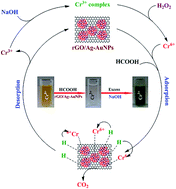
All of these characterization data indicate that the rGO/Ag-AuNPs are very stable and there is no structural change in the catalyst, even after undergoing multiple catalytic reaction cycles. The mechanism for the depollution of toxic Cr6+ to benign Cr3+ by using HCOOH as a reducing agent in the presence of rGO/Ag-AuNPs is demonstrated in Scheme 2. The finding thus demonstrates that the bimetallic smartened rGO composite precisely depollutes the toxic contaminant to benign Cr3+.


image file: c6ra10544k-s2.tif
Scheme 2 The mechanism for the depollution of toxic Cr6+ to benign Cr3+.

The formation of Cr3+ as a reduction product was confirmed by adding an excess of NaOH solution; the colour of the solution changed from colourless to green, indicating the formation of the trivalent hexahydroxo chromate solution.44 Further confirmation was done by warming the resulting solution with hydrogen peroxide solution (oxidation), which produced a bright yellow solution containing Cr6+ ions, as shown in Scheme 2.

Conclusions

In summary, using a green method, we have synthesized rGO, AgNPs, rGO/AgNPs, AuNPs, rGO/AuNPs, Ag-AuNPs and rGO/Ag-AuNPs, for the highly efficient catalytic depollution of toxic Cr6+ to benign Cr3+, employing formic acid as a reducing agent. The green-synthesized, bimetallics smartened composite, rGO/Ag-AuNPs, shows superior catalytic activity, stability and reusability for virtually fifteen cycles, and retains about 98% of its reduction efficiency. The synergistic effect of rGO/Ag-AuNPs displays high catalytic activity, compared to rGO, AgNPs, rGO/AgNPs, AuNPs, rGO/AuNPs, Ag-AuNPs and rGO/Ag-AuNPs. These findings provide a novel approach to fabricating highly efficient bimetallics smartened rGO, with great potential for the catalytic depollution of Cr6+ from industrial effluents and other water sources.

References

  1. R. J. Kieber and G. R. Helz, Environ. Sci. Technol., 1992, 26, 307–312 CrossRef CAS.
  2. D. W. Elliott and W. Zhang, Environ. Sci. Technol., 2001, 35, 4922–4926 CrossRef CAS PubMed.
  3. W. H. O., Guidelines for Drinking-water Quality, WHO Press, Geneva, 4th edn, 2011 Search PubMed.
  4. L. Khezami and R. Capart, J. Hazard. Mater., 2005, 123, 223–231 CrossRef CAS PubMed.
  5. A. Dandapat, D. Jana and G. De, Appl. Catal., A, 2011, 396, 34–39 CrossRef CAS.
  6. J. Kotas and Z. Stasicka, Environ. Pollut., 2000, 107, 263–283 CrossRef CAS PubMed.
  7. F. Qin, R. Wang, G. Li, F. Tian, H. Zhao and R. Chen, Catal. Commun., 2013, 42, 14–19 CrossRef CAS.
  8. M. F. Bergamini, D. P. dos Santos and M. V. B. Zanoni, Sens. Actuators, B, 2007, 123, 902–908 CrossRef CAS.
  9. R. Dubey, J. Bajpai and A. K. Bajpai, Journal of Water Process Engineering, 2015, 5, 83–94 CrossRef.
  10. M. Costa, Toxicol. Appl. Pharmacol., 2003, 188, 1–5 CrossRef CAS PubMed.
  11. I. Ali, Chem. Rev., 2012, 112, 5073–5091 CrossRef CAS PubMed.
  12. K. Kaya, E. Pehlivan, C. Schmidt and M. Bahadir, Food Chem., 2014, 158, 112–117 CrossRef CAS PubMed.
  13. J. C. Seaman, P. M. Bertsch and L. Schwallie, Environ. Sci. Technol., 1999, 33, 938–944 CrossRef CAS.
  14. J. M. Zachara, D. C. Girvin, R. L. Schmidt and R. C. Thomas, Environ. Sci. Technol., 1987, 21, 589–594 CrossRef CAS PubMed.
  15. K. Chon, S. J. Kim, J. Moon and J. Cho, Water Res., 2012, 46, 1803–1816 CrossRef CAS PubMed.
  16. F. J. Alguacil, M. Alonso, F. l. A. Lopez, A. Lopez-Delgado and I. Padilla, Environ. Sci. Technol., 2009, 43, 7718–7722 CrossRef CAS PubMed.
  17. Y. C. Zhang, J. Li, M. Zhang and D. D. Dionysiou, Environ. Sci. Technol., 2011, 45, 9324–9331 CrossRef CAS PubMed.
  18. H. P. Cong, X. C. Ren, P. Wang and S. H. Yu, ACS Nano, 2012, 6, 2693–2703 CrossRef CAS PubMed.
  19. A. Corma, H. Garcia and F. X. L. Xamena, Chem. Rev., 2010, 110, 4606–4655 CrossRef CAS PubMed.
  20. D. V. Talapin, J. Lee, M. V. Kovalenko and E. V. Shevchenko, Chem. Rev., 2010, 110, 389–458 CrossRef CAS PubMed.
  21. Y. Zhu, D. K. James and J. M. Tour, Adv. Mater., 2012, 24, 4924–4955 CrossRef CAS PubMed.
  22. J. S. Bunch, A. M. Van der Zande, S. S. Verbridge, I. W. Frank, D. M. Tanenbaum, J. M. Parpia, H. G. Craighead and P. L. McEuen, Science, 2007, 315, 490–493 CrossRef CAS PubMed.
  23. Y. Shi, W. Fang, K. Zhang, W. Zhang and L. Li, Small, 2009, 5, 2005–2011 CrossRef CAS PubMed.
  24. K. S. Novoselov, A. K. Geim, S. V. Morozov, D. Jiang, Y. Zhang, S. V. Dubonos, I. V. Grigorieva and A. A. Firsov, Science, 2004, 306, 666–669 CrossRef CAS PubMed.
  25. K. I. Bolotin, K. J. Sikes, Z. Jiang, M. Klima, G. Fudenberg, J. Hone, P. Kim and H. L. Stormer, Solid State Commun., 2008, 146, 351–355 CrossRef CAS.
  26. D. K. Kampouris and C. E. Banks, Chem. Commun., 2010, 46, 8986–8988 RSC.
  27. D. Wang and Y. Li, Adv. Mater., 2011, 23, 1044–1060 CrossRef CAS PubMed.
  28. A. J. Dahl, L. Bettye, S. Maddux and E. J. Hutchison, Chem. Rev., 2007, 107, 2228–2269 CrossRef PubMed.
  29. W. S. Hummers and R. E. Offeman, J. Am. Chem. Soc., 1958, 80, 1339–1939 CrossRef CAS.
  30. S. Li, Y. Shen, A. Xie, X. Yu, L. Qiu, L. Zhang and Q. Zhang, Green Chem., 2007, 9, 852–858 RSC.
  31. S. T. Sun and P. Y. Wu, Phys. Chem. Chem. Phys., 2011, 13, 21116–21120 RSC.
  32. M. X. Zhang, R. Cui, J. Y. Zhao, Z. L. Zhang and D. W. Pang, J. Mater. Chem., 2011, 21, 17080–17082 RSC.
  33. R. Emmanuel, K. Chelladurai, S.-M. Chen, P. Selvakumar, S. Padmavathy and P. Prakash, J. Hazard. Mater., 2014, 279, 117–124 CrossRef CAS PubMed.
  34. N. Bouropoulos, S. Weiner and L. Addadi, Chem.–Eur. J., 2001, 7, 1881–1888 CrossRef CAS.
  35. S. Xu, L. Yong and P. Wu, ACS Appl. Mater. Interfaces, 2013, 5, 654–662 CAS.
  36. L. Gao, W. Yue, S. Tao and L. Fan, Langmuir, 2013, 29, 957–1964 CrossRef CAS PubMed.
  37. Y. Li, W. Gao, L. Ci, C. M. Wang and P. M. Ajayan, Carbon, 2010, 48, 1124–1130 CrossRef CAS.
  38. J. Liu, H. Zhou, Q. Wang, F. Zeng and Y. Kuang, J. Mater. Sci., 2012, 47, 2188–2194 CrossRef CAS.
  39. J. B. Chlistunoff and K. P. Johnston, J. Phys. Chem. B, 1998, 102, 3993–4003 CrossRef CAS.
  40. L.-L. Wei, R. Gu and J.-M. Lee, Appl. Catal., B, 2015, 176, 325–330 CrossRef.
  41. M. A. Omole, I. O. K'Owino and O. A. Sadik, Appl. Catal., B, 2007, 76, 158–167 CrossRef CAS.
  42. M. Celebi, M. Yurderi, A. Bulut, M. Kaya and M. Zahmakiran, Appl. Catal., B, 2016, 180, 53–64 CrossRef CAS.
  43. L. Liu, J. Xue, X. Shan, G. He, X. Wang and H. Chen, Catal. Commun., 2016, 75, 13–17 CrossRef CAS.
  44. M. A. Omole, V. A. Okello, V. Lee, L. Zhou and O. A. Sadik, ACS Catal., 2011, 1, 139–146 CrossRef CAS.
  45. I. O. K'Owino, M. A. Omole and O. A. Sadik, J. Environ. Monit., 2007, 9, 657–665 RSC.
  46. M. Yadav and Q. Xu, Chem. Commun., 2013, 49, 3327–3329 RSC.
  47. Y. Huang, H. Ma, S. Wang, M. Shen, R. Guo, X. Cao, M. Zhu and X. Shi, ACS Appl. Mater. Interfaces, 2012, 4, 3054–3061 CAS.
  48. G.-T. Fu, X. Jiang, R. Wu, S.-H. Wei, D.-M. Sun, Y.-W. Tang, T.-H. Lu and Y. Chen, ACS Appl. Mater. Interfaces, 2014, 6, 22790–22795 CAS.
  49. A. Dandapat, D. Jana and G. De, Appl. Catal., A, 2011, 396, 34–39 CrossRef CAS.

Footnote

Electronic supplementary information (ESI) available: UV-visible spectra of leaf extract, GO, rGO, AgNPs and AuNPs as a function of time. HR-TEM image of rGO. EDX spectra of AgNPs, rGO/AgNPs, AuNPs, rGO/AuNPs, Ag-AuNPs and rGO/Ag-AuNPs. Influence of rGO/Ag-AuNPs loading on Cr6+ reduction and the influence of the concentration of Cr6+. See DOI: 10.1039/c6ra10544k

This journal is © The Royal Society of Chemistry 2016
Click here to see how this site uses Cookies. View our privacy policy here.