Effect of water vapor on sulfur poisoning of MnOx–CeO2/Al2O3 catalyst for diesel soot oxidation

Yuxi Gaoa, Xiaodong Wu*a, Shuang Liub, Duan Weng*a and Rui rana
aKey Laboratory of Advanced Materials of Ministry of Education, School of Materials Science and Engineering, Tsinghua University, Beijing 100084, China. E-mail: wuxiaodong@tsinghua.edu.cn; duanweng@tsinghua.edu.cn
bInstitute of Materials Science and Engineering, Ocean University of China, Qingdao 266100, China

Received 10th April 2016 , Accepted 4th June 2016

First published on 7th June 2016


Abstract

MnOx–CeO2 mixed oxide supported on γ-Al2O3 was sulfated in dry and wet atmospheres to explore the effect of water during sulfur poisoning. The fresh and poisoned catalysts were characterized by Brunauer–Emmett–Teller (BET), thermo-gravimetric analysis (TGA), NH3 temperature-programmed desorption (NH3-TPD), infrared spectroscopy (IR), H2 temperature-programmed reduction (H2-TPR), NO temperature-programmed oxidation (NO-TPO) and soot temperature-programmed oxidation (soot-TPO). The results show that water hinders sulfate deposition on the catalyst. The wet sulfated catalyst with abundant surface hydroxyl groups has higher surface acidity than the dry sulfated one. Although the presence of water does not prevent the deprivation of redox properties, the generated surface acid sites may promote the NO2 utilization efficiency and deep oxidation of soot by O2, resulting in less deactivation of the wet sulfated catalyst.

1. Introduction

Soot is an undesirable byproduct in the exhausts of diesel engines.1,2 Several techniques have been applied in the elimination of soot particulates. Trapping on diesel particulate filters (DPFs) followed by catalytic oxidation is one of the efficient routes to soot elimination.3,4 Platinum is an important ingredient of commercial soot oxidation catalysts. But the high cost limits the application of platinum catalysts. The applications of ceria based mixed oxide catalysts for soot oxidation, such as Co–Ce,5 Mn–Ce,6 Cu–Ce7 and Sm–Ce,8 have been well reported in recent articles. Our previous studies show that MnOx–CeO2/Al2O3 is an alternative promising candidate to commercial soot oxidation catalysts.9,10 It shows high soot oxidation activity in both O2 and NO + O2 due to the superior redox properties and high NO oxidation ability with the synergetic effect between MnOx and CeO2. Besides, the alumina supported MnOx–CeO2 catalyst shows a higher thermal stability than the unsupported mixed oxides because of the diffusion barrier effect of Al2O3.9–11 However, the poor tolerance to sulfur dioxide may retard its application. Although sulfur poisoning is no longer a major threat to soot oxidation catalysts as the sulfur component in diesel is being limited more and more strictly, some undeveloped zones are still lacking access to low sulfur diesel fuels.12 Thus, the sulfur poisoning performance and mechanism of the mixed oxides catalyst are still worth studying.

As water vapor is one of the major components of exhaust gas (≈10%) from diesel engines,13 the catalyst tolerance to sulfur poisoning under wet atmosphere have been widely evaluated. A few of studies has focused on SO2 and H2O in reactant gas. Oi-Uchisawa et al. studied the effect of NO, H2O and SO2 during the soot oxidation catalyzed by Pt/SiO2 and draw the conclusion that SO3 (or H2SO4) produced from SO2 has a role as a catalyst that accelerates the carbon oxidation by NO2 in the presence of H2O, and H2O is indispensable for this promoted oxidation process, possibly as a reactant for the hydrolysis of partially oxidized species.14 Hernández-Giménez et al. provided a descriptive discussion of CO2, H2O and SO2 effect on CeZr and CeZrNd catalysts during reaction and paid special attention to the soot combustion mechanism. They concluded that the inhibiting effect follows the order of SO2 > H2O > CO2.15 However, the corresponding structural variations of the catalysts were not taken into account. On the other hand, some literatures studied the effects of water and sulfur dioxide treatment on catalyst separately but the synergistic effect was not considered. For example, Peralta et al. studied water and sulfur dioxide on Ba,K/CeO2 respectively, but did not involve the effect of water vapor and SO2 pumped in together.16 Tikhomirov et al. studied wet sulfated MnOx–CeO2 mixed oxides but the water effect on sulfur poisoning was not analyzed.17

In our previous studies, severe sulfur poisoning under dry condition was observed for MnOx–CeO2/Al2O3 catalyst, although the activity could be partially recovered after regeneration in oxidative or reducing atmosphere.18–20 In this study, the mixed oxides catalyst was sulfated in dry and wet atmospheres, respectively. The amounts and types of the deposited sulfates were analyzed and the soot oxidation activities of the catalysts were measured. Water effect on sulfur poisoning were explored based on the catalyst redox property and surface acidity.

2. Experimental

2.1. Catalyst preparation

MnOx–CeO2/Al2O3 mixed oxides were prepared with a sol–gel method which was reported previously,20 with a Mn[thin space (1/6-em)]:[thin space (1/6-em)]Ce molar ratio of 15[thin space (1/6-em)]:[thin space (1/6-em)]85 and a mass ratio of (Mn3O4 + CeO2)[thin space (1/6-em)]:[thin space (1/6-em)]Al2O3 = 1[thin space (1/6-em)]:[thin space (1/6-em)]2. As proved in our previous work,10 the manganese species existed mainly in the form of Mn3O4 in the mixed oxides. The as-received powders were grinded for 10 min and were labeled as MCA-F.

Sulfur poisoning processes were treated with SO2 as sulfur species in automobile exhaust gas is almost exclusively SO2.21 Dry sulfated catalyst (MCA-DS) was obtained by flushing 100 ppm SO2/10% O2/N2 through 1 g MCA-F catalyst (50–100 mesh) at 350 °C. The sulfation poisoning lasted for 3.5 h until a significant deactivation was observed. During the process, the SO2 concentration was monitored by an emission analyzer (ecom EN-2F, RBR, Germany). Wet sulfated catalyst (MCA-WS) was obtained by a similar process except 10% H2O was added in the inlet gas. For reference, a sulfate-impregnated sample (MCA-IS) was prepared by impregnating H2SO4 solution on MCA-F with a theoretical content of SO3 at 6 wt%, followed by drying at 110 °C overnight and calcination at 500 °C for 2 h.

2.2. Catalyst characterizations

Thermo-gravimetric analysis (TGA) was conducted by a thermos gravimetric analyzer (Mettler Toledo TGA/DSC 1). Approximately 20 mg sample was added into an alumina pan and each test was preformed from room temperature (RT) to 1000 °C under a flow rate of 50 mL min−1 of N2.

Specific surface areas (SBET) of the samples were measured by means of the N2 adsorption at −196 °C (F-Sorb 3400, Gold APP Instrument). The samples were degassed at 220 °C for 2 h before the measurements to remove adsorbed water and other atmospheric contaminants.

Infrared spectra (IR) on the samples were recorded on a FTIR spectrometer (Thermo Nicolet iS50) equipped with a MCT detector. The spectra was taken under RT. Diffuse reflectance infrared Fourier transform spectroscopy (DRIFTS) with ammonia desorption were also taken in the same apparatus from 50 to 350 °C.

NH3 temperature-programmed desorption (NH3-TPD) tests were performed. The sample powders were firstly treated in N2 at 500 °C for 30 min. Then the samples were exposed in 1000 ppm of NH3/N2 at RT. After N2 flushing for 30 min, the reactor were ramped from RT to 600 °C at a heating rate of 10 °C min−1 under N2 stream and the outlet NH3 concentration was analyzed by an infrared spectrometer (MKS 2030).

H2 temperature-programmed reduction (TPR) was carried out in a fixed bed reactor. 50 mg sample was pretreated under He flow at 400 °C for 30 min. The reduction test was performed in 10% H2/Ar (50 mL min−1) from room temperature (RT) to 900 °C at a heating rate of 10 °C min−1 and H2 consumption was recorded using a thermal conductivity detector (TCD).

2.3. Activity measurements

10 mg soot (Printex-U, Degussa AG) and 100 mg catalyst powders were mixed by a spatula for 2 min so the soot and the catalyst was in the state of “loose contact”.22 The mixture was diluted with 300 mg inert silica to avoid pressure drop and reaction runaway. Temperature-programmed oxidation (soot-TPO) were performed from RT to 650 °C at a heating rate of 10 °C min−1. The inlet gas mixture was 1000 ppm NO/10% O2/N2 or 10% O2/N2 by 500 mL min−1. Although the concentration of NO in exhaust from advance diesel engines is generally lower than 1000 ppm, this concentration is also widely found and applied to evaluate the catalyst activities.23,24 The outlet CO2, CO, NO and NO2 concentrations were monitored by an infrared spectrometer (Thermo Nicolet iS10).

NO temperature-programmed oxidation (NO-TPO) tests were carried out in the same apparatus in soot-TPO tests. 100 mg catalyst powders were mixed with 300 mg silica and the inlet gas mixture was 1000 ppm NO/10% O2/N2.

3. Results and discussion

3.1. Deposition of sulfates

TGA curves of the fresh and poisoned catalysts were measured to determine the amounts of the deposited sulfates, and the results are shown in Fig. 1. All the catalysts are dehydrated at 30–200 °C.18 The mass loss for 200–500 °C was mainly due to O2 released from the mixed oxides due to the Mn–Ce synergistic effect.25 The decomposition of chemically adsorbed hydroxyl species, nitrates, and organic substrates from the catalyst cannot be excluded, which will be confirmed by the following IR results, although the catalyst was calcined at 500 °C. For the poisoned samples, the decomposition of sulfate occurs mainly at 500–1000 °C.20 The basicity of ceria is much stronger than those of alumina and manganese oxides, and the former oxide can inhibit the formation of manganese sulfates.26 Thus, the dominating sulfate on MCA-DS and MCA-WS is suggested as cerium sulfate. According to our previous study18 and other report,25 the initial decomposition of Ce(SO4)2 is observed at a temperature interval of 200–500 °C via the conversion to an oxysulfate intermediate CeOSO4. The rapid decrease in mass occurred at a temperature range 500–1000 °C (mainly 680–900 °C) corresponds to the further decomposition to CeO2, although the possibility of decomposition of MnSO4 (820–900 °C) and Al2O(SO4)2 (700–900 °C) cannot be excluded.18 It is noted that the mass loss for MCA-WS at high temperatures consists of two parts. The mass loss at 500–680 °C may be attributed to the decomposition of surface cerium sulfate generated in wet atmosphere, and that at higher temperatures can be due to the decomposition of bulk sulfates. It reflects differences in the thermal stability of surface versus bulk sulfates species.27,28
image file: c6ra09241a-f1.tif
Fig. 1 TGA curves of the catalysts in N2.

The mass loss of the catalysts within the temperature range from 500 to 1000 °C was calculated, and the results are listed in Table 1. The sulfation degree was defined as molar ratio of (cerium which formed sulfate)/(total cerium), in which cerium in sulfates was estimated by the mass loss (SO3) based on the assumption of the conversion from Ce(SO4)2 to Ce2O3. The sulfation degree of MCA-DS and MCA-WS was calculated as 24% and 18%, respectively. It suggests that the presence of water vapor in the sulfation atmosphere prevents the catalyst absorbing SO3 and sulfates deposition. The deposition of sulfates blocks the pore structure and reduces the BET surface area of the catalyst. As listed in the Table 1, MCA-DS with more deposited sulfates has a smaller specific surface area than MCA-WS. The outlet SO2 concentration was recorded during the sulfation process, and the SO2 conversion curves as a function of time are shown in Fig. 2. It is seen that the SO2 oxidation is always close to 100% within the first 100 min. After then, the SO2 conversion decreases more rapidly under the dry condition, which may be due to the severe loss in redox property of the catalyst with the formation of more sulfates. It is noted, nevertheless, that the gap between the SO2 conversions under different conditions is not so large to induce the different amounts of sulfates deposited on the catalysts. Thus, the less sulfates on MCA-WS may be more probably caused by the hindering effect of the water adsorbed on the Ce and Mn sites on the SO3 adsorption and sulfate deposition.

Table 1 Structural features of the catalysts
a Measured at 500–1000 °C by TGA.
Sample MCA-F MCA-DS MCA-WS
Mass lossa (%) 0.9 6.8 5.3
SBET (m2 g−1) 126 83 108


image file: c6ra09241a-f2.tif
Fig. 2 SO2 conversion during the sulfur poisoning process under different conditions.

3.2. Surface properties of the catalysts

Ex situ IR was applied to characterize the sulfur and hydroxide species on the catalyst surface, and the results are shown in Fig. 3. Bands at 1520, 1340 and 1090 cm−1 are associated with OH, C–H and C–O groups of the incorporated organics, respectively, for the unburnt precursor in MCA-F.20,33 These species disappeared after sulfation either in dry or wet atmosphere. The band at 990 cm−1 is attributed to Al–O in Al2O3 for all the three catalysts.34 The two sulfated samples exhibit some strong bands at around 1205–1195 cm−1, which are mainly assigned to bulk sulfate species.26 Band at 1395 cm−1 for MCA-WS is associated with surface sulfate species.35 This band is not found in the spectrum of MCA-DS, which is in consistent with the TGA analysis that sulfates in MCA-DS are mainly bulk sulfates. Moreover, the band shifts towards lower wavenumbers (from 1205 to 1195 cm−1) when the sulfation atmosphere contains water vapor, demonstrating the transformation of sulfates from bulk to surface species.36 The weak band at 1050 cm−1 can be assigned to OH-bending of bayerite in MCA-F and MCA-WS, which is not found on MCA-DS due to the dehydration under dry condition. It has been reported that sulfate can generate aluminum-bonded hydroxyl on CuO/Al2O3 catalyst under water vapor treatment,37 and the appearance of this band on MCA-WS may be related to this mechanism.
image file: c6ra09241a-f3.tif
Fig. 3 IR spectra of the catalysts (1) MCA-F, (2) MCA-DS and (3) MCA-WS.

Ammonia was employed as probe molecule to determine the type of acid sites in catalysts and the results are shown in Fig. 4. Bands coordinated to adsorbed species are listed in Table 2. As the temperature went up, the peaks attributed to Brønsted and Lewis acid sites in MCA-F decrease in intensity gradually and almost disappear at 250 °C. The peaks attributed to Brønsted acid sites on the two sulfated catalysts disappear at 300 °C and Lewis acid sites even remain a certain intensity at 350 °C. These results indicate that stronger acid sites are formed on the sulfated catalysts compared with the fresh one. It has been reported that Lewis acid sites on sulfate may transfer to Brønsted acid sites in the presence of water.38,39 However, no obvious differences can be found on the spectra of the two poisoned catalysts in this case.


image file: c6ra09241a-f4.tif
Fig. 4 DRIFT spectra of the adsorbed NH3 species on (a) MCA-F, (b) MCA-DS and (c) MCA-WS catalysts from 50 to 350 °C.
Table 2 Band positions and assignments of the ammonia adsorbed IR spectra
Wavenumbera (cm−1) Species Reference
a The data inside and outside the bracket are for MCA-DS/MCA-WS and MCA-F, respectively.
1590 (1620) N–H bond in the NH3 linked to Lewis acid sites 29
1417 (1447), 1683 (1690) NH4+ chemisorbed onto Brønsted acid sites 30
3402 (3275), 3362 (3182) νs(NH3) coordinated to Lewis acid sites 31
3464 (3378) νas(NH3) coordinated to Lewis acid sites 31
1533 Coordinated to amide species (–NH2) 25
1247 NH3 adsorbed on Lewis acid 32


The sulfated catalysts exhibit similar DRIFT spectra of the adsorbed NH3 species, implying the same origin of surface acid sites, probably arising from the formation of sulfates. Nevertheless, ammonia is not a reliable probe for the quantitative evaluation of acid solids via FTIR spectroscopy. In order to estimate the surface acidity more quantitatively, NH3-TPD was performed and the obtained profiles are shown in Fig. 5. The profiles can be deconvoluted into three Gaussian functions associated with weak acidity attributed to acid sites of ceria40,41 characterized by the peak at around 100 °C, weak acidity attributed to aluminum-bonded hydroxyl42 characterized by the peak at around 165 °C, and medium acidity mainly attributed to surface sulfate28,43,44 characterized by the peak at around 250 °C. With the assumption of one NH3 molecule absorbing on one acid site,45 the amounts of acid sites on the catalysts were calculated. The results in Table 3 reveals that the surface acidity of the catalysts is in the order of MCA-WS > MCA-F > MCA-DS. The formation of cerium sulfates and dehydration of alumina reduce the surface acidity of MCA-DS severely. It is suggested that the formation of sulfates compensates the losses in both Brønsted and Lewis acid sites to some extent. During wet sulfation, the water promotes the hydrolysis of sulfates and the synergistic effect between sulfates and water enhances the surface acidity of MCA-WS greatly. It contributes not only to the medium acidity but also weak acidity.


image file: c6ra09241a-f5.tif
Fig. 5 NH3-TPD profiles of (a) MCA-F, (b) MCA-DS and (c) MCA-WS.
Table 3 Amounts of surface acid sites on the catalysts by NH3-TPD
Catalyst NH3 desorption (mmol g−1)
Total 90–105 °C 160–170 °C 245–255 °C
MCA-F 0.35 0.09 0.19 0.06
MCA-DS 0.27 0.05 0.12 0.10
MCA-WS 0.52 0.15 0.16 0.22


H2-TPR profiles of the catalysts are shown in Fig. 6 to characterize the redox property of the catalysts. MCA-F exhibits three overlapped peaks at 155, 285 and 385 °C which may be ascribed to the reduction of highly dispersed MnOx clusters, larger MnO2/Mn2O3 crystallites and CeO2 promoted by the adjacent MnOx species, respectively.9,20 Another individual peak centered at 770 °C is ascribed to the reduction of CeO2 unpromoted by MnOx. This is confirmed by the distinct peak at 725 °C in the profile of pure CeO2. For both of the poisoned catalyst, the low-temperature reduction peaks disappear almost completely. Instead, an intensive peak is found at 542 °C for MCA-DS, which is ascribed partially to the reduction of sulfates as indicated by the reduction behavior of the reference sample MCA-IS. It is difficult to distinguish the specific sulfates because both cerium sulfates and manganese sulfates decompose at 480–600 °C.28,46 The profile of pure Ce(SO4)2 is also acquired with an intensive peak at 563 °C. This peak shifts to lower temperatures for the sulfated catalysts, indicating the promoted reducibility of sulfates by the residual active metal oxides in the sulfated catalysts. This peak shifts to 521 °C for MCA-WS compared with MCA-DS. It has been reported that bulk sulfate species are less reducible than surface sulfates.28 Thus, the shift should be associated with the formation of more surface sulfates on MCA-WS than on MCA-DS, which is in agreement with the TGA and IR results. A shoulder peak is observed at around 450 and 485 °C on MCA-WS and MCA-IS, respectively. It is ascribed to the reduction of the unsulfated ceria16 and manganese oxide, indicating the preservation of oxidation ability of the wet and impregnated sulfated catalyst.


image file: c6ra09241a-f6.tif
Fig. 6 H2-TPR profiles of the catalysts and reference sample.

3.3. Catalytic activities for NO and soot oxidation

NO2 derived from NO oxidation plays an important role in soot combustion in the presence of NO + O2.47 Thus, NO oxidation ability is a key feature of catalyst. Fig. 7 shows the NO-TPO profiles of the fresh and poisoned catalysts. The fresh catalyst has a much higher activity for NO oxidation, while both the poisoned catalyst are severely deactivated. It is noted that the poisoned catalysts show similar NO oxidation activities although MCA-WS exhibits some superior redox property than MCA-DS. It has been reported that the rate-determining step of NO oxidation is the decomposition of nitrates catalyzed by manganese oxides.48 After sulfation, the NO2 and nitrates formation are both inhibited,49 and the NO oxidation activity is does not appear to be affected by the different surface acidity.50 In this sense, water does not prevent the deprivation of NO oxidation activity of the sulfated catalyst.
image file: c6ra09241a-f7.tif
Fig. 7 NO-TPO profiles of the catalysts. Reactant gas: 1000 ppm of NO/10% O2/N2.

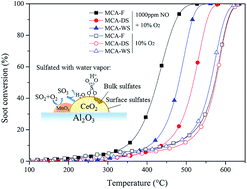
Soot-TPO tests were conducted in the presence of NO + O2 to measure the activities of the catalysts for soot oxidation. The profiles of COx and NO2 during the soot-TPO are shown in Fig. 8. The temperature corresponding to 50% conversation of soot was denoted as the light-off temperature (T50), and the CO2/(CO + CO2) ratio was defined as the selectivity to CO2.51 The results are listed in Table 4. The fresh catalyst has a satisfactory catalytic performance compared to the commercial platinum catalyst (T50 ≈ 440 °C).52 However, the mixed oxide catalyst shows a poor resistance to sulfur dioxide. Both of the poisoned catalysts have low selectivity to CO2. The T50 of MCA-WS shifts to higher temperatures by 54 °C, while the increase in the light-off temperature of MCA-DS is almost doubled (96 °C). The water reduces the deactivation of the catalyst to a great degree. However, they show similar NO oxidation activities in Fig. 7. Thus, the different NOx-assisted soot oxidation activities between the two poisoned catalysts cannot be well explained by their NO oxidation abilities. In our previous studies, we reported the preferential NO2 absorption on soot rather than on catalyst driven by surface acidity over the sulfated Pt/Al2O3 (ref. 53) and Pt/H-ZSM5 catalysts.54,55 This mechanism may also exist over the sulfated mixed oxide catalysts. According to Table 3, the amount of total surface acidity follows the order of MCA-WS > MCA-F > MCA-DS. The stronger surface acidity may promote the NO2 transfer from catalyst to soot and hereby the NO2 utilization efficiency on MCA-WS compared with MCA-DS, although the further experimental evidences remain to be proceeded.


image file: c6ra09241a-f8.tif
Fig. 8 The outlet COx and NO2 concentration profiles during the soot-TPO over the catalysts. Reactant gas: 1000 ppm of NO/10% O2/N2. Loose catalyst-soot contact.
Table 4 Soot oxidation activities of the catalysts
Catalyst Reaction in NO + O2 Reaction in O2
T50 (°C) SCO2 T50 (°C) SCO2
MCA-F 426 97 573 99
MCA-DS 518 75 575 83
MCA-WS 480 71 562 64
Uncatalyzed 610 45 612 47


Soot oxidation mechanism with the assistance of NOx involves roughly the soot ignition by NO2 at low temperatures and soot oxidation by O2 at high temperatures.17 It is noted in Fig. 8 that the produced NO2 is almost completely consumed by reacting with soot over the poisoned catalysts, while excess NO2 remain for the fresh catalyst. Therefore, the influence of O2-assisted soot oxidation ability cannot be excluded when considering the NOx-assisted soot oxidation activities of the poisoned catalysts. The soot-TPO tests in O2 were performed and the results are shown in Fig. 9 and Table 4. It is generally known that the soot oxidation activity in O2 is generally determined by active oxygen on ceria-based oxide catalysts.56,57 MCA-DS exhibits a similar T50 to MCA-F but a poor selectivity. More interestingly, MCA-WS shows even higher activity in O2 than MCA-F. The repeated experiments show that the error range is around ±2 °C for the T50. The difference of T50 between MCA-F and MCA-WS is 11 °C, which cannot be merely contributed by the experimental scatter. Thus, the higher soot oxidation activity of this catalyst cannot be ascribed to the deprivation of redox property.


image file: c6ra09241a-f9.tif
Fig. 9 COx profiles of soot-TPO over the catalysts. Reactant gas: 10% O2/N2. Loose catalyst-soot contact.

The soot oxidation occurs generally at the temperatures above 300 °C. According to Table 3, the amount of medium acidity follows the order of MCA-WS > MCA-DS > MCA-F. It has been reported that the oxidation of surface oxygenated complexes (SOCs) such as carboxyl esters and acid anhydrides may be more difficult than the formation of SOCs. The hydrolysis and decarboxylation of these intermediates can be catalyzed by acid sites especially a strong acid like H2SO4.14,17,58,59 However, the product of this acid-assisted SOC decomposition appears to be CO, resulting in low selectivity to CO2 for soot oxidation. These are in good consistent with the low T50 and low SCO2 for the O2-assisted soot oxidation over MCA-WS with more stable acid sites.55

Although the wet sulfated catalyst maintains the activity to some degree, the robustness of the MCA oxide catalyst towards sulfur poisoning still need to be improved. Our previous work found that tungsten modification on Pt/Al2O3 catalyst can decrease the deposition of sulfate during sulfur poisoning.60 Flouty et al. also found that molybdenum impregnation on ceria can show a better resistance to sulfur poisoning for soot oxidation catalysis.61 Thus, the acid additive may be a promising way to improve the sulfur tolerance of the mixed oxide catalyst.

4. Conclusions

Water vapor in the sulfation atmosphere can hinder the deposition of sulfates over MnOx-CeO2/Al2O3 catalyst, although it cannot depress the catalytic oxidation of SO2 to SO3. More importantly, the hydrolysis of sulfates in H2O increases the surface acidity significantly. These medium acid sites are confirmed to catalyze the oxidation of soot by O2, which, as well as the higher NO2 utilization efficiency driven by total surface acidity, may explain the relative higher activity of the wet sulfated catalyst in NOx-assisted soot oxidation compared with the dry sulfated one.

Acknowledgements

The authors would like to acknowledge Project 2015AA034603 by the. Moreover, we would also thank the financial support from the Key Laboratory of Advanced Materials of Ministry of Education.

References

  1. B. R. Stanmore, J.-F. Brilhac and P. Gilot, Carbon, 2001, 39, 2247–2268 CrossRef CAS.
  2. D. B. Kittelson, J. Aerosol Sci., 1998, 29, 575–588 CrossRef CAS.
  3. H. Zheng and J. M. Keith, Catal. Today, 2004, 98, 403–412 CrossRef CAS.
  4. K. Yamamoto and T. Sakai, Catal. Today, 2015, 242, 357–362 CrossRef CAS.
  5. P. Sudarsanam, B. Hillary, D. K. Deepa, M. H. Amin, B. Mallesham, B. M. Reddy and S. K. Bhargava, Catal. Sci. Technol., 2015, 5, 3496–3500 CAS.
  6. S. Putla, M. H. Amin, B. M. Reddy, A. Nafady, K. A. Al Farhan and S. K. Bhargava, ACS Appl. Mater. Interfaces, 2015, 7, 16525–16535 CAS.
  7. P. Sudarsanam, B. Hillary, B. Mallesham, B. G. Rao, M. H. Amin, A. Nafady, A. M. Alsalme, B. M. Reddy and S. K. Bhargava, Langmuir, 2016, 32, 2208–2215 CrossRef CAS PubMed.
  8. P. Sudarsanam, K. Kuntaiah and B. M. Reddy, New J. Chem., 2014, 38, 5991–6001 RSC.
  9. X. Wu, S. Liu, D. Weng, F. Lin and R. Ran, J. Hazard. Mater., 2011, 187, 283–290 CrossRef CAS PubMed.
  10. F. Lin, X. Wu, S. Liu, D. Weng and Y. Huang, Chem. Eng. J., 2013, 226, 105–112 CrossRef CAS.
  11. Z. Ying, X. Chenjun, S. Yeqing, Z. Qiuliang, C. Yinfei and L. Hanfeng, RSC Adv., 2015, 5, 91734–91741 RSC.
  12. T. Johnson, SAE International Journal of Engines, 2014, 7, 1207–1227 CrossRef.
  13. R. Linnell and W. Scott, J. Air Pollut. Control Assoc., 1962, 12, 510–545 CrossRef CAS.
  14. J. Oi-Uchisawa, A. Obuchi, A. Ogata, R. Enomoto and S. Kushiyama, Appl. Catal., B, 1999, 21, 9–17 CrossRef CAS.
  15. A. M. Hernández-Giménez, D. Lozano-Castelló and A. Bueno-López, Appl. Catal., B, 2014, 148–149, 406–414 CrossRef.
  16. M. Peralta, V. Milt, L. Cornaglia and C. Querini, J. Catal., 2006, 242, 118–130 CrossRef CAS.
  17. K. Tikhomirov, O. Kröcher, M. Elsener and A. Wokaun, Appl. Catal., B, 2006, 64, 72–78 CrossRef CAS.
  18. X. Wu, H.-R. Lee, S. Liu and D. Weng, J. Rare Earths, 2012, 30, 659–664 CrossRef CAS.
  19. X. Wu, H.-R. Lee, S. Liu and D. Weng, Ind. Eng. Chem. Res., 2013, 52, 716–721 CrossRef CAS.
  20. S. Liu, X. Wu, D. Weng, M. Li and H.-R. Lee, Chem. Eng. J., 2012, 203, 25–35 CrossRef CAS.
  21. S. i. Matsumoto, Catal. Today, 2004, 90, 183–190 CrossRef CAS.
  22. S. Bensaid, N. Russo and D. Fino, Catal. Today, 2013, 216, 57–63 CrossRef CAS.
  23. X. Niu, L. Zhou, X. Hu and W. Han, RSC Adv., 2015, 5, 52595–52601 RSC.
  24. Q. Yang, F. Gu, Y. Tang, H. Zhang, Q. Liu, Z. Zhong and F. Su, RSC Adv., 2015, 5, 26815–26822 RSC.
  25. L. Zhang, W. Zou, K. Ma, Y. Cao, Y. Xiong, S. Wu, C. Tang, F. Gao and L. Dong, J. Phys. Chem. C, 2015, 119, 1155–1163 CAS.
  26. R. Jin, Y. Liu, Y. Wang, W. Cen, Z. Wu, H. Wang and X. Weng, Appl. Catal., B, 2014, 148–149, 582–588 CrossRef CAS.
  27. R. M. Ferrizz, R. J. Gorte and J. M. Vohs, Catal. Lett., 2002, 82, 123–129 CrossRef CAS.
  28. M. Waqif, P. Bazin, O. Saur, J. Lavalley, G. Blanchard and O. Touret, Appl. Catal., B, 1997, 11, 193–205 CrossRef CAS.
  29. D. A. Peña, B. S. Uphade, E. P. Reddy and P. G. Smirniotis, J. Phys. Chem. B, 2004, 108, 9927–9936 CrossRef.
  30. Y. Peng, W. Yu, W. Su, X. Huang and J. Li, Catal. Today, 2015, 242, 300–307 CrossRef CAS.
  31. M. Centeno, I. Carrizosa and J. Odriozola, Appl. Catal., B, 2001, 29, 307–314 CrossRef CAS.
  32. S. Cao, H. Wang, F. Yu, M. Shi, S. Chen, X. Weng, Y. Liu and Z. Wu, J. Colloid Interface Sci., 2016, 463, 233–241 CrossRef CAS PubMed.
  33. Y.-P. Fu, C.-H. Lin and C.-S. Hsu, J. Alloys Compd., 2005, 391, 110–114 CrossRef CAS.
  34. G. Busca, V. Lorenzelli, G. Ramis and R. J. Willey, Langmuir, 1993, 9, 1492–1499 CrossRef CAS.
  35. D. W. Kwon and S. Chang Hong, RSC Adv., 2016, 6, 1169–1181 RSC.
  36. L. Kylhammar, P.-A. Carlsson, H. H. Ingelsten, H. Grönbeck and M. Skoglundh, Appl. Catal., B, 2008, 84, 268–276 CrossRef CAS.
  37. M. Waqif, O. Saur, J. C. Lavalley, S. Perathoner and G. Centi, J. Phys. Chem., 1991, 95, 4051–4058 CrossRef CAS.
  38. D. J. Rosenberg and J. A. Anderson, Catal. Lett., 2002, 83, 59–63 CrossRef CAS.
  39. S. Hara, Solid State Ionics, 2004, 168, 111–116 CrossRef CAS.
  40. G. Lafaye, J. Barbier and D. Duprez, Catal. Today, 2015, 253, 89–98 CrossRef CAS.
  41. P. Sudarsanam, A. Rangaswamy and B. M. Reddy, RSC Adv., 2014, 4, 46378–46382 RSC.
  42. X. Yang, Z. Sun, D. Wang and W. Forsling, J. Colloid Interface Sci., 2007, 308, 395–404 CrossRef CAS PubMed.
  43. F. Lónyi, J. Valyon, J. Engelhardt and F. Mizukami, J. Catal., 1996, 160, 279–289 CrossRef.
  44. B. Mallesham, P. Sudarsanam and B. M. Reddy, Catal. Sci. Technol., 2014, 4, 803 CAS.
  45. H. Jin, M. B. Ansari, E.-Y. Jeong and S.-E. Park, J. Catal., 2012, 291, 55–62 CrossRef CAS.
  46. W. S. Kijlstra, M. Biervliet, E. K. Poels and A. Bliek, Appl. Catal., B, 1998, 16, 327–337 CrossRef.
  47. M. V. Twigg, Catal. Today, 2006, 117, 407–418 CrossRef CAS.
  48. W. Wang, G. McCool, N. Kapur, G. Yuan, B. Shan, M. Nguyen, U. M. Graham, B. H. Davis, G. Jacobs and K. Cho, Science, 2012, 337, 832–835 CrossRef CAS PubMed.
  49. N. Tang, Y. Liu, H. Wang and Z. Wu, J. Phys. Chem. C, 2011, 115, 8214–8220 CAS.
  50. S. Brandenberger, O. Kröcher, A. Wokaun, A. Tissler and R. Althoff, J. Catal., 2009, 268, 297–306 CrossRef CAS.
  51. Y. Gao, X. Wu, S. Liu, D. Weng, H. Zhang and R. Ran, Catal. Today, 2015, 253, 83–88 CrossRef CAS.
  52. M. Piumetti, S. Bensaid, N. Russo and D. Fino, Appl. Catal., B, 2016, 180, 271–282 CrossRef CAS.
  53. S. Liu, X. Wu, D. Weng, M. Li and J. Fan, Appl. Catal., B, 2013, 138–139, 199–211 CrossRef CAS.
  54. S. Liu, X. Wu, D. Weng, M. Li and R. Ran, ACS Catal., 2015, 5, 909–919 CrossRef CAS.
  55. S. Liu, X. Wu, H. Luo, D. Weng and R. Ran, J. Phys. Chem. C, 2015, 119, 17218–17227 CAS.
  56. A. Bueno-Lopez, K. Krishna, M. Makkee and J. A. Moulijn, Catal. Lett., 2005, 99, 203–205 CrossRef CAS.
  57. E. Aneggi, C. de Leitenburg and A. Trovarelli, Catal. Today, 2012, 181, 108–115 CrossRef CAS.
  58. X. P. Auvray and L. Olsson, Ind. Eng. Chem. Res., 2013, 52, 14556–14566 CrossRef CAS.
  59. A. Ungureanu, T. V. Hoang, D. Trong On, E. Dumitriu and S. Kaliaguine, Appl. Catal., A, 2005, 294, 92–105 CrossRef CAS.
  60. X. Wu, S. Liu and D. Weng, Catal. Sci. Technol., 2011, 1, 644 CAS.
  61. R. Flouty, E. Abi-Aad, S. Siffert and A. Aboukaïs, Appl. Catal., B, 2003, 46, 145–153 CrossRef CAS.

This journal is © The Royal Society of Chemistry 2016
Click here to see how this site uses Cookies. View our privacy policy here.