Preparation and characterization of biocompatible molecularly imprinted poly(ionic liquid) films on the surface of multi-walled carbon nanotubes

Haoyuan Ding a, Rongfeng Chenab, Mingming Liu*a, Rong Huanga, Yamei Dua, Chao Huanga, Xiaoyang Yua, Xionghan Fenga and Fan Liua
aKey Laboratory of Arable Land Conservation (Middle and Lower Reaches of Yangtse River), Ministry of Agriculture, College of Resources and Environment, Huazhong Agricultural University, Wuhan 430070, China. E-mail: liumm@mail.hzau.edu.cn; Fax: +86 27 8728 8618; Tel: +86 27 8728 0271
bEnvironment Monitoring Center of Ningbo, Ningbo 315000, China

Received 5th April 2016 , Accepted 20th April 2016

First published on 25th April 2016


Abstract

A series of novel protein molecularly imprinted polymers (MIPs) were synthesized through a surface molecular imprinting technique by using bovine serum albumin (BSA) as a template, acrylamide modified multi-walled carbon nanotubes (MWCNTs-AAm) as substrates, and allyl-functionalized ionic liquids (ILs) as monomers. The MWCNTs@BSA-MIPILs synthesized under different monomer/template/cross-linker ratios were characterized by FTIR, SEM and BET analyses. The adsorption kinetics and isotherm, imprinting effect, selectivity and competitiveness, reusability, and practical applicability were evaluated in detail. The influence of the outside diameters of MWCNTs and the anion types of ILs on the imprinting effect of the MWCNTs@BSA-MIPILs was also studied. The MWCNTs with smaller diameters (<8 nm and 10–20 nm) were more beneficial for the preparation of the surface imprinted polymers. The MIPs prepared with IL monomers composed of anions with low nucleophilicity and hydrogen bond basicity (PF6), and high steric effect (CF3SO3) were found to have a better imprinting effect in comparison with those prepared with Cl and BF4-based IL and the traditional acrylamide monomers. They also exhibited higher selective recognition ability for BSA than for human serum albumin, lysozyme, trypsin and bovine hemoglobin. The imprinting and selectivity factors were greatly improved in a binary protein solution containing BSA and bovine hemoglobin. The developed MWCNTs@BSA-MIPILs were also successfully used for the purification of BSA from bovine calf serum. These results indicated that the PF6 and CF3SO3-based ILs, for their important role in stabilizing biomacromolecules, will be ideal functional monomers for the development of biocompatible MIPs for protein molecules.

Introduction

Molecularly imprinted polymers (MIPs) are designed, synthetic polymeric materials with predetermined binding cavities capable of recognizing a particular analyte or a family of structurally related analytes.1 They are usually prepared by copolymerization of template molecule–functional monomer complexes in the presence of a large amount of crosslinking agents.2 After removal of the template molecules, many imprinting cavities of size, shape and functionality complementary to the templates are generated in the highly crosslinked polymer matrixes. The selectivity is based on both size exclusion of the imprinting cavities and highly defined multiple interaction sites utilizing hydrogen bonding, electrostatic or non-polar van der Waals forces, etc.3,4 As a new class of synthetic receptors, MIPs have shown great potential in many applications, such as separation,5 catalysis,6 clinical analysis,7 drug delivery,8 environmental monitoring,9 and biosensors,10 etc., because of the desired structural predetermination, good specific recognition, high stability, easy preparation and wide practicability. Molecular imprinting technique has achieved great success over the past few decades. However, most of this work has been focusing on imprinting low molecular weight or water insoluble molecules. The imprinting of biomacromolecules such as proteins is still a very challenging but potentially extremely rewarding work for many scientists in the field of molecular recognition.11–15 One of the most serious problems is that the high crosslink density makes template removal and rebinding extremely difficult due to the large molecular size of proteins.15 Another challenge encountered when imprinting protein molecules is that the template–monomer interaction, especially hydrogen bonding weakens significantly in aqueous media, which hampers the formation of stable imprinting sites in MIPs since proteins prefer to be dissolved in aqueous media in most cases.12,13 Other difficulties include structure complexity, conformation flexibility, environment sensitivity, and binding site multiplicity, etc. All these limitations are disadvantageous for the creation of MIPs capable of selective or even specific recognition of proteins. Many efforts have been devoted to address these inherent problems of biomacromolecules in the past two decades.

A straightforward strategy to address the mass transfer issues is to employ a two-dimensional approach, a technique known as surface imprinting.12–14,16 The protein imprinted polymers prepared by this strategy can be covalently or noncovalently bonded on the substrate surface to form core–shell structural microspheres or nanowires. One major issue with this approach is controlling the thickness of the polymer layer. Generally, the imprinted cavities can be located exclusively on or close to the surface of the polymer layer if the shell is thin enough, enabling protein molecules to access to and egress from their binding sites freely. Therefore, a suitable solid substrate, usually nanomaterials with high surface-to-volume ratio, should be introduced to the polymerization systems. These include polystyrene nanoparticles,17 chitosan,18 silica particles,19 magnetic nanoparticles,20 graphene,21 and quantum dots,22 etc. The MIPs immobilized on these nanomaterials not only resolved the mass transfer problems but also increased the binding capacity of protein molecules. Multiwalled carbon nanotubes (MWCNTs) have proved ideal substrate materials for protein surface imprinting, due to their extraordinarily large specific surface area, high mechanical strength and good biocompatibility.23–25 For example, a bovine serum albumin (BSA) molecularly imprinted polyacrylamide membrane was prepared on the surface of MWCNTs through a surface imprinting technique by Zhang and his co-workers.24 The maximum adsorption capacity for BSA was 5.53 mg g−1, and the optimal imprinting factor was 2.60. The selectivity for BSA was also much higher than that for human serum albumin (HSA), bovine hemoglobin (BHb), pepsin and horseradish peroxidase (HRP). MWCNTs, because of their easy modification properties, can also be chemically or physically modified by other materials, such as magnetic nanoparticles,26,27 chitosan28 and quantum dots,29 in order to improve the performance of MWCNTs as substrate materials for protein surface imprinting. For instance, a magnetic MWCNT@Fe3O4@MIP was prepared for specific recognition of BSA using methacrylic acid as the functional monomers.26 The optimal adsorption performance was obtained at pH 4.7, with a maximum adsorption capacity of 52.8 mg g−1, a largest imprinting factor of 4.20, and a highest selectivity factor of 3.85. Yin et al.27 also developed a MWCNTs@Fe3O4@MIP using HSA as the template molecules and dopamine as the functional monomers. The imprinting factor for HSA can reach to 4.64 at a pH of 6.0. A selectivity factor of 3.41 and 3.01 can be obtained for BSA and lysozyme (Lys), respectively. A most important advantage of these magnetic MWCNTs@Fe3O4@MIPs is that the recovery or separation of magnetic materials from the liquid suspension is very easy just by applying an external magnetic field.

An effective strategy to address the weakened hydrogen bonding issues in aqueous media is to use new functional monomers interacting strongly with the protein template by other interactions instead of hydrogen bonding, such as electrostatic,30 hydrophobic,31 metal coordination,32 enzyme–inhibitor,33 and boronic acid–diol interaction,34 etc. Ionic liquids (ILs), which are composed of relatively large asymmetric organic cations and inorganic or organic anions, have attracted increasing attention in many fields of analytical chemistry, due to their low volatility, high stability, good film-forming ability, and good solubility for organic and inorganic compounds.35 They can be used not only as green extraction solvents but also as selective stationary phase to prepare IL or poly(ionic liquid) based materials.36,37 The separation and recognition mechanism is based on the multiple interactions provided by ILs, such as electrostatic, ion exchange, hydrogen bonding, hydrophobic, and π–π interaction, etc. In molecular imprinting field, ILs have been used as solvent or porogen to accelerate the synthesis process and improve the selectivity and adsorption capacity of the MIPs.38,39 They have also been employed to dissolve, stabilize and activate enzymes and proteins as a result of the dual nature of ILs.40–42 Moreover, ILs can be used to prepare water-compatible MIPs due to their good water solubility and strong electrostatic interaction with the hydrophilic template molecules, for example the proteins.43–46 This will weaken the influence of reduced hydrogen bonding on protein molecular imprinting in aqueous environment. A 1-vinyl-3-aminoformylmethyl imidazolium chloride ([VAFMIM]Cl) IL was first synthesized and used as co-monomers to prepare BSA imprinted N-isopropylacrylamide (NIPAm) hydrogels by Qian and his co-workers.44 The biocompatible [VAFMIM]Cl has proved effective in stabilizing BSA in the prepolymerization solution, which can be explained by the Hofmeister effect. The introduction of IL to the prepolymerization solution also improved the imprinting effect and specific recognition ability of the molecularly imprinted NIPAm hydrogels to BSA. This is mainly attributed to the electrostatic interactions generated by the imidazolium cations, and the hydrogen bonding interactions provided by the aminoformyl groups in [VAFMIM]Cl. The Lys-imprinted core–shell microspheres were also prepared by Qian et al. by using biocompatible choline dihydrogen phosphate IL as a thermal stabilizer.46 The result indicated that the integrated conformation of Lys can be retained as much as possible even at 75 °C when using hydroxyethyl acrylate as monomer, and 5% choline dihydrogen phosphate IL as stabilizer. The imprinting effect and selectivity of the MIPs prepared with ILs as thermal stabilizer is much better in comparison with those prepared without ILs, indicating a strong relationship between protein conformation and the specific recognition ability. The preparation of Lys MIPs on the surface of MWCNTs using IL as monomers, and acrylamide (AAm) as co-monomers was reported by Yuan et al.45 The results showed that the introduction of IL as monomers led to an increase in binding capacity of the MIPs. The influence of IL monomer on the recognition properties of MIPs was also investigated by using 1-vinyl-3-butylimidazolium chloride (ViBuIm+Cl), 1-vinyl-3-octylimidazolium chloride (ViOcIm+Cl) or vinyl imidazole as functional monomer, respectively. The MIP synthesized with ViBuIm+Cl as monomer showed a maximum adsorption capacity of 763.36 mg g−1 and a highest imprinting factor of 1.82. Wang et al. also developed a molecularly imprinted electrochemical sensing interface for BSA recognition by in situ-polymerization of 3-(3-aminopropyl)-1-vinylimidazolium tetrafluoroborate ILs on the surface of a MWCNTs modified glassy carbon electrode.43 The molecularly imprinted poly(ionic liquids) (MIPILs) were found to have enhanced accessibility, good imprinting effect, high specificity and sensitivity towards BSA. These work indicated that ILs can be one of the most promising stabilizer and monomer for the preparation of biocompatible MIPs.

Although MIPs based on carbon nanotube substrates or IL monomers have been reported in some references, the role of the outside diameter of the MWCNTs or the anionic part of the ILs in protein molecular imprinting has been little studied. In our previous work, the role of the counteranions in tuning the performance of the sol–gel ionic liquid-based SPME fibers was studied.47 The results showed that the interactions between ILs and the target analytes were greatly influenced by the anion species in IL structures due to their different nucleophilicity, hydrogen-bond forming ability, steric hindrance and hydrophobicity. However, the influences of IL counteranions on protein imprinting are still unclear. Likewise, there are no relevant studies on the role of MWCNTs diameters in molecular imprinting although all sizes were reported in references.

In view of this, a series of novel MIPILs were prepared on the surface of MWCNTs through a surface imprinting strategy by using BSA as template molecules, allyl-functionalized ILs as functional monomers, AAm modified MWCNTs as substrate, N,N′-methylenebis(acrylamide) (NNMBA) as the crosslinking agent, ammonium persulfate (NH4)2S2O8 as initiator, and N,N,N′,N′-tetramethylethylenediamine (TEMED) as catalyst, respectively. The conditions for the synthesis of the MWCNTs@BSA-MIPILs, such as monomer/template ratio and monomer/crosslinker ratio were optimized. The adsorption capacity and imprinting effect of the MWCNTs@BSA-MIPILs synthesized using MWCNTs with different diameters as substrates and ILs with different anion species as monomers were also studied in detail. For comparison, a traditional molecularly imprinted polyacrylamide (MWCNTs@BSA-MIPAAm) was also prepared with an identical procedure. The polymers synthesized under different conditions were characterized by Fourier transform infrared spectroscopy (FTIR), scanning electron microscopy (SEM) and BET nitrogen physisorption experiments. The adsorption kinetics, thermodynamics, selectivity, competitiveness, reusability and practical applicability were also evaluated comprehensively.

Experimental

Apparatus

The polymerization reaction was carried out in a CJB-S-10D multipoint magnetic stirrer (Yuhua, Gongyi, China). The synthetic polymers were centrifuged with a Neofuge-23R high-speed refrigerated centrifuge (Heal Force, Hongkong, China) and dried using a FD5-3 Freeze dryer (Gold-Sim, Beijing, China). The adsorption experiments were conducted in a QH2-98A constant temperature oscillator shaker (Huamei, Taichuang, China). The infrared spectra were recorded with a Vertex 70 FTIR spectrometer (Bruker, Ettlingen, German). The surface morphologies were examined using a SU8010 scanning electron microscope (Hitachi, Tokyo, Japan). The specific surface areas were measured using a JEDL-6390/LV surface area and pore size analyzer (Quantachrome, Boynton Beach, USA).

Materials and reagents

Carboxylated MWCNTs (MWCNTs-COOH, OD < 8 nm, length ∼ 30 μm, –COOH content 3.86 wt%, purity > 95%, SSA > 500 m2 g−1; OD 10–20 nm, length 10–30 μm, –COOH content 2.00 wt%, purity > 95%, SSA > 200 m2 g−1; OD 30–50 nm, length 10–20 μm, –COOH content 0.73 wt% purity > 95%, SSA > 60 m2 g−1) were purchased from Chengdu Organic Chemicals Co. Ltd., Chinese Academy of Sciences (Chengdu, China). 1-Allyl-3-methylimidazolium chloride ([AMIM]Cl), 1-allyl-3-methylimidazolium tetrafluoroborate ([AMIM][BF4]), 1-allyl-3-methylimidazolium hexafluorophosphate ([AMIM][PF6]) and 1-allyl-3-methylimidazolium trifluoromethanesulfonate ([AMIM][CF3SO3]) were purchased from Chengjie Chemical Co., Ltd. (Shanghai, China). AAm, NNMBA, TEMED, (NH4)2S2O8, thionyl chloride (SOCl2), sodium hydrogen phosphate and monosodium phosphate were purchased from Sinopharm Chemical Reagent Co., Ltd. (Shanghai, China). BSA (pI 4.7, 66 kDa), trypsin (Try, pI 10.5, 24 kDa), Lys (pI 11.0, 14 kDa), dimethylformamide (DMF, purity > 99%) were purchased from Biosharp Co., Ltd. (Hefei, China). HSA (pI 4.7, 66 kDa), BHb (pI 6.9, 64 kDa) and coomassie brilliant blue (G-250) were purchased from Sigma-Aldrich China Inc. (Shanghai, China).

Preparation of AAm modified MWCNTs

A 600 mg of MWCNTs-COOH (OD < 8, 10–20 and 30–50 respectively), a 60 mL of SOCl2 and a 0.5 mL of DMF were added to a dried 250 mL 3-mouth flask. The mixture was refluxed for 24 h at 70 °C under severe dried condition. The residual SOCl2 was removed by atmospheric distillation at 80 °C and simultaneous absorption by NaOH solution. A 3 g of AAm and a 50 mL of DMF were then added to the formed intermediates MWCNTs-COCl. The reaction mixture was homogeneously dispersed by ultrasonic vibration and then refluxed under magnetic stirring for 24 h at 45 °C. The solid product was separated from the mixture by centrifugation and then washed thoroughly with ultrapure water to remove AAm monomers and polymers not bound to the MWCNTs. The purified AAm modified MWCNTs were then dried at 60 °C for 24 h.

Preparation of MWCNTs@BSA-MIPILs

A 40 mg of AAm modified MWCNTs (OD < 8 nm) was added to 10 mL of phosphate buffered solution (200 mM, pH 6.8), and ultrasonicated for 0.5 h to form the first aqueous phase. A 20 mg of BSA and a 0.34 mmol of [AMIM][PF6] were dissolved in 20 mL of phosphate buffered solution, and magnetic stirred for 2 h to form the second aqueous phase. Then the first and the second aqueous phases were mixed sufficiently in a 150 mL one-neck round bottom flask under magnetic stirring. A 150 mg of NNMBA and a 30 mg of (NH4)2S2O8 were added subsequently. The well mixed solution was then purged with nitrogen for 30 min to remove the oxygen in the reaction system. After that, a 100 μL of TEMED was added and the polymerization reaction was carried out under room temperature and nitrogen atmosphere for 48 h. The reaction product was separated by centrifugation. The residual BSA in the liquid supernatant was analyzed by coomassie brilliant blue method. To remove the embedded template protein, the polymer was extensively washed first with phosphate buffered solution (200 mM, pH 6.8) and then with ultrapure water by ultrasonic agitation. The eluate was collected and the content of BSA was determined by coomassie brilliant blue method. The elution process was repeated several times until no BSA was detected in the supernatant. Finally, the purified MWCNTs@BSA-MIPILs were freeze-dried and weighted. The elution rate was calculated by dividing the amount of BSA imprinted on the surface of MWCNTs@BSA-MIPILs by that eluated from MWCNTs@BSA-MIPILs. The potential imprinting sites were calculated by dividing the amount of BSA eluated from MWCNTs@BSA-MIPILs by the mass of the produced MWCNTs@BSA-MIPILs.

To evaluate the influence of the solid substrates on surface molecular imprinting, the MIPILs with [AMIM][PF6] as functional monomers were also prepared identically on the surface of two different size of MWCNTs, which outside diameter was 10–20 and 30–50 nm, respectively. The other four MIPs using [AMIM]Cl, [AMIM][BF4], [AMIM][CF3SO3] and AAm as functional monomers were also synthesized on the surface of MWCNTs (OD < 8 nm) with an identical procedure. For comparison, the corresponding non-imprinted polymers (MWCNTs@NIPILs) were synthesized in the same way as the MWCNTs@BSA-MIPILs except that no BSA was added to the reaction system.

Adsorption experiments

The adsorption kinetics experiments were carried out as follows: a 180 mg of MWCNTs@BSA-MIPILs and MWCNTs@NIPILs was dispersed in 120 mL of pH 6.8 phosphate buffered solution with 0.8 mg mL−1 of BSA by ultrasonic vibration, respectively. The well mixed dispersion was incubated at 25 °C at a shaking rate of 200 rpm. The concentration of BSA in the supernatant was measured by coomassie brilliant blue method at set intervals from 1 min to 4 h. The amount of BSA adsorbed by these polymers was calculated according to the following formula:
image file: c6ra08782e-t1.tif
where Q (mg g−1) is the mass of BSA adsorbed per gram of polymer, C0 (mg mL−1) and Ct (mg mL−1) represents the concentration of BSA at time 0 and t, respectively, V (mL) is the volume of the incubation solution, and m is the mass of polymer added to the solution. The pseudo-first-order and pseudo-second-order kinetic model were applied to investigate the adsorption process of BSA on the surface of MWCNTs@BSA-MIPILs and MWCNTs@NIPILs. The equations were as follows:
ln(QeQt) = ln[thin space (1/6-em)]Qek1t

image file: c6ra08782e-t2.tif
where Qt (mg g−1) and Qe (mg g−1) represents the amount of BSA adsorbed at time t and equilibrium, and k1 (min−1) and k2 (g mg−1 min−1) is the rate constant of pseudo-first order and pseudo-second-order, which can be calculated from the plot of ln(QeQt) versus t and t/Qt versus t, respectively.

The isothermal adsorption experiments were performed under pH 6.8 phosphate buffered solution by varying the concentration of BSA from 0.1 to 1.2 mg mL−1. Fifteen milligrams of MWCNTs@BSA-MIPILs or MWCNTs@NIPILs were added into 10 mL of BSA solution. The mixture was incubated at 25 °C for 6 h and then centrifuged at 10[thin space (1/6-em)]000 rpm for 8 min. A blank experiment was implemented under the same procedure except that no BSA was added to the polymer suspension in order to eliminate background interference. All adsorption experiments were carried out in triplicate. The amount of BSA adsorbed by these polymers was calculated according to the following formula:

image file: c6ra08782e-t3.tif
where Q (mg g−1) is the mass of BSA adsorbed per gram of polymer, C0 (mg mL−1) and Ce (mg mL−1) represents the initial and equilibrium concentration of BSA, respectively, V (mL) is the volume of the incubation solution, and m is the mass of polymer added to the solution. The obtained adsorption data were fitted by Langmuir and Scatchard models, which are described as follows:
image file: c6ra08782e-t4.tif

image file: c6ra08782e-t5.tif
where K (mL mg−1) is the adsorption equilibrium constant, Ce (mg mL−1) is the equilibrium concentration of BSA in solution, and Q (mg g−1) and Qmax (mg g−1) are the adsorption capacity at adsorption equilibrium and the maximum theoretical adsorption capacity.

To evaluate the selective adsorption ability, a 15 mg of MWCNTs@BSA-MIPILs or MWCNTs@NIPILs was added into 10 mL of phosphate buffered solution containing 0.8 mg mL−1 of BSA, HSA, Lys, Try and BHb, respectively. The competitive adsorption experiments were also performed in a mixture solution containing 0.8 mg mL−1 each of BSA and BHb. The specific recognition abilities of the MWCNTs@BSA-MIPILs were evaluated by determining the imprinting factor (α) and the selectivity factor (β), which are defined as follows:

image file: c6ra08782e-t6.tif

image file: c6ra08782e-t7.tif
where QMWCNTs@BSA-MIPILs and QMWCNTs@NIPILs is the adsorption capacities of the template and the competitive protein on MWCNTs@BSA-MIPILs and MWCNTs@NIPILs, and αtemplate and αcompetition is the imprinting factor with respect to the template and the competitive protein, respectively.

The reusability of the AAm modified MWCNTs, MWCNTs@BSA-MIPILs and MWCNTs@NIPILs was investigated by three consecutive adsorption–desorption cycles. For each cycle, a 100 mg of these adsorbent materials was added into 15 mL phosphate buffered solution with 0.8 mg mL−1 of BSA. After the mixture was incubated at 25 °C for 6 h, the adsorbent materials were separated centrifugally from the solution and reconditioned by washing first with pH 6.8 phosphate buffered solution and then with ultrapure water until no BSA was detected by coomassie brilliant blue method.

Application in real samples

The prepared MWCNTs@BSA-MIPILs were applied to purify BSA from bovine calf serum. The serum was 100 fold diluted with phosphate buffered solution (200 mM, pH 4.7). A 40 mg of MWCNTs@BSA-MIPILs or MWCNTs@NIPILs were added to 8 mL of diluted real sample of bovine calf serum. After incubation at 25 °C for 6 h, the suspension was centrifuged at 10[thin space (1/6-em)]000 rpm for 5 min. The polymers were gently treated with phosphate buffered solution (200 mM, pH 4.7) to remove the weakly adsorbed proteins. The strongly adsorbed proteins were exhaustedly washed by 200 mM pH 6.8 phosphate buffered solution. The elution process was repeated for five times until no BSA was detected in the supernatant. The fractions of the strongly adsorbed BSA were desalted and concentrated using an ultra filtration membrane (molecular weight cutoff 10 kDa). Finally, a 10 μL of the eluates was analyzed by sodium dodecyl sulfate polyacrylamide gel electrophoresis (SDS-PAGE).

Results and discussion

Synthesis of the MWCNTs@BSA-MIPILs

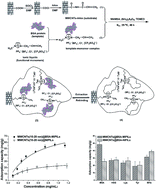
The synthesis procedure for the MWCNTs@BSA-MIPILs is illustrated in Scheme 1. Firstly, the MWCNTs-COOH was covalently modified with AAm. Secondly, the template–monomer complexes were formed in the phosphate buffered solution through multiple complementary interactions between ILs and BSA including hydrogen bonding, electrostatic, hydrophobic and π–π interactions. Thirdly, the formed template–monomer complexes were chemically immobilized on the surface of MWCNTs by the free radical crosslinking reaction between ILs, NNMBA and AAm modified MWCNTs. Finally, the templates embedded in the polymers were eluted to expose the specific binding sites. The amount of BSA imprinted to and eluated from the PIL film was 6.29 and 5.61 mg, respectively. The mass of the synthesized MWCNTs@BSA-MIPILs was 150 mg. Therefore, the elution ratio of the template molecules was about 89%, and the amount of the theoretical imprinting sites formed on the surface of MWCNTs@BSA-MIPILs was about 37.40 mg g−1.
image file: c6ra08782e-s1.tif
Scheme 1 The synthesis route of the MWCNTs@BSA-MIPILs via a multi-step procedure.

Fig. 1 shows the FTIR spectra of the MWCNTs-COOH (a), MWCNTs-COCl (b), MWCNTs-AAm (c), [AMIM][PF6] (d), MWCNTs@BSA-MIPILs (e) and MWCNTs@BSA-MIPAAm (f). In comparison with the IR spectrum of the MWCNTs-COOH in Fig. 1a, the appearance of the characteristic absorption bands at 650 cm−1 (C–Cl stretching vibration) in Fig. 1b, 2912 and 2842 cm−1 (C–H stretching vibration) in Fig. 1c indicated the formation of the intermediate product MWCNTs-COCl and the successful grafting of AAm on the surface of MWCNTs, respectively. However, the absorption bands representing IL (Fig. 1d) were not observed in the IR spectrum of the prepared MWCNTs@BSA-MIPILs (Fig. 1e). This is mainly because the characteristic absorption bands of PIL at the range of 500–1700 cm−1 have been covered up by the strong adsorption bands of the formed NNMBA crosslinking polymers (Fig. 1f).


image file: c6ra08782e-f1.tif
Fig. 1 FTIR spectra of the MWCNTs-COOH (a), MWCNTs-COCl (b), MWCNTs-AAm (c), [AMIM][PF6] (d), MWCNTs@BSA-MIPILs (e) and MWCNTs@BSA-MIPAAm (f).

Optimization of the monomer/template ratio

Table 1 compares the adsorption capacities and specific surface areas of the as-prepared MWCNTs@BSA-MIPILs with different ratios of functional monomers ([AMIM][PF6]) to templates (BSA). The adsorption capacities of the developed MWCNTs@BSA-MIPILs increased greatly with increasing monomer/template ratios, and reached equilibrium when the ratio was larger than 5[thin space (1/6-em)]:[thin space (1/6-em)]1. In general, a low level of monomers in the prepolymerization system cannot generate enough template–monomer complexes, and thus cannot provide plentiful imprinting sites for the template proteins. However, a continuous increase of the monomers cannot produce more imprinting cavities in the polymers if the binding sites of the template proteins were all occupied by the complementary functional monomers. Moreover, an excessive level of the monomers can produce a large number of polymer chains without template molecules incorporated, leading to a high ratio of non-specific adsorption.48 Therefore, an appropriate ratio of monomer/template should be introduced to the prepolymerization system to maximize the formation of imprinting cavities, and minimize the generation of non-specific interactions. The result presented in Table 1 indicated that the optimal monomer/template ratio was 5[thin space (1/6-em)]:[thin space (1/6-em)]1. It was also found from Table 1 that the specific surface areas of the MWCNTs@BSA-MIPILs decreased significantly with increasing monomer/template ratio from 1[thin space (1/6-em)]:[thin space (1/6-em)]4 to 15[thin space (1/6-em)]:[thin space (1/6-em)]1. Moreover, the amounts of BSA adsorbed by the MWCNTs@BSA-MIPILs were inversely proportional to their specific surface areas. Generally speaking, the larger the specific surface area is, the greater the adsorption quantity will be, for the non-specific adsorption. The result obtained in this work was opposite to the non-specific adsorptive behavior, indicating that the specific adsorption provided by the imprinting cavities played a key role in the adsorption process. The amount of BSA adsorbed was dominantly determined by the formed imprinting sites.
Table 1 The specific surface areas and adsorption capacities of the MWCNTs@BSA-MIPILs prepared with different monomer/template ratios
MIPs Feed composition (mg) [AMIM][PF6]/BSA ratio Specific surface area (m2 g−1) Adsorption capacity (mg g−1)
BSA [AMIM][PF6] NNBMA
MIP1 20 5 150 1[thin space (1/6-em)]:[thin space (1/6-em)]4 78.95 22.64
MIP2 20 20 150 1[thin space (1/6-em)]:[thin space (1/6-em)]1 74.65 30.73
MIP3 20 60 150 3[thin space (1/6-em)]:[thin space (1/6-em)]1 67.68 38.83
MIP4 20 100 150 5[thin space (1/6-em)]:[thin space (1/6-em)]1 61.80 50.97
MIP5 20 200 150 10[thin space (1/6-em)]:[thin space (1/6-em)]1 43.92 55.02
MIP6 20 300 150 15[thin space (1/6-em)]:[thin space (1/6-em)]1 34.57 52.99


The surface morphology of the MWCNTs@BSA-MIPILs prepared with different monomer/template ratios was displayed in Fig. 2. It can be observed that the formed polymeric nanoparticles become more and more large and uniform with the increase of ILs in the polymerization system. This result well explained why the specific surface area of the MWCNTs@BSA-MIPILs decreased obviously with increasing monomer/template ratio. It also suggested that ILs added can influence the surface morphology of the formed MWCNTs@BSA-MIPILs.


image file: c6ra08782e-f2.tif
Fig. 2 SEM images of the MWCNTs@BSA-MIPILs prepared with different amount of [AMIM][PF6]: 5 mg (a); 20 mg (b); 60 mg (c); 100 mg (d); 200 mg (e); 300 mg (f).

Optimization of the monomer/cross-linker ratio

Table 2 compares the adsorption capacities and specific surface areas of the MWCNTs@BSA-MIPILs prepared with different ratios of functional monomers ([AMIM][PF6]) to cross-linkers (NNMBA). It was found that the specific surface area decreased rapidly with increasing NNMBA from 0 to 100 mg, and then increased gradually with increasing NNMBA from 150 to 300 mg, while the adsorption capacity to BSA decreased significantly with increasing NNMBA from 0 to 300 mg. This result can be well explained as follows: firstly, the surface area and adsorption capacity of the MWCNTs is rather high because of its small nanotube size and strong non-specific physical interactions with proteins. Secondly, the formation of MIPILs on the surface of MWCNTs increased the size and heterogeneity of the nanotubes, leading to a sharply decline in specific surface area, which was smallest when the surface of the carbon nanotubes was just completely covered with the formed MIPILs, as shown in MIP 8 and MIP 9. The non-specific adsorption of MWCNTs was still very high when NNMBA added was not enough to form highly crosslinked polymer films to ensure a complete coverage of the surface of the MWCNTs, as shown in MIP 7. Thirdly, the further increase in NNMBA increased the crosslinking degree and coating porosity, and thus the specific surface areas of the prepared MWCNTs@BSA-MIPILs, as shown in MIP 10–12. However, the adsorption capacity decreased dramatically with increasing NNMBA from 150 to 300 mg. This is mainly because many of the template–monomer complexes were deeply embedded within the polymer network due to the excessive crosslinking polymerization of ILs by NNMBA.
Table 2 The specific surface areas and adsorption capacities of the MWCNTs@BSA-MIPILs prepared with different monomer/cross-linker ratios
MIPs Feed composition (mg) [AMIM][PF6]/NNBMA ratio Specific surface area (m2 g−1) Adsorption capacity (mg g−1)
BSA [AMIM][PF6] NNBMA
MWCNTs-AAm 442.13 84.03
MIP7 20 100 50 2[thin space (1/6-em)]:[thin space (1/6-em)]1 89.29 67.63
MIP8 20 100 100 1[thin space (1/6-em)]:[thin space (1/6-em)]1 57.59 58.84
MIP9 20 100 150 2[thin space (1/6-em)]:[thin space (1/6-em)]3 61.69 61.05
MIP10 20 100 200 1[thin space (1/6-em)]:[thin space (1/6-em)]2 86.32 45.62
MIP11 20 100 250 2[thin space (1/6-em)]:[thin space (1/6-em)]5 97.38 39.02
MIP12 20 100 300 1[thin space (1/6-em)]:[thin space (1/6-em)]3 102.81 30.20


The surface morphology of the MWCNTs@BSA-MIPILs was shown in Fig. 3, which was also greatly influenced by the monomer/cross-linker ratio of the polymerization solution. As observed from the figure, the diameter of the nanotubes increased obviously with increasing NNMBA from 0 to 100 mg, and then a three-dimensional network structure of polymer was formed on the surface of MWCNTs with increasing NNMBA from 150 to 300 mg. The variation trend in specific surface areas and adsorption capacity was well evidenced by the surface morphology change of the MWCNTs@BSA-MIPILs. The optimal monomer/cross-linker ratio was 1[thin space (1/6-em)]:[thin space (1/6-em)]1, based on above results and analyses.


image file: c6ra08782e-f3.tif
Fig. 3 SEM images of the MWCNTs@BSA-MIPILs prepared with different amount of cross-linker NNMBA: 0 mg (a); 20 mg (b); 50 mg (c); 100 mg (d); 150 mg (e); 200 mg (f); 250 mg (g); 300 mg (h).

Optimization of incubation pH on adsorption

Fig. 4 compares the amounts of BSA adsorbed by MWCNTs@BSA-MIPILs and MWCNTs@NIPILs under different pH conditions. The result showed that the adsorption capacity of the MWCNTs@BSA-MIPILs was greatly affected by incubation pH as compared to the MWCNTs@NIPILs. The adsorption capacity and imprinting factor was largest for the MWCNTs@BSA-MIPILs at an incubation pH of 4.7. This can be explained as follows: the charge of the proteins depends on the pKa of the amino acid side chains and on the pH of the incubation solution. The pKa value of the side chain of the aspartic acid, glutaminc acid, cysteine and tyrosine was 3.9, 4.2, 8.3 and 10.1, respectively. The pKa value of the side chain of the histidine, lysine and arginine was 6.0, 10.5 and 12.5, respectively. At an incubation pH of 4.7, the aspartic acid and glutaminc acid side chains are negative charged, the cysteine and tyrosine side chains are uncharged, and the histidine, lysine and arginine side chains are positive charged. Therefore, the electrostatic interaction between the negative charged side chains of BSA and the positive charged imidazolium cations of the PILs was very weak at a pH of 4.7. Moreover, the N atoms in the imidazolium cations of the PILs can act as proton acceptors, and the active hydrogen in the amino acid side chains of the BSA template can serve as proton donors. Therefore, the hydrogen bonding interaction between BSA and the PILs was very strong at a pH of 4.7. However, the negative charged side chains will increase, and the active hydrogen in the amino acid side chains will decrease greatly because of the continuous losses of the H+ ions with increasing pH value, which will lead to an enhanced electrostatic interaction and a weakened hydrogen bonding interaction between BSA and the PILs. The high adsorption capacity and imprinting effect at pH 4.7 indicated that the hydrogen bonding interaction played a more important role than the electrostatic interaction in the recognition of BSA.
image file: c6ra08782e-f4.tif
Fig. 4 Comparison of the amounts of BSA adsorbed by MWCNTs@BSA-MIPILs and MWCNTs@NIPILs prepared using [AMIM][PF6] as monomers under different pH conditions.

Adsorption kinetics study

Fig. 5 shows the pseudo-first-order and pseudo-second-order kinetic plots for the adsorption of BSA onto the surface of the MWCNTs@BSA-MIPILs and MWCNTs@NIPILs. The results of kinetic parameters and correlation coefficients (R2) were shown in Table 3. The result showed that the adsorption capacity provided by MWCNTs@BSA-MIPILs was much higher than that provided by MWCNTs@NIPILs. The difference between them was about 39.61 mg g−1, which was very consistent with the theoretical imprinting sites formed on the surface of the MWCNTs@BSA-MIPILs. This result demonstrated that the great difference was mainly attributed to the formed specific imprinting sites, and the contribution of the non-specific adsorption caused by the diverse surface morphology was very small. It was also found that the pseudo-first-order equation provided better R2 and agreement between calculated and experimental Qe values in comparison with the pseudo-second-order kinetic equation for both the MWCNTs@BSA-MIPILs and MWCNTs@NIPILs. The MWCNTs@BSA-MIPILs displayed a slower kinetic as compared to the MWCNTs@NIPILs, as determined from the rate constant of the pseudo-first order and pseudo-second-order, although it showed a much higher adsorption capacity to BSA. The time required for reaching adsorption equilibrium was about 90 and 40 min for the MWCNTs@BSA-MIPILs and MWCNTs@NIPILs, respectively.
image file: c6ra08782e-f5.tif
Fig. 5 The pseudo-first-order and pseudo-second-order adsorption kinetic plots for the adsorption of BSA onto the surface of the MWCNTs@BSA-MIPILs and MWCNTs@NIPILs prepared using [AMIM][PF6] as monomers.
Table 3 Fitting parameters of the pseudo-first-order and pseudo-second-order kinetic equations for the adsorption of BSA onto the surface of the MWCNTs@BSA-MIPILs and MWCNTs@NIPILs
    MWCNTs@BSA-MIPILs MWCNTs@NIPILs
Experimental data Qe 64.33 24.72
Pseudo-first-order k1 (min−1) 0.0257 0.0401
Qe (mg g−1) 62.24 25.25
R2 0.9359 0.9696
Pseudo-second-order k2 (g mg−1 min−1) 4.71 × 10⁻⁴ 2.49 × 10⁻³
Qe (mg g−1) 72.10 28.30
R2 0.9175 0.9540


Adsorption isotherm study

Fig. 6 compares the isothermal adsorption curves of BSA on the MWCNTs@BSA-MIPILs and MWCNTs@NIPILs prepared with different diameters of AAm modified MWCNTs as the substrates. The equilibrium data were further analyzed by Langmuir adsorption isotherm model, as shown in Fig. 6 and Table 4. It was found that the adsorption capacity and imprinting effect of the MIPILs grafted on the surface of 30–50 nm MWCNTs was much lower than those grafted on the surface of <8 nm and 10–20 nm MWCNTs. The maximum theoretical adsorption capacity was about 99.67, 87.07 and 61.43 mg g−1, and the imprinting factor was about 2.79, 2.86 and 1.58, for the MWCNTs@BSA-MIPILs prepared with <8 nm, 10–20 nm and 30–50 nm MWCNTs as the substrates, respectively. This was mainly because it was hard for the 30–50 nm MWCNTs to disperse homogeneously in the reaction system, which was aggregated with the occurrence of the polymerization reaction, leading to lower specific surface area and less imprinting sites on the surface of MWCNTs. Therefore, the MWCNTs with smaller diameters (<8 nm and 10–20 nm) were better for the preparation of the surface imprinted polymers.
image file: c6ra08782e-f6.tif
Fig. 6 The Langmuir (left) and Scatchard (right) isothermal adsorption curves of BSA on the MWCNTs@BSA-MIPILs and MWCNTs@NIPILs prepared with different diameters of AAm modified MWCNTs as the substrates.
Table 4 The Langmuir fitting parameters of the isothermal adsorption data of BSA on the surface of the MWCNTs@BSA-MIPILs and MWCNTs@NIPILs
MIPs Langmuir fitting Imprinting factor (α)
K (mL mg−1) Qmax (mg g−1) R2
MWCNTs (<8 nm)@BSA-MIPILs 1.902 99.67 0.9611 2.79
MWCNTs (<8 nm)@NIPILs 3.897 35.78 0.9182
MWCNTs (10–20 nm)@BSA-MIPILs 1.878 87.07 0.9591 2.86
MWCNTs (10–20 nm)@NIPILs 2.983 30.43 0.9726
MWCNTs (30–50 nm)@BSA-MIPILs 1.785 61.43 0.9053 1.58
MWCNTs (30–50 nm)@NIPILs 4.577 38.94 0.9741
MWCNTs@BSA-MIPILs (AMIMCl) 1.547 42.17 0.8655 1.52
MWCNTs@NPILs (AMIMCl) 1.791 27.81 0.9502
MWCNTs@BSA-MIPILs (AMIMBF4) 1.548 48.37 0.9476 1.70
MWCNTs@NIPILs (AMIMBF4) 3.775 28.40 0.9179
MWCNTs@BSA-MIPILs (AMIMPF6) 1.207 116.4 0.9431 2.77
MWCNTs@NIPILs (AMIMPF6) 2.577 39.27 0.9907
MWCNTs@BSA-MIPILs (AMIMCF3SO3) 0.8489 81.67 0.8959 2.96
MWCNTs@NIPILs (AMIMCF3SO3) 1.247 29.47 0.9534
MWCNTs@BSA-MIPILs (AAm) 1.172 83.50 0.9783 2.25
MWCNTs@NIPILs (AAm) 2.830 37.12 0.9878


Fig. 7 compares the isothermal adsorption curves of BSA on the MWCNTs@BSA-MIPILs and MWCNTs@NIPILs prepared with [AMIM]Cl, [AMIM][BF4], [AMIM][PF6] and [AMIM][CF3SO3] as functional monomers. The MIP using AAm as monomers (MWCNTs@BSA-MIPAAm) was also prepared for comparison. The equilibrium data were further analyzed by Langmuir adsorption isotherm model. The fitting curves and parameters are shown in Fig. 7 and Table 4. It was found that the adsorption data were well fitted by the Langmuir adsorption isotherm model. The adsorption characteristics of the MWCNTs@BSA-MIPILs were also found to depend strongly on the anion species of the IL monomers used. The maximum theoretical adsorption capacity was about 116.4, 81.67, 48.37 and 42.17 mg g−1, and the optimal imprinting factor was about 2.96, 2.77, 1.70 and 1.52, for the MWCNTs@BSA-MIPILs prepared with [AMIM][PF6], [AMIM][CF3SO3], [AMIM][BF4] and [AMIM]Cl as functional monomers, respectively. This was mainly because the ILs with different anion species provided different strength of multiple interactions, such as hydrogen bonding, electrostatic and hydrophobic interaction with the template BSA during the imprinting process. Generally, the monomer that can interact most intensively with the template will give the template–monomer complex the highest stability, which will facilitate subsequent formation of the specific imprinting sites geometric and interactional complementary to the template molecules. The influence of anion types on the interactions between ionic liquids and BSA templates can be explained in terms of the strength of the nucleophilicity, hydrogen bond basicity and steric effect of the anion part of the ILs in aqueous medium. The nucleophilicity and hydrogen bond basicity increases in the following sequences: [PF6] < [BF4] < [CF3SO3] < Cl.49–51 Generally, the anion with higher hydrogen bond basicity may be more inclined to form hydrogen bonds with the polar amino acid side chains. It can also interfere with the internal hydrogen bonds of the protein molecules. The anion with higher nucleophilicity may be more likely to interact with the positively charged amino acid side chains by electrostatic interaction.52 Both high hydrogen bond basicity and nucleophilicity have negative influence on the stability or activity of the protein templates. The decrease of protein stability may lead to some loss of the imprinting effect, although molecular imprinting is commonly based on the multiple interactions, such as hydrogen bonding and electrostatic force between functional monomers and template molecules. Therefore, the imprinting effect takes the following order: [AMIM]Cl < [AMIM][BF4] < [AMIM][PF6]. It is worst for the MWCNTs@BSA-MIPILs prepared with [AMIM]Cl as monomers since the nucleophilicity and hydrogen bond basicity are largest for Cl. However, the imprinting effect of the [AMIM][CF3SO3] based MIPs is as high as the [AMIM][PF6] based MIPs although the hydrogen bond basicity of [CF3SO3] is much higher than that of [PF6]. This may be attributed to the higher steric effect of [CF3SO3] in comparison with [PF6], which prevent the interaction between the anionic part of the ILs and the protein templates, and thus protect the protein conformation from being altered. The MWCNTs@BSA-MIPILs prepared using [AMIM][PF6] or [AMIM][CF3SO3] as monomers also showed better imprinting effect to BSA in comparison with the MWCNTs@BSA-MIPAAm prepared using the traditional AAm as monomers. This result indicated that ILs composed of anions with low nucleophilicity and hydrogen bond basicity, such as [PF6] and [CF3SO3], can be good alternative monomers for the development of the biocompatible MIPs for protein molecules. The adsorption capacity and imprinting effect can be fine tuned by changing the anion species of the IL functional monomers.


image file: c6ra08782e-f7.tif
Fig. 7 The Langmuir (left) and Scatchard (right) isothermal adsorption curves of BSA on the MWCNTs@BSA-MIPs and MWCNTs@NIPs prepared with [AMIM]Cl, [AMIM][BF4], [AMIM][PF6], [AMIM][CF3SO3] and AAm as functional monomers.

To get more insight into the binding characteristics of the as-prepared MWCNTs@BSA-MIPILs, the isothermal adsorption data was further processed with the Scatchard equation since it is very sensitive to heterogeneous and cooperative binding effects. In general, the linear Scatchard plot indicates a kind of identical and independent binding sites, whereas the nonlinear Scatchard plot represents several more complex types of ligand–receptor interactions. A scatchard curve that is concave downward or upward is commonly associated with positive or negative cooperativity, respectively. The Scatchard plots for binding of BSA on the prepared MIPs and NIPs are also shown in Fig. 6 and 7. It was found that the Scatchard plots were linear for most of the NIPs, indicating the presence of independent non-interacting binding sites between BSA and the NIPs. However, the Scatchard plots for BSA binding to most of the MIPs were unexpectedly concave downward. It can be fitted to two straight lines, which were characterized by an initial positive slope at low binding capacity, followed by a negative slope at high binding capacity. The initial positive slope indicated a positive cooperativity for the binding of the protein templates with the MIPs. This means that protein templates previously bound to the MIPs with a lower affinity favors subsequent binding of more protein molecules to the imprinting cavities. Although this phenomenon has seldom been reported for MIP systems, it is commonly observed in biological ligand/receptor systems. It has also been observed by Lavignac and coworkers when doing the binding experiments between atrazine and the MIPs.49 A possible interpretation for this phenomenon is that the formation of protein complexes or clusters when template proteins are imprinted at high concentrations.53,54 The resultant imprinting sites would therefore be partially complementary to the shape and size of the protein complexes or clusters. Therefore, the initial binding events make it easier for subsequent binding of the target proteins with the MIPs.

Selective and competitive adsorption study

The selectivity or specificity of the MIPs is often assessed by comparing the binding of the template with that of its structurally related analogues, which affords an indication of the cross-reactivity of the MIPs towards selected molecules. In this work, HSA, BHb, Try and Lys were selected as control proteins to evaluate the selectivity of the prepared MWCNTs@BSA-MIPILs. The adsorption capacity of BSA, HSA, BHb, Try and Lys on MWCNTs@BSA-MIPILs and MWCNTs@NIPILs are shown in Fig. 8. The result demonstrated that the MWCNTs@BSA-MIPILs prepared with [AMIM][PF6] as monomers exhibited higher adsorption capacity, imprinting effect and selective adsorption ability to BSA than all of the control proteins. The imprinting factors for BSA, HSA, BHb, Try and Lys were 1.90, 0.98, 0.81, 0.94 and 0.89, respectively. The selectivity factors for HSA, BHb, Try and Lys were 1.95, 2.36, 2.03 and 2.13, respectively. This is mainly attributed to the formation of considerable imprinting sites on the surface of the MWCNTs@BSA-MIPILs, which is both geometric and interactional complementary to the template proteins. However, the control proteins differ either in molecular size, configuration or pI value, which might account for their low adsorption capacities and imprinting factors. For example, Try and Lys are positively charged at a pH below their pI values, which will lead to a remarkable decline in electrostatic interaction between the protein molecules and the formed PILs. Therefore, the adsorption capacity of these two control proteins weakened markedly although their much smaller molecular size allowed them to transfer more rapidly and easily to the imprinting sites of the MWCNTs@BSA-MIPILs during the rebinding experiments. The result also indicated that a combination of memory effect in molecular size and conformation and multiple complementary interactions in the form of electrostatic forces, hydrogen bonds, hydrophobic forces and π–π interaction played an important role in BSA recognition by MWCNTs@BSA-MIPILs.
image file: c6ra08782e-f8.tif
Fig. 8 Comparison of the adsorption capacity of BSA, HSA, BHb, Try and Lys on MWCNTs@BSA-MIPILs and MWCNTs@NIPILs prepared with [AMIM][PF6] as functional monomers.

To investigate the selectivity and specificity in protein binding, a competitive adsorption experiment using a binary protein solution containing BSA and BHb was also carried out for the MWCNTs@BSA-MIPILs and MWCNTs@NIPILs using [AMIM][PF6] and [AMIM][CF3SO3] as functional monomers. As shown in Fig. 9, the selectivity provided by MWCNTs@BSA-MIPILs was rather different from that provided by MWCNTs@NIPILs. The BHb was preferably adsorbed by MWCNTs@NIPILs, while the BSA was preferably adsorbed by MWCNTs@BSA-MIPILs. The different binding affinity to BHb might be attributed to their difference in surface morphology and specific surface area. The formation of considerable imprinting sites in the PIL films greatly improved the specificity of the MWCNTs@BSA-MIPILs to BSA. The imprinting factor obtained in a protein mixture increased to 2.39 for the MWCNTs@BSA-MIPILs prepared using [AMIM][PF6] as monomers, which was higher than that obtained in a single protein solution. This phenomenon is commonly observed in protein imprinted polymers, most likely because of the suppressing effect in the presence of a competitor protein. The selectivity factors for BSA were 7.15 and 10.10 for the MWCNTs@BSA-MIPILs synthesized with [AMIM][PF6] and [AMIM][CF3SO3] as monomers, respectively, as concluded from the competitive adsorption experiments between BSA and BHb.


image file: c6ra08782e-f9.tif
Fig. 9 Comparison of competition adsorption ability of BSA and BHb on the MWCNTs@BSA-MIPILs synthesized using [AMIM][PF6] and [AMIM][CF3SO3] as functional monomers.

Reusability

Fig. 10 compares the reusability of the AAm modified MWCNTs, MWCNTs@BSA-MIPILs and MWCNTs@NIPILs prepared with [AMIM][PF6] and [AMIM][CF3SO3] as monomers. It was found that the adsorption capacity of BSA on MWCNTs-AAm decreased sharply after the first adsorption–desorption cycle. This is mainly due to the occurrence of irreversible physical adsorption on the surface of MWCNTs-AAm, which made the desorption of BSA a difficult task. This irreversible physical adsorption was eliminated through the grafting of the PIL films on the surface of MWCNTs since no great decline in adsorption capacity was observed for MWCNTs@BSA-MIPILs after three consecutive adsorption–desorption cycles. This result showed that the damage of the imprinting sites was not obvious in the MWCNTs@BSA-MIPILs during the desorption and recondition process. It also indicated that a simple water wash with pH 6.8 phosphate buffered solution was sufficient to recover the binding sites. Therefore, the prepared MWCNTs@BSA-MIPILs can be used repeatedly in practical applications.
image file: c6ra08782e-f10.tif
Fig. 10 Comparison of the reusability of the AAm modified MWCNTs, MWCNTs@BSA-MIPILs and MWCNTs@NIPILs.

Application in real samples

The practical applicability of the prepared MWCNTs@BSA-MIPILs was evaluated by direct purification of BSA from the diluted bovine calf serum, and the results were shown in Fig. 11. It could be seen that the intensity of the BSA band after treatment with the MWCNTs@BSA-MIPILs (lane 4) weakened more significantly than that with the MWCNTs@NIPILs (lane 5) when compared with the 100 fold diluted bovine calf serum samples (lane 3). Moreover, the strongly adsorbed BSA fraction eluated from the MWCNTs@BSA-MIPILs (lane 6) was a little greater than that from the MWCNTs@NIPILs (lane 7). These results further confirmed that the developed MWCNTs@BSA-MIPILs had excellent imprinting effect and selectivity towards BSA, which indicated their potential for practical applications.
image file: c6ra08782e-f11.tif
Fig. 11 The results of SDS-PAGE analysis for isolation of BSA from bovine calf serum samples by MWCNTs@BSA-MIPILs and MWCNTs@NIPILs. Lane 1, protein molecular weight marker; lane 2, 0.20 mg mL−1 BSA solution; lane 3, 100 fold dilution of bovine calf serum; lane 4 and 5, the residual bovine calf serum after adsorption by MWCNTs@BSA-MIPILs and MWCNTs@NIPILs; lane 6 and 7, the strongly adsorbed proteins eluated from the MWCNTs@BSA-MIPILs and MWCNTs@NIPILs.

Conclusion

In this work, four types of MIPILs were successfully synthesized and covalently immobilized on the surface of MWCNTs to form a series of water-compatible MWCNTs@BSA-MIPILs by free radical polymerization and surface imprinting technique. The optimal synthesis conditions for these IL based MIPs were as follows: 20 mg BSA, 0.34 mmol ILs, 40 mg AAm modified MWCNTs, 100 mg NNMBA, 30 mg (NH4)2S2O8 and 100 μL TEMED in 30 mL pH 6.8 phosphate buffered solution. Moreover, the anion species of ILs and the outside diameter of MWCNTs were proven to possess important influence on the adsorption capacity and imprinting effect of the MWCNTs@BSA-MIPILs. Generally, better imprinting effect can be obtained for the MWCNTs@BSA-MIPILs prepared with smaller diameter (<8 nm and 10–20 nm) of MWCNTs substrates. The MWCNTs@BSA-MIPILs prepared with PF6 and CF3SO3-based IL monomers were found to have higher adsorption capacities and better imprinting effect in comparison with those prepared with Cl and BF4-based IL monomers. This is mainly due to the lower nucleophilicity and hydrogen bond basicity for PF6 and higher steric effect for CF3SO3, which weakens the interaction with the protein templates, and thus maintains the protein conformations. They also displayed a better imprinting effect to BSA, as compared to the traditional MWCNTs@BSA-MIPAAm. The selective recognition ability provided by these IL-based MIPs was also higher for BSA than for such molecules as HSA, Lys, Try and BHb. Moreover, the selectivity can be greatly improved under a binary protein solution in comparison with a single protein solution. These results indicated that ILs, for their good water compatibility, important role in stabilizing biomacromolecules and multiple complementary interactions with target proteins, will be ideal functional monomers for the development of biocompatible MIPs for biomacromolecules.

Acknowledgements

This work was financially supported by the National Natural Science Foundation of China (grants no. 21177047 and 21577044), the Program for New Century Excellent Talents in University (grant no. NCET-13-08), the Fundamental Research Funds for the Central Universities (program no. 2014PY019 and 2013PY138), the Wuhan Youth Science and Technology Chenguang Program (grant no. 201271031378), and the Natural Science Foundation of Hubei Province of China (grant no: 2014CFA016).

References

  1. G. Vlatakis, L. I. Andersson, R. Muller and K. Mosbach, Nature, 1993, 361, 645–647 CrossRef CAS PubMed.
  2. G. Wulff, Angew. Chem., Int. Ed., 1995, 34, 1812–1832 CrossRef CAS.
  3. R. Z. Ouyang, J. P. Lei and H. X. Ju, Chem. Commun., 2008, 44, 5761–5763 RSC.
  4. T. Chen, M. W. Shao, H. Y. Xu, S. J. Zhuo, S. S. Liu and S. T. Lee, J. Mater. Chem. A, 2012, 22, 3990–3996 RSC.
  5. J. Tan, Z. T. Jiang, R. Li and X. P. Yan, TrAC, Trends Anal. Chem., 2012, 39, 207–217 CrossRef CAS.
  6. G. Wulff and J. Q. Liu, Acc. Chem. Res., 2012, 45, 239–247 CrossRef CAS PubMed.
  7. W. T. Wu, J. Shen, Y. X. Li, H. B. Zhu, P. Banerjee and S. Q. Zhou, Biomaterials, 2012, 33, 7115–7125 CrossRef CAS PubMed.
  8. B. Sellergren and C. J. Allender, Adv. Drug Delivery Rev., 2005, 57, 1733–1741 CrossRef CAS PubMed.
  9. H. Li and L. Wang, ACS Appl. Mater. Interfaces, 2013, 5, 10502–10509 CAS.
  10. C. Y. Wang, A. Javadi, M. Ghaffari and S. Q. Gong, Biomaterials, 2010, 31, 4944–4951 CrossRef CAS PubMed.
  11. D. F. Hansen, Biomaterials, 2007, 28, 4178–4191 CrossRef CAS PubMed.
  12. L. X. Chen, S. F. Xu and J. H. Li, Chem. Soc. Rev., 2011, 40, 2922–2942 RSC.
  13. S. J. Li, S. S. Cao, M. J. Whitcombe and S. A. Piletsky, Prog. Polym. Sci., 2014, 39, 145–163 CrossRef CAS.
  14. D. R. Kryscio and N. A. Peppas, Acta Biomater., 2012, 8, 461–473 CrossRef CAS PubMed.
  15. E. Verheyen, J. P. Schillemans, M. vanWijk, M. A. Demeniex, W. E. Hennink and C. F. van Nostrum, Biomaterials, 2011, 32, 3008–3020 CrossRef CAS PubMed.
  16. Y. Q. Lv, T. W. Tan and F. Svec, Biotechnol. Adv., 2013, 31, 1172–1186 CrossRef CAS PubMed.
  17. Y. Lu, C. L. Yan and S. Y. Gao, Appl. Surf. Sci., 2009, 255, 6061–6066 CrossRef CAS.
  18. C. Dai, C. Liu, J. Wei, H. Hong and Q. Zhao, Biomaterials, 2010, 31, 7620–7630 CrossRef CAS PubMed.
  19. Z. A. Lin, Z. W. Xia, J. N. Zheng, D. Zheng, L. Zhang, H. H. Yang and G. N. Chen, J. Mater. Chem., 2012, 22, 17914–17922 RSC.
  20. N. Li, L. Qi, Y. Shen, J. Qiao and Y. Chen, ACS Appl. Mater. Interfaces, 2013, 6, 17289–17295 Search PubMed.
  21. S. D. Pan, X. H. Chen, X. P. Li, M. Q. Cai, H. Y. Shen, Y. G. Zhao and M. C. Jin, J. Mater. Chem. A, 2015, 3, 23042–23052 CAS.
  22. D. Y. Li, X. W. He, Y. Chen, W. Y. Li and Y. K. Zhang, ACS Appl. Mater. Interfaces, 2013, 5, 12609–12616 CAS.
  23. D. Cai, L. Ren, H. Z. Zhao, C. J. Xu, L. Zhang, Y. Yu, H. Z. Wang, Y. C. Lan, M. F. Roberts and J. H. Chuang, Nat. Nanotechnol., 2010, 5, 597–601 CrossRef CAS PubMed.
  24. M. S. Zhang, J. R. Huang, P. Yu and X. Chen, Talanta, 2010, 81, 162–165 CrossRef CAS PubMed.
  25. Y. Y. Wang, M. Han, G. S. Liu, X. D. Hou, Y. N. Huang, K. B. Wu and C. Y. Li, Biosens. Bioelectron., 2015, 74, 792–798 CrossRef CAS PubMed.
  26. Z. H. Zhang, X. Yang, X. Chen, M. L. Zhang, L. J. Luo, M. J. Peng and S. Z. Yao, Anal. Bioanal. Chem., 2011, 401, 2855–2863 CrossRef CAS PubMed.
  27. Y. L. Yin, L. Yan, Z. H. Zhang and J. Wang, Talanta, 2015, 144, 671–679 CrossRef CAS PubMed.
  28. H. J. Chen, Z. H. Zhang, L. J. Luo and S. Z. Yao, Sens. Actuators, B, 2012, 163, 76–83 CrossRef CAS.
  29. Z. Q. Ding, S. W. Annie Bligh, L. Tao, J. Quan, H. L. Nie, L. M. Zhu and X. Gong, Mater. Sci. Eng., C, 2015, 48, 469–479 CrossRef CAS PubMed.
  30. S. M. R. K. Mofrad, F. Naeimpoor, P. Hejazi and A. Nematollahzadeh, J. Appl. Polym. Sci., 2015, 132, 41366 Search PubMed.
  31. M. E. Corman and S. Akgol, Artif. Cells, Blood Substitutes, Biotechnol., 2012, 40, 245–255 CrossRef CAS PubMed.
  32. W. Li, C. C. Yang, X. M. Yan, H. Guo and G. Q. Fu, ACS Appl. Mater. Interfaces, 2015, 7, 27188–27196 CAS.
  33. A. Cutivet, C. Schembri, J. Kovensky and K. Haupt, J. Am. Chem. Soc., 2009, 131, 14699–14702 CrossRef CAS PubMed.
  34. L. Li, Y. Lu, Z. J. Bie, H. Y. Chen and Z. Liu, Angew. Chem., Int. Ed., 2013, 52, 7451–7454 CrossRef CAS PubMed.
  35. T. D. Ho, C. Zhang, L. W. Hantao and J. L. Anderson, Anal. Chem., 2014, 86, 262–285 CrossRef CAS PubMed.
  36. Z. Y. Li, X. X. Liu, Y. C. Pei, J. J. Wang and M. Y. He, Green Chem., 2012, 14, 2941–2950 RSC.
  37. S. F. Yuan, Q. L. Deng, G. Z. Fang, M. F. Pan, X. R. Zhai and S. Wang, J. Mater. Chem., 2012, 22, 3965–3972 RSC.
  38. H. F. Wang, Y. Z. Zhu, X. P. Yan, R. Y. Gao and J. Y. Zheng, Adv. Mater., 2006, 18, 3266–3270 CrossRef CAS.
  39. K. Booker, C. I. Holdsworth, C. M. Doherty, A. J. Hill, M. C. Bowyer and A. McCluskey, Org. Biomol. Chem., 2014, 12, 7201–7210 CAS.
  40. R. Patel, M. Kumari and A. B. Khan, Appl. Biochem. Biotechnol., 2014, 172, 3701–3720 CrossRef CAS PubMed.
  41. R. R. Mazid, U. Divisekera, W. J. Yang, V. Ranganathan, D. R. MacFarlane, C. Cortez-Jugo and W. L. Cheng, Chem. Commun., 2014, 50, 13457–13460 RSC.
  42. J. Q. Lai, Z. Li, Y. H. Lu and Z. Yang, Green Chem., 2011, 13, 1860–1868 RSC.
  43. Y. Y. Wang, M. Han, G. S. Liu, X. D. Hou, Y. N. Huang, K. B. Wu and C. Y. Li, Biosens. Bioelectron., 2015, 74, 792–798 CrossRef CAS PubMed.
  44. L. W. Qian, X. L. Hu, P. Guan, B. Gao, J. Li, C. L. Wang and Y. M. Tang, Talanta, 2014, 121, 56–64 CrossRef CAS PubMed.
  45. S. F. Yuan, Q. L. Deng, G. Z. Fang, J. H. Wu, W. W. Li and S. Wang, J. Chromatogr. B: Anal. Technol. Biomed. Life Sci., 2014, 960, 239–246 CrossRef CAS PubMed.
  46. L. W. Qian, X. L. Hu, P. Guan, B. Gao, D. Wang, C. L. Wang, J. Li, C. B. Du and W. Q. Song, Anal. Bioanal. Chem., 2014, 406, 7221–7231 CrossRef CAS PubMed.
  47. J. J. Shu, C. Li, M. M. Liu, H. L. Liu, X. H. Feng, W. F. Tan and F. Liu, Chromatographia, 2012, 75, 1421–1433 CAS.
  48. Y. C. Li, Y. Liu, J. Liu, J. Liu, H. Tang, C. Cao, D. S. Zhao and Y. Ding, Sci. Rep., 2015, 5, 7699 CrossRef CAS PubMed.
  49. J. L. Anderson, J. Ding, T. Welton and D. W. Armstrong, J. Am. Chem. Soc., 2002, 124, 14247–14254 CrossRef CAS PubMed.
  50. W. W. Gao, F. X. Zhang, G. X. Zhang and C. H. Zhou, Biochem. Eng. J., 2015, 99, 67–84 CrossRef CAS.
  51. H. Zhao, J. Chem. Technol. Biotechnol., 2010, 85, 891–907 CrossRef CAS.
  52. Z. Yang, Y. J. Yue, W. C. Huang, X. M. Zhuang, Z. T. Chen and M. Xing, J. Biochem., 2009, 145, 355–364 CrossRef CAS PubMed.
  53. N. Lavignac, K. R. Brain and C. J. Allender, Biosens. Bioelectron., 2006, 22, 138–144 CrossRef CAS PubMed.
  54. H. F. EL-Sharif, D. M. Hawkins, D. Stevenson and S. M. Reddy, Phys. Chem. Chem. Phys., 2014, 16, 15483–15489 RSC.

Footnote

These two authors contributed equally to this work and should be considered as co-first authors.

This journal is © The Royal Society of Chemistry 2016
Click here to see how this site uses Cookies. View our privacy policy here.