Multi-stacked electrodes employing aluminum coated tissue papers and non-oxidized graphene nanoflakes for high performance lithium–sulfur batteries

Jin-Hoon Choi abc, Ji-Won Junga, Su-Ho Jungd, Chan Yong Choia, Won-Hee Ryuae, Sung-Moo Job, Dae-Soon Limc, Seokwoo Jeona, Hye-Moon Lee*d and Il-Doo Kim*a
aDepartment of Materials Science and Engineering, Korea Advanced Institute of Science and Technology (KAIST), 291 Daehak-ro, Yuseong-gu, Daejeon 305-338, Republic of Korea. E-mail: idkim@kaist.ac.kr
bCarbon Convergence Materials Research Division, Korea Institute of Science and Technology (KIST), Seoul, 136-791, Republic of Korea
cDepartment of Materials Science and Engineering, Korea University, Seoul, 136-731, Republic of Korea
dPower Technology Department, Korea Institute of Materials Science (KIMS), 797 Changwondaero, Changwon, 642-831, Republic of Korea. E-mail: hyelee@kims.re.kr
eDepartment of Chemical and Biological Engineering, Sookmyung Women's University, 100 Cheongpa-ro 47-gil, Yongsan-gu, Seoul, 04310, Republic of Korea

Received 3rd April 2016 , Accepted 11th June 2016

First published on 13th June 2016


Abstract

Here, we report a simple approach to Li/S battery cell modification by introducing multi-stacked reactivation layers of 1st-graphene flakes/2nd-Al coated tissue paper (GNFs/Al-coated Kimwipes) between a separator and a sulfur cathode. Our unique chemical solution-based coating technique for an Al thin film on catalytically treated fibrous tissue paper offers a cost-effective sulfur electrode with high electrical conductivity, which is well suited to a scaling up of the sulfur electrode. The cathode with the GNFs/Al-coated Kimwipes not only showed excellent rate capability (497.3 mA h g−1 at 2C), but also delivered a high capacity of 715.9 mA h g−1 up to 100 cycles. It also maintained 669.3 mA h g−1 after 200 cycles at 0.2C with negligible capacity degradation, indicating a good capacity retention of 93.5%. Such superior electrochemical performances should be attributed to the finely designed cell configuration: (i) GNFs on the sulfur electrode as a pseudo-upper current collector that directly suppresses the sulfur dissolution; (ii) porous Al-coated Kimwipes with a high electrical conductivity (∼0.7 Ω □−1) as a main reservoir which reversibly captures and reutilizes the sulfur species. The proposed concept of the sulfur electrode can give an applicable solution for advanced Li/S batteries.

Introduction

Lithium/sulfur (Li/S) batteries are becoming a promising successor of conventional lithium-ion batteries (LIBs), which possess a high theoretical energy density (2600 W h kg−1) derived from the electrochemical conversion reaction (16Li + S8 → 8Li2S).1 Furthermore, the natural abundance, lightweight properties, and eco-friendliness of S not only provide Li/S batteries with many economic advantages, but also render them easy to handle.2 However, the realization of practical Li/S batteries suffers from two major obstacles: (1) poor electrical conductivity of S near 10−30 S cm−1 and its discharge products (Li2S/Li2S2);3 (2) soluble polysulfides such as Li2Sn (3 ≤ n ≤ 8) which easily move to the Li anode by so-called polysulfide shuttling. These have stymied high capacity and long-term cyclability of Li/S batteries.4–7

To offset the aforementioned shortcomings, several approaches have been proposed to solve the problems. For examples, various types of functional matrices supporting sulfur such as porous carbon networks,8 carbon nanotube/fiber,9,10 graphene,11 conductive polymer,12 and surface modification13 have been reported. As a more simple approach, currently, modified Li/S battery structures employing a highly conductive/porous layer, which is so-called “interlayer” (referring to the layer between the sulfur cathode and separator to suppress polysulfide dissolution), have been suggested by Manthiram and his coworkers.14–16 The porous interlayers studied by them are able to not only effectively absorb/trap the active materials detached from electrodes, but also help transporting electrons through interlayer scaffolds. This gives rise to significantly improved Li/S battery cell stability. Thus far, most of interlayers have been designed with advanced carbonaceous materials such as graphene sheets,17 carbon nanotubes (CNTs),18 and carbon fibers (CNFs),10,19 but their practical application is limited by high-cost and complexity in processing. Therefore, search for mass-producible materials (e.g. low-cost metals which have rarely been reported) is in great demand.20

Among attractive candidates, aluminum (Al) can be considered as a desirable material due to its stability, lightweight property, and low-cost efficiency as a general current collector in a Li/S battery against the side reactions with sulfur components.21,22 An electronic conductivity of Al (∼3.5 × 10⁷ S m−1 at 20 °C) is at least 1000 times much higher than that of carbon materials (e.g. graphene: 102 to 104 S m−1, an experimental value).23–27 In general, metal coating on a substrate can be achieved by a vacuum deposition or solution processes.21,28,29 However, a deep penetration of the evaporated metal into densely structured porous materials, such as paper and textiles, is hard to occur so the use of vacuum deposition process is improper to prepare metal coated fibrous materials with a high electrical conductivity. On the other hand, a solution process is very applicable to the formation of metallic layer both on the surface and inside the fibrous materials due to their high efficiency in liquid absorption.22,30 Our previous works demonstrated that a chemical solution (CS) process using the aluminum hydride (AlH3) was effectively used for preparation of highly conductive Al film and fibers.22,30–32 Actually, electrically conductive papers and textiles with electrical sheet resistance lower than 100 mΩ □−1 were successfully prepared by the chemical solution process using a catalytic support and Al precursor solution of AlH3{O(C4H9)2} at room temperature surroundings. These tantalizing merits of the facile Al coating method have prompted us to make use of Al as basic metal for coating interlayer. Direct coating of highly conductive Al layer on the porous fabric/fiber networks, which can effectively encapsulate dissolved polysulfides, is an ideal strategy to improve the performance of functional interlayer.

In this work, we propose a new interlayer structure including an Al coating layer on commercial Kimwipes tissue papers. The CS-based Al coating process was introduced to significantly increase electrical conductivity of the 3-dimensionally (3-D) networked Kimwipes interlayer in sulfur cathode. Our novel interlayer architecture includes following features: (i) the Kimwipes tissue paper, which consists of low-cost, natural long fiber pulp with an excellent mechanical strength and a liquid adsorption ability, was utilized as a highly porous interlayer scaffold and its surface was covered by highly conductive Al layer (Al-coated Kimwipes). (ii) High quality 2-D graphene nano-flakes (GNFs) with a large surface area to mass ratio was inserted between the sulfur cathode and the Al-coated Kimwipes as direct interlayer to maximize the functionality of interlayer electrodes. The GNFs was synthesized by defect-less, intercalation based exfoliation method without oxidation process of graphite.33 The multi-stacked interlayer employing the GNFs and the Al-coated tissue paper layers was applied to assess its potential as a functional cell component for a high performance Li/S battery. The multifunctional GNFs/Al-coated Kimwipes serve as conductive blocking interlayers for effectively intercepting the migrating polysulfides and re-utilizing them, leading to outstanding cell performances.

Results and discussion

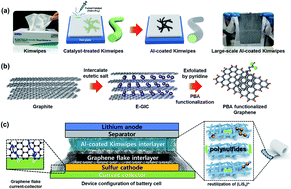
Fig. 1 demonstrates a schematic illustration of the hybrid-interlayers design (1st-GNFs/2nd-Al-coated Kimwipes, hereafter GNFs/Al-coated Kimwipes). The products in the chemical solution-based Al coating process were illustrated in Fig. 1a (see detailed schemes in Fig. S1). The Kimwipes paper is exposed to catalytic surroundings filled with evaporated titanium isopropoxide (Ti(O-i-Pr)4) and subsequently immersed into Al precursor solution of AlH3{O(C4H9)2}, which was prepared by reaction of aluminum chloride (AlCl3) with lithium aluminum hydride (LiAlH4) in dibutyl ether (O(C4H9)2).
image file: c6ra08538e-f1.tif
Fig. 1 Synthesis schematic illustration of (a) Al coating procedure: catalyst-treated Kimwipes by fumed catalyst, and Al-coated Kimwipes after Al precursor treatment. (b) Synthetic steps for the PBA functionalized GNFs. (c) Configuration of Li–S battery cell with the GNFs and the Al-coated Kimwipes.

The Al precursor solution easily penetrates deeply into fibrous materials comprising Kimwipes. As a result, the decomposition of AlH3{O(C4H9)2} into Al, H2, and O(C4H9)2 occurs in all of the fiber units. The nucleation of Al starts to occur on the surfaces of every fiber unit at room temperature, and eventually the nucleated Al grows large enough to cover the surface of each fiber unit, filling the spaces between the fiber units. Fig. 1b shows a figure of the fabrication method of GNFs functionalized with 1-pyrenebutylic acid (PBA). To maintain intrinsic properties of graphene, the synthetic method to obtain graphene flakes without oxidation process preventing damages on the surface is required. Therefore, the GNFs are synthesized by exfoliation from graphite intercalation compound as reported in previous study. In addition, the PBA can be absorbed onto graphene sheet with π–π interaction so that GNFs can be dispersed in various solvents such as ethanol.33 Fig. 1c presents a schematic diagram of the dual interlayer cell configuration comprising the GNFs and the Al-coated Kimwipes interlayers for high performance Li–S batteries. In the modified cell structure, each interlayer plays a different role in the electrochemical cell: (i) the GNFs layer as 1st interlayer functions not only as a preventing layer to decrease a direct dissolution of sulfur cathode by fully covering the surface of the cathode, but also as a flexible current collector in the edge of the GNFs surrounding the sulfur, where the GNFs directly contacts sulfur and a sub-current collector (Al-foil) – this renders an effective transfer of electrons from the top surface of insulating sulfur cathode into outer circuit; (ii) the Al-coated Kimwipes layer with unique porous structure as 2nd interlayer decisively functions as the polysulfide reservoir to intercept and possess the intermediate soluble by-product. The relatively large space between microfibers accelerates electrolyte infiltration, and the small voids effectively screen the active materials, at which the highly conductive 3-D networks with Al coating layer give rise to reversible reaction of the captured products and reactivation.

Microstructural and phase characterization of graphene nanoflakes

The surface morphologies of the GNFs interlayer are shown in Fig. 2. We here optimized the weight of the GNFs coated on the sulfur electrode (Fig. S2 and S3). At this time, the GNFs layer was lifted easily on the sulfur cathode (see the experimental details in ESI). The GNFs entirely covered sulfur cathode and the GNFs with a size of 5–10 μm were well connected (Fig. 2a). The crystallinity of the GNFs was evaluated by Raman spectroscopy (Fig. 2b). The D band is located at ∼1380 cm−1, the peak intensity of which was smaller than that of the G band (∼1580 cm−1).27,34 This proves low oxidation and defects in the GNFs. The D to G ratio is ∼0.18, which implies that sp2 carbon lattice is greatly ordered and the functional groups at the edges of the GNFs is almost absent. As reported before, the non-oxidized GNFs non-covalently functionalized by PBA have high quality with few layers.33,34 A representative transmission electron microscopy (TEM) image of a collection of the GNFs is shown in Fig. 2c, which confirmed that the multilayer-graphene sheets with a size of several hundred nanometers were not severely restacked. The dashed red square corresponds to the high-resolution TEM (HRTEM) image of Fig. 2d, which undoubtedly indicates the graphene sheets with a few layers. The thickness of the GNFs can be clearly identified by the lattice fringes of graphene edges, with a d-spacing of 0.34 nm.34–36 Single layer-GNFs were also observed in the same sample, along with the multilayer-GNFs above (Fig. 2e). The dashed red square corresponds to the magnified image of a graphene monolayer in Fig. 2f. The fact that the GNFs sheet has high-quality single crystal nature was also corroborated by the fast Fourier transform (FFT) with typical six-fold symmetry (inset).37,38 The crystal patterns in the FFT confirmed that the {1100} spots are clearly present whereas the {2110} spots are hard to be distinguished owing to its blurred patterns. This intensity difference is the obvious fingerprint of a monolayer graphene. From these results, it is believed that the GNFs with multilayers and partially single layer were spread out over most of the sulfur electrode.
image file: c6ra08538e-f2.tif
Fig. 2 (a) SEM images of GNFs layer on the sulfur cathode. (b) Raman spectra of the GNFs. TEM images of (c and d) multilayer and (e and f) monolayer GNFs.

Materials characterization of Al-coated Kimwipes

The microstructural evolution of the Al-coated Kimwipes as 2nd interlayer is presented in Fig. 3. The pristine Kimwipes tissue paper has the fabric microstructure with a 3-D interpenetrating network (Fig. S4). After the Al coating process, the original fabric-shape could be kept well without any structural change (Fig. 3a). The inset shows a digital image of the free-standing Al-coated Kimwipes. The Al coating layers consist of densely arranged surface grains of Al with size in the range of 64–154 nm (Fig. 3b).30
image file: c6ra08538e-f3.tif
Fig. 3 (a) SEM images of the Al-coated Kimwipes. Cross-section SEM images of (c) bare Kimwipes and (d) Al-coated Kimwipes. (e and f) TEM and (g) STEM images of the Al-coated Kimwipes and the corresponding elemental maps of (h) carbon and aluminum. (i) XRD patterns for the Kimwipes and the Al-coated Kimwipes. (j) XPS analysis for the Al-coated Kimwipes.

For comparison of the thickness before and after Al coating, cross-section morphologies of the bare Kimwipes and the Al-coated Kimwipes were analyzed (Fig. 3c and d). The pristine Kimwipes showed small pores in the intervals of each fibers and the Al-coated Kimwipes indeed maintained its unique fabric shapes well, which is in good agreement with the surface observation in Fig. 3a. This clearly implies that there are no significant changes in a thickness of the Al-coated Kimwipes after the Al coating process. For further investigation, the TEM image of the Al-coated Kimwipes is shown in Fig. 3e. Note that an electron beam can internally penetrate through the Kimwipes fiber and the Al particles can be chipped off from the fiber during TEM sample preparation, as exhibited in the inset showing the enlarged fiber of the edge-side. The yellow frame reveals the specific area which is detected by HRTEM in Fig. 3f. The crystalline nature of the coating layer composed of Al nanoparticles is verified from the lattice fringes with a d-spacing of 0.23 nm (inset image), which is in accord with the (111) plane of Al.39 To confirm the homogenous atomic distributions of Al and carbon, the scanning-transmission electron microscopy (STEM) and energy-dispersive X-ray spectroscopy (EDS) mapping analysis were carried out (Fig. 3g and h). The metal surface is reflected brightly as measured by the STEM. Carbon originated from a cellulose comprising of typically the Kimwipes and Al as coating element are homogeneously dispersed in the 1-D fiber scaffold. Moreover, the Al coating layers are evenly coated on the relatively large surface area of the Kimwipes tissue paper (16 cm × 22 cm), as supported by the digital image in Fig. S5. The XRD patterns in Fig. 3i are in good agreement with the standard position of the Al crystal phase (JCPDS 65-2869). For the Al-coated Kimwipes, the observation of major peaks at 38.47 and 44.72° is attributed to the (111) and (200) planes of typical Al, respectively. Moreover, the XPS analysis was conducted to verify the surface species of the Al-coated Kimwipes. The peak at 71.9 eV corresponds to metallic Al 2p binding energy whereas the peak for the binding energy of Al3+ oxidation state in Al2O3 was found at 74.2 eV. This result confirms an existence of thin Al2O3 layer on the surface of the Al-coated Kimwipes. The Al2O3 can absorb the dissolved polysulfides from the electrolyte, which plays an important role in improving the long-term stability of the Li/S cells by reactivating the sulfur species.40 It is significantly crucial for Al features on the Kimwipes tissue paper substrates to have a sufficient electrical conductivity as a conductive interlayer for Li/S batteries. However, the reaction of AlH3{O(C4H9)2} with moisture or oxygen is so active that moisture or oxygen adsorbed in paper substrates presumably causes the generation of a nonconductive Al compound, such as Al(OH)3 or aluminum oxide Al2O3, in the chemical solution-based Al coating process. In this regard, we measured the electrical sheet resistance of the prepared Al features on paper substrates (Fig. 4a). Although the Al features prepared on paper substrates by the solution process were less than 160 nm in thickness, their electrical conductivities were excellent, showing 712.2 mΩ □−1 as an average electrical sheet resistance. The high electrical conductivity of the Al-coated Kimwipes was enough to realize fast electron transport, ensuring the Al-coated Kimwipes to be a suitable conductive interlayer with a welter of mesopores (inset).


image file: c6ra08538e-f4.tif
Fig. 4 (a) Electrical sheet resistance of Al coating layer coated on Kimwipes tissue paper substrate (inset corresponds to pore size distribution of the Al-coated Kimwipes). (b) Rate capability of the pristine sulfur, the GNFs (1st interlayer), the Al-coated Kimwipes (2nd interlayer), and the GNFs/Al-coated Kimwipes (1st + 2nd interlayer) electrodes at a series of current densities and (c) the corresponding voltage curves for each C-rate. (d) Cycle performances of the pristine sulfur and the GNFs/Al-coated Kimwipes at 0.2 and 1C for 200 cycles. All data were calculated on the basis of active materials.

Electrochemical characterization of sulfur cell with GNF/Al-coated Kimwipes

The electrochemical properties of the modified Li/S battery using the electrodes with the conductive interlayers were investigated (see details in the ESI). The C rates in this study are defined on the basis of the mass loading and theoretical capacity of sulfur (1C = 1675 mA g−1). The electrolyte uptake assisted by the Kimwipes interlayer increased from 230 to 690% as the number of Al-coated Kimwipes layers increased (Table 1). The measurement for the electrolyte uptake is explained in the ESI. Fig. 4b shows the discharge capacities of the modified sulfur electrode varied by adopting the complementary GNFs and/or Al-coated Kimwipes interlayer at different current densities. Note that the multi-stacked GNFs/Al-coated Kimwipes in this study includes 7 wt% of the GNFs and three sheets of the Al coating Kimwipes. Such structure does not sacrifice energy density with respect to the weight/volume of the cells due to lightweight property, a strong absorption ability, and contractibility of the Kimwipes (Table 2). In spite of sudden capacity loss during initial cycles, the capacity values of the electrodes were recuperated after few cycles. When C rate was increased from the 0.05C to 1C, the rate capabilities of the electrodes with the interlayers were excellent, while the pristine sulfur electrode showed poor rate capability. The reversible capacity of the GNFs/Al-coated Kimwipes electrode at 0.2C (785.7 mA h g−1) was superior to those of the pristine sulfur electrode (415.3 mA h g−1), sulfur electrodes with only GNFs (604.6 mA h g−1), and only Al-coated Kimwipes electrodes (669.0 mA h g−1). In essence, the sulfur electrodes with Al-coated Kimwipes or the GNFs/Al-coated Kimwipes could deliver high capacities of 443.1 or 497.3 mA h g−1 even at 2C, respectively, whereas the pristine sulfur and the GNFs electrodes exhibited low rate capabilities at 2C rates. After 2C rate cycling, the capacities of the sulfur electrode with the Al-coated Kimwipes or the GNFs/Al-coated Kimwipes were able to recover to the initial state when the current density was reversed back to the initial C rate (0.05C) (Fig. S6). In comparison, although the GNFs showed improved capacity retention than the pristine sulfur electrode, they both underwent a capacity degradation even after the recovery cycling at 0.05C.
Table 1 Electrolyte uptake of the pristine Kimwipes and the Al-coated Kimwipes
Samples Electrolyte uptake (%)
Bare Kimwipes ∼231
Al-coated Kimwipes (1 sheet) ∼230
Al-coated Kimwipes (2 sheet) ∼460
Al-coated Kimwipes (3 sheet) ∼690


Table 2 Thickness of the Kimwipes before and after electrolyte uptake
The number of sheets (#) Thickness, μm (before) Thickness, μm (after) Contractibility
1 74 27 ∼63%
2 123 34 ∼72%
3 174 42 ∼76%
5 285 93 ∼67%
10 594 172 ∼71%


These results demonstrate that the GNFs interlayer itself cannot sufficiently act as sandwiched scaffold which renders reactivation of inactivated areas as well as fast electron transport. That is, the porous architecture with highly conductive Al coating layer effectively intercepts the active materials. More importantly, the benefits stemming from the GNFs or the Al-coated Kimwipes interlayer can be amplified when both kinds of interlayer are used together to obtain synergistic effect (Fig. S7 and S8). The hybrid type-interlayer trapping the dissolved polysulfides has a high electrical conductivity to offer electron and Li+ ion pathway, thereby reutilizing the active materials, which renders highly reversible reactions during high C rate cycling. The electrochemical impedance spectroscopy (EIS) measurements further support the fact that the conductive GNFs/Al-coated Kimwipes effectively enhances the rate performance by reducing the internal resistance. The impedance data of sulfur cathodes with/without the interlayer after first charge and second discharge are shown in Fig. S9. After the first charge (Fig. S9a), the value of charge transfer resistance (Rct), which originates from the electrolyte–electrode interface, of the GNFs/Al-coated Kimwipes interlayer (34.3 Ω) is lower than that of the pristine sulfur (57.4 Ω). This indicates that the interlayer ensures a conductive pathway. After the second discharge (Fig. S9b), two large semicircles for the pristine sulfur were observed, which are concerned with a passivation film in the high-frequency and the Rct in the medium-low frequency region.15,41,42 For the GNFs/Al-coated Kimwipes, in contrast, only one small semicircle appeared in the EIS spectra. This means that the electrode with the multifunctional interlayer is favorable in terms of transfer reaction kinetics and reactivation of the dissolved polysulfide.

To understand the underlying intercepting mechanism of our interlayers, the discharge voltage curves were interpreted as a function of the applied rates (Fig. 4c). In general discharging reaction of Li/S cell, two typical plateaus are observed at 2.4 and 2.1 V, corresponding to: the (1) formation of long-chain liquid polysulfides (Li2Sx, 8 < x < 6) and (2) continuous transformation to the soluble polysulfides (Li2Sx, 6 < x < 2) and solid Li2S2/Li2S (Li2Sx, 2 < x < 1), respectively.2 When the Al-coated Kimwipes is involved in the battery cell, the voltage plateau regions becomes longer than that of pristine sulfur electrodes. The high discharge capacity values were achieved by the sulfur electrode employing the Al-coated Kimwipes or the GNFs/Al-coated Kimwipes (807.49 or 890.4 mA h g−1 at 0.1C, respectively). In contrast, the pristine sulfur electrode without any interlayers shows a major polarization increase and capacity drop in the 2.4 V plateau region as well as partly in the 2.1 V plateau region (486.1 mA h g−1 at 0.1C). The results demonstrate that the electrodes assisted by the highly conductive Al-coated Kimwipes gave more opportunity for soluble polysulfides to transform to high portion of solid Li2S2/Li2S, which leads to stable electrode with low overpotential.

Moreover, the result confirms that the introduction of metallic interlayer is considered as an effective way to stabilize the Li/S cell. From such results, we thought that further improvement could be achieved by synergistic combination of the metallic interlayer and carbon based interlayer.

To further investigate the long-term stability of the modified sulfur electrode with the novel interlayer electrode, the cycling performances for 200 cycles at 0.2 and 1C were evaluated (Fig. 4d). By introducing the multifunctional interlayer, the capacity retention of the interlayer electrodes was much enhanced compared to those of the pristine sulfur electrodes. The sulfur cathodes with the GNFs/Al-coated Kimwipes interlayer delivered stable discharge capacities (669.3 and 370.2 mA h g−1 after 200 cycles at 0.2 and 1C, respectively), whereas the pristine sulfur electrodes showed rapid capacity drops (238.9 and 156.9 mA h g−1 after 200 cycles at 0.2 and 1C). In general, the sulfur rings are initially converted into the Li2S8 within the cathode, and the by-product has the longest chain length (size: ∼2 nm) among the polysulfides species. Basically, the multistacked-interlayer with micro/mesopores can more effectively capture the polysulfides than that with macropores, considering the size of the tiny intermediate moleculars, supported by the inset in Fig. 4a.14,43,44 It is important to note that the long-cycle lifetime of the porous GNFs/Al-coated Kimwipes reconfirms that the conductive interlayers reutilized polysulfides and effectively trapped them in the cathode region, which can be explained in part by the high contractibility (∼76%) of the porous interlayer (Table 2). We speculate that the GNFs/Al-coated Kimwipes would undergo severe contraction during the electrolyte infiltration, which reduces to the fine-pores of the multi-stacked interlayer, thus leading to usable active sites where the small polysulfides can be absorbed.

Ex situ investigation into reutilization of polysulfides during cycling

The small-sized sulfur captured by the GNFs/Al-coated Kimwipes interlayer after 200th cycle can be verified by the EDS-mapping analysis (Fig. 5). In the GNFs side of the interlayer electrode, the polydisulfides with irregular shapes are well-dispersed on the surface of the GNFs interlayer (Fig. 5a). The homogeneous distribution of each element including carbon (C) and sulfur (S), which originated from GNFs and polysulfides respectively, was confirmed (Fig. 5b and c). For the Al-coated Kimwipes interlayer, initial morphology of the Al-coated Kimwipes interlayer remains intact even after 200th cycle (Fig. 5d) as expected. Several studies have proven that the polysulfides can be absorbed on the Al2O3 even though truth for interaction between the polysulfides and Al2O3 has mechanistically not came out.40,45 The thickness of the Al2O3 on conductive substrate is in great importance in considering the electrical conductivity since the insulating Al2O3 cannot contribute to the capacity of battery. To coat ultrathin Al2O3 on conductive sulfur cathode material, atomic layer deposition (ALD) has been employed, but that technique are often restricted by low rate of film growth and high-cost in the process.46,47 Using our chemical-solution coating method, the conductive Al film was easily grew on a bulk of the porous Kimwipes paper. The thickness of the native Al2O3 (3–5 nm) was obviously confirmed by Al-coated polyimide nanofiber (Fig. S10),48 which is ultrathin and does not reduce the electrical conductivity of the Al-coated Kimwipes as explained in the results section. The Al and the S signals detected in the mapping are strong in the fibrous matrix, which proves that the sulfur/sulfides might be captured and were reutilized by the high conductivity retained Al-coated Kimwipes in the cathode region (Fig. 5e and f).14 Nevertheless, the sulfur electrode with the GNFs/Al-coated Kimwipes showed a gradual fading with relatively lower capacity compared to literature (Fig. 4). The Al-coated Kimwipes tissue paper composed of several tenth micrometers (Fig. 3) has low fiber weave density, which is in favor of infiltration of the electrolyte, but may pass quite a lot of the polysulfides through wide-interspaces between the huge fibers without capture and reutilization of the polysulfides. We expect that the Al-coated polyimide nanofibers with a high weave density, as separator but not an additional interlayer, will further enhance the battery performance, as our next work (Fig. S10).40,48
image file: c6ra08538e-f5.tif
Fig. 5 SEM image of (a) the GNFs interlayer electrode and the corresponding elemental maps of (b) carbon (red), (c) sulfur (yellow). SEM image of (d) the Al-coated Kimwipes interlayer electrode and the corresponding elemental maps of (e) Al (violet), (f) sulfur (yellow). All of the images were taken after 200th cycle.

Desirable concept of GNFs/Al-coated Kimwipes included sulfur cell configuration

Obviously, the enhanced rate-capability and cycling performance of the GNFs/Al-coated Kimwipes interlayer for Li/S batteries can be ascribed to the distinctive cell design (Fig. 6): (i) the GNFs interlayer prevents a direct dissolution of the polysulfides; (ii) the Kimwipes, mechanical agent, affords excellent liquid electrolyte channeling, leading to a plenty of desired pores; (iii) the Al coating layer, which has a high electrical conductivity, high cost-efficiency, and lightweight property, can be coated on the porous paper by a facile chemical solution-based method; (iv) polysulfides can be absorbed by the entire surface of ultrathin Al2O3 layer, which effectively chemisorbs the polysulfide species; (v) the GNFs and the Al-coated Kimwipes interlayers were electrochemically coupled, as the multi-stacked interlayer becomes suitable to act as “a fish net” for intercepting the dissolved polysulfide; (vi) a high electrical conductivity of the GNFs/Al-coated Kimwipes interlayer synchronizes the recycling of the migrating polysulfide with fast electron transport as a good upper current collector.
image file: c6ra08538e-f6.tif
Fig. 6 Overall design of the sulfur cathode with the GNFs/Al-coated Kimwipes interlayer.

Conclusions

In summary, we propose a new cell design with GNFs and Al-coated Kimwipes, which is highly effective for the reutilization of polysulfides in Li/S batteries. The highly conductive Al-coated fibrous Kimwipes paper was introduced as a main protecting interlayer against the polysulfide shuttling. The novel metallic interlayer was prepared from Al ink based on a chemical solution process and subsequent simple drop coating of the ink on the conventional Kimwipes paper. To further stabilize the Li/S cell, non-oxidized GNFs was directly deposited on the sulfur cathode as a supporting interlayer. The multi-stacked interlayers effectively stored and trapped the polysulfide intermediates in electrolyte of cathode side. Moreover, the interlayers provided the fast electron transport through the highly conducting Al and graphene components facing sulfur cathode. Finally, high capacity and excellent cyclability of the Li/S cell were successfully achieved by the utilization of both GNFs and Al-coated Kimwipes interlayers with synergistic effect. Given the current circumstance that the several issues of Li/S batteries remain for realization of practical uses, this innovative cell configurations can be modified to give great contributions to the significant improvement of Li/S batteries. We expect that the strategy can be more effectively developed when other alternative conductive materials with porous structure are discovered.

Acknowledgements

This work was supported by Korea CCS R&D Center (KCRC) grant funded by the Korea government (Ministry of Science, ICT & Future Planning) (No. NRF-2014M1A8A1049303). This work was also supported by Korea Institute of Materials Science (KIMS) grant funded by Korea Institute of Machinery & Materials (KIMM) (N04140231).

Notes and references

  1. P. G. Bruce, S. a. Freunberger, L. J. Hardwick and J.-M. Tarascon, Nat. Mater., 2012, 11, 19–29 CrossRef CAS PubMed.
  2. Y.-X. Yin, S. Xin, Y.-G. Guo and L.-J. Wan, Angew. Chem., Int. Ed. Engl., 2013, 52, 13186–13200 CrossRef CAS PubMed.
  3. A. Manthiram, Y. Fu and Y. S. Su, Acc. Chem. Res., 2013, 46, 1125–1134 CrossRef CAS PubMed.
  4. G. Xu, B. Ding, J. Pan, P. Nie, L. Shen and X. Zhang, J. Mater. Chem. A, 2014, 2, 12662–12676 RSC.
  5. M. Wild, L. O'Neill, T. Zhang, R. Purkayastha, G. Minton, M. Marinescub and G. J. Offer, Energy Environ. Sci., 2015, 8, 3477–3494 Search PubMed.
  6. Y. V. Mikhaylik and J. R. Akridge, J. Electrochem. Soc., 2004, 151, A1969–A1976 CrossRef CAS.
  7. J. Yan, X. Liu, X. Wang and B. Li, J. Mater. Chem. A, 2015, 3, 10127–10133 RSC.
  8. B. Ding, Z. Chang, G. Xu, P. Nie, J. Wang, J. Pan, H. Dou and X. Zhang, ACS Appl. Mater. Interfaces, 2015, 7, 11165–11171 Search PubMed.
  9. G. Xu, J. Yuan, X. Tao, B. Ding, H. Dou, X. Yan, Y. Xiao and X. Zhang, Nano Res., 2015, 8, 3066–3074 CrossRef CAS.
  10. J. Yan, X. Liu, H. Qi, W. Li, Y. Zhou, M. Yao and B. Li, Chem. Mater., 2015, 27, 6394–6401 CrossRef CAS.
  11. J. Jin, Z. Wen, G. Ma, Y. Lu, Y. Cui, M. Wu, X. Liang and X. Wu, RSC Adv., 2013, 3, 2558–2560 RSC.
  12. J. Lee and W. Choi, J. Electrochem. Soc., 2015, 162, A935–A939 CrossRef CAS.
  13. S. Lim, R. L. Thankamony, T. Yim, H. Chu, Y.-J. Kim, J. Mun and T.-H. Kim, ACS Appl. Mater. Interfaces, 2015, 7, 1401–1405 Search PubMed.
  14. Y.-S. Su and A. Manthiram, Nat. Commun., 2012, 3, 1166 CrossRef PubMed.
  15. Y.-S. Su and A. Manthiram, Chem. Commun., 2012, 48, 8817–8819 RSC.
  16. R. Singhal, S.-H. Chung, A. Manthiram and V. Kalra, J. Mater. Chem. A, 2015, 3, 4530–4538 RSC.
  17. H.-J. Peng, D.-W. Wang, J.-Q. Huang, X.-B. Cheng, Z. Yuan, F. Wei and Q. Zhang, Adv. Sci., 2016, 3, 1500268 CrossRef PubMed.
  18. C.-L. Lee and I.-D. Kim, Nanoscale, 2015, 7, 10362–10367 RSC.
  19. J.-Q. Huang, B. Zhang, Z.-L. Xu, S. Abouali, M. Akbari Garakani, J. Huang and J.-K. Kim, J. Power Sources, 2015, 285, 43–50 CrossRef CAS.
  20. A. Manthiram, Y. Fu, S.-H. Chung, C. Zu and Y.-S. Su, Chem. Rev., 2014, 114, 11751–11787 CrossRef CAS PubMed.
  21. A. C. Siegel, S. T. Phillips, M. D. Dickey, N. Lu, Z. Suo and G. M. Whitesides, Adv. Funct. Mater., 2010, 20, 28–35 CrossRef CAS.
  22. H. M. Lee, H. B. Lee, D. S. Jung, J. Y. Yun, S. H. Ko and S. Bin Park, Langmuir, 2012, 28, 13127–13135 CrossRef CAS PubMed.
  23. R. A. Siegel, in Principles of Physics, 602 Saunders College Publishing, 2nd edn, 1997 Search PubMed.
  24. A. K. Geim, Science, 2009, 324, 1530–1534 CrossRef CAS PubMed.
  25. S. Park and R. S. Ruoff, Nat. Nanotechnol., 2009, 4, 217–224 CrossRef CAS PubMed.
  26. A. K. Geim and K. S. Novoselov, Nat. Mater., 2007, 6, 183–191 CrossRef CAS PubMed.
  27. W. Ryu, T. Yoon, S. H. Song, S. Jeon, Y. Park and I. Kim, Nano Lett., 2013, 13, 4190–4197 CrossRef CAS PubMed.
  28. M. a M. Leenen, V. Arning, H. Thiem, J. Steiger and R. Anselmann, Phys. Status Solidi A, 2009, 206, 588–597 CrossRef CAS.
  29. H. M. Lee, S. Y. Choi and A. Jung, ACS Appl. Mater. Interfaces, 2013, 5, 4581–4585 Search PubMed.
  30. H. M. Lee, S. Y. Choi, A. Jung and S. H. Ko, Angew. Chem., Int. Ed., 2013, 52, 7718–7723 CrossRef CAS PubMed.
  31. H. M. Lee, S. Y. Choi, K. T. Kim, J. Y. Yun, D. S. Jung, S. Bin Park and J. Park, Adv. Mater., 2011, 23, 5524–5528 CrossRef CAS PubMed.
  32. H. M. Lee, J. Y. Seo, A. Jung, S.-Y. Choi, S. H. Ko, J. Jo, S. Bin Park and D. Park, ACS Appl. Mater. Interfaces, 2014, 6, 15480–15487 Search PubMed.
  33. S. H. Song, K. H. Park, B. H. Kim, Y. W. Choi, G. H. Jun, D. J. Lee, B. S. Kong, K. W. Paik and S. Jeon, Adv. Mater., 2013, 25, 732–737 CrossRef CAS PubMed.
  34. K. H. Park, B. H. Kim, S. H. Song, J. Kwon, B. S. Kong, K. Kang and S. Jeon, Nano Lett., 2012, 12, 2871–2876 CrossRef CAS PubMed.
  35. J. C. Meyer, A. K. Geim, M. I. Katsnelson, K. S. Novoselov, T. J. Booth and S. Roth, Nature, 2007, 446, 60–63 CrossRef CAS PubMed.
  36. J. Jung, W. Ryu, J. Shin, K. Park and I. Kim, ACS Nano, 2015, 9, 6717–6727 CrossRef CAS PubMed.
  37. M. Lotya, Y. Hernandez, P. J. King, R. J. Smith, V. Nicolosi, L. S. Karlsson, F. M. Blighe, S. De, Z. Wang, I. T. Mcgovern, G. S. Duesberg and J. N. Coleman, J. Am. Chem. Soc., 2009, 131, 3611–3620 CrossRef CAS PubMed.
  38. J. Borysiuk, J. Sołtys, J. Piechota, S. Krukowski, J. M. Baranowski and R. Stępniewski, J. Appl. Phys., 2014, 115, 054310 CrossRef.
  39. Y. Hamon, T. Brousse, F. Jousse, P. Topart, P. Buvat and D. M. Schleich, J. Power Sources, 2001, 97–98, 185–187 CrossRef CAS.
  40. H. Yao, K. Yan, W. Li, G. Zheng, D. Kong, Z. W. Seh, V. K. Narasimhan, Z. Liang and Y. Cui, Energy Environ. Sci., 2014, 7, 3381–3390 Search PubMed.
  41. S.-H. Chung and A. Manthiram, Chem. Commun., 2014, 50, 4184–4187 RSC.
  42. Z. Deng, Z. Zhang, Y. Lai, J. Liu, J. Li and Y. Liu, J. Electrochem. Soc., 2013, 160, A553–A558 CrossRef CAS.
  43. O. Knop, R. J. Boyd and S. C. Choi, J. Am. Chem. Soc., 1988, 110, 7299–7301 CrossRef CAS.
  44. A. I. Boldyrev, J. Simons and P. V. R. Schleyer, J. Chem. Phys., 1993, 99, 8793–8804 CrossRef CAS.
  45. Z. Zhang, Y. Lai, Z. Zhang, K. Zhang and J. Li, Electrochim. Acta, 2014, 129, 55–61 CrossRef CAS.
  46. X. Han, Y. Xu, X. Chen, Y. C. Chen, N. Weadock, J. Wan, H. Zhu, Y. Liu, H. Li, G. Rubloff, C. Wang and L. Hu, Nano Energy, 2013, 2, 1197–1206 CrossRef CAS.
  47. M. Yu, W. Yuan, C. Li, J.-D. Hong and G. Shi, J. Mater. Chem. A, 2014, 2, 7360–7366 RSC.
  48. J. Lee, C. L. Lee, K. Park and I. D. Kim, J. Power Sources, 2014, 248, 1211–1217 CrossRef CAS.

Footnotes

Electronic supplementary information (ESI) available: Schematic illustration for chemical solution-based Al coating process; additional digital images for the sulfur electrodes with the GNFs and the Al-coated Kimwipes; additional SEM images of the pristine S and the GNFs/Al-coated Kimwipes electrodes; ex situ impedance data; electrical sheet resistance data for the Al-coated Kimwipes; additional electrochemical data. See DOI: 10.1039/c6ra08538e
These authors contributed equally to this work.

This journal is © The Royal Society of Chemistry 2016
Click here to see how this site uses Cookies. View our privacy policy here.