Shubhangi Borsea,
Mayur Temgireb,
Ayesha Khana and
Satyawati Joshi*a
aDepartment of Chemistry, Savitribai Phule Pune University, (Formerly University of Pune) Ganeshkhind, Pune 411007, India. E-mail: ssjoshi@chem.unipune.ac.in; Fax: +91 020 25691728; Tel: +91 20 25601394 ext. 573, 569,532
bDepartment of Chemical Engineering, Indian Institute of Technology Bombay, Powai, Mumbai 400076, India
First published on 1st June 2016
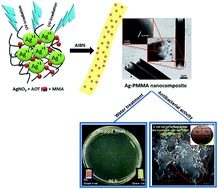
One-pot synthesis of polymer embedded silver nanoparticles (AgNPs) by the UV irradiation method was performed and thoroughly characterized. Electron microscopy analysis revealed that AgNPs (17.30 nm) were embedded into the PMMA matrix. High-resolution transmission electron microscopy (HRTEM) study indicates that the silver–poly(methyl methacrylate) (Ag–PMMA) nanocomposite exhibited internal highly ordered lattice fringes of the Ag (111) lattice plane. The Ag–PMMA nanocomposite had a lower tendency to agglomerate than borohydride reduced AgNPs as evaluated by stability experiments. The nanocomposite shows a zeta potential of −63.9 mV confirming the high stability of the nanocomposite. Organic reagent tests reveal that the synthesized nanocomposite contains a greater amount of Ag0-state particles and a lesser amount of Ag+ ions. Fourier transform infrared spectroscopy (FTIR) studies evidenced that the carbonyl group of PMMA binds to AgNPs. The nanocomposite exhibited excellent antibacterial performance against Gram negative Escherichia coli, Pseudomonas aeruginosa and Gram positive, Staphylococcus aureus. Moreover, the possible mechanism for the antibacterial activity of the Ag–PMMA nanocomposite with E. coli bacteria was discussed. In addition, the Ag–PMMA nanocomposite solution was loaded onto a membrane (the ‘treated membrane’) for water treatment applications and characterized by spectroscopy techniques. Sludge water was passed through the treated membrane and the effluent water was analyzed for viable bacteria. Deactivation of bacteria by percolation through the treated membrane occurred. Consequently, the filter effluent contains dead bacteria, which indicates that the treated membrane exhibits antibacterial properties. Interestingly, microwave plasma-atomic emission spectrometry (MP-AES) analysis estimated that silver loss in the treated membrane was less than 0.1 ppm.
The basic aim of water treatment is to remove undesired constituents from water.6 The use of membrane technology in water treatment has gained impetus for treating microorganisms, particulates and organic materials that contaminate water. Membrane based technology is a promising disinfection method in which microorganisms are retained without any harmful chemical treatment. Membrane technology is well established for water treatment because it is a reliable and largely automated process. Membranes deliver a physical barrier for such constituents based on their size, permitting the use of unconventional water sources.7 However, biofouling is a serious problem that occurs during the membrane filtration process due to deposition of microbial cells or other organic matter present in the feed stream.8 Nanotechnology has great potential in advancing water and waste water treatment to improve treatment effectiveness and to increase water supply through the safe use of unconventional water sources.6,7 Incorporation of nanomaterials into membranes offers a great prospect to improve membrane permeability, fouling resistance, and mechanical and thermal stability, in addition to rendering new functions for contaminant degradation and self-cleaning.9,10 Particularly, biocidal silver nanoparticles (AgNPs) are effective disinfectants and work for a wide spectrum of bacteria and viruses.11–13 AgNPs have been used previously in water filtration applications, as they prevent bacterial fouling of membrane filters. Compared to AgNPs, immobilized AgNPs are physico-chemically more stable as they are less prone to aggregation and oxidation when exposed to aqueous media.14 Beacuse of this, polymer-engineered AgNP-impregnated membranes are currently being explored due to the effective removal of bacteria. Mohammad and co-workers synthesized a nanohybrid polysulfone membrane with silver-decorated graphene nanoplates and this nanohybrid membrane shows excellent antibacterial properties.15 The Mauter and Zodrow groups demonstrated that synthesized nano-Ag can be surface grafted on polymeric membranes to inhibit bacterial attachment and biofilm formation on the membrane surface, as well as inactivate viruses.16,17 Cao et al., investigated antibacterial effect of AgNPs in a polyethersulfone membrane against S. aureus, S. albus and E. coli.18 Diagne et al., modified a commercially available polyethersulfone membrane by a polyelectrolyte multilayer modification method using poly(styrenesulfone), poly(diallyldimethylammonium chloride) and AgNPs, which show resistance to biofouling and inhibit bacterial growth.19 Smith et al. have shown that AgNPs embedded in porous ceramic media improve the removal and disinfection of E. coli.20 Morones et al., studied the activity of nanoscale silver particles embedded in a carbon matrix towards four types of Gram negative bacteria and they found that all types of Gram negative bacteria are inactivated due to interaction with the AgNPs.21 Taurozzi et al. found that when polysulfone (PSf) membranes are formed with AgNPs included in the casting solution by ex situ and in situ reduction methods, water permeability was increased.22 Polymer engineered AgNPs have attracted interest due to their antibacterial properties. Jang reported the synthesis of poly[2-(tert-butylaminoethyl)methacrylate] (PTBAM) embedded AgNPs by radical-mediated dispersion polymerization. The fabricated Ag/PTBAM nanofibers show enhanced antibacterial activities against both Gram negative E. coli and Gram positive S. aureus.23 An et al., studied the capability of an electrospun chitosan–polyethylene oxide membrane impregnated by silver for removal of E. coli.24 Poly(methyl methacrylate) (PMMA) has been extensively used in medical and dental applications due to its biocompatible nature. Alt et al., described the in vitro antibacterial activity of nanosilver against multi resistant bacteria and the in vitro cytotoxicity of AgNPs loaded into PMMA bone cement.25
Here, our study focuses on the in situ synthesis of AgNPs in a polymer matrix through photo-assisted processes. Taking advantage of the beneficial properties of UV rays and the antibacterial effects of Ag, we have synthesized an Ag–PMMA nanocomposite for water treatment. In the present study, PMMA was used as polymer substrate to encapsulate AgNPs. Photochemical fabrication is one of the most powerful, simple, cost-effective and convenient techniques for the synthesis of metal nanoparticles. In principle, the photochemical approach is the generation of M0 in such conditions that their precipitation is thwarted. M0 can be formed through direct photoreduction of a silver source, silver salt or complex, or reduction of silver ions using photochemically generated intermediates, such as radicals. In this one-step approach, we report a strategy involving the photoinduced formation of homogeneous AgNPs in a polymer (PMMA) stemming from a cross-linking photo-polymerization of a methyl methacrylate monomer. The effect of MMA monomer volume on the synthesis of Ag–PMMA nanocomposite has been investigated. In addition, the antibacterial properties of the Ag–PMMA nanocomposite have been evaluated against E. coli, P. aeruginosa (Gram negative) and S. aureus (Gram positive) bacteria using antibacterial activity, growth kinetics and minimum inhibitory concentration (MIC). The synthesized Ag–PMMA nanocomposite exhibited excellent antimicrobial activity toward Gram negative and Gram positive bacteria. We have made an attempt to explore the possibility of the fabricated Ag–PMMA nanocomposite as antibacterial agent for water treatment. Sludge water was collected from the Mula River (Pune, India) which contains Gram positive as well as Gram negative bacteria. To test the bactericidal action, a colloidal solution of the nanocomposite was loaded onto a membrane (the ‘treated membrane’). Then sludge water was passed through the treated membrane and effluent water was analyzed for viable bacteria. Deactivation of bacteria in the sludge water occurred by percolation followed by death confirmed by antibacterial activity and a microbial slide test. The membrane was characterized in terms of surface morphology by field emission scanning electron microscope (FE-SEM) studies.
To quantify the amount of silver in the treated membrane, analysis was performed by acid digestion of the membrane and determination of the amount of dissolved silver using MP-AES. Briefly, approximately 100 mg of dried membrane was reacted with 5 mL of 70% nitric acid in 5 mL of water and then boiled until it disintegrated. After cooling, the suspension was filtered through a glass filter. The silver content of the effluent was measured with MP-AES.
The minimum inhibitory concentration (MIC) test was performed as follows. Sterilized LB agar solutions (5 mL) were inoculated with bacterium (105–106 CFU). The synthesized nanocomposite was then added to the bacterial suspensions at different concentrations (5, 10, 15, 20 and 25 μL) and incubated at 37 °C with shaking at 150 rpm for 24 h. Bacterial growth was measured as an increase in absorbance at 600 nm. The experiments also included a positive control (a flask containing the nanocomposite and nutrient media) and a negative control (flask containing inocula and nutrient media). Three replicates of this experiment were performed.
For the kinetic tests, E. coli, P. aeruginosa and S. aureus suspensions were prepared. The culture medium of each bacterium was inoculated with bacteria and incubated overnight at 37 °C. Bacterial growth rates were measured by monitoring the optical density at 600 nm (OD600) using a spectrophotometer. The incubated bacteria were inoculated in the fresh media and grown at 37 °C with 200 rpm of shaking to an OD600 of 0.1. Various concentrations of Ag–PMMA nanocomposites (from 1 to 25 μL) were then added to the culture, and the OD600 was measured over time. This experiment was repeated three times.
000 rpm, 10 min) and washed thrice with Milli-Q water to remove the loosely bound Ag–PMMA nanocomposite on the bacterial surface. A series of pre-treatment steps were followed for FE-SEM analysis. Primary fixation of bacterial cells was achieved using 2.5% glutaraldehyde for 1 h. Then, samples were subsequently dehydrated with a graded ethanol series (30%, 50%, 70%, 90%, 95% and 100%).
O groups of the PMMA polymer. The high interaction of AgNPs with carbonyl oxygen (C
O) compared to that of the C–O in the ester functional group is due to the higher negativity of the charge density for the C
O than C–O in the polymer matrix.27,28
To clarify the morphology of polymer embedded AgNPs, TEM analysis was carried out. Fig. 1 shows a TEM image of the synthesized nanocomposite. TEM analysis confirmed that AgNPs of average 17.30 ± 0.4 nm in diameter were finely embedded throughout the polymer nanorods. The Ag–PMMA nanocomposite shows an average diameter of 0.4 μm and a length of 2.2 μm with a standard deviation of ±2.4 nm (Fig. S1, ESI†). Additionally, the synthesized nanocomposite possesses a smooth surface morphology (Fig. 1a–g), which indicates that the AgNPs were not located on the surface but instead were embedded inside the PMMA nanorods. To gain further insight into the morphology, HRTEM was performed on polymer embedded AgNPs (Fig. 1h). The synthesized nanocomposite exhibited internal highly ordered lattice fringes with a lattice spacing of 0.23 nm, corresponding to the (111) lattice plane of Ag. The interplanar distance of the nanosilver (111) plane is in good agreement with the (111) d-spacing of bulk Ag (0.2359 nm).29 The favored alignment of AgNPs in PMMA is at the (111) plane. This can be elucidated from the perspective of thermodynamics, since the preferred orientations of solid particles are known to be perpendicular in direction to the plane of lowest surface energy, which corresponds to the most densely packed planes for metallic materials.30,31 The SAED pattern confirms the polycrystalline nature of the AgNPs (Fig. 1i).
![]() | ||
| Fig. 1 TEM micrographs of (a and g) PMMA embedded AgNPs with bright field (a–d, f and g) and dark field (e) modes. (h) HR-TEM image and (i) SAED pattern of polymer embedded AgNPs. | ||
The crystalline character of the Ag–PMMA nanocomposite was supported by XRD analysis (Fig. S2, ESI†). The synthesized nanocomposite exhibits four distinct diffraction peaks at 2θ values of 38.1°, 44.3°, 64.4°, and 77.3° correspond to the (111), (200), (220), and (311) planes of the Ag crystal, respectively (JCPDS card number 4-0783). All the diffraction peaks can be indexed to the planes of face-centered-cubic (fcc) silver, with a lattice constant of about 4.08 Å.32 The XRD results demonstrated that the preferred growth plane of the particles is the (111) lattice plane. The crystallite size (34.4 nm, average particle size) of the synthesized nanocomposite was calculated from the FWHM of the peaks of silver by the Scherrer equation.
The size distribution of the Ag–PMMA nanocomposite was measured by DLS. The average particle size obtained from DLS data is 178 nm (Fig. S3, ESI†). DLS analysis indicates that the effective hydrodynamic diameter of the Ag–PMMA nanocomposite measured by DLS is larger than the hard core sizes measured by TEM. DLS analysis includes the ligand shell and determines the hydrodynamic size, while TEM analysis provides the information of the metallic core of particle.33 Dynamic Light scattering (DLS) is a technique for measuring the size of particles typically in the sub micron region. DLS measures Brownian motion and relates this to the size of the particles. Brownian motion is the random movement of particles due to the bombardment by the solvent molecules that surround them. Normally DLS is concerned with measurement of particles suspended within a liquid. The larger the particle, the slower the Brownian motion will be. Smaller particles are moved further by the solvent molecules and move more rapidly. The velocity of the Brownian motion is defined by a property known as the translational diffusion coefficient (D). The size of a particle is calculated from the translational diffusion coefficient by using the Stokes–Einstein eqn (1);
![]() | (1) |
The diameter measured in DLS signifies how a particle diffuses within a fluid so it is referred to as the hydrodynamic diameter. It is the diameter of a sphere that has the same translational diffusion coefficient as the particle. The translational diffusion coefficient mainly depends on the size of the particle core, the surface structure, the concentration, the type of ions in the medium and the ionic strength of the medium as well. Any change to the surface of a particle that affects the diffusion speed will correspondingly change the apparent size of the particle. An adsorbed polymer layer projecting out into the medium may reduce the diffusion speed. The nature of the surface and the polymer, as well as the ionic concentration of the medium can affect the polymer conformation, which in turn can change the apparent size by several nanometres.33
DLS measures the hydrodynamic diameter of the whole solution components viz. in situ AgNPs, including the Ag core, capping agents and any other molecules sorbed to the surface, and layers of solvent molecules that are associated with the NPs during Brownian motion. These components are assumed to conform to a spherical geometry. During DLS measurements, Rayleigh scattering dictates that the light intensity scattered by a NP is proportional to its diameter raised to the sixth power, and thus larger diameter particles will dominate the intensity signal.33
Using DLS we get the hydrodynamic radius of the particle, whereas by TEM we get an estimation of the projected area diameter. According to DLS theory, when a dispersed particle moves through a liquid medium, a thin electric dipole layer of the solvent adheres to its surface. This layer influences the movement of the particle in the medium. Thus, the hydrodynamic diameter gives us information of the inorganic core along with any coating material and the solvent layer attached to the particle as it moves under the influence of Brownian motion. While estimating the size by TEM, due to the difference in the sample preparation method, the hydration layer is absent; hence, we get information only about the inorganic core. The projected area diameter estimated by TEM is theoretically defined as the area of a sphere having the same area as the projected area of the particle resting in a stable position. Sometimes, due to poor TEM contrast, the size measurement of the coating layer (if present) could be underestimated or missed. Hence, the hydrodynamic diameter is always greater than the size estimated by TEM.
The Ag–PMMA nanocomposite was further examined by TGA in order to obtain quantitative information on the silver content (Fig. S4, ESI†). It was observed from the TGA curve that the two dominant weight losses of the sample occurred in the temperature region between 158–506 °C (Fig. S4, ESI†). There was almost no weight loss after 506 °C. The total weight loss was 90.77%, resulting in a silver content of 9.33%. Marning and coworkers also reported that the unsaturated ends (PMMA) are responsible for two step weight losses around 180 °C and 270 °C for silver–polymer nanoparticles. They observed two step weight losses mainly in the temperature range from 158 to 506 °C with silver–polymer nanoparticles.29,34 Earlier study has reported that the thermal stability of PMMA is improved due to the presence of silver. The presence of a small amount of Ag in the polymer matrix confines the motion of the polymer chains, which renders improved thermal stability.35
The characteristic surface plasmon resonance (SPR) spectra of metal nanoparticles provides a convenient tool to monitor their formation and gain insight into the particle size and shape. The optical property of the Ag–PMMA nanocomposite was analyzed by UV-visible spectroscopy. Fig. 2a depicts the absorption band at 421 nm, which is a characteristic SPR band for AgNPs. It is known that SPR absorption of nanoparticles is sensitive to geometric parameters, aggregation and the surrounding matrix. The SPR band starts to appear after 1 h of irradiation and grows with time. The formation of Ag–PMMA nanocomposite was completed within 24 h (Fig. 2a); further irradiation up to 48 h showed no change in the SPR band. This result indicates that 24 h is the optimum irradiation time for the synthesis of the Ag–PMMA nanocomposite.
In order to verify the role of AOT in the synthesis, a blank system containing only silver ion and MMA (without AOT) was examined. There was no formation of thr Ag–PMMA nanocomposite and no color change of solution. From this experiment, it can be concluded that AOT acts as a stabilizing agent to prohibit aggregation of silver. Also, to ensure the compatibility of the solution, it was ensured that AOT and MMA with AIBN do not interact before irradiation. More information about the role of the AOT surfactant is provided in the ESI section (Fig. S5, ESI†).
The effect of MMA monomer volume on the formation Ag–PMMA nanocomposite was studied by UV-visible and FTIR spectroscopy (Fig. 2). UV-visible study demonstrates that, as the volume of MMA monomer increases (0.2 to 1 mL), the SPR band of the Ag–PMMA nanocomposite becomes broader (Fig. 2b). This result indicates that the 0.2 mL volume of MMA is the optimum volume for the synthesis of Ag–PMMA nanocomposite. The FTIR spectra of Ag–PMMA nanocomposite presented in Fig. 2c, shows a broad band around 3399 cm−1, indicating the presence of an –OH group. Prominent bands at 2955, 2928 and 2867 cm−1 are attributed to C–HX bending and stretching vibration.36–39 The strong bands at 1728 cm−1 and 1650 cm−1 are ascribed to the carbonyl stretching vibration and the C
C stretching vibration, respectively.36,37 The bands at 1460 cm−1 and 1385 cm−1 are associated with CH3 and C–H bending modes. The band at 1211 cm−1 corresponds to C–C–O coupled with C–O stretching,36,37 whereas bands at 1160 cm−1 and 749 cm−1 are accredited to the C–O symmetrical stretching modes of ester groups from PMMA and the rocking vibration of CH2, respectively.38 The sharp band at 1044 cm−1 is assigned to the S
O stretching vibration of the sulfonate group present in the AOT molecules.26 However, the strong bands at 1728 cm−1 correspond to the carbonyl stretching vibration, which becomes sharper with the increase in the volume of the MMA monomer. FTIR study demonstrated that binding takes place through carbonyl groups from PMMA with AgNPs.
To check the stability, an aggregation test for borohydride reduced silver nanoparticles (AgNPs–B) and Ag–PMMA nanocomposites in presence of light and absence of light (dark) was carried out for 5 days (Fig. 3). Under white-light (60 W) conditions, it was observed that the color of AgNPs–B turned from yellow to green after 5 days. The corresponding UV-visible spectra of AgNPs–B show SPR bands at 401 nm (intensity decreased) and 650 nm, suggesting that the AgNPs were aggregated (Fig. 3a).40,41 This result indicates that the aggregation process was light sensitive. Meanwhile, the AgNPs–B stored in the dark exhibited no color change, as indicated by no shift in the SPR band position. Under the same conditions, aggregation tests for the Ag–PMMA nanocomposite was carried out. The UV-visible spectra of the Ag–PMMA nanocomposite were nearly unchanged when stored either in the dark or in the light for 5 days (Fig. 3b). Based on these data, it can be concluded that the Ag–PMMA nanocomposite has a lower tendency toward aggregation than AgNPs–B because the polymer substrate prevented aggregation of the embedded AgNPs.42 The stability was also checked using the zeta potential. A negative/positive zeta potential value indicates the degree of repulsion between charged particles in a nanosuspension. A more negative zeta potential value indicates a stronger electrostatic repulsion force between nanoparticles and better stability. The Ag–PMMA nanocomposite shows a zeta potential of −63.9 mV confirming the high stability of the nanocomposite (Fig. S6, ESI†).
An organic reagent test was performed to examine the oxidation of the Ag–PMMA nanocomposite. It has been reported that metallic silver can be oxidized to silver ion.43 Particularly, for the detection of silver salts, rhodanine is used because it is a selective and sensitive reagent towards silver ion. After addition of an aqueous solution of rhodanine into a silver nitrate (AgNO3) solution, an immediate color change occurred (colorless to light yellow) which gradually changed further into a brown–black precipitate due to the formation of an Ag–rhodanine complex (Fig. 4). Stephen and co-workers reported that precipitation occurred due to the involvement of the acidic imino-hydrogen group of rhodanine with a silver ion.44 The same rhodanine solution, however, when added to an Ag–PMMA nanocomposite solution showed no color change; only the color became faint after 24 h without any precipitation. This result indicates that a lesser amount of AgNPs in polymer matrix was oxidized (Ag+) since most of the particles exist in the Ag0 state.
![]() | ||
| Fig. 4 Photographic images of (a) silver nitrate and (b) Ag–PMMA nanocomposite solution as a function of rhodanine addition with time. | ||
To study the growth kinetics of E. coli, P. aeruginosa and S. aureus bacteria with the Ag–PMMA nanocomposite a bacterial inhibition growth curve was used. The dynamics of bacterial growth curve were monitored in liquid LB broth. Time-dependent changes in the bacterial growth were monitored at a regular interval of 2 h (up to 12 h) by measuring the OD (at 600 nm) of the control (without Ag–PMMA nanocomposite), and bacterial solutions supplemented with Ag–PMMA nanocomposite (0.5 μg mL−1) are shown in Fig. S8, ESI.† Bacterial cell growth enhances the turbidity of the liquid medium and as a result, the absorption increases. Ag–PMMA nanocomposite caused a growth delay of the bacterial cells and the slope of the bacterial growth curve continuously decreased with time (Fig. S8, ESI†). An MIC test was also performed to quantify the antibacterial activity of the Ag–PMMA nanocomposite against E. coli, P. aeruginosa and S. aureus bacteria (Fig. S9, ESI†). The MIC value for the Ag–PMMA nanocomposite was found to be in the range of 0.032 to 0.125 μg mL−1 for E. coli, P. aeruginosa and S. aureus bacteria. These results demonstrate that the Ag–PMMA nanocomposite inhibits bacterial growth.45
Antibacterial activity (MIC and growth curve, ZoI) results show that Ag–PMMA nanocomposite was more lethal to E. coli and P. aeruginosa than to S. aureus bacteria. This is because Gram positive bacteria have a large number of free amines and carboxyl groups on their surfaces, while Gram negative have the capability to protect themselves from antimicrobial agents. Also, the different strength of the antibacterial activities of Ag–PMMA nanocomposite towards Gram positive (E. coli and P. aeruginosa) and Gram negative (S. aureus) bacteria arises due to differences in the cell structure of the bacteria. Gram positive bacteria possess a cell wall but Gram negative bacteria do not. Also both bacteria have different physiologies, activities and metabolic rates.46
In order to investigate the interaction behavior of the Ag–PMMA nanocomposite with E. coli bacteria, FE-SEM imaging was conducted (Fig. 5). E. coli bacterial cells treated (Fig. 5b) with the Ag–PMMA nanocomposite show antagonistic effects as compared to the untreated cells (control) (Fig. 5a). Based on FE-SEM analysis, possible mechanisms of bactericidal action may be hypothesized. As shown in the micrographs (Fig. 5b–e), Ag–PMMA nanocomposite treated cells appeared to show a typical shape and a few of the cells were severely damaged (indicated by the arrow in Fig. 5b). Membrane disruption may increase the cell permeability and permit intracellular material to come out, eventually causing cell death (encircled in Fig. 5c and e). Sondi reported that AgNPs have the ability to anchor to the bacterial cell wall and subsequently penetrate it, thereby causing structural changes in the cell membrane, such as permeability of the cell membrane and death of the cell.49 The results clearly indicate that the Ag–PMMA nanocomposite is a promising candidate for antibacterial applications due to its dual mode of antibacterial action: contact-killing and release of metal ions.
![]() | ||
| Fig. 5 FE-SEM micrographs of E. coli bacterial cells (a) untreated (control) and (b–e) treated with the Ag–PMMA nanocomposite. Micrographs of (b–e) damaged E. coli cells with ruptured morphology. | ||
![]() | ||
| Fig. 6 Optical and FE–SEM images of the untreated (a and c) and treated membrane (b and d). The inset shows photographic images of the untreated and treated membranes. | ||
Additionally, the antibacterial activity of the treated membrane was investigated against E. coli and S. aureus using an agar-gel method. The antibacterial properties were measured by evaluating the zone of inhibition around the disk after incubation at 37 °C. The treated membrane (1 cm) shows antibacterial activity with a zone of inhibition of 13 ± 0.33 and 12 ± 0.57 mm for E. coli and S. aureus (Fig. S13, ESI†). This result indicated that the treated membrane possesses antibacterial properties. However, the untreated membrane does not show any antibacterial properties (data not shown here).
The silver content of the effluent water was analyzed because of possible human health effects from silver exposure to the environment and ecosystem.50 The silver content in the effluent water was 0.09 ppm measured by MP-AES. The quantitative estimation of silver content in the effluent of the diluted sludge water (10× to 100×) of the treated membrane is summarized in Table S1, ESI.† The acid digestion of the treated membrane (0.1 g) showed a silver content of 1.19 ppm. Meanwhile, the untreated membrane (without passing bacteria through the Ag–PMMA loaded membrane) shows a silver content of 1.28 ppm. However, MP-AES analysis indicated that the untreated membrane (blank membrane) contains no silver. MP-AES analysis indicates a lesser amount of leaching of silver (0.1 ppm) from the treated membrane, which suggests that Ag–PMMA nanocomposite loaded membrane is suitable for water treatment.
| Ag–PMMA | Silver–poly(methyl methacrylate) nanocomposite |
| FTIR | Fourier transform infrared spectroscopy |
| HRTEM | High-resolution transmission electron microscopy |
| XRD | X-Ray diffractometer |
| FWHM | Full width at half maximum |
| TGA | Thermogravimetric analysis |
| DLS | Dynamic light scattering |
| DRS | Diffuse reflectance spectrophotometry |
| FE-SEM | Field emission scanning electron microscope |
| MP-AES | Microwave plasma-atomic emission spectrometry |
| MIC | Minimum inhibitory concentration |
| E. coli | Escherichia coli |
| P. aeruginosa | Pseudomonas aeruginosa |
| S. aureus | Staphylococcus aureus |
| Treated membrane | Ag–PMMA nanocomposite solution was passed through the membrane |
| Untreated membrane | Blank membrane |
Footnote |
| † Electronic supplementary information (ESI) available: TEM micrograph, XRD, DLS, TGA, role of AOT, and zeta potential of Ag–PMMA nanocomposite; zone of inhibition, bacterial growth curve, and MIC plot of Ag–PMMA nanocomposite; DRS spectra and FE-SEM micrographs of treated membrane; FTIR spectra treated and untreated membrane; zone of inhibition of treated membrane; microscopy image of Gram positive and Gram negative bacteria; bacterial growth of untreated membrane; and MP-AES analysis of effluent. See DOI: 10.1039/c6ra08397h |
| This journal is © The Royal Society of Chemistry 2016 |