
DOI:
10.1039/C6RA08249A
(Paper)
RSC Adv., 2016,
6, 62999-63005
Synthesis of a cardanol-based phosphorus-containing polyurethane prepolymer and its application in phenolic foams
Received
31st March 2016
, Accepted 23rd June 2016
First published on 27th June 2016
Abstract
A cardanol-based P-containing polyurethane prepolymer (PPUP), a novel cardanol derivative, was synthesized. Its structure was confirmed by Fourier transform infrared spectrometry and 1H nuclear magnetic resonance. Then phenolic foams (PFs) modified with different contents of PPUP were prepared. The addition of PPUP improves the compressive and specific strengths of the foams, while appropriate addition of PPUP into the resin matrix enhances the specific compressive and flexural strength of PFs. Incorporation of PPUP into PFs leads to a reduced pulverization ratio. The limiting oxygen index increases continuously with the increasing addition of PPUP into PFs. Analysis of thermal decompositions shows that the modified PFs have a similar thermal resistance to pristine foam.
Introduction
Phenolic foams (PFs) are polymeric materials with unique physiochemical structures. PFs are increasingly used in the construction industry and sealing materials owing to their low density, high thermal insulation, low water absorption, and very high flame resistance.1,2 However, the application of PFs is severely limited by their brittleness and high pulverizability. These poor mechanical properties result from the high contents of phenolic hydroxyl and methylene groups in their chemical structures.3,4 To further exploit the desirable properties of PFs, many researchers have tried to improve the toughness of PFs and reduce the brittleness and pulverizability.5–8 Particularly, chemical modification, in which flexible chains are introduced into the rigid backbone of phenolic resin, can notably improve the toughening effect and has attracted extensive attention. Among the existing modifiers, polyurethane prepolymer (PUP) is the most effective one and its possession of highly reactive isocyanate groups improves the mechanical performance. Specifically, these groups react with the resol resin at the end of the molecular chain of the toughening agent, thus reducing brittleness and pulverization. Unfortunately, the addition of PUP compromises the flame retardancy of PFs. Thus it is necessary to improve the flame retardant properties of PUP. As reported, the P-containing PUP (PPUP) synthesized from 10-(2,5-dihydroxyphenyl)-9,10-dihydro-9-oxa-10-phosphaphenanthrene-10-oxide is able to enhance the specific strength and minimize the loss of flame resistance.9 A P- and Si-containing PUP (PSPUP) was synthesized from the chemical reactions first with phenyl dichlorophosphate with hydroxyl terminated polydimethylsiloxane and then with toluene-2,4-diisocyanate, and the PSPUP-modified PFs remained a high limiting oxygen index (LOI), indicating the modified foams still had good flame retardance.10 A P- and N-containing polyurethane quasi-prepolymer (PNPUQP) was synthesized and the incorporation of 3 wt% of PNPUQP improved the toughness and flame retardancy of PF.11
However, along with the increasing use of fossil fuels, there are growing concerns about the unavailability of some petrol fractions and about human impacts on the environment. Thus, attention has been diverted to the use of renewable resources for synthesis of prepolymers.12 The most widely-used renewable resource is vegetable oils owing to their availability, versatility and technical feasibility.13,14 Among all vegetable oils, cardanol is an agricultural by-product abundantly obtained from the complete distillation of cashew nut shell liquid (CNSL) and stands out for preparation of cost-effective materials.15,16 Cardanol is a promising, renewable and abundant resource for preparation of chemicals, mainly because it does not threaten food application. Cardanol is unique since it contains a phenolic moiety with an unsaturated 15-carbon side chain having 1 to 3 double bonds. The long chain of cardanol imparts flexibility due to internal plasticization and the reactivity of its hydroxyl phenyl group can be taken advantage of to develop structurally-diverse functional molecules.17
However, to our best knowledge, few researchers have directly discussed the use of PPUP synthesized from cardanol as a flame-retardant toughening agent in PFs.
The objective of the present study was to develop a novel PPUP from cardanol. The structure of PPUP was investigated by Fourier transform infrared spectrometry (FT-IR) and 1H nuclear magnetic resonance (1H NMR). Then PFs modified with different contents of PPUP were prepared. The mechanical performance, morphological properties, flame retardancy and thermal stability were assessed by universal test, scanning electron microscopy (SEM), LOI analysis and thermogravimetric analysis (TGA). This study provides scientific data for application of cardanol-based PPUP into preparation of PFs.
Experimental
Materials
P-Containing cardanol polyol (PCP) was synthesized in our laboratory.18 1,6-Hexamethylene diisocyanate (HDI, 99%) and dibutyltin tin dilaurate (DBTDL, 95%) were purchased from Aladdin Co., Inc. (USA). Phenol (>99%), paraformaldehyde (PFA, ≥ 95%), NaOH (≥96%), n-pentane and Tween-80 were all obtained from Nanjing Chemical Reagent Co. (China). PEG400 was bought from Tianjin Regent Chemicals Co. Ltd. (China). The curing regent and modified silicon oil were obtained from commercial sources and used as received. All other chemicals in this study were reagent grade and used without further purification.
Synthesis of PF resin
Based on our previous study,19 resol-type phenolic resin was prepared from phenol (847 g, 9.0 mol) and PFA (432.4 g, 14.4 mol) at a molar ratio of 1
:
1.6 under mechanical stirring. First, total melted phenol and half of PFA were poured into a four-necked round-bottomed kettle, and the reaction proceeded at 70–75 °C for 30 min. The system was maintained at pH 9 with NaOH. Then the other half of PFA was added to the mixture and the reaction continued for another 30 min. Then the system was heated to 90–95 °C, kept there for 1 h, and cooled down to 50–60 °C. After that, the resol-type phenolic resin was obtained, which had a viscosity of 5000–6500 mPa s−1 and a solid content of ∼85% at 25 °C.
Synthesis of cardanol-based PPUP
PCP (30 g) and PEG400 (20 g) were put into a 250 mL four-necked kettle equipped with a mechanical stirrer. A required amount of HDI (57 g, 0.34 mol) was then added dropwise. After all HDI was added (starting time), the mixture was heated to 75–80 °C in an oil bath, followed by addition of 0.48 g (7.6 × 10⁻⁴ mol, ∼0.4%) of DBTDL. Before and during the reaction, the installation was continuously flushed with inert gas (N2) to minimize oxidation and remove moisture from the reactor. The reaction proceeded for 1 h. After that, a yellow liquid product with isocyanate group (NCO) as the terminal group was obtained and named PPUP. The NCO content in the PPUP measured with the di-n-butylamine method20 was 14.58%. The synthetic route for preparation of PPUP is illustrated in Scheme 1. The PCP synthesized here are of high degree of functionality, so PEG400 was added to regulate viscosity, which facilitates the operation and the mixing of phenolic resin.
 |
| | Scheme 1 The synthetic route for preparation of PPUP. | |
Preparation of PFs
PFs were modified with different contents of PPUP as follows: the resol-type phenol resin (100 phr) was premixed with different contents of PPUP at room temperature. Each mixture was stirred with a propeller stirrer at about 2000 rpm for 30 s, which guaranteed the complete reaction between NCO and OH. Then after addition of surfactants (Tween-80/modified silicon oil = 1/1), the reaction systems were stirred at 2000 rpm for 20 s, which guaranteed a homogeneous mixing. The resulting mixtures were added with a foaming agent (n-pentane) and a curing agent under stirring at 2000 rpm for 30 s. Then each resulting viscous mixture was poured into a foaming mould quickly and cured at 80 °C for 1 h. The compositions of the PPUP-modified PFs are shown in Table 1.
Table 1 Compositions of investigated PFs
| Samples |
Phenolic resin (phr) |
PPUP (phr) |
Surfactants (phr) |
Foaming agent (phr) |
Curing agent (phr) |
| PF-0# |
100 |
— |
5.0 |
8.5 |
8.5 |
| PF-1# |
100 |
1 |
5.0 |
8.5 |
8.5 |
| PF-2# |
100 |
3 |
5.0 |
8.5 |
8.5 |
| PF-3# |
100 |
5 |
5.0 |
8.5 |
8.5 |
| PF-4# |
100 |
7 |
5.0 |
8.5 |
8.5 |
| PF-5# |
100 |
9 |
5.0 |
8.5 |
8.5 |
Measurements and characterization
FT-IR spectra were recorded with a Nicolet iS10 FTIR meter (Nicolet Instrument Crop., USA) by the attenuated total reflection (ATR) method, in the optical range of 525–4000 cm−1 and with 16 scans on average at a resolution of 4 cm−1.
1H NMR spectra were recorded with a Bruker AV-300 Advance spectrometer (Bruker Corporation, Germany) at a frequency of 300 MHz. The chemical shifts were expressed in parts per million (δ scale) and with tetramethylsilane (TMS) as a reference. The solvent was acetone-d.
TGA was carried out on an STA 409 PC/PG analyzer (Netzsch, Germany). Specifically, a small amount of a sample was placed in an Al2O3 pan, which was put in a furnace. Then the furnace was heated at 10 °C min−1 from 35 to 800 °C under a nitrogen atmosphere.
Compressive and flexural properties were tested with a CMT4000 universal testing machine (Shenzhen Sans Material Test Instrument Co., Ltd., China) according to Rigid Cellular Plastics-Determination of Compression Properties (GB/TB8813-2008) and Rigid Cellular Plastics-Determination of Flexural Properties (GB/T8812.1-2007), respectively. Compressive strength and compressive modulus were determined as the maximum value and the slope of the stress curve (strain < 10%), respectively. Each experiment was conducted at least in triplicate.
The density of PFs was measured according to Cellular Plastics and Rubbers-Determination of Apparent Density (GB/6343-1995). Each experiment was repeated five times.
Friability was measured according to Rigid Cellular Plastics-Determination of Friability (GB/T12812-2006). Specifically, samples were cut and polished into cubic specimens with side length of 25 ± 1.5 mm. Twelve specimens were placed in an oak box of 190 × 197 × 197 mm3 with twenty four oak cubes of side length of 19 mm. The box was motor-driven at a constant speed of 60 ± 2 rpm for 10 min. The specimens were weighed before and after test and friability was determined as the percent of mass loss during the test as follows:
where
m1 is the original mass and
m2 is the mass after friction.
LOI was determined at room temperature on a JF-3 oxygen index instrument (Jiangning Analysis Instrument Factory, China) according to Plastics-Determination of Burning Behavior by Oxygen Index (GB/T 2406.1-2008). Each sample was 100 × 10 × 10 mm3 in size.
Results and discussion
Characterization of PPUP
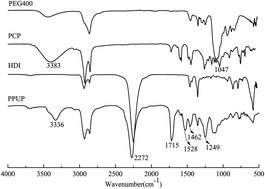
FT-IR of PPUP. PPUP was synthesized from the reaction between PCP and PEG400 with HDI. Fig. 1 shows the FT-IR spectra of PEG400, PCP, HDI and PPUP. The hydrogen state of urethane is generally characterized by two principal vibrations:21 the stretching vibrations of N–H (3336 cm−1) and carbonyl C
O in the amide I region (1715 cm−1). The peak around 2272 cm−1 indicates the unreacted isocyanate in the prepolymer. Several other peaks at 1462 cm−1 (amide II N–H deformation) and 1528 cm−1 (C–N stretching) are attributed to the formation of urethane groups. The characteristic absorption bands at 3438 and 3383 cm−1, which are attributed to the OH group in PEG 400 and PCP, respectively, are weakened significantly in PPUP, suggesting that the transformation of OH to urethane or urea linkages. The peak at 1047 cm−1, which is associated with the C–OH stretch of PCP, is weakened significantly in PPUP, also suggesting the transformation of primary alcohols to urethane or urea linkages.
 |
| | Fig. 1 The FT-IR spectra of PEG400, PCP, HDI and PPUP. | |
1H NMR. Fig. 2 shows the 1H NMR spectra of the compounds. The broad peak at δ 1.29–1.68 is attributed to the central methylene groups of PCP and HDI (Fig. 2a). The strong signal at δ 3.59 (Fig. 2b) characterizes the EO unit (–CH2CH2O–) of PEG400, while the one at δ 3.41 (Fig. 2c) corresponds to the methylene group attached to NCO nitrogen atom of HDI. The characteristic peaks at δ 7.0–8.2 correspond to the proton on the phosphaphenanthrene groups. In comparison between PCP and PPUP, the peaks at δ 3.69, 3.97 and 3.99–4.21 (Fig. 2d) of PPUP which indicate the presence of primary and secondary alcohols disappear, indicating the conversion of hydroxyl group in PCP. Furthermore, the methylene group attached to urethane nitrogen atom appears at δ 3.11–3.14 (Fig. 2e). All results indicate the reaction of PEG400 and PCP with the HDI and support the successful preparation of PPUP.
 |
| | Fig. 2 The 1H NMR spectra of PEG400, PCP, HDI and PPUP. | |
Characterization of PFs
Mechanical properties. Given the extensive application of PFs as foam materials, the critical mechanical properties of PFs are compressive strength and flexural strength, while apparent density must be considered in analysis of mechanical behaviors of foams.22,23 The mechanical properties and apparent density of pristine foam and PPUP-modified PFs are summarized in Table 2. It is clear that these properties are significantly affected by the addition of PPUP. A larger PUP content results in higher density of PPUP-modified PFs. As expected, the addition of PPUP into the foam formulations improves the compressive and flexural strengths. As shown in Table 2, with the increase of PPUP content, the compressive and flexural strengths of the toughened PFs first increase, maximize at 1 phr PPUP, and then stabilize. Compared with pure PF, the compressive and flexural strengths of PPUP-modified PFs at 1 phr PPUP are improved by 81.45% from 0.124 to 0.225 and by 94.62% from 0.186 to 0.362 MPa, respectively. The highest strengths can be explained by two reasons. First, the flexible structure in PPUP molecular chains can afford the toughness of PFs. Second, the isocyanate groups from PPUP can react with hydroxymethyl from resin during the formulation and thereby incorporate the flexible chains from PPUP into the rigid backbone of phenolic resin.10,24,25
Table 2 Mechanical properties of pristine PF and modified PFs
| Samples |
Density (kg m−3) |
Compressive strength (MPa) |
Flexural strength (MPa) |
| PF-0# |
44.88 |
0.124 ± 0.0005 |
0.186 ± 0.0001 |
| PF-1# |
46.06 |
0.225 ± 0.0019 |
0.362 ± 0.0003 |
| PF-2# |
46.67 |
0.188 ± 0.1484 |
0.328 ± 0.0195 |
| PF-3# |
47.83 |
0.184 ± 0.0090 |
0.332 ± 0.0035 |
| PF-4# |
51.88 |
0.198 ± 0.0170 |
0.323 ± 0.0320 |
| PF-5# |
51.98 |
0.165 ± 0.0200 |
0.311 ± 0.0030 |
However, further increasing PPUP content (beyond 1 phr PPUP) weakens the mechanical properties, so the foams modified with more than 1 phr PPUP have lower mechanical properties (Table 2), indicating there is an optimum dosage of PPUP that best improves the mechanical properties of PFs. This phenomenon can be attributed to the difficulties during foam production, and the viscosity of resin matrix increased with further addition of PPUP that results in lower liquidity, which means the imperfection of cure process and will cause a considerably non-uniform cell structure and a gradual increase of hole collapse.8,11,26
To eliminate the influence of PFs apparent density on the mechanical properties, we used specific compressive and flexural strengths (strength/density) for comparison. As shown in Fig. 3, the specific strengths change similarly as the strengths. With the increase of PPUP content, the two specific strengths of the toughened PFs first increase, maximize at 1 phr PPUP, and then decrease slightly. Compared with pure PF, the specific compressive and flexural strengths of PPUP-modified PFs at 1 phr PPUP increase by 76.80% from 2.763 to 4.885 MPa cm3 g−1 and by 89.65% from 4.144 to 7.859 MPa cm3 g−1, respectively. These results further indicate that there is an optimum dosage of PPUP that best improves the mechanical properties of PFs. The physical–mechanical properties of foam are also modestly related with the cell morphology. Therefore the microstructures of pristine PF and PPUP-modified PF at 1 phr PPUP are observed by SEM (Fig. 4). We calculated the sizes of 200 cells in SEM images on Nano Measurer 1.2 and the cell size distributions are shown in Fig. 5. The cells of pristine foam (PF-0# in Fig. 4) are approximately polyhedral and the cell sizes range from 79 to 250 μm with the mean of 147.08 μm (PF-0# in Fig. 5). Compared with the pristine foam, the PPUP-modified PF at 1 phr PPUP has a more regular cell morphology (PF-1# in Fig. 4) and displays narrower cell size distribution from 73 to 170 μm with a smaller mean of 124.36 μm (PF-1# in Fig. 5). It is indicated that a uniform cell morphology leads to the formation good mechanical properties and this result agrees well with the mechanical analysis.
 |
| | Fig. 3 Specific compressive and flexural strength of pristine and modified PFs. | |
 |
| | Fig. 4 SEM of pristine PF (PF-0#) and PPUP-modified PFs. | |
 |
| | Fig. 5 Cell sizes distribution of pristine PF (PF-0#) and PPUP-modified PF at 1 phr PPUP (PF-1#). | |
Pulverization ratios. The application of PFs is severely limited by their high friability. This drawback causes dust pollution in the PF production areas and complicates the bonding of PFs to other materials.27–29 Therefore, it is necessary to overcome this limitation in order to expand their applications. The friability test results (Fig. 6) shows that the addition of PPUP improves the friability of phenolic foam. The pulverization ratio of the pristine foam is 32.64%. With the addition of 1 phr PPUP into phenolic foam, the pulverization ratio drops to 25.62%. It is indicated that the introduction of reactive isocyanate groups into PFs can improve the fracture resistance (which is correlated closely with friability) and make phenolic foams tougher.24 However, addition of more than 1 phr PPUP does not further improve the mechanical properties, so that the modified foams added with above 1 phr PPUP have higher pulverization ratios than the foam modified with 1 phr PPUP. This result could again be due to the difficulties during foam production mentioned above. Therefore, the pulverization ratio of the foams gradually increases.
 |
| | Fig. 6 Pulverization ratios of pristine and PPUP-modified PFs. | |
Flame retardant properties. LOI reflects the minimum oxygen concentration (in an oxygen–nitrogen flowing mixture) required to support downward flame combustion and can indicate the flame retardancy of polymers.18,30Fig. 7 shows the flammability of pristine PF and PPUP-modified PFs reflected by LOI. As expected, the addition of PPUP into PFs increases the LOI in a dosage-dependent way.
 |
| | Fig. 7 LOIs of pristine and PPUP-modified PFs. | |
The LOIs of PFs added with 3, 5, 7 and 9 phr PPUP are 38.4%, 39.0%, 40.2% and 42.3% respectively, with increase about 0.26%, 1.83%, 4.96% and 10.44%, respectively, compared to pristine PF. This phenomenon might be attributed to the increase of phosphorous content in PFs, which will create PO free radicals acting as scavengers of H˙ and OH˙ during combustion and may create a char residue acting as a barrier for the polymer matrix.11,31
However, the LOI of PF modified with 1 phr PPUP decreases (Fig. 7), because with low phosphorus content, the retardation effect is not so significant for the PFs.
TGA of PFs. The thermal stabilities of pristine PF and modified PFs investigated by TGA and derivative thermogravimetry (DTG) are shown in Fig. 8 and 9, and some relevant degradation data are summarized in Table 3. Clearly, the pristine PF has a three-stage degradation behavior.32,33 The first relatively low-mass stage within 40–200 °C is attributed to the release of excessive phenol, formaldehyde, the blowing agent and water from the foam with mass loss of ∼7%. The second stage within 200–400 °C results from the degradation of the surfactant (Tween-80) and some curing agents in the foam,34 and the Tmax at this stage is 330.3 °C. The third stage within 400–800 °C is the main step of thermal degradation with a Tmax of 526.2 °C, where chain scission and most of polymer degrade to form low-molecular-mass products.35 The PPUP-modified foams also show three similar degradation stages. The initial degradation temperatures of the modified foams are slightly higher than that of the pristine foam. These results indicate that the incorporation of PPUP improves the degradation stability of PFs at lower temperature. The reason is attributed to the reaction of –NCO from PPUP with the water and unreacted phenols from the resin, thus reducing polymer degradation.36
 |
| | Fig. 8 TGA curves of pristine and PPUP-modified PFs. | |
 |
| | Fig. 9 DTG curves of pristine and PPUP-modified PFs. | |
Table 3 TGA date of pristine foam (PF-0#) and modified foams with different content of PPUPs
| Samples |
T−5% (°C) |
Tmax (°C) |
Residual mass (%) |
| Step II |
Step III |
| PF-0# |
154.4 |
330.3 |
526.2 |
53.02 |
| PF-1# |
173.0 |
322.9 |
518.4 |
51.47 |
| PF-2# |
177.6 |
318.5 |
521.3 |
50.82 |
| PF-3# |
199.1 |
331.2 |
509.7 |
51.83 |
| PF-4# |
201.7 |
332.9 |
501.4 |
51.05 |
| PF-5# |
183.5 |
331.5 |
506.0 |
49.57 |
At the second degradation stage, the Tmax of PF-3#, PF-4#, and PF-5# with 5, 7 and 9 phr PPUP shifts to higher temperature. This may be because the increase of P-containing moieties, which derive from the decomposition of PPUP, promotes the volatilization and char formation at low temperature and thus delays the degradation process.37
However, the residual masses of PPUP-modified PFs are lower than that of pristine PF (Table 3). This phenomenon can be attributed to the lower stability of the polyurethane in PPUP.9,11
Conclusions
PPUP, a novel cardanol derivative, was synthesized and its structure was confirmed by FT-IR and 1H NMR. Then PFs modified with different contents of PPUP were prepared. The mechanical performance, morphological properties, flame retardancy and thermal stability were assessed by universal test, SEM, LOI and TGA. The addition of PPUP into foam formulations improves the compressive and specific strengths, while an appropriate addition of PPUP into resin matrix improves the specific compressive and flexural strength of PFs. Incorporation of PPUP into PFs leads to a reduced pulverzation ratio. LOI increases continuously with the rise of PPUP content. Moreover, the modified PFs with different contents of PPUP show similar thermal resistance as the pristine foam. This study provides scientific data for application of cardanol-based PPUP into preparation of PFs.
Acknowledgements
The authors are grateful to the financial support from Forestry Industry Research Special Funds for Public Welfare Projects of China (No. 201504604).
References
- V. K. Rangari, T. A. Hassan, Y. Zhou, H. Mahfuz, S. Jeelani and B. C. Prorok, J. Appl. Polym. Sci., 2007, 103, 308–314 CrossRef CAS.
- A. Desai, S. R. Nutt and M. V. Alonso, J. Cell. Plast., 2008, 44, 391–413 CrossRef CAS.
- S. Jing, T. Li, X. Li, Q. Xu, J. Hu and R. Li, J. Appl. Polym. Sci., 2014, 131, 39942 Search PubMed.
- C. Yang, Z. H. Zhuang and Z. G. Yang, J. Appl. Polym. Sci., 2014, 131, 39734 Search PubMed.
- M. L. Auad, L. Zhao, H. Shen, S. R. Nutt and U. Sorathia, J. Appl. Polym. Sci., 2007, 104, 1399–1407 CrossRef CAS.
- B. Del Saz-Orozco, M. Oliet, M. V. Alonso, E. Rojo and F. Rodríguez, Compos. Sci. Technol., 2012, 72, 667–674 CrossRef CAS.
- B. Del Saz-Orozco, M. V. Alonso, M. Oliet, J. C. Domínguez and F. Rodriguez, Composites, Part B, 2014, 56, 546–552 CrossRef CAS.
- C. Kaynak and O. Cagatay, Polym. Test., 2006, 25, 296–305 CrossRef CAS.
- H. Yuan, W. Xing, H. Yang, L. Song, Y. Hu and G. H. Yeoh, Polym. Int., 2013, 62, 273–279 CrossRef CAS.
- H. Yang, X. Wang, B. Yu, H. Yuan, L. Song, Y. Hu and G. H. Yeoh, J. Appl. Polym. Sci., 2013, 128, 2720–2728 CrossRef CAS.
- H. Ding, J. Wang, J. Liu, Y. Xu, R. Chen, C. Wang and F. Chu, J. Appl. Polym. Sci., 2015, 132, 42424 Search PubMed.
- S. Laurichesse and L. Avérous, Prog. Polym. Sci., 2014, 39, 1266–1290 CrossRef CAS.
- J. Datta and E. Głowińska, J. Elastomers Plast., 2014, 46, 33–42 CrossRef.
- G. Lligadas, J. C. Ronda, M. Galia and V. Cádiz, Biomacromolecules, 2010, 11, 2825–2835 CrossRef CAS PubMed.
- S. Gopalakrishnan, Bull. Mater. Sci., 2012, 35, 243–251 CrossRef CAS.
- X. Li, Z. Fang, X. Li, S. Tang, K. Zhang and K. Guo, New J. Chem., 2014, 38, 3874–3878 RSC.
- N. Rekha and S. K. Asha, J. Appl. Polym. Sci., 2008, 109, 2781–2790 CrossRef CAS.
- C. Bo, L. Hu, P. Jia, B. Liang, J. Zhou and Y. Zhou, RSC Adv., 2015, 5, 106651–106660 RSC.
- L. Hu, Y. Zhou, R. Liu, M. Zhang and X. Yang, Ind. Crops Prod., 2013, 44, 364–366 CrossRef CAS.
- Y. Li, B. A. J. Noordover, R. A. T. M. van Benthem and C. E. Koning, ACS Sustainable Chem. Eng., 2014, 2, 788–797 CrossRef CAS.
- S. Oprea, J. Am. Oil Chem. Soc., 2010, 87, 313–320 CrossRef CAS.
- M. L. Auad, L. Zhao, H. Shen, S. R. Nutt and U. Sorathia, J. Appl. Polym. Sci., 2007, 104, 1399–1407 CrossRef CAS.
- G. Tondi and A. Pizzi, Ind. Crops Prod., 2009, 29, 356–363 CrossRef CAS.
- Y. Yang and J. He, Polym. Compos., 2014, 36, 1584–1589 CrossRef.
- C. Bo, L. Hu, J. Zhou and Y. Zhou, Chem. Ind. For. Prod., 2015, 35, 8–14 CAS.
- R. Gong, Q. Xu, Y. Chu, X. Gu, J. Ma and R. Li, RSC Adv., 2015, 5, 68003–68013 RSC.
- H. Shen, A. J. Lavoie and S. R. Nutt, Composites, Part A, 2003, 34, 941–948 CrossRef.
- X. Li, Z. Wang and L. Wu, RSC Adv., 2015, 5, 99907–99913 RSC.
- M. Colombo, P. Martinelli, R. Zedda, A. Albertelli and N. Marino, Mater. Des., 2015, 78, 63–73 CrossRef CAS.
- M. Suzanne, M. A. Delichatsios and J. P. Zhang, Combust. Flame, 2014, 161, 288–294 CrossRef CAS.
- H. Ding, J. Wang, C. Wang and F. Chu, Polym. Degrad. Stab., 2016, 124, 43–50 CrossRef CAS.
- C. N. Zárate, M. I. Aranguren and M. M. Reboredo, J. Appl. Polym. Sci., 2008, 107, 2977–2985 CrossRef.
- Y. Ma, J. Wang, Y. Xu, C. Wang and F. Chu, J. Therm. Anal. Calorim., 2013, 114, 1143–1151 CrossRef CAS.
- X. Sui and Z. Wang, Polym. Adv. Technol., 2013, 24, 593–599 CrossRef CAS.
- X. Hu, D. Wang, W. Cheng and G. Zhou, J. Mater. Sci., 2014, 49, 1556–1565 CrossRef CAS.
- D. Dhevi, S. N. Jaisankar and M. Pathak, Eur. Polym. J., 2013, 49, 3561–3572 CrossRef.
- L. Costa, D. Montelera, L. Rossi, G. Camino, E. D. Weil and E. M. Pearce, J. Appl. Polym. Sci., 1998, 68, 1067–1076 CrossRef CAS.
|
| This journal is © The Royal Society of Chemistry 2016 |
Click here to see how this site uses Cookies. View our privacy policy here.