
High-density polyethylene/needle-like sepiolite clay nanocomposites: effect of functionalized polymers on the dispersion of nanofiller, melt extensional and mechanical properties

Vishwa Pratap Singha, G. S. Kapurb, Shashikantb and Veena Choudhary*a
aCentre for Polymer Science and Engineering, Indian Institute of Technology New Delhi, India 110016. E-mail: veenach@hotmail.com; Fax: +91-11-26591421; Tel: +91-11-26581111
bIndian Oil Corporation Ltd., Research & Development Centre, Sector 13, Faridabad, Haryana, India 121007

Received 29th March 2016 , Accepted 12th June 2016

First published on 15th June 2016


Abstract

The present article reports the preparation of high density polyethylene (HDPE)/sepiolite-clay nanocomposites with improved mechanical performance and melt extensional properties by melt compounding using a co-rotating twin screw extruder. Maleic anhydride grafted high density polyethylene (HDPE-g-MA) (having different MFI and maleic anhydride content) was used as compatibiliser to investigate systematically the effect of polarity and molecular weight on the properties of HDPE/sepiolite nanocomposites. The influence of sepiolite loading (1–10 wt%) and type of compatibilizer on morphological, mechanical and melt extensional properties (melt strength, drawability and extensional viscosity) were investigated and analyzed. Sepiolite-clay significantly enhanced the mechanical properties, melt strength and extensional viscosity with slight reduction in drawability at 10% w/w loading. For example, ∼40% increase in tensile modulus and ∼50% improvement in flexural modulus was obtained at 10% w/w sepiolite loading. The compatibiliser having lower MFI showed significant improvement in melt extensional properties as compared to compatibiliser having higher MFI. Scanning electron microscopy and transmission electron microscopy revealed the better dispersion of sepiolite in the presence of compatibiliser, however it was much better when HDPE-g-MA having higher MFI was used as compared to compatibiliser having lower MFI. Thermal stability increased in the presence of sepiolite which was further improved in the presence of compatibiliser.

1. Introduction

High density polyethylene (HDPE) is one of the most widely used commodity thermoplastics. HDPE has numerous applications in various industries because it is durable, chemically non-reactive, easy to process and inexpensive. The properties of HDPE can be further enhanced by incorporating various organic and inorganic nanofillers into the HDPE matrix.1 HDPE based nanocomposites with various nanoparticles like nanoclays such as montmorillonite (MMT), carbon nanotubes (CNTs), halloysite nanotubes (HNTs) and metal oxide nanoparticles have been widely reported in the literature.2–5 The properties of nanocomposites can be greatly affected by the dispersion of nanoparticles in the polymer matrix.6 Generally, better dispersion leads to better properties of the final nanocomposites. However homogeneous dispersion of nanoparticles in HDPE matrix has always been a challenge owing to the absence of any polar group in its backbone. Various strategies like surface modification of fillers and use of compatibilisers like maleic anhydride grafted polypropylene (PP) or polyethylene (PP-g-MA or PE-g-MA) or polyethylene grafted with acrylic acid (PE-g-AA) have been studied by various researchers to improve the phase adhesion between the polymer and nanofillers.7–10 Picard et al. investigated the effect of compatibiliser molar mass and polarity on the clay dispersion and on the gas barrier properties of polyethylene/montmorillonite clay nanocomposites.11 The results indicate that the final morphology of nanocomposites was governed by a diffusion/shear mechanism. A high degree of clay intercalation was obtained with the high molar mass compatibilizers, whereas highly swollen clay aggregates resulted from the incorporation of the low molar mass interfacial agents. Recently Mohamadi et al. and Bilotti et al. explored the effects of compatibilizer polarity and molecular weight on the state of nanoclay dispersion in HDPE/fluoromica nanocomposites and PP/sepiolite nanocomposites respectively.12,13

So far, most of the literature regarding clay nanocomposites has been focused on platelet-like clays, such as MMT.3,7,8 The present study deals with sepiolite, which is a needle like fibrous nanofiller with open channels extended longitudinally in the fiber direction with hydrated magnesium silicate having the unit cell formula, Mg4Si6O15(OH)2·6H2O. It can have a very high surface area as high as 200–300 m2 g−1, lengths of 0.2–4 μm, width of 10–30 nm and thickness of 5–10 nm. It is assumed that these fibrous nanofiller can be more easily dispersed in polymeric matrices because of its lower specific surface area compared to the platelet-like clays of the same aspect ratio. The relatively small contact surface area reduced the tendency to agglomeration which may result in better mechanical properties, thermal stability, flame retardancy and barrier properties of the polymers even at a very low level of filler loading.13–19 Considering the studies on the nanocomposites with sepiolite, it is seen that sepiolite has been used for the preparation of nanocomposites using different polymers as matrix such as polypropylene,13,20–22 polyethylene,23,24 epoxy,14,25 polyimide,17 ethylene vinyl acetate,26,27 poly(vinyl alcohol),28,29 polyurethane,19,30 polyamide 6 (ref. 18 and 31) etc. Recently Manchanda et al. reported the effect of sepiolite on thermo-mechanical behavior of polypropylene and found that mechanical properties and thermal stability of PP increased significantly in the presence of sepiolite.22 However, effects of sepiolite on HDPE resins have not been studied before. Yasin et al. investigated the effect of functionalized sepiolite and electron beam irradiation on the structural and physicochemical properties of HDPE/starch blend system.32 They observed significant improvement in thermal stability and marginal improvement in mechanical properties of the neat blend on incorporation of sepiolite [6 phr].

Unfortunately, most of the previous research has been focused on the preparation and characterization of polymer–sepiolite nanocomposites. Consequently, many elementary questions regarding structures in polymer–sepiolite nanocomposites when subjected to an external force are far from clarity and require extensive investigations. The melt strength of a polymer has been recognized as one of the most important parameters for comparing the draw-ability of polymer melts to assess their suitability for industrial processing operations where stretching flow occurs at one or more stages.33–36 Typical industrial processes where stretching flow occurs are blow moulding, extrusion coating, melt spinning, thermoforming and blown film extrusion. Although the melt extensional rheology for various homopolymers such as PP,37–39 low-density polyethylene (LDPE),40 HDPE,41 polymer blends42,43 and polymeric composites44–49 has been reported but to the best of our knowledge melt extensional properties of polyethylene/sepiolite composites has not been reported in the literature.

It is therefore considered of interest to investigate systematically the effect of sepiolite, a natural needle-like clay as a reinforcement for HDPE and to study the influence of molar mass and polarity of PE-g-MA on different properties [Morphological, Melt extensional, Mechanical and Thermal] of HDPE/sepiolite nanocomposites.

2. Experimental

2.1 Materials

Polymers used in this study are listed in Table 1. HDPE (012DB54, MFI = 1.2 g/10 min at 190 °C and 5 kg load) supplied by Indian Oil Corporation Ltd India was used as polymer matrix. Sepiolite (BET surface area – 163 m2 g−1 and aspect ratio – 50–200) was used as reinforcing agent. It was purchased from Sigma-Aldrich Chemie, Steiheim, Germany and used as received. Two types of maleic anhydride grafted high density polyethylene (HDPE-g-MA) (Optim and Fusabond) with different molar masses and maliec anhydride content were considered as interfacial agents to improve the interaction between sepiolite and polymer. The compatibilisers characteristics are given in Table 1.
Table 1 Characteristic properties of materials used in this study
Materials Grade Supplier MFI g/10 min 190 °C MA content Density g cm−3
HDPE PROPEL 012DB54 IOCL, India 1.3@5 kg 0.954
Sepiolite Sigma Aldrich, USA 2.2
HDPE-g-MA (O) Optim E-156 Plus Polymers, Gurgaon 7@2.16 kg 1.2 0.954
HDPE-g-MA (F) Fusabond M-603 Dupont, USA 23@2.16 kg 2.2 0.94


2.2 Preparation of nanocomposites

Sepiolite powder and polymer pellets (HDPE & HDPE-g-MA) were kept in vacuum oven at 80 °C for 24 h to remove the adsorbed moisture before mixing. HDPE/sepiollite nanocomposites were prepared by two step blending process. First, sepiolite was mixed with HDPE homopolymer to make a master batch at 20% w/w of filler, which was subsequently diluted in HDPE matrix to prepare different compositions of uncompatibilised and compatibilised nanocomposites. The amount of compatibilisers was equivalent to the amount of sepiolite (1[thin space (1/6-em)]:[thin space (1/6-em)]1 weight ratio). The detailed formulations and sample designations are listed in Table 2. The compounding was carried out using a Lab. Tech. co-rotating twin screw extruder from M/s Labtech Engineering Company Ltd. Thailand (L/D – 40 and screw diameter 25 mm) with a temperature profile of 140–205 °C from the feed zone to die and screw speed was 100 rpm.
Table 2 Details of formulations and their sample designationsa
Sample designation HDPE (weight%) Sepiolite (weight%) HDPE-g-MA (O) (weight%) HDPE-g-MA (F) (weight%) Sepiolite: O/F
a Where HD represents HDPE, S stands for sepiolite and numerical suffix represents weight percent of sepiolite, O and F represents optim and fusabond HDPE-g-MA respectively and numerical suffix represents weight percent of compatibilisers.
HD 100.0 0.0
HDS1 99 1.0
HDS3 97 3.0
HDS5 95 5.0
HDS5/O5 90 5 5 1[thin space (1/6-em)]:[thin space (1/6-em)]1
HDS5/F5 90 5 5 1[thin space (1/6-em)]:[thin space (1/6-em)]1
HDS10 90 10
HDS10/O10 80 10 10 1[thin space (1/6-em)]:[thin space (1/6-em)]1
HDS10/F10 80 10 10 1[thin space (1/6-em)]:[thin space (1/6-em)]1


After compounding, test specimens were prepared using L&T-Demag PFY-40 injection moulding machine (L&T-Demag Plastics Machinery Limited Chennai, India) at 205 °C keeping mould temperature at 55 °C. Pristine HDPE was also subjected to the same processing conditions in order to have the same thermal history.

2.3 Characterizations of nanocomposites

2.3.1 Morphological characterization.
2.3.1.1 Scanning electron microscopy (SEM). The morphology of nanocomposites was investigated using SEM (EVO-50 from M/s Carl Zeiss AG, Germany) on cryo-fractured surfaces. Prior to examination, the samples were sputter coated with a thin layer of gold to avoid charging on exposure to electron beam during SEM analysis.
2.3.1.2 Transmission electron microscopy (TEM). The ultra-thin samples (100 nm) were prepared by an ultramicrotome (Power Tome-PC) from Boeckeler in liquid nitrogen. Then TEM analysis of the ultrathin samples was carried using a JEOL-JEM-2100 (LaB6, M/s Jeol Japan) TEM operated at an accelerating voltage of 100 kV.
2.3.2 Melt extensional properties.
2.3.2.1 Rheotens test. Melt extensional properties of HDPE and its nanocomposites were determined using a four-wheeled Gottfert Rheotens 71.97 tester from M/s Gottfert, Germany. A polymer melt strand was extruded through a capillary rheometer (Rosand RH7) equipped with a circular die (L/D-15, D 2 mm) using a piston velocity of 0.32 mm s−1, giving an apparent shear rate of 72 s−1. This polymer melt strand was drawn by the counter rotating rollers whose velocity increases at a constant acceleration rate. The drawdown force was measured as a function of draw ratio until failure. The draw ratio was defined as the ratio of speed at which strand is being pulled off to the filament extrusion velocity in the die. It is not possible to convert a Rheotens diagram (tensile force versus draw down speed) into meaningful elongational viscosity to elongational rate directly due to the non-uniform strain rate imposed on the melt strand. Wagner et al.50 proposed a mathematical way to attain Rheoten curves without oscillations.

The tensile stress at the rollers (σ), extensional rate ([small epsi, Greek, dot above]) and extensional viscosity (ηe) were determined using the following equations.

 
image file: c6ra08124j-t1.tif(1)
 
image file: c6ra08124j-t2.tif(2)
 
image file: c6ra08124j-t3.tif(3)
where F is force applied to the strand, V speed of wheels of Rheotens or speed at which strand is being pulled off, V0 the filament extrusion velocity in the die, Ls the distance between the capillary exit and pinching wheels and A0 diameter of strand. The schematic of experimental setup is described in Fig. 1.


image file: c6ra08124j-f1.tif
Fig. 1 Schematic diagram of the Gottfert Rheotens melt strength tester setup.

2.3.2.2 Cogswell converging flow method. Extensional viscosity was calculated from shear viscosity and die entrance pressure drop (ΔP) data at 200 °C by using Cogswell converging flow method. In this model it is assumed that power-law models can describe the dependence of apparent shear viscosity (ηs) on the apparent shear rate and ηe is independent of [small epsi, Greek, dot above]. Then ηe at the corresponding [small epsi, Greek, dot above] can be calculated as:48,51
 
image file: c6ra08124j-t4.tif(4)
 
image file: c6ra08124j-t5.tif(5)
where n is the power low index of the polymer melt.
2.3.3 Melt shear rheology. The high shear viscosity of HDPE and HDPE/sepiolite nanocomposites was measured at 200 °C and shear rate ranging from 50–1000 s−1 using an advanced dual-bore (Bagley corrected) capillary rheometer, Rosand RH7 from M/s Malvern Instruments UK. The dual bore comprises a capillary die (L/D-16 mm, D-1 mm) in one bore and the other is an orifice die with 1 mm diameter and zero length. Before testing, HDPE and HDPE/sepiolite nanocomposites were dried at 80 °C for 12 h. Both Rabinowitch and Bagley corrected data were used for evaluation.
2.3.4 Mechanical properties. Tensile properties were measured using a universal testing machine (TIRA 2700 from M/s TIRA, Germany) at room temperature according to ASTM D-638. The dumb-bell shaped samples [prepared by injection molding] and a crosshead speed of 50 mm min−1 was used for tensile testing. Flexural characterization of HDPE and HDPE/sepiolite nanocomposites was conducted using three point loading system on TIRA 2700 UTM as per ASTM D-790 at a crosshead speed of 3 mm min−1. For tensile and flexural testing, five specimens were examined for each composition and the average value is reported. Izod impact strength of the notched specimens was evaluated using CEAST impact tester as per ASTM D-256 and the results are reported as the average of 10 specimens tested for each composition.
2.3.5 Thermal stability. The thermal stability of samples was investigated by using a thermogravimetric analyzer (Q500) from TA Instruments, Austria. The test was performed under nitrogen atmosphere from 30 to 700 °C at 20 °C min−1 ramp.

3. Results and discussion

3.1 Characterization of sepiolite

SEM and TEM images of sepiolite (Fig. 2a and b) show that sepiolite possesses fibrous or needle like morphology. The average dimensions of the fibers are generally 100–4000 nm in length and 10–30 nm in diameter with aspect ratio in the range of 100–300. The elemental composition of sepiolite, determined by EDAX analysis consist of Mg = 9.4%, Al = 31.29%, Si = 22.35% and O = 36.96%. FTIR spectrum (Fig. 3a) of sepiolite showed its typical bands at 1025 and 473 cm−1 which corresponded to the Si–O stretching and bending vibrations, respectively.32 The bands at 3691 and 1658 cm−1 are attributed to O–H stretching vibrations of the structural water and H–O–H bending vibrations of coordinated water. The XRD pattern of sepiolite displays a characteristic reflection peak at 2θ = 7.4 degree corresponding to 110 basal spacing of 11.9 Å (Fig. 3b).
image file: c6ra08124j-f2.tif
Fig. 2 (a) SEM and (b) TEM images of sepiolite.

image file: c6ra08124j-f3.tif
Fig. 3 (a) FTIR spectrum (b) XRD diffraction pattern and (c) TG trace of sepiolite.

Thermal stability of sepiolite was evaluated by recording thermo-gravimetric (TG) trace in air atmosphere (heating rate = 20 °C). A three step decomposition was observed. The mass loss upto 100 °C was ascribed to the loss of physically bound water on the outer surface. Mass loss in the temperature range of 100–350 °C could be due to the loss of zeolitic water co-ordinated to octahedral sheet and mass loss at 600 °C is due to dehydroxylation of tetrahedral sheet (Fig. 3c).

3.2 Morphological characterizations of HDPE/sepiolite nanocomposites

3.2.1 Scanning electron microscopy [SEM] and transmission electron microscopy [TEM]. Fig. 4a–h show the SEM micrographs of cryo-fractured surfaces of different HDPE/sepiolite nanocomposite systems. These micrographs demonstrate the influence of sepiolite loading as well as effect of compatibiliser type (HDPE-g-MA) on the morphology. It was observed that the sepiolite nanofillers are dispersed uniformly in HDPE matrix (Fig. 4a–c). However, formation of agglomerates of nano-fibers was seen at higher loading of sepiolite (10% w/w) (Fig. 4d). This is due to the discrepancy in polarity between filler and matrix which is reduced in the presence of compatibiliser (Fig. 4e–h). It was also observed that due to addition of graft copolymer [compatibilser] interface between sepiolite and HDPE matrix becomes blurred suggesting interaction between the surface of sepiolite and HDPE matrix.
image file: c6ra08124j-f4.tif
Fig. 4 SEM images of (a) HDS1, (b) HDS3, (c) HDS5, (d) HDS10, (e) HDS5/O5, (f) HDS5/F5, (g) HDS10/O10 and (h) HDS10/F10 nanocomposites.

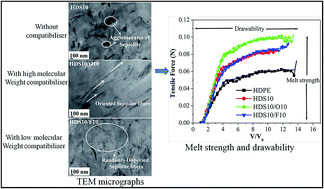
TEM images can provide more information about morphology of nanocomposites. TEM images of HDPE/sepiolite nanocomposites are shown in Fig. 5a–h. The fibrous and needle like nature of this clay can be easily distinguished in the TEM pictures of nanocomposites and these fibers are randomly distributed in all directions. TEM micrographs also support the SEM results and confirm the presence of some aggregates, constituted by smaller needle shaped particles in the HDPE composite sample having 10% w/w sepiolite (Fig. 5d). After addition of graft copolymer the sepiolite particles are uniformly dispersed and no agglomeration was seen (Fig. 5e–h). It is also evident that nanocomposites containing low molecular weight compatibiliser show better dispersion as compared to sample having higher molecular weight compatibiliser (Fig. 5f and h). This could be due to the lower viscosity, better flow and higher MA content which promote the interaction and dispersion of filler. It was also found from TEM images that sepiolite fibers get oriented in the presence of high molecular weight compatibiliser (Fig. 5g) while randomly dispersed fibers were seen in the composites having low molecular weight compatibiliser (Fig. 5h). This fiber orientation is most likely due to the high shear forces generated during processing in the presence of high molecular weight compatibiliser so the fibers become parallel to the flow direction.


image file: c6ra08124j-f5.tif
Fig. 5 TEM images of (a) HDS1, (b) HDS3, (c) HDS5, (d) HDS10, (e) HDS5/O5, (f) HDS5/F5, (g) HDS10/O10 and (h) HDS10/F10 nanocomposites.

3.3 Rheological measurements

3.3.1 Melt strength and drawability. Fig. 6a–c show the average of five Rheotens measurements data plotted as tensile force versus draw down ratio (V/V0) for HDPE and HDPE/sepiolite nanocomposites in the absence/presence of different compatibilisers. The rupture point of a molten polymer strand indicates a relative measure for the melt strength and the drawability of the melt under test conditions.44 All the nanocomposites (uncompatibilised & compatibilised) exhibited the filament rupture during testing.
image file: c6ra08124j-f6.tif
Fig. 6 Rheotens curves (tensile force vs. draw down ratio) for neat HDPE and HDPE/sepiolite nanocomposites in absence (a)/presence (b) & (c) of compatibiliser at 200 °C.

It can be clearly depicted from Fig. 6a that higher the sepiolite loading, higher is the force necessary to stretch the polymer melt at a particular draw ratio. This increase in the drawdown force is due to the increased stiffness of melt by incorporation of sepiolite in HDPE sample. However, at 10% w/w sepiolite loading (Sample-HDS10), the drawability of HDPE/sepiolite nanocomposites is lower than neat HDPE because of the percolation of neighbored nano-fibers which leads to breakage of the melt strand.

The increase in melt strength and reduction in drawability exhibited by polymer composites at a fixed draw ratio, with respect to the neat polymer has also been observed for other polymer composites.49 Similar results have also been reported for linear low density polyethylene (LLDPE)44,52 and polypropylene based composites.47,53,54 However in case of HDPE/HNTs system, it was observed that HNTs reduced the melt strength of HDPE without affecting its drawability at 10% w/w loading due to the formation of agglomerates and voids which leads to the poor interaction between filler and matrix.5

Fig. 6b and c show the effect of compatibilisers on the Rheoten curves of HDS5 and HDS10 nanocomposites respectively. In case of compatibilised nanocomposites, it is clearly evident from the graphs that higher molecular weight compatibiliser enhanced the melt strength significantly without affecting drawability (Fig. 6b) or with increasing drawability (Fig. 6c) while lower molecular weight compatibiliser does not exhibit any effect on melt strength as well as drawability of HDS5 i.e. HDPE having 5% w/w sepiolite (Fig. 6b). However it enhanced the drawability of the HDS10 sample slightly (Fig. 6c). Increase in melt strength and drawability of HDPE/sepiolite nanocomposites upon incorporation of HDPE-g-MA (higher molecular weight) could be due to the better interfacial adhesion/dispersion of filler in HDPE matrix. This is also supported by the morphology of composites. Although low molecular weight compatibiliser gives better dispersion but it did not show any significant effect on melt strength of HDS5 as well as HDS10 composites due to the dominance of the plasticizing effect of the compatibiliser (very high MFI) over the filler dispersion.

3.3.2 Extensional viscosity. Extensional viscosity [ηe] has a great importance in polymer processing methods such as film blowing, blow molding, thermoforming and sheet casting etc. where the polymer is stretched or forced to flow through contractions.

The studies on ηe for HDPE and its nanocomposites was carried out using two different methods namely-

1. Performing Wagner's master curve using standard Rheotens data.50

2. By Cogswell converging flow method using capillary data.48,51

Fig. 7 & 8 show the extensional viscosity (ηe) versus extensional strain rate curves for uncompatibilised and compatibilised nanocomposites determined using Rheotens test and capillary rheometer respectively. Extensional viscosity and strain hardening increased with increase in sepiolite content upto 10% w/w which increased further with incorporation of compatibilisers due to the improved adhesion between the matrix and filler. At higher extensional rate, compositions having highest sepiolite content (HDS10) show a sudden reduction in extensional viscosity. This may be due to the presence of agglomerates as demonstrated by SEM and TEM micrographs (Fig. 4 & 5). Higher molecular weight compatibiliser enhanced the extensional viscosity significantly and HDS5/O5 exhibits highest extensional viscosity and strain hardening among all compositions. The effect of filler in the absence/presence of compatibilisers on the extensional viscosity and melt strength from Rheotens equipment are summarized in Table 3.


image file: c6ra08124j-f7.tif
Fig. 7 Plots of extensional viscosity vs. extensional rate for neat HDPE and HDPE/sepiolite nanocomposites in absence (a)/presence (b) & (c) of compatibiliser [from standard Rheotens test] at 200 °C.

image file: c6ra08124j-f8.tif
Fig. 8 Plots of extensional viscosity vs. extensional rate for neat HDPE and HDPE/sepiolite nanocomposites in absence (a)/presence (b) & (c) of compatibiliser [from capillary rheometer] at 200 °C.
Table 3 Melt strength, drawability and slope in strain hardening region for HDPE and HDPE/sepiolite nanocomposites in the absence/presence of compatibilisers
Sample designation Characteristics
Melt strength (N) Drawability (mm s−1) Slope in strain hardening regiona
a Calculated from the extensional viscosity vs. extensional speed curves of Rheotens.
HD 0.062 249 0.17
HDS1 0.071 261 0.16
HDS3 0.074 260 0.16
HDS5 0.076 268 0.15
HDS5/O5 0.096 250 0.17
HDS5/F5 0.075 279 0.13
HDS10 0.083 205 0.12
HDS10/O10 0.100 241 0.14
HDS10/F10 0.088 230 0.16


3.3.3 Melt shear viscosity. Fig. 9 presents the steady-state shear viscosity vs. corrected shear rate curves for HDPE and HDPE/sepiolite nanocomposites in the absence/presence of compatibiliser at 200 °C. It can be seen that the melt shear viscosities of all the resins reduced with increasing the shear rate showing shear thinning and non-newtonian flow behavior. The melt viscosity increased with increasing sepiolite concentration. This could be due to the restriction to flow of HDPE melt by sepiolite particles. Sample HDS10 having 10% w/w of sepiolite shows highest shear viscosity in lower shear rate region. At higher shear rate, HDS10 exhibits more shear thinning behavior than other compositions because at higher shear rate, the presence of excess amount of sepiolite fibers can aggregate and slide with each other hence causing a flow favoring orientation which subsequently lower the viscosity (Fig. 9a). This kind of behaviour was also observed in other polymer composite systems.55,56 The compatibilisers did not show any significant change in shear viscosity (Fig. 9b and c).
image file: c6ra08124j-f9.tif
Fig. 9 Plots of shear viscosity vs. corrected shear rate for neat HDPE and HDPE/sepiolite nanocomposites in absence (a)/presence (b) & (c) of compatibiliser at 200 °C.

3.4 Mechanical properties

The mechanical properties of HDPE/sepiolite nanocomposites are presented in Table 4. It can be seen that the addition of sepiolite fillers up to 10% w/w can significantly improve both tensile and flexural properties. The composition containing higher percentage of sepiolite exhibited enhancement in mechanical properties. About 40% increase in tensile modulus and about 50% improvement in flexural modulus were observed with 10% w/w sepiolite content (in sample HDS10). Improvement in mechanical properties further increased in the presence of compatibiliser [Table 4]. However it was better when high molecular weight compatibiliser was used as compared to low molecular weight compatibiliser. This may be because the lower molecular weight compatibiliser has higher percentage of grafted maleic anhydride which reduce the chain length and average molecular weight of HDPE molecules in HDPE-g-MA and lead to inferior mechanical properties. The reinforcement effect of filler in polymer nanocomposites also depends on the filler's structural parameters such as aspect ratio, shape and orientation.57 So another possible reason for higher mechanical properties in the presence of high molecular weight compatibiliser may be due to the presence of oriented sepiolite fibers. This has also been supported by morphology (Fig. 5g and h). Reinforcement of HDPE matrix by the incorporation of sepiolite as evidenced from the increase in mechanical properties may stem from the more efficient interfacial stress transfer between filler and matrix. Bilotti et al. and Manchanda et al. have also reported similar improvement in mechanical properties of polypropylene/sepiolite nanocomposites.22,58 In our recent studies on HDPE/HNTs nanocomposites it was observed that incorporation of HNTs into HDPE did not change the tensile and flexural properties of HDPE.5 This can be explained on the basis of aspect ratio of fillers. Sepiolite has very high aspect ratio (50–200) as compared to HNTs (35–100).
Table 4 Mechanical properties of HDPE and HDPE/sepiolite nanocomposites in absence/presence of compatibilisers
Sample designation Tensile strength (MPa) Elongation at break (%) Tensile modulus (MPa) Flexural strength (MPa) Flexural modulus (MPa) Impact strength (kJ m−2)
HD 27.5 ± 0.4 68 ± 5 293 ± 5.7 22.7 ± 0.2 760 ± 9 22.7 ± 1.5
HDS1 28.4 ± 0.4 63 ± 7 312 ± 4.6 23.8 ± 0.2 802 ± 14 21.9 ± 0.4
HDS3 29.1 ± 0.2 59 ± 3 340 ± 2.3 26.1 ± 0.1 902 ± 6 14.8 ± 0.5
HDS5 29.7 ± 0.3 54 ± 3 367 ± 3.2 27.9 ± 0.2 977 ± 15 11.8 ± 0.6
HDS5/O5 30.3 ± 0.2 56 ± 3 340 ± 5.6 25.8 ± 0.2 848 ± 16 12.4 ± 0.4
HDS5/F5 29.0 ± 0.3 58 ± 7 304 ± 2.0 24.3 ± 0.2 792 ± 9 12.9 ± 0.3
HDS10 31.4 ± 0.2 48 ± 5 410 ± 2.5 31.1 ± 0.5 1135 ± 14 10.9 ± 0.6
HDS10/O10 33.0 ± 0.2 56 ± 9 385 ± 6.7 29.2 ± 0.4 991 ± 23 14.0 ± 0.7
HDS10/F10 28.2 ± 0.3 57 ± 5 316 ± 3 25.3 ± 0.3 833 ± 12 11.5 ± 0.5


The impact strength of composites decreased with increasing sepiolite content due to the fact that the increase in the sepiolite content leads to the formation of aggregates which acts as stress concentrator in the sample which initiates a brittle fracture. However addition of compatibilisers reduced the aggregates which lead to an improvement in impact strength.

3.5 Thermogravimetric analysis

Fig. 10a and b show the thermogravimetric traces of sepiolite, HDPE and HDPE/sepiolite nanocomposites in the absence/presence of compatibiliser. The 10% mass loss temperature (T0.1), the mid-point of degradation (T0.5) and the nonvolatile residue found at 700 °C are all summarized in Table 5.
image file: c6ra08124j-f10.tif
Fig. 10 TG traces of (a) HDPE and HDPE/sepiolite nanocomposites in absence (a)/presence (b) of compatibilisers.
Table 5 Results of thermogravimetric analysis for HDPE and HDPE/sepiolite nanocomposites in the absence/presence of compatibiliser
Sample designation T0.1 (°C) T0.5 (°C) % char at 700 (°C)
TGA Muffle furnace Theoretically calculated
HD 353 366 0.40 0.32
MAHD (Optim) 344 365 0.3 0.26
MAHD (Fusabond) 330 359 0.3 0.28
Sepiolite 92 83.6 83.2
HDS1 356 378 1.2 0.68 0.72
HDS3 397 411 2.8 2.4 1.48
HDS5 405 421 5.0 4.7 2.22
HDS5/O5 403 417 4.9 4.3 2.23
HDS5/F5 409 421 5.0 4.6 2.23
HDS10 371 448 8.8 8.3 4.23
HDS10/O10 410 424 9.5 8.9 4.55
HDS10/F10 414 436 9.7 9.1 4.55


Sepiolite shows step-wise mass loss with increase in temperature. It has been reported that this stepwise mass loss in sepiolite is due to the loss of adsorbed and zeolitic water, the loss of first and second structural water and the release of water through dehydroxylation.24 It was observed that the thermal stability of composites is higher than that of pristine HDPE (Fig. 10a). Table 5 shows that the addition of 10% w/w sepiolite (HDS10) increased T0.1 [degradation temperature at 10% mass loss] of HDPE by 82 °C. This could be due to the dispersion of sepiolite fibers in HDPE matrix which inhibit the loss of volatile products generated during decomposition. Lower values of T0.1 in case of HDS10 sample could be due to the lower initial degradation temperature of sepiolite. The addition of compatibilisers further improved the thermal stability of HDPE/sepiolite composites and shifted the decomposition temperature towards higher value (Fig. 10b). This could be due to the better dispersion/adhesion between the matrix and filler which inturn hinder the escape of volatiles. Compositions containing compatibiliser with higher MFI have higher thermal stability than having lower MFI compatibiliser due to the better intercalation of sepiolite fibers. This is also supported by the morphology of composites.

As expected, the char yield of nanocomposites increased with increasing amount of sepiolite. An attempt was made to calculate theoretical char yield using rule of mixtures according to the following equation:

Char yield (%) = ϕmCm + ϕfCf
where ϕm and ϕf are the volume fraction of matrix and filler in the nanocomposites and Cm and Cf are the char yield of matrix and filler, respectively. Theoretical values are lower as compared to the experimental values. This could be due to the hindrance of evolution of volatile products in the presence of sepiolite due to its barrier effect. Percent char yield in HDPE, sepiolite and HD/sepiolite nanocomposites was also obtained from muffle furnace according to ASTM 5630-13. A very good agreement in the values of char yield obtained from TG traces and muffle furnace was observed [Table 5].

4. Conclusions

From these studies following conclusions can be drawn.

(1) HDPE/sepiolite nanocomposites in the absence/presence of two different compatibilisers [differ in molar mass and polarity] have been prepared.

(2) The good dispersion of sepiolite fibers in HDPE matrix is revealed by SEM and TEM micrographs.

(3) Sepiolite has significant reinforcing effect on HDPE as they improved tensile, flexural and thermal properties of HDPE.

(4) Increasing the sepiolite content, increases melt strength and elongational viscosity of nanocomposite as observed in the Rheotens test. Drawability of nano composites was comparable to neat HDPE up to 5% loading of sepiolite, however further increase in the loading up to 10% have reduced the drawability ratio.

(5) Extensional viscosity calculated using two different methods (Cogswell converging flow method & Wagner's master curve) exhibited good agreement.

(6) Though low molecular weight compatibiliser HDPE-g-MA resulted in better intercalation than high molecular weight compatibiliser, the composition having high molecular weight compatibiliser show better properties (mechanical & melt strength) as compared to nanocomposites compatibilised using low molecular weight compatibiliser except thermal stability.

(7) One would have expected better adhesion of sepiolite filler with matrix with increasing polarity (i.e. HDPE-g-MA with higher maleic anhydride content) but molecular weight was found to have a significant effect than polarity.

Such composites can be used for processing like blow moulding, thermoforming, sheet casting and fiber spinning where stress deformation takes place during processing.

Acknowledgements

The authors thank Ministry of Human Resource Development (MHRD), India for providing financial assistance to one of the authors Mr Vishwa Pratap Singh.

References

  1. A. A. Ahmad, A. A. Al-Juhani, S. Thomas, S. K. De and M. A. Atieh, J. Nanomater., 2013, 2013, 12 CrossRef.
  2. M. A. Osman and A. Atallah, Polymer, 2006, 47, 2357–2368 CrossRef CAS.
  3. Y. Tang, C. Yang, P. Gao, L. Ye, C. Zhao and W. Lin, Polym. Eng. Sci., 2011, 51, 133–142 Search PubMed.
  4. J. F. Vega, J. Martínez-Salazar, M. Trujillo, M. L. Arnal, A. J. Müller, S. Bredeau and P. Dubois, Macromolecules, 2009, 42, 4719–4727 CrossRef CAS.
  5. V. P. Singh, K. Vimal, G. Kapur, S. Sharma and V. Choudhary, J. Polym. Res., 2016, 23, 1–17 CrossRef CAS.
  6. S. Sinha Ray and M. Okamoto, Prog. Polym. Sci., 2003, 28, 1539–1641 CrossRef.
  7. Y. Zhong and D. De Kee, Polym. Eng. Sci., 2005, 45, 469–477 Search PubMed.
  8. A. Durmuş, M. Woo, A. Kaşgöz, C. W. Macosko and M. Tsapatsis, Eur. Polym. J., 2007, 43, 3737–3749 CrossRef.
  9. Y. Xu, Z. Fang and L. Tong, J. Appl. Polym. Sci., 2005, 96, 2429–2434 CrossRef CAS.
  10. L. Minkova, Y. Peneva, E. Tashev, S. Filippi, M. Pracella and P. Magagnini, Polym. Test., 2009, 28, 528–533 CrossRef CAS.
  11. E. Picard, A. Vermogen, J. F. Gérard and E. Espuche, J. Polym. Sci., Part B: Polym. Phys., 2008, 46, 2593–2604 CrossRef CAS.
  12. M. Mohamadi, H. Garmabi and F. Keshavarzi, Polym. Bull., 2014, 71, 2709–2731 CrossRef CAS.
  13. E. Bilotti, H. R. Fischer and T. Peijs, J. Appl. Polym. Sci., 2008, 107, 1116–1123 CrossRef CAS.
  14. Y. Zheng and Y. Zheng, J. Appl. Polym. Sci., 2006, 99, 2163–2166 CrossRef CAS.
  15. R. Benlikaya, M. Alkan and İ. Kaya, Polym. Compos., 2009, 30, 1585–1594 CrossRef CAS.
  16. G. Tartaglione, D. Tabuani, G. Camino and M. Moisio, Compos. Sci. Technol., 2008, 68, 451–460 CrossRef CAS.
  17. Y. Yu, S. Qi, J. Zhan, Z. Wu, X. Yang and D. Wu, Mater. Res. Bull., 2011, 46, 1593–1599 CrossRef CAS.
  18. D. García-López, J. F. Fernández, J. C. Merino, J. Santarén and J. M. Pastor, Compos. Sci. Technol., 2010, 70, 1429–1436 CrossRef.
  19. H. Chen, M. Zheng, H. Sun and Q. Jia, Mater. Sci. Eng., A, 2007, 445–446, 725–730 CrossRef.
  20. E. Morales, M. C. Ojeda, A. Linares and J. L. Acosta, Polym. Eng. Sci., 1992, 32, 769–772 Search PubMed.
  21. J. Ma, E. Bilotti, T. Peijs and J. A. Darr, Eur. Polym. J., 2007, 43, 4931–4939 CrossRef CAS.
  22. B. Manchanda, V. Kakkarakkal Kottiyath, G. S. Kapur, S. Kant and V. Choudhary, Polym. Compos., 2015 DOI:10.1002/pc.23800.
  23. Y. Alonso, R. E. Martini, A. Iannoni, A. Terenzi, J. M. Kenny and S. E. Barbosa, Polym. Eng. Sci., 2015, 55, 1096–1103 Search PubMed.
  24. M. Shafiq, T. Yasin and S. Saeed, J. Appl. Polym. Sci., 2012, 123, 1718–1723 CrossRef CAS.
  25. A. Zotti, A. Borriello, A. Martone, V. Antonucci, M. Giordano and M. Zarrelli, Composites, Part B, 2014, 67, 400–409 CrossRef CAS.
  26. N. Huang, Z. Chen, C. Yi and J. Wang, eXPRESS Polym. Lett., 2010, 4, 227–233 CrossRef CAS.
  27. H. C. Bidsorkhi, M. Soheilmoghaddam, R. H. Pour, H. Adelnia and Z. Mohamad, Polym. Test., 2014, 37, 117–122 CrossRef CAS.
  28. M. Alkan and R. Benlikaya, J. Appl. Polym. Sci., 2009, 112, 3764–3774 CrossRef CAS.
  29. B. Wicklein, P. Aranda, E. Ruiz-Hitzky and M. Darder, J. Mater. Chem. B, 2013, 1, 2911–2920 RSC.
  30. H. Chen, D. Zeng, X. Xiao, M. Zheng, C. Ke and Y. Li, Mater. Sci. Eng., A, 2011, 528, 1656–1661 CrossRef.
  31. E. Bilotti, E. Duquesne, H. Deng, R. Zhang, F. Quero, S. N. Georgiades, H. R. Fischer, P. Dubois and T. Peijs, Eur. Polym. J., 2014, 56, 131–139 CrossRef CAS.
  32. T. Yasin, M. Nisar, M. Shafiq, Y. C. Nho and R. Ahmad, Polym. Compos., 2013, 34, 408–416 CrossRef CAS.
  33. R. Wolff, Polymer Process Engineering, 1986, 4, 97–123 CAS.
  34. H. Laun and H. Schuch, J. Rheol., 1989, 33, 119–175 CrossRef CAS.
  35. I. M. H. Wagner, B. Collignon and J. Verbeke, Rheol. Acta, 1996, 35, 117–126 CrossRef.
  36. M. Wagner, Rheology Specifications, 1995, 14, 149–157 Search PubMed.
  37. A. Ghijsels and J. De Clippeleir, Int. Polym. Process., 1994, 9, 252–257 CrossRef CAS.
  38. H. C. Lau, S. N. Bhattacharya and G. J. Field, Polym. Eng. Sci., 1998, 38, 1915–1923 Search PubMed.
  39. S. Muke, I. Ivanov, N. Kao and S. N. Bhattacharya, Polym. Int., 2001, 50, 515–523 CrossRef CAS.
  40. J. Sampers and P. J. R. Leblans, J. Non-Newtonian Fluid Mech., 1988, 30, 325–342 CrossRef CAS.
  41. J. M. Lacaze, G. Marin and P. Monge, Rheol. Acta, 1988, 27, 540–545 CrossRef CAS.
  42. P. Micic, S. N. Bhattacharya and G. Field, Int. Polym. Process., 1997, 12, 110–115 CrossRef CAS.
  43. G. J. Field, P. Micic and S. N. Bhattacharya, Polym. Int., 1999, 48, 461–466 CrossRef CAS.
  44. K. H. Wang, M. Xu, Y. S. Choi and I. J. Chung, Polym. Bull., 2001, 46, 499–505 CrossRef CAS.
  45. T. Q. Li and M. P. Wolcott, Composites, Part A, 2004, 35, 303–311 CrossRef.
  46. J. Park, J. Kim, D. Kim, K. Ahn, S. Lee and K. Cho, Macromol. Res., 2006, 14, 318–323 CrossRef CAS.
  47. N. Kao, A. Chandra and S. Bhattacharya, Polym. Int., 2002, 51, 1385–1389 CrossRef CAS.
  48. Q.-J. Wang and H.-X. Huang, Polym. Test., 2013, 32, 1400–1407 CrossRef CAS.
  49. U. A. Handge, K. Hedicke-Höchstötter and V. Altstädt, Polymer, 2010, 51, 2690–2699 CrossRef CAS.
  50. M. H. Wagner, A. Bernnat and V. Schulze, J. Rheol., 1998, 42, 917–928 CrossRef CAS.
  51. F. N. Cogswell, Trans. Soc. Rheol., 1972, 16, 383–403 CAS.
  52. S. Hotta and D. R. Paul, Polymer, 2004, 45, 7639–7654 CrossRef CAS.
  53. L. F. McInerney, N. Kao and S. N. Bhattacharya, Polym. Eng. Sci., 2003, 43, 1821–1829 Search PubMed.
  54. C. M. Koo, J. H. Kim, K. H. Wang and I. J. Chung, J. Polym. Sci., Part B: Polym. Phys., 2005, 43, 158–167 CrossRef CAS.
  55. J.-T. Yeh, W.-H. Yao and C.-C. Chen, J. Polym. Res., 2005, 12, 279–287 CrossRef CAS.
  56. J. W. Cho and D. R. Paul, Polymer, 2001, 42, 1083–1094 CrossRef CAS.
  57. J. I. Weon and H. J. Sue, Polymer, 2005, 46, 6325–6334 CrossRef CAS.
  58. E. Bilotti, R. Zhang, H. Deng, F. Quero, H. R. Fischer and T. Peijs, Compos. Sci. Technol., 2009, 69, 2587–2595 CrossRef CAS.

This journal is © The Royal Society of Chemistry 2016
Click here to see how this site uses Cookies. View our privacy policy here.