DOI:
10.1039/C6RA07934B
(Paper)
RSC Adv., 2016,
6, 41644-41655
Pancreatic cancer therapy using an injectable nanobiohybrid hydrogel
Received
27th March 2016
, Accepted 18th April 2016
First published on 20th April 2016
Abstract
Nanobiohybrid hydrogels, which are composed of inorganic nanoparticles and biodegradable polymeric hydrogels, have received special attention in the field of drug and protein delivery. These systems exploit the unique advantages of each component to improve the efficacy of the therapeutic agents and minimize undesirable side effects. The objective of this study was to develop a gemcitabine-loaded nanobiohybrid hydrogel to overcome the limitations of this anticancer drug, such as the very short half-life of gemcitabine (GEM) in plasma, the systemic toxicity from high-dose therapy, and the need for repeated administration during treatment. The proposed injectable nanobiohybrid hydrogel for controlled release of GEM was prepared through intercalation and adsorption of GEM to interlayer galleries and surfaces of montmorillonite (MMT) nanoparticles (forming MMT–GEM complexes), followed by the dispersion of the MMT–GEM complexes into the injectable, biodegradable, temperature-sensitive poly(ε-caprolactone-co-lactide)-b-poly(ethylene glycol)-b-poly(ε-caprolactone-co-lactide) hydrogel. The MMT–GEM complex and the nanobiohybrid hydrogel were characterized by X-ray diffraction analysis, particle size and zeta potential measurements, Fourier transform infrared spectroscopy, and scanning electron microscopy. Improvements in the properties of nanobiohybrid hydrogel in comparison with the pristine hydrogel were confirmed through sol–gel phase transition diagram, rheological measurement, and in vivo stability. The non-cytotoxicity of the nanobiohybrid hydrogel was proven by MTT assay using the 293T cell line. Compared with the pristine hydrogel, the in vitro GEM release from the nanobiohybrid hydrogel showed a considerably prolonged GEM release time and a much lower initial burst. The antitumor efficacy studies on pancreatic tumor-bearing mice revealed a significant inhibition of tumor growth. Hence, these findings demonstrate that the nanobiohybrid hydrogel is a desirable carrier for controlled release of GEM in the treatment of pancreatic cancer.
Introduction
Pancreatic cancer is one of the most deadly types of cancer, with over 250
000 deaths annually, and the 5 year survival rate of patients is no more than 5%.1–3 The treatment options including surgery, chemotherapy, and radiation remain modest in efficacy. Chemotherapy is the optimal choice for non-resectable cancer or cancer in metastatic stage to improve the survival of patients.4,5
Gemcitabine (2′,2′-difluoro-2′-deoxycytidine, GEM), an anticancer drug, has been demonstrated to be highly effective for acting against a wide variety of solid tumors, including pancreatic, non-small cell lung, breast, head and neck, bladder, ovarian, and thyroid cancers.6,7 In clinical practice, GEM is considered the gold chemotherapeutic standard for treating pancreatic cancer.8 GEM terminates DNA synthesis in cancer cells by incorporating into DNA strands, leading to cell death.9 However, like most of the small molecule and highly hydrophilic drugs, GEM has a very short plasma half-life approximately 15 min and is quickly metabolized into an inactive compound.7 Therefore, GEM is always administrated repeatedly at a relatively high dose to assure an adequate pharmacological effect.6 This leads to systemic toxicity and poor patient compliance.10 Different strategies including conjugating GEM to polymers11–14 or loading GEM in albumin microspheres,15 liposomes,16 polymeric nanoparticles,17–21 hydrogel matrices,22,23 have been proposed to improve the effectiveness of GEM and reduce its side effects.
Hydrogels are three-dimensional polymeric networks that can hold a large amount of water or biological fluid, while remaining insoluble and maintaining their structure at the physiological condition.24,25 In the last decade, stimuli-responsive injectable hydrogels that can be administered into the body via syringe and undergo a significant macroscopic property change in response to a minor change in environmental parameters (such as temperature, pH, light, and ionic strength) have received great interest in biomedical applications. In particular, such materials applied as vehicles for drug and protein delivery,26–28 scaffolds for tissue engineering,29–32 and biomedical adhesive for wound healing.33 Among these stimuli-responsive injectable hydrogels, temperature-sensitive injectable hydrogels have been extensively studied and widely utilized in the delivery of bioactive agents. Temperature is the simplest stimulus in nature and having a low adverse effects on tissues compared to other stimuli. Moreover, the properties of thermogels, such as sol–gel phase transition temperature, gel window, and gel modulus are easy to control by balancing the hydrophilic and hydrophobic moieties. In sol state at a low temperature, therapeutic compounds or cells can be easily mixed with hydrogel solution, followed by injection into the body at the target site, forming an in situ hydrogel depot at body temperature for controlled release of the loaded therapeutic agents.25,34–36
Inorganic nanoparticles, both of natural and synthetic origin, such as natural clay species, layered double hydroxides (LDHs), and metal oxides, have been used extensively in drug, protein, and gene delivery for many years.37–40 In particular, montmorillonite ((Na,Ca)0.33(Al,Mg)2(Si4O10)(OH)2·nH2O, MMT), a naturally abundant clay with a well-defined layered structure of aluminosilicate plates, high specific surface area and ionic exchange capacity is being explored as a great carrier for the storage and sustained release of various drugs and proteins. The therapeutic agents can be intercalated into interlayer galleries or adsorbed onto negatively charged surfaces of MMT and released in a controlled manner.41–46 Moreover, MMT has been proved nontoxic to tissues and a variety of cells.47,48
Recently, the combination of inorganic nanoparticles and biodegradable polymeric hydrogels to create nanobiohybrid hydrogels for drug and protein delivery has steadily grown in terms of research and application. These systems exploit benefits from each component to increase the efficacy of the therapeutic agents and to minimize undesirable side effects.49–51 Nanoparticles can adjust the properties of a pristine hydrogel, including the mechanical properties, thermal stability, biodegradability, and permeability, as well as provide highly controlled release of therapeutic agents by governing their diffusion out of the matrix.52,53
The main goal of this study was to develop an injectable nanobiohybrid hydrogel for controlled release of GEM to handle drawbacks of the clinical use of this anticancer drug. A new system was prepared by simultaneously intercalating GEM into the interlayer spaces of MMT nanoparticles and adsorbing GEM onto their surfaces. The MMT–GEM complexes formed were dispersed into an injectable, biodegradable temperature-sensitive poly(ε-caprolactone-co-lactide)-b-poly(ethylene glycol)-b-poly(ε-caprolactone-co-lactide) (PCLA–PEG–PCLA) hydrogel. The MMT–GEM complex and the nanobiohybrid hydrogel were characterized by X-ray diffraction (XRD) analysis, Fourier transform infrared (FT-IR) spectroscopy, dynamic rheological measurement, and scanning electron microscopy (SEM), and their particles sizes and zeta potentials were measured. The cytotoxicity of the nanobiohybrid was investigated by exposure to the 293T cell line. The in vitro release profile of GEM from the nanobiohybrid hydrogel was measured in aqueous conditions (phosphate buffered saline (PBS), pH 7.4). In addition, we examined antitumor efficacy of GEM-loaded nanobiohybrid hydrogel on pancreatic tumor-bearing mice, and tumor growth was monitored for eight weeks.
Experimental procedures
Materials
Gemcitabine hydrochloride (GEM) and montmorillonite (MMT) nanoparticles were obtained as a gift from Utah-Inha DDA & Advanced Therapeutics Research Center (Korea) and Kunimine Industries Company Limited (Japan), respectively. α,ω-Bis-hydroxy poly(ethylene glycol) (PEG, Mn = 1620 g mol−1) was supplied by ID Biochem, Inc. (Seoul, Korea). ε-Caprolactone (CL), D,L-lactide (LA), tin-2-ethylhexanoate (Sn(Oct)2), anhydrous chloroform (CHCl3), and PBS were purchased from Sigma-Aldrich. Diethyl ether, n-hexane, sodium hydroxide (NaOH, 5N), and hydrochloric acid (HCl, 5N) were provided by Samchun Co. (Pyeongtaek, Korea). All chemicals were of analytical grade and used as received.
Synthesis of temperature-sensitive triblock copolymer (PCLA–PEG–PCLA)
PCLA–PEG–PCLA triblock copolymer was synthesized by the ring-opening copolymerization reaction of CL and LA in the presence of PEG as an initiator and Sn(Oct)2 as a catalyst (Scheme 1a). Briefly, PEG (4.05 g) and Sn(Oct)2 (0.04 g) were added to a two-neck round-bottom flask and were dried under vacuum at 110 °C for 2 h. Thereafter, the temperature was decreased to 60 °C, CL (7.8 mL) and LA (2.8 g) were added, and the reactant mixture was dried for 1 h under vacuum at 60 °C. Then, the temperature was raised slowly to 130 °C, and the mixture stirred for 24 h under dry nitrogen. The crude product was cooled to room temperature, dissolved in chloroform, and precipitated in a 50/50 (v/v) mixture of diethyl ether and n-hexane. The final product was dried at room temperature under vacuum for 48 h.
 |
| | Scheme 1 (a) Synthetic route of the PCLA–PEG–PCLA triblock copolymer and (b) preparation of injectable GEM-loaded nanobiohybrid hydrogel. | |
Preparation of GEM-loaded nanobiohybrid hydrogel (PCLA–PEG–PCLA/MMT–GEM)
First, the GEM solution was prepared by dissolving GEM in PBS at pH 3. Then, MMT was dispersed into the GEM solution by vigorous stirring for 12 h and sonication for 1 h at room temperature to achieve good dispersion, intercalation, and adsorption. After adjusting the pH of the GEM–MMT solution to 7.4 with 5N NaOH, a certain amount of triblock copolymer was added and stirred at 4 °C for 12 h to form a homogenous temperature-sensitive injectable nanobiohybrid hydrogel (Scheme 1b). In all cases, 1 wt% MMT and 20 wt% triblock copolymer were used to prepare the nanobiohybrid hydrogel. The GEM-loaded pristine hydrogel (labeled PCLA–PEG–PCLA/GEM) was made by adding 20 wt% triblock copolymer to an aqueous GEM solution at pH 7.4. For the investigation of in vivo degradation, the procedure for samples preparation was similar to the one above, except a PBS solution was used instead of a GEM solution.
Characterization of PCLA–PEG–PCLA triblock copolymer
Nuclear magnetic resonance spectroscopy (NMR). 1H NMR spectra were collected to determine the chemical structure and composition of the triblock copolymer, using a 500 MHz spectrometer (Varian Unity Inova 500NB instrument), with deuterated chloroform (CDCl3) as the solvent.
Gel permeation chromatography (GPC). The number average molecular weight (Mn) and polydispersity index (PDI) of the copolymer were measured by GPC. The Futecs GPC system contained an isocratic pump (Futecs NS2001P), a refractive index detector (Shodex, RI-101) and a series of three Shodex GPC columns (K-804, K-803, K-802). The flow rate of the CHCl3 eluent was 1.0 mL min−1 at 35 °C. The molecular weight calibration was carried out with PEG standards.
XRD and FT-IR analyses. XRD analysis was performed to confirm the intercalation of GEM and copolymer molecules into the interlayer spaces of MMT, using a Bruker D8 Advance wide-angle X-ray diffractometer with CuKα radiation and a graphite monochromator (λ = 1.54 Å). The generator operating condition was 40 kV and 100 mA. Pure MMT nanoparticles, MMT–GEM complexes (obtained by centrifugation of a MMT–GEM solution and subsequently freeze drying), and GEM-loaded nanobiohybrid hydrogel (after freeze drying) were placed on a quartz sample holder at room temperature and scanned with a 2θ diffraction angle range from 1° to 10°.The intercalation and adsorption of GEM onto the MMT nanoparticles was further confirmed by FT-IR spectroscopy, using an infrared spectrometer (Spectrum 2000, Perkin-Elmer) within the 4000–400 cm−1 range. For XRD and FT-IR analyses, the MMT–GEM complexes (with ratio 1/1 in weight) were prepared in PBS solution at pH 3.0, then the pH was adjusted to 7.4 with 5N NaOH. The solution was centrifuged at 15
000 rpm for 30 min. The residue was then collected, dried at 40 °C under vacuum for 24 h and used for analyses.
Particle size and zeta potential measurement. The size distribution and zeta potential of the pure MMT nanoparticles and MMT–GEM complexes were measured by a Zetasizer Nano ZS instrument (Malvern Instruments) at room temperature.54,55 The measurements were performed at pH 7.4 with different concentration ratios of MMT and GEM. In all cases, MMT concentration was maintained at a constant of 1 mg mL−1.
Sol–gel phase transition diagram
The sol state (flow) and gel state (non-flow) of the triblock copolymer or the nanobiohybrid in aqueous solutions were determined by the vial inverting method. In brief, aqueous solutions were prepared at different copolymer concentrations. All samples contained approximately 0.5 mL in 5 mL vials and were placed in a temperature-controlled water bath that was slowly heated from 2 to 60 °C with an equilibration time of 20 minutes for 2 °C intervals. The sol–gel behavior was determined by inverting the vials and observing the flow and non-flow state after 1 min. In all nanobiohybrid solution samples, the concentration of MMT was fixed at 1 wt%.
Dynamic rheological measurement
The rheological property of the triblock copolymer and the nanobiohybrid in aqueous solutions was evaluated by measuring the change in storage modulus (G′), loss modulus (G′′) and viscosity according to the change in temperature. A dynamic mechanical analyzer (Bohlin Rotational Rheometer) was employed in oscillation mode with a controlled shear stress of 0.4 Pa and a frequency of 1 rad s−1. The samples were placed between a 20 mm diameter upper plate and a 100 mm diameter bottom plate with a gap size of 250 μm. The G′, G′′, and complex viscosity were recorded while the temperature was raised from 5 to 65 °C with a heating rate of 2 °C min−1.
In vivo gel formation and degradation
To examine injectability and confirm in vivo gel formation, as well as investigate the in vivo biodegradation and stability of the nanobiohybrid hydrogel, the samples were subcutaneously injected by syringe with 26-gauge needle into the back of Sprague-Dawley (SD) rats. The SD rats were of 5–6 weeks old and weighed approximately 200 g. All experiments with live animals were performed in compliance with the relevant laws and institutional guidelines of the Sungkyunkwan University. The Sungkyunkwan University institutional committees approved the experiments. The aqueous PCLA–PEG–PCLA/MMT nanobiohybrid solution contained 20 wt% of copolymer and 1 wt% of MMT. At pre-determined times, the SD rats were sacrificed and gel photographs were recorded. The in vivo gels were carefully isolated and freeze-dried for 3 days. The degradation rate was calculated from the remaining weight of the gels after freeze-drying. The cross-sectional morphology of in vivo gels after lyophilization was visualized by scanning electron microscope (SEM, Jeol JSM-6390).
In vitro cytotoxicity
The cytotoxicity of the PCLA–PEG–PCLA/MMT nanobiohybrid hydrogel was evaluated by MTT (thiazolyl blue tetrazolium bromide) assay using 293T cells. Briefly, the cells were exposed to different concentrations (50–2000 μg mL−1) of PCLA–PEG–PCLA/MMT for 24 h with fresh RPMI 1640 media as a negative control. After 24 h of incubation, cell viability and proliferation were determined with the MTT assay. For the MTT assay, 20 μL of MTT solution was added to each well and the cells were incubated at 37 °C for 2 h. Subsequently, the media was removed from the wells and the cells were dissolved in DMSO. The absorbance at 490 nm (SpectraMax M5 Microplate Reader, Molecular Devices, Inc.) was directly proportional to the number of living cells. The survival percentage relative to the mock-treated cells (100% survival) was calculated.
In vitro release of gemcitabine
The GEM release profiles from the pristine and nanobiohybrid hydrogel matrices were investigated in vitro. Briefly, a 1 gram aqueous solution of PCLA–PEG–PCLA/GEM or PCLA–PEG–PCLA/MMT–GEM (10 mg GEM loaded) was put into a 5 mL vial and incubated in a water bath at 37 °C for 30 min to allow gel formation. Subsequently, 3 mL of fresh release medium (PBS, pH 7.4) was added to each vial and incubated at 37 °C with a shaking speed of 30 rpm. At predetermined time intervals, 1.5 mL of the release medium was withdrawn and replaced with an equal volume of fresh release medium. The GEM concentration in the release media was determined by UV-vis spectroscopy at 275 nm based on the standard curve, which was determined by using five different GEM concentrations ranging from 1 to 50 μg mL−1 in PBS solution.
In vivo antitumor activity study
The antitumor efficacy of PCLA–PEG–PCLA/MMT–GEM was evaluated on pancreatic tumor-bearing mice. Briefly, Panc-1 cells were inoculated subcutaneously into the right dorsal flanks of nu/nu mice. When the tumor sizes reached 50–60 mm3, the mice were randomly divided into three groups. In each group, mice were administered a 50 μL intra-tumoral injection of: (1) saline (n = 1); (2) GEM solution, 75 mg kg−1 (n = 3); or (3) GEM-loaded nanobiohybrid solution, 75 mg kg−1 (PCLA–PEG–PCLA/MMT–GEM, n = 3). All mice were monitored for their clinical signs, body weight, tumor volume, and mortality every week until the end of the study (8 weeks duration). Tumor volumes (mm3) were measured and calculated by the formula, tumor volume = length × width2 × 0.5. The antitumor efficacy was expressed as the percentage tumor growth inhibition (% TGI) and was calculated as: TGI (%) = [1 − (mean volume of treated tumor/mean volume of saline tumor) × 100%.
Statistical analysis
Graphs represent mean ± standard deviation of the mean. The statistical significance of differences between groups tested was determined using one-way ANOVA test and p < 0.05 indicated statistically significant difference.
Results and discussion
In an attempt to control and prolong the delivery GEM to the pancreatic cancer regions, the GEM–MMT complex was prepared and dispersed in aqueous solutions of PCLA–PEG–PCLA triblock copolymer (Scheme 1). Our research group has extensively investigated the temperature-sensitive behavior, gel window, biodegradation feature, and mechanical property of several kinds of triblock copolymers with different compositions.56,57 Among them, triblock copolymer PCLA–PEG–PCLA has the sharp temperature-sensitive properties and show great potential as vehicle for drug delivery. Unlike PCL-based copolymers, the presence of hydrophobic CL and LA random copolymer unit in the PCLA–PEG–PCLA copolymer allowed the good biodegradation in vivo. In addition, the low viscosity of the triblock copolymer in sol state at room temperature allowed the subcutaneous injection of the polymer using small gauge needles (26-gauge). Interestingly, the gel formed at the body condition (37 °C) has a high viscosity and good mechanical strength. Therefore, in this study, we attempted to treat pancreatic cancers using nanobiohybrid hydrogels.
Synthesis and physicochemical characterization of the triblock copolymer
The triblock copolymer was synthesized by ring opening polymerization of CL and LA in the presence of heterofunctional PEG as a macroinitiator. The structure and the composition of the synthesized triblock copolymer were characterized by 1H NMR (Fig. 1). Fig. 1 shows the 1H NMR spectra of the triblock copolymer and characteristic signals were found at 3.65 ppm (–CH2 of ethylene glycol), 5.15 ppm (–CH of LA), and 2.30 ppm (–CH2 of CL). These characteristic peaks were used to calculate the number average molecular weight (Mn) and the CL/LA mole ratio of PCLA–PEG–PCLA by comparing the peak areas (Table 1).
 |
| | Fig. 1 1H NMR spectrum of the PCLA–PEG–PCLA triblock copolymer. | |
Table 1 Physicochemical characterization of the PCLA–PEG–PCLA triblock copolymer
| 1H NMR results |
GPC results |
| Mn (g mol−1) |
CL/LA (mol mol−1) |
Mn (g mol−1) |
PDI |
| 2010-1620-2010 |
2.2 |
2108-1620-2108 |
1.19 |
The Mn of the triblock copolymer was further evaluated using GPC. The GPC traces of the PEG (Mn = 1620 and 6000 g mol−1) and the triblock copolymer are presented in Fig. 2, and the results for the Mn and polydispersity index (PDI) of the copolymer are listed in Table 1. The GPC trace of the PCLA–PEG–PCLA exhibited a narrow molecular weight distribution and shift toward a lower retention time compared with PEG 1620 and had a slightly longer retention time compared with PEG 6000.
 |
| | Fig. 2 GPC traces of PEG (Mn = 1620 and 6000) and PCLA–PEG–PCLA triblock copolymer. | |
Characterization of nanobiohybrid hydrogel
Two-dimensional MMT nanoparticles have a high capacity for intercalation and adsorption to a variety of drugs and proteins. Therapeutic agents can be stored in interlayer spaces via cation exchange process (cationic drugs) or ion–dipole interaction (non-ionic drugs). Moreover, cationic drugs or proteins can adsorb onto the negatively charged surfaces of MMT through electrostatic interaction. The particle sizes and zeta potentials of pure MMT and various MMT–GEM complexes with different weight ratios are shown in Fig. 3a and b. In this study, we used the MMT nanoparticles composed of stacks of aluminosilicate plates with the plates have thickness of ∼1–2 nm. The aspect ratio of MMT plates in the range 20–100 nm and separated by an interlayer distance of ∼1–3 nm. The average size of pure MMT particles was found to be ∼158 nm and became larger after forming complexes with GEM. The result indicated that GEM was intercalated into the interlayer galleries of MMT. Thus, the size increase was mainly due to the combination of intercalation and ionic interaction between GEM with MMT not by the exfoliation.
 |
| | Fig. 3 (a) Size distributions and (b) zeta potentials of pure MMT nanoparticles and MMT–GEM complexes. | |
In MMT nanoparticles, aluminum ions are partially substituted by magnesium ions, resulting in negatively charged surfaces. This was displayed in the zeta potential of pure MMT particles, which was approximately −40 mV. The value of the negative charge decreased after forming complexes with GEM, confirming that GEM had adsorbed onto the surface of the MMT nanoparticles, a higher GEM adsorption meant a larger negative charge reduction.
The structural characteristics of pure MMT, the MMT–GEM complex, and the PCLA–PEG–PCLA/MMT–GEM nanobiohybrid hydrogel were investigated by XRD analysis. As shown in Fig. 4a, the XRD pattern presented a diffraction peak (001 plane) of pure MMT at 2θ = 7.88°, corresponding to basal spacing d001 = 11.21 Å, which was similar to the reported value.58 For the MMT–GEM complex, this peak was shifted to a lower angle and the interlayer distance increased to 13.4 Å (2θ = 6.58°), indicating that GEM had been successfully intercalated into the interlayer regions of MMT and widened the space between layers. Subsequently, when the triblock copolymer was mixed to form an injectable nanobiohybrid hydrogel, there was a significant change in the basal spacing to d001 = 18.4 Å. This result demonstrated extensive intercalation of copolymer chains into MMT galleries. Fig. 4b shows the schematic representation of GEM-loaded nanobiohybrid hydrogel preparation and its self-assembly.
 |
| | Fig. 4 (a) X-ray diffraction patterns of pure MMT nanoparticles, GEM–MMT complex and GEM-loaded nanobiohybrid hydrogels (PCLA–PEG–PCLA/MMT–GEM) and (b) a schematic representation of PCLA–PEG–PCLA/MMT–GEM preparation. | |
The intercalation and adsorption of GEM to MMT were further confirmed by FT-IR spectroscopic investigation. All characteristic IR bands for MMT and GEM were observed in the IR spectra of the MMT–GEM complex (Fig. 5a). A broad band in the region of 3300–3700 cm−1 with two features at 3627 and 3438 cm−1 indicated the existence of –OH group vibration in MMT. The peaks at 1045 and 913 cm−1 were characteristic for Si–O and Al–O stretching, respectively. The peaks for Si–O–Al were observed at 522 and 467 cm−1.46,51 The most characteristic peaks of GEM included an amine band at 1677 cm−1 and a C–N bond peak at 1384 cm−1 for the pyrimidine ring (Fig. 5b). Importantly, the –NH bending frequency of amine group shift from 1382 to 1385 cm−1, which indicated the presence of hydrogen bonding or ionic interaction between GEM and MMT. Moreover, the carbonyl stretching peak in GEM was shift from 1704 to 1733 cm−1. Based on the FT-IR results, it was clearly demonstrated that there is an intercalation between MMT and GEM.
 |
| | Fig. 5 (a) FT-IR spectra of MMT, GEM, and the MMT–GEM complex and (b) chemical structure of GEM. | |
Sol–gel phase transition diagram
The sol–gel phase transitions of the PCLA–PEG–PCLA/GEM and the PCLA–PEG–PCLA/MMT–GEM nanobiohybrid in aqueous solution were examined by the tube inverting method (Fig. 6a). As presented in Fig. 6b, the sol–gel transitions of the samples were governed by both concentration and temperature. At a low temperature, both PCLA–PEG–PCLA/GEM and PCLA–PEG–PCLA/MMT–GEM were in sol state, but changed to gel state at physiological temperature. The PCLA–PEG–PCLA/GEM containing 20 wt% copolymer had a sol-to-gel transition boundary at approximately 28 °C. In presence of 1 wt% MMT nanoparticles, the sol-to-gel transition temperature of the nanobiohybrid system did not change, but the gel window was widened toward high temperature. The mechanism of sol-to-gel transition is mainly due to the formation micelles. In aqueous solution, copolymer molecules were self-assembled into micelles with the hydrophobic PCLA blocks as cores and the hydrophilic PEG blocks as shells. At low temperature, the aqueous triblock copolymer solution exists in a sol state and contains micelles, which caused from presence of hydrogen bonding between hydrophilic PEG blocks and water molecules. At physiological temperature, the hydrogen bonds become substantially weaker and the hydrophobicity of the system increases, causing micelle association and forming hydrophobic bridges between micelles through PCLA segments. The gel is formed and its structure is maintained through hydrophobic interactions. When the temperature is relatively high, the hydrophobic PCLA blocks shrink tightly and strengthen hydrophobic interactions, and the hydrophilic PEG blocks simultaneously undergo dehydration, leading to a phase separation (condensed gel).59 For the nanobiohybrid hydrogel, copolymer molecules intercalated into the interlayer galleries and became entangled with MMT nanoparticles, which made the formulation more stable in aqueous solutions. MMT was considered cross-linkers and maintained the hydrogel network.
 |
| | Fig. 6 (a) The sol state at 20 °C and gel state at 37 °C (physiological temperature) of PCLA–PEG–PCLA/MMT–GEM nanobiohybrid hydrogel, (b) sol–gel phase transition diagram, (c) change in viscosity as a function of temperature of the PCLA–PEG–PCLA/GEM and PCLA–PEG–PCLA/MMT–GEM nanobiohybrid in aqueous solution, (d) storage modulus (G′) and loss modulus (G′′) of hydrogels as a function of temperature. | |
Rheological measurement
Dynamic rheological measurement provides an assessment on injectability and the gel mechanical property, as well as confirm the sol–gel phase transition of PCLA–PEG–PCLA/GEM and PCLA–PEG–PCLA/MMT–GEM solutions. The solutions of both samples containing 20 wt% triblock copolymer exhibited change in complex viscosity as a function of temperature, which is shown in Fig. 6c. The presence of 1 wt% MMT in the nanobiohybrid system did not affect its injectability, but rather enhanced the stability of the system at high temperature. At low temperature (<17 °C), the viscosity of both solutions was very low, approximately 0.1 Pa s and only 1 Pa s at 20 °C, which made the nanobiohybrid system easy to inject by syringe. The viscosity began an abrupt change at approximately 21 °C, which was referred as the sol-to-gel temperature. At physiological temperature (37 °C), both systems were in gel state, where the viscosities changed approximately four orders of magnitude.
Fig. 6d shows the change in storage modulus (G′) and loss modulus (G′′) of aqueous PCLA–PEG–PCLA/GEM and PCLA–PEG–PCLA/MMT–GEM solutions (contained 20 wt% copolymer) as a function of temperature. At low temperature (<20 °C), both solutions exhibited a relatively small magnitude in G′ and G′′, whereas the value of G′′ was greater G′ value, indicating a liquid state of the solution. However, there was an abrupt change of G′ and G′′ values as the temperature increased. During the deformation of hydrogels, G′ provides information regarding the elasticity and G′′ reveals viscous character. When value of storage modulus is higher than loss modulus, the hydrogels exist in gel state. The intersection point of G′ and G′′ is referred as the sol-to-gel transition point, which was in range 21–23 °C for both PCLA–PEG–PCLA/GEM and PCLA–PEG–PCLA/MMT–GEM in aqueous solutions. Through this plot, it could be found that the nanobiohybrid hydrogel had higher gel stiffness, and simultaneously maintained its mechanical property until 65 °C. In contrast, the gel strength of the pristine hydrogel sharply decreased at approximately 38 °C and completely became sol state at 46 °C (as G′ < G′′). These results arise from the reinforcement effect of MMT nanoparticles on the copolymer matrix.
In vivo gelation and biodegradation
The in vivo gelation and biodegradation of the pristine and nanobiohybrid hydrogels were investigated on SD rats (Fig. 7a). The shape of the in vivo gels after different injection durations is shown in Fig. 7b. This result indicated that the nanobiohybrid hydrogel was more stable than the pristine hydrogel and the nanobiohybrid hydrogel retained its shape over 4 weeks. After 8 weeks, the in vivo remaining weights of the pristine and nanobiohybrid hydrogels were 26 and 31 wt%, respectively (Fig. 7c). This result revealed that both samples were biodegraded slowly after subcutaneous injection into the SD rats. The incorporation of MMT nanoparticles to the hydrogel matrix suppressed biodegradability. The stability of the nanobiohybrid hydrogel was further confirmed by SEM micrographs. The cross-sectional morphology of the in vivo gels after 2 weeks is shown in Fig. 7d. The nanobiohybrid hydrogel displayed a uniform porous structure, whereas the pristine hydrogel had a disordered structure and relatively bigger pore size. Consequently, the presence of MMT nanoparticles enhanced remarkably the stability of the hydrogel.
 |
| | Fig. 7 (a) The in vivo gel formation of nanobiohybrid hydrogel solution after 20 minutes subcutaneous injection into the back of SD rat, (b) in vivo degradation of the pristine and nanobiohybrid hydrogels at different times, (c) remaining weight after 8 weeks duration of in vivo hydrogel degradation, (d) SEM morphology of the in vivo gels after 2 weeks. | |
In vitro cytotoxicity
Injectable hydrogels have been extensively investigated for biomedical and pharmaceutical applications, including matrices for the delivery of therapeutic agents, scaffolds for tissue engineering, and adhesives for wound healing. One of the most important problems of biomaterials is toxicity, as the used materials and their degradation products can be harmful to cells or tissues. Therefore, the cytotoxicity of the nanobiohybrid hydrogel was evaluated by exposing it to 293T cells at different concentrations (50–2000 μg mL−1) in PBS. As shown in Fig. 8a, the cell viability was higher than 80% at nanobiohybrid concentration up to 2000 μg mL−1. Thus, these results strongly supported the conclusion that nanobiohybrid hydrogel can be used safely as potential carrier for drug delivery and other biomedical applications.
 |
| | Fig. 8 (a) In vitro cytotoxicity of the PCLA–PEG–PCLA/MMT nanobiohybrid hydrogel, (b) cumulative in vitro GEM release from the PCLA–PEG–PCLA/GEM and PCLA–PEG–PCLA/MMT–GEM hydrogels containing 20 wt% triblock copolymer (GEM 10 mg mL−1) (±SD, n = 3). Asterisk (*) denotes statistically significant differences (p < 0.05) compared between GEM-loaded nanobiohybrid hydrogel and GEM-loaded pristine hydrogel. | |
In vitro release of GEM
To confirm the advantage of nanobiohybrid hydrogel in controlled release of GEM, an in vitro release experiment was performed. In comparison with the pristine hydrogel, GEM release from the nanobiohybrid hydrogel was much slower, with a considerable reduction in the initial burst (Fig. 8b). This reason arises from the intercalation and adsorption of GEM to MMT nanoparticles. Moreover, the smaller pore size and high stability of the nanobiohybrid hydrogel network compared with the pristine hydrogel also largely contributed to its prolonged release. After 12 h, nearly 40% of the GEM was released from the pristine hydrogel, while just 12% was released from the nanobiohybrid hydrogel. These data implied that the nanobiohybrid hydrogel has a significant effect on GEM release, where role of MMT nanoparticles help control the diffusion rate of GEM out of the hydrogel matrix.
In vivo antitumor activity
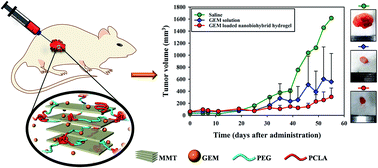
We propose the GEM-loaded nanobiohybrid hydrogel to overcome the drawbacks of GEM in clinical use. The data for sol–gel phase transition, rheological property, in vivo stability, and in vitro release of GEM truly highlighted the advantages of the nanobiohybrid hydrogel system. The anti-tumor efficacy of GEM-loaded nanobiohybrid hydrogel was performed on pancreatic tumor-bearing mice. The mice were administered by intra-tumoral injection to enhance therapeutic efficacy and decrease systemic toxicity. Three groups of mice were injected with saline solution, GEM solution or GEM-loaded nanobiohybrid hydrogel (PCLA–PEG–PCLA/MMT–GEM). As shown in Fig. 9a, the tumor size in the saline treated group kept growing over experiment period. After 8 weeks, the tumor volume of this group increased more than 40 times compared with original volume. In comparison with the saline group, the tumors volume of the group treated with GEM solution was clearly decreased. After 8 weeks, the tumors volume grew approximately 10 times original value and the TGI was 65%. Interestingly, injection of GEM-loaded nanobiohybrid hydrogel suppressed the growth of the tumor considerably, the tumor volume only increased nearly 5 times and the TGI was 81%. In addition, the excised tumor photographs clearly demonstrated that the gemcitabine-loaded nanobiohybrid hydrogel formulation exhibited good antitumor regression than control formulations (saline and GEM solution) (Fig. 9a). These results demonstrated that the nanobiohybrid hydrogel was effective for prolonged and sustained release of GEM, maintaining an appropriate drug concentration for an extended period and efficiently suppressing tumor growth. Moreover, no weight loss was observed for all mice during the treatment process (Fig. 9b), indicating no side effects on mice by treatment with a localized injection of nanobiohybrid hydrogel.
 |
| | Fig. 9 (a) Tumor volume during treatment with intra-tumoral injections of saline solution, GEM solution, or GEM-loaded nanobiohybrid hydrogel and the photographs are for the corresponding tumors exercised after 55 days post-treatment, (b) change in body weight of mice during treatment, (±SD, n = 3). | |
Conclusion
In this study, an injectable nanobiohybrid hydrogel was developed and applied as an injectable local delivery system for the controlled release of GEM in the treatment of pancreatic cancer. The anticancer drug was intercalated and adsorbed onto MMT nanoparticles, followed by dispersion into the thermo-responsive hydrogel PCLA–PEG–PCLA matrix. The aqueous solutions of the nanobiohybrid system exhibited a sol–gel phase transition as a function of temperature. Compared to the pristine hydrogel, the properties of the nanobiohybrid hydrogel, including mechanical property, thermal and in vivo stability, were significantly improved. In vitro cytotoxicity test with 293T cells confirmed the biocompatibility of the nanobiohybrid hydrogel. Furthermore, the in vitro release of GEM showed that the nanobiohybrid hydrogel could suppress the initial burst and it had an extended release time compared with the pristine hydrogel. Consequently, GEM-loaded nanobiohybrid hydrogel exhibited enhanced antitumor efficacy in pancreatic tumor-bearing mice. Thus, our results indicated that the proposed nanobiohybrid hydrogel has great potential as a useful carrier for drug delivery.
Acknowledgements
This research was supported by the Basic Science Research Program through a National Research Foundation of Korea grant funded by the Korean Government (MEST) (20100027955).
References
- M. Pai and D. Spalding, Medicine, 2015, 43, 329–333 CrossRef.
- C. Feig, A. Gopinathan, A. Neesse, D. S. Chan, N. Cook and D. A. Tuveson, Clin. Cancer Res., 2012, 18, 4266–4276 CrossRef CAS PubMed.
- D. Singh, G. Upadhyay, R. K. Srivastava and S. Shankar, Biochim. Biophys. Acta, Rev. Cancer, 2015, 1856, 13–27 CrossRef CAS PubMed.
- X. Yu, Y. Zhang, C. Chen, Q. Yao and M. Li, Biochim. Biophys. Acta, Rev. Cancer, 2010, 1805, 97–104 CrossRef CAS PubMed.
- D. Li, K. Xie, R. Wolff and J. L. Abbruzzese, Lancet, 2004, 363, 1049–1057 CrossRef CAS.
- Y. Hui and J. Reitz, Am. J. Health-Syst. Pharm., 1997, 54, 162–170 CAS.
- C. Celia, D. Cosco, D. Paolino and M. Fresta, Expert Opin. Drug Delivery, 2011, 8, 1609–1629 CrossRef CAS PubMed.
- J. Li, M. G. Wientjes and J. S. Au, AAPS J., 2010, 12, 223–232 CrossRef CAS PubMed.
- V. W. T. Ruiz van Haperen, G. Veerman, J. B. Vermorken and G. J. Peters, Biochem. Pharmacol., 1993, 46, 762–766 CrossRef CAS PubMed.
- C. A. Dasanu, Expert Opin. Drug Saf., 2008, 7, 703–716 CrossRef CAS PubMed.
- M. Vandana and S. K. Sahoo, Biomaterials, 2010, 31, 9340–9356 CrossRef CAS PubMed.
- D. Chitkara, A. Mittal, S. W. Behrman, N. Kumar and R. I. Mahato, Bioconjugate Chem., 2013, 24, 1161–1173 CrossRef CAS PubMed.
- W. Wang, C. Li, J. Zhang, A. Dong and D. Kong, J. Mater. Chem. B, 2014, 2, 1891–1901 RSC.
- M. Liang, T.-M. Yang, H.-P. Chang and Y.-M. Wang, React. Funct. Polym., 2015, 86, 27–36 CrossRef CAS.
- O. Grinberg, A. Gedanken, C. R. Patra, S. Patra, P. Mukherjee and D. Mukhopadhyay, Acta Biomater., 2009, 5, 3031–3037 CrossRef CAS PubMed.
- M. L. Immordino, P. Brusa, F. Rocco, S. Arpicco, M. Ceruti and L. Cattel, J. Controlled Release, 2004, 100, 331–346 CrossRef CAS PubMed.
- A.-L. Papa, S. Basu, P. Sengupta, D. Banerjee, S. Sengupta and R. Harfouche, BMC Cancer, 2012, 12, 419 CrossRef CAS PubMed.
- N. Sood, W. T. Jenkins, X.-Y. Yang, N. N. Shah, J. S. Katz, C. J. Koch, P. R. Frail, M. J. Therien, D. A. Hammer and S. M. Evans, J. Pharm., 2013, 2013, 10 Search PubMed.
- T. Thambi, J. H. Park and D. S. Lee, Biomater. Sci., 2016, 4, 55–69 RSC.
- T. Thambi, V. G. Deepagan, H. Ko, Y. D. Suh, G.-R. Yi, J. Y. Lee, D. S. Lee and J. H. Park, Polym. Chem., 2014, 5, 4627–4634 RSC.
- T. Thambi, V. G. Deepagan, H. Ko, D. S. Lee and J. H. Park, J. Mater. Chem., 2012, 22, 22028–22036 RSC.
- E. Moysan, Y. Gonzalez-Fernandez, N. Lautram, J. Bejaud, G. Bastiat and J.-P. Benoit, Soft Matter, 2014, 10, 1767–1777 RSC.
- H. Okino, R. Maeyama, T. Manabe, T. Matsuda and M. Tanaka, Clin. Cancer Res., 2003, 9, 5786–5793 CAS.
- D. Y. Ko, U. P. Shinde, B. Yeon and B. Jeong, Prog. Polym. Sci., 2013, 38, 672–701 CrossRef CAS.
- Y. Li, J. Rodrigues and H. Tomas, Chem. Soc. Rev., 2012, 41, 2193–2221 RSC.
- N. K. Singh and D. S. Lee, J. Controlled Release, 2014, 193, 214–227 CrossRef CAS PubMed.
- T. Vermonden, R. Censi and W. E. Hennink, Chem. Rev., 2012, 112, 2853–2888 CrossRef CAS PubMed.
- J. M. Shin, S.-H. Kim, T. Thambi, D. G. You, J. Jeon, J. O. Lee, B. Y. Chung, D.-G. Jo and J. H. Park, Chem. Commun., 2014, 50, 7632–7635 RSC.
- J.-A. Yang, J. Yeom, B. W. Hwang, A. S. Hoffman and S. K. Hahn, Prog. Polym. Sci., 2014, 39, 1973–1986 CrossRef CAS.
- W. S. Toh and X. J. Loh, Mater. Sci. Eng., C, 2014, 45, 690–697 CrossRef CAS PubMed.
- D. G. Pyun, H. J. Choi, H. S. Yoon, T. Thambi and D. S. Lee, Colloids Surf., B, 2015, 135, 699–706 CrossRef CAS PubMed.
- D. G. Pyun, H. S. Yoon, H. Y. Chung, H. J. Choi, T. Thambi, B. S. Kim and D. S. Lee, J. Mater. Chem. B, 2015, 3, 7752–7763 RSC.
- K. H. Bae, L.-S. Wang and M. Kurisawa, J. Mater. Chem. B, 2013, 1, 5371–5388 RSC.
- G. Bonacucina, M. Cespi, G. Mencarelli, G. Giorgioni and G. F. Palmieri, Polymers, 2011, 3, 779 CrossRef CAS.
- A. Alexander, Ajazuddin, J. Khan, S. Saraf and S. Saraf, Eur. J. Pharm. Biopharm., 2014, 88, 575–585 CrossRef CAS PubMed.
- A. Alexander, Ajazuddin, J. Khan, S. Saraf and S. Saraf, J. Controlled Release, 2013, 172, 715–729 CrossRef CAS PubMed.
- C. Viseras, P. Cerezo, R. Sanchez, I. Salcedo and C. Aguzzi, Appl. Clay Sci., 2010, 48, 291–295 CrossRef CAS.
- L. A. D. S. Rodrigues, A. Figueiras, F. Veiga, R. M. de Freitas, L. C. C. Nunes, E. C. da Silva Filho and C. M. da Silva Leite, Colloids Surf., B, 2013, 103, 642–651 CrossRef CAS PubMed.
- J.-H. Choy, S.-J. Choi, J.-M. Oh and T. Park, Appl. Clay Sci., 2007, 36, 122–132 CrossRef CAS.
- V. Rives, M. del Arco and C. Martín, Appl. Clay Sci., 2014, 88–89, 239–269 CrossRef CAS.
- C.-W. Chiu and J.-J. Lin, Prog. Polym. Sci., 2012, 37, 406–444 CrossRef CAS.
- C. Aguzzi, P. Cerezo, C. Viseras and C. Caramella, Appl. Clay Sci., 2007, 36, 22–36 CrossRef CAS.
- G. V. Joshi, H. A. Patel, B. D. Kevadiya and H. C. Bajaj, Appl. Clay Sci., 2009, 45, 248–253 CrossRef CAS.
- G. V. Joshi, B. D. Kevadiya, H. A. Patel, H. C. Bajaj and R. V. Jasra, Int. J. Pharm., 2009, 374, 53–57 CrossRef CAS PubMed.
- M. G. Apps, A. J. Ammit, A. Gu and N. J. Wheate, Inorg. Chim. Acta, 2014, 421, 513–518 CrossRef CAS.
- F. H. Lin, Y. H. Lee, C. H. Jian, J.-M. Wong, M.-J. Shieh and C.-Y. Wang, Biomaterials, 2002, 23, 1981–1987 CrossRef CAS PubMed.
- Y.-H. Lee, T.-F. Kuo, B.-Y. Chen, Y.-K. Feng, Y.-R. Wen, W.-C. Lin and F. H. Lin, Biomedical Engineering: Applications, Basis and Communications, 2005, 17, 72–78 CrossRef.
- S.-H. Hsu, M.-C. Wang and J.-J. Lin, Appl. Clay Sci., 2012, 56, 53–62 CrossRef CAS.
- S. Hua, H. Yang, W. Wang and A. Wang, Appl. Clay Sci., 2010, 50, 112–117 CrossRef CAS.
- A. Cojocariu, L. Profire, M. Aflori and C. Vasile, Appl. Clay Sci., 2012, 57, 1–9 CrossRef CAS.
- B. D. Kevadiya, G. V. Joshi, H. M. Mody and H. C. Bajaj, Appl. Clay Sci., 2011, 52, 364–367 CrossRef CAS.
- S. Sharifi, S. B. G. Blanquer, T. G. van Kooten and D. W. Grijpma, Acta Biomater., 2012, 8, 4233–4243 CrossRef CAS PubMed.
- M. T. Nistor, C. Vasile and A. P. Chiriac, Mater. Sci. Eng., C, 2015, 53, 212–221 CrossRef CAS PubMed.
- D. H. Kim, Y. K. Seo, T. Thambi, G. J. Moon, J. P. Son, G. Li, J. H. Park, J. H. Lee, H. H. Kim, D. S. Lee and O. Y. Bang, Biomaterials, 2015, 61, 115–125 CrossRef CAS PubMed.
- T. Thambi, S. Son, D. S. Lee and J. H. Park, Acta Biomater., 2016, 29, 261–270 CrossRef CAS PubMed.
- D. S. Lee, M. S. Shim, S. W. Kim, H. Lee, I. Park and T. Chang, Macromol. Rapid Commun., 2001, 22, 587–592 CrossRef CAS.
- H. J. Sim, T. Thambi and D. S. Lee, J. Mater. Chem. B, 2015, 3, 8892–8901 RSC.
- B. D. Kevadiya, R. R. Pawar, S. Rajkumar, R. Jog, Y. K. Baravalia, H. Jivrajani, N. Chotai, N. R. Sheth and H. C. Bajaj, Biochim. Biophys. Acta, 2013, 1, 43–60 Search PubMed.
- M. R. Matanović, J. Kristl and P. A. Grabnar, Int. J. Pharm., 2014, 472, 262–275 CrossRef PubMed.
Footnote |
| † These authors contributed equally to this work. |
|
| This journal is © The Royal Society of Chemistry 2016 |
Click here to see how this site uses Cookies. View our privacy policy here.