A novel amphoteric ion-exchange membrane prepared by the pore-filling technique for vanadium redox flow batteries

M. S. Lee ab, H. G. Kanga, J. D. Jeona, Y. W. Choi*a and Y. G. Yoon*a
aFuel Cell Laboratory, New and Renewable Energy Research Division, Korea Institute of Energy Research (KIER), Daejeon 305-343, South Korea. E-mail: cozmoz67@kier.re.kr; yoonyg@kier.re.kr; Tel: +82-63-581-1671 Tel: +82-63-581-1670
bDepartment of Chemical Engineering, Chonbuk National University, Jeollabuk-do 54596, South Korea

Received 25th March 2016 , Accepted 23rd June 2016

First published on 24th June 2016


Abstract

A novel amphoteric ion-exchange membrane (AIEM) was prepared through the pore-filling technique, for vanadium redox flow battery (VRBs) applications. Their physico-chemical properties including vanadium ion permeability and electrochemical properties were investigated as a function of cross-linking degrees. Vanadium ion permeability was effectively suppressed by the quaternary ammonium group-induced Donnan exclusion effect and was only 7.7% of that of Nafion117. Finally, open circuit voltage measurements showed that VRBs assembled with the AIEM maintained voltages >1.3 V for over 43 h, which was superior to the cation exchange membranes (CEMs), studied. In addition, the VRBs with AIEM-4 exhibited higher columbic efficiency (ca. 98%) and energy efficiency (ca. 89%) than those with CEMs. Therefore, it may be concluded that pore-filled AIEMs are more suitable for use in VRBs than pore-filled CEMs. This work provides a convenient method for preparing new types of IEMs for various applications.

Introduction

Research and development of renewable energy sources are among the hottest topics of our times. However, in order to compete with coal, natural gas, oil, and nuclear power, the renewable energy needs to be cost-effective and trustworthy. Large-scale energy storage is a key to achieving these goals.1–5 The combination of renewable resources and energy storage can increase the quality and stability of renewable energy. As one type of energy storage device, the vanadium redox flow battery (VRB) is well-suited for large-scale utility applications, owing to its attractive features such as long life, active thermal management, and independence from energy and power rating.6,7

The ion-exchange membrane (IEM) is one of the key components of VRBs and is used to prevent the crossover of vanadium ions, while allowing the transport of ions to complete the conducting circuit. The ideal membrane for VRBs should exhibit low permeability of vanadium ions, in order to minimize self-discharge and achieve high coulomb efficiency (CE). In addition, it should exhibit low area resistance to minimize losses in voltage efficiency. Perfluorosulfonic acid cation exchange membranes (CEMs) such as Nafion117 have been widely employed in VRB systems, owing to their extraordinary chemical stability and good proton conductivity. Nevertheless, critical issues related to severe vanadium crossover and high cost of Nafion117 need to be overcome in such systems.8

Therefore, hydrocarbon-based polymers such as sulfonated poly(aryl ether ketone)s, sulfonated polysulfones, sulfonated polybenzimidazoles, and sulfonated polyimides have been investigated as alternative electrolytes for VRBs. These polymers are expected to lower the manufacturing costs, while exhibiting sufficient electrochemical properties. However, such hydrocarbon-based CEMs have several disadvantages such as low electrochemical and mechanical stability. In particular, polymer membranes prepared by a casting process have poor mechanical strength caused by the low thickness of the membranes. To solve these problems, a variety of reinforced composite membranes has been developed by various researchers.9 Yamaguchi et al. proposed that a pore-filled membrane could meet all the requirements.9–12 To control membrane swelling and solvent permeation, we proposed the concept of using a pore-filled membrane for liquid separation applications.13 The pore-filled membrane consists of two parts, namely a porous substrate to provide mechanical strength and an electrolyte polymer within the pores of the substrate to allow proton conduction.

Among the various modification methods, cross-linking has been proven as one of the most efficient ways to improve the chemical and mechanical stability of membranes. Cross-linking can usually reinforce the polymers by forming networks between polymer chains. In addition, it could also reduce attacks from the oxidant by suppressing membrane swelling.

In our previous study, we prepared highly cross-linked, pore-filled CEMs with the pore-filling technique.14 While CEMs exhibit high conductivity and high energy efficiency, it is difficult to prevent the permeation of vanadium ions through them.15 On the other hand, owing to the Donnan exclusion effect, anion exchange membranes exhibit lower vanadium ion permeability, but are also restricted by lower conductivity, which results in a decrease in the voltage efficiency of the battery.16,17 Therefore, it is necessary to explore a novel IEM that has high conductivity and low vanadium permeability. The amphoteric ion-exchange membrane (AIEM), which has both cation and anion exchange capabilities, has been considered for potential applications in many fields, since it was first proposed by Sollner in 1932.18

In this study, we prepared AIEMs by the pore-filling technique using cross-linkers and compared them with the CEMs prepared in our previous study, in order to examine the applicability of the AIEMs in VRBs. Physico-chemical properties such as water uptake, morphology, transport number, electrical area resistance, vanadium permeability, and ion-exchange capacity were examined in detail as a function of the cross-linking degrees. In addition, the VRB performance and open circuit voltage (OCV) self-discharge process were investigated.

Experimental

Materials

Micro-porous polyethylene (PE) was used as the substrate film and vinyl sulfonic acid (E1) and (vinylbenzyl)trimethylammonium chloride (E2) were used as the ionic conductors. The porous PE film with thickness, porosity, and mean pore size of 20 μm, 45%, and 100 nm, respectively, was purchased from Asahi chemicals, Japan. E1 and E2 were purchased from Asahi Fine Chemistry and used as-received. N,N′-Ethylene bisacrylamide, which was used as a cross-linker, were purchased from Aldrich and used without further purification (see Scheme 1 for E1, E2 and crosslinker). Sodium dodecyl benzene sulfonate (Aldrich) was used for the pre-treatment of the substrate. NaOH and HCl (37%) were used as-received from Junsei Chemical.
image file: c6ra07790k-s1.tif
Scheme 1 Ionic conducting monomers and crosslinker for this study.

Preparation of pore-filled membranes

The porous PE substrates were pre-treated by using a solution containing appropriate amount of sodium dodecyl benzene sulfonate in order to render the surface of the substrate hydrophilic. Monomer solutions were prepared by mixing E1, E2, and N,N′-ethylene bisacrylamide in various compositions. 3 wt% of 2-hydroxy-2-methyl-1-phenylpropane-1-one against each electrolyte monomer was used as an initiator for polymerization. The pre-treated porous PE films were immersed in the monomer solution for over 5 min, to allow the pores to be completely filled. The monomer-impregnated PE was sandwiched between polyethylene terephthalate (PET) films and was photo-polymerized using UV radiation for 5–15 minutes. The cross-linking reaction occurred concurrently during the photo-polymerization. Photo-initiated cross-linking is regarded as one of the most effective methods to form three-dimensional polymer networks, owing to the ease of use of the method, relative safety, and low cost, besides the high initiation rates under intense illumination conditions.19–21 The prepared pore-filled membrane was then exchanged to the H+ form by immersing in aqueous 2 N HCl several times for 1 day. The membranes in the H+ form were washed with deionized water several times to completely remove the residual HCl. The complete process for the preparation of the pore-filling membranes is described in Scheme 2.
image file: c6ra07790k-s2.tif
Scheme 2 Procedure for the preparation of pore-filled membranes.

Characterization of the prepared membranes

In order for the prepared membranes to exhibit adequate performance, the pores of the substrate need to be completely filled with the polymer electrolytes. Therefore, we observed the structure of the porous substrates and one of the prepared membranes using scanning electron microscopy (SEM). Fourier transform infrared attenuated total reflectance (FT-IR/ATR) spectroscopy was used to examine the chemical bonding and the functional groups obtained by the polymerization reactions conducted with monomer solutions of various compositions. The ion-exchange capacity (IEC), water uptake, and area resistance were measured to determine the physico-chemical properties. Permeability of vanadium ions through the membrane was measured to determine the vanadium crossover for the prepared membranes. In order to investigate the proton transport phenomena in the membranes, transport numbers were measured by the electro-motive force (EMF) measuring method. Finally, VRB performance and OCV self-discharge tests were conducted using Nafion and two pore-filled membranes. All the experimental methods are described in detail in the ESI.

Results and discussion

Characterization of membrane structure using FT-IR and SEM

Successful polymerization was confirmed by the FT-IR spectra, which are shown in Fig. 1. All the prepared membranes exhibit the same absorption bands as the substrate at 2925 cm−1 and 2850 cm−1, which are assigned to the stretching vibrations of the skeletal PE. The absorption band at 1660 cm−1 (Fig. 1(a)) is attributed to the carbonyl structure of the cross-linker, whereas absorption bands attributed to the sulfonic acid groups are observed at 1006 cm−1 and 1033 cm−1. Further, the stretching vibrations of S[double bond, length as m-dash]O are observed at 1016 cm−1 and 1050 cm−1 and the absorption bands attributed to the trimethylammonium group are observed at 1195 cm−1. Peak area ratios were calculated to determine the degree of polymerization for each membrane. Fig. 1(b) shows the relative peak areas of carbonyl, ammonium, and sulfonic acid groups calculated by setting the polyethylene peak as the reference with a peak area of 1.0. The results indicate that the peak areas corresponding to both electrolytes, E1 and E2, increase and consequently, the peak area of the cross-linker decreases, implying that all the membranes were prepared successfully, according to the composition of the monomer solutions.
image file: c6ra07790k-f1.tif
Fig. 1 (a) FT-IR spectra of pore-filled membranes and (b) relative peak area ratios of the main functional groups.

Fig. 2 shows the surface and cross-sectional SEM images of the porous substrate and the pore-filled membranes. Fig. 2(c) and (d), which show the top-view and cross-sectional images of the pore-filled membrane, respectively, indicate that the porous substrate was completely filled by the cross-linked polymer after the pore-filling and polymerization processes.


image file: c6ra07790k-f2.tif
Fig. 2 Cross-sectional and top-view SEM images of (a) and (b) porous substrate, (c) and (d) pore-filling membrane.

Physico-chemical properties of the prepared membranes

IEC is normally dependent upon the number of ion-exchangeable sites in a membrane. According to increase in cross-linkers ratio to electrolytes, both the cationic exchange capacity and anionic exchange capacity decrease. It is well known that increase in cross-linking density leads to mechanically strong structure of the pore-filled membranes.18 Furthermore, resulting dense membranes can restrain crossover of vanadium ions due to low swelling effect.

Table 1 shows that the water uptake of AIEMs was decreased according to increase in the cross-linker concentration. It is because the higher cross-linked AIEM has increasingly rigid morphology with decrease in IEC, simultaneously. Typically, in case of homo-polymeric cast ion exchange membranes, high water uptake not only leads fast ion transport through the membranes, but also decreases mechanical strength and ion selectivity.3,20 Thus, it is needed to trade off ion transport against dimensional stability of an IEM. On the other hand, the pore-filled membranes show not only strong dimensional stability but fast ion transport. It is due to reinforcing substrate materials forming three dimensional structures with the pore-filled polymers consisting of high concentrated functional groups.

Table 1 Properties of membranes prepared in this study
Membranes Monomer ratio (mol) Water uptakea (%) IECa (meq. g−1) Pb (10−9 cm2 min−1) Flux (ppb s−1) Area resistance (Ω cm) Thickness (μm)
Electrolyte Cross-linker Cationic
a M1, M2, and M3 prepared in previous study are renamed as CEM-1, CEM-2, and CEM-3, respectively, and the data for CEM-1, CEM-2, and CEM-3 from previous study.14b P denotes the permeability of vanadium ions (see the ESI for details).
CEM-1*a 14.00 1 88 3.86 0.62 32.2 0.20 24
CEM-2*a 8.81 1 65 3.14 0.58 31.8 0.21 25
CEM-3*a 6.22 1 60 2.71 0.46 24.8 0.25 26

Membranes Electrolyte ratio (mol) Cross-linker ratio (mol) Water uptake (%) IEC (meq. g−1) Pb (10−9 cm2 min−1) Flux (ppb s−1) Area resistance (Ω cm2) Thickness (μm)
E1 E2 Cationic Anionic
AIEM-1 1 1 0.13 76 0.66 1.94 0.83 45.0 0.22 24
AIEM-2 1 1 0.19 56 0.63 1.39 0.30 15.8 0.41 23
AIEM-3 1 1 0.26 45 0.59 1.10 0.19 10.6 0.43 24
AIEM-4 1 1 0.31 29 0.40 1.06 0.13 6.6 0.51 24
Nafion117 38a 0.90 1.68 11.8 0.49 187


Meanwhile, the area resistance of an IEM plays a key role to affect the performance in electrochemical systems using the IEMs. The IEC and mobility of the ions within a membrane mostly determine the electrical area resistance of the membrane.22 As shown in Table 1, the resistance of pore-filled AIEM increased at higher concentrations of the cross-linker. The low IEC of the highly cross-linked polymeric structure results in the high resistance and low ion transport through the membrane. It is because the high area resistance of the membrane leads to low ion conductivity. The resistances of the membranes prepared with 0.13, 0.19, and 0.26 mol of the cross-linker were significantly lower, whereas the resistances of the membranes prepared with 0.31 mol of the cross-linker were slightly higher than that of Nafion117. Interestingly, the resistance values for CEM-3 are lower than most AIEMs. This result is related to the transport number, which will be discussed in Section 3.4. An inversely proportional relationship between the electrical resistance and permeability is observed, well coincided with the result from Seo et al.23 From the trade-off between electrical resistance and permeability, AIEM-4 appears to be suitable for further use in VRB performance tests.

Permeability of vanadium ions

Vanadium ion crossover has been a critical problem for VRBs, since it inevitably causes coulomb efficiency and energy efficiency loss. Therefore, an optimum permeability of vanadium ions through the IEM determines its applicability in VRBs. The change in the vanadium concentration as a function of time in MgSO4 solutions for various membranes is shown in Fig. 3. As shown in Fig. 3(a) and (b), vanadium ion crossover of the prepared membranes is reduced at higher cross-linker contents. The vanadium ion concentration through CEM-3 and Nafion117 increased much faster than that through AIEM-4, particularly in Fig. 3(b), which compares Nafion117 against AIEM-4, although the thickness of AIEM-4 is about 7.5 times lower than Nafion117. The flux values of vanadium ions through the resulting AIEMs, CEMs, and Nafion117 are listed in Table 1. The flux through AIEM-4 is found to be reasonably lower (1.79 times of that through Nafion117 and 3.76 times of that through CEM-3) than that through CEM-3 and Nafion117. The permeability further decreases as a result of the much stronger Donnan exclusion effect between AIEM-4 and vanadium ions than that between Nafion117 and vanadium ions. It is well known that polyvalent cations are hardly adsorbed on the anion exchangeable sites, compared to monovalent cations.24–26 The low permeability of AIEM-4 is due to increase in the Donnan exclusion between ammonium groups from the anion conducting polymer (E2) and the vanadium ions.
image file: c6ra07790k-f3.tif
Fig. 3 Permeability of vanadium ions for the various membranes investigated in this study: (a) Nafion117 versus CEMs; (b) Nafion117 versus AIEMs.

Transport number

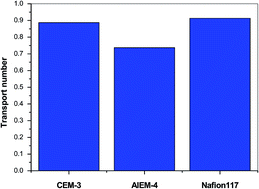
CEM-3, Nafion117, and AIEM-4 were selected to understand the cation transport phenomena and the transport numbers of those membranes were measured in 2 M of H2SO4 solution (see ESI for details). As shown in Fig. 4, in the case of CEM-3 and Nafion117, the proton transport numbers were higher than that of AIEM-4 in H2SO4. The high cation transport number indicates that cations are preferentially transported over anions through the membrane, which would result in low resistance for cation transport including vanadium ions in a VRB. In the cases of CEM-3 and Nafion117, similar proton transport number values of 0.88 and 0.93, respectively, were observed in H2SO4 solutions. However, in the case of AIEM-4, the proton transport number decreased to 0.75. This indicates that 88%, 93%, and 75% of proton charges are passed through CEM-3, Nafion117, and AIEM-4 under acidic conditions. This is because the presence of quaternary ammonium in AIEM reduces the cross-contaminating proton ions, owing to the Donnan exclusion effect, while resulting in the decrease in the voltage efficiency of VRB systems.
image file: c6ra07790k-f4.tif
Fig. 4 Transport numbers of CEM-3, Nafion117 and AIEM-4 in H2SO4 solutions.

Charge–discharge and OCV self-discharge tests

Different ionic species such as VO2+ and VO2+ on the positive side, and V3+ and V2+ on the negative side show the diffuse trend across the membrane due to their concentration gradients across the cell, resulting in a loss in CE as well as self-discharge. Thus, the ion selectivity of the membrane is a key parameter that affects the performance of a VRB. To compare the ion selectivity and permeability of membranes, OCV measurement tests are employed as an indirect method. The OCV measurement results of VRBs with AIEM-4, CEM-3, and Nafion117 are shown in Fig. 5. The OCV of VRBs assembled with both CEM-3 and Nafion117 membranes decreased rapidly after staying constant for about 25 h and 28 h, respectively. In contrast, the VRB assembled with AIEM-4 exhibited a much better performance. In this case, the OCV was maintained above 1.3 V for more than 43 h, which is much longer than that obtained with both CEM-3 and Nafion117. The OCV results indicate that the self-discharge of VRBs containing AIEM-4 is suppressed compared to conventional CEMs, which well corresponds to the permeability experiments. This result shows much lower crossover of vanadium ions through the AIEM-4 than that through the CEM-3 and Nafion117 membranes. Accordingly, owing to the much improved performance of AIEMs in restricting the crossover of vanadium ions, the use of AIEMs is expected to result in high CE of the battery.
image file: c6ra07790k-f5.tif
Fig. 5 OCV as a function of time obtained from the self-discharge tests.

Fig. 6 presents the single cell performance of VRBs assembled with Nafion117, CEM-3, and AIEM-4 composite membranes. CE is the ratio of the discharge capacity of a cell to its charge capacity. Alternately, it can also be defined as the ratio of the discharge time to the charge time. The higher CE (indicating lower capacity loss), is mostly because of the lower crossover rate of vanadium ions. During discharging process, the electrochemical reduction and oxidation of vanadium ions occur. As expected, AIEM-4 showed higher CE than CEM-3 at the same current density, owing to the low crossover of vanadium ions. Voltage efficiency (VE) is defined as the ratio of the mean discharge voltage of a cell to its mean charge voltage. The discharge and charge voltages are both described by the thermodynamic reduction potential of the redox couples in each half-cell and the over-potential of the cell. The ohmic over-potential is also partially owing to the membrane resistance in VRB systems.27 Therefore, a higher membrane resistance will result in a higher charge voltage and a lower discharge voltage. However, although the initial VE values of AIEM-4 are slightly better than CEM-3, interestingly, the overall VE of CEM-3 and AIEM-4 are similar, which does not agree well with the area resistance trend. This is explained by the fact that the pore-filled membranes have a very low thickness (only 13.4% of that of Nafion117), which affects the ion conduction sufficiently to render the slight difference in area resistance in the VRB flow cells negligible. As a result, AIEM-4, CEM-3, and Nafion117 exhibit similar VE. As an indicator of energy loss during the charge–discharge process, energy efficiency (EE) is a key parameter in evaluating an energy storage system (ESS). In this system, AIEM-4 shows a higher EE than CEM-3, indicating that the former exhibits superior performance over the latter. The EE of AIEM-4 is similar to that of Nafion117. This result reveals that the higher priority of a membrane for VRFB is to extremely reduce vanadium ion crossover for reaching higher system performance. Accordingly amphoteric ion exchange membranes prepared in this study would play a key role to enhance VRFB system durability.


image file: c6ra07790k-f6.tif
Fig. 6 Cycle performance efficiencies of VRBs at a current density of 50 mA cm−2: (a) CE versus number of cycles, (b) VE versus number of cycles, and (c) EE versus number of cycles.

Conclusions

A novel AIEM aimed for VRB applications has been prepared via the pore-filling technique. The pore-filled membranes were prepared with a simple process in a short time (5–15 min) by photo-polymerization. The membrane properties and the permeability of vanadium ions through the AIEM can be conveniently controlled by changing the amount of cross-linker in the monomer solution. The prepared AIEM exhibited advantages over both anion exchange membranes and cation exchange membranes in VRBs. The AIEMs exhibited reasonably lower permeability of vanadium ions compared to CEMs due to the Donnan exclusion effect and higher conductivity compared to anion exchange membranes. Finally, self-discharge and cycle performance tests of the VRBs assembled with AIEMs prove that the AIEMs prepared by the pore-filling technique are suitable for use in VRBs. We believe that this work has yielded a convenient method for preparing new kinds of IEMs for VRB and other applications.

Acknowledgements

This work was supported by the Energy Efficiency & Resources Core Technology Program of the Korea Institute of Energy Technology Evaluation and Planning (KETEP) granted financial resources from the Ministry of Trade, Industry & Energy, Republic of Korea (No. 20142020103610 and No. 20113020030020).

Notes and references

  1. L. Jianlin, World of Inverters, 2010, 6, 65 Search PubMed.
  2. X. Li, H. M. Zhang, Z. Mai, H. Z. Zhang and I. Vankelecom, Energy Environ. Sci., 2011, 4, 1147 Search PubMed.
  3. J. P. Barton and D. G. Infield, IEEE Trans. Power Appar. Syst., 2004, 19, 441 Search PubMed.
  4. H. Lund, Energy, 2005, 30, 2402 CrossRef.
  5. H. S. Chen, T. N. Cong, W. Yang, C. Q. Tan, Y. L. Li and Y. L. Ding, Prog. Nat. Sci., 2009, 19, 291 CrossRef CAS.
  6. H. Zhong, H. M. Zhang, Y. M. Liang, J. L. Zhang, M. Wang and X. Wang, J. Power Sources, 2007, 164, 572 CrossRef CAS.
  7. H. Zhang, Y. Zhang, Z. Liu and X. Wang, Progr. Chem., 2009, 21, 2333 CAS.
  8. Q. Luo, H. Zhang, J. Chen, P. Qian and Y. Zhai, J. Membr. Sci., 2008, 311, 98 CrossRef CAS.
  9. T. Yamaguchi, F. Miyata and S. Nakao, Adv. Mater., 2003, 15, 1198 CrossRef CAS.
  10. T. Yamaguchi, F. Miyata and S. Nakao, J. Membr. Sci., 2003, 214, 283 CrossRef CAS.
  11. T. Yamaguchi, H. Kuroki and F. Miyata, Electrochem. Commun., 2005, 7, 730 CrossRef CAS.
  12. T. Yamaguchi, H. Zhou, S. Nakazawa and N. Hara, Adv. Mater., 2007, 19, 592 CrossRef CAS.
  13. Y. Yin, Y. Suto, T. Sakabe, S. Chen, S. Hayashi, T. Mishima, O. Yamada, K. Tanaka, H. Kita and K. Okamoto, Macromolecules, 2006, 39, 1189 CrossRef CAS.
  14. H. G. Kang, M. S. Lee, W. J. Sim, T. H. Yang, K. H. Shin, Y. H. Shul and Y. W. Choi, J. Membr. Sci., 2014, 460, 178 CrossRef CAS.
  15. J. Y. Xi, Z. H. Wu, X. P. Qiu and L. Q. Chen, J. Power Sources, 2007, 166, 531 CrossRef CAS.
  16. G. J. Hwang and H. Ohya, J. Membr. Sci., 1997, 132, 55 CrossRef CAS.
  17. J. Y. Qiu, M. Y. Li, J. F. Ni, M. L. Zhai, J. Peng, L. Xu, H. Zhou, J. Li and G. Wei, J. Membr. Sci., 2007, 297, 174 CrossRef CAS.
  18. K. Sollner, Biochem. Z., 1932, 244, 370 CAS.
  19. M. Doytcheva, R. Stamenova, V. Zvetkov and C. B. Tsvetanov, Polymer, 1998, 39, 6715 CrossRef CAS.
  20. C. Decker and T. N. Viet, Photocrosslinking of functionalized rubbers, 7a Styrene-butadiene block copolymers, Macromol. Chem. Phys., 1999, 200, 358 CrossRef CAS.
  21. Y. Liu, J. Y. Lee and L. Hong, J. Power Sources, 2004, 129, 303 CrossRef CAS.
  22. H. Strathmann, Ion-Exchange Membrane Separation Processes, Membrane Science and Technology Series, Elsevier, Amsterdam, 2004, vol. 9 Search PubMed.
  23. S. J. Seo, B. C. Kim, K. W. Sung, J. Shim, J. D. Jeon, K. H. Shin, S. H. Shin, S. H. Yun, J. Y. Lee and S. H. Moon, J. Membr. Sci., 2013, 428, 17 CrossRef CAS.
  24. J. Zeng, C. P. Jiang, Y. H. Wang, J. W. Chen, S. F. Zhu, B. J. Zhao and R. Wang, Electrochem. Commun., 2008, 10, 372 CrossRef CAS.
  25. C. Vallois, P. Sistat, S. Roualdès and G. Pourcelly, J. Membr. Sci., 2003, 216, 13 CrossRef CAS.
  26. T. Sata, T. Sata and W. K. Yang, J. Membr. Sci., 2002, 206, 31 CrossRef CAS.
  27. Z. Mai, H. Zhang, X. Li, C. Bi and H. Dai, J. Power Sources, 2011, 196, 482 CrossRef CAS.

Footnotes

Electronic supplementary information (ESI) available. See DOI: 10.1039/c6ra07790k
These authors contributed equally to this work.

This journal is © The Royal Society of Chemistry 2016
Click here to see how this site uses Cookies. View our privacy policy here.