DOI:
10.1039/C6RA07550A
(Paper)
RSC Adv., 2016,
6, 63690-63703
Spectral investigations, inhibition efficiency analysis and a TD-DFT study on tuning the light harvesting efficiency (LHE) of heterocyclic 5-nitro-1,3-benzodioxole as a photosensitizer for dye sensitized solar cells (DSSCs)
Received
22nd March 2016
, Accepted 2nd June 2016
First published on 7th June 2016
Abstract
The vibrational wavenumber of 5-nitro-1,3-benzodioxole (NBD) are obtained and the complete assignments are performed on the basis of the total energy distribution (TED) of the vibrational modes. The results are compared with experimental frequencies that are obtained from FT-IR and FT-Raman spectra. The NBO analysis of NBD is carried out, which showed the effective energy interaction between the nitrogen lone pair oxygen atom and the sigma antibonding orbitals of the N–O bond. The chemical shifts of the hydrogen and carbon atoms of NBD are determined with the help of computed 1H and 13C NMR spectra. Non-linear optical behaviour is also investigated by the determination of the first hyperpolarizability. This result indicates that NBD is a good candidature for NLO study. In order to analyse the light harvesting efficiency of NBD, donor and acceptor groups are introduced in it as the substituents. All the systems that are designed theoretically in this study are highly red shifted as compared to NBD due to the donor and acceptor substituents. Hence the better dye sensitized solar cell (DSSC) efficiency on the NBD is distinguished in these calculations. However further chemical modification of NBD, such as adding highly effective electron acceptors and donors, is suggested, which could raise the light harvesting efficiency (LHE) of the DSSC.
1. Introduction
1,3-Benzodioxoles occur extensively in plant products, some of which are recognized to show effective antioxidant and antibacterial actions.1 It has newly been reported that 1,3-benzodioxole derivatives possess cytotoxic activity against several human tumour cell lines together with human colon carcinoma cells2 and multidrug-resistant nasopharyngeal carcinoma cells.3 On this origin, and in pursuing attention in the study of new anticancer agents,4–6 spectroscopic investigations were undertaken on a 1,3-benzodioxole derivative such as 5-nitro-1,3-benzodioxole (NBD).
Recently, Yonggang He et al.7 have performed cation vibrational energy level studies of 1,3-benzodioxole obtained by means of zero kinetic energy photoelectron spectroscopy. Synthesis and characterization of asymmetric o-nitrobenzoic and m-nitrobenzoic acids with a 1,3-benzodioxole skeleton have been done by Masaya Suzuki et al.1 The computational work on the spectroscopy of 1,3-benzodioxole has been reported by Emanuela Emanuele et al.8a C. Yohannan Panicker et al. have done a theoretical work8b and, as an extension, work on the vibrational spectra and the theoretical calculations of NBD are reported in this work. Therefore, spectral investigations and DFT based global descriptors such as chemical potential (µ), chemical hardness (η), electrophilicity (ω), charge transfer (ΔN), electrofugality (ΔEe), nucleofugaity (ΔEn) and back donation (ΔEback-donation) of NBD are considered and undertaken using ab initio/HF and DFT/B3LYP computations.
Many heterocyclic compounds containing heteroatoms like N, O and S have been proven to be effective inhibitors for corrosion. The corrosion inhibition property of these compounds is qualified to their molecular structure. The use of inhibitors is one of the most practical methods for shielding metals or alloys from corrosion. Inhibitors are chemicals that frequently work by adsorbing themselves on the metallic surface by forming a film.9 The inhibition efficiency of such inhibitors is based essentially on the structure of the inhibitor itself, which includes the number of active adsorption centres in the compound, the character of the metal and the aggressive solution. The structure and the lone pairs of electron in the heteroatoms are significant features that evaluate the adsorption of these molecules onto the metallic surface. The effect of inhibitors adsorbed onto metallic surfaces in acid solutions is to decrease the cathodic reaction as well as the anodic process of dissolution of metals. Since NBD contains N and O atoms in its structure, it is undertaken for corrosion inhibition study to analyse the inhibition efficiency.
Additionally, NBD comes under the category of heterocyclic building blocks and as well laser dyes. It is broadly used in organic electronics and photonics. It is also a hydrogen bond acceptor and donor. Hence it is worthy to understand the similarity between their properties and hope it can be used for dye sensitized solar cells (DSSCs). Therefore, a theoretical TD-DFT calculation is undertaken in this study to analyse the light harvesting efficiency (LHE) of NBD.
2. Experimental sections
Pure NBD of spectroscopic grade was obtained from the Lancaster Company, USA; hence, it was used for recording the spectra without any further purification. The FT-IR of NBD was measured in a BRUKER IFS 66V spectrometer in the range of 4000 to 400 cm−1. The FT-Raman spectrum of NBD was also recorded on a BRUKER RFS 100/S instrument equipped with a Nd:YAG laser source operating at 1064 nm wavelength and 150 mW power in the range of 3500 to 50 cm−1.
3. Quantum chemical calculations
The first task for the computational work is to determine the optimized geometry of the compound using the GAUSSIAN 09W (ref. 10) program package. It is well known in the quantum chemical literature that the hybrid B3LYP11,12 method, based on Becke's three parameter functional, of DFT yields a better description of harmonic vibrational wavenumbers for small and medium sized molecules than HF. The flexible basis set 6-311++G level is employed to perform accurate calculations on the title compound. However, the frequency values computed at these levels contain known systematic errors. In general, theoretical calculations symmetrically overestimate the vibrational wavenumbers. Hence, the vibrational frequencies theoretically calculated are scaled down using the MOLVIB 7.0 version written by Tom Sundius.13,14 The scale factors used in this work for the HF and B3LYP methods are 0.905 and 0.98, respectively. After scaling, the deviation from the experiment is more reliable. Using the above mentioned methods, the following analyses such as the electronic properties, NBO, HOMO–LUMO, NMR, UV-vis and thermal properties are carried out. The first hyperpolarizability is also calculated to study the NLO properties. Furthermore, the light harvesting efficiency (LHE) is calculated using the oscillator strengths obtained by the TD-DFT calculation.
4. Result and discussion
4.1. Molecular geometry
The numbering of the atoms in NBD is depicted in Fig. 1. The optimized geometries of NBD with HF and B3LYP methods are listed in Table 1. Previously reported structural parameters determined by microwave spectroscopy15 are also included for comparison in Table 1. The bond lengths calculated at the HF level are obviously underestimated, whereas the DFT level makes them closer to the microwave data. The overall structural parameters at the B3LYP level represent definite improvements on the HF results.
 |
| | Fig. 1 Molecular structure of 5-nitro-1,3-benzodioxole. | |
Table 1 Optimized parameters of 5-nitro-1,3-benzodioxole by HF and B3LYP methods using the 6-311++G basis set
| Bond length (Å) |
Values |
Exp. valuea |
Bond angles (°) |
Values |
Exp. valuea |
Dihedral angles (°) |
Values |
| HF |
B3LYP |
HF |
B3LYP |
HF |
B3LYP |
| 6-311++G |
6-311++G |
6-311++G |
6-311++G |
6-311++G |
6-311++G |
|
Ref. 15.
|
| O1–C2 |
1.4792 |
1.4713 |
— |
C2–C1–C8 |
106.5994 |
106.6058 |
— |
C8–O1–C2–C3 |
0.0174 |
0.0061 |
| O1–C8 |
1.3938 |
1.3876 |
1.368 |
O1–C2–O3 |
106.4145 |
106.5603 |
— |
C8–O1–C2–H13 |
−117.9846 |
−118.0682 |
| C2–O3 |
1.472 |
1.4648 |
1.432 |
O1–C2–H13 |
109.0347 |
109.047 |
— |
C8–O1–C2–H14 |
118.0204 |
118.0804 |
| C2–H13 |
1.0855 |
1.0865 |
1.094 |
O1–C2–H14 |
109.0356 |
109.0471 |
— |
C2–O1–C8–C7 |
179.991 |
−180.0029 |
| C2–H14 |
1.0855 |
1.0865 |
1.094 |
O3–C2–H13 |
109.4862 |
109.4742 |
— |
C2–O1–C8–C9 |
−0.0107 |
−0.0038 |
| O3–C9 |
1.4025 |
1.3959 |
— |
O3–C2–H14 |
109.4866 |
109.4741 |
— |
C1–C2–O3–C9 |
−0.0177 |
−0.0061 |
| C4–C5 |
1.4083 |
1.4053 |
1.400 |
H13–C2–H14 |
113.1582 |
113.0301 |
— |
H13–C2–O3–C9 |
117.6858 |
117.7867 |
| C4–C9 |
1.3736 |
1.3714 |
1.387 |
C2–O3–C9 |
106.5197 |
106.5145 |
— |
H14–C2–O3–C9 |
−117.7225 |
−117.799 |
| C4–H10 |
1.0767 |
1.0778 |
1.078 |
C5–C4–C9 |
115.6167 |
115.569 |
— |
C2–O3–C9–C4 |
−179.9903 |
180.003 |
| C5–C6 |
1.3961 |
1.3933 |
1.400 |
C5–C4–H10 |
121.1865 |
121.1522 |
— |
C2–O3–C9–C8 |
0.0117 |
0.004 |
| C5–N15 |
1.4592 |
1.4532 |
— |
C9–C4–H10 |
123.1967 |
123.2788 |
— |
C9–C4–C5–C6 |
0.0003 |
0.0001 |
| C6–C7 |
1.4021 |
1.3996 |
— |
C4–C5–C6 |
123.0013 |
123.0584 |
— |
C9–C4–C5–N15 |
−179.9995 |
180.0002 |
| C6–H11 |
1.0777 |
1.0789 |
— |
C4–C5–N15 |
118.1417 |
118.1052 |
— |
H10–C4–C5–C6 |
−179.9995 |
180.0002 |
| C7–C8 |
1.3823 |
1.38 |
— |
C6–C5–N15 |
118.857 |
118.8363 |
— |
H10–C4–C5–N15 |
0.0008 |
0.0003 |
| C7–H12 |
1.0785 |
1.0792 |
— |
O16–N15–O17 |
123.4824 |
123.6007 |
— |
C5–C4–C9–O3 |
−179.9978 |
180.001 |
| C8–C9 |
1.3962 |
1.3942 |
— |
C5–C6–C7 |
119.9691 |
119.9977 |
120.5 |
C5–C4–C9–C8 |
−0.0001 |
−0.0001 |
| N15–O16 |
1.2685 |
1.2618 |
— |
C5–C6–H11 |
119.0078 |
118.9515 |
— |
H10–C4–C9–O3 |
0.002 |
0.0009 |
| N15–O17 |
1.2687 |
1.262 |
— |
C7–C6–H11 |
121.0231 |
121.0508 |
— |
H10–C4–C9–C8 |
179.9997 |
−180.0002 |
| |
|
|
|
C6–C7–C8 |
117.0623 |
117.0037 |
118.8 |
C4–C5–N15–O17 |
0.0002 |
0.0 |
| |
|
|
|
C6–C7–H12 |
121.6841 |
121.698 |
— |
C6–C5–N15–O16 |
0.0005 |
0.0002 |
| |
|
|
|
C8–C7–H12 |
121.2536 |
121.2984 |
— |
C6–C5–N15–O17 |
−179.9995 |
180.0002 |
| |
|
|
|
O1–C8–C7 |
127.5532 |
127.6164 |
— |
C5–C6–C7–C8 |
−0.0003 |
−0.0001 |
| |
|
|
|
O1–C8–C9 |
110.3256 |
110.2398 |
— |
C5–H6–C7–H12 |
179.9998 |
−180.0002 |
4.2. Spectral analysis
NBD consists of 17 atoms, so it has 45 normal vibrational modes. The calculated vibrational wavenumbers using HF and DFT methods are compared with the experimentally observed values. Comparison of the frequencies calculated at HF and DFT with the experimental values (Table 2) reveals that the overestimation of the calculated vibrational modes is due to the neglect of anharmonicity in the real system. The inclusion of electron correlation in DFT reduces the overestimation of the frequencies to a certain extent. Although basis sets are sensitive, the computed harmonic vibrations are only marginal, as observed in the DFT values, using 6-311++G. It is customary to scale down the calculated harmonic frequencies in order to develop agreement with the experiment without affecting the level of calculations. The scaled calculated frequencies minimize the root-mean square difference between calculated and experimental frequencies for bands with definite identifications. The FT-IR and FT-Raman spectra of NBD are shown in Fig. 2 and 3 along with the theoretical spectra, respectively, and they are interpreted as follows.
Table 2 Vibrational assignments of experimental frequencies of 5-nitro-1,3-benzodioxole along with calculated frequencies by HF and B3LYP methods using the 6-311++G basis seta
| S. No |
Experimental frequency (cm−1) |
Calculated frequency (cm−1) |
Assignments with TED (%) |
| HF/6-311++G |
B3LYP/6-311++G |
| FT-IR |
FT-Raman |
Unscaled |
Scaled |
Unscaled |
Scaled |
|
Abbreviations: ν – stretching; b – bending; symd – symmetric deformation; asymd – asymmetric deformation; trigd – trigonal deformation; δ-out of plane bending; t – torsion; twist – twisting; ss – symmetric stretching; ass – asymmetric stretching; ipr – in plane rocking; opr – out of plane rocking; scis – scissoring; rock – rocking; wag – wagging.
|
| 1 |
3112 |
— |
3273 |
3129 |
3252 |
3118 |
νCH (98) |
| 2 |
3035 |
— |
3262 |
3055 |
3242 |
3042 |
νCH (89) |
| 3 |
3000 |
— |
3243 |
3011 |
3222 |
3008 |
νCH (97) |
| 4 |
2966 |
— |
3180 |
2972 |
3156 |
2971 |
CH2 as (88) |
| 5 |
2920 |
— |
3099 |
2945 |
3080 |
2931 |
CH2 ss (90) |
| 6 |
1615 |
1620 |
1663 |
1635 |
1656 |
1622 |
Benzene ring stretching (89) |
| 7 |
1590 |
1610 |
1646 |
1611 |
1640 |
1599 |
Benzene ring stretching (91) |
| 8 |
1540 |
— |
1558 |
1565 |
1562 |
1549 |
NO2 as |
| 9 |
1515 |
1505 |
1531 |
1522 |
1520 |
1511 |
CH2 scis |
| 10 |
1468 |
1460 |
1490 |
1477 |
1489 |
1470 |
Benzene ring stretching (90) |
| 11 |
1410 |
1430 |
1455 |
1422 |
1450 |
1419 |
CH2 wag |
| 12 |
1375 |
1378 |
1415 |
1379 |
1417 |
1378 |
Benzene ring stretching (88) |
| 13 |
1350 |
1345 |
1406 |
1367 |
1399 |
1357 |
NO2 ss |
| 14 |
1278 |
1288 |
1299 |
1289 |
1303 |
1281 |
Benzene ring stretching (90) |
| 15 |
1250 |
— |
1280 |
1266 |
1276 |
1256 |
Benzene ring stretching (92) |
| 16 |
1225 |
— |
1259 |
1239 |
1258 |
1227 |
bCH (79) |
| 17 |
1160 |
— |
1172 |
1167 |
1175 |
1162 |
CH2 twist (74) |
| 18 |
1110 |
— |
1160 |
1122 |
1164 |
1112 |
νCN (89) |
| 19 |
1070 |
— |
1140 |
1065 |
1143 |
1068 |
CH2 rock (69) |
| 20 |
|
1065 |
1111 |
1061 |
1115 |
1061 |
bCH (77) |
| 21 |
1055 |
|
1073 |
1071 |
1075 |
1071 |
bCH (79) |
| 22 |
1035 |
1030 |
1010 |
1033 |
1020 |
1038 |
Ring 2 stretch (90) |
| 23 |
910 |
900 |
986 |
921 |
993 |
911 |
Ring 2 stretch (89) |
| 24 |
895 |
— |
920 |
908 |
927 |
903 |
Ring 2 stretch (91) |
| 25 |
850 |
— |
919 |
866 |
919 |
856 |
δCH (67) |
| 26 |
808 |
— |
878 |
819 |
873 |
819 |
δCH (68) |
| 27 |
780 |
— |
853 |
792 |
858 |
786 |
NO2 scis (65) |
| 28 |
730 |
805 |
809 |
749 |
809 |
739 |
δCH (66) |
| 29 |
710 |
715 |
794 |
728 |
791 |
717 |
NO2 rock (68) |
| 30 |
678 |
— |
719 |
691 |
718 |
682 |
Ring 2 stretch (88) |
| 31 |
610 |
— |
719 |
622 |
707 |
611 |
bC–N (69) |
| 32 |
580 |
— |
703 |
599 |
699 |
559 |
Benzene ring bend (68) |
| 33 |
542 |
538 |
685 |
555 |
685 |
543 |
Benzene ring bend (69) |
| 34 |
— |
525 |
589 |
530 |
591 |
528 |
Benzene ring bend (71) |
| 35 |
— |
505 |
571 |
511 |
566 |
509 |
NO2 wag (64) |
| 36 |
— |
493 |
548 |
504 |
546 |
492 |
Ring 2 bend (65) |
| 37 |
— |
402 |
442 |
411 |
438 |
409 |
Ring 2 bend (66) |
| 38 |
— |
380 |
401 |
399 |
397 |
388 |
δCN (67) |
| 39 |
— |
345 |
352 |
355 |
353 |
349 |
Benzene ring out of plane bending (62) |
| 40 |
— |
312 |
335 |
321 |
326 |
319 |
Benzene ring out of plane bending (66) |
| 41 |
— |
210 |
238 |
218 |
232 |
215 |
Ring 2 bend torsion (55) |
| 42 |
— |
155 |
210 |
166 |
204 |
159 |
Benzene ring out of plane bending (58) |
| 43 |
— |
140 |
148 |
145 |
127 |
143 |
Butterfly (55) |
| 44 |
— |
75 |
93 |
82 |
70 |
80 |
Ring 2 bend torsion (54) |
| 45 |
— |
30 |
90 |
45 |
60 |
40 |
NO2 twist (58) |
 |
| | Fig. 2 (a) Experimental and (b) and (c) theoretical IR spectra of 5-nitro-1,3-benzodioxole. | |
 |
| | Fig. 3 (a) Experimental and (b) and (c) theoretical Raman spectra of 5-nitro-1,3-benzodioxole. | |
4.2.1. C–H vibration.
The aromatic structure shows the presence of C–H stretching vibrations in the region 3000–3100 cm−1.16 There are three vibrations for C–H stretching at 3112, 3035 and 3000 cm−1. The theoretically computed (scaled) values for C–H vibrations using B3LYP/6-311++G show good agreement with recorded spectral values. The bands due to the ring C–H in-plane bending are usually observed in the region 1000–1300 cm−1. In NBD, these vibrations are observed at 1225, 1065 and 1055 cm−1. The C–H out of plane bending vibrations are usually observed between 750 and 1000 cm−1.17 In the present compound, these vibrations are observed at 850, 808 and 730 cm−1.
4.2.2. CH2 vibrations.
The methylene bridge of NBD gives rise to four stretching modes and the coupling of scissoring, wagging, rocking and twisting modes. The IR band observed at 2966 cm−1 is assigned to the asymmetric stretching mode of the methylene bridge of NBD. The band at 2920 cm−1 is designated as a symmetric stretching mode. One of the CH2 deformation modes, called CH2 scissoring, generates a band at 1515 cm−1 in the FT-IR and 1505 cm−1 in the FT-Raman spectra, respectively. The band at 1410 cm−1 in the FT-IR and 1430 cm−1 in FT-Raman are attributed to CH2 wagging vibrations. The peak at 1160 cm−1 in the FT-IR is ascribed to the twisting vibration. NBD displayed a peak at 1070 cm−1 in the FT-IR spectrum for the methylene bridge rocking vibration. All these methylene bridge vibrations agree well with the literature.18
4.2.3. Nitro group vibrations.
Aromatic nitro compounds have strong absorptions due to the asymmetric and symmetric stretching vibrations of the NO2 group at 1570–1485 and 1370–1320 cm−1, respectively. Hydrogen bonding has a little effect on the NO2 asymmetric stretching vibrations.19 In NBD, two IR bands at 1540 cm−1 and 1350 cm−1 are assigned to asymmetric and symmetric stretching modes of NO2, respectively. Aromatic nitro compounds have a band of weak to medium intensity in the region 590–500 cm−1 (ref. 16) due to the out of plane bending deformation mode of the NO2 group. This is observed in NBD at 505 cm−1. The in plane NO2 deformation vibrations have a week to medium absorption in the region 775–660 cm−1.20 In NBD, the NO2 deformations are found at 780 cm−1 and 710 cm−1 and the NO2 twisting vibration is observed at 30 cm−1. These vibrations are not affected much by other modes. This is a unique occurrence of NO2.
4.2.4. C–N vibrations.
The NO2 group attached to ring carbon atom C5 of NBD gives rise to three vibrational modes such as C–N stretching, C–N in plane and out of plane bending. In the present study, the band at 1110 cm−1 in the FT-IR is assigned to the νC–N mode, which agrees well with the literature.21 The assignments of in plane and out of plane C–N bending modes are made at 610 cm−1 and 380 cm−1, respectively.
4.2.5. Skeletal vibrations.
The bands observed in the IR spectrum of NBD at 1615, 1590, 1468, 1375, 1278 and 1250 cm−1 are ascribed to the benzene ring stretching modes and the corresponding FT-Raman bands appear at 1620, 1610, 1460, 1378 and 1288 cm−1. The ring 2 stretching vibrations are observed at 1035, 910, 895 and 678 cm−1 in FT-IR spectrum and at 1030 and 900 cm−1 in the FT-Raman spectrum. Also, the benzene ring and ring 2 in plane vibrations are assigned to the observed frequencies at 580 and 542 cm−1 and 525, 493 and 402 cm−1 in FT-IR and FT-Raman spectra, respectively. The out of plane bending vibrations are established at 345, 312, 210, 155 and 75 cm−1 in FT-Raman spectrum. All these vibrations agree well with the literature.18
5. HOMO–LUMO analysis
Energies of highest occupied molecular orbital (HOMO) and lowest unoccupied molecular orbital (LUMO) are prominent quantum mechanical descriptors. The HOMO represents the allocation and energy of the least tightly held electrons in the molecule and the LUMO describes the easiest direction to the addition of more electrons to the molecule. In fact, the energy of the HOMO is a better approximation to the lowest ionization potential of the molecule, but the energy of the LUMO generally is a poor approximation to the molecule's electron affinity. A molecule whose HOMO is not doubly occupied or that does not have a large HOMO–LUMO energy gap is chemically reactive.
A high value of HOMO energy is likely to point out a propensity of the molecule to donate electrons to suitable acceptor molecules of low to empty molecular orbital energy. The lower values of LUMO energy show more chance to accept electrons. The perception of hard and soft nucleophiles and electrophiles has been also directly associated to the relative energies of the HOMO and the LUMO. Generally, hard nucleophiles have a low HOMO energy, soft nucleophiles have a high HOMO energy, hard electrophiles have a high LUMO energy and soft electrophiles have a low LUMO energy. The HOMO–LUMO gap is depicted as a major stability index. The calculated HOMO energy, LUMO energy and energy gap are collected in Table 3.
Table 3 The theoretical HOMO energy, LUMO energy, energy gap (Eg) and ionization potential (IP), electron affinity (EA), hardness (η), softness (s), chemical potential (µ), electronegativity (χ), electrophilicity index (ω), charge transfer (ΔNmax), nucleofugality (ΔEn) and electrofugality (ΔEe) of 5-nitro-1,3-benzodioxole calculated by the B3LYP/6-311++ G method and basis set
| Parameters |
Values (eV) |
| Gas phase |
Polar aprotic |
Polar protic |
Non-polar |
| THF |
Aceto-nitrile |
Dimethyl sulfoxide (DMSO) |
Ethanol |
Methanol |
Water |
Benzene |
Chloro benzene |
Toluene |
Aniline |
| HOMO energy (EHOMO) |
−7.524 |
−7.4113 |
−7.4113 |
−7.4102 |
−7.4103 |
−7.4103 |
−7.4101 |
−7.4128 |
−7.4116 |
−7.4127 |
−7.4114 |
| LUMO energy (ELUMO) |
−4.62 |
−4.5985 |
−4.6074 |
−4.6081 |
−4.6062 |
−4.6071 |
−4.6090 |
−4.5745 |
−4.5949 |
−4.5755 |
−4.5974 |
| Energy gap (Eg) |
2.904 |
2.8128 |
2.8039 |
2.8021 |
2.8041 |
2.8032 |
2.8011 |
2.8403 |
2.8167 |
2.8372 |
2.8140 |
| Ionization potential (IP) |
7.524 |
7.4113 |
7.4113 |
7.4102 |
7.4103 |
7.4103 |
7.4101 |
7.4128 |
7.4116 |
7.4127 |
7.4114 |
| Electron affinity (EA) |
4.62 |
4.5985 |
4.6074 |
4.6081 |
4.6062 |
4.6071 |
4.6090 |
4.5745 |
4.5949 |
4.5755 |
4.5974 |
| Hardness (η) |
1.452 |
1.4074 |
1.4020 |
1.4011 |
1.4021 |
1.4016 |
1.4006 |
1.4201 |
1.4083 |
1.4186 |
1.4070 |
| Softness (s) |
0.726 |
0.7105 |
0.7010 |
0.7005 |
0.7011 |
0.7008 |
0.7003 |
0.7101 |
0.7042 |
0.7093 |
0.7035 |
| Chemical potential (µ) |
−6.072 |
−6.0049 |
−6.0063 |
−6.0091 |
−6.0082 |
−6.0087 |
−6.0095 |
−5.9936 |
−6.0032 |
−5.9941 |
−6.0044 |
| Electronegativity (χ) |
6.072 |
6.0049 |
6.0063 |
6.0091 |
6.0082 |
6.0087 |
6.0095 |
5.9936 |
6.0032 |
5.9941 |
6.0044 |
| Electrophilicity index (ω) |
12.696 |
12.8104 |
12.8657 |
12.8861 |
12.8730 |
12.8797 |
12.8924 |
12.6481 |
12.7950 |
12.6636 |
12.8119 |
| Charge transfer (ΔNmax) |
4.1818 |
4.2666 |
4.2841 |
4.2888 |
4.2851 |
4.2870 |
4.2906 |
4.2205 |
4.2627 |
4.2253 |
4.2675 |
| Nucleofugality (ΔEn) |
8.076 |
8.2119 |
8.2583 |
8.278 |
8.2668 |
8.2726 |
8.2834 |
8.0736 |
8.2001 |
8.0881 |
8.2145 |
| Electrofugality (ΔEe) |
20.22 |
20.2217 |
20.277 |
20.2963 |
20.2833 |
20.29 |
20.3025 |
20.0609 |
20.2066 |
20.0763 |
20.2233 |
| Back donation (ΔEback-donation) |
−0.363 |
−0.3519 |
−0.3505 |
−0.3503 |
−0.3505 |
−0.3527 |
−0.350 |
−0.3550 |
−0.3521 |
−0.3547 |
−0.3518 |
The orbital energy level analysis for NBD at the B3LYP level produces EHOMO (energy of highest occupied molecular orbital) and ELUMO (energy of lowest unoccupied molecular orbital) values −7.524 eV and −4.62 eV, respectively. The HOMO–LUMO energy separation is 2.904 eV, which indicates the reactivity pattern of the molecule. The charge densities of the HOMO and LUMO are shown in Fig. 4. The HOMO is located on the C5–C6, C7–C8 and C9–C4 bonds of the benzene ring (C1–C6) as well as on the oxygen atoms of the nitro group with only minor population, O2 and O3 and CH2 group on the dioxole ring. The LUMO in NBD populates on the carbon atoms (C4, C5 and C6), NH2 group of the benzene ring and O1 atom. The population of the LUMO on C1–C2, C6–C8 and N1–C9 forms antibonding orbitals. Minor population can be located on the oxygen atoms of the methoxy groups. These populations show that a large charge transfer is taking place from the five-membered ring to the six-membered ring. According to molecular orbital theory, the HOMO and LUMO are two important factors that influence bioactivity.
 |
| | Fig. 4 Charge densities of the HOMO and LUMO of 5-nitro-1,3-benzodioxole. | |
5.1. Global reactivity descriptors
The estimation of the reactivity of chemical species is one of the main purposes of theoretical chemistry, and a lot of work has been made in this line of study. DFT has been successful in giving theoretical background of accepted qualitative chemical concepts. In this framework, several reactivity descriptors have been projected and used to analyse chemical reactivity and site selectivity. Hardness, global softness, electronegativity and polarizability are the global reactivity descriptors widely used to understand the global nature of molecules in terms of their stability; and it is possible to gain knowledge about the reactivity of molecules through these descriptors.
From Koopman's theorem, the ionization potential (IP) and electron affinity (EA) are the eigenvalues of the HOMO and LUMO with a change of sign.22
| | | IP ≈ −EHOMO and EA ≈ −ELUMO | (1) |
Several global chemical reactivity descriptors of molecules such as hardness (η), chemical potential (µ), softness (s), electronegativity (χ) and electrophilicity index (ω) are calculated based on DFT. The η and µ are defined as the second and first derivatives of the energy (E) with respect to the number of electrons (N) at a constant external potential
and captures the resistance of the chemical species to change in its electronic number
| |  | (2) |
In eqn (2), E and
are electronic energy and external potential of an N-electron system, respectively. Softness is a property of molecules that measures the extent of chemical reactivity. It is the reciprocal of hardness. The electronegativity is defined as the negative of the electronic chemical potential.
| |  | (3) |
Using Koopman's theorem for closed shell molecules η, µ and χ can be redefined as:
| |  | (4) |
| |  | (5) |
| |  | (6) |
The concept of electrophilicity viewed as a reactivity index was introduced by Parr et al.23 It is based on a second order expansion of the electronic energy with respect to the charge transfer ΔN at a fixed geometry. This index measures the stabilization in energy when the system acquires an additional electronic charge ΔN from the environment and it is defined by the following simple and more familiar form24 in terms of µ and η. Electrophilicity is a useful in structural descriptor of reactivity and is frequently used in the analysis of the chemical reactivity of molecules.
| |  | (7) |
Maximum amount of electronic charge that an electrophile system may accept is given by the following equation.25
| |  | (8) |
The maximum charge transfer ΔNmax in the direction of the electrophile was predicted using eqn (8). Thus, while the quantity defined by eqn (8) describes the tendency of the molecule to acquire additional electronic charge from the environment, the quantity defined in eqn (7) describes the charge capacity of the molecule.
Ayers and co-workers26,27 have proposed two new reactivity indices to quantify the nucleophilic and electrophilic capabilities of the leaving group, nucleofugality (ΔEn) and electrofugality (ΔEe), and they are defined as follows:
All the calculated reactivity descriptors are presented in Table 3. They are interpreted as follows:
5.1.1. Chemical hardness (η).
Chemical hardness is a useful parameter to understand the behaviour of chemical systems. It evaluates the resistance to change in the electron distribution in a collection of nuclei and electrons. Chemical hardness is calculated using eqn (4) and is presented in Table 3. The variation of the chemical hardness of NBD is observed in different solvents. As seen from the Table 3, the η of NBD is high in the gas phase. While introducing the solvents, it is decreased from non-polar solvents to polar (aprotic and protic) solvents. Therefore, the order of the η is gas phase > non-polar solvents > polar (aprotic & protic) solvents.
5.1.2. Electrophilicity index (ω).
The electrophilicity index has been described as a structural descriptor for the analysis of the chemical reactivity of molecules. It measures the tendency of the species to accept electrons. A good, more reactive, nucleophile has a lower value of ω; oppositely, a good electrophile has a high value of ω. The ω values are calculated by eqn (6) and are presented in Table 3. In aprotic solvents, the electrophilicity of NBD is comparatively higher than others. Hence NBD is a good electrophile in aprotic solvents.
5.1.3. Chemical potential (µ).
Physically, µ elucidates the escaping tendency of electrons from an equilibrium system. The values of µ are calculated by eqn (5), and for different solvents, are presented in Table 3. If the electronic µ is greater, then compound is less stable or more reactive. From Table 3, it is clear that NBD is less stable in an aprotic solvent water.
5.1.4. Inhibition efficiency through back donation (ΔEback-donation).
According to Gómez et al.28 an electronic back-donation process might be occurring that governs the interaction between the inhibitor molecule and the metal surface. The concept establishes that if both processes occur, namely charge transfer to the molecule and back-donation from the molecule, the energy change is directly proportional to the hardness of the molecule, as indicated in the following expression:
The ΔEback-donation suggests that when η > 0 and ΔEback-donation < 0, the charge transfer to a molecule is actively favoured followed by a back-donation from the molecule. In this environment, it is possible to balance the stabilization among inhibiting molecules. The maximum charge transfer ΔNmax is also used to predict the inhibitor efficiency. The values of ΔNmax indicate the trend within a set of molecules and the highest value of ΔNmax is related to highest inhibitor efficiency. All the calculated ΔNmax and ΔEback-donation of NBD and its derivatives are collected in Table 4. In this study, the highest value of ΔEback-donation is −0.2716 eV for NBD1. Hence, NBD1 is the best inhibitor.
Table 4 Theoretical transferred electron fraction (ΔNmax) and back-donation (eV) for different systems of 5-nitro-1,3-benzodioxole
| Systems |
I
|
A
|
η
|
µ
|
Charge transfer (ΔNmax) |
Back donation (ΔEback-donation) |
| NBD1 |
Donor: thiophene ring |
7.3244 |
5.1519 |
1.0863 |
−6.2381 |
5.7428 |
−0.2716 |
| Acceptor: NO2 |
| NBD2 |
Donor: benzene ring |
6.9007 |
4.6482 |
1.1263 |
−5.7744 |
5.1271 |
−0.2815 |
| Acceptor: CN |
| NBD3 |
Donor: thiophene ring |
6.8970 |
4.3857 |
1.2557 |
−5.6413 |
4.4927 |
−0.3139 |
| Acceptor: CN |
| NBD4 |
Donor: thiophene ring |
6.8929 |
4.3593 |
1.2668 |
−5.6261 |
4.4411 |
−0.3167 |
| Acceptor: COOH |
6. NBO analysis
NBO analysis has been performed on the compound at the B3LYP/6-311++G level in order to elucidate the intramolecular, re-hybridization and delocalization of electron density within the compound.
The larger the E(2) (energy of hyperconjugative interactions) value, the more intensive the interaction between electron donors and acceptors i.e., the more donating tendency from electron donors to electron acceptors the greater the extent of conjugation of the whole system. Delocalization of electron density between occupied Lewis-type (bond or lone pair) NBO orbitals and formally unoccupied (anti-bond or Rydberg) non-Lewis NBO orbitals correspond to a stabilizing donor–acceptor interaction.
The intramolecular interactions are formed by the orbital overlap between σ(C–C), σ*(C–C), π(C–C), π*(C–C) bond orbital, which results from intramolecular charge transfer (ICT), causing stabilization of the system. These interactions are observed as an increase in the electron density in the C–C anti-bonding orbital that weakens the respective bonds. These intramolecular charge transfer (σ → σ*, π → π*) can induce large non-linearity for the compound.
The strong intramolecular hyperconjugation interaction of the σ and π bonding of C–C, C–H, C–N and C–Cl with the antibonding of C–C, C–H and C–N leads to stabilization of some parts of the ring, as evident from Table 5, and is discussed below.
Table 5 Selected second order perturbation energies E(2) associated with i > j delocalization in the gas phase using the B3LYP/6-311++G method and basis set
| Donor (i) |
Type |
Acceptor (j) |
Type |
E
(2) (kJ mol−1) |
ε
j − εi (a.u.) |
F(i,j) (a.u.) |
| C4–C9 |
π |
C5–C6 |
π* |
74.6844 |
0.29 |
0.066 |
| C7–C8 |
π* |
89.7468 |
0.29 |
0.072 |
| C5–C6 |
π |
C4–C9 |
π* |
84.6423 |
0.28 |
0.068 |
| C8–C9 |
π* |
69.0778 |
0.28 |
0.061 |
| N15–O17 |
π* |
143.679 |
0.13 |
0.065 |
| C7–C8 |
π |
C4–C9 |
π* |
80.9186 |
0.29 |
0.067 |
| C5–C6 |
π* |
91.253 |
0.29 |
0.072 |
| LP(2) O1 |
n2 |
C7–C8 |
π* |
120.374 |
0.33 |
0.093 |
| LP(2) O3 |
n2 |
C4–C9 |
π* |
111.796 |
0.34 |
0.089 |
| LP(2) O17 |
n2 |
C5–N15 |
σ* |
44.3922 |
0.58 |
0.070 |
| LP(2) O17 |
n2 |
N15–O16 |
σ* |
79.0776 |
0.63 |
0.098 |
| LP(2) O16 |
n2 |
C5–N15 |
σ* |
44.9362 |
0.58 |
0.071 |
| LP(2) O16 |
n2 |
N15–O17 |
σ* |
79.3705 |
0.63 |
0.099 |
| LP(3) O16 |
n3 |
N15–O17 |
π* |
744.3754 |
0.11 |
0.130 |
| N15–O17 |
π* |
C5–C6 |
π* |
66.7348 |
0.16 |
0.061 |
The intramolecular interactions are formed by the orbital overlap between bonding (C–C) and (C–C) anti-bonding orbital, which results in intramolecular charge transfer (ICT), causing stabilization of the system. These interactions are observed as increase in electron density in C–C anti-bonding orbital that weakens the respective bonds. The strong intramolecular hyperconjugative interaction of the π electron of (C4–C9) distribute to π*(C5–C6) and π*(C7–C8) of the ring, which leads to strong delocalization of 74.6844 and 89.7468 kJ mol−1, respectively. The π(C5–C6) bond is interacting with the π*(C4–C9) and π*(C8–C9) with energies of 84.6423, and 69.0778 kJ mol−1 for NBD. The same π(C5–C6) bond interacts with the π*(N15–O17) with the highest energy of 143.679 kJ mol−1 resulting in the strong stabilization of NBD. The electrons of LP(3) O16 can be redistributed into π*(N15–O17) with the potential of 744.3754 kJ mol−1 with external perturbations. Then, the redistributed electrons of the π* (N15–O17) can be easily transported to its neighbouring anti-bond of π*(C5–C6) with a higher interaction energy of 66.7348 kJ mol−1. Thus, the electrons of the NO2 group are transported into the ring of the compound.
7. UV-VIS analysis
7.1. Singlet excited states and absorption spectra
Calculated absorption spectrum with their oscillator strengths, assignments, configurations, excitation energies, excitations with maximum coefficients and the experimental values are summarized in Table 6. The corresponding simulated UV-VIS absorption spectrum of NBD, presented as oscillator strength against wavelength, are presented in Fig. 5. In order to explain the electronic transition characteristics, the relative frontier molecular orbital compositions of NBD in acetonitrile are provided in Table 6. Fig. 5 shows that the lowest lying distinguishable singlet–singlet first absorption band, originating from excited state 5, is at 239.40 nm. This absorption band is assigned as a HOMO → LUMO+1 transition with the excitation energy of 5.1789 eV. The lowest lying absorption peak of 2, at 315.39 nm, is described as a HOMO−1 → LUMO transition with the oscillator strength of 0.1490. The third band arises due to the HOMO → LUMO transition at 401.69 nm from excited state 1.
Table 6 Singlet computed excitation energies, oscillator strength, electronic transition configuration wavelength of 5-nitro-1,3-benzodioxole using the TD-DFT/B3LYP/6-311++G method and basis set in acetonitrile
| Excited states |
EE (eV) |
Oscillator strength f |
Configuration |
CI expansion coefficient |
Wave length (nm) |
| 1 |
3.0866 |
0.1415 |
42 → 44 |
0.14448 |
401.69 |
| |
|
43 → 44 |
0.69077 |
| 2 |
3.4395 |
0.0000 |
41 → 44 |
0.70247 |
360.47 |
| 3 |
3.9312 |
0.1490 |
42 → 44 |
0.68133 |
315.39 |
| |
|
43 → 44 |
−0.14350 |
| |
|
43 → 45 |
−0.10942 |
| 4 |
3.9801 |
0.0001 |
39 → 44 |
0.70238 |
311.51 |
| 5 |
5.1789 |
0.1461 |
38 → 44 |
−0.12336 |
239.40 |
| |
|
42 → 46 |
−0.20418 |
| |
|
43 → 45 |
0.64533 |
| 6 |
5.6293 |
0.0390 |
38 → 44 |
0.66297 |
220.25 |
| |
|
40 → 44 |
−0.12883 |
| |
|
43 → 46 |
−0.16108 |
 |
| | Fig. 5 Singlet excited state absorption spectrum of 5-nitro-1,3-benzodioxole. | |
7.2. Triplet excited states and emission properties
The triplet excited states of NBD are computed, using acetonitrile as a medium, based on their lowest lying triplet state geometry. The corresponding triplet excited state emission spectrum of NBD is presented in Fig. 6. In NBD, only one emission band at 475.80 nm is observed with the excitation energy of 2.6058 eV.
 |
| | Fig. 6 Triplet excited state emission spectrum of 5-nitro-1,3-benzodioxole. | |
8. NMR spectral analysis
Full geometry optimization of NBD is performed at DFT using the hybrid B3LYP method based on Becke's three parameter DFT functional. Then, gauge-including atomic orbital (GIAO) calculations for 1H, 13C, 15N and 17O NMR chemical shifts of the compound are done by same method. The computed and experimental 1H, 13C, 15N and 17O NMR chemical shifts are tabulated in Table 7. Atom positions are numbered according to Fig. 1. Aromatic carbons give signals in overlapped areas of the spectrum with chemical shift values from 100 to 150 ppm.29,30 In this investigation, the chemical shift values of aromatic carbons are in the range 104.3849–119.8578 ppm. The nitro group, which is an electronegative functional group, polarizes the electron distribution; therefore, the calculated 13C NMR chemical shift value of C5 bonded to the nitro group is high compared to other carbons, observed at 146.8189 ppm. Similarly, C8 and C9 atoms have larger 13C NMR chemical shifts (152.6968 and 147.1116 ppm, respectively) than the other ring carbon atoms. The signals for aromatic protons in the rings are observed at 5.8818–7.1165 ppm. The chemical shift of 15N ranges from 0 to 900 ppm.31 Since, in this investigation, the peak at 428.5877 ppm is assigned to N15 of the nitro group, 17O has a very wide chemical shift range that, for small molecules, partially compensates for its broad signals. The chemical shift of 17O ranges from −40 to 1120 ppm.32 In the title compound, the peaks at 793.4796 and 792.1667 ppm are assigned to nitro group oxygens, O17 and O16, respectively. Correspondingly the chemical shifts of oxygen in the dioxole ring (O1 and O3) are obtained at 158.0709 and 143.8771 ppm. Obviously, the oxygen chemical shifts of the nitro group are larger than the other oxygens due to the environment.
Table 7 Calculated 13C, 1H, 15N and 17O NMR isotropic chemical shifts (all values in ppm) of 5-nitro-1,3-benzodioxole using the DFT/B3LYP/6-311++G method and basis set
| Atoms |
Chemical shielding |
Chemical shift |
Atoms |
Chemical shielding |
Chemical shift |
Atoms |
Chemical shielding |
Chemical shift |
| C8 |
29.7688 |
152.6968 |
H11 |
24.7656 |
7.1165 |
N15 |
−170.1877 |
428.5877 |
| C9 |
35.354 |
147.1116 |
H10 |
25.0141 |
6.868 |
O17 |
−473.4796 |
793.4796 |
| C5 |
35.6467 |
146.8189 |
H12 |
26.0003 |
5.8818 |
O16 |
−472.1667 |
792.1667 |
| C6 |
62.6078 |
119.8578 |
H14 |
26.3688 |
5.5133 |
O1 |
161.9291 |
158.0709 |
| C2 |
75.6107 |
106.8549 |
H13 |
26.3691 |
5.513 |
O3 |
176.1229 |
143.8771 |
| C7 |
75.8143 |
106.6513 |
|
|
|
|
|
|
| C4 |
78.0807 |
104.3849 |
|
|
|
|
|
|
9. First hyperpolarizability
The electronic and vibrational contributions to the first hyperpolarizability have been studied theoretically for many organic and inorganic systems. The values of the first hyperpolarizability are quite large for push–pull molecules, i.e., pi-conjugated molecules with electron donating and withdrawing substituents attached to a single ring, compared to the monosubstituted systems.33 This type of functionalization of organic materials, with the purpose of maximizing NLO properties, is still a commonly followed route.
The first hyperpolarizability of NBD is calculated using the B3LYP/6-311++G method, based on the finite-field approach. In the presence of an applied electric field, the energy of a system is a function of the electric field. First order hyperpolarizability (β) is a third rank tensor that can be described by a 3 × 3 × 3 matrix. The components are defined as the coefficients in the Taylor series expansion of the energy in the external electric field. When the external electric field is weak and homogeneous, this expansion becomes:
where
E0 is the energy of the unperturbed molecule,
Fα is the field at the origin, and
µα,
ααβ andβαβγ are the components of the dipole moment, polarizability and the first order hyperpolarizability, respectively. The total static dipole moment (
µ) and the mean first hyperpolarizability (
β) using x, y, z components are defined as:
where
Since the value of hyperpolarizability (β) of the GAUSSIAN 09W output is reported in atomic units (a.u.), the calculated values should have been converted into electrostatic units (e.s.u.) (1 a.u. = 8.639 × 10⁻³³ e.s.u.). The total molecular dipole moment and first hyperpolarizability are 5.7519 debye and 13.497 × 10⁻³⁰ e.s.u., respectively, and are depicted in Table 8. Total dipole moment of NBD is approximately four times greater than urea and 36 times greater than those of urea (µ and β of urea are 1.3732 debye and 0.3728 × 10⁻³⁰ e.s.u., as obtained by the HF/6-311G(d,p) method).
Table 8 Theoretical first hyperpolarizability of 5-nitro-1,3-benzodioxole using the DFT/B3LYP/6-311++G method and basis set
| Parameters |
Values (a.u.) |
|
β
xxx
|
1582.9896125 |
|
β
xxy
|
−297.6044822 |
|
β
xyy
|
26.5978724 |
|
β
yyy
|
111.5558416 |
|
β
xxz
|
−0.3246258 |
|
β
yyz
|
0.0042833 |
|
β
xzz
|
−58.7957849 |
|
β
yzz
|
−4.2255076 |
|
β
zzz
|
−0.0090297 |
|
β
|
13.497 × 10⁻³⁰ e.s.u. |
10. Thermodynamic properties
On the basis of vibrational analysis, the thermodynamic functions such as heat capacity (C0p,m), entropy (S0m) and enthalpy changes (H0m) for NBD are obtained from the theoretical harmonic frequencies and listed in Table 9. From this table, it is observed that these thermodynamic functions increase with temperature ranging from 100 to 1000 K due to the fact that the molecular vibrational intensities increase with temperature as shown Fig. 7.
Table 9 Calculated specific heat capacity (C0p,m), entropy (S0m) and enthalpy (ΔH0m) at various temperatures of 5-nitro-1,3-benzodioxole using the B3LYP/6-311++G method and basis set
|
T (K) |
C
0p,m
|
S
0m
|
ΔH0m |
| 100.00 |
290.71 |
67.97 |
4.95 |
| 200.00 |
349.63 |
108.02 |
13.68 |
| 298.15 |
401.06 |
152.73 |
26.46 |
| 300.00 |
402.00 |
153.57 |
26.75 |
| 400.00 |
452.18 |
196.29 |
44.29 |
| 500.00 |
499.94 |
231.79 |
65.76 |
| 600.00 |
544.79 |
259.95 |
90.40 |
| 700.00 |
586.59 |
282.16 |
117.55 |
| 800.00 |
625.47 |
299.88 |
146.68 |
| 900.00 |
661.65 |
314.26 |
177.42 |
| 1000.00 |
695.39 |
326.08 |
209.45 |
 |
| | Fig. 7 Thermodynamic parameters of 5-nitro-1,3-benzodioxole at various temperatures. | |
11. LHE efficiency analysis for DSSC cells
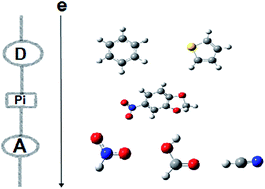
Generally, the efficiency of the DSSCs depends on the photosensitizers. Photosensitizers are classified into metal complex and metal-free organic sensitizers. The fundamental structural unit of the metal-free dyes is donor–pi-spacer–acceptor (D–π–A). The photovoltaic properties of such dyes can be finely tuned by selecting appropriate groups within the D–π–A structure. Therefore, TD-DFT is used in this study, which is an effective tool in investigating the ground and excited state properties of photosensitizer complexes compared to other high level quantum approaches because the computed orbitals are appropriate for the typical MO-theoretical analyses and interpretations. The D–π–A structure scheme is shown in Fig. 8a, and the chemical structure of NBD for newly designed dyes is shown in Fig. 8b.
 |
| | Fig. 8 (a) Different parts of the D–π–A system. D = donor, π = pi-spacer, A = acceptor. (b) Chemical structure of 5-nitro-1,3-benzodioxole for newly designed dyes R1 = benzene; thiophene R2 = CN; COOH; NO2. | |
In this section, the structural modifications that recover the electron injection efficiency of NBD-based DSSCs are discussed. Of course, all modifications are theoretically achievable and a large panel of new structures can be examined. The LHE property of the dye has to be as high as possible to maximize the photocurrent response. More clearly, LHE is expressed as
| LHE = 1 − 10−A = 1 − 10−f |
where
A(
f) is the absorption (oscillator strength) of the dye associated to the
λmax.
The LHE is the efficiency of dye in responding to light, which also points out the efficiency of the DSSC. The LHE values are principally important for charge transfer process in DSSCs. The calculated LHE of all the dyes are listed in Table 10. The LHE of all the dyes lie within the range of 0.0325–0.2617 in the gas phase. Hence, the LHE values for the dyes are in a narrow range. This low range LHE value implies that all the dyes will give similar photocurrent responses. It is concluded that the selected NBD derivative dyes show good photo-physical properties related to DSSC use, but in different outstanding properties. Out of five NBD dyes, NBD4 in the gas phase is the most efficient in producing a higher LHE than other derivatives studied here. From this, it is observed that substitutions of acceptor and donor atoms can enrich the properties of NBD dyes and these derivatives can be utilized in DSSCs. Particularly, thiophene as donor enhances the DSSC efficiency.
Table 10 Excitation energy (E), Light Harvesting Efficiency (LHE) and average light harvesting efficiency (LHFaverage) of dyes at the TD/DFT-B3LYP/6-311++G level of theory in the gas phase
| System |
E (eV) |
λ (nm) |
Oscillator strength |
LHE |
LHEaverage |
| NBD |
|
3.5024 |
353.99 |
0.1171 |
0.2363 |
0.1186 |
| 3.9463 |
314.18 |
0.0001 |
0.0002 |
| NBD1 |
Donor: thiophene ring |
2.9155 |
425.26 |
0.0401 |
0.0882 |
0.1308 |
| Acceptor: CN |
3.4456 |
359.83 |
0.0827 |
0.1733 |
| NBD2 |
Donor: thiophene ring |
2.9971 |
416.45 |
0.0155 |
0.035 |
0.1324 |
| Acceptor: NO2 |
3.4817 |
356.11 |
0.1134 |
0.2298 |
| NBD3 |
Donor: benzene ring |
2.9475 |
420.64 |
0.0370 |
0.0816 |
0.14655 |
| Acceptor: CN |
3.2891 |
376.95 |
0.1032 |
0.2115 |
|
NBD4
|
|
2.9430 |
421.29 |
0.0200 |
0.0450 |
0.2617
|
| Donor: thiophene ring |
3.3430 |
310.88 |
0.0265 |
0.0592 |
| Acceptor: COOH |
3.4896 |
355.29 |
0.0696 |
0.1481 |
| NBD5 |
|
0.6922 |
1791.18 |
0.0105 |
0.0238 |
0.0325 |
| Donor: benzene ring |
0.9567 |
1291.89 |
0.0103 |
0.0234 |
| Acceptor: COOH |
2.6983 |
459.5 |
0.0078 |
0.0178 |
12. Conclusion
The vibrational wavenumbers of 5-nitro-1,3-benzodioxole (NBD) are calculated and the complete assignments are performed on the basis of the total energy distribution (TED) of the vibrational modes. Results are compared with the frequencies obtained from experimentally observed FT-IR and FT-Raman spectra. After scaling down, the calculated wavenumbers show good agreement with the experimental frequencies. The NBO analysis of NBD showed effective energy interactions between the nitrogen lone pair LP(3), O16 and the sigma antibonding orbitals of the N15–O17 bond. The excited state geometries are theoretically investigated on the absorption and emission properties of NBD by UV-VIS analyses. The positions of the hydrogen and carbon atoms of NBD are determined with the help of computed 1H and 13C NMR chemical shifts. Non-linear optical behaviour of the examined molecule is investigated by the determination of the hyperpolarizability. This result indicates that the NBD is a good candidate for NLO study. All the dyes that are designed theoretically in this study are highly red-shifted when compared to NBD to the donor and acceptor substituents. Hence, the better DSSC efficiency of the NBD dyes is distinguished in these calculations. Out of five dyes, NBD4 (donor: thiophene ring; acceptor: COOH) in the gas phase is the most efficient in producing a higher LHE than the other derivatives studied here. However, the further chemical modification of the dye, such as adding highly effective electron acceptors and donors, is suggested, which could raise the light harvesting efficiency of dye sensitized solar cells.
References
- M. Suzuki, Y. Nishida, Y. Ohguro, Y. Miura, A. Tsuchida and K. Kobayashi, Tetrahedron: Asymmetry, 2004, 15, 159 CrossRef CAS.
- S. Yokota, M. Kitahara and K. Nagata, Benzylidene lactam compound KNK347, a novel inhibitor of acquisition of thermotolerance and heat shock protein induction in human colon carcinoma cells, Cancer Res., 2000, 60, 2942 CAS.
- Y. Xia, Z. Yang, P. Xia, K. F. Bastow, Y. Nakanishi and K. Lee, Antitumor agents. Part 202: “Novel 2-amino chalcones: Design, synthesis and biological evaluation”, Bioorg. Med. Chem. Lett., 2000, 10, 699 CrossRef CAS PubMed.
- A. Chimirri, S. Grasso, A. M. Monforte, P. Monforte, M. Zappalà and A. Carotti, Structure–activity relationships of antitumor thiazolo[3,4-a]benzimidazole derivatives, Farmaco, 1994, 49, 337 CAS.
- A. Chimirri, S. Grasso, A. M. Monforte, A. Rao and M. Zappala, Synthesis and antitumor activity evaluation of D2-1,2,4-Oxadiazolines, Farmaco, 1996, 51, 125 CAS.
- S. Grasso, N. Micale, A. M. Monforte, P. Monforte and M. Zappalà, Synthesis and in vitro antitumour activity evaluation of 1-aryl-1H,3H-thiazolo[4,3-b]quinazolines, Eur. J. Med. Chem., 2000, 35, 1115 CrossRef CAS PubMed.
- Y. He, C. Wu and W. Kong, Chem. Phys. Lett., 2005, 402, 212 CrossRef CAS.
-
(a) E. Emanuele, F. Negri and G. Orlandi, Chem. Phys., 2006, 321, 75 CrossRef CAS;
(b) C. Yohannan Panicker,
et al.
, Orient. J. Chem., 2012, 28(2), 1037–1041 CrossRef.
- M. Rajendran,
et al.
, J. Chem. Pharm. Res., 2015, 1, 763–773 Search PubMed.
-
M. J. Frisch, G. W. Trucks and H. B. Schlegal, et al., Gaussian 09W, Revision A.02, Gaussian, Inc., Wallingford CT, 2009 Search PubMed.
- A. D. Becke, J. Chem. Phys., 1993, 98, 5648 CrossRef CAS.
- C. Lee, W. Yang and R. G. Parr, Phys. Rev. B: Condens. Matter Mater. Phys., 1988, 37, 785 CrossRef CAS.
- T. Sundius, Vib. Spectrosc., 2002, 29, 89 CrossRef CAS.
-
T. Sundius, Molvib (V.70): Calculation of Harmonic Force Fields and Vibrational Modes of Molecules, QCPE Program No. 807, 2002 Search PubMed.
- W. Caminati, S. Melandri, G. Corbelli, L. B. Favero and R. Meyer, Mol. Phys., 1993, 80, 1297 CrossRef CAS.
-
S. George, Infrared and Raman characteristic Group frequencies Tables and charts, Wiley, Chichester, 3rd edn, 2001 Search PubMed.
- Y.-X. Sun, Q.-L. Hao, Z.-X. Yu, W.-J. Jiang, L.-D. Lu and X. Wang, Spectrochim. Acta, Part A, 2009, 73, 892 CrossRef PubMed.
- S. Jeon,
et al.
, J. Mol. Struct., 2002, 609, 159 CrossRef CAS.
-
D. N. Sathyanarayana, Vibrational Spectroscopy Theory and Application, New Age International (P) Limited Publishers, New Delhi, 2nd edn, 2004 Search PubMed.
- R. A. Kanna Rao and N. Syam Sunder, Spectrochim. Acta, Part A, 1993, 49, 1691 CrossRef.
- M. Arivazhagan and S. Jeyavijayan, Spectrochim. Acta, Part A, 2011, 79, 376 CrossRef CAS PubMed.
- R. G. Pearson, Proc. Natl. Acad. Sci. U. S. A., 1986, 83, 8440 CrossRef CAS.
- C. Lee, W. Yang and G. R. Parr, Phys. Rev. B: Condens. Matter Mater. Phys., 1988, 37, 785 CrossRef CAS.
- R. G. Parr, L. V. Szentpály and S. J. Liu, J. Am. Chem. Soc., 1999, 121, 1922 CrossRef CAS.
- R. Parthasarathi, J. Padmanabhan, V. Subramanian, U. Sarkar, B. Maiti and P. K. Chattaraj, Internet Electron. J. Mol. Des., 2003, 2, 798–813 CAS.
- P. W. Ayers, J. S. M. Anderson and L. J. Bartolotti, Int. J. Quantum Chem., 2005, 101, 520 CrossRef CAS.
- G. R. oos, S. Loverix, E. Brosens, K. Van Belle, L. Wyns, P. Geerlings and J. Messens, ChemBioChem, 2006, 7, 981 CrossRef PubMed.
- B. Gómez, N. V. Likhanova, M. A. Domínguez-Aguilar, R. Martínez-Palou, A. Vela and J. L. Gázquez, J. Phys. Chem. B, 2006, 110, 8928 CrossRef PubMed.
-
H. O. Kalinowski, S. Berger and S. Brawn, Carbon-13 NMR Spectroscopy, John Wiley and Sons, Chichester, 1988, p. 512 Search PubMed.
-
Carbon-13 Chemical shifts in Structure and Spectrochemical analysis, K. Phhlajer and E. Kleinpeter, VCH Publishers, Deerfield Beach, 1994 Search PubMed.
-
http://chem.ch.huji.ac.il/nmr/techniques/1d/row2/o.html
.
- R. Zaleśny,
et al.
, Theor. Chem., 2009, 907, 46 CrossRef.
- J. P. Perdew, K. Burke and Y. Wang, Phys. Rev. B: Condens. Matter Mater. Phys., 1996, 54, 16533 CrossRef CAS.
|
| This journal is © The Royal Society of Chemistry 2016 |
Click here to see how this site uses Cookies. View our privacy policy here.