
Non-covalent marriage of β-cyclodextrin-polyethylene glycol and functional polyacrylamide via host–guest interaction: construction, characterization and performances

Yanlin Zhangb, Naidi Tan*a and Pinwen Zhaoc
aSchool of Chemistry and Pharmaceutical Engineering, Jilin Institute of Chemical Technology, No.45 Chengde Street, Jilin, Jilin Province 132022, PR China. E-mail: tannaidi1970@163.com; Fax: +86-0432-6218-5122; Tel: +86-0432-6218-5122
bDepartment of Chemical Engineering, Northeast Dianli University, Jilin, Jilin 132012, PR China
cChina Petroleum Engineering Co. Ltd., Beijing Company (CPE Beijing Company), Beijing 100085, PR China

Received 17th March 2016 , Accepted 14th June 2016

First published on 15th June 2016


Abstract

This paper reports the non-covalent marriage of bridged β-cyclodextrin and functional acrylamide polymers via host–guest interactions. The structure of supramolecular polymeric systems (polymer/bis-CD) was determined by FT-IR, 1H NMR and SEM. The XRD and thermal analysis were carried out to further validate the formation of the inclusion complex. This interesting host–guest system could significantly enhance the acrylamide polymer's performance with good viscosity property and shear resistance, high salt tolerance, thermo responsive behavior, and surfactant compatibility, which indicate potential applications in many fields.

1. Introduction

In recent years, supramolecular polymeric systems have attracted considerable interest in various fields such as organic chemistry, polymer chemistry,1,2 biomedical applications3 and pharmaceutical applications.4–6 The main reason is that supramolecular polymers have many unique properties such as reversibility, adaptability, stability, self-healing and flexibility.7,8 Generally, supramolecular polymers are constructed by noncovalent interactions, e.g. van der Waals, hydrogen bonding, π–π stacking, hydrophobic interactions and host–guest interaction et al.,9–11 as well as the combination of them. In particular, the construction of supramolecular polymeric system forced by host–guest interaction has received much more attention. Particularly, the β-cyclodextrin (β-CD) and its derivatives have been widely used as the host molecules to construct the supramolecular polymeric systems because their excellent properties.

It is well known that β-CD is a kind of natural molecules derived from starch,11 which is composed of 7 D-(+)-glucose units linked by 1,4-α-linkages and exhibiting a torus-shaped ring structure.12 The β-CD has a unique structure, whose interior cavity is hydrophobic while the external shell is hydrophilic.13 Because of its special architectural conformation, the β-CD can selectively incorporate hydrophobic molecules of appropriate size as the guest into its cavity to generate host–guest inclusion complexes. In addition, the β-CD contained supramolecular systems exhibited different desirable properties according to different researches. Brigitte Voit et al.14 prepared a diblock copolymer system via self-assembly of cyclodextrin and adamantyl end-functionalized polymer. It was found that the copolymer was reversibly thermoresponsive and had potential use as drug delivery system. Akira Harada and his co-workers15 used host–guest interactions to prepare supramolecular system by β-CD and adamantane derivative in aqueous solutions. This supramolecular hydrogel processed highly elastic and shape recovery properties, which indicated its medical and industrial material applications. Zhang et al.16 presented a novel supramolecular system, which was formed through host–guest interactions between β-CD moiety and adamantyl groups, to control the thermo-responsive property of Poly(N-isopropylacrylamide). Additionally, many other papers focused on host/guest inclusion complexes with β-CD have been reported to explore the unlimited potential applications in various fields.17–22 However, most of them used β-CD and adamantane derivatives as the host and guest molecules, respectively. Relatively limited reports have been found yet in the literature to use polyacrylamide (PAM) derivatives with alkyl chains as guest molecules.

In fact, PAM occupies an important position in various fields of the national economy. It is usually applied in water treatment, paper making, screen printing, medical science, or used as soil conditioner.23–27 Another common use of polyacrylamide is in subsurface applications such as Enhanced Oil Recovery (EOR).28 However, with the rapid development of science and economy, the traditional polyacrylamide cannot meet the needs of practical applications due to its following disadvantages: (I) poor temperature resistance performance; (II) poor salt tolerance; (III) lack of high shear resistance.29 Therefore, how to make a difference to overcome these shortcomings of PAM has become the focus of domestic and international scientists. Consequently, the preparation of ultrahigh molecular weight polyacrylamide and the chemical modification of acrylamide polymer structure have received worldwide attention from researchers.30 However, to the best of our knowledge, there is no report found in the literature to prepare supramolecular system by using bridged bis-CD as host molecule and functional acrylamide polymer as guest molecule.

Herein, in this paper, we report on the fabrication of a novel supramolecular polymeric system based on the β-cyclodextrin-polyethylene glycol,31 and functional acrylamide-containing guest polymer via host–guest interaction. We wish to share new inspiration on designing and constructing noncovalently connected supramolecular polymer through our present work.

2. Experimental section

2.1 Materials

The 4-vinyl pyridine were obtained from Chengdu Best Reagent Co., Ltd., China. The 1,3-propane sultone, octadecyl dimethyl allyl ammonium chloride (C18DMAAC) were respectively supplied by Zibo Shibang Chemical Co., Ltd., China and Sichuan Guangya Polymer Chemical Co., Ltd., China. The rest of the reagents were purchased from Chengdu Kelong Chemical Reagent Factory, China, including sodium bisulfite (NaHSO3), anhydrous ethanol, acetone, ammonium persulfate, bromine water, potassium iodide, sodium thiosulfate, tetramethylsilane (TMS) and cetyl trimethyl ammonium chloride (CTAC). All of the above materials were of analytical purity and were used without further purification.

The bridged β-cyclodextrin-polyethylene glycol (β-CD-PEG) was self-synthesized according to the reported procedure.31

2.2 Synthesis

2.2.1 4-Vinyl-1,3-sulfopropyl pyridinium (VPPS). 12.2 g (0.1 mol) of 1,3-propanesultonewas added into the flask with 60 mL of acetone and was flushed for 20 min. Thereafter, 10 mL of 4-vinyl pyridine was added and the solution was stirred at 30 °C for 12 h. The crude product was white and precipitated in acetone. Then it was washed several times with acetone and dried in a vacuum drying oven at 60 °C for 48 h. Yield: 19.8 g (87.2%).

FT-IR (KBr): ν = 1043 (m, ν(S–O)), 1197 (m, ν(S[double bond, length as m-dash]O)), 1663 (s, ν(C[double bond, length as m-dash]N), ν(C[double bond, length as m-dash]C)), 3081 (s, ν(C–H) on C[double bond, length as m-dash]C), 910 (s, ν(C[double bond, length as m-dash]H2)). 1H NMR (D2O): 8.653, 7.846 (m, protons in pyridine), 5.782 (s, protons in –C[double bond, length as m-dash]CH2), 2.664 (m, methylene protons in pyridine).

2.2.2 Functional acrylamide polymer P(AM/VPPS/C18DMAAC) as guest polymer. 100 mL of aqueous solution containing AM (21.8 g), C18DMAAC (1.2 g) and VPPS (2 g) was prepared in a three round-neck flask. Then, the oxygen dissolved in the reaction system was removed by vacuum-pumping and nitrogen-filling for 30 min. Subsequently, 0.0375 g of ammonium persulfate and NaHSO3 as initiator (molar ratio 2[thin space (1/6-em)]:[thin space (1/6-em)]1, 0.15 wt%), and 1 mL of EDTA as chelating agent were added into the flask with stirring under the temperature of 45 °C with argon and stirring for 5 h. The raw product was dissolved in deionized water and washed by acetone. Then it was cut into pieces and dried in the oven for 48 h at 60 °C. The P(AM/VPPS/C18DMAAC) was obtained as a white solid. Yield: 21.4 g (85.6%).

FT-IR (KBr): ν = 3377 (b, ν(N–H)), 2940, 2839 (m, νs(C–H) and νas(C–H)), 1647 (s, ν(C[double bond, length as m-dash]O), amide I), 1454 (m, ν(C–N) and δ(N–H), amide II), 1189, 1034 (m, ν(S–O)), 588 (b, νs(C–H)). 1H NMR (D2O): δ (ppm) = 2.064 (m), 1.031 (s) (–CH2– in backbone), 2.212, 1.535 (m, –CH– in backbone), 8.671, 7.830 (m, protons in pyridine), 3.111, 2.962, 1.641 (m, methylene protons in pyridine), 1.173 (m, –CH2– in C18DMAAC), 3.508 (m, methyl protons in quaternary ammonium connected with N+) 1.063 (s, CH3 in C18DMAAC).

2.2.3 β-Cyclodextrin-polyethylene glycol (β-CD-PEG) as host monomer. The β-CD-PEG was self-synthesized according to the reported literature31 (also see ESI). Yield: 18.2 g (77.4%).

FT-IR (KBr): ν = 3441 (b, ν(O–H)), 3049 (m, ν(C–H)), 2932 (w, νas(C–H)), 2867 (w, νs(C–H)), 1481 (s, δ(C–H)), 1198 (s, νas(C–O)), 870, 724, 597 (m, vibration absorption peaks of β-CD). 1H NMR (D2O): δ (ppm) = 4.944 (s, C(1)H of β-CD), 3.756, 3.867, 3.533, 3.820 (m, C(2)H–C(5)H of β-CD), 3.822 (m, C(6)H of β-CD), 3.441–3.497 (m, protons in PEG-400).

2.2.4 Fabrication of supramolecular polymeric system (polymer/bis-CD). Typically, the supramolecular polymer was formed by mixing the aqueous solutions of host monomer β-CD-PEG and guest polymer P(AM/VPPS/C18DMAAC) (mole ratio = 1[thin space (1/6-em)]:[thin space (1/6-em)]1) with ultrasonic at the room temperature.

2.3 Methods

Fourier transform infrared (FT-IR) spectra were recorded on a Nicolet Nexus 470 FT-IR spectrometer in the optical range of 400–4000 cm−1 by averaging 32 scans at a resolution of 4 cm−1. The 1H NMR spectra were recorded using a Bruker ASCEND-400 NMR spectrometer (Bruker Optics) at 500.13 Hz. The solvent is D2O and the spectra recorded from D2O solutions were referenced on external sodium 3-(trimethylsilyl)-1-propanesulfonate.

The scanning electron microscope (SEM) observations were carried out on a Quanta 450 instrument (FEI, USA, Hillsboro). Powder X-ray diffraction (XRD) was conducted in an X'pert PRO diffractometer (PANalytical B.V., Netherlands), using Cu-Kα (λ = 1.5460 nm) with 40 mA, 40 kV. The scanning step size was 2θ = 0.02° between 2θ = 5–70°. The data of thermal analysis (thermo-gravimetry, TG and differential scanning calorimetry, DSC) were recorded through a TG 209 F3 Tarsus instrument (NETZSCH, Germany), with a 10 °C min−1 heating rate from room temperature to 500 °C. Measurements of viscosities were conducted on an HAAKE MARS III rheometer (Thermo Electron Corporation, Karlsruhe, Germany), which was equipped with rheology software, HAAKE RheoWin 3, to collect and store data. A thermostat HAAKE Phoenix 2 was used to control the temperature with an accuracy of 0.1 °C.

The cloud point temperature of the polymer solutions was measured by using an 1800 UV/vis spectrometer from Shimadzu (Japan) with a wavelength of 500 nm, circulating water bath in the temperature range of 10–70 °C. The measurements were carried out at least five times. The polymer solutions were prepared in a concentration of 3000 mg L−1 using distilled water.

3. Results and discussion

3.1 Preparation of supramolecular hydrogel

With the purpose of improving the properties of polyacrylamide and enhancing its application ability, we synthetized the functional acrylamide polymer P(AM/VPPS/C18DMAAC) as guest polymer. The functional monomer VPPS was firstly synthetized, which has anti-temperature and anti-salt properties. The C18DMAAC has highly hydrophobic group which could be a good guest molecule for β-CD.29,32 The potential host component β-CD-PEG was prepared in two steps: preparing of chlorinated polyethylene glycol monomer and bridging the monomer between cyclodextrins.31 The Fig. 1 depicts the preparation process of monomers.
image file: c6ra07102c-f1.tif
Fig. 1 Synthetic routes employed for the preparation of P(AM/VPPS/C18DMAAC) and β-CD-PEG.

The supramolecular polymeric system (polymer/bis-CD) could be easily constructed by mixing the β-CD-PEG and P(AM/VPPS/C18DMAAC) (mole ratio = 1[thin space (1/6-em)]:[thin space (1/6-em)]1) in water, stirring until dissolved. Then the mixtures were dispersed continuously for half an hour using an ultra-sonication homogenizer Sonifier250 (Branson Ultrasonics, Danbury, USA). The final supramolecular polymeric system was obtained after properly stewing via host–guest interaction (see Fig. 2).


image file: c6ra07102c-f2.tif
Fig. 2 Schematic illustration of the formation of supramolecular polymer.

3.2 Complexation studies

In order to identify the interaction of β-CD-PEG and P(AM/VPPS/C18DMAAC) in the aqueous solution, several methods were conducted and discussed.

The FT-IR and 1H NMR spectra of the polymer/bis-CD were shown in Fig. 3. In Fig. 3(a), the absorption peaks observed at 934 cm−1, 761 cm−1 and 606 cm−1 are the presence of typical structure of β-CD.31 The absorption peaks at 1673 cm−1 and 1454 cm−1 are assigned to the stretching vibration of C[double bond, length as m-dash]N bond and N–CH3 bond, respectively. In addition, the wide scattered absorption peak at 3396 cm−1 is attributed to the out-of-plane bending vibration of the hydroxyl group and amide group. Therefore, it could be seen that the FT-IR spectrum of polymer/bis-CD is not a superposition of β-CD-PEG and P(AM/VPPS/C18DMAAC). A new product was formed via host–guest interaction.


image file: c6ra07102c-f3.tif
Fig. 3 (a) FT-IR spectra of the polymer/bis-CD; (b) 1H NMR spectra of the polymer/bis-CD.

Generally, NMR spectroscopy is one of the most common used and important method to confirm the structure of host/guest interactions. In Fig. 3(b), the structure of polymer/bis-CD could be further confirmed via signal assignments. The characteristic signals of host and guest monomers are identified again in the spectrum. However, the chemical shift of some hydrogen atoms have been changed compared with the 1H NMR spectra of β-CD-PEG and P(AM/VPPS/C18DMAAC) (see ESI). The results are listed in Tables 1 and 2. In Table 1, C1–C6 represent the hydrogen atoms on β-CD, respectively. It can be seen from Table 1 that Δδ of C3 and C5 in β-CD cavity was −0.023 and −0.032 ppm, respectively, indicating an upfield shift of C3 and C5 protons after complexation. That might be the results of the increase of electron cloud density in β-CD cavity due to the complexation. On the other hand, the protons of C1, C2, C4 and C6 are hydrogen atoms on the outside of the cavity of β-CD, so the changes of δH were slight. Comparing the proton chemical shift between P(AM/VPPS/C18DMACC) and polymer/bis-CD (see Table 2), there were almost no changes for pyridine ring, while the protons of octadecyl chain exhibited an upfield shift. It was suggested that β-CD-PEG and P(AM/VPPS/C18DMACC) formed supramolecular host–guest complex, and the structure unit of guest in the host cavity was long-chain alkyl.

Table 1 The change of chemical shift of polymer/bis-CD compared with β-CD-PEG
Chemical shift (ppm) C1 C2 C3 C4 C5 C6
β-CD-PEG 4.944 3.756 3.867 3.533 3.820 3.822
Polymer/bis-CD 4.947 3.751 3.844 3.539 3.788 3.824
Δδ +0.003 −0.005 −0.023 +0.006 −0.032 +0.002


Table 2 The change of chemical shift of polymer/bis-CD compared with P(AM/VPPS/C18DMAAC)
Chemical shift (ppm) Ha Hb Hc Hd
P(AM/VPPS/C18DMAAC) 8.671 7.830 1.173 1.074
Polymer/bis-CD 8.670 7.830 1.165 1.063
Δδ −0.001 0 −0.008 −0.011


The SEM images are shown in Fig. 4 to compare and characterize the structure of polymer/bis-CD. Both P(AM/VPPS/C18DMACC) and polymer/bis-CD exhibited obvious three-dimensional net microstructures. In the P(AM/VPPS/C18DMACC), the molecular chains were irregular and they cross-linked and twisted with each other. However, compared with the SEM image of P(AM/VPPS/C18DMACC), the architecture of polymer/bis-CD was much more ordered, thicker and stronger. This might because of the different construction methods between P(AM/VPPS/C18DMACC) and polymer/bis-CD. Due to the random association of hydrophobic groups in P(AM/VPPS/C18DMACC), the net microstructure is messy. But in the polymer/bis-CD, the β-CD-PEG participated in the formation of the network structure. It could not only shield the hydrophobic effect, but also acted as the “bridge” to make it a clear and uniform grid morphology. Therefore, the results further confirmed that the host–guest complexation was formed.


image file: c6ra07102c-f4.tif
Fig. 4 SEM micrograph of (a) P(AM/VPPS/C18DMACC); (b) polymer/bis-CD.

Powder XRD patterns of the inclusion complex could confirm the presence of host and guest monomers as isolated solids.33 In contrast to the characteristic peaks of β-CD-PEG, the diffractogram of P(AM/VPPS/C18DMACC) exhibited that it was in amorphous state (see Fig. 5). However, the diffractogram of polymer/bis-CD showed both β-CD-PEG peaks and the amorphous halo of P(AM/VPPS/C18DMACC). This is another advance of the inclusion structure.


image file: c6ra07102c-f5.tif
Fig. 5 XRD patterns of (a) β-CD-PEG; (b) P(AM/VPPS/C18DMACC); (c) polymer/bis-CD.

In order to further confirm the formation of inclusion complex, the thermal properties of the polymer/bis-CD were investigated by TG and DSC. The results are shown in Fig. 6. According to the TG curves, the polymers firstly lost crystal water and became anhydrous substances at 40–170 °C and the decomposition process of β-CD-PEG ends at 400 °C, and the P(AM/VPPS/C18DMACC) had a significant weightlessness peak between 250 and 700 °C approximately. However, the polymer/bis-CD had better thermal stability, which exhibited the decomposition temperature at 735 °C. These results indicate that the thermal stability has been improved because of the inclusion complexation. In addition, the DSC curves offer further information about the enhanced thermal properties of the polymer/bis-CD complex. For the β-CD-PEG, it displays two exothermic peak at 315 and 420 °C. But the P(AM/VPPS/C18DMACC) does not show an obvious exothermic peak during its decomposition. In contrast, in the DSC curve of the polymer/bis-CD complex, there was a large-span but unconspicuous exothermic peak at 364.5 °C, which might correspond to the decomposition of free β-CD-PEG. In addition, the new significant exothermic peak at 607.8 °C suggests that the polymer/bis-CD complex is more stable due to the higher decomposition temperature.


image file: c6ra07102c-f6.tif
Fig. 6 (a) The thermo–gravimetric curve of polymer/bis-CD; (b) The differential scanning calorimetry curve of polymer/bis-CD.

3.3 Performances

3.3.1 Viscosity. Viscosity was firstly employed to characterize the viscosification property of polymer/bis-CD with the respect to the increasing polymer concentrations at room temperature. The results are shown in Fig. 7. For comparison, the variation of apparent viscosity of P(AM/VPPS/C18DMACC) is also presented. The apparent viscosity of both polymers increased nonlinearly with the increasing of concentrations. The viscosity of P(AM/VPPS/C18DMACC) was higher than that of polymer/bis-CD until the polymer concentration was reached at 2450 mg L−1. In addition, the transitional concentration (TC, C*)34 of polymer/bis-CD was image file: c6ra07102c-t1.tif = 2100 mg L−1. When the concentration was above image file: c6ra07102c-t2.tif, the conformation transition behavior of supramolecular system would happen. The phenomena could be explained by the following reasons. In the low concentration range, the intramolecular complexation occupied a dominant position, which had a shielding effect on the intermolecular complexation. When the concentration of polymer/bis-CD reached a certain degree (2100 mg L−1 in this case), the intermolecular complexation would gradually take over the position, which lead to the formation of net-like structure (see illustration in Fig. 7), then the viscosity of polymer/bis-CD increased intensely. Contrarily, the viscosity of P(AM/VPPS/C18DMACC) exhibited a limited increase with the concentration.
image file: c6ra07102c-f7.tif
Fig. 7 Concentration dependence of the apparent viscosity.

In addition, the shear resistance of polymer solution was measured (0–100 s−1) at room temperature and the concentration of polymers were fixed at 3000 mg L−1. Fig. 8 presents the apparent viscosity versus shear rate for P(AM/VPPS/C18DMACC) and polymer/bis-CD. At the low shear rate (0–5 s−1), the P(AM/VPPS/C18DMACC) exhibited shear-thickening behavior and then showed shear thinning behavior. The intra-entangled molecular chains were stretched under the low shear force, which led to the transition of intra-molecular associations to inter-molecular associations. Hence, the viscosity increased at the low shear rate. With the increase of shear force, the hydrophobic domains were disrupted, so that the viscosity decreased. On the other hand, the polymer/bis-CD exhibited obvious shear thinning behavior. This was mainly because that most of the inclusion complexes changed conformations, some gradually decomposed with the increased shear force. Interestingly, the viscosity of P(AM/VPPS/C18DMACC) and polymer/bis-CD were reversible on gradually reduced the shear rate. However, the viscosity of P(AM/VPPS/C18DMACC) was lower than the beginning. It might because the molecular chain and chemical structure of P(AM/VPPS/C18DMACC) were partially destroyed by the shear force, and the hydrophobic interactions recovered with decreased shear force. Hence, the viscosity recovered but cannot find the initial point. In the polymer/bis-CD solution, the dissociated β-CD-PEG and C18DMACC units reformed the initial complex upon releasing the shear force, the effects of electrostatic forces, hydrogen bonding and van der Waals forces recovered and eventually the initial viscosity was restored. The diagram of this mentioned process is inserted in Fig. 8.


image file: c6ra07102c-f8.tif
Fig. 8 The shear resistance of P(AM/VPPS/C18DMACC) and polymer/bis-CD.

In order to make a more clear comparison, the shear resistance of polymer/bis-CD at 1000 mg L−1 was also exhibited in Fig. 8. As can be seen in the picture, the viscosity of dilute polymer/bis-CD solution is below 50 mPa s. In addition, the viscosity of dilute polymer/bis-CD solution decreased with the increase of shear rate. This is mainly because the conformation transition behavior of supramolecular system did not happen yet at the low concentration. And the intramolecular complexation effect was still weak because the concentration was only half of the transitional concentration (2100 mg L−1). Therefore, the viscosity of polymer/bis-CD (1000 mg L−1) was irreversible on gradually reduced the shear rate.

3.3.2 Thermo-responsive behavior. The thermo-responsive behavior of polymer/bis-CD was also studied in the present work. The temperature dependence of transmittance (λ = 500 nm) of P(AM/VPPS/C18DMACC) and polymer/bis-CD are shown in Fig. 9. It can be seen that both polymers show remarkable heat-induced phase transitions at 35.2 and 42.6 °C, respectively. The obviously low cloud point (CP) of P(AM/VPPS/C18DMACC) might relate to the hydrophobic C18DMACC group.35 On the other hand, the CP of β-CD-PEG was 65 °C, approximately, according the literature.31 Because the hydrophobic C18DMACC groups were embedded into the hydrophilic β-CD cavities, the CP of β-CD-PEG would be elevated. In contrast, as compared to the CP of β-CD-PEG, the CP of polymer/bis-CD was reduced.
image file: c6ra07102c-f9.tif
Fig. 9 Temperature dependence of transmittance at 400 nm recorded for aqueous solutions of P(AM/VPPS/C18DMACC) and polymer/bis-CD.
3.3.3 Salt tolerance. The salt tolerance of the inclusion complex solution was evaluated at a temperature of 50 °C under the shear rate of 50 s−1 and the concentration of polymers were fixed at 3000 mg L−1. The salt tolerance of hydrolyzed polyacrylamide (HPAM) was also conducted as blank tests. The Fig. 10 reveals the relationship between apparent viscosity and salinity. Apparently, the viscosity of polymer/bis-CD was enhanced due to the synergies between hydrophobe–hydrophobe interactions and cyclodextrin inclusion effects. The viscosity of P(AM/VPPS/C18DMACC) first increased and then decreased with increasing NaCl concentration. The similar tendency was found in the CaCl2 solution. Generally, the viscosity of water soluble polymer will decrease under the high salinity.36 However, the viscosity of hydrophobic associating polymer will increase with the salinity in a certain range.29 Therefore, the viscosity of P(AM/VPPS/C18DMACC) initially increased. With the further increase in salinity, the thickness of the electric double layer was compressed due to the enhancing of electrostatic repulsion interaction, resulted in the decrease of viscosity. On the other hand, the anti-polyelectrolyte effect was observed on the polymer/bis-CD, whose viscosity increased with the increasing concentrations of NaCl and CaCl2 solutions. The reason might be that the addition of salt enhanced the solution polarity, which contributed to the enhancement of host/guest interaction. In addition, the electric double layer was difficult to be compressed owing to the presence of rigid β-CD. The similar phenomenon of β-CD contained complex was found by Li et al.37 In conclusion, the polymer/bis-CD inclusion complex could be considered as a potential tackifier or soil conditioner in high-salinity circumstance.
image file: c6ra07102c-f10.tif
Fig. 10 Effects of (a) NaCl solution and (b) CaCl2 solution on apparent viscosity.
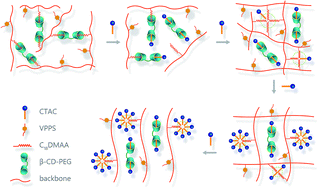
3.3.4 The influence of competitive molecules. The influence of competitive molecules on the structure of polymer/bis-CD was also investigated and studied. The experiment was conducted at 50 °C and under the shear rate of 50 s−1 while the concentration of P(AM/VPPS/C18DMACC) and polymer/bis-CD were 3000 mg L−1. The cationic surfactant CTAC was chosen as the competitive molecule in this study. The result is shown in Fig. 11. It can be seen that CTAC had an obvious effect on the viscosity of polymers, and an interesting phenomena was observed. The viscosity of P(AM/VPPS/C18DMACC) increased first with the addition of CTAC until the maximum value was reached, and then decreased with the increase of CTAC concentration. In sharp contrast, the viscosity of polymer/bis-CD initially decreased with increasing CTAC concentration and then increased until the maximum value was reached, thereafter the viscosity decreased again. Attempts and assumption have been made to explain the experimental phenomena.
image file: c6ra07102c-f11.tif
Fig. 11 The relationship between viscosity of polymers and CTAC concentration.

At low CTAC concentrations, the mixed micelles of surfactant and hydrophobic groups were formed in the pure P(AM/VPPS/C18DMACC) solution, which led to an enhanced inter-chain crosslink micro-domains. In addition, the ionic surfactant CTAC could strengthen the inter-chain electrostatic interaction, which was beneficial for the hydrophobic association. Hence, the viscosity increased. However, it would disrupted the hydrophobic association with excess CTAC beyond the critical micelle concentration (CMC), which led to a reduction in viscosity. For the polymer/bis-CD, when CTAC was added into the supramolecular system, the free hydrophobic groups of CTAC played a competitive molecules role to complex with the β-CD cavities of β-CD-PEG. Therefore, the network structure of polymer/bis-CD was broken, which lead to the rapid decrease of viscosity. However, the replaced hydrophobic groups of C18DMACC were then associated because of hydrophobic association effect, contributing to the increase of viscosity. With the further increase of CTAC concentration, the CTAC molecules were embedded into the β-CD cavities, the hydrophobic groups of C18DMACC were shielded by CTAC, and the network structure was gradually broken, which lead to the reduction of viscosity. Fig. 12 gives a brief illustration of the process. Therefore, the viscosity of supramolecular polymer is tunable by adjusting the concentration of surfactant with strong hydrophobic group. This special property makes the polymer/bis-CD a potential material in many fields.38 For example, this property could certainly improve the mobility ratio of oil and water to give a more efficient application for enhanced oil recovery as the oil-displacing agent.


image file: c6ra07102c-f12.tif
Fig. 12 Schematic representation of the influence of competitive molecules on the structure of polymer/bis-CD.

4. Conclusion

In this paper, we successfully prepared a novel supramolecular polymeric system via host–guest interactions by using bridged bis-CD and functional acrylamide polymer as host and guest molecules, respectively. The complexation structure was characterized by FT-IR, 1H NMR, SEM, XRD, TG and DSC. The performance experiments illustrated that the new supramolecular polymer could significantly change the acrylamide polymer's performance with good viscosity property and shear resistance, high salt tolerance, thermo-responsive behavior, and surfactant compatibility, hence broadening its applications in many fields. According to its excellent properties, it could be used as a potential tackifier or soil conditioner and oil-displacing agent in oil fields. In addition, we believe our present work will provide a new inspiration of supramolecular system for future research and application, as well as filling the research gap about preparation of functional acrylamide polymer contained supramolecular system.

References

  1. D. Diana, P. Herwig and H. B. Wolfgang, Polymer, 2015, 69, 264–273 CrossRef.
  2. Z. Ge, H. Liu, Y. Zhang and S. Y. Liu, Macromol. Rapid Commun., 2011, 32(1), 68–73 CrossRef CAS PubMed.
  3. Z. L. Wu, T. Kurokawa and J. P. Gong, Bull. Chem. Soc. Jpn., 2011, 84, 1295 CrossRef CAS.
  4. J. R. Hiscock, I. L. Kirby, J. Herniman, G. J. Langley, A. J. Clark and P. A. Gale, RSC Adv., 2014, 4, 45517–45521 RSC.
  5. Y. X. Gao, Y. Li, X. Zhao, J. Hu and Y. Ju, RSC Adv., 2015, 5, 102097–102100 RSC.
  6. W. Li, X. P. Zeng, H. Wang, Q. Wang and Y. J. Yang, Eur. Polym. J., 2015, 66, 513–519 CrossRef CAS.
  7. P. Zhou, R. F. Shi, J. F. Yao, C. F. Sheng and H. Li, Coord. Chem. Rev., 2015, 292, 107–143 CrossRef CAS.
  8. B. Carla, B. Antonio, G. E. Enrique and D. P. Estefanía, Inorg. Chim. Acta, 2014, 417, 3–26 CrossRef.
  9. X. Ran, H. Wang, P. Zhang, B. Bai, C. Zhao and Z. Yu, Soft Matter, 2011, 7, 8561–8566 RSC.
  10. J. Fox, J. J. Wie, B. W. Greenland, S. Burattini, W. Hayes, H. M. Colquhoun, M. E. Mackay and S. J. Rowan, J. Am. Chem. Soc., 2012, 134, 5362–5368 CrossRef CAS PubMed.
  11. L. Eneko and R. I. José, Carbohydr. Polym., 2014, 102, 674–681 CrossRef PubMed.
  12. V. Deraknshanian and S. Banerjee, Ind. Eng. Chem. Res., 2012, 51, 4463–4465 CrossRef.
  13. C. J. Zou, P. W. Zhao, J. Ge, Y. Lei and P. Y. Luo, Carbohydr. Polym., 2012, 87, 607–613 CrossRef CAS.
  14. S. Jan, K. Hartmut, E. Michael, D. Frank, R. Helmut and V. Brigitte, Macromolecules, 2011, 44, 3250–3259 CrossRef.
  15. K. Takahiro, T. Yoshinori and H. Akira, Macromolecules, 2013, 46, 4575–4579 CrossRef.
  16. Z.-X. Zhang, X. Liu, F. J. Xu, X. J. Loh, E.-T. Kang, K.-G. Neoh and J. Li, Macromolecules, 2008, 41, 5967–5970 CrossRef CAS.
  17. M. Enke, S. Bode, J. Vitz, F. H. Schacher, M. J. Harrington and M. D. Hager, Polymer, 2015, 69, 80–105 CrossRef.
  18. S. Mohammad and M. T. Roya, Int. J. Biol. Macromol., 2015, 75, 426–436 CrossRef PubMed.
  19. B. Wei, L. Romero-Zerón and D. Rodrigue, Polym. Adv. Technol., 2014, 25, 732–741 CrossRef CAS.
  20. A. Lis-Cieplak, J. Sitkowski and W. Kolodziejski, J. Pharm. Sci., 2014, 103, 274–282 CrossRef CAS PubMed.
  21. M. Guerrouache, M. C. Millot and B. Carbonnier, Macromol. Rapid Commun., 2009, 30, 109–113 CrossRef CAS PubMed.
  22. A. Gonzalez-Campo, S. H. Hsu, L. Puig, J. Huskens, D. N. Reinhoudt and A. H. Velders, J. Am. Chem. Soc., 2010, 132, 11434–11436 CrossRef CAS PubMed.
  23. D. A. Z. Wever, P. Raffa, F. Picchioni and A. A. Broekhuis, Macromolecules, 2012, 45, 4040–4045 CrossRef CAS.
  24. A. P. Wang, F. H. Li and S. M. Yang, Pedosphere, 2011, 21(5), 628–638 CrossRef CAS.
  25. B. B. Mandal, S. Kapoor and S. C. Kundu, Biomaterials, 2009, 30, 2826–2836 CrossRef CAS PubMed.
  26. N. P. Sedigheh, V. G. Shivkumar, W. Richard, G. Kathleen and S. Liu, Appl. Surf. Sci., 2015, 349, 695–704 CrossRef.
  27. C. J. Zou, Y. Liu, X. L. Yan, Y. B. Qin, M. Wang and L. Zhou, Mater. Chem. Phys., 2014, 147(3), 521–527 CrossRef CAS.
  28. H. Amani, M. Haghighi, M. H. Sarrafzadeh and M. R. Mehrnia, Pet. Sci. Technol., 2011, 29, 301–311 CrossRef CAS.
  29. C. J. Zou, P. W. Zhao, X. Z. Hu and X. L. Yan, Energy Fuels, 2013, 27, 2827–2834 CrossRef CAS.
  30. M. Barari, M. Abdollahi and M. Hemmati, Iran. Polym. J., 2011, 20, 65–76 CAS.
  31. Y. Liu, C. J. Zou, T. Y. Wang and M. Li, J. Chem. Eng. Data, 2014, 59, 3773–3778 CrossRef CAS.
  32. X. Z. Tian, E. H. Ren, J. H. Wang, J. L. Zou, Y. Tao, S. G. Wang and X. Jiang, Carbohydr. Polym., 2012, 87(3), 1956–1962 CrossRef CAS.
  33. B. Yang, J. Lin and Y. Chen, Bioorg. Med. Chem., 2009, 17(17), 6311–6317 CrossRef CAS PubMed.
  34. I. V. Berlinova, I. V. Dimitrov and R. G. Kalinova, Polymer, 2000, 41(3), 831–837 CrossRef CAS.
  35. R. Plummer, D. J. T. Hill and A. K. Whittaker, Macromolecules, 2006, 39, 8379–8388 CrossRef CAS.
  36. Q. You, P. Zhang, S. X. Bai, W. Z. Huang, Z. F. Jia, Z. Y. Zhou and D. D. Li, Colloids Surf., A, 2015, 484, 130–135 CrossRef CAS.
  37. S. J. Li, F. P. Wu and M. Z. Li, Acta Chim. Sinica, 2005, 63, 1841–1846 CAS.
  38. C. J. Zou, J. Ge, P. W. Zhao and C. C. Cui, J. Macromol. Sci., Part A: Pure Appl. Chem., 2012, 49, 171–177 CrossRef CAS.

Footnote

Electronic supplementary information (ESI) available: Synthesis of β-CD-PEG, the FT-IR and 1H NMR spectra of β-CD-PEG and P(AM/VPPS/C18DMACC), molecular weight and hydrodynamic diameter of polymers are provided. See DOI: 10.1039/c6ra07102c

This journal is © The Royal Society of Chemistry 2016
Click here to see how this site uses Cookies. View our privacy policy here.