

Adaption of the structure of carbon nanohybrids toward high-relaxivity for a new MRI contrast agent†
Juan Li‡
,
Rongli Cui‡,
Yanan Chang,
Xihong Guo,
Weihong Gu,
Huan Huang,
Kui Chen,
Guoming Lin,
Jinquan Dong,
Gengmei Xing* and
Baoyun Sun*
CAS Key Laboratory for Biomedical Effects of Nanomaterial & Nanosafety, Institute of High Energy Physics, Chinese Academy of Science (CAS), Beijing 100049, China. E-mail: sunby@ihep.ac.cn; xinggm@ihep.ac.cn
First published on 25th May 2016
Abstract
Water-soluble GO–Gd@C82 nanohybrids exhibit high relaxivities and could be explored as potential magnetic resonance imaging (MRI) contrast agents. To better understand the relaxation mechanism in the novel carbon nanohybrids, in the present paper, after layers of in-depth analysis and exploration, we propose that the structure and the physicochemical properties of the carbon nanohybrids contribute significantly to the enhanced relaxivity. Better electron transfer from Gd@C82 to the GO nanosheet, appropriate electric conductivity and size of the GO used, an increased number of H proton exchange sites and an adequate concentration of Gd3+ should result in optimal equilibrium for high relaxivity of the GO–Gd@C82. These results are important for constructing and optimizing novel nanoscale architectures with higher relaxivity.
1. Introduction
In the early stages of our research, novel GO–Gd@C82 nanohybrids, that were synthesized by depositing Gd@C82 on graphene oxide (GO) nanosheets which have been widely used in various fields1 via large non-covalent π–π interactions, showed a high relaxivity and even better than Gd@C82(OH)x.2 In addition, hydroxylated gadofullerene derivatives have been proven to exhibit high relaxivities, even significantly higher than that of commercial Gd-DTPA contrast agents.3–7 Most importantly, the Gd–metallofullerenes were very safe for the organism because the cage structures prevented the release of Gd3+ ions.2,3 The novel carbon structure of GO–Gd@C82 nanohybrids retained the advantages of low toxicity and an even stronger capacity to enhance the relaxivities.Generally, it is believed that the high relaxivity of Gd3+ contrast agents for MRI is induced by a dipolar electron spin interaction between the fluctuating Gd3+ electron magnetic moment and the large number of hydrogen atoms of exchangeable water.7 The 7 unpaired electrons of Gd can effectively shorten the hydrogen proton relaxation time of adjacent water molecules due to the spin of the local magnetic field.8,9 Combining the superior performance of Gd with nanotechnology, a series of Gd3+–carbon nanomaterials, such as the metallofullerenols Gd@C82(OH)x, surfactant-free Gd3+-ion-containing carbon nanotubes, Gadographene, and so on, have been investigated.10–14 Compared with current commercially used contrast agents for MRI, these carbon nanomaterials had a significantly higher relaxivity.12,13 The results indicated that the nanostructure also contributed significantly to the enhanced relaxivity, besides the Gd atom.15 Previous researchers have suggested that both the aggregation of the gadofullerenes, which slows down the rotational correlation time of gadofullerenes, and the confined water increased the relaxivity.5,6,11,12,16 However, the structures of Gd3+–carbon nanomaterials are much more complicated and the relaxation mechanism of Gd3+–carbon nanomaterials is not yet fully understood.9,12
As one of the Gd3+–carbon nanomaterials, GO–Gd@C82 nanohybrids with no polar groups directly bonded to the fullerene cage surface of the Gd@C82 exhibited a higher R1 relaxivity and a better brightening effect than Gd@C82(OH)x.2 The encapsulated Gd3+ ions in the GO–Gd@C82 nanohybrids interact with surrounding water protons through a “secondary spin-electron transfer” relaxation mechanism, in which the unpaired electrons of the Gd3+ ions and the fullerene carbon cage magnetically couple first and then interact with GO, and so the electron spin density is transferred from the encaged Gd3+ ions to substituents of the GO nanosheet, which interacts with surrounding water protons. However, for constructing and optimizing a novel nanoscale carbon architecture with high relaxivity, we need to better understand the relaxation mechanism of the novel nanohybrids and the elaborate structural cooperation. In this paper, we study the structural characteristics which contributed to the enhancement of the nanohybrids relaxivity to propose a direction for the synthesis of novel carbon nanostructure MRI contrast agents with higher relaxivity.
2. Experimental
2.1. Materials
Natural graphite powder (99.9%) was obtained from Qingdao Hensen Graphite Co. Ltd. Gd@C82 (99.5%) was produced and isolated using the industrial-scale production line for metallofullerenes firstly established in the Institute of High Energy Physics, Chinese Academy of Science (CAS). All of the other chemicals were purchased from Sinopharm Chemical Reagent Co. Ltd., were of analytical grade and were used without further purification. Deionized (DI) water obtained from a Millipore water purification system was employed in all experiments.2.2. Synthesis of GO of different sizes
GO was prepared according to a modified Hummer’s method.17 Typically, graphite (0.25 g) was oxidized using concentrated H2SO4 (11 mL) at 0 °C, then KMnO4 (0.75 g) was added at a temperature below 20 °C and stirred for 4 h, and then the mixture was reacted at 35 °C for 30 min, followed by slow addition of DI water (12 mL). After stirring for 30 min, the reaction was terminated by adding 30 mL of DI water. Then H2O2 (2 mL, 30%) was added to remove unreacted KMnO4. The mixture was centrifuged and washed with HCl solution (150 mL, 10%) to remove metal ions, followed by DI water (150 mL) to remove the acid. To obtain exfoliated GO, the as-prepared GO was dispersed in DI water using sonication for 100 min and then centrifuged at 14![[thin space (1/6-em)]](https://www.rsc.org/images/entities/char_2009.gif) 000 rpm for 50 min to obtain the 200–300 nm GO. The precipitate was re-dispersed in DI water and then centrifuged at 14000 rpm for 30 min to obtain the 300–500 nm GO. The 500–1000 nm GO was obtained by re-dispersing the above precipitate in DI water. The process was repeated several times and the supernatant was collected as a GO stock suspension. The concentration of GO in the aqueous solution was measured using UV-Vis absorption methods, according to a standard curve of GO.
000 rpm for 50 min to obtain the 200–300 nm GO. The precipitate was re-dispersed in DI water and then centrifuged at 14000 rpm for 30 min to obtain the 300–500 nm GO. The 500–1000 nm GO was obtained by re-dispersing the above precipitate in DI water. The process was repeated several times and the supernatant was collected as a GO stock suspension. The concentration of GO in the aqueous solution was measured using UV-Vis absorption methods, according to a standard curve of GO.
2.3. Synthesis of GO–Gd@C82 nanohybrids
The GO–Gd@C82 nanohybrids were synthesized according to ref. 2. Typically, a GO aqueous solution (30 mL, 0.1 mg mL−1) and a Gd@C82 saturated toluene solution (30 mL) were mixed and stirred for sufficient time at room temperature (generally, the loading amount of Gd@C82 on GO reached saturation when the mixture was stirred for 10 min, and the loading was basically unchanged by stirring for 20 min, 30 min or a longer time). Then, the mixture was centrifuged to remove the Gd@C82 toluene solution, and a GO–Gd@C82 nanohybrid aqueous solution was obtained.2.4. Synthesis of GO–Gd@C82PCBM nanohybrids
GO–Gd@C82PCBM (phenyl-Gd@C83-butyric acid methyl ester) nanohybrids were obtained using the same method as described above except that Gd@C82 was replaced with Gd@C82PCBM.2.5. Synthesis of reduced GO (RGO) and RGO–Gd@C82 nanohybrids
RGO was prepared according to ref. 2. Generally, hydrazine hydrate (200 μL, 3.21 mmol) was added dropwise into a GO aqueous solution (GO, 0.1 mg mL−1, 20 mL) at 50 °C, and then the reaction mixture was heated to 100 °C for 3 min. The mixture was centrifuged and washed with DI water. Finally, the RGO was redispersed in 20 mL of DI water. RGO–Gd@C82 nanohybrids were prepared using the same method with GO–Gd@C82 nanohybrids.2.6. Characterization
UV-Vis absorption spectra were obtained with a UV-Vis-NIR spectrophotometer (Agilent Technologies, Carry 5000). Atomic force microscopy (AFM) images were obtained using a scanning probe microscope (Veeco, Dimension Edge), operated in tapping mode. Fourier transform infrared (FTIR) spectra of the samples were collected using a Thermo Scientific Nicolet iN10 MX. X-ray photoelectron spectroscopy (XPS) measurements were carried out using an AXIS-Ultra instrument from Kratos Analytical with monochromatic Al Kα radiation (hν = 1486.6 eV). Raman spectra were obtained using a Micro-Raman microscope (Jobin Yvon, LabRam ARAMIS) with an excitation wavelength of 532 nm. The concentration of Gd in solution was determined using inductively coupled plasma mass spectrometry (ICP-MS) (PerkinElmer, Nexlon 300D). The electrical characterization (four probe measurements) was performed using a computer controlled semi-automatic four point probe tester (NAPSON, Cresbox) under ambient conditions. Cyclic voltammograms were obtained using a CHI 660D electrochemical workstation using a three-electrode system.2.7. Relaxivity measurements
The relaxivity measurements were carried out using a 7.0 T/30 cm Bruker Biospec scanner (Ettlingen, Germany) equipped with actively shielded gradients. The longitudinal relaxation time (T1) measurements were performed with an inversion-recovery spin echo imaging sequence. GO–Gd@C82 solutions with different Gd3+ concentrations were scanned at room temperature. After acquiring the T1-weighted MR images, the signal intensity was measured within a manually drawn region-of-interest for each sample. Relaxation rates R1 (R1 = 1/T1) were calculated from the T1 values at different Gd3+ concentrations. All data analysis was carried out using the PARAVISION image processing software provided in the Bruker console.3. Results and discussion
Based on the “secondary spin-electron transfer” relaxation mechanism, the structure and the physicochemical properties of carbon nanohybrids are characterized and discussed.GO of different sizes and the corresponding GO–Gd@C82 nanohybrids were manufactured. AFM images showed the topography of the GO and GO–Gd@C82 nanosheets with different sizes (Fig. 1), indicating that there was no GO aggregation. It could be seen that the GO of different sizes all had smooth and clean surfaces (Fig. 1a–c). The cross-sectional views of the AFM images of the GO showed a size of about 1.0 nm, indicating single layer GO nanosheets. The topography of the GO in the GO–Gd@C82 nanohybrids remained unchanged, but there were projections on the surface of the GO nanosheets (Fig. 1d–f), suggesting that Gd@C82 nanoparticles were loaded on the GO. The loading amounts of Gd@C82 decreased with the increasing size of GO, which was also proven by our ICP-MS analysis. The loading amounts of Gd@C82 on GO and RGO of the same size were almost the same, which indicated that the loading amounts were scarcely affected by the oxygen-containing groups of GO. Therefore, the reason may be that when the size of the GO was bigger, the contact area of GO with Gd@C82 at the same mass concentration was smaller in a two-phase reaction so that the loading amount on the GO with an increased size was less.
 | ||
| Fig. 1 AFM images of GO and GO–Gd@C82 of different sizes. (a)–(c) GO nanosheets and (d)–(f) GO–Gd@C82 with sizes of 200–300 nm, 300–500 and 500–1000 nm, respectively. | ||
The UV-Vis absorption spectra of the GO of different sizes are similar with a broad peak at 230 nm (Fig. 2a), while the peaks of the GO–Gd@C82 nanohybrids were red shifted (Fig. 2b) compared to the GO spectra. The red-shift of the absorption peak in the region of 240–280 nm was due to the large π conjugated structure of the GO and aromatic rings of Gd@C82 in the GO–Gd@C82 nanohybrids.2,18,19 Because of the similar structure of the GO of different sizes and the same interactions between GO and Gd@C82 being present, the UV-Vis spectra of the GO–Gd@C82 nanohybrids of different sizes were also similar.
 | ||
| Fig. 2 The UV-Vis absorption spectra of aqueous solutions of (a) GO and (b) GO–Gd@C82 with sizes of 200–300 nm, 300–500 and 500–1000 nm, respectively. | ||
FTIR spectra proved the existence of hydrophilic groups on the GO surface of the as-prepared samples. As shown in Fig. 3, the spectra of GO illustrated the presence of O–H groups with a broad peak at 2500–3700 cm−1, C![[double bond, length as m-dash]](https://www.rsc.org/images/entities/char_e001.gif) O bonds of carboxyl or carbonyl groups with a peak at 1720 cm−1, O–H bonds of carboxyl groups with a peak at 1420 cm−1, C–OH groups with a peak at 1224 cm−1, and C–O bonds of alkoxy groups with a peak at 1080 cm−1. The spectra showed that with the size of the GO increasing, the relative peak intensity of the –OH and CO groups decreased (Fig. 3a), which indicated that the amount of –OH and CO groups decreased as the size of the GO increased. Compared to GO, the GO–Gd@C82 nanohybrids had similar spectra (Fig. 3b). The loading of the Gd@C82 nanoparticles on the GO surface did not affect the functional groups of GO.
O bonds of carboxyl or carbonyl groups with a peak at 1720 cm−1, O–H bonds of carboxyl groups with a peak at 1420 cm−1, C–OH groups with a peak at 1224 cm−1, and C–O bonds of alkoxy groups with a peak at 1080 cm−1. The spectra showed that with the size of the GO increasing, the relative peak intensity of the –OH and CO groups decreased (Fig. 3a), which indicated that the amount of –OH and CO groups decreased as the size of the GO increased. Compared to GO, the GO–Gd@C82 nanohybrids had similar spectra (Fig. 3b). The loading of the Gd@C82 nanoparticles on the GO surface did not affect the functional groups of GO.
 | ||
| Fig. 3 FTIR spectra of GO (a) and GO–Gd@C82 (b) with a size of 200–300, 300–500 and 500–1000 nm, respectively. | ||
To further study the oxygen-containing groups on the GO nanosheets, high-resolution XPS spectra of C1s were obtained for the as-prepared GO of different sizes (Fig. 4). In brief, the C1s XPS spectra of GO were divided into four peaks corresponding to the following functional groups: sp2 hybrid C (C–C, 284.8 eV), sp3 hybrid C (epoxy and hydroxyl, C–O, 286.4 eV), carbonyl C (CO, 287.8 eV) and carboxyl C (O–CO, 289.2 eV).20,21 In comparison, although the C1s XPS spectra of the GO of different sizes exhibited the same oxygen functional groups, their peak intensities were different. The results indicated that the relative content of –OH and CO groups of the GO decreased as the GO size increased, which is consistent with the corresponding FTIR spectra (Fig. 3). Furthermore, C1s XPS data analysis (Table 1) showed that the 500–1000 nm GO exhibited the highest relative content of graphitic carbon, and that the GO of 200–300 and 300–500 nm had a similar content of C–OH and OC–OH groups, suggesting similar H proton exchange groups in the GO nanosheets if the materials were used as MRI contrast agents.
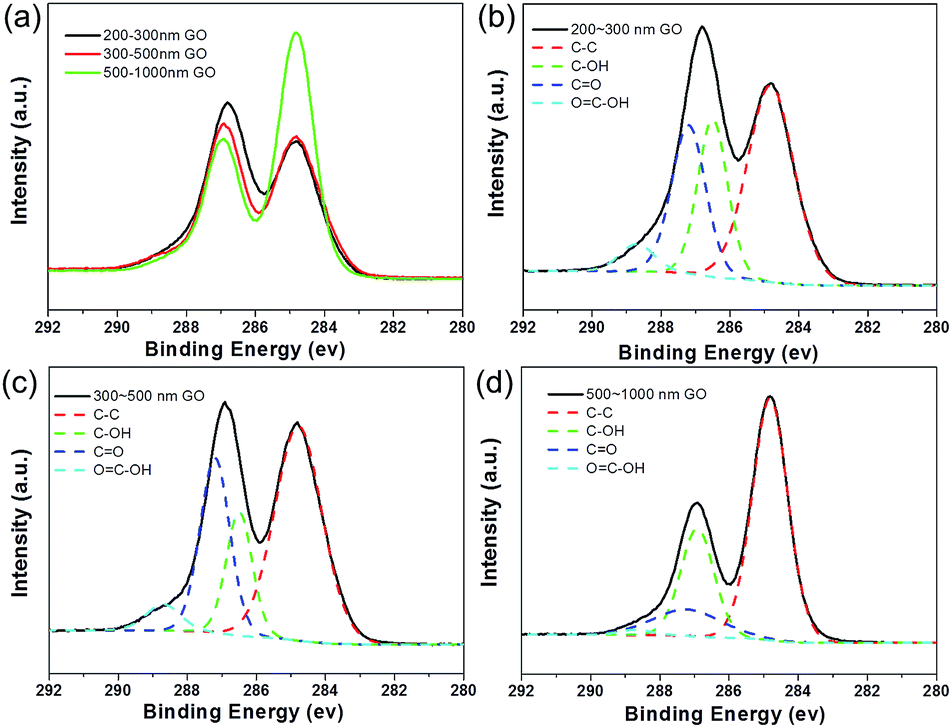 | ||
| Fig. 4 High-resolution XPS spectra of C1s for GO of different sizes (a), and the peak resolution curves for GO of 200–300 nm (b), 300–500 nm (c) and 500–1000 nm (d), respectively. | ||
| Samples | C–C (%) | C–OH (%) | CO (%) |
OC–OH (%) |
|---|---|---|---|---|
| 200–300 nm GO | 46 | 24 | 25 | 5 |
| 300–500 nm GO | 52 | 24 | 19 | 5 |
| 500–1000 nm GO | 61 | 25 | 13 | 1 |
Structural information of the as-prepared samples was obtained using micro-Raman spectroscopy. The peaks around 1350 cm−1 and 1597 cm−1 are the D and G bands of the carbon nanohybrids, respectively (Fig. S1†). It was observed that the ID/IG ratio of the carbon nanohybrids decreased as the size of the GO increased (1.46, 1.31 and 1.27, respectively). Moreover, it has been found that the presence of Gd@C82 on GO did not affect the aromatic structure of GO.2 This suggests that the aromatic defects of GO decreased as the size of the GO increased.
Table 2 shows the electrical sheet resistance values of the GO films of different sizes obtained using a four probe technique, which could indirectly reflect the conductivity of a single GO nanosheet. Before this detection, the roughness of GO films of different sizes on an insulating glass surface was investigated using AFM and SEM, which showed that they were similar to each other and the differences due to the film were negligibly small in the resistivity detection of the GO films (see Fig. S2†). As seen from Table 2, the GO films with a larger size of GO gave a smaller resistance. The high resistance of the GO might be due to the existence of oxygen-containing groups.22 With the size of the GO increased, the degree of oxidation is decreased, which induces a decrease of the resistance for the GO film. Therefore, the capability for electron transport of the GO increased as the size of the GO increased. It has been reported that the spin properties of electrons could be transferred during the process of electrons transferring,23 so the spin transfer in GO was enhanced as the size of the GO increased.
| Samples | Sheet resistance (kΩ sq.−1) |
|---|---|
| 200–300 nm GO | 6.67 × 10³ |
| 300–500 nm GO | 5.64 × 10³ |
| 500–1000 nm GO | 4.11 × 10³ |
Table 3 shows the relaxivity (R1) of different GO–Gd@C82 and GO–Gd@C82PCBM nanohybrids. It shows that sample 4 with the highest Gd concentration did not have the highest relaxivity and that the relaxivity of samples 2 and 3 with a similar Gd concentration was significantly different. Comparing the four samples, the relaxivity of sample 2, GO (300–500 nm)-Gd@C82 with a lower Gd concentration, was the highest. Therefore, the Gd concentration of the nanohybrids was not the key factor affecting the relaxivity of the GO–Gd@C82 nanohybrids. On the other hand, pure GO and fullerene C82 were found to have no relaxation properties, which indicated that the unpaired electrons of the encaged Gd still dominate the proton exchange of the GO–Gd@C82 nanohybrids in water. The relaxivity of RGO–Gd@C82 nanohybrids was lower than GO–Gd@C82 nanohybrids with the same size GO. Moreover, the significant differences of samples 1, 2 and 3 are the hydrophilic groups and the conductivity of GO, which influences the relaxivity of nanohybrids according to the “secondary spin-electron transfer” relaxation mechanism. The obvious difference in the relaxivity between samples 1 and 4 indicated that modification of the Gd@C82 on the nanohybrids also affected the relaxivity.
| Samples | R1 (mM−1 S−1) | Gd (mM mL−1 × 10⁻³) | GO (mg mL−1) | |
|---|---|---|---|---|
| 1 | GO (200–300 nm)-Gd@C82 | 57 | 0.37 | 0.1 |
| 2 | GO (300–500 nm)-Gd@C82 | 212 | 0.12 | 0.1 |
| 3 | GO (500–1000 nm)-Gd@C82 | 116 | 0.12 | 0.1 |
| 4 | GO (200–300 nm)-Gd@C82PCBM | 15 | 0.75 | 0.1 |
In general, the relaxivity of a T1 contrast agent is influenced crucially by interactions between the Gd3+ and the H protons of water molecules.3,4,11 But these relaxation mechanisms will not work for the novel GO–Gd@C82 nanohybrids. Our previous research2 has proven that the high relaxivity of GO–Gd@C82 nanohybrids was related to the number of H proton exchange groups (such as –OH and –COOH) in the GO. Moreover, as the intermediary between the Gd3+ and H protons of water molecules, the size of the GO nanosheets, on which the spin-electron was secondly transferred to the water molecules, was found to influence the relaxivity of GO–Gd@C82 nanohybrids. As seen from the electrical sheet resistance values of the GO films (Table 2), a GO film with a bigger size favored the electron transfer. However, the 500–1000 nm GO did not have more C–OH and OC–OH groups, which are important for the H proton exchange (Table 1, Fig. 3 and 4). Therefore, the relaxivity of the GO–Gd@C82 nanohybrids was mostly influenced by the GO nanosheets from two aspects: (1) the number of H proton exchange groups (such as –OH and –COOH) on the GO surface, and (2) the ability to transfer electron spin density from encaged Gd3+ ions to GO and then to hydrophilic groups on GO nanosheets. According to the “secondary spin-electron transfer” relaxation mechanism, the H proton exchange groups of the GO nanosheets and the electrical conductivity of the GO should be in an optimal equilibrium for high relaxivity of the GO–Gd@C82 nanohybrids. In our experiment, GO–Gd@C82 with a size of 300–500 nm gave the highest relaxivity, which should result from cooperation of the two factors above-mentioned.
Besides investigation of the influence of the GO intermediary, the interaction between the metallofullerene cage and GO was not neglected. Gd@C82PCBM which has a branched “tail” (Fig. 5a) was introduced into the nanohybrids. The electrochemical data (Table S1†) indicated that Gd@C82PCBM more easily provided electrons to GO compared to Gd@C82. Besides, the presence of an aromatic ring structure and alkyl chain in the “tail” could make the loading of Gd@C82PCBM onto the GO nanosheets easier. An AFM image of the GO–Gd@C82PCBM nanohybrids (Fig. 5b) and FTIR spectra (Fig. 5c) proved that Gd@C82PCBM was indeed loaded onto the surface of the GO nanosheets. In fact, ICP-MS also indicated that the concentration of Gd in the GO–Gd@C82PCBM was much higher than for the GO–Gd@C82 nanohybrids, which is consistent with our expectations. However, the data indicated that the relaxivity of GO–Gd@C82PCBM was lower than the GO–Gd@C82 nanohybrids (Table 3, sample 1 and 4). With a better electron donor and a higher concentration of Gd on the GO nanosheets, GO–Gd@C82PCBM did not give a higher relaxivity than GO–Gd@C82. We assume that the “tail” has steric effects when Gd@C82PCBM is combined with GO, and that this blocked the electron transfer from the carbon cage to GO, so that the relaxivity of the nanohybrids was significantly affected. This further proved the “secondary spin-electron transfer” relaxation mechanism, as the electron transfer efficiency played an important role in the relaxivity of the nanohybrids.
 | ||
| Fig. 5 GO–Gd@C82PCBM nanohybrids: (a) the structure of Gd@C82PCBM, (b) AFM imaging of GO–Gd@C82PCBM, and (c) FTIR spectrum of GO–Gd@C82PCBM (200–300 nm GO). | ||
4. Conclusions
In summary, further understanding of the relaxation mechanism to better construct novel carbon nanostructures with higher relaxivity was achieved through this work. The results indicated that although the fundamental origin of relaxivity was still the unpaired electron spins from Gd3+ in the nanohybrids, the variety of Gd3+ concentration was not adequately to decipher the high relaxation of the novel architecture. The “secondary spin-electron transfer” mechanism hints that the structure and the physicochemical properties of the carbon nanohybrids closely correlate to the enhanced relaxivity. The hydrophilic groups (–OH, –COOH) on the GO nanosheets and the electrical conductivity, which were both affected by the size of the GO, are considered to be the other key factors influencing the relaxivity of the GO–Gd@C82 nanohybrids when the concentration of Gd3+ is known. Moreover, the electron transfer from Gd@C82 to GO also contributed to the proton relaxation, which should cooperate with the excellent conductivity of GO to transfer spin-electrons to the proton exchange sites. This is different from the classic relaxation mechanism that results from direct Gd3+–water coordination. For the more complicated nanostructure of GO–Gd@C82, all of the above influencing factors need to be in balance for constructing MRI contrast agents with higher relaxivity.Acknowledgements
This work was supported financially by the National Basic Research Program of China (973 Program) (2015CB930104, 2012CB932601, 2013CB932703) and the National Natural Science Foundation of China (21271174, 11405185, 11505191, 21402202, 31571028).References
- J. H. Zhu, M. J. Chen, Q. L. He, L. Shao, S. Y. Wei and Z. H. Guo, RSC Adv., 2013, 3, 22790–22824 RSC.
- R. Cui, J. Li, H. Huang, M. Zhang, X. Guo, Y. Chang, M. Li, J. Dong, B. Sun and G. Xing, Nano Res., 2015, 8, 1259–1268 CrossRef CAS.
- R. D. Bolskar, Nanomedicine, 2008, 3, 201–213 CrossRef CAS PubMed.
- S. Laus, B. Sitharaman, E. Toth, R. D. Bolskar, L. Helm, L. J. Wilson and A. E. Merbach, J. Phys. Chem. C, 2007, 111, 5633–5639 CAS.
- E. Toth, R. D. Bolskar, A. Borel, G. Gonzalez, L. Helm, A. E. Merbach, B. Sitharaman and L. J. Wilson, J. Am. Chem. Soc., 2005, 127, 799–805 CrossRef CAS PubMed.
- R. D. Bolskar, A. F. Benedetto, L. O. Husebo, R. E. Price, E. F. Jackson, S. Wallace, L. J. Wilson and J. M. Alford, J. Am. Chem. Soc., 2003, 125, 5471–5478 CrossRef CAS PubMed.
- M. Mikawa, H. Kato, M. Okumura, M. Narazaki, Y. Kanazawa, N. Miwa and H. Shinohara, Bioconjugate Chem., 2001, 12, 510–514 CrossRef CAS PubMed.
- A. A. Popov, S. Yang and L. Dunsch, Chem. Rev., 2013, 113, 5989–6113 CrossRef CAS PubMed.
- M. Botta and L. Tei, Eur. J. Inorg. Chem., 2012, 1945–1960 CrossRef CAS.
- X. Lu, L. Feng, T. Akasaka and S. Nagase, Chem. Soc. Rev., 2012, 41, 7723–7760 RSC.
- K. B. Ghiassi, M. M. Olmstead and A. L. Balch, Dalton Trans., 2014, 43, 7346–7358 RSC.
- A. H. Hung, M. C. Duch, G. Parigi, M. W. Rotz, L. M. Manus, D. J. Mastarone, K. T. Dam, C. C. Gits, K. W. MacRenaris, C. Luchinat, M. C. Hersam and T. J. Meade, J. Phys. Chem. C, 2013, 117, 16263–16273 CAS.
- R. Sethi, Y. Mackeyev and L. J. Wilson, Inorg. Chim. Acta, 2012, 393, 165–172 CrossRef CAS.
- J. Zhang, J. Ge, M. D. Shultz, E. Chung, G. Singh, C. Shu, P. P. Fatouros, S. C. Henderson, F. D. Corwin, D. B. Geohegan, A. A. Puretzky, C. M. Rouleau, K. More, C. Rylander, M. N. Rylander, H. W. Gibson and H. C. Dorn, Nano Lett., 2010, 10, 2843–2848 CrossRef CAS PubMed.
- L. M. Manus, D. J. Mastarone, E. A. Waters, X.-Q. Zhang, E. A. Schultz-Sikma, K. W. MacRenaris, D. Ho and T. J. Meade, Nano Lett., 2010, 10, 484–489 CrossRef CAS PubMed.
- J. Zhang, P. P. Fatouros, C. Shu, J. Reid, L. S. Owens, T. Cai, H. W. Gibson, G. L. Long, F. D. Corwin, Z.-J. Chen and H. C. Dorn, Bioconjugate Chem., 2010, 21, 610–615 CrossRef CAS PubMed.
- W. S. Hummers and R. E. Offeman, J. Am. Chem. Soc., 1958, 80, 1339 CrossRef CAS.
- C. Y. Shu, L. H. Gan, C. R. Wang, X. L. Pei and H. B. Han, Carbon, 2006, 44, 496–500 CrossRef CAS.
- I. K. Oh, J. H. Jung, J. H. Jeon and S. Vadahanambi, Smart Mater. Struct., 2010, 19, 75009–75019 CrossRef.
- S. Rella, A. Giuri, C. E. Corcione, M. R. Acocella, S. Colella, G. Guerra, A. Listorti, A. Rizzo and C. Malitesta, Vacuum, 2015, 119, 159–162 CrossRef CAS.
- J. Li, M. Y. Zhang, B. Y. Sun, G. M. Xing, Y. Song, H. L. Guo, Y. A. Chang, Y. H. Ge and Y. L. Zhao, Carbon, 2012, 50, 460–469 CrossRef CAS.
- X. Laloyaux, E. Fautre, T. Blin, V. Purohit, J. Leprince, T. Jouenne, A. M. Jonas and K. Glinel, Adv. Mater., 2010, 22, 5024–5028 CrossRef CAS PubMed.
- I. Neumann, J. Van de Vondel, G. Bridoux, M. V. Costache, F. Alzina, C. M. Sotomayor Torres and S. O. Valenzuela, Small, 2013, 9, 156–160 CrossRef CAS PubMed.
Footnotes |
| † Electronic supplementary information (ESI) available: Raman spectra of as-prepared GO–Gd@C82 nanohybrids with different sizes of GO. The roughness of GO films of different sizes GO on an insulating glass surface was investigated using AFM and SEM, indicating that the differences due to the films were negligibly small in the resistivity detection of the GO films. Reduction potential and oxidation potential for Gd@C82 and Gd@C82PCBM are displayed. See DOI: 10.1039/c6ra06733f |
| ‡ These authors contributed equally to this work. |
| This journal is © The Royal Society of Chemistry 2016 |