DOI:
10.1039/C6RA06701H
(Paper)
RSC Adv., 2016,
6, 44288-44296
Influence of surface chemistry on the ionic conductivity of vertically aligned carbon nanotube composite membranes
Received
14th March 2016
, Accepted 15th April 2016
First published on 18th April 2016
Abstract
The nano-sized solid state pores and channels that mimic nature-based systems have attracted great interest due their potential applications for molecular separation, sensing, drug delivery, and energy conversion. In this study, in order to gain more knowledge on the ion and molecular transport inside nanopores, we examined how the surface conduction and electrochemical properties of carbon nanotubes (CNTs) composite membranes produced by a template-assisted catalyst-free chemical vapour deposition (CVD) process using nanoporous anodic alumina membranes (NAAMs) as a template can be tuned readily by chemical modification of their inner surface for various applications. The inner graphitic surface of the resulting CNTs was modified chemically through wet oxidation process using hydrogen peroxide (H2O2) as the oxidant agent to introduce oxygen-containing groups, mainly carboxyl groups. Electrochemical impedance spectroscopy (EIS) revealed significant changes in surface conduction measured by impedance and conductance of CNTs as a result of the selective chemical modification of their inner wall surfaces. These results show that this approach makes it possible to tune the surface conductivity and interfacial properties of vertically aligned arrays of CNTs with precision, using a simple oxidation process. Therefore, this method can be used to produce CNTs composite membranes with precisely controlled electrochemical properties and conductivity related to potential applications of advanced electrically driven and bioinspired separation devices for water desalination and separation of biological molecules.
Introduction
Nano-confined structures, such as nanopores, nanotubes and nanochannels, have attracted enormous research attention in the past for their potential applications, including low-cost filtering membranes for bioseparation and desalination, filtration devices, biosensing, catalysis, and energy generation. These applications require membranes to have fast transport with high selectivity and low running costs. Since their discovery in 1991,1 carbon nanotubes (CNTs) have attracted considerable interest due to their outstanding and unique transport, electrical, mechanical, and thermal properties. Several types of CNTs membranes have been developed and explored as advanced membranes for water desalination, gas pervaporation, nanofiltration of biological mixtures, transdermal drug delivery, and energy storage applications.2–5 The formation of vertically aligned arrays of CNTs is of particular interest for the abovementioned applications because this configuration endows the resulting membrane systems with better performance over membranes composed of randomly distributed bundles of CNTs. Conventional fabrication techniques used to prepare CNTs membranes with vertically aligned arrays of CNTs are typically template-based synthesis approaches, where silicon nitride and polymer matrices are used as host templates.6,7 These nanofabrication techniques, however, have some disadvantages and technical drawbacks. For example, these methods require the use of expensive laboratory facilities and long fabrication processes, limiting the production of these membranes to the laboratory scale. In addition, controlling the geometric features of CNTs structures using these techniques is difficult and challenging due to the use of a catalyst.
Thus far, several studies have shown that other cost-competitive template-assisted synthesis techniques can overcome the aforementioned disadvantages for fabricating CNTs membranes in a cost-competitive and time-effective manner on the industrial scale. Nanoporous anodic alumina membranes (NAAMs) produced by electrochemical anodization of aluminum substrates in acid electrolytes have been demonstrated as outstanding host templates for the production of CNT membranes due to their physical, mechanical and chemical properties.8–12 Electrochemical anodization of aluminum is a well-known, industrially scalable and cost-competitive process extensively used to produce highly ordered NAAMs for numerous applications.13–15 The nanopore geometric features of the resulting templates can be precisely engineered using the fabrication parameters during anodization.16,17 These attractive features boosted the use of NAAMs as platforms for the synthesis of one and two dimensional nanostructure materials (i.e. nanowires, nanorods, and nanotubes).18–22 Kyotani's group pioneered the use of NAAMs as host templates for the preparation CNTs membranes featuring vertically aligned cylindrical nanotubes.11,23 NAAMs enable the formation of well-defined CNTs-based membranes with precisely controlled nanotube dimensions and geometry.24 In addition, it can be noted that CNTs-NAAMs are produced using a catalyst-free CVD approach, which overcomes the inherent drawbacks of catalyst-based CVD processes, where the use of metal catalyst particles as precursors results in CNTs with uncontrolled geometric features and incorporated impurities into the structure of CNTs, which occlude the inner hollow structure of CNTs. These factors limit and compromise the practical applicability of these membranes for a wide range of applications.25,26 Furthermore, the surface chemistry of the inner wall surfaces of the resulting CNTs produced by this technique can be modified selectively by different approaches, opening new opportunities to develop advanced membranes with precisely engineered transport and selectivity properties. Note that the flow of ions or molecules across the CNTs membranes occurs along the graphitic surface of inner wall of the nanotubes, which results in much faster transport rates than those of common ceramic and polymeric membranes. To increase the surface activity of CNTs membranes is envisaged as a unique means of enhancing the efficiency of CNTs membranes for transport/separation/filtration applications. Although CNT membranes with tuned chemical properties are of special interest for applications, such as bioinspired and electrically driven molecular transport, this approach has not been widely explored.
In addition to their geometric features, modifying the surface chemistry of CNTs membranes for tuning their electrochemical properties and surface conductivity is of utmost importance for applications where the transport/filtration/separation processes rely on the interfacial properties and electrochemical interactions between the inner graphitic surface of the membrane and molecules. Important examples of this concept are capacitance-based desalination membranes and electrophoretic separations, which allow improved separation selectivity and cost-effective separation process. However, there is lack of understanding of the transport mechanism of ions and molecules inside the CNTs, particularly under an electrical field, wherein the role of the interfacial properties and surface charge is a performance-determining parameter.
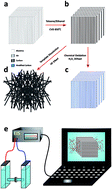
In this study, to extend the knowledge in this field, we explore for the first time the effect of selective chemical modification of the inner surface of CNTs composite membranes produced in NAAMs by a catalyst-free CVD process on their electrochemical properties and potential impact on their transport and selectivity properties. A schematic of the fabrication process of CNTs-NAAMs and the electrochemical setup used in this study are presented in Fig. 1. The selective chemical modification of the inner surface of the CNTs was confirmed experimentally by contact angle measurements, X-ray photoelectron spectroscopy (XPS), Raman spectroscopy, and electrochemical impedance spectroscopy (EIS) characterization. The EIS technique has been employed extensively to characterise the electrical properties of the materials and the interfaces, including nanopores and nanochannels.27 In this study, we demonstrate how the surface chemistry inside the CNTs can influence the ionic conductivity and electrochemical properties of CNTs-NAAMs composite membranes using different electrolyte concentrations. Lower electrolyte concentrations are used to cast light on how a selective chemical modification of the inner surface can be readily used as a strategy for tuning the ionic conductivity and electrochemical properties of these composite membranes, which is critical for the development of advanced membranes for electrophoretic and potential-based separation of molecules.
 |
| | Fig. 1 Schematic of the fabrication and modification process of carbon nanotube composite membranes (CNTs-NAAMs) and the electrochemical measurements setup. (a) NAAMs prepared by electrochemical anodization of an Al foil; (b) prepared CNTs-NAAMs with CNTs embedded in NAAMs after the CVD process; (c) CNTs-NAAMs after oxidation treatments; (d) liberated CNTs after dissolution of NAAMs by wet chemical etching (this step is performed to characterize the outer surface of as-produced and oxidized CNTs structures); and (e) schematic of the electrochemical measurements setup. | |
Experimental section
Materials
High purity aluminum (Al) foils 0.32 mm thick with 99.999% purity were obtained from Goodfellow Cambridge Ltd, UK. Copper chloride (CuCl2), oxalic acid (H2C2O4), chromium trioxide (CrO3), phosphoric acid (H3PO4), hydrochloric acid (HCl), ethanol 99.7% (C2H6O), toluene 99.8% (C7H8), hydrogen peroxide (H2O2), hydrofluoric acid (HF) and sodium chloride (NaCl) were purchased from Sigma Aldrich (Australia) and used as received. High purity deionized (DI) water (resistivity 18.2 MΩ cm) from a Milli-Q water purification system was used in all the solutions used in this study.
Synthesis of nanoporous anodic alumina membranes
Nanoporous anodic alumina membranes (NAAMs) were prepared by a two-step electrochemical anodization process using high purity Al foils.8,28 Briefly, circular Al foils with a diameter of 1.5 cm were first cleaned under sonication in ethanol and water for 10 min followed by electro-polishing in a mixture of HClO4 and C2H6O 1
:
4 (v/v) at 20 V and 5 °C for 3 min and then dried under a nitrogen stream. The electro-polished Al foils were anodized in 0.3 M aqueous oxalic acid electrolyte at 40 V and 6 °C using a two electrode electrochemical cell. The first anodization step was carried out for 20 h and the resulting layer was removed by selective wet chemical etching in a mixture of H3PO4 (0.4 M) and H2CrO7 (0.2 M) at 70 °C for 3 h to obtain hexagonally organized pits on the Al surface. The second anodization step was carried out for 15 h to specifically obtain NAAMs with pore lengths of 50 ± 1 μm. The remaining aluminum substrate was removed in a saturated solution of HCl and CuCl2. Finally, the oxide barrier layer at the bottom of NAAMs was chemically removed by wet chemical etching in an aqueous solution of 5 wt% H3PO4 at 35 °C under current control to prevent the resulting membranes from undesired pore widening.29,30
Synthesis and modification of CNTs-NAAMs composite membranes
CNTs were grown inside NAAMs using a catalyst-free CVD approach previously described.12,31 Briefly, vertically aligned multiwalled CNTs (MWCNTs) were grown inside the pores of NAAMs by CVD using a mixture of toluene and ethanol 1
:
1 (v/v) as a carbon precursor in a CVD system (Brother Furnace Co., LTD, China) (Fig. 1). The CVD process was performed at 850 °C under constant argon (Ar) flow at a rate of 1 dm3 min−1 for 30 min to specifically deposit carbon in the cylindrical pores of NAAMs. The process was adjusted to grow CNTs with a wall thickness of 7 ± 2 nm. As-produced CNTs-NAAMs were modified chemically (i.e. oxidized) via wet chemical method using H2O2 (35 wt%) for 16 h followed by washing with deionized water. This method made it possible to selectively and precisely functionalize the inner wall surface of CNTs with oxygen-containing groups.
Structural and chemical composition characterizations
The structural characterization of the prepared CNTs-NAAMs was performed using a scanning electron microscope (SEM-FEG Environmental SEM, Quanta 450) equipped with energy dispersive X-ray spectroscopy (EDX). X-ray photoelectron spectroscopy (XPS Kratos Axis Ultra) was used to determine the chemical composition of the as-produced and oxidized CNTs-NAAMs composite and liberated CNTs using the Al Kα (1486.7 eV) monochromatic line. Contact angle measurements (Attension Theta Optical Tensiometer, Finland) were carried out to confirm the changes in the surface properties of CNTs-NAAMs after the oxidation treatment with hydrogen peroxide. Transmission electron microscopy (Philips CM 200 TEM) was used to assess the uniformity and establish the wall thickness of CNTs. To obtain liberated CNTs from the host templates, NAAMs were first dissolved selectively in a 5 wt% HF solution and the liberated CNTs were washed thoroughly with deionised water and ethanol. Raman spectroscopy (Horiba LabRAM HR Evolution Raman microprobe spectrometer) was used to characterize the graphitic structure of the as-prepared and oxidized CNTs-NAAMs and liberated CNTs. The Raman spectra were obtained using a He–Ne laser of 532 nm as an excitation source.
Electrochemical impedance measurements
The electrochemical properties of the as-produced and oxidized CNTs-NAAMs were analysed by two electrode electrochemical impedance spectroscopy (EIS). To this end, the different membranes were placed between two halves of a H-tube permeation cell with an exposed area of 0.0314 cm2 (Fig. 1). Both halves were filled with 3 mL of a NaCl aqueous electrolyte solution. Two gold electrodes were immersed in these halves, one in each, serving as working and counter electrode. Impedance data were obtained over a frequency range from 1 Hz to 1 MHz using various concentrations of NaCl electrolyte (i.e. 1, 2, 5, 10, 50, and 100 μM). The modelling of the experimental system was done using EvolCRT software (developed by Department of Chemistry, Wuhan University, China).32
Result and discussion
Structural characterization of the prepared CNTs composite membranes before and after oxidation
SEM images of the prepared CNTs composite membranes through different fabrications steps and before and after oxidations are summarised in Fig. 2. Fig. 2a shows the top view of a NAAM confirming the hexagonal arrangement of nanopores with an average diameter of 40 ± 5 nm. This geometry with perfectly ordered and vertically aligned nanopore structure is a result of the self-ordered anodization process.33 The inset in Fig. 2a shows details of the bottom view of these membranes after pore opening using phosphoric acid (5 wt%) at 35 °C. The thickness of NAAMs used in this study was set to 50 μm by adjusting the anodization time during the second anodization step (Fig. 2b). The inset in Fig. 2b shows vertically aligned cylindrical nanopores from the top to bottom. Note that precise control of the dimensions of NAAMs can be achieved by controlling the anodization conditions (i.e. anodization voltage and time). Top view SEM images of as-produced and oxidized CNTs embedded in NAAMs are presented in Fig. 2c and d, respectively, illustrating an inner diameter of 41 ± 5 nm with no significant morphological differences between them. This result indicates a slight increase in the pore diameter of NAAMs after the CVD process. This can be explained by the loss of water from the NAAMs structure and the formation of a different crystallographic phase of alumina during the CVD process (i.e. 850 °C).34,35 The hollow and uniform features of the as-produced and oxidized CNTs can be clearly seen from SEM images of liberated tubes after selective dissolution of the NAAMs host templates (Fig. 2e and f). Further evidence for the aforementioned features can be found from the transmission electron microscopy (TEM) images of the as-produced and oxidized CNTs displayed in Fig. 2g and h, respectively. TEM image analysis established an average wall thickness of 7 ± 2 nm, with CNTs presenting low graphitic features in both cases, as-produced and oxidized. However, it is worth noting that CNTs can be graphitized by post-heat treatment at higher temperatures, if required.36
 |
| | Fig. 2 Set of SEM and TEM images of NAAMs, as-produced and oxidized CNTs-NAAMs and liberated CNTs. (a) Top view SEM image of a typical NAAMs structure produced through a two-step anodization process in an oxalic acid electrolyte (scale bar = 500 nm) (inset: bottom view, scale bar = 500 nm); (b) cross-sectional view showing entire length of the NAAMs (scale bar = 20 μm) (inset: magnified view, scale bar = 500 nm); (c) top view SEM image of as-produced CNTs-NAAMs produced through catalyst-free CVD for 30 min (scale bar = 500 nm); (d) top view SEM image of oxidized CNTs-NAAMs (scale bar = 500 nm); (e) SEM image of as-produced CNTs after dissolution of NAAMs; (f) SEM image of oxidized CNTs after dissolution of NAAMs; (g) TEM image of the as-produced CNTs (scale bar = 50 nm); and (h) TEM image of oxidized CNTs (scale bar = 50 nm). | |
Chemical composition characterization of prepared CNTs composite membranes before and after oxidation
The chemical composition of the as-produced and oxidized CNTs-NAAMs was analysed by energy dispersive X-ray spectroscopy (EDX), X-ray photoelectron spectroscopy (XPS) and Raman spectroscopy. The EDX spectra of the as-produced and oxidized CNTs-NAAMs are displayed in Fig. 3a and b, respectively, showing the presence of C, O and Al as major elements. This analysis provides information about both the elemental composition and the high level of purity of CNTs-NAAMs produced by our catalyst-free CVD process. The presence of Pt is related to the coating applied for SEM imaging. Note that the percentage of these elements is not included because the quantitative analysis of low atomic number elements using EDX analysis is usually overestimated. Therefore, XPS was used to gain a deeper insight into the quantitative and qualitative elemental composition and surface chemistry of the as-produced and oxidized CNTs-NAAMs and CNTs. In this sense, it should be noted that the XPS spectra of CNTs embedded in NAAMs were obtained from the top carbon layer on the NAAM's surface because this carbon layer has the same chemical structure as the inner CNTs layers.23 It can be note that in this study, the O 1s spectra were not selected for an analysis of the composition of these CNT structures because this analysis cannot discern between the O contribution from the NAAMs template and from the oxidized CNTs to the O 1s spectra. Therefore, under such circumstances, the C 1s XPS spectrum is the best choice to discern the chemical composition of CNTs structures and the effect of the oxidation over the composition of CNTs. Fig. 3c–f show the high resolution C 1s spectra and survey spectra of the as-produced and oxidized CNTs-NAAMs and liberated CNTs. The as-produced CNTs-NAAMs had 6% oxygen, which increased to 18% after oxidation with H2O2. A corresponding O/C ratio of 0.07 and 0.26 was determined, respectively. Fig. 3c shows the C 1s peak of the as-produced CNTs-NAAMs, with the inset showing the survey spectrum, which is deconvoluted into five peaks located at binding energies 284.3 ± 0.2, 285.2 ± 0.3, 287.3 ± 0.2, 289.3 ± 0.2 and 291.2 ± 0.3 eV. These peaks are associated with the sp2 bonds of graphitic carbon, disordered sp3 network of carbon atoms, C
O (ketone/aldehyde), O
C–O (carboxyl/ester) groups, and π–π* transition of carbon atoms in graphene structures, respectively.37,38
 |
| | Fig. 3 EDX and XPS analysis of the as-produced and oxidized CNTs-NAAMs and liberated CNTs. (a) The EDX spectra of the as-produced CNTs-NAAMs (inset: image of a water droplet); (b) the EDX spectra of oxidized CNTs-NAAMs (inset: image of a water droplet); (c) high resolution C 1s spectra of as-produced CNTs-NAAMs (inset: survey spectrum); (d) high resolution C 1s spectra of oxidized CNTs-NAAMs (inset: survey spectrum); (e) high resolution C 1s spectra of as-produced CNTs (inset: survey spectrum); and (f) high resolution C 1s spectra of oxidized CNTs (inset: survey spectrum). | |
After treatment with H2O2, the CNTs-NAAMs become more hydrophilic as the graphitic carbon peak (284.3 eV) decreased significantly and the XPS peak associated with the sp3 network together with peaks associated with oxygen-containing functional groups (287.3, 289.3 eV) become more pronounced (Fig. 3d). Liberated CNTs were analyzed by XPS to shed light on the chemical composition change of the outer surface of the CNTs after oxidation. Although the escape depth of the photoelectrons in XPS is known to be about few nanometers, the obtained spectrum of the outer wall surface of CNTs (thickness ∼7 nm) mainly provides information on the chemical composition of the outer surface of the CNTs. As-produced and oxidized CNTs had 5.5% and 6.7% of oxygen, respectively. The corresponding O/C ratio of 0.06 and 0.07 was determined, respectively. The high resolution C 1s spectra of the as-produced and oxidised CNTs are shown in Fig. 3e and f. These graphs show no change in the chemical composition of the outer surface of CNTs after oxidation, which was indicated by almost the same graphitic carbon peak and all peaks associated with oxygen-containing functional groups. The elemental composition and high-resolution C 1s spectra of as-produced and oxidized CNTs-NAAMs and liberated CNTs are summarized in Table 1. This analysis clearly confirms that only the inner surface of the CNTs was modified (i.e. oxidized), whereas the outer surface remained intact after the oxidation treatment. As-produced and oxidized CNTs-NAAMs were subjected to water contact angle (WCA) measurements to confirm the surface modification. WCA results are presented as insets in Fig. 3a and b, showing an average WCA of 75° and 35° for as-produced and oxidized CNTs-NAAMs, respectively. This confirms that a transition from a hydrophobic to hydrophilic surface occurred during the oxidation treatment with hydrogen peroxide. Further evidence for the selective modification of the inner wall surface of CNTs can be confirmed by Raman spectra of the as-produced and oxidized CNTs-NAAMs and liberated CNTs shown in Fig. 4a and b, respectively. All samples show the characteristic spectrum of CNTs with a G band peak around 1585 cm−1 and a D band peak around 1340 cm−1. The slight increase in the D band peak in oxidized CNTs-NAAMs compared to the as-produced ones (Fig. 4a) and the similar peaks for oxidized and as-produced liberated CNTs (Fig. 4b) confirm the selective modification of the inner wall surface of CNTs. Moreover, this analysis also shows that the structural integrity of CNTs was not influenced by the oxidation treatment used in our study, as the D and G bands keep the same positions in the Raman spectrum. It can be concluded from the aforementioned analysis of CNTs-NAAMs and liberated tubes that the selective modification of the inner wall surface of CNTs was accomplished successfully, establishing a solid path towards the selective chemical modification of CNT structures.
Table 1 Summary of the elemental composition and high-resolution C 1s spectra of as produced and oxidized CNTs-NAAMs and liberated CNTs
| |
Sample |
As produced CNTs-NAAMs |
Oxidized CNTs-NAAMs |
As produced CNTs |
Oxidized CNTs |
| Peak position (eV) |
Peak assignment |
Intensity (%) |
| C |
— |
— |
89.61 |
70.80 |
94.25 |
92.18 |
| O |
— |
— |
5.97 |
18.66 |
5.49 |
6.74 |
| Al |
— |
— |
4.42 |
6.90 |
— |
— |
| C 1s |
284.3 ± 0.2 |
C C |
83.4 |
60.0 |
84.0 |
83.9 |
| 285.2 ± 0.2 |
C–C |
4.3 |
23.7 |
4.5 |
4.4 |
| 287.3 ± 0.3 |
C O |
4.6 |
10.8 |
5.5 |
5.1 |
| 289.3 ± 0.2 |
O C–O |
3.5 |
4.3 |
3.7 |
4.2 |
| 291.2 ± 0.3 |
π–π* |
4.0 |
1.1 |
2.1 |
2.2 |
 |
| | Fig. 4 Raman analysis of the as-produced and oxidized CNTs-NAAMs and liberated CNTs. (a) Raman spectra of the as-produced and oxidized CNTs-NAAMs; and (b) Raman spectra of the as-produced and oxidized CNTs. | |
Electrochemical characterization of CNTs composite membranes before and after oxidations
EIS measurements were performed on the as-produced CNTs-NAAMs using various concentrations of NaCl electrolyte ranging from 1 μM to 100 μM to shed light on the influence of the electrolyte concentration on the system conductivity. Fig. 5a shows that increasing the NaCl concentration from 1 μM to 100 μM decreases the conductivity of the CNTs-NAAMs. Under an electrical potential, the negatively-charged surface of the as-produced CNTs-NAAMs in contact with NaCl solution attracts positively-charged counterions and repels the co-ions to form an interfacial charge layer, the so-called electrical double layer (EDL).39 The Debye length (k−1) (i.e. a characteristic thickness of the EDL) varies proportionally with the electrolyte ionic strength, k−1α[c]−1/2, where [c] is the molar concentration of a monovalent electrolyte.40 To maintain electric neutrality, the surface charge determines the ion conductance by controlling the ionic concentration inside the CNTs-NAAMs at low electrolyte concentrations. In contrast, ion conductance at high electrolyte concentrations is determined by the bulk conductivity and increases linearly with increasing ionic concentration.41 However, the result indicates that the conductance decreases with increasing electrolyte ionic concentration due likely to two factors, namely, (i) the electrostatic forces between the electrolyte ions and the inner surface of CNTs composite membrane, which increases with increasing ionic concentration, resulting in a decrease in the mobility of counterions inside CNTs-NAAMs; and (ii) the entrance resistance (the so-called access resistance42) against ion transport, which occurs more at high ionic concentrations, resulting in a lower conductance.43 The impedance (Z) data of bare NAAMs, as-produced and oxidized CNTs-NAAMs over a frequency range from 1 Hz to 1 MHz at constant concentration of NaCl (1 μM) were used to determine if the inner surface modification influenced the conductivity of the CNTs-NAAMs. Fig. 5b presents a Nyquist plot of the obtained impedance values. This illustrates a very low impedance of as-produced CNTs-NAAMs, indicated by a complete semicircle, over bare NAAMs. This can be attributed to the lower friction interface at the smooth inner surfaces of CNTs.44 This analysis also shows a substantial increase in impedance of the oxidized CNTs-NAAMs compared to the as-produced CNTs-NAAMs. The surface charge of the CNTs-NAAMs composite membrane becomes more negative, as proved by XPS and Raman analyses, with the oxidation treatment used in our study. The presence of more charged oxygen species at the surface of the CNTs generates more electrostatic forces between the electrolyte ions and the oxygen-containing groups present along the inner wall surface of CNTs. An important aspect that distinguishes our applied synthetic method (i.e. templated-assisted catalyst-free CVD process using toluene and ethanol as a simple carbon precursor) from other conventional methods is that it allows the fabrication of CNTs-NAAMs with a precise cylindrical structure, smooth pore walls and without an occlusion of the inner hollow structure of CNTs. This makes the interaction between the CNTs surface and the ions of the transported electrolyte dominant at nanoscale regime. Further decrease in the pore diameter of CNTs would increase significantly the effect of such interactions, enhancing the impedance of these membranes. Considering that the chemical modification (i.e. oxidation) took place on the top surface of the composite membrane, the entrance resistance could play a role in the observed increase in impedance of the oxidized CNTs-NAAMs. An equivalent circuit, shown as the inset in Fig. 5b, was used to interpret the impedance data, where Rs is the solution resistance, Rp is the nanopore/nanotube resistance, and Cp is the nanopore/nanotube capacitance. A conductance versus frequency plot, produced by the conductance values obtained by impedance measurements is illustrated in Fig. 5c. This analysis shows that the aforementioned change in the conductivity of CNTs-NAAMs after oxidizing their inner surfaces follows a frequency-dependent mechanism. These results confirm that the surface conductivity and electrochemical properties of the CNTs-NAAMs can be precisely tuned by performing a simple H2O2 oxidation process. Moreover, the change in the concentration of electrolyte is shown to have a significant impact on the conductivity of the membrane due to electrostatic and access effects.
 |
| | Fig. 5 EIS measurements of the as-produced and oxidized CNTs-NAAMs. (a) Conductance of as-produced CNTs-NAAMs at various NaCl concentrations; (b) Nyquist plots obtained for bare NAAMs, as-produced and oxidized CNTs-NAAMs at constant concentration of NaCl (1 μM) (inset: magnified view with full semi-circle of as-produced CNTs-NAAM and used circuit for the simulation of data points); (c) conductance change for bare NAAMs, as-produced and oxidized CNTs-NAAMs at various frequencies and constant concentration of NaCl (1 μM). | |
Conclusions
This study has reported on the chemical modification of the inner surface of CNTs composite membranes prepared by a catalyst-free CVD process using nanoporous anodic alumina membranes as a template and its influence on their conductivity and electrochemical properties. The selective chemical modification was confirmed by a set of characterization techniques, including contact angle measurements, X-ray photoelectron spectroscopy (XPS) and Raman spectroscopy. These analyses revealed a transition from hydrophobic to hydrophilic surface due to selective chemical functionalization of the inner surface of CNTs with oxygen-containing functional groups, which occurred by a simple oxidation treatment using hydrogen peroxide. Structural analysis of the resulting CNTs-NAAMs composite membranes revealed negligible morphological changes after chemical functionalization. The electrochemical impedance spectroscopy characterizations performed using NaCl electrolyte solutions (1–100 μM) demonstrated a substantial increase in the impedance of oxidized CNTs-NAAMs over as-produced CNTs-NAAMs, due to electrostatic and access effects. Therefore, the electrochemical properties of CNTs-NAAMs can be tuned readily by controlling their surface chemistry. These results can be used as a strategy for enhancing and tuning the electrochemical properties of CNTs composite membranes, which is important for the development of advanced membranes for the electrophoretic and potential-based separation of molecules.
Acknowledgements
The authors acknowledge the financial support provided by the Australian Research Council (FT 110100711 and DE140100549). The authors also acknowledge the facilities and the scientific and technical assistance of the Australian Microscopy & Microanalysis Research Facility at the Electron Microscope Unit, the University of Adelaide. Mohammed Alsawat thanks Taif University (Ministry of Education, Saudi Arabia) for funding his scholarship.
References
- S. Iijima, Nature, 1991, 354, 56–58 CrossRef CAS.
- B. Corry, J. Phys. Chem. B, 2008, 112, 1427–1434 CrossRef CAS PubMed.
- A. Noy, H. G. Park, F. Fornasiero, J. K. Holt, C. P. Grigoropoulos and O. Bakajin, Nano Today, 2007, 2, 22–29 CrossRef.
- M. Majumder, A. Stinchcomb and B. J. Hinds, Life Sci., 2010, 86, 563–568 CrossRef CAS PubMed.
- A. L. M. Reddy, S. R. Gowda, M. M. Shaijumon and P. M. Ajayan, Adv. Mater., 2012, 24, 5045–5064 CrossRef CAS PubMed.
- B. J. Hinds, N. Chopra, T. Rantell, R. Andrews, V. Gavalas and L. G. Bachas, Science, 2004, 303, 62–65 CrossRef CAS PubMed.
- C.-M. Seah, S.-P. Chai and A. R. Mohamed, Carbon, 2011, 49, 4613–4635 CrossRef CAS.
- H. Masuda and K. Fukuda, Science, 1995, 268, 1466–1468 CAS.
- H. Masuda, F. Hasegwa and S. Ono, J. Electrochem. Soc., 1997, 144, L127–L130 CrossRef CAS.
- H. Masuda, K. Yada and A. Osaka, Jpn. J. Appl. Phys., 1998, 37, L1340 CrossRef.
- T. Kyotani, L.-f. Tsai and A. Tomita, Chem. Mater., 1995, 7, 1427–1428 CrossRef CAS.
- G. Che, B. Lakshmi, C. Martin, E. Fisher and R. S. Ruoff, Chem. Mater., 1998, 10, 260–267 CrossRef CAS.
- D. Losic, L. Velleman, K. Kant, T. Kumeria, K. Gulati, J. G. Shapter, D. A. Beattie and S. Simovic, Aust. J. Chem., 2011, 64, 294–301 CrossRef CAS.
- A. Santos, T. Kumeria and D. Losic, TrAC, Trends Anal. Chem., 2013, 44, 25–38 CrossRef CAS.
- T. Kumeria, M. M. Rahman, A. Santos, J. Ferré-Borrull, L. F. Marsal and D. Losic, ACS Appl. Mater. Interfaces, 2014, 6, 12971–12978 CAS.
- W. Lee and S.-J. Park, Chem. Rev., 2014, 114, 7487–7556 CrossRef CAS PubMed.
- W. Lee and J.-C. Kim, Nanotechnology, 2010, 21, 485304 CrossRef PubMed.
- K. Kant, D. Losic and R. E. Sabzi, Int. J. Nanosci., 2011, 10, 1–6 CrossRef CAS.
- H. Masuda, M. Ohya, H. Asoh, M. Nakao, M. Nohtomi and T. Tamamura, Jpn. J. Appl. Phys., 1999, 38, L1403 CrossRef.
- C. R. Martin, Science, 1994, 266, 1961–1966 CAS.
- P. Hoyer, Langmuir, 1996, 12, 1411–1413 CrossRef CAS.
- D. Routkevitch, T. Bigioni, M. Moskovits and J. M. Xu, J. Phys. Chem., 1996, 100, 14037–14047 CrossRef CAS.
- T. Kyotani, L.-f. Tsai and A. Tomita, Chem. Mater., 1996, 8, 2109–2113 CrossRef CAS.
- M. Alsawat, T. Altalhi, T. Kumeria, A. Santos and D. Losic, Carbon, 2015, 93, 681–692 CrossRef CAS.
- R. Morjan, O. Nerushev, M. Sveningsson, F. Rohmund, L. Falk and E. Campbell, Appl. Phys. A: Mater. Sci. Process., 2004, 78, 253–261 CrossRef CAS.
- N. Grobert, M. Terrones, A. Osborne, H. Terrones, W. Hsu, S. Trasobares, Y. Zhu, J. Hare, H. Kroto and D. Walton, Appl. Phys. A: Mater. Sci. Process., 1998, 67, 595–598 CrossRef CAS.
- A. Lasia, Electrochemical impedance spectroscopy and its applications, Springer, 2014 Search PubMed.
- A. Li, F. Müller, A. Birner, K. Nielsch and U. Gösele, J. Appl. Phys., 1998, 84, 6023–6026 CrossRef CAS.
- M. Lillo and D. Losic, J. Membr. Sci., 2009, 327, 11–17 CrossRef CAS.
- D. Losic and D. Losic Jr, Langmuir, 2009, 25, 5426–5431 CrossRef CAS PubMed.
- T. Altalhi, T. Kumeria, A. Santos and D. Losic, Carbon, 2013, 63, 423–433 CrossRef CAS.
- J. Yu, H. Cao and Y. He, Chemom. Intell. Lab. Syst., 2007, 85, 27–39 CrossRef CAS.
- O. Jessensky, F. Müller and U. Gösele, Appl. Phys. Lett., 1998, 72, 1173–1175 CrossRef CAS.
- C. C. Chen, J. H. Chen and C. G. Chao, Jpn. J. Appl. Phys., 2005, 44, 1529 CrossRef CAS.
- L. Fernández-Romero, J. Montero-Moreno, E. Pellicer, F. Peiró, A. Cornet, J. Morante, M. Sarret and C. Müller, Mater. Chem. Phys., 2008, 111, 542–547 CrossRef.
- D. Mattia, M. Rossi, B. Kim, G. Korneva, H. Bau and Y. Gogotsi, J. Phys. Chem. B, 2006, 110, 9850–9855 CrossRef CAS PubMed.
- S. Biniak, G. Szymański, J. Siedlewski and A. Światkowski, Carbon, 1997, 35, 1799–1810 CrossRef CAS.
- M. Reis, A. B. Do Rego, J. L. Da Silva and M. Soares, J. Mater. Sci., 1995, 30, 118–126 CrossRef CAS.
- M. Tagliazucchi and I. Szleifer, Mater. Today, 2015, 18, 131–142 CrossRef CAS.
- J. N. Israelachvili, Intermolecular and surface forces: revised third edition, Academic press, 2011 Search PubMed.
- R. Karnik, K. Castelino, R. Fan, P. Yang and A. Majumdar, Nano Lett., 2005, 5, 1638–1642 CrossRef CAS PubMed.
- G. Willmott and B. Smith, Nanotechnology, 2012, 23, 088001 CrossRef CAS PubMed.
- S. W. Kowalczyk, A. Y. Grosberg, Y. Rabin and C. Dekker, Nanotechnology, 2011, 22, 315101 CrossRef PubMed.
- M. Majumder, N. Chopra, R. Andrews and B. J. Hinds, Nature, 2005, 438, 44 CrossRef CAS PubMed.
|
| This journal is © The Royal Society of Chemistry 2016 |
Click here to see how this site uses Cookies. View our privacy policy here.