
Preparation of reduced graphene oxide/Co3O4 composites and sensing performance to toluene at low temperature

Shouli Baia, Long Dua, Jianhua Suna, Ruixian Luoa, Dianqing Li*a, Aifan Chen*a and Chung-Chiun Liub
aState Key Laboratory of Chemical Resource Engineering, Beijing Key Laboratory of Environmentally Harmful Chemicals Analysis, Beijing University of Chemical Technology, Beijing 100029, China. E-mail: chenaf@mail.buct.edu.cn
bDepartment of Chemical and Biomolecular Engineering, Case Western Reserve University, OH 44106, USA

Received 11th March 2016 , Accepted 13th June 2016

First published on 15th June 2016


Abstract

Although the gas sensing properties of p-type semiconductors (such as Co3O4) generally are lower than those of n-type oxide semiconductors, high quality gas sensors can still be designed by various modified methods due to their distinctive surface reactivity. In the work, the rGO/Co3O4 composites with different formulations have been successfully synthesized by a facile hydrothermal reaction. The morphology, structure and composition of as-prepared composites were characterized by XRD, FESEM, Raman, TG, XPS spectrum and BET analysis, respectively. The sensing tests indicate that the 5 wt% rGO composite to toluene not only exhibits the highest response and excellent selectivity, but also has linear response in concentration lower 5 ppm, indicating the composite is a promising sensing material for detection of toluene. Furthermore, the mechanism of rGO enhanced composite gas sensing is also discussed in detail, which is attributed to rGO action in composite and the formation of p–p isotype heterojunction at the interface between rGO and Co3O4.

1. Introduction

Toluene is one of the most common volatile organic compounds (VOCs) because it is widely used as a solvent in paints, varnishes and shellacs, thinners, adhesives, glues etc., but it is harmful to the human health at very low concentrations, and induces various symptoms, including irritation of the skin, eyes, and respiratory system, as well as having adverse effects on the human brain.1,2 Therefore, the development of a reliable and sensitive as well as highly selective toluene sensor has become imperative.3 Up to now, the sensors based on the n-type semiconductor oxides, such as SnO2, ZnO, TiO2, WO3 and etc.,4–7 have been widely used to detect toxic gases due to their structure simple, facile integration, cost-efficiency and potential sensing performance to some of toxic reducing gases and oxidizing gases.8 In contrast, the research and fabrication of sensors based on p-type oxide semiconductors, such as NiO, CuO, Co3O4 and Cr2O3, to date are still in the early stages of development. Co3O4 with a normal spinel structure has intriguing electronic, electrochemical and electrocatalytic properties due to electron easy transportation between Co2+ and Co3+ ions. However, in the field of gas sensors, Co3O4 shows a serious shortcoming of low sensitivity due to the resistive variations results from near surface hole-accumulation layers rather than the electron-depletion layers.9 However, the Co3O4 have distinctive surface reactivity and oxygen adsorption, so, numerous endeavors should be undertaken to improve the sensing performance of Co3O4 either by doping/loading of aliovalent metal element or by hybridizing with other oxides (or graphene) to form heterojunction at interface between both for detection of toxic gases. For instance, Hwang et al.10 prepared palladium-loaded Co3O4 hollow hierarchical nanostructures by a solvothermal reaction at 180 °C for 12 h, but test temperature is higher. Chen et al.11 prepared Co3O4–rGO composites by a solvothermal reaction at 140 °C for 10 h and the composites were applied to detect NO2.

The graphene, as a rising star of carbon family, has recently attracted great attention due to its outstanding mechanical, thermal, optical and electrical properties.12–15 The graphene oxide (GO) is usually produced by oxidation of graphite using modified Hummer's method16 with subsequent dispersion and exfoliation in water or suitable organic solvents. Compared with pristine graphite, the presence of covalent oxygenated functional groups in GO renders it strongly hydrophilic, which gives GO good dispersibility in many solvents, particularly in water. But meantime also give rise to remarkable structure defects that concomitant with some loss in electrical conductivity, which possibly limits the direct application of GO in electrically active materials and devices.17 However, GO is a good precursor of reduced graphene oxide (rGO) that can be obtained by chemical reduction of exfoliated GO. Furthermore, the residual oxygenated groups in rGO provide the possibility of further chemical modification for rGO sheets, which offers tremendous opportunity for the development of functionalized graphene-based composites with high conductivity, large specific surface area, rapid electronic transfers, outstanding mechanical flexibility and superb chemical stability.18,19 Recently, many attentions have been paid for incorporating of rGO in metal oxides to fabricate the composites, which can enhance sensing performance.20,21 But, the rGO/Co3O4 composites as gas sensing materials to detect toluene has not been reported so far. In this work, we have successfully synthesized the rGO/Co3O4 composite for the first time by assembling the Co3O4 hierarchical microspheres on the rGO nanosheets using a facile hydrothermal reaction. And demonstrates that the composite based sensor exhibits excellent sensitivity and selectivity to 5 ppm toluene, meanwhile, the sensor can operate at a lower temperature compared with other toluene sensors.

2. Experimental section

2.1 Synthesis of graphene oxide

The chemicals were analytical reagent grade and used as received without further purification. For a complete oxidation of graphite, graphene oxide (GO) was prepared from natural graphite powder via a two-step oxidation, i.e., a pre-oxidation22 and a followed Hummers oxidation.23 For the pre-oxidation, 20 g natural graphite powder was first added into an 80 °C solution of 30 mL concentrated H2SO4, 10 g K2S2O8 and 10 g P2O5. After 6 h reaction at 80 °C, the resultant dark blue mixture was thermally isolated and cooled to room temperature. Towards the mixture was then carefully added with deionized water (DI water) for dilution. The mixture was filtered and washed with DI water until the pH of the rinse water became 7. The product was dried overnight at 60 °C in air. This pre-oxidized graphite was then subjected to a further Hummer oxidation. In brief, 0.5 g pre-oxidized graphite was mixed with 0.74 g NaNO3 and 34 mL concentrated H2SO4, and vigorously stirred in an ice-water bath. Then 5.0 g KMnO4 was later slowly added, and the temperature was maintained at less than 20 °C. This mixture was stirred at 35 °C for 3 h. After that, 250 mL water and 4 mL H2O2 (30 wt%) needed to be further added slowly. The obtained bright yellow suspension was washed 5 times with HCl and water (1[thin space (1/6-em)]:[thin space (1/6-em)]10 v/v). The solid (GO) was finally dried at 50 °C overnight.

2.2 Synthesis of rGO/Co3O4 composite

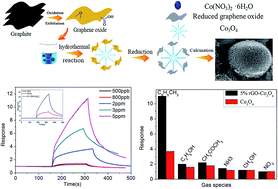
A certain amount of graphene oxide (GO) was dispersed in 70 mL of deionized water and ultrasonicated for 1 h to yield the solution of graphene oxide nanosheets. 0.58 g Co(NO3)2·6H2O, 0.22 g NH4F, and 0.6 g CO(NH2)2 was added to the solution. After 30 min of stirring, the mixture was transferred to a Teflon-lined autoclave with 100 mL capacity, which was then sealed and heated at 120 °C for 5 h. After cooling, the resulting product was washed with distilled water for several times by centrifugation and then dispersed in 50 mL of deionized water. A certain amount of hydrazine (NH2NH2, 35 wt%) was added to reduce the GO. The mixture was heated for 1 h at 90 °C. Subsequently, the precipitation was filtered, washed with distilled water and ethanol several times, and dried at 50 °C for 12 h in an oven. Finally, the sample was annealed at 300 °C for 2 h in air with a heating rate of 5 °C min−1 to obtain the rGO/Co3O4 composite. A schematic of the growth process of the rGO/Co3O4 composite is shown in Fig. 1. For comparison, a series of rGO/Co3O4 composites were fabricated by changing the graphene content (1%, 3%, 5% and 10%), and the obtained products were denoted as RCo1, RCo3, RCo5, RCo10, respectively. Pure Co3O4 were also prepared through a similar procedure only in the absence of GO.
image file: c6ra06542b-f1.tif
Fig. 1 Schematic illustration of the synthesis steps for the rGO/Co3O4 composite.

2.3 Characterization

The characterization analysis of rGO/Co3O4 samples were carried out using XRD, FESEM, Raman, and XPS techniques. The crystallographic structures of the materials were characterized by powder X-ray diffraction (XRD) analysis using a Rigaku D/MAX-2500 X-ray diffractometer at 30 kV and 100 mA with copper Kα radiation (λ = 0.154 nm), and the XRD data was collected at a scanning rate of 10° min−1 for 2θ in a range from 5° to 90°. The morphology of samples was examined by field emission scanning electron microscopy (FESEM, Zeiss Supra 55, 20.0 kV). The Raman spectroscopy was performed on a laser Raman spectrometer (Renishaw inVia) using a visible laser (λ = 532 nm) at room temperature. The thermogravimetric (TG) analysis was carried out in dynamic air atmosphere (75 mL min−1) with a heating rate of 10 °C min−1 using NETZSCH STA 449 F3 thermal analyzer. X-ray photoelectron spectroscopy (XPS) spectra were recorded on an X-ray photoelectron spectrometer (VG ESCALAB-MK) with aluminum Kα radiation. Adsorption/desorption N2 isotherms were measured on solid samples at 77 K on a Quadra Sorb Station 4 apparatus, from which the Brunauer–Emmett–Teller (BET) surface area was calculated using the multipoint BET method.

2.4 Sensor fabrication and response measurement

The pure Co3O4 and rGO/Co3O4 samples were mixed respectively with ethanol to form paste, and then drop-coated onto the surface of a ceramic tube with four Au electrodes. The coating process was repeated several times to form a complete coating. The hybrid-coated ceramic tube was then welded on to a special pedestal with six poles by solder paste. A Ni–Cr heating coil was then inserted through the ceramic tube and its two ends were welded to the other two poles of the pedestal. The sensor was aged at the certain temperature for several days in order to improve the structure stability of the sensing material and the stability of sensor resistance. The sensing responses of aged samples were examined in sensor test system equipped with an 18 L chamber (JF02E). Calculated amount of toluene was rapidly dropped onto a hot plate to generated 0.5 ppm, 0.8 ppm, 1 ppm, 3 ppm and 5 ppm toluene in the chamber, respectively. After exposure to a certain concentration of toluene, the sensors were exposed to air by removing the chamber. The operating temperature of the sensor was adjusted by varying the voltage through an electric heating system. The sensor response for reducing gas of toluene is defined as the ratio of Rg/Ra, where the Ra is the resistance of the sensor in air and the Rg is the resistance of the sensor in toluene. The response time is defined as the time required for the variation in conductance of the sensor to reach 90% of the equilibrium value following the injection of the test gas, and the recovery time is the time necessary for the sensor to return to 10% above the original conductance in air after releasing the test gas.

3. Results and discussion

3.1 Morphology and structure

The X-ray diffraction (XRD) spectra of rGO, Co3O4 and rGO/Co3O4 composite are shown in Fig. 2. It is seen in Fig. 2a that a strong peak at 10.1° corresponding to an interlayer distance of 8.7 Å was observed and the spectrum of GO had no peak at around 26° with an interlayer distance of 3.7 Å, indicating the successful preparation of GO by oxidation of graphite flakes.23 In XRD patterns, the interlayer spacing of the materials is proportional to the degree of oxidation. According to the XRD patterns of products in Fig. 2c–g, the presence of the main peaks of as-prepared Co3O4 and rGO/Co3O4 at 2θ of 19.000°, 31.271°, 36.852°, 44.808°, 59.357°, and 65.236° is indicative of the (111), (220), (311), (400), (511) and (440) crystal planes of cubic Co3O4 (JCPDS no. 42-1467).24 For the as-prepared rGO/Co3O4 composite, the absence of typical peaks at 10.1° can be explained by the successful reduction of graphene oxide. Moreover, the characteristic broad diffraction peak between about 23 and 26° corresponding to rGO (Fig. 2b) can be observed in the diffraction peak of RCo10 composite (Fig. 2g), but not be seen for other composites, indicating the interference of low amount and low diffraction intensity of rGO.
image file: c6ra06542b-f2.tif
Fig. 2 XRD patterns: (a) GO, (b) rGO, (c) pure Co3O4, (d) RCo1, (e) RCo3, (f) RCo5, (g) RCo10.

Raman spectra of Co3O4, rGO and rGO/Co3O4 composite are shown in Fig. 3. For as-prepared Co3O4 specimen, four characteristic peaks were observed at 190, 488, 585 and 682 cm−1, which correspond to the F12g, Eg, F22g and A1g Raman-active modes of the Co3O4 cubic phase, respectively.25 For the as-prepared rGO and RCo5 composite, two broad peaks corresponding to the D band at 1352 cm−1 and G band at 1597 cm−1 were observed, respectively, which showed the existence of rGO.26 Besides, the peaks of Co3O4 were also observed. These results demonstrate the existence of both graphene and well-crystallized Co3O4. In addition, the peaks of Co3O4 were shifted at the Raman spectra of RCo5 composite, which exhibited the interaction between the rGO and Co3O4.


image file: c6ra06542b-f3.tif
Fig. 3 Raman spectra obtained from (a) pure Co3O4, (b) rGO, and (c) RCo5.

The morphology and structure of the as-prepared Co3O4, rGO and RCo5 samples were characterized with different magnifications by field emission scanning electron microscopy (FESEM). Fig. 4a is the FESEM image for the pure Co3O4, showing a perfect hierarchical spherical shape like a urchin with diameter of ∼10 μm, which is assembled by many compacted nanowires with width of ∼200 nm and length of 3–5 μm. From typical FESEM image of as-prepared rGO nanosheets shown in Fig. 4b, a crumpled layered structure with several stacking layers is obviously seen. Fig. 4c and d show SEM images of the rGO/Co3O4 composite with 5 wt% rGO content; it can be observed that the rGO nanosheets are uniformly decorated on the surface of the Co3O4 hierarchical spheres, and the characteristics of nanowires assembling into spheres are disappeared for rGO/Co3O4 composite. These observations demonstrate the existence of both rGO and well-crystallized Co3O4.


image file: c6ra06542b-f4.tif
Fig. 4 FESEM images of (a) pure Co3O4, (b) rGO, (c) and (d) RCo5.

The chemical composition of the as-prepared RCo5 composite was determined with the X-ray photoelectron spectroscopy (XPS), as shown in Fig. 5. The C 1s XPS spectrum of rGO/Co3O4 is shown in Fig. 5a, which can be deconvoluted into three peaks that correspond to carbon atoms in different functional groups: carbon in sp2 C–C at 284.7 eV, carbon in C–O at 286.0 eV, and carbon in C[double bond, length as m-dash]O at 287.8 eV.27 As shown in Fig. 5b, the Co 2p XPS spectrum can be deconvoluted into two major peaks with binding energies at 779.6 and 794.4 eV, corresponding to Co 2p3/2 and Co 2p1/2, respectively, which demonstrates the presence of Co3O4 in the composites.28 Furthermore, Co 2p2/3 can be divided into two peaks with the binding energies of Co3+ and Co2+ ions at 779.3 and 780.8 eV. The final result is consistent with the XRD and Raman which illustrates the existence of both Co3O4 and rGO in the as-prepared composite.


image file: c6ra06542b-f5.tif
Fig. 5 X-ray photoelectron spectra of RCo5 (a) C 1s and (b) Co 2p.

To describe the weight ratio of Co3O4 and rGO in the rGO/Co3O4 composites, TGA was carried out at a heating rate of 10 °C min−1 in air flow. As shown in Fig. 6, no obvious mass loss is observed up to 700 °C for the as-prepared Co3O4, suggesting that the pure Co3O4 remains stable over the entire temperature range. For the curve of RCo5 composite, the initial weight loss around 100 °C was ascribed to the removal of the adsorbed water in the RCo5 composite. The second weight loss below 200 °C is due to the pyrolysis of oxygen-containing functional groups. A further increase in temperature from 200 to 600 °C leads to the decomposition of rGO in air flow.29 Above 600 °C, rGO sheets are completely burnt up while Co3O4 remains unchanged. The rGO content inRCo5 composite is evaluated to be about 4.65 wt%.


image file: c6ra06542b-f6.tif
Fig. 6 TGA curves of (a) pure Co3O4 and (b) RCo5.

In general, the specific surface area is one of the most important parameters closely related to the gas sensing properties. As shown in Fig. 7, the BET surface areas of pure Co3O4 and RCo5 composite were investigated using nitrogen adsorption–desorption experiments. The N2 adsorption–desorption isotherms are of type III with an H1 hysteresis loop for pure Co3O4 and RCo5 composite, according to the Brunauer–Dening–Dening–Teller (BDDT) classification, indicating that the pore size is mainly distributed in the mesoporous range (diameters between 2 and 50 nm). The measured surface areas of pure Co3O4 and RCo5 composite are 34.190 m2 g−1 and 86.304 m2 g−1, respectively. It can be seen that the BET surface area of RCo5 composite is much larger than that of pure Co3O4. This can be ascribed to the incorporating of the rGO, and the large specific surface of RCo5 composite associated to its ability to transport charge carriers should be beneficial for enhancing gas sensing performances.


image file: c6ra06542b-f7.tif
Fig. 7 N2 adsorption/desorption isotherms of (a) pure Co3O4; (b) RCo5.

3.2 Gas sensing properties

Many reports have demonstrated that the working temperature is one of the most important factors for a semiconductor sensor.30 Fig. 8 shows the gas response of the sensors based on Co3O4 and rGO/Co3O4 composites to 5 ppm toluene at operating temperature ranging from 70 to 160 °C. The experimental result indicated that the response of the sensors were strongly dependent on operating temperature, and the histogram in Fig. 8 exhibit a trend of “increase-maximum-decay” behavior with the increment of operating temperature, which has been theoretically explained by surface reaction and gas diffusion kinetics.31,32 As shown in Fig. 8, it clearly shows that the response of pure Co3O4 to 5 ppm increases as the operating temperature rises from 70 to 110 °C, because sufficient thermal energy is essential to overcome the activation energy barrier of chemisorption and surface reaction. When the operating temperature increases to 110 °C, the response reaches a maximum value of 3.7 and the temperature at which the response exhibits a maximum value is termed as optimum operating temperatures. But when the temperature further increases from 110 to 160 °C, the response gradually decreases, which can be attributed to the fact that the maximum loading of chemisorbed ions is reached at the optimum temperature.
image file: c6ra06542b-f8.tif
Fig. 8 Sensing responses to 5 ppm toluene of Co3O4 and rGO/Co3O4 composites with different rGO content at different working temperatures.

Fig. 8 also shows the responses of rGO/Co3O4 composites with different rGO content to 5 ppm toluene at the operating temperature of 70 to 160 °C. In addition, it indicates that the toluene sensing properties are greatly influenced by rGO content in composites.

It can be seen that RCo5 composite exhibited a higher gas response to toluene compared with any other composites, and the response reached the maximum value of 11.3 at 110 °C. Therefore, 5 wt% is considered to be optimum rGO content and is chosen to test the transient gas-sensing properties after this point. Previous reports about Co3O4 based toluene sensors with different morphologies are compared in Table 1.33–37 It can be seen that rGO/Co3O4 composites based sensor in our work have a lower operating temperature and a higher response compared to most other studies. In addition, rGO/Co3O4 composites have more advantage for detecting the low concentration toluene than previously reported devices.

Table 1 Gas responses to toluene in the present study and those reported in the literatures
Materials Toluene concentration Operating temp. (°C) Response Reference
Cr-doped Co3O4 nanorods 5 ppm 250 23.5 33
Co3O4 nanocubes 100 ppm 200 4.8 34
Co3O4 hollow spheres 1000 ppm 100 8 35
Co3O4 nanorod arrays 500 ppm 160 8.6 36
Nanoparticle-assembled Co3O4 nanorods 100 ppm 200 26 37
rGO/Co3O4 composites 5 ppm 110 11.3 This work


Fig. 9 represents the transient sensor responses of RCo5 composite for different toluene concentration at 110 °C. It was observed that sensor response increases with increasing concentration of toluene in the range 0.5–5 ppm, and reached the highest response of 11.3. As shown in the inset, responses of sensor based on RCo5 composite is about three times and 11 times higher than that obtained from pure Co3O4 and rGO, respectively. Furthermore, in addition, Fig. 10 shows the linear trend of Co3O4 and RCo5 composite: the relationship between the sensor response and toluene concentration. It can be observed that the straight slope of RCo5 composite is larger than that of Co3O4, and the correlation coefficient R of the former is also larger than the latter. The detection limit (DL) is defined as the lower concentration in which the response significantly differentiated from the noise signal, i.e. three times the standard deviation of noise.38 Hence, DL was estimated to be ≥0.5 ppm for the RCo5 composite sensor based on the analysis of experimental results.


image file: c6ra06542b-f9.tif
Fig. 9 Transient responses of sensors based on RCo5 for different concentrations of toluene at 110 °C. Inset shows responses of Co3O4, rGO and RCo5 to 5 ppm toluene.

image file: c6ra06542b-f10.tif
Fig. 10 Fit curves between the sensor response and toluene concentration.

As well as the operating temperature, the selectivity is also one of the most important gas sensing properties for a semiconductor sensor. Fig. 11 shows the selectivity of pure Co3O4 and RCo5 composite to 5 ppm of toluene, ethanol, acetone, methanol, ammonia, nitrogen dioxide at 110 °C. It can be obviously observed that the RCo5 sensor has a higher response to toluene compared to the other gases, and exhibits high selectivity to above-mentioned gases. As a result, the RCo5 sensor can selectively detect toluene from a mixture comprising the above gases.


image file: c6ra06542b-f11.tif
Fig. 11 Response of sensors based on pure Co3O4 and RCo5 to 5 ppm of different gases at optimum sensor operating temperatures.

3.3 Sensing mechanism of rGO/Co3O4 composite to toluene

It was found from experiment that the rGO/Co3O4 composite based sensors show a sudden increase in the resistance upon exposure to reducing gas of toluene, indicating the composite exhibits the p-type semiconductor sensing behavior. Therefore, the response is defined as Rg/Ra. As we all know, the established gas sensing mechanism of n- and p-type oxide semiconductors by adsorbing oxygen is significantly different.

Unlike n-type semiconductor, the majority carriers of p-type oxide semiconductor are holes rather than electrons. Thus, the chemoresistive variation of p-type oxide semiconductors thickness of the holes accumulation layer (HALs), not on the electron-depletion spheres were exposed to air, the oxygen molecules in air can be adsorbed on the surface of the Co3O4, which create more holes available near the surface of material, leading to the formation of HALs (low resistance). However, once the Co3O4 hierarchical spheres are exposed to the reducing gas of toluene, the toluene molecules at surface of material take place oxidizing reaction. The electrons released by reaction neutralize the holes in the material, which results in a decrease of the positive hole-density in Co3O4, and makes the holes accumulation layer becomes thin, leading to the resistance increases of material. Furthermore, the rGO nanosheets are uniformly decorated on the three-dimensional hierarchical Co3O4 microsphere, the ultrathin flexible graphene layers can offer a larger surface accessibility and fast carriers transport in composite structures, which will facilitate gas adsorption, diffusion and reaction on material surface, leading to the sensing properties is significantly enhanced for the composite.27 Meanwhile, the enhanced sensing performance for rGO/Co3O4 based sensor can also be attributed to the formation of p–p isotype junction and the thickness change of the holes accumulation layer near heterojunction. Unlike n–n and p–n heterojunctions, the resistance of p–p isotype junctions is dependent on the thickness of the holes accumulation layer. In just the air stream alone, electrons are trapped by the adsorbed oxygen, leaving more holes available near the surface. Once the composite was exposed to reducing gas of toluene, the chemisorption gas will deplete holes near the surface of material and reduce the thickness of the holes accumulation layer, resulting in further increase of resistance. In brief, the incorporating of rGO nanosheets decreases the resistance of composite in air and increases the resistance of composite in toluene vapor. According to response definition (Rg/Ra) to reducing gas of toluene, the gas response is significantly enhanced for the composites.

The other possible mechanism is related with the coupling effect between the Co and graphene as suggested by Liang et al., which had been proposed to contribute to the enhanced oxygen reduction ability.39 The strong coupling between the Co and oxygen ions in the graphene matrix makes the Co–O more ionic bonding. Consequently, the Co3+ centers would serve as the extra adsorption centers for toluene and electrons would be extracted indirectly from the p-type graphene through the bridging oxygen as illustrated in Fig. 12 leading to the extra increase in the resistance in presence of toluene.11


image file: c6ra06542b-f12.tif
Fig. 12 Schematic illustrations of the possible mechanism proposed for the enhanced response of the sensor based on rGO/Co3O4 composites.

4. Conclusion

In summary, the rGO/Co3O4 composites have been successfully prepared by assembling the rGO nanosheets on the surface of Co3O4 hierarchical microspheres by a facile hydrothermal reaction with a subsequent annealing procedure. Composites and pure Co3O4 were used to examine the sensing properties to toluene. The results demonstrate that the RCo5 composite has the best gas-sensing performance, which not only exhibits high response and low operating temperature but also has good selectivity to 5 ppm of toluene at 110 °C. The improved sensing properties can be attributed to fast transport in electrons, the increase in surface area, heterojunction formation at the interface between Co3O4 and rGO, and the coupling effect between the Co and graphene, because of the incorporating of the rGO. This work develops a potential sensing material for the detection of toluene.

Acknowledgements

This work was supported by the National Natural Science Foundation of China (Grant No. 51372013), the Fundamental Research Funds for the Central Universities (YS1406), Beijing Engineering Center for Hierarchical Catalysts, and Guangxi Key Laboratory of Petrochemical Resource Processing and Process Intensification Technology, Guangxi University.

Notes and references

  1. G. C. L. Molhave, B. Berglund, J. D. Ceaurriz, A. Kettrup, T. Lindvall, M. Maroni, A. C. Pickering, U. Risse, H. Rothweiler, B. Seifert and M. Younes, Indoor Air, 1997, 7, 225–240 CrossRef.
  2. D. James, S. M. Scott, Z. Ali and W. T. O'Hare, Microchim. Acta, 2004, 149, 1–17 CrossRef.
  3. W. Schmid, N. Bârsan and U. Weimar, Sens. Actuators, B, 2003, 89, 232–236 CrossRef CAS.
  4. F. Yang and Z. Guo, J. Colloid Interface Sci., 2016, 462, 140–147 CrossRef CAS PubMed.
  5. W. Tang and J. Wang, Sens. Actuators, B, 2015, 207, 66–73 CrossRef CAS.
  6. M. Le Bechec, N. Kinadjian, D. Ollis, R. Backov and S. Lacombe, Appl. Catal., B, 2015, 179, 78–87 CrossRef CAS.
  7. H. Jin, J. Zhu, W. Chen, Z. Fang, Y. Li, Y. Zhang, X. Huang, K. Ding, L. Ning and W. Chen, J. Phys. Chem. C, 2012, 116, 5067–5075 CrossRef CAS.
  8. Y. Qu, H. Wang, H. Chen, J. Xiao, Z. Lin and K. Dai, RSC Adv., 2015, 5, 16446–16449 RSC.
  9. H.-J. Kim and J.-H. Lee, Sens. Actuators, B, 2014, 192, 607–627 CrossRef CAS.
  10. S.-J. Hwang, K.-I. Choi, J.-W. Yoon, Y. C. Kang and J.-H. Lee, Chem.–Eur. J., 2015, 21, 5872–5878 CrossRef CAS PubMed.
  11. N. Chen, X. Li, X. Wang, J. Yu, J. Wang, Z. Tang and S. A. Akbar, Sens. Actuators, B, 2013, 188, 902–908 CrossRef CAS.
  12. M. J. A. J. D. Fowler, V. C. Tung, Y. Yang, R. B. Kaner and B. H. Weiller, ACS Nano, 2009, 3, 301–306 CrossRef PubMed.
  13. M. W. K. Nomani, R. Shishir, M. Qazi, D. Diwan, V. B. Shields, M. G. Spencer, G. S. Tompa, N. M. Sbrockey and G. Koley, Sens. Actuators, B, 2010, 150, 301–307 CrossRef CAS.
  14. Y. L. Y. P. Dan, N. J. Kybert, Z. T. Luo and A. T. C. Johnson, Nano Lett., 2009, 9(4), 1472–1475 CrossRef CAS PubMed.
  15. G. Ko, H. Y. Kim, J. Ahn, Y. M. Park, K. Y. Lee and J. Kim, Curr. Appl. Phys., 2010, 10, 1002–1004 CrossRef.
  16. H. G. Na, H. Y. Cho, Y. J. Kwon, S. Y. Kang, C. Lee, T. K. Jung, H.-S. Lee and H. W. Kim, Thin Solid Films, 2015, 588, 11–18 CrossRef CAS.
  17. K. Krishnamoorthy, M. Veerapandian, K. Yun and S. J. Kim, Carbon, 2013, 53, 38–49 CrossRef CAS.
  18. F. K. P. J. T. Robinson, E. S. Snow, Z. Q. Wei and P. E. Sheehan, Nano Lett., 2008, 8(10), 3137–3140 CrossRef PubMed.
  19. N. Hu, Z. Yang, Y. Wang, L. Zhang, Y. Wang, X. Huang, H. Wei, L. Wei and Y. Zhang, Nanotechnology, 2014, 25, 025502 CrossRef PubMed.
  20. E. A. Bondarenko, A. V. Mazanik, E. A. Streltsov, A. I. Kulak and O. V. Korolik, J. Mater. Sci. Eng. B, 2015, 202, 61–67 CrossRef CAS.
  21. Q. Feng, X. Li, J. Wang and A. M. Gaskov, Sens. Actuators, B, 2016, 222, 864–870 CrossRef CAS.
  22. P. J. O. N. I. Kovtyukhova, B. R. Martin, T. E. Mallouk, S. A. Chizhik, E. V. Buzaneva and A. D. Gorchinskiy, Chem. Mater., 1999, 11, 771–778 CrossRef.
  23. D. V. K. D. C. Marcano, J. M. Berlin, A. Sinitskii, Z. Sun, A. Slesarev, L. B. Alemany, W. Lu and J. M. Tour, ACS Nano, 2010, 4, 4806–4814 CrossRef CAS PubMed.
  24. S. Bai, H. Liu, R. Luo, A. Chen and D. Li, RSC Adv., 2014, 4, 62862–62868 RSC.
  25. L. Ma, H. Zhou, X. Shen, Q. Chen, G. Zhu and Z. Ji, RSC Adv., 2014, 4, 53180–53187 RSC.
  26. L. Pan, H. Zhao, W. Shen, X. Dong and J. Xu, J. Mater. Chem. A, 2013, 1, 7159 RSC.
  27. S. Bai, C. Chen, M. Cui, R. Luo, A. Chen and D. Li, RSC Adv., 2015, 5, 50783–50789 RSC.
  28. Z. Wen, L. Zhu, W. Mei, L. Hu, Y. Li, L. Sun, H. Cai and Z. Ye, Sens. Actuators, B, 2013, 186, 172–179 CrossRef CAS.
  29. X. She, X. Zhang, J. Liu, L. Li, X. Yu, Z. Huang and S. Shang, Mater. Res. Bull., 2015, 70, 945–950 CrossRef CAS.
  30. C. Zhao, B. Huang, J. Zhou and E. Xie, Phys. Chem. Chem. Phys., 2014, 16, 19327–19332 RSC.
  31. S. Bai, H. Liu, J. Sun, Y. Tian, R. Luo, D. Li and A. Chen, RSC Adv., 2015, 5, 48619–48625 RSC.
  32. J. Wu, D. Zeng, S. Tian, K. Xu, D. Li and C. Xie, J. Mater. Sci., 2015, 50, 7725–7734 CrossRef CAS.
  33. H.-M. Jeong, H.-J. Kim, P. Rai, J.-W. Yoon and J.-H. Lee, Sens. Actuators, B, 2014, 201, 482–489 CrossRef CAS.
  34. C. Sun, X. Su, F. Xiao, C. Niu and J. Wang, Sens. Actuators, B, 2011, 157, 681–685 CrossRef CAS.
  35. J. Park, X. Shen and G. Wang, Sens. Actuators, B, 2009, 136, 494–498 CrossRef CAS.
  36. Z. Wen, L. Zhu, W. Mei, Y. Li, L. Hu, L. Sun, W. Wan and Z. Ye, J. Mater. Chem. A, 2013, 1, 7511 RSC.
  37. L. Wang, J. Deng, Z. Lou and T. Zhang, Sens. Actuators, B, 2014, 201, 1–6 CrossRef CAS.
  38. T. Krishnakumar, R. Jayaprakash, N. Pinna, N. Donato, A. Bonavita, G. Micali and G. Neri, Sens. Actuators, B, 2009, 143, 198–204 CrossRef.
  39. Y. Liang, Y. Li, H. Wang, J. Zhou, J. Wang, T. Regier and H. Dai, Nat. Mater., 2011, 10, 780–786 CrossRef CAS PubMed.

This journal is © The Royal Society of Chemistry 2016
Click here to see how this site uses Cookies. View our privacy policy here.