The optimal design of Co catalyst morphology on a three-dimensional carbon sponge with low cost, inducing better sodium borohydride electrooxidation activity

Ke Ye*, Xiaokun Ma, Xiaomei Huang, Dongming Zhang, Kui Cheng, Guiling Wang and Dianxue Cao*
Key Laboratory of Superlight Materials and Surface Technology of Ministry of Education, College of Materials Science and Chemical Engineering, Harbin Engineering University, Harbin, 150001, P. R. China. E-mail: yeke@hrbeu.edu.cn; caodianxue@hrbeu.edu.cn

Received 9th March 2016 , Accepted 18th April 2016

First published on 20th April 2016


Abstract

A low-cost nano-flake Co@carbon sponge (Co NF@carbon sponge) electrode is prepared by a simple sponge carbonization method coupled with direct Co growth on the carbon sponge surface using pulsed electrodeposition. The catalytic activity of sodium borohydride (NaBH4) electrooxidation in an alkaline medium are studied by cyclic voltammetry (CV) and chronoamperometry (CA). The Co NF@carbon sponge electrode reveals a unique three-dimensional (3D) nano-flake structure on the porous network skeleton with a large specific surface area and exhibits superior catalytic performance. The oxidation current density of the Co NF@carbon sponge electrode towards NaBH4 achieves 248 mA cm−2 in 1 mol L−1 NaOH and 0.12 mol L−1 NaBH4 solution at −0.55 V (vs. Ag/AgCl) accompanied with a considerable stability, which is remarkably higher than the electrocatalytic performance of NaBH4 oxidation obtained previously with non-noble metals as catalysts. The induced high catalytic activity greatly contributes to the excellent 3D nano-flake open structure and high electronic conductivity, which guarantees the full utilization of Co surfaces and allows the electrode to possess higher electrocatalytic performance. The novel Co NF@carbon sponge electrode is a hopeful anode with low cost and high performance for the application of fuel cells that employ NaBH4 as the fuel.

1. Introduction

Energy issued from traditional sources with limited reserves (e.g. fossil oil, coal and natural gas) is intrinsically inefficient and incurs serious environmental contamination. In contrast, fuel cells convert directly the chemical energy of a fuel to electrical power. They are attractive candidates for future power generators due to their high-energy conversion efficiency, silence, environmental affinity and good reliability.1–6 As a clean and renewable energy resource, hydrogen generates power by electrochemical oxidation from fuel cells and its oxidation product is only water. However, the large problem of transportation and storage for H2 discourages its commercial development. One feasible solution to solve this problem is employing direct borohydride fuel cells (DBFCs).7–12 Sodium borohydride (NaBH4) was first used as an anodic fuel in 1962, indicating the advantages of high storage density and long-term stability in alkaline solution.13 NaBH4 oxidation is presently attractive interest as an alternative anode reaction for fuel cells because it displays numerous merits, such as a low thermodynamic potential (Eo = −1.24 V vs. SHE) which allows a high theoretical cell potential (1.64 V using O2 as oxidant), high capacity (5.7 A h g−1), high energy density (9.3 W h g−1 at 1.64 V), easy transportation, high hydrogen content (weight content of 10.6%) and absence of CO poisoning.14–23

The NaBH4 can be directly adopted as a fuel for DBFCs, in which the complete electrooxidation of NaBH4 generates theoretical maximum of eight electrons (eqn (1)):24–26

 
BH4 + 8OH → BO2 + 6H2O + 8e (1)

Otherwise, the NaBH4 can be applied as the ‘‘indirect fuel’’ for fuel cells, actually as a hydrogen carrier.27,28 In this case, heterogeneous hydrolysis of the BH4 generating gaseous hydrogen (eqn (2)) is taken place in parallel with eqn (1) on the metal-based catalysts.26,27,29,30 After that, the as-formed hydrogen is electrooxidized at the anode part of fuel cells:28,30–33

 
BH4 + 4H2O → B(OH)4 + 4H2 (2)

For the electrochemical oxidation of NaBH4, the anodic electrocatalyst is one of the key components to optimize its catalytic performance. At present, the numerous investigation of electrocatalysts for NaBH4 oxidation are mainly concentrated upon noble metals and their alloys including Pt,15,16,34 Pd,14,23 Au,1,16 Pt–Au,16,29 Pt–RE (rare earth),35 Pt–Sn,20 Pt–Co,21 Au–Fe18,22 and so on. However, the high cost and scarcity of precious metals significantly increase the total price of catalysts and largely restrict their developments. Hydrogen storage AB5- and AB2-type alloys are also studied as the electrocatalysts for DBFCs anode, but the catalytic activity of these alloys is unsatisfactory for the practical applications of fuel cells.36–40 As a low-cost metal, transition metals such as Ni,19,24–26 Co,21,22,27,31–33 Cu19,22,41 and Fe,18,22 which are much cheaper than platinum and palladium, are good candidates to catalyze anodic reactions of NaBH4 in DBFCs. Among the transition metals, cobalt is identified as a promising electrocatalyst for NaBH4 oxidation, ascribing to its high ability for breaking the B–H bonds in BH4.27,28,31 However, the catalytic property of current Co catalyst was not so high for NaBH4 electrooxidation. In consequence, the improvement of electrocatalytic performance of Co material is urgent and significant for exploiting the low-cost and high-activity DBFCs.

One of the most effective solutions to enhance the electrochemical performance of catalysts is controlling the electrocatalysts size in nanometer and fabricating the electrocatalysts with three-dimensional (3D) structures.42–47 X. Wang et al.23 reported that Pd nanospheres supported on carbon with the average Pd crystallite size of 3.8 nm exhibited a high electrocatalytic activity for BH4 oxidation. The DBFCs using these nano-sized Pd electrocatalysts showed as high as 48.4 mW cm−2 power densities at a discharge current density of 54.8 mA cm−2. D. Duan and co-workers25 prepared the nano-sized Ni@Au catalysts on carbon with the average size of ∼10 nm and they also proved that the electrocatalysts displayed excellent catalytic activity towards the BH4 oxidation. Thus, the aim of this work is to achieve the nano-sized electrocatalysts with a 3D open structure for improving the electrooxidation activity of NaBH4. In addition, an outstanding current-collecting substrate is also one of the decisive factors that determine the catalytic activity of an electrode. Carbon materials (e.g. carbon fiber cloth, carbon paper) are extensively applied as the current collectors, because of their high electronic conductivity.20–22,48,49 Nonetheless, their flat structures relatively decrease the surface utilization of electrocatalysts, leading to the poor catalytic activity of electrodes. 3D porous structures are one of the optimum candidates for carbon substrate by reason of their excellent porosity and large surface area, which make the electrolyte ions simply permeate into the whole matrix surface and increase the utilization of catalyst surfaces.50,51 Sponge (polyurethane foam), possessing a 3D open network structure, is very cheap and popular in our daily lives (e.g. used in the sofa, seat cushion, backrest, and so on).50,51 Under general conditions, the outdated products containing sponge will be easily discarded as the rubbish, which causes the serious environmental pollution. For this reason, the waste sponge should be essentially recycled.

In this work, the carbon sponge with superiorly porous 3D structures and inexpensive price was facilely prepared by the high-temperature carbonization of sponge. The as-obtained carbon sponge substrate owned splendid electronic conductivity and first-class stability in the alkaline medium. Then, the cobalt electrocatalysts with different morphologies (nanoparticles, nanoflakes and porosities) were directly deposited on the carbon sponge surface using the pulsed potential electrodeposition without any binder. The composite Co@carbon sponge electrodes had a unique 3D structure, which provided more electrochemical active sites and assured easy access of reactants to the catalyst surfaces. The catalytic activity of NaBH4 electrooxidation on the Co@carbon sponge electrodes was systematically examined in alkaline solutions. The nano-flake Co@carbon sponge materials demonstrated the highest catalytic performance, stability and tolerance towards NaBH4 electrooxidation among the three electrodes in NaOH solution, revealing a promising application in the fuel cells using NaBH4 as anodic fuel.

2. Experimental

2.1. Preparation of Co@carbon sponge electrodes

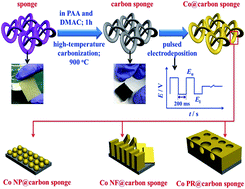
Fig. 1 shows the schematic diagram of the synthesis for the Co@carbon sponge electrodes. The carbon sponge substrate was facilely fabricated by the high-temperature carbonization. A piece of sponge (polyurethane foam, 10 mm × 10 mm × 1 mm) was rinsed in acetone and ethanol sequentially by ultrasonic methods. After cleaning with the deionized water several times and blow-drying under flowing nitrogen (99.999%) gas, the sponge was first immersed in a 30 mL polyamide acid (PAA) solution with adding 15 mL N,N-dimethylacetamide (DMAC) for 1 h. The PAA and DMAC molecules in the free space between the porous structures of sponge would be easily adsorbed onto the sponge surface of microscopic skeleton. Afterwards, the composite sponge was removed from the solution and dried at 60 °C in a vacuum oven for 10 h. Then, the dried composite sponge was further annealed under nitrogen (99.999%) atmosphere with a flow rate of 40 mL min−1 at 900 °C in a tube furnace (SK-12, Longjiang) to form the carbon sponge electrode. The duration of carbonization reaction was 1 h, followed by cooling the samples to room temperature under nitrogen gas.
image file: c6ra06221k-f1.tif
Fig. 1 Schematic depiction of the fabrication process of Co@carbon sponge electrodes.

The Co NP@carbon sponge, Co NF@carbon sponge and Co PR@carbon sponge electrodes were prepared by the pulsed electrodeposition of nano-particulate, nano-flake and porous Co directly on the three-dimensional carbon sponge in the 0.2 mol L−1 CoCl2 + 0.5 mol L−1 H3BO3 + 0.4 mol L−1 NH4Cl + 1.0 mol L−1 KCl solutions (Fig. 1). The electrochemical deposition was conducted in a three-electrode system controlled by potentiostatic instrument (Autolab PGSTAT302, Eco Chemie). A piece of carbon sponge substrate and a platinum foil (10 × 10 mm) were served as the working electrode and counter electrode, respectively. A saturated Ag/AgCl electrode was employed as the reference electrode, and all potentials were referred to the Ag/AgCl electrode. The nano-particulate, nano-flake and porous Co were controllably achieved by the pulsed potential electrodeposition method (Fig. 1). The deposition frequency was 2.5 Hz. The lower potential limit (El) was fixed at −1.0 V, and the upper potential limit (Eu) was changed to be −0.1, −0.2 and −0.3 V, respectively. The electrodeposition time was ∼30 min and the loading of Co catalysts on the obtained Co NP, Co NF and Co PR@carbon sponge electrodes was controlled to be the same at 7 mg cm−2. The Co loading was checked by using an inductive coupled plasma emission spectrometer (ICP, Xseries II, Thermo Scientific). All the chemicals were analytical grade and used without further purification. Ultra-pure water (Millipore, 18 MΩ cm) was applied in this whole work.

2.2. Characterizations and electrochemical measurements of the deposited Co on the carbon sponge electrodes

The surface morphology of the deposited Co catalysts on the carbon sponge substrate was examined using a scanning electron microscope (SEM, JEOL JSM-6480) and transmission electron microscope (TEM, FEI Teccai G2S-Twin, Philips). The structure of the electrodes was characterized by an X-ray diffractometer (XRD, Rigaku TTR III) equipped with Cu-Kα radiation (λ = 0.1514178 nm) at a scan rate of 5° min−1. The Co electrocatalysts that used for the TEM examination were obtained as the following steps: first of all, the deposited Co films were peeled off from the Co@carbon sponge electrodes by ultrasonic method and scattered in a 10 mL ethanol solution. Then, the obtained suspension was dropped onto the lacey support film.

The catalytic activity of the obtained Co@carbon sponge electrodes for NaBH4 electrooxidation was measured by cyclic voltammetry (CV) and chronoamperometry (CA) in a standard three-electrode system with saturated Ag/AgCl reference electrode and Pt counter electrode. The electrolyte for NaBH4 electrooxidation was NaBH4-containing NaOH aqueous solution. The temperature of electrolyte was precisely adjusted by electric heating thermostatic water bath (±1 °C). All measurements not mentioned temperatures were tested at ambient temperature (20 °C). The current densities reported in this work were calculated by the geometrical area of electrodes (1 cm2).

3. Results and discussion

3.1. Characterization of the Co@carbon sponge electrodes

The Co@carbon sponge electrodes were obtained by the pulsed electrochemical deposition of Co catalysts with different surface morphologies on the three-dimensional (3D) carbon sponge under different upper potential limit (Eu). Fig. 2 presents the low-magnification and high-magnification SEM images of Co NP@carbon sponge, Co NF@carbon sponge and Co PR@carbon sponge electrodes prepared at Eu of −0.1, −0.2 and −0.3 V, respectively. The naked carbon sponge substrate was also shown in Fig. 2a and b for comparison. Carbon sponge as the current collector fabricated by the high-temperature carbonization can acquire many merits containing such as high electronic conductivity and desirable stability in the rigorous alkaline medium. It is obvious from Fig. 2a that the carbon sponge was composed of many porous network cells with the length of ∼300 μm and the width of ∼150 μm. The SEM image (Fig. 2b) with a high magnification apparently indicated that the surface of carbon sponge electrode was lumpy and rugged. These superiorly open web-like structures can supply a three-dimensional porous framework for the cobalt electrodeposition. In addition, the carbon sponge owns outstanding electronic conductivity and good stability, which made it a favorable support and current collector for cobalt electrocatalysts. Fig. 2c and d show the SEM images of typical Co NP@carbon sponge electrode with different magnification, indicating that many cobalt nanoparticles equably formed on the 3D skeleton surface of carbon sponge after the electrodeposition of Co. It can be seen from Fig. 2e that the dense Co catalysts were uniformly deposited on the carbon sponge surface in a low-magnification SEM image. The higher magnification SEM image (Fig. 2f) of Co NF@carbon sponge clearly displayed that the Co layer composed of numerous Co nanoflakes intercrossing with each other. Some Co nanoflakes with ultrathin thickness grew perpendicularly from the matrix and demonstrated a 3D open nanostructure, which allowed electrolytes to contact the full electrode surface. In addition, the formed Co surface revealed a rough and irregular appearance, which was comprised by sheet-like structures with uneven profiles on account of the ultrathin characters. A 3D loose nano-flake structure with plenty of open space was established on the Co NF@carbon sponge electrode, which would be very suitable for the mass transport of electrolyte ions during the electrochemical reaction process and might result in an excellent electrocatalytic performance. As can be observed from Fig. 2g, the Co film including some holes was evenly distributed on the backbone surface of carbon sponge. The porous structure of Co film can be seen more distinctly in the amplifying SEM image (shown in Fig. 2h). These results manifest that the surface morphologies of Co catalysts transforms from nanoparticles formed at Eu of −0.1 V to nanoflakes prepared at Eu of −0.2 V and eventually to porous morphology obtained at Eu of −0.3 V with the decrease of Eu. As a consequence, the morphologies of Co catalysts can be facilely controlled by altering the upper potential limit using the pulsed potential electrodeposition method. More importantly, the as-prepared Co NP@carbon sponge, Co NF@carbon sponge and Co PR@carbon sponge electrodes may be especially appropriate to NaBH4 electrooxidation in alkaline medium. These unique structures make the electroactive Co own a large specific surface area and ensure the full utilization of Co catalysts.
image file: c6ra06221k-f2.tif
Fig. 2 Different-magnification SEM images of the carbon sponge substrate (a and b); nano-particulate Co@carbon sponge (Co NP@carbon sponge) electrode (c and d); nano-flake Co@carbon sponge (Co NF@carbon sponge) electrode (e and f); porous Co@carbon sponge (Co PR@carbon sponge) electrode (g and h).

In order to further determine the detailed morphologies of Co film, transmission electron microscopy measurement was carried out. Fig. 3 exhibits the TEM images of Co electrocatalysts prepared at the different upper potential by pulsed potential electrodeposition. The TEM image of the Co formed at Eu of −0.1 V was shown in Fig. 3a and revealed that the appearance of Co film was nanoparticles with different sizes. The diameter ranges of the nanoparticles were from ∼100 nm to ∼300 nm. It can be seen from Fig. 3b that the Co fabricated at Eu of −0.2 V was consisted of many different-sized superthin nanoflakes. The shape of the Co nanoflakes was seemed to be hexagon. The side length of the small-sized hexagon nanoflakes was ∼75 nm and that of the large-sized hexagon was ∼150 nm. The individual Co nanoflake with the average side length of ∼100 nm was exhibited in Fig. 3c. Some parts of the hexagon was shattered and missing in the red frame (Fig. 3c), which was caused by the ultrasonic exfoliation in the preparation process of TEM samples. Obviously, the surfaces and margins of the Co nanoflake are fantastically rough, which will markedly enlarge the specific surface area of the Co NF@carbon sponge electrode. Moreover, hydrogen gas generated by NaBH4 hydrolysis can fast move away from the Co electrocatalysts, avoiding the surface active sites of Co hindered by the adsorbed gas bubbles. The acquired Co NF@carbon sponge electrode with a novel 3D nano-flake structure may be especially fit for NaBH4 electrooxidation in alkali. Fig. 3d demonstrates the TEM images of Co film produced at Eu of −0.3 V. Combining with the results of SEM image observed in Fig. 2h, it can be concluded that the porous microstructures of Co film were composed of some anomalous sheets with micron sizes.


image file: c6ra06221k-f3.tif
Fig. 3 TEM image of the Co NP@carbon sponge electrode (a); low-magnification and high-magnification TEM images of the Co NF@carbon sponge electrode (b and c); TEM image of the Co PR@carbon sponge electrode (d).

The XRD patterns of carbon sponge substrate, Co NP@carbon sponge, Co NF@carbon sponge and Co PR@carbon sponge electrodes were shown in Fig. 4. It was obvious that two broad diffraction peaks of the carbon sponge substrate centered at 25° and 44°, which can be identified as representative carbon peaks to confirm the existence of carbon.52 By comparison with the carbon sponge, three sharp diffraction peaks of the Co NP@carbon sponge electrode locating at 44°, 52° and 76° matched well with the (111), (200) and (220) planes of cobalt metal, respectively, according to the standard crystallographic spectrum of Co (JCPDS card no. 15-0806). It displayed that Co emerged in the metallic state by the pulsed electrodeposition. XRD patterns of the Co NF@carbon sponge and Co PR@carbon sponge electrodes also demonstrated the typical traits of metallic cobalt. Differing from the Co NP@carbon sponge, the intensities of the Co diffraction peaks on the Co NF@carbon sponge and Co PR@carbon sponge electrodes were higher than that on the Co NP@carbon sponge electrode. The peaks of Co NF@carbon sponge electrode showed the highest intensity, indicating that the Co nanoflakes contained the best well-crystallized cobalt crystals among the three catalytic electrodes. Besides, the main peak intensities of carbon sponge were significantly decreased after the deposition of Co catalysts, exhibiting that nano-particulate, nano-flake and porous Co were completely and homogeneously coated on the surface of carbon sponge.


image file: c6ra06221k-f4.tif
Fig. 4 XRD patterns of the carbon sponge substrate, Co NP@carbon sponge, Co NF@carbon sponge and Co PR@carbon sponge electrodes.

3.2. Catalytic performance of Co@carbon sponge electrodes for NaBH4 electrooxidation

Fig. 5a shows the typical cyclic voltammograms (CVs) of the carbon sponge substrate, Co NP@carbon sponge, Co NF@carbon sponge and Co PR@carbon sponge electrodes tested in 1 mol L−1 NaOH solution. Apparently, there was no distinct redox peaks observed on the carbon sponge, suggesting that carbon sponge was steady in alkaline media. In contrast, a couple of oxidation/reduction peaks was readily appeared at −0.76 V/−1.05 V on the Co NP@carbon sponge electrode, exhibiting the typical characteristics of metallic Co in alkali, which was attributed to the inter-conversion of Co/Co(OH)2.31,32,53 The CVs of Co NF@carbon sponge and Co PR@carbon sponge electrodes revealed the similar response, whereas the Co/Co(OH)2 current response on the Co NF@carbon sponge was more evidently viewed than that on the Co NP and Co PR@carbon sponge in the measured potential window. It hints that nano-flake Co owns greater catalytic property than nano-particulate Co and porous Co electrocatalysts.
image file: c6ra06221k-f5.tif
Fig. 5 Cyclic voltammograms of the carbon sponge substrate, Co NP@carbon sponge, Co NF@carbon sponge and Co PR@carbon sponge electrodes in 1 mol L−1 NaOH solution at a scan rate of 10 mV s−1 (a); comparative cyclic voltammograms of the carbon sponge substrate, Co NP@carbon sponge, Co NF@carbon sponge and Co PR@carbon sponge electrodes in 1 mol L−1 NaOH and 0.12 mol L−1 NaBH4 at a scan rate of 10 mV s−1 (b).

For the sake of further verify that the Co NF@carbon sponge electrode was the optimum catalyst, the comparative CVs for NaBH4 electrooxidation in 1 mol L−1 NaOH solution containing 0.12 mol L−1 NaBH4 at the different electrodes were investigated in Fig. 5b. As seen, the carbon sponge substrate showed no electrocatalytic performance for NaBH4 oxidation and no distinct redox peaks appeared on the carbon sponge. On the contrary, there were obvious current responses on the Co NP@carbon sponge electrode. The two oxidation peaks of Co NP@carbon sponge electrode located at −0.71 V and −0.52 V was corresponded to the electrooxidation reaction of hydrogen (eqn (3)) and NaBH4 (eqn (1)), respectively.13,27,31,32 Hydrogen gas was generated by the hydrolysis reaction of NaBH4 (eqn (2)).13,16−19,27 The similar phenomena can also be discovered on the Co PR and Co NF@carbon sponge electrodes and the current densities at the same potential improved relatively in the order of Co NP, Co PR and Co NF@carbon sponge, showing that the Co NF@carbon sponge electrode had the highest catalytic activity towards NaBH4 oxidation among the three electrodes. The current density value of Co NF@carbon sponge reached 257 mA cm−2 at the potential of −0.52 V, which was 2 times of Co PR@carbon sponge (127 mA cm−2) and 3 times of Co NP@carbon sponge (86 mA cm−2), respectively. The high electrocatalytic property of Co NF@carbon sponge electrode may be attributed to its large specific surface area, which was most likely offered by the unique 3D nano-flake structure and outstanding open network skeleton of carbon sponge.

 
H2 + 2OH → 2H2O + 2e (3)

The effects of NaBH4 concentration on the electrocatalytic performance of the Co NF@carbon sponge electrode for NaBH4 electrooxidation were inspected in Fig. 6. The NaBH4 concentration was varied from 0.03 to 0.12 mol L−1 (Fig. 6a) at low concentration and from 0.12 to 0.50 mol L−1 (Fig. 6b) at high concentration in 1 mol L−1 NaOH solution, respectively. It was clear that the enhancement of NaBH4 concentration resulted in a marked increase for the anodic current densities, displaying a powerful electrocatalytic property of the Co NF@carbon sponge electrode towards NaBH4 oxidation. At low NaBH4 concentrations, the anodic peaks of both hydrogen and NaBH4 appeared distinctly in Fig. 6a. The current densities of NaBH4 electrooxidation achieved 107 mA cm−2 at the peak potential of −0.72 V in the 0.03 mol L−1 NaBH4 solutions, and increased to 257 mA cm−2 at the peak potential of −0.52 V with increasing the NaBH4 concentration to 0.12 mol L−1.


image file: c6ra06221k-f6.tif
Fig. 6 Cyclic voltammograms of the Co NF@carbon sponge electrode in 1 mol L−1 NaOH with adding the low concentration of x mol L−1 NaBH4 (x = 0.03, 0.05, 0.07, 0.09 and 0.12) (a); with adding the high concentration of x mol L−1 NaBH4 (x = 0.12, 0.15, 0.20, 0.30 and 0.50) at a scan rate of 10 mV s−1 (b).

Likewise, the oxidation current densities of hydrogen also boosted with increasing the NaBH4 concentration from 0.03 to 0.12 mol L−1. In addition, the anodic peak potentials of both hydrogen and NaBH4 moved positively with the increase of NaBH4 concentration from 0.03 to 0.12 mol L−1. Fig. 6b showed that the oxidation current densities of both hydrogen and NaBH4 continued to increase with further increasing the NaBH4 concentration to a high level. Besides, the oxidation peak potentials of both hydrogen and NaBH4 continuously shifted in the positive direction and merged to be one broad peak as the NaBH4 concentration attaining to 0.20 mol L−1, and finally disappeared at high NaBH4 concentration of 0.50 mol L−1.

Fig. 7a exhibits the influence of NaOH concentration for NaBH4 electrooxidation on the Co NF@carbon sponge electrode. The NaOH concentrations were varied with fixing the NaBH4 concentration at 0.12 mol L−1. It is evident that the oxidation current densities of NaBH4 peaks significantly decreased from 257 mA cm−2 to 145 mA cm−2 with increasing the NaOH concentration from 1 to 3 mol L−1, revealing that excessive electrolyte made no contribution to improve the activity of NaBH4 electrooxidation. In general, the fuel (NaBH4) reacts with supporting electrolyte (NaOH) in a definite ratio. On the basis of eqn (1), the appropriate proportion of [BH4]/[OH] is 0.125. The proportional numerical value of [BH4]/[OH] dropped much less than 0.125 after increasing the NaOH concentration higher than 2 mol L−1, suggesting that the amount of fuel (NaBH4) was completely insufficient. Since BH4 and OH reactant ions diffused simultaneously to the surface of Co NF@carbon sponge electrode during the NaBH4 oxidation reaction, the current density of NaBH4 electrooxidation decreased with inadaptable proportion of fuel/supporting electrolyte. Furthermore, the oxidation peak potentials of NaBH4 changed relatively to the negative direction with the increase of NaOH concentration, which can be explained by Nernst formula. As expressed in eqn (1), the reversible electrode potential reduced with the enhancement of [OH]. The on-going addition of NaOH as the reactant unquestionably facilitated the reaction of eqn (1) at more negative potentials. Moreover, the more serious hydrolysis effect of NaBH4 was appeared and caused by superfluous NaOH, resulting in the profiles of CVs (Fig. 7a) became noisier with increasing the NaOH concentration. Most important of all, the oxidation current density of NaBH4 on the Co NF@carbon sponge achieved 248 mA cm−2 and 35.4 mA cm−2 mg−1 (mg means the loading of catalysts, mg (Co)−1) in 0.12 mol L−1 NaBH4 and 1 mol L−1 NaOH solutions at −0.55 V, which was much higher than the previous literature,31−33,36−40,54 certifying that the low-cost Co NF@carbon sponge electrode had remarkably higher electrocatalytic performance to NaBH4 electrooxidation. The comparable catalytic activities of the Co, Ni, AB5-type hydrogen storage alloys and Co NF@carbon sponge electrodes were demonstrated in Table 1. The high catalytic property of Co NF@carbon sponge electrode for NaBH4 electrooxidation may be owing to the highly porous 3D skeleton of carbon sponge and especially its open nanoflake structure, benefitting for the faster diffusion of fuel during the catalytic reaction and enabling the full utilization of Co surfaces and thereby making the electrode have higher electrochemical activity.


image file: c6ra06221k-f7.tif
Fig. 7 Cyclic voltammograms of the Co NF@carbon sponge electrode in 0.12 mol L−1 NaBH4 and x mol L−1 NaOH (x = 1, 2 and 3) at a scan rate of 10 mV s−1 (a); chronoamperometric curves for NaBH4 electrooxidation on the Co NF@carbon sponge electrode at different applied potentials in 1 mol L−1 NaOH and 0.12 mol L−1 NaBH4 (b).
Table 1 Comparison of the catalytic performance (mA cm−2 mg−1) for NaBH4 electrooxidation on the different non-precious electrodes at −0.55 V (vs. Ag/AgCl)a
Electrode BH4 concentration (mol L−1) Performance (mA cm−2 mg−1) Ref.
a mg means the loading of catalysts, mg per catalyst.
AB5-type alloy 0.1 0.1 36
AB5-type alloy/Si 1.0 0.4 37
LaNi4.5Al0.5-Au 1.0 0.7 38
AB5-type alloy/Ti–Zr 1.0 1.3 39
AB5/MWNTs 0.1 1.9 40
Co/MWNTs/CC 0.1 17.5 31
Co/graphite/paper 0.1 18.0 32
Co/MWNTs/plastic 0.1 19.2 33
Ni/MWNTs 0.1 23.5 54
Co NF@carbon sponge 0.12 35.4 This work


The electrochemical stability of Co NF@carbon sponge electrode at different polarization potentials was studied by chronoamperometric test. Fig. 7b demonstrates the chronoamperometric curves (CAs) recorded in 0.12 mol L−1 NaBH4 and 1 mol L−1 NaOH solutions at different potentials. The oxidation current densities at all the applied potentials (−0.5, −0.6, −0.9 and −1.0 V) became stable almost without any reduction after a primal decay, indicating that the Co NF@carbon sponge electrode maintained a steady state during the electrocatalytic process of hydrogen and NaBH4 electrooxidation. Besides, the oxidation current densities promoted with altering the potential value to be more positive, which was in good accordance with the CV results represented in Fig. 7a. So the Co NF@carbon sponge electrode owns excellent electrocatalytic stability and may be a highly hopeful anode for the application of direct NaBH4 fuel cells.

The influence of reaction temperature on the catalytic activity of NaBH4 electrooxidation on the Co NF@carbon sponge electrode was further examined in Fig. 8. The CAs of NaBH4 electrooxidation measured at different temperatures were shown in Fig. 8a. The catalytic performance of NaBH4 electrooxidation was accelerated notably by rising the temperature. The oxidation current densities at −0.55 V improved from 165 to 282 mA cm−2 with raising the reaction temperature from 283.15 to 323.15 K, which proves that the higher temperature often brings about the quicker electrode reaction dynamics. However, the high-temperature CAs (313.15 K and 323.15 K) showed a slight attenuation, which may be due to the persistent consumption of fuel (NaBH4) during the testing process at high temperatures. Additionally, the CAs at high temperatures (313.15 K and 323.15 K) got much noisier than those at low temperatures (283.15 K, 293.15 K and 303.15 K). The high temperature will boost the hydrolysis rate of NaBH4 and generate more hydrogen gas.30−33 The hydrogen moves away from the surface of Co NF@carbon sponge electrode and perturb the stability of electrolyte solution. Fig. 8b displays the Arrhenius plot of the current densities at −0.55 V for NaBH4 electrooxidation. The logarithm of current densities (ln[thin space (1/6-em)]j) was plotted against the reciprocal of absolute temperature (1/T). Based on the Arrhenius equation (eqn (4)),2,31 the activation energy of NaBH4 electrooxidation was calculated to be 10.18 kJ mol−1 from the slope of ln[thin space (1/6-em)]j versus 1/T, which was lower than that of the N2H4 electrooxidation on Co/carbon fiber cloth, the H2O2 electrooxidation on nickel nanowire arrays and the NaBH4 electrooxidation on Co/MWNTs/CC electrode.2,31,55 As a consequence, NaBH4 is a prospective fuel with fast oxidation kinetics enabling the application of inexpensive Co NF@carbon sponge catalysts.

 
image file: c6ra06221k-t1.tif(4)
where j is the current density (mA cm−2), T is the thermodynamic temperature (K), R is the molar gas constant (8.314 J mol−1 K−1), and Ea is the activation energy (J mol−1).


image file: c6ra06221k-f8.tif
Fig. 8 Chronoamperometric curves of the Co NF@carbon sponge electrode in 1 mol L−1 NaOH and 0.12 mol L−1 NaBH4 at −0.55 V with different temperatures (a); Arrhenius plot of the current densities for NaBH4 electrooxidation on the Co NF@carbon sponge electrode (b).

4. Conclusions

In summary, novel Co@carbon sponge electrodes were successfully fabricated via a facile and green sponge carbonization method followed by direct Co electrodeposition using the pulsed potential electrodeposition without any template, seed and surfactant. Highly conductive carbon sponge was simply obtained as the basic support for metallic Co directly grown on its surface, forming unique three-dimensional structures. The surface morphology and the electrocatalytic activity of the deposited Co for the NaBH4 oxidation were strongly dependent on the upper potential limit (Eu) of the pulsed electrodeposition. With the decrease of Eu, the surface morphology of Co catalysts changes from nanoparticles formed at Eu of −0.1 V to nanoflakes prepared at Eu of −0.2 V and eventually to porous morphology obtained at Eu of −0.3 V. Furthermore, the surface morphology of Co catalysts on the carbon sponge plays an important role in determining the electrocatalytic performance of NaBH4 oxidation. The Co NF@carbon sponge electrode possesses much higher activity than Co NP@carbon sponge and Co PR@carbon sponge electrodes. The Co NF@carbon sponge electrode composing of unique intercrossed Co nanoflakes on the carbon sponge with highly porous network structures, displayed superior catalytic performance, excellent stability and desirable tolerance for NaBH4 electrooxidation in NaOH solution. The oxidation current density of 35.4 mA cm−2 mg−1 was achieved on the Co NF@carbon sponge electrode in 1 mol L−1 NaOH and 0.12 mol L−1 NaBH4 solution at −0.55 V (vs. Ag/AgCl). The promoted activity was attributed to the special 3D nano-flake structure of electrode, which guaranteed high utilization of catalysts and quick mass transport for both reactants and products in the electrochemical reactions. In a word, the neoteric Co NF@carbon sponge electrode is a promising candidate as the high-performance and low-cost anode in the application of fuel cells that use NaBH4 as the fuel.

Acknowledgements

We gratefully acknowledge the financial support of this research by the National Natural Science Foundation of China (21403044), the Natural Science Foundation of Heilongjiang Province of China (LC2015004), the China Postdoctoral Science Special Foundation (2015T80329), the Heilongjiang Postdoctoral Fund (LBH-Z13059), the China Postdoctoral Science Foundation (2014M561332), the Major Project of Science and Technology of Heilongjiang Province (GA14A101) and the Project of Research and Development of Applied Technology of Harbin (2014DB4AG016).

Notes and references

  1. R. Ojani, R. Valiollahi and J. B. Raoof, Au hollow nanospheres on graphene support as catalyst for sodium borohydride electrooxidation, Appl. Surf. Sci., 2014, 311, 245–251 CrossRef CAS.
  2. K. Ye, F. Guo, Y. Gao, D. Zhang, K. Cheng, W. Zhang, G. Wang and D. Cao, Three-dimensional carbon- and binder-free nickel nanowire arrays as a high-performance and low-cost anode for direct hydrogen peroxide fuel cell, J. Power Sources, 2015, 300, 147–156 CrossRef CAS.
  3. K. Ye, Y. Aoki, E. Tsuji, S. Nagata and H. Habazaki, Thickness dependence of proton conductivity of anodic ZrO2–WO3–SiO2 nanofilms, J. Power Sources, 2012, 205, 194–200 CrossRef CAS.
  4. J. Ma, N. A. Choudhury and Y. Sahai, A comprehensive review of direct borohydride fuel cells, Renewable Sustainable Energy Rev., 2010, 14, 183–199 CrossRef CAS.
  5. K. Ye, Y. Aoki, E. Tsuji, S. Nagata and H. Habazaki, Compositional dependence of the proton conductivity of anodic ZrO2–WO3–SiO2 nanofilms at intermediate temperatures, J. Electrochem. Soc., 2013, 160, F1096–F1102 CrossRef CAS.
  6. K. Ye, Y. Aoki, E. Tsuji, S. Nagata and H. Habazaki, Improved thermal stability of efficient proton-conducting anodic ZrO2–WO3 nanofilms by incorporation of silicon species, J. Electrochem. Soc., 2011, 158, C385–C390 CrossRef CAS.
  7. C. Celik, F. G. B. San and H. I. Sarac, Improving the direct borohydride fuel cell performance with thiourea as the additive in the sodium borohydride solution, Int. J. Hydrogen Energy, 2010, 35, 8678–8682 CrossRef CAS.
  8. C. Celik, F. G. B. San and H. I. Sarac, Influences of sodium borohydride concentration on direct borohydride fuel cell performance, J. Power Sources, 2010, 195, 2599–2603 CrossRef CAS.
  9. C. Celik, F. G. B. San and H. I. Sarac, Effects of operation conditions on direct borohydride fuel cell performance, J. Power Sources, 2008, 185, 197–201 CrossRef CAS.
  10. C. Celik, F. G. B. San and H. I. Sarac, Investigation of Ni foam effect for direct borohydride fuel cell, Fuel Cells, 2012, 12, 1027–1031 CrossRef CAS.
  11. E. Gyenge, M. Atwan and D. Northwood, Electrocatalysis of borohydride oxidation on colloidal Pt and Pt-alloys (Pt–r, Pt–Ni, and Pt–Au) and application for direct borohydride fuel cell anodes, J. Electrochem. Soc., 2006, 153, A150–A158 CrossRef CAS.
  12. D. M. F. Santos, T. F. B. Gomes, B. Šljukić, N. Sousa, C. A. C. Sequeira and F. M. L. Figueiredo, Perovskite cathodes for NaBH4/H2O2 direct fuel cells, Electrochim. Acta, 2015, 178, 163–170 CrossRef CAS.
  13. C. Grimmer, M. Grandi, R. Zacharias, B. Cermenek, H. Weber, C. Morais, T. W. Napporn, S. Weinberger, A. Schenk and V. Hacker, The electrooxidation of borohydride: A mechanistic study on palladium (Pd/C) applying RRDE, 11B-NMR and FTIR, Appl. Catal., B, 2016, 180, 614–621 CrossRef CAS.
  14. B. H. Liu, Z. P. Li, K. Arai and S. Suda, Performance improvement of a micro borohydride fuel cell operating at ambient conditions, Electrochim. Acta, 2005, 50, 3719–3725 CrossRef CAS.
  15. V. Briega-Martos, E. Herrero and J. M. Feliu, Borohydride electro-oxidation on Pt single crystal electrodes, Electrochem. Commun., 2015, 51, 144–147 CrossRef CAS.
  16. Z. Jusys and R. J. Behm, Borohydride electrooxidation over Pt/C, AuPt/C and Au/C catalysts: Partial reaction pathways and mixed potential formation, Electrochem. Commun., 2015, 60, 9–12 CrossRef CAS.
  17. B. H. Liu, J. Q. Yang and Z. P. Li, Concentration ratio of [OH]/[BH4]: A controlling factor for the fuel efficiency of borohydride electro-oxidation, Int. J. Hydrogen Energy, 2009, 34, 9436–9443 CrossRef CAS.
  18. L. Yi, W. Wei, C. Zhao, L. Tian, J. Liu and X. Wang, Enhanced activity of Au-Fe/C anodic electrocatalyst for direct borohydride-hydrogen peroxide fuel cell, J. Power Sources, 2015, 285, 325–333 CrossRef CAS.
  19. M. G. Hosseini, M. Abdolmaleki and F. Nasirpouri, Investigation of the porous nanostructured Cu/Ni/AuNi electrode for sodium borohydride electrooxidation, Electrochim. Acta, 2013, 114, 215–222 CrossRef CAS.
  20. L. Yi, L. Liu, X. Wang, X. Liu, W. Yi and X. Wang, Carbon supported Pt-Sn nanoparticles as anode catalyst for direct borohydride-hydrogen peroxide fuel cell: Electrocatalysis and fuel cell performance, J. Power Sources, 2013, 224, 6–12 CrossRef CAS.
  21. L. Yi, L. Liu, X. Liu, X. Wang, W. Yi, P. He and X. Wang, Carbon-supported Pt-Co nanoparticles as anode catalyst for direct borohydride-hydrogen peroxide fuel cell: Electrocatalysis and fuel cell performance, Int. J. Hydrogen Energy, 2012, 37, 12650–12658 CrossRef CAS.
  22. P. He, X. Wang, Y. Liu, X. Liu and L. Yi, Comparison of electrocatalytic activity of carbon-supported Au–M (M = Fe, Co, Ni, Cu and Zn) bimetallic nanoparticles for direct borohydride fuel cells, Int. J. Hydrogen Energy, 2012, 37, 11984–11993 CrossRef CAS.
  23. L. Yi, Y. Song, X. Wang, L. Yi, J. Hu, G. Su, W. Yi and H. Yan, Carbon supported palladium hollow nanospheres as anode catalysts for direct borohydride-hydrogen peroxide fuel cells, J. Power Sources, 2012, 205, 63–70 CrossRef CAS.
  24. J. Ma, Y. Sahai and R. G. Buchheit, Direct borohydride fuel cell using Ni-based composite anodes, J. Power Sources, 2010, 195, 4709–4713 CrossRef CAS.
  25. D. Duan, J. Liang, H. Liu, X. You, H. Wei, G. Wei and S. Liu, The effective carbon supported core–shell structure of Ni@Au catalysts for electro-oxidation of borohydride, Int. J. Hydrogen Energy, 2015, 40, 488–500 CrossRef CAS.
  26. M. Zhiani and I. Mohammadi, Performance study of passive and active direct borohydride fuel cell employing a commercial Pd decorated Ni-Co/C anode catalyst, Fuel, 2016, 166, 517–525 CrossRef CAS.
  27. U. B. Demirci and P. Miele, Reaction mechanisms of the hydrolysis of sodium borohydride: a discussion focusing on cobalt-based catalysts, C. R. Chim., 2014, 17, 707–716 CrossRef CAS.
  28. D. M. F. Santos and C. A. C. Sequeira, Sodium borohydride as a fuel for the future, Renewable Sustainable Energy Rev., 2011, 15, 3980–4001 CrossRef CAS.
  29. P. I. Iotov, S. V. Kalcheva and I. A. Kanazirski, On the enhanced electrocatalytic performance of PtAu alloys in borohydride oxidation, Electrochim. Acta, 2013, 108, 540–546 CrossRef CAS.
  30. B. H. Liu and Z. P. Li, A review: hydrogen generation from borohydride hydrolysis reaction, J. Power Sources, 2009, 187, 527–534 CrossRef CAS.
  31. D. Zhang, K. Ye, K. Cheng, D. Cao, J. Yin, Y. Xu and G. Wang, High electrocatalytic activity of cobalt-multiwalled carbon nanotubes-cosmetic cotton nanostructures for sodium borohydride electrooxidation, Int. J. Hydrogen Energy, 2014, 39, 9651–9657 CrossRef CAS.
  32. D. Zhang, K. Ye, J. Yin, K. Cheng, D. Cao and G. Wang, Low-cost and binder-free, paper-based cobalt electrode for sodium borohydride electro-oxidation, New J. Chem., 2014, 38, 5376–5381 RSC.
  33. D. Zhang, K. Ye, D. Cao, B. Wang, K. Cheng, Y. Li, G. Wang and Y. Xu, Co@MWNTs-plastic: a novel electrode for NaBH4 oxidation, Electrochim. Acta, 2015, 156, 102–107 CrossRef CAS.
  34. J. Liu, H. Wang, C. Wu, Q. Zhao, X. Wang and L. Yi, Preparation and characterization of nanoporous carbon-supported platinum as anode electrocatalyst for direct borohydride fuel cell, Int. J. Hydrogen Energy, 2014, 39, 6729–6736 CrossRef CAS.
  35. D. M. F. Santos, P. G. Saturnino, D. Macciò, A. Saccone and C. A. C. Sequeira, Platinum-rare earth intermetallic alloys as anode electrocatalysts for borohydride oxidation, Catal. Today, 2011, 170, 134–140 CrossRef CAS.
  36. G. Wang, X. Wang, R. Miao, D. Cao and K. Sun, Effects of alkaline treatment of hydrogen storage alloy on electrocatalytic activity for NaBH4 oxidation, Int. J. Hydrogen Energy, 2010, 35, 1227–1231 CrossRef CAS.
  37. L. Wang, C. Ma and X. Mao, LmNi4.78Mn0.22 alloy modified with Si used as anodic materials in borohydride fuel cells, J. Alloys Compd., 2005, 397, 313–316 CrossRef CAS.
  38. Z. Yang, L. Wang, Y. Gao, X. Mao and C. Ma, LaNi4.5Al0.5 alloy doped with Au used as anodic materials in a borohydride fuel cell, J. Power Sources, 2008, 184, 260–264 CrossRef CAS.
  39. L. Wang, C. Ma, X. Mao, Y. Sun and S. Suda, AB5-type hydrogen storage alloy modified with Ti/Zr used as anodic materials in borohydride fuel cell, J. Mater. Sci. Technol., 2005, 21, 831–835 CAS.
  40. D. Zhang, G. Wang, K. Cheng, J. Huang, P. Yan and D. Cao, Enhancement of electrocatalytic performance of hydrogen storage alloys by multi-walled carbon nanotubes for sodium borohydride oxidation, J. Power Sources, 2014, 245, 482–486 CrossRef CAS.
  41. D. Duan, Y. Zhao, S. Liu and A. Wu, Electrochemical oxidation of borohydride on Cu electrode, Adv. Mater. Res., 2012, 347–353, 3264–3267 CAS.
  42. K. Ye, D. Zhang, F. Guo, K. Cheng, G. Wang and D. Cao, Highly porous nickel@carbon sponge as a novel type of three-dimensional anode with low cost for high catalytic performance of urea electro-oxidation in alkaline medium, J. Power Sources, 2015, 283, 408–415 CrossRef CAS.
  43. K. Ye, D. Zhang, X. Wang, K. Cheng and D. Cao, A novel three-dimensional gold catalyst prepared by simple pulse electrodeposition and its high electrochemical performance for hydrogen peroxide reduction, RSC Adv., 2015, 5, 3239–3247 RSC.
  44. X. Wang, K. Ye, Y. Gao, H. Zhang, K. Cheng, X. Xiao, G. Wang and D. Cao, Preparation of porous palladium nanowire arrays and their catalytic performance for hydrogen peroxide electroreduction in acid medium, J. Power Sources, 2016, 303, 278–286 CrossRef CAS.
  45. F. Guo, K. Ye, M. Du, K. Cheng, Y. Gao, G. Wang and D. Cao, Nickel nanowire arrays electrode as an efficient catalyst for urea peroxide electro-oxidation in alkaline media, Electrochim. Acta, 2016, 190, 150–158 CrossRef CAS.
  46. P. Xu, K. Ye, D. Cao, J. Huang, T. Liu, K. Cheng, J. Yin and G. Wang, Facile synthesis of cobalt manganese oxides nanowires on nickel foam with superior electrochemical performance, J. Power Sources, 2014, 268, 204–211 CrossRef CAS.
  47. K. Ye, D. Zhang, H. Zhang, K. Cheng, G. Wang and D. Cao, Platinum-modified cobalt nanosheets supported on three-dimensional carbon sponge as a high-performance catalyst for hydrogen peroxide electroreduction, Electrochim. Acta, 2015, 178, 270–279 CrossRef CAS.
  48. F. Guo, K. Ye, X. Huang, Y. Gao, K. Cheng, G. Wang and D. Cao, Palladium dispersed in three-dimensional polyaniline networks as the catalyst for hydrogen peroxide electro-reduction in an acidic medium, RSC Adv., 2015, 5, 94008–94015 RSC.
  49. D. Zhang, D. Cao, K. Ye, J. Yin, K. Cheng and G. Wang, Cobalt nano-sheet supported on graphite modified paper as a binder free electrode for peroxide electrooxidation, Electrochim. Acta, 2014, 139, 250–255 CrossRef CAS.
  50. X. Cheng, K. Ye, D. Zhang, K. Cheng, Y. Li, B. Wang, G. Wang and D. Cao, Methanol electrooxidation on flexible multi-walled carbon nanotube-modified sponge-based nickel electrode, J. Solid State Electrochem., 2015, 19, 3027–3034 CrossRef CAS.
  51. W. Chen, R. B. Rakhi, L. Hu, X. Xie, Y. Cui and H. N. Alshareef, High-performance nanostructured supercapacitors on a sponge, Nano Lett., 2011, 11, 5165–5172 CrossRef CAS PubMed.
  52. C. Liu, T. Ko, W. Kuo, H. Chou, H. Chang and Y. Liao, Effect of carbon fiber cloth with different structure on the performance of low temperature proton exchange membrane fuel cells, J. Power Sources, 2009, 186, 450–454 CrossRef CAS.
  53. H. B. Noh, K. S. Lee, P. Chandra, M. S. Won and Y. B. Shim, Application of a Cu–Co alloy dendrite on glucose and hydrogen peroxide sensors, Electrochim. Acta, 2012, 61, 36–43 CrossRef CAS.
  54. D. Zhang, K. Cheng, N. Shi, F. Guo, G. Wang and D. Cao, Nickel particles supported on multi-walled carbon nanotubes modified sponge for sodium borohydride electrooxidation, Electrochem. Commun., 2013, 35, 128–130 CrossRef CAS.
  55. R. Liu, X. Jiang, F. Guo, N. Shi, J. Yin, G. Wang and D. Cao, Carbon fiber cloth supported micro- and nano-structured Co as the electrode for hydrazine oxidation in alkaline media, Electrochim. Acta, 2013, 94, 214–218 CrossRef CAS.

This journal is © The Royal Society of Chemistry 2016
Click here to see how this site uses Cookies. View our privacy policy here.