DOI:
10.1039/C6RA06208C
(Paper)
RSC Adv., 2016,
6, 42876-42884
Highly efficient As(V)/Sb(V) removal by magnetic sludge composite: synthesis, characterization, equilibrium, and mechanism studies†
Received
8th March 2016
, Accepted 21st April 2016
First published on 25th April 2016
Abstract
The development of inexpensive and effective adsorbents for the highly efficient removal of arsenic (As) and antimony (Sb) from water is of great importance for the environment and human health. In the present study, magnetic bio-sludge (MS) containing activated sludge and magnetite (Fe3O4) nanoparticles (diameter: 2–25 nm) was investigated as an adsorbent. MS was synthesized by a facile co-precipitation method and characterized using various physicochemical methods. MS featured a macroporous structure with a surface area of 78 m2 g−1 and a pore volume of 0.53 cm3 g−1. MS could be readily and easily separated from water using an external magnetic field. Importantly, MS could be applied for the removal of As(V) and Sb(V) contaminants from water. It exhibited high stability, ultrafast adsorption/separation rates, and a large adsorption capacity. Moreover, it achieved near-complete removal of As(V) and Sb(V) in 10 μg L−1 solutions. Its high adsorption performance was almost unaffected by the presence of ion interferents in solution. Thus, the present study demonstrates the potential of MS as an adsorbent for the removal of As(V) and Sb(V) from groundwater to meet environmental and public health standards.
1. Introduction
Rapid industrialization has led to increased groundwater contamination by heavy metals (e.g., As, Sb, Hg, Cd), which are harmful to the environment and human health.1,2 Among heavy metal contaminants, arsenic (As) is the most toxic and, often occurs together with antimony (Sb).3 Of the various species of As/Sb, As(V) and Sb(V) oxyanions are predominant and stable in oxic systems, possibly transforming to more toxic species under certain conditions, thereby presenting a more serious threat.4 The World Health Organization (WHO) has set thresholds for safe drinking water of 10 μg L−1 (10 ppb) for As and 5 μg L−1 (5 ppb) for Sb.5,6 Globally, and especially in South and Southeast Asia, tens of millions of people are at risk of exposure to these contaminants in groundwater.7 Therefore, it is important to remove them from water. Various technologies, including ion exchange,8 oxidation,9 electro-chemical precipitation,10 membrane separation,11 and adsorption,12 have been used to remove As and Sb from aqueous media. Among the proposed techniques, magnetic iron oxide nanomaterials have attracted much attention because of their effective adsorption performance and convenient separation capacity. As/Sb-contaminated water primarily originated from acid mine drainage.13 Iron oxide nanomaterials with small particle sizes and abundant adsorption sites are often unstable (i.e., they can dissolve or oxidize), and are difficult to be applied in practical treatment systems. By comparison, large nanoparticles (NPs) lack sufficient sites for As/Sb adsorption.14,15 Traditional carbon or silica nanomaterials, such as carbon nanotubes,16 graphene,17 mesoporous carbon,18 and macroporous silica,19 have been widely used as substrates to stabilize magnetic NPs for As/Sb removal. However, the rigid substrates, easy aggregation and complex preparation procedures are often involved in the application of these nanomaterials, which consequently cannot achieve good removal efficiency. Furthermore, magnetic carbon- or silica-based nanomaterials are expensive, thus limiting their application in the purification of contaminated water.20 Therefore, more effective and cheaper magnetic adsorbents are required.
It is well known that activated sludge is abundant and inexpensive. It can easily be obtained from wastewater treatment plants and has many microorganisms on its surface. It is commonly used to treat organic or eutrophicated wastewater, which often has a high chemical oxygen demand or a high total nitrogen and phosphorus content.21,22 Recently, although activated sludge has often been used as a precursor for environmental applications.23–25 most of these strategies focus on the employment of activated sludge to drive activated carbons with high surface area,26–28 which thus fall into the category of inorganic rigid substrate with above-mentioned defects. Owing to the flexible structure, large surface area, low thermal conductance, and abundant surface sites for anchoring of the nanoparticles, direct application of activated sludge in water treatment will be more energy-saving and promising. Especially, combing magnetic iron oxide NPs (M) with activated sludge (S) to produce a novel adsorbent i.e., magnetic sludge (MS) for removing most toxic As and Sb from water, will be much significant. In this novel adsorbent, this magnetic bio-sludge can act as a substrate to disperse and stabilize the magnetic iron oxide NPs with fully exposed adsorption sites and increased surface area. Negative charged sludge can strongly adsorb positively charged iron species, subsequently producing more active sites for the complete removal of As and Sb. The microorganisms on the sludge may act as a buffering agent against acid dissolution of the active NPs. Furthermore, MS can be easily dispersed in water and readily separated using a magnetic field because of the uniform distribution of magnetic NPs on the hydrophilic sludge.
Based on the environment friendly properties, natural resource availability, and low cost of raw materials, the aims of the present study are to (1) prepare and synthesize MS via a facile co-precipitation method, (2) characterize and identify the morphology, structure, composition, and stability of MS using various physicochemical methods, (3) investigate and compare the removal performance of As(V)/Sb(V) by MS by examining adsorption isotherms, kinetics, and mechanisms, and the effect of influencing factors, and (4) elucidate the potential of this novel composite material in quick separation and purification of drinking water.
2. Experimental
2.1 Chemical reagents
FeCl3·6H2O, FeCl2·4H2O, NH3·H2O (30%), and H4N2·H2O (50%) were purchased from Sinopharm Chemical Reagent Co., Ltd (Shanghai, China). Na2HAsO4·7H2O and KSb(OH)6 were purchased from Sigma-Aldrich (St. Louis, MO, USA). Activated sludge was obtained from Quyang wastewater treatment plant (Yangpu District, Shanghai, China).
2.2 Synthesis of MS
MS was synthesized by a facile co-precipitation method. Typically, 0.7 g of dry activated sludge, which was obtained by washing the wet sludge and subsequent freeze-drying, was first dispersed in 250 mL of aqueous FeCl3 (10 mmol L−1) and FeCl2 (5 mmol L−1). After stirring for 10 min, the solution was adjusted to pH 10 with ammonia. Then, 5 mL of hydrazine hydrate was added, and the mixture was stirred for 5 h at 90 °C, generating MS as a black solid. The latter product was washed with water and magnetically separated from the washing solution. The washing process was repeated multiple times to remove any unreacted chemicals. For the comparison, pristine Fe3O4 NPs were also synthesized using the same procedure, however, in the absence of sludge. While calcined MS was obtained by heating MS at 550 °C for 5 h under N2 atmosphere.
2.3 Characterization
X-ray diffraction (XRD) patterns were recorded on a PANalyticalX'pert PRO diffractometer (PANalytical, Almelo, The Netherlands) using Cu Kα radiation at 40 kV and 60 mA. X-ray photoelectron spectroscopy (XPS) was performed on a RBD upgraded PHI-5000C ESCA system (PerkinElmer, Waltham, MA, USA) using Al Kα radiation (hν = 1486.6 eV) as the X-ray source for excitation. Morphologic observation was performed using scanning electron microscopy (SEM) (Zeiss Ultra 55, Germany). Transmission electron microscopy (TEM), high-resolution transmission electron microscopy (HRTEM), energy-dispersive X-ray spectroscopy (EDS), and electron diffraction patterns were obtained on a JEM-2010 (Jeol, Tokyo, Japan) operating at an acceleration voltage of 200 kV. Magnetic hysteresis curves, zero-field-cooled and field-cooled magnetization curves were obtained on a MPMS (SQUID) vibrating sample magnetometer (VSM) system (Quantum Design Corp., San Diego, CA, USA). Raman spectra were obtained on a Labram-1B (Dilor, France) confocal Raman microscope using a 533 nm wavelength incident laser light. Fourier transform infrared (FTIR) spectroscopy, employing KBr pellets was conducted on a Nicolet-470 FTIR spectrometer (Nicole, USA) in the spectral range of 400–4000 cm−1. Thermogravimetric analysis (TG) was performed on a Pyris Diamond TG/differential thermal analysis (DTA) thermogravimetric analyzer (PerkinElmer, USA). Nitrogen adsorption–desorption isotherms were measured using a Tristar 3000 (Micromeritics, USA). Inductively coupled plasma atomic emission spectrometry (ICP-AES) was performed on Optima 8000 (PerkinElmer, USA), the zero point charge, pHzpc of MS was determined according to the method presented therein.29 Photographs were taken using a digital camera (Panasonic DMC-FX2, Japan).
2.4 Adsorption studies
Na2HAsO4·7H2O and KSb(OH)6 were used as sources of As(V) and Sb(V), respectively. Stock solutions of As(V) and Sb(V) at a concentration of 1000 mg L−1 were prepared by dissolving the powders in deionized water and diluting to the required concentrations for subsequent tests. The solution pH was adjusted by adding 0.1 mol L−1 NaOH or HCl. To study the effect of pH, various pHs from 0.9 to 11.5 were used. Typically, 1.4 g L−1 of sorbent was mixed with 10 mg L−1 of As(V) or Sb(V), followed by shaking (200 rpm) at 25 °C for 5 h. For comparison, the adsorption performance of pristine Fe3O4 NPs and activated sludge was also examined at pH 2.6, using a sorbent dosage of 0.7 g L−1 and initial target ions concentrations of 0.1 and 5 mg L−1. Various concentrations of As(V)/Sb(V) (10, 50, 100, and 500 μg L−1) were selected to investigate the adsorption capacity of MS at pH 2.6 at 25 °C, and a sorbent dosage of 0.7 g L−1. The effect of co-existing ions was investigated using four common anions (Cl−, NO3−, SO42−, PO43−) with concentrations ranging from 1 to 50 mmol L−1 at pH 2.6 at 25 °C. The supernatants were sampled as required, subjected to magnetic separation or centrifugation (Feige TGL-16GB, China), and ion concentrations were determined by ICP-AES.
3. Results and discussion
3.1 Synthesis, structure and properties of MS
The synthesis of the MS and removal procedure of As(V)/Sb(V) are illustrated in Scheme 1. A simple co-precipitation method was used to prepare MS. The adsorption performance of MS was compared with that of activated sludge (without NPs) and magnetic iron oxide NPs (without activated sludge).
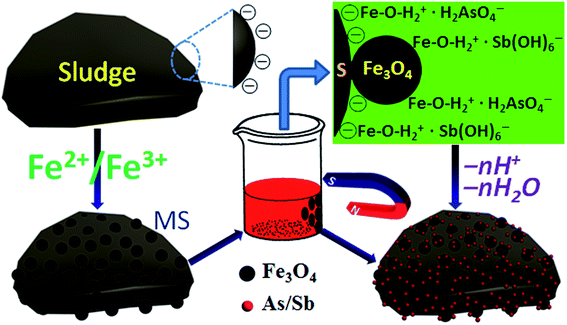 |
| | Scheme 1 Schematic illustration of magnetic sludge (MS) synthesis and As(V)/Sb(V) removal. | |
3.1.1 Composition and structures analyses. The mass fraction of inorganic compounds in the sludge was ∼36%,30 as determined from the weight of the residue obtained after combustion from the TG curve (Fig. S1a†). The XRD patterns of S, M, and MS are shown in Fig. 1a. MS featured XRD peaks that were similar to those displayed by pristine magnetic iron oxide NPs. These peaks could be indexed to (220), (311), (400), (422), (511), and (440) diffractions of cubic magnetite Fe3O4 (JCPDS no. 19-629, space group Fd3m (227)).31,32 The lattice parameter and crystallite size of the magnetic Fe3O4 NPs in MS were estimated to be 8.384 Å and 15 nm, respectively, based on peak positions and Scherrer equation.33 The mass fraction of magnetite NPs in MS was calculated from the TG curves as 70% (Fig. S1a†), which agreed with the ICP-AES result (Table 1). Furthermore, magnetic Fe3O4 NPs in both pristine magnetite and MS contained some hydrated hydroxyl groups, as deduced by the weight loss before 200 °C in the TG curves (Fig. S1a†).
 |
| | Fig. 1 (a) XRD patterns of sludge (S), pristine magnetite nanoparticles (M), and magnetic sludge (MS). (b) Survey, (c) C 1s, and (d) Fe 2p XPS spectra of MS. | |
Table 1 Magnetic properties and composition of sludge (S), pristine magnetite nanoparticles (M), and magnetic sludge (MS)
| Sample |
MS (emu g−1) |
MR (emu g−1) |
HC (Oe) |
TB (K) |
Content of organic mattera (wt%) |
Content of Fe3O4b (wt%) |
| Measured by TG. Measured by ICP-AES. Content of Fe in the activated sludge. |
| MS |
52.2 |
3.6 |
30.6 |
145 |
19 |
70 |
| M |
77.4 |
3.2 |
22.6 |
— |
0 |
100 |
| S |
0.03 |
0.002 |
74.3 |
— |
64 |
2c |
FTIR analysis confirmed the presence of hydrated hydroxyls (3410 cm−1). Additionally, the results revealed that MS was a composite of magnetic Fe3O4 NPs and activated sludge, as evidenced by Fe–O (563 cm−1) stretching vibrations, corresponding to magnetite, and C–H (asymmetric: 2923 cm−1, symmetric: 2850 cm−1), C![[double bond, length as m-dash]](https://www.rsc.org/images/entities/char_e001.gif) C (1642 cm−1), and C–O (1036 cm−1) stretching vibrations, corresponding to the microorganism in the sludge (Fig. S1b†).34
C (1642 cm−1), and C–O (1036 cm−1) stretching vibrations, corresponding to the microorganism in the sludge (Fig. S1b†).34
The XPS spectrum of MS in Fig. 1b displayed four typical peaks at C 1s, N 1s, O 1s, and Fe 2p binding energies. The deconvoluted C 1s spectrum (Fig. 1c) revealed the presence of functional groups that originated from the microorganism, namely C–C at 284.7 eV, C–O/C–N at 286.4 eV and CO at 288.8 eV.35 The deconvoluted Fe 2p spectrum (Fig. 1d) showed typical peaks of magnetite Fe3O4, namely Fe 2p3/2 at 711.5 eV and Fe 2p1/2 at 724.9 eV; however, peaks relating to other iron (oxide impurities) were absent.17,36
3.1.2 Microscopy analysis. As observed from the SEM and TEM images in Fig. 2 and S2,† the sludge featured a sponge-like, laminated, aggregated morphology with a clean surface, as typical as the morphology of the freeze-dried activated sludge (Fig. S2a†). The pristine magnetic iron oxide was composed of small NPs with diameters of ∼15 nm (Fig. S2b†). MS featured small NPs on the surface of activated sludge (Fig. 2a and S2c†) and some NPs were rigidly sandwiched between the layers of the sludge (Fig. 2a inset). TEM and EDS spectroscopy showed that the NPs were highly dispersed and embedded in the sludge–C, O, and Fe elements were detected in MS (Fig. 2b and c and S2d†). A magnified TEM image showed that the diameter of the NPs on the sludge ranged from 2 to 25 nm (Fig. 2c). The smallest NPs (2–5 nm) were observed on the sludge surface owning to its strong interactions with Fe species. Furthermore, HRTEM analysis of the NPs on the sludge revealed the presence of well-defined lattices (Fig. 2d) with a lattice spacing of 0.252 nm, which could be indexed to (311) reflection (Fig. 2d inset). This result indicated the high crystallinity of the iron oxide NPs. Selected area electron diffraction pattern analysis confirmed the nature of the crystalline NPs as magnetite Fe3O4 (Fig. 2d inset), as consistent with the XRD results.
 |
| | Fig. 2 (a) SEM image of MS, with the arrows highlighting the nanoparticles. (b) TEM image and corresponding EDS pattern (inset) of MS. (c) Magnified TEM image and corresponding particle size distribution curve (inset) of MS. (d) HRTEM image and selected area electron diffraction pattern (inset) of MS. | |
The incorporation of magnetic Fe3O4 into the layers of sludge in MS was further supported by the properties of calcined MS using Raman spectroscopy analysis. As shown in the Raman spectra in Fig. S3a,† in addition to the characteristic magnetite peaks at 338, 496, and 655 cm−1, the calcined MS displayed signals similar to those relating to the symmetry A1g mode and E2g mode of defected graphene at 1330 cm−1 (D-band) and 1580 cm−1 (G-band),37 respectively. These signals revealed the formation of a Fe3O4@C composite by graphitization of the microorganisms on the sludge. Moreover, the SEM, TEM, and HRTEM images (Fig. S3b and c†) showed that the highly crystalline iron oxide NPs were dispersed within the mesocellular structure of the carbon matrix, which is a typical feature of magnetite NPs on the surface of activated sludge after calcination.30 The presence of microorganism on the activated sludge and highly dispersed Fe3O4 NPs determined the surface area (78 m2 g−1), pore volume (0.53 cm3 g−1), and macropore diameter (44 nm) of MS. These results were obtained from the N2 adsorption–desorption type III isotherm and the pore size distribution curve shown in Fig. S4a.†
3.1.3 Magnetic properties and stability. The zero-field-cooled and field-cooled curves of MS revealed that MS featured superparamagnetism from magnetite NPs, with a blocking temperature of −128 °C (Fig. S4b†).38 The saturation magnetization (MS), remanence (MR), and coercivity (HC) were determined from the magnetic hysteresis curves (Fig. 3a and Table 1). The magnetic intensities of MS were lower than those of pristine Fe3O4 NPs because of the presence of non-magnetic sludge in MS. However, MS featured superparamagnetic properties, with small remnant magnetization and coercivity. Owning to the magnetic properties of the NPs and flexibility of the activated sludge, MS is suitable for magnetic separation. As observed from a separation test, MS could be completely separated from water within 10 s of application of a magnetic field (Fig. 3b and c). By comparison, complete separation of pristine Fe3O4 NPs from water was considerably slower (i.e., ∼300 s) because of their considerably smaller particle size (Fig. S5†). Activated sludge alone could not be separated from water because it does not show magnetism (Fig. S6†). Additionally, MS could be easily dispersed in water (Fig. S7†). Because of these properties, MS was considered as a potential adsorbent for removing contaminants such as As and Sb from water and therefore examined subsequently.
 |
| | Fig. 3 (a) Magnetization loops of sludge (S), pristine magnetite nanoparticles (M), and magnetic sludge (MS); the insets show magnifications of the magnetization loops. Photographs of M and MS suspensions in the (b) absence and (c) presence of a magnet. | |
3.2 Adsorption studies
3.2.1 Effect of pH on the adsorption of As(V)/Sb(V) onto MS. The removal efficiency of As(V) and Sb(V) by MS and corresponding Fe loss during this process were investigated at various pHs from 0.9 to 11.5, as shown in Fig. 4. The MS exhibited pH-dependent adsorption capacities for the target ions (initial concentrations of 10 mg L−1), and more than 97% of these ions could be removed in the pH range of 1.7–3.0, with almost 100% removal achieved at pH 2.6. Only a small quantity of the Fe NPs was discharged from MS during the removal process, including at low pHs. For example, a 7% Fe loss was observed at pH 2.6 that resulted in maximum removal of As(V) and Sb(V). Because most As/Sb contamination occurs in acidic environments,13 the high As/Sb removal and high stability of MS at pH 2.6 will be beneficial for practical applications. The adsorption capacity of these ions onto the MS composite was also compared with that achieved onto individual Fe3O4 NPs and activated sludge. The results suggested that the removal efficiency of MS was superior to that of pristine Fe3O4 or activated sludge. As shown in Fig. 5, MS removed more than 99% of As(V) and Sb(V) from solution at initial concentrations of 0.1 and 5 mg L−1. By contrast, the removal rates were lower for As(V) (78%) and for Sb(V) (79%) when pristine Fe3O4 was used as the adsorbent. Furthermore, the adsorption of the target ions onto activated sludge (without Fe3O4) was even poorer, especially for As(V). These results demonstrate that MS combines the properties of activated sludge and magnetic Fe3O4 NPs for efficient removal of As(V) and Sb(V).
 |
| | Fig. 4 Removal efficiency of As(V) and Sb(V) by MS as a function of pH and corresponding loss of Fe from MS. (T: 25 °C, C0: 10 mg L−1, contact time: 5 h, rotation speed: 200 rpm). | |
 |
| | Fig. 5 Comparison of As(V) and Sb(V) adsorption onto magnetic sludge (MS), pristine magnetite nanoparticles (M), and sludge (S) at different As(V) and Sb(V) initial concentrations. (T: 25 °C, pH: 2.6, contact time: 5 h, rotation speed: 200 rpm). | |
3.2.2 Adsorption kinetics. The Lagergren's pseudo-first-order and pseudo-second-order models were applied to investigate the adsorption kinetics of As(V)/Sb(V) ions onto the MS at various initial concentrations (5, 10, 20 mg L−1). The linear form of pseudo-first-order and pseudo-second-order models are given as:39,40| |
ln(qe − qt) = ln![[thin space (1/6-em)]](https://www.rsc.org/images/entities/char_2009.gif) qt − (k1/2.303)t, qt − (k1/2.303)t,
| (1) |
| | |
t/qt = 1/(k2qe2) + t/qe,
| (2) |
where qt (mg g−1) and qe (mg g−1) are the adsorption quantities at time t and at equilibrium (mg g−1), respectively. Parameters k1 (min−1) and k2 (g mg−1 min−1) are the sorption rate constants of the pseudo-first-order and pseudo-second-order models, respectively. The initial sorption rate can be calculated as h = kqe2, and half-adsorption time as t1/2 = 1/kqe.As deduced from Table 2, the adsorption kinetics of MS at different initial concentrations of As(V) and Sb(V) was best described by the pseudo-second-order model. Moreover, negative correlations between the rate constants (k2) and the initial concentrations of As(V) and Sb(V) confirmed that the adsorption process was mass transfer-dependent, especially at the high initial ions concentrations. Although the half-adsorption time (t1/2) increased with increases in the initial As(V) and Sb(V) concentration, overall, it was low (i.e., 4.1 min for As(V) adsorption and 2.6 min for Sb(V) adsorption) at the highest concentration tested (i.e., 20 mg L−1). It is expected that this property and the fast magnetic separation (10 s) ability will greatly reduce the time required for As(V) and Sb(V) removal in practical applications.
Table 2 Pseudo-first-order and pseudo-second-order parameters of As(V) and Sb(V) adsorption at different initial As(V) and Sb(V) concentrations. (T: 25 °C, pH: 2.6, contact time: 5 h, rotation speed: 200 rpm)
| MS |
C0 (mg L−1) |
qe,exp (mg g−1) |
Pseudo-first-order |
Pseudo-second-order |
| qe,calc (mg g−1) |
k1 (min−1) |
r2 |
qe,calc (mg g−1) |
k2 (g mg−1 min−1) |
h (mg g−1 min−1) |
t1/2 (min) |
r2 |
| As(V) |
5 |
6.786 |
0.701 |
0.081 |
0.832 |
6.803 |
0.274 |
12.7 |
0.54 |
1.000 |
| 10 |
12.13 |
3.418 |
0.088 |
0.919 |
12.30 |
0.042 |
6.4 |
1.9 |
0.999 |
| 20 |
15.1 |
5.366 |
0.051 |
0.869 |
15.38 |
0.016 |
3.8 |
4.1 |
1.000 |
| Sb(V) |
5 |
6.758 |
0.715 |
0.078 |
0.838 |
6.805 |
0.273 |
12.6 |
0.54 |
1.000 |
| 10 |
13.09 |
2.601 |
0.078 |
0.956 |
13.20 |
0.063 |
11.0 |
1.2 |
1.000 |
| 20 |
21.65 |
5.568 |
0.051 |
0.826 |
22.22 |
0.017 |
8.4 |
2.6 |
1.000 |
3.2.3 Adsorption isotherms. To further investigate the adsorption process, the Langmuir and Freundlich isotherm models were examined in the temperature range of 5–50 °C. The linear form of the Langmuir isotherm model can be expressed as follows:41| | |
Ce/qe = Ce/qm + 1/(bqm),
| (3) |
where Ce (mg L−1) and qe (mg g−1) are equilibrium concentration of As(V) or Sb(V) in solution and the amount of As(V) or Sb(V) adsorbed at equilibrium, respectively. qm (mg g−1) is the maximum adsorption quantity, and b is the Langmuir constant (L mg−1).The Freundlich isotherm model, which accounts for multilayered adsorption on heterogeneous surfaces, is described as follows:42
| | |
lnqe = 1/nlnCe + lnkF
| (4) |
where
kF is the Freundlich constant (mg g
−1), and 1/
n is related to the adsorption intensity of the adsorbent.
Both isotherms models, especially the Langmuir model (R2 > 0.990), were good fits for the adsorption data of MS obtained at different initial ions concentrations and temperatures. The associated adsorption parameters are shown in Table 3. As observed, the maximum monolayer uptake amount of Sb(V) calculated from the Langmuir fit was more than two times that of As(V) at all tested temperatures. The monolayer uptake of both As(V) and Sb(V) increased with increasing temperatures. The dependence of the adsorption uptake on temperature and concentration suggests that the process is endothermic and mass transfer-dependent. Therefore, the low thermal conductance (for heat preservation) and porous framework (for mass transfer) of activated sludge in MS are important operating features of the adsorbent toward As(V) and Sb(V) removal. Thus, the adsorption of the ions can be controlled by adjusting the experimental parameters.
Table 3 Parameters of Langmuir and Freundlich fits obtained at different temperatures. (pH: 2.6, contact time: 5 h, rotation speed: 200 rpm)
| MS |
T (°C) |
Langmuir model |
Freundlich model |
| qm (mg g−1) |
b (L mg−1) |
r2 |
kF (mg g−1) |
n |
r2 |
| As(V) |
5 |
13.7 |
1.03 |
0.996 |
6.44 |
4.15 |
0.960 |
| 25 |
18.5 |
1.10 |
0.994 |
8.31 |
3.80 |
0.929 |
| 50 |
21.3 |
1.38 |
0.993 |
10.8 |
4.43 |
0.976 |
| Sb(V) |
5 |
26.3 |
0.97 |
0.996 |
9.74 |
2.78 |
0.970 |
| 25 |
35.7 |
1.00 |
0.990 |
12.9 |
2.95 |
0.952 |
| 50 |
43.5 |
1.64 |
0.990 |
18.7 |
2.50 |
0.910 |
3.2.4 Effect of interfering co-existing ions. The interference effect of ions that are often present in contaminated water was investigated (Fig. 6). As observed, the removal efficiency of As(V) or Sb(V) by MS was mostly unaffected by the presence of NO3−, Cl−, or SO42− ions even at a high concentration of 50 mmol L−1. However, the presence of PO43− in solution considerably reduced the removal efficiency of As(V) or Sb(V) by MS, which was highly dependent on the PO43− concentration. A reduction of 80% and 42% was observed for the removal of As(V) and Sb(V), respectively. When the PO43− concentration was increased to 30 mmol L−1. These results are consistent with those of other reports on the adsorption of As(V) onto magnetic γ-Fe2O3 NPs43 and adsorption of Sb(V) onto iron–zirconium bimetal oxide.44 The interference caused by P(V) could be attributed to its similar structure and charge with As(V) and Sb(V), leading to possible complexation, accumulation, or precipitation on the surface of the adsorbent.43,45 Overall, the presence of anions with different charges from As(V) and Sb(V) did not impede on the adsorption performance of MS.
 |
| | Fig. 6 Effect of interfering ions on the adsorption of As(V)/Sb(V) onto MS as a function of ion concentration. Red lines show the adsorption of As(V)/Sb(V) onto MS in the absence of interfering ions. (T: 25 °C, pH: 2.6, contact time: 5 h, rotation speed: 200 rpm). | |
3.2.5 Removal efficiency of As(V)/Sb(V) at low As(V)/Sb(V) concentrations. The removal of As(V) and Sb(V) at relatively low concentrations to meet the threshold standards for drinking water set by WHO for drinking water purification purposes is challenging. Hence, the clean-up of As(V) or Sb(V)-bearing solutions at low concentrations (500, 100, 50, 10 μg L−1) was investigated to determined the potential of the presently developed magnetic composite in drinking water purification. The results indicated that the concentration of the target ions could be reduced to the corresponding safe levels at all concentrations studied, thereby meeting the standard of drinking water by a one-off adsorption treatment with MS at room temperature and pH 2.6. Particularly, nearly no ions were detected (<0.1 μg L−1) following treatment of water containing 10 μg L−1 of As(V) or Sb(V), almost no ions were detected (<0.1 μg L−1) after treatment with MS (Fig. 7). Therefore, MS shows excellent As(V) and Sb(V) removal performance for practical applications.
 |
| | Fig. 7 Removal efficiencies of As(V)/Sb(V) at low concentrations (10, 50, 100, and 500 μg L−1). The red lines show the maximum permissible contaminant level in drinking water set by the World Health Organization. (T: 25 °C, pH: 2.6, contact time: 5 h, rotation speed: 200 rpm). | |
3.3 Mechanism of removal of As(V) and Sb(V)
The removal of As(V) and Sb(V) by MS could be explained by a charge-mediated enhanced adsorption process followed by dehydration (Scheme 1). As shown in Fig. S8,† the pHzpc of MS is 7. As(V) and Sb(V) can hydrolyze into different species, e.g., H2AsO4−, HAsO42−, AsO43−, and Sb(OH)6−, at different pHs (Fig. 8). At pH values greater than pHzpc, MS is negatively charged and thus would repel As(V) and Sb(V) anions, thereby leading to a reduced adsorption amount. As pH decreases, the surface of MS is gradually protonated, leading to a positively charged surface. As(V) and Sb(V) adsorption thus increases because of electrostatic attraction to the positively charged MS surface. However, in a strong acid environment (e.g., pH < 1.7), some Fe species are expected to be discharged from MS, and the active sites on MS affinity to the As(V) and Sb(V) anions decreases, consequently leading to a reduced removal efficiency. Therefore, pH 2.6 was determined as the optimum pH for As(V) and Sb(V) removal. At this pH, Fe species in MS are protonated (e.g., ![[double bond splayed left]](https://www.rsc.org/images/entities/char_e009.gif) Fe–OH2+). Thus, H2AsO4− and Sb(OH)6− species are dominant and can be attracted by positively charged Fe–OH2+, forming outer-sphere complexes (i.e., Fe–OH2+·H2AsO4− and Fe–OH2+·Sb(OH)6−) (Scheme 1). Dehydration then occurs, resulting in formation of inner-sphere complexes (i.e., Fe–O–HAsO3− and Fe–O–Sb(OH)5−) with stronger chemical bonds.46,47 The non-dependency of inner-sphere complex formation on ionic strength supported the lack of interfering effects from anions (Cl−, NO3−, and SO42−). Moreover, sludge can attract many positively charged Fe species during the synthesis of MS, which would enhance the adsorption of negatively charged target ions by MS further. Therefore, MS was determined as an excellent adsorbent for the highly efficient removal of As(V) and Sb(V) removal (Scheme 1).
Fe–OH2+). Thus, H2AsO4− and Sb(OH)6− species are dominant and can be attracted by positively charged Fe–OH2+, forming outer-sphere complexes (i.e., Fe–OH2+·H2AsO4− and Fe–OH2+·Sb(OH)6−) (Scheme 1). Dehydration then occurs, resulting in formation of inner-sphere complexes (i.e., Fe–O–HAsO3− and Fe–O–Sb(OH)5−) with stronger chemical bonds.46,47 The non-dependency of inner-sphere complex formation on ionic strength supported the lack of interfering effects from anions (Cl−, NO3−, and SO42−). Moreover, sludge can attract many positively charged Fe species during the synthesis of MS, which would enhance the adsorption of negatively charged target ions by MS further. Therefore, MS was determined as an excellent adsorbent for the highly efficient removal of As(V) and Sb(V) removal (Scheme 1).
 |
| | Fig. 8 Speciation distribution of (a) As(V) and (b) Sb(V) at different pHs. | |
4. Conclusions
A novel magnetic sludge composite material for the efficient and inexpensive removal of As(V)/Sb(V) was successfully prepared by a facile co-precipitation method. Combining highly crystalline and dispersed magnetite NPs (diameter: 2–25 nm) with the microorganisms of activated sludge produced a superparamagnetic sludge that could be quickly separated from solution using an external magnetic field. The sludge had a macroporous structure with a surface area of 78 m2 g−1 and a pore volume of 0.53 cm3 g−1. MS featured a low thermal conductance and abundant exposed adsorption sites, and the NPs on the surface were tightly packed. Such characteristics were responsible for the high stability of MS in acid, fast separation (within 10 s) of MS from solution, and large adsorption capacity of MS. Furthermore, the adsorption performance of MS was almost unaffected by interfering effects from the presence of other ions in solution. Specifically, MS achieved near-complete removal of As(V)/Sb(V) at 10 μg L−1. It is believed that the presently developed magnetic sludge can be effectively applied in existing techniques for removing As(V)/Sb(V) from contaminated water to meet water quality standards for the environment and human health.
Acknowledgements
This work was supported by the National Natural Science Foundation of China (Grant No. 21303022 and 21175029) and the Natural Science Foundation of Shanghai City of China (Grant No. 13ZR1451400).
References
- L. Rodríguez-Lado, G. Sun, M. Berg, Q. Zhang, H. Xue, Q. Zheng and J. Ca, Science, 2013, 341, 866–868 CrossRef PubMed.
- M. L. Polizzotto, B. D. Kocar, S. G. Benner, M. Sampson and S. Fendorf, Nature, 2008, 454, 505–508 CrossRef CAS PubMed.
- T. Wen, X. Wu, X. Tan, X. Wang and A. Xu, ACS Appl. Mater. Interfaces, 2013, 5, 3304–3311 CAS.
- B. Dousova, F. Buzek, L. Herzogova, V. Machovic and M. Lhotka, Eur. J. Soil Sci., 2015, 66, 74–82 CrossRef CAS.
- M. Zhang, Bioresour. Technol., 2013, 130, 457–462 CrossRef CAS PubMed.
- G. Ungureanu, S. Santos, R. Boaventura and C. Botelho, J. Environ. Manage., 2015, 151, 326–342 CrossRef CAS PubMed.
- Y. Wang, G. Morin, G. Ona-Nguema and G. E. Brown Jr, Environ. Sci. Technol., 2014, 48, 14282–14290 CrossRef CAS PubMed.
- T. M. Clancy, K. F. Hayes and L. Raskin, Environ. Sci. Technol., 2013, 47, 10799–10812 CrossRef CAS PubMed.
- L. Yu, X. Peng, F. Ni, J. Li, D. Wang and Z. Luan, J. Hazard. Mater., 2013, 246, 10–17 CrossRef PubMed.
- J. F. Rivera, C. Bucher, E. Saint-Aman, B. L. Rivas, M. del Carmen Aguirre, J. Sanchez, I. Pignot-Paintrand and J. C. Moutet, Appl. Catal., B, 2013, 129, 130–136 CrossRef CAS.
- H. R. Pant, H. J. Kim, M. K. Joshi, B. Pant, C. H. Park, J. I. Kim, K. Hui and C. S. Kim, J. Hazard. Mater., 2014, 264, 25–33 CrossRef CAS PubMed.
- L. Li, G. Zhou, Z. Weng, X. Y. Shan, F. Li and H. M. Cheng, Carbon, 2014, 67, 500–507 CrossRef CAS.
- J. Liu, X. Huang, J. Liu, W. Wang, W. Zhang, F. Dong and K. Hudson-Edwards, Mineral. Mag., 2014, 78, 73–89 CrossRef CAS.
- J. Yang, H. Zhang, M. Yu, I. Emmanuelawati, J. Zou, Z. Yuan and C. Yu, Adv. Funct. Mater., 2014, 24, 1354–1363 CrossRef CAS.
- S. Zhang, X. Y. Li and J. P. Chen, Carbon, 2010, 48, 60–67 CrossRef CAS.
- J. Ma, Z. Zhu, B. Chen, M. Yang, H. Zhou, C. Li, F. Yu and J. Chen, J. Mater. Chem. A, 2013, 1, 4662–4666 CAS.
- V. Chandra, J. Park, Y. Chun, J. W. Lee, I. C. Hwang and K. S. Kim, ACS Nano, 2010, 4, 3979–3986 CrossRef CAS PubMed.
- Z. Wu, W. Li, P. A. Webley and D. Zhao, Adv. Mater., 2012, 24, 485–491 CrossRef CAS PubMed.
- W. Ma, F. Meng, Z. Cheng, G. Xin and S. Duan, Bioresour. Technol., 2015, 356–359 CrossRef CAS PubMed.
- S. Zhang, M. Zeng, J. Li, J. Li, J. Xu and X. Wang, J. Mater. Chem. A, 2014, 2, 4391–4397 CAS.
- M. F. Zuthi, Bioresour. Technol., 2013, 139, 363–374 CrossRef CAS PubMed.
- M. F. Dignac, P. Ginestet, D. Rybacki, A. Bruchet, V. Urbain and P. Scribe, Water Res., 2000, 34, 4185–4194 CrossRef CAS.
- A. Bagreev, S. Bashkova, D. C. Locke and T. J. Bandosz, Environ. Sci. Technol., 2001, 35, 1537–1543 CrossRef CAS PubMed.
- C. C. Liu, M. Kuang-Wang and Y. S. Li, Ind. Eng. Chem. Res., 2005, 44, 1438–1445 CrossRef CAS.
- L. Gu, N. W. Zhu, D. F. Zhang, Z. Y. Lou, H. P. Yuan and P. Zhou, Bioresour. Technol., 2013, 136, 719–724 CrossRef CAS PubMed.
- L. Gu, N. W. Zhu, H. Q. Guo, S. Q. Huang, Z. Y. Lou and H. P. Yuan, J. Hazard. Mater., 2013, 246–247, 145–153 CrossRef CAS PubMed.
- P. Devi and A. K. Saroha, Bioresour. Technol., 2014, 169, 525–531 CrossRef CAS PubMed.
- P. Devi and A. K. Saroha, Chem. Eng. J., 2015, 271, 195–203 CrossRef CAS.
- S. Yadav, V. Srivastava, S. Banerjee, C. H. Weng and Y. C. Sharma, Catena, 2013, 100, 120–127 CrossRef CAS.
- D. Ye, L. Wang, R. Zhang, B. Liu, Y. Wang and J. Kong, J. Mater. Chem. A, 2015, 3, 15171–15176 CAS.
- W. Wei, S. Yang, H. Zhou, I. Lieberwirth, X. Feng and K. Müllen, Adv. Mater., 2013, 25, 2909–2914 CrossRef CAS PubMed.
- Y. Wang, R. Huang, G. Liang, Z. Zhang, P. Zhang, S. Yu and J. Kong, Small, 2014, 10, 109–116 CrossRef CAS PubMed.
- U. Holzwarth and N. Gibson, Nat. Nanotechnol., 2011, 6, 534 CrossRef CAS PubMed.
- K. P. Kepp and P. Dasmeh, J. Phys. Chem. B, 2013, 117, 3755–3770 CrossRef CAS PubMed.
- D. Ye, R. Zhang, Y. Fu, J. Bu, Y. Wang, B. Liu and J. Kong, Electrochim. Acta, 2015, 160, 306–312 CrossRef CAS.
- W. Chen, S. Li, C. Chen and L. Yan, Adv. Mater., 2011, 23, 5679–5683 CrossRef CAS PubMed.
- H. Jin, H. Huang, Y. He, X. Feng, S. Wang, L. Dai and J. Wang, J. Am. Chem. Soc., 2015, 137, 7588–7591 CrossRef CAS PubMed.
- Y. Liu, T. C. Hughes, B. W. Muir, L. J. Waddington, T. R. Gengenbach, C. D. Easton, T. M. Hinton, B. A. Moffat, X. Hao and J. Qiu, Biomaterials, 2014, 35, 378–386 CrossRef CAS PubMed.
- S. Lagergren, K. Sven. Vetenskapsakad. Handl., 1898, 24, 1–39 Search PubMed.
- Y. S. Ho and G. Mckay, Process Biochem., 1999, 34, 451–465 CrossRef CAS.
- I. Langmuir, J. Am. Chem. Soc., 1918, 40, 1361–1403 CrossRef CAS.
- H. Freundlich, J. Phys. Chem., 1906, 57, 385–470 CAS.
- S. Lin, D. Lu and Z. Liu, Chem. Eng. J., 2012, 211, 46–52 CrossRef.
- X. Li, X. Dou and J. Li, J. Environ. Sci., 2012, 24, 1197–1203 CrossRef CAS.
- J. Xi, M. He and C. Lin, Microchem. J., 2011, 97, 85–91 CrossRef CAS.
- M. Aryal, M. Ziagova and M. Liakopoulou-Kyriakides, Chem. Eng. J., 2010, 162, 178–185 CrossRef CAS.
- L. Wang, C. L. Wan, Y. Zhang, D. J. Lee, X. Liu, X. F. Chen and J. H. Tay, J. Hazard. Mater., 2015, 284, 43–49 CrossRef CAS PubMed.
Footnote |
| † Electronic supplementary information (ESI) available. See DOI: 10.1039/c6ra06208c |
|
| This journal is © The Royal Society of Chemistry 2016 |
Click here to see how this site uses Cookies. View our privacy policy here. 


