
Preservation of DNA in nuclease-rich samples using magnetic ionic liquids

Kevin D. Clarka, Matthew Sorensenb, Omprakash Nachama and Jared L. Anderson*a
aDepartment of Chemistry, Iowa State University, Ames, IA 50011, USA. E-mail: andersoj@iastate.edu; Tel: +1 515 294 8356
bDepartment of Chemistry, Gustavus Adolphus College, St. Peter, MN 56082, USA

Received 6th March 2016 , Accepted 11th April 2016

First published on 13th April 2016


Abstract

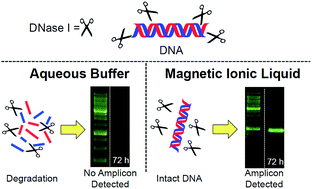
Nucleic acids are important diagnostic molecules for a variety of applications, but are exceedingly sensitive to enzymatic degradation by nucleases. Very recently, hydrophobic magnetic ionic liquids (MILs) have shown considerable promise in the area of DNA extraction. Here, we show that MILs can also serve as DNA preservation media in nuclease-rich environments. DNA samples treated with deoxyribonuclease I (DNase I) were found to retain their molecular weight for up to 72 h at room temperature within the benzyltrioctylammonium bromotrichloroferrate(III) ([N888Bn+][FeCl3Br]) and trihexyl(tetradecyl)phosphonium tetrachloroferrate(III) ([P66614+][FeCl4]) MILs, whereas DNA in aqueous samples suffered complete enzymatic degradation under similar conditions. Using a single drop extraction (SDE) technique, DNase I was found to partition between aqueous solution and MIL with a smaller amount of the enzyme extracted by the [N888Bn+][FeCl3Br] MIL relative to the [P66614+][FeCl4] MIL. Plasmid DNA (pDNA) exhibited structural stability for up to 1 week in the [N888Bn+][FeCl3Br] and [P66614+][FeCl4] MILs, even when treated with 20 U of DNase I. pDNA stored within the MIL solvent under these conditions was successfully amplified by polymerase chain reaction (PCR), whereas pDNA in aqueous solutions of DNase I yielded no detectable amplicon. Furthermore, pDNA stored within the trihexyl(tetradecyl)phosphonium tetrachloromanganate(II) ([P66614+]2[MnCl42−]) MIL was capable of conveying antibiotic resistance to competent E. coli following 24 h incubation with DNase I at room temperature, demonstrating that the biological activity of pDNA was preserved.

Introduction

DNA is widely recognized in the life sciences as an important biomarker, tool, and genetic fingerprint. The analysis of DNA is essential for a broad range of applications including forensics,1 clinical diagnostics,2 and food safety.3 However, the relevance of data obtained from DNA analysis is largely dependent upon the quality and purity of the DNA sample.4 Damage to the primary structure of DNA often results in loss of sensitivity, poor reproducibility, or complete inhibition of downstream applications such as polymerase chain reaction (PCR) or DNA sequencing.5 In many cases, DNA samples are not immediately analyzed and must be stored for a period of time, rendering them susceptible to chemical or enzymatic degradation.6,7 DNA is particularly vulnerable to nucleases, such as deoxyribonuclease I (DNase I), which constitutes a significant challenge for long-term storage.

Most approaches to DNA preservation involve storing DNA samples in buffers or alcohols at −80 °C.8 Unfortunately, maintaining low temperatures for DNA storage is energy intensive and can represent a large economic investment when confronted with vast numbers of samples. Transferring DNA samples to a suitable buffer or solvent prior to storage also heightens the risk of sample contamination with exogenous DNA or endonucleases due to increased sample handling and manipulation. Furthermore, DNA may undergo hydrolytic cleavage, depurination, or depyrimidation in aqueous media.9 While lyophilization provides a means to dehydrate DNA samples and minimize the risk of hydrolysis, this technique imposes shear stress on longer DNA strands.8,10

Recently, ionic liquids (ILs) have been employed as solvents to enhance the long-term stability of DNA. ILs are molten salts with melting points at or below 100 °C whose physicochemical properties can be tailored through careful selection of the cation and anion components. The ability to customize the chemical structure of ILs has led to their successful application as sorptive phases for DNA extraction,11,12 ion conductive DNA films,13 and, notably, solvents for the long-term preservation of DNA.14,15 Hydrated ILs were recently shown to improve the long-term stability of double stranded DNA (dsDNA) at room temperature when compared to conventional phosphate buffered aqueous solutions.16 dsDNA molecules have also been found to retain their native double helical structure when dissolved in IL solvents.17 Moreover, ILs have been employed to substantially enhance the resistance of nucleic acids toward enzymatic degradation.15,18 Plasmid DNA (pDNA) stored in the choline dihydrogenphosphate (CDHP) IL was found to exhibit biological activity even after 1 month incubation with DNase.19 Nonetheless, IL-based preservation approaches require the nucleic acid to be purified and subsequently transferred into the IL storage medium. Ideally, a material that can function as a selective extraction solvent and as a medium for long-term preservation would significantly minimize user intervention and the risk of sample contamination.

Magnetic ionic liquids (MILs) are a subclass of ILs that possess a magnetoactive component in their chemical structure.20–23 The paramagnetic properties of MILs have been exploited in a variety of applications including reusable catalysts,24 CO2 sorptive phases,25 and magnetic extraction solvents.26 Very recently, hydrophobic MILs were employed for the rapid and highly efficient extraction of DNA wherein the DNA-enriched MIL extraction phase was easily manipulated by the application of an external magnetic field.27 To complement the rapid DNA extraction process, hydrophobic MILs have also been interfaced directly with PCR amplification to dramatically reduce analysis times.28 However, MILs have yet to be explored as solvents for the preservation of nucleic acids.

In this study, hydrophobic MILs were investigated for their ability to serve as DNA preservation media. Two MILs, namely, trihexyl(tetradecyl)phosphonium tetrachloroferrate(III) ([P66614+][FeCl4]) and benzyltrioctylammonium bromotrichloroferrate(III) ([N888Bn+][FeCl3Br]), were capable of preserving linear double stranded DNA from salmon testes (sDNA) for up to 72 h at room temperature when treated with 20 U of DNase I. A significant improvement in the resistance toward enzymatic degradation was observed for pDNA stored in either the [P66614+][FeCl4] or [N888Bn+][FeCl3Br] MIL when compared to a conventional aqueous buffer. Mixtures of pDNA, DNase I, and MIL were capable of yielding PCR-amplifiable pDNA even after 1 week of storage. Furthermore, pDNA treated with DNase I within the trihexyl(tetradecyl)phosphonium tetrachloromanganate(II) ([P66614+]2[MnCl42−]) MIL was protected from degradation and could be applied for the transformation of competent E. coli cells to convey antibiotic resistance.

Experimental

Reagents and materials

Trioctylamine, trifluoroacetic acid (TFA), and guanidine hydrochloride (GuHCl) were purchased from Acros Organics (Morris Plains, NJ, USA). Trihexyl(tetradecyl)phosphonium chloride was obtained from Strem Chemicals (Newburyport, MA, USA). Manganese(II) chloride tetrahydrate (MnCl2·4H2O) was purchased from Alfa Aesar (Haverhill, MA, USA) while iron(III) chloride hexahydrate (FeCl3·6H2O), benzyl bromide, sodium dodecyl sulfate (SDS), albumin from chicken egg white, and DNA sodium salt from salmon testes (sDNA, approximately 20 kbp) were purchased from Sigma Aldrich (St. Louis, MO, USA). DNase I from bovine pancreas (approximately 2000 U mg−1) was obtained from Roche (Basel, Switzerland). Sodium hydroxide, potassium acetate, acetic acid, and silica gel sorbent (230–400 mesh) were purchased from Fisher Scientific (Fair Lawn, NJ, USA). Tris(hydroxymethyl)aminomethane (Tris) and the corresponding hydrochloride (Tris–HCl), agar, Luria Bertani media, and agarose were purchased from P212121 (Ypsilanti, MI, USA). NEB 5-alpha Competent Escherichia coli cells and Phusion High-Fidelity DNA Polymerase were purchased from New England Biolabs (Ipswich, MA, USA). The pET-32 plasmid and synthetic oligonucleotide primers used in this study were purchased from EMD Millipore (Billerica, MA, USA) and IDT (Coralville, IA, USA), respectively. A 1 kb Plus DNA Ladder (250–25[thin space (1/6-em)]000 bp) was obtained from Gold Biotechnology, Inc. (St. Louis, MO, USA). SYBR Safe DNA Gel Stain was purchased from Life Technologies (Carlsbad, CA, USA) and bromophenol blue was obtained from Santa Cruz Biotech (Dallas, TX, USA). The QIAamp DNA Mini Kit used for preparing pDNA standards was purchased from Qiagen (Valencia, CA, USA). The concentration of all pDNA standards was determined using a Nanodrop 2000c spectrophotometer (Thermo Scientific, Wilmington, DE, USA).

Synthesis of magnetic ionic liquids

The chemical structures of the three MILs investigated in this study are shown in Fig. 1. The [P66614+][FeCl4], [N888Bn+][FeCl3Br], and [P66614+]2[MnCl42−] MILs were synthesized by following previously reported procedures.21,23 Detailed synthetic methods and characterization data (Fig. S1–S3, Table S1) are given in the ESI. Prior to use in DNA preservation experiments, MILs were dried in vacuo for at least 24 h.
image file: c6ra05932e-f1.tif
Fig. 1 Chemical structures of the three hydrophobic MILs used in this study. MIL (1) [P66614+][FeCl4], (2) [N888Bn+][FeCl3Br], (3) [P66614+]2[MnCl42−].

Preservation of sDNA within MILs

A schematic for the general procedure used in the sDNA preservation experiments is depicted in Fig. 2. A formulation of MIL and DNase I was prepared by mixing 20 μL of MIL and 20 U of DNase I (approximately 10 μg) in a microcentrifuge tube. The mixture was incubated at room temperature for 1 h and subsequently spiked with 10 μg of sDNA. The sample was then stored for 24 to 72 h under ambient conditions or at −20 °C. Once the predetermined storage time had elapsed, sDNA was recovered from the MIL using a previously reported silica-based solid phase extraction (SPE) technique.27 Details regarding the SPE procedure can be found in the ESI. The purified sDNA was analyzed by agarose gel electrophoresis on a BRL H4 Horizontal Gel Electrophoresis system (Life Technologies) using a dual output power supply (Neo/Sci, Rochester, NY, USA). Gels were visualized using a Safe Imager 2.0 transilluminator (Invitrogen, Carlsbad, CA, USA).
image file: c6ra05932e-f2.tif
Fig. 2 Schematic depiction of sDNA preservation in MILs treated with DNase I.

Partitioning behavior of DNase I

The partitioning of DNase I to hydrophobic MILs was investigated using a single drop extraction (SDE) method, as shown in Fig. S4. A 20 μL droplet of MIL was suspended from the tip of a 0.66 T rod magnet and immersed in 1.25 mL of 1000 μg mL−1 DNase I in 10 mM Tris (pH 8.5). The solution was stirred at a constant rate of 85 rpm for all extractions. For each time point studied, 20 μL of the aqueous phase was analyzed by HPLC with UV detection at 280 nm using a 1260 Infinity Binary LC system equipped with a variable wavelength detector (Agilent Technologies, Santa Clara, CA). Separations were performed on an Agilent Zorbax 300SB-C8 (250 mm × 4.6 mm i.d., 5 μm particles) with mobile phases A and B comprised of 0.1% TFA in water and 0.1% TFA in ACN, respectively. The solvent gradient used in the separation of DNase I was as follows: 10% B from 0 min to 3 min, increase to 30% B over 2 min, increase to 95% B over 6 min, and a final isocratic step at 95% B for 2 min. The column was re-equilibrated at 10% B prior to the next injection.

PCR amplification of pDNA treated with DNase I and stored within MIL solvents

The influence of MILs on the stability of pDNA was investigated using an approach similar to what was employed for the sDNA experiments. A 20 μL droplet of MIL was mixed with 20 U of DNase I and incubated at room temperature for 1 h. Next, 10 μg of pDNA encoding 5′-methylthioadenosine phosphorylase (MTAP, 879 bp) was added to the mixture. The sample was then stored for 3 to 7 days at room temperature or −20 °C. Following storage, pDNA was directly amplified from the MIL droplet on a Techne FTgene2D thermal cycler (Burlington, NJ, USA) using a PCR method recently reported by our group.28 The buffer composition, primer sequences, and thermal conditions employed for PCR amplification are described in the ESI. Following PCR, amplicons were subjected to agarose gel electrophoresis.

Transformation of E. coli with pDNA exposed to DNase I within MILs

To evaluate the biological activity of pDNA treated with DNase I, 20 μL of the [P66614+]2[MnCl42−] MIL was mixed with 20 U of DNase I and incubated at room temperature for 1 h. The sample was then spiked with 5 μg of pDNA and stored for 24 h at room temperature. A 0.5 μL aliquot of the mixture was added to 20 μL of competent E. coli cells in a microcentrifuge tube and subjected to heat-shock transformation according to the supplier's instructions. The transformation protocol used for all experiments is described in the ESI. Transformed E. coli cells were cultured overnight at 37 °C on LB agar with 100 μg mL−1 carbenicillin.

Results and discussion

Effect of MILs on the enzymatic activity of DNase I

By combining the long-term DNA storage compatibility of conventional ILs with the paramagnetic properties of MIL solvents, MILs may provide both a selective extraction phase as well as a nucleic acid preservation medium that is readily manipulated by a magnetic field. We first investigated the feasibility of preserving DNA within MILs treated with DNase I. DNase I is an endonuclease that nonspecifically degrades single- and double-stranded DNA with a slight preference for cleaving alternating pyrimidine/purine sequences.29 A previous study reported that 2.5 × 10⁻³ U of pancreatic DNase I in 10 μL of aqueous solution were sufficient to completely degrade 2 μg of pBR322 plasmid DNA after just 30 min.30 In order to rigorously examine the effect of MILs on DNase I activity, 20 U of DNase I were mixed with 10 μg of sDNA in 10 mM Tris buffer (pH 8.5) or MIL. As shown in Fig. 3A, sDNA stored in aqueous solution with DNase I could not be detected by agarose gel electrophoresis, indicating complete degradation of the nucleic acid. However, Fig. 3B and D show that sDNA residing in the [P66614+][FeCl4] or [N888Bn+][FeCl3Br] MILs remained intact. Upon extending the storage duration to 72 h, as shown in Fig. 3C and E, the intensity of the recovered sDNA on the agarose gel decreased for both the control and the DNase I treated sample. Although the recovery of sDNA from the MIL phase was diminished, these results indicate that MIL solvents provide sDNA with enhanced resistance to DNase I activity for up to 72 h at room temperature.
image file: c6ra05932e-f3.tif
Fig. 3 Effect of DNase I on sDNA stored within (a) aqueous Tris buffer, (b and c) [P66614+][FeCl4] MIL, or (d and e) [N888Bn+][FeCl3Br] MIL at room temperature.

Partitioning of DNase I to MILs

While conventional ILs have been suggested to engage in a groove-binding mechanism to stabilize DNA,17,19,31 ILs may also play a role in the preservation of nucleic acids by destabilizing endonucleases.32 An important requirement for MIL-mediated inactivation of DNase I is the uptake of the endonuclease into the MIL phase. During the initial sDNA preservation experiments, a two-phase system was observed upon spiking the hydrophobic MIL with aqueous DNase I and DNA. In order to examine whether DNase I activity was diminished due to the exclusion of endonuclease from the MIL phase or inactivation within the MIL solvent, the partitioning of DNase I from aqueous solution to the hydrophobic MILs was investigated.

Using a SDE technique, DNase I was equilibrated between 10 mM Tris buffer (pH 8.5) and the [P66614+][FeCl4] MIL or the [N888Bn+][FeCl3Br] MIL. The amount of DNase I extracted by the MIL phase was determined indirectly by analyzing an aliquot of the aqueous phase after extraction by HPLC. As shown in Fig. 4, the amount of DNase I extracted by the [P66614+][FeCl4] MIL increased until approximately 2 h, after which no appreciable change in the amount of DNase I extracted was observed. Interestingly, the amount of DNase I extracted by the [P66614+][FeCl4] MIL was greater than the [N888Bn+][FeCl3Br] MIL over the studied time points. This observation is consistent with a previous comparative investigation of ovalbumin extraction efficiencies for the [P66614+][FeCl4] and [N888Bn+][FeCl3Br] MILs in which relatively lower amounts of the polypeptide were extracted by the ammonium-based MIL.27 The extraction data from Fig. 4 reveal that DNase I is not excluded from the hydrophobic MIL phase, but instead distributed between aqueous solution and the MIL. When coupled with the data from Fig. 3, the results indicate that DNase I does not appear to retain enzymatic activity within the studied hydrophobic MILs. This may be due to denaturation of the enzyme within the ionic solvent32 and/or stabilizing interactions between the MIL and DNA as observed for conventional ILs.11,17


image file: c6ra05932e-f4.tif
Fig. 4 Single drop extraction of DNase I using the [P66614+][FeCl4] MIL (diamonds) and the [N888Bn+][FeCl3Br] MIL (circles). Extraction conditions: DNase I concentration: 1000 μg mL−1 in 10 mM Tris (pH 8.5); solution volume: 1.25 mL; stir rate: 85 rpm; MIL volume: 20 μL.

Enhanced stability of pDNA in MIL solvents

The resistance of pDNA toward enzymatic degradation was investigated by performing PCR amplification on pDNA samples stored in aqueous solution or within MIL solvents. In this approach, the MTAP gene was directly amplified from the pDNA template using a method previously described by our group.28 As shown in lane 2 of Fig. 5, 5 μg of pDNA incubated for 72 h at room temperature with 20 U of DNase I in 10 mM Tris (pH 8.5) could not be successfully amplified by PCR. This was likely due to the complete degradation of the nucleic acid template by DNase I. However, lanes 3 and 5 of Fig. 5 show that an amplicon was obtained following PCR amplification when pDNA and DNase I were mixed with 20 μL of the [N888Bn+][FeCl3Br] or [P66614+][FeCl4] MIL. Sequence analysis of the amplicon provided a nucleic acid sequence identical to a standard, as shown in Fig. S5–S7.
image file: c6ra05932e-f5.tif
Fig. 5 Amplification of the 879 bp MTAP gene following incubation of pDNA (5 μg) with DNase I (20 U) for 72 h at room temperature in aqueous buffer or MIL solvents. Lane 4 represents a control (standard MTAP gene) that was not incubated in MIL or aqueous solution.

In order to determine whether the order of DNase I and DNA addition to the MIL solvent had an effect on DNA preservation, pDNA was mixed with the MIL before addition of DNase I. After spiking the MIL with 5 μg of pDNA and incubating for 1 h at room temperature, 20 U of DNase I were added and the mixture stored for 72 h at room temperature. Fig. S8 shows that direct PCR amplification of the MTAP gene was successful for pDNA stored in both [N888Bn+][FeCl3Br] and [P66614+][FeCl4] MILs, indicating that the order of DNase I/DNA addition to the MIL had no detectable effect on pDNA preservation.

The effect of storage temperature was also examined for pDNA treated with DNase I. pDNA stored at −20 °C for 1 week with 20 U of DNase I in aqueous solution (10 mM Tris, pH 8.5) did not yield PCR-amplifiable DNA. Although the rate of DNA degradation is slowed significantly at lower temperatures,8 it is conceivable that 20 U of DNase I are sufficient to hydrolyze the pDNA template immediately prior to the sample freezing, after the sample has thawed, and/or during PCR analysis. To examine whether DNase I retained activity when subjected to PCR thermal cycling, 1 U of DNase I was spiked into a standard PCR sample immediately prior to amplification. As shown in Fig. S9, gel electrophoresis of the PCR products indicate that amplification of the MTAP gene was unhindered by the addition of DNase I to the sample before PCR. These data suggest that DNase I exhibits activity during freeze/thaw cycles rather than during PCR analysis. In contrast, Fig. 6 shows that pDNA was successfully amplified from the [P66614+][FeCl4] MIL spiked with 20 U of DNase I after 1 week of storage at −20 °C. It is important to note that the [P66614+][FeCl4] MIL does not undergo any phase transition until −72 °C (Tg) and, therefore, is expected to be a liquid under the storage conditions of −20 °C. The results demonstrate that by utilizing MIL solvents for DNA preservation, sample degradation due to contaminating endonucleases can be minimized when compared to conventional aqueous buffers, even when storing DNA under cryogenic conditions.


image file: c6ra05932e-f6.tif
Fig. 6 PCR amplification of the 879 bp MTAP gene after storing 5 μg of pDNA with 20 U of DNase I for 1 week at −20 °C in MIL solvent.

Biological activity of pDNA following exposure to DNase I in MILs

The stability of pDNA in MILs was further examined using the expression of an antibiotic resistance gene as an indicator for biological activity. The studied pDNA is capable of conferring carbenicillin resistance to E. coli. Initially, the [P66614+][FeCl4] MIL was spiked with both DNase I and pDNA and incubated at room temperature for 24 h. Competent E. coli cells were then spiked with 0.5 μL of the mixture and subjected to heat shock transformation. However, no colonies were observed following overnight incubation on the selective agar. This observation is likely due to the toxicity of high concentrations of Fe3+ toward E. coli cell lines,33 motivating us to explore a MIL possessing a relatively less toxic anion. Fig. S10 shows that when the same experiment was performed using the [P66614+]2[MnCl42−] MIL, E. coli were successfully transformed and cultured on selective agar. The transformation efficiency was determined by counting the number of colonies on the plate and found to be 3.1 × 10⁵ cfu μg−1 of pDNA. While standard heat shock transformation in the absence of DNase I or [P66614+]2[MnCl42−] MIL generated an efficiency of 1.9 × 10⁹ cfu μg−1, incubation of pDNA with DNase I in aqueous solution for 24 h at room temperature resulted in no detectable colonies after the transformation protocol. The results demonstrate that DNA can be preserved within the [P66614+]2[MnCl42−] MIL solvent and retains biological activity even after 24 h incubation with DNase I at room temperature.

Conclusions

In this study, hydrophobic MILs were applied for the first time as solvents to enhance the stability of DNA treated with DNase I. sDNA could be stored in the [P66614+][FeCl4] and [N888Bn+][FeCl3Br] MILs for up to 72 h at room temperature with DNase I, whereas the same amount of DNase I completely degraded the nucleic acid in aqueous buffer as determined by gel electrophoresis. Using a SDE technique, it was determined that DNase I was distributed between aqueous solution and the hydrophobic MIL phase and that the endonuclease was rendered inactive within the MIL solvent. pDNA stored with DNase I and the [P66614+][FeCl4] and [N888Bn+][FeCl3Br] MILs yielded PCR-amplifiable template after 72 h at room temperature. By lowering the storage temperature to −20 °C, successful PCR amplification of pDNA from mixtures of hydrophobic MIL and DNase I could be achieved even after 1 week. However, cryogenic storage conditions were not sufficient to preserve pDNA template treated with DNase I in aqueous solution, highlighting the importance of selecting an appropriate DNA storage medium. pDNA incubated with 20 U of DNase I within the [P66614+]2[MnCl42−] MIL at room temperature was found to retain biological activity, further demonstrating the applicability of MILs as DNA preservation media. When coupled with their paramagnetic properties, MILs afford a promising DNA extraction and storage platform that is amenable to automation by application of an external magnetic field.

Acknowledgements

The authors thank the Chemical Measurement and Imaging Program at the National Science Foundation (Grant no. CHE-1413199) for funding this research.

Notes and references

  1. M. A. Jobling and P. Gill, Nat. Rev. Genet., 2004, 5, 739–751 CrossRef CAS PubMed.
  2. P. W. Laird, Nat. Rev. Cancer, 2003, 3, 253–266 CrossRef CAS PubMed.
  3. H. P. Dwivedi and L.-A. Jaykus, Crit. Rev. Microbiol., 2011, 37, 40–63 CrossRef CAS PubMed.
  4. R. Alaeddini, Forensic Sci. Int.: Genet., 2012, 6, 297–305 CrossRef CAS PubMed.
  5. J. A. Sikorsky, D. A. Primerano, T. W. Fenger and J. Denvir, Biochem. Biophys. Res. Commun., 2004, 323, 823–830 CrossRef CAS PubMed.
  6. S. Pääbo, H. Poinar, D. Serre, V. Jaenicke-Després, J. Hebler, N. Rohland, M. Kuch, J. Krause, L. Vigilant and M. Hofreiter, Annu. Rev. Genet., 2004, 38, 645–679 CrossRef PubMed.
  7. C. Frippiat, S. Zorbo, D. Leonard, A. Marcotte, M. Chaput, C. Aelbrecht and F. Noel, Forensic Sci. Int.: Genet., 2011, 5, 386–392 CrossRef CAS PubMed.
  8. T. J. Anchordoquy and M. C. Molina, Cell Preserv. Technol., 2007, 5, 180–188 CrossRef CAS.
  9. T. Lindahl, Nature, 1993, 362, 709–715 CrossRef CAS PubMed.
  10. J. D. Knight and R. C. Adami, Int. J. Pharm., 2003, 264, 15–24 CrossRef CAS PubMed.
  11. J.-H. Wang, D.-H. Cheng, X.-W. Chen, Z. Du and Z.-L. Fang, Anal. Chem., 2007, 79, 620–625 CrossRef CAS PubMed.
  12. O. Nacham, K. D. Clark and J. L. Anderson, Anal. Methods, 2015, 7, 7202–7207 RSC.
  13. H. Ohno and N. Nishimura, J. Electrochem. Soc., 2001, 148, E168–E170 CrossRef CAS.
  14. C. Mukesh, D. Mondal, M. Sharma and K. Prasad, Chem. Commun., 2013, 49, 6849–6851 RSC.
  15. Y. Zhang, X. Chen, J. Lan, J. You and L. Chen, Chem. Biol. Drug Des., 2009, 74, 282–288 CAS.
  16. R. Vijayaraghavan, A. Izgorodin, V. Ganesh, M. Surianarayanan and D. R. MacFarlane, Angew. Chem., Int. Ed., 2010, 49, 1631–1633 CrossRef CAS PubMed.
  17. A. Chandran, D. Ghoshdastidar and S. Senapati, J. Am. Chem. Soc., 2012, 134, 20330–20339 CrossRef CAS PubMed.
  18. R. R. Mazid, U. Divisekera, W. Yang, V. Ranganathan, D. R. MacFarlane, C. Cortez-Jugo and W. Cheng, Chem. Commun., 2014, 50, 13457–13460 RSC.
  19. R. R. Mazid, A. Cooper, Y. Zhang, R. Vijayaraghavan, D. R. MacFarlane, C. Cortez-Jugo and W. Cheng, RSC Adv., 2015, 5, 43839–43844 RSC.
  20. E. Santos, J. Albo and A. Irabien, RSC Adv., 2014, 4, 40008–40018 RSC.
  21. R. E. Del Sesto, T. M. McCleskey, A. K. Burrell, G. A. Baker, J. D. Thompson, B. L. Scott, J. S. Wilkes and P. Williams, Chem. Commun., 2008, 447–449,  10.1039/B711189D.
  22. P. Brown, C. P. Butts, J. Eastoe, E. Padron Hernandez, F. L. d. A. Machado and R. J. de Oliveira, Chem. Commun., 2013, 49, 2765–2767 RSC.
  23. O. Nacham, K. D. Clark, H. Yu and J. L. Anderson, Chem. Mater., 2015, 27, 923–931 CrossRef CAS.
  24. M. Dobbelin, V. Jovanovski, I. Llarena, L. J. Claros Marfil, G. Cabanero, J. Rodriguez and D. Mecerreyes, Polym. Chem., 2011, 2, 1275–1278 RSC.
  25. E. Santos, J. Albo, C. I. Daniel, C. A. M. Portugal, J. G. Crespo and A. Irabien, J. Membr. Sci., 2013, 430, 56–61 CrossRef CAS.
  26. N. Deng, M. Li, L. Zhao, C. Lu, S. L. de Rooy and I. M. Warner, J. Hazard. Mater., 2011, 192, 1350–1357 CrossRef CAS PubMed.
  27. K. D. Clark, O. Nacham, H. Yu, T. Li, M. M. Yamsek, D. R. Ronning and J. L. Anderson, Anal. Chem., 2015, 87, 1552–1559 CrossRef CAS PubMed.
  28. K. D. Clark, M. M. Yamsek, O. Nacham and J. L. Anderson, Chem. Commun., 2015, 51, 16771–16773 RSC.
  29. S. A. Weston, A. Lahm and D. Suck, J. Mol. Biol., 1992, 226, 1237–1256 CrossRef CAS PubMed.
  30. I. Baeza, P. Gariglio, L. M. Rangel, P. Chavez, L. Cervantes, C. Arguello, C. Wong and C. Montanez, Biochemistry, 1987, 26, 6387–6392 CrossRef CAS PubMed.
  31. H. Zhao, J. Chem. Technol. Biotechnol., 2015, 90, 19–25 CrossRef CAS.
  32. D. Constantinescu, H. Weingärtner and C. Herrmann, Angew. Chem., Int. Ed., 2007, 46, 8887–8889 CrossRef CAS PubMed.
  33. S. Chamnongpol, W. Dodson, M. J. Cromie, Z. L. Harris and E. A. Groisman, Mol. Microbiol., 2002, 45, 711–719 CrossRef CAS PubMed.

Footnote

Electronic supplementary information (ESI) available. See DOI: 10.1039/c6ra05932e

This journal is © The Royal Society of Chemistry 2016
Click here to see how this site uses Cookies. View our privacy policy here.