
Bioinspired aerobic oxidation of alcohols with a bifunctional ligand based on bipyridine and TEMPO

Lianyue Wang*a, Zhixing Biec, Sensen Shangab, Ying Lva, Guosong Lia, Jingyang Niu*c and Shuang Gao*a
aDalian Institute of Chemical Physics, Chinese Academy of Sciences, Dalian National Laboratory for Clean Energy (DNL), 457 Zhongshan Road, Dalian, 116023, China. E-mail: sgao@dicp.ac.cn; lianyuewang@dicp.ac.cn; Fax: +86 0411 84379248; Tel: +86 0411 84379248
bUniversity of the Chinese Academy of Sciences, 19A Yuquan Road, Beijing, 100049, China
cHenan Key Laboratory of Polyoxometalate Chemistry, Institute of Molecular and Crystal Engineering, College of Chemistry and Chemical Engineering, Henan University, Kaifeng, Henan 475004, China. E-mail: jyniu@henu.edu.cn; Fax: +86 371 23886876

Received 2nd March 2016 , Accepted 30th March 2016

First published on 31st March 2016


Abstract

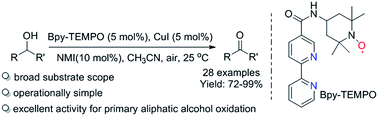
A novel bioinspired bifunctional ligand incorporating metal-binding site and stable free radical has been synthesized. The catalytic system obtained from the bifunctional ligand with copper(I) iodide in the presence of N-methylimidazole is highly efficient for the oxidation of a broad range of primary benzylic, allylic, alkynyl, aliphatic alcohols and secondary benzylic alcohols to the corresponding aldehydes and ketones in good to excellent yields. The catalyst system exhibits broad functional-group compatibility. The reaction is carried out in acetonitrile as solvent under air balloon at room temperature. The catalyst system features excellent activity for primary aliphatic alcohol oxidation and a high chemoselective oxidation of primary alcohols over the secondary alcohols. This oxidation process is readily amenable to larger-scale application. The interaction of the different components in the reaction mixtures was studied by UV-visible spectroscopy. The data indicated that Cu(I) existed throughout the reaction. A plausible mechanism of the catalytic cycle is proposed.

Introduction

The oxidation of alcohols to carbonyl compounds is one of the most fundamental and important processes in the fine chemical industry.1 The classical methodology is based on the stoichiometric use of the oxidants, such as MnO2, chromium salts, and the Dess–Martin reagent.2 Although these methods are useful, large amounts of inorganic and organic toxic waste is produced. Considerable advances in the oxidation of alcohols have been dominated by the development of catalytic green processes that utilize dioxygen or air as the sole oxidant.3 In this case water is the only by-product. Of particular interest in this field are Cu-based methods since these reactions usually associated with mild condition. Copper is a cheap, non-toxic metal which is predominant in many enzymes which are involved in the oxidation of alcohols. For example, galactose oxidase (GAO) is a radical copper oxidase for the oxidation of primary alcohols to the corresponding aldehydes. The active site that incorporates a Cu(II) metal centre and a stable protein free radical can perform a two-electron oxidation process.4 Inspired by the coupling of Cu redox process and an organic cofactor in alcohol oxidation by the radical copper oxidases, a variety of synthetic systems incorporation organic radical and copper complexes have been studied for this reaction.5 Although effective catalysts for alcohol oxidation using copper-cofactor pairs have been developed, finding systems that are both highly active and broadly applicable require further effort. More generally, extending the range of substrates that can be oxidized under environmentally friendly conditions is an important goal.

Currently, conceptually related catalytic systems which incorporate copper salts and TEMPO radical is considered to be a GAO mimic for the aerobic alcohol oxidation.6 A variety of copper salts and TEMPO based catalytic systems for the aerobic alcohol oxidation have been developed (Table 1S).7 To the best of our knowledge, few reports attempt to put the two together as a bifunctional molecule for the aerobic oxidation of alcohols. Jan Reedijk and coworkers reported bifunctional molecules containing ligands and TEMPO moiety using 2,4,6-trichloro-1,3,5-triazine as a building block for the aerobic oxidation of primary alcohols to the corresponding aldehydes.8 But only benzyl alcohol reported was fully converted to the aldehyde at room temperature. Allylic alcohols, such as crotyl alcohol and geraniol were needed to increase reaction temperature for full conversion. In the case of non-activated 1-octanol, the increase of the reaction temperature only results in moderate conversion. Wanzhi Chen and coworkers reported a copper–NHC complex bearing TEMPO catalyst that shows high activity in the oxidation of primary aliphatic alcohols but requires high catalyst loading (10 mol%) and high temperature.9 Very recently, Galia Maayan and coworkers reported metallopeptoid catalysts that use of a peptoid backbone for tethering together 1,10-phenanthroline and TEMPO.10 Although the catalysts show high performance as intramolecular cooperative catalysts in the aerobic oxidation of alcohols, the preparation of the peptoid oligomers needs several steps. To improve upon the state of the art, we are aiming to design a simple and new functional ligand incorporating both TEMPO moieties and Cu-binding sites (Scheme 1).


image file: c6ra05536b-s1.tif
Scheme 1 Novel bpy-TEMPO-based bifunctional ligand.

Herein, we demonstrated the application of the new bifunctional ligand bearing bipyridine and TEMPO in combination with Cu for the oxidation of a broad range of primary benzylic, allylic, alkynyl and aliphatic alcohols to the corresponding aldehydes under mild conditions. The reactions proceed in high yield, exhibit broad functional-group compatibility, and achieve chemoselective oxidation of primary alcohols over the secondary alcohols. This catalyst system can also achieve the oxidation of secondary alcohols. More importantly, bipyridine and TEMPO can be “one pot” combined without constructing backbones.

Experimental

General information

All chemicals used in this study were analytical grade, commercially available and used without further purification unless otherwise noted. All products were confirmed by GC-MS with Agilent 6890N GC/5973 MS detector. The HRMS analysis was obtained on a Waters GC-TOF CA156 mass spectrometer. GC calculations of yields were performed on an Agilent 7890A with a flame ionization detector. 1H NMR and 13C NMR spectrum were recorded on a 400 MHz NMR spectrometer using CDCl3 as the solvent with TMS as an internal reference. 1H and 13C positive chemical shifts (d) in ppm are downfield from tetramethylsilane (CDCl3: δC = 77.1 ppm; residual CHCl3 in CDCl3: δH = 7.26 ppm). The UV-visible spectra were recorded on a Shimadzu-2550 spectrometer with 10 mm path length of quartz sample cells at 298 K. Wavelength range, 240–900 nm. 1-(2-Pyridylacetyl)pyridinium iodide (1), 5-methyl-2,2-bipyridine (2) and 2,2-bipyridinyl-5-carboxylic acid (3) were prepared according to the known procedure.11

The oxidation reactions

A typical procedure for the oxidation of 1-octanol. A mixture of CuI (2.4 mg, 0.0125 mmol) in CH3CN (2 mL) was stirred for 1 min at room temperature in a 25 mL flask. bpy-TEMPO (4.4 mg, 0.0125 mmol) was added to the mixture. After stirring for 2 min, NMI (2 mg, 0.025 mmol) was added and stirred for 2 min. Then, 1-octanol (32.5 mg, 0.25 mmol) was added. The solution was stirred under air atmosphere (balloon) for 6 h. GC analysis of the reaction mixtures using biphenyl as an internal standard gave a 95% yield of octanal.
Determination of yield by 1H NMR. Without commercial available product, the yield of the corresponding product was determined by 1H NMR using benzyl benzoate as an internal standard.

After the reaction complete, benzyl benzoate (26.5 mg, 0.125 mmol, 0.5 eq.) was added to the mixture. 0.2 mL of the reaction mixture was added to a NMR tube via syringe. The yields of products were determined by 1H NMR analysis with respect to the benzyl benzoate standard.

General procedure for product isolation. After the reaction complete, if the alcohol completely converted by GC, the solvent was evaporated in vacuo and the residue was loaded directly on a small pad of silica and washed with hexane until no product could be detected from the eluent by TLC. Hexane was then removed by a rotary evaporator and the product was dried under vacuum. The purity of the product was determined by NMR. Notes: the selectivities in most reactions are more than 99%. And the catalysts cannot be washed down by hexane.

After the reaction complete, if the alcohol did not completely convert by GC, the reaction mixture was concentrated under reduced pressure. The residue was purified by flash column chromatography on silica gel (ethyl acetate/hexane) to afford the aldehyde products.

The synthetic procedure and characterization of bpy-TEMPO

1-(2-Pyridylacetyl)pyridinium iodide (1)11. A solution of iodine (7.1 g, 28.0 mmol) and 2-acetylpyridine (2.8 mL, 25.0 mmol) in pyridine (30 mL) was prepared in a reaction flask equipped with a condenser and drying tube and the reaction mixture was stirred for 6 h at 90 °C. At this time, the resulting suspension was filtered, and the residue was refluxed in EtOH (300 mL) with activated charcoal (3.0 g) for 4 h. The suspension was then filtered while hot, and the filtrate was concentrated under reduced pressure to give crude 1. Recrystallization of the crude product from a saturated EtOH solution was performed to purify 1 (5.8 g, 60%) as a yellow solid. 1H NMR (400 MHz, DMSO) δ 9.02 (d, J = 5.5 Hz, 1H), 8.88 (d, J = 4.7 Hz, 1H), 8.74 (t, J = 7.8 Hz, 1H), 8.29 (t, J = 6.7 Hz, 1H), 8.07–8.14 (m, 1H), 7.83–7.86 (m, 1H), 6.52 (s, 2H); 13C NMR (101 MHz, DMSO) δ 191.9, 150.9, 150.1, 146.8, 146.8, 138.6, 129.6, 128.2, 122.5, 67.1.
5-Methyl-2,2-bipyridine (2)11. Methacrolein (1.8 mL, 22.0 mmol) and H4NOAc (9.3 g, 120.0 mmol) were sequentially added to the solution of 1 (6.5 g, 20 mmol) in formamide (200 mL). The mixture was stirred at 80 °C for 16 h. At this time, the crude mixture was cooled and extracted with diethyl ether (3 × 200 mL). The combined organic layers were washed with brine (200 mL), dried over MgSO4, filtered, and concentrated under reduced pressure. The crude product was purified by column chromatography (5% MeOH in CH2Cl2) to yield 2 (3.7 g, 98%) as a brown oil. 1H NMR (400 MHz, CDCl3) δ 8.53 (s, 1H), 8.37 (s, 1H), 8.24 (d, J = 8.9 Hz, 1H), 8.16 (d, J = 8.0 Hz, 1H), 7.63 (ddd, J = 7.9, 4.9, 1.8 Hz, 1H), 7.50–7.41 (m, 1H), 7.19–7.04 (m, 1H), 2.21 (s, 3H); 13C NMR (101 MHz, CDCl3) δ 156.1, 153.4, 149.4, 148.8, 137.2, 136.6, 133.2, 123.2, 120.6, 120.4, 18.1.
2,2-Bipyridinyl-5-carboxylic acid (3)11. Potassium permanganate (12.3 g, 78 mmol) was added in 7 portions at 1 h intervals to a solution of 2 (3.4 g, 20 mmol) in water (200 mL). The mixture was heated at 70 °C for 3 h and then at 90 °C for 4 h more. The brown mixture was then filtered while hot through celite and washed with hot water (2 × 25 mL). The filtrate was concentrated to approximately 10 mL under reduced pressure, and then 1 M HCl was added slowly until a pH of 4 was obtained. The residue was then filtered and dried to obtain pure 3 (1.2 g, 30%) as a white solid. 1H NMR (400 MHz, DMSO) δ 9.19 (s, 1H), 8.76 (d, J = 4.3 Hz, 1H), 8.42–8.54 (m, 3H), 8.01 (t, J = 7.1 Hz, 1H), 7.52–7.55 (m, 1H); 13C NMR (101 MHz, DMSO) δ 166.6, 158.8, 154.7, 150.6, 150.0, 138.7, 137.9, 127.0, 125.4, 121.7, 120.7.
bpy-TEMPO (4)12. To a solution of 2,2-bipyridinyl-5-carboxylic acid (232 mg, 1.16 mmol), EDCI (268 mg, 1.4 mmol, 1.2 equiv.) and HOBt (214 mg, 1.4 mmol, 1.2 equiv.) in DMF (8 mL) was added 4-amino-TEMPO (240 mg, 1.4 mmol, 1.2 equiv.). The mixture was stirred at room temperature for 30 h, poured into water and extracted with AcOEt. The organic layer was washed with brine and dried over Na2SO4. Filtration, concentration in vacuo, and purification by silica gel flash column chromatography (AcOEt/petroleum ether/EtN3 = 2/1/1) gave 287 mg (70%) of a light brown solid. HRMS (ESI) for C20H26N4O2 [M + H]+, calcd: 354.2011, found: 354.2064.

Tetradecanal13 white solid, 1H NMR (400 MHz, CDCl3) δ 9.76 (t, J = 1.8 Hz, 1H), 2.41 (td, J = 7.4, 1.8 Hz, 2H), 1.66–1.56 (m, 2H), 1.27 (d, J = 16.5 Hz, 20H), 0.88 (t, J = 6.8 Hz, 3H); 13C NMR (101 MHz, CDCl3) δ 202.9, 43.9, 31.9, 29.7, 29.7, 29.6, 29.6, 29.4, 29.4, 29.2, 22.7, 22.1, 14.1.

Cinnamaldehyde14 light yellow liquid, 1H NMR (400 MHz, CDCl3) δ 9.61 (d, J = 7.7 Hz, 1H), 7.46–7.48 (m, 2H), 7.40–7.29 (m, 4H), 6.66–6.53 (m, 1H); 13C NMR (101 MHz, CDCl3) δ 193.7, 152.8, 133.9, 131.3, 129.1, 128.6, 128.5.

Phenylpropiolaldehyde14 yellow liquid, 1H NMR (400 MHz, CDCl3) δ 9.36 (s, 1H), 7.53 (dd, J = 5.2, 3.3 Hz, 2H), 7.42 (ddd, J = 6.7, 4.5, 1.3 Hz, 1H), 7.34 (t, J = 7.5 Hz, 2H); 13C NMR (101 MHz, CDCl3) δ 176.9, 133.4, 131.4, 128.8, 119.5, 95.2, 88.5.

Benzaldehyde15 colourless oil liquid, 1H NMR (400 MHz, CDCl3) δ 9.88 (s, 1H), 7.75 (d, J = 8.1 Hz, 2H), 7.49 (dd, J = 11.9, 4.1 Hz, 1H), 7.39 (t, J = 7.5 Hz, 2H); 13C NMR (101 MHz, CDCl3) δ 191.6, 135.3, 133.4, 128.6, 127.9.

4-Methylbenzaldehyde15 colourless liquid, 1H NMR (400 MHz, CDCl3) δ 9.96 (s, 1H), 7.77 (d, J = 8.0 Hz, 2H), 7.33 (d, J = 7.8 Hz, 2H), 2.44 (s, 3H); 13C NMR (101 MHz, CDCl3) δ 192.1, 145.6, 134.2, 129.9, 129.8, 21.9.

4-Nitrobenzaldehyde16 light yellow acicular crystal, 1H NMR (400 MHz, CDCl3) δ 10.16 (s, 1H), 8.40 (d, J = 8.6 Hz, 2H), 8.08 (d, J = 8.7 Hz, 2H); 13C NMR (101 MHz, CDCl3) δ 190.4, 151.2, 140.1, 130.6, 124.4.

4-Fluorobenzaldehyde16 colourless liquid, 1H NMR (400 MHz, CDCl3) δ 9.89 (s, 1H), 7.89–7.78 (m, 2H), 7.13 (t, J = 8.3 Hz, 2H); 13C NMR (101 MHz, CDCl3) δ 190.6, 166.6 (d, J = 255 Hz), 133.0 (d, J = 3.0 Hz), 132.3 (d, J = 10 Hz), 116.4 (d, J = 23 Hz).

3,4-Dimethoxybenzaldehyde14 white solid, 1H NMR (400 MHz, CDCl3) δ 9.84 (s, 1H), 7.45 (d, J = 9.6 Hz, 1H), 7.40 (s, 1H), 6.97 (d, J = 8.2 Hz, 1H), 3.96 (s, 3H), 3.93 (s, 3H); 13C NMR (101 MHz, CDCl3) δ 190.9, 154.5, 149.7, 130.2, 126.9, 110.4, 108.9, 56.2, 56.1.

1-Naphthaldehyde9 light yellow liquid, 1H NMR (400 MHz, CDCl3) δ 10.30 (s, 1H), 9.16 (d, J = 8.6 Hz, 1H), 7.99 (d, J = 8.2 Hz, 1H), 7.88 (d, J = 7.0 Hz, 1H), 7.82 (d, J = 8.2 Hz, 1H), 7.65–7.55 (m, 1H), 7.51 (m, 2H); 13C NMR (101 MHz, CDCl3) δ 193.6, 136.7, 135.3, 133.8, 131.4, 130.6, 129.1, 128.5, 127.0, 124.9.

Results and discussion

The first step toward the preparation of bifunctional ligand holding a bipyridine unit and TEMPO is to synthesize bipyridine derivatives bearing a side arm containing a functional group, which will be used to connect TEMPO (Scheme 1S). 2,2′-Bipyridinyl-5-carboxylic acid was prepared according to the literature procedure.11 The bifunctional ligand was prepared following the procedure by using 2,2′-bipyridinyl-5-carboxylic acid and 4-amino-TEMPO. The obtained solid labeled as bpy-TEMPO was characterized by HRMS and by EPR (see ESI). An EPR spectrum of bpy-TEMPO was recorded at room temperature. The characteristic triplet (g = 2.008) arising from the hyperfine structure coupling of the single electron shows the existence of the nitroxyl radical.

Then, we evaluate the activity of the catalyst in the oxidation of alcohols. 1-Octanol was used as a test substrate to optimize the reaction conditions. The results are summarized in Table 1. Several frequently used Cu salts were examined (Table 1, entries 1–10). Among the screened Cu salts, cuprous salts show much better catalytic activity than cupric salts (Table 1, entries 1–7). The use of CuI afforded the desired aldehyde in high yield in the presence of NMI as the additive and CH3CN as the solvent for 12 h (Table 1, entry 3). To our great surprise, excellent yield could also be obtained in reducing reaction time (Table 1, entry 8). Cu(OTf) used as Cu salt only 40% of yield was achieved, whereas [Cu(CH3CN)4]OTf was used giving in 88% of yield (Table 1, entries 9 and 10). A series of frequently used additives were examined (Table 1, entries 11–13). When DBU was used as the additive, trace product was obtained (Table 1, entry 11). The use of DMAP and DABCO afforded 89% and 14% yields, respectively (Table 1, entries 12 and 13). When the additive was not used, the product was obtained in only 8% of yield (Table 1, entry 14). The reaction can also be conducted under open air, albeit with slightly low yield (Table 1, entry 15). Finally, we demonstrated the practical applicability of the present catalytic system. The oxidation of 1-octanol was performed on a 5 mmol scale (20 times scale) and afforded products in 95% yield, albeit with a somewhat longer reaction time.

Table 1 Optimization of bpy-TEMPO/Cu catalyst system for the oxidation of 1-octanola

image file: c6ra05536b-u1.tif

Entry Cu salt Additive Time [h] Yieldb [%]
a 1-Octanol (0.25 mmol), additive (10 mol%), CH3CN (2 mL).b Determined by GC using internal standard.c Value in parentheses is conversion of 1-octanol.d Open air. ND = Not Detected.e 1-Octanol (5 mmol).
1 CuBr NMI 12 85
2 CuCl NMI 12 61
3c CuI NMI 12 (100) 96
4 [Cu(CH3CN)4]PF6 NMI 12 73
5 CuBr2 NMI 12 ND
6 CuCl2 NMI 12 ND
7 Cu(OTf)2 NMI 12 4
8 CuI NMI 6 95
9 Cu(OTf) NMI 6 40
10 [Cu(CH3CN)4]OTf NMI 6 88
11 CuI DBU 6 0.6
12 CuI DMAP 6 89
13 CuI DABCO 6 14
14 CuI No 6 8
15d CuI NMI 6 81
16e CuI NMI 10 (100) 95


Next, we applied the optimum reaction conditions to examine the substrate scope. The results are summarized in Table 2. As we know, the oxidation of unactivated primary aliphatic alcohols to the aldehydes is a challenging issue in the alcohol oxidation reactions. The products of the aliphatic aldehydes are more reactive than aliphatic alcohols and more susceptible to over-oxidation to the carboxylic acids. In a preliminary effort to assess the potential utility of this catalyst system for the oxidation of aliphatic alcohols, the oxidation of a series of aliphatic alcohols was examined firstly. Excellent yields can be obtained for the oxidation of non-functional group straight-chain primary alcohols (Table 2, entries 1–3). No over-oxidation of aldehyde products to the corresponding carboxylic acids was observed. Excellent product yields were obtained with substrates bearing common functional groups, including alkene (Table 2, entry 4), alkynes (Table 2, entry 5), halogen (Table 2, entry 6), and aryl (Table 2, entry 7). A decreased reactivity for sterically encumbered substrate such as cyclohexylmethanol was observed (Table 2, entry 8). Next, the catalytic system was used for the oxidation of allylic and propargylic alcohols (Table 2, entries 9–13). No oxidation of the alkene or alkyne is observed and the corresponding α,β-unsaturated carbonyl compounds were obtained in excellent yields. Finally, various types of primary benzylic alcohols with electron donating and electron withdrawing groups gave excellent yields of their corresponding aromatic aldehydes under optimal reaction conditions (Table 2, entries 14–22). Notably, the catalytic system was efficient for the oxidation of alcohols that are considered to be highly challenging substrates in most transition metal catalyst systems. Alcohols containing oxygen and sulfur heteroatom undergo efficient oxidation in excellent yields (Table 2, entries 23 and 24).

Table 2 CuI/bpy-TEMPO-catalyzed aerobic oxidation of primary alcohols to aldehydesa

image file: c6ra05536b-u2.tif

Entry Substrate Product Time [h] Yieldb [%]
a Alcohols (0.25 mmol), CH3CN (2 mL).b Determined by GC using internal standard, values in parentheses refer to isolated yields.c Determined by NMR.
Unactivated alcohols
1 image file: c6ra05536b-u3.tif image file: c6ra05536b-u4.tif 6 95
2 image file: c6ra05536b-u5.tif image file: c6ra05536b-u6.tif 7 92
3 image file: c6ra05536b-u7.tif image file: c6ra05536b-u8.tif 8 >99 (88)
4 image file: c6ra05536b-u9.tif image file: c6ra05536b-u10.tif 5 91
5c image file: c6ra05536b-u11.tif image file: c6ra05536b-u12.tif 9 89
6c image file: c6ra05536b-u13.tif image file: c6ra05536b-u14.tif 11 94
7c image file: c6ra05536b-u15.tif image file: c6ra05536b-u16.tif 7 92
8 image file: c6ra05536b-u17.tif image file: c6ra05536b-u18.tif 10 72
[thin space (1/6-em)]
Allylic, alkynyl alcohols
9 image file: c6ra05536b-u19.tif image file: c6ra05536b-u20.tif 4 94 (87)
10 image file: c6ra05536b-u21.tif image file: c6ra05536b-u22.tif 3.5 >99
11 image file: c6ra05536b-u23.tif image file: c6ra05536b-u24.tif 3.5 >99
12 image file: c6ra05536b-u25.tif image file: c6ra05536b-u26.tif 4 98 (83)
13 image file: c6ra05536b-u27.tif image file: c6ra05536b-u28.tif 4 98
[thin space (1/6-em)]
Benzylic alcohols
14 image file: c6ra05536b-u29.tif image file: c6ra05536b-u30.tif 5 >99 (95)
15 image file: c6ra05536b-u31.tif image file: c6ra05536b-u32.tif 2 >99 (94)
16 image file: c6ra05536b-u33.tif image file: c6ra05536b-u34.tif 3 >99 (96)
17 image file: c6ra05536b-u35.tif image file: c6ra05536b-u36.tif 3 >99 (92)
18 image file: c6ra05536b-u37.tif image file: c6ra05536b-u38.tif 3 >99 (90)
19 image file: c6ra05536b-u39.tif image file: c6ra05536b-u40.tif 3 >99
20 image file: c6ra05536b-u41.tif image file: c6ra05536b-u42.tif 6 98
21 image file: c6ra05536b-u43.tif image file: c6ra05536b-u44.tif 1.5 >99 (88)
22 image file: c6ra05536b-u45.tif image file: c6ra05536b-u46.tif 2 >99 (95)
[thin space (1/6-em)]
Heterocycles
23 image file: c6ra05536b-u47.tif image file: c6ra05536b-u48.tif 4 >99
24 image file: c6ra05536b-u49.tif image file: c6ra05536b-u50.tif 7 >99


Next, we tried to assess the ability of the present catalytic system to catalyze oxidation of the secondary benzylic alcohols, which is known to be difficult for Cu/bpy/TEMPO system due to the steric hindrance effect. Our catalytic system is capable of catalyzing the oxidation of secondary alcohols and gives good yields by prolonging the reaction time (Scheme 2).


image file: c6ra05536b-s2.tif
Scheme 2 The oxidation of the secondary benzylic alcohols.

The present catalytic system can achieve the oxidation of secondary alcohols, giving us a chance to hold a study on the competition experiments between primary alcohols and secondary alcohols (Scheme 3). When a mixture of activated benzyl alcohol and 1-phenylethanol was used, benzyl alcohol was fully consumed, whereas only 6.7% of the 1-phenylethanol was oxidized. The competition reaction between unactivated 1-octanol and activated 1-(4-methylphenyl)ethanol resulted in a 2.9[thin space (1/6-em)]:[thin space (1/6-em)]1 ratio in favour of the oxidation of 1-octanol. These results show the specificity of the catalytic system towards primary alcohols.


image file: c6ra05536b-s3.tif
Scheme 3 Selectivity competition experiments.

Having obtained the good results with the present catalytic system, we try our best to learn more about the interaction of the different components in the reaction mixtures by UV-visible spectroscopy (Fig. 1). The sequential experiments were conducted at room temperature. The UV-visible spectrum of CuI in CH3CN shows no obvious absorption peak. Upon adding the bpy-TEMPO, new band is seen at 410 nm from metal-to-ligand charge-transfer (MLCT), indicating the replacement of coordinated solvent molecules at the Cu(I) site by byp-TEMPO. The characteristic absorption of Cu(II) arising from d–d transition cannot be observed obviously, which demonstrated that Cu(II) might not be obtained via one-electron oxidation of Cu(I) by TEMPO. This result is consistent with the literature.17a After adding the NMI, new metal-to-ligand charge-transfer appeared as a shoulder at 415 nm. Then the mixtures were stirred under open air. The colour of the solution gradually changed from red-brown to green. The corresponding UV-visible spectrum shows band at 760 nm arising from d–d transition of Cu(II), indicating the oxidation of Cu(I) to Cu(II) by dioxygen. Then, benzyl alcohol was added to the above solution. The colour of the solution changed from green to the original red-brown immediately. Simultaneously, the d–d band of Cu(II) disappeared, and the MLCT band of Cu(I) reappeared. The oxidation of benzyl alcohol to benzaldehyde was observed at the same time. This clearly shows that Cu(II) formed in situ from Cu(I) is a active species for alcohol oxidation and that alcohol oxidation step is faster than the formation of Cu(II). When the benzyl alcohol is completely consumed, the colour of the solution is changed to green and the d–d band of Cu(II) reappeared. Another portion of benzyl alcohol is added to the system resulting in a rapid change of the colour back to red-brow until the benzyl alcohol is fully converted to benzaldehyde thus excluding catalyst deactivation (Fig. 1, (inset)). These observed results are consistent with Stahl's system.17b,c


image file: c6ra05536b-f1.tif
Fig. 1 Conditions: CuI (3.3 mmol L−1), bpy-TEMPO (3.3 mmol L−1), NMI (6.6 mmol L−1). Subsequent UV-visible spectra of CuI in CH3CN solution (black), +bpy-TEMPO (pink), +NMI immediately (red), +NMI after 2 min under open air (green), +benzyl alcohol (dark red), after reaction (dark green). Subsequent UV-vis spectra (inset) of benzyl alcohol added to the after reaction solution (dark red), after reaction (green).

Recently, the mechanism of Cu/bpy/TEMPO/NMI catalytic system for the alcohol oxidation has been well studied by Stahl group and Brückner group.17 They have given sufficient experimental evidence for their proposed mechanisms. There exists some divergence on the role of TEMPO between the two mechanisms. On the basis of our observations, we are more inclined to the mechanism that Brückner proposed.17c Cu(I)(TEMPO-bpy)(NMI) can activate O2 to form an active species (Cu(II)–O2˙–TEMPO-bpy)(NMI) in the presence of TEMPO. β-H was abstracted by active O2˙ through alcohol coordinated to the Cu(II). The carbonyl compound and Cu(I)(TEMPO-bpy)(NMI) were released.

Conclusions

In summary, we have developed a simple and new bifunctional molecule incorporating both a TEMPO unit and a bipyridine ligand. The bipyridine ligand moiety is a metal-binding site for forming metal–ligand complex. The TEMPO unit is a stable free radical as a co-catalyst in alcohol oxidation. The new bifunctional molecule was investigated as biomimetic catalyst in combination with Cu for the aerobic oxidation of alcohols in the presence of NMI as additive. The catalytic systems exhibited high catalytic activity for the oxidation of unactivated primary aliphatic alcohols as well as activated alcohols. The corresponding products were obtained in good to excellent yields. Moreover, our developed catalyst system shows a high selective oxidation of primary alcohols over secondary alcohols. Very importantly, the catalytic system is very easy to handle.

Acknowledgements

We gratefully acknowledge financial support from the National Natural Science Foundation of China (No. 21403219), and the National Engineering Laboratory for Methanol to Olefins.

Notes and references

  1. (a) M. Hudlicky, Oxidations in Organic Chemistry, American Chemical Society, Washington, DC, 1990 Search PubMed; (b) R. C. Larock, Comprehensive Organic Transformations, Wiley, New York, 1999 Search PubMed; (c) G. Tojo and M. Fernandez, Oxidations of Alcohols to Aldehydes and Ketones, Springer, New York, 2006 Search PubMed.
  2. J. March, Advanced Organic Chemistry: Reactions, Mechanisms, and Structure, John Wiley & Sons, New York, 4th edn, 1992 Search PubMed.
  3. For representative reviews of aerobic oxidation of alcohols, see: (a) R. A. Sheldon, I. W. C. E. Arends, G.-J. ten Brink and A. Dijksman, Acc. Chem. Res., 2002, 35, 774–781 CrossRef CAS PubMed; (b) B.-Z. Zhan and A. Thompson, Tetrahedron, 2004, 60, 2917–2935 CrossRef CAS; (c) T. Mallat and A. Baiker, Chem. Rev., 2004, 104, 3037–3058 CrossRef CAS PubMed; (d) M. J. Schultz and M. S. Sigman, Tetrahedron, 2006, 62, 8227–8241 CrossRef CAS; (e) T. Punniyamurthy, S. Velusamy and J. Iqbal, Chem. Rev., 2005, 105, 2329–2363 CrossRef CAS PubMed; (f) C. Parmeggiani and F. Cardona, Green Chem., 2012, 14, 547–564 RSC; (g) B. L. Ryland and S. S. Stahl, Angew. Chem., Int. Ed., 2014, 53, 8824–8838 CrossRef CAS PubMed; (h) J. Piera and J. E. Bäckvall, Angew. Chem., Int. Ed., 2008, 47, 3506–3523 CrossRef CAS PubMed; (i) Z. Z. Shi, C. Zhang, C. H. Tang and N. Jiao, Chem. Soc. Rev., 2012, 41, 3381–3430 RSC; (j) S. E. Allen, R. R. Walvoord, R. Padilla-Salinas and M. C. Kozlowski, Chem. Rev., 2013, 113, 6234–6458 CrossRef CAS PubMed; (k) S. Wertz and A. Stude, Green Chem., 2013, 15, 3116–3134 RSC; (l) Q. Cao, L. M. Dornan, L. Rogan, N. L. Hughes and M. J. Muldoon, Chem. Commun., 2014, 50, 4524–4543 RSC.
  4. (a) J. W. Whittaker, Chem. Rev., 2003, 103, 2347–2363 CrossRef CAS PubMed; (b) J. W. Whittaker, Arch. Biochem. Biophys., 2005, 433, 227–239 CrossRef CAS PubMed.
  5. (a) Y. D. Wang, J. L. DuBois, B. Hedman, K. O. Hodgson and T. D. P. Stack, Science, 1998, 279, 537–540 CrossRef CAS PubMed; (b) P. Chaudhuri, M. Hess, U. Florke and K. Wieghardt, Angew. Chem., Int. Ed., 1998, 37, 2217–2220 CrossRef CAS; (c) B. A. Jazdzewski and W. B. Tolman, Coord. Chem. Rev., 2000, 200–202, 633–685 CrossRef CAS; (d) T. Fabrice, Eur. J. Inorg. Chem., 2007, 2007, 2379–2404 Search PubMed.
  6. (a) I. W. C. E. Arends, P. Gamez and R. A. Sheldon, Adv. Inorg. Chem., 2006, 58, 235–279 CrossRef CAS; (b) R. A. Sheldon and I. W. C. E. Arends, J. Mol. Catal. A: Chem., 2006, 251, 200–214 CrossRef CAS.
  7. For more recent reviews, see: ref. 3f and g.
  8. (a) Z. L. Lu, J. S. Costa, O. Roubeau, I. Mutikainen, U. Turpeinen, S. J. Teat, P. Gamez and J. Reedijk, Dalton Trans., 2008, 3567–3573 RSC; (b) Z. L. Lu, T. Ladrak, O. Roubeau, J. V. Toorn, S. J. Teat, C. Massera, P. Gamez and J. Reedijk, Dalton Trans., 2009, 3559–3570 RSC.
  9. X. L. Liu, Q. Q. Xia, Y. J. Zhang, W. Z. Chen and C. Y. Chen, J. Org. Chem., 2013, 78, 8531–8536 CrossRef CAS PubMed.
  10. K. J. Prathap and G. Maayan, Chem. Commun., 2015, 51, 11096–11099 RSC.
  11. C. W. Y. Chung and P. H. Toy, J. Comb. Chem., 2007, 9, 115–120 CrossRef CAS PubMed.
  12. M. Ikeda, H. Nakagawa, T. Suzuki and N. Miyata, Bioorg. Med. Chem. Lett., 2012, 22, 1949–1952 CrossRef CAS PubMed.
  13. J. M. Wiseman, F. E. McDonald and D. C. Liotta, Org. Lett., 2005, 7, 3155–3157 CrossRef CAS PubMed.
  14. L. Y. Wang, J. Li, H. Yang, Y. Lv and S. Gao, J. Org. Chem., 2012, 77, 790–794 CrossRef CAS PubMed.
  15. L. Y. Wang, J. Li, Y. Lv, G. D. Zhao and S. Gao, Appl. Organomet. Chem., 2012, 26, 37–43 CrossRef CAS.
  16. B. T. Chen, K. V. Bukhryakov, R. Sougrat and V. O. Rodionov, ACS Catal., 2015, 5, 1313–1317 CrossRef CAS.
  17. (a) J. Rabeah, U. Bentrup, R. Stöβer and A. Brückner, Angew. Chem., Int. Ed., 2015, 54, 11791–11794 CrossRef CAS PubMed; (b) J. M. Hoover, B. L. Ryland and S. S. Stahl, J. Am. Chem. Soc., 2013, 135, 2357–2367 CrossRef CAS PubMed; (c) J. M. Hoover, B. L. Ryland and S. S. Stahl, ACS Catal., 2013, 3, 2599–2605 CrossRef CAS PubMed.

Footnote

Electronic supplementary information (ESI) available: The synthetic procedure and characterization of bpy-TEMPO, copies of NMR spectra. See DOI: 10.1039/c6ra05536b

This journal is © The Royal Society of Chemistry 2016
Click here to see how this site uses Cookies. View our privacy policy here.