
The effects of metal oxide blended activated coke on flue gas desulphurization

Lin Yanga, Tian Huangc, Xia Jiangab, Jianjun Liab and Wenju Jiang*ab
aCollege of Architecture and Environment, Sichuan University, Chengdu 610065, P. R. China. E-mail: wenjujiang@scu.edu.cn; Fax: +86-28-85405613; Tel: +86-28-85467800
bNational Engineering Research Center for Flue Gas Desulphurization, Chengdu 610065, P. R. China
cChengdu Development Center of Science and Technology, China Academy of Engineering Physics, Chengdu, 620107, P. R. China

Received 1st March 2016 , Accepted 24th May 2016

First published on 26th May 2016


Abstract

The objective of this study was to investigate the possibility of using some natural minerals or industrial waste containing some metal oxides to prepare modified activated coke (M/AC) for flue gas desulphurization. The metal oxides, i.e. Fe2O3, Co2O3, CuO and Ni2O3, were used as additives to prepare M/AC by a blending method. The results show that the M/AC could effectively improve desulphurization performance, and the highest sulphur capacity was obtained at 143 mg g−1 for the Ni/AC sample with a blending ratio of 12 wt%, which was higher than that of the blank sample (97 mg g−1). The addition of metal oxides by the blending method could affect the textural properties of M/AC evidently and the influence was different with different metal oxides and blending ratios. On the other hand, M/AC samples have higher contents of oxygen-containing functional groups, with the highest for the Ni/AC sample, and have higher contents of π–π* transition groups, compared with blank activated coke. The metal oxides loaded on the M/AC were mainly transformed to metallic particles during the activation process, and to metal sulfate and partially metal oxides after the desulphurization process.

1. Introduction

Sulphur dioxide (SO2) is emitted mainly from coal combustion in power plants, industrial activities, and household heating, and is one of the primary pollutants in most areas in China since the burning of coal supplies 70% of the energy consumed currently.1 The emission of SO2 in China has caused many serious environmental pollution and human health problems, and has also been recognized as one of the main sources of haze pollution.2–4 Activated coke desulphurization technology has been proven to be particularly promising for the removal of SO2 from flue gas because of its many advantages, such as simultaneous removal of various pollutants (SO2, NOx, dioxins, etc.), without producing secondary pollutants and being easily regenerated.5–8

It was reported that desulphurization performance of activated coke mostly depends on its physicochemical characteristics.9,10 On the one hand, the textural properties of activated coke can affect the adsorption ability, and the higher specific surface area and micropore volume of activated coke effectively improved the removal of SO2.11,12 On the other hand, the surface chemical properties of activated coke, such as oxygen-containing functional groups, could have an important role in the removal of SO2 due to their high affinity.13–15 In addition, it had been reported that transition metals loaded porous carbon materials could improve desulphurization performance of activated coke/carbon effectively, due to the catalysis effect of the loaded metals on their surface, such as Fe, Co, V and Mn, etc.7,12,16–18 However, the physicochemical properties of activated coke are mostly based on the raw materials, the additives and preparation methods.19

Generally, there are two preparation methods for activated carbon/coke modification, i.e. impregnation and blending method. Impregnation has widely been used for loading transition metals on activated coke/carbon through immersing activated coke/carbon in an aqueous solution of metal salts, and then calcined in an inert atmosphere.11,20 Compared with impregnation, blending method is relatively simple and referred to as one-step activation: mixing the additives with carbon chars first, and then proper treatments like activation process.14,21 Moreover, blending method could achieve uniform distribution of additives throughout the carbon matrix and overcome some drawbacks of impregnation method effectively, such as the blockage of the surface pore entrances, complex process and high preparation cost.14,22 More importantly, the method is based on solid–solid mixing, which means that natural ores or industrial wastes which contain metal oxides can be used to prepare modified activated coke/carbon. As a result, the preparation cost of modified activated coke will be further reduced.

Our previous results demonstrated that MnO2 modified activated coke by blending method had a better removal efficiency of SO2 than blank activated coke.14,23 The results indicated that the natural minerals containing MnO2, such as pyrolusite, can be used as the additive to prepare modified activated coke for flue gas desulphurization with low cost and high desulphurization performance.24 Nevertheless, very few studies have been found on using other metal oxides as the additives to prepare modified activated coke by blending method for flue gas desulphurization yet.

Thus, in this study, some metal oxides, i.e. Fe2O3, Co2O3, CuO and Ni2O3, were chosen as the additives to prepare modified activated coke by blending method, to investigate the possibility of using the natural minerals or industrial wastes containing these metal oxides to prepare modified activated coke for flue gas desulphurization. The physicochemical properties and desulphurization capacity of prepared activated coke were systematically studied.

2. Materials and methods

2.1. Preparation of activated coke

In this study, bituminous coal from Shanxi province of China was used as the raw material to prepare activated coke. Firstly, the bituminous coal is widely available in China due to its richness and low price. Secondly, its volatile and ash contents were 35.2% and 6.42%, respectively, which could be favourable for the pore creation and a good mechanical strength of obtained products.25 Thirdly, its content of carbon (62.98 wt%) was high. Furthermore, the content of sulphur in the coal is relatively low, only 0.69 wt%, which was significantly lower than the average level of coal (1.14%) in China.26 The coal mainly consisted of (wt%): C, 62.98; O, 27.08; Si, 3.84; Ca, 1.31; Fe, 0.93; S, 0.69; K, 0.21; Mg, 0.19 and the other elements 1.23.

The coal was firstly carbonized in an electric furnace at 600 °C under 400 mL min−1 of N2 gas for 1 h to remove the bulk of the volatiles. Subsequently, the carbonized coal was crushed and sieved to pass through a 200 mesh screen. The coal tar and distilled water were used as the main binders. The metal oxides powder, i.e. Fe2O3, Co2O3, CuO and Ni2O3, were used as the additives at the ratios of 0–20 wt%, respectively. The carbonized coal powder and the additives were mixed by a kneading machine, and then the columnar carbon (3 mm of diameter) was obtained with high compressive at 10 MPa. Furthermore, the molded samples were activated using H2O (MH2O[thin space (1/6-em)]:[thin space (1/6-em)]MC = 1[thin space (1/6-em)]:[thin space (1/6-em)]2) under the temperature of 950 °C in an activation furnace for 1 h, which was the optimal activation conditions for the preparation of activated coke. The samples were cooled to room temperature under N2 gas flow and then kept desiccated for further experiment. The activated coke without additives was named as “AC”, and the modified activated coke was named as “Mx/AC”, with “M” as the additive and “x” as the blending ratio of the additive.

2.2. Desulphurization activity test

The desulphurization activity tests were carried out in a continuous flow lab-scale fixed-bed reactor system. The fixed-bed reactor was a glass tube with an internal diameter of 21 mm and packed with 100 mm height of the samples. The bed temperature and space velocity of the desulphurization tests were 80 °C and 600 h−1, respectively. The compositions of the synthetic flue gas were 2000 ppmv of SO2, 10% of H2O vapor, 10% of O2 gas and N2 gas as the balance gas. The inlet and outlet concentrations of SO2 were monitored on-line by a Flue Gas Analyzer continuously, and the desulphurization test was stopped when the outlet SO2 concentration reached 10% of inlet concentration (i.e. 200 ppmv). The sulphur capacity was determined by the integration of the SO2 breakthrough curve and presented as the amount of SO2 removed per unit mass of activated carbon, while the corresponding working time was regarded as the breakthrough time.

2.3. Characterization of activated coke

Nitrogen adsorption–desorption isotherms of activated coke were measured with a surface area analyzer (SSA-4200, Builder, China) at 77 K. Prior to measurements, the samples were degased under vacuum at 473 K for 8 h. The specific surface areas (SBET) of activated coke were calculated from the N2 adsorption isotherms using Brunauer–Emmett–Teller (BET) equation, through assuming the area of the nitrogen molecule to be 0.162 nm2.27 The total pore volume (Vtot) was estimated as the liquid volume of N2 adsorbed at a relative pressure of 0.995. The micropore volume (Vmic) and micropore area (Smic) were obtained by t-plot theory. The mesopore volume (Vmes) was calculated by the difference of Vtot and Vmic.27

The morphology and cross-section of these samples used in this study were measured using scanning electron microscopy (SEM, JSM-7500F, JPN) equipped with energy-dispersive spectrometry (EDS) analysis.

The crystal structure of activated coke was determined by an X-ray diffraction (XRD) with an X-Pert PRO MPD diffractometer (Panalytical, NL) employing Cu Kα radiation at 30 kV and 20 mA, and step-scanning over 2θ with the range of 10–80°. The crystalline phases were identified by comparison with the reference data from the International Center for Diffraction Data (JCPDs).

The Fourier-transform infrared spectroscopy (FTIR) characterization were carried out in the 4000–400 cm−1 region with a spectrometer (FTIR 6700, Nicolet, USA) at a solution of 4 cm−1.

X-ray photoelectron spectroscopy (XPS) was applied to determine the surface chemical composition and functional groups, using a XSAM-800 spectrometer (KRATOS, UK) with Al (1486.6 eV) under ultra-high vacuum at 12 kV and 15 mA. Energy calibration was done by recording the core level spectra of Au 4f7/2 (84.0 eV) and Ag 3d5/2 (368.30 eV).

3. Results and discussion

3.1. Desulphurization performance of activated coke

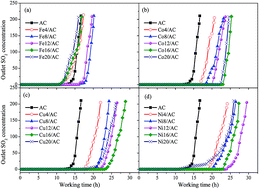
Fig. 1 shows the desulphurization curves of metal oxides modified activated coke and the breakthrough sulphur capacities are listed in Table 1. It can be seen that almost all of the metal oxides modified activated coke exhibited better desulphurization activity than blank one. For the Fe/AC samples, when the blending ratio was 8 wt%, the best removal efficiency of SO2 was obtained, with its sulphur capacity at 114 mg g−1. Above the blending ratio, the sulphur capacity of the Fe/AC samples decreased, and was slightly lower than blank AC when the blending ratios were in the range of 16–20 wt%. For the Co/AC, Cu/AC and Ni/AC samples, the highest sulphur capacities were obtained at 128, 137 and 143 mg g−1 when the blending ratios were 16, 16 and 12 wt%, respectively. Above the blending ratios, their sulphur capacities all decreased, but were still evidently higher than blank samples. In addition, with the same blending ratios of metal oxides, the Ni2O3 and CuO modified activated coke had clearly better desulphurization performance than the Fe2O3 and Co2O3 ones. The highest sulphur capacities of the modified activated coke were in the order: Ni12/AC > Cu16/AC > Co16/AC > Fe8/AC.
image file: c6ra05407b-f1.tif
Fig. 1 Desulphurization curves of prepared activated coke by blending with (a) Fe2O3, (b) Co2O3, (c) CuO, and (d) Ni2O3 (experimental conditions: 80 °C, SO2/H2O/O2/N2: 2000 ppmv/10%/8%/8%).
Table 1 Sulphur capacity of prepared activated coke (mg g−1)
Dosage (wt%) Fe/AC Co/AC Cu/AC Ni/AC
0 97.0 97.0 97.0 97.0
4.0 111.4 117.4 119.1 118.1
8.0 113.9 123.2 129.2 131.6
12.0 103.7 124.6 132.7 142.8
16.0 93.3 127.9 137.0 132.1
20.0 91.1 121.8 121.8 120.9


In addition, it needs to be noticed that even though the highest sulphur capacities were achieved with the blending ratios of these metal oxides over 8 wt%, their sulphur capacities did not increase significantly above 8 wt% of blending ratios. For example, Co8/AC sample achieved the higher sulphur capacity at 123.2 mg g−1, while the sulphur capacity of Co12/AC and Co16/AC samples were 124.6 and 127.9 mg g−1, respectively. The increase of their sulphur capacity was insignificant, blended with activated coke. Similar phenomena were observed for Cu/AC, Ni/AC and Fe/AC samples. Therefore, the proper blending ratios of Fe2O3, Co2O3, CuO and Ni2O3 should be about 8 wt%, which can be used to prepare modified activated coke by blending method in future industrial desulphurization application.

The desulphurization curves of the metal oxides are shown in Fig. S1 (ESI). It can be seen that the desulphurization performance of the metal oxides was all lower than modified activated coke (Fig. 1). This could be due to the low reaction temperature between SO2 and metal oxides.7 Ma et al.7 also found that the Fe2O3 has a lower SO2 removal activity than the Fe2O3 modified activated carbon. Therefore, the metal oxides modified activated coke/carbon is better than the metal oxides alone for flue gas desulphurization.

3.2. Textural properties of activated coke

Fig. 2 shows the N2 adsorption isotherms of prepared activated coke with the highest sulphur capacity. It shows clearly that the N2 adsorption isotherms were well-defined for type I, according to international union of pure and applied chemistry (IUPAC). At the low relative pressure stage, all the samples showed an obvious N2 adsorption, with a lower N2 adsorption capacity for the Ni12/AC sample, which indicates the existence of a large amount of micropores in the samples.28,29 Meanwhile, at the higher relative pressure stage, some extent of adsorption was observed, meaning that certain amount of mesopores also existed.30 Moreover, all modified samples had a lower N2 adsorption at the high relative pressure stage, with the lowest adsorption for Ni12/AC sample.
image file: c6ra05407b-f2.tif
Fig. 2 N2 adsorption isotherms of prepared activated coke at 77 K.

The textual properties of all samples are shown in Table 2. For Fe/AC samples, when the blending ratio of Fe2O3 was 4 wt%, the SBET, Vmic and Vtot were slightly higher than blank sample, and then decreased as the increase of the blending ratios. The ratios of Vmic/Vtot of Fe/AC samples were about 50%, and increased slightly compared with blank sample. For Co/AC samples, when the blending ratio of Co2O3 was 4 wt%, the SBET, Vmes and Vtot decreased significantly, compared with blank sample, and increased with the increase of the blending ratios from 4 to 16 wt%, and then decreased when the blending ratio of Co2O3 was 20 wt%. Their Vmic did not change significantly, while their ratios of Vmic/Vtot were higher than blank sample, and higher ratios of Vmic/Vtot were obtained for the modified samples with lower Co2O3 ratios. For Cu/AC samples, their SBET, Vmes and Vtot decreased slightly, while their Vmic did not change significantly, compared with blank sample. Their Vmic/Vtot ratios were evidently higher than that of blank Vmic did not change significantly, compared with blank sample. Their Vmic/Vtot ratios were evidently higher than that of blank sample. For Ni/AC samples, their SBET, Vmic and Vtot all decreased evidently, and their Vmic/Vtot ratios decreased slightly, compared with blank sample.

Table 2 Textural properties of prepared activated cokea
Sample SBET (m2 g−1) Vtot (mL g−1) Vmic (mL g−1) Vmes (mL g−1) Vmic/Vtot (%) Rmean (nm)
a SBET: surface area, Vmic: micropore volume, Vmes: mesopore volume, Vtot: total volume, Rmean: average pore radius.
AC 356.7 0.337 0.163 0.174 48.37 1.89
Fe4/AC 377.4 0.355 0.180 0.175 50.70 1.88
Fe8/AC 339.5 0.319 0.161 0.158 50.47 1.88
Fe12/AC 331.8 0.329 0.164 0.165 49.85 1.98
Fe16/AC 329.3 0.308 0.154 0.154 50.00 1.87
Fe20/AC 300.4 0.287 0.145 0.142 50.52 1.91
Co4/AC 301.9 0.244 0.144 0.100 59.02 1.61
Co8/AC 324.3 0.274 0.153 0.121 55.84 1.69
Co12/AC 339.3 0.291 0.157 0.134 53.95 1.70
Co16/AC 360.0 0.307 0.166 0.141 54.07 1.70
Co20/AC 312.2 0.280 0.143 0.137 51.07 1.80
Cu4/AC 345.5 0.296 0.164 0.132 55.41 1.71
Cu8/AC 354.8 0.306 0.173 0.133 56.54 1.72
Cu12/AC 329.2 0.298 0.156 0.142 52.35 1.81
Cu16/AC 330.6 0.295 0.158 0.137 53.56 1.78
Cu20/AC 323.9 0.289 0.156 0.133 53.97 1.66
Ni4/AC 305.3 0.306 0.141 0.165 46.08 2.00
Ni8/AC 277.2 0.319 0.130 0.189 40.75 2.30
Ni12/AC 279.8 0.266 0.125 0.141 46.99 1.90
Ni16/AC 272.3 0.257 0.119 0.138 46.30 2.30
Ni20/AC 271.7 0.248 0.118 0.130 47.58 2.36


The results show that the addition of metal oxides by blending method could affect evidently the textural properties of prepared activated coke and the influence was different for different metal oxides and different blending ratios. Generally, compared with blank sample, the SBET and Vtot of almost all modified activated coke decreased slightly, with a more evident decrease for Ni/AC samples. Moreover, as the increase of the blending ratios, the SBET and Vtot of Fe/AC and Ni/AC samples decreased first and then did not change significantly after 8 wt% of blending ratio, while those of Co/AC samples first increased and then decreased at higher blending ratio, i.e. 20 wt%. It was observed that the Vmic of modified activated coke did not change significantly compared with blank activated coke, except for Ni/AC samples with evident decrease. For the Vmes, Co/AC and Cu/AC samples had an evident decrease, while Fe/AC and Ni/AC samples had a slight decrease compared with blank sample. With the increase of blending ratio, the Vmes of Fe/AC and Ni/AC samples decreased, while Co/AC samples slightly increased and Cu/AC samples did not change evidently. For Vmic/Vtot ratios, Co/AC and Cu/AC samples had an evident increase, while those of Ni/AC samples decreased slightly compared with blank sample.

It was reported that the addition of additives in activated coke/carbon might block the pores since they could not be completely decomposed, resulting in the increase of the ash content in activated coke/carbon.15,31,32 Many studies reported that the modified activated carbon by impregnation would lead the pore blockage.22,33,34 For example, the BET surface area of the CuO modified activated carbon by impregnation was decreased to 708 m2 g−1 from 998 m2 g−1 for blank carbon, with a reduction ratio of 20%. In this study, CuO modified activated coke by blending method obtained slightly decreased BET surface area (325–355 m2 g−1), compared with blank one (357 m2 g−1), with the reduction ratios of below 9%. This indicates that blending method had lower pore blockage on modified samples, compared with those by impregnation. This could be attributed to the reactions between the metal oxides and the carbon substrate during activation process.

Previous studies also reported that higher micropore volume and surface area were favourable for the removal of SO2 because the adsorption and oxidation process mainly took place in micropores in activated carbon/coke.35–37 High surface areas indicated that a large amount of active sites on activated carbon/coke can be exposed to the adsorbate.28 In this study, the SBET and Vmic of the modified activated coke decreased slightly, even though the Vmic/Vtot ratios of some modified activated coke had an evident increase, compared with blank one. This means that the textual property was not the key factor affected the desulphurization activity of the modified activated coke, and the desulphurization improvement might be caused by surface chemical properties, such as surface functional groups, active metal oxides added by blending method.

3.3. Surface functional groups on activated coke

In order to investigate the functional groups on the surface of metal oxides modified activated coke, their FTIR characteristics were analysed, as shown in Fig. 3. The FTIR spectra show that there was the absorption peak in the range of 3700–3000 cm−1, with the maximum peak near 3430 cm−1, which was caused by the stretching vibration of O–H in alcohol, carboxyl and hydroxyl groups or to chemisorbed water.38,39 The band located at 1628 cm−1 was detected, which was caused by the presence of the C[double bond, length as m-dash]O stretching vibration of different functional groups, including quinones and lactones.6,40 The absorption peak at 1400 cm−1 was assigned to the C–H stretch in –CH2– or –CH3.41,42 The adsorption peak at 1300–900 cm−1 with the maximum near 1089 cm−1 was assigned to the C–O stretching vibration of carboxylic acids, lactones, ethers, and phenols.43,44 It can be seen that the O–H groups on activated coke did not clearly changed, except for the Co16/AC sample, while the intensities of the adsorption peaks at 1628 and 1400 cm−1 on modified activated coke were weaken. The adsorption peak at 1089 cm−1 on the modified activated coke did not significantly changed, compared with blank sample.
image file: c6ra05407b-f3.tif
Fig. 3 FT-IR spectra of prepared activated coke: AC (a), Fe8/AC (b), Co16/AC (c), Cu16/AC (d), and Ni12/AC (e).

Furthermore, the XPS analyses were also performed for the samples to determine the surface functional groups. The wide-scan spectra of the samples are given in Fig. S2 (ESI), and their relative contents (RCs) of C 1s and O 1s are shown in Table 3. It can be seen that the RCs of carbon decreased evidently for the modified activated coke, while the RCs of oxygen increased significantly, especially for Ni12/AC sample. The ratios of O/C in the samples were in the order: Ni12/AC > Cu16/AC > Co16/AC > Fe8/AC. This suggests that the addition of metal oxides by blending method was favourable for the formation of oxygen-containing functional groups on activated coke. This was well consistent with the desulphurization performance of the modified activated coke. This indicates that the contents of oxygen containing functional groups on activated coke affected significantly their desulphurization performance.

Table 3 Relative contents of C 1s and O 1s on prepared activated coke
Sample AC Fe8/AC Co16/AC Cu16/AC Ni12/AC
C 1s (%) 90.36 85.18 82.7 80.77 81.15
O 1s (%) 9.64 13.78 15.69 16.3 26.4
O 1s/C 1s 0.107 0.162 0.19 0.202 0.325


The XPS spectra of the C 1s region for the samples are shown in Fig. S3 (ESI) and Table 4 presents their binding energy (BE) and RCs. It can be seen that the C 1s peaks could be classified into four components: (1) the peak at 284.6 eV which was attributed to graphitic carbon (C–C); (2) the peaks at the range of 285.5–286.0 eV which was due to the C–O in hydroxyl and ethers; (3) the peaks at the range of 287.0–288.3 eV which was assigned to the C[double bond, length as m-dash]O; (4) the peaks at 289.0–290.5 eV which was corresponding to carbonate or the π–π* transitions in aromatic rings.27,45–47

Table 4 Binding energy (BE) and relative contents (RCs) of prepared activated coke
Sample AC Fe8/AC Co16/AC Cu16/AC Ni12/AC
C–C BE (eV) 284.62 284.62 284.59 284.66 284.61
RCs (%) 72.1 73.2 70.16 74.01 77.34
C–O BE (eV) 285.82 285.66 285.69 285.83 285.91
RCs (%) 18.26 14.53 17.33 13.68 12.53
C[double bond, length as m-dash]O BE (eV) 288.04 287.04 287.3 287.42 287.27
RCs (%) 6.53 7.23 6.71 6.22 4.56
π–π* BE (eV) 290.29 289.21 289.17 289.77 289.31
RCs (%) 3.11 5.03 5.8 6.09 5.58


It can be seen that the addition of different metal oxides had different effects on the functional groups on the surface of activated coke. The contents of C–O groups on Fe8/AC, Cu16/AC and Ni12/AC samples significantly decreased, whileCo16/AC sample has a slight decrease, compared with blank sample. This means that Fe2O3, CuO and Ni2O3 had a stronger effect on the formation of C–O groups on activated coke than Co2O3 during activation process. For the C[double bond, length as m-dash]O groups, the RCs on the Fe8/AC, Cu16/AC and Co16/AC samples did not evidently change, while the RCs on Ni12/AC sample decreased, which indicate that Ni2O3 might be not favorable for the formation of C[double bond, length as m-dash]O groups on activated coke. The RCs of π–π* transitions groups on the modified samples all increased evidently, compared with blank sample. This means that these metal oxides might be beneficial for the formation of the π–π* transition groups on activated coke during activation process.

It was reported that surface functional groups had an important effect on desulphurization performance of porous carbon materials, especially the basic sites, such as π–π* transition and C[double bond, length as m-dash]O groups.48–50 In this study, the contents of π–π* transition groups on the modified activated coke increased significantly, which could improve the surface basicity of activated coke effectively. As a result, the surface properties of these metal oxides modified activated coke were more favorable for flue gas desulphurization. This could partially contribute to better desulphurization performance of modified activated coke than blank one.

3.4. Metal phase on activated coke before desulphurization

The distribution of metal (i.e. Fe) in the cross section of the Fe2O3 modified activated coke was characterized by SEM, as shown in Fig. 4. It can be seen that the Fe element was well dispersed into the carbon matrix. This indicates that the blending method could achieve the uniform distribution of the solid additives in the carbon matrix.
image file: c6ra05407b-f4.tif
Fig. 4 SEM analysis of the Fe8/AC sample: (a) SEM cross-sectional image, (b) Fe mapping.

The crystalline phases on the modified samples were analyzed by XRD, as shown in Fig. 5A. For Fe8/AC sample, the peaks of Fe at 2θ = 44.7° and 65.1° (JCPDs 06-0696) were observed, and the peak of FeO at 2θ = 50.8° (JCPDs 34-0178) was also detected. This suggests that both metallic iron particles and FeO were coexisted on the carbon matrix of modified activated coke. For Co16/AC sample, three obvious peaks at 2θ = 44.1°, 51.4° and 75.8° were detected, which belonged to the characteristics peaks of metallic cobalt particles (JCPDs 15-0806). For Cu16/AC sample, three absorption bands at 2θ = 43.6°, 50.8° and 74.5° were detected, which were corresponding to metallic copper particles (JCPDs 65-9743). For Ni16/AC sample, three obvious peaks at 2θ = 44.4°, 51.8° and 76.2° were observed, which were attributed to metallic nickel particles (JCPDs 65-0380). The results demonstrated that the metal oxides blended in activated coke were decomposed to lower and more stable states during the activation process when H2O was used as the activation agent.


image file: c6ra05407b-f5.tif
Fig. 5 XRD patterns of prepared activated coke: AC (a); Fe8/AC (b); Co16/AC (c); Cu16/AC (d) and Ni12/AC (e) before (A) and after desulphurization (B).

The XPS spectra of high resolution scan for the modified samples are illustrated in Fig. 6(1). For the XPS Fe 2p spectra of the Fe8/AC sample, the peaks of Fe 2p3/2 were found at the binding energy of 709.8 and 712.6 eV before SO2 removal. The peak at the binding energy of 709.8 eV was in the range of Fe2+ of FeO,4,51 and the peak of 712.6 eV was corresponding to Fe3+of Fe2O3.11 For the XPS spectra of Co 2p of the Co16/AC sample, the main peak of Co 2p3/2 was centered at 780.2 eV, which was ascribed to Co2+ of CoO.51 For the XPS spectra of Cu 2p of the Cu16/AC sample, the Cu 2p3/2 peak was presented at about 933.9 eV, along with the shake-up satellite peaks at about 942.6 eV, indicating the presence of Cu2+ of CuO.52,53 For the XPS spectra of Ni 2p of the Ni/AC sample, the Ni 2p3/2 main peaks were found at the binding energy of 854.8 and 861.2 eV, which were ascribed to Ni2+ of NiO54 and the satellite peak of NiO,55 respectively.


image file: c6ra05407b-f6.tif
Fig. 6 Metal core-level spectra of prepared activated coke: Fe8/AC (a); Co16/AC (b); Cu16/AC (c), and Ni12/AC (d) ((1) before desulphurization, (2) after desulphurization).

It can be seen that the XPS results were clearly different with those from XRD. Some metal oxides were detected in the XPS spectra, such as FeO, CoO, CuO and NiO, while XRD results only showed metallic particles on most modified activated coke. The difference might be caused by the characteristics of the two testing methods. The scanning depth of XPS method is about 3 nm generally, while the XRD has a deeper scanning depth. Thus, it might be possible that XPS method can detect the metal species on the narrow surface of activated coke, which would be oxidized readily.12

Gao et al.11 investigated the metals modified activated carbon by impregnation method. The results showed that the metal species on activated carbon were in the form of oxidation state, such as FeO, CuO, NiO and CoO. However, in this study, the metal oxides which were loaded on activated coke by blending method were mostly in the form of the metal element (Fig. 5A). The difference might be caused by different preparation methods for modified activated carbon/coke. In previous studies, the metal salts solution was used to load metals on activated carbon by impregnation method and then calcined at 800 °C for 15 min in an inert atmosphere. In this study, the metal oxides powder were blended with the carbon char, and then the mixture was activated at 900 °C for 60 min using steam as the activation agent, i.e. one-step of activation with the mixing of solid–solid.12 As a result, the metals on activated coke had a lower valence state in this study since metal oxides had a stronger reduction atmosphere during activation process than calcination, possibly resulting from using the steam as activation agent.

In addition, different metals loaded on the surface of activated coke have different catalytic activity, which would influence the desulphurization performance of activated coke. As shown in Fig. S1, Ni2O3 demonstrated the best desulphurization performance among the four metal oxides. This explains the highest sulphur capacity obtained for the Ni12/AC.

3.5. Metal phase on activated coke after desulphurization

Fig. 5B shows the XRD patterns of the modified samples after desulphurization process. It can be seen that the reflections of metallic particles on the surface of the samples become weakened, compared with those before desulphurization. Moreover, new peaks of sulphate appeared on the surface of all the samples, such as Fe2(SO4)3 peaks at 2θ = 23.7° and 29.9° (JCPDs 70-2091), CoSO4 peaks at 2θ = 20.1°, 21.8° and 30.3° (JCPDs 73-1446), CuSO4 at 2θ = 18.9°, 22.5° and 24.3° (JCPDs 11-0646), and NiSO4 at 2θ = 20.6°, 22.4° and 30.8° and 35.0° (JCPDs 79-0189). The results illustrated that the metal elements on activated coke were transformed partially to the sulfate linked to metals during desulphurization process. Similar results were also observed in previous studies for the copper oxide modified activated carbon after flue gas desulphurization.56 In addition, the XRD pattern of Fe8/AC sample had a new peak at 2θ = 18.2°, which was attributed to Fe3O4 (JCPDs 79-0416). This means that the Fe element or FeO on activated coke was oxidized to higher state in the presence of O2 gas during flue gas desulphurization process. However, the oxidation states of metal elements were not observed on the other metals modified activated coke.

Fig. 6(2) shows the XPS spectra of the metal species on the surface of activated coke after desulphurization process. It can be seen that the Fe 2p3/2 spectrum comprised a new peak at 712.3 eV, which was the characteristics of Fe3+.11,57 For Co16/AC sample, the binding energy of Co 2p3/2 did not clearly change and Co2+ was still the main species on activated coke. For Cu16/AC sample, the Cu 2p3/2 peak at 933.9 eV before desulphurization was transformed to a higher binding energy at 935.9 eV, which belonged to CuSO4.58 The main peaks of Ni 2p3/2 had a new peak at 857.1 eV, which was attributed to NiSO4.59 The XPS results were almost coincided with those obtained from XRD after flue gas desulphurization (Fig. 5B).

3.6. Sulphur species on activated coke after desulphurization

The XPS S 2p spectra on activated coke after desulphurization process were also analysed, as shown in Fig. 7. The peaks of all samples were centered in the range of 169.4–169.9 eV, which were corresponding to sulphate in the structure of the sulphur atom spectrum.60,61 This indicated that SO2 in flue gas was transformed to SO42− during desulphurization process, which was well consistent with XRD analysis (Fig. 5B) and XPS results (Fig. 6(2)).
image file: c6ra05407b-f7.tif
Fig. 7 S 2p spectra of prepared activated coke: Fe8/AC (a); Co16/AC (b); Cu16/AC (c) and Ni12/AC (d) after desulphurization.

Many researchers have studied the desulphurization mechanisms of activated carbon/coke.18,43,49,56,62 Based on the XRD and XPS analysis in this study, it is possible to propose the pathway of SO2 removal by transition metal oxides modified activated coke. It was assumed that the reactive intermediate M–C (M represented metal, C represented the base material) was formed during the activation process, and the desulphurization process might mainly consist of four steps. First, SO2 and O2 in flue gas can be adsorbed on the surface of activated coke. Second, the adsorbed SO2 can be oxidized to form SO3 by adsorbed O2. Third, H2SO4 can be formed at the presence of water vapour in flue gas. At last, H2SO4 can react with the metal species on the surface of activated coke to form the metal sulphate, which can be stored in the pore of activated coke or washed out of the reactor. The reactions can be assumed as follows, where the M is the metal, and C is the carbon matrix:

 
Step 1: M–C + O2 → M–C–O(ads) (1)
 
M–O + SO2 → M–C–SO2(ads) (2)
 
Step 2: M–C–SO2 + M–C–O → M–C–SO3(ads) + M–C (3)
 
Step 3: M–C–SO3 + H2O → M–H2SO4 (4)
 
Step 4: M–C + H2SO4 → C + MSO4 (5)

In addition, the XRD analysis (Fig. 5A) showed that the metal oxides loaded on activated coke were mostly existed in the form of metal element, while only for Fe/AC samples, both metal element and FeO were coexisted.

Therefore, there might be three pathways for the formation of metals sulphate on the surface of activated coke: (1) direct reaction between sulphur acid and metal ions/metal oxides to produce metal sulphate during desulphurization process (eqn (5)); (2) the metal element is first oxidized at the presence of O2 in flue gas, and then reacted with sulphur acid to form sulphate; (3) the SO2 was firstly adsorbed on the surface of metal to form the MSO3, and then to form the sulphate at the presence of oxygen.43,56 The equations for the last two ways were as follows:

Pathway 2:

 
Step1: M–C + M–C–O → MOx–C (6)
 
Step2: MOx–C + H2SO4 → MSO4 + H2O (7)

Pathway 3:

 
Step1: M–C + SO2 → MSO3–C (8)
 
Step2: MSO3–C + O–C → MSO4 + C (9)

Due to the reaction activity of metal elemental, it is assumed that only certain metal could react with the diluted sulphur acid to sulphate. For the CuO modified activated coke, metal sulphate might not be formed by the pathway 1, because Cu element cannot replace H from diluted acid.63

4. Conclusions

The results show that the desulphurization performance of modified activated coke was improved greatly through the addition of some transition metal oxides by blending method. The sulphur capacities of metal oxides modified activated coke were in the order: Ni12/AC > Cu16/AC > Co16/AC > Fe8/AC. The addition of metal oxides by blending method could affect evidently the textural properties of prepared activated coke and the influence was different for different metal oxides and different blending ratios. The addition of metal oxides changed the functional groups on the surface of activated coke, with higher contents of oxygen-containing functional groups, compared with blank sample. The metal oxides which were blended with carbon were mainly transformed to metal element after the activation process, and then transformed to metal sulphate after desulphurization process. The metal sulphate might be produced in three pathways: (1) the metallic ions directly reacted with sulphur acid; (2) the metal element was first oxidized and then reacted with sulphur acid; (3) the SO2 firstly adsorbed on the surface of metal to form the MSO3, and then oxidized to generate the sulphate. The improvement of desulphurization performance of modified activated coke was mainly due to the change of the surface chemical properties, i.e. oxygen-containing functional groups, metal catalysts.

Acknowledgements

This work is supported by the National Natural Science Foundation of China (No. 51378324) and Ministry of Education of China (New Century Distinguished Young Scientist Supporting Plan, No. NCET-13-0387).

References

  1. J. Ma, X. Xu, C. Zhao and P. Yan, Adv. Atmos. Sci., 2012, 29, 1006–1026 CrossRef.
  2. W. Li, S. Zhou, X. Wang, Z. Xu, C. Yuan, Y. Yu, Q. Zhang and W. Wang, J. Geophys. Res., 2011, 116, D9 Search PubMed.
  3. Y. Sun, Q. Jiang, Z. Wang, P. Fu, J. Li, T. Yang and Y. Yin, J. Geophys. Res., 2014, 119, 4380–4398 Search PubMed.
  4. J. Ding, Q. Zhong and S. Zhang, RSC Adv., 2014, 4, 5394 RSC.
  5. Y. Mathieu, L. Tzanis, M. Soulard, J. Patarin, M. Vierling and M. Moliere, Fuel Process. Technol., 2013, 114, 81–100 CrossRef CAS.
  6. K. Jastrząb, Fuel Process. Technol., 2012, 104, 371–377 CrossRef.
  7. J. Ma, Z. Liu, S. Liu and Z. Zhu, Appl. Catal., B, 2003, 45, 301–309 CrossRef CAS.
  8. S. Ding, Y. Li, T. Zhu and Y. Guo, J. Environ. Sci., 2015, 34, 37–43 CrossRef PubMed.
  9. N. Karatepe, İ. Orbak, R. Yavuz and A. Özyuğuran, Fuel, 2008, 87, 3207–3215 CrossRef CAS.
  10. J. Wang, F. Zhao, Y. Hu, R. Zhao and R. Liu, Chin. J. Chem. Eng., 2006, 14, 478–485 CrossRef CAS.
  11. X. Gao, S. Liu, Y. Zhang, Z. Luo and K. Cen, J. Hazard. Mater., 2011, 188, 58–66 CrossRef CAS PubMed.
  12. L. Fan, X. Jiang, W. Jiang, J. Guo and J. Chen, Adsorption, 2014, 20, 747–756 CrossRef CAS.
  13. K. Li, L. Ling, C. Lu, Z. Liu, L. Liu and I. Mochida, Fuel Process. Technol., 2001, 70, 151–158 CrossRef CAS.
  14. L. Fan, J. Chen, J. Guo, X. Jiang and W. Jiang, J. Anal. Appl. Pyrolysis, 2013, 104, 353–360 CrossRef CAS.
  15. J. Guo, L. Fan, J. Peng, J. Chen, H. Yin and W. Jiang, J. Chem. Technol. Biotechnol., 2014, 89, 1565–1575 CrossRef CAS.
  16. X. Peng, H. Yi, X. Tang and K. Li, Res. Chem. Intermed., 2015, 41, 213–222 CrossRef CAS.
  17. P. Davini, Carbon, 2001, 39, 419–424 CrossRef CAS.
  18. D. G. Olson, K. Tsuji and I. Shiraishi, Fuel Process. Technol., 2000, 65–66, 393–405 CrossRef CAS.
  19. S. Jung, S. Oh, G. Choi and J. Kim, J. Anal. Appl. Pyrolysis, 2014, 109, 123–131 CrossRef CAS.
  20. J. Guo, J. Liang, Y. Chu, M. Sun, H. Yin and J. Li, Appl. Catal., A, 2012, 421–422, 142–147 CrossRef CAS.
  21. M. Belhachemi, R. V. R. A. Rios, F. Addoun, J. Silvestre-Albero, A. Sepúlveda-Escribano and F. Rodríguez-Reinoso, J. Anal. Appl. Pyrolysis, 2009, 86, 168–172 CrossRef CAS.
  22. J. Przepiórski, Mater. Chem. Phys., 2005, 92, 1–4 CrossRef.
  23. L. Yang, X. Jiang, Z.-S. Yang and W.-J. Jiang, Ind. Eng. Chem. Res., 2015, 54, 1689–1696 CrossRef CAS.
  24. L. Yang, X. Jiang, T. Huang and W. Jiang, Environ. Technol., 2015, 36, 2847–2854 CrossRef CAS PubMed.
  25. H. Teng, T.-S. Yeh and L.-Y. Hsu, Carbon, 1998, 36, 1387–1395 CrossRef CAS.
  26. T. Yuegang, H. Xin, C. Aiguo, L. Weiwei, D. Xiujie, W. Qiang and L. Long, J. China Coal Soc., 2015, 40, 1977–1988 Search PubMed.
  27. H. Guedidi, L. Reinert, J.-M. Lévêque, Y. Soneda, N. Bellakhal and L. Duclaux, Carbon, 2013, 54, 432–443 CrossRef CAS.
  28. Z. Yan, L. Liu, Y. Zhang, J. Liang, J. Wang, Z. Zhang and X. Wang, Energy Fuels, 2013, 27, 3080–3089 CrossRef CAS.
  29. C. Yang, M. El-Merraoui, H. Seki and K. Kaneko, Langmuir, 2001, 17, 675–680 CrossRef CAS.
  30. C. O. Ania and T. J. Bandosz, Langmuir, 2005, 21, 7752–7759 CrossRef CAS PubMed.
  31. S. Lim, S.-H. Yoon, Y. Shimizu, H. Jung and I. Mochida, Langmuir, 2004, 20, 5559–5563 CrossRef CAS PubMed.
  32. D. Nguyen-Thanh and T. J. Bandosz, J. Phys. Chem. B, 2003, 107, 5812–5817 CrossRef CAS.
  33. H. Tseng, M. Wey, Y. Liang and K. Chen, Carbon, 2003, 41, 1079–1085 CrossRef CAS.
  34. F. J. Maldonadohódar, C. Morenocastilla, J. Riverautrilla, Y. Hanzawa and Y. Yamada, Langmuir, 2000, 16, 4367–4373 CrossRef.
  35. C. Moreno-Castilla, F. Carrasco-Marin, E. Utrera-Hidalgo and J. Rivera-Utrilla, Langmuir, 1993, 9, 1378–1383 CrossRef CAS.
  36. A. Bagreev, S. Bashkova and T. J. Bandosz, Langmuir, 2002, 18, 1257–1264 CrossRef CAS.
  37. N. Karatepe, İ. Orbak, R. Yavuz and A. Özyuğuran, Fuel, 2008, 87, 3207–3215 CrossRef CAS.
  38. B. Rubio and M. T. Izquierdo, Carbon, 1997, 35, 1005–1011 CrossRef CAS.
  39. T. A. Saleh and G. I. Danmaliki, J. Taiwan Inst. Chem. Eng., 2016, 60, 460–468 CrossRef CAS.
  40. S. Liu, X. Tan, Y. Liu, Y. Gu, G. Zeng, X. Hu, H. Wang, L. Zhou, L. Jiang and B. Zhao, RSC Adv., 2016, 6, 5871–5880 RSC.
  41. P. Chingombe, B. Saha and R. J. Wakeman, Carbon, 2005, 43, 3132–3143 CrossRef CAS.
  42. L. Liu, F. Feng, M. C. Paau, Q. Hu, Y. Liu, Z. Chen and M. M. F. Choi, RSC Adv., 2015, 5, 106838–106847 RSC.
  43. C. Wu, M. Song, B. Jin, Y. Wu, Z. Zhong and Y. Huang, J. Anal. Appl. Pyrolysis, 2013, 99, 137–142 CrossRef CAS.
  44. F. Sun, J. Gao, Y. Zhu and Y. Qin, Korean J. Chem. Eng., 2011, 28, 2218–2225 CrossRef CAS.
  45. Z. Zhang, X. Li, B. Liu, Q. Zhao and G. Chen, RSC Adv., 2016, 6, 4289–4295 RSC.
  46. M. Bastos-Neto, D. V. Canabrava, A. E. B. Torres, E. Rodriguez-Castellón, A. Jiménez-López, D. C. S. Azevedo and C. L. Cavalcante Jr, Appl. Surf. Sci., 2007, 253, 5721–5725 CrossRef CAS.
  47. R. Fu, N. Yoshizawa, M. S. Dresselhaus, G. Dresselhaus, J. H. Satcher and T. F. Baumann, Langmuir, 2002, 18, 10100–10104 CrossRef CAS.
  48. A. M. Rubel and J. M. Stencel, Fuel, 1997, 76, 521–526 CrossRef CAS.
  49. B. Rubio and M. T. Izquierdo, Fuel, 1998, 77, 631–637 CrossRef CAS.
  50. P. Davini, Carbon, 1999, 37, 1363–1371 CrossRef CAS.
  51. M. C. Biesinger, B. P. Payne, A. P. Grosvenor, L. W. M. Lau, A. R. Gerson and R. S. C. Smart, Appl. Surf. Sci., 2011, 257, 2717–2730 CrossRef CAS.
  52. H. Chen and Y. Xu, RSC Adv., 2015, 5, 8108–8113 RSC.
  53. G. Deroubaix and P. Marcus, Surf. Interface Anal., 1992, 18, 39–46 CrossRef CAS.
  54. H.-S. Roh, K.-W. Jun, W.-S. Dong, S.-E. Park and Y.-S. Baek, Catal. Lett., 2001, 74, 31–36 CrossRef CAS.
  55. K. K. Lian, D. W. Kirk and S. J. Thorpe, J. Electrochem. Soc., 1995, 142, 3704–3712 CrossRef CAS.
  56. H. Tseng and M. Wey, Carbon, 2004, 42, 2269–2278 CrossRef CAS.
  57. H. Guo, H. Zhang, F. Peng, H. Yang, L. Xiong, C. Huang, C. Wang, X. Chen and L. Ma, Appl. Clay Sci., 2015, 111, 83–89 CrossRef CAS.
  58. B. R. Strohmeier, D. E. Levden, R. S. Field and D. M. Hercules, J. Catal., 1985, 94, 514–530 CrossRef CAS.
  59. V. I. Nefedov, J. Electron Spectrosc. Relat. Phenom., 1982, 25, 29–47 CrossRef CAS.
  60. H. Peisert, T. Chassé, P. Streubel, A. Meisel and R. Szargan, J. Electron Spectrosc. Relat. Phenom., 1994, 68, 321–328 CrossRef CAS.
  61. E. Z. Kurmaev, V. V. Fedorenko, V. R. Galakhov, S. Bartkowski, S. Uhlenbrock, M. Neumann, P. R. Slater, C. Greaves and Y. Miyazaki, J. Supercond., 1996, 9, 97–100 CrossRef CAS.
  62. E. Raymundo-Pinero, D. Cazorla-Amoros and A. Linares-Solano, Carbon, 2001, 39, 231–242 CrossRef CAS.
  63. J. Mcmurry and R. C. Fay, Chemistry, Prentice Hall, New Jersey, Upper Saddle River, 6th edn, 2012 Search PubMed.

Footnote

Electronic supplementary information (ESI) available: Fig. S1 shows the breakthrough curves of the metal oxides for flue gas desulphurization. Fig. S2 shows the overall XPS spectrum of prepared activated coke. Fig. S3 shows the binding energy patterns of C 1s for prepared activated cokes. See DOI: 10.1039/c6ra05407b

This journal is © The Royal Society of Chemistry 2016
Click here to see how this site uses Cookies. View our privacy policy here.