Enhanced microwave absorption capacity of hierarchical structural MnO2@NiMoO4 composites

Xiaoxia Wanga, Baoqin Zhangb, Mingxun Yub and Jingquan Liu*a
aCollege of Materials Science and Engineering, Laboratory of Fiber Materials and Modern Textile, The Growing Base for State Key Laboratory, Qingdao University, Qingdao 266071, China. E-mail: jliu@qdu.edu.cn; Fax: +86-532-83780128; Tel: +86-532-83780128
bShandong Institute of Nonmetal Materials, Jinan 250031, China

Received 29th February 2016 , Accepted 2nd April 2016

First published on 5th April 2016


Abstract

Hierarchical hybrid nanostructures are desirable materials for microwave absorption (MA) capacity. However, how to obtain this kind of versatile structural materials still remains a great challenge. In this work, a novel MA composite of MnO2@NiMoO4 was synthesized via two-step hydrothermal processes combined with a simple annealing process. As confirmed by X-ray diffraction, scanning electron microscopy, energy-dispersive spectrometry, and transmission electron microscopy analysis, the well-defined NiMoO4 nanosheets could uniformly cover the surface of the MnO2 nanorods. Compared with pure MnO2 nanorods, these hierarchical composite structures could provide a higher superficial area, and more effective components, which will favor the penetration of microwaves into the absorber effectively instead of reflecting it, and then translate it into thermal energy. The minimum reflection loss (RL) value of MnO2@NiMoO4 composites was −31.4 dB at 11.2 GHz with a thickness of 3 mm, and the band of reflection loss was below −10 dB when frequency was in the range from 9.6 to 14.1 GHz. However, the minimum RL value of MnO2 was only −12.5 dB at 10.4 GHz with a thickness of 3 mm. The significantly enhanced microwave absorption of MnO2@NiMoO4 composites is mainly attributed to the hierarchical hybrid nanostructures, multi-effective components, good impedance matching, and interfacial polarization between MnO2 and NiMoO4. Meanwhile, the surface attached NiMoO4 is useful to increase the multiple reflection of electromagneticwaves. It is believed that these MnO2@NiMoO4 composites could serve as an excellent microwave absorber in practical applications.

Introduction

Nowadays, considerable investigations have been focused on high efficiency, broad-bandwidth, and lightweight microwave absorption (MA) materials due to the wide use of electronic instruments, such as satellite communication, military and commercial radar systems, personal digital assistants, and other communication devices. Up to now, many kinds of MA materials, including magnetism loss materials (Fe3O4,1–3 Co,4 Ni,5 etc.), dielectric loss materials (MnO2,6 Co3O4,7 SnO2,8 etc.) and carbon-based materials (graphene,9 carbon nanotube,10 carbon fibers,11 etc.) have been investigated extensively to cope with the rising electromagnetic interference (EMI) problems. It is well known that the key issue of obtaining excellent MA performance is how to let more microwave into absorber and then rapidly convert into thermal energy. In recent years, the precise design of hetero-nanostructured materials, such as flower-like hollow microspheres,12 yolk–shell microspheres,13 nano-rod array,14 porous nanostructure,15 have been quite popular since these hetero-nanostructures could absorb much more microwave. Wang and co-workers16 demonstrated that graphene@Fe3O4@SiO2@NiO nanosheets hierarchical structures exhibited significantly enhanced MA properties which originated from large surface area and high porosity structure, and the maximum reflection loss (RL) was −51.5 dB at 14.6 GHz with a thickness of only 1.8 mm. Zhao et al.17 prepared amorphous Ni@TiO2 and Ni@SiO2 composite microspheres using a two-step method, and their results showed that interface polarization of the core–shell structure was one of the main factors to generate excellent microwave absorption abilities. Three-dimensional flower-like Co/CoO composites were also prepared.18 It was found that the optimal reflection loss value reached −50 dB with the frequency bandwidth ranged from 13.8 to 18 GHz.

The oxides of Mn, Ni or Mo have been extensively explored as the MA materials. Guan et al.19 found that the dielectric loss, which is resulted from the space charge polarization, played the dominant role in the total loss for α-MnO2 nanowires and β-MnO2 nanorods. Well crystallized ultra-long MnO2 nanowires were synthesized through hydrothermal method,20 and the value of maximum RL was −35 dB at 3.13 GHz with a thickness of 3.6 mm. NiO is also an important transition-metal oxide that has been extensively studied in the area of MA because of its dielectric properties.16,21,22 MoO3 has also been successfully used to prepare PANI–MoO3 composites23 with different weight ratios to improve the MA properties. Binary metal oxides, such as CoFe2O4,24 ZnFe2O4,25 MnFe2O4,26 NiCo2O4,27 CoMoO4,28 ZnMn2O4,29 have been found with outstanding MA performance than single component oxides due to their multiple oxidation states, complementary and synergistic effect. In addition, low cost, environment friendliness, and abundant resources enable binary metal oxides to be promising MA materials. Therefore, it can be concluded that the multi-component composites with binary metal oxide and hierarchical structures have a bright prospect for microwave absorption.

In this work, MnO2 nanorods were selected as templates to synthesize hetero-nanostructured MnO2@NiMoO4 composites due to its high dielectric property and good MA capacity.19,20 The surface distributed binary metal oxide, NiMoO4 nanosheets on the MnO2 nanorods could offer high surface area, light weight and good dielectric loss. To the best of our knowledge, fabrication of hierarchical nanostructures composed of NiMoO4 nanosheet and MnO2 nanorod for MA properties has not been reported yet. Herein, the MnO2@NiMoO4 composites were successfully prepared by three-steps. MnO2 rods were firstly synthesized by hydrothermal method, followed by the surface precipitation of NiMoO4 precursor nanosheets. Finally, the MnO2@NiMoO4 nanostructures were obtained by annealing. This study aims to develop a facile method to prepare high performance absorber, as well as to investigate the synergistic interaction between MnO2 and NiMoO4, and figure out the relationship between structure and MA properties.

Experimental

Materials

Manganese sulfate monohydrate (MnSO4·H2O), polyethylene glycol (PEG-400), urea (CH4N2O) were purchased from Aladdin Chemical Reagent Co., Ltd. Potassium permanganate (KMnO4) were purchased from Yantai Sanhe Chemical Reagent Co., Ltd. Nickel acetate tetrahydrate (C4H6NiO4·4H2O), hexaammonium heptamolybdate tetrahydrate ((NH4)6Mo7O24) were purchased from Sinopharm Chemical Reagent Co., Ltd. Ethanol was purchased from Tianjin Fuyu Fine Chemical Co., Ltd. All reagents were of analytical grade and used without further purification.

Preparation of MnO2 nano-rods

The MnO2 nano-rods were prepared by a hydrothermal method as described below. Briefly, MnSO4·H2O (4 mmol, 0.676 g) and KMnO4 (20 mmol, 3.161 g) were first dissolved in 10 mL and 20 mL deionized water, respectively. 2 mL PEG-400 and 10 mL deionized water were added in a 50 mL beaker, stirred it for 10 minutes, then MnSO4 aqueous solution was added and the resulting mixture was stirred it for 30 minutes. After that, KMnO4 aqueous solution was added and stirred for 10 minutes. The mixture was transferred into a 50 mL Teflon-lined stainless steel autoclave and heated at 160 °C for 12 h, then cooled to room temperature naturally. Finally, the precipitates were centrifuged and washed with deionized water and ethanol several times and dried at 60 °C in an oven.

Synthesis of MnO2@NiMoO4 core–shell nanostructures

The MnO2@NiMoO4 core–shell nanostructures were synthesized through co-precipitation method using MnO2 as template. The as-prepared MnO2 nano-rods (0.12 g) were dispersed in 60 mL deionized water, followed by the addition of C4H6NiO4·4H2O (2 mmol, 0.498 g), (NH4)6Mo7O24 (0.32 mmol, 0.4 g), and urea (8 mmol, 0.48 g). The mixture was stirred for 10 minutes and transferred into a 100 mL Teflon-lined stainless steel autoclave, then heated at 160 °C for 1 h. After that, MnO2@NiMoO4 precursors were centrifuged and washed with deionized water and ethanol several times and dried at 60 °C in a oven, followed by annealing at 400 °C for 2 h in air atmosphere to obtain MnO2@NiMoO4 composites. For comparison, NiMoO4 nanosheets were prepared through the same procedures, but without the MnO2 template.

Structural characterizations and microwave absorption measurements

X-ray diffraction (XRD) measurements were carried out on a Rigaku D-MAX 2500/PC using Cu Kα radiation (λ = 1.54056 Å), operating at 40 kV and 100 mA. The morphology and internal structures of samples were examined by a transmission electron microscope (TEM, JEOL JEM-2100) and field emission scanning electron microscopy (FESEM, JEOL JSM-6700F). Energy-dispersive X-ray spectrometer (EDS) was attached to the SEM. The chemical state of the surface of MnO2@NiMoO4 was investigated using X-ray photoelectron spectroscopy (XPS) (ESCALAB 250XI, Thermo Fisher Scientific). The thermogravimetry (TG) of MnO2@NiMoO4 precursor was carried out in nitrogen atmosphere with heating rate of 5 °C min−1 (STA449C, Netasch Corp.). The UV-vis spectra of MnO2 and MnO2@NiMoO4 were recorded on a UV-vis-NIR spectrophotometer (Lambda 950, Perkin Elmer Instruments, USA). The Raman spectrum of MnO2@NiMoO4 was measured using a LabRAM HR confocal Raman system with 532 nm diode laser excitation at room temperature. The surface area was calculated using the Brunauer–Emmett–Teller (BET) method based on the adsorption data.

For electromagnetic parameter measurements, specimens were prepared by uniformly mixing 50 wt% MnO2, MnO2@NiMoO4 and NiMoO4 samples with paraffin, and the resulting mixtures were pressed into a cylindrical shaped compact with an inner and outer diameter of 3.04 mm and 7.00 mm, respectively. The complex relative permittivity and permeability of the composites were measured on an Agilent N5244A vector network analyzer using the transmission/reflection coaxial line method from 2.0 GHz to 18.0 GHz.

Results and discussion

The experimental procedure for the synthesis of MnO2@NiMoO4 composite is illustrated in Fig. 1a. First, brown MnO2 rods were prepared by a hydrothermal process, green NiMoO4 precursor nanosheets were then deposited continuously onto the surface of MnO2 rods. Subsequently, brown MnO2@NiMoO4 composites were obtained by an annealing process, which was performed at 400 °C for 2 h in air atmosphere. SEM images of the as-prepared MnO2, MnO2@NiMoO4 precursors, and MnO2@NiMoO4 composites are shown in Fig. 1b–d, respectively. It can be seen that MnO2 has the smooth rod shape, and the diameter is about 0.2–1.5 μm. Well defined NiMoO4 precursor can uniformly grown on MnO2 rods, which can be easily transferred to NiMoO4 by annealing in the air and the nanosheets features still remained unchanged. According to the literature of Mazzocchia et al.,30 the green MnO2@NiMoO4 precursor of Ni1+δxMoO4·nH2mNH3 (δx, n, and m values may be slightly changed depending on the experimental conditions, such as pH, precipitation temperature, and duration of aging) was obtained in alkaline condition, and the reaction equation31 can be described as follows.
Mo7O246− + 4H2O → 7MoO42− + 8H+

image file: c6ra05300a-f1.tif
Fig. 1 (a) The representative synthetic procedure of the MnO2@NiMoO4 composites. SEM images of MnO2 nanorods (b), MnO2@NiMoO4 precursors (c) and MnO2@NiMoO4 composites (d). XRD pattern of MnO2@NiMoO4 composites (e). EDS analysis of MnO2 and MnO2@NiMoO4 composites (f).

The XRD pattern (Fig. 1e) revealed that the MnO2@NiMoO4 composites exhibited the diffraction peaks of MnO2 (JCPDS no. 24-0735) and NiMoO4 (JCPDS no. 45-0142),32,33 which confirmed the existence of two kinds of substances. The low intensity of diffraction peaks of NiMoO4 indicated the poor crystallization of NiMoO4 sheets in the MnO2@NiMoO4 composites. In addition, the energy dispersive spectroscopy (EDS) measurement showed the presentation of Mn, Ni, Mo, and O elements in MnO2@NiMoO4 composite, which further demonstrated that this composite was composed of MnO2 and NiMoO4. Further information about the morphology and structure of MnO2@NiMoO4 composite were obtained from SEM and TEM images of Fig. 2. As shown in Fig. 2a and b, the MnO2 rods interrelated and crossed to form uniform snowflakes-like morphology. The low magnification image demonstrates that NiMoO4 nanosheets uniformly surround MnO2 rod and the morphology of NiMoO4 precursor can be well retained after annealing (Fig. 2c and d). The high-resolution image shows that the thickness of NiMoO4 nanosheets is about 50 nm (Fig. 2e). The selected area electron diffraction (SAED) image (Fig. 2f) reveals the polycrystalline nature of NiMoO4 sheets and can be readily indexed to (22-2), (132), and (44-3) crystal planes of the NiMoO4 phase, which is consistent with the XRD characterization.


image file: c6ra05300a-f2.tif
Fig. 2 SEM images of MnO2@NiMoO4 composites (a and b). Low magnification TEM images of MnO2@NiMoO4 precursor (c), MnO2@NiMoO4 composites (d), high magnification of the NiMoO4 nanosheets (e), and SAED pattern of the NiMoO4 nanosheets (f).

The surface chemical state and elemental character of the MnO2@NiMoO4 composites were investigated through XPS measurements and the corresponding results were presented in Fig. 3. Three typical peaks: Ni 2p, O 1s, and Mo 3d were observed clearly in the survey spectrum (Fig. 3a). In the Ni 2p spectra (Fig. 3b), the fitting peaks at 856.0 eV and 873.7 eV should be attributed to Ni 2p3/2 level, while the fitting peaks at 861.2 eV and 879.8 eV could be indexed to Ni 2p1/2 level.34,35 In the O 1s spectra, three fitting peaks were observed (Fig. 3c). The fitting peaks at 529.6 eV and 530.7 eV corresponded to the typical metal–oxygen bond. The fitting peak at 531.2 eV should be assigned to the oxygen in defects, contaminants, and surface species.36 In the Mo 3d spectra (Fig. 3d), two peaks with binding energies of 232.2 eV and 235.3 eV could be assigned to Mo 3d5/2 and Mo 3d3/2, respectively.34,37 The binding energy peaks of Mo 3d were separated by 3.1 eV, which signified the existence of different oxidation states of Mo(VI) (Mo 3d5/2 and Mo 3d3/2).38 These results confirmed the successful preparation of MnO2@NiMoO4 composites.


image file: c6ra05300a-f3.tif
Fig. 3 XPS spectra of (a) survey spectrum, (b) Ni 2p, (c) O 1s, and (d) Mo 3d for MnO2@NiMoO4 composites.

The TG curve (Fig. 4a) indicated the mass reduction of MnO2@NiMoO4 precursor in the N2 atmosphere. The first mass loss occurred from room temperature to 180 °C due to the evaporation of adsorbed water. The second mass loss happened from 180 °C to 450 °C which should be assigned to the removal of H2O and NH3 in Ni1+δxMoO4·nH2mNH3 precursor.39 The UV-vis spectrum of MnO2@NiMoO4 composites (Fig. 4b) showed a strong absorption at 211 nm and a shoulder at 230 nm, which was mainly attributed to the charge-transfer transition (from 2p orbitals of oxygen to 4d orbitals of molybdenum) inside the MoO42− anion.40,41 The Raman spectrum exhibited the typical peaks of NiMoO4 and MnO2 (Fig. 4c). The main peaks at 935, 889, and 811 cm−1 could be assigned to the β-NiMoO4 phase.42 The symmetric stretching mode of Mo–O was observed at 935 cm−1. The asymmetric stretching and bending modes of oxygen in O–Mo–O located at 889 and 356 cm−1, respectively.43 The peak centred at 553 cm−1 should be assigned to the characteristic feature of MnO2.44 The nitrogen adsorption and desorption measurements were employed to investigate the Brunauer–Emmett–Teller (BET) surface area of MnO2@NiMoO4 composite. As shown in Fig. 4d, a hysteresis loop in the range of 0.5–1.0 p/p0 was observed for MnO2@NiMoO4 composites, indicating the presence of mesoporous structure,45,46 and the BET surface area value was measured to be 109.7 m2 g−1. However, the MnO2 nanorods showed a character of non-porous materials and the BET surface area value was only 0.06 m2 g−1, which was much lower than that of MnO2@NiMoO4 composite. The pore size distribution of the MnO2@NiMoO4 composite was calculated by Barrett–Joyner–Halenda (BJH) method. As shown in Fig. 4d, the distributions of pores centered at 4.7 nm and the pore volume was 0.29 cm3 g−1. Therefore, NiMoO4 nanosheets provided a large surface area coating for MnO2 rod, which could greatly improve the chance of penetration of microwave into the absorber.


image file: c6ra05300a-f4.tif
Fig. 4 (a) TG curve of MnO2@NiMoO4 precursor. (b) UV-vis spectra of MnO2@NiMoO4 composites. (c) Raman spectrum of MnO2@NiMoO4 composites. (d) Nitrogen adsorption–desorption isotherm curves of the MnO2 nanorods and MnO2@NiMoO4 composites, and the inset is the pore size distribution of MnO2@NiMoO4 composites.

The microwave absorption properties of MnO2@NiMoO4 materials were evaluated by the values of reflection loss (RL), which depend on permittivity, permeability, and thickness of composite layers. According to transmission line theory, the value of RL can be evaluated by the following equation:47

image file: c6ra05300a-t1.tif
where Z0 is the impedance of free space and Zin is the input characteristic impedance, which can be expressed as below:48
image file: c6ra05300a-t2.tif
where d is the absorber thickness, c is the velocity of light, and f is the microwave frequency. The real (ε′, μ′) and imaginary (ε′′, μ′′) parts of the complex relative permittivity and permeability can be measured by a vector network analyzer. Using the following equations: εr = ε′ − jε′′, μr = μ′ − jμ′′, the values of εr and μr can be obtained. In general, RL value less than −10 dB corresponds to more than 90% microwave absorption, a threshold value which is usually required for materials as suitable absorbers.

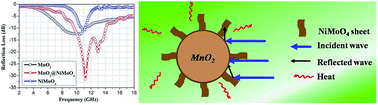
Fig. 5 shows the comparison of calculated RL curves in the frequency range of 2–18 GHz for MnO2, MnO2@NiMoO4 and NiMoO4/paraffin composites with a thickness of 3 mm. It was found that MnO2@NiMoO4 composites exhibited enhanced MA performance compared with MnO2 or NiMoO4 alone. The minimum RL value was found to be −31.4 dB at 11.2 GHz, and the band of RL below −10 dB was from 9.6 to 14.1 GHz. However, the minimum RL values of MnO2 and NiMoO4 were −12.5 dB at 10.4 GHz and −11.0 dB at 11.1 GHz, respectively. In order to determine the influences of thickness and its corresponding frequency on the MA properties in detail, three-dimensional RL values of MnO2@NiMoO4 are shown in Fig. 6. It was found that the attenuation peaks shifted to lower frequency according to quarter-wavelength cancellation model.47,49


image file: c6ra05300a-f5.tif
Fig. 5 Microwave RL curves of MnO2, MnO2@NiMoO4 and NiMoO4/paraffin composites with a thickness of 3 mm in the frequency range of 2–18 GHz.

image file: c6ra05300a-f6.tif
Fig. 6 Three-dimensional representation of RL of MnO2@NiMoO4/paraffin composites in the frequency range of 2–18 GHz.

In order to investigate possible mechanism for the MA reinforcement of the MnO2@NiMoO4 composites, the real (ε′) and imaginary parts of relative permittivity (ε′′) and real (μ′) and imaginary (μ′′) permeability of three samples were discussed. As shown in Fig. 7, both the values of ε′ and ε′′ for MnO2 decreased with the increasing frequency. For MnO2@NiMoO4 composites, the trend of ε′ and ε′′ was more gentle. A minimum value (ε′) and a maximum value (ε′′) at about 12.5 GHz were observed, which should be associated with the resonant behavior.3 Similarly, resonant behavior at about 10.6 GHz was also observed with NiMoO4. It is well known, if we want to obtain high MA performance, ε′′ value should not be too high or too low due to the requirement of impedance matching.50 As shown in Fig. 7a the MnO2@NiMoO4 composites just have the proper ε′′ value, which makes impedance matching occurred. In addition, there are two other factors contributing to dielectric loss of MnO2@NiMoO4 composites,51 one is the synergistic effect, which comes from the effective components of MnO2 and NiMoO4; the other is the dipole relaxation loss and interface polarization. The former origins from heterogeneity and defects in the system and the latter from the different dielectric constants of the two media.16 Owning to the absence of magnetic component in the composites, the μ′ and μ′′ values were not high (Fig. 7b). For MnO2 and MnO2@NiMoO4, the change of μ′ and μ′′ curves was gentle, however, for NiMoO4, obvious peaks at about 11.0 GHz were observed. It is noteworthy that some μ′′ values are negative, which means that the magnetic energy is radiated out and transferred into the electric energy.17


image file: c6ra05300a-f7.tif
Fig. 7 The real (ε′) and imaginary (ε′′) parts of complex permittivity (a), and the real (μ′) and imaginary (μ′′) parts of permeability (b) of MnO2, MnO2@NiMoO4 and NiMoO4/paraffin composites.

The eddy current loss, domain-wall resonance, and magnetic hysteresis are the main contributors to magnetic loss.52 For composites lack of magnetic particles, domain-wall resonance and magnetic hysteresis would have less influence. To determine whether the eddy current loss plays a significant role in magnetic loss or not, the equation was used as follows: μ′′ ≈ 2πμ0(μ′)2σd2f/3, where d is the diameter of the nanoparticle, σ is the electric conductivity, μ0 is the permeability of vacuum. According to this equation, if the magnetic loss mainly originates from the eddy current loss, the values of μ′′(μ′)−2f−1 ≈ 2πμ0σd2/3 should be constant at the varying frequency. As shown in Fig. 8, when f is higher than 5 GHz the values of μ′′(μ′)−2f−1 remains almost constant for MnO2 and MnO2@NiMoO4 composites, confirming that the eddy current loss is the main contribution to magnetic loss. For NiMoO4, except the region of 10.4–12.4 GHz, the eddy current loss is the main contributor to magnetic loss.


image file: c6ra05300a-f8.tif
Fig. 8 The values of μ′′(μ′)−2f−1 versus the frequency for MnO2, NiMoO4 and MnO2@NiMoO4 composites, respectively.

It is well known that, when the incident wave impinges surface of materials, most of electromagnetic energy enters into the materials and interacts with electrons and charged particles, and then energy is dissipated in the form of heat. However, a portion of the wave will not be absorbed by the materials and reflected back, leading to the reduced MA performance. In current research, dihedral angles could be formed among the NiMoO4 sheets,53 which would increase the multiple reflection, leading to the higher losses of electromagnetic energy.54 A possible electromagnetic wave absorbing mechanism is presented in Fig. 9. The enhanced attenuation should be attributed to the complementary properties of MnO2 and NiMoO4, the heterogeneous core/shell structures, the high surface area NiMoO4 sheets morphology, and the occurrence of the multiple reflections.


image file: c6ra05300a-f9.tif
Fig. 9 A possible mechanism for the microwave absorption on the surface of MnO2@NiMoO4 composites.

Conclusions

The MnO2@NiMoO4 composites have been successfully synthesized using hydrothermal process and a simple annealing process. The structure and morphology of products were characterized by XRD, SEM, and TEM, and the results showed that NiMoO4 sheets were uniformly coated on the surface of MnO2 rods. MA measurement indicated that the minimum RL value of MnO2@NiMoO4 composites was −31.4 dB at 11.2 GHz with a thickness of 3 mm, and the frequency for band of RL below −10 dB was observed from 9.6 to 14.1 GHz, which outperformed the pure MnO2 rods or NiMoO4 sheets. The high MA capacity of MnO2@NiMoO4 composites should mainly arise from the complementary properties of MnO2 and NiMoO4, the heterogeneous core/shell structures, the high surface area NiMoO4 sheets morphology, and the occurrence of multiple reflections. It is envisioned that these MnO2@NiMoO4 composite will be a new type of MA materials for varied applications.

Acknowledgements

This work was supported by the Natural Science Foundation of China (51173087) and Qingdao Innovation Leading Expert Program.

Notes and references

  1. H.-L. Xu, H. Bi and R.-B. Yang, J. Appl. Phys., 2012, 111, 07A522 Search PubMed.
  2. C. Qiang, J. Xu, Z. Zhang, L. Tian, S. Xiao, Y. Liu and P. Xu, J. Alloys Compd., 2010, 506, 93–97 CrossRef CAS.
  3. Y.-H. Chen, Z.-H. Huang, M.-M. Lu, W.-Q. Cao, J. Yuan, D.-Q. Zhang and M.-S. Cao, J. Mater. Chem. A, 2015, 3, 12621–12625 CAS.
  4. F. Wen, F. Zhang and Z. Liu, J. Phys. Chem. C, 2011, 115, 14025–14030 CAS.
  5. T. Chen, F. Deng, J. Zhu, C. Chen, G. Sun, S. Ma and X. Yang, J. Mater. Chem., 2012, 22, 15190–15197 RSC.
  6. X. Wang, J. Yu, H. Dong, M. Yu, B. Zhang, W. Wang and L. Dong, Appl. Phys. A, 2015, 119, 1483–1490 CrossRef CAS.
  7. P.-B. Liu, Y. Huang and X. Sun, ACS Appl. Mater. Interfaces, 2013, 5, 12355–12360 CAS.
  8. B. Zhao, G. Shao, B. Fan, W. Guo, Y. Chen and R. Zhang, Appl. Surf. Sci., 2015, 332, 112–120 CrossRef CAS.
  9. C. Wang, X. Han, P. Xu, X. Zhang, Y. Du, S. Hu, J. Wang and X. Wang, Appl. Phys. Lett., 2011, 98, 072906 CrossRef.
  10. R. Che, L. M. Peng, X. F. Duan, Q. Chen and X. Liang, Adv. Mater., 2004, 16, 401–405 CrossRef CAS.
  11. G. Li, T. Xie, S. Yang, J. Jin and J. Jiang, J. Phys. Chem. C, 2012, 116, 9196–9201 CAS.
  12. B. Zhao, G. Shao, B. Fan, W. Zhao, Y. Xie and R. Zhang, J. Mater. Chem. A, 2015, 3, 10345–10352 CAS.
  13. J. Liu, J. Xu, R. Che, H. Chen, Z. Liu and F. Xia, J. Mater. Chem., 2012, 22, 9277–9284 RSC.
  14. Y. Ren, C. Zhu, S. Zhang, C. Li, Y. Chen, P. Gao, P. Yang and Q. Ouyang, Nanoscale, 2013, 5, 12296–12303 RSC.
  15. G. Li, L. Wang, W. Li, R. Ding and Y. Xu, Phys. Chem. Chem. Phys., 2014, 16, 12385–12392 RSC.
  16. L. Wang, Y. Huang, X. Sun, H. Huang, P. Liu, M. Zong and Y. Wang, Nanoscale, 2014, 6, 3157–3164 RSC.
  17. B. Zhao, G. Shao, B. Fan, W. Zhao and R. Zhang, Phys. Chem. Chem. Phys., 2015, 17, 2531–2539 RSC.
  18. H. Lv, X. Liang, G. Ji, H. Zhang and Y. Du, ACS Appl. Mater. Interfaces, 2015, 7, 9776–9783 CAS.
  19. H. Guan, G. Chen, S. Zhang and Y. Wang, Mater. Chem. Phys., 2010, 124, 639–645 CrossRef CAS.
  20. X. Wang, S. Ni, G. Zhou, X. Sun, F. Yang, J. Wang and D. He, Mater. Lett., 2010, 64, 1496–1498 CrossRef CAS.
  21. L. Wang, Y. Huang, X. Ding, P. Liu and M. Zong, RSC Adv., 2013, 3, 23290–23295 RSC.
  22. H. Wu, G. Wu, Q. Wu and L. Wang, Mater. Charact., 2014, 97, 18–26 CrossRef CAS.
  23. C. Manjula and S. Kalyane, International Journal of Applied Science, Technology and Engineering Research, 2012, 1, 55–64 Search PubMed.
  24. M. Fu, Q. Jiao, Y. Zhao and H. Li, J. Mater. Chem. A, 2014, 2, 735–744 CAS.
  25. Z. Yang, Y. Wan, G. Xiong, D. Li, Q. Li, C. Ma, R. Guo and H. Luo, Mater. Res. Bull., 2015, 61, 292–297 CAS.
  26. Y. Xiao, J. Zai, L. Tao, B. Li, Q. Han, C. Yu and X. Qian, Phys. Chem. Chem. Phys., 2013, 15, 3939–3945 RSC.
  27. H. Wu, G. Wu, Y. Ren, L. Yang, L. Wang and X. Li, J. Mater. Chem. C, 2015, 3, 7677–7690 RSC.
  28. T. Yang, H. Zhang, Y. luo, L. Mei, D. Guo, Q. Li and T. Wang, Electrochim. Acta, 2015, 158, 327–332 CrossRef CAS.
  29. L. Zhou, H. B. Wu, T. Zhu and X. W. Lou, J. Mater. Chem., 2012, 22, 827–829 RSC.
  30. L. Madeira, M. Portela and C. Mazzocchia, Catal. Rev., 2004, 46, 53–110 Search PubMed.
  31. G. Xiong, Z. Feng, J. Li, Q. Yang, P. Ying, Q. Xin and C. Li, J. Phys. Chem. B, 2000, 104, 3581–3588 CrossRef CAS.
  32. D. Cai, D. Wang, B. Liu, L. Wang, Y. Liu, H. Li, Y. Wang, Q. Li and T. Wang, ACS Appl. Mater. Interfaces, 2014, 6, 5050–5055 CAS.
  33. D. Cai, D. Wang, B. Liu, Y. Wang, Y. Liu, L. Wang, H. Li, H. Huang, Q. Li and T. Wang, ACS Appl. Mater. Interfaces, 2013, 5, 12905–12910 CAS.
  34. Q. Zhang, Y. Deng, Z. Hu, Y. Liu, M. Yao and P. Liu, Phys. Chem. Chem. Phys., 2014, 16, 23451–23460 RSC.
  35. C. Long, M. Zheng, Y. Xiao, B. Lei, H. Dong, H. Zhang, H. Hu and Y. Liu, ACS Appl. Mater. Interfaces, 2015, 7, 24419–24429 CAS.
  36. X. Lv, Y. Zhu, H. Jiang, X. Yang, Y. Liu, Y. Su, J. Huang, Y. Yao and C. Li, Dalton Trans., 2015, 44, 4148–4154 RSC.
  37. D. Ghosh, S. Giri and C. K. Das, Nanoscale, 2013, 5, 10428–10437 RSC.
  38. X. Xia, W. Lei, Q. Hao, W. Wang and X. Wang, Electrochim. Acta, 2013, 99, 253–261 CrossRef CAS.
  39. A. P. de Moura, L. H. de Oliveira, I. L. Rosa, C. S. Xavier, P. N. Lisboa-Filho, M. S. Li, F. A. La Porta, E. Longo and J. A. Varela, Sci. World J., 2015, 2015, 1–8 CrossRef PubMed.
  40. M. Masteri-Farahani, S. Mahdavi and M. Rafizadeh, Ceram. Int., 2013, 39, 4619–4625 CrossRef CAS.
  41. P. R. Jothi, S. Kannan and G. Velayutham, J. Power Sources, 2015, 277, 350–359 CrossRef CAS.
  42. H. Zhang, Z. Zhao, C. Xu, A. Duan, W. Lin, H. Tian and I. E. Wachs, Mater. Res. Bull., 2006, 41, 2334–2340 CrossRef CAS.
  43. A. Ajay, A. Paravannoor, J. Joseph, V. Amruthalakshmi, S. S. Anoop, S. V. Nair and A. Balakrishnan, Appl. Surf. Sci., 2015, 326, 39–47 CrossRef.
  44. C. Julien, M. Massot, S. Rangan, M. Lemal and D. Guyomard, J. Raman Spectrosc., 2002, 33, 223–228 CrossRef CAS.
  45. S. E. Moosavifard, J. Shamsi, M. Ayazpour, J. Shamsi and M. Ayazpour, Ceram. Int., 2015, 41, 1831–1837 CrossRef CAS.
  46. Y. Liang, Q. Liu, A. M. Asiri and X. Sun, Electrochim. Acta, 2015, 153, 456–460 CrossRef CAS.
  47. A. N. Yusoff, M. H. Abdullah, S. H. Ahmad, S. F. Jusoh, A. A. Mansor and S. A. A. Hamid, J. Appl. Phys., 2002, 92, 876–882 CrossRef CAS.
  48. R. C. Che, L. M. Peng, X. F. Duan, Q. Chen and X. L. Liang, Adv. Mater., 2004, 16, 401–405 CrossRef CAS.
  49. C. Wang, X. Han, X. Zhang, S. Hu, T. Zhang, J. Wang, Y. Du, X. Wang and P. Xu, J. Phys. Chem. C, 2010, 114, 14826–14830 CAS.
  50. S. Kim, S. Jo, K. Gueon, K. Choi, J. Kim and K. Churn, IEEE Trans. Magn., 1991, 27, 5462–5464 CrossRef CAS.
  51. X.-L. Shi, M.-S. Cao, J. Yuan, Q.-L. Zhao, Y.-Q. Kang, X.-Y. Fang and Y.-J. Chen, Appl. Phys. Lett., 2008, 93, 183118 CrossRef.
  52. X. Zhang, X. Dong, H. Huang, Y. Liu, W. Wang, X. Zhu, B. Lv, J. Lei and C. Lee, Appl. Phys. Lett., 2006, 89, 053115 CrossRef.
  53. V. K. Singh, A. Shukla, M. K. Patra, L. Saini, R. K. Jani, S. R. Vadera and N. Kumar, Carbon, 2012, 50, 2202–2208 CrossRef CAS.
  54. K. Singh, A. Ohlan, V. H. Pham, B. R. S. Varshney, J. Jang, S. H. Hur, W. M. Choi, M. Kumar, S. K. Dhawan, B. S. Kong and J. S. Chung, Nanoscale, 2013, 5, 2411–2420 RSC.

This journal is © The Royal Society of Chemistry 2016
Click here to see how this site uses Cookies. View our privacy policy here.