
One step synthesis of silane-capped copper clusters as a sensitive optical probe and efficient catalyst for reversible color switching

Shaochen Zhouab, Yingxuan Lia, Fu Wang*a and Chuanyi Wang*a
aLaboratory of Environmental Sciences and Technology, Xinjiang Technical Institute of Physics & Chemistry, Key Laboratory of Functional Materials and Devices for Special Environments, Chinese Academy of Sciences, Urumqi, Xinjiang 830011, China. E-mail: cywang@ms.xjb.ac.cn; wangfu@ms.xjb.ac.cn
bUniversity of Chinese Academy of Sciences, Beijing 100049, China

Received 14th February 2016 , Accepted 9th April 2016

First published on 11th April 2016


Abstract

Discrete electron energy levels emerge in ultra small metal clusters due to a strong quantum confinement effect, resulting in some intriguing, unique and superior features such as photoluminescence and catalytic activity. In the present work, silane-capped copper clusters were synthesized by a facile one-pot synthetic protocol for the first time. Electrospray ionization mass spectrometry data shows that the metal core of the cluster is mainly composed of 4–5 copper atoms, and the results of X-ray photoelectron spectroscopy and Fourier-transform infrared spectroscopy indicate that the surface of the as-synthesized copper clusters is capped by a silane stabilizer. These few-atom copper clusters exhibit a dual-peak fluorescence feature, giving emission bands centered at 410 nm and 580 nm, respectively. In addition, the copper clusters also show excellent performance in chemo-sensing of hydrogen peroxide, linearly responding in a concentration range of 5–250 μM. More interestingly, a photo-reversible color switching system based on the redox reaction of methylene blue was built up by employing these Cu clusters as a catalyst. Reduction of methylene blue by Cu clusters' chemo-catalysis at ambient conditions and oxidation of leucomethylene blue by those clusters' photocatalysis under UV light irradiation lead to a recyclable colorless-blue switching effect within ∼3 minutes. The present work proves that the versatile silane-capped Cu clusters possess both molecular and semiconductor like properties, holding great promise in optical and catalytic application fields.

Introduction

Metal clusters (CLs), composed of less than a hundreds atoms, are of both great fundamental and practical value due to their unique physical and chemical properties.1–3 When the size of CLs approaches the Fermi wavelength, some interesting molecular-like features, such as photoluminescence, will emerge as the energy levels become discrete.4,5 Since Brust et al. reported a biphasic method to synthesize gold nanoclusters in 1994,6 luminescent noble metal CLs, especially Au and Ag, have attracted intense scientific interest.7,8 Although highly efficient, stable and superior biocompatible Au, Ag CLs have been prepared,5,9–11 the cost remains a barricade for putting these CLs into practical applications. In contrast to its noble metal counterparts, copper possesses an unparalleled cost advantage, but simultaneously suffers a much greater tendency of aggregation and oxidation. Thereby the synthesis of stable, ultra small luminescent copper CLs is rather challenging. Nevertheless, driven by their profound research significance, a variety of synthetic methods have been developed to prepare fluorescent copper CLs,12–17 based on a templating12,18,19 or ligand-capping20–22 process in recent years.

Macromolecules like DNA,18 proteins,12 polymers,23 and small molecules such as peptides,24 amino acids19 and thiols,25 have been respectively applied as protecting stabilizer in producing copper CLs. Among them, thiols-based compounds are most commonly used due to their strong affinity with atomic copper.14,21,25,26 As a thiol compound, (3-mercaptopropyl)trimethoxysilane (MPTS) is a commercial available, widely-applied coupling reagent in various industrial fields. For copper, however, MPTS was more frequently applied in surface modification of bulk metal27 rather than in synthesizing fluorescent copper CLs as protecting stabilizer in the past years. In 2012, Yang et al. reported red-luminescent Au nanoparticles synthesized through an interfacial route by applying MPTS as capping ligand.28 But the product was a nanocomposite of Au nanoparticles (∼2.3 nm) and SiO2, which could be barely defined as pure metal CLs. In this work, MPTS-functionalized Cu CLs were prepared by a one-step method, which are mainly composed of 4–5 atoms with a special dual-emission fluorescence. To the best of our knowledge, this is the first report on fluorescent Cu CLs capped by silane coupling agent, which will open an avenue to the synthesis of various fluorescent CLs with the using of diversity of silanes.

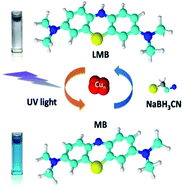
Fluorescent Cu CLs have been studied in various applications like sensing,12,16,18,21,22,29,30 bio-labeling,30 and some catalytic reactions.20,21,31,32 Generally, most of these Cu CLs are applied as chemosensors, determining chemical compounds and ions, such as Fe3+,30 DNA,33 Pb2+,12 vitamin B16 and so forth. However, less effort has been directed to exploring fluorescent copper CLs' other equally superior properties, like catalytic capacity. As a promising catalyst, fluorescent copper CLs have been successively proved to be active in electro-catalytic,25 chemo-catalytic,31 and photo-catalytic32 processes. In the present work, the as-synthesized silane-functionalized Cu CLs prove to be capable of not only probing hydrogen peroxide in a low and wide concentration range as a sensitive chemosensor, but also efficiently catalyzing the methylene blue (MB)–leuco methylene blue (LMB) redox reactions. The presence of Cu CLs significantly promotes the chemical reduction of MB by NaBH3CN, whose reaction rate is increased by 28 times comparing to that of reduction without Cu CLs. Furthermore, upon ultraviolet (UV) light irradiation, these Cu CLs could also turn colorless LMB to blue MB again through an extreme fast photo-catalytic oxidation in 10 seconds. In this way the Cu CLs' efficient chemo- and photo-catalysis resulted in an interesting reversible color change (blue ↔ colorless), with the switching of UV light irradiation. This may lead to a novel attempt using copper cluster catalyst to build up a photoreversible color switching system, which has a much quicker color change response comparing to the ones based on semiconductor nanocrystalline.34 This work exploits new potential application fields for fluorescent copper CLs, such as photo-actuated color switching ink for information recording and displaying. We believe that these versatile silane-functionalized Cu CLs will be of great research value and practical promise in many optical and catalytic application fields in future.

Experimental section

Materials

(3-Mercaptopropyl)trimethoxysilane (MPTS, 95%), sodium cyanoborohydride (NaBH3CN, 95%), copper acetate (Cu(Ac)2, 99.95%) were obtained from Aladdin. Hydrogen peroxide (H2O2, 30%) was acquired from Tianjin Hongyan chemical reagent factory, and methylene blue (MB) was obtained from Sinopharm Chemical Reagent Co. ltd. Tetrahydrofuran (THF) and ethanol were purchased from Tianjin Baishi chemical Co. ltd. Both of the reagents were of analytical grade and used as received without further purification. Ultrapure water (resistivity: 18.2 MΩ cm) was obtained from a Millipore purification system.

Synthesis of Cu CLs

In the preparation of Cu CLs, NaBH3CN was selected as a mild reductant in a “bottom-up” synthetic route. In a typical synthetic process, 6 mL of 5 mM Cu(Ac)2 THF solution was mixed with MPTS (120 μL) for 3 h, and 300 μL NaBH3CN THF solution (0.2 g in 3 mL) was then added into the mixture under continuous stirring for 48 h at ambient condition. The as-obtained Cu CLs suspension was centrifuged and the precipitates were washed with THF to remove residual NaBH3CN and other byproducts. After the purification Cu CLs were dispersed in ethanol and other solvents by ultrasonication for further characterization measurements. No surfactants were used in the whole synthetic process.

Characterization

UV-vis absorption spectra were collected from a Shimadzu UV-1800 spectrophotometer (Japan). Fluorescence spectra were recorded on a Hitachi F-7000 fluorescence spectrometer (Japan). X-ray photoelectron spectroscopy (XPS) measurements were performed by using an ESCALAB 250Xi spectrometer (Thermo Fisher Scientific, USA). Electrospray ionization mass spectrometry (ESI-MS) measurements were conducted on micromass ZQ mass spectrometer (Waters, USA), equipped with a common ESI source. Fourier-transform infrared spectroscopy (FTIR) study was conducted using a NICOLET iS50 FT-IR (ATR technique, Thermo Scientific, USA). Time-resolved luminescence intensity decay was recorded on a HORIBA Fluorolog-3 molecule fluorometer (France). The sample was excited by a 375 nm laser light source and the decay curve was fitted into the function as follows:
image file: c6ra04040c-t1.tif
where Bi is the initial intensity of decay component i, and τi is the lifetime of the component.

Determining H2O2 in micromolar scale

H2O2 ethanol solutions with different concentrations, from 0.2 mM to 70 mM, were prepared by diluting H2O2 aqueous solution with corresponding volume of ethanol. A group of the as-obtained Cu CLs ethanol colloidal solutions (1 mL) were also prepared to be added with those hydrogen peroxide solutions, respectively. The fluorescence spectra were recorded to observe the luminescence intensity change in the presence of different amounts of H2O2. 5 μL of hydrogen peroxide solution was added each time.

Catalytic evaluation and photoreversible color switching test

For the catalytic reduction of MB, 200 μL of the as-obtained Cu CLs solution was added to 4 mL of MB ethanol solution with a concentration of 10 ppm, followed by the addition of 6 mg reducing agent, namely NaBH3CN. By contrast, another 6 mg NaBH3CN was added to 4 mL MB solution with the same concentration (10 ppm) in the absence of the Cu CLs, to investigate the change in reaction rate by recording the absorption spectra of these solutions at different intervals.

To build up a photoreversible color switching system, 300 μL of the as-obtained Cu ethanol colloid and 60 mg NaBH3CN were added to 4 mL of MB ethanol solution, which was ultra-sonicated for 5 minutes subsequently to form a well-dispersed system. Then the UV-vis absorption spectra were recorded before and after UV light irradiation, respectively. A 300 W high pressure mercury lamp was utilized as the UV light source (0.018 W cm−2). And the whole process was carried out at ambient condition, with temperature at 11 °C.

Results and discussion

Synthesis and properties of the silane-capped Cu CLs

The Cu CLs were obtained by a one-pot wet chemical reduction method in organic phase, in which selection of reductant was of great importance. It is widely accepted that strong stabilizers are usually applied in the presence of mild reducing agent, to provide sufficient reducing time for stabilizers to sequester metal ions from the solution.35 By screening NaBH4, L-ascorbic acid and NaBH3CN successively as the reducing agent to produce stable and luminescent copper CLs, NaBH3CN was found to be more effective in the present work. This might be due to NaBH3CN's appropriate reducing capability and selectivity.36 Besides the selection of reductants, ratios of MPTS versus Cu(Ac)2, and mixing period of these two reactants also played a vital role in the formation of fluorescent CLs. Adding excess MPTS into Cu(Ac)2 solution will generate insoluble polymeric copper(I) thiolates at the very beginning, hampering the production of dispersed fluorescent CLs.37 In addition, too short (<5 min) or too long (>36 h) mixing period would only lead to non-fluorescent products.

To identify the magic number of these Cu CLs, ESI-MS measurement was applied. Fig. 1 shows the mass spectrum of the Cu CLs in positive ion mode. Those specific charge peaks at 449.04, 472.03, 563.93, 607.90, 667.88 and 862.81 are ascribed to [Cu4(SSiO3C6H14) + H]+, [Cu4(SSiO3C6H15) + Na]+, [Cu4(SSiO3C3H10)2 + H]+, [Cu(SSiO3C6H15)2(SSiO3C3H9) + H]+, [Cu4(SSiO3C6H15)2 + Na]+, [Cu4(SSiO3C6H15)3 + Na]+, respectively. It is obvious that these Cu CLs are mainly composed of 4 atoms. Moreover, m/z peaks at 756.90, 906.84 and 1100.82 are assigned to [Cu5(SSiO3C6H15)2 +2Na + 2H]+, [Cu5(SSiO3C6H15)3 + 3H]+ and [Cu5(SSiO3C6H15)4 + H]+, respectively, demonstrating the presence of Cu5 CLs. While in the large scale of the spectrum (shown in Fig. 1), several weak peaks respectively attributed to [Cu7(SSiO3C6H15)4 + Na]+, [Cu7(SSiO3C6H15)5 + Na]+, [Cu8(SSiO3C6H15)5 + Na]+ and [Cu9(SSiO3C6H15)3 + Na]+ are observed as well. It indicates that a minor amount of Cu7–Cu9 CLs were also produced during the synthetic process. It's worth mentioning that using thiols as the capping ligand normally leads to the formation of polydisperse system,24 as supported by many researchers' previous reports.25,26 Thus in this work, CLs with different magic numbers were produced in the presence of MPTS. Fig. 1 provides the comparison of isotopic simulation and experimental data. Clearly, the experimental result agrees well with the simulated pattern. The agreement between measured and calculated results further confirms the formation of silane-capped Cu4–Cu9 CLs using such one phase Brust–Schiffrin strategy.


image file: c6ra04040c-f1.tif
Fig. 1 The ESI-mass spectrum of the as-prepared Cu CLs in positive ion mode. L and L′ both stand for the capping ligands of Cu CLs, where L = SSiO3C6H15, and L′ = SSiO3C3H9. The as-prepared Cu CLs are mainly composed of 4–5 copper atoms. Simulated pattern and experimental result are also displayed in the inset.

Fig. 2 shows the UV-vis spectra of the as-prepared Cu CLs and MPTS. Apparently, the absorptions of Cu CLs and MPTS are quite different, implying that the absorption of Cu CLs doesn't exclusively come from the stabilizer. The as-prepared Cu CLs don't show any plasma characteristic absorption at ∼560 nm, which normally appears for copper nanoparticles.38 It is widely accepted that the surface plasmon resonance vanishes when the size of metal core is small enough (<1 nm), due to the strong quantum confinement effect.39 And meanwhile more than one absorption peak may emerge (usually in the UV region), exhibiting a molecule-like feature.40 As seen from the Cu CLs' UV-vis spectrum (Fig. 2), a well-resolved peak is located at ∼230 nm, which arises from the transition between different energy levels. Absorption peaks of various Cu CLs at nearby positions were also reported previously.40,41 Interestingly, unlike many other Cu CLs, an absorption edge appears at ∼370 nm in the spectrum of the silane-capped Cu CLs. Fig. 2 inset displays the adsorption spectra of the Cu CLs in different concentrations, and tangent lines are drawn at the sudden change position of each absorption curve. It can be seen that all the tangent lines of those curves intersect with the axis of wavelength at the same position (∼375 nm), indicating an absorption edge character that semiconductors normally possess.42,43 It's the copper CLs' non-zero HOMO–LUMO gap that might have resulted in such semiconductor-like feature.


image file: c6ra04040c-f2.tif
Fig. 2 UV-vis spectra of the as-synthesized Cu CLs (blue curve) and MPTS (red curve). A peak at ∼230 nm and an absorption edge at ∼375 nm can be seen in the CLs' absorption spectrum. Inset depicts the spectra of Cu CLs in different concentrations.

Photoluminescence is another typical property of tiny Cu CLs which arises from discrete energy levels. As shown in Fig. 3b, the Cu CLs colloid exhibits a pale yellowish color under visible light, but gives a red emission when exposed to UV light at 365 nm. Since Cu(Ac)2 and MPTS themselves don't show any luminescence, the emission exclusively comes from the as-prepared Cu CLs. The maximum excitation wavelength is at ∼375 nm, according to the excitation spectrum (Fig. 3a). This is in good agreement with the Cu CLs' characteristic absorption edge at 375 nm. While the emission spectrum depicts a two-peak profile, one centered at ∼410 nm and the other at ∼580 nm, which is quite similar with that reported by Wei's group.25 Fig. S5 presents the excitation spectra for emissions at 410 nm and 580 nm, respectively. It can be seen that the excitation peaks are quite close, indicating those two emissions should come from the same luminescence center. The emission bands centered at 410 nm and 580 nm should be assigned to interband and intraband transition,7 respectively. The photoluminescence property of the as-synthesized Cu CLs in different solvents besides ethanol was also tested. Luminescence spectra of Cu CLs in THF and water (5% THF) were recorded. As shown in Fig. 3a, the excitation and emission spectra of the as-synthesized Cu CLs in aqueous environment is quite different from those in other solvents. For the high energy emission band, a vibronic structure with peaks at 410 and 430 nm as well as a shoulder at 460 nm can be observed in the less polar solvents (ethanol, THF), while in water it only exhibits a one-peak shape. This fluorescence difference is most probably ascribed to the change in solvent polarity, which may affect the interaction between capping ligands and metal CLs, as well as UV-vis absorption of the Cu CLs. In addition, the Stokes shift also changes with the variation of solvent polarity (Fig. 3a), which is normally seen in common organic molecule fluorophores.41 All these molecule-like behaviors further support the formation of Cu CLs. Note that these silane-capped Cu CLs couldn't stay dispersive for a long period in aqueous phase, which will aggregate to precipitates because of capping ligands' hydrolysis and condensation effect. In contrast, these CLs appear to be more stable in ethanol, THF and other solvents with less polarity.


image file: c6ra04040c-f3.tif
Fig. 3 (a) Normalized fluorescence excitation and emission spectra of the Cu CLs in different solvents. (b) Photographs of the Cu CLs colloid under daylight and UV light (at 365 nm). (c) The fluorescence decay (blue plots) and lifetime fit curves (red plots) of the copper CLs. The luminescence lifetime is measured to be 0.75 ns.

The as-synthesized Cu CLs possess a good photostability, as evinced by the fact that their fluorescence intensity maintained relatively constant (5% decrease) under continuous irradiation at 365 nm for 120 min (see Fig. S6). This resistance to photo-bleaching potentially enables the Cu CLs to be applied as a fluorophore. Besides stability, photoluminescence lifetime is an important parameter for fluorophores as well. Luminescent metal (Au, Ag, Cu) CLs generally possess significantly different lifetimes, measured in either nanosecond or microsecond scale.7,12,18,44 It has been widely accepted that the CLs' luminescence with a long lifetime (>0.5 μs) is normally originated from the surface metal–ligand electron transfer.7 It refers to a triplet-state transition, in which a system intercrossing process is involved.24 On the other hand, a short-life luminescence can be mainly ascribed to the electron transition between different energy levels of metal core.5,7,44 Fig. 3c shows the fitted curve of the Cu CLs' luminescence decay. It's fitted by a tri-exponential function with three lifetime components, namely 2.19 ns (7.56%), 0.218 ns (87.29%) and 7.58 ns (5.15%), respectively. The average fluorescence lifetime is measured to be ∼0.75 ns, suggesting that those emissions arise from electron transitions of singlet states, and are originated from the copper core more than the surface Cu–S electron transfer behavior. Moreover, the luminescence quantum yield (QY) of the as-synthesized Cu CLs is 0.96%, comparable to those Cu CLs previously reported.13,19,23 Further optimizing preparation conditions or methods may be effective in enhancing the luminescence efficiency.10,45 On the other hand, relative low QY means less irradiative recombination chance for photogenerated carriers,46,47 which may be quite favorable to photocatalytic performance of the as-synthesized Cu CLs.

FT-IR measurements on both copper CLs and MPTS reveal the nature of surface capping (Fig. S7 in ESI). The peak at 2560 cm−1 is ascribed to the stretching vibration of S–H, which is obvious in the stabilizer's spectrum but absent in that of the copper CLs, indicating the formation of Cu–S bond with breaking S–H bond due to the strong affinity between mercapto group and copper.15 The strong broad peak at 1080 cm−1 is ascribed to Si–O's stretching vibration mode. And those peaks at around 2900 cm−1 are assigned to the stretching vibration of C–H in –CH3 and –CH2, which may all come from the capping ligands.

XPS measurement was employed to probe valence state of copper in the as-synthesized CLs. As shown in Fig. S8, the two peaks at 932.6 eV and 952.0 eV are ascribed to the binding energy (BE) of Cu 2p1/2, Cu 2p3/2, respectively. The absence of satellite shakeup around 942 eV has ruled out the existence of Cu(II), confirming that the copper precursor was totally reduced to lower valence states. It is noteworthy that the binding energies of Cu(0) and Cu(I) are quite close, which differ by no more than 0.7 eV.13 And the BEs of Cu 2p from the Cu CLs, namely 932.6 eV and 952.0 eV, are located at the positions between Cu(0) (e.g., 932.0 eV and 951.9 eV) and Cu(I) (e.g., 932.7 eV and 952.1 eV). The data suggests that these thiolate-protected Cu(0) CLs should possess a valence state higher than 0 but lower than +1, consistent with previous reports.13,48 The spectrum of S 2p is also provided in ESI (Fig. S9). The BE of S 2p is 162.7 eV, slightly higher than that of S from thiolates, illustrating that S is chemically adsorbed with Cu CL's surface.23 All the observations presented above evince that the Cu CLs are surface-capped by MPTS.

As mentioned previously, the silane-capped Cu CLs are prepared through a monophasic Brust–Schiffrin strategy, which is one of the most frequently used synthetic routes for fabricating metallic CLs. Studies on the forming process of metallic nanoclusters with this method has attracted a great deal of scientific interest.37 From this prospect, the Cu CLs' generation process is also discussed. The byproducts generated in the synthetic process can be analyzed by examining the obtained product mixture with ESI-MS measurement. As shown in Fig. S10, the strong m/z peak at 412.89 is assigned to [RSSR + Na]+, where “R” refers to “–SiC6H15O3”, namely MPTS without the mercapto group. As a dipolymer of MPTS, RSSR is normally generated during the primary reduction of Cu precursor.37,49 There are several m/z peaks assigned to (CuSR)3 and (CuSR)4 as well (Fig. S11 and S12). The presence of those peaks suggests the formation of cuprous thiolates. The simulated isotopic patterns have also been provided accordingly, which are basically fitted with experimental results. Dharmaratne et al. studied the formation of Au25 CLs by applying mass spectrometry in 2009, where gold CLs were also prepared in THF solvent at room temperature through similar monophasic Brust–Schiffrin strategy in the absence of surfactants.49 In this work, the generation of the silane-capped Cu CLs might have undergone an analogical formation process. Cu(I) thiolates (CuSR) were first produced by the reaction Cu(II) + RSH → [Cu(I)SR]n + RSSR + RSH, where MPTS (RSH) was distinctly excess. And then equally excessive NaBH3CN was added to reduce Cu(I) to Cu(0), forming Cu nanocluster mixture.37,49 This reduction reaction could be partly demonstrated by the production of colorless gas (H2) after adding NaBH3CN during the synthetic process. Subsequently, oxidative (RSSR) and reduced thiols mixture began to etch large Cu(0) CLs into smaller ones, regenerating Cu(I) thiolates.50,51 The formation of large Cu(0) particles can be partly proved by the generation of nonluminous precipitants (large particles) in the first 2 hours after the addition of NaBH3CN. And then luminous Cu CLs were progressively formed in the next 46 hours. Thus in relative long synthesis period (48 h) fluorescent Cu4–Cu5 CLs were finally produced.

Determining H2O2 in micromolar scale

H2O2 is a common intermediate specie or product in many biological processes and various chemical reactions.12,20,22 In addition, it is also a frequently-used oxidant and can form explosive mixtures with some chemical compounds.52 Therefore, probing hydrogen peroxide may be of great practical value in regarding to biological, environmental, and secure concern. In this work, the as-prepared Cu CLs are found to be quite sensitive to H2O2. Fig. 4a inset displays the luminescence spectrum of Cu CLs colloid with the addition of H2O2. It can be seen that the fluorescence is quenched as increasing the amount of H2O2. On the other hand, adding H2O2 into MPTS solution doesn't bring any change in photoluminescence (remained non-fluorescent, see Fig. S13). Thus the quenching effect is most likely attributed to the oxidation of copper by H2O2, which again indicates that the fluorescence is originated from reduced copper. As shown in Fig. 4a, a quasi-linear fluorescence quenching response to the concentration of H2O2 in a nanomolar scale can be observed. The concentration range of linear response is 5–250 μM. Adding more than 250 nanomole of H2O2 into 1 mL of the Cu CLs colloid would only lead to unconspicuous fluorescence quenching, as revealed by the measurement results (Fig. 4a). The quenching efficiency by hydrogen peroxide could be derived using Stern–Volmer equation:
image file: c6ra04040c-t2.tif
where F0 and F stand for initial and quenched fluorescence intensity of the Cu CLs, and Ksv is the Stern–Volmer quenching constant. Fig. 4b depicts the Stern–Volmer plots of Cu CLs–H2O2 system, revealing a relationship between relative fluorescence intensity decrement and the concentration of H2O2. In the range of 5–250 μM, Ksv is calculated to be 10[thin space (1/6-em)]100 L mol−1, exhibiting a high efficiency in the electron transfer between Cu CLs and hydrogen peroxide. As for the aspect of application, these Cu CLs can be utilized as a sensitive hydrogen peroxide probe in a low concentration scope.

image file: c6ra04040c-f4.tif
Fig. 4 (a) Plots of fluorescence intensity versus the adding amount of H2O2. A linear relationship is apparent in the range of 5–250 nanomole. Inset shows the emission spectra of the Cu CLs with adding H2O2. (b) Stern–Volmer plots of Cu CLs–H2O2 system. The relationship between relative fluorescence intensity decrement (Y axis) and the concentration of H2O2 (X axis) can be observed.

Catalytic evaluation and photoreversible color switching system

Catalytic capacity is one of intriguing features arising from CLs' discrete energy levels.53,54 As mainly composed of 4–5 atoms, the as-synthesized Cu CLs should possess a decent catalytic property. Vilar-Vidal et al. reported that Cu13 CLs could catalyze the reduction of MB in the presence of N2H4, where MB was reduced to colorless (LMB) at ambient conditions.31 Since then other researchers subsequently found that the few-atom Cu CLs they obtained were also capable of catalyzing the redox reaction by using hydrazine hydrate as reductant.20,21 In this work, the reduction of MB by NaBH3CN was carried out in the absence or presence of the as-prepared Cu CLs to explore their catalytic performance (Fig. 5a and b). NaBH3CN, as mentioned previously, is a mild and selective reducing agent. As a result, conspicuous absorption intensity change of MB couldn't be observed in 120 seconds until NaBH3CN was sufficiently added (e.g., 6 mg mL−1). The comparison of MB reduction by excess NaBH3CN with or without the Cu CLs is displayed in Fig. 5b. It's easy to find that the blue MB solution without the Cu CLs gradually fades in more than 10 minutes, leaving nearly 27% unreduced. While the MB solution with Cu CLs immediately become colorless in a much shorter time, completing the reduction process in less than 30 seconds. The reaction rate constant is measured to be 0.2296 min−1 and 6.7117 min−1 in the absence or presence of the Cu CLs, respectively (Fig. S14). It can be seen that the rate constant with Cu CLs is 29.2 times as high as that without those CLs. This suggests a catalytic process performed by Cu CLs, which profoundly promotes the reduction of MB by NaBH3CN. For metallic CLs, size or magic number greatly affects the dissociation extent of energies due to the quantum confinement effect,5,55 thus resulting in the variation of HOMO–LUMO gap. The as-synthesized Cu CLs' LUMO frontier orbitals should have lied right between the redox potential positions of NaBH3CN and MB,20,21,31 which makes those CLs quite active in the catalytic redox reaction.
image file: c6ra04040c-f5.tif
Fig. 5 (a) UV-vis absorption spectra of MB solution in the presence of the Cu CLs and NaBH3CN. The blue color of the solution changed to colorless in 30 seconds. (b) Comparison of reducing rate in the presence (blue plots) and absence (black plots) of Cu CLs. Those red plots refer to pure MB solution without either NaBH3CN or copper CLs. (c) UV-vis absorption spectra of the mixture of MB, the as-prepared Cu CLs and highly excess NaBH3CN. Colorless mixture turned blue soon under the UV light irradiation (blue plots), and returned colorless after UV light was off (red plots). (d) The recyclability test of the photo-reversible color switching system. (e) Approximate HOMO and LUMO positions of these silane-functionalized Cu CLs.

More interestingly, the as-obtained LMB with the Cu CLs could turn blue again in 10 seconds when exposed to UV irradiation at 365 nm, which recovered to colorless in 2 minutes after UV light was off, as is shown in Fig. 5c. It has been established that colorless LMB can be oxidized to blue MB in an oxygen environment.34,56 In this system, however, the presence of excess NaBH3CN had resisted the re-oxidation of LMB, which enabled the solution to maintain colorless for a long period at ambient condition (∼24 h). The immediate UV light-induced color change should arise from the photocatalytic effect by the Cu CLs, since the LMB solution with NaBH3CN alone didn't get any darker under UV light irradiation for even 30 minutes (Fig. S15). As previously predicted by theoretical calculations, size greatly affects the copper cluster's chemical potential,57 so it is with the Fermi energy.31 For the as-prepared Cu CLs, their Fermi energy could be obtained through the following equation,32 according to Vilar-Vidal et al.'s work:

 
Ef,cluster = −Ef,bulk + 0.95N−1/3 (1)
where Ef,cluster, Ef,bulk are Fermi energies of cluster and bulk copper. And N stands for the metal atom number of a cluster. Assuming that the as-prepared Cu CLs are averagely composed of 4 atoms, the Fermi energy is estimated to be −6.34 eV, with respect to electron vacuum level. Accordingly, the HOMO and LUMO positions should approximately lie at −7.86 eV and −4.82 eV, respectively. Note that the LUMO frontier orbitals locate slightly above the redox potential of MB/LMB,31,32 consistent with the Cu CLs' catalytic activity in the reduction of MB. And the HOMO orbitals are well below that of MB/LMB (Fig. 5e). Thus the photo-generated holes at HOMO would be quite oxidative, and are capable of oxidizing LMB under UV light irradiation. On the other hand, NaBH3CN acts as a hole-scavenger in this photo-oxidative process, inhibiting further photodecomposition of MB. Therefore, it's the Cu CLs that triggered the fast photo-induced color change. In addition, this color switching effect is recyclable. As shown in Fig. 5d, the switching process could go through at least seven light on–off cycles without significant attenuation. It is worth mentioning that the colorless system would progressively turn blue after 10 cycles. This is because NaBH3CN in the process acts as both antioxidant and hole-scavenger, making its consumption rather rapid. But with the reintroduction of NaBH3CN, the solution would become colorless again and also exhibits the recyclable color switching effect, indicating a decent reusability. Furthermore, the cycle number could also be improved by adding appropriate amount of reducing agent at the very beginning.

The mechanism of this cyclic redox reaction system is proposed as following. Firstly, when UV light is off, the MB solution undergoes a fast and constant catalytic reduction, forming colorless LMB solution. The electrons from NaBH3CN transfer to the Cu CLs, and finally to the adsorbed MB molecules,31 as is illustrated in Scheme 1a. Subsequently, with the excitation of incident UV light, electrons and holes are generated at Cu CLs' HOMO and LUMO, and are consumed by electron scavengers (e.g., O2) and LMB, respectively (Scheme 1b). Thus LMB is re-oxidized to MB through an equally fast photocatalytic process. Once the UV light is off, the blue solution turns colorless again through the same reduction process. In this way a photoreversible color switching system based on copper cluster catalyst is formed.


image file: c6ra04040c-s1.tif
Scheme 1 Proposed mechanism of the photoreversible color switching system. (a) Chemical catalytic reduction of MB without excitation of UV light. (b) Photocatalytic oxidation of LMB under UV light irradiation.

Conclusions

In summary, fluorescent silane-capped Cu CLs were successfully prepared by a facile wet chemical reduction strategy. They are mainly composed of 4–5 copper atoms, and exhibit a particular dual-emission feature. These CLs are found to be sensitive to hydrogen peroxide, and applicable in determining H2O2 in a micromolar scale. The quenching effect should be attributed to the oxidation of reduced copper. In addition, the as-synthesized Cu CLs also show decent chemical catalytic and photocatalytic properties in the MB–LMB redox reactions, leading to an intriguing and recyclable photo-induced color switching effect. Discrete energy levels have resulted in these CLs' semiconductor-like characters, such as catalytic performance, as well as the absorption edge in UV light region. On the other hand, as capped by silane, these CLs may be promising in the fabrication of Cu CLs/SiO2 nanocomposite28 and so forth, expanding copper CLs' potential application fields.

Acknowledgements

Financial support by the National Natural Science Foundation of China (Grant No. 21173261 and 21503271), the ‘1000 Talent Program’ (The Recruitment Program of Global Experts), and the CAS/SAFEA International Partnership Program for Creative Research Teams is gratefully acknowledged.

References

  1. R. Jin, Y. Zhu and H. Qian, Chem.–Eur. J., 2011, 17, 6584–6593 CrossRef CAS PubMed.
  2. J. P. Wilcoxon and B. L. Abrams, Chem. Soc. Rev., 2006, 35, 1162–1194 RSC.
  3. L. Zhang and E. Wang, Nano Today, 2014, 9, 132–157 CrossRef CAS.
  4. C. M. Aikens, J. Phys. Chem. Lett., 2011, 2, 99–104 CrossRef CAS PubMed.
  5. J. Zheng, C. Zhang and R. M. Dickson, Phys. Rev. Lett., 2004, 93, 077402 CrossRef PubMed.
  6. M. Brust, M. Walker, D. Bethell, D. J. Schiffrin and R. Whyman, J. Am. Chem. Soc., 1994, 801–802 CAS.
  7. J. Zheng, C. Zhou, M. Yu and J. Liu, Nanoscale, 2012, 4, 4073–4083 RSC.
  8. T. Udayabhaskararao and T. Pradeep, J. Phys. Chem. Lett., 2013, 4, 1553–1564 CrossRef CAS PubMed.
  9. J. Zheng, J. T. Petty and R. M. Dickson, J. Am. Chem. Soc., 2003, 125, 7780–7781 CrossRef CAS PubMed.
  10. K. Pyo, V. D. Thanthirige, K. Kwak, P. Pandurangan, G. Ramakrishna and D. Lee, J. Am. Chem. Soc., 2015, 137, 8244–8250 CrossRef CAS PubMed.
  11. I. Díez, H. Jiang and R. H. A. Ras, ChemPhysChem, 2010, 11, 3100–3104 CrossRef PubMed.
  12. N. Goswami, A. Giri, M. S. Bootharaju, P. L. Xavier, T. Pradeep and S. K. Pal, Anal. Chem., 2011, 83, 9676–9680 CrossRef CAS PubMed.
  13. H. Kawasaki, Y. Kosaka, Y. Myoujin, T. Narushima, T. Yonezawa and R. Arakawa, Chem. Commun., 2011, 47, 7740–7742 RSC.
  14. A. Ganguly, I. Chakraborty, T. Udayabhaskararao and T. Pradeep, J. Nanopart. Res., 2013, 15, 1522–1529 CrossRef.
  15. X. Yang, Y. Feng, S. Zhu, Y. Luo, Y. Zhuo and Y. Dou, Anal. Chim. Acta, 2014, 847, 49–54 CrossRef CAS PubMed.
  16. Y. Luo, H. Miao and X. Yang, Talanta, 2015, 144, 488–495 CrossRef CAS PubMed.
  17. T. Zhou, W. Xu, Q. Yao, T. Zhao and X. Chen, Methods Appl. Fluoresc., 2015, 3, 044002 CrossRef.
  18. X. Jia, J. Li, L. Han, J. Ren, X. Yang and E. Wang, ACS Nano, 2012, 6, 3311–3317 CrossRef CAS PubMed.
  19. X. J. Zhao and C. Z. Huang, New J. Chem., 2014, 38, 3673–3677 RSC.
  20. X. Jia, X. Yang, J. Li, D. Li and E. Wang, Chem. Commun., 2014, 50, 237–239 RSC.
  21. X. Gao, Y. Lu, M. Liu, S. He and W. Chen, J. Mater. Chem. C, 2015, 3, 4050–4056 RSC.
  22. T. Zhou, Q. Yao, T. Zhao and X. Chen, Talanta, 2015, 141, 80–85 CrossRef CAS PubMed.
  23. H. Zhang, X. Huang, L. Li, G. Zhang, I. Hussain, Z. Li and B. Tan, Chem. Commun., 2012, 48, 567–569 RSC.
  24. X. Jia, J. Li and E. Wang, Small, 2013, 9, 3873–3879 CrossRef CAS PubMed.
  25. W. Wei, Y. Lu, W. Chen and S. Chen, J. Am. Chem. Soc., 2011, 133, 2060–2063 CrossRef CAS PubMed.
  26. H. Liu and C. Y. Wang, Synth. Met., 2014, 198, 329–334 CrossRef CAS.
  27. Z. C. Liu, Q. G. He, P. Hou, P. F. Xiao, N. Y. He and Z. H. Lu, Colloids Surf., A, 2005, 257–58, 283–286 CrossRef.
  28. S. Y. Yang, C. Zhou, J. B. Liu, M. X. Yu and J. Zheng, Adv. Mater., 2012, 24, 3218–3222 CrossRef CAS PubMed.
  29. J. Feng, Y. Ju, J. Liu, H. Zhang and X. Chen, Anal. Chim. Acta, 2015, 854, 153–160 CrossRef CAS PubMed.
  30. H. Cao, Z. Chen, H. Zheng and Y. Huang, Biosens. Bioelectron., 2014, 62, 189–195 CrossRef CAS PubMed.
  31. N. Vilar-Vidal, J. Rivas and M. A. López-Quintela, ACS Catal., 2012, 2, 1693–1697 CrossRef CAS.
  32. N. Vilar-Vidal, J. R. Rey and M. A. Lopez Quintela, Small, 2014, 10, 3632–3636 CrossRef CAS PubMed.
  33. H. Gao, X. Jiang, Y. J. Dong, W. X. Tang, C. Hou and N. N. Zhu, Biosens. Bioelectron., 2013, 48, 210–215 CrossRef CAS PubMed.
  34. W. Wang, M. Ye, L. He and Y. Yin, Nano Lett., 2014, 14, 1681–1686 CrossRef CAS PubMed.
  35. X. Qu, Y. Li, L. Li, Y. Wang, J. Liang and J. Liang, J. Nanomater., 2015, 2015, 1–23 Search PubMed.
  36. A. Ghosh, T. Udayabhaskararao and T. Pradeep, J. Phys. Chem. Lett., 2012, 3, 1997–2002 CrossRef CAS.
  37. P. J. G. Goulet and R. B. Lennox, J. Am. Chem. Soc., 2010, 132, 9582–9584 CrossRef CAS PubMed.
  38. L. Balogh and D. A. Tomalia, J. Am. Chem. Soc., 1998, 120, 7355–7356 CrossRef CAS.
  39. Z. Wu and R. Jin, Nano Lett., 2010, 10, 2568–2573 CrossRef CAS PubMed.
  40. K. Salorinne, X. Chen, R. W. Troff, M. Nissinen and H. Hakkinen, Nanoscale, 2012, 4, 4095–4098 RSC.
  41. N. Vilar-Vidal, M. Carmen Blanco, M. A. López-Quintela, J. Rivas and C. Serra, J. Phys. Chem. C, 2010, 114, 15924–15930 CAS.
  42. P. M. Kumar, S. Badrinarayanan and M. Sastry, Thin Solid Films, 2000, 358, 122–130 CrossRef CAS.
  43. C. Y. Wang, C. Y. Liu, Y. Wang and T. Shen, J. Colloid Interface Sci., 1998, 197, 126–132 CrossRef CAS PubMed.
  44. X. Yang, M. Shi, R. Zhou, X. Chen and H. Chen, Nanoscale, 2011, 3, 2596–2601 RSC.
  45. X. Yuan, Z. Luo, Q. Zhang, X. Zhang and J. Xie, ACS Nano, 2011, 5, 8800–8808 CrossRef CAS PubMed.
  46. G. Dong, W. Ho and C. Wang, J. Mater. Chem. A, 2015, 3, 23435–23441 CAS.
  47. Y. Li, L. Yang, G. Dong and W. Ho, Molecules, 2015, 21, 36–45 CrossRef PubMed.
  48. R. Ghosh, A. K. Sahoo, S. S. Ghosh, A. Paul and A. Chattopadhyay, ACS Appl. Mater. Interfaces, 2014, 6, 3822–3828 CAS.
  49. A. C. Dharmaratne, T. Krick and A. Dass, J. Am. Chem. Soc., 2009, 131, 13604–13605 CrossRef CAS PubMed.
  50. T. G. Schaaff and R. L. Whetten, J. Phys. Chem. B, 1999, 103, 9394–9396 CrossRef CAS.
  51. Y. Song, T. Huang and R. W. Murray, J. Am. Chem. Soc., 2003, 125, 11694–11701 CrossRef CAS PubMed.
  52. W. Xu, Y. Y. Fu, Y. X. Gao, J. J. Yao, T. C. Fan, D. F. Zhu, Q. G. He, H. M. Cao and J. G. Cheng, Chem. Commun., 2015, 51, 10868–10870 RSC.
  53. M. Valden, X. Lai and D. W. Goodman, Science, 1998, 281, 1647–1650 CrossRef CAS PubMed.
  54. C. Liu, B. Yang, E. Tyo, S. Seifert, J. DeBartolo, B. von Issendorff, P. Zapol, S. Vajda and L. A. Curtiss, J. Am. Chem. Soc., 2015, 137, 8676–8679 CrossRef CAS PubMed.
  55. J. Zheng, P. R. Nicovich and R. M. Dickson, Annu. Rev. Phys. Chem., 2007, 58, 409–431 CrossRef CAS PubMed.
  56. S. K. Lee, M. Sheridan and A. Mills, Chem. Mater., 2005, 17, 2744–2751 CrossRef CAS.
  57. X. Crispin, C. Bureau, V. Geskin, R. Lazzaroni and J. L. Bredas, Eur. J. Inorg. Chem., 1999, 349–360 CrossRef CAS.

Footnote

Electronic supplementary information (ESI) available: Quantum yield calculation. Fig. S1–S15. See DOI: 10.1039/c6ra04040c

This journal is © The Royal Society of Chemistry 2016
Click here to see how this site uses Cookies. View our privacy policy here.