DOI:
10.1039/C6RA03843C
(Paper)
RSC Adv., 2016,
6, 29685-29696
Chitosan hybrid nanoparticles as a theranostic platform for targeted doxorubicin/VEGF shRNA co-delivery and dual-modality fluorescence imaging†
Received
11th February 2016
, Accepted 15th March 2016
First published on 17th March 2016
Abstract
The current strategies for drug/gene and multimodal imaging probes integrated into a single nanoparticle have some limitations still. Here, multifunctional chitosan hybrid nanoparticles (denoted as FA–CS–FITC(DOX/C-dots)/VEGF shRNA) containing folic acid (FA), fluorescein isothiocyanate (FITC) and doxorubicin (DOX)/carbon quantum dots (C-dots)/VEGF shRNA were fabricated as a targeted drug/gene co-delivery nanovector for potential cancer therapy and fluorescence imaging. The self-assembled FA–CS–FITC(DOX/C-dots)/VEGF shRNA nanocomplexes exhibited a desirable and homogenous particle size (154 ± 24 nm), moderate positive charges (23.2 ± 1.8 mV) and superior stability. The nanocomplexes without noteworthy cytotoxicity are capable of delivering VEGF shRNA into human cervical cancer HeLa cells with high efficiency while effectively protecting shRNA from degradation by exogenous DNase I and nucleases. The release behavior of DOX exhibited a biphasic pattern characterized by an initial burst release followed by a slower and continuous release at both pH 7.4 and pH 4.5, and also presented a pH-triggered release profile. Confocal microscopy analysis confirmed that both FA-targeted function and FA-enhanced buffering capacity induced high transfection, specific cellular uptake and efficient intracellular delivery of FA–CS–FITC(DOX/C-dots)/VEGF shRNA nanocomplexes in folate receptor-overexpressed HeLa cells. Transfected HeLa cells exhibited significantly decreased VEGF expression, inhibited cell proliferation, and increased cell apoptosis, which led to synergistic antitumor activities. Furthermore, the nanocomplexes demonstrated excellent dual fluorescence cellular imaging at a modest concentration. This work indicates that the integrated theranostic design of FA–CS–FITC(DOX/C-dots)/VEGF shRNA nanocomplexes potentially allows for the image-guided and target-specific treatment of cancer.
1. Introduction
Gene therapy offers the potential of mediating disease through modification of the specific cellular functions of the target cells. Small interfering RNA (siRNA) as therapeutics could be tailored to the treatment of disease of interest by triggering a specific knockdown of target genes, thereby restoring the balance of the regulatory network that otherwise leads to the onset of disease.1 However, owing to the rapid degradation by serum nucleases, hepatic clearance, low transfection efficiency, off-target effect, and inefficient release from endosomes, the biggest obstacle is to deliver intact siRNA to the target site efficiently without inducing adverse effects.2,3 Hence the design of a safe and efficient delivery system for siRNA is critical for translating siRNA-based therapy into the clinic. Recent studies have shown nanoparticulate delivery systems have been extensively investigated as delivery vehicles for siRNAs, because they can protect the siRNAs from degradation, facilitate siRNAs contact with the absorption sites, and promote siRNAs transporting into cells. A small hairpin RNA (shRNA) is an artificial RNA molecule with a tight hairpin turn that can be used to silence target gene expression via RNA interference. Currently, methods of mediating the RNA interference effect mainly involve siRNA and shRNA. Due to the ability of shRNA to provide specific, long-lasting, gene silencing there has been great interest in using shRNA for gene therapy applications.
To date, co-delivery carriers are able to achieve the simultaneous transport of different therapeutic agents in the target tissue to enhance the treatment effects.4–6 For instance, co-delivery of paclitaxel with two siRNA (Snail siRNA and Twist siRNA) in amphiphilic polymer nanoparticles to the same cells inhibited cancer growth in a mouse model of breast cancer more effectively than the individual administration of either paclitaxel or the genes.7 In the recent decade, various co-delivery platforms for siRNA and chemotherapy agents have been developed to reverse multidrug resistance in cancer cells. Li and co-workers developed two CdSe/ZnSe quantum dots modified with β-cyclodextrin coupled to L-Arg or L-His were used to simultaneously deliver doxorubicin (DOX) and P-glycoprotein (P-gp) siRNA targeting the MDR1 gene to reverse the multidrug resistance of HeLa cells.4 Functionalized PLGA nanobubbles were also innovatively used to co-deliver P-gp siRNA to down-regulate P-gp expression and DOX to induce apoptosis at lower dosages.8 The therapy agents delivered by the same vehicle were in close proximity and exerted synergistic effects on the target tissues.
More recently, there is great hope and expectation in the development of theranostic nanocarriers, which combine diagnostic and therapeutic agents in one entity.9 Diagnostic and therapeutic agents are physically entrapped or conjugated to the nanocarriers, or they are conjugated to carefully designed polymers, which subsequently form nanocarriers.10 In our previous studies, we designed a novel nanocarrier system of polyethyleneimine (PEI)-modified Fe3O4@SiO2, which allows high efficient loading of VEGF shRNA or Notch-1 shRNA to form nanocomposites for VEGF or Notch-1 genes silencing as well as magnetic resonance (MR) imaging.11
Although the existing carriers have performed well as co-delivery systems, we believe that introducing intrinsic fluorescence to the vector will allow for observation of the co-delivery in vivo and in vitro after administration. Chitosan, as a cationic polysaccharide, has attracted much attention in nanomedicine as delivery system due to its favorable biological properties, including good biocompatibility, biodegradability, low toxicity, and mucoadhesiveness.12,13 Moreover, chitosan can be tailored to specific chemical modifications, because it has both active amine and hydroxyl groups in its backbone, which makes it possible to chemically conjugate various biological molecules such as different ligands or functional molecules.14 The overexpressed folate receptor (FR) in many different types of human cancer cell introduces a means for efficient targeting for tumor/cancer for specific drug.13,15 When folic acid (FA) is attached to carboxyl site through a pendant group, folate retains its normal receptor-binding affinity and can, therefore, be internalized by receptor mediated endocytosis.16 This principle has been exploited for the selective delivery of imaging agents, gene therapeutic agents, micelle of block copolymer, and other complexes of macromolecular to tumor/cancer cells.17–19
In the present study, we reported the co-encapsulation of an anticancer drug (DOX) and two fluorescent materials (fluorescein isothiocyanate (FITC) and carbon quantum dots (C-dots)) within chitosan hybrid nanoparticles for combined dual optical imaging and targeted cancer therapy (denoted as FA–CS–FITC(DOX/C-dots)/VEGF shRNA nanocomplexes). This new vehicle not only function as an anticancer drug/gene carrier for synergistically enhancing the therapeutic efficiency, but also as an efficient fluorescent nano-probe for tumor imaging in vitro. The physicochemical properties of multifunctional FA–CS–FITC(DOX/C-dots)/VEGF shRNA nanocomplexes were characterized in terms of morphology, size, surface charge, gene absorption and drug release. The cell viability, cellular uptake, targeted delivery, VEGF silence effect, and synergistical anti-cancer effects were also evaluated. Finally, we further attempted to investigate the feasibility of FA–CS–FITC(DOX/C-dots)/VEGF shRNA nanocomplexes for fluorescence imaging in vitro.
2. Experimental section
2.1. Materials
Chitosan (CS) (95% degree of deacetylation, Mw 10 kD), fluorescein isothiocyanate (FITC), N-hydroxysuccinimide (NHS), N,N′-dicyclohexylcarbodiimide (DCC), doxorubicin (DOX), dimethylsulfoxide (DMSO), and pentasodium tripolyphosphate (TPP) were purchased from Sigma-Aldrich (St. Louis, MO, USA). Cell counting kit (CCK-8), 4′,6-diamidino-2-phenylindole dihydrochloride (DAPI), RPMI 1640 cell culture medium, fetal bovine serum (FBS), trypsin were obtained from Gibco (Thermo Fisher Scientific, Waltham, MA, USA). Folic acid (FA) was obtained from Alexis (Los Angeles, CA, USA). ELISA kit for vascular endothelial growth factor (VEGF) was from NeoBioscience (Shenzhen, China). All the other chemicals used were of analytical reagent grade and used without further purification unless identified.
2.2. Preparation of folate–chitosan–fluorescein isothiocyanate (FA–CS–FITC)
FA–CS–FITC was synthesized according to the literature.20 As described in the route of synthesis below, a solution of DCC and FA in anhydrous DMSO was prepared and stirred at room temperature until FA was well dissolved. It was then added to a solution of 1% (w/v) chitosan in acetate buffer (pH 6.0). The resulting mixture was stirred at room temperature in the dark for 12 h and filtered. The filtrate was brought to pH 9.0 by drop wise addition of diluted aqueous NaOH. The deposit was washed three times with Milli-Q water, and was dissolved again by 2% acetate buffer. The FA–CS polymer was isolated by lyophilization, and was dissolved to the concentration of 2 mg mL−1. Then 0.2 mL FITC (1 mg mL−1) was added to the as-prepared FA–CS solution (20 mL), and stirred for 6 h in the presence of DCC and NHS in dark condition. The pH value was regulated to 10.0 by aqueous NaOH. Then the deposit was washed more than three times with Milli-Q water, and was dissolved again by 2% acetate buffer. The synthesis of FA–CS–FITC was shown in Fig. 1A and B.
 |
| | Fig. 1 Schematic illustration of the preparation and modification of FA–CS–FITC(DOX/C-dots)/VEGF shRNA nanoparticles. Folic acid (FA) molecules were firstly conjugated to chitosan (CS) to form FA–CS (A), and then reacted with fluorescein isothiocyanate (FITC) to obtain FA–CS–FITC polymer complex (B). The FA–CS–FITC(DOX/C-dots)/VEGF shRNA nanoparticles were fabricated by using FA–CS–FITC as the backbone. Doxorubicin (DOX) and carbon-quantum dots (C-dots) were doped, and VEGF shRNA was electrostatically absorbed on the nanoparticles (C). | |
2.3. Preparation of FA–CS–FITC(DOX/C-dots)/VEGF shRNA nanocomplexes
DOX/C-dots co-loaded FA–CS–FITC nanoparticles were created by modified ionic gelation with negatively charged TPP ions, as reported in other studies with some modification.21 In brief, 20 μL of carbon quantum dots (C-dots) solution (1 mg mL−1) and 40 μL of DOX (2 mg mL−1) were mixed with 0.55 mL of TPP (0.84 g mL−1), and then added drop by drop into 2 mL of as-synthesized FA–CS–FITC solution (2 mg mL−1). The resultant mixture was followed by stirring (600–800 rpm) for 25 min at room temperature (25 °C) under dark condition to self-assemble into FA–CS–FITC(DOX/C-dots) nanoparticles, which were washed three times by centrifugation (4 °C) at 16
000 rpm for 15 min. The deposits (FA–CS–FITC(DOX/C-dots) nanoparticles) were then resuspended in Milli-Q water. To noncovalently couple VEGF shRNA to the surface of the FA–CS–FITC(DOX/C-dots) nanoparticles, VEGF shRNA was incubated in the FA–CS–FITC(DOX/C-dots) suspension for 1 h at room temperature to form FA–CS–FITC(DOX/C-dots)/VEGF shRNA nanocomplexes by electrostatic absorption at various weight ratios. The unbound VEGF shRNA was removed by dialyzed against distilled water using a dialysis membrane with a 100
000 Dalton cut-off (MYM Technologies Ltd., USA). The synthetic procedure for the FA–CS–FITC(DOX/C-dots)/VEGF shRNA nanocomplexes is summarized in Fig. 1C.
2.4. Characterizations
Fourier transform infrared spectroscopy (FTIR) spectra of CS, FA, FITC, FA–CS, and FA–CS–FITC were recorded on a Nicolet NEXUS 670 spectrometer (Thermo, USA) at room temperature, and the spectrums were calculated from 4000 to 500 cm−1 at 4 cm−1 spectral resolution. To confirm the formation of nanoparticles, the size and morphology of the nanoparticles were examined by scanning electron microscopy (SEM) (JSM-7500F, JEOL, Tokyo, Japan). The particle size distributions and zeta potential were determined using laser dynamic light scattering with Mastersizer 2000 (Malvern Instruments, Malvern, UK) in water at 25 °C in accordance with the manufacturer's operating manual. The conjugation of FITC and FA and the presence of DOX and C-dots doped into the chitosan nanoparticles was confirmed using UV-vis spectrometer (UV-2910, Hitachi, Japan) and fluorescence spectrometer (F-4000, Hitachi, Japan), respectively.
2.5. Drug loading assay
The amount of entrapped DOX was determined by spectrophotometry.22 Drug loading (weight percent of DOX in final nanoparticle formulation) and encapsulation efficiency (percent of the actually encapsulated DOX out of that used to prepare FA–CS–FITC(DOX/C-dots) nanoparticles) were assessed by dissolving a known mass of nanoparticles in buffered saline solution (PBS) via sonication till completely solubility. The DOX concentration was evaluated using UV-visible spectrophotometer (TU-1900, Persee General Instrument, Beijing, China) at 480 nm. The drug loading and encapsulation efficiency were calculated by the following formulas:
| Encapsulation efficiency (%) = (weight of drug found loaded/weight of drug input) × 100 |
| Loading efficiency (%) = (weight of drug found loaded/weight of drug − loaded nanoparticles) × 100 |
2.6. Drug release in vitro
Precipitated FA–CS–FITC(DOX/C-dots) nanoparticles (10 mg) were resuspended in 2 mL of PBS with different pH values (pH 7.4 or 4.5) and incubated at 37 °C in a temperature-controlled shaking incubator for rotation. At different time intervals, 0.5 mL samples were taken out from the release medium, and then the same volume PBS was replenished to keep a constant total volume of 2 mL. Then the samples were assayed for drug content by UV-visible spectrophotometer at 480 nm according to the standard curve. Results of triplicate test data were used to calculate accumulated drug release.
2.7. Gel retardation and VEGF shRNA stability assay
The condensation ability of FA–CS–FITC(DOX/C-dots) conjugates to VEGF shRNA was assessed by gel retardation assay.2,3 VEGF shRNA was incubated in the FA–CS–FITC(DOX/C-dots) suspension for 30 min at room temperature to form FA–CS–FITC(DOX/C-dots)/VEGF shRNA nanocomplexes by electrostatic absorption at various w/w ratios of 20
:
1, 25
:
1, 30
:
1, 35
:
1 and 40
:
1. Then, the nanocomplexes solution was electrophoresed on a 1% agarose gel containing tris/acetate/EDTA buffer at 100 V for 60 min. The VEGF shRNA retardation was visualized using a UV transilluminator (Bio-Rad, Philadelphia, PA, USA).
The stability of naked VEGF shRNA and FA–CS–FITC(DOX/C-dots)/VEGF shRNA nanocomplexes against digestion was investigated. Naked VEGF shRNA or FA–CS–FITC(DOX/C-dots)/VEGF shRNA nanocomplexes were incubated with DNase I (1 U mL−1) for 30 min. For stability assay in cell culture medium, FA–CS–FITC(DOX/C-dots)/VEGF shRNA nanocomplexes at the weight ratio of 30
:
1 or naked VEGF shRNA was incubated in RPMI 1640 culture medium containing 10% fetal bovine serum for 6, 12, 24, and 48 h. Then treated samples were loaded onto a 1% agarose gel containing 0.01% ethidium bromide and run at 100 V for 60 min. VEGF shRNA was released from FA–CS–FITC(DOX/C-dots)/VEGF shRNA nanocomplexes by treatment with 1% sodium dodecylsulfate (SDS).
2.8. In vitro cytotoxicity study
The cytotoxicity of blank FA–CS–FITC nanoparticles and FA–CS–FITC(C-dots) nanoparticles against HeLa cells were evaluated by cell counting kit in accordance with the manufacturer's instructions. HeLa cells were seeded at a density of 5 × 10³ cells per well in 96-well plates. After incubation for 24 h, 50, 100, 150 and 200 μg mL−1 of FA–CS–FITC or FA–CS–FITC(C-dots) nanoparticles were added into designated wells, in triplicate at each concentration, and incubated for 48 h again. The absorbance was recorded on a microplate reader (model 680, Bio-Rad, Philadelphia, PA, USA) at a wavelength of 450 nm. Data were expressed as a ratio of treated to untreated cells (control).
2.9. Cellular uptake assessment by confocal microscopy and fluorospectrophotometry
The cellular uptake and distribution of nanoparticles were monitored under confocal laser scanning microscopy. HeLa cells (2 × 10⁴) in RPMI 1640 were seeded onto glass coverslips which were placed in 12-well plates and incubated for 24 h. Thereafter, the cells were incubated for 6 h with CS–FITC(DOX/C-dots) or FA–CS–FITC(DOX/C-dots)/VEGF shRNA nanocomplexes (100 μg mL−1) which was dissolved in RPMI 1640 supplemented with 10% FBS in the presence or absence of folate (1 mM). After incubation, the cells were washed three times with PBS (pH 7.4), and then stained with DAPI and fixed with 4% paraformaldehyde solution in PBS for 15 min at 37 °C. The coverslips were mounted onto glass slides and DOX uptake was observed using confocal microscopy (Nikon, C1Plus, Japan) with excitation wavelengths of 488 nm for DOX and 340 nm for DAPI. To quantitatively determine the cellular uptake of DOX, fluorospectrophotometer (Hitachi F-7000, Japan) was used to determine the fluorescence intensity of DOX in the cells by ultrasonic disruption. All experiments were performed in triplicate.
2.10. VEGF expression assay
VEGF level in the culture medium was evaluated by ELISA assay using a Quantikine Human VEGF immunoassay ELISA kit.23 HeLa cells were seeded in 96-well plates at an initial cell density of 5 × 10³ cells per well. After 24 h, cells were transfected by FA–CS–FITC(C-dots), FA–CS–FITC(C-dots)/scrambled shRNA, or FA–CS–FITC(C-dots)/VEGF shRNA nanocomplexes. Non-transfected cells were used as the control. At 48 h post-transfection, the culture medium was collected, followed by centrifugation at 5000g for 10 min, and kept at −20 °C until use. ELISA assay was performed according to the instructions from manufacturer's protocol. All the assays were performed in triplicate.
2.11. Anti-tumor effect and apoptosis assay
The anti-tumor effect was evaluated by cell viability, and detected by CellTiter 96® aqueous one solution (MTS) assay (Promega, Madison, WI) according to manufacturer's instruction.11 HeLa cells were seeded in 96-well plates at 5 × 10³ cells per well and incubated at 37 °C in 5% CO2 atmosphere for 24 h. After removing culture medium, cells were given fresh complete culture medium and treated with FA–CS–FITC(C-dots)/VEGF shRNA, FA–CS–FITC(DOX/C-dots)/scrambled shRNA, and FA–CS–FITC(DOX/C-dots)/VEGF shRNA in triplicate for 48 h. Wells containing culture medium only were used as the blank control. The absorbance of the solution was recorded at 490 nm using a microplate reader (ELx808™ BioTek Instruments, USA). The relative cell viability could be quantitatively calculated by the equation as below.
| Relative cell viability (100%) = [A490(treated) − A490(blank)]/[A490(untreated) − A490(blank)] × 100% |
For apoptosis assay, the Caspase-3 Activity Detection Kit (Beyotime, Beijing, China) was used for assessing apoptosis in HeLa cells that were treated with various nanoparticles according to the manufacture's protocol.24 Briefly, HeLa cells were treated with aforementioned nanoparticles or with equal volume cell culture medium (control) for 48 h. After treatment, the cells were lysed, and the cell lysates were centrifuged for 15 min (16
000 g, 4 °C). The optical densities of the samples were determined by using the microplate reader (model 680, Bio-Rad, Philadelphia, PA, USA) at 405 nm. All results are from three independent experiments.
2.12. Fluorescence cellular imaging
For fluorescence cellular imaging, HeLa cells were seeded in 12-well plates in a density of 5 × 10⁴ cells per well and allowed to attach for 24 h, followed by the addition of 10, 20, 40 μg FA–CS–FITC(DOX/C-dots)/VEGF shRNA nanocomplexes or equal volume cell culture medium (control). The samples were observed and imaged under a confocal laser fluorescence microscopy or Chemilluminescent and Fluorescent Imaging System (ChampChemi, Sagecreation, Beijing).
2.13. Statistical analysis
The quantitative data are presented here as the mean ± standard deviation. The statistical analysis was performed using GraphPad Prism Software version 5.0 (GraphPad Software Inc., San Diego, CA, USA). Statistical analyses between different groups were performed using one-way analysis of variance followed by Bonferroni tests, and a P value of <0.05 was considered to be statistically significant.
3. Results and discussion
Despite significant progress in early diagnosis and treatment, resistance to conventional chemotherapeutics continuously poses a tremendous challenge to effective cancer therapy. Nanotechnology provides a unique opportunity to generate more effective and less invasive diagnostic and treatment strategies through synthesis of multifunctional nanoparticles that provide molecularly targeted therapy. Furthermore, the nanoscale imparts unique physical properties on materials must have a high affinity to cancer cell receptors to maximize uptake in target cells while minimizing nonspecific uptake in off-target cells. New combination of more than one therapeutic agents and imaging probes in one nanocarrier platform has been widely used in the clinic and achieved immense popularity in cancer treatment.25–27 Such strategies may not only achieve the synergistic effects of different treatment mechanisms to dramatically improve overall therapeutic outcomes, but also can be used to monitored the disease sites and real-time imaging for diagnosis.15,28 To this end, we constructed multifunctional chitosan hybrid nanoparticles for folate receptor-targeted co-delivery of DOX, C-dots, FITC and VEGF shRNA improves the therapeutic effect as well as for dual fluorescence imaging.
3.1. Synthesis and characterization of FA–CS–FITC(DOX/C-dots)/VEGF shRNA nanocomplexes
The multifunctional chitosan hybrid nanoparticles were engineered through self-assembly method and VEGF shRNA conjugation by electrostatic absorption (Fig. 1). Firstly, FA–CS was synthesized according to the method outlined in Fig. 1A. Carboxylic groups (–COOH) of FA and amino groups (–NH2) of chitosan were connected through following the usual DCC/NHS reaction to get the product of FA–CS. Secondly, the thiourea reaction was performed between the isothiocyanate groups of FITC and the amine groups of FA–CS. The reaction mixture was extensively dialyzed against distilled water and lyophilized to obtain FA–CS–FITC conjugate power. In the FTIR spectroscopy (Fig. S1†), the two amino groups characteristic peaks of CS (1648 cm−1 and 1589 cm−1) and the two carboxylic groups characteristic peaks of FA (1575 cm−1 and 1409 cm−1) disappeared, but the other two characteristic signals of 1562 cm−1 (amide bond) and 1342 cm−1 (thiourea bond) were observed in FA–CS–FA sample, indicating that the copolymers of FA–CS–FITC was successfully synthesized.
The copolymers of FA–CS–FITC were self-assembled into nanoparticles and doped with DOX and C-dots during nanoparticle formation (denoted as FA–CS–FITC(DOX/C-dots) nanoparticles). In the current study, FA was employed as an active targeting ligand to fabricate cell specific drug carrier. It was reported that folate receptor is overexpressed in a wide variety of tumors including breast, lung, and cervical cancer.29,30 We have also previously shown that FA provides cancer cell-specific target in vitro.31 The FA–CS–FITC(DOX/C-dots) nanoparticles also presents a high positively charged surface, which enable to load more negatively charged VEGF shRNAs onto the surfaces of FA–CS–FITC(DOX/C-dots) nanoparticles. The synthesized nanoparticles were characterized by the SEM image, zeta potential and size distribution analysis. The FA–CS–FITC(DOX/C-dots) nanoparticles were uniform and regular spheroid appearance (Fig. 2A), and VEGF shRNA complexation did not affect the morphology, but showed a slight tendency to aggregate in solution (Fig. 2B), which might be caused by the increased crosslinking of the particles and VEGF shRNAs. The FITC(DOX/C-dots)/VEGF shRNA nanocomplexes could be treated with low-energy ultrasonication for a short time (5 s) under acidulous solution condition to reduce the aggregation of particles, and ensure no effect on the loading shRNA. Dynamic light scattering revealed that the FA–CS–FITC(DOX/C-dots)/VEGF shRNA nanocomplexes had a hydrodynamic size of 154 ± 24 nm, compared to FA–CS–FITC(DOX/C-dots) nanoparticles which had a hydrodynamic size of 105 ± 16 nm (Fig. 2D), although no significant zeta potential changes (Fig. 2C). It was reported that particles with sizes less than 200 nm would be preferably leaked into the tumor benefiting from the enhanced permeability and retention effect, which could promote the effect of passive targeting,32,33 and a positive surface charge would lead to the great interaction with the electronegative cell membrane, which could increase the endocytosis by cells.34
 |
| | Fig. 2 Characteristics of composite nanoparticles. SEM images (A, B), zeta potentials (C) and size distribution (D, E) of FA–CS–FITC(DOX/C-dots) and FA–CS–FITC(DOX/C-dots)/VEGF shRNA nanoparticles. Bar represented 100 nm for SEM images. | |
To identify whether DOX and C-dots were doped into the nanoparticles, UV-vis spectrophotometry and fluorospectrophotometry were performed. There are two absorption peaks for FA–CS–FITC(DOX/C-dots) at 280 nm and 480 nm, which are the characteristic absorption peaks of C-dots and DOX, respectively (Fig. S2†). It suggested that C-dots and DOX might be successfully doped into the nanoparticles. In order to further verify it, we also used fluorospectrophotometry to detect the presence of C-dots and DOX. The fluorescence emission spectra showed an emission peak at a wavelength of approximately 430 nm for the FA–CS–FITC(DOX/C-dots) nano-particle suspension (Fig. S3A†), which is the characteristic fluorescence emission peak of C-dots (450 nm), a little blue shift as comparison with free C-dots. Two emission peaks of DOX at wavelengths of approximately 570 nm and 595 nm were also clearly observed (Fig. S3B†). These data demonstrated that C-dots and DOX were successfully doped into FA–CS–FITC nano-particles, and also gave the evidence the FA and FITC conjugated to CS molecules (Fig. S2 and S3C†).
3.2. Drug loading determination and pH-responsible drug release
To investigate whether the initiate DOX concentrations affect the physical properties of FA–CS–FITC(DOX) nanoparticles, we next examined the drug payload and encapsulation efficiency. It was found that the initiate DOX concentration in the reaction mixture significantly affected the drug payload and encapsulation efficiency (Fig. 3). Both drug payload and encapsulation efficiency almost increased with DOX concentrations. There was a relative saturation when DOX concentration was more than 40 mg DOX/g FA–CS–FITC. Actually, the drug content in the FA–CS–FITC nanoparticles was affected by drug–polymer interactions and the drug miscibility in the polymer. The higher drug–polymer miscibility results in higher drug incorporation.22,35 We also found that the entrapment amounts of DOX were not proportion to the initial drug concentration increase. Taking accounting to the balance of drug payload and encapsulation efficiency, we chose the FA–CS–FITC(DOX/C-dots) formulation in the concentration condition of 40 mg DOX/g FA–CS–FITC for the following experiments. In this condition, the drug payload and encapsulation efficiency were 14.1% and 57.9%, respectively.
 |
| | Fig. 3 The drug payload (A) and encapsulation efficiency (B) as a function of initial loading concentration. Each data point represents the mean ± SD of three independent experiments. | |
Recent studies have highlighted the development of some drug carriers with pH-sensitive, and therefore tumor-selective, drug delivery. Herein, in vitro drug release studies of DOX from FA–CS–FITC(DOX/C-dots) nanoparticles was performed at two different buffered solutions (pH 7.4 and 4.5). The pH levels chosen were to simulate the pH of physiological conditions (pH 7.4), as well as the endosomal and lysosomal microenvironments which are more acidic (pH 4–6).8,36,37 The release profiles of DOX were shown in Fig. 4. With the incremental release time, the amount of DOX in the solution increased at pH values of 7.4 and 4.5. Of interest, FA–CS–FITC(DOX/C-dots) nanoparticles exhibited a pH-dependent characteristic, and the release of DOX was significantly higher at pH 4.5 than pH 7.4. For instance, approximately 77.2% of DOX was released in 24 h at pH 4.5. In contrast, at a pH of 7.4 the release amount was relative low, and only approximately 48% of the drug was released in 24 h, with no sharp ‘burst effect’. The up to more than 25% improvement in DOX release at acidic pH indicated that DOX could be pH triggered to release preferentially in the endosomal/lysosomal compartments of the cells. These results can demonstrate that the engineered FA–CS–FITC(DOX/C-dots) nanoparticles are a pH-sensitive controlled drug-delivery system, which may be of particular feasibility in achieving tumor-targeted therapy.
 |
| | Fig. 4 Release pattern of DOX from FA–CS–FITC(DOX/C-dots) nanoparticles at pH 4.5 (red) and pH 7.4 (blue) in PBS at room temperature. | |
3.3. VEGF shRNA binding to FA–CS–FITC(DOX/C-dots) and stability evaluation
The nuclear acid stability and nuclear acid-binding capability of the nanoparticles are two very important factors to consider in choosing a gene delivery carrier.2,38,39 The condensed form of the nanoparticles/gene complex can protect the nuclear acid from degradation when they pass through cell barriers during gene delivery. To identify the formation of FA–CS–FITC(DOX/C-dots)/VEGF shRNA nanocomplexes, agarose gel electrophoresis was performed at different NPs/shRNA weight ratios, and the gel was immersed in ethidium bromide solution for 20 min before imaging (Fig. 5). The movement of shRNA in the gel became slower as the NPs/shRNA weight ratios increased, demonstrating that FA–CS–FITC(DOX/C-dots) bound to VEGF shRNA by neutralizing its charge. At NPs/shRNA weight ratios exceeding 30
:
1, the complete complexation of FA–CS–FITC(DOX/C-dots) nanoparticles with VEGF shRNA occurred, and no free VEGF shRNA bands were observed on the gel (Fig. 5A), suggesting that all negatively charged VEGF shRNA had completely complexed with the FA–CS–FITC(DOX/C-dots) nanoparticles and at this point the charge interactions probably attained saturation condition.
 |
| | Fig. 5 VEGF shRNA stability and binding capability assay. (A) Coupling of VEGF shRNA to the surface of FA–CS–FITC(DOX/C-dots) nanoparticles (NPs) at various weight ratios of NPs to shRNA. (B) VEGF shRNA nuclease protection assay. The degradation of VEGF shRNA exposed to DNase I (1 U mL−1) for 30 min was observed for naked Notch-1 shRNA, whereas the shRNA in FA–CS–FITC(DOX/C-dots)/VEGF shRNA nanocomplexes at NPs/shRNA weight ratios of 30 : 1 was protected from DNase I degradation. Shown was VEGF shRNA released from FA–CS–FITC(DOX/C-dots)/VEGF shRNA nanocomplexes by 1% SDS and run on a 1% agarose gel. (C) The time-dependent degradation of nuclear acid exposed to 10% serum was observed for naked VEGF shRNA and the shRNA in FA–CS–FITC(DOX/C-dots)/VEGF shRNA nanocomplexes remains intact at the NPs/shRNA weight ratio of 30 : 1. | |
To be an effective gene carrier, nanocarriers must possess the capacity to condense nucleic acids for protection against degradation. Therefore, the ability of FA–CS–FITC(DOX/C-dots)/VEGF shRNA nanocomplexes was also confirmed by a gel retardation assay. Naked VEGF shRNA and FA–CS–FITC(DOX/C-dots)/VEGF shRNA nanocomplexes were incubated in 1 U mL−1 DNase I at 37 °C. The naked siRNA showed degradation after DNase I treatment (Fig. 5B, lane 2). In contrast, no significant loss of VEGF shRNA integrity was observed for FA–CS–FITC(DOX/C-dots)/VEGF shRNA nanocomplexes under these conditions (Fig. 5B, lane 4). Moreover, we also used SDS to dissociate the VEGF shRNA from the FA–CS–FITC(DOX/C-dots)/VEGF shRNA nanocomplexes treated with DNase I, and non-degraded VEGF shRNA released from the nanocomplexes was still observed (Fig. 5B, lane 5). The result suggested that FA–CS–FITC(DOX/C-dots) absorption could increase the stability of shRNA, which was likely due to self-assembled nanoparticles sterically hinder access of nucleases to the VEGF shRNA. Furthermore, we also investigated the stability and protection in the presence of serum. When naked VEGF shRNA or FA–CS–FITC(DOX/C-dots)/VEGF shRNA nanocomplexes were incubated in RPMI 1640 cell culture medium containing 10% serum from 6 to 48 h, naked VEGF shRNA was completely degraded and could not be visualized in the agarose gel, whereas the nanocomplexes could still be visualized in the gel even after incubation for 24 h (no shRNA signs detected at 48 h), demonstrating that FA–CS–FITC(DOX/C-dots)/VEGF shRNA nanocomplexes could protect VEGF shRNA from serum degradation. Taken together, these results demonstrated that the FA–CS–FITC(DOX/C-dots) nanoparticles could be as an excellent vector for gene carrier.
3.4. In vitro cytotoxicity evaluation
As a nanomedicine or nanocarrier, its safety is one of the most important issues for drug delivery. The cytotoxicity of FA–CS–FITC and FA–CS–FITC(C-dots) nanoparticles against HeLa cells under different concentrations was evaluated to investigate the biocompatibility and determine the safe concentration for delivery. After 48 h incubation, both FA–CS–FITC and FA–CS–FITC(C-dots) nanoparticles displayed negligible toxicity at 200 μg mL−1 or lower concentration (Fig. 6), which should attribute to easy degradation and relatively small content of nitrogen.40 This result suggested that FA–CS–FITC and FA–CS–FITC(C-dots) nanoparticles were low toxicity in HeLa cells.
 |
| | Fig. 6 Cytotoxic assay of HeLa cells after incubation with various concentrations of or FA–CS–FITC(C-dots) nanoparticles at 48 h. Data are presented as means ± SD. | |
3.5. Cellular uptake and intracellular kinetics of nanocomplexes in HeLa cells
To elucidate the targeting ability of FA–CS–FITC(DOX/C-dots)/VEGF shRNA nanocomplexes in folate receptor-overexpressed HeLa cells, confocal microscopy (Fig. 7A) and fluorospectrophotometry (Fig. 7B) were used to assess endocytic uptake of CS–FITC(DOX/C-dots) and FA–CS–FITC(DOX/C-dots)/VEGF shRNA. As shown in Fig. 7A, FA-conjugated FA–CS–FITC(DOX/C-dots)/VEGF shRNA nanocomplexes were uptaken by cells to a much greater extent after 6 h than non-targeted CS–FITC(DOX/C-dots) nanoparticles. To ascertain that the nanocomplexes were indeed internalized via folate receptor mediated, a competitive inhibition assay was performed. The HeLa cells were pretreated with free FA (1 mM) before culturing with FA–CS–FITC(DOX/C-dots)/VEGF shRNA nanocomplexes. As expected, a sharp decreased uptake of the nanoparticles by HeLa cells was observed. This result indicates that the uptake of FA–CS–FITC(DOX/C-dots)/VEGF shRNA nanocomplexes was mediated by folate receptor on the cell surfaces.41,42 The quantitative study by fluorospectrophotometry also verified that the uptake of FA-conjugated FA–CS–FITC(DOX/C-dots)/VEGF shRNA nanocomplexes by HeLa cells was, approximately 3-fold higher than those cultured with CS–FITC(DOX/C-dots) (Fig. 7B). The result agreed well with that of confocal microscopy, and also confirmed the involvement of FA-mediated endocytosis in uptake of the nanocomplexes. To further understand where DOX exerted its function, the intracellular location of DOX-loaded nanoparticles in a single cell was investigated by using line-plots fluorescent microscopy,43 revealing the spatial distribution of the DOX-loaded nanoparticles inside HeLa cells. As shown in Fig. S4,† quantification of the luminescence intensity profile of DOX-loaded nanoparticle FA–CS–FITC(DOX/C-dots)/VEGF shRNA nanocomplex-treated cells revealed that more DOX molecules were uptaken into the cells. However, the luminescence intensities in non-targeted CS–FITC(DOX/C-dots) nanoparticle-treated cells or FA-pretreatment/FA–CS–FITC(DOX/C-dots)/VEGF shRNA nanocomplex-treated cells were obviously lower. This result was also in well agreement with data by fluorospectrophotometry.
 |
| | Fig. 7 Intracellular uptake of DOX in HeLa cells. The cells were incubated with the indicated nanoparticles for 6 h, and then were observed under a confocal laser scanning microscopy (A). Nucleus was stained blue by DAPI, and it was overlapped with DOX fluorescence to detect intracellular distribution of DOX. (B) The intracellular DOX was quantitatively detected by fluorescence spectrophotometry. *p < 0.05 FA–CS–FITC(DOX/C-dots)/VEGF shRNA vs. CS-FITC(DOX/C-dots); #p < 0.05 1 mM + FA–CS–FITC(DOX/C-dots)/VEGF shRNA vs. FA–CS–FITC(DOX/C-dots)/VEGF shRNA. | |
3.6. VEGF knockdown and synergistic anti-tumor effects in HeLa cells
VEGF is often considered to play a key role in tumor angiogenesis. Moreover, the blockade of the VEGF signal pathway has provided promising proof that anti-VEGF therapies can, indeed, improve therapeutic outcomes in cancer patients.44 Recently, the ability of RNA interference to efficiently and specifically suppress target genes has provided a new and promising therapeutic tool against cancer. To examine whether the multifunctionalized nanoparticles could specifically silence VEGF expression in HeLa cells, VEGF expression was quantitatively determined by ELISA method. Due to the doped DOX in the nanoparticles could induce cell death and would interfere the VEGF expression, nanoparticles without DOX-doped were used in this experiment. As shown in Fig. 8, FA–CS–FITC(C-dots)/VEGF shRNA nanocomplexes dramatically down-regulated the VEGF secretion compared to the other groups. These results suggest that the FA–CS–FITC(C-dots)/VEGF shRNA nanocomplexes could specifically silence VEGF expression.
 |
| | Fig. 8 Detection of VEGF expression. The secretion of VEGF protein in culture medium was tested by human VEGF ELISA kit at 48 h after transfection with FA–CS–FITC(C-dots), FA–CS–FITC(C-dots)/scrambled shRNA (FA–CS–FITC(C-dots)/sc. shRNA), or FA–CS–FITC(C-dots)/VEGF shRNA. All the nanoparticle concentrations are 20 μg mL−1. For the FA–CS–FITC(C-dots)/sc. shRNA and (FA–CS–FITC(C-dots)/sc. shRNA) and FA–CS–FITC(C-dots)/VEGF shRNA, the weight ratio of nanoparticles to sc. shRNA or VEGF shRNA is 30 : 1. The group of equal culture medium addition as the control. *p < 0.05 compared with FA–CS–FITC(C-dots)/sc. shRNA. | |
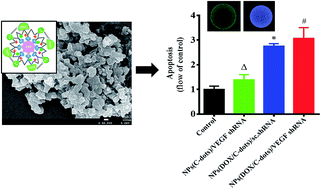
To investigate whether the enhanced cell uptake by FA-modified drug/gene co-delivery could transform into increased anticancer activity (synergistic effects), we compared the in vitro anti-tumor efficacy of single gene- or drug-loaded nanoparticles and drug/gene co-delivered nanocomplexes in folate receptor-overexpressed HeLa cells. Both single gene- or drug-loaded nanoparticles and drug/gene co-delivered nanocomplexes reduced cell viability (Fig. 9A). DOX-loaded nanoparticles was more cytotoxic than VEGF shRNA-loaded nanoparticles. Moreover, gene/drug co-delivered FA–CS–FITC(DOX/C-dots)/VEGF shRNA nanocomplexes showed markedly greater cytotoxicity than aforementioned the single gene- or drug-loaded nanoparticles. To evaluate whether the cell viability decrease by these functionalized nanoparticles was due to its apoptotic effect, the cell apoptosis was evaluated by caspase-3 activity assay. The caspase-3 is a member of the cysteine–aspartic acid protease family. Sequential activation of caspase-3 plays a central role in cell apoptosis, and its activity could be used to detect the cell apoptosis.45 As shown in Fig. 9B, the cell apoptosis for FA–CS–FITC(DOX/C-dots)/VEGF shRNA nanocomplexes was significantly higher than the single gene- or drug-loaded nanoparticles. Taken together, these data demonstrated the synergistic effect of the combination therapy.
 |
| | Fig. 9 Synergistic anti-cancer effect in vitro by cell viability and cell apoptosis assays. HeLa cells were treated for 48 h with FA–CS–FITC(C-dots) (control), FA–CS–FITC(C-dots)/VEGF shRNA (NPs(C-dots)/VEGF shRNA), FA–CS–FITC(DOX/C-dots)/scrambled shRNA (NPs(DOX/C-dots)/sc. shRNA), or FA–CS–FITC(DOX/C-dots)/VEGF shRNA (NPs(DOX/C-dots)/VEGF shRNA). Δp < 0.05 NPs(C-dots)/VEGF shRNA vs. control; *p < 0.05 NPs(DOX/C-dots)/sc. shRNA vs. NPs(C-dots)/VEGF shRNA; #p < 0.05 NPs(DOX/C-dots)/VEGF shRNA vs. NPs(DOX/C-dots)/sc. shRNA. | |
3.7. Dual fluorescence cellular imaging for HeLa cells
The capability of FA–CS–FITC(DOX/C-dots) nanoparticles as the contrast agents for fluorescence imaging was assessed in vitro. Cellular images of HeLa cells treated with FA–CS–FITC(DOX/C-dots) nanoparticles were obtained using confocal microscopy. C-dots fluorescence (light blue) and FITC fluorescence (green) of FA–CS–FITC(DOX/C-dots) nanoparticles were clearly observed in cytoplasm after 6 h or 12 h incubation (Fig. S5†). These data implied that FA–CS–FITC(DOX/C-dots) nanoparticles could be used as a fluorescent tracer for cellular detection. To further demonstrate in vitro multimodal cellular imaging, the 12-well cell culture plates with nanoparticle uptaken cells in the wells were imaged using a Chemilluminescent and Fluorescent Imaging System. The results showed that as the concentration of FA–CS–FITC(DOX/C-dots) increased, the fluorescence intensities of both FITC and C-dots increased, which suggested that the imaging effects also increased (Fig. 10). The in vitro results demonstrated that these FA–CS–FITC(DOX/C-dots) can be used as the fluorescent nano-probes for efficient optical imaging.
 |
| | Fig. 10 In vitro representative fluorescence images by activation of FITC (left) and C-dots (right). The HeLa cells (5 × 10⁴ cells per well) in 12-well plates were incubated for 24 h with various concentrations of FA–CS–FITC(DOX/C-dots) nanoparticles (10, 20 and 40 μg mL−1) or equal cell culture medium as the control, and observed under a Chemilluminescent and Fluorescent Imaging System. | |
4. Conclusions
In summary, biocompatible, chemotherapeutics/gene co-delivered, and dual-modality imaging chitosan hybrid nanoparticles are successfully synthesized using a self-assembly method. The theranostic nanoparticles exert excellent properties for targeted cancer therapy and florescence imaging. It is demonstrated that the VEGF silence can be utilized to promote the anti-cancer of chemotherapeutic agent (DOX), achieving a combined chemotherapeutic and gene therapy with an obvious synergistic cancer killing effect. These data highlight multifunctional FA–CS–FITC (DOX/C-dots)/VEGF shRNA nanocomplex as an attractive platform of targeted co-delivery of DOX and VEGF shRNA for cancer treatment, and also making it a potential candidate of nano-probes for cellular fluorescence imaging.
Acknowledgements
We would like to thank the financial supports, in whole or in part, by the National Natural Science Foundation of China (81201192, 31470959, 81471785, 81101147, 11272083, 31470906, and 11502049), the Sichuan Youth Science and Technology Foundation of China (2014JQ0008).
References
- Y. Chen, H. Gu, D. S. Zhang, F. Li, T. Liu and W. Xia, Biomaterials, 2014, 35, 10058–10069 CrossRef CAS PubMed.
- H. Yang, Y. Li, T. Li, M. Xu, Y. Chen, C. Wu, X. Dang and Y. Liu, Sci. Rep., 2014, 4, 7072 CrossRef PubMed.
- M. Shi, Y. Liu, M. Xu, H. Yang, C. Wu and H. Miyoshi, Macromol. Biosci., 2011, 11, 1563–1569 CAS.
- J. M. Li, Y. Y. Wang, M. X. Zhao, C. P. Tan, Y. Q. Li, X. Y. Le, L. N. Ji and Z. W. Mao, Biomaterials, 2012, 33, 2780–2790 CrossRef CAS PubMed.
- Y. Mi, J. Zhao and S. S. Feng, J. Controlled Release, 2013, 169, 185–192 CrossRef CAS PubMed.
- C. Wu, Q. He, A. Zhu, D. Li, M. Xu, H. Yang and Y. Liu, ACS Appl. Mater. Interfaces, 2014, 6, 21615–21623 CAS.
- S. Tang, Q. Yin, J. Su, H. Sun, Q. Meng, Y. Chen, L. Chen, Y. Huang, W. Gu, M. Xu, H. Yu, Z. Zhang and Y. Li, Biomaterials, 2015, 48, 1–15 CrossRef CAS PubMed.
- H. Yang, L. Deng, T. Li, X. Shen, J. Yan, L. Zuo, C. Wu and Y. Liu, J. Biomed. Nanotechnol., 2015, 11, 2124–2136 CrossRef CAS PubMed.
- J. E. Lee, N. Lee, H. Kim, J. Kim, S. H. Choi, J. H. Kim, T. Kim, I. C. Song, S. P. Park, W. K. Moon and T. Hyeon, J. Am. Chem. Soc., 2010, 132, 552–557 CrossRef CAS PubMed.
- C. Niu, Z. Wang, G. Lu, T. M. Krupka, Y. Sun, Y. You, W. Song, H. Ran, P. Li and Y. Zheng, Biomaterials, 2013, 34, 2307–2317 CrossRef CAS PubMed.
- T. Li, X. Shen, Y. Chen, C. Zhang, J. Yan, H. Yang, C. Wu, H. Zeng and Y. Liu, Int. J. Nanomed., 2015, 10, 4279–4291 CrossRef CAS PubMed.
- H. Zhou, L. Yang, H. Li, H. Gong, L. Cheng, H. Zheng, L. M. Zhang and Y. Lan, Int. J. Nanomed., 2012, 7, 4649–4660 CAS.
- S. K. Sahu, S. K. Mallick, S. Santra, T. K. Maiti, S. K. Ghosh and P. Pramanik, J. Mater. Sci.: Mater. Med., 2010, 21, 1587–1597 CrossRef CAS PubMed.
- C. M. Lee, D. Jang, J. Kim, S. J. Cheong, E. M. Kim, M. H. Jeong, S. H. Kim, D. W. Kim, S. T. Lim, M. H. Sohn, Y. Y. Jeong and H. J. Jeong, Bioconjugate Chem., 2011, 22, 186–192 CrossRef CAS PubMed.
- J. M. Shen, X. M. Guan, X. Y. Liu, J. F. Lan, T. Cheng and H. X. Zhang, Bioconjugate Chem., 2012, 23, 1010–1021 CrossRef CAS PubMed.
- R. J. Lee and P. S. Low, J. Biol. Chem., 1994, 269, 3198–3204 CAS.
- H. S. Yoo and T. G. Park, J. Controlled Release, 2004, 96, 273–283 CrossRef CAS PubMed.
- Y. Hattori and Y. Maitani, J. Controlled Release, 2004, 97, 173–183 CrossRef CAS PubMed.
- W. Guo, G. H. Hinkle and R. J. Lee, J. Nucl. Med., 1999, 40, 1563–1569 CAS.
- L. Fan, F. Li, H. Zhang, Y. Wang, C. Cheng, X. Li, C. H. Gu, Q. Yang, H. Wu and S. Zhang, Biomaterials, 2010, 31, 5634–5642 CrossRef CAS PubMed.
- Q. Xu, L. Guo, X. Gu, B. Zhang, X. Hu, J. Zhang, J. Chen, Y. Wang, C. Chen, B. Gao, Y. Kuang and S. Wang, Biomaterials, 2012, 33, 3909–3918 CrossRef CAS PubMed.
- L. Deng, L. Li, H. Yang, L. Li, F. Zhao, C. Wu and Y. Liu, J. Nanosci. Nanotechnol., 2014, 14, 2947–2954 CrossRef CAS PubMed.
- Y. Liu, M. Shi, M. Xu, H. Yang and C. Wu, Expert Opin. Drug Delivery, 2012, 9, 1197–1207 CrossRef CAS PubMed.
- S. F. Peng, C. Y. Lee, M. J. Hour, S. C. Tsai, D. H. Kuo, F. A. Chen, P. C. Shieh and J. S. Yang, Int. J. Oncol., 2014, 44, 238–246 CAS.
- Y. Tao, E. Ju, Z. Liu, K. Dong, J. Ren and X. Qu, Biomaterials, 2014, 35, 6646–6656 CrossRef CAS PubMed.
- Y. Liu, C. Lou, H. Yang, M. Shi and H. Miyoshi, Curr. Cancer Drug Targets, 2011, 11, 156–163 CrossRef CAS PubMed.
- X. Xiong, F. Zhao, M. Shi, H. Yang and Y. Liu, J. Biomater. Sci., Polym. Ed., 2011, 22, 417–428 CrossRef CAS PubMed.
- H. Yang, M. Shi, M. Xu, Y. Li, C. Wu and Y. Liu, J. Controlled Release, 2013, 172, e120–e121 CrossRef CAS.
- Y. Zu, Q. Zhao, X. Zhao, S. Zu and L. Meng, Int. J. Nanomed., 2011, 6, 3429–3441 CrossRef CAS PubMed.
- R. Meier, T. D. Henning, S. Boddington, S. Tavri, S. Arora, G. Piontek, M. Rudelius, C. Corot and H. E. Daldrup-Link, Radiology, 2010, 255, 527–535 CrossRef PubMed.
- H. Yang, C. Lou, M. Xu, C. Wu, H. Miyoshi and Y. Liu, Int. J. Nanomed., 2011, 6, 2023–2032 CAS.
- S. Tang, Q. Yin, Z. Zhang, W. Gu, L. Chen, H. Yu, Y. Huang, X. Chen, M. Xu and Y. Li, Biomaterials, 2014, 35, 6047–6059 CrossRef CAS PubMed.
- F. Danhier, O. Feron and V. Preat, J. Controlled Release, 2010, 148, 135–146 CrossRef CAS PubMed.
- A. Verma and F. Stellacci, Small, 2010, 6, 12–21 CrossRef CAS PubMed.
- J. Panyam, D. Williams, A. Dash, D. Leslie-Pelecky and V. Labhasetwar, J. Pharm. Sci., 2004, 93, 1804–1814 CrossRef CAS PubMed.
- M. Guo, Y. Yan, X. Liu, H. Yan, K. Liu, H. Zhang and Y. Cao, Nanoscale, 2010, 2, 434–441 RSC.
- M. Guo, C. Que, C. Wang, X. Liu, H. Yan and K. Liu, Biomaterials, 2011, 32, 185–194 CrossRef CAS PubMed.
- S. Son and W. J. Kim, Biomaterials, 2010, 31, 133–143 CrossRef CAS PubMed.
- C. Liu, F. Liu, L. Feng, M. Li, J. Zhang and N. Zhang, Biomaterials, 2013, 34, 2547–2564 CrossRef CAS PubMed.
- F. Yang, J. J. Green, T. Dinio, L. Keung, S. W. Cho, H. Park, R. Langer and D. G. Anderson, Gene Ther., 2009, 16, 533–546 CrossRef CAS PubMed.
- C. P. Leamon and J. A. Reddy, Adv. Drug Delivery Rev., 2004, 56, 1127–1141 CrossRef CAS PubMed.
- M. H. Kang, H. J. Yoo, Y. H. Kwon, H. Y. Yoon, S. G. Lee, S. R. Kim, D. W. Yeom, M. J. Kang and Y. W. Choi, Mol. Pharm., 2015, 12, 4200–4213 CrossRef CAS PubMed.
- P. Zhang and J. Kong, Talanta, 2015, 134, 501–507 CrossRef CAS PubMed.
- Y. Yang, Y. Bai, G. Xie, N. Zhang, Y. P. Ma, L. J. Chen, Y. Jiang, X. Zhao, Y. Q. Wei and H. X. Deng, Cancer Biother.Radiopharm., 2010, 25, 65–73 CrossRef CAS PubMed.
- C. Y. Lee, Y. S. Chien, T. H. Chiu, W. W. Huang, C. C. Lu, J. H. Chiang and J. S. Yang, Oncol. Rep., 2012, 28, 1883–1888 CAS.
Footnotes |
| † Electronic supplementary information (ESI) available. See DOI: 10.1039/c6ra03843c |
| ‡ The authors contributed equally to this work. |
|
| This journal is © The Royal Society of Chemistry 2016 |
Click here to see how this site uses Cookies. View our privacy policy here.