DOI:
10.1039/C6RA03832H
(Paper)
RSC Adv., 2016,
6, 34120-34130
Fabrication of a superhydrophilic epoxy resin surface via polymerization-induced viscoelastic phase separation
Received
11th February 2016
, Accepted 21st March 2016
First published on 23rd March 2016
Abstract
Surface roughness and porosity play important roles in the wetting behavior of materials. In this study, we introduced a novel method to tune the wettability of epoxy resin surfaces. A micro–nano hierarchical structure on polyethylene glycol (PEG) modified epoxy system was fabricated by polymerization-induced viscoelastic phase separation. By manipulating the curing procedure and concentration and molecular weight of PEG, surfaces with different topography and porosity were obtained. The phase evolution was monitored by time-resolved light scattering (TRLS) and the morphologies of the surfaces were observed by scanning electron microscopy (SEM) and atomic force microscopy (AFM). Static water contact angle was also measured. With increasing the content of PEG in the blends, the effect of viscoelasticity on phase separation was strengthened, which resulted in an increase of porosity and a more hydrophilic epoxy resin surface. Higher molecular weight PEG exerted an impact on the viscoelastic behavior of phase separation, which rendered a rougher epoxy surface. With the aid of higher viscoelasticity on phase separation of the PEG modified epoxy system, surfaces with a micro–nano structure exhibited superhydrophilicity.
1. Introduction
Manipulating and controlling the wetting behavior of solid surfaces, such as superhydrophilicity and superhydrophobicity, have drawn enormous attention with fundamental research and practical applications arising during the previous decades.1–7 Most were inspired by natural materials such as lotus leaves, butterfly wing, shark skin, and mosquito compound eyes. Superhydrophilicity denotes the extreme water-loving behavior of specifically designed surfaces,7 which was first proposed by Fujishima1 in 2000. Water droplets on these surfaces spread rapidly and lead to a static water contact angle of nearly zero. The interesting properties of these surfaces were intensively explored. The superhydrophilicity endowed the surface with extreme performance for self-cleaning,8–10 anti-fogging,6,8,9 water-harvesting,11 and heat transfer,12 as well as membranes13 and biomedical applications.14
It is well documented that two parameters are very important to govern surface wettability,15,16 i.e., chemical structure and surface roughness. Young's equation,17,18 the Wenzel19 equation and the Cassie–Baxter20 equation were introduced to interpret the effect of surface roughness on wettability. A variety of methods or techniques have been developed and investigated to manufacture superhydrophilic and superhydrophobic surfaces.2,5,6,22–26 Among them, the phase separation method exhibits great potential for constructing superhydrophilic/superhydrophobic surfaces based on the following merits: facile fabrication, an extremely wettable surface and large-scale manufacturing ability at an affordable cost. Nylon 6,6 surfaces with unique wettability were prepared via vapor phase separation.27 Moreover, porous TiO2/SiO2 composite thin films were prepared through a versatile template-free sol–gel process.21 With the help of phase separation, these porous structure rendered surfaces with superhydrophilic performance.
In the past few years, polymerization-induced viscoelastic phase separation (PIVPS) on thermoplastic modified thermoset systems have been widely investigated by our research group28–36 and others.37–39 Contrary to the common sense of classical phase separation, there exists a dynamic asymmetry between the two components induced by a large difference either in size or glass-transition temperature.43–46 In these cases, a fast dynamic phase domain appears in a slow dynamic phase matrix and sponge-like or network-like structures are formed by the domain growth. Finally, a continuous slow dynamic phase develops into a dispersed phase by shrinkage.34,35 Therefore, even the minority phase transiently forms a continuous structure, which always results in bicontinuous and sponge-like morphology during PIVPS. In other words, with the addition of a small amount of slow-dynamic thermoplastic, multi-phase structure with complicated topography and surface conditions could be tailored through controlling the curing agent, curing condition, thermoplastic concentration, as well as the thermoplastic molecular weight.
In this study, PEG was chosen for modification of epoxy on the basis of two reasons: first, a multi-phase structure could be obtained due to PIVPS between PEG and epoxy resin system; second, the PEG-rich phase could be etched easily by water. The influences of curing condition, PEG concentration as well as PEG molecular weight on surface roughness and wetting behavior were investigated. To the best of our knowledge, this is the first report on fabricating superhydrophilic surfaces by resin thermosetting that utilizes such a method. Such epoxy resins with superhydrophilic surfaces have potential applications in oil transportation and self-cleaning surfaces. As PIVPS is a common phenomenon in thermoplastic modified thermoset blends, so by varying the composition of thermoplastic or thermoset, it was likely a rough surface with unique wettability could be obtained.
2. Experimental section
2.1. Materials and samples preparation
The epoxy oligomer DER 331 was provided by Dow Chemical Co. and it is a low molecular weight liquid diglycidyl ether of bisphenol A (DGEBA) with an epoxide equivalent of 182–192 g mol−1. Polyethylene glycol (PEG) were obtained from Sinopharm Chemical Reagent Co., Ltd, and had 20
000 g mol−1 and 10
000 g mol−1 number-average molecular weights. The curing agent was 2-ethyl-4-methylimidazole (2E4MI) from Aladdin Industrial Co. The chemical structure of DGEBA, 2E4MI, and PEG are given in Scheme 1.
 |
| | Scheme 1 The chemical structure of DGEBA, 2E4MI, PEG and the reaction of DGEBA and 2E4MI. | |
The homogeneous mixture of PEG/DGEBA was prepared by adding PEG to the stirred epoxy resin at 80 °C under nitrogen gas. Then 2E4MI was added and the mixture was stirred vigorously for a few minutes until 2E4MI was completely dissolved. The mixture was degassed and stored below 0 °C to avoid further curing reaction. The samples were cured at 80 °C for 4 h and some were post cured at 150 °C for 2 h. After curing, the samples were etched in deionized water at 60 °C thrice, for 15 min each time. The compositions of the formulations are collected in Table 1.
Table 1 Formulation of the samples and curing conditions
| Samples |
DER 331 |
2E4MI |
PEG |
Curing condition |
| Control epoxy |
100 |
5 |
0 |
80 °C/4 h |
| 20phrPEG-2W |
100 |
5 |
20 |
80 °C/4 h |
| 30phrPEG-2W |
100 |
5 |
30 |
80 °C/4 h |
| 40phrPEG-2W |
100 |
5 |
40 |
80 °C/4 h |
| 40phrPEG-1W |
100 |
5 |
40 |
80 °C/4 h |
| 20phrPEG-2W-post |
100 |
5 |
20 |
80 °C/4 h, 150 °C/2 h |
| 30phrPEG-2W-post |
100 |
5 |
30 |
80 °C/4 h, 150 °C/2 h |
| 40phrPEG-2W-post |
100 |
5 |
40 |
80 °C/4 h, 150 °C/2 h |
2.2. Characterization
2.2.1. Scanning electron microscope (SEM). The morphologies of samples were observed with a scanning electron microscope (TESCAN, TS 5136 MM). All samples were sprayed with gold and mounted on copper mounts.
2.2.2. Atomic force microscopy (AFM). The measurement was performed on a Nanoscope IV (Bruker, multimode 8). Images were acquired in tapping mode. A RTESPA probe with a 40 N m−1 force constant and 300 kHz resonance frequency was utilized to probe the surfaces.
2.2.3. Contact angle measurements. Surface wettability of the sample was evaluated by the sessile drop method with a pure water droplet (ca. 3 μL) using a contact angle goniometer (Dataphysics, OCA15, Germany). The average value of five measurements made at different surface locations on the same sample was adopted as the contact angle.
2.2.4. Time-resolved light scattering (TRLS). The phase separation during isothermal curing reaction was tracked in situ by TRLS equipped with a controllable hot chamber, which was assembled ourselves. The data were recorded at appropriate time intervals. The sample blends were pressed into films before TRLS observation.
2.2.5. Energy-dispersive X-ray (EDX) spectroscopic measurements. The chemical composition of surfaces was determined by a Field-Emission Scanning Microscope (Zeiss, Ultra 55) which was equipped with an Oxford Instrument X-MAX 50.
3. Resuls and discussion
For the epoxy/PEG blend, it was a homogenous mixture before the curing reaction. During the curing process, 2E4MI initiated the polymerization of epoxy resin, which mainly included two steps, i.e., adduct formation and etherification process: the amine groups of 2E4MI reacted with epoxide groups first to form OH groups and reactive alkoxide anions, which further initiates the propagating of epoxide ring to ultimately form a cross-linked network with ether-linkages (as shown in Scheme 1). With the increase of epoxy molecular weight, the decrease of the entropy induced PIVPS, in other words, the thermodynamic miscibility of the components in the blends decreased with polymerization, at the same time, dynamic asymmetry between two components affected the process of phase separation. In general, the final morphologies of thermoplastic-epoxy blends depend on thermodynamic imputes and kinetic restrain. In this study, we focused on the effect of molecular weight and concentration of PEG as well as curing conditions on the modified systems morphology.
3.1. Morphology, surface conditions, and viscoelastic phase separation of PEG modified epoxy resin
3.1.1. Morphology and surface roughness. Fig. 1 shows the SEM micrographs of the etched surfaces of PEG/epoxy blends cured at 80 °C, in which the molecular weight of PEG was 20
000 g mol−1. In all images presented here, the spherical particles of about 1–2 μm diameter correspond to the epoxy-rich phase, whereas continuous voids were left by etching the PEG with deionized water. As one can observe, epoxy particles connected with each other, so did the void, and these systems seem to have exhibited bicontinuous phase structure. However, epoxy spherical particles of 20phrPEG-2W system were irregular with a size larger than that of the 30phrPEG-2W and 40phrPEG-2W system.
 |
| | Fig. 1 SEM micrographs of the etched surface of epoxy blends cured at 80 °C: (a) 20phrPEG-2W; (b) 30phrPEG-2W; and (c) 40phrPEG-2W. | |
As an example, SEM image with higher magnification of 40phrPEG-2W are also shown in Fig. 1c, and it is obvious that the nano-scale structure distributed on the surface of each epoxy particle. As a supplement, more refined and sophisticated structures on the surface of epoxy spherical particles were investigated in detail by AFM. As shown in Fig. 2, more nanometer-scale particles were decorated on each epoxy particle; moreover, these nano-particles were irregularly shaped. With the increase of PEG content, the surfaces vertical depth increased as shown in the profiles from the section analysis. The roughness (Rq) result was 3.8 nm, 11.1 nm and 22.0 nm for the 20phrPEG-2W, 30phrPEG-2W and 40phrPEG-2W surfaces, respectively. This suggests that the surface roughness became enlarged with increased PEG concentration.
 |
| | Fig. 2 AFM images of the etched surface of epoxy blends cured at 80 °C: (a) 20phrPEG-2W; (b) 30phrPEG-2W; and (c) 40phrPEG-2W. | |
In the present dynamic asymmetry system of PEG and epoxy monomer/oligomer, the mixture was homogeneous at the initial time. As the polymerization proceeded, the fast dynamic epoxy phase diffused out of the slow dynamic PEG-rich phase. Thus, the slower dynamic PEG-rich phase became, more and more viscoelastic and eventually behaved as an elastic body. At the same time, the epoxy phase grew larger and connected to each other and the elastic force balance controlled the morphology instead of the interfacial tension, resulting in the anisotropic shape of the domain. This phase evolution process is typical for viscoelastic phase separation and was demonstrated in previous studies.32,38
3.1.2. Polymerization-induced viscoelastic phase separation. To verify the process, TRLS was applied to monitor the phase separation process of the modified epoxy system. The change of the light-scattering profiles was recorded at appropriate time intervals during isothermal curing. Fig. 4a shows the TRLS profiles of the light scattering vector (q) and the scattering intensity (I) for these systems cured at 80 °C isothermally with a 20 s time interval. The scattering vector with maximum scattering intensity, qm, appeared after the beginning of phase separation and then shifted to lower qm values with time due to the epoxy phase coarsening, and finally it became constant. Furthermore, the scattering intensity increased continuously from the beginning of phase separation. In other words, the phase size increased with the polymerization proceeding and finally the morphology was fixed by gelation. Moreover, the evolution of qm corresponded to the precursor droplets thermosetting and follows a Maxwell-type relaxation equation (eqn (1)) as confirmed in our previous studies33,40,41 as follows:| |
qm(t) = q0 + A1 e−t/τ
| (1) |
where qm(t) is the scattering vector at time t, q0 is the initial value at the beginning of phase separation, and τ is the characteristic relaxation time that indicates the coarsening capability of the epoxy droplets.As shown in Fig. 3b, the time-dependent qm of each system fits the Maxwell-type relaxation equation very well. This suggests that the relaxation movement in the PEG modified epoxy system is a type of viscoelastic phase separation process. The relaxation time of the blends became much larger with the increased PEG concentration. A similar phenomenon was also found at all temperatures. The simulation results of the three systems cured at different temperatures are listed in Table 2.
 |
| | Fig. 3 TRLS profile and WLF equation fitting of 20phrPEG-2W, 30phrPEG-2W, and 40phrPEG-2W cured at 80 °C. (a) Intensity versus q at different times; (b) qm versus time; (c) the relaxation time versus temperature. | |
Table 2 Relaxation time obtained from stimulation using a Maxwell-type relaxation equation
| Temperature/K |
343 |
348 |
353 |
358 |
363 |
368 |
| 20phrPEG-2W |
150 |
108 |
64 |
55 |
39 |
34 |
| 30phrPEG-2W |
305 |
241 |
189 |
169 |
159 |
129 |
| 40phrPEG-2W |
402 |
308 |
242 |
209 |
188 |
177 |
The relaxation time at different temperatures were fit with the Williams–Landel–Ferry (WLF) equation, which can be written as follows:28,40–42
| |
 | (2) |
As shown in Fig. 3c, the simulation data of the three blends obeys the time–temperature superposition principle and fit the WLF equation quite well, which suggests that the coarsening process of the epoxy droplets were mainly controlled by viscoelastic diffusion.
According to the theory of viscoelastic phase separation43–46 and previous research on TRLS and morphology evolution, at the beginning of phase separation following a spinodal decomposition mechanism (as present systems), a micro-bicontinuous phase structure is formed due to lower dynamic asymmetry between epoxy-rich and PEG-rich phases. As the polymerization proceeds, the epoxy precursors diffuse out from the PEG-rich phase and coarsen rapidly. Then, the morphology shifts into a phase inverted structure quickly with small epoxy-rich dispersed particles.
In the present dynamic asymmetry system of PEG and epoxy precursor with large differences in molecular mobility and molecular weight, during phase separation, the viscoelasticity of the slower dynamic phase (PEG rich phase) increased with the escape of the epoxy precursor from the PEG-rich phase and eventually behaved as an elastic body.43–46 Moreover, the less viscoelastic phase (epoxy-rich phase) started to coarsen with time and the elastic force balance dominated the morphology instead of the interfacial tension, which leads to the anisotropic shape of the domains and a highly roughened surface.
It can be observed clearly that the viscoelasticity increased with the addition amount of PEG in the epoxy blend systems as the relaxation value of τ from TRLS tests got larger with PEG content, which is recorded in Table 2. The increased viscoelastic effect may eliminate interfacial tension on the particle surface and thus results in rougher particles for high PEG content systems.
3.1.3. Effect of PEG molecular weight on PIVPS. Except the effect of content, molecular weight of thermoplastic is another important factor that affects the PIVPS. To compare with higher molecular weight PEG modified systems, PEG with lower molecular weight of 10
000 g mol−1 was utilized to study the changes. As an example, 40phrPEG-1W was cured at 80 °C for 4 h, the morphology of the sample also exhibited a bicontinuous phase structure, as shown in Fig. 4a, and there was little difference between 40phrPEG-1W and previous blends. The refined and sophisticated structure was also displayed on the epoxy particles as explored by AFM (Fig. 4b). The roughness (Rq) of this surface was 16 nm, which is smaller than that of 40phrPEG-2W, as was the surface vertical depth. The phase separation process of the system was monitored by TRLS, it was obvious that the result of 40phrPEG-1W fit the Maxwell-type equation well, which indicated that this system is also a typical viscoelastic phase separation. From the point view of viscoelastic phase separation, the increase of PEG molecular weight will enhance the dynamic asymmetry between thermoplastic and thermoset oligomer, while a higher molecular weight PEG system would tend to induce earlier phase separation (at lower curing conversion of epoxy), which further enlarges the dynamic asymmetry and favors formation of PEG continuous structure.
 |
| | Fig. 4 The surface and morphology evolution of 40phrPEG-1W cured at 80 °C (a) SEM morphology; (b) AFM image; and (c) qm versus time. | |
As the lower molecular weight PEG became disentangled easily, the epoxy droplets could escape from the PEG cage easily. While lower dynamic asymmetry decreased the elastic force during phase separation, thus interfacial tension played some roles as compared with the high molecular weight PEG systems. Therefore, it is reasonable that the 40phrPEG-1W system relaxation time was lower than that of the 40phrPEG-2W system; furthermore, the surface roughness decreased in the lower molecular weight PEG systems.
3.2. Surface properties of PEG modified epoxy system
It is well confirmed that wettability of a surface is determined by chemical composition and the roughness geometry. The static water contact angles of the samples were measured and the data is collected in Table 3. In the present study, epoxy resin shows a naturally hydrophilic surface attributed to a large number of hydroxyl groups. The static water contact angle of the control epoxy system was 60°, as shown in Fig. 5a. Moreover, the contact angle of the surfaces tended to decrease drastically with the addition of PEG content, the surface of PEG modified epoxy system behaved more hydrophilically as compared with the control epoxy system. The more PEG content introduced, the lower contact angle that could be obtained. It is worth noting that a 3 μL water droplet spread on the surface of the 40phrPEG-2W system rapidly and the resulting static water contact angle was 5°, which classified the epoxy surface as superhydrophilic.
Table 3 Static water contact angles of epoxy surfaces
| Samples |
Control epoxy |
20phrPEG-2W |
30phrPEG-2W |
40phrPEG-2W |
40phrPEG-1W |
| Static water contact angle |
60 |
30 |
18 |
5 |
16 |
 |
| | Fig. 5 Images of representative static water contact angles of epoxy surface: (a) control epoxy; (b) 20phrPEG-2W; (c) 30phrPEG-2W; (d) 40phrPEG-2W; (e) 40phrPEG-1W. | |
It was well demonstrated that the surface of the PEG modified epoxy system exhibited micro–nano structure based on SEM and AFM, the viscoelastic effect of these systems was strengthened with the increased PEG concentration and molecular weight, which induced more elastic deformation of the PEG-rich phase and thus resulted in a rougher surface that was rendered more hydrophilic. The static water contact angle would approach 0°, and finally, the surface had superhydrophilic behavior.
To understanding the effect of roughness on wettability of surface, Wenzel's equation19 was given by cos
θa = r
cos
θ, where θ corresponds to the inherent contact angle of the smooth surface, θa is the apparent contact angle of the rough surface and r is the surface roughness. The equation suggests that the wetting characteristic of surfaces is enhanced by the roughness. Therefore, roughness drives the hydrophilic surface to be more hydrophilic and rendered the hydrophobic surface more hydrophobic.
With respect to the effect of PEG molecular weight on wetting performance, it is obvious that contact the angle of the 40phrPEG-1W surface was 16°, which was larger than that of the 40phrPEG-2W surface. From the discussion above, it is plausible to propose that the effect of viscoelasticity on phase separation of PEG modified epoxy system exerts a great impact on surface roughness, and followed by the wetting performance.
3.3. The effect of structure on the wetting properties
3.3.1. Elimination of nano-structure through chain disentanglement. As one can observe, a more hydrophilic surface, especially superhydrophilic surface can be fabricated through the PIVPS method. The micro–nano hierarchically structure is proposed to be the most important factor for this super-wetting ability.27 To further confirm the proposition above, we attempted to eliminate the sophisticated nano-scale structure on the surface of epoxy spherical particles. As the modified systems were exposed to higher curing temperature above the glass transition temperature of the blends, the freezing polymer segments again started to move. Therefore, the surface tended to be smooth and flat due to the interfacial tension. When the blends were post cured at 150 °C for 2 h, the size of epoxy particles decreased slightly in comparison with those in Fig. 1 and 6, which may be attributed to the escape of PEG from epoxy-rich phase. The micro-scale structure seems to be more flat as compared with the blends without post-curing (shown in Fig. 6). Choosing the 40phrPEG-2W-post system as an example, the higher magnification image in Fig. 6c showed smooth particles. AFM was also applied, as shown in Fig. 7, and it was obvious that the sophisticated nano-scale structure vanished and was replaced by a smooth surface. The static water contact angle of the 40phrPEG-2W-post system was 44° (Fig. 8c), which is larger than that of 40phrPEG-2W, though smaller than that of control epoxy system.
 |
| | Fig. 6 SEM micrographs of the etched surface of epoxy blends post cured at 150 °C: (a) 20phrPEG-2W-post; (b) 30phrPEG-2W-post; (c) 40phrPEG-2W-post. | |
 |
| | Fig. 7 AFM height images of the etched surface of epoxy blends. (a) 40phrPEG-2W; (b) 40phrPEG-2W-post. | |
 |
| | Fig. 8 Images of representative static water contact angles of post-cured systems: (a) 20phrPEG-2W-post; (b) 30phrPEG-2W-post; (c) 40phrPEG-2W-post. | |
Moreover, EDX measurements were also applied to characterize the surfaces chemical composition. The EDX results for the 40phrPEG-2W system and 40phrPEG-2W-post system are in Table 4. The ratios of the element C to O on these two surfaces were very close, which indicates that the elemental distribution on the surface was rarely altered. In other words, post-cure treatment did not vary the chemical composition of the epoxy surfaces; therefore, the hydrophilicity weakening of the post-cured system was more likely attributed to eliminating the nanostructure on the epoxy particles surface and to a minor decrease of the epoxy particles microstructure.
Table 4 The results of elemental analysis on 40phrPEG-2W and 40phrPEG-2W-post
| Sample |
Content of C (%) |
Content of O (%) |
C : O |
| 40phrPEG-2W |
84.3 |
15.7 |
5.37 |
| 40phrPEG-2W-post |
83.6 |
16.4 |
5.10 |
3.3.2. The effect of porosity on wetting performance. It can be observed from the abovementioned experimental results that the sophisticated nanostructure on the surface of epoxy particles from PIVPS exerts a great influence on the hydrophilic performance. With the increased roughness, the surface contact angle tends to be reduced. As known from the Cassie–Baxter equation, for rough or porous surfaces, the wettability relates to the asperities and air pockets. In this section, the effect of different porosity on water contact angle of epoxy surface was investigated.To eliminate the effects lead by surface roughness of spherical particles from the elastic balance force of PIVPS, all samples were treated at higher temperature through chain disentanglement. With post-curing at 150 °C for 2 h, the sophisticated nanostructure of the epoxy spherical particle was well eradicated and the water contact angle was presumably only related to the porosity of surface. The phase structure of all the samples after post-curing is shown in Fig. 6. The porosity of these epoxy surfaces was determined by SEM and is listed in Table 5. It is obvious that the increase of PEG content led to more porosity. However, it was difficult to obtain higher porosity with the mere aid of increasing the PEG content. Fig. 8 provides images of representative static water contact angles measured on these epoxy samples and the results are listed in Table 5. The surfaces of the modified systems exhibited hydrophilicity.
Table 5 Experimentally measured and calculated static water contact angles of different samples
| Samples |
Porosity (1 − f) |
Static water contact angle (°) |
| Measured |
Calculated |
| Control epoxy |
0 |
60.0 |
— |
| 20phrPEG-2W-post |
36.9% |
49.9 |
46.8 |
| 30phrPEG-2W-post |
46.1% |
46.6 |
43.1 |
| 40phrPEG-2W-post |
50.0% |
44.0 |
41.4 |
In addition, theoretical water contact angle values calculated by Cassie–Baxter20 equation is also provided in Table 5. The Cassie–Baxter model (eqn (3)) has been widely applied to predict the contact angle of liquid drop on porous materials surface as follows:
| |
cos θ = f cos θs + (1 − f)cos θx,
| (3) |
where
f is the fraction of the liquid base in contact with the solid surface, and (1 −
f) is the remaining fraction of the drop base.
θ is the contact angle of the liquid on the rough surface,
θs is the contact angle of the liquid on a smooth surface with the same chemistry as the rough surface,
θx is the contact angle of a liquid on air. For a porous surface filled with a liquid
θx would become 0° for droplets of the same liquid.
3 Eqn (3) is reduced to
eqn (4) as follows:
| |
cos θ = f(cos θs − 1) + 1
| (4) |
Based on the microstructure of the samples as demonstrated by SEM studies, the Cassie–Baxter equation was well utilized to calculate the theoretical water contact angles on these epoxy surfaces. It should be mentioned that (1 − f) corresponds to the porosity of surfaces and the theoretical contact angle of the control epoxy surface was the same as the experimentally measured value for approximate calculation.
Obviously, the values of experimentally measured contact angle were very close to that of theoretical contact angle calculated from Cassie–Baxter equation. This indicates that Cassie–Baxter is very useful to estimate the water contact angle on these porous surfaces formed by phase separation. Moreover, it suggests that the increase of porosity in blends leads to a more hydrophilic surface. However, even the highest porosity without the nano-structure cannot contribute to superhydrophilicity in these epoxy systems with an intrinsic contact angle of 60°. As a result, roughening the surfaces with micro–nano structure is probably a more effective approach than adjusting porous structure alone for forming superhydrophilic surfaces.
3.4. The relationship between roughness and phase separation
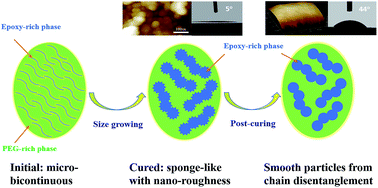
A schematic illustrating the evolution of micro–nano structure on PEG modified epoxy system according to the result of SEM and AFM is given in Scheme 2. When the PIVPS of PEG modified epoxy system happens at low temperature, a micro-bicontinuous structure was formed at the initial stage and the size of the epoxy particles grew with phase separation, while the elastic force of PEG-rich rather than interfacial tension dominated the phase boundary, and as a result, many burrs were decorated on the edge of each phase. However, after post-curing, chain disentanglement induced a smooth surface of the phase boundary due to interfacial tension governed free energy.
 |
| | Scheme 2 Schematic of phase separation and roughness change mechanism. | |
In our studied system, phase separation obeyed an SD mechanism as confirmed by TRLS. A bicontinuous phase structure was easily established at 80 °C, as concentration and molecular weight of the thermoplastic were increased, and the dynamic asymmetry and viscoelastic effect of the blends were strengthened. The phase structure was fixed in the elastic regime at 80 °C, in which the elastic force balance controlled the final morphology rather than the interfacial tension. Herein, a rougher surface with micro–nano structure was created. According to the time–temperature superposition principle, with the increase in temperature, the morphology evolution becomes less sensitive. When the blends were post-cured at 150 °C, the polymer chain tended to relax again and the interface tension that dominated the final morphology, resulted in rounded shape domains with the lowest interfacial energy, and there is no doubt that the nano-scale structure had vanished.
4. Conclusions
In this study, a facile method, based on polymerization-induced viscoelastic phase separation of PEG modified epoxy was developed to fabricate hydrophilic and superhydrophilic surfaces. The effect of the curing procedure and concentration and molecular weight of PEG on phase separation was well demonstrated. The PIVPS mechanism was confirmed by SEM and TRLS. The micro–nano hierarchical structure was well proven as a significant factor governing the superhydrophilic surface, in which the nanostructure of the rough phase boundary from PIVPS plays a major role in determining the hydrophilic property. The static water contact angle for the 40phrPEG-2W system increased from 5° to 44° after erasing the nanostructure through post-cure treatment, which resulted in a smooth interface due to chain disentanglement. Moreover, the surface tended to be more hydrophilic when increasing the surface porosity without considering the nanostructure. The experimental results of contact angle corresponded well with theoretical prediction and previous explanations. Roughening the surfaces with micro–nano structure is probably a more effective approach than adjusting microstructure alone for forming a superhydrophilic surface. Furthermore, it offers an environmentally friendly approach to produce superhydrophilic surfaces on a large scale.
Acknowledgements
This research study was supported by the National Natural Science Foundation of China (Grant 21274031).
References
- A. Fujishima, T. N. Rao and D. A. Tryk, TiO2 photocatalysts and diamond electrodes, Electrochim. Acta, 2000, 28, 4683–4690 CrossRef.
- H. Y. Erbil, A. L. Demirel, Y. Avcı and O. Mert, Transformation of a simple plastic into a superhydrophobic surface, Science, 2003, 5611, 1377–1380 CrossRef PubMed.
- N. J. Shirtcliffe, G. McHale, M. I. Newton, C. C. Perry and P. Roach, Porous materials show superhydrophobic to superhydrophilic switching, Chem. Commun., 2005, 3135–3137 RSC.
- N. Zhao, Q. Xie, L. Weng, S. Wang, X. Zhang and J. Xu, Superhydrophobic surface from vapor-induced phase separation of copolymer micellar solution, Macromolecules, 2005, 22, 8996–8999 CrossRef.
- F. Ç. Cebeci, Z. Wu, L. Zhai, R. E. Cohen and M. F. Rubner, Nanoporosity-Driven Superhydrophilicity:
A Means to Create Multifunctional Antifogging Coatings, Langmuir, 2006, 6, 2856–2862 CrossRef PubMed. - W. Y. Gan, S. W. Lam, K. Chiang, R. Amal, H. Zhao and M. P. Brungs, Novel TiO2 thin film with non-UV activated superwetting and antifogging behaviours, J. Mater. Chem., 2007, 10, 952–954 RSC.
- K. E. Tettey, M. I. Dafinone and D. Lee, Progress in Superhydrophilic Surface Development, Mater. Express, 2011, 2, 89–104 CrossRef.
- Y. Lai, Y. Tang, J. Gong, D. Gong, L. Chi, C. Lin and Z. Chen, Transparent superhydrophobic/superhydrophilic TiO2-based coatings for self-cleaning and anti-fogging, J. Mater. Chem., 2012, 15, 7420–7426 RSC.
- J. A. Howarter and J. P. Youngblood, Self-Cleaning and Next Generation Anti-Fog Surfaces and Coatings, Macromol. Rapid Commun., 2008, 6, 455–466 CrossRef.
- I. P. Parkin and R. G. Palgrave, Self-cleaning coatings, J. Mater. Chem., 2005, 17, 1689–1695 RSC.
- L. Zhai, M. C. Berg, F. Ç. Cebeci, Y. Kim, J. M. Milwid, M. F. Rubner and R. E. Cohen, Patterned Superhydrophobic Surfaces:
Toward a Synthetic Mimic of the Namib Desert Beetle, Nano Lett., 2006, 6, 1213–1217 CrossRef CAS PubMed. - A. R. Betz, J. Jenkins, C.-J. C. Kim and D. Attinger, Boiling heat transfer on superhydrophilic, superhydrophobic, and superbiphilic surfaces, Int. J. Heat Mass Transfer, 2013, 2, 733–741 CrossRef.
- T. Yuan, J. Meng, T. Hao, Z. Wang and Y. Zhang, A Scalable Method toward Superhydrophilic and Underwater Superoleophobic PVDF Membranes for Effective Oil/Water Emulsion Separation, ACS Appl. Mater. Interfaces, 2015, 7, 14896–14904 CAS.
- M. T. Khorasani and H. Mirzadeh, In vitro blood compatibility of modified PDMS surfaces as superhydrophobic and superhydrophilic materials, J. Appl. Polym. Sci., 2004, 3, 2042–2047 CrossRef.
- D. Öner and T. J. McCarthy, Ultrahydrophobic Surfaces. Effects of Topography Length Scales on Wettability, Langmuir, 2000, 20, 7777–7782 CrossRef.
- T. Darmanin and F. Guittard, Wettability of conducting polymers: from superhydrophilicity to superoleophobicity, Prog. Polym. Sci., 2014, 4, 656–682 CrossRef.
- T. Young, An Essay on the Cohesion of Fluids, Philos. Trans. R. Soc. London, 1805, 95, 65–87 CrossRef.
- K. Liu and L. Jiang, Bio-Inspired Self-Cleaning Surfaces, Annu. Rev. Mater. Res., 2012, 1, 231–263 CrossRef.
- R. N. Wenzel, Resistance of solid surfaces to wetting by water, Ind. Eng. Chem., 1936, 8, 988–994 CrossRef.
- A. B. D. Cassie and S. Baxter, Wettability of porous surfaces, Trans. Faraday Soc., 1944, 546–551 RSC.
- T. Huang, W. Huang, C. Zhou, Y. Situ and H. Huang, Superhydrophilicity of TiO2/SiO2 thin films: synergistic effect of SiO2 and phase-separation-induced porous structure, Surf. Coat. Technol., 2012, 126–132 CrossRef CAS.
- Y. Lai, Y. Chen, Y. Tang, D. Gong, Z. Chen and C. Lin, Electrophoretic deposition of titanate nanotube films with extremely large wetting contrast, Electrochem. Commun., 2009, 12, 2268–2271 CrossRef.
- W. Huang, M. Lei, H. Huang, J. Chen and H. Chen, Effect of polyethylene glycol on hydrophilic TiO2 films: porosity-driven superhydrophilicity, Surf. Coat. Technol., 2010, 24, 3954–3961 CrossRef.
- D. Zahner, J. Abagat, F. Svec, J. M. J. Fréchet and P. A. Levkin, A Facile Approach to Superhydrophilic–Superhydrophobic Patterns in Porous Polymer Films, Adv. Mater., 2011, 27, 3030–3034 CrossRef PubMed.
- Y. Liu, Z. Lin, W. Lin, K. S. Moon and C. P. Wong, Reversible Superhydrophobic–Superhydrophilic Transition of ZnO Nanorod/Epoxy Composite Films, ACS Appl. Mater. Interfaces, 2012, 8, 3959–3964 Search PubMed.
- I. Yilgor, S. Bilgin, M. Isik and E. Yilgor, Tunable Wetting of Polymer Surfaces, Langmuir, 2012, 41, 14808–14814 CrossRef PubMed.
- L. Zhang, X. Zhang, Z. Dai, J. Wu, N. Zhao and J. Xu, Micro–nano hierarchically structured nylon 6,6 surfaces with unique wettability, J. Colloid Interface Sci., 2010, 1, 116–119 CrossRef PubMed.
- W. Gan, Y. Yu, M. Wang, Q. Tao and S. Li, Viscoelastic Effects on the Phase Separation in Thermoplastics-Modified Epoxy Resin, Macromolecules, 2003, 20, 7746–7751 CrossRef.
- W. Gan, Y. Yu, M. Wang, Q. Tao and S. Li, Morphology Evolution during the Phase Separation of Polyetherimide/Epoxy Blends, Macromol. Rapid Commun., 2003, 16, 952–956 CrossRef.
- W. Gan, G. Zhan, M. Wang, Y. Yu, Y. Xu and S. Li, Rheological behaviors and structural transitions in a polyethersulfone-modified epoxy system during phase separation, Colloid Polym. Sci., 2007, 15, 1727–1731 Search PubMed.
- Y. Yu, M. Wang, W. Gan and S. Li, Phase separation and rheological behavior in thermoplastic modified epoxy systems, Colloid Polym. Sci., 2006, 10, 1185–1190 Search PubMed.
- Y. Yu, M. Wang, W. Gan, Q. Tao and S. Li, Polymerization-Induced Viscoelastic Phase Separation in Polyethersulfone-Modified Epoxy Systems, J. Phys. Chem. B, 2004, 20, 6208–6215 CrossRef PubMed.
- Y. Yu, Z. Zhang, W. Gan, M. Wang and S. Li, Effect of Polyethersulfone on the Mechanical and Rheological Properties of Polyetherimide-Modified Epoxy Systems, Ind. Eng. Chem. Res., 2003, 14, 3250–3256 CrossRef.
- M. Wang, Y. Yu, X. Wu and S. Li, Polymerization induced phase separation in poly(ether imide)-modified epoxy resin cured with imidazole, Polymer, 2004, 4, 1253–1259 CrossRef.
- G. Zhan, Y. Yu, X. Tang, Q. Tao and S. Li, Further study of the viscoelastic phase separation of cyanate ester modified with poly(ether imide), J. Polym. Sci., Part B: Polym. Phys., 2006, 3, 517–523 CrossRef.
- G. Zhan, S. Hu, Y. Yu, S. Li and X. Tang, The study on poly(ether sulfone) modified cyanate ester resin and epoxy resin cocuring blends, J. Appl. Polym. Sci., 2009, 1, 60–70 CrossRef.
- P. Jyotishkumar, J. Koetz, B. Tiersch, V. Strehmel, C. Özdilek, P. Moldenaers, R. Hässler and S. Thomas, Complex Phase Separation in Poly(acrylonitrile-butadiene-styrene)-Modified Epoxy/4,4′-Diaminodiphenyl Sulfone Blends: Generation
of New Micro- and Nanosubstructures, J. Phys. Chem. B, 2009, 16, 5418–5430 CrossRef PubMed.
- S. Goossens, B. Goderis and G. Groeninckx, Reaction-Induced Phase Separation in Crystallizable Micro- and Nanostructured High Melting Thermoplastic/Epoxy Resin Blends, Macromolecules, 2006, 8, 2953–2963 CrossRef.
- P. Jyotishkumar, P. Moldenaers, S. M. George and S. Thomas, Viscoelastic effects in thermoplastic poly(styrene-acrylonitrile)-modified epoxy–DDM system during reaction induced phase separation, Soft Matter, 2012, 28, 7452–7462 RSC.
- Z. Hu, J. Zhang, H. Wang, T. Li, Z. Liu and Y. Yu, Dual effects of mesoscopic fillers on the polyethersulfone modified cyanate ester: enhanced viscoelastic effect and mechanical properties, RSC Adv., 2014, 66, 34927–34937 RSC.
- X. Zhong, Y. Liu, H. Su, G. Zhan, Y. Yu and W. Gan, Enhanced viscoelastic effect of mesoscopic fillers in phase separation, Soft Matter, 2011, 7, 3642–3650 RSC.
- Y. Liu, X. Zhong, G. Zhan, Y. Yu and J. Jin, Effect of mesoscopic fillers on the polymerization induced viscoelastic phase separation at near- and off-critical compositions, J. Phys. Chem. B, 2012, 12, 3671–3682 CrossRef PubMed.
- H. Tanaka, Unusual phase separation in a polymer solution caused by asymmetric molecular dynamics, Phys. Rev. Lett., 1993, 71, 3158–3161 CrossRef CAS PubMed.
- H. Tanaka, Viscoelastic phase separation, J. Phys.: Condens. Matter, 2000, 12, R207–R264 CrossRef CAS.
- H. Tanaka, Formation of Network and Cellular Structures by Viscoelastic Phase Separation, Adv. Mater., 2009, 21, 1872–1880 CrossRef CAS.
- T. Taniguchi and A. Onuki, Viscoelastic effects and shear-induced phase separation in polymer solutions, Phys. Rev. Lett., 1996, 77, 4910–4913 CrossRef CAS PubMed.
|
| This journal is © The Royal Society of Chemistry 2016 |
Click here to see how this site uses Cookies. View our privacy policy here.