
Novel thiotolerant catalysts for the on-board partial dehydrogenation of jet fuels

S. Albonettia, E. Boaninib, I. Jiménez-Moralesc, C. Lucarelli*d, M. Mellad, C. Molinaria and A. Vaccaria
aDipartimento di Chimica Industriale “Toso Montanari”, ALMA MATER STUDIORUM – Università di Bologna, via Risorgimento 4, 40136 Bologna, Italy
bDipartimento di Chimica “G. Ciamician”, ALMA MATER STUDIORUM – Università di Bologna, via Selmi 2, 40126 Bologna, Italy
cInstitut Charles Gerhardt Montpellier, UMR UM CNRS 5253, Laboratoire des Agrégats Interfaces et Matériaux pour l'Energie, Université de Montpellier, 34095 Montpellier Cedex 5, France
dDipartimento di Scienza e Alta Tecnologia, Università degli Studi dell'Insubria, via Valleggio 11, 22100 Como, Italy. E-mail: carlo.lucarelli@uninsubria.it

Received 5th February 2016 , Accepted 3rd May 2016

First published on 4th May 2016


Abstract

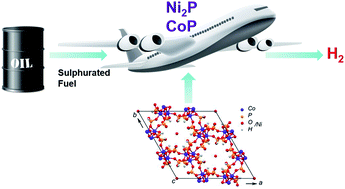
The possibility of producing on-board H2 by dehydrogenation of petrol derivates is interesting for transport applications. Traditional Pt–Sn systems, however, cannot be used without purifying the fuel from its sulphur content, and the dehydrogenation reaction consumes energy owing to its endothermic nature. To limit the energy demand for the entire process, it is necessary to eliminate the need for any reactant purification step, thus feeding the real fuel without desulphurization. In this respect, Ni- and Co-based catalysts capable of working under hydrodesulphurization conditions answered such demand, allowing them to carry out the reaction in the presence of sulphurated organic substrates. Tests conducted on nickel and cobalt phosphides, as prepared from the corresponding dihydrogenphosphite by temperature programmed reduction and supported on silica Cab-osil, indicated these materials as very active catalysts capable of producing 1500 N l per h per kgCAT of H2 after 24 h of reaction in the presence of 50 ppm of sulfur. These catalysts remained active and stable even when 250–500 ppm of sulphur was introduced in the feed.

Introduction

In recent years, the thrust toward disengaging energy demand from fossil raw materials has markedly increased. To this end, producing hydrogen for fuel cell systems may represent a viable approach, and a partial dehydrogenation reaction (PDH) of hydrocarbons mixtures, such as jet fuel, is an appealing process for fuel cell-based on-board applications. In fact, the produced hydrogen can be used to answer the electric power demand, whereas the dehydrogenated fuel can be burned with the untreated one in the jet engines, because the dehydrogenated mixture nearly conserves the fuel original properties. However, this latter feature is related to the minor changes induced in the fuel molecules.1 In addition, producing hydrogen via PDH reactions reduces the safety issues related to the transport and storage of hydrogen, which is generated on-demand and COx-free.

PDH reactions are already well known processes for hydrogen production, and they can be employed either with pure hydrocarbons or their mixtures; however, the dehydrogenation of complex organic mixtures remains a complicated reaction, in particular, if one wishes to start from an oil fraction. To exemplify possible difficulties, we mention that Pt and Sn catalysts on acid supports such as alumina have already been used for the dehydrogenation of hydrocarbons.2–8 Despite achieving very good results in terms of activity in hydrocarbon PDH, these materials suffered from a very fast deactivation due to coke formation and/or sulphur poisoning.9–18 Doping catalysts with Na or K has been reported by numerous studies as a way of modulating the intrinsic acidity of the support with very good results.19–21 The rapid deactivation of the traditional dehydrogenation catalysts based on Pt–Sn phases due to the use of oil fractions naturally high in sulphur remains unsolved.

As the hydrodesulphurization process represents an important step in the energy balance of the whole process, the usage of highly sulfur resistant catalysts can have a beneficial impact on energy consumption, increasing the process global efficiency. It is in such context that the search for new classes of metal-containing (e.g. Ni and Co) materials capable of remaining active while operating on sulphur-rich mixtures becomes worthy of research. As it is known that the catalytic properties of transition metals can be greatly improved by combining them with main group elements, it should not be a surprise that transition metal borides,22,23 carbides,24 and phosphides25–27 have come to the fore, and that materials such as Ni2P, CoP, Co2P, MoP, WP, and mixed phosphides have already attracted considerable attention over the past decade as new catalysts in hydroprocesses such as hydrogenation (HYD),28 hydrodesulphurization (HDS),29–32 hydrodenitrogenation (HDN),29 hydrodechlorination (HDC),33 and hydrodeoxygenation (HDO).34,35 Their suitability as catalysts is usually attributed to geometric and electronic factors,30 as well as to their ability to activate hydrogen and possibly foster hydrogen spillover. For instance, several researchers have found good hydrogen transfer properties of nickel phosphide species,24,32 and there is also evidence that the spillover of hydrogen species contribute to the HDC reaction.22,32,36,37

The aim of this study was to evaluate the possible applications of Ni2P and CoP systems as catalysts for the PDH reaction, even in the presence of high sulphur contents, and to define the structure of the phosphite-type precursor, M(HPO3H)2, which contains a great excess of P on the catalyst surface.28,38

Materials and methods

Catalysts preparation

Nickel(II) dihydrogenphosphite (Ni(HPO3H)2)27 was obtained by mixing stoichiometric amounts of phosphorus acid (H2PO3H) and nickel(II) hydroxide (Ni(OH)2). The supported system (5 wt% Ni) was prepared by incipient wetness of the precursor on commercial silica (Cab-osil SBET = 257 m2 g−1 and Vp = 0.72 cm3 g−1). Cab-osil was a weak acid support owing to the existence of Si–OH groups, but some strong acid sites (20%) were also present due to the existence of Lewis acid sites on the edge of the particles. The impregnated supports were air-dried at 40 °C for 24 h. By temperature-programmed reduction under a hydrogen flow of 100 ml min−1 and with a heating rate of 3 °C min−1, the phosphite precursor was converted to the desired phosphide. A similar procedure was followed for cobalt phosphide (5 wt% Co). The reduction temperatures were 610 and 650 °C for nickel and cobalt systems, respectively. The catalysts were kept at the reduction temperature for 2 h to ensure complete reduction, followed by cooling to room temperature (r.t.) under helium flow of 60 ml min−1 (vide infra).

Catalyst characterization

The temperature programmed reduction of supported phosphite precursor forming nickel phosphide was carried out by placing 80 mg of precursor in a tubular reactor heated following a linear temperature ramp (3 °C min−1) from 100 to 800 °C under hydrogen flow (100 ml min−1). The evolved gases were analyzed in a quadrupole mass spectrometer Balzer GSB 300 02 equipped with a Faraday detector (0–200 uma), and the masses 2 (H2), 18 (H2O), 31 (P), 34 (PH3), and 124 (P4) were monitored during the experiments. The signals and temperature were recorded in real time using an online computer.

Temperature-programmed desorption of H2 (H2-TPD) was carried out by placing 0.30 g of catalyst precursor in a U tube reactor, where it was first reduced in situ according to the experimental conditions described above for both catalysts. The catalyst was purged with a flow of He (50 ml min−1) at the reduction temperature for 15 min, cooled to 50 °C (chemisorption temperature), and exposed to H2 flow (30 ml min−1) for 1 h to achieve chemisorption. After cleaning with Ar (35 ml min−1), H2-TPD was performed by heating (10 °C min−1) from r.t. to 800 °C. The evolved H2 was analyzed using an on-line chromatograph Shimadzu GC-14A, provided with a TCD. A cold finger (−80 °C) was employed as a water trap.

Ammonia temperature programmed desorption (NH3-TPD) profiles of the catalysts were obtained by placing 0.08 g of the catalyst precursor into a tubular reactor, where it was first reduced in situ. After purging with a flow of He (35 ml min−1) while heating from r.t. to 550 °C (10 min), and subsequent cooling to 100 °C, NH3 was injected (5 min) at the same temperature to be adsorbed. Heating of the support or catalyst at 550 °C may induce the condensation of some Si–OH groups, with the formation of new Lewis acid sites. After flowing He (35 ml min−1) to eliminate the physically adsorbed NH3, TPD was carried out by heating the samples from 100 to 550 °C at a rate of 10 °C min−1 under a helium flow (35 ml min−1), maintaining the samples at 550 °C for 15 min. The evolved NH3 was analyzed by an on-line gas chromatograph (Shimadzu GC-14A) provided with a TCD. To quantify the amount of NH3 desorbed, the equipment was previously calibrated by measuring the corresponding signals of the thermal decomposition of known amounts of hexaaminenickel(II) chloride [Ni(NH3)6]Cl2, supplied by Aldrich.

Elemental chemical analysis was performed for the spent catalysts with a LECO CHNS 932 analyzer to determine the carbon content present after the catalytic test through combustion of the samples at 1100 °C to form CO2.

TGA and DSC analyses were performed using a TA Instruments SDT Q 600 apparatus, under an air flow of 100 ml min−1 and a heating rate of 10 °C min−1.

X-ray diffraction (XRD) analysis was carried out by means of a PANalytical X'Pert PRO powder diffractometer equipped with a fast X'Celerator detector. Ni-filtered Cu Kα radiation was used. The 2θ range was explored from 5° to 100° with a step size of 0.033° and time for step of 250 s to identify the phases and subsequent structural refinement. The full pattern refinements were carried out by the Rietveld method using the X'Pert HighScore Plus routine. The space group (R-3 space group in the rhombohedral crystal system), the cell parameters, the atomic positions and the thermal parameters of Zn(HPO3H)2(H2O)0.33 were introduced as the initial structural model.39 The X-ray scattering factors of the ionic species Ni2+, Co2+, O2−, P3+, and H+ were used. The background was treated as an empirical segmented line with nodes heights as to be refined parameters. The peaks were fitted by a pseudo-Voigt function and the dependence of the half widths as a function of 2θ was regulated by the Caglioti equation. Rietveld refinement was performed in several stages, the parameters obtained during each step being conserved in the following one. In practice, the scale factor and the background line were refined in the first cycles. The refinement of the other parameters was instead carried out in the following order: cell parameters, zero shift, half-width parameters (U, V, W), profile parameters, anisotropic broadening, metal atoms coordinates, asymmetry parameter, and overall thermal factor. The total number of variables refined was 18.

X-ray photoelectron spectra were obtained using a physical electronics PHI 5700 spectrometer with non-monochromatic Mg Kα radiation (300 W, 15 kV, and 1486.6 eV) with a multi-channel detector. The sample spectra were acquired in the constant pass energy mode at 29.35 eV, using a 720 μm diameter analysis area. Charge referencing was measured against adventitious carbon (C 1s at 284.8 eV). A PHI ACCESS ESCA-V6.0 F software package was used for data acquisition and analysis. A Shirley-type background was subtracted from the signals. The recorded spectra were always fitted using Gaussian–Lorentzian curves to determine the binding energies of the different element core levels with more accuracy. Reduced catalysts were stored in sealed vials with an inert solvent. The sample preparation was done in a dry box under a N2 flow, where the solvent was evaporated prior to its introduction into the analysis chamber and directly analyzed without previous treatment.

FT-IR spectra were obtained on a Bruker Alpha Platinum-ATR spectrophotometer equipped with an ATR Diamond window. The Raman spectroscopy technique was used to characterize the precursors, the catalyst active phase and the surface carbon deposits formed during the reaction. A Renishaw System 1000 equipped with a Leica microscope with focal DMLM objective 50× coupled with a CCD color camera, motorized XYZ sample holder with a resolution up to 0.5 microns and a 780 nm (red) diode, employed at 100% of the laser radiation power, was used. The spectra were obtained in the spectral range of 100–2000 cm−1, running 4 accumulations of 10 s each time.

Density functional theory calculations were performed employing the BP86/LANL2DZ40–42 level of theory. Cluster models were built starting from the crystal structure to correctly represent the local environment of a single divalent transition metal atom. Local minimization and frequency calculations were used to relax the starting structure and obtain the vibrational (IR and Raman) frequencies required to help line and bands assignment. The latter were all found to be positive, thus indicating the stability of the cluster model despite the high negative charge (−4). As always, the computed frequencies should not be expected to perfectly match the experimental data (particularly with respect to band shapes, as in the OH case, and also for atoms on the boundary of the cluster experiencing unbalanced forces), but rather as a guide to interpret the pattern shown by the latter. With this in mind, it was possible to putatively link specific adsorption bands to normal modes provided by the calculations.

Catalytic tests

Activity tests were carried out in a continuous tubular steel reactor (length 530 mm; internal diameter 8 mm) while the catalytic bed temperature was controlled by a thermocouple. 1.5 cm3 of catalyst (30/40 mesh) was loaded into the reactor and activated as described in a previous section. Liquid reactants [JetA1 fuel (containing 250–500 ppm of S) and JetA1 surrogate (JA1-S) containing 50 ppm of S] were fed by a JASCO HPLC pump and fully vaporized before mixing with preheated H2. The JA1-S blend used in the present tests included five components in the following volume percentages: dodecane 65%; methyl-cyclohexane 14%; terbutylbenzene 10%; decalin 6%; tetralin 5%; 50 ppm of sulfur was introduced by feeding 3-methylthiophene. All reactants were from Aldrich (purity grade > 98%) and used without any further purification. The tests were performed at 550 °C, using a 2 s contact time and 10 bar pressure. The effluent gases were analyzed on-line by an Agilent 7890A gas-chromatograph equipped with a TCD, whereas the liquid products were analyzed off-line by the same GC using a FID detector.

Results and discussion

Catalytic activity

Preliminary catalytic tests were conducted with Ni2P and CoP supported on commercial silica (Fig. 1) to evaluate both the activity and stability. This support was chosen for its high activity showed in previous studies in the hydrodechlorination of chlorobenzene.43
image file: c6ra03409h-f1.tif
Fig. 1 H2 productivity obtained with 5% Ni2P/Cab-osil (■) and 5% CoP/Cab-osil (♦) feeding JA1-S containing 50 ppm of S.

Catalytic tests were performed by feeding the JA1-S with a S-content of 50 ppm. The 5% Ni2P catalyst showed a decrease in the activity during the first 5 h of operation and subsequently a slight activity re-increase. 5% CoP/Cab-osil showed a similar trend, even though the re-increase in activity appears more marked. In both cases, no deactivation of the catalysts was observed, and the re-increase in their activity can be explained by a further activation of the residual phosphite precursors induced by the high partial pressure of H2 developed during the PDH. The decrease in the outlet gas stream content of H2 seen during the first few hours of operation is instead due to coke forming on the surface of the catalysts, as well as the formation of low molecular weight alkanes and alkenes.

The amount and speciation of light molecules formed during the reaction are reported in Fig. 2 as a function of time-on-stream for the 5% Ni2P/Cab-osil catalyst; the samples were taken on hourly basis to monitor any change in byproduct production. This latter increased in the first few hours, reaching a plateau after about 10 h of time-on-stream. The species reported in Fig. 2 can be formed both on the phosphide active site and on the acid sites present on the catalyst support, which may foster the cracking and hydrocracking reactions of the organic molecules in the fed.


image file: c6ra03409h-f2.tif
Fig. 2 Gas stream composition obtained with the 5% Ni2P/Cab-osil catalyst feeding JA1-S containing 50 ppm of S.

In order to determine the impact of the catalyst acidity on the side reactions (as observed for the Pt–Sn catalysts44), the same catalytic tests discussed above were performed on the catalyst and the bulk active phase of 0.5 wt% of K (5% Ni2P 0.5% K/Cab-osil) was added to reduce the acidity and remove the support effects. These additional tests were performed only on supported Ni2P as an active phase due to the more stable activity versus time-on-stream demonstrated, and the results are shown in Fig. 3.


image file: c6ra03409h-f3.tif
Fig. 3 H2 productivity obtained with 5% Ni2P/Cab-osil and 5% CoP/Cab-osil feeding JA1-S containing 50 ppm of S or JA1 jet fuel (containing 250–500 ppm of S).

Fig. 3 shows that the introduction of K as a chemical promoter does not induce any important change in both the activity and H2 productivity; the system showed, at most, a lower initial activity, which however re-increased with time-on-stream. Similar behavior was observed when the 5% Ni2P 0.5% K/Cab-osil catalyst was tested by feeding the JetA1 surrogate containing 50 ppm of sulphur, with no indication of catalyst deactivation. This result contrasted with the deactivation observed with the Pt–Sn systems1–8 and remained valid also by feeding the JetA1 fuel containing 250–500 ppm of sulphur. Thus, the catalyst behavior did not show any variation, and its activity appeared to be independent of the feed type and sulphur content.

From Fig. 3, it also emerges that the bulk catalyst presented a continuous increase in activity attributable to a further reduction of the dihydrogenphosphite precursor; in spite of this, the H2 productivity remained lower than that observed for the supported phases even after 24 h of time-on-stream. The latter finding may be due to the highly dispersed nature of the active phase in the latter type of catalysts, which more quickly and efficiently led to the complete reduction to Ni2P.

Raman spectroscopy was conducted on the spent catalysts40 to characterize the coke formed on the surface, which was possibly due to the polymerization and condensation of reactants and/or dehydrogenated products. The spectra obtained (Fig. 4) with or without the addition of K showed an extremely structured coke, with the presence of sp2 (1592 cm−1) and sp3 (1315 cm−1) vibration bands, which are typical of a structure formed by high molecular weight polymeric clusters.


image file: c6ra03409h-f4.tif
Fig. 4 Raman spectra obtained for the 5% Ni2P/Cab-osil and 5% Ni2P 0.5% K/Cab-osil spent catalysts.

Despite the similarity between the two samples, DSC analysis (Fig. 5) revealed well-marked differences between the two carbon formations. Regardless of the difference in the total amount of carbon formed, the peak at higher temperature (i.e. due to the combustion of graphite-like coke) shifted to lower values by K addition, showing a decrease in the structural order. Further information may be obtained determining the total amount of carbonaceous deposits by TGA analysis (Fig. 6), with the K-containing catalyst showing higher weight loss (about 15%) than the undoped sample (about 10%). C-Decomposition started at T > 400 °C, with a weight loss also due to the decomposition of high molecular weight organic molecules, which desorbed at lower temperature. These results were confirmed by CNH analysis, which showed a C-content of 11.6% and 14.8% for 5% Ni2P/Cab-osil and 5% Ni2P 0.5% K/Cab-osil, respectively.


image file: c6ra03409h-f5.tif
Fig. 5 DSC performed on the 5% Ni2P/Cab-osil and 5% Ni2P 0.5% K/Cab-osil spent catalysts.

image file: c6ra03409h-f6.tif
Fig. 6 TGA performed on the 5% Ni2P/Cab-osil and 5% Ni2P 0.5% K/Cab-osil spent catalysts.

By comparing DSC and TGA results, it is possible to conclude that the K-doped sample favored the deposition of more carbon on the surface, even though less reticulated (the combustion temperature was 10 °C lower). However, the C-deposition did not affect the activity of the catalysts after 70 h of time-on-stream (Fig. 7).


image file: c6ra03409h-f7.tif
Fig. 7 H2 productivity obtained with 5% Ni2P/Cab-osil feeding JA1-S containing 50 ppm of S.

Overall, the formation of carbonaceous compounds may be induced by the subsequent action of two active sites. While the one on Ni2P dehydrogenated and partially cracked the substrate, acid sites on the support catalyzed the isomerization, cyclization and polymerization via carbocation formation of the olefins formed on Ni2P. The impact of adding K was attributed to a decrease in carbocation formation, which leads to the formation of less reticulated oligomers.

Considering the compelling results achieved for the activity and stability of the Ni and Co catalysts under the experimental conditions described, it can be concluded that these materials may be used successfully in the PDH reaction. Owing to this, it was deemed necessary to investigate the structures of these systems, so that both the precursor and reduced system for the Ni-containing catalyst were fully characterized; key information was also given for Co-containing materials.

Precursor characterization

H2-Temperature programmed reduction of catalyst precursors. H2-Temperature-programmed reduction (H2-TPR) experiments were carried out to evaluate the reducibility of the precursors and to determinate the optimal reduction conditions prior to the catalytic tests. Fig. 8 shows the amount of water produced during the reduction of both supported catalysts. In the TPR profile of the 5% Ni2P/Cab-osil sample, a weak and broad band centred at 250 °C was attributed to the evolution of physically adsorbed water related the hygroscopic character of both the nickel(II) dihydrogenphosphite precursor salt and the support itself. Another large band with a maximum centered at 610 °C and a small shoulder at 450 °C also appears. According to the literature, Ni2+ reduction to Ni0 is achieved at low temperatures, and subsequent phosphidation occurs at higher temperatures.45 Therefore, the high temperature band revealed the formation of Ni2P, whereas the shoulder at low temperatures should indicate the reduction of Ni2+. The H2-TPR of supported cobalt phosphate precursor showed similar features, with the band due to adsorbed-water release at 260 °C, and another centred at 570 °C due to the reduction of Co2+ to Co0 with the simultaneous formation of CoP; a tail at higher temperatures was also present. Therefore, the reduction temperatures for the synthesis of supported Ni2P and CoP catalysts were chosen from the evolved water data as 610 and 650 °C, respectively. In all cases, the catalysts were kept at the chosen temperature for 2 h to ensure the completion of the reaction; subsequently, the samples were cooled to r.t. under a helium flow (60 ml min−1).
image file: c6ra03409h-f8.tif
Fig. 8 Mass 18 (H2O) signals from H2-TPR analysis of 5% Ni2P/Cab-osil and 5% CoP/Cab-osil catalysts.
X-ray diffraction characterization. To obtain detailed structural information on the two bulk precursor phases, i.e. Ni(HPO3H)2 and Co(HPO3H)2, a full profile fitting of the XRD patterns was carried out (Fig. 9). The rhombohedral R-3 structure of Zn(HPO3H)2(H2O)0.33 (PDF no. 01-081-0219) was used as the starting structural model for the Rietveld refinement due to the close similarity of its XRD pattern to the profiles of the precursor phases. The asymmetric unit contains one metal (M) atom, two P atoms, seven O atoms, as well as two H atoms. The Rietveld refinement revealed no significant changes in the overall crystal structure following the substitution of Zn with Ni or Co, with the space group and crystal system remaining identical. The structures revealed a channel-type arrangement; a three-dimensional network of MO6 octahedral and HPO3H tetrahedral winds round the inverse ternary axis on which the water molecule is found (Fig. 10). This is consistent with the values of the effective metallic ionic radii, which are all very similar: Zn 0.740 Å, Ni 0.690 Å, and Co 0.745 Å.46
image file: c6ra03409h-f9.tif
Fig. 9 Comparison between the observed (black line) and calculated (red line) powder diffraction patterns of (a) Co(HPO3H)2 and (b) Ni(HPO3H)2 samples.

image file: c6ra03409h-f10.tif
Fig. 10 Structure of Co(HPO3H)2 and Ni(HPO3H)2 obtained from Rietveld refinement of the XRD patterns.

The behavior of the unit-cell parameters was also in accordance with the effective ionic radii of the three metals (Table 1); in fact, a slight decrease in both the a and c unit-cell parameters, as well as of the unit cell volume, was observed in the Ni-containing species owing to its smaller atomic radius. The Co-containing species, instead, presented a slight decrease in a and an increase in c, with a cell volume that remained nearly unmodified due to the opposite changes. Both Ni and Co atoms exhibited distorted octahedral coordination geometries similar to Zn coordination (Fig. 11) and very similar average M–O distances (Table 1) typical of ionic interactions. Metal–metal average distances also showed slight differences that correlated positively with the ionic dimensions: Zn–Zn 3.25 Å, Ni–Ni 3.20 Å and Co–Co 3.31 Å.

Table 1 Unit cell parameters (error standard deviation in parentheses) and M–O bond lengths in octahedral metallic coordination
  Co Zn Ni
a = b 21.0467 (7) 21.1440 20.8408 (4)
C 7.8143 (3) 7.7800 7.6976 (2)
V 2997.7 (3) 3012.21 2895.4 (2)
M1–O7 2.12 2.13 2.09
M1–O7′ 2.16 2.15 2.14
M1–O6 2.08 2.10 2.10
M1–O3 1.97 2.04 1.98
M1–O4 2.16 2.09 2.10
M1–O4′ 2.18 2.17 2.10
Mean M–O 2.11 2.11 2.09


image file: c6ra03409h-f11.tif
Fig. 11 Coordination geometry of M in the M(HPO3H)2 samples.

Further details of the crystal structure investigations may be obtained from FIZ Karlsruhe, 76344 Eggenstein-Leopoldshafen, Germany (e-mail: E-mail: crysdata@fiz-karlsruhe.de, on quoting the deposition numbers CSD-430844, and -430845).

Attenuated total reflectance FTIR spectroscopy. The attenuated total reflectance (ATR) spectra were obtained on the Ni(HPO3H)2 and Co(HPO3H)2 samples; starting from the XRD structure of Me(HPO3H)2, theoretical IR normal modes were also calculated using Density Functional Theory (DFT) to assist in band assignment. The ATR FTIR spectrum of Ni(HPO3H)2 is reported in Fig. 12A and B. The broad band centered at 2785 cm−1 can be correlated to O[double bond, length as m-dash]PO–H motions involving O–H and a component of the P–H stretching. The band at 2480 cm−1 was confidently attributed to the P–H stretching.47–49 The broad band centered at 2423 cm−1 could also be attributed to the combination of P–H and PO–H stretching.49 P–O stretching was observed at 1064 cm−1.50 The shoulder at 900 cm−1 was due to the P–H bending. P[double bond, length as m-dash]O stretching produced a band at 1211 cm−1.
image file: c6ra03409h-f12.tif
Fig. 12 ATR FTIR spectrum of Ni(HPO3H)2. (A) Full spectrum; (B) expanded spectrum.

Basing on the DFT results, additional assignments can be putatively done considering the spectral distortion induced by modeling the crystal via a cluster approach. Thus, bending of P–H and PO–H groups was both involved in the formation of bands at 1023 and 1108 cm−1. The bands observed at 1003, 985 and 913 cm−1 were due to the combination of P–OH stretching and P–H bending. H–P[double bond, length as m-dash]O bending was centered at 683 cm−1, whereas bending of P–O due to the tetrahedron deformation was observed at 560 cm−1. The main vibrations related to Ni in the deformed octahedral symmetry were the stretching of Ni–OP plus the bending of Ni–O centered at 476 cm−1 and the out of plain bending of Ni–OP bonds centered at 415 cm−1.

Raman spectroscopy. Owing to the lower crowding of the spectral zone, Raman spectra (Fig. 13A and B) confirmed the structural properties of the phosphide precursor, evidencing the characteristic band due to the P[double bond, length as m-dash]O stretching v1,47 which is accompanied by two less intense bands at 1037 and 1070 cm−1 related to the PO stretching v′′3 and v3.
image file: c6ra03409h-f13.tif
Fig. 13 Raman spectrum of Ni(HPO3H)2. (A) Full spectrum; (B) expanded spectrum.

Active phase characterization

X-ray diffraction. Fig. 14 compares the X-ray patterns of the supported Ni2P catalyst, its precursor and bulk Ni2P. The high crystallinity of the bulk sample produced a very clear pattern ascribable to the Ni2P phase; a few of these peaks were also clearly evident in the freshly reduced supported catalyst. Neither the supported precursor nor the supported fresh catalyst showed peaks due to phosphites, probably because both their low amount and crystallinity. The same peaks obtained for the bulk system after several hours of exposure at a reducing atmosphere51 and related to the Ni2P phase were also observable at the end of the PDH reaction.
image file: c6ra03409h-f14.tif
Fig. 14 Comparison of the patterns obtained for the bulk Ni2P reduced catalyst (black), the supported precursor (green) and the reduced (red) systems.
XPS analysis. XPS was carried out to investigate the surface composition of fresh and spent catalysts. In the case of the supported nickel phosphide catalyst (Fig. 15), the Ni 2p core level spectra presented two contributions; the first one centered at 852.5 eV was assigned to Niδ+ forming Ni2P.52
image file: c6ra03409h-f15.tif
Fig. 15 Ni 2p core level spectrum of the 5% Ni2P/Cab-osil catalyst.

The second contribution (binding energy of ca. 856.5 eV) was instead attributed to unreduced Ni2+ species forming mainly Ni(HPO3H)2 or the corresponding phosphate; this was formed as a consequence of superficial oxidation (vide infra). The broad shake-up peak at approximately 6.0 eV above the Ni2+ species was characteristic of nickel divalent species.53 As for the catalyst after PDH, its spectrum was, unfortunately, difficult to analyze due to the large amount of carbonaceous residues deposited on the surface, which masks the active phase.

The Co 2p core level spectrum of the supported cobalt phosphide catalyst is depicted in Fig. 16. This spectrum exhibited an intense peak at 778.1 eV typical of cobalt in CoP phase.54 The strong intensity of this band revealed that a good degree of reduction has been achieved for the catalyst. The band centered at 781.6 eV was assigned to Co2+ ions forming unreduced Co(HPO3H)2 or the corresponding superficial phosphate formed as a consequence of partial oxidation, while the band remaining at 785.5 was due to the shake-up satellite typical of divalent species.55 In addition, in this case, it is not possible to analyze the spectrum of the spent catalyst owing to the carbonaceous residues produced during the catalytic reaction.


image file: c6ra03409h-f16.tif
Fig. 16 Co 2p core level spectrum of the 5% CoP/Cab-osil catalyst.

The P 2p core level spectrum for the 5% Ni2P/Cab-osil catalyst shows three contributions (Fig. 17). The contribution appearing at lower binding energies (128.6 eV) was assigned to reduced phosphorus Pδ forming nickel phosphide. The peak at 133.7 eV was due to unreduced (HPO3H) species.56 Finally, the contribution at 134.9 eV was assigned to phosphate species (PO43−) due to a superficial oxidation of phosphide to phosphate in the presence of air.57 A greater surface phosphorous enrichment was observed in this Ni2P/Cab catalyst, as deduced from the surface Ni/P atomic ratio. This ratio is 0.21, i.e. far from the theoretical 1[thin space (1/6-em)]:[thin space (1/6-em)]2 ratio, and thus reflected a surface phosphate enrichment due to the excess of phosphorus species used to form the precursor salt. Similar features were found in the P 2p core level for the 5% CoP/Cab-osil catalyst.


image file: c6ra03409h-f17.tif
Fig. 17 P 2p core level spectrum of the 5% Ni2P/Cab-osil catalyst.
Textural and acid properties. The textural properties were evaluated from nitrogen adsorption–desorption isotherms at −196 °C. The corresponding textural data are compiled in Table 2. Both Ni2P/Cab and CoP/Cab supported catalysts exhibited similar surface area, pore volume and average pore diameter values. A decrease of surface area was observed in both cases for the catalysts compared to the pristine support.
Table 2 Textural and acidic properties of the support and catalysts
Sample SBET (m2 g−1) Vp (cm3 g−1) Average dp (nm) Total acidity (μmol g−1) Strong acidity (μmol g−1)
Cab-osil 257 0.72 11.2 150 30
Ni2P/Cab 167 0.77 19.1 209 43
CoP/Cab 180 0.89 20.5 183 42


The acidic properties of the catalysts were measured by NH3-TPD between 100 and 550 °C. As expected, the total acidity of the catalysts was higher than that of the support as a consequence of the incorporation of the active phase; this can be assigned to both Lewis and Brönsted active sites.

In the supported catalysts, further Lewis sites can be ascribed to nickel or cobalt species bearing a small positive charge due to electron transfer from the metal to phosphorous,58 while the Brönsted acidity is associated to the presence of P–OH species. Therefore, it is necessary to bear in mind that Me(II) hydrogenphosphite was used as a precursor, so that there was a large excess of phosphorous species compared to the phosphorous contents of both metallic phosphides; such excess could, at least partially, remain after the reduction process.

In both catalysts, the total acidity was close to 200 μmol g−1 of NH3. As the strength of the acid sites can be gauged by the temperature at which NH3 is desorbed, the amounts of ammonia desorbed from 300–550 °C was assumed to be due to medium-strong acid sites. Noteworthy, about 20% of the total acidity was provided in both catalysts by medium-strong acid sites (Table 2); this feature and the high surface area, which is necessary to adsorb on the surface the organic molecules to be dehydrogenated, justify the activity of both catalysts in the PDH reaction.

Thermo-programmed desorption of hydrogen (H2-TPD). H2-TPD measurements were used to obtain additional insights into the interactions between hydrogen species and the catalyst surface, a key information to bear in mind when it comes to understanding the catalytic behaviour of the discussed systems. H2-TPD profiles of both catalysts are shown in Fig. 18. The TPD profile of supported 5% Ni2P/Cab-osil catalyst showed two main bands, the first one, very large, exhibited two components: the one centred at 210 °C and corresponding to the desorption of hydrogen adsorbed on the surface of the Ni2P particles, and another originating by hydrogen desorbed from the chemisorption sites located at the phosphide-support interface centred around 350 °C.59 The second desorption band, centred at around 620 °C, was instead assigned to the desorption of hydrogen species spilled over on the support23 and far from the phosphide particles. It can be noted that the 5% Ni2P/Cab-osil catalyst exhibited large amounts of chemisorbed hydrogen at both low and high temperature, unlike what was reported by Liu et al.,60 who observed a very low amount of hydrogen species on the surface of the Ni2P phase prepared with a Ni/P atomic ratio of 1/1.
image file: c6ra03409h-f18.tif
Fig. 18 H2-TPD profiles for the 5% Ni2P/Cab-osil and the 5% Ni2P/Cab-osil catalysts.

Similarly, our and Liu et al. results indicate that the Ni/P atomic ratio affects the H2 chemisorption capability of the corresponding nickel phosphide catalysts. In other words, the phosphorous excess present in this catalyst type, as evaluated by XPS, seems to increase the amount of chemisorbed H2 on both the Ni2P surface and Ni2P/support interface. Other authors have pointed that the presence of phosphorus species in the form of P–OH favors the hydrogen spill-over.35 On the other hand, the larger amount of hydrogen species spilled over on the Ni2P catalysts is due to the weak interaction of dissociated hydrogen species with the Ni–P bridges,60 because nickel atoms present a residual positive charge in the Ni2P phase. Therefore, Ni2P/Cab possesses a larger amount of hydrogen coming from both the Ni2P surface and hydrogen chemisorption sites located at the phosphide-support interface, which may play an important role in the catalytic activity of this catalyst.61

As for the 5% CoP/Cab-osil catalyst, it can be noted that low amount of H2 was evolved using this material, definitively much less than what was obtained in the case of Ni2P/Cab. Interestingly, however, the hydrogen desorption comes from the H2 that spilled-over on the support.

In the end, the marked capability of Ni2P/Cab and CoP/Cab catalysts in activating H2 molecules can be deduced from their H2-TPD profiles, a result that supports their good activity with respect to the title reaction.

Conclusions

The partial dehydrogenation (PDH) of hydrocarbon fractions may be interesting for on-board fuel cell-powered applications because the H2 produced is COx-free. However, the process feasibility is conditional on the possibility of directly converting real fuel without any purification steps. To this end, the identification of new classes of catalysts capable of working in the presence of high sulphur amounts is required. Owing to this, nickel and cobalt phosphides supported over Cab-osil were used successfully as catalysts in the jet fuel PDH reaction to produce H2 for on-board applications. In particular, the Ni-based catalyst showed interesting catalytic behavior owing to its high capability of activating hydrogen and/or complex hydrocarbon mixtures, high surface area and surface acidity. It demonstrated very high stability with respect to time-on-stream also when real JA1 jet fuel containing more than 250 ppm of sulphur was fed. Under these conditions, this catalyst attained a hydrogen productivity of 1500 N l per h per kgCAT after 24 h of reaction.

Acknowledgements

The financial support from the Ministero per l'Università e la Ricerca (MIUR, Roma I) is gratefully acknowledged. IJM thanks the Agencia Estatal CSIC for a JAE-Predoctoral grant and for funding his traineeship at the Dipartimento di Chimica Industriale “Toso Montanari” of the University of Bologna. MM thanks the Università degli Studi dell'Insubria for funding under the “Fondo d'Ateneo per la Ricerca-FAR” scheme.

References

  1. C. Lucarelli, S. Albonetti, A. Vaccari, C. Resini, G. Taillades, J. Roziere, K. E. Liew, A. Ohnesorge, C. Wolff, I. Gabellini and D. Wails, Catal. Today, 2011, 175, 504–508 CrossRef CAS.
  2. J. Salmones, J. A. Wang, J. A. Galicia and G. A. Rios, J. Mol. Catal. A: Chem., 2002, 184, 203–213 CrossRef CAS.
  3. Y. Okada, E. Sasaki, E. Watanabe, S. Hyodo and H. Nishijima, Int. J. Hydrogen Energy, 2006, 31, 1348–1356 CrossRef CAS.
  4. M. M. Bhasin, J. H. McCain, B. V. Vora, T. Imai and P. R. Pujadó, Appl. Catal., A, 2001, 221, 397–419 CrossRef CAS.
  5. G. R. Kotelnikov, S. M. Komarov, V. P. Bespalov, D. Sanfilippo and I. Miracca, Stud. Surf. Sci. Catal., 2004, 147, 67–72 CrossRef CAS.
  6. E. Gianotti, M. Taillades-Jacquin, A. Reyes-Carmona, G. Taillades, J. Rozière and D. J. Jones, Appl. Catal., B, 2016, 185, 233–241 CrossRef CAS.
  7. E. Gianotti, A. Reyes-Carmona, K. Pearson, M. Taillades-Jacquin, G. Kraaij, A. Wörner, J. Rozière and D. J. Jones, Appl. Catal., B, 2015, 176–177, 480–485 CrossRef CAS.
  8. E. Gianotti, A. Reyes-Carmona, M. Taillades-Jacquin, G. Taillades, J. Rozière and D. J. Jones, Appl. Catal., B, 2014, 160–161, 574–581 CrossRef CAS.
  9. B. C. Gates, J. R. Katzer and G. C. A. Schuit, Chemistry of Catalytic Processes, McGraw-Hill, New York, 1979 Search PubMed.
  10. C. Naccache, in Deactivation and Poisoning of Catalysts, ed. Oudar J. and Wise H., Marcel Dekker, New York, 1985, pp. 185–203 Search PubMed.
  11. S. He, W. Bi, Y. Lai, X. Rong, X. Yang and C. Sun, J. Fuel Chem. Technol., 2010, 38, 452–457 CrossRef CAS.
  12. J. N. Beltramini, E. E. Martinelli, E. J. Churin, N. S. Fogoli and J. M. Parera, Appl. Catal., 1983, 5, 43–55 CrossRef.
  13. S. He, C. Sun, Z. Bai, X. Dai and B. Wang, Appl. Catal., A, 2009, 356, 88–98 CrossRef CAS.
  14. H. Lieske, G. Lietz, H. Spindler and J. Voelter, J. Catal., 1983, 81, 8–16 CrossRef CAS.
  15. C. H. Bartholomew, Appl. Catal., A, 2001, 212, 17–60 CrossRef CAS.
  16. N. Daisuke and S. Tomoya, Ind. Eng. Chem. Res., 1992, 31, 14–19 CrossRef.
  17. J. A. Pena, A. Monzon and J. Santamaria, J. Catal., 1993, 142, 59–69 CrossRef CAS.
  18. K. Liu, S. C. Fung, T. C. Ho and D. S. Rumschitzki, Stud. Surf. Sci. Catal., 1997, 111, 625–638 CrossRef CAS.
  19. P. Praserthdam, P. Choungchaisukasam, S. Assabumrungrat and T. Mongkhonsi, J. Chin. Inst. Chem. Eng., 2001, 32, 143–149 CAS.
  20. D. T. Gokak, A. G. Basrur, D. Rajeswar, G. S. Rao and K. R. Krishnamurthy, React. Kinet. Catal. Lett., 1996, 59, 315–323 CrossRef CAS.
  21. A. D. Qiu, Y. N. Fan, Y. F. Ma, P. C. Wu and Y. Chen, Chin. J. Catal., 2001, 22, 343–347 CAS.
  22. J. H. Shen and Y. W. Chen, J. Mol. Catal. A: Chem., 2007, 273, 265–276 CrossRef CAS.
  23. S. P. Lee and Y. W. Chen, Ind. Eng. Chem. Res., 2001, 40, 1495–1499 CrossRef CAS.
  24. A. L. Consuegra, P. M. Patterson and M. A. Keane, Appl. Catal., B, 2006, 65, 227–239 CrossRef CAS.
  25. X. Liu, J. Chen and J. Zhang, Catal. Commun., 2007, 8, 1905–1909 CrossRef CAS.
  26. X. G. Liu, J. X. Chen and J. Y. Zhang, Ind. Eng. Chem. Res., 2008, 47, 5362–5368 CrossRef CAS.
  27. J. Chen, S. Zhou, D. Ci, J. Zhang, R. Wang and J. Zhang, Ind. Eng. Chem. Res., 2009, 48, 3812–3819 CrossRef CAS.
  28. F. Nozaki and M. Tukomi, J. Catal., 1983, 79, 207–210 CrossRef CAS.
  29. S. T. Oyama, J. Catal., 2003, 216, 343–352 CrossRef CAS.
  30. J. A. Cecilia, A. Infantes-Molina, E. Rodríguez-Castellón and A. Jiménez-López, J. Catal., 2009, 263, 4–15 CrossRef CAS.
  31. S. T. Oyama, X. Wang, Y. K. Lee, K. Bando and F. G. Requejo, J. Catal., 2002, 210, 207–217 CrossRef CAS.
  32. A. Infantes-Molina, J. A. Cecilia, B. Pawelec, J. L. G. Fierro, E. Rodríguez-Castellón and A. Jiménez-López, Appl. Catal., A, 2010, 390, 253–263 CrossRef CAS.
  33. S. T. Oyama, T. Gott, H. Zhao and Y. K. Lee, Catal. Today, 2009, 143, 94–107 CrossRef CAS.
  34. P. Bui, J. A. Cecilia, T. S. Oyama, A. Takagaki, A. Infantes-Molina, H. Zhao, D. Li, E. Rodríguez-Castellón and A. Jiménez López, J. Catal., 2012, 294, 184–198 CrossRef CAS.
  35. J. Chen, L. Sun, R. Wang and J. Zhang, Catal. Lett., 2009, 133, 346–353 CrossRef CAS.
  36. E. J. Shin, A. Spiller, G. Tavoularis and M. A. Keane, Phys. Chem. Chem. Phys., 1999, 1, 3173–3181 RSC.
  37. M. A. Keane and D. Y. Murzin, Chem. Eng. Sci., 2001, 56, 3185–3195 CrossRef CAS.
  38. J. A. Cecilia, A. Infantes-Molina, E. Rodríguez-Castellón and A. Jiménez-López, Appl. Catal., B, 2009, 92, 100–113 CrossRef CAS.
  39. J. Durand, L. Cot, M. Sghyar and M. Rafio, Acta Crystallogr., Sect. C: Cryst. Struct. Commun., 1992, 48, 1171–1173 CrossRef.
  40. A. D. Becke, Phys. Rev. A, 1988, 38, 3098–3100 CrossRef CAS.
  41. J. P. Perdew, Phys. Rev. B: Condens. Matter Mater. Phys., 1986, 33, 8822–8824 CrossRef.
  42. T. H. Dunning Jr and J. Hay, in Modern Theoretical Chemistry, ed. H. F. Schaefer III, Plenum, New York, 1977, vol. 3, pp. 1–28 Search PubMed.
  43. J. A. Cecilia, I. Jiménez-Morales, A. Infantes-Molina, E. Rodríguez-Castellón and A. Jiménez-López, J. Mol. Catal. A: Chem., 2013, 368–369, 78–87 CrossRef CAS.
  44. C. Lucarelli, G. Pavarelli, C. Molinari, S. Albonetti, W. Mista, D. Di Domenico and A. Vaccari, Int. J. Hydrogen Energy, 2014, 39, 1336–1349 CrossRef CAS.
  45. J. A. Rodríguez, J. Y. Kim, J. C. Hanson, S. J. Sawhill and M. E. Bussell, J. Phys. Chem. B, 2003, 107, 6276–6285 CrossRef.
  46. R. D. Shannon, Acta Crystallogr. A, 1976, 32, 751–767 CrossRef.
  47. L. W. Daasch and C. Smith, Anal. Chem., 1951, 23, 853–868 CrossRef CAS.
  48. T. C. Stringfellow, J. D. Trudeau and T. C. Farrar, J. Phys. Chem., 1993, 97, 3985–3989 CrossRef CAS.
  49. B. H. Stuart, Infrared Spectroscopy: fundamentals and applications, John Wiley and sons, Ltd, Sydney, Australia, 2004 Search PubMed.
  50. J. Xu, I. S. Butlar and D. F. R. Gilson, Spectrochim. Acta, Part A, 1999, 55, 2801–2809 CrossRef.
  51. I. Berhault, P. Afanasiev, H. Loboue, C. Geantet, T. Cseri, C. Pichon, C. Guillot-Deudo and A. Lafond, Inorg. Chem., 2009, 48, 2985–2992 CrossRef PubMed.
  52. J. N. Kuhn, N. Lakshmiranayanan and U. S. Ozkan, J. Mol. Catal. A: Chem., 2008, 282, 9–21 CrossRef CAS.
  53. D. Eliche-Quesada, J. Mérida Robles, P. Maireles-Torres, E. Rodriguez-Castellón and A. Jiménez-López, Langmuir, 2003, 19, 4985–4991 CrossRef CAS.
  54. P. E. R. Blanchard, A. P. Crosvener, R. G. Cavell and A. Mar, Chem. Mater., 2008, 20, 7081–7088 CrossRef CAS.
  55. A. Infantes-Molina, J. Mérida-Robles, E. Rodríguez-Castellón, J. L. G. Fierro and A. Jiménez-López, Appl. Catal., B, 2007, 73, 180–192 CrossRef CAS.
  56. A. Bertrand, J. Vac. Sci. Technol., 1981, 18, 28–33 CrossRef.
  57. T. Koranyi, Appl. Catal., A, 2003, 239, 253–267 CrossRef CAS.
  58. K. Li, R. Wang and J. Chen, Energy Fuels, 2011, 25, 854–863 CrossRef CAS.
  59. F. S. Modica, J. T. Miller, N. L. Meyers and D. C. Koningsberger, Catal. Today, 1994, 21, 37–48 CrossRef CAS.
  60. P. Liu and J. A. Rodríguez, J. Am. Chem. Soc., 2005, 127, 14871–14878 CrossRef CAS PubMed.
  61. M. A. Keane and G. Tavoularis, React. Kinet. Catal. Lett., 2003, 78, 11–18 CrossRef CAS.

This journal is © The Royal Society of Chemistry 2016
Click here to see how this site uses Cookies. View our privacy policy here.