DOI:
10.1039/C6RA03147A
(Paper)
RSC Adv., 2016,
6, 43041-43048
Porous hollow hydroxyapatite microspheres synthesized by spray pyrolysis using a microalga template: preparation, drug delivery, and bioactivity
Received
3rd February 2016
, Accepted 25th April 2016
First published on 26th April 2016
Abstract
Hollow hydroxyapatite microspheres (HHMs) are known to be an excellent drug storage and delivery vehicle. A representative microalga, Chlorella sp. 227, was used as a template to synthesize porous HHMs using spray pyrolysis. This method offers a one-step process for producing HHMs while simultaneously removing the template. As compared to non-HHMs synthesized without microalga, the HHMs described in this paper exhibit 2.7 and 2.2 times greater surface area and pore volume, respectively. The highest drug loading capacity was 0.893 g g−1 for HHMs, which is an improvement of 52% compared to the capacity of non-HHMs. Ibuprofen release was shown to be slower in HHMs, and the release kinetics fit the Higuchi model. This finding suggests that ibuprofen was released via diffusion mechanisms. Immersion in simulated body fluid results in the formation of apatite on the surface of the HHM samples, and the Ca/P ratio is close to the stoichiometric composition. Therefore, HHMs represent an attractive candidate system for sustained drug delivery.
1. Introduction
Hydroxyapatite has been widely used as a biomaterial in tissue engineering and drug delivery systems. The use of hydroxyapatite for drug delivery systems requires modification of the material morphology, and hollow hydroxyapatite microspheres (HHMs) have shown excellent performance for high capacity drug loading. Many strategies have been employed to synthesize HHMs, including hydrothermal,1,2 microwave-assisted hydrothermal,3 solvothermal,4 two-phases systems,5 and electrophoresis.6 A variety of templates, such as calcium carbonate,1 polymeric micelle,7 and glass,8 have been used in the synthesis of HHMs. The synthesis of HHMs using ultrasonic spray pyrolysis has been performed by using diluted calcium phosphate solution at a high gas flow rate.9,10 Flow rates above 10 L min−1 and lower pyrolysis temperatures (e.g., 900 °C) have been found to improve the formation of HHMs.10,11 In these synthesis processes, the slow evaporation of water and nitric acid leads to homogeneous and heterogeneous hydroxyapatite nucleation due to expanding gases from water, nitric acid, and precursor decomposition, thereby producing HHMs.10 Hydroxyapatite synthesized by spray pyrolysis has not been tested with regard to drug loading capacity and release kinetics.
In this research, we have proposed an alternative method of HHM production that employs a representative microalga, Chlorella sp. 227, as a template for microsphere formation, and spray pyrolysis under low temperature and low gas flow rate conditions. The microalga served for nucleation and growth of hydroxyapatite crystals that were subsequently degraded during the spray pyrolysis process to produce hollow structures. Bio-templates such as pollen, pine, and sponge have been used to modify the morphology of inorganic particles and create versatile materials to address a wide range of applications including energy storage, adsorbents, and controlled drug release.1 Alga-mediated particle synthesis has been utilized in the production of LiFePO4/C,12 CaCO3,13 TiO2,14 Au nanoparticles,15–17 and Ag nanoparticles.18,19 The synthesized particles created with the use of an alga template exhibited increased surface area as well as enhanced performance attributes in applications such as anti-microbial paint additives and anodic catalysts for fuel cells.13,14
The hollow structure of microspheres facilitates the loading of drugs and controlled drug release. Many different methods have been used to synthesize HHMs, but these typically require subsequent chemical etching or additional processing steps to remove the template.2,3 Spray pyrolysis offers a one-step process that simultaneously produces HHMs and removes the template, thereby providing a facile synthesis method that eliminates additional steps. The formation of hollow hydroxyapatite at high temperature by spray pyrolysis method also resulted in well crystalline particles without any further calcination. Spray pyrolysis has produced versatile materials with unique morphologies and uniformities, such as yolk–shell,20 macroporous,21 and nano-sized particles.22 Therefore, spray pyrolysis is suitable for producing innovative materials. The microalga-templated hydroxyapatite microspheres exhibited improved surface area and pore volume, which yielded increased ibuprofen loading capacity. Extended ibuprofen release kinetics was observed in the modified particles. The microspheres were also capable of forming apatite when immersed in simulated body fluid (SBF), which confirms their compatibility in bone tissue engineering applications.
2. Experimental
2.1 Materials
The precursors of hydroxyapatite, calcium nitrate tetrahydrate [Ca(NO3)2·4H2O] and diammonium hydrogen phosphate [(NH4)2HPO4], were purchased from Kanto Chemical Co., Inc. (Tokyo, Japan) and Junsei Chemical Co., Ltd. (Tokyo, Japan), respectively. Ibuprofen was obtained from Sigma-Aldrich Corporation (St. Louis, MO, USA), and hexane and nitric acid (HNO3) were acquired from Daejung Chemical & Metals Co., Ltd. (Siheung, South Korea) and Duksan Pure Chemicals Co., Ltd. (Gyeonggi-do, South Korea), respectively. The microalga, Chlorella sp. 227, used in this study was purchased from the Microbial Culture Collection at the National Institute for Environmental Studies (NIES) in Japan, and it is hereafter referred to as microalga. It was maintained and cultivated under sterile conditions in a soil extract (SE) medium,23 and harvested by centrifugation (3000 × g, 10 min) prior to its use as a template for hollow hydroxyapatite microsphere formation.
2.2 Synthesis of hollow hydroxyapatite microspheres
The hydroxyapatite precursor was prepared in an acidic solution of 0.01 M HNO3. Ca(NO3)2·4H2O was prepared at a 0.5 M concentration, and combined with 0.3 M (NH4)2HPO4 to achieve a Ca/P ratio of 1.67. Microalgal solution at concentrations ranging from 0.25 g L−1 to 1 g L−1 was mixed into the precursor as a template. The average diameter of the microalga was determined from SEM images of 25 particles. In this study, we synthesized samples consisting of non-hollow hydroxyapatite particles (HAp), as well as hollow hydroxyapatite microspheres (HHMs) templated from microalga at concentrations of 0.25 g L−1 (HHM-25) and 0.5 g L−1 (HHM-50). The spray pyrolysis process consisted of an ultrasonic atomizer, desiccant chamber, furnace, and filter for particle collection (Fig. 1). Compressed air was used as the droplet carrier at a flow rate of 2 L min−1, and the furnace temperature was varied between 700 °C and 900 °C. The morphology of the samples was observed with a Supra™ 25 field emission scanning electron microscope (FE-SEM) (Carl Zeiss AG, Oberkochen, Germany). The functional groups were confirmed using Fourier transform infrared spectroscopy (FTIR) (IRAffinity-1, Shimidzu Corp., Kyoto, Japan), and the crystallinity of the samples was confirmed using an Ultima IV X-ray diffraction (XRD) system (Rigaku Corporation, Tokyo, Japan). The surface area and pore size distribution of the samples were determined using the ASAP 2020 physical adsorption analyzer (Micromeritics, Norcross, GA, USA) based upon the Brunauer, Emmett, and Teller (BET) theory and the Barrett, Joyner, Halenda (BJH) theory, respectively.
 |
| | Fig. 1 (a) Spray pyrolysis process diagram, and (b) illustration of hollow hydroxyapatite microsphere formation. | |
2.3 Drug loading and release
A standard calibration curve was created by measuring the absorbance of various ibuprofen concentrations in hexane. Initially, 25 mg of ibuprofen was dissolved in 25 mL of hexane to yield a 1 mg mL−1 ibuprofen solution. Drug loading was performed by adding 25 mg of sample material to the ibuprofen solution, and stirring for 24 hours at room temperature. The sample was then centrifuged and washed three times with hexane. The supernatant and washing fluid were collected, and their absorbance values were measured at 263 nm using an Optizen 3220uv UV/Vis spectrophotometer (Mecasys Co., Ltd., Daejeon, South Korea).
The samples loaded with ibuprofen were analyzed using FTIR (IRAffinity-1, Shimidzu Corp., Kyoto, Japan) and the ASAP 2020 surface area and porosity analyzer (Micromeritics, Norcross, GA, USA). The standard calibration curve for ibuprofen was created by measuring the absorbance of various concentrations of ibuprofen in SBF. The samples were suspended to form a pellet with the weight of 25 mg, immersed in 25 mL of SBF at 37 °C, and agitated in a BS-11 shaker (Jeio Tech Co., Ltd., Seoul, South Korea) at 100 rpm. The UV/Vis absorbance at 263 nm was periodically obtained from 2 mL aliquots of the solution, and then replaced with 2 mL of fresh SBF.
2.4 Dissolution and apatite formation
SBF with a pH of 7.4 was made according to a previously described method,24 and 15 mg of each sample was combined with 15 mL of SBF, and maintained at 37 °C for 14 days. The pH and conductivity of each solution were measured at day 1, 4, 7, and 14 by using an Orion Star™ A211 pH meter (Thermo Fisher Scientific Company, Waltham, MA, USA) and an Orion 3-Star conductivity meter (Thermo Fisher Scientific Company, Waltham, MA, USA). The morphology and Ca/P ratio of apatite formed on the surface of the samples were determined using a Supra™ 25 FE-SEM and energy dispersive X-ray spectroscopy (EDS) (Carl Zeiss AG, Oberkochen, Germany).
3. Results and discussion
3.1 Hollow hydroxyapatite microspheres (HHMs)
The HHMs synthesized by spray pyrolysis exhibited spherical morphology [Fig. 2(c)–(e)]. Microalgae are known to have negative surface charges, and this facilitates bonding of calcium ions to their surfaces, and the formation of additional hydroxyapatite with the introduction of phosphate precursor [Fig. 1(b)]. When the calcium precursor was mixed with the microalga, there was a decrease in the mean microalga diameter from 2.92 ± 0.4 μm to 2.05 ± 0.34 μm. This can be caused by the osmotic uptake of fluid from the microalga due to the increased calcium ion concentration, which results in slight shrinkage of the microalga. This reduction in the microalga diameter has been shown in previous investigations related to ultrasonic treatment25 and Lugol's iodine.26 Droplets containing microalga and hydroxyapatite precursors underwent evaporation, hydroxyapatite nucleation, and microalga thermolysis to form HHMs.27 The diameter of the HAps was approximately 1 μm, whereas the diameter of the HHMs increased to approximately 2 μm, which is similar to that of the microalga (Fig. 2). The HHM samples had the appearance of a hollow sphere comprised of assembled pieces of hydroxyapatite particles (Fig. 2). This is in contrast to previous research by Cho et al. describing the formation of a dense nanoscale powder from particles generated by hydroxyapatite disintegration during spray pyrolysis.28 In our investigation, the pieces of hydroxyapatite comprising the microsphere result from the disintegration of hydroxyapatite particles occurring with microalga degradation. However, we found that the HHM structure did not collapse, and retained an intact spherical form with a hollow cavity.
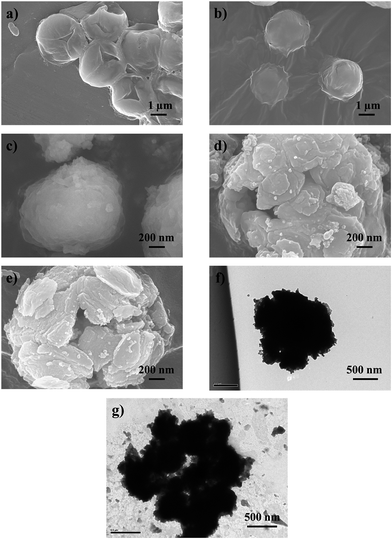 |
| | Fig. 2 SEM images of (a) cells of Chlorella sp. 227, (b) cells of Chlorella sp. 227 after immersion in Ca(NO3)2·4H2O solution, (c) non-hollow hydroxyapatite particle (HAp), (d) hollow hydroxyapatite microsphere formed using 0.25 g L−1 microalga (HHM-25), and (e) hollow hydroxyapatite microsphere formed using 0.5 g L−1 microalga (HHM-50). TEM images of (f) non-hollow hydroxyapatite particle (HAp), and (g) hollow hydroxyapatite microsphere formed using 0.5 g L−1 microalga (HHM-50). | |
The infrared analysis showed functional phosphate groups at 1032 cm−1 (v3), and at 564 cm−1 and 604 cm−1 (v4) [Fig. 3(a)]. Carbonate groups were found at 1419 cm−1 (v3) and 872 cm−1 (v2) [Fig. 3(a)], which is indicative of calcium carbonate and hydroxyapatite mixing.28–31 Based on the band identified at 872 cm−1, it can be assumed that CO2 was created in the water by CO32− absorption from the air.30 The appearance of the 1245 cm−1 band in the HAp sample is the result of the PO2 asymmetric (v2) vibration.32 The intensity of the carbonate bands increases in the HHMs [Fig. 3(a)], and this may be due to the additional carbonate source derived from decomposing microalga during spray pyrolysis. In agreement with the infrared results, the X-ray spectra showed crystals of hydroxyapatite, calcium carbonate, and calcium hydroxide [Fig. 3(b)]. The formation of calcium carbonate particles could have resulted from reactions between calcium hydroxide and atmospheric carbon dioxide, which were enhanced by the acidic conditions existing during the hydroxyapatite synthesis.
 |
| | Fig. 3 (a) Infrared and (b) X-ray spectra of hydroxyapatite samples. | |
As shown in Table 1, utilization of microalga as a template for HHM formation resulted in more than a two-fold increase in the surface area and pore volume of the samples. However, increasing the microalga concentration to 1 g L−1 did not cause further improvement in the surface area and pore volume. This may be the result of incomplete microalga degradation. Hence, the particle pores were covered by microalga that decreased the surface area and pore volume of the samples. The pore diameter values for the HAp, HHM-25, and HHM-50 samples were 23.5 nm, 22 nm and 12.6 nm, respectively, which confirms the mesoporous structure of the samples (Fig. 4). The observed decrease in the pore diameter of the HHM samples may be due to the obstruction of pores with microalga degradation residue that is produced during hollow particle formation.
Table 1 Surface area and pore volume of samples
| Sample |
Synthesis temperature (°C) |
Surface area (m2 g−1) |
Pore volume (cm3 g−1) |
| Hydroxyapatite |
700 |
4.24 |
0.015 |
| Hydroxyapatite |
800 |
6.36 |
0.023 |
| Hydroxyapatite (HAp) |
900 |
11.25 |
0.054 |
| Hollow hydroxyapatite microspheres (0.25 g L−1 microalga) (HHM-25) |
900 |
18.27 |
0.092 |
| Hollow hydroxyapatite microspheres (0.5 g L−1 microalga) (HHM-50) |
900 |
30.37 |
0.12 |
| Hollow hydroxyapatite microspheres (1 g L−1 microalga) |
900 |
13.34 |
0.054 |
| Ibuprofen loaded hydroxyapatite particles (HAp-ibu) |
— |
0.45 |
0.002 |
| Ibuprofen loaded hollow hydroxyapatite microspheres (HHM-25-ibu) |
— |
0.77 |
0.006 |
| Ibuprofen loaded hollow hydroxyapatite microspheres (HHM-50-ibu) |
— |
5.93 |
0.032 |
 |
| | Fig. 4 Nitrogen adsorption–desorption isotherms and Barrett–Joyner–Halenda (BJH) pore size distribution (inset) of (a) non-hollow hydroxyapatite particles (HAps), (b) hollow hydroxyapatite microspheres formed using 0.25 g L−1 microalga (HHM-25s), and (c) hollow hydroxyapatite microspheres formed using 0.5 g L−1 microalga (HHM-50s). | |
3.2 Ibuprofen loading and release
The ibuprofen drug loading capacity was 58.91% ± 1.07% (0.589 g g−1), 82.86% ± 1.5% (0.829 g g−1), and 89.34% ± 1.61% (0.893 g g−1) for the HAp, HHM-25, and HHM-50 samples, respectively. The adsorption capacity of drugs is influenced by the surface area of the sample,33 and the increased surface area of the hydroxyapatite samples produced with the microalga template enhanced their adsorption capacity for ibuprofen loading. In the previous research by Guo et al., hollow carbonated hydroxyapatite microspheres were used for vancomycin loading, and they achieved a high drug loading capacity of 0.85 g g−1.1 The high loading performance was attributed to the mesoporous and hollow structure of the microspheres which increased their surface area.1 The loading of ibuprofen in the hydroxyapatite samples was confirmed by infrared (Fig. 5) and surface area analyses (Table 1). Infrared ibuprofen peaks in the hydroxyapatite samples were observed at 2960 cm−1, 1547 cm−1, 1462 cm−1, and 1258 cm−1 [Fig. 5(a)]. The carbonyl infrared peak of ibuprofen at 1720 cm−1 is assumed to be shifted to 1547 cm−1, which is caused by the hydrogen bonding interaction between carbonyl with the hydroxyl groups on hydroxyapatite surface [Fig. 5(a)]. The shifting of related peak has been reported in previous researches.34,35 The infrared spectra of ibuprofen-loaded hydroxyapatite samples showed the peaks associated with ibuprofen as well as the hydroxyapatite [Fig. 3(a)]. Therefore, the loading of ibuprofen in the hydroxyapatite samples did not produce new chemical interactions. The adsorption of ibuprofen onto the hydroxyapatite occurred through hydrogen bonding between the carboxyl groups.36 Additionally, ibuprofen has been shown to be physically adsorbed onto the surface of calcium carbonate.37,38 The surface adsorption serves as the main factor of ibuprofen loading because the accumulation of ibuprofen in pores by the van der Waals force is much weaker than the hydrogen bonding between the hydroxyapatite surface and the carboxyl group of ibuprofen. The surface area and pore volume values of the hydroxyapatite samples were drastically decreased with ibuprofen loading (Table 1), and we assume this is related to ibuprofen occupying the cavities and pores of the samples. The ibuprofen loading values in this study are indicative of a higher hydroxyapatite loading capacity than has been achieved in previous investigations, which ranged from 0.148 g g−1 to 0.622 g g−1.3,39–43
 |
| | Fig. 5 Infrared spectra of hydroxyapatite samples (a) after drug loading and (b) after drug release. | |
The drug release kinetics is indicative of a slower release of ibuprofen from the HHMs [Fig. 6(a)]. The ibuprofen release values in the first hour were 11.4%, 7.4%, and 1.8% for HAp-ibu, HHM-25-ibu, and HHM-50-ibu, respectively. The point of 50% ibuprofen release was achieved after 20 hours in HAp-ibu and HHM-25-ibu, but this did not occur until approximately 37 hours in HHM-50-ibu. The release of 75% of the ibuprofen load was achieved at 41 hours, 53 hours, and 93 hours for HAp-ibu, HHM-25-ibu, and HHM-50-ibu, respectively. Ibuprofen release equilibrium occurred after 72 hours in HAp-ibu and HHM-25-ibu, but not until 96 hours for HHM-50-ibu. The ibuprofen release profile for HHM-50-ibu shows a small initial release, followed by a slow, sustained release. The different release profiles observed for the HAps as compared to the HHMs, especially HHM-50, could be caused by the adsorption of ibuprofen. The loading of the HAp sample depends solely upon the adsorption of ibuprofen to the surface of the hydroxyapatite, whereas the HHM structure not only accommodates surface adsorption of ibuprofen, but also may function as a slow release ibuprofen reservoir. Several factors such as sample morphology, chemical composition, and structure can affect the release properties of a drug.44
 |
| | Fig. 6 (a) Drug release profiles and (b) Higuchi kinetic model of hydroxyapatite samples. | |
The release profiles for HAp-ibu, HHM-25-ibu, and HHM-50-ibu were compared to the Higuchi and Hixson–Crowell kinetic models (Table 2), and the Higuchi kinetic model represented a more suitable fit. The release profile of ibuprofen showed a linear relationship with the square root of time for both HAp and HHM samples, and this indicates that the ibuprofen was released by diffusion [Fig. 6(b)]. The infrared analysis of hydroxyapatite after drug release does not show the ibuprofen peaks, but rather, only the hydroxyapatite functional groups. This confirms the release of ibuprofen from the hydroxyapatite samples [Fig. 5(b)]. The infrared spectra also confirmed that the ibuprofen release process did not change the structure of the hydroxyapatite that coexists with calcium carbonate [Fig. 5(b)].
Table 2 Kinetic model of drug release
| Kinetic model |
R2 |
| HAp |
HHM-25 (0.25 g L−1 microalga) |
HHM-50 (0.5 g L−1 microalga) |
| Hixson–Crowell |
0.9609 |
0.8927 |
0.9684 |
| Higuchi |
0.9779 |
0.9577 |
0.9752 |
3.3 Dissolution and apatite formation
In order to be used as an implant material, the synthesized hydroxyapatite samples should form layers of biologically active apatite particles which serve as interfaces for bonding with tissue.45 The immersion of hydroxyapatite samples in SBF shows a change in solution pH and conductivity (Fig. 7). At day 1, there was an increase in pH, which can be caused by the release of OH− ions from calcium hydroxide in the hydroxyapatite samples [Fig. 7(a)]. The increase in electrical conductivity of the solution also supports this calcium hydroxide dissolution mechanism [Fig. 7(b)]. A similar increase in pH has also been observed in previous studies with immersion of samples containing hydroxyapatite in SBF.32,46,47 The decrease in the pH value can be caused by the consumption of OH− during the process of apatite deposition [Fig. 7(a)].32 Hence, the release and consumption of OH− ions was observed to occur in a sequential fashion, as has been reported in previous research.32 After an increase in electrical conductivity on day 1, a continual decrease in electrical conductivity values was observed, and this can be attributed to the consumption of calcium and phosphate ions during the formation of apatite on the surface of the hydroxyapatite samples [Fig. 7(b)]. This initial increase and subsequent decrease in conductivity following immersion in SBF has also been shown in prior research specific to the immersion of calcium phosphate/poly-DL-lactide-co-glycolide composites in SBF.48 The changes in pH and conductivity values for the HAp and HHM samples did not show significant differences. Therefore, in this study, the differences in morphology and the use of a microalga template did not affect the characteristics of apatite formation. The SEM analysis showed formation of apatite particles on the surface of the hydroxyapatite samples, and the particle size increased with immersion time due to the growth of apatite. This effect was particularly pronounced in the hollow microspheres (Fig. 8). As determined by the EDS analysis, the Ca/P ratios for HAp, HHM-25, and HHM-50 were 1.68, 1.61, and 1.66, respectively (Fig. 8), which are close to the Ca/P stoichiometric ratio of 1.67 in osseous apatite.49
 |
| | Fig. 7 (a) pH and (b) electrical conductivity of the SBF solution with hydroxyapatite samples. | |
 |
| | Fig. 8 SEM images of apatite growth on (a–c) non-hollow hydroxyapatite particles (HAps), (e–g) hollow hydroxyapatite microspheres formed using 0.25 g L−1 microalga (HHM-25s), and (i–k) hollow hydroxyapatite microspheres formed using 0.5 g L−1 microalga (HHM-50s). Ca and P peaks on EDS after 14 days of immersion in SBF for (d) HAp, (h) HHM-25, and (l) HHM-50 samples. | |
4. Conclusions
In this study, microspheres of hydroxyapatite were formed using spray pyrolysis, and 900 °C was determined to be the optimal temperature for hydroxyapatite synthesis. By increasing the spray pyrolysis temperature, the surface area and pore volume of the hydroxyapatite was also increased. Chlorella sp. 227 microalga was used as a template for the creation of hydroxyapatite particles with a hollow structure, and an optimal 0.5 g L−1 solution concentration was identified. The hydroxyapatite particles synthesized by spray pyrolysis were mesoporous. With the use of the microalga template, the surface area increased from 11.25 m2 g−1 to 30.37 m2 g−1, and the pore volume increased from 0.054 cm3 g−1 to 0.12 cm3 g−1. The HHM has a higher drug loading capacity (0.893 g g−1) compared to that of HAp (0.589 g g−1), and the ibuprofen release profile was slower for the HHM samples. The HAp-ibu samples reached an equilibrium of 90% after 72 hours, and the HHM-50-ibu samples reached an equilibrium of 75% after 93 hours. The immersion of HAp and HHM samples in SBF showed similar characteristic changes in pH and conductivity values. Apatite formation exhibited Ca/P ratios of 1.68, 1.61, and 1.66 for the HAp, HHM-25, and HHM-50 samples, respectively. The bioactivity assay demonstrated the ability for the samples to form osseous apatite which could develop connections with tissue, and the drug delivery profile showed that the HHM samples are suitable for use as a sustained drug delivery system.
Acknowledgements
This work was supported by a 2 year Research Grant of Pusan National University.
Notes & references
- Y. J. Guo, Y. Y. Wang, T. Chen, Y. T. Wei, L. F. Chu and Y. P. Guo, Mater. Sci. Eng., C, 2013, 33, 3166–3172 CrossRef CAS PubMed
 .
. - T. Long, Y. P. Guo, Y. Z. Liu and Z. A. Zhu, RSC Adv., 2013, 3, 24169–24176 RSC .
- X. Y. Zhao, Y. J. Zhu, C. Qi, F. Chen, B. Q. Lu, J. Zhao and J. Wu, Chem.–Asian J., 2013, 8, 1313–1320 CrossRef CAS PubMed .
- M. G. Ma and J. F. Zhu, Eur. J. Inorg. Chem., 2009, 5522–5526 CAS .
- H. Zhao, Y. D. Zhu, J. Sun, D. Wei, K. F. Wang, M. Liu, H. S. Fan and X. D. Zhang, Chem. Commun., 2014, 50, 12519–12522 RSC .
- Z. Y. Li, T. Wen, Y. L. Su, X. X. Wei, C. C. He and D. J. Wang, CrystEngComm, 2014, 16, 4202–4209 RSC .
- G. J. Ding, Y. J. Zhu, C. Qi, B. Q. Lu, J. Wu and F. Chen, J. Colloid Interface Sci., 2015, 443, 72–79 CrossRef CAS PubMed .
- H. L. Fu, M. N. Rahaman and D. E. Day, J. Am. Ceram. Soc., 2010, 93, 3116–3123 CrossRef CAS PubMed .
- K. Itatani, T. Tsugawa, T. Umeda, Y. Musha, I. J. Davies and S. Koda, J. Ceram. Soc. Jpn., 2010, 118, 462–466 CrossRef CAS .
- J. S. Cho, J. C. Lee, S. H. Chung, J. K. Seo and S. H. Rhee, Ceram. Int., 2014, 40, 6691–6697 CrossRef CAS .
- J. S. Cho and S. H. Rhee, J. Biomed. Mater. Res., Part B, 2012, 100, 493–500 CrossRef PubMed .
- Y. Xia, W. K. Zhang, H. Huang, Y. P. Gan, Z. Xiao, L. C. Qian and X. Y. Tao, J. Mater. Chem., 2011, 21, 6498–6501 RSC .
- P. C. Sahoo, F. Kausar, J. H. Lee and J. I. Han, RSC Adv., 2014, 4, 32562–32569 RSC .
- P. C. Sahoo, K. Kim, J. H. Lee, J. I. Han and Y. K. Oh, ACS Sustainable Chem. Eng., 2015, 3, 1764–1770 CrossRef CAS .
- J. Venkatesan, P. Manivasagan, S. K. Kim, A. V. Kirthi, S. Marimuthu and A. A. Rahuman, Bioprocess Biosyst. Eng., 2014, 37, 1591–1597 CrossRef CAS PubMed .
- S. Senapati, A. Syed, S. Moeez, A. Kumar and A. Ahmad, Mater. Lett., 2012, 79, 116–118 CrossRef CAS .
- J. Annamalai and T. Nallamuthu, Appl. Nanosci., 2015, 5, 603–607 CrossRef CAS .
- I. Barwal, P. Ranjan, S. Kateriya and S. C. Yadav, J. Nanobiotechnol., 2011, 9, 56 CrossRef CAS PubMed .
- T. Kathiraven, A. Sundaramanickam, N. Shanmugam and T. Balasubramanian, Appl. Nanosci., 2015, 5, 499–504 CrossRef CAS .
- J. S. Cho and Y. Chan Kang, RSC Adv., 2014, 4, 25234–25240 RSC .
- F. Iskandar, A. B. D. Nandiyanto, K. M. Yun, C. J. Hogan, K. Okuyama and P. Biswas, Adv. Mater., 2007, 19, 1408–1412 CrossRef CAS .
- K. Okuyama and I. Wuled Lenggoro, Chem. Eng. Sci., 2003, 58, 537–547 CrossRef CAS .
- Y. Q. Li, M. Horsman, B. Wang, N. Wu and C. Q. Lan, Appl. Microbiol. Biotechnol., 2008, 81, 629–636 CrossRef CAS PubMed .
- T. Kokubo, H. Kushitani, S. Sakka, T. Kitsugi and T. Yamamuro, J. Biomed. Mater. Res., 1990, 24, 721–734 CrossRef CAS PubMed .
- J. Cheng, J. Sun, Y. Huang, J. H. Zhou and K. F. Cen, Bioresour. Technol., 2014, 170, 138–143 CrossRef CAS PubMed .
- D. J. S. Montagnes, J. A. Berges, P. J. Harrison and F. J. R. Taylor, Limnol. Oceanogr., 1994, 39, 1044–1060 CrossRef CAS .
- G. L. Messing, S. C. Zhang and G. V. Jayanthi, J. Am. Ceram. Soc., 1993, 76, 2707–2726 CrossRef CAS .
- J. S. Cho and S. H. Rhee, J. Eur. Ceram. Soc., 2013, 33, 233–241 CrossRef CAS .
- C. Drouet, BioMed Res. Int., 2013, 490946 Search PubMed .
- Z. Hua Cheng, A. Yasukawa, K. Kandori and T. Ishikawa, J. Chem. Soc., Faraday Trans., 1998, 94, 1501–1505 RSC .
- F. A. Andersen and L. Brecevic, Acta Chem. Scand., 1991, 45, 1018–1024 CrossRef CAS .
- R. Govindan and E. K. Girija, J. Mater. Chem. B, 2014, 2, 5468–5477 RSC .
- H. Baradari, C. Damia, M. Dutreih-Colas, E. Laborde, N. Pecout, E. Champion, D. Chulia and M. Viana, J. Eur. Ceram. Soc., 2012, 32, 2679–2690 CrossRef CAS .
- Z. A. Tagar, Sirajuddin, N. Memon, M. S. Kalhoro, P. O'Brien, M. A. Malik, M. I. Abro, S. S. Hassan, N. H. Kalwar and Y. Junejo, Sens. Actuators, B, 2012, 173, 745–751 CrossRef CAS .
- X. Lu, L. Meng, H. Li, N. Du, R. Zhang and W. Hou, Mater. Res. Bull., 2013, 48, 1512–1517 CrossRef CAS .
- M. Oner, E. Yetiz, E. Ay and U. Uysal, Ceram. Int., 2011, 37, 2117–2125 CrossRef CAS .
- C. Y. Wang, C. Y. He, Z. Tong, X. X. Liu, B. Y. Ren and F. Zeng, Int. J. Pharm., 2006, 308, 160–167 CrossRef CAS PubMed .
- Y. Ueno, H. Futagawa, Y. Takagi, A. Ueno and Y. Mizushima, J. Controlled Release, 2005, 103, 93–98 CrossRef CAS PubMed .
- M. Y. Ma, Y. J. Zhu, L. Li and S. W. Cao, J. Mater. Chem., 2008, 18, 2722–2727 RSC .
- L. X. Yang, J. J. Yin, L. L. Wang, G. X. Xing, P. Yin and Q. W. Liu, Ceram. Int., 2012, 38, 495–502 CrossRef CAS .
- C. Qi, Y. J. Zhu, B. Q. Lu, X. Y. Zhao, J. Zhao, F. Chen and J. Wu, Chem.–Eur. J., 2013, 19, 5332–5341 CrossRef CAS PubMed .
- S. W. Cao, Y. J. Zhu, J. Wu, K. W. Wang and Q. L. Tang, Nanoscale Res. Lett., 2010, 5, 781–785 CrossRef CAS PubMed .
- C. Qi, Y. J. Zhu, B. Q. Lu, X. Y. Zhao, J. Zhao and F. Chen, J. Mater. Chem., 2012, 22, 22642–22650 RSC .
- F. Chen, Y.-J. Zhu, K.-H. Zhang, J. Wu, K.-W. Wang, Q.-L. Tang and X.-M. Mo, Nanoscale Res. Lett., 2011, 6, 67 CrossRef PubMed .
- L. L. Hench, J. Am. Ceram. Soc., 1991, 74, 1487–1510 CrossRef CAS .
- M. Vallet-Regi, J. Perez-Pariente, I. Izquierdo-Barba and A. J. Salinas, Chem. Mater., 2000, 12, 3770–3775 CrossRef CAS .
- D. Santhiya, H. K. Alajangi, F. Anjum, S. Murugavel and M. Ganguli, J. Mater. Chem. B, 2013, 1, 6329–6338 RSC .
- M. D. Vukelic, Z. J. Mitic, M. S. Miljkovic, J. M. Zivkovic, N. L. Ignjatovic, D. P. Uskokovic, J. Z. Zivanov-Curlis, P. J. Vasiljevic and S. J. Najman, J. Appl. Biomater. Funct. Mater., 2012, 10, 43–48 Search PubMed .
- H. M. Kim, T. Himeno, M. Kawashita, T. Kokubo and T. Nakamura, J. R. Soc., Interface, 2004, 1, 17–22 CrossRef CAS PubMed .
|
| This journal is © The Royal Society of Chemistry 2016 |
Click here to see how this site uses Cookies. View our privacy policy here. 


