DOI:
10.1039/C6RA02912D
(Paper)
RSC Adv., 2016,
6, 34137-34145
Preparation of glycerol monostearate from glycerol carbonate and stearic acid
Received
1st February 2016
, Accepted 28th March 2016
First published on 30th March 2016
Abstract
The chemical equilibrium for the preparation of glycerol monostearate (GMS) from glycerol carbonate (GC) and stearic acid (SA) was investigated. The chemical equilibrium constant K of the base-catalyzed synthesis of GMS from GC and SA was much smaller than that of the acid-catalyzed synthesis of (2-oxo-1,3-dioxolan-4-yl) methyl stearate (ODOMS) from GC and SA. In other words, it was thermodynamically difficult to obtain GMS with a high yield from GC and SA catalysed by basic catalysts. To prove this argument, we used magnesium oxide (MgO) as a catalyst to synthesize GMS from GC and SA. As expected, the yield of GMS was quite low. To increase the yield of GMS, a two-step procedure was proposed. First, pure ODOMS was synthesized by the esterification of GC with SA using copper p-toluenesulfonate (CPTS) as the catalyst. The conversion of SA reached 96.14% under the following conditions: reaction temperature, 140 °C; catalyst amount, 3% CPTS (based on the SA weight); reaction time, 3 h; GC-to-SA molar ratio, 1.5![[thin space (1/6-em)]](https://www.rsc.org/images/entities/char_2009.gif) :1. Second, GMS was produced at a yield of 64.4% by the hydrolysis of ODOMS in the presence of triethylamine. The syntheses of ODOMS and GMS were confirmed by 1H- and 13C-NMR, FTIR and LC-MS analysis.
:1. Second, GMS was produced at a yield of 64.4% by the hydrolysis of ODOMS in the presence of triethylamine. The syntheses of ODOMS and GMS were confirmed by 1H- and 13C-NMR, FTIR and LC-MS analysis.
1. Introduction
Glycerol monostearate (GMS), which is the glycerol monoester of stearic acid, and features a specific hydrophilic head and a hydrophobic tail, is an important non-ionic surfactant with low hydrophile–lipophile balance (HLB). This compound is particularly valuable for use in environmentally benign “water-in-oil” emulsions.1 Therefore, GMS is widely used as an emulsifiers, emollients, lubricants and dispersants in such applications as food and feedstuff,2,3 cosmetics,4 pharmaceutical formulations,5 plasticizers6 and drug delivery systems.7,8
GMS is conventionally prepared by the esterification of glycerol (Gly) with stearic acid (SA)9 and transesterification of Gly with natural fats and oils10,11 or stearic acid methyl ester.12 In most cases, these reactions are usually catalyzed by homogeneous catalysts, which are either basic (such as metal hydroxides, methyl oxides and inorganic carbonates)13 or acidic (such as sulfuric acid, phosphoric acid and organic sulfonic acids).14 The main drawback of these conventional synthetic routes is their low GMS selectivity. Their products are mixtures of mono-, di- and triglycerides. In recent years, more selective routes have been explored. For example, glycidol was reacted with stearic acid anhydride at 85 °C for 5 h to synthesize GMS at a yield of 62%.15 The yield of GMS can be improved by using glycidol, but the industrialization of this process is restricted by the high cost of glycidol. The reaction of glycerol acetonide with stearic acid ester to produce GMS had also been reported.16 However, the hydrolysis procedure of the intermediate “ester-ketal” to remove the acetone is tedious. Other synthetic routes for preparing GMS have utilized lipase-catalyzed reactions17 and microwave irradiation.18
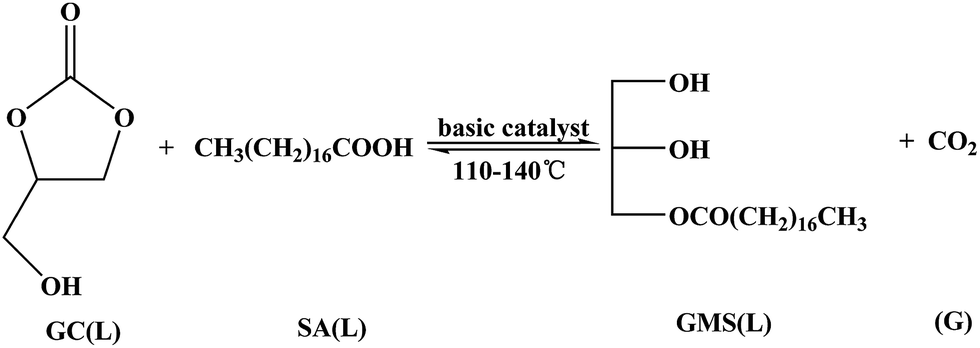
As a potential chemical intermediate, glycerol carbonate (GC) has many desirable properties, such as low toxicity, low volatility and low flammability.19 Researchers have applied GC to synthesize GMS by triethylamine-catalyzed reaction with SA at 140 °C for 10 h (Scheme 1), claiming that this method produces pure GMS.20 Although this claim has been cited in a number of review articles,21–25 no further study had been reported. Mhanna et al.23 noted that the reaction of GC and SA utilizing tetrabutylammonium iodide as a basic catalyst produced GMS at only 14% yield after 24 h of reaction. The preparation of (2-oxo-1,3-dioxolan-4-yl) methyl stearate (ODOMS) from GC and SA in the presence of acidic catalyst has also been reported.26 ODOMS possesses excellent physico-chemical properties, such as good thermal stability and oxidation stability, good surfactant properties and high biodegradability.27 Based on a mechanism similar to that of the hydrolysis of GC in alkaline solutions,28,29 we supposed that GMS might be formed by the hydrolysis of ODOMS in alkaline solutions.
 |
| | Scheme 1 GMS formation from GC and SA. | |
To the best of our knowledge, the chemical equilibrium for the synthesis of GMS from GC and SA has not yet been characterized. In this work, we determined the chemical equilibrium constants about the preparation of GMS from GC and SA by two synthetic routes. In the first route, GMS was directly synthesized by GC and SA using a basic catalyst (Scheme 1). The chemical equilibrium constants calculated for GMS synthesis from GC with SA at different temperatures revealed that the production of GMS by this route (Scheme 1) was not thermodynamically favorable. Moreover, magnesium oxide (MgO) was used as a basic catalyst to synthesize GMS from GC and SA for the experimental verification. The second route was a new two-step procedure that we proposed. In this procedure, ODOMS was first produced as an intermediate by the esterification of GC with SA using copper p-toluenesulfonate (CPTS) as a catalyst (Scheme 2) in the solvent-free system. The subsequent hydrolysis of ODOMS could produce GMS in the presence of a basic catalyst (Scheme 3). The chemical equilibrium constants calculated for the formation of ODOMS from GC and SA (Scheme 2) at different temperatures indicated that this synthesis was feasible when catalyzed by an acidic catalyst. Moreover, the synthesis was conducted to verify the results derived from the calculated chemical equilibrium constants. The syntheses of ODOMS and GMS were confirmed by 1H- and 13C-NMR, FTIR and LC-MS analyses.
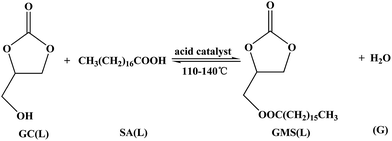 |
| | Scheme 2 Esterification of GC with SA to form ODOMS. | |
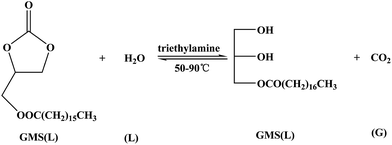 |
| | Scheme 3 Hydrolysis of ODOMS to form GMS. | |
2. Calculation of the chemical equilibrium constant
The chemical equilibrium constants at standard condition (T = 298.15 K, P = 101325 Pa) were calculated as follows. Firstly, the functional group method of Benson30 was adopted to estimate the gas phase standard molar enthalpy of formation ΔfHθm,g (eqn (1)) and molar entropy Sθm,g (eqn (2)) of GC, SA, ODOMS and GMS. The standard molar enthalpy of evaporation ΔVHθm (eqn (3)) was obtained by using the functional group method of Ducros.31 Subsequently, the liquid phase standard molar enthalpy of formation ΔfHθm,l and liquid phase standard molar entropy Sθm,l can then be acquired by combing eqn (4) and (5).| |
 | (1) |
| |
 | (2) |
| |
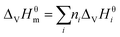 | (3) |
| | |
ΔfHθm,l = ΔfHθm,g − ΔVHθm
| (4) |
| |
 | (5) |
where, R is the mole gas constant; δ = δinδext is the symmetry number of the molecule; δin is the internal symmetry number of the molecule; δext is the external symmetry number of the molecule; η is the number of enantiomers; Sθcorrection, the cyclic correction factor, is obtained from the literature.32 The data for H2O and CO2 were acquired from http://webbook.nist.gov/chemistry.
Next, eqn (6) and (7) were applied to calculate the change of the standard molar enthalpy ΔrHθm and entropy ΔrSθm of the reaction.
| |
 | (6) |
| |
 | (7) |
Then, the change of the molar Gibbs free energy ΔrGθm and the chemical equilibrium constant K of the reaction can be obtained from ΔrHθm and ΔrSθm by eqn (8) and (9).
| |
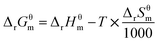 | (8) |
| | |
ΔrGθm = −RTlnKθ
| (9) |
The liquid-phase heat capacities Cp,m,l of GC, SA, GMS and ODOMS were estimated by the functional group method of Ruzicka–Domalski (eqn (10)).33 This method requires the cyclic alkylene carbonate correction factor for Cp,m,l because GC and ODOMS are cyclic compounds. Because the correction factor for cyclic alkylene carbonate has not yet been reported, it was replaced by that of 1,3-dioxa-cyclopentane. ΔrCp,m can be counted by eqn (11). ΔrHm for different temperatures can then be obtained by ΔrHθm and eqn (12). Finally, eqn (13) and (14) can be used to calculate ΔrGm and the chemical equilibrium constant K at different temperatures under atmospheric pressure can be calculated.
| |
 | (10) |
| |
 | (11) |
| |
 | (12) |
| |
 | (13) |
| | |
ΔrGm(T,P) = −RTlnK
| (14) |
where, Δ
rCp,m is the change of the molar heat capacity of the reaction; Δ
rHm is the change of the molar enthalpy of the reaction; Δ
rGm is the change of the molar Gibbs free energy of the reaction.
3. Experimental section
3.1 Chemicals and materials
Glycerol carbonate (>90%) was purchased from Tokyo Chemical Industry Co. Ltd. Stearic acid (98%) was purchased from TCI Shanghai Co. Ltd. Petroleum ether (analytical grade), sodium chloride (NaCl, analytical grade), triethylamine (analytical grade) were provided by Beijing Tongguang Fine Chemical Company. Magnesium oxide (MgO, analytical grade) was purchased from Tianjin Guangfu Fine Chemical Research Institute. Methanol was purchased from Anhui Fulltime Special Solvents & Reagents Co., Ltd. All chemicals were used without further purification.
3.2 Synthesis of GMS and ODOMS from GC and SA
SA (0.025 mol) and 3.0% catalyst (based on SA weight) were placed in a 100 mL, three-neck, round-bottom flask, which was immersed in an oil bath and equipped with a thermometer and a pressure-equalizing addition funnel. GC (0.0375 mol) was added drop-wise to the molten SA at the required temperature. After the reaction was terminated by cooling to 60 °C, the saturated NaCl solution and petroleum ether, which had been heated to 60 °C, were added. The reaction mixture was then refluxed and allowed to stand for resulting two liquid layers. The upper layer, which is the petroleum ether solution containing the product, was then separated by decantation. Following crystallization, the product was obtained as white solid powder. According to Scheme 1, MgO was used as the solid basic catalyst for the GMS synthesis. For the ODOMS synthesis according to Scheme 2, the catalyst was CPTS, which was prepared with the procedure reported in the literature.34
3.3 Hydrolysis of ODOMS
The same experimental setup was utilized for the hydrolysis of ODOMS. ODOMS (1 g), ultra-pure water (20 g), and 6.0% triethylamine (based on the water weight) were placed into the flask and heated to the reaction temperature. After the termination of the reaction by cooling, the hot petroleum ether was added into the reaction mixture, which was then refluxed and allowed to stand, which led to the separation of two liquid phases. The white powder product was obtained by the crystallization from the upper liquid phase.
3.4 Analysis
The acid value of the solid sample was determined according to a previously reported procedure.35 The difference in the acid value of the solid sample before and after the reaction was measured to determine the conversion of SA, as:| |
 | (15) |
The purity of GMS was determined according to a previously reported procedure.36 The melting points of ODOMS and GMS were measured by using differential scanning calorimetry (DSC, Q 2000, TA, USA). Samples were sealed in an alumina pan and heated from 0 to 100 °C at a rate of 5 °C min−1 in purified nitrogen atmosphere. The functional groups were identified by mixing the samples with KBr, pressing them into pellets, and recording their Fourier transmittance infrared spectrometer (FT-IR Tensor 27, Bruker, Germany) over the wavenumber range of 400 to 4000 cm−1 at room temperature. The 1H- and 13C-NMR spectra were recorded on nuclear magnetic resonance (NMR, JNM-ECA 300, JEOL, Japan). The molecular weight was measured by liquid chromatography-mass spectrometer (LC-MS, QTrap 4500, AB SCIEX, USA, mobile phase: 90% methanol and 10% water, flow rate: 1.0 mL min−1).
4. Results and discussion
4.1 Thermodynamic analysis
The standard molar enthalpies of formation ΔfHθm and standard molar entropies Sθm of the substances involved in the reactions of GC with SA are listed in Table 1. The changes of the standard molar enthalpy ΔrHθm, entropy ΔrSθm as well as the standard chemical equilibrium constants K of the reactions calculated according to eqn (6) and (7) are listed in Table 2. As can be seen from Table 2, the standard chemical equilibrium constant at 298.15 K, 101325 Pa for the reaction of GC with SA to form GMS (Scheme 1) in the presence of a basic catalysts is the fairly low value of 2.19 × 10⁻⁷, and the change of the molar Gibbs free energy ΔrGθm (38.01 kJ mol−1) is greater than zero. This finding indicates that the synthesis of GMS from GC and SA (Scheme 1) is unfeasible under standard conditions. Meanwhile, the standard chemical equilibrium constant for the formation of ODOMS from GC and SA (Scheme 2) in the presence of an acid catalyst is the extremely high value of 2.72 × 10⁴, and the change of the molar Gibbs free energy ΔrGθm is −25.31 kJ mol−1. This finding indicates that the synthesis of ODOMS from GC and SA is thermodynamically favorable under standard conditions.
Table 1 Standard molar enthalpy of formation and standard mole entropy of the substances involved in the reactions of GC with SAa
| |
Phase |
ΔfHθm/(kJ mol−1) |
Sθm/(J K−1 mol−1) |
| ΔfHθm, the change of the standard molar enthalpy of formation; Sθm, standard molar entropy. The values for GC, SA, GMS and ODOMS were obtained by the functional group method of Benson.30 The values for H2O and CO2 were acquired from the literature.37 |
| GC |
Liquid |
−839.16 |
257.65 |
| SA |
Liquid |
−896 |
433.2 |
| GMS |
Liquid |
−1298.82 |
493.27 |
| ODOMS |
Liquid |
−1456.57 |
710.03 |
| H2O |
Gas |
−241.83 |
188.84 |
| CO2 |
Gas |
−393.5 |
213.78 |
Table 2 Thermodynamic data for the reactions of GC with SA at the standard condition (T = 298.15 K, P = 101325 Pa)a
| |
ΔrHθm/(kJ mol−1) |
ΔrSθm/(J K−1 mol−1) |
ΔrGθm/(kJ mol−1) |
Kθ |
| ΔrHθm, the change of the standard molar enthalpy of reactions; ΔrSθm, the change of the standard molar entropy of reactions; ΔrGθm, the change of the standard of molar Gibbs free energy of reactions; Kθ, the chemical equilibrium constant at the standard condition. |
| Scheme 1 |
42.84 |
16.20 |
38.01 |
2.19 × 10⁻⁷ |
| Scheme 2 |
36.76 |
208.02 |
−25.31 |
2.72 × 10⁴ |
The heat capacity, Cp,m of the various substances calculated by the functional group method of Ruzicka–Domalski33 (eqn (10)) are listed in Table 3. The chemical equilibrium constants K calculated by eqn (11)–(14) are listed in Table 4. It can be seen from Table 4 that the chemical equilibrium constant K of the reaction of GC with SA to form GMS (Scheme 1) increased with increasing temperature. However, the value of K remained quite small, even at temperature of up to 413.15 K. From a thermodynamics perspective, it was difficult to obtain high yields of GMS from GC and SA by using a basic catalyst. This finding was also consistent with our experimental results, too. In contrast, the chemical equilibrium constant K of the reaction to form ODOMS from GC and SA (Scheme 2) was considerably high, ranging from 6.51 × 10⁵ to 13.6 × 10⁵ as the temperature increased from 383.15 to 413.15 K. This finding indicated that the synthesis of ODOMS from GC and SA catalyzed by an acidic catalyst was feasible and that higher temperatures were more favorable for the reaction.
Table 3 Heat capacity of all substances involved in the reactionsa
| |
Cp,m/(J K−1 mol−1) = a + b(T/K) + c(T/K)2 |
| a |
b × 102 |
c × 104 |
| Cp,m is the molar isobaric heat capacity. a, b, c are coefficients in the equation for Cp,m. The heat capacities Cp,m of H2O (g) and CO2 (g) were obtained from the book.37 The heat capacities of other substances mentioned in the above table were obtained by Ruzicka–Domalski functional group method.34 |
| GC (l) |
6.972 |
−99.04 |
43.02 |
| SA (l) |
450.1 |
−2.914 |
17.63 |
| GMS (l) |
630.9 |
−47.64 |
30.42 |
| ODOMS (l) |
400.6 |
−47.08 |
43.05 |
| H2O (g) |
29.16 |
56.32 |
−0.02022 |
| CO2 (g) |
26.75 |
4.226 |
−0.1425 |
Table 4 Chemical equilibrium constant K for Schemes 1 and 2 at different temperature
| |
T/(K) (P = 101325 Pa) |
| 383.15 |
393.15 |
403.15 |
413.15 |
| Scheme 1 |
1.28 × 10⁻⁵ |
1.87 × 10⁻⁵ |
2.65 × 10⁻⁵ |
3.68 × 10⁻⁵ |
| Scheme 2 |
6.51 × 10⁵ |
8.49 × 10⁵ |
10.9 × 10⁵ |
13.6 × 10⁵ |
4.2 Experimental results
GMS was prepared in a yield of 10.0% from GC and SA (Scheme 1) under the following reaction conditions: reaction temperature, 140 °C; catalyst amount, 3% MgO (based on the SA weight); reaction time, 10 h; GC-to-SA molar ratio, 1.5:1. Mhanna et al.23 reported that the synthesis from GC and SA in the presence of tetrabutylammonium iodide produced GMS at only 14% yield after 24 h of reaction. Our experimental results thus agree with both this previous finding and our thermodynamics calculations.
SA conversion of up to 96.14% was obtained for the synthesis of ODOMS according to Scheme 2 under the following reaction conditions: reaction temperature, 140 °C; catalyst amount, 3% CPTS (based on the SA weight); reaction time, 3 h; GC-to-SA molar ratio, 1.5:1. The product, white solid powder with a melting point of 75 °C, was identified as pure ODOMS by LC-MS, FTIR, and 1H and 13C NMR analyses. This experimental result, namely, that pure ODOMS could be prepared in high yield from GC and SA in the presence of an acid catalysts was consistent with the thermodynamic analysis.
The results of molecular weight analysis of ODOMS by LC-MS analysis were as follows: LC-MS calculated for C22H40O5+ = 385; found: 385. Fig. 1 displays the FTIR spectrum of ODOMS. IR (KBr): νmax = 2919.6, 2850.3, 1783.8, 1736.2, 1471.5 cm−1. The FTIR spectra of ODOMS includes the characteristic absorption peaks at 1784 cm−1 and 1736 cm−1, which correspond to the stretching vibrations of endocyclic ester functions and exocyclic ester functional group,27 respectively.
 |
| | Fig. 1 FTIR spectra of ODOMS. | |
Fig. 2 and 3 present the 1H and 13C NMR spectra of ODOMS, respectively. 1H NMR (300 MHz, CDCl3): δ = 0.89 (t, J = 7.1 Hz, 3H, –CH3), 1.29 (t, J = 7.6 Hz, 2H, –CH2CO–), 4.29 (dd, J = 4.1, 12.6 Hz, 1H, –CH2OCO2–), 4.35 (dd, J = 7.3 Hz, 1H, –CH2OCO–), 4.39 (dd, J = 3.3, 12.6 Hz, 1H, –CH2OCO2–), 4.58 (t, J = 8.6 Hz, 1H, –CH2OCO–), 4.93 (m, 1H, CH); 13C NMR (300 MHz, CDCl3): δ = 14.1, 22.7, 24.8, 29.1–29.7, 31.9, 33.9, 62.8, 66.0, 73.8, 154.3, 173.3 ppm. The results were consistent with those reported by K. Mojgan.21 Thus, it was reasonable to conclude that the product is ODOMS.
 |
| | Fig. 2 1H NMR spectra of ODOMS. | |
 |
| | Fig. 3 13C NMR spectra of ODOMS. | |
GMS was obtained by the hydrolysis of ODOMS (Scheme 3) under the following conditions: hydrolysis temperature, 80 °C; catalyst amount, 6% triethylamine (based on water weight); hydrolysis time, 1.5 h; ODOMS-to-water weight ratio, 1 g:20 g. The obtained GMS was identified by LC-MS, FTIR, and 1H- and 13C-NMR.
Fig. 4 shows the FTIR spectrum of GMS. IR (KBr): νmax = 3315.7 (OH), 2918.7 and 2850.88 (CH), 1734.8 (C![[double bond, length as m-dash]](https://www.rsc.org/images/entities/char_e001.gif) O), 1179.6 and 1050.0 (C–O) cm−1. Fig. 5 and Fig. 6 present the 1H and 13C NMR spectra of GMS, respectively. 1H NMR (300 MHz, CDCl3): δ = 0.88 (t, J = 6.8 Hz, 3H, –CH3), 1.26 (m, 28H, CH2), 1.63 (m, 2H, CH2), 2.36 (t, J = 7.5 Hz, 2H, CH2), 3.60 (dd, J = 6.0, 9.0 Hz, 1H, CHOH), 3.69 (dd, J = 6.0, 12.0 Hz, 1H, CHOH), 3.93 (m, 1H, CH), 4.19 (m, 2H, CH2O); 13C NMR (300 MHz, CDCl3): δ = 14.1 (CH3), 22.7 (CH2), 24.9 (CH2), 29.1–29.7 (12, CH2), 31.9 (CH2), 34.2 (CH2), 63.4 (CH2O), 65.2 (CH2O), 70.3 (CHOH), 174.4 (CO).
O), 1179.6 and 1050.0 (C–O) cm−1. Fig. 5 and Fig. 6 present the 1H and 13C NMR spectra of GMS, respectively. 1H NMR (300 MHz, CDCl3): δ = 0.88 (t, J = 6.8 Hz, 3H, –CH3), 1.26 (m, 28H, CH2), 1.63 (m, 2H, CH2), 2.36 (t, J = 7.5 Hz, 2H, CH2), 3.60 (dd, J = 6.0, 9.0 Hz, 1H, CHOH), 3.69 (dd, J = 6.0, 12.0 Hz, 1H, CHOH), 3.93 (m, 1H, CH), 4.19 (m, 2H, CH2O); 13C NMR (300 MHz, CDCl3): δ = 14.1 (CH3), 22.7 (CH2), 24.9 (CH2), 29.1–29.7 (12, CH2), 31.9 (CH2), 34.2 (CH2), 63.4 (CH2O), 65.2 (CH2O), 70.3 (CHOH), 174.4 (CO).
 |
| | Fig. 4 FTIR spectra of GMS. | |
 |
| | Fig. 5 1H NMR spectra of GMS. | |
 |
| | Fig. 6 13C NMR spectra of GMS. | |
The result of the molecular weight analysis of GMS by LC-MS analysis was as follows: LC-MS calculated for C21H42O4+ = 359; found: 359.
The white solid product has a GMS mass fraction of 67% and a melting point of 78 °C. The yield of GMS based on SA was 64.4%. The yield was not high under the present conditions because the hydrolysis was conducted in a liquid–liquid two phase system. Because ODOMS is insoluble in water, the yield of GMS may be limited by interphase mass transfer. The use of co-solvents or phase transfer catalysts might improve the yield of GMS.
5. Conclusions
In this work, the chemical equilibrium about the synthesis of GMS from GC and SA was studied. The chemical equilibrium constant K for the reaction of GC and SA to synthesize GMS (Scheme 1) increased with the increase of temperature, but it remained quite small, even at temperatures as high as 413.15 K. From a thermodynamics perspective, it is difficult to obtain a high yield of GMS from GC and SA using a basic catalyst (Scheme 1). This result was verified experimentally. The yield of GMS obtained by the direct reaction of GC with SA (Scheme 1) was quite low when magnesium oxide (MgO) was used as the catalyst. However, the chemical equilibrium constant K for the reaction of GC with SA to synthesize ODOMS (Scheme 2) was considerably high, reaching 13.6 × 10⁵ at 413.15 K. This finding indicated that the formation of ODOMS from GC and SA was thermodynamically very favorable, and was verified experimentally. Pure ODOMS and a high conversion of SA could be obtained using CPTS as the catalyst. ODOMS could be further hydrolyzed to form GMS when triethylamine was used as the catalyst. A two-step procedure for synthesizing GMS from GC and SA was proposed, in which ODOMS as an intermediate was firstly produced by the esterification of GC with SA using an acidic catalyst (Scheme 2) and then hydrolyzed to yield GMS in the presence of basic catalyst (Scheme 3).
References
- A. H. A. Farooqi, S. Sharma and S. Kumar, US Pat., 636839 B1, 2002.
- N. J. Krog and F. V. Sparso, Food Emulsifiers: Their Chemical and Physical Properties, in Food Emulsions, ed. S. E. Friberg, K. Larsson and J. Sjöblom, Marcel Dekker, Inc., New York, 2004, pp. 45–91 Search PubMed.
- S. Miura, A. Yamamoto and K. Sato, Eur. J. Lipid Sci. Technol., 2002, 104, 819–824 CrossRef CAS.
- N. Boyxen, A. Behler, H. Hensen and W. Seipel, US Pat., 6333040, 2001.
- W. D. Craig, Maine cove terrace, WO Patent, 9531956, 1995.
- M. Rosen and L. K. Hall, US Pat., 4363891, 1982.
- R. H. Müller, W. Mehnert, J. S. Lucks, C. Schwarz, A. zur Mühlen, H. Weyhers, C. Freitas and D. Rühl, Eur. J. Pharm. Biopharm., 1995, 41, 62–69 Search PubMed.
- M. Trotta, F. Debernardi and O. Caputo, Int. J. Pharm., 2003, 257, 153–160 CrossRef CAS PubMed.
- N. B. K. Thengumpillil, V. Penumarthy and L. A. Ananta, US Pat., 6500974, 2002.
- S. Peter, US Pat., 5110509, 1992.
- L. J. Jeremy, Glycerolysis of fats and oils in nonionic surfactants, N. M. Van O. S., Marcel Dekker, Inc., New York, 1998, pp. 213–216 Search PubMed.
- L. Jeromin and P. L. Wozny Guenter, US Pat., 6127561, 2000.
- N. O. V. Sonntag, J. Am. Oil Chem. Soc., 1982, 59, 795–802 CrossRef.
- G. Devinat and J. L. Coustille, Rev. Fr. Corps Gras, 1983, 30, 463–468 CAS.
- P. Rytczak, M. Kozilkiewicz and A. Okruszek, New J. Chem., 2010, 34, 1008–1017 RSC.
- C. C. Yu, Y. S. Lee and B. S. Cheon, Bull. Korean Chem. Soc., 2003, 24, 1229–1231 CrossRef CAS.
- I. I. Junior, M. C. Flores, F. K. Sutili and S. G. F. Leite, et al., Org. Process Res. Dev., 2012, 16, 1098–1101 CrossRef CAS.
- Q. B. Wang, Y. G. Zhang and X. F. Guo, Deterg. Cosmet., 2004, 27, 166–168 Search PubMed.
- M. O. Sonnati, S. Amigoni, E. P. T. de Givenchy, T. Darmanin, O. T. Choule and F. Guittard, Green Chem., 2013, 15, 283–306 RSC.
- M. Ghandi, A. Mostashari, M. Karegar and M. Barzegar, J. Am. Oil Chem. Soc., 2007, 84, 681–685 CrossRef CAS.
- M. Kargar, R. Hematshoar, M. Ghandi and A. J. Mostashari, J. Am. Oil Chem. Soc., 2013, 90, 259–264 CrossRef CAS.
- F. Jérôme, Y. Pouilloux and J. Barrault, ChemSusChem, 2008, 1, 586–613 CrossRef PubMed.
- A. Mhanna, F. Sadaka, G. Boni, C.-H. Brachais, L. Brachais, J.-P. Couvercelle, L. Plasseraud and L. Lecamp, J. Am. Oil Chem. Soc., 2004, 91, 337–348 CrossRef.
- J. Li and T. Wang, J. Chem. Thermodyn., 2011, 43, 731–736 CrossRef CAS.
- J. Li and T. Wang, Chem. Eng. Process., 2010, 49, 530–535 CrossRef CAS.
- A. Lachowicz and G. Gahe, D.E. Patent, 3937116 A1, 1991.
- Z. Mouloungui and S. Pelet, Eur. J. Lipid Sci. Technol., 2001, 103, 216–222 CrossRef CAS.
- C. Magniont, G. Escadeillas, C. Oms-Multon and P. De Caro, Cem. Concr. Res., 2010, 40, 1072–1080 CrossRef CAS.
- C. Magniont, Ph. D. thesis, Université Toulouse III – Paul Sabatier, France, 2010.
- S. W. Benson, F. R. Cruickshank, D. M. Golden, G. R. Haugen, H. E. Oneal, A. S. Rodgers, R. Shaw and R. Walsh, Chem. Rev., 1969, 69, 279–324 CrossRef CAS.
- M. Ducros, J. F. Gruson and H. Sannier, Thermochim. Acta, 1981, 44, 131–140 CrossRef CAS.
- J. Li, Study on the preparation of glycerol carbonate from glycerol, Ph. D. thesis, Tsinghua University, China, 2011.
- B. E. Poling, J. M. Prausnitz and J. P. OConnell, The Properties of Gases and Liquids, McGraw-Hill, New York, 5th edn, 2001 Search PubMed.
- J. G. Song, H. C. Song and Q. Q. Yang, Acta Phys.-Chim. Sin., 2003, 19, 283–285 CAS.
- GB/T1668-2008, Plasticizers – Determination of acid value and acidity.
- GB/T 15612-1995, Food additive distilled glycerine monoglycerate.
- H. C. Ge, G. Q. Yuan and C. Peng, Appendix 12: the relationship between the molar isobaric heat capacity and temperature of part of gas, in Physical Chemistry, Higher Education Press, Beijing, 2009, p. 376 Search PubMed.
|
| This journal is © The Royal Society of Chemistry 2016 |
Click here to see how this site uses Cookies. View our privacy policy here.