
Disulfide bonds-containing amphiphilic conetworks with tunable reductive-cleavage

Shan Zhang, Heng Chen and Jie Kong*
Shaanxi Key Laboratory of Macromolecular Science and Technology, School of Science, Northwestern Polytechnical University, Xi'an, 710072, P. R. China. E-mail: kongjie@nwpu.edu.cn; Fax: +86-29-88431621; Tel: +86-29-88431621

Received 30th January 2016 , Accepted 25th March 2016

First published on 29th March 2016


Abstract

In this contribution, we reported reduction-cleavable amphiphilic conetworks (APCNs) by copper(I)-catalyzed azide–alkyne cycloaddition (CuAAC) of azide terminated disulfide bonds-containing poly(ε-caprolactone) (A2 macromonomer) and alkyne-terminated 4-arm polyethylene glycol (B4 macromonomer). The ratio of hydrophobic to hydrophilic parts of the APCNs was tuned by chain length of the A2 macromonomer, which gave a convenient way to control swelling capacity in an aqueous or organic phase. The swelling ratio of APCNs is up to 1100% and 1450% in water and tetrahydrofuran, respectively, with a rapid cleavage at a 5 mg mL−1 dithiothreitol concentration. The reduction-cleavable, swelling controllable APCNs are expected to possess potential for application in drug delivery systems and regeneration medicine.

1. Introduction

Amphiphilic conetworks (APCNs) are special macromolecular superstructures, in which hydrophilic and hydrophobic segments or long chains are integrated by covalent bonds or supramolecular assembly.1–3 Their amphiphilic natures enable them to swell in both aqueous and organic solvents. Driven by their incompatibility, the hydrophilic and hydrophobic long chains can segregate and form a special nanostructure.4 Thus, APCNs can be employed as either specialty hydrogels or hydrophobic gels depending on the nature of the swelling medium.5–8 In addition, due to their excellent biocompatibility, degradation, tissue-like elasticity and smart transport of nutrients, APCNs, such as poly(ethylene glycol)-based APCNs, show promising applications in various fields such as soft contact lenses, biological sensing, tissue engineering, and drug delivery.9–16 However, the predominant degradation mechanism for these PEG-based APCNs is the diffusion of solvents and cleavage of ester and carbonate linkages within the networks. Although the degradation rate can be tuned by selecting poly(ethylene glycol) with different molecular weights,17,18 the degradation rate is slow. Most of them were observed to be completely degraded after only several days or months.17–21 Therefore, the development of PEG-based APCNs with easily controllable degradation or cleavage rate is an emerging issue in this field.

As is well known, stimuli-responsive biodegradable polymers normally respond to an internal stimulus, such as pH, redox potential, and enzymes, or external stimulus from temperature and light.22–26 In intracellular triggered gene and drug delivery fields, reduction-sensitive polymers have widely received attention. They present the practical advantage of sensing redox potential as a signal from altered functions in direct response to a stimulus, similarly to some important life sustaining systems.27–29 The incorporation of disulfide bonds is an important strategy for synthesizing reduction-sensitive polymers.30 Disulfide bonds are prone to be rapid cleavage through thiol–disulfide exchange reactions in the presence of reducing agents such as dithiothreitol (DTT) and glutathione (GSH).31,32 As is well known, GSH is the most abundant non-protein thiol-source in cells and organizations of the human body. Furthermore, disulfide bonds are relatively stable in the circulation and in the extracellular milieu. Therefore, disulfide bonds-containing redox-responsive polymers are important candidates in tissue engineering,33,34 gene delivery,35–37 and controlled release of anticancer drugs.38–41

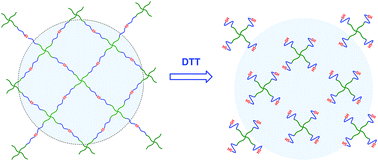
In this contribution, we introduced disulfide bonds into a cross-linked network to achieve reduction-cleavable APCNs with controllable cleavage and degradation properties, as illustrated in Fig. 1. Because the poly(ethylene glycol) (PEG) and poly(ε-caprolactone) (PCL) are FDA-approved biocompatible materials with different water affinities, di-functional PCLs with disulfide bonds and alkyne-terminated 4-armed PEG macromonomers were synthesized to prepare rapid reduction-cleavable APCNs via a copper(I)-catalyzed azide–alkyne cycloaddition (CuAAC) click reaction. The reduction-cleavable and swelling controllable APCNs are expected to possess potential in the application of drug delivery systems and regeneration medicine.


image file: c6ra02824a-f1.tif
Fig. 1 Schematic of disulfide bonds-containing PEG–PCL based APCNs formation and cleavage in reducing environment.

2. Experimental

2.1. Materials

Sodium azide (>99%, Amresco), ε-caprolactone (99%, J&K Chemical), propargyl bromide (98%, Aladdin), tin(II) 2-ethylhexanoate (Sn(Oct)2, 96%, Alfa Aesar), dithiothreitol (DTT, 98%, Aladdin), 2-chloroethyl isocyanate (98%, J&K Chemical), poly(caprolactone) diol (Mn = 2000 g mol−1, J&K Chemical), 4-chlorobutyryl chloride (98%, Aladdin), trimethylamine (99%, J&K Chemical), N,N,N′,N′,N′′-pentamethyl diethylenetriamine (PMDETA, 98%, J&K Chemical). The 4-arm polyethylene glycol (PEG, Mn = 10[thin space (1/6-em)]000 g mol−1) was purchased from PEG Bio Co. Ltd. (Suzhou, China). The 2,2′-dithiodiethanol (90%; TCI) was dried over calcium hydroxide (CaH2), distilled and stored under inert atmosphere.

2.2. Synthesis of N3–PCLm–SS–PCLm–N3 (A2 macromonomers)

The A2 macromonomer of di-functional PCL with disulfide bonds (N3–PCLm–SS–PCLm–N3) was synthesized as follows. The 2,2′-dithiodiethanol (0.308 g, 2 mmol), ε-caprolactone (4.608 g, 40 mmol) and Sn(Oct)2 (10.4 μL, 40 μmol) were added to a Schlenk flask. The mixture was degassed by three freeze–evacuate–thaw cycles and then sealed. The flask was immersed in an oil bath at 110 °C for 24 h. Before the flask was cooled to room temperature, 2-chloroethyl isocyanate (2.11 g, 20 mmol) and 10 mL of anhydrous toluene were added. Then, the flask was stirred at 70 °C overnight. After being cooled again, 100 mL of petroleum ether was added to precipitate chlorinated PCL out of the solution. The chlorinated PCL was dissolved in anhydrous dichloromethane and precipitated in petroleum ether two times. The collected chlorinated PCL, sodium azide (1.3 g, 20 mmol) and 40 mL of DMF were added to a 100 mL flask. After stirring at 80 °C for 48 h, the solvent were carefully removed by rotary evaporation. The mixture were dissolved with dichloromethane and filtrated to remove insoluble salts. The filtrate was concentrated and precipitated in excess cold diethyl ether. The precipitates were collected and dried under vacuum at 25 °C for 24 h to obtain N3–PCL20–SS–PCL20–N3. When 20 mmol of ε-caprolactone and 80 mmol of ε-caprolactone were used, N3–PCL10–SS–PCL10–N3 and N3–PCL40–SS–PCL40–N3 were obtained, respectively. Their molecular weights were determined by SEC-MALLS. 1H NMR (400 MHz; CDCl3, d): 4.31 (–CH2–CH2SS–CH2CH2–), 4.10 (–NH–COO–CH2–), 3.52 (N3–CH2–), 2.94 (–CH2–SS–CH2–), 2.78 (N3–CH2–CH2–), 2.32 (–CH2–COO–), 1.68 (–NH–COO–CH2CH2–), 1.54 (–CH2–CH2–COO–), 1.40 (–CH2–CH2–CH2–COO–). FT-IR (KBr, cm−1): 2102 (s, –N3).

2.3. Synthesis of alkyne-terminated 4-arm PEG (B4 macromonomer)

The 4-arm polyethylene glycol (10 g, 1 mmol), propargyl bromide (3.64 g, 30 mmol) and NaOH powder (1.20 g, 30 mmol) were added to 40 mL of toluene and stirred for 24 h at 50 °C. The mixture was evaporated under vacuum and the residue was dissolved in 100 mL of water. The solution was extracted with dichloromethane (2 × 100 mL) and the collected organic layer was dried with anhydrous MgSO4. The final product was obtained by precipitation in cold diethyl ether with a yield of 91%. 1H NMR (400 MHz; CDCl3, d): 4.22 (–CH2–C[triple bond, length as m-dash]CH), 3.44–3.87 (–CH2CH2O–), 3.39 (–OCH3), 2.46 (–C[triple bond, length as m-dash]CH). FT-IR (KBr, cm−1): 3247 (w, C[triple bond, length as m-dash]C–H).

2.4. Preparation of PEG–PCL based APCNs via CuAAC click reaction

The typical procedure of PEG–PCL based APCNs synthesis via CuAAC click reaction was described as follows: A2 macromonomer (0.05 mmol), B4 macromonomer (0.025 mmol) and PMDETA (0.1 mmol) were dissolved with 3 mL of THF in a small tube. After bubbling for 10 min, CuBr (0.1 mmol) was added to the mixture under nitrogen atmosphere, followed by vortex-agitation for 1 min. The reaction was allowed to react at room temperature for another 12 h. After complete gelation, the gel was immersed in THF containing PMDETA and deionized water successively to remove copper ions.

2.5. Swelling of APCNs

The swelling of the networks was investigated by immersing dry APCNs (Wd) in tetrahydrofuran (THF) and deionized water (H2O) at room temperature, separately. Swollen samples were weighed (Ws) at intervals after being blotted dry until the swelling equilibration was reached. Each value was the average of three measurements. The swelling ratio (SR) (g g−1) of an APCN was calculated using eqn (1).
 
image file: c6ra02824a-t1.tif(1)

2.6. Reduction degradation

The reduction degradation tests of the novel APCNs were assessed by immersing the APCN disks in pH = 7.4 PBS buffer solution with various DTT concentrations at 37 °C. These specimens were removed from the degradation media after the desirable time interval until a constant weight was obtained. Their final masses were obtained after completely drying in a vacuum oven. The percentage of the mass loss was calculated from eqn (2)
 
image file: c6ra02824a-t2.tif(2)
where Wi is the initial dry gel mass and Wt is the gel mass after degradation at a certain time. The mass loss was measured as a function of time in the DTT solution.

2.7. Characterization

Nuclear magnetic resonance (NMR) measurements were carried out on a Bruker Avance 500 spectrometer (Bruker BioSpin, Switzerland) operating at 50.7 MHz in CDCl3. Chemical shifts are referenced to tetramethylsilane (TMS). Fourier transform infrared (FT-IR) spectroscopy measurements were conducted using an FT-IR spectrophotometer (Perkin-Elmer, USA). Size exclusion chromatography (SEC) measurements were conducted using a system equipped with a Waters 515 pump, an autosampler, and two MZ gel columns (103 Å and 104 Å) with a flow rate of 0.5 mL min−1 in THF (HPLC grade) at 25 °C. Detectors included a differential refractometer (Optilab rEX, Wyatt) and a multi-angle light scattering detector (MALLS) equipped with a 632.8 nm He–Ne laser (DAWN EOS, Wyatt). The refractive index increase of polymers in THF was measured at 25 °C using an Optilab rEX differential refractometer. ASTRA software (Version 5.1.3.0) was utilized for the acquisition and analysis of data. An X-ray photoelectron spectroscopy (XPS) instrument (AXIS Ultra DLD, Kratos Co., UK) was used to detect the elemental components and corresponding molar ratio at the APCNs surface. The morphology of the PEG/PCL networks was studied on a scanning electron microscope (VEGA 3 LMH, Czech Republic) at an accelerating voltage of 30 kV.

3. Results and discussion

3.1. Synthesis of N3–PCLm–SS–PCLm–N3 (A2 macromonomers)

The reduction-responsive APCNs with controllable cleavage property were synthesized from A2 macromonomer of di-functional PCL with disulfide bonds and alkyne-terminated 4-arm PEG (B4 macromonomer) via a copper(I)-catalyzed azide–alkyne cycloaddition (CuAAC) click reaction. As shown in Fig. 2, the A2 macromonomers of di-functional PCL with disulfide bonds (N3–PCLm–SS–PCLm–N3) were synthesized in three steps. First, hydroxy-terminated HO–PCLm–SS–PCLm–OH was prepared by ring opening polymerization of ε-caprolactone with the initiator 2,2′-dithiodiethanol and the catalyst Sn(Oct)2. Second, the chlorine-terminated Cl–PCLm–SS–PCLm–Cl intermediate was obtained after esterification with 2-chloroethyl isocyanate. After azidation with NaN3 in DMF, the N3–PCLm–SS–PCLm–N3 was finally synthesized. Their molecular structures were confirmed by 1H NMR, FT-IR and SEC-MALLS. For N3–PCLm–SS–PCLm–N3 (Fig. 3a), the signal of the methylene protons near disulfide bonds and azide groups was observed at 2.94 ppm and 3.52 ppm, respectively. Moreover, in the FT-IR spectrum (Fig. 4a), a strong peak of azide groups appeared at 2102 cm−1. Their molecular weights were determined to be 2700, 4900, and 9400 g mol−1 with polydispersity index (PDI) less than 1.26 (Table 1). These results confirmed that disulfide bonds-containing A2 macromonomers with azide terminal groups were successfully synthesized. By altering the ring-opening polymerization process, the N3–PCLm–SS–PCLm–N3 series of m = 10, 20 and 40, were obtained (Fig. 5).
image file: c6ra02824a-f2.tif
Fig. 2 Synthetic routes for A2 macromonomer of N3–PCLm–SS–PCLm–N3 (a), and B4 macromonomer of alkyne-terminated 4-arm PEG (b).

image file: c6ra02824a-f3.tif
Fig. 3 The 1H NMR spectra of A2 macromonomer of N3–PCL20–SS–PCL20–N3 (a), and B4 macromonomer of alkyne-terminated 4-arm PEG (b).

image file: c6ra02824a-f4.tif
Fig. 4 FT-IR spectra of A2 macromonomer (N3–PCL20–SS–PCL20–N3) (a), B4 macromonomer (b) and disulfide bonds-containing PEG–PCL based APCN-1 (c).
Table 1 Structure parameters of N3–PCLm–SS–PCLm–N3 and APCNs
A2 macromonomer –OH/CLa DPPCLb Mnc (Da) Mnd (Da) PDIe APCN
a Refers to the feeding molar ratio of –OH/CL.b DPPCL refers to the theory degree of polymerization in A2 macromonomer.c The theoretical Mn of A2 macromonomer based on feeding ratio of –OH/CL.d The Mn of A2 macromonomer determined by SEC.e PDI = Mw/Mn determined by SEC.
N3–PCL10–SS–PCL10–N3 1[thin space (1/6-em)]:[thin space (1/6-em)]10 20 2500 2700 1.26 APCN-1
N3–PCL20–SS–PCL20–N3 1[thin space (1/6-em)]:[thin space (1/6-em)]20 40 4700 4900 1.16 APCN-2
N3–PCL40–SS–PCL40–N3 1[thin space (1/6-em)]:[thin space (1/6-em)]40 80 9300 9400 1.12 APCN-3


image file: c6ra02824a-f5.tif
Fig. 5 The SEC traces of A2 and B4 macromonomers, (a) N3–PCL10–SS–PCL10–N3, (b) N3–PCL20–SS–PCL20–N3, (c) N3–PCL40–SS–PCL40–N3, and (d) alkyne-terminated 4-arm PEG.

3.2. Synthesis of alkyne-terminated 4-arm PEG (B4 macromonomer)

The B4 macromonomer of alkyne-terminated 4-arm PEG was prepared by Williamson etherification reaction between hydroxy-terminated 4-arm PEG and propargyl bromide using sodium hydroxide as catalyst (Fig. 2b). The molecular structure was confirmed by 1H NMR (Fig. 3b), wherein the signals of the protons in the propargyl groups were observed at 2.46 and 4.22 ppm. Moreover, in its FT-IR spectrum (Fig. 4b), a characteristic peak of alkyne groups appeared at 3247 cm−1. These evidences indicated the successful synthesis of the B4 macromonomer of alkyne-terminated 4-arm PEG.

3.3. Preparation of reduction-cleavable PEG–PCL based APCNs via CuAAC

The reduction-cleavable PEG–PCL based APCNs were prepared via a CuAAC click reaction, as illustrated in Fig. 6. Three A2 macromonomers with different chain length PCL chains, i.e., N3–PCL10–SS–PCL10–N3, N3–PCL20–SS–PCL20–N3 and N3–PCL40–SS–PCL40–N3, were employed to yield representative APCN-1, APCN-2, APCN-3, respectively (Table 1). With the catalyst of CuBr/PMDETA, the APCNs were prepared by A2 + B4 approach,42–44 wherein the feed ratio of A2[thin space (1/6-em)]:[thin space (1/6-em)]B4 was set at 2[thin space (1/6-em)]:[thin space (1/6-em)]1 to make an equal stoichiometric amount of azide and alkyne groups.45
image file: c6ra02824a-f6.tif
Fig. 6 Synthetic route of disulfide bonds-containing PEG–PCL based APCN via copper(I)-catalyzed azide–alkyne cycloaddition (CuAAC) click reaction.

The FT-IR spectra of the APCNs were shown in Fig. 4, S1 and S2 (ESI). Compared to the A2 and B4 macromonomers, the characteristic peak of alkyne groups at 3147 cm−1 disappeared and that of azide groups at 2102 cm−1 decreased significantly, and the characteristic peak of the triazole group at 3134 cm−1 faintly appeared. The yield in the azide cycloaddition reaction was calculated based on the relative (normalized) heights of the –N3 peak in the original polycaprolactone and the –N3 peak in the final gel product. The yield in the azide cycloaddition reaction was 95% (APCN-2) and nearly 100% (APCN-3). This indicated that the azide cycloaddition reaction was effective, even in the cross-linking reaction. The detailed structure of APCNs was evaluated by XPS.44–48 As presented in Fig. 7, the APCNs are mainly composed of carbon, oxygen, nitrogen, and sulfur elements, indicating the successful introduction of disulfide bonds into the cross-linked network of APCNs.


image file: c6ra02824a-f7.tif
Fig. 7 XPS spectrum of the representative disulfide bonds-containing PEG–PCL based APCN.

3.4. Swelling of APCNs in water and THF

The swelling is one of the most important properties of APCNs. Herein, it was investigated by immersing the dry gels in different solvents. The APCNs show unique swelling behaviors in different solvents due to the co-existence of hydrophilic and hydrophobic structures in the network. The swelling properties of APCNs in water and THF are shown in Fig. 8. When the molecular weight of PCL chains increased (Table 1), the swelling ratio of APCNs decreased in water but increased in tetrahydrofuran (THF). Water is a good solvent for hydrophilic PEG but poor for hydrophobic PCL; therefore only the PEG segments can be extended in water. With the fixed ratio of A2 to B4 macromonomer, the ratio of hydrophobic to hydrophilic components of the APCNs was tuned by the molecular weight of A2 macromonomers, which gave convenient control of swelling capacity. The increase of the molecular weight of A2 macromonomers enhances the ratio of hydrophilic to hydrophobic components; therefore, a decreasing trend of swelling ratio in water was observed. On the other hand, THF is a good solvent for both PEG and PCL, resulting in their full extension, so the swelling ratios are up to 1100% and 1450% in water and THF, respectively. As the molecular weight of PCL chains increases, the swelling ratio of APCNs in THF increases. Fig. 9 showed the SEM cross-section view of freeze-dried APCNs. The cross-sections of APCNs exhibit a porous and heterogeneous structure with pore sizes around 20 μm. The pore size is slightly increased with increased molecular weight of PCL chains in A2 macromonomers.
image file: c6ra02824a-f8.tif
Fig. 8 Weight-swelling ratio of disulfide bonds-containing PEG–PCL based APCN-1, APCN-2 and APCN-3 in H2O (a), in THF (b) and equilibrium swelling ratio (c).

image file: c6ra02824a-f9.tif
Fig. 9 SEM images of freeze-dried disulfide bonds-containing PEG–PCL based APCN-1 (a), APCN-2 (b) and APCN-3 (c).

3.5. Reduction-cleavable property of APCNs

The reduction cleavage, or degradation behavior, of the APCNs was studied by placing the APCNs in pH = 7.4 PBS buffer solutions with the reductant dithiothreitol (DTT) at 37 °C.49 The hydrolysis of covalent bonds is another factor that could account for the degradation of polymers.50–53 Herein, to compare the degradations of disulfide bonds and other covalent bonds, APCN-4 without disulfide bonds was prepared (Fig. S3) as a control. Fig. 10 shows the mass loss curve of APCNs as a function of cleavage time. At the same DTT concentration of 1 mg mL−1, the disulfide bonds containing APCNs showed fast degradation, while the control group of APCN-4 had no obvious change (Fig. S4). The comparison confirmed that the fast degradation of APCNs was due to the reduction of disulfide bonds rather than hydrolysis of covalent bonds. In detail, APCN-1 exhibited the highest cleavage rate and was disappeared in 2 h, while APCN-3 exhibited the lowest cleavage rate and disappeared in 11 h. This might be because APCN-1 possesses the lowest ratio of hydrophilic to hydrophobic parts, so the water-soluble DTT could easily come into contact with disulfide bonds located in the central area of hydrophobic segments. Moreover, APCN-2 was selected to investigate the DTT concentration dependence of the reduction process. In detail, APCN-2 was degraded in about 7, 5, and 3 h at 0.5, 1, and 5 mg mL−1 DTT concentration, respectively. The results showed that disulfide bonds were quickly broken down under the reductive environment through thiol–disulfide exchange reactions, and the as-prepared disulfide bonds-containing PEG–PCL based APCNs possessed good reductive cleavability (Fig. 11).
image file: c6ra02824a-f10.tif
Fig. 10 Mass loss profiles of APCNs as a function of cleavage time in 1.0 mg mL−1 DTT–PBS solution (a), mass loss profiles of APCN-2 in different concentrations of DTT–PBS solution (b).

image file: c6ra02824a-f11.tif
Fig. 11 Cleavage images of APCN-2 in 5.0 mg mL−1 DTT–PBS solution from 0 to 3 h.

4. Conclusions

In summary, disulfide bond-containing PEG–PCL based APCNs were prepared by a CuAAC click reaction with the A2 + B4 approach at the fixed feed ratio of 2[thin space (1/6-em)]:[thin space (1/6-em)]1 for A2 to B4. The ratios of HO/HI, swelling ratio and degradation rate of APCNs can be tuned by the molecular weight of PCL chains in A2 macromonomers. The swelling ratio of APCNs is up to 1100% and 1450% in water and THF, respectively. The APCNs were cleaved in about 7, 5, and 3 h at 0.5, 1, and 5 mg mL−1 DTT concentration, respectively. The APCNs with typical controllable swelling and reduction-cleavability have potential for usage in drug controlled release carriers and tissue engineering scaffolds.

Acknowledgements

The financial support from National Natural Science Foundation of China (21374089) is acknowledged. J. K. thanks the grant from the Program of New Century Excellent Talents of Ministry of Education of China (NCET-11-0817).

Notes and references

  1. G. Erdödi and B. Iván, Chem. Mater., 2004, 16, 959–962 CrossRef.
  2. G. Erdödi and J. P. Kennedy, Prog. Polym. Sci., 2006, 31, 1–18 CrossRef.
  3. T. K. Georgiou, C. S. Patrickios, P. W. Groh and B. Iván, Macromolecules, 2007, 40, 2335–2343 CrossRef CAS.
  4. C. S. Patrickios and T. K. Georgiou, Curr. Opin. Colloid Interface Sci., 2003, 8, 76–85 CrossRef CAS.
  5. C. Zhou, L. H. Deng, F. Yao, L. Q. Xu, J. Zhou and G. D. Fu, Ind. Eng. Chem. Res., 2014, 53, 19239–19248 CrossRef CAS.
  6. L. Mespouille, J. L. Hedrick and P. Dubois, Soft Matter, 2009, 5, 4878–4892 RSC.
  7. A. Domján, P. Mezey and J. Varga, Macromolecules, 2012, 45, 1037–1040 CrossRef.
  8. C. Fodor, G. Kali and B. Iván, Macromolecules, 2011, 44, 4496–4502 CrossRef CAS.
  9. I. Gitsov and C. Zhu, Macromolecules, 2002, 35, 8418–8427 CrossRef CAS.
  10. J. K. Xu, X. S. Li and F. Q. Sun, Drug Delivery, 2011, 18, 150–158 CrossRef CAS PubMed.
  11. P. C. Nicolson and J. Vogt, Biomaterials, 2001, 22, 3273–3283 CrossRef CAS PubMed.
  12. J. Kopecek, J. Polym. Sci., Part A: Polym. Chem., 2009, 47, 5929–5946 CrossRef CAS PubMed.
  13. M. Hanko, N. Bruns, S. Rentmeister, J. C. Tiller and J. Heinze, Anal. Chem., 2006, 78, 6376–6383 CrossRef CAS PubMed.
  14. J. F. Xu, M. Qiu, B. M. Ma and C. J. He, ACS Appl. Mater. Interfaces, 2014, 6, 15283–15290 CAS.
  15. W. C. Huang, S. Y. Chen and D. M. Liu, Soft Matter, 2012, 8, 10868–10876 RSC.
  16. M. Li, P. De, S. R. Gondi and B. S. Sumerlin, Macromol. Rapid Commun., 2008, 29, 1172–1176 CrossRef CAS.
  17. Y. Yuan, A. K. Zhang, J. Ling, L. H. Yin, Y. Chen and G. D. Fu, Soft Matter, 2013, 9, 6309–6318 RSC.
  18. V. Truong, I. Blakey and A. K. Whittaker, Biomacromolecules, 2012, 13, 4012–4021 CrossRef CAS PubMed.
  19. C. Zhou, S. S. Qian, A. K. Zhang, L. Q. Xu, J. Zhu, Z. P. Cheng, E. T. Tang, F. Yao and G. D. Fu, RSC Adv., 2014, 4, 8144–8156 RSC.
  20. A. Bera, A. K. S. Chandel, C. U. Kumar and S. K. Jewrajka, J. Mater. Chem. B, 2015, 3, 8548–8557 RSC.
  21. Y. F. Shi, H. Schmalz and S. Agarwal, Polym. Chem., 2015, 6, 6409 RSC.
  22. S. Dech, V. Wruk, C. P. Fik and J. C. Tiller, Polymer, 2012, 53, 701–707 CrossRef CAS.
  23. S. Cerritelli, D. Velluto and J. A. Hubbell, Biomacromolecules, 2007, 8, 1966–1972 CrossRef CAS PubMed.
  24. Y. Y. Liu, Y. H. Shao and J. Lü, Biomaterials, 2006, 27, 4016–4024 CrossRef CAS PubMed.
  25. W. Ha, J. Yu, X. Song, J. Chen and Y. Shi, ACS Appl. Mater. Interfaces, 2014, 6, 10623–10630 CAS.
  26. M. A. Azagarsamy, D. D. McKinnon, D. L. Alge and K. S. Anseth, ACS Macro Lett., 2014, 3, 515–519 CrossRef CAS.
  27. C. Lin, Z. Y. Zhong, M. C. Lok, X. L. Jiang, W. E. Hennink, F. J. Jan and J. F. J. Engbersen, Bioconjugate Chem., 2007, 18, 138–145 CrossRef CAS PubMed.
  28. Y. Sun, X. L. Yan, T. M. Yuan, J. Liang, Y. J. Fan, Z. W. Gu and X. D. Zhang, Biomaterials, 2010, 31, 7124–7131 CrossRef CAS PubMed.
  29. G. Saito, J. A. Swanson and K. D. Lee, Adv. Drug Delivery Rev., 2003, 55, 199–215 CrossRef CAS PubMed.
  30. F. H. Meng, W. E. Hennink and Z. Y. Zhong, Biomaterials, 2009, 30, 2180–2198 CrossRef CAS PubMed.
  31. H. Chen, J. Q. Jia, X. Duan, Z. Yang and J. Kong, J. Polym. Sci., Part A: Polym. Chem., 2015, 53, 2374–2380 CrossRef CAS.
  32. A. Russo, W. DeGraff, N. Friedman and J. B. Mitchell, Cancer Res., 1986, 46, 2845–2848 CAS.
  33. Z. A. A. Hamid, A. Blencowe, B. Ozcelik, J. A. Palmer, G. W. Stevens, K. M. Abberton, W. A. Morrison, A. J. Penington and G. G. Qiao, Biomaterials, 2010, 31, 6454–6467 CrossRef CAS PubMed.
  34. T. Dispinar, W. Van Camp, L. J. De Cock, B. G. De Geest and F. E. Du Prez, Macromol. Biosci., 2012, 12, 383–394 CrossRef CAS PubMed.
  35. B. Ozcelik, K. D. Brown, A. Blencowe, M. Daniell, G. W. Stevens and G. G. Qiao, Acta Biomater., 2013, 9, 6594–6605 CrossRef CAS PubMed.
  36. J. Liu, Y. Pang, W. Huang, X. Huang, L. Meng, X. Zhu, Y. Zhou and D. Yan, Biomacromolecules, 2011, 12, 1567–1577 CrossRef CAS PubMed.
  37. Y. Z. You, D. S. Manickam, Q. H. Zhou and D. Oupický, J. Controlled Release, 2007, 122, 217–225 CrossRef CAS PubMed.
  38. J. Blacklock, Y. Z. You, Q. H. Zhou, G. Mao and D. Oupický, Biomaterials, 2009, 30, 939–950 CrossRef CAS PubMed.
  39. J. G. Piao, S. G. Ding, L. Yang, C. Y. Hong and Y. Z. You, Biomacromolecules, 2014, 15, 2907–2913 CrossRef CAS PubMed.
  40. Y. C. Wang, F. Wang, T. M. Sun and J. Wang, Bioconjugate Chem., 2011, 22, 1939–1945 CrossRef CAS PubMed.
  41. Z. Y. Qiao, R. Zhang, F. S. Du, D. H. Liang and Z. C. Li, J. Controlled Release, 2011, 152, 57–66 CrossRef CAS PubMed.
  42. M. Malkoch, R. Vestberg, N. Gupta, L. Mespouille, P. Dubois, A. F. Mason, J. L. Hedrick, Q. Liao, C. W. Frank, K. Kingsburye and C. J. Hawker, Chem. Commun., 2006, 2774–2776 RSC.
  43. H. Chen, J. Kong, W. Tian and X. D. Fan, Macromolecules, 2012, 45, 6185–6195 CrossRef CAS.
  44. H. Chen and J. Kong, J. Phys. Chem. B, 2014, 118, 3441–3450 CrossRef CAS PubMed.
  45. Y. Li, C. Zhou, L. Xu, F. Yao, L. Cen and G. D. Fu, RSC Adv., 2015, 5, 18242–18251 RSC.
  46. J. Kong, M. J. Wang, J. H. Zou and L. N. An, ACS Appl. Mater. Interfaces, 2015, 7, 6733–6744 CAS.
  47. W. F. Zhao, Y. S. Tang, J. Xi and J. Kong, Appl. Surf. Sci., 2015, 326, 276–284 CrossRef CAS.
  48. L. L. Meng, X. F. Zhang, Y. S. Tang, K. H. Su and J. Kong, Sci. Rep., 2015, 5, 7910 CrossRef CAS PubMed.
  49. A. Pompella, A. Visvikis, A. Paolicchi, V. D. Tata and A. F. Casini, Biochem. Pharmacol., 2003, 66, 1499–1503 CrossRef CAS PubMed.
  50. Y. Geng and D. E. Discher, J. Am. Chem. Soc., 2005, 127, 12780–12781 CrossRef CAS PubMed.
  51. M. D. Rikkou, E. Loizou, L. Porcar, P. Butler and C. S. Patrickios, Macromolecules, 2009, 42, 9412–9421 CrossRef CAS.
  52. M. Rikkou-Kalourkoti and C. S. Patrickios, Macromolecules, 2012, 45, 7890–7899 CrossRef CAS.
  53. M. Rikkou-Kalourkoti, P. A. Panteli and C. S. Patrickios, Polym. Chem., 2014, 5, 4339–4347 RSC.

Footnote

Electronic supplementary information (ESI) available. See DOI: 10.1039/c6ra02824a

This journal is © The Royal Society of Chemistry 2016
Click here to see how this site uses Cookies. View our privacy policy here.