
DOI:
10.1039/C6RA02385A
(Paper)
RSC Adv., 2016,
6, 34692-34698
Voltammetric determination of 4-chlorophenol using multiwall carbon nanotube/gold nanoparticle nanocomposite modified glassy carbon electrodes†
Received
26th January 2016
, Accepted 29th March 2016
First published on 30th March 2016
Abstract
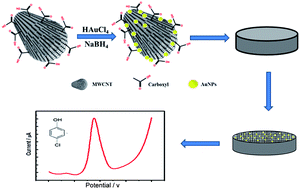
Carbon nanotubes (CNTs) have been employed as supporting materials for the dispersion of gold nanoparticles (AuNPs) to achieve improved catalytic properties. However, the application of CNT–AuNP composites for the evaluation of chlorophenols (CPs) is not reported. Herein, gold nanoparticle/carboxyl functionalized multi-walled carbon nanotube (AuNPs@cMWCNT) nanocomposites were synthesized via an in situ reduction method and further characterized with field emission scanning electron microscopy (FESEM), ultraviolet-visible (UV-vis) spectroscopy and X-ray diffraction (XRD). The AuNPs@cMWCNT modified glassy carbon electrode was subsequently prepared as a sensor for the electrochemical detection of 4-chlorophenol (4-CP). The electro-oxidation of 4-CP on the sensor is an adsorption-controlled irreversible process, which undergoes a two-electron and two-proton transfer. Under the optimal conditions, the oxidation peak current was proportional to the 4-CP concentration in the range of 0.3 to 400 μM, with a detection limit of 0.11 μM. The experimental data demonstrate that the sensor has great reproducibility, long-term stability, high specificity and excellent feasibility. The AuNPs@cMWCNT based sensor could be a facile, low-cost and rapid tool for the potential on-line monitoring of 4-CP in practical applications.
Introduction
Phenolic compounds containing one or more aromatic rings and hydroxyls are extensively used in the manufacture of herbicides, insecticides, disinfectants and dyes.1–3 They are also frequently produced during water purification and waste incineration.4,5 Most of phenolic compounds, in particular chlorophenols (CPs), are thought to be recalcitrant and high-priority pollutants, the release of which is one of the most critical environmental problems.6 Because of their potent acute toxicity, rapid and sensitive determination of CPs in water samples is of great importance to both environment and human health. There have been several techniques available for the detection of CPs. Among them, high performance liquid chromatography (HPLC)7,8 and gas chromatography9,10 are widely accepted standard methods due to their high sensitivity and excellent accuracy. However, expensive instruments are needed for both approaches. Furthermore, complicated operation, time-consuming preparation procedures and well-trained professionals are also essential for the assays. Thus, the laboratory-based techniques cannot meet the requirements of the practical applications in a wide variety of fields on low cost, high speed and easy operation.
Electrochemical analysis is an effective, reliable and convenient technique for the measurement of environmental pollutants,11 which has been successfully applied for the determination of CPs. A horseradish peroxidase (HRP)-modified nanostructured gold thin film was fabricated as a bioelectrochemical sensor for the 4-chlorophenol (4-CP) detection. In the presence of hydrogen peroxide, HRP showed a high catalytic activity towards 4-CP.12 Laccase, a copper-containing oxidase, was composited with polyvinyl alcohol and gold nanoparticles (AuNPs) to develop a CPs sensor.13 Besides HRP and laccase, tyrosinase was entrapped in a phosphate-doped polypyrrole film to form a CPs sensor.14 Although the enzyme-based sensors could provide high sensitivity and excellent selectivity, the drawbacks like high cost and easy loss of bioactivity greatly hinder their practical applications. Non-enzymatic electrochemical sensors based on a variety of nanocomposites have been developed as promising alternatives to detect CPs.15 Metal–organic frameworks 1,3,5-benzenetricarboxylic acid copper [Cu3(BTC)2] immobilized carbon paste electrodes were utilized to electrochemically evaluate 2,4-dichlorophenol in a recent work.15 Undoubtedly, the non-enzymatic CPs sensors possess better stability and longer lifetime than the enzyme-based ones. However, the complicated synthesis of the catalytic materials and the multi-procedure fabrication process limit the wide use of the electrochemical CPs sensors in practical water monitoring.16–19
Since AuNPs possess excellent catalytic properties for the selective oxidation or hydrogenation of organic substrates, they have been utilized for the sensitive sensing of 2,4,6-trichlorophenol.20 Although the cost for the synthesis of AuNPs is not cheap, the AuNPs-based CPs sensors may still be very promising in practical applications in comparison to conventional HPLC, gas chromatography and the enzyme-based sensors. However, aggregation of the nanoparticles significant reduces the specific surface area, further affecting their catalytic properties. Carbon nanotubes (CNTs) are broadly employed as supporting materials for catalysts owing to their excellent conductivity, strong adsorption capacity and large specific surface area.21–23 The excellent dispersion of surface-attached nanoparticles along their tube walls could greatly improve the catalytic performance of nano-catalysts.24 To the best of our knowledge, there has been no report yet on the application of CNTs@AuNPs composites for the evaluation of CPs.
In the present study AuNPs/carboxyl functionalized multi-walled carbon nanotubes (cMWCNT) nanocomposites were synthesized via a facile direct-reduction method. The as-prepared nanocomposites were characterized with field emission scanning electron microscopy (FESEM), UV-VIS spectrometry, energy dispersed spectroscopy (EDS) and X-ray diffraction (XRD) spectroscopy. The electrochemical catalytic behaviour and the sensing performance of the composites to 4-CP were examined to demonstrate the great potentials of the AuNPs@cMWCNT composites in the determination of chlorophenols.
Experimental
Reagents and materials
Chemicals of analytical or higher grade were obtained from Aladdin Industrial Corporation (Shanghai, China) unless otherwise stated. Stock solution of 4-CP (10 mM) was prepared in ethanol and different concentrations of 4-CP were diluted with 0.01 M phosphate medium (PBS, pH 7.0). Multiwalled carbon nanotubes (MWCNT, 10–20 nm in diameter, 20 μm in length and >95% in purity) were purchased from Shenzhen Nanotech Port Co., Ltd (Shenzhen, China). Water with a resistivity of 18.2 MΩ cm was purified using a Milli-Q water purification system.
Synthesis of AuNPs@cMWCNT nanocomposites
After sonication in a concentrated nitric acid solution for about 4 h, the MWCNTs were collected via filtration and extensively washed with water until the pH value reaches to ∼7. Carboxylate groups and more edge sites were created on the surface of MWCNT during the acid-treatment procedure, improving the dispersibility of the carbon nanotubes. The functionalized MWCNTs were mixed with a HAuCl4·4H2O solution (1 mM) under sonication. Five millilitres of NaBH4 solution (40 mM) was added dropwise to the mixture under stirring at room temperature for the synthesis of AuNPs. AuNPs@cMWCNT nanocomposites were harvested by centrifugation at a rate of 9000 rpm for 10 min. After washing with water for several times, the products were dried in a vacuum oven at 60 °C for 12 h.
Fabrication of the AuNPs@cMWCNT-modified electrode
A bare disc glassy carbon electrode (GCE, 3 mm in diameter) was carefully polished with 0.05 μm alumina/water slurry (Buehler, USA) to create a mirror-like electrode surface, followed by sequentially sonicating and water rinse. Ten mg of AuNPs@cMWCNT nanocomposites were dispersed ultrasonically in 10 mL N,N-dimethylformamide (DMF) for 30 min. An appropriate amount of the suspension was dropped on the GCE surface and dried under ambient conditions to produce the AuNPs@cMWCNT-modified electrode.
Characterizations
Morphologies of the modified GCE were imaged with a JSM-7600 field-emission scanning electron microscopy (JEOL, Tokyo, Japan). The chemical elements were analysed with a FESEM-attached energy dispersed spectroscopy (INCA X-Max 250). UV-VIS spectra of the cMWCNTs, AuNPs and AuNPs@cMWCNT nanocomposites were captured using a UV-2550 spectrophotometer (SHIMADZU, Japan). X-ray diffraction (XRD) patterns ranging from 20° to 80° were obtained using a Cu Kα-ray with tube conditions of 40 kV and 30 mA (X-ray diffraction 7000, Shimadzu, Japan) at room temperature.
Electrochemical measurements
A conventional three-electrode system containing a working electrode, a Ag/AgCl reference electrode and a platinum wire auxiliary electrode was used to collect electrochemical data in 0.01 M PBS with a CHI 660D electrochemical workstation (Shanghai, China). The cyclic voltammograms (CV) were conducted between 0.2 and 1.0 V versus saturated Ag/AgCl with a scan rate of 100 mV s−1. The modified electrodes were swept from 0.2 to 1.0 V (scan rate 100 mV s−1) for ten times before the electrochemical measurements. The differential pulse voltammetry (DPV) was carried out at an initial potential of 0.2 V and final potential of 1.0 V with the pulse amplitude of 0.05 V and pulse width of 0.06 s. All PBS buffers were purged with highly purified nitrogen for 15 min prior to each measurement.
Results and discussion
Characterization of AuNPs@cMWCNT nanocomposite
Surface morphologies of cMWCNT- and AuNPs@cMWCNT-modified GCEs were characterized with FESEM. As shown in Fig. 1A, the electrode surface was fully covered by network-structured nanowires with the diameter ranging from 10 nm to 20 nm, which matches well with the size of MWCNTs. After the treatment with HAuCl4·4H2O and reductants, numbers of nanoparticles with a diameter of 36.9 ± 11.3 nm efficiently and uniformly distribute on the nanowire surface (Fig. 1B and S1 in ESI†), suggesting the successfully in situ synthesis of AuNPs. The MWCNTs were pre-treated with acid to create carboxylate groups and more edge sites on the surface. The hydrophilic chemical groups could improve the dispersibility of the nanotubes for efficient contact with AuCl4− and also provide adsorption sites for AuCl4−. The EDS spectrum in Fig. 1C shows the existence of carbon and gold elements in the products. The weight percentage of gold element in the nanocomposites is 17.1% (Fig. S2 in ESI†). The EDS mapping images (Fig. 1D–F) further verify that gold elements are well distributed in the carbon-based network structure. The EDS results indicate that the AuNPs is successfully prepared and well coated on the cMWCNT, which is consistent with the FESEM data. The uniformly distribution of AuNPs may provide large specific surface area to enhance the catalytic performance in the 4-CP electrochemical sensing. The amount of AuNPs in the nanocomposites may affect the catalytic performance. An appropriate precursor concentration should be employed for the synthesis of AuNPs on the cMWCNTs to achieve a high catalytic activity.
 |
| | Fig. 1 FESEM images of cMWCNT- (A) and AuNPs@CNT- (B) coated GCEs; (C) EDS spectrum of AuNPs-CNT nanocomposites; elements mapping images of (D) C (red), (E) Au (green) and (F) C + Au, respectively. | |
UV-VIS spectra were collected to further verify the fabrication of AuNPs@cMWCNT nanocomposites (Fig. 2A). Due to the π–π transitions of aromatic C
C bonds carboxylic functionalized MWCNT displays an absorption peak centered at 265 nm (blue curve). A characteristic peak at 520 nm can be clearly seen in the spectrum of pristine AuNPs (red curve), corresponding to the surface plasmon absorption. The appearance of both peaks at 265 and 520 nm evidences the incorporation of cMWCNTs and AuNPs. Since the catalytic properties of AuNPs greatly rely on their crystalline structures, XRD was conducted to investigate the crystallinity of the CNT-attached AuNPs (Fig. 2B). The XRD pattern of the AuNPs@cMWCNT sample exhibits a broad peak at 2θ = 26°, which is indexed to the interspacing distance between the carbon nanotubes. Four diffraction peaks are shown in the XRD pattern of the composites, corresponding to the (111), (200), (220), and (311) planes of fcc structured metallic gold (JCPDS no. 04-0784), respectively. The excellent catalytic activity of AuNPs with fcc crystalline structure has been performed to reduce organic contaminants like p-nitrophenol, 4-nitroaniline and CPs.25,26 The XRD data suggest that the quality of the AuNPs@cMWCNTs can meet the requirements of following sensing applications.
 |
| | Fig. 2 UV-vis absorption spectra (A) and XRD patterns (B) of CNT, AuNPs and AuNPs@CNT nanocomposites, respectively. | |
Electrochemical behaviour of AuNPs@cMWCNTs-modified GCE towards 4-chlorophenol oxidation
Electrochemical oxidation behaviours of 4-CP on bare GCE and GCEs modified with the AuNPs, cMWCNT and AuNPs@cMWCNT were investigated in 0.01 M PBS (pH 7.0) containing 100 μM 4-CP using cyclic voltammograms (CV), respectively (Fig. 3A). Well-defined oxidation peaks are observed in the first anodic potential cycles of all electrodes, which can be attributed to the direct oxidation of 4-CP to yield the phenoxy radical.3 There is no corresponding reduction peak in the subsequent cathodic potential sweep, indicating that the electrocatalytic oxidation of 4-CP is an irreversible process. In comparison to the bare GCE, the functionalized GCEs possess the oxidation peaks with higher current intensities. Among all electrodes, the AuNPs@cMWCNT-coated one shows the highest anodic current response and the most negative onset potential, which may be attributed to both large specific surface area of MWCNTs and the excellent catalytic properties of AuNPs.27,28
 |
| | Fig. 3 (A) Cyclic voltammograms (CVs) of (a) bare GCE, (b) AuNPs-GCE, (c) cMWCNT-GCE and (d) AuNPs@cMWCNT-GCE in 0.01 M PBS (pH 7.0) containing 100 μM 4-CP; (B) CVs of AuNPs@cMWCNT@GCE during continuous potential sweeping in 0.01 M PBS (pH 7.0) containing 100 μM 4-CP. Potential range: 0.2–1.0 V, scan rate 100 mV s−1. | |
Fig. 3B exhibits the consecutive CVs of the AuNPs@cMWCNT-modified GCE from 0.2 to 1.0 V at a scan rate of 100 mV s−1 in 0.01 M PBS (pH 7.0) containing 100 μM 4-CP. An anodic potential at ∼0.61 V (peak Ia) appears in the first scan. As the sweeping number increases, the current intensity of anodic peak gradually descends, accompanying with the positive shift of the peak potential. Phenoxy radicals, which are produced during the electrochemical oxidation of 4-CP, could initiate the polymerization of the products to form an insulating polymeric layer on the electrode surface.29 Since the formation of the insulating layer is unavoidable, the electrochemical oxidation of 4-CP may be retarded by the electrode fouling, resulting in the reduction of anodic peak and the change of the CV shapes.30 The peak current decreases from 14.7 to 3.3 μA after 8 cycles (Fig. 3B). Interestingly, a pair of new redox peaks occur in the successive cycles, which may correspond to the quinine-like structure intermediate of 4-CP after the electrochemical oxidation (peak IIc and IIIa, Fig. 3B). It should be noted that the peak current (Ipa) of the first anodic scan was recorded in subsequent trials in the present study for high sensitivity and good reproducibility. The electrode used can be regenerated after sweeping in the potential range of 0.2–1.0 V at a scan rate of 100 mV s−1 in a 0.01 M PBS solution (pH 7.0) for 10 times.
Optimization of the AuNPs@cMWCNT-modified GCE
The amount of catalysts on the electrode surface is of great importance for an electrochemical sensor. To optimize the sensor performance, different amounts of the nanocomposite were casted onto the GCE surface for the 4-CP measurement (Fig. 4). As the amount of the AuNPs@cMWCNTs nanocomposites increases from 3 to 5 μg, the current intensity of the 4-CP oxidation peak (Ipa) remarkably enhances. It could be ascribed to the increment of active catalytic sites on the electrode surface. However, further addition of the nanocomposites to 7 μg leads to a significant reduction in the oxidative current response. Moreover, when the amount of the nanocomposites on the electrode surface grows to 9 μg the current intensity becomes even lower. The relatively large amount of catalysts may form a thick layer on the GCE surface, which hinders the electron and proton transfer between the electrode and 4-CP. Thus, in the present study 5 μg of the nanocomposites was used to prepare the modified GCE for good sensing properties.
 |
| | Fig. 4 Optimization of the amount of the AuNPs@cMWCNTs nanocomposite on GCE. The Ipa was measured with AuNPs@cMWCNT-GCE in 0.01 M PBS (pH 7.0) containing 50 μM 4-CP (n = 3). | |
Mechanism for electrochemical sensing of 4-CP
The influence of scan rate on the peak current of 50 μM 4-CP is shown in Fig. 5. The Ipa is proportional to the scan rate in the range of 10–150 mV s−1 (Fig. 5A), suggesting that the electrochemical oxidation of 4-CP on the AuNPs@cMWCNT-GCE surface is a typical adsorption-controlled process. The molecules may be strongly adsorbed on the electrode surface by hydrogen bonds and π–π stacking interaction. The surface concentration of electroactive species (Γ) can be estimated to be 1.82 × 10⁻¹¹ mol cm−2 according to the following equation:31
where n, A, T, ν, R, F and Γ represent the electron number involved in the reaction (2 electrons), the surface area of the AuNPs@cMWCNT-GCE (0.115 cm2), temperature (25 °C), the scan rate (V s−1), the universal gas constant, Faraday constant and the surface coverage (mol cm−2), respectively.
 |
| | Fig. 5 (A) Effects of the scan rate on the oxidative peak current; (B) relationship between logarithm of scan rate and the anodic peak potential; (C) effects of pH on the peak potential (blue) and the peak current (black). Error bar represents the standard deviation of triple measurements. | |
The effect of scan rate on the anodic peak potential (Epa) was examined under the above conditions. The Epa shifts positively along with the increase of the scan rate in the range from 10 to 150 mV s−1, verifying the irreversible oxidation process of 4-CP on the electrode surface (Fig. 5B). The plot can be expressed as:
| |
Epa = 0.5178 + 0.0588 log ν (r = 0.9978)
| (1) |
For an irreversible and adsorption controlled oxidation process, the relationship between Epa and log
ν is defined according to Laviron's equation:32
| |
Epa = E0 + (2.303RT/αnF)log(RTk0/αnF) + (2.303RT/αnF)log ν
| (2) |
where
Epa,
E0,
α,
R,
T,
ν,
F and
n are the oxidation potential (V) for the anodic peaks, the formal potential (V), the electron-transfer coefficient, the universal gas constant, temperature (K), the scan rate (V s
−1), Faraday constant and the number of transferred electron number, respectively.
E0 is determined to be 0.5922 V from the intercept of
Epa versus log
ν curve by extrapolating to the vertical axis at
ν = 0 V s
−1. The value of
k0 is calculated as 2.19 s
−1 by the intercept of the above plot if the value of
E0 is known. Combining
eqn (1) and
(2), the value of
αn can be easily calculated to be 1.0 from the slope of
Epa versus log
ν. The electron-transfer coefficient (
α) can be calculated to be 0.48 from Bard and Faulkner equation:
33where
Ep/2 (mV) is the potential when the current is at half the peak value. The electron transfer number
n is calculated to be 2, revealing two electrons are involved in the electrochemical oxidation process. The electrolyte pH significantly influences the electrochemical oxidation of 4-CP on the functionalized electrode by changing both
Epa and
Ipa (
Fig. 5C). The
Ipa of 4-CP gradually grows along with the enhancement of pH value and reaches a maximum value at pH 6.0. Meanwhile, the
Epa shifts negatively by changing pH from 4.0 to 9.5, which is the consequence of the deprotonation in the 4-CP oxidation. The
Epa is linear to the electrolyte pH, corresponding to the following equation:
| Epa (V) = 1.052 − 0.051pH (r = 0.9899) |
A slope of 0.051 V pH−1 is approximately close to the theoretical value of 0.0576 pH−1, suggesting that the proton number is equal to the transfer electron number in the reaction.34 The electro-oxidation of 4-CP on the electrode surface may be a two-proton and two-electron process.
Performance of the sensor for 4-CP determination
Since differential pulse voltammetry (DPV) could provide high sensitivity and excellent selectivity, it was employed to test the sensing properties of the AuNPs@cMWCNT-GCE to 4-CP in the present work. Fig. 6 illustrates the DPV responses of the functionalized-GCE to various amount of 4-CP under the optimal conditions. It can be clearly seen that the peak current raises up as the 4-CP concentration increases. The calibration curve of Ipa versus 4-CP concentration is linear over the concentration range of 0.3–400 μM. Based on S/N = 3, the detection limit of the 4-CP sensor can be calculated as 0.11 μM. In comparison to the previously reported 4-CP sensors (Table S1 in ESI†), the as-prepared sensor possesses a wide dynamic range and a low detection limit. CPs were categorized as priority pollutants with an upper permissible limit of 0.5 mg L−1 in public water supplies by US Environmental Protection Agency.35 The detection limit and the dynamic range of the as-prepared sensor can meet the requirements for monitoring of 4-CP in drinking water.
 |
| | Fig. 6 DPV responses of the as-prepared AuNPs@cMWCNT@GCE to various concentrations of 4-CP. From bottom to top: 0.3, 1, 5, 20, 50, 80, 100, 150, 200, 300, 400 μM. Inset: the calibration curve of the peak current versus the concentration of 4-CP. Error bar represents the standard deviation of triple measurement. | |
To estimate the reproducibility of AuNPs@cMWCNT-GCE, five electrodes were prepared independently for the measurement of 50 μM 4-CP. The relative standard deviations (RSD) is estimated to be 3.12% under the same experimental conditions, showing the good repeatability of the sensor. As exhibited in Fig. 7A, after 4, 8, 15 and 25 days, the currents retain approximately 97.78%, 93.21%, 91.14% and 88.33% of the initial signal intensity, respectively, indicating that the sensor has a long lifetime. Furthermore, the interferences of 0.2 M K+, Na+, Ca2+, Zn2+, Mg2+, Cu2+, Fe2+, Fe3+, NH4+, Cl−, NO3−, and SO42− on the response to 4-CP (50 μM) are negligible (Fig. 7B). Although an oxidation peak could be detected in a PBS solution containing 250 μM phenol, it is still much weaker than that of 50 μM 4-CP (Fig. S3 in ESI†). In order to check the feasibility, the sensor was used to determine 4-CP in water samples following the standard addition method. The recovery percentages are in the range of 91.2–107.9%. The results indicate the superior accuracy of the proposed approach (Table 1).
 |
| | Fig. 7 Stability (A) and selectivity (B) of AuNPs@cMWCNT@GCE upon detecting 50 μM 4-CP (n = 3). Error bar represents the standard deviation of triple measurements. | |
Table 1 Measurement results (mean ± SD, n = 3) of 4-CP in water samples
| Sample |
Added/μM |
Found/μM |
Recovery/% |
| 1 |
0.7 |
0.64 ± 0.11 |
91.2 |
| 2 |
5.0 |
5.39 ± 0.32 |
107.9 |
| 3 |
60 |
58.12 ± 0.51 |
96.9 |
| 4 |
120 |
122.70 ± 1.03 |
102.3 |
Conclusions
In the present work, well-dispersed AuNPs with fcc structures are synthesized on the surface of cMWCNTs via a simple in situ reduction approach. The AuNPs@cMWCNT nanocomposites were deposited on GCE to prepare an electrochemical sensor for the detection of 4-CP. The utilization of the nanocomposites could remarkably enhance the oxidation peak current and reduce the oxidation potential. Moreover, the electro-oxidation of 4-CP on the sensor is an adsorption-controlled irreversible process, which undergoes a two-electron and two-proton transfer. The as-prepared 4-CP sensor possesses a dynamic range from 0.3 to 400 μM and a detection limit of 0.11 μM. The experimental data demonstrate that the sensor has great reproducibility, long-term stability, high specificity and excellent feasibility. Thus, the proposed sensor is a facile, low cost and rapid tool for the 4-CP determination in comparison with the traditional chromatographic methods. The wide linear range, the low detection limit and the long-term stability render the sensor a very promising approach for on-line monitoring of 4-CP in practical applications.
Acknowledgements
We gratefully acknowledge the financial support of the National Basic Research Program of China (973 program) (2013CB127800) and Chongqing Key Laboratory for Advanced Materials and Technologies of Clean Energies. Z. S. Lu would like to thank the supports by the Specialized Research Fund for the Doctoral Program of Higher Education (RFDP) (Grant No. 20130182120025), Young Core Teacher Program of the Municipal Higher Educational Institution of Chongqing and Fundamental Research Funds for the Central Universities (XDJK2015B016).
Notes and references
- M. Vallejo, M. F. San Román and I. Ortiz, Environ. Sci. Technol., 2013, 47, 12400–12408 CrossRef CAS PubMed.
- S. Biniak, A. Świątkowski, M. Pakuła, M. Sankowska, K. Kuśmierek and G. Trykowski, Carbon, 2013, 51, 301–312 CrossRef CAS.
- G. W. Muna, N. Tasheva and G. M. Swain, Environ. Sci. Technol., 2004, 38, 3674–3682 CrossRef CAS PubMed.
- M. Pera-Titus, V. García-Molina, M. A. Banos, J. Giménez and S. Esplugas, Appl. Catal., B, 2004, 47, 219–256 CrossRef CAS.
- N. Oturan, M. Panizza and M. A. Oturan, J. Phys. Chem. A, 2009, 113, 10988–10993 CrossRef CAS PubMed.
- C. Terashima, T. N. Rao, B. Sarada, D. Tryk and A. Fujishima, Anal. Chem., 2002, 74, 895–902 CrossRef CAS PubMed.
- A. Di Corcia, S. Marchese and R. Samperi, J. Chromatogr. A, 1993, 642, 163–174 CrossRef CAS.
- A. Sarafraz-yazdi, H. Assadi, Z. Es' haghi and N. M. Danesh, J. Sep. Sci., 2012, 35, 2476–2483 CrossRef CAS PubMed.
- H. Kontsas, C. Rosenberg, P. Jäppinen and M.-L. Riekkola, J. Chromatogr. A, 1993, 636, 255–261 CrossRef.
- R. Callejon, A. Troncoso and M. Morales, Talanta, 2007, 71, 2092–2097 CrossRef CAS PubMed.
- A. Amine, H. Mohammadi, I. Bourais and G. Palleschi, Biosens. Bioelectron., 2006, 21, 1405–1423 CrossRef CAS PubMed.
- C. Qiu, T. Chen, X. Wang, Y. Li and H. Ma, Colloids Surf., B, 2013, 103, 129–135 CrossRef CAS PubMed.
- J. Liu, J. Niu, L. Yin and F. Jiang, Analyst, 2011, 136, 4802–4808 RSC.
- C. Apetrei, M. Rodríguez-Méndez and J. De Saja, Electrochim. Acta, 2011, 56, 8919–8925 CrossRef CAS.
- S. Dong, G. Suo, N. Li, Z. Chen, L. Peng, Y. Fu, Q. Yang and T. Huang, Sens. Actuators, B, 2016, 222, 972–979 CrossRef CAS.
- K. Peeters, K. De Wael, D. Bogaert and A. Adriaens, Sens. Actuators, B, 2008, 128, 494–499 CrossRef CAS.
- J.-J. Shi and J.-J. Zhu, Electrochim. Acta, 2011, 56, 6008–6013 CrossRef CAS.
- L. Fernández, I. Ledezma, C. Borrás, L. A. Martínez and H. Carrero, Sens. Actuators, B, 2013, 182, 625–632 CrossRef.
- S. Yuan, D. Peng, X. Hu and J. Gong, Anal. Chim. Acta, 2013, 785, 34–42 CrossRef CAS PubMed.
- X. Zheng, S. Liu, X. Hua, F. Xia, D. Tian and C. Zhou, Electrochim. Acta, 2015, 167, 372–378 CrossRef CAS.
- M. Musameh, J. Wang, A. Merkoci and Y. Lin, Electrochem. Commun., 2002, 4, 743–746 CrossRef CAS.
- J. Wang, Electroanalysis, 2005, 17, 7–14 CrossRef CAS.
- R. Laocharoensuk, J. Burdick and J. Wang, ACS Nano, 2008, 2, 1069–1075 CrossRef CAS PubMed.
- T. M. Abdel-Fattah and A. Wixtrom, ECS J. Solid State Sci. Technol., 2014, 3, M18–M20 CrossRef CAS.
- M. Ureta-Zanartu, P. Bustos, M. Diez, M. Mora and C. Gutierrez, Electrochim. Acta, 2001, 46, 2545–2551 CrossRef CAS.
- C. Qiu, X. Dong, H. Ma, S. Hou and J. Yang, Electroanalysis, 2012, 24, 1201–1206 CrossRef CAS.
- K. A. Mahmoud, S. Hrapovic and J. H. Luong, ACS Nano, 2008, 2, 1051–1057 CrossRef CAS PubMed.
- A. V. Ellis, K. Vijayamohanan, R. Goswami, N. Chakrapani, L. Ramanathan, P. M. Ajayan and G. Ramanath, Nano Lett., 2003, 3, 279–282 CrossRef CAS.
- M. Ureta-Zanartu, P. Bustos, C. Berrıos, M. Diez, M. Mora and C. Gutiérrez, Electrochim. Acta, 2002, 47, 2399–2406 CrossRef CAS.
- A. Bebeselea, F. Manea, G. Burtica, L. Nagy and G. Nagy, Talanta, 2010, 80, 1068–1072 CrossRef CAS PubMed.
- M. Sharp, M. Petersson and K. Edström, J. Electroanal. Chem. Interfacial Electrochem., 1979, 95, 123–130 CrossRef CAS.
- E. Laviron, J. Electroanal. Chem. Interfacial Electrochem., 1974, 52, 355–393 CrossRef CAS.
- A. J. Bard and L. R. Faulkner, Electrochemical methods: fundamentals and applications, Wiley, New York, 1980 Search PubMed.
- T. Łuczak, Electrochim. Acta, 2008, 53, 5725–5731 CrossRef.
- O. Hamdaoui and E. Naffrechoux, Ultrason. Sonochem., 2008, 15, 981–987 CrossRef CAS PubMed.
Footnotes |
| † Electronic supplementary information (ESI) available: Supplementary data; comparison of the as-prepared 4-CP sensor with the ones reported in literatures. See DOI: 10.1039/c6ra02385a |
| ‡ These authors have contributed equally to this work. |
|
| This journal is © The Royal Society of Chemistry 2016 |
Click here to see how this site uses Cookies. View our privacy policy here.