Ternary cooperative Au–CdS–rGO hetero-nanostructures: synthesis with multi-interface control and their photoelectrochemical sensor applications

Lei Chengab, Jiajia Liu*b, Tao Chenab, Meng Xub, Muwei Jib, Bing Zhanga, Xiang Zhanga and Jiatao Zhang*b
aSchool of Chemical Engineering, Zhengzhou University, Zhengzhou 450001, P. R. China
bBeijing Key Laboratory of Construction-Tailorable Advanced Functional Materials and Green Applications, School of Materials Science & Engineering, Beijing Institute of Technology, Beijing, 100081, P. R China. E-mail: zhangjt@bit.edu.cn

Received 25th January 2016 , Accepted 15th March 2016

First published on 16th March 2016


Abstract

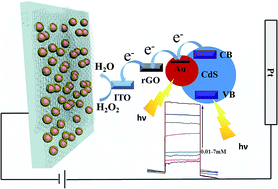
This paper demonstrates the synthesis of ternary cooperative semiconductor–metal–graphene (Au–CdS–rGO) hetero-nanostructures. The Au–CdS core–shell nanoparticles (∼50 nm) were sandwiched between reduced graphene oxide nanosheets. Decorating GO with L-cysteine hydrochloride plays an important role in sustaining the high level of dispersion of the Au–CdS nanoparticles (NPs). The as-fabricated photoanode exhibited higher photocurrent density compared to single-/binary-components, which could be attributed to the synergistic effect of ternary cooperative Au–CdS–rGO hetero-nanostructures. First, the hetero-nanostructure could facilitate more efficient utilization of incident light, confirmed by high incident-photon-to-current-conversion efficiency (IPCE). Then the photogenerated electrons could be efficiently transferred from CdS onto Au and graphene sheets, which benefits from the LSPR-induced charge separation at the interface of Au and CdS, and the electron-accepting ability of graphene. The obtained Au–CdS–rGO photoanode was used to quantify H2O2 concentration, and the detection limit was 0.005 mmol L−1, demonstrating promise for application in photoelectrochemical sensors.

Introduction

There has been increased interest in fabricating block heterojunctions with tailored properties from disparate components.1 The concept of “nature-inspired binary cooperative complementary nanomaterials” has been explored for the building of promising materials by Jiang and co-workers, consisting of two components with entirely opposite physicochemical properties at the nanoscale.2 Hybrid nanostructures built of semiconductor and plasmonic metals allow plasmon enhance charge separation between these components.3–6 Therefore, the metal/semiconductor hybrid nanostructures are of particular interest. Significant advances in the understanding of how to control hetero-nanocrystals morphology have been made in recent years, such as metal–semiconductor core/shell nanoparticles (NPs),5,7 hybrid NPs,8 nano-dumbbells,9 and so on. However, small hybrid nanocrystals tend to aggregate due to their high surface energy, greatly hindering their use in practical applications.10,11

It is an effective strategy to combine nanoparticles with high surface-area supports to improve the overall performance and durability. Graphene has been attracting considerable attention due to its unique morphological and electronic properties.12 Numerous attempts have been made to combine graphene with semiconductor or metal nanoparticles to enhance their photocatalytic performance.13–15 However, few multicomponent cooperative systems on graphene-based supports have been reported.16 For example, Lightcap et al. demonstrated the role of reduced graphene oxide (rGO) as a conducting support to anchor TiO2 and Ag nanoparticles.17 Xiong and co-workers reported a Cu2O–Pd–graphene stack design to improve charge transfer and electron–hole separation.18 Multicomponent cooperative systems on graphene-based supports are highly demand for efficient charge separation and film-scale device applications. Valid questions for multicomponent cooperative systems are how to effectively connect different components with the graphene, how to get precise control of their multi-interfaces for efficient charge separation and transfer.

Herein, we demonstrated a novel metal–semiconductor–graphene heterostructure from Au, CdS, and rGO. Au/CdS core–shell nanocrystals (NCs) with controlled Au size and CdS shell were prepared following our previously work.5 The electrostatic attraction between L-cysteine hydrochloride modified graphene oxide (GO-cys) sheets and Au/CdS NCs created ternary cooperative Au–CdS–GO hetero-nanostructures through a simple solution mixing. Further thermal annealing process led to the reduction of GO and the close contact between the components. The prepared Au–CdS–rGO modified electrode displayed much enhanced photoelectrochemical photocurrent, demonstrating the potential application in high performance photoelectrochemical sensors.

Experimental

Preparation of GO, Au–CdS, and Au–CdS–GO nanocomposite

Graphene oxide (GO) was synthesized by modified Hummers method.19 The resulting GO suspension (20 mL, 1 mg mL−1) was mixed with 20 mL of dimethyl sulfoxide, 10 mg of N-(3-dimethylaminopropyl)-N′-ethylcarbodiimide hydrochloride, 15 mg of N-hydroxysuccinimide, and 60 mg of L-cysteine hydrochloride, followed by stirring at room temperature for 12 h. Then, the resulting mixture was centrifuged and thoroughly washed with ethanol and deionized water to remove the unabsorbed L-cysteine hydrochloride.

Au NPs were prepared by chloroauric acid reduced with sodium citrate. Then the aqueous Au NPs were transferred to oil phase following the Paul's method.20 The growth of precisely controlled Ag shells and transferring from Ag2S to CdS were followed our previous work.5,21 The CdS NCs were prepared following our previous work.22,23

The Au–CdS–GO composite was synthesized via the electrostatic interaction between the positively charged cetyltrimethyl ammonium bromide (CTAB) modified Au–CdS and the negatively charged GO-cys. In a typical process, the as-prepared Au–CdS NPs (Au weight about 1.6 mg) was centrifuged and added into 1 mL CTAB (10−7 M). Subsequently, 0.3 mL GO-cys was added into above mentioned solution, and the mixture was under ultrasonic for 15 min.

Preparation of Au–CdS–rGO, CdS–rGO, Au–rGO and Au–CdS modified electrodes

In a typical experiment, a 3 cm2 area working Au–CdS–rGO electrode was made by thermal evaporation of approximately 200 μL of solution onto an ITO-coated glass slide. After drying in air, the electrode was annealed in nitrogen at 400 °C for 2 h to enhance the adhesion strength between the film and substrate. CdS, CdS–rGO, Au–rGO and Au–CdS electrode were prepared under the same experimental conditions as the Au–CdS–rGO. A schematic diagram of Au–CdS–rGO preparation was shown in Scheme 1.
image file: c6ra02188c-s1.tif
Scheme 1 Schematic diagram of Au–CdS–rGO preparation.

Characterization and photoelectrochemical measurements

The morphologies of the as-synthesized samples were examined on JEOL JEM-1200EX transmission electron microscope (TEM) (Hitachi H-7650B) at 100.0 kV. High resolution TEM was recorded on Tecnai G2 F20 S-Twin, operating at 200.0 kV. X-ray diffraction (XRD) patterns of the as-obtained product were recorded on a Bruker D8 Advance powder X-ray diffractometer at a scanning rate of 2 degrees min−1, using Cu-Kα radiation (λ = 1.5406 Å). Shimadzu UV3600 and IR Tracer-100 spectrometers were employed for UV-vis and FT-IR spectral measurements, respectively. The Raman spectra were recorded on a Renishaw IN via using a 532 nm argon ion laser. Photoluminescence emission spectra were collected on a Hitachi F-7000 fluorescence spectrophotometer under 390 nm excitation. The incident-photon-to-electron conversion efficiency (IPCE) spectra were measured using a QE/IPCE Measurement Kit (Crowntech QTest Station 1000AD) with a tungsten halogen lamp (CT-TH-150), a calibrated silicon diode and a monochromator (Crowntech QEM24-S 1/4 m).

Photoelectrochemical measurements were performed using a home-built system that included a Xe lamp (CEL-HXF300W), and a CHI 660E electrochemical workstation (CHI Instruments, Shanghai, China). The distance between the light source and the photoelectrode was fixed at 7 cm. All photoelectrochemical performances were carried out in a conventional three-electrode system: a modified ITO electrode with an area of 3 cm2 as the working electrode, a Pt wire as the counter electrode and a saturated calomel electrode (SCE) as reference electrode. 0.1 M phosphate buffer solution (PBS, pH 7.0) was prepared with NaH2PO4 and Na2HPO4, used as the blank solution for photocurrent measurements, which was degassed by highly pure nitrogen before electrochemical experiments but left open to air during measurements. Specific experimental conditions are given in the figure captions. In all photocurrent switching experiments, the current responses, in the dark, were normalized to zero.

Results and discussion

Fig. 1A shows a typical TEM image of the Au–CdS–rGO composite. The Au–CdS core–shell nanoparticles (∼50 nm average sizes) were sandwiched between reduced graphene nanosheets completely, and there is no apparent aggregation of Au–CdS NPs on the rGO nanosheets. To further obtain the microscopic structure information, HRTEM, STEM, and elemental mapping images of the Au–CdS–rGO nanocomposite have been carried out. It can be seen from Fig. 1B, the Au core is covered by a thin layer of single crystalline CdS with a distinct lattice fringe spacing of 0.316 nm, corresponding to the (101) crystal plane of wurtzite CdS. After calcination, the Au–CdS core–shell structure changed to heterodimer structure with exposed Au surface, which indicates high probability of charge transfer at the interfaces of Au/CdS, and Au/rGO. These evolutions happened because of large lattice mismatch induced strains between Au and CdS.5 STEM image of the Au–CdS–rGO composite shows sharp contrast on the Au core and CdS shell (Fig. 1C). As displayed in red box of Fig. 1C, the results of EDS mapping in Fig. 1D confirmed that the composite is composed of an Au core with a CdS shell deposited on the surface of reduced graphene nanosheets. Based on these observations, our ternary cooperative Au–CdS–rGO hetero-nanostructure is clearly different from the hybrid structures composed of semiconductor, metal and graphene in the literature.
image file: c6ra02188c-f1.tif
Fig. 1 (A) TEM, (B) HRTEM, the inset of (B) shows the lattice of CdS, (C) STEM image of the Au–CdS–rGO composite, (D) EDS mapping profiles of the sample in the area of (C).

The phases of the as-obtained composite were determined by XRD measurements. The diffraction peaks of the composite (Fig. 2) were perfectly indexed to Au (JCPDS no. 04-0784) and CdS (JCPDS no. 41-1049). The stronger peaks at 2θ values of 38°, 44.4°, 64.6°, and 77.3° can be attributed to the (200), (220) and (311) crystal planes of Au, respectively. Weaker peak intensities have been recorded at 2θ values of 25.0°, 26.7° and 28.3°, which could be attributed to the (100), (002) and (101) crystal planes of the thin CdS shell.7 It has to be noted that all samples are principally composed of a hexagonal CdS phase and Au phase and show no diffraction peaks of the rGO. The one reason for this phenomenon may be due to the much lower rGO content, meaning that the main characteristic peak of rGO at 25.3° might be shielded by the main peak of CdS at 25.0°.24 The single-crystal nature of both Au and CdS in the composite structure ensures a high efficiency of the charge transport in each component as compared to that of their polycrystalline counterparts.7


image file: c6ra02188c-f2.tif
Fig. 2 XRD pattern of the Au–CdS–rGO composite.

During the synthesis, decorating GO with L-cysteine hydrochloride (cys) plays an important role in sustaining the highly dispersion of the Au–CdS NPs, since the aggregation occurred without cys modification (Fig. S1A). The FTIR spectrum of the exfoliated GO sheet exhibits five characteristic bands, hydroxyl group (–OH) (∼3400 cm−1), carbonyl group (C[double bond, length as m-dash]O) (∼1375 cm−1), aromatic bonds (C[double bond, length as m-dash]C) (∼1730 cm−1), epoxy group (C–O–C) (∼1628 cm−1), and alkoxy group (C–OH and C–O) (∼1225, and 1055 cm−1) bands, which is typical for graphite oxide and consistent with the literature.25,26 After modified by cys, epoxy group (C–O–C) band disappear, and three new weak peaks appear at ∼3450, 1560 and 1115 cm−1, which are ascribed to N–H, N–H and C–N.27 These results clearly indicate the covalent bonding of cys to GO via an amide linkage. TEM image (Fig. 3B) reveals a wrinkled conformation of the GO-cys nanosheets, which can be attributed to electronic repulsion between the soft and flexible layers.28 The successful modification would introduce lots of –SH function groups on the GO-cys nanosheets, which could attract the Au–CdS NPs by formation of metal–S bonding.29 Meanwhile, electrostatic interaction also drove the Au–CdS NPs and the GO-cys nanosheets to each other. Because of the strong bonding between the Au–CdS NPs and the GO-cys nanosheets, the morphology of the composite did not change before and after electrode calcination under 400 °C (Fig. S1B). In comparison, without the graphene protection, aggregation of the Au–CdS NPs occurred after calcination (Fig. S1C). Furthermore, the electrode calcination process could reduce GO to rGO, which could be confirmed by the XRD (Fig. 3D). The XRD diffraction pattern of the GO shows a typical strong [001] peak at 10.1°, which corresponds to a d-space of around 0.88 nm, suggesting complete exfoliation of oxidized graphene from graphite.30 In contrast, after modification and calcination the corresponding XRD diffraction patterns for rGO-cys exhibit a peak at 26.3° (d-spacing of 0.34 nm), means the reduction of GO into reduced graphene by calcination in N2 gas.


image file: c6ra02188c-f3.tif
Fig. 3 (A) FTIR spectra of GO (a) and GO-cys (b), (B) TEM image of GO-cys, (C) UV-visible spectra of cys (a), GO (b), Au–CdS–GO-cys (c), GO-cys (d), and (D) XRD patterns of GO (a), and annealed GO-cys (b).

UV-vis spectra also revealed the cys modification. As shown in Fig. 3C, UV-vis spectra of GO (b) and GO-cys (c) show that n–π* transition of C[double bond, length as m-dash]O bonds of GO (b) result in a weak absorption at 298.0 nm while π–π* transitions of aromatic C–C bonds lead to a strong absorption peak at 230.0 nm.31 After functionalization the absorption become wider and the shoulder peak and the sharp absorption peak of GO were replaced by 228.2 nm and 203.0 nm respectively. It proves that GO has been functionalized by cys (a) and partially reduced by chemical and hydrothermal process.30

The Raman spectra of our samples were shown in Fig. 4A that include two peaks at approximately 1340, 1600 cm−1, which is typical Raman feathers of GO.32 The G-band in the Raman spectrum of GO nanosheets is known to be shifted to lower frequencies when GO is hybridized with electron-donor components and to higher frequencies by electron-acceptor components.33,34 The G Raman bands of Au–CdS–rGO composite (1600 cm−1) was found to be red-shifted for about 14 cm−1 can be attributed to the charge transfer from the Au@CdS nanoparticles to GO sheets, similar to the case of GO wrapping Ag/AgX.34


image file: c6ra02188c-f4.tif
Fig. 4 (A) Raman spectra of the powdery GO nanosheets (a), and Au–CdS–rGO nanocomposite (b), (B) UV-visible spectra of Au (a), CdS (b), Au–CdS NPs (c), Au–CdS–GO-cys (d), (C) photocurrent responses of bare ITO (a), CdS (b), CdS–rGO (c), Au–rGO (d), Au–CdS (e), and Au–CdS–rGO (f), (D) electrochemical impedance spectroscopy (EIS) Nyquist plots of CdS–rGO (a), Au–rG (b), Au–CdS (c) and Au–CdS–rGO (d), in 0.1 M PBS aqueous solution at zero bias versus Pt counter electrode; the amplitude of the sinusoidal wave was set at 10 mV, and the frequency varied from 1000 kHz to 0.1 Hz.

The obtained Au–CdS–GO-cys hybrid architecture was confirmed by the UV-vis absorption spectrum as shown in Fig. 4B. In comparison with gold nanoparticles (Fig. 4B, curve a), the peak of the Au–CdS (Fig. 4B, curve c) was red-shifted due to the existence of plasmon-exciton coupling.7 The peak of Au–CdS–GO-cys (Fig. 4B, curve d) was further red-shifted and broadened. Except the existence of plasmon-exciton coupling, another possible explanation is the encapsulation of the Au–CdS NPs by GO-cys nanosheets.35 This confirmed the formation of the composite.

The photocurrent responses following each modification step were recorded in 5 mM H2O2 in 0.1 M pH 7.0 PBS solution at an applied potential of −0.3 V (vs. SCE) under irradiation (Fig. 4C). First, there was no significant photocurrent detected on the bare ITO electrode (curve a). When CdS was assembled on ITO electrodes, cathodic photocurrent of 10 μA cm−2 was generated (curve b). Upon irradiation with light, the CdS quantum dots (QDs) would result in electron transfer from the valence band (VB) to the conduction band (CB), thus yielding electron–hole pairs. The subsequent reduction of H2O2 regenerates the photosystem while generating a steady-state cathodic photocurrent. However, once the charge separation occurs, the electron–hole pairs would be destined for recombination or charge transfer. The electron–hole recombination is a competing process to the electron-injection, which leads to the low efficiency of photocurrent. The electron-accepting ability of graphene may contribute to the enhancement of electron transport and thus impede the charge recombination of excited CdS QDs.15 Therefore, the photocurrent of CdS–rGO modified ITO electrode (curve c) increased. Control experiments were performed by hybridizing the Au nanoparticles and rGO under the same conditions. The employed Au NPs were of similar size to the core size of Au–CdS, since the size effect of Au is important to the whole localized surface plasmon resonance (LSPR) response.36,37 From the increased photocurrent of Au–rGO modified ITO electrode (curve d), the control experiment reveals the LSPR-induced charge separation at the surface of the Au NPs of this size. In another control experiment with Au–CdS modified ITO electrode (curve e), when coupled with semiconductor as CdS, the CdS photogenerate elelctrons would be driven to Au NPs. Then the electrons would be collected by the electrode and be recorded as photocurrent.5,38 As to the fast rise of the photocurrent of Au–CdS–rGO, it obviously benefits from the photon adsorption, the LSPR-induced charge separation at the interface of the Au cores and CdS shells, and the electron-accepting ability of graphene, and hence boots the photocurrent generation. Based on the above observation and consideration, we conclude that the close contact in hybrid structure would improve the charge separation on the electron transfer among CdS, Au, and rGO.

In comparison to Au–CdS NCs, Au–CdS–rGO NCs showed substantially enhanced IPCE in both the visible and UV regions. It confirmed that the hetero-nanostructure could facilitate more efficient utilization of the incident light. The photogenerated electrons efficiently transfer from CdS onto Au and graphene sheet. At the same time, the Au core can make use of the visible region of incident light. The observed enhancement in the IPCE is also attributed to the indirect participation of rGO in accepting electrons and shuttling them to the collecting electrode surface.39 Therefore, the synergistic effect of ternary cooperative Au–CdS–rGO hetero-nanostructures leads to an improved charge separation and enhancement photocurrent. PL quenching effect is an efficient method to determine charge transfer effect within the materials.5 As shown in Fig. S3, it is observed the significant PL quenching of the Au–CdS–rGO. The excited state electron transfer is responsible for the quenching of CdS emission. The results provide further evidence that the photogenerated electrons efficiently transfer from CdS onto Au and graphene sheets.

Electrochemical impedance spectroscopy (EIS) can be employed to investigate the changes in impedance at electrode surfaces as a consequence of the modification process making it a useful tool for testing the kinetic barrier at the electrode interface.27 The EIS includes a semicircle portion and a linear portion. The semicircle diameter is equal to the electron-transfer resistance.40 Compared with CdS–rGO, Au–CdS, and Au–rGO modified electrode, the Au–CdS–rGO modified ITO electrode had the smallest diameter of the high frequency semicircle (Fig. 4D), which was owing to the close contact between the interfaces, results the lowest charge transfer resistance and a highest electrode transfer rate.

The photocurrent response curve of the Au–CdS–rGO modified electrode was used to quantify H2O2 concentration at a bias voltage of −0.3 V after irradiation with Xe lamp (Fig. 5A). The photocurrent increment (ΔI = II0, where I and I0 represent the photocurrent produced in the presence and absence of H2O2, respectively) displayed an increase as the concentration of H2O2 from 0.01 to 7 mM. A calibration plot for the photocurrent was obtained by plotting the difference between the photocurrent at different H2O2 concentrations (Fig. S4), and the detection limit was 0.005 mmol L−1. The current of Au–CdS–rGO was bigger than other modified electron.41,42 The working mechanism of this Au–CdS–rGO sensor is proposed as follows (Fig. 5B). First, based on SPR-enhanced photoelectrochemical conversion, upon the illumination of the Au–CdS–rGO nanostructure, the collective coherent oscillations of free electrons in the conduction band of Au NPs form an electromagnetic field.43 At the same time, the CdS photogenerate elelctrons would be driven to Au NPs. It was reported that the work function for graphene nanosheets was higher than the CdS and lower than ITO, so the electrons could be driven from Au–CdS to rGO followed transferring to ITO.27,44 Hence, the energy-level diagram of the Au–CdS–rGO hybrid system was shown in Fig. 5B, from which it is clear to see that CB of Au–CdS QDs is located above the work function of rGO, indicating favorable charge transfer from the CB of Au–CdS core–shell to rGO upon visible light excitation. And the SPR excitation of Au made more electron transfer to rGO surface.5 The photo excited electrons captured by rGO could be further readily transferred to ITO substrate, thus fulfilling separation of photo generated electron–hole charge carriers and producing photocurrent. At the same time, the H2O2 gets an electron and turns itself to H2O. Hence, the proposed photoelectrochemical biosensor based on calcined Au–CdS–rGO nanocomposites showed promising application in the sensitive monitoring of H2O2 over a wide concentration range.


image file: c6ra02188c-f5.tif
Fig. 5 (A) Photocurrent responses of the Au–CdS–rGO modified ITO electrode for 0.01–7 mM H2O2, (B) schematic diagrams for Au–CdS–rGO composite modified ITO electrode for H2O2 responses.

Conclusions

In summary, a novel ternary cooperative metal–semiconductor–graphene photoelectrochemical (PEC) sensing platform was synthesized from Au/CdS heterodimers and rGO nanosheets. The close contact between the components would reduce interfacial defect intensity, improve the charge separation on the interfaces, and hence facilitate smoother and higher efficiency electron transfer between interfaces. The synergistic effect of ternary cooperative Au–CdS–rGO hetero-nanostructure facilitated enhanced photoelectrochemical photocurrent, which benefits from the photon adsorption, the LSPR-induced charge separation at the interfaces, and the electron-accepting ability of graphene. This ternary cooperative nano-heterostructure exhibits promising application in the photoelectrochemical sensors.

Acknowledgements

This work was supported by the National Natural Science Foundation (21322105, 51501010, 91323301, and 51372025).

Notes and references

  1. X. Mao, G. C. Rutledge and T. A. Hatton, Nano Today, 2014, 9, 405 CrossRef CAS.
  2. B. Su, W. Guo and L. Jiang, Small, 2015, 11, 1072 CrossRef CAS PubMed.
  3. J. Zhang, Y. Tang, K. Lee and M. Ouyang, Nature, 2010, 466, 91 CrossRef CAS PubMed.
  4. H. Wang, L. Zhang, Z. Chen, J. Hu, S. Li, Z. Wang, J. Liu and X. Wang, Chem. Soc. Rev., 2014, 43, 5234 RSC.
  5. Q. Zhao, M. Ji, H. Qian, B. Dai, L. Weng, J. Gui, J. Zhang, M. Ouyang and H. Zhu, Adv. Mater., 2014, 26, 1387 CrossRef CAS PubMed.
  6. L. Liu, S. L. Lin, J. S. Hu, Y. H. Liang and W. Q. Cui, RSC Adv., 2015, 5, 62306 RSC.
  7. J. Zhang, Y. Tang, K. Lee and M. Ouyang, Science, 2010, 327, 1634 CrossRef CAS PubMed.
  8. L. Wang, L. Xu, Y. Wang, Z. Su and R. Liu, Electrochim. Acta, 2015, 155, 1 CrossRef CAS.
  9. X. Li, J. Lian, M. Lin and Y. Chan, J. Am. Chem. Soc., 2011, 133, 672 CrossRef CAS PubMed.
  10. H. Qian, Q. Zhao, B. Dai, L. Guo, J. Zhang, J. Liu, J. Zhang and H. Zhu, NPG Asia Mater., 2014, 6, e152 Search PubMed.
  11. G. Zhang, B. Y. Xia, X. Wang and X. W. Lou, Adv. Mater., 2014, 26, 2408 CrossRef CAS PubMed.
  12. A. H. Castro Neto, F. Guinea, N. M. R. Peres, K. S. Novoselov and A. K. Geim, Rev. Mod. Phys., 2009, 81, 109 CrossRef CAS.
  13. Q. Li, N. Mahmoodb, J. Zhu, Y. Hou and S. Sun, Nano Today, 2014, 9, 668 CrossRef CAS.
  14. Q. Li, B. Guo, J. Yu, J. Ran, B. Zhang, H. Yan and J. R. Gong, J. Am. Chem. Soc., 2011, 133, 10878 CrossRef CAS PubMed.
  15. J. Li, H. Feng, J. Li, Y. Feng, Y. Zhang, J. Jiang and D. Qian, Electrochim. Acta, 2015, 167, 226 CrossRef CAS.
  16. Y. Dai, Y. Chai, Y. Sun, W. Fu, X. Wang, Q. Gu, T. H. Zeng and Y. Sun, J. Mater. Chem. A, 2015, 3, 125 CAS.
  17. V. Lightcap, T. H. Kosel and P. V. Kamat, Nano Lett., 2010, 10, 577 CrossRef PubMed.
  18. S. Bai, J. Ge, L. Wang, M. Gong, M. Deng, Q. Kong, L. Song, J. Jiang, Q. Zhang, Y. Luo, Y. Xie and Y. Xiong, Adv. Mater., 2014, 26, 5689 CrossRef CAS PubMed.
  19. W. S. Hummers and R. E. Offeman, J. Am. Chem. Soc., 1958, 80, 1339 CrossRef CAS.
  20. M. Lista, D. Z. Liu and P. Mulvaney, Langmuir, 2014, 30, 1932 CrossRef CAS PubMed.
  21. J. Zhang, Y. Tang, L. Weng and M. Ouyang, Nano Lett., 2009, 9, 4061 CrossRef CAS PubMed.
  22. J. Gui, M. Ji, J. Liu, M. Xu, J. Zhang and H. Zhu, Angew. Chem., Int. Ed., 2015, 54, 3683 CrossRef CAS PubMed.
  23. J. Liu, Y. Zhao, J. Liu, S. Wang, Y. Cheng, M. Ji, Y. Zhou, M. Xu, W. Hao and J. Zhang, Sci. China Mater., 2015, 58, 693 CrossRef.
  24. L. Jia, D. Wang, Y. Huang, A. Xu and H. Yu, J. Phys. Chem. C, 2011, 115, 11466 CAS.
  25. T. Szabó, O. Berkesi, P. Forgó, K. Josepovits, Y. Sanakis, D. Petridis and I. Dékány, Chem. Mater., 2006, 18, 2740 CrossRef.
  26. T. E. Vilian, M. Rajkumar, S. Chen, C. Hu and S. Piraman, RSC Adv., 2014, 4, 48522 RSC.
  27. F. Xiao, J. Miao and B. Liu, J. Am. Chem. Soc., 2014, 136, 1559 CrossRef CAS PubMed.
  28. R. L. D. Whitby, A. Korobeinyk, V. M. Gun'ko, R. Busquets, A. B. Cundy, K. László, J. Skubiszewska-Zięba, R. Leboda, E. Tombacz, I. Y. Toth, K. Kovacs and S. V. Mikhalovsk, Chem. Commun., 2011, 47, 9645 RSC.
  29. G. Wang, H. Huang, G. Zhang, X. Zhang, B. Fang and L. Wang, Anal. Methods, 2010, 2, 1692 RSC.
  30. S. Pei and H. Cheng, The reduction of graphene oxide, Carbon, 2012, 50, 3210 CrossRef CAS.
  31. L. Yang, R. Zhang, B. Liu, J. Wang, S. Wang, M. Han and Z. Zhang, Angew. Chem., Int. Ed., 2014, 53, 10109 CrossRef CAS PubMed.
  32. S. Stankovich, D. A. Dikin, R. D. Piner, K. A. Kohlhaas, A. Kleinhammes, Y. Jia, Y. Wu, S. T. Nguyen and R. S. Ruoff, Carbon, 2007, 45, 1558 CrossRef CAS.
  33. Y. Xu, Q. Wu, Y. Sun, H. Bai and G. Shi, ACS Nano, 2010, 4, 7358 CrossRef CAS PubMed.
  34. M. Zhu, P. Chen and M. Liu, ACS Nano, 2011, 5, 4529 CrossRef CAS PubMed.
  35. Y. Feng, J. He, H. Wang, Y. Y. Tay, H. Sun, L. Zhu and H. Chen, J. Am. Chem. Soc., 2012, 134, 2004 CrossRef CAS PubMed.
  36. A. O. Govorov, G. W. Bryant, W. Zhang, T. Skeini, J. Lee, N. A. Kotov, J. M. Slocik and R. R. Naik, Nano Lett., 2006, 6, 984 CrossRef CAS.
  37. X. Wu, E. S. Thrall, H. Liu, M. Steigerwald and L. Brus, J. Phys. Chem. C, 2010, 114, 12896 CAS.
  38. P. Da, W. Li, X. Lin, Y. Wang, J. Tang and G. Zheng, Anal. Chem., 2014, 86, 6633 CrossRef CAS PubMed.
  39. Ian V. Lightcap and P. V. Kamat, J. Am. Chem. Soc., 2012, 134, 7109 CrossRef CAS PubMed.
  40. H. Cao, S. Liu, W. Tu, J. Bao and Z. Dai, Chem. Commun., 2014, 50, 13315 RSC.
  41. D. Chen, H. Zhang, X. Li and J. Li, Anal. Chem., 2010, 82, 2253 CrossRef CAS PubMed.
  42. W. Zhao, P. Yu, J. Xu and H. Chen, Electrochem. Commun., 2011, 13, 495 CrossRef CAS.
  43. S. Zeng, D. Baillargeat, H. Ho and K. Yong, Chem. Soc. Rev., 2014, 43, 3426 RSC.
  44. Z. Liu, Q. Liu, Y. Huang, Y. Ma, S. Yin, X. Zhang, W. Sun and Y. Chen, Adv. Mater., 2008, 20, 3924 CrossRef CAS.

Footnote

Electronic supplementary information (ESI) available. See DOI: 10.1039/c6a02188c

This journal is © The Royal Society of Chemistry 2016
Click here to see how this site uses Cookies. View our privacy policy here.