Template-free synthesis of 3D hierarchical nanostructured NiCo2O4 mesoporous ultrathin nanosheet hollow microspheres for excellent methanol electrooxidation and supercapacitors

Gaowen Chen, Yizhi Gao and Hui Zhang*
State Key Laboratory of Chemical Resource Engineering, Beijing University of Chemical Technology, P.O. Box 98, Beijing 100029, China. E-mail: huizhang67@gst21.com; Fax: +86-10-6442-5385; Tel: +86-10-6442-5872

Received 22nd January 2016 , Accepted 15th March 2016

First published on 17th March 2016


Abstract

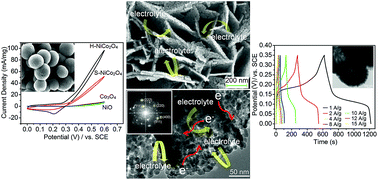
A facile template-free solvothermal method without any additional alkali was developed to fabricate a 3D hierarchical hollow microsphere precursor, followed by annealing in air, leading to a novel 3D hierarchical NiCo2O4 hollow microsphere material, which is composed of mesoporous (16.1 nm) ultrathin nanosheets (∼11–21 nm) consisting of ultrafine NiCo2O4 nanoparticles (11.9 nm). This 3D hierarchical NiCo2O4 nanosheet hollow microsphere material possesses a high specific surface area (93.4 m2 g−1) and mesoporosity, and thus superior electrochemical performance as an advanced electrode material. For methanol electrooxidation, the 3D hierarchical NiCo2O4 nanosheet hollow microsphere displays much higher electrocatalytic activity (95 A g−1, at 0.6 V), lower overpotential (0.27 V, vs. SCE), and higher stability compared with the 3D hierarchical NiCo2O4 nanosheet solid microspheres, Co3O4 and NiO microspheres. For supercapacitors, the NiCo2O4 hollow microsphere exhibits excellent specific capacitance of 1701 F g−1 at 1 A g−1, excellent rate capability (61.5% retention at 15 A g−1), and good electrochemical stability with 78.2% retention after 1000 charge–discharge cycles even at a high current density of 10 A g−1. These findings can be explained by the unique integral characteristics of 3D NiCo2O4 hollow spheres with high electron conductivity, large surface area and numerous open spaces between neighboring mesoporous ultrathin nanosheets, which can offer many facile diffusion paths for ion/electrolyte and greatly improve the electron/ion transfer within the electrode and at the electrode–electrolyte interfaces.

1. Introduction

With the increasing depletion of traditional fossil fuels, new renewable energy sources and energy storage materials have been attracting more and more research interest. Three-dimensional hierarchical structures, especially hollow nano-/microstructures, have become fascinating in different areas including catalysis,1–3 energy storage systems,2,4 water treatment,5 drug delivery,6 and chemical sensors7 owing to their unique structural features involving low density, hollow interiors, large surface areas and shell permeability. Generally, hollow micro-/nanostructured materials are synthesized with the template-directed methods by using the hard templates8,9 and the soft ones.2,10 However, tedious operation steps and long synthetic periods greatly limit their large-scale applications.4 Recently, template-free routes because of the facile and scalable synthesis have been increasingly employed to obtain numerous hollow micro-/nanomaterials with various morphologies.4,11 Despite the great effort being made in this aspect, it is still a big challenge to create 3D hierarchical hollow nano-/microstructure mixed-metal oxides with desirable nano-building blocks and secondary architectures for energy field related applications.

In the last decades, spinel nickel cobaltite (NiCo2O4) as a promising mixed-metal oxide due to its intriguing merits including relatively abundance, low cost, and environmental benign has been widely studied for potential applications in lithium-ion batteries,12,13 and optoelectronic devices,14 electro-catalysis,15,16 and supercapacitors.17,18 More important, upon the much better electrical conductivity of NiCo2O4 than single nickel oxide or cobalt oxide,14,19 many studies have been reported on the synthesis of NiCo2O4 with varied morphologies for greatly improved electrochemical activity compared to corresponding monometal oxides.20–22 Lou et al.21 reported a simple template-free solution method combined with a post-annealing for growing interconnected mesoporous NiCo2O4 nanosheets on conductive substrates directly served as the electrodes for supercapacitors showing greatly improved electrochemical performance. Xiao et al.22 reported a quick microwave-assisted synthesis and post-calcination to prepare nanosphere-like NiCo2O4 nanostructure consisting of porous nanosheets showing high electroactivity and good long-term stability for methanol oxidation.

Furthermore, 3D hierarchical structures, especially hollow NiCo2O4 nanostructures possess large surface area, short electron/ion transport paths, and efficient mass transport channel, and thus attract increasing research interest. Li et al.23 reported the use of carbon spheres template by programmed coating followed hydrogenation to prepare double-shelled hollow sphere structure for integrating large surface area and high conductivity to collectively improve the capacitive performance of NiCo2O4 supercapacitors. Huang et al.24 reported a facile template-free solvothermal method for preparing urchin-like NiCo2O4 hollow microspheres consisting of nanorods with enhanced electro-chemical properties in energy and environmental applications. Lou et al.25 reported self-templated formation of uniform NiCo2O4 hollow spheres consisting of small nanoparticles with complex interior structures showing superior electrochemical performance in both Li-ion batteries and supercapacitors. However, to our best knowledge, there is no work reported on a facile template-free solvothermal method to assemble a novel 3D hierarchical NiCo2O4 hollow microsphere composed of meso-porous ultrathin nanosheets so far.

Herein, a facile template-free solvothermal method was first developed to prepare 3D hierarchical nanosheets hollow microspheres precursors, which was annealed in air to create a novel 3D NiCo2O4 hollow microspheres material composed of mesoporous ultrathin nanosheets consisting of ultrafine NiCo2O4 nanoparticles. The typical characteristic of present method is no need any additive alkali for producing OH ion, just only use isopropanol, methanol and water as mixed solvent, nickel and cobalt nitrate as reagent for the construction of 3D hierarchical nanosheets hollow microspheres precursor. Moreover, based on time-dependent morphology monitoring of the precursor, a multistep-splitting growth mechanism is proposed to understand the formation of the 3D hierarchical hollow microsphere precursor's nanostructure. Remarkably, the as-obtained 3D hierarchical NiCo2O4 nanosheets hollow microsphere owns high surface area and rich porosity. When evaluated as an electrode material, the 3D hierarchical NiCo2O4 nanosheets hollow microspheres display not only the excellent electrocatalytic activity and high stability for methanol electrooxidation, but also the excellent specific capacitance, excellent rate performance, and good cycling stability for supercapacitors.

2. Experimental section

2.1 Preparation

The 3D hierarchical hollow microspheres precursor was prepared by a simple template-free solvothermal method without any additional alkali sources. All chemicals were analytical grade and used as available without further purification. In a typical synthesis, 0.009 mole of Co(NO3)2·6H2O, 0.0045 mole of Ni(NO3)2·6H2O were dissolved in 4 mL water followed ultrasonic for 5 min to form a transparent pink solution, then 68 mL of isopropanol (IPA) was added to above solution followed magnetically stirred for 1 h obtaining a mixed salt solution. Then, 11 mL methanol was added into above mixed solution. And the resultant solution was magnetically stirred for 30 min, then transferred to a 100 mL Teflon-lined stainless-steel autoclave and kept at 120 °C for 24 h. After cooling to room temperature, the green precipitate was centrifuged, and washed sequentially with water and ethanol several times and dried at 80 °C in vacuum for 24 h giving a green hollow microsphere precursor denoted as H-NiCo-pre. This precursor was heated to 350 °C at a heating rate of 1 °C min−1 in air and kept for 2 h giving a black hollow microsphere product named as H-NiCo2O4. When the usage amount of water and methanol is adjusted to 6 and 9 mL, respectively, and keeping other reaction conditions unaltered, a solid microsphere precursor (S-NiCo-pre) was obtained and its calcined product was denoted as S-NiCo2O4. For comparison, NiO and Co3O4 microspheres were also prepared by the similar procedure.

2.2 Characterizations

Powder X-ray diffraction (XRD) data were taken on a Shimadzu XRD-6000 diffractometer using a graphite-filtered Cu Kα radiation (λ = 0.15418 nm) at 40 kV and 30 mA. The catalysts, as unoriented powders, were step-scanned in step of 0.02° (2θ) in the range of 5–70° using a count time of 4 s per step. The FT-IR spectra were recorded on a Bruker Vector-22 FT-IR spectrometer in the range of 400–4000 cm−1 with 4 cm−1 resolution and 60 scans by the standard KBr disk technique (sample/KBr = 1/100) with almost identical mass of samples. The thermal gravimetric analysis was done on a thermalanalyzer (Beijing Hengjiu Instrument Co. Ltd.) from 25 °C to 500 °C at a heating rate of 5 °C min−1 in air. The specific surface areas were determined from low temperature N2 adsorption–desorption isotherm on a Quantachrome Autosorb-1C-VP automated gas adsorption system by using the multi-points Brunauer–Emmett–Teller (BET) method and the pore size distribution derived from the desorption isotherm upon Barrett–Joyner–Halenda (BJH) method. The scanning electron microscopy and energy-dispersive X-ray spectroscopy (SEM-EDX) analysis was carried out on an Oxford Instruments INCAx-act EDX detector attached to a Zeiss Supra 55 field emission scanning electron microscopy using a 20 kV electron beam and 60 s acquisition time. Transmission electron microscopy (TEM) was obtained on a Hitachi H-800 transmission electron microscope with an accelerating voltage of 200 kV. The high resolution TEM graphs were recorded on a JEM-2010 transmission electron microscope at 200 kV. X-ray photoelectron spectroscopy (XPS) were obtained on a Thermo VG ESCALAB250 X-ray photoelectron spectrometer at a base pressure of 2 × 10⁻⁹ Pa using Al Kα radiation (1486.6 eV). The binding energy was referenced to C 1s at 284.9 eV of surface adventitious carbon.

2.3 Electrochemical measurements

All electrochemical tests were recorded on a CHI660D computer-controlled potentiostat (Chen Hua Instruments Co., Shanghai, China) at 25 °C.

For methanol electrooxidation test, a modified electrode was prepared as follows. (1) Prior to modification, the bare glassy carbon electrode (GCE, 3 mm diameter) was sequentially polished with 1.0 and 0.05 μm alumina powder slurries to a mirror shiny surface and then successively sonicated with a 1[thin space (1/6-em)]:[thin space (1/6-em)]1 water–HNO3 solution, ethanol, and deionized water for 3 min in order to remove any adsorbed substances on the electrode surface. (2) 10 mg of the catalyst was dispersed in a mixture of Nafion (0.1 mL) and ethanol (0.9 mL) to give a homogeneous ink. (3) A total of 10.0 μL homogeneous ink was dripped onto the surface of a freshly polished GCE and then evaporated at room temperature in air. Then, cyclic voltammetry (CV), chronoamperometry (CA), and electrochemical impedance spectroscopy (EIS) measurements were performed in a traditional three electrode system with a modified GCE working electrode, a Pt plate counter electrode and an Hg/Hg2Cl2 (SCE) reference electrode. 1 M KOH with 0.5 M methanol were used as the electrolyte.

For electrochemical capacitors (ECs) analysis, the working electrode was prepared as follows. The electroactive material, acetylene black, and polymer binder (polyvinylidene difluoride) was mixed in a mass ratio of 70[thin space (1/6-em)]:[thin space (1/6-em)]20[thin space (1/6-em)]:[thin space (1/6-em)]10. And then an appropriate amount of N-methylpyrrolidone (NMP) was added to the mixtures. This slurry was pasted to the Ni foam substrates (surface, 1 cm × 1 cm). After being dried at 110 °C overnight under vacuum, the as-formed electrodes loaded with active material were then pressed at 10 MPa and further dried at 100 °C for 24 h. Before and after the sample was dried thoroughly, the Ni foam was carefully weighed. The mass loading of active materials (H-NiCo2O4) in a Ni foam electrode was ca. 6 mg. The obtained H-NiCo2O4 modified electrode was then used as a working electrode, and the CV and ECs tests were conducted in a KOH electrolyte (6.0 M) with the same three-electrode cell as described before. The specific capacitance is calculated by the following equation:

 
C = IΔt/(mΔV) (1)
where C (F g−1) is specific capacitance, I (A) is the discharge current, Δt (s) is the discharge time, ΔV (V) is the potential window of discharge, and m (g) is the mass of the active material.

The EIS tests were performed at open-circuit potential in the frequency range 100 kHz to 10 mHz with an alternating-current amplitude of 10 mV.

3. Results and discussion

3.1 Characterization of H-NiCo-pre and H-NiCo2O4

The XRD pattern of the green precursor H-NiCo-pre (Fig. 1A(a)) clearly shows typical features of layered nickel–cobalt nitrate hydroxide, quite similar to those of Ni or Co nitrate hydroxide (JCPDS no. 22-0752 or 46-0605). The IR spectrum of the precursor (Fig. 2A(a)) shows a strong broad band at ∼3449 cm−1 due to the stretching vibrations of OH groups and the one at 1618 cm−1 due to the bending mode of physic-adsorbed and interlayer water molecules (δH2O). The strong broad band around 1380 cm−1 is due to interlayer nitrate (ν3(NO3)), and those at 660 and 560/525 cm−1 correspond to δOH and lattice mode νM–O (M = Co and Ni), respectively. As for the weak bands at 2933 and 2818 as well as 1052 cm−1, which are due to the stretching vibrations νC–H and νC–O, respectively, probably from residual isopropanol and methanol molecules.
image file: c6ra01939k-f1.tif
Fig. 1 (A) XRD patterns of (a) H-NiCo-pre and (b) H-NiCo2O4. (B) TG-DTA curves of H-NiCo-pre.

image file: c6ra01939k-f2.tif
Fig. 2 (A) IR spectra of H-NiCo-pre (a) and H-NiCo2O4 (b) and (B–D) XPS spectra of H-NiCo2O4 (Co 2p (B), Ni 2p (C) and O 1s (D)).

The TG-DTG plots of the precursor obtained in static air from 25 to 500 °C (Fig. 1B) clearly show a weight loss of ∼4.9% below 150 °C, which can be ascribed to the desorption of physically adsorbed water, interlayer water molecules and residual solvent in precursor.16 The next sharp mass loss of ∼27.6% accompanied by a strong endothermic effect at 170–330 °C is related to the decomposition and dehydroxylation of the Co–Ni nitrate hydroxide precursor. This weight loss is a little lower than the theoretical value of 28.3% according to Ni–Co nitrate hydroxide probably due to the presence of trace nitrate as IR indicated (Fig. 2A(b)). Therefore, the 350 °C was chosen as the annealing temperature to obtain high quality NiCo2O4.

After calcination, the green precursor was converted into black powder of H-NiCo2O4. The XRD pattern of H-NiCo2O4 (Fig. 1A(b)) clearly shows eight diffractions at 18.9° (111), 31.2° (220), 36.8° (311), 38.6° (222), 44.7° (400), 55.5° (422), 59.1° (511), and 64.9° (440), coincide with the standard cubic spinel NiCo2O4 (JCPDS no. 20-0781) perfectly, and no other peaks detected, indicating the formation of high pure NiCo2O4. The IR spectrum of H-NiCo2O4 (Fig. 2A(b)) depicts greatly reduced νOH and δH2O, and almost disappeared νC–H and νC–O, implying the dehydroxylation and decomposition of the hydroxide compound and the removal of the residual solvent in precursor, while the sharpened νM–O at 655/560 cm−1 clearly confirm the formation of NiCo2O4,26 well supporting the XRD data. Furthermore, the lattice parameter ao of H-NiCo2O4 is estimated as 0.8104 nm, close to the standard 0.8110 nm (JCPDS no. 20-0781), indicating the presence of well-defined NiCo2O4 crystals. The particle size upon the Debye–Scherrer formula (D = /(β[thin space (1/6-em)]cos[thin space (1/6-em)]θ), D is the average crystal size, k is Scherrer constant (0.89), λ is the wavelength of X-ray (0.1542 nm), β is the full width at half maximum (in rad.), θ is the Bragg angle) from the sharp (311) line is ∼11.2 nm, implying that H-NiCo2O4 may be composed of quite small NiCo2O4 crystallites.

To obtain more detailed information about the composition and the oxidation state of H-NiCo2O4, XPS was performed. The XPS survey clearly indicates the presence of Co, Ni, and O in H-NiCo2O4 (Fig. S1). Upon Gaussian fitting method, the Co 2p spectra (Fig. 2B) can be fitted with two spin–orbit doublets characteristic of Co2+ and Co3+ and two weak shakeup satellites. Particularly, the fitting peaks at 779.6 and 794.6 eV are ascribed to Co3+, while the peaks at 781.3 and 796.1 eV are assigned to Co2+.27 In the Ni 2p spectra (Fig. 2C), two kinds of Ni species (Ni2+ and Ni3+) are detected. The fitting peaks at 854.4 and 871.9 eV are assigned to Ni2+, while those at 856.1 and 873.5 eV are assigned to Ni3+.27 The two shakeup satellites at 861.5 and 879.8 eV can be clearly seen at the high binding energy side of the Ni 2p3/2 and Ni 2p1/2 edge.28 The O 1s spectra (Fig. 2D) depict three contributions, marked as O1 (529.7 eV), O2 (531.1 eV) and O3 (532.9 eV), associated with typical metal–oxygen bond, high number of defect sites with low oxygen coordination in the material with small particle size, and the multiplicity of physic- and chemisorbed water at and within the surface, respectively.27,29 Based on above observations, the formula for H-NiCo2O4 can be generally expressed as Co1−x2+Cox3+[Co3+Nix2+Ni1−x3+]O4 (0 < x < 1), where the cations in the bracket occupy the octahedral sites and those outside are in the tetrahedral sites.16,27 The solid redox couple of Ni2+/Ni3+ and Co2+/Co3+ may endow the present H-NiCo2O4 enough active sites for electrochemical reaction.

The morphologies of the H-NiCo-pre and the H-NiCo2O4 were carefully studied by SEM. It can be seen that the H-NiCo-pre (Fig. 3A) shows obvious hierarchical microsphere structure with an average diameter ∼7.2 μm. Some broken spheres (Fig. 3C) and the TEM image (inset in Fig. 3A) clearly indicate the hollow interior of the precursor. Markedly, these microspheres are composed of numerous interconnected ultrathin nanosheets (∼27 nm) with smooth surface and numerous open spaces between neighboring nanosheets (Fig. 3C and E). After calcination, the hollow interior and nanosheets structure of the precursor is well preserved in the H-NiCo2O4 (Fig. 3B), which depicts highly uniform microspheres with slightly reduced size of ∼6.4 μm than precursor probably due to the shrinkage during the calcination. Interestingly, different from the precursor, the H-NiCo2O4 apparently has the even thinner nanosheets (∼11–21 nm) with rough surface consisting of many ultrafine interconnected nanoparticles. Moreover, there are many nanopores observed in these nanosheets (Fig. 3F).


image file: c6ra01939k-f3.tif
Fig. 3 SEM images of H-NiCo-pre (A, C and E) and H-NiCo2O4 (B, D and F) (bottom inset in A is TEM, upper insets in A and B are particle size distributions).

In order to obtain the more detailed morphological and crystallographic properties of the as-prepared H-NiCo2O4, the TEM, HRTEM and selected area electron diffraction (SAED) were performed. As shown in Fig. 4A and B, the typical TEM image of H-NiCo2O4 further confirms the hollow microsphere structure of H-NiCo2O4 assembled from ultrathin nanosheets with a length of ∼800–1000 nm. And these ultrathin nanosheets with a transparent feature on their edges (Fig. 4B) shows that the nanosheets have a porous nature, implying that it could provide high surface area. As shown in Fig. 4C, the ultrathin nanosheets are composed by many ultrafine NiCo2O4 nanoparticles of ∼11.9 nm (inset in Fig. 4C) and numerous nanopores of ∼3–6 nm. These results are in good agreement with its XRD (Fig. 1A(b)) and SEM results (Fig. 3B, D and F). The various crystal orientations of nanoparticles exhibit clearly the lattice fringes (Fig. 4D) with interplanar distances of 0.467, 0.287, 0.244 and 0.203 nm corresponding to the (111), (220), (311) and (400) planes of the cubic NiCo2O4 phase, respectively.23 The SAED pattern (inset in Fig. 4D) evidently shows the nanocrystal nature of H-NiCo2O4 as indexed as (111), (220), (311), (222), and (400) diffraction dots or incontinuous diffraction rings of NiCo2O4. These results are in good agreement with XRD (Fig. 1A(b)) and HRTEM results (Fig. 4D). Moreover, the EDX spectrum gives the elemental ratio of Co/Ni as 2.18 further confirming the formation of NiCo2O4 nanocrystals (Fig. S2). It can be assumed that such 3D hierarchical nanostructured NiCo2O4 hollow microsphere with numerous open spaces between neighboring ultrathin nanosheets, mesoporous structure and nanocrystal nature are expected to possess excellent electrochemical activity.


image file: c6ra01939k-f4.tif
Fig. 4 TEM (A and B) and HRTEM (C and D) images of H-NiCo2O4 (inset in C and D is particle size distribution and SAED of H-NiCo2O4, respectively).

The N2 adsorption–desorption analysis of H-NiCo2O4 (Fig. 5) shows a type IV isotherms and a distinct hysteresis loop on the IUPAC classification, indicating a typical mesoporous structure. The specific surface area (SSA) upon BET method is 93.4 m2 g−1, obviously larger than those previously reported,12,24,25 in line with its mesoporous ultrathin nanosheets hollow microspheres structure. The Barrett–Joyner–Halenda pore size distribution (inset in Fig. 5) data shows a small peak at ∼3.9 nm and a wide larger peak at ∼16.1 nm, respectively, further defining the well-developed mesoporous structure of H-NiCo2O4 along with a pore volume of 0.37 cm3 g−1. The high SSA and mesoporosity of H-NiCo2O4 with interconnected ultrathin nanosheets and hollow structure can not only greatly increase the electrode–electrolyte contact area but also provide abundant active sites and efficient charge/ion transport channels, which is beneficial for greatly enhanced electrochemical properties.


image file: c6ra01939k-f5.tif
Fig. 5 N2 adsorption–desorption isotherms of H-NiCo2O4 (inset: pore size distribution).

3.2 Formation mechanism

From above results, it can be seen that upon a simple template-free solvothermal route with no additional base, we first obtain a 3D hierarchical nanosheets hollow microspheres precursor and thus a novel 3D NiCo2O4 mesoporous ultrathin nanosheets hollow microspheres material with high surface area by easy post-annealing in air. Clearly, the formation mechanism of 3D hierarchical nanosheets hollow microspheres precursor is quite important and desired. Therefore, a series of time-dependent morphology evolutions of the precursor have been studied upon SEM characterization to reveal the growth process of the precursor.

As shown in Fig. 6A, petal-like nanosheet-assembled solid microspheres-like product was formed after reaction duration of 6 h. Then for the 8 h reaction sample, nanosheet-assembled solid microspheres were obtained (Fig. 6B). As for longer reaction time of 12 h, york–shelled microspheres product was formed (Fig. 6C). When the reaction time was further prolonged to 24 h, the final product shows a hierarchical nanosheets microspheres with clear hollow interior (Fig. 6D). These results reveal that the initially formed nanosheet solid microspheres followed a dissolution–recrystallization process occurred at the exterior surface of the solid microspheres accompanied by consumption of interior core leading to the growth of york–shelled nanosheets spheres and finally evolved into the hierarchical nanosheets hollow microspheres precursor. The transformation from solid particles to hollow ones is generally based on the so-called inside-out Ostwald-ripening process, in which the outer crystalline shells grew on the solid particle accompanied by continuous dissolution and recrystallization of the interior structures.13 The growth of nanosheets on the surface of the initial formed microspheres and the slight diameter increase of the microspheres with prolonged solvothermal time also confirms the inside-out Ostwald-ripening process. Therefore, a plausible formation mechanism of such 3D hierarchical nanosheets hollow microspheres precursor is proposed and illustrated in Fig. 6E. Considering neither surfactant nor additional base used in the reaction system, the presence of mixed solvent (IPA + methanol + H2O) may play a key role on the formation of 3D nanosheets hollow microspheres precursor. Firstly, the creation of hydroxyl groups is greatly dependent on the amount of methanol. It is accepted that methanol and NO3 ions from metal nitrates underwent a redox reaction releasing OH ions at 120 °C (eqn (2)).30 Then, the released OH anions further reacted with Ni2+, Co2+ and NO3 ions to create Co–Ni bimetallic nitrate hydroxide nuclei (eqn (3)).30,31 A large amount of such nuclei burst and further grew into larger particles, which readily assembled into primary 2D nanosheets as dominant morphology upon the proper ratio among water, methanol and IPA by giving modulations to the homogenization of the reactants in the medium, the amount of individual Co–Ni nitrate hydroxide monomer nucleus formed, and amalgamation and orientation of growing nucleus, considering the main effect of the saturated vapor pressure and polarity of the solvent on the structure of the products during the synthesis process.31,32 As shown in Fig. 6E, at stage I, the primarily formed nanosheets could assemble into solid microspheres-like architecture (Fig. 6A) owing to crystal-face attraction, van der Waals force and hydrogen bond.33,34 These nanosheets further oriented self-assemble into solid microspheres (stage II). With further prolonged reaction time, a yolk–shelled structure was formed upon the inside-out Ostwald-ripening and recrystallization (stage III). With continuously increased reaction time, a completely hollow precursor with well-defined 3D nanosheets architecture was obtained (stage IV). Clearly, in the present template-free and no additional alkali reaction system, the solvent methanol mainly contributes to the in situ creation of precipitation agent OH ions and the followed formation of primary nanosheets, while the IPA mainly to the production of hollow microsphere structures. The similar role of IPA has ever been mentioned in the synthesis of urchin-like NiCo2O4 hollow sphere with urea as precipitation agent.24

 
4CH3OH + NO3 → 4HCHO + NH3 + OH + 2H2O (2)
 
M2+ + (2 − x)OH + xNO3 → M(OH)2−x(NO3)x (M = Ni, Co) (3)


image file: c6ra01939k-f6.tif
Fig. 6 (A–D) SEM images of the products obtained after various reaction durations (A: 6 h, B: 8 h, C: 12 h, and D: 24 h) and (E) schematic illustration of the formation process of the H-NiCo-pre: (I) initial nucleation and oriented self-assembly; (II) further oriented self-assembly; (III) inside-out Ostwald-ripening and recrystallization; (IV) further dissolution and recrystallization.

For comparison, a 3D NiCo2O4 nanosheets solid micro-spheres denoted as S-NiCo2O4, and monometal oxides Co3O4 and NiO microspheres were also prepared by similar solvothermal method without additional alkali followed air-annealing process. The XRD patterns (Fig. S3A) of the three precursors were similar to those of bimetal Ni–Co, monometal Co, and Ni nitrate hydroxide phases, respectively. After annealing, all of these microsphere precursors were transformed into metal oxide phases (Fig. S3B). Before and after calcination, the microspheres morphologies were revealed by the SEM/TEM images (Fig. S4) and there is a little change in their morphologies. In addition, the TEM, HRTEM and SAED images reveal that the S-NiCo2O4 microspheres are also assembled by mesoporous nanosheets consisting of small nanocrystals of ∼14.9 nm (Fig. S5). However, the BET results (Fig. S6) indicated the S-NiCo2O4 possesses a SSA of 69.4 m2 g−1, an optimal pore size of 5.9 nm and pore volume of 0.29 cm3 g−1, which were much lower than those of the hollow sample H-NiCo2O4.

3.3 Electrochemical characterization of the modified electrode

3.3.1 MOR performance of H-NiCo2O4. The electroactivity of the as-prepared H-NiCo2O4 is studied for methanol oxidation compared with S-NiCo2O4, Co3O4 and NiO. Firstly, the CV curves were obtained in 1 M KOH solution without methanol and shown in Fig. 7A. Similar to previous report,35,36 the Co3O4 electrode has redox peaks at ∼0.44 and 0.37 V, and the NiO electrode has redox peaks at ∼0.38 and 0.28 V both enclosing a small area, which are related to the redox couples of Co3O4/CoOOH and NiO/NiOOH. However, the CV curves of the H-NiCo2O4 exhibit a pair of broader redox peaks with the highest peak current and the largest enclosed area, indicating that it has much better electrochemical activity compared to S-NiCo2O4, Co3O4 and NiO electrodes. It can be explained that the charge-transfer process of solid-state redox couples Co2+/Co3+ and Ni2+/Ni3+ may endow the richer redox peaks of the present spinel H-NiCo2O4.16 The redox reactions in the alkaline environment are based on eqn (4) and (5).37,38
 
NiCo2O4 + OH + H2O ⇔ NiOOH + 2CoOOH + 2e (4)
 
CoOOH + OH ⇔ CoO2 + H2O + e (5)

image file: c6ra01939k-f7.tif
Fig. 7 Cyclic voltammetry curves of H-NiCo2O4, S-NiCo2O4, Co3O4, and NiO modified electrode in (A) 1 M KOH and (B) 1 M KOH + 0.5 M methanol at a scan rate of 50 mV s−1, (C) chronoamperometry curves of H-NiCo2O4, S-NiCo2O4, Co3O4, and NiO electrodes in 1 M KOH + 0.5 M methanol at 0 V (0–60 s) and 0.6 V (60–1060 s), and (D) CV curves of H-NiCo2O4 electrode in 1 M KOH + 0.5 M methanol at a scan rate of 50 mV s−1.

All the methanol electrooxidation on H-NiCo2O4, S-NiCo2O4, and NiO electrodes display a strong anodic current in the presence of 0.5 M methanol compared with those CV curves only in KOH (Fig. S7), while the Co3O4 electrode show smaller increment in the oxidation current in the presence of methanol, implying lower methanol oxidation activity of Co3O4.16,22 Compared with the S-NiCo2O4, Co3O4 and NiO electrodes, the current density of the H-NiCo2O4 electrode is highly improved. It is noted that the onset potential of the H-NiCo2O4 electrode is ca. 0.27 V (vs. SCE), quite lower than on S-NiCo2O4 (0.32 V), Co3O4 (0.38 V) and NiO (0.36 V) electrodes. Though the onset potential of H-NiCo2O4 is still higher than previously reported noble metal catalysts,39,40 a common phenomenon for metal oxide catalyst16,22,41 as the main limitation to their commercialization in DMFCs, the current density of the present H-NiCo2O4 electrode is highly improved (Fig. S7). Fig. 7B further depicts a comparison of the CV curves on H-NiCo2O4, S-NiCo2O4, Co3O4 and NiO electrodes in the presence of 1 M KOH with 0.5 M methanol. The current density of H-NiCo2O4 at 0.6 V is 95 A g−1, which is about two, fourteen and twelve times those of S-NiCo2O4, Co3O4 and NiO electrodes, respectively. Remarkably, the activity of H-NiCo2O4 electrode is much better than those of NiCo2O4/SS,16 nanosphere-like NiCo2O4,22 urchin-like NiCo2O4 hollow and solid microspheres,24 and porous NiCo2O4 nano-structures41 electrodes (Table S1). The mechanism of methanol oxidation on H-NiCo2O4 electrode is similar to those on NiO and Co3O4 electrodes being simply illustrated as eqn (4) and (6).36,42

 
2MOOH + 2CH3OH + 2.5O2 → 2M(OH)2 + 2CO2 + 3H2O (M = Ni, Co) (6)

The low onset potential and high current density demonstrate the high electrocatalytic performance of H-NiCo2O4 for methanol oxidation. This may be explained on the following reasons. (a) The electronic conductivity of NiCo2O4 is higher than that of either Co3O4 or NiO, and the high conductivity may effectively accelerate electron transfer. (b) NiCo2O4 is a mixed valence oxide, thus the redox couples of Co2+/Co3+ and Ni2+/Ni3+ can afford rich electroactive sites for methanol electrooxidation. (c) High electrocatalytic oxidation activity may be due to the H-NiCo2O4 with the large specific surface area and numerous open spaces between neighboring mesoporous ultrathin nanosheets consisting of many ultrafine interconnected NiCo2O4 nanocrystals, which can expose more electroactive sites and offer many facile diffusion paths for ion/electrolyte in the electrode and at the electrode–electrolyte interfaces.

The charge transfer resistance of electrodes is another key factor affecting their performance in DMFCs. The EIS analysis was performed to study charge transfer resistance in methanol oxidation. As shown in Fig. 8A in 1 M KOH blank, there are two main parts in the Nyquist diagram. A high frequency semicircle related to the charge transfer resistance and a low frequency trail from the well known redox capacitance behavior of nickel and cobalt oxide.42 As expected, the diameters of the semicircle of both H-NiCo2O4 and S-NiCo2O4 electrodes are much smaller than those of Co3O4 and NiO electrodes, confirming much higher charge transfer rate on the H-NiCo2O4 and S-NiCo2O4 than on monometal oxides electrode. Importantly, the semicircle of the H-NiCo2O4 electrode is clearly much smaller than that of S-NiCo2O4 electrode (Fig. 8A bottom inset), implying that the 3D hierarchical NiCo2O4 mesoporous nanosheets hollow microspheres sample H-NiCo2O4 has a much lower interfacial charge-transfer resistance. The equivalent circuit for fitting the EIS plot is given as inset in Fig. 8A. In this circuit, Rs, C, and Rct are the solution resistance, redox capacitance, charge-transfer resistance in the electrode and at the electrode–electrolyte interface, respectively. Then, in the presence of 1 M KOH with 0.5 M methanol, the diameter of the semicircle for Co3O4 and NiO electrodes is obviously increased (Fig. 8B) probably due to the adsorption of methanol or the oxidation intermediates on the electrode.16 Then for S-NiCo2O4 electrode, there is a little change in the diameter of the semicircle with and without methanol (bottom insets in Fig. 8A and B). However, for the H-NiCo2O4 electrode, nearly no change is detected in the diameter of the semicircle in the presence and absence of methanol. The fitting parameters upon proposed equivalent circuit are listed in Table S2. It can be seen that the Rct value is much lower than those of Co3O4 and NiO electrodes. Moreover, about 1.35 and 1.65 times decrease in the Rct value was observed on the H-NiCo2O4 electrode in 1 M KOH and 1 M KOH with 0.5 M methanol, respectively, compared to S-NiCo2O4 electrode, demonstrating that the presence of the H-NiCo2O4 on the electrode surface assists in the faster electron transfer. These results clearly indicate the high tolerance to intermediate poisoning of H-NiCo2O4. The low Rct value is in favor of the fast electron or ion transfer in the electrode and at the electrode–electrolyte interface.


image file: c6ra01939k-f8.tif
Fig. 8 EIS plots of H-NiCo2O4, S-NiCo2O4, Co3O4, and NiO electrodes in 1 M KOH (A) and 1 M KOH + 0.5 M methanol (B).

Chronoamperometry is a useful tool to study the electro-chemical stability of an electrocatalyst. The electro-chemical stability of H-NiCo2O4, S-NiCo2O4, Co3O4 and NiO electrodes for methanol oxidation at 0.6 V was studied, with the first 60 s recorded at 0 V. As shown in Fig. 7C, despite a current decay in the first 50 s, the H-NiCo2O4 electrode shows a high stability in the next 950 s, which is about two times, thirteen times and fourteen times those of S-NiCo2O4, Co3O4 and NiO electrodes, respectively. We also investigate the long-term stability of H-NiCo2O4 electrode by CV. As shown in Fig. 7D, the CV curves are quite stable and the current density at 0.6 V exhibits 79% retention after 500 cycles. More importantly, after 500 cycles, the current density at 0.6 V can be returned to 90% of the original value by refreshing the electrolyte. This indicates that the current decay is partly due to the consumption of methanol. This superior long term stability can be partially explained by the structural stability of the electrode material originated from the present NiCo2O4 nanosheets hollow microspheres with larger surface area, mesoporosity, and robust 3D hierarchical nanostructures. These results confirm that the obtained H-NiCo2O4 material could meet the requirements of both high electro-activity and long-term stability necessary for using as the anodic materials in DMFCs.

3.3.2 Supercapacitors performance of H-NiCo2O4. To evaluate the potential of the prepared H-NiCo2O4 acting as an electrode material for supercapacitors, the electro-chemical capacitive behavior was performed. Firstly, Fig. 9A shows the CV curves of H-NiCo2O4 measured at varied scan rates from 2 to 30 mV s−1 in the potential window of −0.2 to 0.6 V in 6.0 M KOH. All the CV curves show a pair of marked broad redox peaks ascribed to the faradaic reaction associated with M–O/M–OOH (M = Ni or Co).37,38 These CV curves are quite varied from the idea rectangular shape of electric double-layer capacitors, indicating the pseudocapacitive characteristics of the H-NiCo2O4 material.43
image file: c6ra01939k-f9.tif
Fig. 9 Electrochemical properties of H-NiCo2O4 electrode in 6 M KOH solution. (A) CV curves obtained at various scan rates in the voltage window of −0.2 to 0.6 V (inset: the plots of anodic and cathodic peak current against the square root of the scan rate); (B) galvanostatic charge–discharge curves at various current densities; (C) effects of current densities on its specific capacitance; and (D) cycling performance over 1000 cycles at a current density of 10 A g−1 (inset: charge–discharge curve at 10 A g−1).

All the CV curves (Fig. 9A) exhibit a similar shape and the peak current increases with increasing scan rates. The shape of CVs changes little even at the high scan rate of 30 mV s−1, demonstrating the good kinetic reversibility of the H-NiCo2O4 electrode. The peaks are located at around 0.06 and 0.25 V when the scan rate is 2 mV s−1. Then, the peak potential shifts about 100 and 200 mV for a 5 and 15 times increase in the scan rate, respectively, which is due to the polarization effect of the electrodes.44 The inset in Fig. 9A presents a good linear relationship of anodic and cathodic peak currents (i.e., current) vs. the square root of the scan rate, implying the diffusion of OH ions as the rate controlling process in the whole process. Fig. 9B depicts the galvanostatic charge–discharge voltage curves of the NiCo2O4 electrode in the voltage range of 0–0.35 V at varied current density from 1 to 15 A g−1. Clearly, there are voltage plateaus can be seen at ca. 0.2 V, in consistent with the above CV data. Fig. 9C gives the calculated specific capacitance as a function of the discharge current density. Notably, the H-NiCo2O4 electrode delivers high specific capacitances of 1701, 1550, 1410, 1216, 1180, 1132, and 1046 F g−1 at current densities of 1, 2, 4, 8, 10, 12, and 15 A g−1, respectively, which may be attributed to the unique 3D NiCo2O4 mesoporous ultrathin nanosheets hollow microspheres structure. Compared with the other reported similar spinel NiCo2O4 electrode materials with varied morphologies,25,45–49 the capacitance value obtained in our work is remarkable (Table S3). More importantly, as the current density increases, the capacitance at 15 A g−1 remains to be 61.5% of that obtained at the current density of 1 A g−1. These results suggest that the H-NiCo2O4 electrode has excellent rate capability. Substantially, the impressive enhancement of capacitive performance at the quite high current density is attributed to the better utilization of electroactive surface of the advantageous hollow microspheres nanostructure. The hollow microspheres consisting of mesoporous ultrathin nanosheets could provide numerous electroactive sites for faradaic reaction. Particularly, the nanosheets consisting of ultrafine nanocrystallites possess high porosity, and thus the electrolyte can easily penetrate through the nanosheets for efficient redox reactions during the faradaic charge storage process. On this occasion, the whole mesoporous nanosheets hollow microspheres can serving as an “ion-buffering chamber”45–49 facilitating a faster permeation process of electrolyte into each nanosheets matrix by shortening the diffusion paths of OH ions to the electroactive sites and accommodates the resultant strain originated from high rate insertion and extraction of OH ions. Therefore, even under the high current density, a large proportion of electroactive sites can still remain, which conduces to improving the rate capability.

The cycling performance of H-NiCo2O4 electrode is tested by the continuous charge–discharge testing at a current density of 10 A g−1 and the result is shown in Fig. 9D. Clearly, about 78.2% of the maximum capacitance can still be retained after 1000 continuous charge–discharge cycles, confirming the good long-term electro-chemical stability of the H-NiCo2O4 even under the high current density. This good cycling stability is probably attributed to the unique NiCo2O4 hollow microspheres structure consisting of mesoporous ultrathin nanosheets that is expected to improve the structural integrity, which is promising for the development of high-performance supercapacitors.

The EIS analysis was further performed to study the change of the H-NiCo2O4 from 1st to 1000th charge–discharge cycle as shown in Fig. 10 along with an equivalent circuit consists of a bulk solution resistance Rs, a charge-transfer resistance Rct, a redox capacitance C, and Warburg impedance W (inset in Fig. 10). In the high frequency region, compared with the 1st cycle, the charge-transfer resistance Rct does not change much after the 1000-cycle test. This may benefit from the high conductivity of the H-NiCo2O4 and its robust 3D porous structure conducive to the fast ions/electrons transfer within the electrode and at the electrode/electrolyte interfaces. Meanwhile, both impedance spectra depict a linear region in the low frequency range corresponding to the diffusion resistance W. After undergoing the 1000-cycle test, a slightly increased Warburg impedance can be observed probably due to the formation of a small amount of inactive sites caused by the partial collapse of the internal 3D porous structures during the cycle test.45,50 The results are in good agreement with that from the long-term cycle stability test that supercapacitance degraded by less than 21.8% after 1000 cycles. Remarkably, even under the high current density, the H-NiCo2O4 electrode can still exhibit good electrochemical stability in highly basic environment, which could be readily attributed to the interconnecting mesoporous ultrathin nanosheets structures in NiCo2O4 hollow microspheres and their accommodation for the increased strain resulting from quick insertion and extraction of OH ions during Faraday reaction.


image file: c6ra01939k-f10.tif
Fig. 10 Nyquist plots of the 1st cycle and 1000th cycle of the H-NiCo2O4 electrode in 6.0 M KOH (inset: the enlarged high frequency region).

4. Conclusions

In summary, we first synthesize a novel 3D hierarchical NiCo2O4 hollow microspheres material consisting of mesoporous (∼16.1 nm) ultrathin (∼11–21 nm) nanosheets which were aggregated by ultrafine nanocrystallines upon a template-free solvothermal method without any additional alkali and subsequent air-annealing treatment. The growth process of 3D hierarchical NiCo2O4 hollow microsphere precursors has been investigated, and a plausible mechanism was proposed. The novel 3D hierarchical NiCo2O4 nanosheets hollow microspheres materials exhibit typical mesoporous structures with high specific surface area. As a result, the 3D hierarchical nanostructured NiCo2O4 nanosheets hollow microspheres manifest superior electrochemical performance when evaluated as the electrode material for both electrocatalytic methanol oxidation and supercapacitors. These findings can be explained by the unique integral characteristics of 3D hierarchical NiCo2O4 nanosheets hollow spheres with high electron conductivity, large surface area and numerous open spaces between neighboring mesoporous ultrathin nanosheets consisting of many ultrafine interconnected NiCo2O4 nanocrystals, which can expose more electroactive sites and offer many facile diffusion paths for ion/electrolyte and greatly improve the electron/ion transfer within the electrode and at the electrode–electrolyte interfaces. The present work provides a novel 3D hierarchical NiCo2O4 porous nanosheet hollow microspheres material by a simple solvothermal route, which owns excellent electrochemical activity potentially used as the electrode material in energy storage applications.

Acknowledgements

This work was supported by National Natural Science Foundation of China and Beijing Engineering Center for Hierarchical Catalysts and the Fundamental Research Funds for the Central Universities (YS1406).

Notes and references

  1. M. H. Oh, T. Yu, S. H. Yu, B. Lim, K. T. Ko, M. G. Willinger, D. H. Seo, B. H. Kim, M. G. Cho, J. H. Park, K. Kang, Y. E. Sung, N. Pinna and T. Hyeon, Science, 2013, 340, 964–968 CrossRef CAS PubMed.
  2. J. Hu, M. Chen, X. S. Fang and L. M. Wu, Chem. Soc. Rev., 2011, 40, 5472–5491 RSC.
  3. F. Mi, X. Chen, Y. Ma, S. Yin, F. Yuan and H. Zhang, Chem. Commun., 2011, 47, 12804–12806 RSC.
  4. X. W. Lou, L. A. Archer and Z. C. Yang, Adv. Mater., 2008, 20, 3987–4019 CrossRef CAS.
  5. Z. Wei, R. Xing, X. Zhang, S. Liu, H. Yu and P. Li, ACS Appl. Mater. Interfaces, 2012, 5, 598–604 Search PubMed.
  6. D. Pan, H. Zhang, T. Fan, J. Chen and X. Duan, Chem. Commun., 2011, 47, 908–910 RSC.
  7. X. Chen, Z. Guo, W. H. Xu, H. B. Yao, M. Q. Li, J. H. Liu, X. J. Huang and S. H. Yu, Adv. Funct. Mater., 2011, 21, 2049–2056 CrossRef CAS.
  8. R. Wu, D. P. Wang, J. Han, H. Liu, K. Zhou, Y. Huang, R. Xu, J. Wei, X. Chen and Z. Chen, Nanoscale, 2015, 7, 965–974 RSC.
  9. C. Zhang, H. Zhang, B. Du, R. Hou and S. Guo, J. Colloid Interface Sci., 2012, 368, 97–106 CrossRef CAS PubMed.
  10. H. L. Xu and W. Z. Wang, Angew. Chem., Int. Ed., 2007, 46, 1489–1492 CrossRef CAS PubMed.
  11. A. Q. Pan, H. B. Wu, L. Yu and X. W. Lou, Angew. Chem., Int. Ed., 2013, 52, 2226–2230 CrossRef CAS PubMed.
  12. J. Li, S. Xiong, Y. Liu, Z. Ju and Y. Qian, ACS Appl. Mater. Interface, 2013, 5, 981–988 CrossRef CAS PubMed.
  13. L. Zhang, S. Zhang, K. Zhang, G. Xu, X. He, S. Dong, Z. Liu, C. Huang, L. Gu and G. Cui, Chem. Commun., 2013, 49, 3540–3542 RSC.
  14. L. Hu, L. Wu, M. Liao, X. Hu and X. Fang, Adv. Funct. Mater., 2012, 22, 998–1004 CrossRef CAS.
  15. Y. Li, P. Hasin and Y. Wu, Adv. Mater., 2010, 22, 1926–1929 CrossRef CAS PubMed.
  16. L. Qian, L. Gu, L. Yang, H. Yuan and D. Xiao, Nanoscale, 2013, 5, 7388–7396 RSC.
  17. G. Q. Zhang, H. B. Wu, H. E. Hoster, M. B. Chan-Park and X. W. Lou, Energy Environ. Sci., 2012, 5, 9453–9456 CAS.
  18. J. Zhou, Y. Huang, X. Cao, B. Ouyang, W. Sun, C. Tan, Y. Zhang, Q. Ma, S. Liang, Q. Yan and H. Zhang, Nanoscale, 2015, 7, 7035–7039 RSC.
  19. L. Shen, Q. Che, H. Li and X. Zhang, Adv. Funct. Mater., 2014, 24, 2630–2637 CrossRef CAS.
  20. Z. Wu, Y. Zhu and X. Ji, J. Mater. Chem. A, 2014, 2, 14759–14772 CAS.
  21. G. Zhang and X. W. Lou, Adv. Mater., 2013, 25, 976–979 CrossRef CAS PubMed.
  22. L. Gu, L. Qian, Y. Lei, Y. Wang, J. Li, H. Yuan and D. Xiao, J. Power Sources, 2014, 261, 317–323 CrossRef CAS.
  23. X. Li, L. Jiang, C. Zhou, J. Liu and H. Zeng, NPG Asia Mater., 2015, 7, e165–e172 CrossRef CAS.
  24. X. Y. Yu, X. Z. Yao, T. Luo, Y. Jia, J. H. Liu and X. J. Huang, ACS Appl. Mater. Interfaces, 2014, 6, 3689–3695 CAS.
  25. L. Shen, L. Yu, X. Y. Yu, X. Zhang and X. W. Lou, Angew. Chem., Int. Ed., 2015, 54, 1868–1872 CrossRef CAS PubMed.
  26. X. Wang, W. S. Liu, X. Lu and P. S. Lee, J. Mater. Chem., 2012, 22, 23114–23119 RSC.
  27. J. F. Marco, J. R. Gancedo, M. Gracia, J. L. Gautier, E. Rios and F. J. Berry, J. Solid State Chem., 2000, 153, 74–81 CrossRef CAS.
  28. A. Thissen, D. Ensling, F. J. Fernandez-Madrigal, W. Jaegermann, R. Alcantara, P. Lavela and J. L. Tirado, Chem. Mater., 2005, 17, 5202–5208 CrossRef CAS.
  29. Y. E. Roginskaya, O. V. Morozova, E. N. Lubnin, Y. E. Ulitina, G. V. Lopukhova and S. Trasatti, Langmuir, 1997, 13, 4621–4627 CrossRef CAS.
  30. H. Chen, L. Hu, M. Chen, Y. Yan and L. Wu, Adv. Funct. Mater., 2014, 24, 934–942 CrossRef CAS.
  31. Y. Ren and L. Gao, J. Am. Ceram. Soc., 2010, 93, 3560–3564 CrossRef CAS.
  32. J. Zhang, L. Sun, J. Yin, H. Su, C. Liao and C. Yan, Chem. Mater., 2002, 14, 4172–4177 CrossRef CAS.
  33. B. Li and Y. Wang, J. Phys. Chem. C, 2010, 114, 890–896 CAS.
  34. L. S. Zhong, J. S. Hu, H. P. Liang, A. M. Cao, W. G. Song and L. J. Wan, Adv. Mater., 2006, 18, 2426–2431 CrossRef CAS.
  35. H. L. Wang, Q. M. Gao and L. Jiang, Small, 2011, 7, 2454–2459 CAS.
  36. N. Spinner and W. E. Mustain, Electrochim. Acta, 2011, 56, 5656–5666 CrossRef CAS.
  37. V. Gupta, S. Gupta and N. Miura, J. Power Sources, 2008, 175, 680–685 CrossRef CAS.
  38. X. Wang, X. Han, M. Lim, N. Singh, C. L. Gan, M. Jan and P. S. Lee, J. Phys. Chem. C, 2012, 116, 12448–12454 CAS.
  39. S. Guo, S. Zhang, X. Sun and S. Sun, J. Am. Chem. Soc., 2011, 133, 15354–15357 CrossRef CAS PubMed.
  40. J. F. Chang, L. G. Feng, C. P. Liu, W. Xing and X. L. Hu, Energy Environ. Sci., 2014, 7, 1628–1632 CAS.
  41. R. Ding, L. Qi, M. Jia and H. Wang, Electrochim. Acta, 2013, 113, 290–301 CrossRef CAS.
  42. H. Heli and H. Yadegari, Electrochim. Acta, 2010, 55, 2139–2148 CrossRef CAS.
  43. T. Y. Wei, C. H. Chen, H. C. Chien, S. Y. Lu and C. C. Hu, Adv. Mater., 2010, 22, 347–351 CrossRef CAS PubMed.
  44. G. Zhang, H. Wu, H. E. Hoster, M. B. Chan-Park and X. W. Lou, Energy Environ. Sci., 2012, 5, 9453–9456 CAS.
  45. Y. Lei, J. Li, Y. Wang, L. Gu, Y. Chang, H. Yuan and D. Xiao, ACS Appl. Mater. Interfaces, 2014, 6, 1773–1780 CAS.
  46. C. Yuan, J. Li, L. Hou, J. Lin, G. Pang, L. Zhang, L. Lian and X. Zhang, RSC Adv., 2013, 3, 18573–18578 RSC.
  47. Y. Zhang, M. Ma, J. Yang, H. Su, W. Huang and X. Dong, Nanoscale, 2014, 6, 4303–4308 RSC.
  48. C. An, Y. Wang, Y. Huang, Y. Xu, C. Xu, L. Jiao and H. Yuan, CrystEngComm, 2014, 16, 385–392 RSC.
  49. H. Zheng, Y. Ni, F. Wan and X. Ma, RSC Adv., 2015, 5, 31558–31565 RSC.
  50. J. Wu, P. Guo, R. Mi, X. Liu, H. Zhang, J. Mei, H. Liu, W. M. Lau and L. M. Liu, J. Mater. Chem. A, 2015, 3, 15331–15338 CAS.

Footnote

Electronic supplementary information (ESI) available: Details in experimental and further characterization. See DOI: 10.1039/c6ra01939k

This journal is © The Royal Society of Chemistry 2016
Click here to see how this site uses Cookies. View our privacy policy here.