Effect of ultrasonication on Ni–Mo coatings produced by DC electroformation

Chenqi Feng, Wei Qian, Jinbao Liu, Sheng Han, Ning Fu, Fengying Ye, Hualin Lin* and Jibo Jiang*
School of Chemical and Environmental Engineering, Shanghai Institute of Technology, Shanghai 201418, China. E-mail: jibojiang0506@163.com; lhl6534@163.com

Received 25th January 2016 , Accepted 16th March 2016

First published on 17th March 2016


Abstract

The effect of the ultrasound-assisted method on Ni–Mo alloy coatings by direct current (DC) electroformation in a sulphate–citrate bath was investigated with different ultrasound powers. This study focused on the microstructure, molybdenum content, grain size, roughness, micro-hardness and corrosion resistance of the Ni–Mo alloy coatings, which were influenced by the ultrasound parameters. X-ray diffraction results showed that ultrasound modification decreased the grain size of the nanocrystalline alloy coatings. The hardness of the as-plated coatings after ultrasonication was determined by Vickers diamond indentation tests and compared with that of the Ni–Mo coatings in the absence of ultrasound. As a result, the hardness (719 HV) of the former coatings improved significantly. Scanning electron microscopy and atomic force microscopy images showed a smoother coating and a decrease in the surface roughness of the electrodeposited film, as a result of the use of ultrasound. Furthermore, the corrosion resistance behaviour of the coatings was analysed by a Tafel polarisation curve and electrochemical impedance spectroscopic studies in a 3.5 wt% NaCl solution. The ultrasonicated coatings (Ni–Mo) significantly enhanced corrosion resistance (4.1 μA cm−2) compared with those without ultrasound assistance. However, at the maximum ultrasound power (270 W), the molybdenum content, grain size, roughness, microhardness and corrosion resistance of the Ni–Mo alloy coatings all slightly decreased.

1. Introduction

Engineering advancements means there is increasing attention on materials with enhanced mechanical properties. Metals are widely applied in various fields, such as automotive, mechanical parts and aviation. In recent years, electrochemical technology has become increasingly crucial for such advancements because electroplating is a relatively convenient, inexpensive and adept method suitable for mass production. Functional coatings containing molybdenum are characterised by high levels of hardness, wear resistance, thermal resistance and corrosion resistance; such coatings can also substitute for chromium coatings, which are mostly toxic and carcinogenic.1 Pure molybdenum cannot be singly electrodeposited from aqueous solutions, but it can readily be co-deposited with iron-group metals such as nickel. Ni–Mo coatings can be used as protective materials in automotive and aviation industries for parts of various machines operating at high temperatures and acidic environments.2,3 Compared with chromium and tungsten coatings, Ni–Mo coatings offer an important alternative to chromium coatings, which should be eliminated from manufacturing processes, such as in the aviation industry.4 The physicochemical properties of molybdenum are also similar to those of tungsten but slightly worse; nevertheless, molybdenum is a more economical alternative because of its very low cost.5

Particularly, in electroplating, the major industrial work on ultrasound has focused on cleaning of the machine and reports before plating. In the research laboratory, however, Lorimer and Walker6,7 have indicated that ultrasonic irradiation of electrochemical systems can improve diffusion processes and electrodeposition rates, thereby significantly increasing both current efficiencies and limiting currents but reducing overpotentials.8,9 Various specific advantages have been confirmed for the use of ultrasound in conjunction with electrodeposition; these advantages include the following: improved hardness,10 porosity and coating thickness; increased reaction efficiency and deposition rates; use of less toxic electroplating solutions; greater adhesion; and reduced levellers, brighteners.11–13

Recently, most studies about ultrasound have focused on composite platings, such as Ni–W/ZrO2,13 Ni–TiN,14 Ni–B/WS2 (ref. 15) and Ni–B/TiO2;16 all these composite coatings demonstrated clear advantages (e.g. uniformly dispersed particles and improved compactness). Recent studies also focused on alloy coatings, such as Ti–Al–V.10 However, considering the lack of systematically conducted studies regarding the effects of ultrasonic power, the characteristics (crystal orientation of deposits, surface morphology, grain structure, hardness and corrosion resistance) of Ni–Mo alloy coatings electrodeposited under low-frequency ultrasound remain unclear.

Therefore, the present work aims to develop a more economical and simple process for surface modification of low-carbon steel, which focuses on the effects of low-frequency ultrasound on the characteristics of Ni–Mo alloy coatings electrodeposited from a sulphate bath. This paper discusses all these responses in detail and defines how ultrasound power influences the characteristics of Ni–Mo alloy coatings. In particular, this study mainly aims to: (1) obtain Ni–Mo alloy coatings with different ultrasonic powers; (2) further determine the mechanism of the coating effects of ultrasound; (3) evaluate the characteristics of Ni–Mo alloy coatings which presented the optimum deposit quality.

2. Experimental

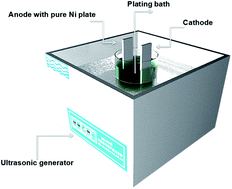
Ni–Mo alloy coatings with and without ultrasonication were deposited on low-carbon steel with a solution containing the following: 0.2 M nickel sulphate (NiSO4·6H2O), 0.3 M sodium citrate (Na3C6H5O7·2H2O), 0.03 M sodium molybdate (Na2MoO4·2H2O) and 0.2 g L−1 sodium dodecyl sulphate (SDS). Bath compositions and processing conditions are listed in Table 1. Fig. 1 shows the system with an ultrasound device (KQ300DE CNC ultrasonic cleaner with frequency of 40 KHz) at different powers (120, 180 and 270 W). The plating bath pH was adjusted to 9.8 with ammonia, given that when the pH value increases, the molybdenum content of the coating also increases and then decreases.18 Ni–Mo coatings were supplied by the potentiostat/galvanostat GPC30600, and pure nickel plate of 99.9 wt% purity was used as anode, whereas a mild carbon steel was employed as cathode. Mild steel disks (0.01 dm2) were rotated at 350 rpm by a magnetic stirrer. Moreover, low-carbon steel samples were mechanically polished by an emery paper from 400 grit to 3000 grit and then washed with deionised water. Subsequently, substrate was rinsed by ethanol with ultrasound assistance. Before plating, low-carbon steel was cleansed with 10% hydrochloric acid solution for up to 1 min to remove the oxide film from the surface. After plating, coatings were blow-dried by gentle breeze to remove rudimental solutions from the coating surface and then blow-dried again.
Table 1 Solution composition and the deposition conditions of Ni–Mo coatings
Solution composition
NiSO4·6H2O 0.2 mol L−1
Na3C6H5O7·2H2O 0.3 mol L−1
Na2MoO4·2H2O 0.03 mol L−1
SDS 0.2 g L−1
Ammonia 0.15 mol L−1

Deposition conditions
pH 9.8
Time (min) 20
Temperature (°C) 30
Current density (A dm−2) 6
Ultrasonic power (W) 120–270


image file: c6ra01838f-f1.tif
Fig. 1 The experimental facility in an external ultrasonic field for alloys coating electrodeposition.

The microstructures of Ni–Mo coatings were observed by scanning electron microscopy (SEM) and energy-dispersive X-ray (EDX) spectroscopy to determine the amount of coatings detected with Ni and Mo signals. The Ni–Mo coatings were characterised by X-ray diffraction (XRD) with Cu Kα radiation at 40 kV and 40 mA. Scans were run from 5° to 90° 2θ at a step size of 0.05° and dwell time of 1 s. The surface 3D morphology and roughness of the Ni–Mo coatings were observed by atomic force microscopy (AFM). Measurements were enforced under ambient conditions by using standard topography AC air (tapping mode in air). An AFM head scanner was applied with Si cantilever adjacent vertically in the sample resonant frequency of the free oscillating cantilever set as the driving frequency. To improve the corrosion resistance, the coating layers were soaked in 3.5% NaCl solution during potentiodynamic polarisation for 1 h to relatively stabilise the OPC and electrochemical impedance techniques. The experiment was conducted in a three-electrode cell (consisting of SCE as a reference electrode, Pt gauze as a counter electrode and the coating layer as a working electrode) by using an electrochemical workstation (CHI604b) equipped with CHInstr version 760e software. Potentiodynamic scan was performed in the range of −250 mV to +250 mV versus the open-circuit potential with a scan rate of 1 mV s−1 in spontaneously aerated solutions at room temperature (293 K). Electrochemical impedance spectroscopy (EIS) was conducted using peak-to-peak input signal of 10 mV in the frequency domain of 10−1 Hz to 105 Hz. To test the hardness of the coating layers, HXD-1000 microhardness tester with load of 50 gf was used in each sample. Measurements were performed five times, and the results were averaged.

3. Results and discussion

3.1 Composition analysis

EDX results after Ni–Mo plating indicate that both coatings with and without ultrasonic assistance are composed of nickel and molybdenum. Fig. 2 shows the variation in the atomic percentage of Mo in the alloy coatings. EDX analysis results of the Ni–Mo alloy coatings are summarised in Table 2. The average molybdenum concentrations of the coatings with and without ultrasonic assistance are 20.07 wt%, 24.14 wt%, 29.46 wt% and 26.65 wt%. Evidently, ultrasonication increases the amount of molybdenum in the film; however, when the power is 270 W, the molybdenum concentration slightly decreases. Some studies have reported that an increase in the Mo content of the coatings would cause the coating's structure to gradually transform from a crystalline phase to a nanocrystalline/amorphous mixture.19–23 When the Mo content increases up to 26 wt%, a two-phase structure with a mixture of nanocrystalline and amorphous phases arises, and the Ni–Mo alloys become quite amorphous/nanocrystalline when the content of Mo exceeds over 31 wt% to 35 wt%.24 Thus, both Ni–Mo coatings with and without ultrasonication can be regarded as nanocrystalline phases. XRD analysis can further discuss this observation.
image file: c6ra01838f-f2.tif
Fig. 2 Variation of the atomic percentage of elements as measured by EDX in Ni–Mo coatings with and without sonication.
Table 2 Experimental conditions of Ni–Mo alloy several specimen and properties
Sample case Operating conditions Coating properties
Current density (A dm−2) Power (W) Surface Ra (nm) Mo content (wt%) Hardness (HV)
a 6 0 13.079 20.07 590
b 6 120 3.587 24.14 664
c 6 180 4.049 29.46 719
d 6 270 3.687 26.65 681


3.2 Crystalline orientation

To further understand the effects of ultrasound on the structures of Ni–Mo alloy coatings electroplated by sulphate–citrate bath, XRD analysis was conducted on the samples plated under different experimental conditions. Fig. 3 presents the XRD patterns for the Ni–Mo coatings prepared by DC plating with a current density of 6 A dm−2, temperature of 30 °C and in the presence and absence of ultrasonic assistance with powers of (a) 120 W, (b) 180 W and (c) 270 W. The nickel–molybdenum solid solutions32 with and without ultrasonication show the characteristic diffraction peaks of the saturated fcc phase with peaks at 43.837, 43.959, 44.077, 43.881, (two theta), corresponding to planes: (111), respectively. These characteristic diffraction peaks are shifted to the right, indicating substitution of Mo atoms into the Ni fcc structure and a change in the lattice parameters. Under mechanical agitation, different heights of (111), (200) and (220) crystal planes were clearly obtained. However, NixMo alloy (i.e. Ni4Mo) is not formed in the deposition because the maximum content of Mo observed for different coatings was approximately 29.46%. A relatively broad peak was observed for the (111) plane in coatings electrodeposited under ultrasound at 120 and 180 W, along with a relative decrease in the intensity of the (200) and (220) planes. However, when introducing higher ultrasonic power (270 W), although the peak intensity continues to decrease, the full width at half maxima (FWHM) declines. Generally, the broad peaks indicate a more amorphous structure for the alloy because ultrasound assistance reduces the thickness of the diffusion layer between two electrodes, thereby accelerating the new electrolyte to the electrode and strengthening the processes of the anode and cathode. This phenomenon leads to the escape potential of hydrogen and decreases the discharge potential of anions, thereby increasing the molybdenum concentrations of the coatings. Moreover, the Mo atoms in the Ni fcc structure changed in the lattice parameters. When the ultrasonic power is very high, the Mo content of the coating decreases from the EDX, thereby coarsening growth because of the huge ultrasonic shock waves to brush the surface of crystal growth, as well as breaking the normal laws of nucleation and dynamic recrystallisation.
image file: c6ra01838f-f3.tif
Fig. 3 XRD patterns of samples: (a) Ni–Mo coating without sonication; (b) Ni–Mo coating (sample b); (c) Ni–Mo coating (sample c); (d) Ni–Mo coating (sample d).

The crystallite size of different ultrasonic powers which acted on Ni–Mo coating was compared with that of the Ni–Mo alloy coating without ultrasound assistance. The calculated values are listed in Table 3. The particle size of Ni–Mo film was calculated with Scherrer's equation25 by using the characteristic peak for all coatings.

 
image file: c6ra01838f-t1.tif(1)
where θ is the diffraction angle, L is the crystallite size, K is a constant (0.94 for Gaussian line profiles and small cubic crystals of uniform size) and βr (in radians) is the corrected full width at half maximum of the peak given by
 
βr2 = βm2βs2 (2)
where βm is the experimental measured width at half maximum, and βs is the corresponding value of a silicon powder standard with peaks corresponding to the same two θ regions. This equation is used to correct for instrumental broadening, when the observed peaks exhibit a near-Gaussian shape.

Table 3 The crystallite size of Ni grains estimated from the Scherrer's formula (nm)
Ultrasonic power (W) Diffraction angle (θ) Crystallite size (nm)
Without sonication 43.837 60
120 43.959 54
180 44.077 44
270 43.881 50


As shown in Table 3, the results indicated that a finer-grained size of Ni grains was obtained for the specimens prepared at UF (180 W), followed by 120 and 270 W. For a refined grain size of Ni grains, it can be well explained as follows:

(1) Ultrasonication provides many advantages such as acoustic streaming and micro-jetting,26 shock waves,27 mass-transfer28 enhancement to the electrode and surface cleaning,29 thereby establishing an ultrasonic field in liquid electrolyte and substantially improving various electrochemical processes. In this sense, the use of ultrasound in the electrodeposition of metals for XRD may produce an instant attack towards the coating's surface and marked bulky grains divided into smaller sizes, thus increasing the crystal nuclear sites and decreasing the rate of nuclear growth. (2) Generally, the effect of ultrasound on grain size results from two opposing processes. First, violent agitation reduces the concentration polarisation and promotes the formation of larger grains. Second, high-frequency mechanical vibrations may induce prolific nucleation in the depositing metal, resulting in a finer grain size. Hence, a large ultrasonic power exerts an opposite effect for coatings.

3.3 Morphological observations

SEM images of the surface of Ni–Mo alloy coatings electroplated under different conditions are shown in Fig. 4. Fig. 4a shows the Ni–Mo coatings without ultrasonic assistance under 3000× magnification, whereas Fig. 4b–d show the morphologies of Ni–Mo coatings with ultrasonication under 3000× magnification as well. Some variations were the morphologies of Ni–Mo coatings with ultrasonication under 3000× magnification as well. Some variations were observed in the coatings plated under different conditions: Fig. 4a shows irregular crystal cells and nodule-shaped structures with littery gap appearance, which were discovered in all the coatings. However, the presence of nodule-shaped structures was minimal with ultrasound assistance (Fig. 4b–d). With the increase of ultrasonic power, the surfaces of the coatings become more uniform and dense. Fig. 4c shows a crack-free nodular morphology, which exhibits a fine-grained and compacted structure. This structure is different from traditional coatings19,30,31,37 and can effectively prevent corrosion medium into the substrate, probably because enhanced deposition and higher incorporation rates were obtained when ultrasound was applied. Moreover, a higher ultrasonic power yielded a higher incorporation of particles to the coatings. However, when the ultrasonic power is at maximum level, some grain boundaries between the crystal cells are discovered. Similarly, Fig. 4e and f show the macro-images of the coatings with and without ultrasonication. From a macro-point of view, Fig. 4e shows a denser surface than Fig. 4f.
image file: c6ra01838f-f4.tif
Fig. 4 SEM and macro micrographs of the surface: (a and e) Ni–Mo coatings without sonication; (b) 120 W; (c and f) 180 W; (d) 270 W.

The cross-section morphology of Ni–Mo alloy coatings are displayed in Fig. 5. Note that the coatings without and with ultrasonic assistance are compact and the average thickness of the coatings are about 28 and 26 μm with no obvious defects be found, indicating that a good adhesion at the interface was achieved. To further understand the distribution of element (Ni, Mo, Fe), the chemical composition variation in the Ni–Mo coatings from top surface to the substrate was measured by the typical EDS line scan. Ni, Mo, Fe elements in the coatings were identified. Compare to the Fig. 5a, the average molybdenum concentrations of the coatings from the Fig. 5b increased evidently. EDX also verified this conclusion.


image file: c6ra01838f-f5.tif
Fig. 5 Cross-sectional microstructure and compositions profile of the Ni–Mo coatings: (a) Ni–Mo coating without sonication, (b) Ni–Mo coating fabricated under sonication (180 W).

AFM images of the surface of Ni–Mo alloys coating electroplated under different conditions are shown in Fig. 6. As shown in the figure, a decrease sag and swelling of the globular structure were detected, and the surface roughness decreased with the increasing power of ultrasound in the alloy coatings. Ra represents roughness height, and this value gives the average height of irregularities in the perpendicular direction to the surface. Fig. 6a shows the Ni–Mo coating without ultrasonic assistance, which yields a high value of Ra at 13.079 nm. By contrast, Fig. 6b–d show the lower values of Ra at 3.578, 4.049 and 3.687 nm, respectively.


image file: c6ra01838f-f6.tif
Fig. 6 AFM micrographs of the surface: (a) Ni–Mo coating without sonication; Ni–Mo coatings fabricated under ultrasonic power (b) 120 W, (c) 180 W and (d) 270 W.

3.4 Corrosion behaviour of Ni–Mo alloy coatings with ultrasound

3.4.1 Potentiodynamic polarisation measurement. The corrosion behaviour of the Ni–Mo coatings can be investigated by polarisation curves in aggressive medium which obtained explicit data on the behaviour of the coating system. The corrosion behaviour of both types of coatings was studied in 3.5% NaCl solution by using polarisation and impedance techniques. Fig. 6 shows the Tafel polarisation curves at different ultrasonic powers of Ni–Mo coatings after 30 min immersion in 3.5% NaCl solution. The corrosion parameters are listed in Table 4. The polarisation resistance Rp is estimated by the following equation:32
 
image file: c6ra01838f-t2.tif(3)
where Rp represents the polarisation resistance, iCorr represents the corrosion current and βa and βc are the anodic and cathodic Tafel slopes, respectively.
Table 4 Corrosion parameters of different ultrasonic power of Ni–Mo coatings after 30 min immersion in 3.5% NaCl solution
Sample case ECorr (mV) iCorr (μA cm−2) βa (V decade−1) βc (V decade−1) Rp (kΩ cm−2)
Without sonication −796 14.49 0.334 0.125 2.726
120 W −702 12.59 0.224 0.168 3.310
180 W −555 4.10 0.141 0.409 11.101
270 W −819 16.15 0.468 0.125 2.652


Evidently, the Ni–Mo coating without ultrasonic assistance reacted sensitively in the NaCl solution (Fig. 7). In contrast with the sample without ultrasonic assistance, all the coatings with ultrasonic assistance demonstrated more inert corrosion potential and much lower corrosion current density ranging from 12.49 μA cm−2 to 4.10 μA cm−2, indicating that the ultrasonic assistance markedly improved the corrosion resistance of the Ni–Mo coatings. The uniform and dense coatings with ultrasound obtain higher protective efficiency and lower corrosion current density.33 This result indicates that ultrasonic vibration can decrease the porosity of the crystal cell, and ultrasound may assist the formation of molecular hydrogen, which leaves the surface as bubbles. This form of vibration also prevents impurities from remaining on the surface, thereby making the surface smoother. Consequently, the areas of high porosity and impurities, which are regarded as active sites34 for corrosion, were reduced in the deposits by ultrasonic assistance. However, when the ultrasonic power is at maximum level, the corrosion current density decreases, probably because of the very high ultrasonic power corresponding to the decrease of Mo content in the film, as well as destruction of the co-deposition of the alloy, leading to more crystalline pure nickel grains dispersed throughout the film. This result indicates that proper ultrasonic oscillation improved the corrosion resistance of the alloy coatings.


image file: c6ra01838f-f7.tif
Fig. 7 Potentiodynamic polarization curves of the samples: (a) Ni–Mo coating without sonication; (b) Ni–Mo coating (sample b); (c) Ni–Mo coating (sample c); (d) Ni–Mo coating (sample d).
3.4.2 Electrochemical impedance measurements. EIS spectroscopy, which is an efficient, non-destructive method for the study of corrosion and electrochemical phenomena, was used to provide more exact information about the electrochemical behaviour of the Ni–Mo alloy coatings with or without ultrasonic assistance. Nyquist impedance plots of samples in the 3.5 wt% NaCl solution are shown as Nyquist plots in Fig. 8. As shown in Fig. 8, the formation of these semicircle arcs is attributed to the charge transfer process in the electrode/electrolyte interface, which is related to the changes in the coating property.35 The diameter of the semicircle is much higher for the nanocomposite coating than for the Ni–Mo alloy without ultrasonication. This finding confirms higher resistance for the Ni–Mo coatings with ultrasonication. When the ultrasonic power is 180 W, the coating exhibits the most outstanding performance. However, when the ultrasonic power is very large, the resistance slight decreases. This result may be ascribed to the uniformity of the surface, which can prevent the charge from turning into the coating. Without properly ultrasonic power or protected with the passive layer, the molybdenum concentration of the coating (270w) decreases and the existence of micropores or cracking boundaries on the corroded surfaces were prone to undergone the high-energy defective regions or active sites and therefore suffering from corrosive attacks by Cl ions in 3.5 wt% NaCl solution.38 In this circumstances, the layer (270w) was applied to describe the aggressive ions through pitting holes before taking diffusion behaviour.
image file: c6ra01838f-f8.tif
Fig. 8 Nyquist plots of the Ni–Mo coatings the samples in 3.5 wt% NaCl: (a) Ni–Mo coating without sonication; (b) Ni–Mo coating (sample b); (c) Ni–Mo coating (sample c); (d) Ni–Mo coating (sample d).

3.5 Hardness of coatings

The hardness of coatings represents the resistance to deformation caused by indentation, which is an important factor of coating performance. Microhardness evaluation results of Ni–Mo alloy platings indicate that both coatings with and without ultrasonic assistance are composed of nickel and molybdenum (Fig. 9). The hardness of the coatings was evaluated using Vickers hardness test, and the hardness values of Ni–Mo coatings with ultrasonic assistance were 664 HV, 719 HV and 681 HV, which are higher than that of the as-deposited Ni–Mo alloy coatings without ultrasonic assistance (590 HV). The grain size decreases and the hardness of the coating increases with an increase of the ultrasonic power.36 As such, when the grain size increases, the hardness also increases. In agreement with the above results, previous studies reported17,18,20 that hardness is strongly influenced by the molybdenum content. The enhancement in the hardness of Ni–Mo coatings with ultrasonic assistance is ascribed to the Mo content along with the much higher content of the Mo in the coating and finer grain size. However, ultrasonication may also play a significant role in electroplating because of its acoustic cavitation for grain refining.
image file: c6ra01838f-f9.tif
Fig. 9 Effect of the ultrasonic power on the grain size and hardness of the coatings.

4. Conclusions

An ultrasound-assisted method for electrodeposited Ni–Mo plating on low-carbon steel is proposed in this study. The microstructures, mechanical properties and corrosion resistance of the Ni–Mo coatings were stepwise examined, and the effects of ultrasonic assistance were investigated in detail. The following important conclusions were drawn:

(1) EDX showed the average molybdenic concentration of the coating without ultrasonication was approximately 20.07 wt% and those with ultrasonication were 24.14 wt%, 29.46 wt% and 26.65 wt%. With the increase of ultrasonic power, molybdenic content slightly increases. At the highest ultrasonic power, 270 W, the molybdenic concentration decreases.

(2) The XRD pattern showed that the addition of the sonication change the a change the lattice parameters. With the increase of ultrasonic power, grain size of the Ni (111) slightly decreases.

(3) SEM showed dense coatings for the deposits with sonication and AFM micrographs showed lower surface roughness for the films with sonication compared to the film without sonication.

(4) The corrosion resistance and hardness of the Ni–Mo alloy coatings with sonication was improved, and the corrosion potentials (ECorr) of the Ni–Mo coatings shifted significantly towards the positive direction. However, highest ultrasonic power (270 W) produced lower molybdenic content and larger grain size in the coating for a decreasing corrosion resistance and hardness.

Acknowledgements

The authors wish to acknowledge the financial support from the Innovation Program of Shanghai Municipal Education Commission (Project Number PE2016097 and PE2016068), the Shanghai Leading Academic Discipline Project (Project Number J51503), the National Natural Science Foundation of China (Project Number 20976105), Shanghai Association for Science and Technology Achievements Transformation Alliance Program (Project Number LM201559), Shanghai Municipal Education Commission boosting project (Project Number 15cxy39), Science and Technology Commission of Shanghai Municipality Project (Project Number 14520503200), Shanghai Municipal Education Commission (Plateau Discipline Construction Program), Shanghai Talent Development Funding (Project Number 201335)and in part by the Scientific Research Foundation of SIT (YJ2015-35).

Notes and references

  1. E. W. Brooman, Met. Finish., 2000, 98, 39 CrossRef CAS.
  2. C. C. Hu and C. Y. Weng, J. Appl. Electrochem., 2000, 30, 499 CrossRef CAS.
  3. D. Clark, D. Wood and U. Erb, Nanostruct. Mater., 1997, 9, 755 CrossRef CAS.
  4. E. W. Brooman, Met. Finish., 2000, 98, 42 CrossRef CAS.
  5. E. Beltowska-Lehman, A. Bigos, P. Indyka and M. Kot, Surf. Coat. Technol., 2012, 211, 67 CrossRef CAS.
  6. T. J. Mason and J. P. Lorimer, Electrochem. Commun., 1999, 67, 924 Search PubMed.
  7. R. Walker, Chem. Br., 1990, 26, 251 CAS.
  8. J. P. Lorimer, B. Pollet, S. S. Phull, T. J. Mason, D. J. Walton and U. Geissler, Electrochim. Acta, 1996, 41, 2737 CrossRef CAS.
  9. J. P. Lorimer, B. Pollet, S. S. Phull, T. J. Mason and D. J. Walton, Electrochim. Acta, 1998, 43, 449 CrossRef CAS.
  10. M. Q. Guo, H. S. Hong, X. N. Tang, H. D. Fang and X. H. Xua, Electrochim. Acta, 2012, 63, 1 CrossRef CAS.
  11. I. Tudela, Y. Zhang, M. Pal, I. Kerr, T. J. Mason and A. J. Cobley, Surf. Coat. Technol., 2015, 264, 49 CrossRef CAS.
  12. E. Beltowska-Lehman, P. Indyka, A. Bigos, M. J. Szczerba and M. Kot, Mater. Des., 2015, 80, 1 CrossRef CAS.
  13. X. X. Ye, T. Liu, Y. D. Ye, H. B. Wang, G. Y. Tang and G. L. Song, J. Alloys Compd., 2015, 621, 66 CrossRef CAS.
  14. F. F. Xia, C. Liu, F. Wang, M. H. Wuc, J. D. Wang, H. L. Fu and J. X. Wang, J. Alloys Compd., 2010, 490, 431 CrossRef CAS.
  15. I. Tudela, Y. Zhang, M. Pal, I. Kerr and A. J. Cobley, Surf. Coat. Technol., 2015, 276, 89 CrossRef CAS.
  16. V. Niksefat and M. Ghorbani, J. Alloys Compd., 2015, 633, 127 CrossRef CAS.
  17. P. C. Huang, K. Hou, H. H. Shen, M. D. Ge and G. L. Wang, Surf. Coat. Technol., 2014, 258, 639 CrossRef CAS.
  18. W. Z. Chen, H. Xu, B. D. Jing and N. Li, Adv. Mater. Res., 2011, 305, 220 CrossRef CAS.
  19. E. Beltowska-Lehman, A. Bigos, P. Indyka and M. Kot, Surf. Coat. Technol., 2012, 211, 67 CrossRef CAS.
  20. H. Xu, N. Li, W. Z. Chen and B. D. Jing, Adv. Mater. Res., 2011, 305, 378 CrossRef CAS.
  21. N. Li, W. Chen, B. Jing and H. Xu, Adv. Mater. Res., 2011, 148, 674 CrossRef.
  22. E. Chassaing and K. V. Quang, Surf. Coat. Technol., 1992, 53, 257 CrossRef CAS.
  23. M. Donten, H. Cesiulis and Z. Stojeka, Electrochim. Acta, 2005, 50, 1405 CrossRef CAS.
  24. M. H. Allahyarzadeh, B. Roozbehani and A. Ashrafi, Electrochim. Acta, 2011, 56, 10210 CrossRef CAS.
  25. B. E. Warren and J. Biscoe, J. Am. Ceram. Soc., 1938, 211, 259 CrossRef.
  26. J. Klima and C. Bernard, J. Electroanal. Chem., 1999, 462, 181 CrossRef CAS.
  27. J. L. Hardcastle, J. C. Ball, Q. Hong, F. Marken, R. G. Compton, S. D. Bull and S. G. Davis, Ultrason. Sonochem., 2000, 7, 7 CrossRef CAS PubMed.
  28. D. J. Walton, S. S. Phull, A. Chyla, J. P. Lorimer, T. J. Mason, L. Burke, M. Murphy, R. G. Compton, J. C. Eklund and S. D. Page, J. Appl. Electrochem., 1995, 25, 1083 CrossRef CAS.
  29. F. Marken and R. G. Compton, Electrochim. Acta, 1998, 43, 2157 CrossRef CAS.
  30. L. S. Sanches, S. H. Domingues, C. E. B. Marino and L. H. Mascaro, Electrochem. Commun., 2004, 6, 543 CrossRef CAS.
  31. Z. C. Wang, F. Jia, L. Yu, Z. B. Qi, Y. Tang and G. L. Song, Surf. Coat. Technol., 2012, 206, 3676 CrossRef CAS.
  32. Y. H. Ahmad, J. Tientong, M. Nar, N. D'Souza, A. M. A. Mohamed and T. D. Golden, Surf. Coat. Technol., 2014, 259, 517 CrossRef CAS.
  33. Y. Zou, Z. W. Zhang, S. Y. Liu, D. Chen, G. X. Wang, Y. Y. Wang, M. L. Zhang and Y. H. Chen, J. Electrochem. Soc., 2015, 162, 64 CrossRef.
  34. Q. Y. Zhou, J. B. Jiang, Q. D. Zhong, Y. Wang, K. Li and H. H. Liu, J. Alloys Compd., 2013, 563, 171 CrossRef CAS.
  35. W. Ye, Y. Li and F. Wang, Electrochim. Acta, 2006, 51, 4426 CrossRef CAS.
  36. A. Katamipour, M. Farzam and I. Danaee, Surf. Coat. Technol., 2014, 254, 358 CrossRef CAS.
  37. J. L. Jiang, H. Q. Lu, L. X. Zhang and N. P. Xu, Surf. Coat. Technol., 2007, 201, 7174 CrossRef CAS.
  38. X. W. Zhou and Y. F. Shen, Appl. Surf. Sci., 2015, 324, 677 CrossRef CAS.

This journal is © The Royal Society of Chemistry 2016
Click here to see how this site uses Cookies. View our privacy policy here.