
Porous gold nanoparticle/graphene oxide composite as efficient catalysts for reduction of 4-nitrophenol

Mengmeng Zhang, Xuan Lu, Hao-Yi Wang, Xiaoli Liu, Yujun Qin*, Pu Zhang and Zhi-Xin Guo
Department of Chemistry, Renmin University of China, Beijing 100872, China. E-mail: yjqin@ruc.edu.cn

Received 20th January 2016 , Accepted 1st April 2016

First published on 4th April 2016


Abstract

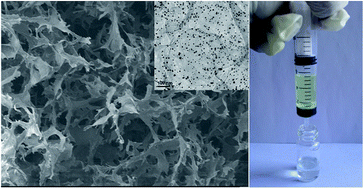
We report the in situ reduction and incorporation of gold nanoparticles into graphene oxide/polyethyleneimine composites with polyethyleneimine acting as the reducing and protecting agent for the gold nanoparticles. The resulting composites with porous structure are obtained through a simple freeze-drying method with the gold nanoparticles uniformly distributed on the graphene oxide sheets. The morphology and composition of the composite are characterized by scanning electron microscopy, transmission electron microscopy, X-ray photoelectron spectroscopy, X-ray diffraction and Raman spectroscopy. The catalytic test indicates that the as-prepared porous gold nanoparticle-embedded composite catalyst could efficiently activate the reduction of 4-nitrophenol to 4-aminophenol. The recycling measurement reveals that the activity of the recovered catalyst decreases a little, mainly due to the restacking of the graphene sheets. Moreover, the porous composites used as packing material in chromatography column and injection syringe exhibit good catalytic performances in the rapid reduction of 4-nitrophenol, implying the potential applications of such porous heterogeneous catalysts in continuous catalytic reaction.

Introduction

In the past decade, graphene has attracted considerable research interest owing to its exceptional properties1–3 and the fast development of graphene preparation methods, including bottom-up and top-down approaches.4 Various graphene-based materials have been prepared for potential applications in the fields of polymer composites, energy storage, catalysis, gas sorption, sensing, etc.5–9 Recently, tremendous efforts have been devoted to the fabrication of three-dimensional materials involving graphene in the forms of aerogels, foams and sponges.10–15 Such porous structures could effectively avoid the stacking of the graphene sheet while keep the intrinsic physicochemical properties and endow the resulting materials with features of high specific surface areas, strong mechanical strengths, good thermal stability, superior absorbability and extraordinary specific capacitance.16–18 The derivative of graphene, graphene oxide (GO), usually obtained from the exfoliated graphite is commonly used as the precursor of graphene for its advantages of availability in large-scale and processability in water. The subsequent reduction of GO would yield reduced GO (rGO), which is apt to assemble into robust architectures though π–π interaction. Herein, hydrothermal method is proved to be an efficient way to prepare graphene hydrogel with excellent mechanical property and well-defined network.10 Other facile methods without the requirements of specific equipments and high temperature/pressure have also been developed, which could realize the large-scale preparation of the porous graphene structures.19 For example, Yan et al. prepared graphene hydrogels and aerogels whose shapes could be controlled by reactor types through mild chemical reduction at 95 °C under atmospheric pressure without stirring.20 Gao et al. fabricated ultralight carbon nanotube/graphene aerogels with outstanding integrated properties by freeze-drying and hydrazine vapor reduction.21

The utilization of porous graphene materials as support of metal catalyst is also an attractive research field.22 Compared with the traditional catalyst supports, the high specific surface areas of graphene could provide more anchoring sites for the catalyst, impeding the aggregation of the metal nanoparticles. GO is often used as the support instead of graphene because the organic groups of GO make it possible to bring new surface functionalities or assemble with other components, which could enhance the interactions with the anchored metal nanoparticles. The ab initio calculations suggest that GO is a much better support candidate of metal nanocatalysts than graphene in terms of activity and feasibility.23 Moreover, the hydrophilic property of GO would favor the transport of reactants through graphene network and facilitate their contact with metal nanoparticles in aqueous reactions. Many metal nanoparticles, including gold, silver, platinum, palladium and copper, have been deposited on graphene or GO and demonstrated superior catalytic performances.24–28 Wang et al. have incorporated different noble metal nanoparticles into graphene aerogels through the hydrothermal method, which showed high catalytic activity and selectivity in the organic reaction.27 Jiao et al. have fabricated graphene-based hydrogel from the in situ co-reduction of GO and silver acetate for the efficient photocatalytic degradation of organic dyes.29 In a general strategy, GO is simultaneously reduced to rGO with the reduction of metal salt precursor, and the resulting rGO sheets assemble into robust graphene matrix within which the metal nanoparticles are uniformly deposited.

However, the catalytic performance of the porous graphene-nanoparticles composites with fixed/definite shapes is somewhat limited for they could not be distributed in the reaction solution, although the recycle is easy. The good dispersion of the catalyst in the reaction system could facilitate the contact of reactants with catalysts, leading to the improvement of the catalytic efficiency. In this work, we report the preparation of gold nanoparticles loaded on porous composites of polyethyleneimine (PEI) and GO through the in situ reduction and deposition of gold nanoparticles and a simple freeze-drying process. The resulting porous functional composite exhibits excellent catalytic activity for the reduction of 4-nitrophenol. Moreover, the chromatographic column or injector syringe packed with the as-prepared composite demonstrates superior continuous catalytic performance.

Experimental section

GO was prepared through a modified Hummers' method according to the literature.30 Briefly, 70 mL of concentrated H2SO4 in a flask was cooled in an ice bath, then 3 g of graphite powder and 1.5 g of NaNO3 were added to the flask. After the mixture was vigorously stirred for 1 h, 9 g of KMnO4 was slowly added (within 1 h) and the reaction temperature was maintained below 20 °C for another 30 min. Then the flask was transferred to a water bath of 35 °C and the mixture was stirred for about 1 h until a thick paste was formed. Subsequently, 140 mL of water was slowly added to the flask and the reaction temperature was maintained at 35 °C for about 10 min. Then the mixture was diluted with 500 mL of water, followed by the slow addition of 20 mL of 30% H2O2. The resulting yellow dispersion was thoroughly washed with 3% HCl solution and water through centrifugation. The solid (GO) was freeze-dried under vacuum.

The composite of gold nanoparticles and GO was prepared as follows. 20 mg of GO was dispersed in 10 mL of water and the pH value of the dispersion was adjusted to 10 with ammonium hydroxide before 1 h of ultrasonication. Then the mixture of 1 mL of PEI solution (10 mg mL−1) and 0.5 mL of HAuCl4·4H2O solution (20 mg mL−1) was added to the GO dispersion under vigorous stirring. The mixture was stirred for 2 h before moved to an oil bath at 80 °C and stirred for another 1 h. At last, the product was cooled to room temperature in air and treated by a freeze-dryer to obtain Au/PEI/GO composite powder of 35 mg. For comparison, the composite film was prepared as the procedure above, only replacing the freeze-drying method with the vacuum-filtering method.

To test the catalytic activity of the composites, 15 mL of aqueous 4-nitrophenol solution (0.1 mM) and 15 mL of freshly prepared aqueous NaBH4 solution (0.2 M) were mixed at room temperature. Then 5 mg of Au/PEI/GO powder was added into the stirred solution to catalyze the transformation of 4-nitrophenol to 4-aminophenol, which was monitored by UV-vis absorption spectrophotometer in the reaction process. At the end of the reaction, the catalyst was collected by filtering, washed thoroughly with water for the next cycle.

For the continuous catalytic test, Au/PEI/GO composite powder was packed in a thin glass chromatographic column or an injector syringe, with cotton wools placed at the bottom and top of the powders. The mixture solution of NaBH4 and 4-nitrophenol was added in the column or syringe from the top and flowed through the Au/PEI/GO packing. The effluent was collected in a vial.

Scanning electron microscopic (SEM) characterization was conducted on a JEOL JSM-7401F at an accelerating voltage of 5 kV. Transmission electron microscopic (TEM) images were captured on a JEOL 2010 operating at an accelerating voltage of 200 kV through a Gatan model 780 CCD camera. X-ray diffraction (XRD) analysis was obtained on Shimadzu XRD-7000 using Cu Kα radiation in the 2θ range from 2° to 80° with a scan rate of 2° min−1. X-ray photoelectron spectroscopy (XPS) was carried out on a Kratos AXIS Ultra using 300 W Al Kα radiation. Raman spectra were recorded with a Horiba XploRA PLUS confocal microscope using 532 nm laser excitation. Fourier transform infrared (FT-IR) spectra were collected on a Bruker Tensor 27 instrument. Thermogravimetric analysis (TGA) measurement was performed on a Q50 TA instrument and the samples were analyzed in platinum pans from room temperature to 700 °C under steady nitrogen at a heating rate of 5 °C min−1. UV-vis absorption measurement was conducted on a Shimadzu UV-3600 spectrometer.

Results and discussion

The incorporation of gold nanoparticles with GO is carried out through the in situ preparation of gold nanoparticles in the presence of PEI and GO in an aqueous solution. Herein, PEI acts as both reducing reagent and protecting reagent of gold nanoparticles.31 Moreover, PEI is also the reducing agent and surface modifier for GO, which could partially reduce GO sheets (proved by XPS as shown later). The gradual color conversion of the reaction mixture from yellow brown to dark brown indicates the reduction of GO.32 In general, the resulting composite materials obtained from filtration is compact, which is hard to redispersed in solvent for further use, especially disadvantageous for cases of catalysis. Herein, the freeze-drying process could yield a porous structure of the composite, which is readily dispersed in the reaction system, avoiding the aggregation of the graphene sheet and additional treatment for dispersion (such as ultrasonication and grinding).25 During freeze-drying process, Au/PEI/GO composite fixed in the ice matrix could maintain the initial network through the interaction of PEI and GO. With the continuous sublimation of ice upon vacuum, the porous composite could be obtained in the end. The photograph of the lyophilized Au/PEI/GO composite sample is shown in Fig. 1a, almost keeping the shape of the initial dispersion in the beaker. The density of the porous composite is about 8.5 mg cm−3, while the density of the composite from the control experiment of vacuum-filtrating method is about 1000 mg cm−3. Actually, by adjusting the initial GO concentration, the density of the porous product could be controlled. The specific surface area measured by methylene blue adsorption method33 is about 160 m2 g−1, indicating a relatively high surface-to-volume ratio. SEM image at low magnification (Fig. 1b) reveals that the structure is composed of GO sheet network, which is assembled though the PEI/GO interaction and the π–π stacking of the adjacent graphene sheets. The holes between the GO sheets, with the size of ∼100 μm, come from the removal of ice filled in the interspaces of the GO network. At high magnification, the gold nanoparticles could be obviously observed, which are homogeneously distributed on the graphene sheet (Fig. 1c). The SEM images of the sample from vacuum-filtering are shown in Fig. S1, demonstrating thick packed layers of GO with well-distributed gold nanoparticles.
image file: c6ra01772j-f1.tif
Fig. 1 Photograph (a) and SEM images at low (b) and high (c) magnification of Au/PEI/GO composites from freeze-drying.

The detailed chemical signatures of Au/PEI/GO composite obtained from SEM-EDX (Fig. S2) also confirm the presence of Au, as well as other elements in the composite. Calculated from the initial recipe and the resulting weight of the product, the content of gold in the Au/PEI/GO composite is 13.6%, close to the value of 12.2% estimated from the TGA results (Fig. S3). It is notable that although the as-prepared porous composite in our case is fragile with relatively poor mechanical strength, the superior dispersibility in solvent would facilitate their application in the subsequent catalysis reaction.

Further investigation of the gold nanoparticles is conducted on TEM, as seen in Fig. 2a, where a large number of gold nanoparticles are uniformly loaded on graphene sheet without aggregation. The size distribution exhibits that the diameters of the nanoparticles are mainly in the size range 4–18 nm, and the mean particle diameter is about 9.8 nm (Fig. 2b). The selected area electron diffraction (SAED) shows sharp reflexes of ordered regions of Au (Fig. 2c). In addition, the regular d-spacing of Au nanoparticle observed in the high resolution TEM image (Fig. 2d) is well matched with the (111) planes of crystalline gold.34


image file: c6ra01772j-f2.tif
Fig. 2 (a) TEM image of Au/PEI/GO composite, (b) size distribution of gold nanoparticles, (c) SAED pattern for the ordered regions of gold and (d) high resolution TEM image of a gold nanoparticle.

XPS is also used to detect the compositions of the samples. The survey XPS spectra of Au/PEI/GO composites and GO are shown in Fig. 3a. Obviously, the characteristic peaks of C 1s and O 1s are observed at 285 and 532 eV, respectively, for both the samples, while three new peaks assigned to N 1s, Cl 2p and Au 4f, respectively, are observed for the composite. The N 1s peak at 399 eV is assigned to the presence of PEI and the Cl 2p at 197 eV is attributed to the byproduct from chloroauric acid. The existence of Au is confirmed by the Au 4f peak around 86 eV, which is zoomed in as Fig. 3b. The diffused peaks with binding energies of 84.0 and 87.5 eV accord well with Au 4f7/2 and Au 4f5/2 in the metallic state, respectively. Fig. 3c and d illustrate the deconvoluted C 1s peaks of Au/PEI/GO and GO, respectively. The peak centered at the binding energy of 284.7 eV is attributed to the C[double bond, length as m-dash]C bond. The other deconvoluted peaks located at 286.1, 287.0 and 288.6 eV are assigned to the C–OH, C–O–C and C[double bond, length as m-dash]O respectively.35 Obviously, the relative intensity of the peak associated with oxygen-containing bonds significantly decreases for the Au/PEI/GO sample compared with that of GO, indicating that GO in the composite is partially reduced.36 FT-IR spectrum of GO shows the feature peaks at 1725 and 1627 cm−1 assigned to C[double bond, length as m-dash]O and C[double bond, length as m-dash]C stretching, respectively (Fig. S4). While for the Au/PEI/GO composite, the C[double bond, length as m-dash]O peak almost disappears, indicating the strong interaction between the carboxylic groups of GO and the amines group of PEI.37


image file: c6ra01772j-f3.tif
Fig. 3 XPS spectra of Au/PEI/GO and GO samples (a) and deconvoluted XPS peaks for (b) Au 4f of Au/PEI/GO, (c) C 1s of Au/PEI/GO and (d) C 1s of GO.

To further characterize the structure of Au/PEI/GO composite, its XRD spectrum is measured and shown in Fig. 4a. The peaks at 38.35°, 44.54°, 64.81° and 77.71° are assigned to face-centered cubic bulk Au (111), (200), (220) and (311), respectively, which are in agreement with the standard values of gold (JCPDS 04-0784)38 and the SAED patterns (Fig. 2c). The spectrum also displays the characteristic peak of GO at 9.8°, lower than the peak of GO at 11.2°, indicating the increase of the interlayer spacing of GO in the composite compared with the original GO.37 The XRD pattern of the film composite from vacuum-filtering shows two obvious peaks at 12.8° and 24.2° (Fig. S5), which suggests the existence of different GO sheet assembly in the sample. The former peak corresponding to the d-spacing of 0.69 nm implies the intercalation of PEI into the GO layers.39 While for the peak at 24.2° with the d-spacing of 0.37 nm, a little higher than that of 0.34 nm for graphite, it could be ascribed to the tight stacking of GO owing to the vacuum-filtering and the π–π interaction of the partially reduced GO.


image file: c6ra01772j-f4.tif
Fig. 4 XRD patterns (a) and Raman spectra (b) of Au/PEI/GO composite and GO.

The Raman spectra of Au/PEI/GO and GO exhibit two peaks at 1335 cm−1 and 1589 cm−1 corresponding to the D and G bands, respectively (Fig. 4b). The G band is assigned to the first-order scattering of the E2g mode observed for sp2 carbon domains and the D band is associated with disordered structural defects. The intensity ratio between the D and G bands (ID/IG) can be used to estimate the degree of structural disorder. In our case, the ID/IG value is 1.32 for the Au/PEI/GO sample, much high than the GO value of 0.91, which could be ascribed to the interaction of PEI with GO and the partial reduction of GO.40,41

The catalytic performance of the Au/PEI/GO composite is studied by the reduction of 4-nitrophenol to 4-aminophenol with NaBH4, a representative reaction to evaluate the catalytic activity of gold nanoparticles.42–44 The reduction process could be easily monitored by UV-vis spectra because of the feature absorption at 400 nm and 300 nm for 4-nitrophenol and 4-aminophenol, respectively. Before the addition of the catalyst, the yellow-green mixture solution of 4-nitrophenol and NaBH4 shows a strong peak assigned to the nitro group at 400 nm in UV-vis spectrum. Upon the adding of the catalyst, the reduction reaction is activated and the peak at 400 nm begins to decrease. At the same time, a new peak at 300 nm owing to 4-aminophenol appears and grows. Fig. 5a clearly illustrates the evolution of UV-vis spectra recording the transforming of 4-nitrophenol to 4-aminophenol in the reaction procedure, with the decrease of the peak at 400 nm and the development of the peak at 300 nm. When the reaction finishes after 7 min, the peak at 400 nm almost disappears and the solution becomes colorless, implying the complete reduction of the initial nitro compound. Fig. 5b shows the variation of ln[thin space (1/6-em)]A (A is the absorbance value at 400 nm from Fig. 5a) with the reaction time, which could be fitted as a linear correlation, indicating that the reduction reaction obeys the pseudo-first-order kinetics. The rate constant (K) obtained from the slope of the fitting straight line is 9.87 × 10⁻³ s−1. The ratio of constant K over the catalyst weight (k = K/m) is 1.97 s−1 g−1, much higher than the reported ratio of spongy gold nanocrystals45 and similar to the carbon nanotube/GO composite supported gold nanoparticles.46 The catalytic performance of composite for vacuum-filtering is also measured after grinding, which presents the k value of 0.85 s−1 g−1, much lower than that of the porous sample.


image file: c6ra01772j-f5.tif
Fig. 5 (a) UV-vis absorption spectra recording the reduction of 4-nitrophenol to 4-aminophenol by NaBH4 in the presence of Au/PEI/GO composites at different reaction time and (b) the logarithm dependence of the absorbance at 400 nm versus the reduction time. Inset: K values versus the reaction cycle numbers.

The reusability is an important feature for the evaluation of heterogeneous catalyst. Herein, the Au/PEI/GO composites are recycled and used in a new reaction to test the catalytic activity for 4 time, and the corresponding K values is shown in Fig. 5b inset. Obviously, the K value decreases about 10% after each cycle, which might partially be attributed to the sample loss in the recycling process involving filtering and washing. However, the structure of the composite after reaction, which would significantly influence the recycling catalytic behavior, should be further investigated.

The morphology of the Au/PEI/GO composite after 4 catalytic cycles is observed by SEM. As shown in Fig. 6a, the porous structure of the composite is relatively well kept, while the graphene sheets present the tendency of wrinkling and aggregating. The shrinking of the composite would lead to the restacking of GO sheets and harm the catalytic activity of gold nanoparticles. The magnified image shown in Fig. 6b reveals that the gold nanoparticles on the GO sheet still maintain a good distribution without obvious change after the reaction cycles, compared with Fig. 1c, which ensures the relatively high catalytic performances of the recycled sample. The XRD pattern of the recovered composite catalyst clearly presents the existence of Au, while the pronounced peak at 21.6°, corresponding to the layer spacing of 0.41 nm, indicates the restacking of the GO layer.39


image file: c6ra01772j-f6.tif
Fig. 6 SEM images at low (a) and high (b) magnification, and XRD pattern (c) of Au/PEI/GO composites after 4 catalytic cycles. Photographs of chromatographic column (d) and injector syringe (e) packed with Au/PEI/GO composites.

Although the catalytic activity decreases in the recycling test owing to the stacking of the GO sheets. The advantage of the porous composite catalyst is the good dispersion in the reaction system, which could improve the contacts of the gold nanoparticle with the reactants. In fact, a possible application of this kind of powder catalyst is chromatographic packing material.47 Fig. 6d shows the photograph of a chromatographic column packed with the Au/PEI/GO composite. The continuous reduction of 4-aminophenol could be realized in the column with good efficiency, indicating the possibility of large-scale use in fixed- or fluid-bed catalysis processes.27 For better demonstration of the design, the Au/PEI/GO composite is packed in an injector and the yellow-green solution of 4-nitrophenol and NaBH4 is pushed through the catalyst packing layer in a few seconds (Fig. 6e). The colorless effluent received in vial indicates the high efficiency of the reduction from 4-nitrophenol to 4-aminophenol (also see in Video S, with the speed of ∼0.8 mL s−1 for the liquid passing through the catalyst).

Conclusions

In summary, we have demonstrated a facile method for the fabrication of porous Au/PEI/GO composites with the in situ reduction of gold nanoparticles by PEI. The freeze-drying treatment endows the resulting composites with porous structure on which the gold nanoparticles are uniformly distributed. Although the composites present relatively poor mechanical strength due to the incomplete reduction of GO, their good dispersibility in water contributes to the high catalytic efficiency of gold nanoparticles. The recycled catalyst shows a little decrease of activity owing to the restacking of the graphene sheets. Interestingly, the continuous catalytic performances the porous composites packed in chromatography column or injection syringe suggest the promising applications of such porous heterogeneous catalysts in flow-through catalytic reactor.

Acknowledgements

This work was supported by the National Natural Science Foundation of China (Grant No. 21173266 and 21473250) and the Fundamental Research Funds for the Central Universities, the Research Funds of Renmin University of China (Grant No. 15XNLQ04 and 16XNLQ04).

References

  1. K. S. Novoselov, A. K. Geim, S. V. Morozov, D. Jiang, Y. Zhang, S. V. Dubonos, I. V. Grigorieva and A. A. Firsov, Science, 2004, 306, 666–669 CrossRef CAS PubMed.
  2. A. K. Geim and K. S. Novoselov, Nat. Mater., 2007, 6, 183–191 CrossRef CAS PubMed.
  3. K. S. Novoselov, V. I. Falko, L. Colombo, P. R. Gellert, M. G. Schwab and K. Kim, Nature, 2012, 490, 192–200 CrossRef CAS PubMed.
  4. X. Huang, X. Qi, F. Boey and H. Zhang, Chem. Soc. Rev., 2012, 41, 666–686 RSC.
  5. X. M. Sun, H. Sun, H. P. Li and H. S. Peng, Adv. Mater., 2013, 25, 5153–5176 CrossRef CAS PubMed.
  6. F. Bonaccorso, L. Colombo, G. H. Yu, M. Stoller, V. Tozzini, A. C. Ferrari, R. S. Ruoff and V. Pellegrini, Science, 2015, 347, 1246501 CrossRef PubMed.
  7. N. M. Julkapli and S. Bagheri, Int. J. Hydrogen Energy, 2015, 40, 948–979 CrossRef CAS.
  8. S. Gadipelli and Z. X. Guo, Prog. Mater. Sci., 2015, 69, 1–60 CrossRef CAS.
  9. S. K. Vashist and J. H. T. Luong, Carbon, 2015, 84, 519–550 CrossRef CAS.
  10. Y. X. Xu, K. X. Sheng, C. Li and G. Q. Shi, ACS Nano, 2010, 4, 4324–4330 CrossRef CAS PubMed.
  11. Y. R. Sun, M. X. Yang, F. Yu, J. H. Chen and J. Ma, Prog. Chem., 2015, 27, 1133–1146 Search PubMed.
  12. Z. Ma, Y. Qiu, Y. Huang, F. Gao and P. Hu, RSC Adv., 2015, 5, 79456–79462 RSC.
  13. L. L. Jiang and Z. J. Fan, Nanoscale, 2014, 6, 1922–1945 RSC.
  14. H. Bi, X. Xie, K. Yin, Y. Zhou, S. Wan, L. He, F. Xu, F. Banhart, L. Sun and R. S. Ruoff, Adv. Funct. Mater., 2012, 22, 4421–4425 CrossRef CAS.
  15. V. Chabot, D. Higgins, A. P. Yu, X. C. Xiao, Z. W. Chen and J. J. Zhang, Energy Environ. Sci., 2014, 7, 1564–1596 CAS.
  16. Y. F. Ma and Y. S. Chen, Natl. Sci. Rev., 2015, 2, 40–53 CrossRef.
  17. Z. Q. Yan, W. L. Yao, L. Hu, D. D. Liu, C. D. Wang and C. S. Lee, Nanoscale, 2015, 7, 5563–5577 RSC.
  18. Y. X. Xu, G. Q. Shi and X. F. Duan, Acc. Chem. Res., 2015, 48, 1666–1675 CrossRef CAS PubMed.
  19. Z. Zhao, X. Wang, J. Qiu, J. Lin, D. Xu, C. A. Zhang, M. Lv and X. Yang, Rev. Adv. Mater. Sci., 2014, 36, 137–151 Search PubMed.
  20. W. Chen and L. Yan, Nanoscale, 2011, 3, 3132–3137 RSC.
  21. H. Sun, Z. Xu and C. Gao, Adv. Mater., 2013, 25, 2554–2560 CrossRef CAS PubMed.
  22. Y. Cheng, Y. Q. Fan, Y. Pei and M. H. Qiao, Catal. Sci. Technol., 2015, 5, 3903–3916 CAS.
  23. M. Yang, M. Zhou, A. Zhang and C. Zhang, J. Phys. Chem. C, 2012, 116, 22336–22340 CAS.
  24. K.-C. Hsu and D.-H. Chen, Nanoscale Res. Lett., 2014, 9484 Search PubMed.
  25. G. M. Scheuermann, L. Rumi, P. Steurer, W. Bannwarth and R. Mülhaupt, J. Am. Chem. Soc., 2009, 131, 8262–8270 CrossRef CAS PubMed.
  26. B. Adhikari, A. Biswas and A. Banerjee, ACS Appl. Mater. Interfaces, 2012, 4, 5472–5482 CAS.
  27. Z. Tang, S. Shen, J. Zhuang and X. Wang, Angew. Chem., Int. Ed., 2010, 49, 4603–4607 CrossRef CAS PubMed.
  28. M. d'Halluin, T. Mabit, N. Fairley, V. Fernandez, M. B. Gawande, E. Le Grognec and F. X. Felpin, Carbon, 2015, 93, 974–983 CrossRef.
  29. T. F. Jiao, H. Y. Guo, Q. R. Zhang, Q. M. Peng, Y. F. Tang, X. H. Yan and B. B. Li, Sci. Rep., 2015, 5, 11873 CrossRef CAS PubMed.
  30. Z. Y. Sui, Y. Cui, J. H. Zhu and B. H. Han, ACS Appl. Mater. Interfaces, 2013, 5, 9172–9179 CAS.
  31. X. G. Hu, T. Wang, X. H. Qu and S. J. Dong, J. Phys. Chem. B, 2006, 110, 853–857 CrossRef CAS PubMed.
  32. H. Y. Liu, T. Kuila, N. H. Kim, B. C. Ku and J. H. Lee, J. Mater. Chem. A, 2013, 1, 3739–3746 CAS.
  33. M. J. McAllister, J. L. Li, D. H. Adamson, H. C. Schniepp, A. A. Abdala, J. Liu, M. Herrera-Alonso, D. L. Milius, R. Car, R. K. Prud'homme and I. A. Aksay, Chem. Mater., 2007, 19, 4396–4404 CrossRef CAS.
  34. B.-S. Kong, J. Geng and H.-T. Jung, Chem. Commun., 2009, 45, 2174–2176 RSC.
  35. O. C. Compton, D. A. Dikin, K. W. Putz, L. C. Brinson and S. T. Nguyen, Adv. Mater., 2010, 22, 892–896 CrossRef CAS PubMed.
  36. J. Li, C.-y. Liu and Y. Liu, J. Mater. Chem., 2012, 22, 8426–8430 RSC.
  37. J. Zou and F. Kim, Nat. Commun., 2014, 5, 5254 CrossRef CAS PubMed.
  38. N. Zhang, H. Qiu, Y. Liu, W. Wang, Y. Li, X. Wang and J. Gao, J. Mater. Chem., 2011, 21, 11080–11083 RSC.
  39. M.-C. Hsiao, S.-H. Liao, M.-Y. Yen, C.-C. Teng, S.-H. Lee, N.-W. Pu, C.-A. Wang, Y. Sung, M.-D. Ger, C.-C. M. Ma and M.-H. Hsiao, J. Mater. Chem., 2010, 20, 8496–8505 RSC.
  40. J. Shen, Y. Hu, C. Li, C. Qin, M. Shi and M. Ye, Langmuir, 2009, 25, 6122–6128 CrossRef CAS PubMed.
  41. S. Stankovich, D. A. Dikin, R. D. Piner, K. A. Kohlhaas, A. Kleinhammes, Y. Jia, Y. Wu, S. T. Nguyen and R. S. Ruoff, Carbon, 2007, 45, 1558–1565 CrossRef CAS.
  42. H. Liu, J. Wang, Z. Feng, Y. Lin, L. Zhang and D. Su, Small, 2015, 11, 5059–5064 CrossRef CAS PubMed.
  43. H. Q. Yao, T. C. Huang and H. J. Sue, RSC Adv., 2014, 4, 61823–61830 RSC.
  44. J. Luo, N. Zhang, R. Liu and X. Y. Liu, RSC Adv., 2014, 4, 64816–64824 RSC.
  45. M. H. Rashid, R. R. Bhattacharjee, A. Kotal and T. K. Mandal, Langmuir, 2006, 22, 7141–7143 CrossRef CAS PubMed.
  46. F. Yang, C. X. Wang, L. N. Wang, C. Liu, A. D. Feng, X. Liu, C. Chi, X. L. Jia, L. Q. Zhang and Y. F. Li, RSC Adv., 2015, 5, 37710–37715 RSC.
  47. B. Duan, F. Liu, M. He and L. Zhang, Green Chem., 2014, 16, 2835–2845 RSC.

Footnote

Electronic supplementary information (ESI) available: The characterization of EDX, TGA, FT-IR for porous Au/PEI/GO composite and SEM, XRD for Au/PEI/GO composite from vacuum-filtering. See DOI: 10.1039/c6ra01772j

This journal is © The Royal Society of Chemistry 2016
Click here to see how this site uses Cookies. View our privacy policy here.