
Danielle Maitland‡
,
Scott B. Campbell‡,
Jenny Chen and
Todd Hoare*
Department of Chemical Engineering, McMaster University, 1280 Main St. W., Hamilton, Ontario, Canada L8S 4L7. E-mail: hoaretr@mcmaster.ca
First published on 29th January 2016
Manipulation of the relative swelling and volume fractions of the microgel and bulk hydrogel phases of nanocomposite hydrogels containing superparamagnetic iron oxide nanoparticles (SPIONs) is demonstrated to enable higher on–off state resolution and enhanced total duration of pulsatile drug release potential when the nanocomposites are activated by an alternating magnetic field. Adjusting the microgel chemistry to create microgels that have less deswelling below 37 °C and more proportional deswelling between 37 °C and 43 °C, increasing the volume fraction of microgels in the nanocomposite (while maintaining the mechanical stability of the nanocomposite), and limiting the swelling capacity of the surrounding hydrogel were all found to improve the degree of enhanced release that occurs after an externally-operated AMF pulse. Collectively, these results serve both to optimize the function of these nanocomposite materials for pulsatile drug delivery as well as confirm the proposed mechanism of pulsatile release, by which free volume is generated within the nanocomposite at the thermoresponsive microgel–bulk hydrogel interface upon internal heating of the device via SPION-driven hysteresis heating of the nanocomposite in an alternating magnetic field. Coupled with the injectability, degradability, mechanical stability, and cytocompatibility of these nanocomposites, we anticipate potential applications as advanced ‘smart’ drug delivery technologies that can be operated via an external and non-invasive trigger.
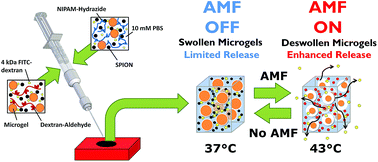
Instead, externally-actuated “on-demand” delivery vehicles that can be triggered by the application of a stimulus outside the body offer an alternative and more flexible option for pulsatile or on-demand drug delivery vehicle design. Such a device requires two major components: a switching material that modulates drug diffusion by altering its pore size, overall volume, or affinity for a target drug in response to a stimulus (e.g. temperature,11–13 pH,14–16 or solute concentrations17,18) and a transducing material that receives an external stimulus (e.g. ultrasound,19 near-IR irradiation,20 or alternating magnetic fields (AMFs)21) and translates that stimulus into a signal to which the switching material can respond. Several such externally actuated systems have been developed for not only drug release, but also for tissue engineering, imaging, and hyperthermia treatments,22–24 with each device often having multiple applications. A remarkable example of such technology is an implantable microchip device designed by Farra et al. that is able to deliver wirelessly-controlled pulsatile dosages of anti-osteoporosis drugs in human subjects.25 However, these devices, and several similar systems,26–28 require surgical implantation and would quickly develop a fibrous capsule in vivo due to the non-biomimetic physiochemical characteristics of the materials comprising the devices.
As a result of these limitations, an emerging research focus in pulsatile release composites involves the use of hydrogels, water-swollen cross-linked 3D networks of hydrophilic polymers, as the scaffold material given that they are physically and often-times chemically similar to soft tissues,29,30 exhibit low protein adsorption leading to generally good biocompatibility,30,31 can be loaded with drugs into their highly porous internal network,32–34 and can act as a stimuli-responsive switching material to stimuli such as temperature, pH, or electric fields.35–37 Hydrogel nanocomposites have been used to achieve temporal control over drug release with high/low release kinetics via a variety of external mechanisms, including near-IR,38–40 electric fields,41,42 and AMFs.43,44 However, few of these devices are functionally biodegradable or easily administered to a patient without requiring surgery, often requiring two invasive procedures (one for implantation and one for removal at the end of the device's functional lifetime) for practical use in the clinic.30,41 Exceptions to this general rule include the work of Ge et al., who designed injectable nanocomposites composed of organic polypyrrole nanoparticles within a sol–gel forming hydrogel that exhibited exceptional dosage control over multiple days using electric fields,41 and Wu et al., who fabricated an injectable hydrogel containing both physical and covalent cross-links between graphene oxide and peptides and used near-IR irradiation to break the physical cross-links to achieve pulsatile release in vivo.30 However, the relatively low penetration distance of near-IR irradiation, in comparison to AMFs, and the need to create external electronics associated with these technologies require the hydrogel to be located closer to the skin for effective triggering.
An injectable system that is capable of externally and non-invasively triggering on/off or high/low dosing patterns of a therapeutic locally at a target site would significantly improve the potential translatability of these types of release vehicles to the clinic. Such a system would enable release kinetics to be tuned specifically to individual treatments, allowing for the potential to improve drug safety, reduce the risk of systemic side effects, and prolong the effective duration of action of a given drug delivery vehicle for better patient compliance.39
Injectable, in situ-gelling hydrogels that form via rapid covalent cross-linking of polymers functionalized with complementary reactive groups45,46 offer a potential option for creating such drug delivery vehicles. We have previously developed in situ gelling hydrogel networks created via the reaction of hydrazide-functionalized poly(N-isopropylacrylamide) (PNIPAM) and aldehyde-functionalized dextran to form hydrolytically degradable hydrazone cross-links.47 By incorporating superparamagnetic iron oxide nanoparticles (SPIONs) directly into the network, exposure to an external alternating magnetic field (AMF) resulted in heat generation inside the hydrogel network via hysteresis heating of the SPIONs and (subsequently) a volume phase transition in the thermosensitive PNIPAM-containing bulk hydrogel. When drugs were loaded into these materials, they exhibited repeatable pulsatile release characteristics in response to AMF application. Recently, we enhanced both the duration of this pulsatile release potential as well as the resolution between the on- and off-states of drug release kinetics by incorporating thermoresponsive PNIPAM-based microgels into these SPION–hydrogel nanocomposite materials.48 Enhanced release is achieved by externally heating these microgels above their volume phase transition temperature (VPTT), producing free volume within the nanocomposite that allows for more facile diffusional transport of therapeutic agents out of the gel (see Fig. 1 for the proposed mechanism of release enhancement using microgels). However, further improvements are required for the use of these materials in a practical application, particularly in terms of extending the duration over which pulsatile drug delivery is possible and increasing the gap between release rates at the “off” (non-triggered) state and the “on” (triggered) states.
In light of the proposed mechanism for release enhancement, our aim in this work is to manipulate both the relative volume fractions as well as the relative volume changes (i.e. swelling responses) of both the bulk and microgel phases to better exploit this release mechanism for achieving prolonged and higher resolution pulsatile drug delivery. In particular, we demonstrate that increasing the microgel volume fraction, optimizing the phase transition temperature of the microgel to achieve the maximum possible volume change upon relevant triggering temperature changes, and minimizing the swelling response of the bulk gel can all improve the properties of these nanocomposite hydrogels for pulsatile drug delivery applications.
000), ethylene glycol (99.8%), fluorescein isothiocyanate-labelled dextran (FITC-Dex; MW ≈ 4 kDa), iron(II) chloride tetrahydrate (98%), iron(III) chloride hexahydrate (97%), N′-ethyl-N-(3-dimethylaminopropyl)-carbodiimide (EDC; commercial grade), N-N′-methylene bisacrylamide (MBA; 99%), N-isopropylmethacrylamide (NIPMAM; 97%), poly(ethylene glycol) (PEG; 8 kDa), sodium carboxymethyl cellulose (CMC, MW ≈ 700
000), sodium periodate (>99.8%), thiazolyl blue tetrazolium bromide (MTT), and thioglycolic acid (≥98.1%), were all acquired from Sigma Aldrich (Oakville, ON) and used without further purification. 2,2-Azobisisobutyric acid dimethyl ester (AIBME; 98.5%) was purchased from Wako Chemicals. N-Isopropylacrylamide (NIPAM; 99%) was purchased from J&K Scientific. 3T3 Mus musculus mouse fibroblast cells were obtained from Cedarlane Laboratories Ltd. (Burlington, ON) and were cultured in media containing Dulbecco's Modified Eagle Medium-high glucose (DMEM), fetal bovine serum (FBS), and penicillin streptomycin (PS) acquired from Invitrogen Canada (Burlington, ON). Trypsin–EDTA was also purchased from Invitrogen Canada (Burlington, ON). Deionized water (DIW) was purified using a Barnstead Nanopure water purification system.
:
2 toluene–hexane mixture), 1.0 g AA, 0.056 g AIBME, and thioglycolic acid (87 μL) were dissolved in 20 mL of ethanol, purged with nitrogen, heated to 56 °C, and polymerized overnight. A rotary evaporator was used to remove the solvent, and the viscous product was dissolved in 200 mL of DIW and dialyzed against DIW for six 6 h cycles. Following, 3.0 g of NIPAM-co-AA and a five-fold molar excess of ADH (7.25 g) were dissolved in 600 mL DIW. A 2.5 times molar excess of EDC (3.99 g) dissolved in 5 mL of DIW was added to the solution and the pH was maintained at 4.75 manually via the addition of 0.1 M HCl for 4 hours. The hydrazide-functionalized product was dialyzed against DIW for six 6 h cycles and lyophilized. The degree of hydrazide functionalization was determined by potentiometric titration to be 8.2 ± 0.6 mol%.
:
NIPAM ratios (and thus volume phase transition temperatures) were produced by varying the relative amounts of NIPAM and NIPMAM used to prepare the microgels (Table 1).
| Test name | NIPMAM : NIPAM ratio |
NIPMAM monomer (g) | NIPAM monomer (g) | Microgel VPTT | % Change in microgel volume | |
|---|---|---|---|---|---|---|
| From 25 °C to 37 °C | From 37 °C to 43 °C | |||||
| a ^ This size difference is based on the size of M1 at 40 °C instead of 43 °C because the microgels aggregated before 43 °C. The difference in size experienced by the microgels in the composite (where aggregation would not occur) is likely higher than this reported value. | ||||||
| M1.8 | 1.8 : 1 |
0.9 | 0.5 | 38.6 °C | −80 ± 7 | −96 ± 6 |
| M1 | 1 : 1 |
0.7 | 0.7 | 37.9 °C | −81 ± 5 | −82 ± 3^ |
| M0.56 | 0.56 : 1 |
0.5 | 0.9 | 36.2 °C | −96 ± 8 | −90 ± 9 |
| M0.27 | 0.27 : 1 |
0.3 | 1.1 | 35.6 °C | −98 ± 4 | −75 ± 6 |
The temperature-dependent size of the p(NIPAM-NIPMAM) microgels was determined by dynamic light scattering using a Brookhaven 90Plus Particle Analyzer. Lyophilized microgels were reconstituted in 0.15 M NaCl (saline) at a concentration of 1.5 mg mL−1. Reading times for each measurement were 2 minutes per sample, with 4 repeat measurements taken at each temperature; the error bars represent the standard deviation of these repeated measurements (n = 4). Particle sizes were measured at 1 °C intervals from 25 °C to 50 °C, allowing 5 minutes for temperature stabilization at each temperature point.
:
1 molar ratio in 12.5 mL of DIW. Ammonium hydroxide (6.5 mL) was added dropwise under magnetic mixing at 500 rpm over 10 minutes with a nitrogen purge. After an additional 10 minutes of mixing, PEG (MW = 8 kDa, 1.0 g) was dissolved in 10 mL of DIW and the solution was added to the iron mixture. The mixture was heated to 80 °C for 2 hours to peptize the SPION surface with PEG. After two hours, the SPION solution was cooled and washed using magnetic separation against 0.15 M saline and concentrated using a permanent magnet five times. The SPION concentration was determined gravimetrically, and the final concentrations were diluted in 0.15 M saline to make 5 wt% SPION solutions, a concentration that enables sufficient AMF-induced heating for activation without disrupting cross-linking of the bulk hydrogel. From transmission electron microscopy (JEOL Ltd., Japan) images analyzed using Image J software, the PEG-coated SPIONs were determined to form clusters of between 30 and 200 nm, with individual particle diameters of 14 ± 5 nm (n = 258, Fig. S1†). We have previously demonstrated that SPIONs are quantitatively incorporated into the nanocomposite hydrogels and maintain their superparamagnetic properties.48
![]() | (1) |
For drug release studies, each composite was immersed in 4 mL of 10 mM PBS. Samples were collected at 10 minute intervals before and after repeated 10 minute AMF pulsatile applications (applied every 50 minutes). Concurrent with the pulsatile release tests, a set of control gels (n = 4) was kept in identical test tubes in a water bath at 37 °C and were sampled at the same time intervals (but never exposed to the AMF). 3 × 200 μL samples were removed from each test-tube at each time point into 96-well plates. 600 μL of fresh, pre-heated PBS was added back into the test-tube to ensure the composites remained fully immersed and to maintain infinite sink conditions during the release process. This process was repeated on days one, two, three, and five to evaluate the composites' ability to facilitate repeated magnetically induced pulsatile release. The composites were exposed to 4–6 pulses on each day. The concentration of released 4 kDa FITC-Dex was measured using a fluorescence plate reader (PerkinElmer Victor3 multilabel plate reader, 485 nm excitation/535 nm emission wavelength) and converted to a mass release rate by dividing the calculated absolute mass released in each interval (from fluorimetry) by the duration of that interval (∼10 minutes).
The effect of the magnetic pulse on release was determined according to the percentage increase in release rate as a result of the AMF exposure, calculated based on comparing the experimental release rate following a pulse to the expected release rate estimated by interpolating between the rates observed at the two (non-pulsed) time points prior to and two time points after pulsatile induction (represented in ESI, Fig. S3†). The use of a weighted average to calculate the expected release rate (R) at a given time point (Rn) is described in eqn (2):
![]() | (2) |
The percentage increase in the release rate directly after an applied pulse is then calculated by simply dividing the experimental release rate by this calculated estimate of the expected release rate (the likely release rate value had no AMF been applied), converting this ratio into a percentage, and subtracting 100% to result in a percent increase in release.
This calculation was performed for both the pulsed and non-pulsed (control) nanocomposites, with the percent increase in release rate values reported in the results section representing the difference between the pulsed and control nanocomposite results. The rationale behind this calculation is that any environmental factors (i.e. a change in room temperature or a fluctuation of water bath temperature) that resulted in ‘pulse’ behaviour of the control composite at that time point would be filtered out, isolating the effect of the AMF only on facilitating pulsatile release. Error bars represent the standard deviation in the readings for independently-extruded composites (n = 4).
000 3T3 cells in 1 mL of media were added to each well of a 24 well polystyrene plate (n = 4 for each sample tested). After the cells were incubated at 37 °C and 5% CO2 for 24 hours, the media was aspirated, 1 mL of fresh media was added, and nanocomposites the same size as the well were added on top of the cells and incubated for an additional 24 hours. A positive control containing cells and no nanocomposites and a negative control containing no cells and no nanocomposites were also tested. After 24 hours of exposure, the solution covering the cells was aspirated and each well was rinsed with 0.5 mL of media. 150 μL of a 0.4 mg mL−1 MTT solution was then added to each well, and the cells were incubated in the MTT solution for 4 hours. After the incubation period, 250 μL of DMSO was added to each well to dissolve the insoluble formazan precipitate. Plates were placed on a shaker for 20 minutes or until the purple formazan was completely dissolved. 2 × 200 μL was removed from each well, transferred to a 96 well polystyrene plate, and read in an absorbance reader at 540 nm (PerkinElmer Victor3 multilabel plate reader). The percent cell viability was calculated as the ratio of the average absorbance values of cells exposed to the nanocomposite and the average absorbance values of cells incubated only in media (positive control). Error bars represent the standard deviation of the four replicate measurements.
![]() | ||
Fig. 3 Temperature-responsive behaviour of microgels made with different NIPMAM : NIPAM ratios. Arrows indicate aggregation points of M0.27 and M1 microgels. | ||
While incorporation of the NIPMAM comonomer results in a phase transition over a much broader temperature range than observed for PNIPAM microgels, increasing the NIPMAM content increases the VPTT of the microgel within the triggering temperature range (37–43 °C) for the compositions studied. Of particular note, the M1.8 microgel (containing the most NIPMAM comonomer) collapses the least between 25 °C and 37 °C but exhibits the largest volume change between 37 °C and 43 °C, a property which (assuming the free volume mechanism of release to be correct) would suggest this microgel has particular utility for regulating pulsatile release (i.e. minimum free volume generation <37 °C, maximum free volume change in triggering range). However, all microgels tested do exhibit significant deswelling in the triggering range and should thus have capacity to regulate on-demand release. Note that the aggregation observed in free solution for M0.27 and M1 would not likely be observed in the nanocomposite hydrogels given that microgels are dispersed throughout and entrapped within the hydrogel network, eliminating or sharply reducing the microgel mobility required for aggregation to occur.
:
hydrogel ratio could be varied without compromising the mechanical integrity of the hydrogel. As shown in Fig. 4a, the plateau storage modulus of the nanocomposites increases until it reaches a critical microgel content of ∼12 wt% (corresponding to 8.4 vol% microgel phase). This result can be ascribed to the competition of multiple factors governing nanocomposite mechanics related to the role of microgels in the structure. Microgels are more highly cross-linked in comparison to the external hydrogel, imparting higher mechanical strength to nanocomposites with greater amounts of microgel; however, above a certain microgel content (12 wt% microgel), the microgel sterically inhibits cross-linking in the bulk hydrogel phase, leading to a reduction in modulus at higher microgel contents and, eventually, the complete lack of gelation observed at concentrations >16 wt%. It should also be noted that as microgel content is increased, the storage modulus of the nanocomposite becomes more frequency dependent, an effect we attribute to the higher potential for viscous dissipation upon shearing when more phase boundaries are introduced in the nanocomposite between the (softer) bulk hydrogel and the (harder) microgel phases. Note that while M0.56 was used as the microgel in Fig. 4, there is no significant difference in nanocomposite mechanics as a function of microgel composition (ESI Fig. S4†), such that analogous results can be anticipated for each microgel tested.
Fig. 4b shows that as more CMC-Ald is used to replace Dex-Ald in the magnetic nanocomposites, the storage modulus of the gel decreases. This can be attributed to the DEX-Ald having a greater aldehyde content (17.4% of repeat units) than the CMC-Ald polymer (12.4% of repeat units), allowing for a greater cross-link density and improved mechanical strength. Thus, the lower cross-link density coupled with the higher hydrophilicity (and limited residual charge) of CMC-rich hydrogels is expected to lead to significantly more swelling in these hydrogels than the dextran-rich hydrogels, which are more densely cross-linked and do not contain any residual charge.
| pH = 7.4 (PBS) | pH = 3 | pH = 1 | |
|---|---|---|---|
| 0 wt% M0.56 | 24 ± 9 days | 9 ± 2 days* | 5.0 ± 0.9 h |
| 4 wt% M0.56 | 21 ± 5 days | 19 ± 2 days* | 5.6 ± 1.5 h |
| 8 wt% M0.56 | 100 ± 10 days* | 30 ± 5 days* | 9.8 ± 0.5 h* |
| 12 wt% M0.56 | 23 ± 4 days | 4 ± 2 days* | 4.1 ± 1.3 h |
Table 2 confirms that the nanocomposites degrade via an acid-catalyzed process, as lower pH buffers accelerated the degradation process for every nanocomposite tested. As the microgel content was increased, the nanocomposites generally take longer to degrade. We hypothesize this trend is a result of the increased content of the higher polymer fraction microgels limiting the diffusion of water through the nanocomposite. However, the 12 wt% microgel composites degraded much more rapidly than the 8 wt% nanocomposites. We attribute this result likely to the presence of the microgels significantly limiting the number of cross-links that can form upon in situ-gelation (resulting in fewer hydrolytic events being more effective at functionally degrading the bulk gel network). Of note, the 12 wt% microgel nanocomposites were observed to be the strongest from a mechanical perspective (Fig. 4) but degrade significantly faster than the 8 wt% microgel nanocomposites (Table 2). This result suggests that the 12 wt% microgel concentration is high enough to disrupt the formation of cross-links (sufficient to significantly influence the degradation time) but not high enough to negate the positive effects of adding additional microgel on the storage modulus of the composite as a whole.
As we observed for nanocomposite mechanics, properties that are highly dependent on the properties of the external hydrogel, as degradation is, are negligibly affected by microgel composition. However, replacing the Dex-Ald component certainly influences the degradation rate of the magnetic composites, as shown in the accelerated degradation study in Fig. 5.
![]() | ||
| Fig. 5 Accelerated degradation of the hydrolyzable magnetic nanocomposites with 6 wt% hydrogel precursors and 6 wt% microgel incubated in 1 M HCl at 37 °C. | ||
As Dex-Ald is replaced by the CMC-Ald, the composites degrade more rapidly. This result concurs with the CMC-Ald/Dex-Ald mechanics result, in which CMC-rich gels were shown to exhibit lower elastic moduli (Fig. 4) and likely have fewer cross-links to undergo hydrolysis. A lower cross-link density also leads to higher swelling and thus higher water (and proton) penetration into the hydrogel to further accelerate hydrolysis.
No significant difference in drug release rate was observed between nanocomposites prepared with different microgels on the first day of release (p > 0.05 for any pair-wise comparison). We attribute this effect to the significant background diffusional-based release that occurs from the nanocomposites on day one, in which drug loaded into the bulk hydrogel phase is convectively released from the (thermoresponsive) bulk hydrogel phase upon AMF triggering in a manner relatively independent of the microgel phase by the collapse of the bulk hydrogel (demonstrated in Fig. 6b). However, a clear pattern does emerge after the first day, with significantly higher degrees of enhanced release achieved as the proportion of NIPMAM in the microgels (and thus the microgel VPTT) is increased. This result is attributed to the majority of the microgel deswelling of these NIPMAM-rich microgels occurring at higher temperatures compared to the other microgels (Table 1), leading to the creation of more free volume upon triggering and thus enhanced pulsatile release. Fig. 6a also indicates that higher transition temperature microgels can also prolong the lifetime of the device in terms of providing the potential for pulsatile release; pulsed releases on the same order of relative magnitude are achieved on day 5 using the M1.8 microgel composites, while the lower transition temperature composites lose their capacity for pulsatile release by this time. Notably, these results are also independent of swelling, as Fig. 6b indicates that the differences in swelling between any composite on any day is statistically insignificant (p > 0.05 for any pair-wise comparison). Collectively, these results show that increasing the phase transition temperature of the microgel (within the triggering temperature range) leads to both prolonged release as well as higher resolution between the on/off states of the drug release due to an AMF pulse (Table S1†).
![]() | ||
| Fig. 7 Effect of microgel (M1.8) content on properties of nanocomposite hydrogels: (a) percent increase in 4 kDa FITC-Dex release rate observed from composites made with different microgel contents due to a 10 minute exposure to an alternating magnetic field; (b) weight changes associated with swelling responses of the bulk nanocomposites over the 5 day period of the release test. The volume percentages of the microgels that correspond to each microgel content from 0–10 wt% are 0 vol%, 2.8 vol%, 4.2 vol%, 5.6 vol%, and 7.0 vol%, respectively (Table S2†). * Indicates statistical significance, determined using a student's t-test assuming unequal variances (p < 0.05). | ||
Fig. 7a shows that, again, the impact of the degree of AMF-enhanced release is not dependent on nanocomposite composition during the first day of release. This result was somewhat surprising, in that changing the total volume fraction of the higher polymer mass fraction microgel phase was expected to significantly reduce even the baseline diffusion rate of drug release from the nanocomposites. However, this result can be rationalized based on the swelling results (Fig. 7b), which show that nanocomposites prepared with higher microgel contents remained swollen on day 1 while nanocomposites with lower microgel contents deswelled significantly. This observed deswelling will decrease the pore size of the composites with lower microgel contents such that their rate of diffusional release is reduced, compensating for their lower concentration of denser microgels.
However, after day 1, all the nanocomposites macroscopically deswell (Fig. 7b, negating the competing convection effects observed on day 1), and nanocomposites with higher microgel contents are observed to facilitate greater degrees of enhanced release of FITC-dextran over longer time scales. These differences in enhanced drug release can be attributed to the enhanced free volume fraction of the nanocomposites generated upon AMF heating from 37 °C to 43 °C as the microgel fraction in the nanocomposite is increased, leading to both enhanced resolution between the on/off states (Fig. 7a) and enhanced drug doses delivered in each pulse; for example nanocomposites containing 10 wt% microgel demonstrate up to 4-fold higher rates of release due to a pulse in comparison to the baseline release. This enhanced release rate is directly correlated with the magnitude of free volume changes in the microgel phase upon triggering (Table S2†), supporting our proposed mechanism of externally-mediated release. Note that by day 5, the effect of microgel content is suppressed, an effect we attribute to the higher release of drug in the 10 wt% M1.8 nanocomposite over the first four days (Table S3†) that reduces the reservoir concentration of drug inside the nanocomposite and thus makes any pulse less effective at promoting additional drug release.
:
Dex-Ald ratio in the bulk hydrogel are shown in Fig. 8.
Fig. 8b shows that the bulk hydrogel swelling characteristics are highly dependent on the ratio of CMC-Ald
:
Dex-Ald used as the aldehyde-functionalized component; the greater the percentage of CMC-Ald, the more the nanocomposites swell. These swelling differences, consistent with the higher hydrophilicity and lower cross-link density in CMC-rich gels indicated by rheology (Fig. 4b), persist throughout the entire five day testing period. The impacts of these swelling responses on the AMF-based release profiles depend on the timescale of the release process. At all times, bulk gels that significantly swell (100% CMC and 75% CMC) facilitate the lowest pulsing, an effect we attribute to the rapid diffusion-based release from these materials and, at longer times, exhaustion of the drug reservoir in the hydrogel which leads to minimal release in the presence or absence of a magnetic field (Table S4†). At short times (1–2 days), nanocomposites containing high Dex-Ald contents exhibit significantly higher resolution pulsatile release (Fig. 8a); concurrently, both these nanocomposites exhibit no significant bulk swelling responses over these two days (Fig. 8b). At longer times (3–5 days), the 25% CMC and 50% CMC nanocomposites demonstrate the highest pulsatile release properties (Fig. 8a); again, this is directly correlated with the swelling result, in that these two nanocomposites exhibit minimal swelling responses over these two days (Fig. 8b). Thus, the lower the swelling response of the bulk hydrogel phase (either positive or negative) from the baseline preparation condition, the higher the pulsatile release achieved upon AMF application. This result again supports the free volume mechanism of pulsatile release in that hydrogels that swell or deswell will effectively consume the free volume created by the microgel deswelling observed under the AMF, resulting in lower net free volume generation and thus reduced pulsatile release potential.
There was no significant difference in the relative rate of drug released per sampling period in response to AMF pulses as a result of increasing the pulse duration from 10 minutes to 20 minutes over the first two days of release (p > 0.05). The only significantly higher release rate facilitated by the shorter pulses was at day 3 (p = 0.004), whereas while the day 5 differences are not statistically significant (p = 0.071) they include large error bars consistent with the small total release achieved at the longer time periods tested. Given that the increase in the rate of drug release following an AMF application seems relatively independent of the duration of the applied AMF pulse, this result suggests that linearly-predictable drug doses can be achieved as a function of increasing the pulse time, at least for 10–20 minute AMF pulses over the first two days of composite pulsing. This would simplify the use of these nanocomposites in terms enabling delivery of a controlled dose of drug in a repeatable manner by simply changing the pulse time.
| Composition (with 8 wt% hydrogel) | Cell viability (%) |
|---|---|
| 8 wt% microgels | 93 ± 2 |
| 12 wt% microgels | 92 ± 2 |
| 16 wt% microgels | 77 ± 12 |
Cells exposed to the nanocomposites experience only very limited cytotoxicity, with viabilities >77% measured in all cases and a only minimal change in cytotoxicity observed as the amount of microgels in the nanocomposites is increased even at the high microgel concentrations (p = 0.048 comparing 8 wt% and 16 wt% microgels). As such, the low overall cytotoxicity of both the composites and individual components suggests that these nanocomposites have potential to be utilized in vivo and, ultimately, in biomedical applications.
Taken together, the results of this work demonstrate that these nanocomposites have a variety of controllable characteristics that make it possible to tune the level of release that takes place as a result of an externally-mediated AMF exposure. Further tuning of the properties of the microgel and/or hydrogel phase to change the affinity of one or both phases for the drug could also be pursued to tune the release properties as desired, as we have previously demonstrated for other microgel–hydrogel soft nanocomposites.52 In addition, drugs of a different size or with different chemical properties (i.e. anionic, cationic, hydrophobic, hydrophilic) would diffuse out at differing rates, with larger drugs potentially experiencing even greater increases in release in response to AMF pulses due to the their lower baseline diffusion rate. The nanocomposites also have a variety of other properties amenable to their proposed biomedical application, as they are mechanically strong, can be directly injected to the site of interest (providing control over the site of localized drug release), can be degraded over time, and do not induce significant cytotoxicity.
Footnotes |
| † Electronic supplementary information (ESI) available: TEM images, a schematic of the AMF-pulse release setup, rheological tests of magnetic nanocomposites with differing microgels, a representative pulse-induced drug release result, cumulative release results, a table of pore volume created upon heating with different microgel contents, and cell viability results for differing microgels. See DOI: 10.1039/c6ra01665k |
| ‡ These authors contributed equally to this work. |
| This journal is © The Royal Society of Chemistry 2016 |