Simultaneous synthesis of ettringite and absorbate incorporation by aqueous agitation of a mechanochemically prepared precursor

Lihua Zhong, Jun Qu, Xuewei Li, Xiaoman He and Qiwu Zhang*
School of Resources and Environmental Engineering, Wuhan University of Technology, Luoshi Road 122, Wuhan, Hubei 430070, China. E-mail: zhangqw@whut.edu.cn

Received 15th January 2016 , Accepted 23rd March 2016

First published on 24th March 2016


Abstract

Co-grinding of calcium hydroxide, aluminum hydroxide and gypsum was performed to prepare an activated precursor for synthesizing ettringite (simple formula 3CaO·Al2O3·3CaSO4·32H2O). Agitation of the precursor in an aqueous solution with a target absorbate, even at room temperature, allowed not only the synthesis of ettringite, but also absorbate incorporation at stoichiometric amounts accompanying the synthesis reaction. X-ray diffraction (XRD), Fourier transform infrared (FT-IR) spectroscopy and thermogravimetric differential thermal analyses (TG-DSC) were conducted to characterize the precursors and synthesized products. Potassium phosphate was used as the target absorbate to evaluate possible incorporation of both sulphate and phosphate coexisting in the ettringite structure. This confirmed that the novel idea of incorporating pollution components in a reaction may allow for removing efficiencies that are much higher than obtainable from traditional sorption operation.

Introduction

Ettringite, occurring as a natural mineral and a hydration product of Portland cement with the general formula Ca6[Al(OH)6·12H2O]2(SO4)3·2(H2O), simplified as 3CaO·Al2O3·3CaCaSO4·32H2O, is known to have an ion exchangeable capacity resulting from its unique crystal structure.1,2 Typical features of this structure consists of two components: one as a column and another as a channel. The chemical compositions of the column structure, nearly cylindrical in shape centered on lines (0, 0, z), are represented as {Ca6[Al(OH)6]2·24H2O}6+, among which [Al(OH)6]3− octahedra are located at the center.2 In the channel structure, 3SO42− and 2H2O groups are present and the SO42− anion can be replaced partially, or completely, by other anions: Cl, CO32−, IO32−, CrO42−,1 and interestingly, toxic anions such as chromate,3 arsenate4 and selenite.5 On the other hand, there are also some reports that show that Al3+ on octahedral sites can be substituted by some cations1,6 such as Fe3+, Si4+, Mn2+ and Sn2+, suggesting that the ettringite structure is quite flexible and open to accommodate both anions and cations. Much expectation has been put on the ion exchangeability for removing toxic ions from wastewater with a view towards environmental protection.4,7

On the other hand, phosphate removal from wastewater may serve both purposes of alleviating the environmental burden from phosphorus accumulation and increasing phosphorus supplies for agricultural development. Many studies have reported that increasing the absorbent's efficiency is possible through various efforts, including the potential use of magnesium oxide nanoflake-modified diatomite (MOD),8 hydrous manganese oxide (HMO)9 fresh aluminum hydroxide and aged aluminum hydroxide.10

Besides the hydration product of Portland cement, several methods for laboratory preparations of ettringite have been reported, involving solution reactions,11 solid phase reactions12 as well as sonochemical reactions.13 When the prepared ettringite sample is used to treat wastewater, surface adsorption and ion exchange, particularly of anions between the ones in the wastewater and the anions within the channels, have been studied and the exchange capacity is understood to depend strongly on the ion concentration in wastewater. Effort is needed to increase the absorbing efficiency when treating wastewater with absorbates present in low concentrations. An alternative approach may be to use a precursor to replace the prepared absorbents to increase the absorbing capacity over that of normal ion exchange. Mechanochemistry has a fascinating history and promises interesting new results and a variety of applications, used alone or in combination with other steps, in a growing numbers of technologies.14 Typical examples of diverse practical applications of mechanochemistry include mechanical alloying, hydrogen production, organic synthesis, waste remediation, wear protection and polymer technology.15 Mechanochemical phenomena resulting from a high-energy ball milling operation have been intensively investigated in various fields of chemistry, such as magnetite/hydroxyapatite composites16 and dispersed layer composites on the basis of talc and a series of biologically active species.17 The most attractive feature of mechanochemistry may lie in the discovery of new chemical reactions.18 Such a process has been found to give precursors much activation beneficial to the next operation step.19 For example, two step milling to synthesize Mg–Al20 and Li–Al layered double hydroxides,21 where in the first step, the starting materials were milled without water and amorphous phases were obtained, followed by wet grinding with water, or other solvents, for further reactions.

In this paper, we report a new concept: mechanochemically preparing a precursor and using it to treat polluted water based on our discovery that only agitating the precursor in aqueous solutions, even at room temperature, allowed the formation of ettringite product. It is expected, during the agitation of the precursor in the polluted water, the target absorbate would get into the structure in the process of ettringite formation much more easily than ion exchange with the formed ettringite product. A potassium phosphate solution was used to evaluate the prepared precursor and significantly improved absorption was obtained. The basic results are reported herein.

Experimental section

Mechanochemical synthesis

Three chemical reagents, Al(OH)3 (AR), Ca(OH)2 (AR) and CaSO4·2H2O (AR) were supplied by Sinopharm Chemical (China) and used as received. Total mass of 2 g at a molar ratio of 2[thin space (1/6-em)]:[thin space (1/6-em)]3[thin space (1/6-em)]:[thin space (1/6-em)]3 for Al(OH)3[thin space (1/6-em)]:[thin space (1/6-em)]Ca(OH)2[thin space (1/6-em)]:[thin space (1/6-em)]CaSO4·2H2O, was put in zirconia mill pot (45 cm3 inner volume) with 7 zirconia balls of 15 mm diameter and ground by a planetary ball mill (Pulverisette-7, Fritsch, Germany) for 1 h at different rotational speeds of 100, 300, 500 and 600 rpm, respectively. The ground samples served as the precursor for this research. Samples with a molar ratio of 2[thin space (1/6-em)]:[thin space (1/6-em)]3[thin space (1/6-em)]:[thin space (1/6-em)]3 for Al(OH)3[thin space (1/6-em)]:[thin space (1/6-em)]Ca(OH)2[thin space (1/6-em)]:[thin space (1/6-em)]CaSO4·2H2O, changed to have a ratio of CaSO4·2H2O from 3 to 2.5, 2.0, 1.5 and 1.0, respectively, were also prepared under 500 rpm for 1 h with the purpose of incorporating more phosphate.

As to the formation of ettringite, 0.5 g of the ground sample was stirred in 50 mL deionized water for different times up to 3 h in a sealed plastic wrap. The solution was filtered and the solid sample was put in a vacuum vial at room temperature up to 24 h for drying.

Characterization

Powder X-ray diffraction patterns of the samples were recorded on a Rigaku MAX-RB RU-200B diffractometer using CuKα radiation (λ = 1.5403 Å). The TG-DSC analysis was performed by simultaneous thermal analyzer STA449F3 (NETZSCH). Fourier transformed infrared spectrometry (FT-IR) (Nicolet 6700, Thermo) spectra of the samples were measured using KBr as a diluent in a ratio of 1[thin space (1/6-em)]:[thin space (1/6-em)]100 over 4000–500 cm−1.

Adsorption experiments

The initial potassium phosphate concentration (phosphorus base in all experiment) was 80 mg L−1, and both the precursor (ground sample at 500 rpm) and the prepared ettringite (agitated in water for 3 h) were compared with absorption behaviors by stirring each absorbent in the dosage range from 400 mg L−1 to 2400 mg L−1 for 3 h at pH 9, temperature of 25 °C. In addition, 50 mL solutions with initial phosphate concentrations were varied within 8 to 120 mg L−1 with 1600 mg L−1 of the precursor adsorbent to study the adsorption isotherm. As to the experiment for phosphate incorporation into precursors with different sulphate molar ratios, 50 mL solutions with phosphate at the required amounts were used under the same conditions. In the case of Al(OH)3[thin space (1/6-em)]:[thin space (1/6-em)]Ca(OH)2[thin space (1/6-em)]:[thin space (1/6-em)]CaSO4·2H2O at 2[thin space (1/6-em)]:[thin space (1/6-em)]3[thin space (1/6-em)]:[thin space (1/6-em)]1, with the same required amount, but with an initial phosphate concentration was diluted with water to one tenth and one hundredth to check the concentration effect. All the solutions after the experiment were centrifuged at about 5000 × g to recover the supernatants and the remaining phosphate concentrations in the supernatants were analyzed by a spectroscopic method (Spectrophotometer UV mini-1240, Shimadzu Instruments, Japan).

Results and discussion

With fixed molar ratio at 2[thin space (1/6-em)]:[thin space (1/6-em)]3[thin space (1/6-em)]:[thin space (1/6-em)]3 for Al(OH)3[thin space (1/6-em)]:[thin space (1/6-em)]Ca(OH)2[thin space (1/6-em)]:[thin space (1/6-em)]CaSO4·2H2O, XRD analyses of the prepared samples

Fig. 1 shows the XRD patterns of the ground mixture of Al(OH)3, Ca(OH)2 and CaSO4·2H2O for 1 h at the speed of 100, 300, 500 and 600 rpm, respectively. Three kinds of raw materials were found to remain in the sample after 100 rpm operation and the peak intensity decreased with an increase in milling rotational speeds. When the speed reached 500 rpm, only peaks of CaSO4·0.67H2O appeared in the pattern. It might be understood that the raw materials of Al(OH)3 and Ca(OH)2 combined with the water from the partial dehydration of CaSO4·2H2O into CaSO4·0.67H2O to form an amorphous phase through strong mechanical impact. This nearly amorphous ground sample was taken as the ettringite precursor.
image file: c6ra01253a-f1.tif
Fig. 1 XRD patterns of the ground mixtures of Al(OH)3, Ca(OH)2 and CaSO4·2H2O at different rotational speeds.

The ground samples were dispersed in water and the results of the hydrated samples by XRD analysis were shown in Fig. 2. It was obvious that raw materials remained in the patterns after 100 rpm operation. In the pattern of the sample from 300 rpm operation, the peak intensity of the raw starting compounds declined and peaks of ettringite product were observed to appear. When the speed reached 500 rpm, peaks of the raw samples disappeared and only ettringite was left. These results confirmed that it is possible to synthesize ettringite, even at room temperature, by simply agitating in water the mechanochemically prepared precursors under certain rotational speeds.


image file: c6ra01253a-f2.tif
Fig. 2 XRD patterns of the hydrated samples of the ground mixtures after 100, 300, 500 and 600 rpm by agitation in an aqueous solution.

It is known that the sample activated at 500 rpm was an effective precursor for ettringite synthesis. The time required to form a pure phase is an important factor considering the efficiency in the treatment of polluted water. Fig. 3 shows XRD patterns of the hydrated sample at varying agitation times. 15 min dispersion of the precursor in water gave a main phase of ettringite with a tiny observable peak for gypsum (CaSO4·2H2O) from the hydration of CaSO4·0.67H2O, indicating the feasibility of the prepared sample for rapid treatment of polluted water.


image file: c6ra01253a-f3.tif
Fig. 3 XRD patterns of the hydrated samples after different agitation times.

FT-IR and TG-DSC analyses of the prepared samples

Besides XRD analysis, FT-IR and TG-DSC were performed to study the prepared samples. Fig. 4 and Table 1 show the results from FT-IR analysis with a comparison of three typical samples and the detailed peak information of the synthesized ettringite product, respectively. Sample A was identified as the pure phase of ettringite by XRD analysis. The IR spectrum and the detailed data shown in Fig. 1 demonstrated that all the peaks observed could be attributed to ettringite without evident peaks from impurity phases. Both XRD and IR analyses confirmed that it was possible to synthesize ettringite in a single phase from the hydration of the ground mixtures. In the spectrum of sample B, the peaks positioned around 3527 cm−1 and 3400 cm−1 were observed, suggesting the existence of free hydroxides from the starting sample, consistent with the XRD analysis. Furthermore, a much stronger peak positioned around 1450 cm−1 was observed. This peak was attributed to carbonate bonding, implying free Ca(OH)2 can absorb much more CO2 to form carbonate. When comparing sample A and C, the precursor, the biggest difference was the existence of a peak around 858 cm−1 with sample A, the ettringite phase. This peak corresponds to Al–OH bending and the disappearance of it indicated that [Al(OH)6]3− octahedra had not been fully developed with the precursor sample. In other words, hydration of the ground sample was necessary for the development of the ettringite structure, and subsequently, the formation of the product sample.
image file: c6ra01253a-f4.tif
Fig. 4 Comparison of FT-IR spectra from three typical samples: (A) hydrated sample of the ground mixtures after 500 rpm operation; (B) hydrated sample of ground mixtures after 100 rpm operation; (C) the ground sample at the speed of 500 rpm.
Table 1 FT-IR data from literature and this study in cm−1
Corresponding bands Bensted and Varma11 Perkins22 Myneni23 Sample A in this experiment
Free OH stretching 3635 3634 3560 3638
H2O-bending 1640, 1675 1660 1647 1682
H2O-stretching 3420 3412 3400–3235 3425
CO32− stretching 1470 1417 1489–1430 1460
SO42− symmetric stretching     989 988
SO42− asymmetric stretching 1120 1116 1138 1113
Al–OH bending 855 844, 860 547 858
Ca–OH stretching     639–610 616
Ca–O     346  


Fig. 5 shows the TG and DSC curves of the hydrated samples prepared at 500 rpm and 100 rpm, respectively. With the samples processed at 100 rpm, designated as B2 and A2, three endothermic peaks indicating mass loss at 152, 314 and 750 °C, were clearly observed and attributed to gypsum dehydration, hydroxide dehydration and de-carbonation of carbonate, respectively. These results confirmed the existence of the raw samples. With the sample processed at 500 rpm, mass loss resulting from the starting samples disappeared and a continuous mass loss was observed instead. This continuous mass loss reflected the features of ettringite, to which the starting three samples had combined into one homogeneous structure. The total mass loss of 41.96% was also close to the theoretical value of ettringite dehydration.24–26


image file: c6ra01253a-f5.tif
Fig. 5 DSC and TG curves of samples prepared at 500 rpm (A1 and B1) and 100 rpm (A2 and B2).

Evaluation with phosphate sorption

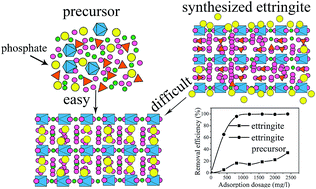
A comparison between abilities of the precursor and the ettringite sample to absorb phosphate by agitation in a potassium phosphate solution was performed. Fig. 6 shows the changes in removal efficiency of phosphate with the two samples at different dosages. Under the same experimental conditions, a small amount of the prepared precursor showed very high efficiency in absorbing phosphate and less than 800 mg L−1 of the precursor absorbent absorbed almost all the phosphate from the solution. On the other hand, the prepared ettringite sample showed a relatively low capacity to absorb phosphate and more than 60% phosphate remained in the solution even with a high dosage of 2400 mg L−1 ettringite absorbent. These results clearly demonstrate the difference in the absorption phenomena between the two samples. Compared with normal absorption of phosphate by the synthesized ettringite sample, what happened between the precursor sample and the phosphate composition was not only absorption action. As shown by the XRD analysis, the agitation of the precursor sample involved a reaction where water combined to form the structure of ettringite. With phosphate contained in the solution, accompanying the reaction to form the structure of ettringite, both phosphate and water would be incorporated together into the structure to form a phosphate-modified ettringite structure. This incorporation, accompanying structure formation, allowed much more phosphate to be removed than by absorption from the synthesized ettringite as the phosphate was incorporated into the ettringite structure. Incorporation of the absorbate into the structure under just room temperature agitation was possible because mechanochemical activation was attributed to the transformation of the starting sample into a feasible precursor for ettringite under intense milling operation at 500 rpm.
image file: c6ra01253a-f6.tif
Fig. 6 Changes in removal efficiency of phosphate with adsorbent dosage by two absorbents. Conditions: pH = 9, C0 = 80 mg L−1; agitation time = 180 min; T = 25 °C.

Fig. 7 presents the experimental adsorption isotherm for phosphate removal with the initial concentration of phosphate varied between 8 and 120 mg L−1. The Langmuir model was used to describe the experimental data and evaluate isotherm performance for phosphate absorption. It is defined by the following equation:

 
image file: c6ra01253a-t1.tif(1)
where, Ce (mg L−1) is equilibrium concentration, qe (mg g−1) is the amount adsorbed at equilibrium, qm (mg g−1) and K (L mg−1) are Langmuir constants. Parameter K was defined as the ratio of the adsorption rate constant and the desorption rate constant. The parameters calculated for the Langmuir equation were K = 2.34, qm = 75.12 mg g−1, R2 = 0.933, it shows that the maximum adsorption capacity calculated by this function was 75.12 mg g−1. Although not yet reaching the capacity reported by a polypyrrole absorbent25 with lighter elements such as carbon, hydrogen and nitrogen, the capacity shown by the precursor here was much higher than that from other inorganic absorbents,8,27 indicating that the proposed idea by applying precursor to increase absorption capacity was reasonable and the prepared precursor may have potential applications for phosphate removal and removal of other pollutants.


image file: c6ra01253a-f7.tif
Fig. 7 Absorption isotherms from the prepared precursor.

With molar ratio for Al(OH)3[thin space (1/6-em)]:[thin space (1/6-em)]Ca(OH)2[thin space (1/6-em)]:[thin space (1/6-em)]CaSO4·2H2O varied at 2[thin space (1/6-em)]:[thin space (1/6-em)]3[thin space (1/6-em)]:[thin space (1/6-em)]x (x = 3 to 1)

It is known that the mechanochemically prepared precursor could incorporate large amounts of phosphate absorbate from agitation in a phosphate solution. In order to understand the mechanism of phosphate incorporation, and to further increase the phosphate incorporation into the structure, the molar ratio of Al(OH)3[thin space (1/6-em)]:[thin space (1/6-em)]Ca(OH)2[thin space (1/6-em)]:[thin space (1/6-em)]CaSO4·2H2O was changed from the standard ratio of 2[thin space (1/6-em)]:[thin space (1/6-em)]3[thin space (1/6-em)]:[thin space (1/6-em)]3 for ettringite to use less CaSO4·2H2O, thereby leaving more space for phosphate incorporation. The ratio for CaSO4·2H2O from the stoichiometric 3 was decreased to 2.5, 2.0, 1.5 and 1.0, respectively. Then, the prepared precursors with different molar ratios of CaSO4·2H2O were agitated in the phosphate solutions with corresponding moles of phosphate at 0, 0.5, 1.0, 1.5 and 2.0 to maintain the same number of total moles. The experimental results were evaluated by XRD analyses of the solid residues after agitation and phosphate concentration was measured for the supernatants.

Fig. 8 shows the XRD patterns of the five samples with different molar ratios of sulphate and phosphate. Sample E was the synthesized ettringite sample with 3 moles of Ca sulphate serving as the reference sample. With a decrease in the Ca sulphate mole used, although the peak intensity of the obtained ettringite decreased relatively, ettringite remained as the only observable phase in the products, suggesting that the incorporation of phosphate absorbate occurred with the synthesis of the ettringite phase to give a phosphate-modified ettringite, without other obviously observable reaction pathways involved. It may be also understood that the existence of much phosphate in the structure of ettringite may cause structure distortion, leading to weakened peak intensity.


image file: c6ra01253a-f8.tif
Fig. 8 XRD patterns of the five hydrated samples with different ratios of sulphate in the precursor and phosphate in the solution: Al(OH)3[thin space (1/6-em)]:[thin space (1/6-em)]Ca(OH)2[thin space (1/6-em)]:[thin space (1/6-em)]CaSO4·2H2O[thin space (1/6-em)]:[thin space (1/6-em)]PO43− for sample (A) 2[thin space (1/6-em)]:[thin space (1/6-em)]3[thin space (1/6-em)]:[thin space (1/6-em)]1[thin space (1/6-em)]:[thin space (1/6-em)]2; (B) 2[thin space (1/6-em)]:[thin space (1/6-em)]3[thin space (1/6-em)]:[thin space (1/6-em)]1.5[thin space (1/6-em)]:[thin space (1/6-em)]1.5; (C) 2[thin space (1/6-em)]:[thin space (1/6-em)]3[thin space (1/6-em)]:[thin space (1/6-em)]2[thin space (1/6-em)]:[thin space (1/6-em)]1; (D) 2[thin space (1/6-em)]:[thin space (1/6-em)]3[thin space (1/6-em)]:[thin space (1/6-em)]2.5[thin space (1/6-em)]:[thin space (1/6-em)]0.5; and (E) 2[thin space (1/6-em)]:[thin space (1/6-em)]3[thin space (1/6-em)]:[thin space (1/6-em)]3[thin space (1/6-em)]:[thin space (1/6-em)]0.

The efficiency of phosphate incorporation into the ettringite structure is shown in Table 2. With Ca sulphate moles at 2.5, 2.0 and 1.5 and phosphate moles at 0.5 (initial P concentration 192.38 mg L−1), 1.0 (initial P concentration 429.9 mg L−1) and 1.5 (initial P concentration 738.78 mg L−1), more than 90% of the removal efficiency of the phosphate was simply obtained, suggesting the easy incorporation of phosphate as calculated. A different phenomenon was observed with sample E of Al(OH)3[thin space (1/6-em)]:[thin space (1/6-em)]Ca(OH)2[thin space (1/6-em)]:[thin space (1/6-em)]CaSO4·2H2O ratio at 2[thin space (1/6-em)]:[thin space (1/6-em)]3[thin space (1/6-em)]:[thin space (1/6-em)]1, with which more than 50% of the starting phosphate remained in the solution. Two reasons may be considered for influencing phosphate incorporation with this molar ratio. During the hydration of cements, an “alumina, ferric oxide, monosulphate” (AFm) phase with the general simplified formula 3CaO·(Al,Fe)2O3·CaSO4·nH2O is usually formed as a crystalline hydrate. In other words, hydration of the precursor with Al(OH)3[thin space (1/6-em)]:[thin space (1/6-em)]Ca(OH)2[thin space (1/6-em)]:[thin space (1/6-em)]CaSO4·2H2O at 2[thin space (1/6-em)]:[thin space (1/6-em)]3[thin space (1/6-em)]:[thin space (1/6-em)]1 tends to form an AFm phase as 3CaO·Al2O3·CaSO4·nH2O. The formation of an AFm, different from ettringite formation with 3 moles of Ca sulphate, leaves no space for further incorporation of phosphate. The formation of AFm was confirmed from the hydration of the precursor of Al(OH)3[thin space (1/6-em)]:[thin space (1/6-em)]Ca(OH)2[thin space (1/6-em)]:[thin space (1/6-em)]CaSO4·2H2O at 2[thin space (1/6-em)]:[thin space (1/6-em)]3[thin space (1/6-em)]:[thin space (1/6-em)]1 in water only. It was interesting to notice that, from the pattern of sample A shown in Fig. 8, no AFm phase was observed, indicating that the existence of phosphate in the aqueous solution prevented the formation of the AFm phase, still resulting in the formation of an ettringite phase with partial phosphate incorporation.

Table 2 Removal efficiency of PO43− at different moles and phosphate concentrations
Al(OH)3[thin space (1/6-em)]:[thin space (1/6-em)]Ca(OH)2[thin space (1/6-em)]:[thin space (1/6-em)]CaSO4·2H2O[thin space (1/6-em)]:[thin space (1/6-em)]PO43− Initial concentration C(P) (mg L−1) Residual concentration C(P) (mg L−1) Removal efficiency of P (%) Absorption capacity of P (mg g−1)
2[thin space (1/6-em)]:[thin space (1/6-em)]3[thin space (1/6-em)]:[thin space (1/6-em)]2.5[thin space (1/6-em)]:[thin space (1/6-em)]0.5 192.38 0.16 99.91% 19.22
2[thin space (1/6-em)]:[thin space (1/6-em)]3[thin space (1/6-em)]:[thin space (1/6-em)]2[thin space (1/6-em)]:[thin space (1/6-em)]1 429.90 1.09 99.75% 42.88
2[thin space (1/6-em)]:[thin space (1/6-em)]3[thin space (1/6-em)]:[thin space (1/6-em)]1.5[thin space (1/6-em)]:[thin space (1/6-em)]1.5 730.78 68.40 90.64% 66.24
2[thin space (1/6-em)]:[thin space (1/6-em)]3[thin space (1/6-em)]:[thin space (1/6-em)]1[thin space (1/6-em)]:[thin space (1/6-em)]2 1127.40 590.72 47.60% 53.67


Ion strength in the solution might be another reason responsible for the low removal efficiency by the precursor at this 2[thin space (1/6-em)]:[thin space (1/6-em)]3[thin space (1/6-em)]:[thin space (1/6-em)]1 ratio. The initial concentration of P of 1127.40 mL L−1 (3545.93 mg L−1 as phosphate anion) was so high that a negative effect would occur for the synthesis reaction to form the ettringite phase. The initial P concentration (the same amount used) was diluted with water and an improved efficiency of PO43− removal by the same precursor Al(OH)3[thin space (1/6-em)]:[thin space (1/6-em)]Ca(OH)2[thin space (1/6-em)]:[thin space (1/6-em)]CaSO4·2H2O: at 2[thin space (1/6-em)]:[thin space (1/6-em)]3[thin space (1/6-em)]:[thin space (1/6-em)]1 was obtained, the results are shown in Table 3. With a decrease in initial P concentration from 1127.40, to 112.38 to 11.28 mg L−1, phosphate removal efficiency increased from 47.60, to 58.37 to 71.84%, respectively. The better effectiveness of the prepared precursor towards the lower initial P concentration indicated a high potential for practical applications toward wastewater with low P concentrations. The high capacity of 81.06 mg g−1 for P absorbed (248.40 mg g−1 as PO4) may be expected to serve as a slow-release fertilizer.

Table 3 Effect of initial concentration of phosphate on its removal efficiency
Initial concentration C(P) (mg L−1) Remaining concentration C(P) (mg L−1) Removal efficiency of P (%) Absorption capacity of P (mg g−1)
1127.40 590.72 47.60% 53.67
112.38 46.78 58.37% 65.59
11.28 3.18 71.84% 81.06


Conclusion

This first report justified the novel idea that it is reasonable to use a precursor to increase the removal efficiency of pollutants from wastewater compared with a finished absorbent product because incorporation of the pollutants into the structure during the absorbent phase formation is easier. Mechanochemical activation enabled the idea because the prepared precursor transformed into the absorbent phase just by hydration in water at room temperature. Detailed investigations of the prepared precursor to other pollutants, such as chromate and arsenate, and the extension of this idea to other types of absorbents have been planned.

References

  1. H. F. W. Taylor, Crystal Structures of Some Double Hydroxide Minerals, Mineral. Mag., 1973, 39(304), 377–389 CAS.
  2. A. Moore and H. F. W. Taylor, Crystal Structure of Ettringite, Nature, 1968, 218(5146), 1048–1049 CrossRef CAS.
  3. H. Poellmann, S. Auer, H.-J. Kuzel and R. Wenda, Solid solution of ettringites: part II: incorporation of B(OH)4− and CrO42− in 3CaO·Al2O3·3CaSO4·32H2O, Cem. Concr. Res., 1993, 23(2), 422–430 CrossRef CAS.
  4. M. L. D. Gougar, B. E. Scheetz and D. M. Roy, Ettringite and C-S-H Portland cement phases for waste ion immobilization: a review, Waste Manag, 1996, 16(4), 295–303 CrossRef CAS.
  5. M. Chrysochoou and D. Dermatas, Evaluation of ettringite and hydrocalumite formation for heavy metal immobilization: literature review and experimental study, J. Hazard. Mater., 2006, 136(1), 20–33 CrossRef CAS PubMed.
  6. R. L. Norman, S. E. Dann, S. C. Hogg and C. A. Kirk, Synthesis and structural characterisation of new ettringite and thaumasite type phases: Ca6[Ga(OH)6·12H2O]2(SO4)3·2H2O and Ca6[M(OH)6·12H2O]2(SO4)2(CO3)2, M = Mn, Sn, Solid State Sci., 2013, 25, 110–117 CrossRef CAS.
  7. Y. Tsunashima, A. Iizuka, J. Akimoto, T. Hongo and A. Yamasaki, Preparation of sorbents containing ettringite phase from concrete sludge and their performance in removing borate and fluoride ions from waste water, Chem. Eng. J., 2012, 200–202, 338–343 CrossRef CAS.
  8. F. Xie, F. Wu, G. Liu, Y. Mu, C. Feng, H. Wang and J. P. Giesy, Removal of phosphate from eutrophic lakes through adsorption by in situ formation of magnesium hydroxide from diatomite, Environ. Sci. Technol., 2014, 48(1), 582–590 CrossRef CAS PubMed.
  9. B. Pan, F. Han, G. Nie, B. Wu, K. He and L. Lu, New strategy to enhance phosphate removal from water by hydrous manganese oxide, Environ. Sci. Technol., 2014, 48(9), 5101–5107 CrossRef CAS PubMed.
  10. D. V. Inmaculada, H. Ping, F. O. Andersen and H. S. Jensen, Phosphate adsorption by fresh and aged aluminum hydroxide. Consequences for lake restoration, Environ. Sci. Technol., 2008, 42(17), 6650–6655 CrossRef.
  11. J. Bensted and S. P. Varma, Ettringite and its derivatives. II. Chromate substitution, Silic. Ind., 1972, 37(12), 315–318 CAS.
  12. S. Long, Y. Wu and J. Wang, Ettringite formed by solid phase reaction, Guisuanyan Xuebao, 1995, 23(2), 234–239 CAS.
  13. Q. Zhang and F. Saito, Sonochemical synthesis of ettringite from a powder mixture suspended in water, Powder Technol., 2000, 107(1–2), 43–47 CrossRef CAS.
  14. L. Takacs, The historical development of mechanochemistry, Chem. Soc. Rev., 2013, 42(18), 7649–7659 RSC.
  15. G. Kaupp, Mechanochemistry: the varied applications of mechanical bond-breaking, CrystEngComm, 2009, 11(3), 388–403 RSC.
  16. T. Iwasaki, R. Nakatsuka, K. Murase, H. Takata, H. Nakamura and S. Watano, Simple and rapid synthesis of magnetite/hydroxyapatite composites for hyperthermia treatments via a mechanochemical route, Int. J. Mol. Sci., 2013, 14(5), 9365–9378 CrossRef PubMed.
  17. S. Lugovskoy, M. Nisnevitch, A. Lugovskoy and M. Zinigrad, Mechanochemical synthesis of dispersed layer composites on the basis of talc and a series of biological active species, Clean Technol. Environ., 2009, 11(3), 277–282 CrossRef CAS.
  18. G. W. Wang, Mechanochemical organic synthesis, Chem. Soc. Rev., 2013, 42(18), 7668–7700 RSC.
  19. J. Qu, Q. Zhang, X. Li, X. He and S. Song, Mechanochemical approaches to synthesize layered double hydroxides: a review, Appl. Clay Sci., 2016, 119(2), 185–192 CrossRef CAS.
  20. W. Tongamp, Q. Zhang and F. Saito, Preparation of meixnerite (Mg–Al–OH) type layered double hydroxide by a mechanochemical route, J. Mater. Sci., 2007, 42(22), 9210–9215 CrossRef CAS.
  21. J. Qu, X. He, B. Wang, L. Zhong, L. Wan, X. Li, S. Song and Q. Zhang, Synthesis of Li–Al layered double hydroxides via a mechanochemical route, Appl. Clay Sci., 2016, 120, 24–27 CrossRef CAS.
  22. R. B. Perkins and C. D. Palmer, Solubility of ettringite (Ca6[Al(OH)6]2(SO4)3·26H2O) at 5–75 °C, Geochim. Cosmochim. Acta, 1999, 63(13–14), 1969–1980 CrossRef CAS.
  23. S. C. B. Myneni, S. J. Traina, G. A. Waychunas and T. J. Logan, Vibrational spectroscopy of functional group chemistry and arsenate coordination in ettringite, Geochim. Cosmochim. Acta, 1998, 62(21/22), 3499–3514 CrossRef CAS.
  24. P. M. Carmona-Quiroga and M. T. Blanco-Varela, Ettringite decomposition in the presence of barium carbonate, Cement Concr. Res., 2013, 52, 140–148 CrossRef CAS.
  25. K. Ogawa and D. M. Roy, C4A3S hydration, ettringite formation, and its expansion mechanism. II. Microstructural observation of expansion, Cem. Concr. Res., 1982, 12(1), 101–109 CrossRef CAS.
  26. T. Nishikawa, K. Suzuki, S. Ito, K. Sato and T. Takebe, Decomposition of synthesized ettringite by carbonation, Cem. Concr. Res., 1992, 22(1), 6–14 CrossRef CAS.
  27. X. Liu and L. Zhang, Removal of phosphate anions using the modified chitosan beads: adsorption kinetic, isotherm and mechanism studies, Powder Technol., 2015, 277, 112–119 CrossRef CAS.

This journal is © The Royal Society of Chemistry 2016
Click here to see how this site uses Cookies. View our privacy policy here.