DOI:
10.1039/C6RA00588H
(Paper)
RSC Adv., 2016,
6, 38906-38912
Epoxidised soybean oil–Cu/Cu2O bio-nanocomposite material: synthesis and characterization with antibacterial activity†
Received
8th January 2016
, Accepted 11th April 2016
First published on 12th April 2016
Abstract
A facile approach for the synthesis of a novel epoxidised soybean oil–Cu/Cu2O (ESO–Cu/Cu2O) bio-nanocomposite material via ultrasound irradiation was investigated. The synthesis was carried out using epoxidised soybean oil (ESO) and Cu/Cu2O nanoparticles (NPs) in presence of 4-dimethylaminopyridine (DMAP). In this composite, Cu/Cu2O NPs homogeneously anchored onto epoxidised soybean oil. The morphology and elemental compositions of the bio-nanocomposite material were determined with the help of scanning electron microscopy, energy dispersive X-ray spectroscopy, and FTIR spectroscopy analysis. Investigation of plant-derived antibacterial materials as alternatives to synthetic antibacterial agents has generated great interest recently. In that direction, the antibacterial activity of resulting bio-nanocomposite material against Staphylococcus aureus as well as Escherichia coli bacteria was investigated. The synthesized ESO–Cu/Cu2O bio-nanocomposite material showed better antibacterial activity as compared to ESO, DMAP, and Cu/Cu2O NPs alone for the first time. This study endorses the bio-nanocomposite as a promising antibacterial material in a wide range of biological applications.
Introduction
Recently, there is a growing interest in renewable bio-based materials obtained from natural biomass, because of limited stock of non-renewable materials derived from hydrocarbons and environmental concerns.1 The most commonly used renewable bioresources are edible and non-edible oils. The plant oils appear to be appropriate preliminary ingredients for the production of epoxy polymeric materials as they are abundant, economical, bio-degradable and environment friendly.2 Following are the four major ways of synthesizing epoxidised oil from unsaturated oils: (a) organic and inorganic peroxides, (b) percarboxylic acids, which was widely used in the industrial production, (c) halohydrins, which is environmentally unfriendly since it uses hypohalous acids, and (d) oxidation with molecular oxygen with silver as a catalyst.3,4
Soybean oil is one of the important oil and widely available across the world. Soybean oil has the second largest share in the total global edible oil production, contributing 37 million tons (23%). Generally, the main producers of soybean oil are United States (32%), Brazil (28%), Argentina (21%), China (7%) and India (4%).5 The industrial products obtained from soybean oil such as plastics, resins and adhesives are widely used in genetic engineering and other technologies.6
The unsaturation present in plant oil is utilised to form new functional groups like epoxides. ESO can be absorbed in the human body organization which is bio-compatible as well as eco-friendly. Therefore, it has several biomedical uses ranging from glues and surgical sealants, pharmacological patches, stents, wound healing devices, and drug transporters to scaffolds for tissue engineering.7 Vegetable oils are one of the important types of bioresources for making bio-based epoxy polymeric ingredients. Due to its various applications, plant oil-based epoxy polymers are an essential part of the bio-nanocomposites material for the polymer industry. Bio-based epoxy materials show better performance in competing with commodity plastics.8,9
Nanomaterials are known to show properties that are different from their bulk equivalents, thus necessitating their synthesis.9,10 Copper nanomaterials have great potential due to their extraordinary physicochemical properties as well as easy availability of relatively inexpensive and versatile metal in several applications such as photocatalysis,11 solar energy conversion, magnetic storage and gas sensors,12 lithium ion batteries,13 electronics, optics and electrocatalysis14 and catalysis.15 Bio-based nanocomposite is a new emerging category of materials receiving much attention in recent years. Therefore, the development of new approaches towards bio-nanocomposite materials and their antibacterial activity are necessary to keep up with the persistently changing bacterial resistance and bio-nanocomposite offers that chance. Some prominent researchers have studied the antibacterial activity of nanocomposites and nanosheets with different nanomaterials, towards Staphylococcus aureus and Escherichia coli bacteria.16,17 Due to small size and high surface area of the NPs and compatibility to the bio-based oil, we have attempted to develop a novel bio-nanocomposite material that shows better antibacterial activity.
The antibacterial properties of bio-nanocomposite depend on the size of NPs, composition, stability, and concentration. These properties permit them to have better retention time and enter the bacterial cells, as their membranes are made up in size of nanometer range.18 Recently, Meghana et al. reported the antibacterial activity of copper oxide NPs which forms the protein complex with bacteria.19
In the present work, we report an efficient, simple approach towards the synthesis of novel ESO–Cu/Cu2O bio-nanocomposite material via sonochemical method, and their detailed characterization. Additionally, we have studied the antibacterial activity of synthesized bio-nanocomposite against Gram-positive bacteria such as Staphylococcus aureus and Gram-negative bacteria such as Escherichia coli using agar well method and optical density method (OD), which shows better antibacterial activity as compared to ESO, DMAP, Cu/Cu2O NPs and soybean oil with Cu/Cu2O NPs.
Experimental
Materials
Soybean oil was procured from Aromex Industry Pvt. Ltd., India, and used without any further pre-treatment. The important parameters of soybean oil were: iodine value = 130, acid value = 0.8, density (d) = 0.92 g cm−3 at 25 °C. The major saturated fatty acids in soybean oil are palmitic acid (C16
:
0): 11% and stearic acid (C18
:
0): 4%. The major unsaturated fatty acids in soybean oil include oleic acid (C18
:
1): 26%, linoleic acid (C18
:
2): 52% and linolenic acid (C18
:
3): 7%. The particle size and BET surface area of Cu/Cu2O NPs were 100 nm and 25.0 m2 g−1, respectively. 4-Dimethylaminopyridine (DMAP) was obtained from Sigma-Aldrich, India. Formic acid (98%) and hydrogen peroxide (30%) were procured from Thomas Baker Chemicals Pvt. Ltd., India. Copper acetate [Cu(CH3COO)2·H2O] and 1,4-butanediol were procured from S. D. Fine Chemicals Pvt. Ltd., India. All solvents and chemicals were used without further purification.
Microorganism
The standard bacterial strain of Staphylococcus aureus and Escherichia coli were procured from the National Collection of Industrial Microorganisms (NCIM), Pune, India, to check the antibacterial activity of ESO–Cu/Cu2O bio-nanocomposite material.
Maintenance of the microorganisms
The bacterial strains of Staphylococcus aureus and Escherichia coli were maintained on nutrient agar slants and stored at 4 °C with regular subculturing after every two months.
Preparation of sterile nutrient broth (NB) petri plate
A 13 g of nutrient broth mixed with 28.8 g of nutrient agar were dissolved in 1 L of water. The media was autoclaved and allowed to cool down to 50 °C. Then, 25 mL of this solution was poured on to the Petri plates and allowed to be solidified at room temperature for 30 minutes. On the plates, wells were cut into agar layer with stainless steel bore of approximately 4 to 5 mm diameter.
Epoxidation process
Initially, soybean oil and formic acid were added to a three-necked reaction flask fitted with a mechanical stirrer and a thermometer along with a reflux condenser. The reaction mixture was stirred at 1000 rpm and 50 °C for 20 min. Further, for the initiation of the epoxidation, calculated amount of 30% aqueous hydrogen peroxide was added drop-wise to the above reaction mixture for 1 h. In this reaction, formic acid acts as an active oxygen carrier and hydrogen peroxide as an oxygen donor to form in situ peroxyformic acid, which gave the product ESO (Fig. 1). The addition of hydrogen peroxide should be slow, to avoid the possibility of explosion.3 After complete addition of hydrogen peroxide, stirring was continued for 5 h at 50 °C to complete the reaction. Afterwards, the reaction mixture was cooled to room temperature and washed with water to remove excess acid. ESO was further dried with anhydrous sodium sulphate and kept in oven at 65 °C for 12 h. The oxirane content (6.1%) was determined by titration method with direct 0.1 N hydrobromic acid solutions in glacial acetic acid.20
 |
| | Fig. 1 General reaction scheme for synthesis of ESO. | |
Synthesis of Cu/Cu2O NPs
The Cu/Cu2O NPs were synthesized by a microwave technique using a domestic microwave oven (LG Intellowave) having 100% power of 800 watt at a frequency of 2.45 GHz as reported in the literature.21 In this procedure, a mixture of 0.4 g of copper acetate in 8 mL of 1,4-butanediol was taken in a 50 mL glass beaker and placed in microwave oven for 2 min at 600 W with on/off mode having time interval of 20 s. The reaction progress was observed by a change in colour of the reaction mixture from blue to brick-red, indicating formation of Cu/Cu2O NPs. The NPs was separated and washed with distilled water and absolute ethanol several times and dried under vacuum at 80 °C for 30 min in oven.
Preparation of bio-nanocomposite
The dried ESO (1 g) was mixed with Cu/Cu2O NPs (4.0 wt% with respect to ESO) and kept under the ultrasonic horn (Sonics and Materials, Inc., USA) at 100 °C for 30 min. The Cu/Cu2O NPs were equally dispersed in ESO. Then, DMAP was added as a hardening agent at 100 °C and irradiated under the ultrasonic horn for 30 min (Fig. 2). After completion of reaction, the mixture was kept in vacuum oven at 100 °C for 12 h. The formation of bio-nanocomposite material was observed, which was dispersed in deionised distilled water (1 mg mL−1) under sonication. FEG-SEM analysis of final ESO–Cu/Cu2O bio-nanocomposite material shows that the Cu/Cu2O NPs are embedded uniformly in the ESO (Fig. 4d–f); this is the reason for giving Fig. 2.
 |
| | Fig. 2 Schematic diagram for synthesis of ESO–Cu/Cu2O bio-nanocomposite. | |
Methods of characterization
The morphology of the ESO–Cu/Cu2O bio-nanocomposite was studied using field emission gun-scanning electron microscopy (FEG-SEM) analysis on Tescan MIRA 3 model. The energy dispersive X-ray spectrum (EDS) was recorded by using an INCA X-act Oxford instrument (Model 51-ADD0007). The X-ray diffraction (XRD) of Cu/Cu2O NPs was taken (Shimadzu XRD-6100 using Cu Kα = 1.5405 Å) with a scanning rate 20 per min and 2 theta (θ) angle ranging from 20° to 80° with a current of 30 mA and voltage 40 kV. The FTIR spectra was carried at 25 °C on a Shimadzu spectrum having one spectrometer fitted with a Universal ATR (diamond crystal) and a red laser excitation source. The thermal stability of bio-nanocomposite was investigated by thermogravimetric analysis (TGA) using a PerkinElmer (Model STA 6000) at a heating rate of 20 °C min−1.
Results and discussion
FEG-SEM and XRD analysis of Cu/Cu2O NPs
To understand the morphology of synthesized Cu/Cu2O NPs, it was characterized by FEG-SEM analysis. In FEG-SEM images, it was observed that small NPs come together and form microspheres (Fig. 3a and b). The XRD spectrum shows Bragg's reflections at 43.2°, 50.4°, 74.0°, which indicated the (111), (200), (220) planes for Cu, whereas Bragg's reflections at 29.5°, 36.3°, 42.2°, 61.3°, 77.3° corresponded to the (110), (111), (200), (220), (222) planes of Cu2O, respectively (Fig. 3c). The XRD indicated that both Cu and Cu2O coexist in this material.
 |
| | Fig. 3 (a) Low resolution (b) high resolution FEG-SEM images (c) XRD spectrum of Cu/Cu2O NPs. | |
FEG-SEM analysis of ESO–Cu/Cu2O bio-nanocomposite
The change in surface morphology of soybean oil, ESO, Cu/Cu2O NPs and ESO–Cu/Cu2O bio-nanocomposite materials were analyzed by FEG-SEM (Fig. 4). In the FEG-SEM analysis, soybean oil showed plane surface morphology (Fig. 4a), whereas ESO show the increase in roughness of surface morphology because of epoxidation of soybean oil (Fig. 4b). This change indicated the formation of epoxidised soybean oil. The Cu/Cu2O NPs showed spherical morphology with porosity (Fig. 4c). The FEG-SEM images at different magnifications (Fig. 4d–f) clearly displayed the surface morphology of the ESO–Cu/Cu2O bio-nanocomposite materials. The Cu/Cu2O NPs were embedded with ESO in well dispersed manner. Fig. 4f shows ESO surrounded by the Cu/Cu2O NPs. This comparison clearly indicates the changes taking place in these materials. ESO–Cu/Cu2O bio-nanocomposite material involves the surface interaction of biomaterial (ESO) and nanomaterials (Cu/Cu2O). The binding forces including the electrostatic forces, van der Waals forces, ionic and hydrogen bonding are responsible for binding the ESO and Cu/Cu2O.22
 |
| | Fig. 4 FEG-SEM images for (a) soybean oil (b) epoxy soybean oil (c) Cu/Cu2O NPs (d–f) ESO–Cu/Cu2O bio-nanocomposite. | |
EDS analysis
The energy dispersive X-ray spectroscopy (EDS) showed the elemental composition of material. Fig. 5 demonstrates the EDS analysis of the ESO, Cu/Cu2O NPs, and ESO–Cu/Cu2O bio-nanocomposite material. The ESO shows the peaks of carbon (0.2 keV) and oxygen (0.5 keV). Cu/Cu2O NPs show the peaks of copper (0.9 keV and 8.0 keV) and oxygen (0.5 keV), whereas ESO–Cu/Cu2O bio-nanocomposite shows the presence of carbon (0.2 keV), copper (0.9 keV), and oxygen (0.5 keV). There was no other peak of impurities observed in EDS analysis. This indicated that the synthesized bio-nanocomposite material was free from any impurities.
 |
| | Fig. 5 EDS spectra of (a) ESO (b) Cu/Cu2O NPs (c) ESO–Cu/Cu2O bio-nanocomposite. | |
FTIR spectroscopy study
In the epoxidation of soybean oil, the conversion of double bonds to epoxides was confirmed by using a FTIR spectrometer (Fig. 6). Fig. 6 exhibits the FTIR spectra of soybean oil, ESO, ESO–Cu/Cu2O bio-nanocomposite and Cu/Cu2O NPs. In soybean oil, the
C–H stretching band was observed at 3007 cm−1 (Fig. 5A). The presence of epoxy functional group was confirmed at the stretching frequency of 833 cm−1 in ESO (Fig. 5B), which confirms that the C
C double bonds were converted into C–O–C oxirane linkage of epoxides. Analogous outcomes were reported earlier for the presence of epoxy groups at 822–833 cm−1, which agreed with this FTIR study in literature.23
 |
| | Fig. 6 FTIR spectra of (A) soybean oil (B) ESO (C) ESO–Cu/Cu2O bio-nanocomposite (D) Cu/Cu2O NPs. | |
ESO showed intense peaks at 1743 cm−1 and 1159 cm−1 related to the C
O and C–O stretching, respectively, from triglyceride molecules.24 The peaks at 2920 cm−1 and 2852 cm−1 were due to the asymmetric and symmetric C–H stretching in methylene groups, whereas their asymmetric and symmetric bending appeared at 1456 cm−1 and 1378 cm−1, respectively. The peak at 721 cm−1 related to the stretching vibrations of cis-CH
CH double bonds (Fig. 6B).25 In ESO–Cu/Cu2O bio-nanocomposite, an upshift of the peak assigned to the C–H asymmetric bending (1462 cm−1) was observed. Also, the peak of epoxy functional group at 833 cm−1 completely disappeared due to ring opening reaction (Fig. 6C). The upshift in the peak of the asymmetric stretching in methylene groups at 2922 cm−1 was observed in ESO–Cu/Cu2O bio-nanocomposite. This is due to the interaction between the hydrogen bond and Cu/Cu2O NPs. The Cu/Cu2O NPs show a peak at 711 cm−1 indicating the Cu–O stretching band (Fig. 6D).
Thermal stability
The thermal stability of ESO–Cu/Cu2O bio-nanocomposite was studied using thermogravimetric analysis (TGA) (Fig. 7). In TGA, Cu/Cu2O NPs (Fig. 7A) exhibited a small weight loss below 350 °C due to the elimination of physically and chemically adsorbed water on the surface of Cu/Cu2O NPs. ESO showed a single degradation step at 320 °C and also showed the maximum rate of weight loss up to 500 °C, reaching to the complete decomposition of ESO supposedly due to pyrolysis of the cross-linked epoxy polymer structures (Fig. 7B). Fig. 7C shows the weight loss (from 380 °C to 500 °C) of the ESO–Cu/Cu2O bio-nanocomposite material. This suggests complete degradation by oxidation and minor trashes of the carbon residue.26 This indicates high thermal stability of ESO–Cu/Cu2O bio-nanocomposite material as compared to ESO and Cu/Cu2O NPs. According to earlier literature, the main thermal decomposition products of soybean oil are alcohols, short chain alkanes, and aldehydes. This gives more clarification that ESO produces such volatile substances.8,27 Thus, the thermal stability of ESO–Cu/Cu2O bio-nanocomposite appears to be due to the existence of consistently dispersed Cu/Cu2O NPs. A similar nature of thermal stability has been described for linseed oil nanocomposite.28
 |
| | Fig. 7 TGA of (A) Cu/Cu2O NPs (B) ESO (C) ESO–Cu/Cu2O bio-nanocomposite. | |
Bacterial proliferation in the presence of ESO, DMAP, Cu/Cu2O NPs, soybean oil–Cu/Cu2O NPs and ESO–Cu/Cu2O bio-nanocomposite
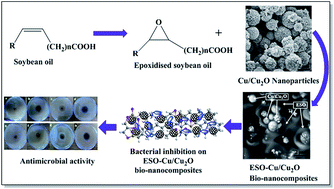
Antibacterial study is an important application in emerging bio-based resources that are eco-friendly for controlling the Gram-positive and Gram-negative bacteria (Fig. 8). Therefore, we have examined the antibacterial activity of ESO–Cu/Cu2O bio-nanocomposite from a view of medical perspective. For comparative study, the antibacterial activity of ESO, DMAP, Cu/Cu2O NPs, soybean oil–Cu/Cu2O NPs and ESO–Cu/Cu2O bio-nanocomposite were investigated. For this purpose, a final concentration 50 μg mL−1 of each sample with 5 mL nutrient broth in 20 mL test tubes were separately incubated. Each sample was then inoculated separately with Staphylococcus aureus and Escherichia coli bacterial cells to a 0.01 optical density (OD) by a colorimeter (Digital colorimeter EQ-653). All other experiments were performed with an equal dose of each sample and bio-nanocomposite material. The control sample was prepared by inoculating Staphylococcus aureus and Escherichia coli to an OD of 0.01 in 5 mL of nutrient broth without adding any materials. We thoroughly studied the supernatant bacterial culture at different time intervals (i.e. 3, 6, 9, and 12 h) to check the growth of Staphylococcus aureus and Escherichia coli without disturbing the material that is settled at the bottom of each sample test tube. We investigated the bacterial growth at 3, 6, 9, and 12 h, with Staphylococcus aureus and Escherichia coli by measuring the absorbance of bacterial samples at 600 nm. The ESO–Cu/Cu2O bio-nanocomposite at 3 h showed lower OD than that of all other materials, whereas the ODs of the other samples (ESO, DMAP and Cu/Cu2O NPs) significantly increased as compared with control samples (Fig. 9), (i.e. Staphylococcus aureus (Fig. 9a) and Escherichia coli (Fig. 9b) bacteria). Culture sample tubes containing ESO does not have any distinguishable difference in ODs compared with control samples of Staphylococcus aureus and Escherichia coli bacteria (Fig. 9a and b). The DMAP and Cu/Cu2O samples showed minute difference in OD in decreasing order for both Staphylococcus aureus and Escherichia coli bacteria after 6 to 12 h (Fig. 9a and b). A plot of ODs for ESO–Cu/Cu2O bio-nanocomposite with control samples of Staphylococcus aureus and Escherichia coli bacteria as shown in Fig. 9a and b. This indicates a significant decrease in ODs i.e. more bacterial inhibition than ESO, DMAP, Cu/Cu2O NPs, and soybean oil with Cu/Cu2O NPs alone. The soybean oil with Cu/Cu2O NPs shows lower OD as compared to ESO, DMAP and Cu/Cu2O NPs. This is because of the combination of soybean oil and nonmaterial. From Fig. 9, it can be seen that the ESO–Cu/Cu2O bio-nanocomposite material was more effective against Staphylococcus aureus bacteria, whereas comparatively less activity was found against Escherichia coli bacteria. This might be due to the thick cell membrane present in Escherichia coli bacteria, making them more resistant to antibacterial material compared to Staphylococcus aureus species. These results indicate that the bacterial inhibition by ESO–Cu/Cu2O bio-nanocomposite was effective to inhibit the bacterial growth of Staphylococcus aureus and Escherichia coli bacteria. Thus, such type of bio-nanocomposite materials can act as a good antibacterial agent.
 |
| | Fig. 8 Bacterial inhibitions on bio-nanocomposite. | |
 |
| | Fig. 9 OD plot of bacterial growth. Graphs shows the bacterial growth levels in the supernatant of samples containing ESO, DMAP, Cu/Cu2O NPs, soybean oil with Cu/Cu2O NPs and ESO–Cu/Cu2O bio-nanocomposite with (a) Staphylococcus aureus and (b) Escherichia coli. | |
Antibacterial activity by agar well plate method
To study the antibacterial activity of ESO–Cu/Cu2O bio-nanocomposite material against Staphylococcus aureus and Escherichia coli species are used as standards (Fig. 10). Difference in activity against Gram-positive and Gram-negative bacteria is due to the difference in cell layer and chemical components of the cell membrane.29
 |
| | Fig. 10 Antibacterial activities of ESO–Cu/Cu2O bio-nanocomposites against Staphylococcus aureus; (a) ESO (b) DMAP, (c) Cu/Cu2O NPs (d) soybean oil–Cu/Cu2O NPs (e) ESO–Cu/Cu2O bio-nanocomposite and Escherichia coli; (f) ESO (g) DMAP (h) Cu/Cu2O NPs (i) soybean oil with Cu/Cu2O NPs (j) ESO–Cu/Cu2O bio-nanocomposite. | |
On the plates, wells were made into an agar layer with stainless steel bore of approximately 4–5 mm in diameter. Then 60 μL of ESO–Cu/Cu2O bio-nanocomposite sample was loaded in the bore and the plates were kept for 24 h of incubation. In the presence of both Gram-positive and Gram-negative bacteria, the zone of bacterial inhibition for ESO, DMAP, Cu/Cu2O NPs, and soybean oil with Cu/Cu2O NPs was lower than that for ESO–Cu/Cu2O bio-nanocomposites (Fig. 10). Significant antibacterial activity was found against Staphylococcus aureus and Escherichia coli bacteria with ESO–Cu/Cu2O bio-nanocomposites than the other. The average diameter for the zone of bacterial inhibition around the well after incubation, 21 ± 0.2 mm and 19 ± 0.2 mm, was observed against Staphylococcus aureus and Escherichia coli bacteria respectively, with ESO–Cu/Cu2O bio-nanocomposites (Fig. 11). The possible antibacterial mechanism can be explained as follows: ESO–Cu/Cu2O bio-nanocomposites get adsorbed on the surface of the bacterial cell, they attack the cell wall, and enter into the outer membrane of the bacterial cell, which can lead to the disruption of the cell cytoplasm, thus causing cell rupture.24 The antimicrobial activity is reported to be dependent on the chain length and degree of unsaturation of oil.8 ESO–Cu/Cu2O bio-nanocomposite showed better bacterial inhibition, most probably because of the presence of small size of NPs embedded in the ESO material, thus increasing the surface area and porosity. The ESO–Cu/Cu2O bio-nanocomposite having ESO contains longer carbon chain along with nanomaterials having high surface area and porosity. Therefore, this synergistic effect of ESO–Cu/Cu2O bio-nanocomposite can have a good application as an antibacterial material. The antibacterial activity of ESO–Cu/Cu2O bio-nanocomposite material was confirmed by OD method as well as an agar plate method (well method). Both methods showed better antibacterial activity with ESO–Cu/Cu2O bio-nanocomposite against Staphylococcus aureus and Escherichia coli bacteria, as compared to the antibacterial activity of the individual components taken alone.
 |
| | Fig. 11 The diameter zone of inhibition of ESO, DMAP, Cu/Cu2O NPs, soybean oil with Cu/Cu2O NPs and ESO–Cu/Cu2O bio-nanocomposite against Escherichia coli and Staphylococcus aureus bacteria. | |
Conclusions
The aim of this work was to develop a simple and efficient process for ESO–Cu/Cu2O bio-nanocomposite material from the nanoparticles and the renewable resources like ESO by using sonochemical technique. FEG-SEM analysis revealed that the Cu/Cu2O NPs were uniformly implanted within the ESO. FTIR spectra showed the existence of strong interactions between the ESO and Cu/Cu2O NPs. Further, the thermal properties and antibacterial activity of the ESO–Cu/Cu2O bio-nanocomposites were investigated. The synthesized ESO–Cu/Cu2O bio-nanocomposites showed high thermal stability and better antibacterial activities as compared to ESO, DMAP, Cu/Cu2O NPs, and soybean oil with Cu/Cu2O NPs alone. The enhanced antibacterial activity of ESO–Cu/Cu2O bio-nanocomposite material can be attributed to the synergistic effect of ESO and Cu/Cu2O NPs together. This was proved using OD and plate assay methods. This study can also be expected to encourage the use of bio-nanocomposites materials in biomedical applications.
Acknowledgements
Author (MSB) gratefully acknowledges University Grants Commission (UGC Green Technology), New Delhi, India, for financial support. Author MAB gratefully acknowledges the Council of Scientific and Industrial Research (CSIR), India, for providing research fellowship. The financial assistance for this work by Department of Science and Technology (DST), India under Nano Mission Project no. SR/NM/NS-1097/2011 is gratefully acknowledged.
References
- R. P. Babu, K. O'Connor and R. Seeram, Progress in Biomaterials, 2013, 2, 2–16 CrossRef.
- J. M. Raquez, M. Deléglise, M. F. Lacrampe and P. Krawczak, Prog. Polym. Sci., 2010, 35, 487–509 CrossRef CAS.
- V. V. Goud, N. C. Pradhan and A. V. Patwardhan, J. Am. Oil Chem. Soc., 2006, 83, 635–640 CrossRef CAS.
- S. Guenter, R. Rieth and K. T. Rowbottom, Ullmann's Encyclopedia of Industrial Chemistry, Wiley-VCH, 6th edn, 2003 Search PubMed.
- http://www.gokulgroup.com/Brands/Products/SoyabeanOil.aspx.
- R. P. Wool, Chem. Technol., 1999, 29, 44–48 CAS.
- B. D. Ulery, L. S. Nair and C. T. Laurencin, J. Polym. Sci., Part B: Polym. Phys., 2011, 49, 832–864 CrossRef CAS PubMed.
- A. M. Díez-Pascual and A. L. Díez-Vicente, ACS Appl. Mater. Interfaces, 2014, 6, 17277–17288 Search PubMed.
- Z. Liu, S. Z. Erhan and J. Xu, Polymer, 2005, 46, 10119–10127 CrossRef CAS.
- A. Okada and A. Usuki, Mater. Sci. Eng., C, 1995, 3, 109–115 CrossRef.
- M. Hara, T. Kondo, M. Komoda, S. Ikeda, J. N. Kondo, K. Domen, M. Hara, K. Shinohara and A. Tanaka, Chem. Commun., 1998, 357–358 RSC.
- J. R. Hayes, G. W. Nyce, J. D. Kuntz, J. H. Satcher and A. V. Hamza, Nanotechnology, 2007, 18, 275602 CrossRef.
- L. J. Fu, J. Gao, T. Zhang, Q. Cao, L. C. Yang, Y. P. Wu, R. Holze and H. Q. Wu, J. Power Sources, 2007, 174, 1197–1200 CrossRef CAS.
- P. Lignier, R. Bellabarba and R. P. Tooze, Chem. Soc. Rev., 2012, 41, 1708–1720 RSC.
- M. A. Bhosale, T. Sasaki and B. M. Bhanage, Catal. Sci. Technol., 2014, 4, 4274–4280 CAS.
- S. Ma, S. Zhan, Y. Jia and Q. Zhou, ACS Appl. Mater. Interfaces, 2015, 7, 10576–10586 CAS.
- S. Ma, S. Zhan, Y. Jia and Q. Zhou, ACS Appl. Mater. Interfaces, 2015, 7, 21875–21883 CAS.
- J. T. Seil and T. J. Webster, Int. J. Nanomed., 2012, 7, 2767–2781 CAS.
- S. Meghana, P. Kabra, S. Chakraborty and N. Padmavathy, RSC Adv., 2015, 5, 12293–12299 RSC.
- Oxirane Oxygen, Official and Recommended Practices of the American Oil Chemists Society, AOCS Press, Champaign, 5th edn, 1997 Search PubMed.
- M. A. Bhosale and B. M. Bhanage, RSC Adv., 2014, 4, 15122–15130 RSC.
- M. M. Unterlass, Eur. J. Inorg. Chem., 2016, 1135–1156 CrossRef CAS.
- T. Vlček and Z. S. Petrović, J. Am. Oil Chem. Soc., 2006, 83, 247–252 CrossRef.
- H. A. Mohamed, M. S. Ibrahim, N. G. Kandil, H. M. Said and I. M. Mohamed, J. Appl. Polym. Sci., 2012, 124, 2007–2015 CrossRef CAS.
- R. G. Sinclair, A. F. McKay and R. R. Jones, J. Am. Chem. Soc., 1952, 74, 2570–2575 CrossRef CAS.
- Y. Lu and R. C. Larock, Macromol. Mater. Eng., 2007, 292, 863–872 CrossRef CAS.
- S. M. Mahungu, S. L. Hansen and W. E. Artz, J. Am. Oil Chem. Soc., 1998, 75, 683–690 CrossRef CAS.
- V. Sharma, J. S. Banait, R. C. Larock and P. P. Kundu, Polym. Compos., 2010, 31, 630–637 CAS.
- M. T. Cabeen and C. J. Wagner, Nat. Rev. Microbiol., 2005, 3, 601–610 CrossRef CAS PubMed.
Footnote |
| † Electronic supplementary information (ESI) available: Analytical techniques, experimental setup for epoxidation. See DOI: 10.1039/c6ra00588h |
|
| This journal is © The Royal Society of Chemistry 2016 |
Click here to see how this site uses Cookies. View our privacy policy here.