Transparent flexible electrodes based on a AgNW network reconstructed by salt

Rong Xue, Xingwei Wang, Xingliang Chen, Mengyu Zhang and Shuhua Qi*
Department of Applied Chemistry, School of Science, Northwestern Polytechnical University, Xi’an, Shaanxi 710072, China. E-mail: qishuhuanwpu@163.com

Received 5th January 2016 , Accepted 23rd February 2016

First published on 25th February 2016


Abstract

Silver nanowires (AgNWs) as candidates to replace indium tin oxide (ITO) have received great research interest for applications like wearable devices, human motion detection sensors and touch panels. To obtain high performance devices, scientists have made numerous attempts to decrease the sheet resistance and increase optical transmittance, which directly contradict each other. Here, we propose and demonstrate a low cost, facile and green process to fabricate flexible transparent electrodes with the new silver nanowire network and the reduced junction resistance at room temperature. Firstly, salt pre-coated on a glass substrate would help AgNWs to slightly aggregate around salt particles and form a sparser AgNW network, which could lead to higher transmittance. Moreover, Ag+ ions which redeposit on AgNW–AgNW junctions could result in a further increase in the conductivity. An IR camera was used to monitor the heat variation of samples with different AgNW networks when different voltages were applied. These results indicated that the AgNW–PUA films with the new AgNW network could create more AgNW–AgNW junctions and we could observe performance improvements of the films with the new AgNW network after an annealing process was totally complete. The final results showed that conductivity and transmittance could be increased by 21% and 2.6% respectively. Furthermore, the AgNW–PUA (urethane acrylate) composite films exhibited an excellent bending performance without any additional conductive polymer, which means that our films are suitable for emerging optoelectronic devices.

Introduction

Transparent conductive films with high performance are the core parts of many electronic devices, such as organic lighting-emitting diodes (OLEDs), and touch panels. For such devices, indium tin oxide (ITO) is often used as the transparent conductive material. Although ITO offers high performance (low sheet resistance and high transmittance), it has many drawbacks that make it impossible to be used in next-generation optoelectronic devices. The drawbacks include the intrinsic brittleness which may cause a brittle fracture under slight deformation,1 high temperature deposition2 and the rising cost of indium.3

Several studies on the fabrication of such emerging optoelectronic devices have provided another valuable hint toward solving these problems by employing conductive nanomaterials like silver nanowires (AgNWs),4 carbon nanotubes (CNTs)5 or graphene.6

AgNWs may satisfy requirements for different applications among these material by virtue of their good conductivity.7,8 Compared with ITO, transparent flexible conductors based on AgNWs with a high aspect ratio can be bendable and still maintain an effective conductive path. Thus, researchers have spent many years improving the performance of transparent flexible electrodes based on AgNWs, e.g. Bushra et al.9 improved the electrical conductivity of a AgNW network by the carbon ion induced coalescence of AgNWs at the contact position. Jiajie Liang et al.10 reported the preparation of high performance transparent conductive electrodes based on AgNWs modified by graphene oxide (GO), which could reduce the junction resistance. Researchers also reported that AgNWs decorated with Au11 or Ag12,13 nanoparticles can have improved performance due to the reduced junction resistance. Post-processing treatments like high-force pressing14 and high-temperature annealing15 are effective ways to reduce the junction resistance. Ok16 introduced the fabrication of AgNW–polyimide (PI) films using an inverted film-processing method. However, it should be noted that these methods require extra equipment and noble metals. Another important alternative strategy is to reshape the framework of the AgNWs. Saewon et al.17 introduced a way of precisely controlling a AgNW network by a capillary printing technique. Duan et al.18 fabricated hierarchical aligned AgNW electrodes by a water-bath assisted convective assembly process. Ko19 reported a method for fabricating transparent conductors based on a directional arrangement of AgNWs by a shear force. Yang20 introduced a new technique to pattern and align AgNWs by manipulating the wetting of dispersions in microchannels. It’s important to note that these methods are too complicated and time consuming. In fact, improving the performance of transparent conductors is not only highly dependent on the reduced junction resistance, but also strongly dependent on the nanostructure of the AgNW network. Although these methods can obtain transparent conductors based on AgNWs with high performance because of the reduced junction resistance or the reshaped AgNW network, they don’t combine with each other which means that the increase in performance would be limited.

In this work, we propose a novel and facile process for fabricating high performance transparent flexible electrodes by pre-coating a NaCl suspension on the glass substrate. In this way, the AgNW–PUA films obtained showed both improved transmittance and conductivity because of the reduced junction resistance and the reshaped AgNW network. We also investigated the effects of NaCl on the AgNW network, photoelectric properties and bending performance of the AgNW–PUA films.

Results and discussion

As indicated in the first step of Fig. 1, NaCl was coated onto a glass substrate to form a uniform distribution by changing the direction of the glass substrate with each coating. The uniform distribution of salt can lead to the uniform distribution of AgNWs on the glass substrate. After that, AgNWs were coated on the glass substrate which was pre-coated with salt particles. We changed the times of the coating process to control the resistance of the film, and in this work, we pre-coated with salt particles as a “medium” to slightly change the state of the aggregation of the AgNWs in order to increase the performance of films with this new AgNW network. Thus the amount of sodium chloride solution in ethyl alcohol and a uniform distribution of salt on the glass substrate are very important. Although more salt particles can distribute uniformly in ethyl alcohol solution, too much salt could change the aggregation state of AgNW network seriously which causes the AgNWs’ nonuniform distribution. So the amount of salt particles should be precisely controlled and is also based on the size of the glass substrate. According to our research, the best amount is 1.28 × 10⁻⁴ g cm−2.
image file: c6ra00219f-f1.tif
Fig. 1 Schematic illustration of the fabrication of the AgNW–PUA film.

We chose ethyl alcohol as the “solvent” of sodium chloride because salt can’t dissolve in ethyl alcohol and it also has no impact on the environment. After being treated in an ultrasonic bath, the NaCl particles are uniformly suspended in aqueous solution. Then the salt particles can be distributed on the glass substrate uniformly using the Meyer-rod method. We also tried to use saturated NaCl solution directly but the salt particles would aggregate severely after the water dried up. This is another reason why we didn’t choose sodium acetate as the “salt” and ethanol as the “solvent” of sodium acetate, because sodium acetate would dissolve in ethanol solution and result in severe aggregation after the ethanol dried up.

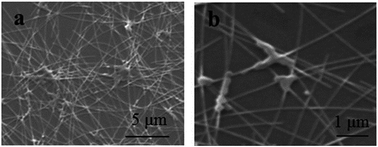
There are two reasons that cause the “slight” aggregation of silver nanowires. First, the NaCl particles play the role of a “condensation nucleus” during the silver nanowire solution evaporating process. Second, the NaCl particles also block some silver nanowires during the coating process. This may be why the salt particles are mainly located on the AgNW–AgNW junctions “magically” as seen in Fig. 2a. It can be seen that the new AgNW network is a much sparser network created by “attracting” AgNWs as shown in Fig. 2b.


image file: c6ra00219f-f2.tif
Fig. 2 SEM images of (a) the new AgNW network on glass substrate with salt treatment, and (b) the new AgNW network created is a sparser network.

Then in the next step, some AgNWs were coated on the glass substrate, and after an annealing process, we dripped a small amount of water to ionize and re-deposit the Ag atoms on the surface of the glass substrate. Some previous papers21,22 studied the phenomenon that AgNWs may produce silver ions (Ag+) in the presence of chloride (Cl) and dissolved oxygen in water due to redox reactions. The absorbed silver ions of AgNWs may dissolve in water at the same time. Although oxygen dissolved in water would prevent Ag+ from redepositing on the surface of the AgNW network, the amount of oxygen in water is very small, then Ag+ could be more likely to redeposit onto the more active AgNW surface. Because the electrostatic potential is different around the nanowires and AgNW–AgNW junctions, Ag+ ions are more likely to redeposit on the AgNW–AgNW junctions, which could further improve the conductivity.23 Although researchers have studied many ways to reduce the AgNW–AgNW junction resistance, we present a much more simple method in this paper.

The slight aggregation of the AgNWs could make a slightly higher density of AgNW–AgNW junctions in the nanowire networks, which could be attributed to the higher amounts of AgNWs located in the area where the NaCl particles were located. On the other hand, AgNWs in this area were more likely to form much sparser structures that may have led to the improved transparency of the films in Fig. 3. The distinction between the two different AgNW networks may cause the different performances of films shown in Fig. 3.


image file: c6ra00219f-f3.tif
Fig. 3 Transmittance of AgNW–PUA films with different networks.

As shown in Fig. 3, we measured the transmittance of the two different networks of AgNWs and the results showed that the reshaped new network significantly improved the performance of transparent films. The performance of films with the new AgNW network is 7.7 ohm sq−1 and 75.76% transmittance at 550 nm, while for films with the common AgNW network the performance is 9.1 ohm sq−1 and 73.81% transmittance at 550 nm. This means that the conductivity and transmittance has increased by 15% and 2.6% respectively. Although the increased performance of the transparent films differs with the time of AgNW coating (higher transmittance means that AgNWs will form sparser structures and the effect of salt will be limited, for example, the increased conductivity is only 3% with a 90% transmittance), one thing should be certain, that this creative, facile way does improve the performance of transparent films at low cost and with no impact on the environment.

To examine the generated temperature, Joule’s law equation is used to determine the heat generated: P = V2/R, where V is the applied voltage and R is the sample’s resistance. It’s obvious that higher dissipation can be obtained when the sample’s resistance is lower. As shown in Fig. 4, we tested the heated AgNW–PET films with the two different networks by applying a DC voltage across a sample area of 20 mm width by 25 mm length (PET is the more heat resistant material). The two different AgNW–PET films were fabricated under the same experimental conditions (AgNW–PUA films). Fig. 4a shows the scheme of the measurement of the AgNW–PET films which uses two parallel copper electrodes coated with silver paste for electrical contact.


image file: c6ra00219f-f4.tif
Fig. 4 (a) The scheme of transparent AgNW–PET measurement. (b) The temperature as a function of time during continuous joule heating of AgNW–PET films with different networks when direct power was on (6.5 V). (c) The temperature as a function of time during continuous joule heating of AgNW–PET films with different networks when direct power was on (6.5 V and 13.5 V).

In Fig. 4b, after 20 s, the thin film temperature reached a plateau. The AgNW–PET film with the new AgNW network reached a plateau at 46 °C at 6.5 V bias and the steady state was maintained for several seconds. However, the AgNW–PET film with a common AgNW network could only reach a plateau at 40.4 °C by applying the same DC voltage. Obviously, AgNW–PET films with the new AgNW network have lower resistance than films with a common AgNW network.

However, when we fabricated two AgNW–PET films with different resistance by changing the times of AgNW solution coating, the resistances of the two films were 11.6 ohm sq−1 (new AgNW network) and 7.9 ohm sq−1 (common AgNW network). As shown in Fig. 5c, after 20 s, the temperature of the two films is steady when the applied DC voltage is 6.5 V, and the temperature is 45 °C and 49 °C for films with the new network and common network respectively. According to Joule’s law, this is because our AgNW–PET films with the new AgNW networks have higher resistance and result in lower temperatures.


image file: c6ra00219f-f5.tif
Fig. 5 AFM images of the new AgNW network on different substrates. (a) AgNW–PUA film with the new network, (b) the new AgNW network on a glass substrate.

What’s more interesting is that the curve of temperature is totally different when the applied DC voltage is 13.5 V. The temperature rises rapidly (above 100 °C) and then decreases quickly at ∼30 s. This is probably because the AgNWs are oxidized at high temperature. Unlike AgNWs embedded in polymer substrate as a film heater24 or protected by the clay platelets of AgNW–PET films,7 the AgNWs were mainly deposited on the surface of the PET film in our work so they were easily oxidized by oxygen. Then, the temperature raised gradually from 30–100 s. For the AgNW–PET film with a common AgNW network, this is probably due to residual PVP being removed which would wrap around AgNWs, prevent good electrical contacts between them and cause high AgNW–AgNW junction resistance. For removing PVP, annealing is still the effective way, especially when the temperature is above 100 °C. For the AgNW–PET film with the new AgNW network, despite residual PVP, we believe this phenomenon is because our new network has created a few more AgNW–AgNW junctions, which also has lower junction resistance as we have mentioned above. So it seems reasonable to assume that the annealing process (local melting of silver at AgNW–AgNW junctions) for our new AgNW network would take more time. Finally a stable temperature occurred and the final temperature was 100.5 °C and 95.2 °C for films with the new AgNW network and common AgNW network respectively, which means that the sample with the new AgNW network has lower resistance when the annealing process is totally complete.

For fair comparison, we implemented the 17 minutes of the annealing process for the AgNW–PUA films with different AgNW networks, and the result showed that the conductivity of the films with the new AgNW network could increase by 21% compared with the AgNW–PUA films with a common network and the transmittance remained the same (increased by 2.6%). Although our results are not better than previous work,23 the AgNWs and coating technique are different which may cause the differences. In fact, we fabricated AgNW–PUA films with the new AgNW network after decreasing the times of coating in AgNW solution and the results showed that the resistance and transmittance were 8.3 ohm sq−1 and 81% at 550 nm respectively. Compared with recent work25 which used similar AgNWs and coating techniques, we could still see a huge performance improvement.

As revealed by atomic force microscopy (AFM) (Fig. 5), we compared the surface roughness between the AgNW–PUA film with the new network and the new network of AgNW on glass. The “slight” aggregation of AgNWs may cause increased surface roughness, thanks to the commercial polymer which could penetrate into the AgNW network. After liquid PUA was cured, PUA would support the AgNW network and the AgNWs would be embedded in the PUA substrate.

With the help of the polymer, the surface roughness was significantly reduced from 400 nm to 10 nm. That also means that the films with the new network of AgNWs have significantly low roughness and great potential in many applications. In fact, the surface roughness can influence the conductivity and bending performance.26 This is because the low surface roughness of AgNW–PUA films means that AgNWs could make contact with each other effectively. Such low roughness could help increase the films’ conductivity and bending performance as well.

The bending performance of flexible transparent films is one of the basic requirements for applications like in wearable devices. The sheet resistance change of AgNW–PUA films as a function of bending cycles is shown in Fig. 6. It can be seen that for AgNW–PUA films with the new AgNW network, the sheet resistance began to rise after only 1200 bending cycles and then increased by 3% after 3000 cycles which is a very low resistance change. Compared with previous work,24 we could also notice that AgNW–PUA films with the new AgNW network have a higher bending performance. When we compare with ITO which can’t maintain an effectively conductive path even under slight deformation, our transparent flexible AgNW–PUA films have great potential to be used in next-generation devices.


image file: c6ra00219f-f6.tif
Fig. 6 The sheet resistance ratios of AgNW–PUA with the new network as a function of bending cycles.

Normally, the resistance and transmittance of transparent composite films based on AgNWs mainly depends on the amounts of AgNW coated on the substrate. The greater the amount of AgNWs, the lower the resistance of the AgNW-films we could obtain, which also leads to the lower transmittance of the composite films. According to our research, it’s clear that films with the new AgNW network can form sparser structures and have reduced junction resistance which could improve the performance of the films significantly.

Conclusions

In summary, we fabricated transparent, flexible electrodes with a reshaped AgNW network and reduced junction resistance via pre-coating NaCl on a glass substrate. Pre-coated NaCl could also influence the electrical conductivity and optical transmittance of the films. The results indicate that the conductivity and transmittance of the films can be improved significantly. It has been found that AgNW–PUA films with the new AgNW network can remain robust after 1200 bending cycles and the resistance change is only less than 3% after 3000 cycles, so these kinds of AgNW–PUA composite films have many potential applications in optoelectronic devices.

Experimental section

Fabrication of AgNWs

The synthesis of AgNWs is according to the reported literature.27 Firstly, we fabricate Pt nanoparticles by reducing PtCl2 with ethylene glycol. Pt nanoparticles can be seen as seeds which could separate the subsequent nucleation and growth steps of Ag. Secondly, after adding AgNO3 and poly(vinyl pyrrolidone) (PVP) to the refluxing solution, AgNO3 is reduced by ethylene glycol and forms silver nanoparticles. The polymer surfactant we used could effectively control the growth rates of the various planes of face-centered cubic Ag. Finally, silver nanowires are formed gradually and accordingly the color of the solution becomes gray. The average diameter and length are around 25–35 nm and 10–20 μm respectively.

Fabrication of AgNW–PUA films

First of all, 1 mL of AgNW suspension with a concentration of 10 g L−1 was diluted by isopropyl alcohol and methyl alcohol. After shaking for several minutes, the final concentration was 0.14 g L−1. The diluted AgNW solution will be helpful to make the coating more uniform by several coating processes. Fig. 1 shows the schematic illustration of the formation steps for the AgNW–PUA film. Firstly, the glass substrate was coated with sodium chloride solution several times by the Meyer-rod method (the typical solution was 2 μL of saturated sodium chloride solution diluted with 1 mL of ethyl alcohol and treated in an ultrasonic bath for 10 min before use). After solvent evaporation, the glass substrate was coated with the diluted AgNW solution by the Meyer-rod method and the resistance was controlled by the times of coating. The third step was an annealing process (heating on a hot plate at 150 °C for 15 min). Then we dripped some water on the glass substrate for a few minutes and rinsed with ultrapure water 5 times to remove NaCl, and dried. In the fifth step, the PUA monomer (CN991 Sartomer USA) was poured onto the glass substrate. The thickness of the film was controlled by adhesive tapes. Finally, the coatings were cured under UV for 10 min and peeled off. AgNW–PUA films with a common AgNW network were fabricated in the same way. In brief, AgNW solution was coated on a glass substrate and heated on a hot plate. PUA was poured onto the glass substrate and cured under UV. Finally, the AgNW–PUA films were peeled off.

Fabrication of AgNW–PET films

Two different AgNW–PET films were fabricated in the same way as mentioned above. In brief, AgNW–PET films with the new AgNW network were fabricated by pre-coating the NaCl suspension on a PET substrate. After coating AgNWs on PET, we dripped water on PET and rinsed with ultrapure water. After the films dried, they were heated on a hot plate. As for AgNW–PET films with a common AgNW network, AgNW solution was coated on the PET substrate and the films were heated on a hot plate.

Characterization

The PUA monomer was cured using a photochemical reactor (Xi’an Bilang, China). Transmittance measurement for AgNW–PUA films was carried out by using an UV-Vis spectrometer (Beijing PGeneral, TU-1900) at the range of 190–900 nm. The DC voltage was supplied by a power supply (Keithley 2400) to the AgNW–PET films which had copper as the electrodes. The temperature of the film was measured by an IR camera (IRS S6, China). A UNI-T digital multimeter was used to monitor the sheet resistance during the bending cycles, and measure the sheet resistance of the films in a 10 mm × 10 mm square and the values were the mean values obtained across the entire film and the bending radius is 5 mm. The network of the AgNWs on the substrate was observed using a JEOL JSM-7001 scanning electron microscope (SEM, Hitachi S-4800, Japan). The surface roughnesses of the AgNWs were investigated using a SPI3800N atomic force microscope (AFM; Rigaku Corporation, Japan).

Conflict of interest

The authors declare that they have no conflict of interest.

References

  1. H. Wu, L. Hu, T. Carney, Z. Ruan, D. Kong, Z. Yu, Y. Yao, J. J. Cha, J. Zhu, S. Fan and Y. Cui, J. Am. Chem. Soc., 2011, 133, 27–29 CrossRef CAS PubMed.
  2. P. D. Szkutnik, H. Roussel, V. Lahootun, X. Mescot, F. Weiss and C. Jiménez, J. Alloys Compd., 2014, 603, 268–273 CrossRef CAS.
  3. J. A. Spechler, T. W. Koh, J. T. Herb, B. P. Rand and C. B. Arnold, Adv. Funct. Mater., 2015, 25, 7428–7434 CrossRef.
  4. D. H. Kim, K. C. Yu, Y. Kim and J. W. Kim, ACS Appl. Mater. Interfaces, 2015, 7, 15214–15222 CAS.
  5. I. S. Fraser, M. S. Motta, R. K. Schmidt and A. H. Windle, Sci. Technol. Adv. Mater., 2010, 11, 1–7 CrossRef.
  6. L. Tan, M. Zeng, Q. Wu, L. Chen, J. Wang, T. Zhang, J. Eckert, M. H. Rümmeli and L. Fu, Small, 2015, 11, 1840–1846 CrossRef CAS PubMed.
  7. T. Kim, Y. W. Kim, H. S. Lee, H. Kim, W. S. Yang and K. S. Suh, Adv. Funct. Mater., 2013, 23, 1250–1255 CrossRef CAS.
  8. S. Zhu, Y. Gao, B. Hu, J. Li, J. Su, Z. Fan and J. Zhou, J. Nanotechnol., 2013, 24, 335202 CrossRef PubMed.
  9. B. Bari, S. Honey, M. Morgan, I. Ahmad, R. Khan, A. Muhammad, K. Alamgir, S. Naseem and M. Malik, Curr. Appl. Phys., 2015, 15, 642–647 CrossRef.
  10. J. Liang, L. Li, K. Tong, Z. Ren, W. Hu, X. Niu, Y. Chen and Q. Pei, ACS Nano, 2014, 8, 1590–1600 CrossRef CAS PubMed.
  11. L. Hu, H. S. Kim, J.-Y. Lee, P. Peumans and Y. Cui, ACS Nano, 2010, 4, 2955–2963 CrossRef CAS PubMed.
  12. M. M. Menamparambath, C. M. Ajmal, K. H. Kim, D. Yang, J. Roh, H. C. Park, C. Kwak, J.-Y. Choi and S. Baik, Sci. Rep., 2015, 5, 16371 CrossRef CAS PubMed.
  13. H. Lu, D. Zhang, X. Ren, J. Liu and W. C. Choy, ACS Nano, 2014, 8, 10980–10987 CrossRef CAS PubMed.
  14. W. Gaynor, G. F. Burkhard, M. D. McGehee and P. Peumans, Adv. Mater., 2011, 23, 2905–2910 CrossRef CAS PubMed.
  15. Z. Yu, Q. Zhang, L. Li, Q. Chen, X. Niu, J. Liu and Q. Pei, Adv. Mater., 2011, 23, 664–668 CrossRef CAS PubMed.
  16. K.-H. Ok, J. Kim, S.-R. Park, Y. Kim, C.-J. Lee, S.-J. Hong, M.-G. Kwak, N. Kim, C. J. Han and J.-W. Kim, Sci. Rep., 2015, 5, 9464 CrossRef CAS PubMed.
  17. S. Kang, T. Kim, S. Cho, Y. Lee, A. Choe, B. Walker, S.-J. Ko, J. Y. Kim and H. Ko, Nano Lett., 2015, 15, 7933–7942 CrossRef CAS PubMed.
  18. S.-k. Duan, Q.-l. Niu, J.-f. Wei, J.-b. He, Y.-a. Yin and Y. Zhang, Phys. Chem. Chem. Phys., 2015, 17, 8106–8112 RSC.
  19. Y. Ko, S. K. Song, N. H. Kim and S. T. Chang, Langmuir, 2016, 32, 366–373 CrossRef CAS PubMed.
  20. B.-R. Yang, W. Cao, G.-S. Liu, H.-J. Chen, Y.-Y. Noh, T. Minari, H.-C. Hsiao, C.-Y. Lee, H.-P. D. Shieh and C. Liu, ACS Appl. Mater. Interfaces, 2015, 7, 21433–21441 CAS.
  21. J. Dobias and R. Bernier-Latmani, Environ. Sci. Technol., 2013, 47, 4140–4146 CrossRef CAS PubMed.
  22. D.-Y. Shin, G.-R. Yi, D. Lee, J. Park, Y.-B. Lee, I. Hwang and S. Chun, Nanoscale, 2013, 5, 5043–5052 RSC.
  23. S. J. Lee, Y.-H. Kim, J. K. Kim, H. Baik, J. H. Park, J. Lee, J. Nam, J. H. Park, T.-W. Lee and G.-R. Yi, Nanoscale, 2014, 6, 11828–11834 RSC.
  24. J. Li, J. Liang, X. Jian, W. Hu, J. Li and Q. Pei, Macromol. Mater. Eng., 2014, 299, 1403–1409 CrossRef CAS.
  25. J. Liang, L. Li, X. Niu, Z. Yu and Q. Pei, Nat. Photonics, 2013, 7, 817–824 CrossRef CAS.
  26. M.-x. Jing, M. Li, C.-y. Chen, Z. Wang and X.-q. Shen, J. Mater. Sci., 2015, 50, 6437–6443 CrossRef CAS.
  27. Y. G. Sun, B. Gates, B. Mayers and Y. N. Xia, Nano Lett., 2002, 2, 165–168 CrossRef CAS.

This journal is © The Royal Society of Chemistry 2016
Click here to see how this site uses Cookies. View our privacy policy here.