
DOI:
10.1039/C6RA00080K
(Paper)
RSC Adv., 2016,
6, 23887-23899
Effect of side-wall functionalisation of multi-walled carbon nanotubes on the thermo-mechanical properties of epoxy composites†
Received
2nd January 2016
, Accepted 26th February 2016
First published on 26th February 2016
Abstract
In this work, a novel functionalisation was carried out by grafting carboxyl-terminated poly(acrylonitrile-co-butadiene) on the side-walls of multi-walled carbon nanotubes to prepare MWCNT-g-CTBN. The functionalized nanotubes were characterized by XPS, Raman spectroscopy, and TGA and the surface morphology was analyzed by transmission electron microscopy. The dispersion behavior of the MWCNT/epoxy nanosuspension was carefully analyzed by transmission optical microscopy (TOM) and rheology. The MWCNT-g-CTBN was added to the diglycidyl ether of bisphenol A-type epoxy to prepare MWCNT-g-CTBN/epoxy composites. Incorporation of CTBN-grafted MWCNTs in epoxy matrix imparted tremendous improvement in mechanical strength as well as fracture toughness when compared with pristine MWCNT/epoxy composites. The mechanism for this improvement in mechanical properties is attributed to the increase in interfacial strength between nanotubes and the epoxy matrix through chemical bonding. The toughening mechanism that leads to the enhancement in the fracture toughness of the nanocomposites was assessed with the help of Field Emission Scanning Electron Microscopy (FESEM). Dynamic mechanical analysis of the MWCNT-g-CTBN/epoxy composite revealed an increase in the Tg of the epoxy phase as well as an increase in modulus due to the enhancement in stiffness of the material.
1. Introduction
Owing to their outstanding thermo-mechanical and multifunctional properties, carbon nanotubes (CNTs) are used as reinforcing fillers to fabricate polymer composites. It has been shown that the inclusion of only a small amount of CNTs can significantly improve the functional and mechanical properties of polymer composites.1–4 These properties result from the high aspect ratio, low density, exceptional strength and high surface area to volume ratio of the CNTs.5 But the thermo-mechanical properties of the CNT/polymer nanocomposites were observed to be lower than the theoretical calculations.6,7 It is attributed to the intrinsic van der Waals force of attraction and high aspect ratio nature of the CNTs due to which they exist in the form of bundles and ropes. Moreover, the weak interfacial bonding between CNTs and polymer matrices may limit the load transfer. A homogeneous dispersion of the CNTs in the polymer matrix is an essential parameter to obtain uniform properties and efficient load transfer during mechanical loading. Surface modification of carbon nanotubes seems to be the most effective way to overcome these problems.8–10 There are two main methods for the surface functionalisation of CNTs. One is the noncovalent attachment of molecules and the second is covalent attachment of functional groups to the walls of the carbon nanotubes.11,12 The noncovalent functionalisation involves the adsorption or wrapping of functional molecules on the surface of CNTs. But the lack of chemical bonding results in poor interfacial interaction between CNTs and the polymer matrix, which in turn results in reduction of the effective reinforcement of CNTs. The covalent attachment of functional groups to the surface of nanotubes offers the opportunity for chemical interactions with the epoxy systems and improve the efficiency of load transfer. These functional groups attached could be small molecules or polymer chain.13–19 Polymer functionalized CNTs have attracted more attention due to the presence of multiple anchor units for surface attachment as well as effective compatibility between the functionalised CNTs and the hosting polymer matrix.20,21 There are some previous works demonstrating the grafting of a variety of polymers on the surface of nanotubes. Hayashida et al. covalently anchored poly(methyl methacrylate) (PMMA)-grafted multi-walled CNTs, and then dispersed into additional PMMA matrix, yielding highly insulated PMMA–CNT composites.22 In the work of Ilčíková et al., multi-walled carbon nanotubes (MWCNT) has been covalently modified by short polystyrene chains to improve their dispersion in polystyrene-b-polyisoprene-b-polystyrene (SIS) thermoplastic elastomer and prevent deterioration of its elastic properties after incorporation of the MWCNTs.23 Daugaard et al. prepared poly(lauryl acrylate) and poly(stearyl acrylate) grafted multi-walled carbon nanotubes and tested in PP composites to elucidate their efficiency for compatibilization.24 Roy et al. demonstrated a novel strategy i.e., UV/O3-assisted grafting to covalently functionalize carbon nanotubes with poly(2-acrylamido-2-methylpropane sulfonic acid) (PAG-MWCNT). When these grafted MWCNTs were blended with a nylon 12 matrix, the resulting nanocomposites exhibited extremely high mechanical performance due to the PAG-MWCNTs' excellent dispersion and strong interfacial interactions with the nylon 12.25 Díez-Pascual et al. described the grafting of a hydroxylated poly(ether ether ketone) (HPEEK) derivative onto the surface of acid-treated single-walled carbon nanotubes (SWCNTs). The HPEEK-grafted SWCNTs has been used as fillers to prepare PEEK nanocomposites with enhanced performance.26 In a previous study, we modified MWCNT surface with an engineering thermoplastic, poly(ethersulfone) and evaluated the performance of epoxy composites prepared using the grafted nanotube.27 Incorporation of PES grafted MWCNTs in epoxy matrix composites imparted tremendous improvement in fracture toughness and tensile strength when compared to pristine and acid modified MWCNT/epoxy composites.
Recently, the incorporation of CNTs into epoxy matrix is gaining significant interest in the structural composite application, where strength, stiffness, durability, lightweight, design, and process flexibility are required such as in aerospace and automobile industry.28,29 The inherent brittle nature of the epoxy matrix can be improved by the presence of nanotube in the matrix.30,31 However, a better improvement in toughness and mechanical strength can be expected if the CNTs are previously functionalized with reactive liquid rubbers which consist of multiple functional groups. Besides homogeneous dispersion, the chemical modification of the CNTs with reactive liquid rubbers can create a soft interface between CNTs and polymer which can result in a better load transfer from matrix to filler. Carboxyl-terminated poly(acrylonitrile-co-butadiene) (CTBN) is conventionally used as a toughener in epoxy by making use of the carboxyl–epoxy reaction. The side-wall functionalisation of CTBN to multi-walled carbon nanotubes (MWCNTs) ensures a uniform coating of soft liquid polymer on the CNT surface and offers the opportunity to enhance both the mechanical and toughening properties of the epoxy system. To the best of our knowledge, no report on the side-wall functionalisation of liquid rubber on to MWCNTs is available in the literature.
In the present work, CTBN grafted MWCNTs have been proposed as an innovative filler for the preparation of epoxy nanocomposites with enhanced thermomechanical properties. Surface modification was characterized by XPS, Raman and TGA analysis. The effect of surface modification on the nanotube morphology and dispersion status was then evaluated by the TOM, SEM and TEM observations. The tensile tests were performed on the nanocomposites samples with different amounts of nanotubes. The Halpin–Tsai model was used to study the mechanical behavior. Change in the values of glass transition temperature and storage moduli were determined using dynamic mechanical thermal analysis.
2. Materials and methods
2.1 Materials
Diglycidyl ether of bisphenol A (Lapox ARL-135) and hardener 4,4′diamino diphenyl sulfone (DDS) (Lapox K10) were purchased from Atul India Pvt Ltd, Gujarat. Multi-walled carbon nanotube (Nanocyl 3100) was procured from Nanocyl, Belgium. It was synthesized by chemical vapor deposition and had an average diameter 9.5 nm, average length 1.5 micron and purity of >95%. Poly(acrylonitrile-co-butadiene)dicarboxyl terminated (CTBN, MW-3600 g mol−1), 2-(2-chloroethoxy)ethanol, sodium azide, dicyclohexylcarbodiimide (DCC), 4-(dimethylamino)pyridine (DMAP), N-methyl-2-pyrollidone (NMP) and N,N-dimethylformamide (DMF, 99.5%) were purchased from Sigma-Aldrich, Bangalore, India. All the chemicals were used as received without further purification.
2.2 Modifications on carbon nanotube
2.2.1 Synthesis of 2-(2-azidoethoxy)ethanol. 2-(2-Azidoethoxy)ethanol was synthesized from 2-(2-chloroethoxy)ethanol using a procedure similar to the one developed by Matyjaszewski et al.32 In a typical experiment, 2-(2-chloroethoxy)ethanol (124.5 g, 1 mol) and sodium azide (130 g, 2 eq.) were added to 1000 mL water in a 2 L two-necked round-bottom flask equipped with mechanical stirrer. Subsequently, the mixture was stirred at 75 °C for 96 h. After cooling to room temperature, the mixture was extracted with diethyl ether (5 × 100 mL). The organic mixture was dried over magnesium sulfate overnight and concentrated on a rotary evaporator. The obtained residues were distilled under reduced pressure to give colorless oil in 78% yield. 1H NMR (500 MHz; CDCl3): δ 2.69 (b, 1H), 3.40 (t, 2H, J = 4.9 Hz), 3.57–3.60 (m, 2H), 3.65–3.69 (m, 2H), 3.70–3.75 (m, 2H). 13C NMR (125 MHz; CDCl3): δ 50.7, 61.7, 70.0, 72.5 (Fig. S1 and S2, ESI†). MALDI-TOF/TOF MS (M)+ 131.22.
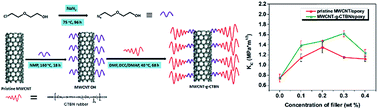
2.2.2 Preparation of MWCNT-OH and MWCNT-g-CTBN. MWCNT-OH was prepared via the addition of nitrene formed by thermolysis of 2-(2-azidoethoxy)ethanol to strained double bonds of MWCNTs.33 A 100 mg portion of MWCNTs were dispersed in 15 mL of NMP in an R.B flask by ultrasonication for 2 h to give a homogeneous suspension. The functionalization was performed by the addition 5 g of 2-(2-azidoethoxy)ethanol at room temperature and the mixture was heated at 160 °C for 18 h in a nitrogen atmosphere. After cooling to room temperature, the mixture was filtered through a 0.22 μm Teflon membrane and washed multiple times with acetone (100 mL) and distilled water (100 mL) to completely remove the unreacted 2-(2-azidoethoxy)ethanol. After being dried under vacuum at 60 °C for overnight, the functionalized MWCNTs containing hydroxyl groups were obtained (108 mg).For the preparation of MWCNT-g-CTBN, 500 mg of MWCNT-OHs was dispersed in 125 mL of anhydrous dimethylformamide (DMF) by sonication for 30 minutes. The MWCNT-OH solution was added to a two-necked flask containing a 5 gram solution of CTBN in 125 mL of DMF. Subsequently, a solution of DCC (20.6 g, 100 mmol) and DMAP (1.2 g, 10 mmol) in DMF (250 mL) was added under nitrogen and the reaction was allowed to proceed at 40 °C for 68 h. The resulting product was filtered, washed with methanol, and dried under vacuum at 60 °C for 24 h to get MWCNT-g-CTBN (645 mg) (Fig. 1).
 |
| | Fig. 1 Schematic showing the preparation of (a) 2-(2-azidoethoxy)ethanol and (b) MWCNT-g-CTBN from pristine MWCNTs. | |
2.3 Preparation of MWCNT/epoxy nanocomposite
MWCNT/epoxy nanocomposites containing different compositions of nanotube were prepared as follows. Epoxy resin was sonicated with required amount nanotubes in acetone for 30 minutes. Acetone was evaporated off by heating at 90 °C for 2 hours. This MWCNT/epoxy nanosuspension was mixed with molten hardener in the 100
:
35 ratio and degassed for 5 minutes in a vacuum oven. The mixture was then transferred into pre heated mold and cured at 180 °C for 4 h. Post curing was done at 200 °C for 1 h.
2.4 Characterization techniques
2.4.1 Fourier transform infrared spectroscopy (FTIR). Fourier transform infrared spectroscopy (FTIR) analysis was carried out using a Perkin Elmer System series 100 spectrophotometer in a frequency range of 4000–500 cm−1 with a spectral resolution of 4 cm−1.
2.4.2 Nuclear magnetic resonance spectroscopy (NMR). NMR spectra of 2-(2-azidoethoxy)ethanol dissolved in CDCl3 were recorded on a Bruker AVANCE II-500 spectrometer. The spectra were internally referenced to a tetramethylsilane (TMS) standard.
2.4.3 X-ray photoelectron spectroscopy (XPS). XPS was carried out with a Kratos Axis Ultra DLD spectrometer, using Al Kα excitation radiation.
2.4.4 Raman spectroscopy. Raman spectra were recorded from 100 to 3000 cm−1 on a Raman spectrometer (INVIA, England) with a 514 nm argon ion laser.
2.4.5 High resolution transmission electron microscopy (HRTEM). The high-resolution transmission electron microscopy (HRTEM) was conducted using JEOL JEM-2100 with an acceleration voltage of 200 kV being equipped with an EDX spectrometer. Sliced thin sections of MWCNT/epoxy composites with a thickness of about 60–80 nm, prepared by ultra-microtomy, were used to take the TEM images of the composites.
2.4.6 Transmission optical microscopy (TOM). Optical microscopy analysis was carried out with Leica DM1000 LED (Leica Microsystems, Germany) in transmitted light configuration. The analysis was done on a small droplet of the epoxy suspension placed on a microscope glass.
2.4.7 Rheology. Rheological analysis was done using modular rheometer (MCR102, Anton Paar, USA), using a 50 mm parallel plate assembly at room temperature.
2.4.8 Scanning electron microscopy (SEM). The morphology of a fractured surface of the sample was analyzed using scanning electron microscope (SEM, FEI Quanta FEG200). Prior to analysis, sample is sputter coated with gold to make it conducting surface.
2.4.9 Mechanical measurements. The tensile strength of the sample was measured using universal testing machine (Instron 5984, Instron, USA) at a crosshead speed of 1 mm min−1 (as per ASTM standard D638). Fracture toughness of the specimens was determined according to ASTM D 5045-99. Single edge notch specimens of 46 × 6 × 3 mm3 (span length = 24 mm) were used to measure the fracture toughness of the epoxy nanocomposites. A notch of 2.7 mm was made at one edge of the specimen. A natural crack was made by pressing a fresh razor blade into the notch. The fracture toughness was expressed as stress intensity factor (KIC) calculated using equation| |
 | (1) |
| |
 | (2) |
and L is the load at crack initiation, B is the specimen thickness, W is the specimen width, a is the crack length and x = a/W.
2.4.10 Dynamic mechanical thermal analyzer (DMA). The investigation of visco-elastic properties was performed using dynamic mechanical thermal analyzer (DMA 800, Perkin Elmer, USA). Rectangular specimens of 20 × 5 × 2 mm3 were used for the analysis. The analysis was done in single cantilever mode at a frequency of 1 Hz, from ambient to 250 °C and at a heating rate of 2 °C min−1.
2.4.11 Thermogravimetric analyzer (TGA). Thermal stability of nanocomposites was analyzed using a thermogravimetric analyzer (Q-50, TA Instruments, USA). The samples were heated from ambient to 800 °C at a ramp rate of 10 °C min−1.
3. Results and discussions
3.1 Characterization of 2-(2-azidoethoxy)ethanol
Fig. 2 shows the FTIR spectra of (a) 2-(2-chloroethoxy)ethanol and (b) 2-(2-azidoethoxy)ethanol. 2-(2-Chloroethoxy)ethanol shows a characteristic absorption peak of C–Cl at around 745 cm−1. Apart from this, a broad band centered around 3400 cm−1, referred to the stretching of OH groups, as well as peaks at 2870 and 2930 cm−1, attributed to the C–H stretching vibrations were also observed. The peak at 1121 cm−1 of chloroethoxyethanol is due to the C–O stretching. In the FTIR spectrum of 2-(2-azidoethoxy)ethanol, the disappearance of the C–Cl stretch after the reaction with sodium azide and the appearance of the characteristic absorption of azido groups at ca. 2094 cm−1 indicates that most of the chloride groups have been substituted with azide groups. Furthermore, a band appears at 1284 cm−1 referring to the C–N stretching vibration.
 |
| | Fig. 2 FTIR spectra of (a) 2-(2-chloroethoxy)ethanol and (b) 2-(2-azidoethoxy)ethanol. | |
3.2 Characterization of grafting of CTBN on multi-walled carbon nanotube
XPS was employed to evaluate the chemical bonds formed on the surface of nanotube before and after its functionalization with CTBN. Fig. 3 shows the survey data of the pristine and chemically modified nanotube samples. Pristine MWCNTs exhibit a strong peak at 285 eV due to C 1s and a peak of very low intensity at 532 eV due to O 1s from the defects of nanotube. After functionalization, both MWCNT-OH and MWCNT-g-CTBN show a significant increase in the O 1s peak and a new peak at 400 eV is observed (N 1s). This increased intensity of elements is originated from the presence of organic moieties which confirmed the success of the modification. The higher resolution data of C 1s area of the CNTs, MWCNT-OH and MWCNT-g-CTBN are shown in Fig. 4a–c respectively. For pristine MWCNT, the main peak at 284.5 eV is attributed to the sp2 hybridized graphite-like carbon atoms (C
C), a peak at 285.1 eV corresponds to sp3 hybridized carbon atoms arising from defects on the nanotube structure (C–C), a peak at 286.2 eV related to carbon–oxygen single bonds in alcohols, phenols and ethers (C–O), a peak at 288.9 eV attributed to carbon–oxygen double bonds in carboxylic acids, carboxylic anhydrides and esters (O–C
O) and finally a peak at 291.6 eV, the typical position of the π–π* shake-up satellite peak from the sp2-hybridised carbon atoms.13,34,35 In the C 1s spectra of the MWCNT-OH, the peak intensity of hydroxyl groups is much higher than that in pristine MWCNT, indicating the reaction has occurred between nanotube and the organic moiety. The disappearance of π–π* shake-up transition can be ascribed to the increased disruption of the π-electron system, indicating a significant change in the electronic structure of the CNT sidewalls. In the case of C 1s high resolution spectrum of MWCNT-g-CTBN, the significant intensity increment of the band at 288.9 eV (corresponds to O–C
O groups) suggests the covalent grafting of MWCNT with CTBN. Deconvolution of the N 1s spectrum shown in Fig. 4d displays two contributions with binding energies of 399.6 eV and 401 eV, respectively. The former is ascribed to the C
N from the polymer, while the latter is due to C–N, suggesting the successful covalent functionalization of MWCNT by CTBN.36
 |
| | Fig. 3 XPS survey spectra of pristine MWCNT, MWCNT-OH and MWCNT-g-CTBN. | |
 |
| | Fig. 4 High resolution C 1s spectra of (a) pristine MWCNT, (b) MWCNT-OH and (c) MWCNT-g-CTBN; (d) high resolution N 1s spectra of MWCNT-g-CTBN. | |
The FTIR spectrum of the MWCNT-OH shows the characteristic absorption bands due to stretching vibration of the C–O at 1075 cm−1 (Fig. S3, ESI†). In addition, the MWCNT-OH shows absorption peaks between 2920–2860 cm−1 which is related to the C–H stretching absorption band. On the other hand, MWCNT-g-CTBN exhibits three characteristic peaks related to vibrations of the CTBN: the peak at 963 cm−1 corresponds to
C–H out of plane bending vibration of 1,4 trans olefin in CTBN, peak at 1638 cm−1 is due to C
C stretching and peak at 1715 cm−1 corresponds to C
O stretching of carbonyl group in CTBN. Presence of small stretching band at 1740 cm−1 clearly reveals the ester bands that came from the CTBN grafted to the MWCNT.
Because of its high sensitivity to the structural change, Raman spectroscopy is commonly used to characterize the structural and electronic properties of carbon-based materials. Raman spectroscopy of three different MWCNTs is shown in the Fig. 5a. Raman spectrum of the carbon nanotube is usually characterized by three main features. The band at around 1572 cm−1 is from the in-plane vibrations of sp2-hybridized graphitic carbon, and hence is called the tangential or G-band. Defects and functional groups on the walls or ends of the CNTs, or amorphous carbon give rise to the so-called disorder (D) band corresponding to sp3-carbon, which is located around 1340 cm−1. The D′ band which is a weak shoulder of the G-band at higher frequencies is also a double resonance feature induced by disorder and defects.13 The intensity area ratio of the D to G bands, ID/IG, can serve as a standard to measure the defects of CNTs. The bigger the ratio, the greater is the defect which in turn indicates the presence of more groups on the surface of MWCNTs. The values of ID/IG for MWCNT-OH (1.87) and MWCNT-g-CTBN (1.89) are greater than that of pristine MWNTs (1.60), which indicates the increase in defects in MWCNTs due to the chemical functionalization. The sequential functionalization of MWCNT-g-CTBN did not result in the obvious increase in the D-band intensity, which likely because the polymer was not directly linked on the carbons of CNTs. Similar phenomena has been previously reported.27
 |
| | Fig. 5 (a) Raman spectra and (b) TGA of pristine MWCNT, MWCNT-OH and MWCNT-g-CTBN. | |
Fig. 5b shows representative TGA thermograms under nitrogen atmosphere of the pristine MWCNT, MWCNT-OH and MWCNT-g-CTBN. Due to the differences in the thermal stability of the carbon nanotube structure and the polymer moieties, by TGA analysis it is possible to gain a reliable estimation of the relative amount of introduced functionalities. The pristine MWCNTs are thermally stable up to about 550 °C. For the MWCNT-OH, however, a slight decrease in weight was observed at approximately 200 °C, corresponding to decomposition of organic groups. In the case of MWCNT-g-CTBN, the weight-loss region from 250 °C to 450 °C, has a weight loss of 50 wt% that is caused by the pyrolysis of the CTBN polymer. With the weight loss of the pure CTBN below 500 °C as a reference, the concentration of CTBN in MWCNT-g-CTBN was estimated as 38%.
The microstructures of pristine MWCNTs and MWCNT-g-CTBN were further characterized by HRTEM. Fig. 6a is the image of the pristine MWCNTs, in which the tube surface is relatively smooth and clean. The TEM microphotograph of MWCNT-g-CTBN shows that the surface of MWCNT is fully enwrapped with the amorphous polymer which is quite continuous all along the CNTs (Fig. 6b), implying that the covalent attachment of CTBN had been achieved. The thickness of the wrapped polymer layer is about 10 to 20 nm.
 |
| | Fig. 6 TEM images of (a) pristine MWCNTs and (b) MWCNT-g-CTBN. | |
3.3 Dispersion behavior of nanosuspension and composite
3.3.1 Transmission optical microscopy (TOM). TOM observation of dispersion level of CNTs in epoxy is useful to examine changes in dispersion state and interfacial bonding affected by the surface modification. TOM observations of the epoxy suspensions revealed the presence of MWCNTs aggregates. There were some zones with very high local MWCNT concentrations, as shown in Fig. 7. In fact, the pristine MWCNT samples were very viscous, and the homogenization process was difficult. The agglomerates that result from the existence of strong van der Waals interactions between individual tubes together with large aspect ratio of CNTs is due to which nanotubes exists as a highly entangled network. By contrast, after the surface functionalization with CTBN molecules, the dispersion of MWCNT-g-CTBN becomes relatively better although some small agglomerates are still observed. The reason for the differences in the MWCNT dispersion between both pristine and MWCNT-g-CTBN was the uncoiling of nanotube during functionalisation and enhanced interfacial interaction between the nanotube and resin. The functionalisation seems to be favorable for the dispersion for the MWCNT in epoxy matrix.
 |
| | Fig. 7 TOM images of epoxy nanosuspensions containing (a) 0.2 wt% MWCNT, (b) 0.2 wt% MWCNT-g-CTBN, (c) 0.4 wt% MWCNT and (d) 0.4 wt% MWCNT-g-CTBN. Insets show high magnification images. | |
3.3.2 Rheology. The rheological properties of the MWCNT/epoxy dispersions play a crucial role in the processing and mechanical features of epoxy nanocomposites. Plots of viscosity vs. shear rate of the pure epoxy, the pristine-MWCNT/epoxy composites, and the surface modified MWCNT/epoxy composites are shown in Fig. 8a to demonstrate the significance of viscosity build up and shear thinning in the epoxy nanosuspension system. The addition of pristine MWCNTs to epoxy resulted in an abrupt increase in viscosity at low shear rates. The pristine-MWCNTs were composed of bundles of nanotubes which are highly entangled. These nanotubes exist as many aggregates of different sizes in the epoxy resin. The aggregates would be obstacles to uniform dispersion of the MWCNTs and were hardly broken into individual tubes in the epoxy resin. The dispersion and homogenization was very difficult. The viscosity of MWCNT-g-CTBN epoxy suspension is observed to be much lower than that of MWCNT/epoxy suspension at low shear rates. This arises from a better dispersion of functionalized MWCNTs within the epoxy resin suspensions. At high shear rates, both nano-fillers show good dispersion due to disentanglement of nanotubes at very high shear forces.
 |
| | Fig. 8 Variation of (a) viscosity with shear rate and (b) shear stress with shear rate for epoxy nano suspension of MWCNT and MWCNT-g-CTBN. | |
Pristine-MWCNT/epoxy and MWCNT-g-CTBN/epoxy nano suspension showed a shear thinning effect while neat epoxy resin showed a near Newtonian behavior. The epoxy composites filled with the poorly dispersed CNTs exhibit stronger non-Newtonian behavior than ones with the well dispersed CNTs. The shear thinning effect of the suspensions were quantified by calculating the pseudo-plasticity index n. The shear dependency of the viscosity of solutions is usually given by the power law.37
Experimental data were fitted by the power law equation for different epoxy nano suspension systems. A typical plot between shear rate (log
γ) and shear stress (log
τ) is presented in Fig. 8b for epoxy resin, pristine MWCNT/epoxy nanosuspension and MWCNT-g-CTBN/epoxy nanosuspensions. The slope of the plots of shear rate (log
γ) vs. shear stress (log
τ) provided the pseudo plasticity index (n). Usually, n is in the range of 0 to 1. At n = 1, the equation reduces to the constitutive equation of a Newtonian fluid. When n < 1, shear thinning behavior is observed. The lower the n value, the more pronounced is the shear thinning behavior. As seen from data in Table 1, the pseudo-plasticity index n of the solution decreases by the addition of CNTs. On adding pristine CNTs, the n value shows an abrupt decrease. After chemical modification of CNTs, shear thinning behaviour is observed but it is less pronounced; in other words, after chemical modification of CNTs, the extent of Newtonian plateau is greater than with the pristine CNT epoxy suspension.
Table 1 Rheological data of MWCNT/epoxy nanosuspension
| Sample |
Viscosity at shear rate of 1 s−1 (Pa s) |
Flow index (n) |
| Epoxy resin |
4.07 |
0.99 |
| 0.2 wt% MWCNT |
17.6 |
0.73 |
| 0.2 wt% MWCNT-g-CTBN |
10.3 |
0.84 |
| 0.4 wt% MWCNT |
174 |
0.62 |
| 0.4 wt% MWCNT-g-CTBN |
34.7 |
0.73 |
3.3.3 TEM micrographs of epoxy composites. TEM images of MWCNT modified epoxy and MWCNT-g-CTBN modified epoxy composites are shown in Fig. 9. In the pristine MWCNT/epoxy composite, agglomerates of MWCNTs were observed. On the other hand, a significant improvement in the dispersion was observed by the grafting of CTBN with MWCNTs.
 |
| | Fig. 9 TEM images of epoxy nanocomposites containing (a) 0.2 wt% MWCNT and (b) 0.2 wt% MWCNT-g-CTBN. | |
3.4 Tensile strength of epoxy composites
The tensile properties of the composites as a function of nanotube concentrations are plotted in Fig. 10 and also summarized in Table 2. Representative tensile stress versus strain curves are shown in Fig. 10a. The tensile strength of nanocomposites increased initially with increasing the nanotube content and attained the maximum value at the 0.2 wt% nanotube content corresponding to an increase of 11% compared with the pure epoxy. The decreased tensile strengths beyond 0.2 wt% might be probably due to the aggregation of the nanotube which can result in the stresses concentrating at the aggregation points. By comparison, the composites containing the MWCNT-g-CTBN exhibit higher strength and modulus values than the pristine MWCNTs over the whole filler contents studied. For epoxy composite with 0.3 wt% MWCNT-g-CTBN, the tensile modulus and strength increased by 17% (2.21 ± 0.02 GPa) and 25% (85.4 ± 3.1 MPa), respectively. In order to compare this experimental modulus with theoretical value, a modified Halpin–Tsai model was used. The predicted modulus of the MWCNT/epoxy composite using modified Halpin–Tsai equation given by,10| |
 | (4) |
where E, Em and Ef are moduli of composite, matrix and carbon nanotube, respectively; νf is the volume fraction of the filler, φ is the shape factor which is equal to twice the aspect ratio of the filler.
 |
| | Fig. 10 (a) Representative stress–strain curves (b) tensile strength and (c) tensile modulus of epoxy nanocomposites containing pristine MWCNTs and MWCNT-g-CTBN. | |
Table 2 Fracture toughness and tensile properties of epoxy nanocomposites
| SI No |
Sample ID |
KIC (MPa m1/2) |
Tensile strength (MPa) |
Tensile modulus (GPa) |
Elongation at break (%) |
| 1 |
Neat epoxy |
0.74 ± 0.08 |
68.4 ± 1.7 |
1.89 ± 0.04 |
5.66 ± 0.63 |
| 2 |
0.1 wt% MWCNT |
1.14 ± 0.07 |
69.4 ± 3.0 |
1.92 ± 0.02 |
6.01 ± 0.88 |
| 3 |
0.2 wt% MWCNT |
1.35 ± 0.11 |
76.1 ± 2.8 |
1.98 ± 0.01 |
6.53 ± 1.07 |
| 4 |
0.3 wt% MWCNT |
1.15 ± 0.01 |
71.6 ± 1.8 |
2.01 ± 0.03 |
6.09 ± 0.99 |
| 5 |
0.4 wt% MWCNT |
1.12 ± 0.05 |
68.4 ± 3.7 |
1.93 ± 0.03 |
5.75 ± 0.41 |
| 6 |
0.1 wt% MWCNT-g-CTBN |
1.39 ± 0.08 |
74.1 ± 4.1 |
1.96 ± 0.02 |
6.12 ± 0.11 |
| 7 |
0.2 wt% MWCNT-g-CTBN |
1.47 ± 0.01 |
79.9 ± 2.6 |
2.05 ± 0.03 |
7.05 ± 0.40 |
| 8 |
0.3 wt% MWCNT-g-CTBN |
1.62 ± 0.06 |
85.4 ± 3.1 |
2.21 ± 0.02 |
6.76 ± 0.31 |
| 9 |
0.4 wt% MWCNT-g-CTBN |
1.24 ± 0.07 |
76.5 ± 2.5 |
2.07 ± 0.03 |
6.96 ± 0.88 |
Fig. 10c shows a comparison of the variation in theoretical and experimental tensile modulus values of composites with weight fraction of MWCNTs. It is found that the results obtained from the modified Halpin–Tsai equation on Young's moduli fit successfully the experimental ones at low concentration and the predicted values are slightly higher than the experimental ones for some compositions of MWCNT/epoxy composites. The discrepancy is caused by the aggregation of MWCNTs. However, the experimental tensile modulus of the MWCNT-g-CTBN/epoxy composite is found to be comparable to the modulus predicted using the Halpin–Tsai modeling. It means that a high reinforcing effectiveness is achieved by introduction of MWCNT-g-CTBN as reinforcement. In this case, more homogeneous dispersion and a better interface between the nanotubes and the epoxy matrix resulted in better mechanical properties. In the MWCNT-g-CTBN/epoxy composites, terminal carboxyl groups of CTBN react with epoxy matrix during curing reactions, which provide interfacial adhesion for load transfer between epoxy and nanotubes, and therefore, mechanical properties of the composites are enhanced. Another reason for the observed behavior is the presence of voids which are developed during the mixing of hardener with the MWCNT/epoxy-suspension via stirring (see the blue circles in Fig. 12e). The high viscosity disabled degassing of the nanocomposite samples with voids remaining in the matrix.
3.5 Fracture toughness of epoxy composites
The ability of a material to resist fracture is described as fracture toughness and is expressed in critical stress intensity factor (KIC). KIC values of neat epoxy, pristine MWCNT, and MWCNT-g-CTBN epoxy nanocomposites are given in Table 2. The addition of MWCNT and MWCNT-g-CTBN into the epoxy matrix resulted in an improvement in fracture toughness (Fig. 11). Neat epoxy showed the fracture toughness of 0.74 ± 0.8 MPa m1/2, which increased up to 1.35 ± 0.11 MPa m1/2 (82% improvement) by adding 0.2 wt% pristine MWCNTs. Composites with MWCNT-g-CTBN improved the fracture toughness of epoxy significantly, achieving an 117% improvement at 0.3 wt% filler loading. This is followed by a decrease in the value of KIC at higher MWCNT concentrations due to the presence of agglomerates and defects. The decrease in value of KIC at 0.4 wt% in the case of MWCNT-g-CTBN modified epoxy might be due to the presence of agglomerates.
 |
| | Fig. 11 Fracture toughness of epoxy nanocomposites containing pristine MWCNTs and MWCNT-g-CTBN. | |
The toughening mechanisms can be understood by observing the representative HRSEM images of the fracture surface of the neat epoxy and MWCNTs/epoxy composite with 0.3 wt% MWCNTs resulting from the fracture testing of the samples. Neat epoxy resin as shown in Fig. 12a exhibits a relatively smooth fracture surface, which indicates a typical fractography feature of brittle fracture behavior, thus revealing low fracture toughness of the neat epoxy. Compared to the case of neat epoxy, the fracture surfaces of the nanocomposites show considerably different fractographic features. The rough surface of the composites containing MWCNTs as seen in the Fig. 12b is most likely the result of crack deflection produced by the interaction of nanofillers and the epoxy matrix. Well dispersed nanotubes with proper adhesion to the epoxy could resist crack propagation and lead to crack deflection. Apart from crack deflection, pullout of nanotubes, debonding of MWCNTs and bridging mechanism also plays a significant role in improving the fracture toughness of composites. At higher magnification, some pulled out CNTs can be observed on the fracture surface (see Fig. 12d and f) in the MWCNT-g-CTBN/epoxy composites. These agglomerations can be responsible for reduction of tensile strength and KIC of nanocomposite in 0.4 wt% of MWCNTs which was mentioned earlier.
 |
| | Fig. 12 FESEM images of fractured surface of sample: (a) neat epoxy (b) 0.3 wt% MWCNT/epoxy (c) 0.3 wt% MWCNT-g-CTBN/epoxy (d) 0.3 wt% MWCNT-g-CTBN/epoxy at high magnification (e) 0.4 wt% MWCNT-g-CTBN/epoxy and (f) 0.4 wt% MWCNT-g-CTBN/epoxy at high magnification. | |
3.6 Dynamic mechanical analysis of epoxy composites
The effect of surface MWCNT functionalization on the viscoelastic performance of nanocomposites was investigated by DMA analysis by comparing the storage modulus, and tan
δ values with those of neat epoxy. The storage modulus (E′) and tan
δ were obtained by DMA in a range between 30 and 250 °C for all samples, and the results are shown in Fig. 13a–d. Addition of pristine nanotubes into epoxy resulted in an improvement in the storage modulus. In the glassy state, a maximum improvement of 14% from 1995 MPa to 2269 MPa in the storage modulus is observed by the addition of 0.2 wt% pristine MWCNTs to epoxy matrix. The epoxy nanocomposite with MWCNT-g-CTBN nanofiller shows an enhanced storage modulus compared with pure epoxy resin and pristine MWCNT/epoxy nanocomposite with the same filler content. At 30 °C, the storage modulus of the epoxy nanocomposite with 0.3 wt% MWCNT-g-CTBN is 2417 MPa, which is around 21% larger than that of neat epoxy resin (1995 MPa). The storage modulus in the rubbery region is also significantly increased for epoxy/MWCNT-g-CTBN, which is believed to be due to improved dispersion and the strong interfacial adhesion with epoxy which ensures an efficient load transfer at the interface. A reduction in Tg was observed by the addition of pristine nanotubes. The lowered Tg of MWCNT/epoxy composite is possibly due to either lower crosslink density of epoxy or poor adhesion between MWCNTs and epoxy, or both. After adding the MWCNT-g-CTBN, CTBN grafting provides carboxylic acid groups that can react with the oxirane rings of epoxy resin to form a strong bonding between matrix and MWCNTs, leading to a higher cross-linking density of the composites. This results in a confinement of the filler–matrix interface and reduce the chain mobility.38,39 As a result, the increase of Tg occurs.
 |
| | Fig. 13 (a) and (b) Storage modulus curves for pristine MWCNT and MWCNT-g-CTBN epoxy composites respectively and (c) and (d) tan delta versus temperature curves for pristine MWCNT and MWCNT-g-CTBN epoxy composites. | |
3.7 TGA of epoxy composites
Thermal stability of the epoxy composites was traced using TGA. The thermal stability of epoxy composites with 0.3 wt% loading of pristine MWCNTs and MWCNT-g-CTBN were compared with neat epoxy system in Fig. 14. The thermal stability of epoxy matrix was not affected by the addition of nanotubes. As shown in the figure, the main weight loss for the composites takes place at around 320 °C, which is attributed to the degradation of the epoxy network. This means that all the composites prepared are very stable and show little degradation below 320 °C and therefore can be used for many high-temperature applications.31,40
 |
| | Fig. 14 TGA curve of epoxy nanocomposites. | |
4. Conclusion
Multi-walled carbon nanotubes were surface-modified with CTBN by side-wall functionalisation and dispersed homogeneously throughout the epoxy resin system. A systematic study has been conducted to investigate the thermo-mechanical and viscoelastic properties of epoxy nanocomposites prepared by the introduction of MWCNT-g-CTBN into epoxy resin. The study indicates that the side wall functionalisation of nanotube is a good route to achieve higher mechanical properties of the composites. It has been possible to obtain an improvement of ∼117% in fracture toughness and 25% improvement in tensile strength in the CTBN functionalized MWCNT based epoxy composites with only 0.3 wt% loading. The mechanism of fracture behavior was also studied using SEM, which reveals that crack deflection, pullout of nanotubes, debonding of MWCNTs and bridging mechanism plays an important role in improving the fracture toughness of composites. The surface morphology reveals improved interfacial bonding between the filler/matrix. Therefore, MWCNT-g-CTBN modified composites are able to carry higher level of loading during mechanical testing. The nanocomposites also exhibited an increase in the storage modulus and glass transition temperature compared to those of the neat epoxy resin. This improvement in Tg is due to the hindered polymer chain mobility near the filler/matrix interface. TGA analysis indicates that the presence of nanotubes has not deteriorated the thermal stability of the epoxy matrix. To conclude, MWCNT-g-CTBN is found to be an effective reinforcement for epoxy system for high performance applications.
Acknowledgements
R. K wishes to hereby thank IIST for the research fellowship. The authors would like to acknowledge Dr C. P. Reghunadhan Nair, PSCG, Vikram Sarabhai Space Centre, Thiruvananthapuram for valuable discussions and suggestions. The authors also acknowledge Sophisticated Analytical Instrument Facilities (SAIF), IIT Madras for the SEM analysis and Vikram Sarabhai Space Centre, Thiruvananthapuram for mechanical testing.
References
- N. George, J. Chandra, A. Mathiazhagan and R. Joseph, Compos. Sci. Technol., 2015, 116, 33–40 CrossRef CAS.
- S. Gong, Z. Zhu and S. Meguid, Polym. J., 2015, 56, 498–506 CAS.
- R. M. Kumar, S. K. Sharma, B. M. Kumar and D. Lahiri, Composites, Part A, 2015, 76, 62–72 CrossRef.
- Y. Kuang and B. Huang, Polym. J., 2015, 56, 563–571 CAS.
- E. T. Thostenson, Z. Ren and T.-W. Chou, Compos. Sci. Technol., 2001, 61, 1899–1912 CrossRef CAS.
- A. Montazeri, J. Javadpour, A. Khavandi, A. Tcharkhtchi and A. Mohajeri, Mater. Des., 2010, 31, 4202–4208 CrossRef CAS.
- J. N. Coleman, U. Khan, W. J. Blau and Y. K. Gun’ko, Carbon, 2006, 44, 1624–1652 CrossRef CAS.
- K. Yang, M. Gu, Y. Guo, X. Pan and G. Mu, Carbon, 2009, 47, 1723–1737 CrossRef CAS.
- F. H. Gojny and K. Schulte, Compos. Sci. Technol., 2004, 64, 2303–2308 CrossRef CAS.
- L. Sun, G. Warren, J. O’reilly, W. Everett, S. Lee, D. Davis, D. Lagoudas and H.-J. Sue, Carbon, 2008, 46, 320–328 CrossRef CAS.
- Z. Spitalsky, D. Tasis, K. Papagelis and C. Galiotis, Prog. Polym. Sci., 2010, 35, 357–401 CrossRef CAS.
- D. Tasis, N. Tagmatarchis, A. Bianco and M. Prato, Chem. Rev., 2006, 106, 1105–1136 CrossRef CAS PubMed.
- V. Datsyuk, M. Kalyva, K. Papagelis, J. Parthenios, D. Tasis, A. Siokou, I. Kallitsis and C. Galiotis, Carbon, 2008, 46, 833–840 CrossRef CAS.
- M. Yoonessi, M. Lebrón-Colón, D. Scheiman and M. A. Meador, ACS Appl. Mater. Interfaces, 2014, 6, 16621–16630 Search PubMed.
- J. M. Gónzalez-Dominguez, M. Gonzalez, A. Anson-Casaos, A. Diez-Pascual, M. Gomez and M. Martinez, J. Phys. Chem. C, 2011, 115, 7238–7248 CrossRef.
- J. L. Bahr and J. M. Tour, Chem. Mater., 2001, 13, 3823–3824 CrossRef CAS.
- M. Lavorgna, V. Romeo, A. Martone, M. Zarrelli, M. Giordano, G. Buonocore, M. Qu, G. Fei and H. Xia, Eur. Polym. J., 2013, 49, 428–438 CrossRef.
- H. Gu, S. Tadakamalla, X. Zhang, Y. Huang, Y. Jiang, H. A. Colorado, Z. Luo, S. Wei and Z. Guo, J. Mater. Chem. C, 2013, 1, 729–743 RSC.
- O. Zabihi, M. Ahmadi and M. Naebe, RSC Adv., 2015, 5, 98692–98699 RSC.
- B. Wang, Z. Wang, F. Jiang, H. Fang and Z. Wang, RSC Adv., 2014, 4, 26468–26475 RSC.
- B. Massoumi, V. Badr-Valizad and M. Jaymand, RSC Adv., 2015, 5, 40840–40848 RSC.
- K. Hayashida and Y. Matsuoka, Carbon, 2015, 85, 363–371 CrossRef CAS.
- M. Ilčíková, M. Mrlík, T. Sedláček, D. Chorvát, I. Krupa, M. Šlouf, K. Koynov and J. Mosnáček, Polym. J., 2014, 55, 211–218 Search PubMed.
- A. E. Daugaard, K. Jankova and S. Hvilsted, Polym. J., 2014, 55, 481–487 CAS.
- S. Roy, T. Das, Y. Ming, X. Chen, C. Y. Yue and X. Hu, J. Mater. Chem. A, 2014, 2, 3961–3970 RSC.
- A. M. Díez-Pascual, G. Martínez, J. M. González-Domínguez, A. Ansón, M. T. Martínez and M. A. Gómez, J. Mater. Chem., 2010, 20, 8285–8296 RSC.
- R. Konnola, C. Nair and K. Joseph, Polym. Adv. Technol., 2016, 27, 82–89 CrossRef CAS.
- M. B. Jakubinek, B. Ashrafi, Y. Zhang, Y. Martinez-Rubi, C. T. Kingston, A. Johnston and B. Simard, Composites, Part B, 2015, 69, 87–93 CrossRef CAS.
- L. Guadagno, M. Raimondo, V. Vittoria, L. Vertuccio, C. Naddeo, S. Russo, B. De Vivo, P. Lamberti, G. Spinelli and V. Tucci, RSC Adv., 2014, 4, 15474–15488 RSC.
- Y. Martinez-Rubi, B. Ashrafi, J. Guan, C. Kingston, A. Johnston, B. Simard, V. Mirjalili, P. Hubert, L. Deng and R. J. Young, ACS Appl. Mater. Interfaces, 2011, 3, 2309–2317 Search PubMed.
- P. Jyotishkumar, E. Abraham, S. M. George, E. Elias, J. Pionteck, P. Moldenaers and S. Thomas, J. Appl. Polym. Sci., 2013, 127, 3093–3103 CrossRef CAS.
- B. S. Sumerlin, N. V. Tsarevsky, G. Louche, R. Y. Lee and K. Matyjaszewski, Macromolecules, 2005, 38, 7540–7545 CrossRef CAS.
- Y. Zhang, H. He and C. Gao, Macromolecules, 2008, 41, 9581–9594 CrossRef CAS.
- D. Kolacyak, J. Ihde, C. Merten, A. Hartwig and U. Lommatzsch, J. Colloid Interface Sci., 2011, 359, 311–317 CrossRef CAS PubMed.
- H.-J. Lee, W. San Choi, T. Nguyen, Y. B. Lee and H. Lee, Carbon, 2011, 49, 5150–5157 CrossRef CAS.
- J. Górka, R. T. Mayes, L. Baggetto, G. M. Veith and S. Dai, J. Mater. Chem. A, 2013, 1, 3016–3026 RSC.
- R. Devasia, C. Reghunadhan Nair and K. Ninan, Polym. Int., 2005, 54, 381–385 CrossRef CAS.
- R. Konnola, J. Joji, J. Parameswaranpillai and K. Joseph, RSC Adv., 2015, 5, 61775–61786 RSC.
- R. Konnola, J. Parameswaranpillai and K. Joseph, Polym. Compos., 2015 DOI:10.1002/pc.23390.
- M. Hosur, R. Barua, S. Zainuddin, A. Kumar, J. Trovillion and S. Jeelani, J. Appl. Polym. Sci., 2013, 127, 4211–4224 CrossRef CAS.
Footnote |
| † Electronic supplementary information (ESI) available. See DOI: 10.1039/c6ra00080k |
|
| This journal is © The Royal Society of Chemistry 2016 |
Click here to see how this site uses Cookies. View our privacy policy here.