Studies on the interaction of 2-amino-3-hydroxy-anthraquinone with surfactant micelles reveal its nucleation in human MDA-MB-231 breast adinocarcinoma cells

Amit Dasab, Sanjay Royb, Palash Mondalc, Arup Dattab, Kalachand Mahalid, Gayathri Loganathane, Dhanasekaran Dharumaduraie, Partha Sarathi Senguptac, Mohammad A. Akbarshafg and Partha Sarathi Guin*b
aRamsaday College, Amta, Howrah-711401, India
bDepartment of Chemistry, Shibpur Dinobundhoo Institution (College), 412/1 G. T. Road (South), Howrah-711 102, India. E-mail: parthasg@gmail.com; Fax: +91 33 2688 0344; Tel: +91 9330083036
cDepartment of Chemistry (UG & PG), Vivekananda Mahavidyalaya, Burdwan 713103, India
dDepartment of Chemistry, University of Kalyani, Nadia, 741235, West Bengal, India
eDepartment of Microbiology, School of Life Sciences, Bharathidasan University, Tiruchirappalli-620024, India
fMahathma Gandhi-Doerenkamp Center, Bharathidasan University, Tiruchirappalli-620024, India
gDepartment of Food Science and Nutrition, College of Food Science and Agriculture, King Saud University, Riyadh, Kingdom of Saudi Arabia

Received 2nd January 2016 , Accepted 7th March 2016

First published on 8th March 2016


Abstract

Structural and spectroscopic studies on 2-amino-3-hydroxy-anthraquinone (AQ), an analogue of anthracycline drugs, were carried out using computational methods. The interactions of AQ with anionic surfactant sodium dodecyl sulphate (SDS) and cationic surfactant cetyltrimethylammonium bromide (CTAB) were investigated in aqueous solution at physiological pH (7.4) by UV-Vis spectroscopy, and compared with the well-known anthracycline drugs. The affinity of such molecule to surfactant micelles may mean it can act as a model system for a biological membrane–drug interaction, which is important in determining the biological action of this molecule. The binding constant, partition coefficient and Gibbs free energy for the binding and distribution of AQ between the bulk aqueous solution and surfactant micelles were determined for AQ–surfactant interactions. It was observed that hydrophobic interaction plays a crucial role in the binding of AQ to SDS micelles, while the hydrophilic interaction plays an important role in its interaction with CTAB micelles. These interactions also have a vital role in the distribution of AQ between surfactant micelle–water phases. This study gives an idea that the present molecule may successfully permeate biological membranes, so AQ was allowed to interact with human breast adinocarcinoma cell MDA-MB-231. Experimental findings established that AQ induces apoptosis by means of nucleation into these cells.

1. Introduction

Anthracycline drugs, such as doxorubicin hydrochloride, daunorubicin, mitoxantrone, etc., (Scheme 1) have been used as important anticancer agents for quite a long time in view of their efficiency against varieties of human cancers such as acute leukemia, malignant lymphomas, solid tumors and breast cancers.1–4 However, the cost-intensive nature of the processes involved in obtaining these compounds from natural sources3 poses a limitation on the use of these drugs for cancer patients, particularly those from third world countries. This has opened up necessity to carry out research for discovering viable cost-affordable and efficient alternative anthraquinone drug molecules. Since the chemistry of this class of molecules is governed by the planar anthraquinone unit, many simple and cost-effective anthraquinones have been tried and compared with the established drugs.5–15
image file: c6ra00062b-s1.tif
Scheme 1 Chemical structures of different anthracycline anticancer drugs.

The most important aspect of a molecule during the course of its biological action is its ability to pass through the cell membrane.16,17 Earlier studies have established that the mechanism of drug action is related to its binding to the membrane at the molecular level.18–21 Many biological processes occur at the ionizable surface of the membranes or along their hydrophobic region which make a comparative study on the interaction of the drug with cationic, zwitterionic, anionic and neutral surfactants to be important.22,23 This gives a valuable information on the nature of drug–membrane interaction. Drug–surfactant interactions have been studied by several workers using various techniques due to the widespread application of surfactants in pharmaceutical field.24 Micellar systems posses the ability to solubilize hydrophobic drugs25–27 thereby increasing their bioavailability and can be used as a model system for biomembrane, as well as drug carriers in numerous drug delivery and drug targeting systems.28–30 The physicochemical interactions of drugs with surfactant micelles can be envisaged as an approximation for their interactions with biological membranes. This provides an insight into more complex biological processes like passage of drugs through cell membranes.

At the same time the geometrical and electronic structures including the aspects of intra- and intermolecular hydrogen bonding are important for this class of molecules. The structure–activity relationship may lead to an introduction of new medicines for a lot of diseases. This is why computational and spectroscopic measurements were made in the present study to recognize the electronic state and to draw knowledge on hydrogen bonding of 2-amino-3-hydroxy-anthraquinone (AQ) (Scheme 2).


image file: c6ra00062b-s2.tif
Scheme 2 Chemical structures of AQ, SDS and CTAB.

The aim of the present work was to see if AQ has an ability to permeate a biological membrane by using a model study with the help of anionic and cationic surfactant micelles. The reason for choosing of AQ was the presence of planar anthraquinone unit playing the key role for biological functions in anthracyclines and it is very inexpensive compared to the well-known anthracycline drugs. The binding of AQ to a micellar system formed by the anionic surfactant sodium dodecyl sulphate (SDS) and cationic surfactant cetyltrimethylammonium bromide (CTAB) (Scheme 2), the most accepted model system for studying different aspects of membrane interactions with drug molecules, was studied adopting UV-Vis spectroscopy. Binding constant, partition coefficient and Gibbs free energy evaluated for AQ–surfactant interaction, were compared with the earlier results of anthracyclines. The interactions of the present molecule with cationic and anionic surfactants are of great interest from the perspective of both drug development and biological point of view since it may offer a clue to the possibility that AQ mimics the action of the known anthracycline drugs. This was a baton to us that AQ might exhibit potential antitumor activity as anthracyclines and that is the reason why the present molecule was allowed to interact with human breast adinocarcinoma cell MDA-MB-231.

2. Experimental section

2.1. Materials and methods

AQ (>95%) was purchased from Tokyo Chemical Industry Co. Ltd., Japan, and recrystallized from ethanol–methanol mixture. 1H NMR of the compound was done in CDCl3 solvent on a Bruker Avance 300 NMR spectrometer using tetramethylsilane (TMS) as internal standard. 1H NMR showed that the aromatic –NH2 and phenolic-OH protons appeared at 3.41 and 10.69 ppm, respectively, whereas the aromatic protons appeared in the region 7.33 to 8.08 ppm. Elemental analysis of the compound was done on a 2400 Series II CHN Analyzer, Perkin Elmer, which showed C, H and N contents as 70.33, 3.75 and 5.89 wt%, respectively (calculated C: 70.29%, H: 3.77% and N: 5.88%). The quinone unit being sensitive to light, solutions were prepared just before the experiment and kept in dark. Methanol (HPLC Grade, E-Merck, India) and absolute ethanol (AR Grade) were used in the experiments. Anhydrous dichloromethane (DCM) and anhydrous dimethylsulphoxide (DMSO) were purchased from Spectrochem, India. 1 mM stock solution of AQ in ethanol was prepared by accurate weighing of the compound as it is almost insoluble in water. For the experiments in aqueous media the stock ethanol solution of the compound was diluted quantitatively with water and 10% ethanol solution was used in the study on AQ–surfactant interaction. CTAB (AR grade), purchased from Spectrochem, India, and SDS (AR grade), purchased from E-Merck, India, were used in the present study without further purification. Phosphate buffer (pH 7.4) was used to maintain the pH in studying interaction of the compound with surfactants. All other reagents used were of AR grade. All aqueous solutions were prepared in triple distilled water. UV-Vis studies were done using a spectrophotometer (MECASYS OPTIZEN POP, South Korea).

2.2. Computational methods

Density functional theory (DFT) was used to determine all geometrical parameters and energy of AQ. The gradient corrected DFT level used three-parameter fit exchange–correlation function of Becke (B3LYP), which included the correlation function of Lee, Yang and Parr (LYP).31,32 Minimization of energy and optimization of full unconstrained geometry of AQ were carried out by the Berny optimization algorithm under tight convergence. Vibrational Energy Distribution Analysis (VEDA) 4.0 (ref. 33) was used to compute potential energy distribution (PED). The modes of vibration of the molecule were assigned precisely by using PED values and visual check up with Gauss View 5.0. Theoretical absorption spectrum of AQ was studied by TD-DFT method to characterize nature of transition involved and to correlate the experimental findings with theoretical results.

2.3. Cell culture

The MDA-MB-231 human breast adinocarcinoma cells and HBL-100 normal breast epithelial cells were availed from National Center for Cell Science (NCCS), Pune, India. DMEM (Sigma-Aldrich, St. Louis, MO, USA), supplemented with 10% fetal bovine serum (Gibco), was used to culture the cells. Penicillin (100 U mL−1) and of streptomycin (100 μg mL−1) (Gibco) were used as antibiotics. The cells were cultured in 96 well plates in a CO2 incubator (Thermo Scientific, USA). The culture conditions included 37 °C humidified atmosphere and 5% CO2. Care was taken to use cells belonging to passage 15 or less.

2.4. Cytotoxicity assay (MTT assay)

For the cytotoxicity assay AQ was dissolved in DMSO. The concentration was in the range 20–200 μM. The MDA-MB-231 cells were seeded at 5 × 10³ cells per well in 200 μL of fresh culture medium. The test substance was added to the wells 24 h after seeding. DMSO at the same dilution as test was treated as solvent control. The cell viability/growth inhibition was assessed using the MTT [3-(4,5-di-methylthiazol-2-yl)-2,5-diphenyl-2H-tetrazolium bromide] method according to Mosmann.34 The MTT solution, 5 mg mL−1, was prepared in phosphate-buffered saline (PBS). After incubation for 24 h and 48 h, 20 μL of MTT solution was added to each well. The plates were incubated for 4 h at 37 °C in dark. The reaction resulted in formation of purple formazan, which was dissolved in of 100 μL of DMSO added to each well. The OD was read in a 96-well plate reader (Bio-Rad, Hercules, CA, USA) at 570 nm (measurement) and 630 nm (reference). The experiments were conducted in triplicates and the data were used for calculating the mean percentage inhibition. The following formula was used:
image file: c6ra00062b-t1.tif

A standard curve was prepared by plotting % inhibition against concentration, and the concentration of the test substance which reduced the viability to 50% (IC50) was deduced.

2.5. Acridine orange (AO) and ethidium bromide (EB) staining

The morphological changes in cells that would reveal if cell death occurs via apoptosis or necrosis were analyzed by adopting acridine orange (AO) and ethidium bromide (EB) staining.35 MDA-MB-231 cells were seeded into the wells of 6 well plate at an initial density of 5 × 10⁵ cells per well. After attachment the cells were exposed to AQ at its 24 h IC50 concentration. After incubation the cells were stained with AO–EB solution (AO-3.8 μM and EB-2.5 μM, in PBS; 25 μL to each well) and examined in a fluorescent microscope (Carl Zeiss, Jena, Germany) at 450–490 nm. Three hundred cells per well were counted in triplicate. The cells were scored as viable, apoptotic or necrotic as judged by based on the morphological changes as revealed in the color, morphology of nuclei and integrity of the membrane.35 From this data percentages of cells in apoptosis and necrosis were calculated. Cells reflecting morphological changes of interest were photographed.

2.6. Hoechst 33528 staining

For assessment of nuclear morphological changes MDA-MB-231 cells were cultured in 6-well plates and treated with the 24 h IC50 concentration of AQ. The cells were stained for 5 min with an aqueous solution of Hoechst 33258 (1 mg mL−1).36 A drop of cell suspension was loaded onto a glass slide and covered with a cover slip. At random 300 cells were observed at ×400 in a fluorescent microscope (Carl Zeiss, Jena, Germany). The cells were counted in three fields each, and classified as normal or pathological, and the data were converted to the respective percentages.

3. Result and discussion

3.1. Structure of AQ from computational study

The optimized structure of AQ is shown in Fig. 1 for which the minimum energy was observed as −819.406 a.u. using B3LYP/6-31+G(d,p), and important bonding parameters are summarized in Table S1 (ESI). In this case dihedral angles are not shown since the molecule is planar. The O26–H27 bond order was evaluated as 0.970 (Table S1, ESI) suggesting a weak hydrogen bond, N23⋯H27–O26 in this molecule.
image file: c6ra00062b-f1.tif
Fig. 1 Optimized molecular structure of AQ using B3LYP/6-31+G(d,p) protocol.

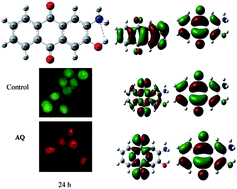
The frontier molecular orbital (FMO) of a molecule consists of highest occupied molecular orbital (HOMO) and lowest unoccupied molecular orbital (LUMO). The analysis of such orbitals is valuable in determining the way in which a molecule such as AQ interacts with a biological macromolecule.37 The chemical reactivity of a molecule in terms of electronic behavior is related to the energy gap in FMO since HOMO acts as an electron donor while LUMO acts as an electron acceptor. The energy gap between HOMO and LUMO in AQ was determined as 0.1325 a.u. The isodensity plot of FMOs (Fig. 2) clearly shows that HOMO is delocalized p-type whereas LUMO is localized p-type.


image file: c6ra00062b-f2.tif
Fig. 2 Isodensity plot of HOMO, HOMO−1, LUMO and LUMO+1 of AQ.

3.2. UV-Vis spectra of AQ

The absorption spectrum of AQ in aqueous ethanol shows three peaks at 240, 310 and 470 nm (Fig. 3a). By applying DFT procedure, theoretical spectrum was determined (Fig. 3b) and the molecular orbitals involved in the transitions were characterized. For the qualitative description of the electronic excitation, natural transition orbitals (NTOs) were determined. The sums over natural transition orbital were expressed in a pair of single occupied orbital designating as “hole” and “particle”. The excitation energy and oscillator strength were calculated using TDDFT theory with B3LYP protocol using 6-31g+(d,p) basis set. The first excitation carried significant oscillator strength compared to second and third excited state. The transition was described as (ϕHOMOϕLUMO), where ϕ is the respective wave function. The other two transitions involve mainly HOMO to LUMO with little participation of (ϕHOMO−2ϕLUMO) and (ϕHOMO−1 → LUMO). The first transition comprises of nonbonding electron pairs of nitrogen and oxygen to π* antibonding orbital of anthraquinone moiety [LP (N) → π* and LP (O) → π*]. Transition corresponding to second and third excitation comprises π → π* transition. The π electron density of the filled dione part participate into π → π* transition. The natural transition orbital pairs for the first three excited states are summarized in Fig. 4. The associated Eigen values were observed as 0.997, 0.9705 and 0.9403 respectively (Table S2, ESI).
image file: c6ra00062b-f3.tif
Fig. 3 (a) Experimental UV-Vis spectrum of AQ in aqueous ethanol. (b) Theoretical UV-Vis spectrum of AQ.

image file: c6ra00062b-f4.tif
Fig. 4 The natural transition orbital for first three excited state from top to bottom describing the topmost as the first excited state. The hole is on the left and the particle is on the right.

3.3. Theoretical and experimental vibrational spectra of AQ

The theoretical vibrational spectrum of AQ was assigned by vibrational energy distribution analysis (VEDA) using potential energy distribution (PED) analysis. According to VEDA, some normal modes are extended over entire molecule. PED was accounted for at certain levels and thus enables the contribution to movement of a given group of atoms in a normal mode quantitatively. The current molecule consists of 27 atoms and exhibits 75 IR active fundamental vibrations, of which 26 are stretching, 25 are bending and 24 are torsional modes. The computed vibrational frequencies were overestimated and scaled by 0.9613 for the B3LYP/6-31+G(d,p) level of calculation.33,38 IR frequency and intensity, PED and the modes of vibration for AQ are shown in Table S3 (ESI). Comparing the theoretical and experimental bands (Table S3, ESI) it may be concluded that both the results corroborate excellently in the region below 3000 cm−1. However, there is a deviation between theoretical and experimental IR intensities in the region 3000 cm−1 and above which may be due to the hampering of crystal field spectra.39

3.4. Wiberg bond indices

To envisage about the hydrogen bonding, N23⋯H27–O26 (Fig. 1), population analysis was made in MO62X DFT protocol with 6-311+g(d,p) basic set in polarized continuum medium (PCM). Global-hybrid meta GGA MO62X DFT protocol implemented by Truhlar group40,41 was fitted to compute medium range dispersion interactions. Wiberg bond indices42 are a measure of the bond interaction between two atoms and function as a nominal bond order which was determined by using NBO analysis. In the present study an overlap involving a hydrogen atom in N23⋯H27–O26 moiety was established, which means that the hydrogen bond is not purely electrostatic in character. The Wiberg bond index for the hydrogen bond was observed in Global-hybrid meta GGA MO62X DFT protocol as 0.0120 whereas in B3LYP, PBEPBE and BMK protocols it was found as 0.0168, 0.0146 and 0.0111, respectively and the results are closed to each other. Considering the above values it can be said that N23⋯H27 is a weak hydrogen bond. However, in our very recent study on 1-amino-4-hydroxy-9,10-anthraquinone,9 two hydrogen bonds O⋯H–O and O⋯H–N were characterized with Wiberg bond indices 0.0926 and 0.0215, respectively, which are significantly greater than that in the present case. This indicates that the hydrogen bond in the present molecule is weaker than that of earlier.9

3.5. Determination of pK of AQ

In order to evaluate the role of phenolic –OH of AQ and its effect during the interaction of AQ with surfactants, it is essential to determine its pK. It was estimated by spectrometric titration. At first 1 × 10⁻⁴ M aqueous solution of AQ was acidified to pH 2.01 and it was then titrated slowly with 0.01 M NaOH solution keeping the concentration of AQ fixed and absorption spectra at various pH values were measured. In such titration it was found that after pH 7.05 the peak at 490 nm starts to shift to higher wavelength and the peak finally shifts to 550 at higher pH (Fig. 5a). Change in the absorbance at 550 nm indicates a release of the phenolic proton in the pH range 7.05–9.05. The absorbance Aobs at 550 nm was fitted according to eqn (1) 11,14 against pH of the solution (Fig. 5b) and the pK of phenolic-OH proton was determined as 7.90 ± 0.06.
 
image file: c6ra00062b-t2.tif(1)
where, Aobs is the overall absorbance of the solution at 550 nm at different pH values; A1 and A2 refer to the absorbance of AQ and its phenoxide ion, respectively.

image file: c6ra00062b-f5.tif
Fig. 5 (a) Absorption spectra of AQ at different pH at a fixed AQ concentration (1 × 10⁻⁴ M). [NaCl] = 0.01 M, T = 298.15 K. (b) Spectrophotometric titration of AQ, shown by the variation of absorbance at 550 nm, [AQ] = 1 × 10⁻⁴ M, [NaCl] = 0.01 M, T = 298.15 K.

The pK of phenolic-OH proton for 1-amino-4-hydroxy-9,10-anthraquinone was determined as (10.52 ± 0.10)10 which is much higher than that of the present pK (7.90 ± 0.06) suggesting that the phenolic-OH proton in the present molecule (AQ) is much loosely held through hydrogen bonding in comparison to that of earlier.9,10 Thus the information about the strength of hydrogen bonds obtained from the Wiberg bond indices justifies the information on hydrogen bond obtained from experimental evidence.

3.6. Interaction of AQ with sodium dodecyl sulfate (SDS)

Interaction of AQ with anionic surfactant SDS was studied by UV-Vis spectroscopy in premicellar and micellar range of concentrations in 100 mM phosphate buffer at pH 7.4. The binding parameters for the interaction of AQ with SDS micelles were determined by monitoring the absorption peak at 490 nm of a series of experimental solutions containing a fixed concentration of AQ and variable concentrations of SDS. The experimental measurements were made after 1 to 2 min from the mixing of SDS with AQ. The UV-Vis spectra of AQ in the absence and in the presence of different concentration of SDS are shown in Fig. 6a. The critical micelle concentration (CMC) of SDS in the presence of AQ was determined by monitoring the change in absorption spectra of AQ (Fig. 6a) which was observed as 3.52 × 10⁻⁴ M and used throughout the calculations. This value is smaller than the CMC value of SDS in pure water (8.08 × 10⁻³ M) and that in 50 mM phosphate buffer (1.99 × 10⁻³ M)43 which is in view of the influence of different ions and molecules present in the solution.44 The variation of absorbance at 490 nm as a function of surfactant concentration is shown in Fig. 6b which reveals that the absorbance decreases with increase in SDS concentration and reaches a saturation level after a certain concentration of SDS. This may be interpreted as due to incorporation of AQ molecules into SDS micelles. The binding isotherm was analyzed by nonlinear fit by assuming 1[thin space (1/6-em)]:[thin space (1/6-em)]1 interactions between AQ and SDS, using eqn (2) (Fig. 6b) and the binding constant was found as K = 652.81 M−1 (Table 1).45,46
 
image file: c6ra00062b-t3.tif(2)
where, L is the surfactant (here SDS), A and A0 are the measured absorbances at 490 nm of AQ in the absence and presence of surfactant while A is the absorbance of AQ bound to surfactant.

image file: c6ra00062b-f6.tif
Fig. 6 (a) Absorption spectra of AQ (175 μM) in the absence and in the presence of increasing concentrations of SDS. [Phosphate buffer] = 100 mM, pH 7.4, T = 298.15 K. (b) Nonlinear fitting of the absorbance of AQ at 470 nm using eqn (2) considering 1[thin space (1/6-em)]:[thin space (1/6-em)]1 interaction between AQ and SDS. (c) Plot of 1/|ΔA| vs. 1/(CT + [SDS] − CMC) (eqn (4)) for AQ (175 μM) in SDS micelles at pH 7.4.
Table 1 Binding constant (Kb), partition coefficient (KX), Gibbs free energy of binding (ΔG0) and the standard free energy change (ΔG0X) for the transfer of AQ from aqueous to micellar phase for the interaction of AQ with surfactants
Binding parameters SDS CTAB
K, M−1 652.81 314.30
ΔG0, kJ mol−1 −16.07 −14.25
KX 5.22 × 104 9.32 × 10³
ΔG0X, kJ mol−1 −26.93 −22.66


The Gibbs free energy for the binding of AQ to the SDS surfactant micelles was then evaluated by using eqn (3).47

 
ΔG0 = −RT[thin space (1/6-em)]ln[thin space (1/6-em)]K (3)
where R is the molar gas constant and T is the absolute temperature (298.15 K). The Gibbs free energy values were found as −16.07 kJ mol−1 for the interaction of AQ to the surfactant (Table 1).

Earlier study46 on the interaction of cationic anthracycline drug, mitoxantrone and anionic surfactant, SDS evaluated the binding constant as (1.14 ± 0.05) × 103 M−1 for 1[thin space (1/6-em)]:[thin space (1/6-em)]1 interaction. The binding constants for 1[thin space (1/6-em)]:[thin space (1/6-em)]1 interaction between another cationic anthracycline drug doxorubicin hydrochloride (adriamycin) and SDS were evaluated by two different methods as 295 and 274 M−1.46 Enache and co-workers established that the interaction of cationic mitoxantrone or doxorubicin hydrochloride and anionic SDS micelles consists of both electrostatic and hydrophobic contributions.46 Comparing the results of the present study with the earlier one46 it is clear that the binding constant for 1[thin space (1/6-em)]:[thin space (1/6-em)]1 AQ–SDS interaction is significantly higher than that of doxorubicin hydrochloride–SDS interaction while it is smaller than mitoxantrone–SDS interaction. Considering the structures in Schemes 1 and 2, it may be said that AQ is smaller in size than doxorubicin hydrochloride and this may be the probable reason behind a weaker interaction between doxorubicin hydrochloride and SDS in comparison to that found in the present study, though doxorubicin hydrochloride has one unit residual positive charge on it. On the other hand, mitoxantrone interacts much more strongly with SDS than by doxorubicin hydrochloride as its size is smaller than the latter. The stronger interaction of mitoxantrone with SDS in comparison to that of AQ may probably be due to one unit positive charge on the former. Based on the value of pK as 7.90 for phenolic-OH of AQ, the % of phenoxide ion (AQ) in the reaction media at pH 7.40 was determined as 24.60%. During the course of interaction of AQ with SDS there is a competition between AQ and neutral AQ. Being negatively charged and its concentration is lower than AQ, AQ has lesser probability for interaction with anionic SDS. Thus, it may be said that charge neutral AQ will interact with anionic SDS through hydrophobic mode.

Along with the measurement of binding constant and Gibbs free energy, the compound–surfactant interaction was further characterized by determining the partition coefficient (KX) which is a thermodynamic parameter representing the affinity of a given compound to permeate into the micellar phase from the aqueous phase. This is an important parameter elucidating the mechanism of solubilization of a drug molecule and definitely helps in understanding the biological phenomena like interaction between drugs and biological membranes. By applying the pseudo-phase model,46,48,49 the partition coefficient was determined by using eqn (4):

 
image file: c6ra00062b-t4.tif(4)
where ΔA = AA0, ΔA = AbA0 and nw = 55.51 M is the molarity of water. The value of KX was obtained from the slope of the plot of 1/ΔA vs. 1/([SDS] + CT − CMC) (Fig. 6c) as 5.22 × 10⁴. It is important to mention here that this linear relation holds good in a very high surfactant concentration region below which the curve tends to bend upwards with decreasing surfactant concentration. This deviation from linearity was due to the approximation made in the evaluation of eqn (4).49

The standard free energy change for the transfer of AQ from the bulk aqueous phase to micellar phase was obtained as −26.93 kJ mol−1 by putting the value of KX in eqn (5) 47 and it is summarized in Table 1.

 
ΔG0X = −RT[thin space (1/6-em)]ln[thin space (1/6-em)]KX (5)

The comparison of the partition coefficient of AQ in the present study with the distribution of mitoxantrone in an earlier study46 between water and SDS micelles clearly shows that the former has greater value of the partition coefficient than the latter since for mitoxantrone electrostatic as well as hydrophobic interactions have a significant role in the distribution of it in anionic SDS micelles. However, for AQ the hydrophobic interaction plays a major role as described above.

3.7. Interaction of AQ with cetyltrimethylammonium bromide (CTAB)

The binding constant for the interaction of AQ with CTAB surfactant micelles and micelle–water partition coefficient were determined by using UV-Vis spectroscopy by monitoring the absorbance at 490 nm of a series of solutions containing a constant concentration of AQ and variable concentrations of CTAB in 100 mM phosphate buffer at pH 7.4. Measurements were done after 1 to 2 min from the mixing of CTAB with AQ to ensure the attainment of equilibrium. The UV-Vis spectra of AQ in the absence and in the presence of different concentrations of CTAB are shown in Fig. 7a. The determination of critical micelle concentration (CMC) of CTAB in the presence of AQ was based on the change in absorption spectra of AQ, which indicates the beginning of micelle formation46 and it was deduced as 4.1 × 10⁻⁴ M. This value of CMC was used throughout the studies. The observed CMC value was smaller than the CMC of CTAB in pure water (9.10 × 10⁻⁴ M) and in 0.1 M phosphate buffer (8.00 × 10⁻⁴ M).50,51 The lowering in CMC value is due to the presence of different ions and molecules in the present study as mentioned earlier.44 From the absorption spectra of AQ in the absence and presence of CTAB (Fig. 7a), it is evident that in addition to hypochromic effect of the spectra with the increasing concentration of CTAB, a bathochromic shift of about 60 nm (Fig. 7a) was observed which may provide information about the mode of interaction of the molecule with surfactant micelles. The variation of the absorption maximum (λmax) of AQ with CTAB concentration is shown in Fig. 7b. In order to characterize such a mode, the absorption spectra of the compound were measured in three different solvents such as anhydrous dichloromethane (DCM), 90% ethanol (EtOH) and anhydrous dimethylsulphoxide (DMSO) having different dielectric constants (ε) as mentioned in Fig. 8. This clearly showed that the absorption spectrum of AQ undergoes an increasing bathochromic shift with the increase in the dielectric constant of the media. In other words, it may be said that with increase in polarity of the solvent, the bathochromic effect increases. Considering this observation and comparing it with the results of shift of λmax in AQ–CTAB micelles interaction (Fig. 7b), it may be concluded that electrostatic contribution plays a major role than hydrophobic contribution during the interaction of AQ with CTAB micelles. It is important to note that during the interactions of AQ with CTAB at pH 7.40, 24.60% of AQ exists as AQ as mentioned above. Thus, during the course of interaction of AQ with CTAB there is a competition between AQ and neutral AQ. Being negatively charged and the interaction of AQ with CTAB is electrostatic in character, AQ has definitely greater probability for interaction with cationic CTAB in comparison to interaction of uncharged AQ with CTAB. Thus, it may be said that the anionic AQ will interact with cationic CTAB through electrostatic mode. This type of electrostatic interaction is highly relevant in cellular study since many biological processes occur at the ionizable surface of the membranes.22,23
image file: c6ra00062b-f7.tif
Fig. 7 (a) Absorption spectra of AQ (175 μM) in the absence and in the presence of increasing concentrations of CTAB. [Phosphate buffer] = 100 mM, pH 7.4, T = 298.15 K. (b) Variation of the absorption maximum (λmax) of AQ with CTAB concentrations. [Phosphate buffer] = 100 mM, pH 7.4, T = 298.15 K.

image file: c6ra00062b-f8.tif
Fig. 8 Absorption spectra of AQ in (red line) anhydrous DMSO, (green line) 90% ethanol (EtOH), and (blue line) anhydrous DCM.

The variation of the absorbance as a function of surfactant concentration is shown in Fig. 9a which indicates that with increase in CTAB concentration the absorbance decreases and reaches a saturation level after a certain concentration of CTAB.


image file: c6ra00062b-f9.tif
Fig. 9 (a) Nonlinear fitting of the absorbance of AQ at 470 nm using eqn (2) considering 1[thin space (1/6-em)]:[thin space (1/6-em)]1 interaction between AQ and CTAB. (b) Plot of 1/|ΔA| vs. 1/(CT + [CTAB] − CMC) (eqn (4)) for AQ (175 μM) in CTAB micelles at pH 7.4.

The binding isotherm for the interaction of AQ with CTAB was analyzed by nonlinear regression by assuming 1[thin space (1/6-em)]:[thin space (1/6-em)]1 interaction between AQ and CTAB, using eqn (2) (in this case, [L] = [CTAB]) (Fig. 9a), and the binding constant was obtained as K = 314.30 M−1 (Table 1). The Gibbs free energy for the binding of AQ to the CTAB was then evaluated by applying eqn (3) and found as −14.25 kJ mol−1 for 1[thin space (1/6-em)]:[thin space (1/6-em)]1 interaction (Table 1).

In our very recent study52 we observed that the binding constant for the 1[thin space (1/6-em)]:[thin space (1/6-em)]1 interaction of charge neutral 1-amino-4-hydroxy-9,10-anthraquinone with cationic CTAB as (1.46 ± 0.04) × 104 M−1 using cyclic voltammetry and (1.048 ± 0.05) × 104 M−1 using UV-Vis spectroscopy where hydrophobic interaction was established to play a major role in binding. The large difference in binding constant of the present study with the earlier one47 might be due to different mode of interaction between the molecule subjected to the experiment and cationic CTAB. The inefficiency of AQ in hydrophobic interaction in comparison to that of 1-amino-4-hydroxy-9,10-anthraquinone [Scheme 3]52 is probably due to the difference in their structures and size. The positions of –NH2 and –OH in the two compounds make difference in their structures, dimensions and mode of interactions with CTAB.


image file: c6ra00062b-s3.tif
Scheme 3 1-Amino-4-hydroxy-9,10-anthraquinone.

Applying the pseudo-phase model,46,48,49 the partition coefficient for the distribution of AQ in between aqueous and micellar phases was determined by using eqn (4), where [L] = [CTAB]. The value of KX was evaluated from the slope of the plot of 1/ΔA vs. 1/(CTAB] + CT − CMC)] (Fig. 9b) and it is 9.32 × 10³. The standard free energy change for the transfer of AQ from the bulk aqueous phase to micellar phase was obtained as −22.66 kJ mol−1 by putting the value of KX in eqn (5) and it is summarized in Table 1. In order to check whether the results of hydrophilic or hydrophobic interaction involving AQ during its interaction with anionic and cationic micelles mimicking a biological membrane can really be able to explain a nucleation of AQ in the cells, the molecule was applied to MDA-MB-231 adinocarcinoma cells and its apoptotic action was analyzed by the following assays.

3.8. Effect of AQ on the viability of MDA-MB-231 breast adinocarcinoma cells

AQ was applied to MDA-MB-231 breast adinocarcinoma cells and its inhibitory effect at different concentrations (20–200 μM) and time intervals (24 and 48 h) were examined by MTT assay (Fig. 10). The assay determines the integrity of mitochondria and reflects the viability of cells. It was found that AQ brought about cytotoxicity against MDA-MB-231 breast adinocarcinoma cells in a dose dependent manner. Fig. 10 and Table 2 show the inhibitory rates and corresponding concentrations at which AQ is cytotoxic to MDA-MB-231 cells. Results in Table 2 clearly show that AQ was able to cause 50% inhibition at 200 μM concentration when incubated for 24 h and at 190 μM when incubated for 48 h on the cells. This shows that AQ behaves as a potential anticancer agent. In our very recent study we observed that 1-amino-4-hydroxy-9,10-anthraquinone was able to cause 50% growth inhibition of MDA-MB-31 cells at 200 μM concentration when incubated for 24 h while it was 140 μM concentration when incubated for 48 h.9 This clearly indicates that 1-amino-4-hydroxy-9,10-anthraquinone is a little better with respect to apoptotic action for longer incubation time (48) than that done by AQ. This may be related to lower efficiency of AQ to interact with surfactant micelles mimicking a biological membrane and in the present study it was established that the hydrophobic interaction involving AQ is not so strong as observed in case of 1-amino-4-hydroxy-9,10-anthraquinone.52
image file: c6ra00062b-f10.tif
Fig. 10 MTT assay for AQ for 24 and 48 hours in MDAMB 231 cells.
Table 2 Inhibitory concentration of AQ against MDA-MB-231 breast adinocarcinoma
Cell line AQ
Inhibitory rates (%) Concentration in (μM)
24 h 48 h
MDA-MB-231 (breast adinocarcinoma cells) 50 200 ± 0.04 190 ± 0.02


3.9. AO/EB staining

Apoptotic cell death was characterized by different cellular changes such as cell shrinkage, nuclear condensation, DNA fragmentation, blebbing and formation of apoptotic bodies. These apoptotic characteristics produced by AQ were analyzed by AO/EB staining against MDA-MB-231 cells. In this staining method, the fluorescence pattern of the stain depends on the viability and membrane integrity of the cells. It has been observed that dead cells are permeable to ethidium bromide and fluoresce orange-red, whereas living cells are permeable to acridine orange only and thus fluoresce green. Based on the fluorescence emission and morphological features of chromatin condensation in the AO/EB stained nuclei, cytological changes found in the treated cells are classified into four types: (1) viable cells having highly organized nuclei which fluoresce green. (2) Early apoptotic cells which show nuclear condensation emit orange-green fluorescence. (3) Late apoptotic cells, the nuclei of which fluoresce in orange to red with highly condensed or fragmented chromatin. (4) Necrotic cells appear in orange to red fluorescence with no indication of chromatin fragmentation. All these morphological changes were found after the treatment of cancer cells with AQ. Fig. 11a shows the apoptotic and necrotic morphologies induced at IC50 concentration of AQ for 24 h. The results presented in Fig. 11b indicate that AQ is efficient in inducing apoptotic death of MDA-MB-231 breast adenocarcinoma cells.
image file: c6ra00062b-f11.tif
Fig. 11 Effect of AQ on MDAMB 231 cells with acridine orange and ethidium bromide staining. (a) Representative morphological changes observed against MDAMB 231 cells after 24 h incubation with AQ. (b) Relative percentage of morphological changes was determined and divided into three categories: viable, apoptosis and necrosis as compared with the control cells after 24 h incubation.

3.10. Hoechst 33528 staining

Morphological changes in the nucleus and chromatin by the present molecule were revealed by Hoechst 33528 staining method. The cells treated with IC50 concentration of AQ showed a significant change in the morphology of their nuclei while change in control untreated nuclei is insignificant. In the untreated control cells the nuclei were round, even with intact chromatin content while after the treatment with AQ for 24 h, the changes such as chromatin marginalization, condensation and fragmentation were observed. Fig. 12 indicates the apoptotic nuclear morphology induced at IC50 concentration of AQ for 24 h and the present molecule induced 47% of abnormal nuclei.
image file: c6ra00062b-f12.tif
Fig. 12 Effect of AQ on MDAMB 231 cells with Hoechst staining. (a) Representative morphological changes observed against MDAMB 231 cells after 24 h incubation with AQ. (b) Relative percentage of morphological changes was evaluated and divided into two categories: normal and abnormal nuclei as compared with the control cells after 24 h incubation.

Considering the results of the studies on MDA-MB-231 cells, one may think that in a generalization 200 and 140 μM concentrations are high to claim the compound as an efficient anticancer agent. But, then the breast cancer cell we had chosen was MDA-MB-231 which is triple negative (ER-negative, PR-negative, and p53-negative). Triple negative breast cancer cells respond very poorly to chemotherapy drugs. That is the reason why there is hardly any effective drug for this type of cancer. Given this limitation, the dose at which our compound kills the MDA-MB-231 cells is reasonably good. Thus, from the entire aspects of the apoptotic effect of AQ on MDA-MB-231 breast adinocarcinoma cells and its mode of action one may suggest that less costly AQ may be further investigated for use as a viable alternative to the very cost-prohibitive anthracycline drugs in the near future.

4. Conclusions

Structural and spectroscopic properties of AQ were characterized using computational and experimental methods. The interactions of AQ with anionic surfactant SDS and cationic surfactant CTAB were studied in aqueous solution at physiological pH (7.4) by UV-Vis spectroscopy and the results were compared with the well-known anthracycline drugs. The binding constants for the interaction of AQ with SDS and CTAB were evaluated as 652.81 and 314.30 M−1, respectively, while the free energies were found as −16.07 and −14.25 kJ mol−​1, respectively. The partition coefficient and Gibbs free energy for the distribution of AQ between the bulk aqueous solution and surfactant micelles were 5.22 × 10⁴ M−1 and −26.93 kJ mol−1, respectively, for SDS and 9.32 × 10³ M−1 and −22.66 kJ mol−1, respectively for CTAB. The hydrophobic interaction was found to play an important role in the binding of AQ to SDS micelles whereas the hydrophilic interaction was imperative in AQ–CTAB micelles interaction. These interactions would have vital role in the distribution of AQ between surfactant micelle–water phases. In order to see whether the results of above studies on anionic and cationic surfactants as model studies on biomembrane–drug interaction can reveal the nucleation of AQ in cells and bring an apoptotic action, AQ was treated with MDA-MB-231 cells. Experimental findings established that AQ behaves as a potential anticancer agent definitely by nucleation into the cell. Thus, this study gives an idea that the simple molecule–surfactant interaction sometimes may be fruitful in explaining the permeation of a molecule into cells and its biological action.

Abbreviations

AQ2-Amino-3-hydroxyanthraquinone
SDSSodium dodecyl sulphate
CTABCetyltrimethylammonium bromide

Acknowledgements

P. S. G. is very much grateful to UGC, New Delhi, INDIA, for the financial support through the Major Research Project (No. 41-225/2012 (SR) dated 18th July 2012). MAA acknowledges the grant from Doerenkamp-Zbinden Foundation, Switzerland, for establishment of the Mahatma Gandhi-Doerenkamp Center.

Notes and references

  1. F. Arcamone and S. Penco, in Anthracycline and Anthracenedione-Based Anticancer Agents, ed. J. W. Lown, Elsevier, Amsterdam, 1988 Search PubMed.
  2. D. A. Gewirtz, Biochem. Pharmacol., 1999, 57, 727–741 CrossRef CAS PubMed.
  3. G. Minotti, P. Menna, E. Salvatorelli, G. Cario and L. Giani, Pharmacol. Rev., 2004, 56, 185–229 CrossRef CAS PubMed.
  4. N. Ashley and J. Poulton, Biochem. Biophys. Res. Commun., 2009, 378, 450–455 CrossRef CAS PubMed.
  5. S. Rossi, C. Tabolacci, A. Lentini, B. Provenzano, F. Carlomosti, S. Frezzotti and S. Beninati, Anticancer Res., 2010, 30, 445–449 CAS.
  6. P. Das, C. K. Jain, S. K. Dey, R. Saha, A. D. Chowdhury, S. Roychoudhury, S. Kumar, H. K. Majumderd and S. Das, RSC Adv., 2014, 4, 59344–59357 RSC.
  7. P. Das, D. Bhattacharya, P. Karmakar and S. Das, RSC Adv., 2015, 5, 73099–77311 RSC.
  8. P. Das, P. S. Guin, P. C. Mandal, M. Paul, S. Paul and S. Das, J. Phys. Org. Chem., 2011, 24, 774–785 CAS.
  9. P. Mondal, S. Roy, G. Loganathan, B. Mandal, D. Dharumadurai, M. A. Akbarsha, P. S. Sengupta, S. Chattopadhyay and P. S. Guin, Biochemistry and Biophysics Reports, 2015, 4, 312–323 CrossRef.
  10. S. Roy and P. S. Guin, J. Electrochem. Soc., 2015, 162, H124–H131 CrossRef CAS.
  11. S. Roy, P. Mondal, P. S. Sengupta, D. Dhak, R. C. Santra, S. Das and P. S. Guin, Dalton Trans., 2015, 44, 5428–5440 RSC.
  12. P. S. Guin, S. Das and P. C. Mandal, J. Phys. Org. Chem., 2010, 23, 477 CrossRef CAS.
  13. P. S. Guin, S. Das and P. C. Mandal, J. Solution Chem., 2011, 40, 492–501 CrossRef CAS.
  14. P. S. Guin, S. Das and P. C. Mandal, J. Inorg. Biochem., 2009, 103, 1702–1710 CrossRef CAS PubMed.
  15. P. S. Guin, P. C. Mandal and S. Das, ChemPlusChem, 2012, 77, 361–369 CrossRef CAS.
  16. R. Pignatello, T. Musumeci, L. Basile, C. Carbone and G. Puglisi, J. Pharm. BioAllied Sci., 2011, 3, 4–14 CrossRef CAS PubMed.
  17. G. P. Van Balen, C. M. Martinet, G. Caron, G. Bouchard, M. Reist, P. A. Carrupt, R. Fruttero, A. Gasco and B. Testa, Med. Res. Rev., 2004, 24, 299–324 CrossRef CAS PubMed.
  18. A. M. Seddon, D. Casey, R. V. Law, A. Gee, R. H. Templer and O. Ces, Chem. Soc. Rev., 2009, 38, 2509–2519 RSC.
  19. J. K. Seydel, E. A. Coats, H. P. Cordes and M. Wiese, Arch. Pharm., 1994, 327, 601–610 CrossRef CAS PubMed.
  20. S. Schreiera, S. V. P. Malheiros and E. de Paula, Biochim. Biophys. Acta, 2000, 1508, 210–234 CrossRef.
  21. M. Lúcio, J. L. Lima and S. Reis, Curr. Med. Chem., 2010, 17, 1795–1809 CrossRef.
  22. B. Alberts, A. Johnson and J. Lewis, et al., Molecular Biology of the Cell, Garland Science, New York, 4th edn, 2002 Search PubMed.
  23. I. D. Pogozheva, S. Tristram-Nagle, H. I. Mosberg and A. L. Lomize, Biochim. Biophys. Acta, 2013, 1828, 2592–2608 CrossRef CAS PubMed.
  24. L. Laurier, L. Schramm, E. N. Stasiuk and D. G. Marangon, Annu. Rep. Prog. Chem., Sect. C: Phys. Chem., 2003, 99, 3–48 RSC.
  25. W. Sun, C. K. Larive and M. Z. Southard, J. Pharm. Sci., 2003, 92, 424–435 CrossRef CAS PubMed.
  26. N. Erdinc, S. Gokturk and M. Tuncay, J. Pharm. Sci., 2004, 93, 1566–1576 CrossRef CAS PubMed.
  27. J. Xi and R. Guo, J. Pharm. Biomed. Anal., 2007, 43, 111–118 CrossRef CAS PubMed.
  28. M. C. Jones and J. C. Leroux, Eur. J. Pharm. Biopharm., 1999, 48, 101–111 CrossRef CAS PubMed.
  29. M. E. Dalmora, S. L. Dalmora and A. G. Oliveira, Int. J. Pharm., 2001, 222, 45–55 CrossRef CAS PubMed.
  30. C. O. Rangel-Yagui, H. W. L. Hsu, A. I. Pessoa Jr and L. C. Tavares, Braz. J. Pharm. Sci., 2005, 41, 237–246 CAS.
  31. A. D. Becke, J. Chem. Phys., 1993, 98, 5648–5652 CrossRef CAS.
  32. C. Lee, W. Yang and R. G. Parr, Phys. Rev. B: Condens. Matter, 1998, 37, 785–789 CrossRef.
  33. M. H. Jamroz, Vibrational Energy Distribution Analysis VEDA 4, Warsaw, 2004-2010 Search PubMed.
  34. T. Mosmann, J. Immunol. Methods, 1983, 65, 55–63 CrossRef CAS PubMed.
  35. D. L. Spector, R. D. Goldman and L. A. Leinwand, Cell: A Laboratory Manual, Culture and Biochemical Analysis of Cells, Cold Spring Harbor Laboratory Press, Cold Spring Harbor, NewYork, 1998, pp. 341–349 Search PubMed.
  36. S. A. Latt, G. Stetten, L. A. Juergens, H. F. Willard and C. D. Scher, J. Histochem. Cytochem., 1975, 23, 493–505 CrossRef CAS PubMed.
  37. S. C. Oyaga, J. C. Valdés, S. B. Paez and K. H. Marquez, J. Theor. Chem., 2013, 8, 526569 Search PubMed.
  38. J. B. Foresman and A. Frish, Exploring chemistry with electronic structure methods, Gaussian, Inc, Pittsburgh, PA, USA, 2000, p. 64 Search PubMed.
  39. A. V. Iogansen, Spectrochim. Acta, Part A, 1999, 55, 1585–1612 CrossRef.
  40. Y. Zhao and D. G. Truhlar, Acc. Chem. Res., 2008, 41, 157–167 CrossRef CAS PubMed.
  41. Y. Zhao and D. G. Truhlar, Theor. Chem. Acc., 2008, 120, 215–241 CrossRef CAS.
  42. K. W. Wiberg, Tetrahedron, 1968, 24, 1083–1096 CrossRef CAS.
  43. E. Fuguet, C. Rafols, M. Roses and E. Bosch, Anal. Chim. Acta, 2005, 548, 95–100 CrossRef CAS.
  44. M. Sarkar and S. Poddar, J. Colloid Interface Sci., 2002, 221, 181–185 CrossRef PubMed.
  45. X. Shen, M. Belletete and G. Durocher, Chem. Phys. Lett., 1998, 298, 201–210 CrossRef CAS.
  46. M. Enache, I. Anghelache and E. Volanschi, Int. J. Pharm., 2010, 390, 100–106 CrossRef CAS PubMed.
  47. M. Enache and E. Volanschi, J. Pharm. Sci., 2011, 100, 558–565 CrossRef CAS PubMed.
  48. R. Sabate, M. Gallardo and J. Estelrich, J. Colloid Interface Sci., 2001, 233, 205–210 CrossRef CAS PubMed.
  49. R. Sabate, M. Gallardo, A. de la Maza and J. Estelrich, Langmuir, 2001, 17, 6433–6437 CrossRef CAS.
  50. M. A. Awan and S. S. Shah, Colloids Surf., A, 1997, 122, 97–101 CrossRef CAS.
  51. R. Sarkar, M. Ghosh, A. K. Shaw and S. K. Pal, J. Photochem. Photobiol., B, 2005, 79, 67–78 CrossRef CAS PubMed.
  52. S. Roy and P. S. Guin, J. Mol. Liq., 2015, 211, 846–853 CrossRef CAS.

Footnote

Electronic supplementary information (ESI) available. See DOI: 10.1039/c6ra00062b

This journal is © The Royal Society of Chemistry 2016
Click here to see how this site uses Cookies. View our privacy policy here.