
DOI:
10.1039/C5RA28154G
(Paper)
RSC Adv., 2016,
6, 29880-29888
Controlled pesticide release of a novel superabsorbent by grafting citric acid onto water hyacinth powders with the assistance of dopamine
Received
31st December 2015
, Accepted 15th March 2016
First published on 17th March 2016
Abstract
With the purpose of treating the presence of abundant water hyacinth, increasing biodegradability and reducing costs of water-absorbing material, ecofriendly composite CA–PD@WH was fabricated by chemical modification of dopamine-coated water hyacinth with citric acid. FTIR and SEM revealed that dopamine was first deposited on the surface of water hyacinth and then reacted with citric acid. The product exhibited good water absorption (12.0 g g−1 in distilled water) that is much stronger than that of raw WH (1.3 g g−1) and can be thoroughly degraded. Moreover, the resultant composite shows a pH-responsive controlled avermectin-release property and has a high loading capacity for avermectin (about 98.1 mg g−1). This simple and intriguing approach not only extends any future utilization of water hyacinth but also supplies a potential method to control pesticide release and mitigate negative effects on the environment.
1. Introduction
In the past years, the strategies reported for the preparation of water-absorbing materials have been mainly focused on the use of petroleum-based polymers, which nevertheless are nonrenewable, hardly degradable, and harmful to the environment.1 Recently, the development of alternative water-absorbing materials, especially those that are non-petrochemical reserves and based on naturally available raw materials, provides an effective way to mitigate this problem. For instance, natural starch,2 chitosan,3 peanut hull,4 corn straw,5 tragacanth gum6 and muscovite,7 were widely noticed since the multiple merits including their eco-friendliness, abundantly available, easily biodegradable, and clearly renewable could be integrated into products.
Water-hyacinth (WH) (Eichornia crassipes) is commonly defined as the most exceedingly problematic aquatic weed in the world since they can grow and reproduce at a rapid rate until reach a very high density, more than 60 kg m−2.8,9 Such extremely high growth and reproduction rate have already lead to serious environmental and ecological problems, such as creating damage at the nearby farm by competing with crops for nutrients, causing water quality deterioration and affecting the growth of underwater creatures, causing delay in transportation around these waters and disrupt regional powerhouse.10 Differing from other aquatic plant, there are a large number of vessels in the tissue structure of water-hyacinth. These vessels ensure that the accumulation and preservation of water inside the body of WH plant have been conducted to a new extreme. For example, the fresh WH contains as high as 94–95% moisture and barely remains 50–60 g total solid per kilogram after drying in the wind and sunlight.11 Owing to such unique traits, it makes a good reason for water-hyacinth to be used as an ideal base material for the preparation of water-absorbing composite. In terms of the chemical structure further, water hyacinths are composed of a high content of hemicellulose and cellulose. The hydroxyl groups within the hemicellulose and WH cellulose were usually wrapped by lignin and consequently cannot effectively react with active functional groups (e.g. carboxyl groups). To boost their chemical reactivity, cellulosic materials need undergo some indispensable pretreatments. The most established methods, such as acid base solutions,12 steam explosion,13 carboxymethylation,14 phosphation15 and sulfoethylation,16 have been carried out. However, the tedious and time-consuming operation, extreme modification conditions are often associated with current pretreatment stages, and the chemicals used for the treatment are environmentally not benign, which have restricted their widely applications. In this regard, searching for novel and facile approaches for simple pretreatment of raw WH materials is highly desirable.
Nature endows a wide range of materials with various functions, which serve as a source of bio-inspiration for materials specialists. Typically, dopamine, a melanin-like mimic of mussel adhesive proteins, has been proposed and demonstrated by Lee et al. as a multifunctional coating substance.17 It has been verified that the dopamine molecules can facilely form a thin, surface-adherent polydopamine (PD) film onto both inorganic and organic materials via self-polymerization in weak base condition.18 The formed PD layer contains a high density of functional groups like amine and catechol,19 and they can serve as a versatile platform for further specific functionalization. Therefore, it seems that utilizing dopamine to create an effective and robust surface modifier for cellulosic substance has revealed as a potential alternative approach to achieve promising simplified pretreatment method. However, to best of our knowledge, there are few works focusing on the surface functionalization of WH via dopamine chemistry and further specific functionalization dependent on this PD platform is rarely reported.
In this contribution, dopamine was chosen as a buffer layer to coat water hyacinths firstly, then the PD-coated WH and citric acid (CA) were employed to synthesize earth-friendly water-absorbing materials (CA–PD@WH). The aim of this study was to fabricate a novel water-absorbing material by a chemical modification of water hyacinth and to mitigate problems caused by abundant water hyacinth in lakes, ponds and waterways by providing a large scale use of it. Apart from various influencing factors, the formation mechanism of the CA–PD@WH, and the swelling properties and degradability were systematically investigated to manifest the fabrication of an excellent water absorbent material. Moreover, by virtue of the excellent performances and special functional groups we chose Avermectin (Av) as a model pesticide to evaluate the loading and cumulative release efficiency of the CA–PD@WH composites as a pesticide carrier.
2. Experimental section
2.1. Materials
Water-hyacinth (WH) was collected from countryside (Qinghai, China). Dopamine hydrochloride and tris(hydroxymethyl)amino methane (Tris–HCl) were supplied by Tianjin Chemical Reagent Factory (Tianjin, China). Citric acid, sodium hydroxide and ethyl alcohol were supplied by Tianjin Chemical Reagent Factory (Tianjin, China). Avermectin (95%) was purchased from a local agrochemical supplier (Shaanxi, China) and used without further purification. All the chemicals used in the present study were of reagent grade and were used without further purification.
2.2. Synthesis
Raw water-hyacinths were cleaned, dried, and pulverized in a crushing machine. The neat WH substrate was soaked in a dilute aqueous solution of dopamine (2 mg mL−1) buffered to alkaline conditions using a mixed solvent of Tris–HCl buffer solution (10 mM, pH 8.5). The mixture was stirred at ambient temperature for 4 h and washed with distilled water, and subsequently, PD@WH intermediates were obtained. Citric acid (5 g) was dissolved in a minimal amount of deionized water in a beaker. The PD@WH intermediates (2.5 g air-dried) were dispersed in the citric acid solution and mixed vigorously. The mixture was placed in a forced air oven to dehydrate at 55 °C for 12 h. Then the oven temperature was adjusted to the desired level (100–140 °C) and the mixtures were allowed to react for 3 h to obtain CA–PD@WH composites. Next, the precipitates were blended with water for 30 min, and washed with deionized water successively until pH value reached 7. After this, the residues were placed in a 70 °C oven until they became fully dried.
2.3. Study of swelling
The swelling of the products was determined by a gravimetric method. Small amount of weighed samples (M0) were left to swell in distilled water and withdrawn at regular time intervals (t) and weighed (Mt). The swelling ratio (qt) was described by the following equation eqn (1):| |
 | (1) |
2.4. Titration to determine amount of citric acid reacted
Titration reported by Chiou et al.20 was performed to determine the amount of reacted citric acid. After the PD@WH intermediates had been reacted with citric acid in the oven, the sample (0.1 g) was dissolved in 100 mL distilled water for 3 h under stirring. The mixing was stopped and 25 mL of supernatant was decanted to a conical flask. Then, 0.4 mol L−1 NaOH was added to the flask until the supernatant was neutralized to a pH of 7.0. In the above process, not-reacted citric acid was dissolved in distilled water and the solid CA–PD@WH composite was finally settling at the bottom of the beaker. So, the CA–PD@WH composite was not included in the supernatant and not exposed to NaOH solution in the titration process. Therefore, the amount of NaOH consumed for neutralization indicated the amount of not-reacted (i.e., free) citric acid.
2.5. Degradation studies
The degradation studies of the CA–PD@WH composite were monitored by incubating specimens in a simulated soil solution. Soil solution was obtained by a simple centrifugation method, which has been employed widely by other researchers.21,22 In a typical experiment, pre-weighed CA–PD@WH samples were added to 50 mL of soil solution at certain temperatures to measure the degradation. After the predetermined time intervals, the samples were taken out, washed with distilled water, and dried at 60 °C until reaching a constant weight. Subsequently, an equal volume of fresh soil solution was added to the completely dried sample for the next degradation test. The extent of degradation was estimated as:| |
 | (2) |
where mi and mf represent the initial and final weights (before and after degradation, respectively) of the dry CA–PD@WH composite.
2.6. Avermectin loading and controlled release
To study the adsorption of Av onto the CA–PD@WH composites, 0.1 g of the prepared composites was added into 25 mL of 2.0 g L−1 (active ingredient concentration) Av solution in isopropanol at ambient temperature.23 This mixture was shaken in a capped Erlenmeyer flask for 6 h to reach the equilibrium state. At various time intervals, 5 mL of the solution was taken and centrifuged (5000 rpm) for 15 min, then 2 mL of the suspension was collected for UV-vis spectrophotometer measurement at 245 nm to determine the adsorbed amount of Av.
The controlled release of Av was carried out in 250 mL conical flask containing ethanol/water mixture (v/v, 3
:
7), which was employed as the release media to dissolve Av.24 Specifically, 0.5 g of samples in dried state containing the pesticide was put into dissolution medium and the flasks were thoroughly shaken. Each time, 5 mL samples of solution were removed and assayed spectrophotometrically, and then the samples used were returned to the flask to maintain a constant volume of surrounding release medium. Each experiment was conducted in triplicate and the average values were recorded to plot the profiles. The cumulative release rate of Av from the CA–PD@WH composites was calculated the following equation:
| |
 | (3) |
where
We and
Wr are the mass of pesticide entrapped in the obtained composites at equilibrium state and released from pesticide-loaded composites at time
t during the release process, respectively.
2.7. Sample analysis
The functional groups of the WH substrate, PD@WH intermediate and obtained final products were confirmed using a Perkin Elmer FTIR System 2000 in 600–4000 cm−1 range via KBr pellet. All the samples were completely dry before IR characterization. A Hitachi S-4800 scanning electron microscope was used to observe their surface morphologies. The concentrations of Av in the adsorption and release experiments were determined by Shimadzu-18A UV-visible spectrophotometer.
3. Results and discussion
3.1. Synthesis and characterization of CA–PD@WH absorbent composites
The detailed functionalization and fabrication processes of CA–PD@WH composites are schematically illustrated in Scheme 1. As stated earlier, other than celluloses, water hyacinth (WH) also contains a certain amount of hemicellulose as well as lignin. The inherent low chemical reactivity and low-level active sites of lignin and hemicellulose make it difficult for water hyacinth to be directly modified and graft some new groups. Herein, with taking advantage of adhesion characteristic of dopamine fully, we proposed an efficient and facile approach to functionalize water hyacinth in advance through a simple dip-coating procedure. Specifically, the water hyacinth powders were firstly soaked in aqueous dopamine (dopamine hydrochloride) solutions buffered to pH 8.5, in which dopamine is easily oxidized and self-polymerized to form polydopamine.25 After reaction for about 4 hours, a dopamine layer was tightly stuck onto the WH surface through covalent and noncovalent interactions such as the hydrogen-bonding interactions, π–π interactions, and electrostatic interactions.26 On these grounds, the PD@WH intermediates, which possess the higher chemical reactivity and higher-level active sites in comparison with the naked WH substrates, have been constructed, making the further surface functionalization of water hyacinth substrate easily to occur. Such procedure has been confirmed by a visible alteration of the color of the dopamine solution from pale brown to dark coffee color. In the next semi-dry condition, using polydopamine film as a chemical bridge, the functionalized WH substrates were able to hereby capture lots of CA molecules through hydrogen bond linkage of carboxylic acid groups to hydroxyl or amine groups. When heated afterwards, CA dehydrated to yield cyclic anhydride.27 The cyclic anhydride subsequently reacted with hydroxyl or amine groups of PD@WH intermediates to form linkages. Similarly, another citric anhydride was acquired through the anhydridization of other two unreacted carboxylic groups, allowing the esterification with another hydroxyl group.28 In this way, the surfaces of PD@WH intermediates were decorated with citric acid molecular gradually and eventually the complicated crosslinked structure of CA–PD@WH composites was formed.
 |
| | Scheme 1 Schematic description of surface functionalization of WH and thermo-chemical linkage of citric acid to PD@WH intermediates. | |
To illustrate the above-mentioned formation procedures, Fourier transform infrared (FTIR) spectroscopy was employed to characterize the structures of the intermediates and the final products. The FTIR spectra of WH substrate, PD@WH intermediate, and CA–PD@WH composite are shown in Fig. 1.
 |
| | Fig. 1 FTIR spectra of WH substrate, PD@WH intermediate, and CA–PD@WH composite. | |
In Fig. 1(a), the broad band observed around at 3360 cm−1 in the spectrum of WH corresponds to the hydrogen bonded O–H stretching vibration, and the medium absorption peak at 2930 cm−1 represents the C–H stretching of the methylene groups in cellulose. The bands at 1640 and 1510 cm−1 is ascribed to the skeletal C
C stretching vibrations in the aromatic rings bands of lignin.29 The bands at 1168 and 1058 cm−1 are due to antisymmetric stretching vibrations of the C–O–C bridge and skeletal vibrations involving C–O stretching, respectively; which are attributed to the characteristics of the saccharide structure. Appearance of absorption peak at 897 cm−1 is characteristic of glucosidic ring in cellulose structure.30 In the IR spectrum of PD@WH intermediate, all the absorption bands of WH are retained and a strong peak centered at 3340 cm−1 indicates the presence of some hydroxyl groups and the N–H vibrations from the amine groups, all of which are characteristic bands for polydopamine deposited onto WH. Following the subsequent esterification reaction between the PD@WH and CA, the obtained product shows some changes in the absorption peaks. For example, the absorption band near 3340 cm−1, which corresponds to stretching vibrations of N–H, exhibits a slight weak, proving the participation of amine groups of PD@WH in the reaction. Furthermore, an intensive absorption band appears at 1730 cm−1 in (c) which is absent in (b). This band is due to the C
O stretching vibration of ester groups and carboxyl groups in CA–PD@WH, further demonstrating the introduction of additional carboxyl groups onto PD@WH surface during the esterification with CA.20 The two peaks located at 1550 and 1405 cm−1 are corresponded to the COO− antisymmetrical vibration and COO− symmetric vibration, indicating the existence of large amounts of sodium carboxylate groups in the CA–PD@WH product.31 On the whole, it can be concluded that citric acid had reacted with the functional groups of PD@WH intermediate, leading to the formation of carboxylate groups as well as crosslinking in the final product.
The presence of PD active film and CA in the structure of CA–PD@WH was further observed from SEM analysis. Fig. 2(a) displayed the surface appearance of the naked WH powder under high magnification, which had a relatively smooth surface. The inset image in the top right corner of Fig. 2(a) is the optical enlargement print of pure WH scaffold, exhibiting a distinct turquoise skin. In Fig. 2(b), it can be observed that PD@WH surface was rugged with numerous folds and microsized aggregates due to the accumulation and coalition of the polydopamine. Furthermore, the dark coffee like PD@WH powder in the inset image of Fig. 2(b), in comparison with the turquoise WH substrate, provided assertive evidence that the PD layer had spontaneously deposited on the WH scaffold. After modification with CA, the CA–PD@WH appeared dramatically agglomerated with numerous intermediate particles, and some folds and voids were clearly contained on the magnified surface, as exhibited in Fig. 2(c and d). The introduction of large quantities of hydrophilic functional groups endowed the CA–PD@WH with much more water-absorbing sites than that of bare WH substrate, so they offered convenience for the absorption of water and enhanced water uptake capacity.
 |
| | Fig. 2 Morphologies of primitive WH (a), dried PD@WH intermediates (b) and the CA–PD@WH (c). | |
3.2. Enhanced water absorbency of the CA–PD@WH composites
It is well known that the hydrophilic groups play an extremely decisive role in water absorbency of the water-absorbing materials. Thus, the water absorbency performance of CA–PD@WH composite can be facilely controlled by the amount of grafted citric acid. Herein, the amount of citric acid reacted with the PD@WH intermediate was precisely adjusted by the reaction temperature on purpose. Correspondingly, the water absorbency of the final products was determined, too. The experimental result is depicted in Fig. 3.
 |
| | Fig. 3 The effect of reaction temperatures on the amount of citric acid reacted and water absorption. | |
As Fig. 3 shows, more citric acid molecules were imbedded onto the surface of the PD@WH intermediates with the temperature varying from 100 °C to 130 °C, but an extra increase of reaction temperature to 140 °C resulted in a lower amount of grafted citric acid. This decrease might be attributed to crosslinking of PD@WH with citric acid.32,33 In the present work, the CA–PD@WH sample at 130 °C contained the largest amount of reacted citric acid. However, the highest water uptake value was attained at 120 °C, rather than at 130 °C. It suggests that the increase of reaction temperature from 120 °C to 130 °C did not result in the highest water absorbency. This phenomenon might be ascribed to the fact that the higher temperature caused fierce crosslinking in the sample, resulting in an increase in crosslink density and lower swelling capacity.
The amount of reacted citric acid was also adjusted deliberately by changing the ratio of PD@WH intermediate to CA weight, as exhibited in Fig. 4. It is obvious that the water absorbency of CA–PD@WH increased with the increase of the mass ratio of CA, reaching the maximum absorbency at 0.6
:
1 and then fallen off. As the amount of CA increases (lower PD@WH
:
CA ratio), more hydrophilic –COOH groups were introduced into the composite, leading to an enhanced water absorbency performance. When the CA content continues to increase in the feed, cross linking occurred and thus lowered the water uptake capability. Moreover, it should be noted that CA–PD@WH sample was able to absorb up to 12.0 times the weight in distilled water, while bare WH had a water uptake value of 1.3 g H2O per g. Even though native WH is hydrophilic, it is highly crystalline in nature and hence does not allow it to absorb a significant amount of moisture.34 Additionally, the addition of more citric acid (lower PD@WH
:
CA ratio) can also cause an increase of citric acid reacted, meaning that more hydroxyl and amine groups of polydopamine layer had been substituted with ester carboxylic acid groups. Previous researches on corn fiber35 and corn starch32 had come to similar conclusions.
 |
| | Fig. 4 The effect of the PD@WH to CA weight ratio on the amount of citric acid reacted and water absorption. | |
3.3. Kinetic analysis of water absorbency of CA–PD@WH composites
Fig. 5(a) shows the absorption curves of WH and CA–PD@WH composites with various CA contents in distilled water at room temperature. It can be easily observed that the water absorbency properties abruptly increase during the initial stage and then at a slow speed. The increasing trend not stopped until a state of equilibrium was achieved approximately after 10.0 min. Similar tendency of water absorbency has been reported by other research groups.36,37 The results can be ascribed to the considerable availability of hydrophilic groups in the CA–PD@WH composites, which reinforced the differential osmotic pressure resulting from the influence of the electrostatic repulsion between neighboring negatively charged groups.38 To further evaluate the swelling ability of the CA–PD@WH composites, the experimental data in the condition of 25 °C were fitted by pseudo-first-order and pseudo-second-order kinetic model as shown in Fig. 5. These two kinetic models can be expressed by the following formulas.39,40| |
ln(qe − qt) = ln qe−k1t
| (4) |
| |
 | (5) |
where qe and qt (mg g−1) represent the adsorption capacities at equilibrium and at any time (min), separately. k1 (min−1) and k2 (g g−1 min−1) are the rate constants. The corresponding kinetic parameters are determined by linear regression, as tabulated in Table 1. From Fig. 5(c), a good linear relationship between t/qt and t can be observed. And for WH and CA–PD@WH samples, the R2 values of the pseudo-second-order model (0.9989 and 0.9815, respectively) are obviously higher than the pseudo-first-order model. It signifies that the swelling process could be best described by the pseudo-second-order model.
 |
| | Fig. 5 (a) Swelling behavior of both WH and CA–PD@WH samples in distilled water absorbency; (b) pseudo-first-order kinetic model; (c) pseudo-second-order kinetic model; (d) water diffusion behavior of WH and CA–PD@WH samples. | |
Table 1 The kinetic parameters and the correlation coefficients for the swelling and water diffusion of the WH substrate and CA–PD@WH composite in distilled water
| Kinetic type |
Kinetic constant |
Samples |
| WH substrate |
CA–PD@WH |
| Pseudo-first-order |
qe,exp (g g−1) |
1.30 |
12.3 |
| qe,cal (g g−1) |
1.096 |
16.67 |
| k1 (min−1) |
0.3363 |
0.3514 |
| R2 |
0.9575 |
0.9249 |
| χ2 |
7.91797 |
8.64319 |
| Pseudo-second-order |
qe,cal (g g−1) |
1.398 |
15.78 |
| k2 (g g−1 min−1) |
0.6641 |
0.0135 |
| R2 |
0.9989 |
0.9815 |
| χ2 |
0.5727 |
0.4029 |
| Diffusion kinetic |
n |
0.3699 |
0.5063 |
| k |
0.4418 |
0.3069 |
| R2 |
0.8257 |
0.9837 |
| χ2 |
1.0367 |
0.9297 |
The diffusion behavior of water into the CA–PD@WH composite was analyzed using an empirical power law equation:41
| |
 | (6) |
| |
log(Mt/Me) = log(k) + n log(t)
| (7) |
where
k is a characteristic constant of the composite and
n is a diffusional exponent. The values of the characteristic constants
k and
n were obtained from the slope and intercept of the plot of log(
Mt/
Me)
versus log(
t), respectively. The results are displayed in
Fig. 5(d) and
Table 1. According to the classification of the diffusion mechanism, at a value of
n < 0.5, the rate of water permeating into the composite is controlled by a Fickian diffusion mechanism; whereas a higher value indicates the moisture movement conforms to non-Fickian diffusion mechanism. In the present case,
n values were found to be 0.3699 and 0.5063 for the WH substrate and CA–PD@WH, respectively. Therefore, the WH substrate complied with a Fickian diffusion mechanism and the CA–PD@WH corresponded to a non-Fickian diffusion mechanism for water adsorption under the conditions mentioned.
3.4. Degradability of the CA–PD@WH composites
Nowadays most water-absorbing materials are poly(acrylic acid) and polyacrylamide based products. These materials cannot be applied extensively on account of their poor degradability in soil and their accumulation over time to become a new kind of environmental pollution.42 On the contrary, as natural cellulosic raw materials and biodegradable substance, the pristine WH, citric acid and dopamine can be thoroughly degraded. Hereby, the weight loss of CA–PD@WH with incubation time in soil solution has been observed by performing degradation tests over the range 15–40 °C, and the results are presented in Fig. 6. As it describes, the percentage of degradation constantly increases with the increasing temperature of the soil solution. This is because soil solution warming in a range of temperature results in an enhanced soil microbial activity and respiration rate,43 and consequently causing a faster degradation of the CA–PD@WH. Specifically, at 40 °C, the extents of degradation of CA–PD@WH after degradation in soil solution for 20 days reached to 90.0%, and the complete degrading time was about 40 days. It is remarkable that that the dopamine-coated water hyacinth endowed the CA–PD@WH water-absorbing material with excellent biodegradability. Considering the excellent degradation performance, the as-prepared CA–PD@WH material has wide prospects for application in agriculture field to alleviate environmental pollution.
 |
| | Fig. 6 Degradation of the CA–PD@WH absorbent material at 15 °C, 25 °C and 40 °C. | |
3.5. Controlled pesticide release from the CA–PD@WH composite
Excessive use of pesticides and other agrochemicals has resulted in serious damage to environment, ecology and economy; because as much as 90% of the chemicals employed in crop protection often never totally gets to the target pest and enters the environment via evaporation, leaching, photo-degradation and surface migration.44–46 Controlled release strategy, which is designed to gradually deliver the active ingredient to a targeted surface over time, has emerged as an ideal tool to overcome these problems.47–49 Recently, various controlled pesticide release devices based on natural polymers such as alginate,50 cellulose,51 lignin,52 starch53 and wheat gluten54 have gained extensive attention due to their advantages over synthetic polymers, viz., relatively cheaper, completely biodegradable, incredibly abundant and left no polymer residues in the soil. Owing to these benefits, the CA–PD@WH composite might be a promising vehicle for controlled delivery of pesticides.
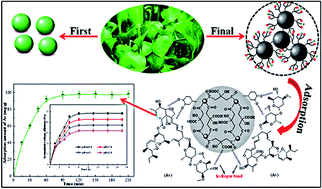
Avermectin (Av) is a derivative of pentacyclic 16-member lactone and has been widely used as agricultural miticide to control weeds, insects, and plant diseases and has also been used in medical and veterinary fields to protect animals and poultry from parasitic infections.55 The wide range of uses of avermectin has brought about serious environmental issues. Considering the importance of Av and its adverse effect on environment, it is necessary to adopt controlled-release methods to increase the loading/release efficiency of avermectin. To study the equilibrium time for the adsorption test, the adsorption kinetics of Av molecules on CA–PD@WH with an initial Av concentration of 2 g L−1 in isopropanol was firstly conducted at room temperature, and the results are shown in Fig. 7. As can be noted, the adsorption capacity rapidly increased in first 1 h, followed by a slow increase of Av uptake and reached equilibrium within 2 h. The fast equilibrium (2 h) and the high adsorption amount (98.1 mg g−1) arise from the abundant catecholamine moieties in polydopamine and the high density of carboxyl groups in CA–PD@WH composites, which provide numerous hydrogen binding sites for Av immobilization.
 |
| | Fig. 7 Adsorption curve of 2 g L−1 Av on CA–PD@WH composites in 25 mL of isopropanol at room temperature and the proposed adsorption mechanism. | |
After the equilibrium of adsorption process is reached, the Av release behavior of CA–PD@WH was performed at different pH values (2.0, 4.5, 7.8, and 10.0), and the profiles are depicted in Fig. 8. Apparently, the release patterns of Av from as-prepared composites were pH-dependent: the cumulative release efficiency of Av become lower when the pH value was increased from 2.0 to 10.0. This variation may be ascribe to the surface charge change of Av and the different interaction force between Av and carboxylic groups of CA–PD@WH composites under various pH levels.56 According to a previous article, Av is positively charged at strongly acidic condition (pH < 3.0) and negatively charged at higher pH values (pH > 3.0).57 At a high pH medium, the carboxylic groups were deprotonated, thereby enhancing the electrostatic repulsive forces between Av and the CA–PD@WH composites, consequently, the release rate and efficiency increased. Additionally, the pesticide delivery system also displayed sustained release performances at the different pH of the release medium, and consequently a pH-responsive controlled Av-release pattern can be acquired by altering the pH of the medium. Furthermore, there is still 27.3% of Av left on the CA–PD@WH composites even the pH of release media reaches as high as 10.0, because the abundant catecholamine moieties (catecholamines not participating in substrate adhesion) in polydopamine layer provided molecular anchor for Av immobilization. These remaining pesticides will be fully released with the continuous degradation of the CA–PD@WH composites.
 |
| | Fig. 8 The effect of pH values on the release behaviour of CA–PD@WH composites in 30% ethanol–water (3 : 7, v/v). | |
4. Conclusions
In conclusion, the present research was focused on developing a facile and intriguing strategy for the fabrication of a completely degradable water-absorbing material via chemical modification of dopamine coated water hyacinth (PD@WH) with citric acid (CA). Water hyacinth and dopamine were introduced into the formulations as the basic skeleton and coating material, respectively, and dopamine help pave a way for the design and development of a neoteric and effective pretreatment method. SEM and FTIR analyses confirmed that dopamine was first deposited on surface of water hyacinth and then reacted with carboxyl groups of citric acid. The obtained CA–PD@WH was able to absorb up to 12.0 times their weight in distilled water that is much stronger than swelling capacity of raw WH (1.3 g g−1), and the water uptake curves followed the pseudo-second-order kinetic model. Most importantly, the CA–PD@WH was then applied as a carrier for controlled release of Av in ethanol/water (v/v, 3
:
7) mixture. Study of Av adsorption and release indicated that the CA–PD@WH composite was endowed with a pH-responsive controlled avermectin-release property and a high loading capacity for avermectin. Of particular interest regarding this technology that deserves to be mentioned is that it not only makes good use of natural waste resources but also supplies a potential method to control pesticide release and reduce the pollution risk to the environment.
Acknowledgements
This work was supported by Shaanxi Provincial Natural Science Foundation of China (No. 2015JM2071), National Natural Science Foundation of China (No. 21176031) and Fundamental Research Funds for the Central Universities (No. 310829162041).
References
- J. R. Witono, I. W. Noordergraaf, H. J. Heeres and L. P. B. M. Janssen, Carbohydr. Polym., 2014, 103, 325–332 CrossRef CAS PubMed.
- Y. Zhang, L. Zhao and Y. Chen, Polym. Compos., 2015 DOI:10.1002/pc.23754.
- H. Ge and S. Wang, Carbohydr. Polym., 2014, 113, 296–303 CrossRef CAS PubMed.
- M. Diao, Q. Li, H. Xiao, N. Duan and J. Xu, J. Environ. Chem. Eng., 2014, 2, 1558–1567 CrossRef CAS.
- S. Jin, J. Chen, J. Mao, G. Yue, Y. Han and X. Yu, Polym. Compos., 2015 DOI:10.1002/pc.23701.
- B. Singh and V. Sharma, Carbohydr. Polym., 2014, 101, 928–940 CrossRef CAS PubMed.
- T. Wan, Z. Zhou, R. Huang, C. Zou, M. Xu, W. Cheng and R. Li, Appl. Clay Sci., 2014, 101, 199–204 CrossRef CAS.
- A. M. El-Sayed, Aquaculture, 2003, 218, 471–478 CrossRef.
- S. Rezania, M. Ponraj, A. Talaiekhozani, S. E. Mohamad, M. F. M. Din, S. M. Taib, F. Sabbagh and F. M. Sairan, J. Environ. Manage., 2015, 163, 125–133 CrossRef CAS PubMed.
- A. Malik, Environ. Int., 2007, 33, 122–138 CrossRef CAS PubMed.
- A. B. Pitaloka, A. H. Saputra and M. Nasikin, World Appl. Sci. J., 2013, 22, 747–754 CAS.
- Y. Zhang, F. Wu, L. Liu and J. M. Yao, Carbohydr. Polym., 2013, 91, 277–283 CrossRef CAS PubMed.
- M. Baiardo, G. Frisoni, M. Scandola and A. Licciardello, J. Appl. Polym. Sci., 2002, 83, 38–45 CrossRef CAS.
- A. H. Saputra, L. Qadhayna and A. B. Pitaloka, Int. J. Chem. Eng. Appl., 2014, 5, 36–40 CAS.
- P. S. Ganesh, E. V. Ramasamy, S. Gajalakshmi and S. A. Abbasi, Biochem. Eng. J., 2005, 27, 17–23 CrossRef CAS.
- A. F. Abdel-Fattah and M. A. Abdel-Naby, Carbohydr. Polym., 2012, 87, 2109–2113 CrossRef CAS.
- H. Lee, S. M. Dellatore, W. M. Miller and P. B. Messersmith, Science, 2007, 318, 426–430 CrossRef CAS PubMed.
- R. X. Zhang, L. Braeken, P. Luis, X. L. Wang and B. Vander Bruggen, J. Membr. Sci., 2013, 437, 179–188 CrossRef CAS.
- S. H. Yang, S. M. Kang, K.-B. Lee, T. D. Chung, H. Lee and I. S. Choi, J. Am. Chem. Soc., 2011, 133, 2795–2797 CrossRef CAS PubMed.
- B. S. Chiou, H. Jafri, T. Cao, G. H. Robertson, K. S. Gregorski, S. H. Imam, G. Glenn and W. J. Orts, J. Appl. Polym. Sci., 2013, 129, 3192–3197 CrossRef CAS.
- L. H. Xie, M. Z. Liu, B. L. Ni and Y. F. Wang, Ind. Eng. Chem. Res., 2012, 51, 3855–3862 CrossRef CAS.
- H. Y. Liu, Y. Zhang and J. M. Yao, Fibers Polym., 2014, 15, 145–152 CrossRef CAS.
- Y. F. Yan, H. W. Hou, T. R. Ren, Y. S. Xu, Q. X. Wang and W. P. Xu, Colloids Surf., B, 2013, 102, 341–347 CrossRef CAS PubMed.
- D. M. Zhao, Y. H. Zhang, L. L. Lv and J. Li, Polym. Eng. Sci., 2013, 53, 609–614 CAS.
- C. Lee, J. Shin, J. S. Lee, E. Byun, J. H. Ryu, S. H. Um, D.-I. Kim, H. Lee and S. W. Cho, Biomacromolecules, 2013, 14, 2004–2013 CrossRef CAS PubMed.
- H. Lee, N. F. Scherer and P. B. Messersmith, Proc. Natl. Acad. Sci. U. S. A., 2006, 103, 12999–13003 CrossRef CAS PubMed.
- C. Demitri, R. Del Sole, F. Scalera, A. Sannino, G. Vasapollo, A. Maffezzoli, L. Ambrosio and L. Nicolais, J. Appl. Polym. Sci., 2008, 110, 2453–2460 CrossRef CAS.
- S. Gorgieva and V. Kokol, Carbohydr. Polym., 2011, 85, 664–673 CrossRef CAS.
- R. Liang, H. Yuan, G. Xi and Q. Zhou, Carbohydr. Polym., 2009, 77, 181–187 CrossRef CAS.
- T. S. Anirudhan and S. R. Rejeena, Sep. Purif. Technol., 2013, 119, 82–93 CrossRef CAS.
- W. Y. Lia, A. X. Jinb, C. F. Liua, R. C. Suna, A. P. Zhanga and J. F. Kennedy, Carbohydr. Polym., 2009, 78, 389–395 CrossRef.
- R. E. Wing, Starch-Stärke, 1996, 48, 275–279 CrossRef CAS.
- D. J. Sessa and R. E. Wing, Ind. Crops Prod., 1999, 10, 55–63 CrossRef CAS.
- X. Huang and A. N. Netravali, J. Macromol. Sci., Part A: Pure Appl. Chem., 2008, 45, 899–906 CrossRef.
- R. E. Wing, Ind. Crops Prod., 1996, 5, 301–305 CrossRef CAS.
- W. B. Wang and A. Q. Wang, Carbohydr. Polym., 2010, 82, 83–91 CrossRef CAS.
- Y. Zhao, H. J. Su, L. Fang and T. W. Tan, Polymer, 2005, 46, 5368–5376 CrossRef CAS.
- Q. Li, Z. H. Ma, Q. Y. Yue, B. Y. Gao, W. H. Li and X. Xu, Bioresour. Technol., 2012, 118, 204–209 CrossRef CAS PubMed.
- M. Evren, I. Acar, K. Guclu and G. Guclu, Can. J. Chem. Eng., 2014, 92, 52–59 CrossRef CAS.
- T. Singh and R. Singhal, J. Appl. Polym. Sci., 2013, 129, 3126–3139 CrossRef CAS.
- J. R. Witono, I. W. Noordergraaf, H. J. Heeres and L. P. B. M. Janssen, Carbohydr. Polym., 2014, 103, 325–332 CrossRef CAS PubMed.
- B. L. Ni, M. Z. Liu, S. Y. Lu, L. H. Xie and Y. F. Wang, J. Agric. Food Chem., 2010, 58, 12373–12378 CrossRef CAS PubMed.
- A. K. Bajpai and J. Shrivastava, Polym. Int., 2005, 54, 1524–1536 CrossRef CAS.
- A. Roy, S. K. Singh, J. Bajpai and A. K. Bajpai, Cent. Eur. J. Chem., 2014, 12, 453–469 CrossRef CAS.
- Y. Yi, S. Xu, H. K. Sun, D. Chang, Y. H. Yin, H. Zheng, H. X. Xu and Y. C. Lou, Carbohydr. Polym., 2011, 86, 1007–1013 CrossRef CAS.
- M. Margni, D. Rossier, P. Crettaz and O. Jolliet, Agric., Ecosyst. Environ., 2002, 93, 379–392 CrossRef CAS.
- R. Celis, M. C. Hermosin, M. J. Carrizosa and J. Cornejo, J. Agric. Food Chem., 2002, 50, 2324–2330 CrossRef CAS PubMed.
- R. D. J. Solomon and V. S. Santhi, J. Agron., 2007, 6, 370–373 CrossRef CAS.
- S. Atta, A. Paul, R. Banerjee, M. Bera, M. Ikbal, D. Dhara and N. D. P. Singh, RSC Adv., 2015, 5, 99968–99975 RSC.
- B. Singh, D. K. Sharma, R. Kumar and A. Gupta, J. Hazard. Mater., 2010, 177, 290–299 CrossRef CAS PubMed.
- M. Fernandez-Perez, F. J. Garrido-Herrera, E. Gonzalez-Pradas, M. Villafranca-Sanchez and F. Flores-Cespedes, J. Appl. Polym. Sci., 2008, 108, 3796–3803 CrossRef CAS.
- F. J. Garrido-Herrera, I. Daza-Fernández, E. González-Pradas and M. Fernández-Pérez, J. Hazard. Mater., 2009, 168, 220–225 CrossRef CAS PubMed.
- A. Roy, J. Bajpai and A. K. Bajpai, Carbohydr. Polym., 2009, 76, 222–231 CrossRef CAS.
- D. Gómez-Martínez, P. Partal, I. Martínez and C. Gallegos, Bioresour. Technol., 2009, 100, 1828–1832 CrossRef PubMed.
- W. L. Shoop, H. Mrozik and M. H. Fisher, Vet. Parasitol., 1995, 59, 139–156 CrossRef CAS PubMed.
- W. B. Sheng, S. H. Ma, W. Li, Z. Q. Liu, X. H. Guo and X. Jia, RSC Adv., 2015, 5, 13867–13870 RSC.
- Z. Z. Li, L. X. Wen, F. Liu, A. Q. Liu, Q. Wang and J. F. Chen, Chin. J. Pestic. Sci., 2005, 7, 275–281 CAS.
|
| This journal is © The Royal Society of Chemistry 2016 |
Click here to see how this site uses Cookies. View our privacy policy here.