DOI:
10.1039/C5RA28113J
(Paper)
RSC Adv., 2016,
6, 14164-14170
Effective saccharification of holocellulose over multifunctional sulfonated char with fused ring structures under microwave irradiation
Received
31st December 2015
, Accepted 25th January 2016
First published on 27th January 2016
Abstract
An environmentally benign process for hydrolysis of holocellulose conversion into sugars has been presented in this work, using sulfonated char (SC) catalysts derived from microcrystalline cellulose, hemicellulose, lignin and lignin-rich residues. Significantly, the SC catalysts exhibited remarkable hydrolysis performance for holocellulose under microwave irradiation, especially with sulfonated char from lignin (SCL) and sulfonated char from residues (SCR). The maximum conversion of holocellulose could reach 82.9% using SCR catalyst, with 26.8 wt% content of monose and 72.2 wt% content of oligose. The as-synthesized SC catalysts were characterized using scanning electron microscopy (SEM), X-ray diffraction (XRD), Raman spectroscopy (RS), Fourier transform infrared spectroscopy (FT-IR), thermal gravity analysis (TG) and elemental analysis (EA), which demonstrated that the SC catalysts possess a graphene-like fused ring structures, bearing SO3H, COOH and phenolic OH groups. The excellent catalytic performance could be attributed to the synergetic combination of the fused ring structures and multifunctional groups in the SC catalysts. This process could offer a promising strategy for efficient conversion of biomass in the future.
1 Introduction
Due to its potential conversion to biofuel or platform chemicals, the hydrolysis of cellulose into sugars has attracted great attention, which is regarded as one of the most promising valued utilization of lignocellulosic biomass.1,2 Extensive researches have been focused on effective and efficient hydrolysis process,3 such as acid hydrolysis,4 enzymatic hydrolysis,5 ionic liquid hydrolysis6 and supercritical water hydrolysis.7 However, few of exist approaches are economic and environmental benign for large-scale applications. For example, acid hydrolysis has a long industrial history, but it requires high operating costs and leads to various environmental pollutants. Enzymatic hydrolysis is one of the most promising hydrolysis technologies, but it suffers from the severe controls of enzymes and the troublesome separation processes. Additionally, ionic liquid hydrolysis has attracted intensive attentions for its excellent solubility of cellulose, while the high cost and high viscosity of ionic liquid hampers its large scale commercialized application. Supercritical water hydrolysis has been proven to be very effective method owing to its unique physical and chemical effects. However, it is carried out in an extremely short time under high temperature and pressure, which will cause difficulties for development of a commercial reaction system. To solve these problems, heterogeneous catalytic hydrolysis processes have been developed by using solid acids as catalyst, such as niobic acid, zeolites, heteropoly acid, Nafion, and Amberlyst etc.3 However, few of these catalysts display effective hydrolysis efficiency due to the mass transfer resistance between solid acids and insoluble cellulose in water. As the most effective heterogeneous catalysts for hydrolysis of cellulose, sulfonated chloromethyl polystyrene resin (CP-SO3H) and carbon based solid catalyst bearing SO3H, COOH and OH function (SC) were developed by Pan's research group8 and Hara's research group,9,10 respectively. Both of the catalysts contained a cellulose-binding domain and a hydrolytic domain, which could bind the cellulose by forming hydrogen bonds, following with hydrolysis of cellulose by attacking β-1,4-glucoside bond with active proton. However, the CP-SO3H is subjected to the economic and environmental problem because of petroleum-based raw materials which hamper its commercialized application.
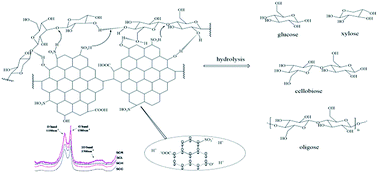
Considering to the better economic and environmental performance than CP-SO3H, carbon based solid catalyst were therefore received much attention.11–16 Various materials including bamboo, cotton, starch, corncobs, glucose, residues, and polyvinyl chloride, were selected as raw materials for preparation of carbon based solid catalysts, all of which exhibited excellent performance on hydrolysis of cellulose. However, it should be pointed out that all of these reported catalysts are subjected to the shield of active function group during the hydrolysis process, which hurts their reusability and commercialized application. Additionally, in most reports, holocellulose (mainly composed of cellulose and hemicellulose) have always been ignored as a target feedstock for solid acid hydrolysis. In this work, microcrystalline cellulose (MLC), xylan, lignin and residues were first selected as the carbon source for carbon based solid acid, respectively. By investigating performance on catalytic activity and stability during hydrolysis of holocellulose under microwave irradiation, we developed a green process for catalytic saccharification of lignocellulosic biomass, as displayed in Scheme 1. The structure-related mechanism involving catalysis performance is deep discussed in this work, especially for the retrievability of SC catalysts. We believe that such technology should be very effective for promoting the solid acid catalyzed hydrolysis of holocellulose due to its excellent catalytic activity and hydrothermal stability.
 |
| | Scheme 1 A green process for catalytic saccharification of lignocellulosic biomass. | |
2 Experimental
2.1 Materials
In this study, shrub willow was collected from West Virginia University experimental forest, which was pulverized to pass though a 60 mesh sieve, followed by oven drying at 105 °C overnight. This ground materials were kept in sealed bags until needed, at which time a small sample of the materials were dried further in an oven at 105 °C for overnight. According to our previous reported procedures,17 the holocellulose was separated from shrub willow powders. The mass percent of shrub willow powders, holocellulose and residues were detected using standard test method for carbohydrate and lignin in biomass,18 and were shown in Table 1. Other materials, including MLC, xylan and lignin, were purchased from Sigma-Aldrich Inc, and were used as received.
Table 1 The mass percent of raw powders, holocellulose and residues from shrub willow
| Materials |
Cellulose |
Hemicellulose |
Lignin |
Others |
| Raw powders |
41.0% |
31.3% |
23.6% |
4.1% |
| Holocellulose |
66.3% |
30.5% |
3.2% |
Trace |
| Residues |
23.3% |
Trace |
68.5% |
8.2% |
2.2 Catalyst preparation
The sulfonated char (SC) catalysts were synthesized with modified procedure.19,20 In a typical procedure, 20 g of MLC was heated for 5 h at 450 °C under N2 flow to get black carbon materials, which were grinded to powders. 2 g of powders were heated in 60 mL fuming sulfuric acid (20% SO3) at 120 °C for 10 h to introduce SO3H onto the surface of char. After cooling to room temperature, the suspension was filtered and washed repeatedly with hot distilled water (>80 °C) until no sulfate ions could be detected in the washing water by BaCl2 solution, and then dried at 150 °C for 4 h to obtain an incompletely carbonized materials bearing –SO3H, –OH and –COOH groups (denoted as SCC). With the similar method described above, the other three SC catalysts were prepared using xylan, lignin and residues as feedstock, and coded as SCH, SCL and SCR, respectively.
2.3 Hydrolysis of holocellulose under microwave irradiation
The hydrolysis of holocellulose was performed in a microwave reactor (CEM discovers) with a frequency of 2.45 GHz, power from 0 to 100% with a maximum 600 W and temperature controller. In a typical run, 0.2 g holocellulose and 0.1 g SC were added to a Pyrex tube, followed by adding the distilled water (3 mL). The Pyrex tube containing the catalysts and reactant were sealed and then placed in the CEM reactor. The mixture was stirred by a stir bar at 300 rpm during the reaction. After the desired reaction time elapsed, the reaction mixture was diluted with cold water (10 mL), neutralized with NaOH solution (0.4 mol L−1, 10 mL), and filtered with filter paper (pore size of 30–50 μm). The aqueous filtration was analyzed using the Dionex Capillary Ion Chromatography System (ICS 5000 Thermo Fisher) with a pulsed amperometric detector and a CarboPac PA-10 (4 mm) column. NaOH aqueous solution (18 mM) aqueous solution was used as elution solvent at a flow rate of 1.0 mL min−1. The yield of total sugars (based on the dry mass of holocellulose) was calculated using the following equation: total sugars yield (%) = [amount (g) of oligose + amount (g) of monose]/amount (g) of holocellulose × 100.
2.4 Analysis methods
Structure information for the prepared sulfonated catalysts was obtained by scanning electron microscopy (SEM, Hitachi 3400-1), Brunauer Emmett Teller surface analyzer (BET, Micromeritics ASAP2020M), powder X-ray diffraction (XRD, Bruker D8), Raman spectroscopy (RS, Thermo Scientific DXR), Fourier transform infrared spectroscopy (FT-IR, Nicolet I80), thermal gravity analysis (TGA, Q50-0870) and element analysis (EA, Thermo Scientific Flash 2000 CHNS/O). The specific surface area and pore size of the sulfonated char were obtained by Brunauer Emmett Teller surface analyzer. Scanning electron microscopy analysis was conducted on a Hitachi 3400-1 electronic microscope working at 30 kV. FTIR Spectrum was recorded on a Fourier transform infrared spectroscopy using the standard KBr disc method. The samples were scanned between 400–4000 cm−1 with a resolution of 0.4 cm−1. X-ray diffraction patterns were collected on a Bruker D8 Focus Advance diffractometer using Cu Kα radiation (wavelength λ = 1.5406 Å). Raman spectrum of SC catalysts were recorded at room temperature using a Laser Micro-Raman spectrometer (Thermo Scientific DXR, 532 nM) with a scan range between 50–3500 cm−1 at laser power of 5 mW. Derivative thermogravimetry (DTG) was also obtained to determine maximum rate of mass loss. Thermal gravity analysis was performed on a thermo gravimetric analyzer instrument with standard furnace and platinum pan. The samples were heated from room temperature to 900 °C at a heating rate of 10 °C min−1 in nitrogen atmosphere (50 mL min−1). The amount of groups was estimated by elemental analysis and cation-exchange analysis. The densities of SO3H groups were estimated based on the sulfur content determined from sample compositions obtained by elemental analysis. The total SO3H + COOH and SO3H + COOH + OH contents were estimated from the exchange of Na+ in aqueous NaCl and NaOH solutions, respectively.9 Typically, 0.1 g sample was mixed with 20 mL saturated NaCl solution, following with stirring under room temperature for 12 h. After filtration, several drops of phenolphthalein were added to the filtrate and then this solution was titrated with 0.001 M NaOH to neutrality. Thus, the total SO3H + COOH content could be determined by the dosage of Na+. Similar method were applied to detect the content of SO3H + COOH + OH, the sample (0.1 g) was mixed with NaOH aqueous solution (50 mL, 0.001 M) while stirring for 1 h at room temperature. Then excess NaOH was neutralized with HCl (0.02 M). The acidities of SC catalysts were evaluated by immersing the samples with four different Hammett indicator solutions having different Hammett acidity (H0); 2-nitroaniline (−0.2), benza-lacetophenoen (−5.2), anthraquinone (−8.2) and p-nitrotoluene (−11.35).21 The H0 values of SC catalysts were determined by the critical color changes of indicator solutions.
3 Results and discussion
3.1 Characterization of SC catalysts
The SC catalysts derived from MLC, xylan, lignin and residues were characterized using SEM, BET, XRD, RS, FT-IR, TG, EA, and NH3-TPD, respectively, and the structure informations are presented as follows: (i) the particle size and surface area of the SC catalysts were estimated to be 10–40 μm and 2–3 m2 g−1, respectively confirmed by SEM and BET measurements. (ii) The XRD pattern for the carbon (Fig. 1a) exhibits two broad but weak diffraction peaks at 25° and 44° 2θ, which are attributable to amorphous carbon composed of aromatic carbon sheets oriented in a considerably random fashion.22 The RS for the four SC catalysts (Fig. 1b) shows that the intensity ratios of the D band (1350 cm−1) and G band (1580 cm−1) are to be 0.8–0.9, which indicates the average graphene size in the SC catalysts are ca. 1 nm.23 The 2D (G′) band around 2700 cm−1 is believed to be related with the fused ring structure in SC catalysts, which indicates the number of layers in SC catalysts are between 2 and 5.24 (iii) As shown in Fig. 1c, the vibration bands at 1040 (SO3-stretching) and 1377 cm−1 (O
S
O stretching in SO3H) observed in the FTIR spectrum of the carbon component indicates that the composite has SO3H groups. The peaks at 1606 and 1715 cm−1 could be attributed to vibration bands of –OH and C
O, respectively. A broad band appears at 2300–2700 cm−1 in the FTIR spectrum, which is assigned to an overtone of the bending model of –OH⋯O = linked by a strong hydrogen bond.
 |
| | Fig. 1 Characterization of prepared SC catalysts. (a) XRD; (b) RS; (c) FT-IR; (d) TG. | |
The distribution of TG analysis of four SC catalysts is displayed in Fig. 1d. In view of the loss of adsorbed free water and carbon support during the torrefied process, four TG curves exhibit similar thermal degradation trend. Taking SCC as example, the 5.1 wt% loss between 20 and 150 °C could be attributed to the weight loss of adsorbed free water in SCC. An obvious decrement of 8.3 wt% occurs at 150–300 °C, which could be assigned to the degradation of OH and COOH. The weight loss from torrefaction at the temperature ranging from 300 to 500 °C is 9.5%, revealing that the degradation of OH, COOH and SO3H. The maximum decrement of curve is 21.7% which develops from 500 to 800 °C, regarding as the degradation of SO3H. With the similar weight loss trend, SCH, SCL and SCR exhibited different TG curves from SCC, which could be attributed to its different capacity of SO3H, COOH and OH groups. Total weight loss of SCC, SCH, SCL and SCR during torrefied process is 44.6%, 40.8%, 58.3% and 51.3%, respectively. These results indicate that the four SC catalysts are composed of amorphous carbon with fused ring structure which possessed SO3H, COOH and hydrophilic OH groups. The graphene-like fused ring structures in SC catalysts possesses a high density of functional groups, such as SO3H, COOH and OH, which is distinctly different to conventional solid acids with single functional groups.
It should be noted that four as-prepared SC catalysts exhibited different TG curves and total weight loss during TG analysis, indicating different capacity of functional groups. The CHOS element analysis results of carbon source, char and sulfonated char for each catalyst were shown in Table 2. Combined with the results of cation-exchange experiment (shown in Table 3), these findings confirmed that the composition of prepared SC catalysts were CH0.441O0.294S0.021, CH0.469O0.276S0.015, CH0.562O0.399S0.047 and CH0.528O0.366S0.035, respectively. As shown in Table 3, the amount of SO3H that loaded on SCR and SCL are obviously higher than that on SCC and SCH, which greatly agreed with the acid site density measured by NH3-TPD. On the contrary, the amount of COOH and OH that loaded on SCR and SCL are lower than that on SCC and SCH, and the total amount of functional groups followed the sequence SCL (4.53) > SCR (3.99) ≈ SCC (3.89) > SCH (3.37). Well performance of hydrophilic provides hydrophilic reactants in solution good access to the functional groups in SC catalysts, resulting in high catalytic performance, despite the low surface area.
Table 2 The C H O S element analysis of raw materials, carbon support and catalysts
| SC catalysts |
Element/% |
| C |
H |
O |
S |
| SCC CH0.441O0.294S0.021 |
MLC |
42.59 |
6.11 |
51.30 |
Trace |
| Char |
77.35 |
2.41 |
20.24 |
Trace |
| Sulfonated char |
67.42 |
2.48 |
26.34 |
3.76 |
| SCH CH0.469O0.276S0.015 |
Xylan |
41.23 |
6.57 |
52.20 |
Trace |
| Char |
79.64 |
3.11 |
17.25 |
Trace |
| Sulfonated char |
69.08 |
2.70 |
25.38 |
2.84 |
| SCL CH0.562O0.399S0.047 |
Lignin |
41.99 |
4.68 |
51.13 |
2.20 |
| Char |
68.53 |
2.86 |
28.48 |
0.13 |
| Sulfonated char |
58.71 |
2.75 |
31.24 |
7.30 |
| SCR CH0.528O0.366S0.035 |
Residues |
47.28 |
6.04 |
46.68 |
Trace |
| Char |
72.39 |
2.90 |
24.71 |
Trace |
| Sulfonated char |
61.52 |
2.71 |
30.08 |
5.69 |
Table 3 The content of SO3H, COOH and OH in sulfonated char catalysts and its surface area and acid site density
| Sulfonated char |
SCC |
SCH |
SCL |
SCR |
| SO3H (mmol g−1) |
1.18 |
0.89 |
2.28 |
1.68 |
| COOH (mmol g−1) |
0.50 |
0.42 |
0.35 |
0.39 |
| OH (mmol g−1) |
2.21 |
2.06 |
1.90 |
1.92 |
| Total content (mmol g−1) |
3.89 |
3.37 |
4.53 |
3.99 |
| Surface area (m2 g−1) |
2.01 |
1.86 |
1.95 |
1.91 |
| Average pore size (nm) |
6.1 |
5.6 |
4.8 |
5.0 |
| Acid site density (mmol g−1) |
2.11 |
1.87 |
2.20 |
2.09 |
3.2 Hydrolysis of holocellulose under microwave irradiation
To improve the efficiency of the hydrolysis reaction, microwave irradiation was applied in our experiments, which has been proven to be an effective method to accelerate the rate of heterogeneously catalytic processes.25,26 In addition, we also carried out the contrast experiment with autoclave reactor as control. As shown in Fig. 2a, microwave irradiation exhibited significant performance on promote the conversion of holocellulose from 60.5 (with autoclave reactor) to 82.9%, which may be attributed to its improvement of effective contacting between substrate and catalyst by dielectric heating.27 Further more, it was also found that microwave irradiation could effectively restrain the formation of unwanted byproducts, the content of 5-hydroxymethyl furfural (HMF) under microwave irradiation was detected to 1.0 wt%, whereas that in autoclave reactor is measured to 12.6 wt%. We believe that HMF is produced from the degradation of monose under acidic environment of high temperature for uneven thermal conductivity in autoclave reactor. However, microwave irradiation can efficiently transfer energy by dipolar polarization and ionic conduction, which may inhibit the degradation of monose and increase the content of monose from 13.6 to 26.8% when compared with the autoclave reactor.
 |
| | Fig. 2 The catalytic performance of SC catalysts for hydrolysis of holocellulose (reaction condition: catalyst 0.10 g, holocellulose 0.20 g, water 3 mL, reaction temperature, 120 °C, reaction time 1.0 h; the reaction temperature for b range from 80 to 140 °C; the reaction time for c range from 0.25 to 1.5 h). | |
The catalytic performances of four prepared SC catalysts were examined by their application on the catalyzing the hydrolysis of holocellulose under certain reaction conditions, and compared with that of a dilute H2SO4 solution (96% H2SO4, 0.1 g; distilled water, 0.3 g; corresponding to 24 wt% of sulfuric acid solution) and two kinds of laboratory prepared solid acid catalyst: SO42−/TiO2/La3+ (STL) and SO42−/MCM-41 (MCM) which were prepared according to the published procedures.28,29 The results are exhibited in Fig. 2. As expected, the SC catalysts showed excellent catalytic performance like H2SO4 instead of STL and MCM. As shown in Fig. 2b, for SC catalysts, the conversion of holocellulose drastically increased with increasing temperature from 80 to 120 °C, and slightly fluctuated when the temperature further went up. With respect to that of 80.2% for H2SO4, the highest conversion of holocellulose for SCC, SCH, SCL and SCR is 83.7%, 66.4%, 83.1% and 82.9%, respectively. By comparison, only slightly increase could be achieved with increasing temperature for hydrolysis process with STL and MCM as catalyst, and the highest conversion of holocellulose for STL and MCM at 120 °C is only 15.2% and 25.7%, respectively, which is obviously lower than SC catalysts. Similar condition could also be obtained for time evaluation. As shown in Fig. 1c, in the case of SCR, an increase in hydrolysis time resulted in an enhanced conversion of holocellulose, and the best result of 83.0% was obtained at the optimum time of 1.0 h. H2SO4 (corresponding to 30 wt% H2SO4 solution), SCC, SCH and SCL also has high activity for hydrolysis with the conversion of holocellulose at 1 h reaching 80.3%, 83.5%, 70.1% and 83.3%, respectively. On the other hand, no significant increase of conversion of holocellulose was observed for hydrolysis with MCM and STL as catalysts. According to the remarkable catalytic performance of SC catalysts for hydrolysis of holocellulose, one possible explanation for the excellent catalytic performance of SC catalysts is that some of the functional groups in the carbon materials are linked by strong hydrogen bonds, which can result in strong acidity due to mutual electron-withdrawal. As shown in Table 4, the acidity for SC catalysts (H0) are between −8 and −11, which is approximate to H2SO4 (H0 ≈ −11). However, some solid acid catalysts with similar or higher acidity, such as STL, MCM, Nafion and H3PW12O40, exhibited low catalytic performance in hydrolysis of holocellulose, despite its high acidity.
Table 4 Hydrolysis of holocellulose by various acid catalysts
| Catalysts |
Functional groups |
Acid density (mmol g−1) |
H0 acidity |
Surface area (m2 g−1) |
Conversion% |
| Reaction condition: 0.2 g of holocellulose, 0.1 g of catalyst, 3 mL H2O, hydrolysis for 1 h at 120 °C under microwave irradiation. Results were adapted from ref. 33, with cellulose as reaction substrate. Results were adapted from ref. 34, with cellulose as reaction substrate. Results were adapted from ref. 35, with cellulose as reaction substrate. |
| H2SO4a |
|
20.4 |
−11 |
— |
80 |
| SO42−/TiO2/La3+ a |
SO3H |
0.8 |
−11 to −13 |
229 |
15 |
| SO42−/MCM-41a |
SO3H |
1.1 |
−13 |
577 |
26 |
| Nafionb |
SO3H |
0.9 |
−11 to −13 |
<1 |
35 |
| H3PW12O40c |
PO4H |
— |
−13 |
— |
33 |
| H-mordenited |
OH |
1.4 |
−5.6 |
480 |
24 |
| SCCa |
SO3H |
1.2 |
−8 to −11 |
2.01 |
84 |
| OH |
2.2 |
| COOH |
0.5 |
| SCHa |
SO3H |
0.9 |
−8 to −11 |
1.86 |
66 |
| OH |
2.0 |
| COOH |
0.4 |
| SCLa |
SO3H |
2.3 |
−8 to −11 |
1.95 |
82 |
| OH |
1.9 |
| COOH |
0.4 |
| SCRa |
SO3H |
1.7 |
−8 to −11 |
1.91 |
83 |
| OH |
2.0 |
| COOH |
0.4 |
In view of non-reusable of H2SO4 and low activity of MCM and STL for hydrolysis of holocellulose, the retrievability of catalysts were checked under the optimized conditions by using four SC catalysts as example. In a typical procedure,30 after the first reaction run at 120 °C for 1 h under microwave irradiation, the hydrolysis residue containing the catalysts and holocellulose were recovered from the hydrolytic solution by filtering. After drying and supplementing certain amount of fresh holocellulose, the ground residue was directly used for the 2nd hydrolysis reaction under the same condition. The recycling process proceeded repeatedly five times, and the results were shown in Fig. 2d. In case of SCR, the curve showed that SCR was still active in each recycling run, although the conversion of holocellulose gradually decreased from 80.1% (the 1st run), 77.8% (the 2nd run), 74.9% (the 3rd run), 73.3% (the 4th run) to 71.5% (the 5th run). Additionally, similar condition could also be obtained for SCL, which is still active with the conversion of holocellulose more than 70% (72.4%) after five times reuse, indicating that SCR and SCL could still retained nearly 90% of its original catalytic activity. However, after the recycling processes under same condition, it was surprisingly observed that only 58.3 and 38.4% of conversion of holocellulose could be obtained with SCC and SCH as catalysts, respectively, showing that more than 30% of its original catalytic activity lost during the recycling process. In order to understand the decrease mechanism in catalytic activity, we measured the content of –SO3H groups on SC catalysts after 5th run, and found that the content for SCC, SCH, SCL and SCR (0.79, 0.55, 2.09 and 1.57 mmol g−1) lowered compared with that of fresh catalysts (1.18, 0.89, 2.28 and 1.68 mmol g−1), which transpired that a part of SO3H groups has leached into the solution in various degree, and matched with the experimental results. According to the shed of SO3H from catalysts surface, we believed that the different reused performance for SC catalysts may be attributed to various fused structure in SC catalysts and their stabilizing function of SO3H. The fused structure in graphene sheets has been proved to be responsible for the hydration tolerant of SO3H groups by Hara in his reseach.9,10 In spite of unclear details of structure-related retrievability by different feedstock, the similar mechanism could be proposed here according to previous thermal degradation research.31,32 During the carbonization process of SC catalysts, inherently a slow mesophilic pyrolysis process (450 °C for 5 h under nitrogen atmosphere), the cleavage and recombination of C–C and C–O conducted in the sugar ring structure of cellulose and hemicellulose, but branched chains out of benzene ring structure of lignin,31 following with the formation of saturated fused ring structure in SCC and SCH, and aromatic fused ring structure in SCL and SCR, respectively. Due to dispersion function of conjugated Π bond, which extremely inhibit the formation of σ-complex during the hydration of SO3H group, SCL and SCR that possessed aromatic fused ring structure, exhibited much more retrievability than SCC and SCR during the hydrolysis process.
Moreover, it was found that the SC catalysts also promoted selectivity of hydrolysis products when compared with H2SO4. In case of SCR, the content of hydrolysis products using SCR and H2SO4 as catalyst, are illustrated by ion chromatography in Fig. 2e and f, respectively. It is noted that the yield of HMF was 1.0 wt% with SCR as catalyst, which is extremely lower than 6.4 wt% when using H2SO4 as catalyst. As we discussed above, HMF is regard as a byproduct from the degradation of monose by the protonation of the ring oxygen atom and the breakage of the C1–O5 bond (C+).32 The enhanced performance of SCR on selectivity of hydrolysis products could also be attributed to its dispersion function of conjugated Π bond which make SO3H groups tolerable to hydration compared with sulfuric acid, resulting in lower density of free proton in hydrolysate and inhibition effect on further degradation of monose.
3.3 Structure-related catalysis of SC catalysts
The hydrolysis of holocellulose into sugars involves two stages: H+ attack of hydrogen and β-1,4-glycosidic bonds in solid holocellulose to form water-soluble β-1,4-glucan, followed by hydrolysis of the β-1,4-glycosidic bonds in the β-1,4-glucan to form monose. Effective heterogeneous catalytic conversion of holocellulose into sugars therefore requires a strong Bronsted acid.3 However, the enhanced hydrolytic catalysis of the SC catalysts cannot be due solely to factors such as surface area or acid strength. As shown in Table 4, despite their large surface area or strong acidity, conventional solid acid catalysts can not efficiently hydrolysis of holocellulose under microwave irradiation, such as STL, MCM, Nafion, H3PW12O40 and H-mordenite, whereas the SC catalysts exhibited remarkable hydrolysis performance for this reaction. These results indicated that SO3H or OH can not exhibit high performance on this reaction when worked as a single function without each other, and the remarkable performance of SC catalysts for the hydrolysis of holocellulose could be attributed to the multifunctional synergistic action of strong Bronsted acid sites (SO3H) and effective sites for β-1,4-glucan adsorption (OH).
As shown in Fig. 3, strong hydrogen bonds are formed between phenolic OH on SC catalysts and oxygen atoms among neutral OH groups and glycosidic bonds. Such hydrogen bonds are expected to bind holocellulose to the SC catalysts surface, which could effectively promote the attack of β-1,4-glucan by SO3H. It should be noted that SCL and SCR exhibited excellent retrievability when compared with SCC and SCH under the reaction condition, despite all the SC catalysts showed well performance on conversion of holocellulose. As more aromatic fused rings were obtained during the preparation of SCL and SCR, instead of saturated fused rings in SCC and SCH, the dispersion function of conjugated Π binding was believed to be responsible for the hydrothermal stability, which significantly promotes the hydration-tolerant of SO3H groups in SC catalysts. Thus, the excellent catalytic performance of SCL and SCR could be attributed to multifunctional synergistic action and dispersion function of SO3H of aromatic fused ring.
 |
| | Fig. 3 Proposed reaction mechanism for the hydrolysis of holocellulose by SC catalysts bearing SO3H, COOH and phenolic OH groups. | |
4 Conclusions
The sulfonated char catalysts with a graphene-like fused ring structures bearing SO3H, COOH and phenolic OH groups exhibit high catalytic performance for hydrolysis of holocellulose. The remarkable catalytic performance could be attributed to the synergetic combination of the fused ring structures and multifunctional groups in the SC catalysts. The results suggest that the SC catalysts derived from economic and environmental benign feedstocks, especially for lignin and lignin-rich residues, exhibit outstanding catalytic activity and retrievability, which could be widely applied as a green catalyst for efficient conversion of biomass in the future.
Acknowledgements
We acknowledge the financial support for this work by the National Key Technology R&D Program of China (2015BAD15B06), the Natural Science Foundation of Jiangsu Province (Grants No. BK20151068) and the Research Grant of Jiangsu Province Biomass Energy and Materials Laboratory (JSBEM-S-201502).
References
- M. Besson, P. Gallezot and C. Pinel, Chem. Rev., 2014, 114, 1827 CrossRef CAS PubMed.
- P. Maki-Arvela, T. Salmi, B. Holmom, S. Willfor and D. Murzin, Chem. Rev., 2011, 111, 5638 CrossRef CAS PubMed.
- Y. Huang and Y. Fu, Green Chem., 2013, 15, 1095 RSC.
- X. Zhao, Y. Zhou and D. Liu, Bioresour. Technol., 2012, 105, 160 CrossRef CAS PubMed.
- J. Hu, V. Arantes, A. Pribowo, K. Gourlay and J. N. Saddler, Energy Environ. Sci., 2014, 7, 2308 CAS.
- H. Guo, Y. Lian, L. Yan, X. Qi and R. Smith Jr, Green Chem., 2013, 15, 2167 RSC.
- D. A. Cantero, C. Martinez, M. D. Bermejo and M. J. Cocero, Green Chem., 2015, 17, 610 RSC.
- L. Shuai and X. Pan, Energy Environ. Sci., 2012, 5, 6869 Search PubMed.
- S. Suganuma, K. Nakajima, M. Kitano, D. Yamaguchi, H. Kato, S. Hayashi and M. Hara, J. Am. Chem. Soc., 2008, 130, 12787 CrossRef CAS PubMed.
- M. Hara, Energy Environ. Sci., 2010, 3, 601 CAS.
- X. Qi, N. Liu and Y. Lian, RSC Adv., 2015, 5, 17526 RSC.
- Y. Jiang, X. Li, X. Wang, L. Meng, H. Wang, G. Peng, X. Wang and X. Mu, Green Chem., 2012, 14, 2162 RSC.
- H. Guo, X. Qi, L. Li and R. Smith Jr, Bioresour. Technol., 2012, 116, 355 CrossRef CAS PubMed.
- S. Shen, B. Cai, C. Wang, H. Li, G. Dai and H. Qin, Appl. Catal., A, 2014, 473, 70 CrossRef CAS.
- K. Ngaosuwan, J. Goodwin and P. Prasertdham, Renewable Energy, 2016, 86, 262 CrossRef CAS.
- J. Anderson, R. Johnson, K. Schmidt-Rohr and B. Shanks, Carbon, 2014, 74, 333 CrossRef CAS.
- J. Yang, J. Jiang, N. Zhang, C. Miao, M. Wei and J. Zhao, Fuel, 2015, 139, 102 CrossRef CAS.
- A. Sluiter, B. Hames, R. Ruiz, C. Scarlata, J. Sluiter, D. Templeton and D. Crocker, National Renewable Energy Laboratory, U. S, 2012 Search PubMed.
- M. Li, Y. Zheng, Y. Chen and X. Zhu, Bioresour. Technol., 2014, 154, 345 CrossRef CAS PubMed.
- T. Dong, D. Gao, C. Miao, X. Yu, C. Degan, M. Garcia-Perez, B. Rasco, S. S. Sablani and S. Chen, Energy Convers. Manage., 2015, 105, 1389 CrossRef CAS.
- K. M. Choi, K. Na, G. A. Somorjai and O. M. Yaghi, J. Am. Chem. Soc., 2015, 137, 7810 CrossRef CAS PubMed.
- F. Guo, Z. Fang and T. Zhou, Bioresour. Technol., 2012, 112, 313 CrossRef CAS PubMed.
- X. Wang, X. Li, D. Liu, S. Song and H. Zhang, Chem. Commun., 2012, 48, 2885 RSC.
- A. Ciesielski and P. Samori, Chem. Soc. Rev., 2014, 43, 381 RSC.
- J. Cheng, R. Huang, T. Yu, T. Li, J. Zhou and K. Cen, Bioresour. Technol., 2014, 151, 415 CrossRef CAS PubMed.
- I. Choedkiatsakul, K. Ngaosuwan, S. Assabumrungrat, S. Tabasso and G. Cravotto, Biomass Bioenergy, 2015, 77, 186 CrossRef CAS.
- H. Cho, F. Torok and B. Torok, Green Chem., 2014, 16, 3623 RSC.
- K. Wang, J. Jiang, Z. Si and X. Liang, J. Renewable Sustainable Energy, 2013, 5, 052001 CrossRef.
- J. Xu, J. Jiang, W. Lv, W. Dai and Y. Sun, Biomass Bioenergy, 2010, 34, 1059 CrossRef CAS.
- I. M. Lokman, U. Rashid, Y. H. Taufiq-Yap and R. Yunus, Renewable Energy, 2015, 81, 347 CrossRef CAS.
- H. Li and A. G. McDonald, Ind. Crops Prod., 2014, 62, 67 CrossRef CAS.
- W. Plazinski, A. Plazinska and M. Drach, Phys. Chem. Chem. Phys., 2015, 17, 21622 RSC.
- X. Qian, J. Phys. Chem. B, 2013, 117, 11460 CrossRef CAS PubMed.
- S. Kim, A. A. Dwiatmoko, J. W. Choi, Y. Suh, D. J. Suh and M. Oh, Bioresour. Technol., 2010, 101, 8273 CrossRef CAS PubMed.
- K. Shimizu, H. Furukawa, N. Kobayashi, Y. Itayab and A. Satsuma, Green Chem., 2009, 11, 1627 RSC.
|
| This journal is © The Royal Society of Chemistry 2016 |
Click here to see how this site uses Cookies. View our privacy policy here.