

Iron oxide/oxyhydroxide decorated graphene oxides for oxygen reduction reaction catalysis: a comparison study
Xiangqian Liuab and
Weihua Hu*ab
aInstitute for Clean Energy & Advanced Materials, Faculty of Materials & Energy, Southwest University, Chongqing, China
bChongqing Key Laboratory for Advanced Materials and Technologies of Clean Energies, Chongqing, China. E-mail: whhu@swu.edu.cn; Fax: +86-23-68254969; Tel: +86-23-68254957
First published on 16th March 2016
Abstract
The transition metal iron (Fe) has attracted particular interest in pursuit of low-cost oxygen reduction reaction (ORR) electrocatalysts. Carbon-supported iron oxides and oxyhydroxides have demonstrated promising ORR catalytic activities, but there is limited knowledge regarding the influence of iron species types and their crystalline phases on their ORR activities. In this paper we synthesized four iron/graphene composites with iron oxides (α-Fe2O3, Fe3O4) and oxyhydroxides (α-FeOOH, and α/γ-FeOOH) supported on graphene oxide (GO), and systematically investigated their ORR behaviors. It is found that decorating GO with iron oxides and oxyhydroxides can dramatically improve the ORR activity of pristine GO in alkaline solution in terms of onset potential and current density, and the α-Fe2O3/GO exhibits the highest ORR activity among all four composite materials investigated. This study unveils diverse ORR behaviors on GO-supported iron species, and explores the benchmark of their catalytic performances, and thus provides useful insights into the Fe-enabled high ORR activity for developing efficient transition metal-based ORR electrocatalysts.
1. Introduction
Exploring efficient and low-cost electrocatalysts for the oxygen reduction reaction (ORR) to replace the scarce and expensive platinum (Pt)-based catalysts is essential for the commercialization of proton exchange membrane fuel cells (PEMFCs) and various metal–air batteries.1–3 Hybrid carbon materials containing transition metal iron (Fe), in the form of chelate compounds, dopants, chalcogenides, carbide/nitride, oxynitride, oxyhydroxides or oxides, have attracted tremendous research interest in recent decades due to their promising electrocatalytic activities.4–8 The pioneer work by R. Jasinski in 1964 unveiled that four nitrogen–chelate complex with a transition metal core was electrochemically active to catalyze the reduction of molecular oxygen.9 Since then Fe-centered macrocyclic complexes such as phthalocyanine (Pc) complexes and porphyrins, have been intensively investigated for the ORR.10,11 Later it was found that thermal treatment of nitrogen-containing polymers with mixed Fe yields very promising catalysts for O2 reduction with improved durability.5,8,12 The carbon nanotube–graphene complexes synthesized by partially unzipping the outer walls of the few-walled carbon nanotubes were found highly active to catalyze ORR due to the presence of trace irons from the CVD growth catalyst of nanotubes.13 Also in some cases the high ORR activity of metal-free graphene sheets was proposed to benefit from the presence of iron impurities added during the exfoliation of graphite by chemical oxidation.14 Inspired by these works, a wide variety of strategies have been developed to synthesize highly efficient ORR catalysts by intentionally adding Fe into the carbon matrix to form catalytic active sites such as iron carbide, hydroxides or oxides.4–6,15,16Hybrid materials composed of iron oxide or iron oxyhydroxides, such as Fe3O4, and FeOOH supported on various carbons including graphene sheets and carbon nanotubes have been recently suggested as highly efficient ORR catalysts.6,17–21 Although the magic of Fe species for ORR catalysis has been demonstrated, the underlying mechanism by which the Fe element boosts the ORR activities in these hybrid materials remains not well understood. Yet, there is limited knowledge regarding the influence of iron types on the ORR activity. Therefore, it is necessary to investigate catalytic behaviors of different iron/graphene composites and to benchmark their catalytic activities for deepening our understanding towards these fundamental questions.
In this work, we synthesized four types of iron oxide/oxyhydroxide/GO composites including FeOOH/GO, Fe3O4/GO and Fe2O3/GO and systematically investigated and compared their ORR activities in alkaline solution. It is found that all these composites demonstrate dramatically improved ORR activities in contrast to pristine GO, and the α-Fe2O3/GO, which is usually ignored in ORR research, exhibits highest ORR activity among all composite materials investigated. This study may provide useful insights into the Fe-enabled high ORR activity to guide the design of efficient ORR electrocatalyst.
2. Experimental
2.1 Materials and chemicals
All chemicals were of analytical grade and used without further purification. Ammonium ferrous sulfate hexahydrate ((NH4)2Fe(SO4)2·6H2O, 99.5%) was supplied by Tianjin Hengxing Chemical Company. Ammonium hydroxide solution (NH4OH, 25.0–28.0 vol%), hydrogen peroxide solution (H2O2, 30%), methanol (CH3OH, 99.5%), hydrochloric acid (HCl, 37%), sodium nitrate (NaNO3) and sulfuric acid (H2SO4, 98%) were purchased from Chongqing Chuan Dong Chemical Company. Graphite powder (99.95%) was obtained from Aladdin.2.2 Synthesis of GO
GO was synthesized by using the Hummers method with minor modification.3 In detail, 1 g of graphite and 0.6 g of sodium nitrate (NaNO3) were mixed with 35 mL of concentrated sulfuric acid (H2SO4) in a 250 mL flask. The mixture was placed in an ultrasonic bath for 15 min and magnetically stirred for 0.5 h in an ice bath, followed by slowly adding in 4.5 g of potassium permanganate (KMnO4) with vigorous stirring. After stirring the mixture at room temperature overnight, 36 mL of deionized (DI) water was slowly added in. The mixture was further stirred at 50 °C for 12 h and 35 °C for 12 h, followed by adding 12 mL of 30 wt% H2O2 to the mixture and stirring for another 3 h at 35 °C. The mixture was washed several times with 5 wt% HCl and DI water and ultrasonic processed to obtain the final GO suspension.2.3 Synthesis of α/γ-FeOOH/GO (sample 1, S1)
327 mg of (NH4)2Fe(SO4)2·6H2O was added into 20 mL of 1 mg mL−1 GO suspension and the mixture was placed in an ice bath for 2 h ultrasonic. After that, 50 μL of ammonium hydroxide solution was added with vigorous stirring and the mixture was heated to 80 °C in oil-bath for 12 h. The product was collected by washing with water and freeze-drying.2.4 Synthesis of α-FeOOH/GO (sample 2, S2)
The α/γ-FeOOH/GO suspension obtained as described above in Section 2.3 was transferred to a 50 mL autoclave and heated at 150 °C in an electric oven for 3 h. The product was obtained by centrifugation and washing, and denoted as α-FeOOH/GO (S2).2.5 Synthesis of Fe3O4/GO (sample 3, S3)
Fe3O4/GO (S3) product was obtained by thermally processing the freeze-dried α-FeOOH/GO (S2) at 800 °C in argon atmosphere. The temperature is increased at 5 °C min−1 from room temperature to 800 °C and remained at 800 °C for 3 h.2.6 Synthesis of α-Fe2O3/GO (sample 4, S4)
32.7 mg of (NH4)2Fe(SO4)2·6H2O was added into 20 mL of 1 mg mL−1 GO suspension with energetic stirring and the mixture was placed in an ice bath for 2 h ultrasonic. To the suspension 20 μL of ammonium hydroxide solution was added with vigorous stirring and the mixture was transferred to a 50 mL autoclave, and heated at 150 °C for 15 h in an electric oven. The solid product (α-Fe2O3/GO, S4) was collected by centrifugation and washing with water and then dried.2.7 Characterizations
Scanning electron microscopy (SEM) images were performed on a JSM-6510LV (JEOL, Tokyo Japan). Transmission electron microscope (TEM) image was obtained on a JEM-2100 system. X-ray diffraction (XRD) patterns were collected using a powder X-ray diffractometer (RIGAKU, D/MAX 2550 VB/PC, Japan). Thermo gravimetric analysis (TGA) was performed using an SDT-Q600 simultaneous TGA/DSC thermo gravimetric analyzer (TA Instruments) under air atmosphere.2.8 Electrochemical measurements
Linear scanning voltammetry (LSV) measurements were carried out with an Autolab potentiostat (PGSTAT302N) system coupled with a Pine rotator (AFMS-LXF). An Hg/HgO (1 M NaOH, 0.098 V vs. RHE) electrode and a Pt foil were employed as the reference electrode and the counter electrode, respectively. Freshly prepared 0.1 M KOH solution was used as the electrolyte, which was bubbled with O2 or N2 for at least 15 min prior to each experiment to saturate the solution. The working electrode was prepared by casting as-prepared catalyst onto a platinum-glassy carbon rotating ring disk electrode (RRDE) (disk diameter: 5.61 mm; inner diameter of ring 6.25 mm; outer diameter 7.92 mm, from Pine Research Instrumentation). In details, 2.0 mg of catalyst was dispersed in 1.0 mL of absolute ethanol and 50 μL Nafion (5 wt% in isopropanol, Aldrich) to form a slurry with the assistance of sonication. 25 μL of the catalyst slurry was loaded onto the disk electrode and used as the working electrode for LSV after natural drying.For RDE experiments, the potential of the working electrode was scanned from 0.25 to −0.65 V at a sweep rate of 5 mV s−1 at different rotation speed in oxygen-saturated electrolyte with oxygen purging. For RRDE measurements, the disk electrode was scanned from 0.25 to −0.65 V at a rate of 5 mV s−1 with a rotation speed of 1600 rpm while the platinum ring electrode was held at 0.35 V.
3. Results and discussion
Fig. 1 shows a schematic illustration for the synthesis of different iron/graphene composites. During the oxidative exfoliation process, oxygen-containing functional groups including carboxyl, hydroxyl, and epoxy are brought to the basal planes and edges of GO sheets, making them negatively charged and well-dispersed in aqueous solution.22 These oxygen-containing groups show high affinity towards metal ions via the coordination interaction and/or electrostatic adsorption and when Fe(II) ions were mixed with GO, they were coordinated and/or adsorbed to the surface of GO surface.23,24 Upon the changing of the solution pH and/or temperature, the pre-coordinated/adsorbed Fe(II) ions was hydrolyzed to form oxyhydroxide nucleus, and different composites such as oxides and oxyhydroxides decorated GO could be obtained with subsequent treatments.18,25–27 | ||
| Fig. 1 Schematic illustration of the synthesis of four iron oxide or oxyhydroxide/GO composites. | ||
XRD patterns of four synthesized samples were collected and shown in Fig. 2. For sample 1, all diffraction peaks (Fig. 2a) can be indexed to α-FeOOH and γ-FeOOH (JCPDS no. 29-0713 and 44-1415, respectively), suggesting the presence of FeOOH species with two crystalline phases in sample 1. All the peaks are notably weak, possibly due to the low synthetic temperature of 80 °C, at which the FeOOH species usually possesses low crystallinity and mixed crystalline phases.28 After hydrothermal process at 150 °C for 3 h, the weak diffraction peaks originated from γ-phase FeOOH vanished and only peaks from α-phase FeOOH could be observed according to the XRD pattern in Fig. 2b, indicating the transformation of γ-phase FeOOH to α-FeOOH.28 The α-FeOOH was further converted to face-centered cubic (fcc)-Fe3O4 with high crystallinity by thermal annealing at 800 °C in Ar, which is confirmed by the strong diffraction peaks on XRD pattern (indexed to JCPDS no. 88-0315) shown in Fig. 2c.25 By adjusting the concentration of iron precursor and solution pH, α-Fe2O3 (hematite) was formed on GO surface during a hydrothermal process, according to Fig. 2d (JCPDS no. 33-0664).26
 | ||
| Fig. 2 XRD patterns and standard cards of (a) α/γ-FeOOH/GO (S1), (b) α-FeOOH/GO (S2), (c) fcc-Fe3O4/GO (S3), and (d) α-Fe2O3/GO (S4). | ||
The microscopic structure of the four composites was investigated by SEM, as shown in Fig. 3. The α/γ-FeOOH/GO composite (S1) demonstrates anisotropic spindle-shaped FeOOH particles of ca. 60 and 10 nm in longitudinal and transverse axis, respectively (Fig. 3a and b), which is consistent with previous observations.29,30 The FeOOH spindles are well-anchored and uniformly dispersed on the graphene nanosheets with several μm lateral dimension. After 150 °C hydrothermal process, the spindle-shaped FeOOH particles evidently concert to rod-shaped ones, and are tethered on graphene surface to form α-FeOOH/GO (S2), as shown in Fig. 3c and d.28 The aspect ratio of FeOOH nanorods seems increasing slightly compared with α/γ-FeOOH/GO composite (S1). SEM images in Fig. 3e and f of Fe3O4/GO composite (S3) obtained by thermal annealing of α-FeOOH/GO at 800 °C reveal Fe3O4 nanoparticles of ca. 100 nm entangled by graphene nanosheets. The nanoparticles exhibit smooth crystal planes and regular shapes, indicating their high crystallinity, consistent with the strong diffraction peaks on XRD pattern in Fig. 2c. It is also found that the twisted graphene nanosheets form porous 3D network with entangled nanoparticles, and no evident restacking of graphene sheets could be observed on the SEM images. Compared with Fe3O4/GO composite (S3), α-Fe2O3/GO composite (S4) demonstrate similar 3D network formed by twisted graphene nanosheets, but the entangled Fe2O3 nanoparticles shows much smaller size and lower density (Fig. 3g and h), which is in good agreement with the fact that less iron precursor was used in its synthesis.
 | ||
| Fig. 3 SEM images of (a and b) α/γ-FeOOH/GO (S1), (c and d) α-FeOOH/GO (S2), (e and f) fcc-Fe3O4/GO (S3), and (g and h) α-Fe2O3/GO (S4). | ||
TEM images of four composites were shown in Fig. 4. It is observed that the four composites show clear nanostructures consistent with the SEM images. The iron oxides and oxyhydroxides are well-attached on the graphene oxides sheets with. Their lattice fringes and interspacings are in good agreement with their respective crystal structure from the high-resolution TEM images, which further confirms their crystalline phases.
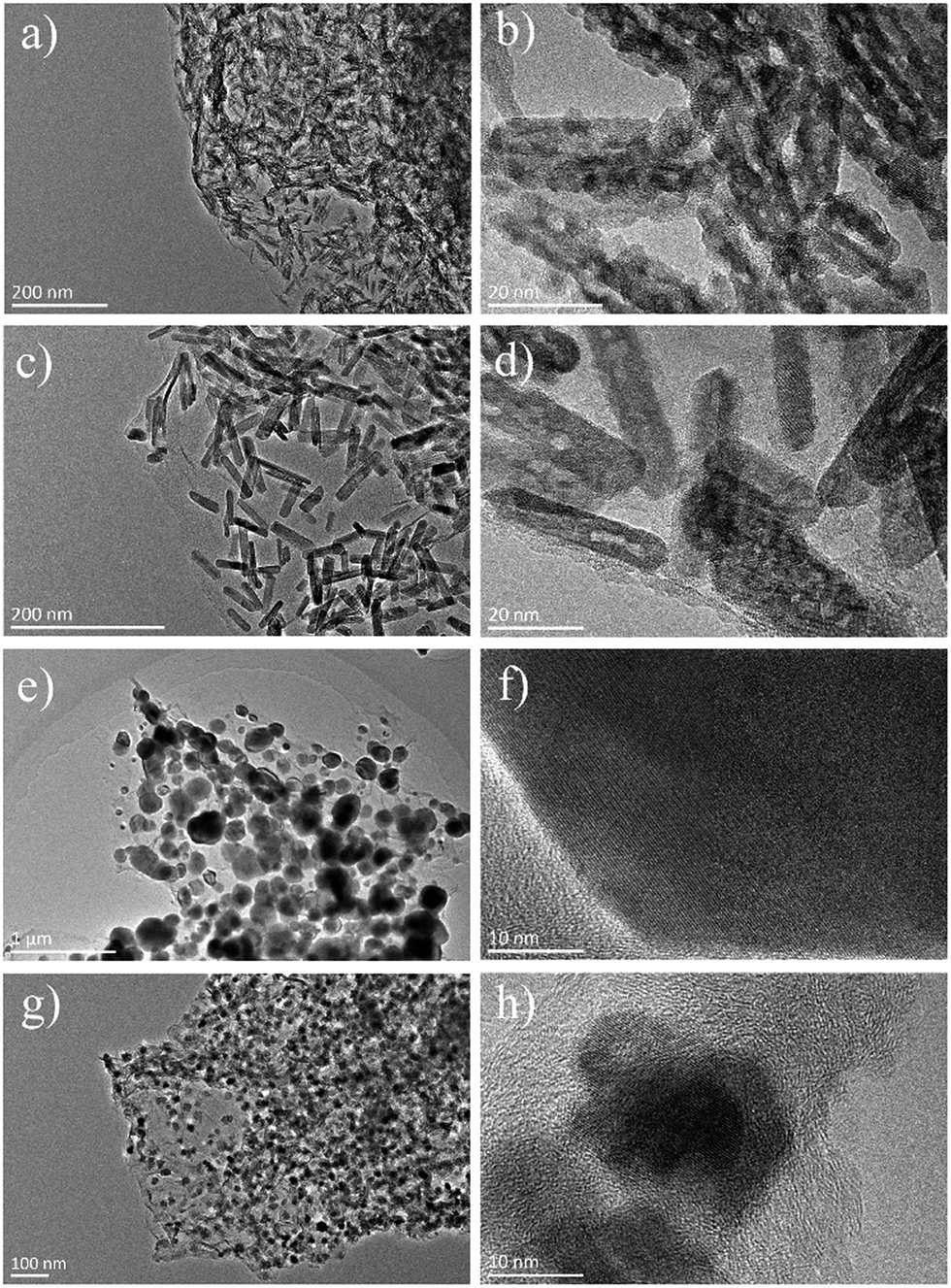 | ||
| Fig. 4 TEM images of (a and b) α/γ-FeOOH/GO (S1), (c and d) α-FeOOH/GO (S2), (e and f) fcc-Fe3O4/GO (S3), and (g and h) α-Fe2O3/GO (S4). | ||
TGA measurements were carried out to investigate the weight ratio of iron species in the four composites (Fig. 5a). The weight loss step below 120 °C observed on α/γ-FeOOH/GO (S1), α-FeOOH/GO (S2) and α-Fe2O3/GO (S4) corresponds to the removal of physical adsorbed water. The step of mass loss between 200 and 260 °C for α/γ-FeOOH/GO (S1) and α-FeOOH/GO (S2) could be assigned to the chemical transformation of FeOOH to Fe2O3 in air. It is interesting to find the weight increase of Fe3O4/GO composite (S3) from 200–400 °C, very likely due to the transformation of Fe3O4 to Fe2O3.25 The weight loss between 400 and 550 °C observed for all four samples could be attributed to the burning of GO. From these data, the contents of the Fe (in the form of Fe2O3) in the four composites are calculated to be about 74.4%, 68.8%, 97.2% and 43.5%, respectively.
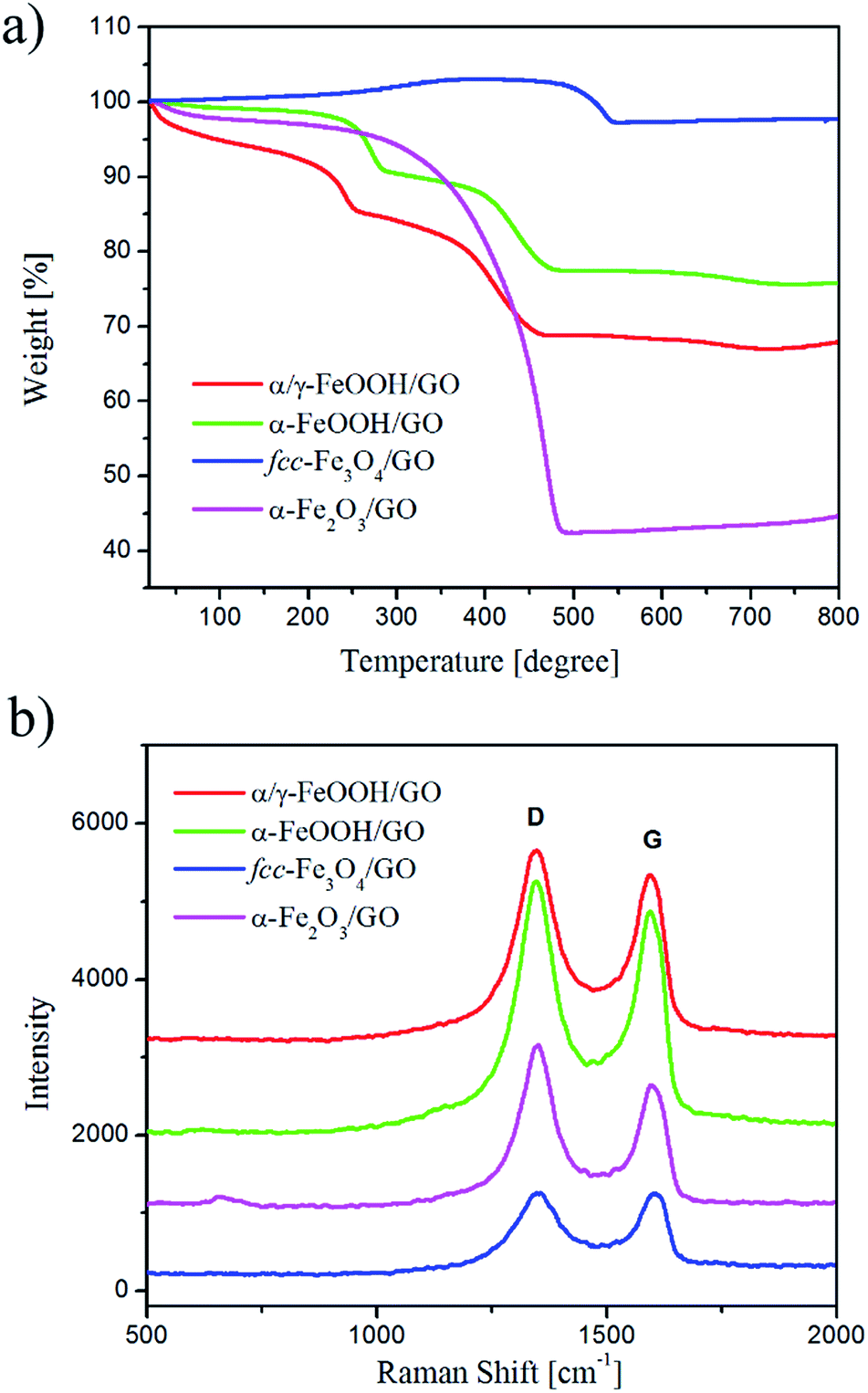 | ||
| Fig. 5 TGA curves (a) and Raman spectra (b) of α/γ-FeOOH/GO (S1), α-FeOOH/GO (S2), fcc-Fe3O4/GO (S3), and α-Fe2O3/GO (S4). | ||
Raman spectra of four composites were collected and shown in Fig. 5b. The G band around 1592 cm−1 associated with the sp2-bonded graphitic carbon and D band at 1351 from disorder sp3 defect of graphene as well as the week signals from iron species at the low wavelength range could be clearly observed.31,32 The IG/ID value for fcc-Fe3O4/GO (S3) is much higher than others, which indicates the removal of oxygen-containing defects on the graphene oxide sheets during the thermal treatment.33 Actually the graphene oxide has been reported to be partially reduced after the hydrothermal and/or pyrolysis treatment.33
The ORR activities of four composites were assessed by RRDE at a rotation rate of 1600 rpm in oxygen-saturated alkaline solution. For comparison, pristine GO and commercial Pt/C were also investigated as control catalysts. As shown as the disk currents in Fig. 6 (bottom frame), Pt/C shows very good ORR catalytic activity, featuring positive onset potential (−0.01 V) and high limiting current density (ca. 6.3 mA cm−2), which is superior to all the four composites synthesized. On the other hand, the pristine GO exhibits a cathodic ORR peak with onset potential of around −0.211 V and low current density, indicating its sluggish ORR kinetics. In contrast to GO, the α/γ-FeOOH/GO (S1), α-FeOOH/GO (S2), fcc-Fe3O4/GO (S3), and α-Fe2O3/GO (S4) show more positive onset potentials and higher ORR currents, suggesting enhanced ORR catalytic activity by decorating iron species. It is clearly unveiled in the magnified LSV curves (see the inset in Fig. 6) that α-Fe2O3/GO (S4) shows best ORR activity in terms of current density and onset potential, and their ORR activities follow the order of S4 > S1 > S2 > S3. It is quite interesting as the FeOOH and Fe3O4 have been extensively investigated as ORR electrocatalysts but Fe2O3 was usually ignored in the past research.6,17–21 The detailed mechanism by which the iron species boosts ORR activity remains not well-understand, but our results indicate that the chemical nature, valent state and crystalline structure of iron, as well as its attachment on the carbon support are important for ORR process, possibly because these parameters are critical for the coordination (adsorption) of molecular oxygen and/or subsequent charge transfer, and thus determine the benchmark of the four composites.
 | ||
| Fig. 6 RRDE voltammograms (disk currents, bottom) and the corresponding amperometric responses (ring currents, upper) of different catalysts for ORR in O2-saturated 0.1 M KOH. Sweep rate of disk electrode 5 mV s−1, potentials of ring electrode: 0.5 V. | ||
The amperometric responses recorded on the Pt ring electrode (held at 0.35 V), which originate from the oxidation of intermediate hydrogen peroxide ions (HO2−) generated during the two-electron pathway ORR on disk electrode, were shown in Fig. 6 (upper frame). The ring current remains low along the whole potential range for Pt/C, even though its ORR (disk) current is highest among all catalysts investigated here, suggesting a predominant four-electron pathway ORR on Pt/C. For four composites, the ring currents varies significantly from one to another, and each shows a potential-dependent trend.
There are two pathways for ORR process; the two-electron pathway involves hydrogen peroxide (ion) as an intermediate; in four-electron transfer process, molecular oxygen is directly reduced to water.34 For fuel cell and metal–air battery applications, four-electron pathway is preferred as the generation of hydrogen peroxide (ion) impairs the energy conversion efficiency and results in the deterioration of electrolyte membrane. By using the RRDE data, the electron transfer number (n) of these catalysts were calculated by the following equation.35
| n = 4ID/[ID + IR/N] |
 | ||
| Fig. 7 Electron transfer number (n) of different catalysts at different potentials, calculated from the RRDE data. (a) GO, (b) α/γ-FeOOH/GO (S1), (c) α-FeOOH/GO (S2), (d) fcc-Fe3O4/GO (S3), (e) α-Fe2O3/GO (S4), and (f) Pt/C. | ||
LSV measurements at different rotating speeds on a RDE were carried out to further investigate the ORR mechanism on four composite catalysts. As shown in Fig. 8, all the voltammetric profiles in 0.1 M KOH electrolyte saturated with O2 showed that the current densities are enhanced with the increase of the rotating rate from 400 to 2500 rpm. The corresponding Koutecky–Levich plots (J−1 vs. ω−1/2) at various potentials exhibited good linearity, as shown as insets in Fig. 8, indicating first-order reaction kinetics of ORR with respect to the concentration of dissolved O2.37 The slopes exhibit slight decrease from −0.30 to −0.60 V, suggesting increased electron transfer numbers for ORR, which is in good agreement with the results calculated from RRDE, as shown in Fig. 7. Based on Koutecky–Levich equations, the ORR kinetic-limiting currents of four catalysts are calculated, showing that the α-Fe2O3/GO (S4) sample possesses highest ORR kinetic-limiting current (Fig. 9).
 | ||
| Fig. 8 Rotating-disk voltammograms of (a) α/γ-FeOOH/GO (S1), (b) α-FeOOH/GO (S2), (c) fcc-Fe3O4/GO (S3), and (d) α-Fe2O3/GO (S4) in O2-saturated 0.1 M KOH solution at a scan rate of 5 mV s−1 at different rotating rates. The inset shows Koutecky–Levich (K–L) plot at different potentials. | ||
 | ||
| Fig. 9 Kinetic-limiting currents of (a) α/γ-FeOOH/GO (S1), (b) α-FeOOH/GO (S2), (c) fcc-Fe3O4/GO (S3), and (d) α-Fe2O3/GO (S4) in O2-saturated 0.1 M KOH solution at −0.40 V. | ||
The four catalysts show reasonable durability, as demonstrated by the accelerated durability test (ADT), which is a reliable method for durability testing.36 As shown in Fig. 10, the LSV curves of four catalysts in O2-saturated 0.1 M KOH solution before and after ADT (5000 or 10![[thin space (1/6-em)]](https://www.rsc.org/images/entities/char_2009.gif) 000 potential cycles between 0.3 to −0.7 V@50 mV s−1 in KOH solution exposed to atmosphere) keep quite consistent, except for slightly decreased current at a given potential, which indicates their reasonable stability in alkaline solution. We also observed excellent methanol-tolerance of four catalysts (data not shown), which is of essential importance to address the problems associated with methanol cross-over effect in fuel-cell operation.
000 potential cycles between 0.3 to −0.7 V@50 mV s−1 in KOH solution exposed to atmosphere) keep quite consistent, except for slightly decreased current at a given potential, which indicates their reasonable stability in alkaline solution. We also observed excellent methanol-tolerance of four catalysts (data not shown), which is of essential importance to address the problems associated with methanol cross-over effect in fuel-cell operation.
 | ||
| Fig. 10 LSV curves of (a) α/γ-FeOOH/GO (S1), (b) α-FeOOH/GO (S2), (c) fcc-Fe3O4/GO (S3), and (d) α-Fe2O3/GO (S4) in O2-saturated 0.1 M KOH solution before and after ADT. | ||
4. Conclusions
In summary, we synthesized four iron oxide/oxyhydroxide/GO composites and systematically investigated their ORR activities in alkaline solution. It is found that all four composites exhibit essentially improved ORR activities compared with pristine GO, highlighting the magic of iron species for ORR; amongst four composites investigated, the α-Fe2O3/GO (S4) exhibits highest ORR activity in terms of onset potential and current density; on the other hand, fcc-Fe3O4/GO (S3) possesses highest electron transfer number in four catalysts, suggesting that the four-electron transfer process is in the majority on its surface; all composites also demonstrate good long-term operation stability and excellent tolerance to methanol poison effect. This study unveils the diverse ORR behaviors of iron species supported on graphene, and explores the benchmark of their catalytic performance towards ORR. It may provide useful insights into the Fe-enabled high ORR activity to guide the design of efficient transition metal-based ORR electrocatalyst.Acknowledgements
This work was financially supported by National Natural Science Foundation of China (No. 21273173), Fundamental Research Funds for the Central Universities (XDJK2015B014), and Chongqing Key Laboratory for Advanced Materials and Technologies of Clean Energies.References
- G. Wu and P. Zelenay, Acc. Chem. Res., 2013, 46, 1878–1889 CrossRef CAS PubMed.
- I. Katsounaros, S. Cherevko, A. R. Zeradjanin and K. J. J. Mayrhofer, Angew. Chem., Int. Ed., 2014, 53, 102–121 CrossRef CAS PubMed.
- H. Zhang, X. Liu, G. He, X. Zhang, S. Bao and W. Hu, J. Power Sources, 2015, 279, 252–258 CrossRef CAS.
- J. Liu, X. Sun, P. Song, Y. Zhang, W. Xing and W. Xu, Adv. Mater., 2013, 25, 6879–6883 CrossRef CAS PubMed.
- M. Lefevre, E. Proietti, F. Jaouen and J.-P. Dodelet, Science, 2009, 324, 71–74 CrossRef CAS PubMed.
- Z.-S. Wu, S. Yang, Y. Sun, K. Parvez, X. Feng and K. Muellen, J. Am. Chem. Soc., 2012, 134, 9082–9085 CrossRef CAS PubMed.
- D. Deng, L. Yu, X. Chen, G. Wang, L. Jin, X. Pan, J. Deng, G. Sun and X. Bao, Angew. Chem., Int. Ed., 2013, 52, 371–375 CrossRef CAS PubMed.
- G. Wu, K. L. More, C. M. Johnston and P. Zelenay, Science, 2011, 332, 443–447 CrossRef CAS PubMed.
- R. Jasinski, Nature, 1964, 201, 1212–1213 CrossRef CAS.
- M. Li, X. Bo, Y. Zhang, C. Han and L. Guo, J. Power Sources, 2014, 264, 114–122 CrossRef CAS.
- Y. Peng, Z. Li, D. Xia, L. Zheng, Y. Liao, K. Li and X. Zuo, J. Power Sources, 2015, 291, 20–28 CrossRef CAS.
- S. Gupta, D. Tryk, I. Bae, W. Aldred and E. Yeager, J. Appl. Electrochem., 1989, 19, 19–27 CrossRef CAS.
- Y. Li, W. Zhou, H. Wang, L. Xie, Y. Liang, F. Wei, J.-C. Idrobo, S. J. Pennycook and H. Dai, Nat. Nanotechnol., 2012, 7, 394–400 CrossRef CAS PubMed.
- L. Wang, A. Ambrosi and M. Pumera, Angew. Chem., Int. Ed., 2013, 52, 13818–13821 CrossRef CAS PubMed.
- Y. Hu, J. O. Jensen, W. Zhang, L. N. Cleemann, W. Xing, N. J. Bjerrum and Q. Li, Angew. Chem., Int. Ed., 2014, 53, 3675–3679 CrossRef CAS PubMed.
- K. Ai, Y. Liu, C. Ruan, L. Lu and G. Lu, Adv. Mater., 2013, 25, 998–1003 CrossRef CAS PubMed.
- W. R. P. Barros, Q. Wei, G. Zhang, S. Sun, M. R. V. Lanza and A. C. Tavares, Electrochim. Acta, 2015, 162, 263–270 CrossRef CAS.
- S. Lee, J. Y. Cheon, W. J. Lee, S. O. Kim, S. H. Joo and S. Park, Carbon, 2014, 80, 127–134 CrossRef CAS.
- B. Zhao, Y. Zheng, F. Ye, X. Deng, X. Xu, M. Liu and Z. Shao, ACS Appl. Mater. Interfaces, 2015, 7, 14446–14455 CAS.
- M. Ma, Y. Dai, J.-l. Zou, L. Wang, K. Pan and H.-g. Fu, ACS Appl. Mater. Interfaces, 2014, 6, 13438–13447 CAS.
- Y. Ma, H. Wang, J. Key, V. Linkov, S. Ji, X. Mao, Q. Wang and R. Wang, Int. J. Hydrogen Energy, 2014, 39, 14777–14782 CrossRef CAS.
- W. Hu, G. He, H. Zhang, X. Wu, J. Li, Z. Zhao, Y. Qiao, Z. Lu, Y. Liu and C. M. Li, Anal. Chem., 2014, 86, 4488–4493 CrossRef CAS PubMed.
- H. Wang, H. S. Casalongue, Y. Liang and H. Dai, J. Am. Chem. Soc., 2010, 132, 7472–7477 CrossRef CAS PubMed.
- W. Hu, G. He, T. Chen, C. X. Guo, Z. Lu, J. N. Selvaraj, Y. Liu and C. M. Li, Chem. Commun., 2014, 50, 2133–2135 RSC.
- C.-J. Jia, L.-D. Sun, F. Luo, X.-D. Han, L. J. Heyderman, Z.-G. Yan, C.-H. Yan, K. Zheng, Z. Zhang, M. Takano, N. Hayashi, M. Eltschka, M. Klaeui, U. Ruediger, T. Kasama, L. Cervera-Gontard, R. E. Dunin-Borkowski, G. Tzvetkov and J. Raabe, J. Am. Chem. Soc., 2008, 130, 16968–16977 CrossRef CAS PubMed.
- J. S. Chen, T. Zhu, X. H. Yang, H. G. Yang and X. W. Lou, J. Am. Chem. Soc., 2010, 132, 13162–13164 CrossRef CAS PubMed.
- Q. Qu, S. Yang and X. Feng, Adv. Mater., 2011, 23, 5574–5580 CrossRef CAS PubMed.
- X. Lou, X. Wu and Y. Zhang, Electrochem. Commun., 2009, 11, 1696–1699 CrossRef CAS.
- Q. Shou, J. Cheng, L. Zhang, B. J. Nelson and X. Zhang, J. Solid State Chem., 2012, 185, 191–197 CrossRef CAS.
- H. Yang, X. Mao, Y. Guo, D. Wang, G. Ge, R. Yang, X. Qiu, Y. Yang, C. Wang, Y. Wang and G. Liu, CrystEngComm, 2010, 12, 1842–1849 RSC.
- K. N. Kudin, B. Ozbas, H. C. Schniepp, R. K. Prud'homme, I. A. Aksay and R. Car, Nano Lett., 2008, 8, 36–41 CrossRef CAS PubMed.
- D. L. A. deFaria, S. V. Silva and M. T. deOliveira, J. Raman Spectrosc., 1997, 28, 873–878 CrossRef CAS.
- D. Yang, A. Velamakanni, G. Bozoklu, S. Park, M. Stoller, R. D. Piner, S. Stankovich, I. Jung, D. A. Field, C. A. Ventrice Jr and R. S. Ruoff, Carbon, 2009, 47, 145–152 CrossRef CAS.
- Q. Zhou, C. M. Li, J. Li and J. Lu, J. Phys. Chem. C, 2008, 112, 18578–18583 CAS.
- K. Gong, F. Du, Z. Xia, M. Durstock and L. Dai, Science, 2009, 323, 760–764 CrossRef CAS PubMed.
- Y. Li, Y. Li, E. Zhu, T. McLouth, C.-Y. Chiu, X. Huang and Y. Huang, J. Am. Chem. Soc., 2012, 134, 12326–12329 CrossRef CAS PubMed.
- R. Liu, D. Wu, X. Feng and K. Muellen, Angew. Chem., Int. Ed., 2010, 49, 2565–2569 CrossRef CAS PubMed.
| This journal is © The Royal Society of Chemistry 2016 |