Molecular dynamics simulations for 5,5′-bistetrazole-1,1′-diolate (TKX-50) and its PBXs

Yuehai Yua, Shusen Chena, Xin Lia, Jiaping Zhua, Hui Lianga, Xiaoxin Zhangb and Qinghai Shu*a
aSchool of Material Science and Engineering, Beijing Institute of Technology, 100081 Beijing, China. E-mail: qhshu121@bit.edu.cn
bBeijing Auxin Chemical Techonology Ltd., 100040 Beijing, China

Received 28th December 2015 , Accepted 26th January 2016

First published on 28th January 2016


Abstract

Molecular dynamics has been carried out to simulate the well-known new explosive compound 5,5′-bistetrazole-1,1′-diolate (TKX-50) and TKX-50 based polymer bonded explosives (PBXs) with four kinds of polymer binders, such as, fluorine (F2311), fluorine resin (F2641), polyethylene glycol (PEG) and ethylene-vinyl acetate copolymer (EVA). The isotropic mechanical properties (tensile modulus, bulk modulus, shear modulus and Poisson’s ratio), moldability, and bonding energy are reported for first time for TKX-50 crystal and TKX-50 based PBXs. The mechanical properties of the explosive can be effectively raised by adding polymer binders in small amounts and the ability of different polymer binders improving the plasticity of TKX-50 in the increasing order PEG > EVA > F2641 = F2311. The moldability of TKX-50 based PBXs is better than that of pure TKX-50, and the increasing order is PEG > EVA > F2311 > F2641. The interaction between each of the crystalline surfaces and each of the polymers is different, the order of the abilities of different binders to combine TKX-50 crystal decreases as follows: F2311 > PEG ≈ F2641 > EVA. The calculated detonation performances for pure TKX-50 and TKX-50 based PBXs show that both of them are comparable with those of HMX. Ultimately, as for the four polymer binders, PEG is considered the best one for explosive TKX-50.

Introduction

Insensitive high explosives (IHEs), acting with high energy but low sensitivity, have become a hot topic in the research area of explosives and propellants.1–6 Thus, the properties of lower sensitivity and higher energy are the pursue goals in the process of synthesized energetic materials. Unfortunately, there is a poor compatibility between low sensitivity and high energy.7 The typical case is that, 2,4,6,8,10,12-hexanitro-2,4,6,8,10, 12-hexaza-isowutzitane (CL-20) has high energy (detonation velocity is 9455 m s−1) but also high impact sensitivity with 4 J.8,9 Therefore, the development of new IHEs is of great interest to resolve such dilemma. In the quest for high-performing, safer, cheaper, and greener explosive materials, a new generation of explosives TKX-50, being highly explosive with low sensitivity and being highly cost-effective, was reported by Klapötke T. M.8–13 and others.14–16 Its calculated detonation velocity of 9698 m s−1 at a maximal density of 1.918 g cm−3 (100 K) is higher than that of CL-20 (D = 9455 m s−1), and the impact sensitivity of TKX-50 is 20 J which is much lower than that of CL-20 (4 J).8 Meanwhile, it possesses low toxicity, good thermal stability and high safety of handling, which is comparable to that of HMX. On the account of good performance in sensitivity and energy, TKX-50 becomes currently one of the most valuable energetic materials for application.

A polymer bonded explosive (PBX) is a highly energetic mixed explosive with one or several single-compound explosives as the main component, blending a small amount of one or many kinds of polymer binders to access a high energy density, mechanical strength, low sensitivity, good moldability and environmental adaptability owing to its high detonation properties of explosive and excellent mechanical properties of polymer binders.17–19 In the past years, for the sake of better mechanical properties, moldability and safety properties, a variety of polymer binders were widely used in the formulations of PBXs. For instance, the CL-20-based PBXs with different polymers, polyamideethylformate (estane) and ethylene-vinyl acetate copolymer (EVA), were prepared by the LLNL, the famous laboratory of America.20 Bircher H. R. et al. have also obtained CL-20 based PBXs with polymer binders, 1-hydroxy poly-butadiene (HTPB) and glycidyl azide polymer (GAP),21 and thereby a number of CL-20 based PBXs were reported with applicable detonation properties.22

In order to explore the application of TKX-50 in explosives, propellants and pyrotechnics in the future, the theoretical, detonating, thermal and mechanical property studies are of great interest by researchers. Sinditskii V. P. et al. have studied the combustion behavior and physico-chemical properties of TKX-50.23 Huang H. F. et al. have measured the thermal behavior of TKX-50 and the compatibility of TKX-50 with some energetic materials and inert materials.24 An Q. et al. reported quantum mechanics (QM)-based reaction studies to determine the atomistic reaction mechanisms for the initial decompositions of TKX-50 (ref. 25) and they also reported a flexible classical force field for TKX-50 developed to reproduce the molecular properties and the crystal properties, and used this force field in molecular dynamics (MD) simulation to predict the thermodynamic and the mechanical properties as isothermal compressibility of the TKX-50 single crystal.26 Dreger Z. A. et al. presented comprehensive experimental and theoretical results regarding pressure effects on the vibrational and structural properties of TKX-50.27 A lot of effort was carried out to study the basic physical and chemical properties, calculation and simulation by quantum mechanics (QM), molecular mechanics (MM) and molecular dynamics (MD), which are also widely used for stabilizing and modifying the mechanical performances of even pharmaceutical materials28 and other crystalline organics.29,30 However, to the best of our knowledge, there is no report on the structure performance for TKX-50 and TKX-50 based PBX using the MD simulation method. Meanwhile, the simulation study takes a shorter period of time and lower cost than practical experiments, which can be a theoretical guide for the design of PBXs.

Herein, we investigate the properties of TKX-50 (Scheme 1) based PBXs, and four commonly considered polymer binders, F2311 (Scheme 1A), F2641 (Scheme 1B), ethylene-vinyl acetate copolymer (EVA, Scheme 1C) and polyethylene glycol (PEG, Scheme 1D), were used, where F2311 is the copolymer polymerized from vinylidenedifluoride and chlorotrifluoroethylene with a molar ratio of 1[thin space (1/6-em)]:[thin space (1/6-em)]1 while F2641 is vinylidenedifluoride and hexafluoropropylene with a molar ratio of 4[thin space (1/6-em)]:[thin space (1/6-em)]1. The mechanical properties and moldability of the pure TKX-50 crystal and TKX-50 based PBXs, with different polymer binders parallel to different crystalline surfaces, were obtained by MD simulation. The results indicated that the mechanical properties and moldability of explosives can be effectively improved by adding the polymers on the crystal surfaces. The interactions between each of the different polymers and different crystalline surfaces of TKX-50 were analyzed and compared by binding energies. Additionally, the detonation properties for PBXs with for different polymers on TKX-50 were compared to study the effects of the polymers on explosives. The mechanical properties, moldability, binding energies and detonation properties of the PBXs are expected to be useful for PBX formulation.


image file: c5ra27912g-s1.tif
Scheme 1 Chemical structure of EVA, F2641, F2311, PEG and TKX-50.

Computational methods

Choice of force field

The characteristic of a force field is one of the major factors determining the reliability of MD simulations. The polymer consistent force field (PCFF) was chosen for pure TKX-50 and the four TKX-50-based PBXs mainly for two reasons: on one hand, PCFF31–33 was developed based on CFF91 and is intended for application to polymers and organic materials. It can also be used for cohesive energy, mechanical property, compressibility, heat capacity, and elastic constants. On the other hand, TKX-50 is an organic ionic compound, which is suitable for PCFF. We employed this PCCF force field to optimize the TKX-50 molecular configurations, which is in good agreement with that from the experiment.

Construction of polymer models

To be conveniently compared with the experiment, the percent weight of binders of PBXs was controlled at about 3%. Scheme 1 presents the structure of four polymer binders. For F2311, F2641 and PEG, each of them has 10 chain segments and EVA has 12 chain segments. As to the polymer chains, the end groups were saturated by H, CH3, OH or F according to their types. As F2311, F2641, PEG and EVA are amorphous polymers, the binder models ware processed in advance by Cell Amorphous module to get their real state. Afterward the above polymer models were considered as NVT ensembles to make MD simulations with the PCFF force field by Forcite module of Material Studio program, in which “Anderson” was chosen as the thermostat, and temperature was set as 298 K; the step size was 1 fs, the total simulation time was 100 ps and the final equilibrium structures of the polymers were obtained.

Construction of pure TKX-50 and PBXs models

The crystal parameters of TKX-50 were derived from X-ray diffraction.9 The unit cell of TKX-50 was found to be a = 7.744 Å, b = 6.246 Å and c = 8.703 Å, crystallizing in space group C2/m. There are four TKX-50 molecules in the unit cell. The model was optimized by molecular mechanics (MM) using the PCFF force field at the Forcite module. The optimized crystal was simulated by the method of Bravais–Friedel–Donnay–Harker (BFDH) at Morphology module, and the morphology of the TKX-50 crystal was obtained. As shown in Fig. 1, the crystal surface is (011), (020), (100), (110) and (11-1), and the simulated result was similar to the actual crystal morphology.
image file: c5ra27912g-f1.tif
Fig. 1 Morphologically important faces of TKX-50.

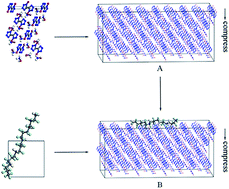
The TKX-50 crystal was cut along the crystalline surface (011), (020), (100), (110) and (11-1) with the cutting method in Material Studio (version 6.0) and the repeat unit was added in the direction of a and b, so that the 4 × 4 × 4 super-cell structure was set up. By simple molecular dynamics (MD), the initial density of the 5 crystalline surfaces of TKX-50 was obtained, and the 5 super-cells were compressed in the direction of c to bring the crystal density close to the theoretical value. Then the five crystals were optimized using the MM method at the Forcite module and it was used as the pure TKX-50 model for the MD simulation (Fig. 2A).


image file: c5ra27912g-f2.tif
Fig. 2 The structure model of TKX-50 (A) and TKX-50 based PBX (B) for molecular dynamics ((011)/F2311).

The equilibrium structures of the four binders were respectively placed in the c direction of the non-compressed crystal surface (011), (020), (100), (110) and (11-1) of TKX-50, to make it as close as possible to the TKX-50 molecule. 20 different initial configurations of PBXs were obtained. Based on the density and mass fraction of TKX-50, F2311, F2641, PEG and EVA, the theoretical density of the interface structure was acquired. As previously described, these crystals were compressed in the c direction to make their density close to the theoretical value and they were optimized by the MM method at the Forcite module, which were used as the TKX-50/binders interface structure model (Fig. 2B).

The optimized pure TKX-50 and twenty PBXs were considered as isothermal–isochoric (NVT) ensemble and simulated by MD in a PCFF force field. The sampling of each molecule’s initial speed was obtained from the Maxwell distribution, and the solving of Newton’s motion equations were dependent on the basic assumption of periodic boundary conditions and the average time is equivalent to the ensemble average, which was solved by Velocity Verlet method. During the simulation, a non-bond (electrostatic and van der Waals) was obtained by the Ewald and atom-based method. The van der Waals force was corrected by the method of cubic spline and the cutoff distance was 15.5 Å and the intermolecular interactions over the cut off distance were corrected by the average density approximation method. “Anderson” was chosen as the thermostat, and the temperature was set as 298 K, the step size was 1 fs, and the total simulation step number was 200 thousand, the first 100 thousand steps were equilibrium runs, and the later 100 thousand steps were a production run for statistical analysis. One frame was saved per 50 steps, and totally 2000 frames were saved to make analyses of static mechanical properties in Material Studio 6.0.

Results and discussion

Equilibrium of the system

Only when a system reaches the equilibrium state, it is meaningful to analyse the properties with the production trajectory. The equilibrium is determined by the equilibrium of temperature and energy simultaneously, that is, the fluctuations of temperature and energy are in the range of 5–10%. As an example, Fig. 3 shows the equilibrium curve of the temperature and energy, which is when the PBX of F2311 is placed on the (011) crystalline surface of TKX-50 during the last 100 ps. As shown in Fig. 3A, the temperature fluctuates in the range of about ±10 K and Fig. 3B shows that the fluctuation of energy is less than 0.7%, therefore the system has reached the equilibrium state of the temperature and energy.
image file: c5ra27912g-f3.tif
Fig. 3 Temperature fluctuation curve (A) and energy fluctuation curve (B) of the PBX with F2311 on the molecule layers parallel of the TKX-50 (011) crystalline surface.

All MD simulations of the other 19 PBXs come to equilibrium. As an example, the MD simulation structures of F2311 on five different crystalline surfaces of TKX-50 are shown in Fig. 4.


image file: c5ra27912g-f4.tif
Fig. 4 Equilibrium structure of PBXs-F2311 on the different crystalline surfaces of TKX-50 [(A) (011), (B) (020), (C) (100), (D) (110) and (E) (11-1)].

Mechanical properties of PBXs

Displacement, deformation, and even fracture will take place on the molding powder, when PBX is pressed.34 The explosive acts as a brittle material, and the polymer as a binder performing good toughness, which can bear large deformation and play the role of bonding explosive particles and can transfer stress.35 Since the properties of the explosive and polymer binders are very different, the mechanical properties of the interfacial structures are also directly related to the moldability of PBX.

On the basis of elastic mechanics,36 it is known that the generalized Hook’s law can be written as follows:

 
image file: c5ra27912g-t1.tif(1)

Thanks to the existence of the strain energy, the elastic coefficient matrix of an anisotropic body should satisfy the formula Cij = Cji. Therefore, 21 coefficients are required to describe the relation between stress and strain for any material. The stress tensors are calculated from the virial equation in the static model at atomic level as follows:37

 
image file: c5ra27912g-t2.tif(2)
where mi and νi represent the atomic mass and velocity, and V0 is the volume of the system without deformation.

The stress imposed on a system will change the relative positions of the particles. As for the parallel hexahedron (in simulation, the sides of the periodic box are symboled as a, b, and c, respectively), if the row vectors of a0, b0, and c0 are the reference states, and the vectors a, b, and c represent the deformation states, then the strain tensors can be expressed as:

 
image file: c5ra27912g-t3.tif(3)
where h0 is the matrix consisting of row vectors of a0, b0, and c0; h is the matrix consisting of a, b, and c; G is the measurement tensor hTh. By calculating the slope of the tensile and shear deformations, the matrix of the elastic coefficient can be obtained.

According to statistics, heteromorphy consisting of micro-crystals with random orientation can be considered isotropic. Its effective isotropic modules can be calculated by the Reuss-mean method.38 The bulk module (K) and shear module (G) are as follows:

 
KR = [3(a + 2b)]−1 (4)
 
image file: c5ra27912g-t4.tif(5)
where image file: c5ra27912g-t5.tif, image file: c5ra27912g-t6.tif and image file: c5ra27912g-t7.tif. The soft coefficient matrix S is contrary to the elastic coefficient matrix C. Subscript R represents the Reuss mean. As for most common crystal structures, 21 coefficients Cij are independent and the Reuss module only depends on 9 soft coefficients. Based on the obtained K and G, the tensile module and Poisson’s ratio (μ) can be calculated as follows:
 
E = 2G(1 + μ) = 3K(1 − 2μ) (6)

Table 1 presents effective isotropic mechanical properties (tensile module E, bulk module K, shear module G and Poisson’s ratio μ) of pure TKX-50 and TKX-50 based PBXs, based on the MD simulation trajectories and static mechanical analysis.

Table 1 Mechanical properties of TKX-50 and TKX-50-based PBXs at 298 K
Facet System Tensile modulus Bulk modulus Shear modulus Poisson’s ratio
(011) Pure TKX-50 21.16 19.66 8.01 0.32
TKX-50/F2311 13.45 13.95 5.02 0.34
TKX-50/F2641 13.42 14.44 4.99 0.35
TKX-50/EVA 12.66 15.24 4.65 0.36
TKX-50/PEG 11.79 15.92 4.28 0.38
(020) Pure TKX-50 20.94 19.64 7.92 0.32
TKX-50/F2311 20.94 17.96 4.04 0.40
TKX-50/F2641 12.63 16.98 4.59 0.38
TKX-50/EVA 8.58 15.33 3.05 0.41
TKX-50/PEG 10.37 15.60 3.73 0.39
(100) Pure TKX-50 21.20 19.64 8.03 0.32
TKX-50/F2311 13.02 13.71 4.85 0.34
TKX-50/F2641 12.78 13.54 4.76 0.34
TKX-50/EVA 11.07 15.89 4.00 0.38
TKX-50/PEG 10.40 17.06 3.72 0.40
(110) Pure TKX-50 14.23 17.72 5.21 0.37
TKX-50/F2311 10.43 15.77 3.75 0.39
TKX-50/F2641 12.27 15.69 4.48 0.37
TKX-50/EVA 10.55 15.76 3.80 0.39
TKX-50/PEG 11.50 17.72 4.13 0.39
(11[1 with combining macron]) Pure TKX-50 12.28 17.43 4.44 0.38
TKX-50/F2311 10.27 15.72 3.69 0.39
TKX-50/F2641 11.09 16.75 3.99 0.39
TKX-50/EVA 9.42 15.99 3.36 0.40
TKX-50/PEG 10.78 17.75 3.85 0.40


E, K and G are usually taken to evaluate the stiffness of the material,39 and K also can be used to indicate the fracture strength of the material. The greater the value of K is, the larger the energy of the material is, and namely the greater the breaking strength is. As shown in Table 1, comparing with the (E, K and G) modulus of the pure TKX-50 crystal, the modulus of PBXs decrease dramatically, which means that the rigidity and brittleness decrease while the elasticity and plasticity of PBXs increase. For example, on the (011) surface, the large tensile modulus of pure TKX-50 of 21.16 GPa indicates the strong rigidity to resist deformation. However, when a tiny amount of PEG is added on the crystalline surface, the tensile modulus declines nearly by half to 11.79 GPa, which is the same in the case of the (020) and (100) surfaces, predicting that the elasticity of the obtained PBX is greatly strengthened. In addition, when the same polymer binder is put on the different crystal surfaces, the change of the modulus is still somewhat different. For instance, the tensile modulus of EVA/TKX-50(011) is 12.66 GPa, but that of EVA/TKX-50(020) is 8.58 GPa, which reveals that the same binder has different effects on mechanical properties on the different crystalline surfaces of TKX-50. In a word, the percentage composition of the polymer binders in the simulated PBXs is about 3–5%, which is approximately equivalent to the ratio of a polymer in the actual PBXs. The mechanical properties of the explosive can be effectively raised by adding the binders in small amounts. The data obtained appear to be similar to that of TATB-, HMX- or ε-CL-20-based PBXs reported earlier.40–43 The difference of each kind of modulus of PBXs with four binders on different crystal surfaces of TKX-50 is not very obvious because the anisotropic behaviors of PBXs have been improved. What is more, when the polymers are put on the crystal surfaces, the bulk modulus compared with the dramatic changes of the tensile modulus only shows a little change, or even remains the same. It means that the fracture strength of PBXs has a weak effect on the tensile modulus of PBXs.

Furthermore, as also can be seen from Table 1, when the four polymer binders are put on the five crystal surfaces, each obtained PBX has a larger Poisson’s ratio than pure TKX-50 with the increasing order of Poisson’s ratios as (020) ≈ (11[1 with combining macron]) > (110) > (100) > (011).

In order to study the mechanical properties of four kinds of binders and the TKX-50 crystal, the tensile module, bulk module, shear module and Poisson’s ratio of the whole TKX-50 crystal surface with each polymer is obtained by weighted average of the area percentage (Fig. 5). It can be seen that the E, K, and G of pure TKX-50 are larger than those of the four PBXs, which discloses the fact that the addition of binders can improve the plasticity of PBXs with the increasing order of PEG > EVA > F2641 = F2311, demonstrating that PEG could be regarded as the most proper one to improve the overall mechanical properties of TKX-50 based PBX.


image file: c5ra27912g-f5.tif
Fig. 5 Mechanical properties of pure TKX-50 and TKX-50-based PBXs at 298 K.

Moldability of PBXs

The two constants, K and G, can describe the mechanical behaviors of the materials sufficiently. G is the modulus that reflects the shape change of the material, and K is the modulus that reflects the volume change of the material. They contact two kinds of different mechanical behaviors of the material – simple shear and compression. The biggest feature of simple shear is that only the shape of the object changes while the volume remains constant and it can be achieved for the solid, liquid and any intermediate state between them, so it is easy to be realized. The compression needs to occur in isotropic stress, so it is difficult to achieve.44 According to the type (eqn (6)), if μ = 0.5, then
 
image file: c5ra27912g-t8.tif(7)
 
image file: c5ra27912g-t9.tif(8)

This indicates that if μ → 0.5 (such as rubber), the ratio of the bulk modulus/shear modulus (K/G) is very large, and the shape of the material is much easier to change than its volume. Therefore, K/G can be used to evaluate the moldability of a material.

Table 2 serves to display the ratio K/G of four different polymers on five different crystalline surfaces. Usually, the greater the K/G value is, the better the moldability of the material. Hence, it can be found that the ordering moldability of PBXs with four polymers on different crystalline surfaces is (11[1 with combining macron]) > (020) > (110) > (100) > (011), and the K/G values of PBXs on each crystal surface are larger than that of pure TKX-50, that is, the moldability of pure TKX-50 on five surfaces has been improved, respectively when the polymer binders are put on the surfaces of TKX-50.

Table 2 Moldability of pure TKX-50 and TKX-50-based PBXs at 298 K
System K/G
(011) (020) (100) (110) (11[1 with combining macron])
TKX-50 2.45 2.48 2.45 3.40 3.93
TKX-50/F2311 2.78 4.45 2.83 4.20 4.26
TKX-50/F2641 2.89 3.70 2.84 3.50 4.20
TKX-50/EVA 3.28 5.03 3.97 4.15 4.76
TKX-50/PEG 3.72 4.18 4.59 4.29 4.61


Fig. 6 presents the K/G data of the four polymers and pure TKX-50 by weighted average of the area percentage. From this table, the moldability of TKX-50 based PBXs is better than that of pure TKX-50 with the increasing order as PEG > EVA > F2311 > F2641. Thus, PEG is regarded as the best way to improve the overall moldability of TKX-50 based PBX.


image file: c5ra27912g-f6.tif
Fig. 6 Moldability of pure TKX-50 and TKX-50-based PBXs with different polymers at 298 K; T represents TKX-50.

Binding energies

Binding energy (Ebind) can accurately reflect the ability of the polymer binders to blend with the crystal. The molecular interactions can be evaluated by the single point total energy of each component in the stable system, and the average interaction (Einter) between the four polymer binders and TKX-50 crystal can be expressed as follows:
 
Einter = Etotal − (ETKX-50 + Epolymer) (9)
where Etotal is the average total energy of PBX, ETKX-50 and Epolymer are the average single point energy for TKX-50 and the four polymer binders, respectively. Binding energy is defined as the negative value of the interaction, that is, Ebind = −Einter.

From an illustrated example in Fig. 4, it can be seen that each polymer binder is close to the crystal surface, and there are interactions between the polymer and TKX-50 crystal. The average total energies (Etotal) of PBXs, polymer binder (Epolymer) and average energies of crystal TKX-50 (ETKX-50), and the average binding energies (Ebinding) are presented in Table 3.

Table 3 Average binding energies (Ebinding, kJ mol−1) for 20 PBXs with four kinds of polymer binders on five different crystalline surfaces of TKX-50
Facet System Etotal ETKX-50 Epolymer Ebinding
(011) TKX-50/F2311 −1819.83 −1703.05 32.02 148.80
TKX-50/F2641 −2001.24 −1821.10 −146.82 33.32
TKX-50/EVA −1650.83 −1691.80 −78.52 −29.48
TKX-50/PEG −1515.88 −1548.42 43.48 10.93
(020) TKX-50/F2311 −863.78 −881.04 25.85 8.60
TKX-50/F2641 −1053.54 −928.34 −148.17 −22.97
TKX-50/EVA −805.74 −850.22 −79.09 −123.56
TKX-50/PEG −759.60 −881.16 29.09 −92.46
(100) TKX-50/F2311 −1795.83 −1889.96 27.85 −66.28
TKX-50/F2641 −1973.75 −1906.77 −147.79 −80.81
TKX-50/EVA −1470.88 −1562.55 −156.91 −248.58
TKX-50/PEG −1533.30 −1277.89 39.20 294.61
(110) TKX-50/F2311 −1614.55 −1523.18 25.69 117.06
TKX-50/F2641 −1779.09 −1495.73 −145.00 138.36
TKX-50/EVA −1545.65 −1515.82 −172.62 −142.79
TKX-50/PEG −1483.43 −1626.66 37.61 −105.62
(11[1 with combining macron]) TKX-50/F2311 −1632.31 −1519.78 25.22 137.75
TKX-50/F2641 −1801.32 −1561.44 −146.26 93.63
TKX-50/EVA −1487.73 −1159.35 −178.58 149.80
TKX-50/PEG −1376.02 −1493.65 20.62 −97.00


We can find from the data in Table 3 that the binding energies of different polymer binders on the same crystalline surface are different. It is obvious that the (011) and (11[1 with combining macron]) surface of TKX-50 has larger binding energies with polymers than other crystalline surfaces. The binding ability of the (11[1 with combining macron]) surface with binders is stronger than that of the (011) surface, but the areas of (11[1 with combining macron]) is so small in the crystal of TKX-50 that it has weak influence on total binding energies of PBXs. The (011) surface has largest areas in the crystal. Consequently, it is the most important surface effecting the interaction of TKX-50 with polymers. The (020) and (100) surface has the lowest binding energies, and the (110) surface with four polymers has a higher binding energy than the (020) and (100) surface. In other words, when the four polymer binders are blended into the TKX-50 crystal, they all tend to focus on the (011) surface of TKX-50 owing to the largest binding energy. Moreover, Table 3 also shows that the same polymer binders on the different crystalline surfaces are also different. The binding energy between PEG and the TKX-50 crystal is the largest one on the (100) surface, while on the (11[1 with combining macron]) surface the binding energy of PEG and TKX-50 is the smallest.

So as to study the interaction between four kinds of binders and the TKX-50 crystal, the binding energy of the whole TKX-50 crystal surface with each binder is obtained by weighted average of the area percentage, as shown in Table 4. It is concluded that the interaction between four polymers and TKX-50 is quite different with the order of the abilities to combine with the TKX-50 crystal as follows: F2311 > PEG ≈ F2641 > EVA.

Table 4 Average binding energies (Ebinding, kJ mol−1) for TKX-50-based PBXs with four different polymers
System Ebinding
TKX-50/F2311 76.04
TKX-50/F2641 19.63
TKX-50/EVA −99.65
TKX-50/PEG 20.03


Detonation properties

As an explosive, the detonation velocity (D) and the detonation pressure (P) are important factors to evaluate its performance. Along with the development of ammunition technology, a large number of non-active components, such as plastic and rubber, are introduced into the mixture explosive. Dobratz45 puts forward that the detonation velocity of the mixture explosive is equal to the sum of the volume fraction of each component multiplied their detonation velocity. In this method, detonation velocity (D, m s−1) is defined as the following:
 
D = ∑εiνi (10)
 
image file: c5ra27912g-t10.tif(11)
where εi, νi, mi and ρi represent the volume friction of the i-th component, the detonation velocity of the i-th component in the mixture explosive (m s−1), the weight of the i-th component (g) and the theoretical density of the i-th component (g cm−3), respectively.

Based on the simplification of the C–J (Chapman–Jouguet) theory of denotation wave46 and D derived from eqn (10), the detonation pressure (P, GPa) can be estimated by eqn (12).

 
image file: c5ra27912g-t11.tif(12)

As shown in Table 5, we can find the fact that the detonation velocity and the detonation pressure of PBXs blending the polymers are less than those of pure TKX-50 due to the lower detonation values of the four polymer binders than these of TKX-50.

Table 5 Calculated detonation velocities (D) and detonation pressures (P) of TKX-50 and PBXs
  TKX-50 23 (ρ = 1.877 g cm−3) TKX-50/F2311 TKX-50/F2641 TKX-50/EVA TKX-50/PEG
D (m s−1) 9190 9052.0 9065.1 8958.7 9028.7
P (GPa) 39.6 38.4 38.5 36.5 37.7


Conclusions

In this paper, the MD simulation is carried out to study the mechanical properties, moldability, binding energies, and detonation properties of the pure TKX-50 crystal and TKX-50 based PBXs. It can be concluded as follows:

(1) The mechanical properties (elastic coefficients, tensile modulus, bulk modulus, shear modulus and Poisson’ ratio), moldability (the ratio of bulk modulus/shear modulus), binding energies, and denotation properties are first reported for the pure TKX-50 crystal and TKX-50 based PBXs.

(2) The mechanical properties of the explosive can be effectively raised by adding the polymer binders in small amounts, due to the ability of different polymer binders to improve the plasticity of TKX-50 in the increasing order of PEG > EVA > F2641 = F2311.

(3) The moldability of TKX-50 based PBXs is better than that of pure TKX-50, and the raising order of the moldability of the four polymer binders is PEG > EVA > F2311 > F2641.

(4) There is no direct relationship among the mechanical properties, moldability, and binding energies. The order of the binding energies of PBX with four polymer binders is F2311 > PEG ≈ F2641 > EVA. For the overall performances of four polymer binders, PEG is considered to be the best one for explosive TKX-50 due to the improvement in plasticity, moldability and binding energies of achieved PBX.

To conclude, the MD simulation studies on pure TKX-50 and TKX-50 based PBXs provided us with much significant regulation about their mechanical properties, moldability, and binding energies. To obtain the best suitable and practical binder, it is essential to consider comprehensively three aspects: mechanical properties, moldability, and binding energies. These simulations are helpful to choose a good polymer binder and develop PBXs with different performances on the account of the practical need, and may also suggest a useful way for improving the performances of a pure explosive crystal and other crystalline organics.

Acknowledgements

We acknowledge the financial support from the Youth Innovation Fund of the North Chemical Industry Group (No. 3090041410054) and the Excellent Young Scholar Research Fund of Beijing Institute of Technology of China (No. 3090012331542). We acknowledge Prof. Shaohua Jin and Dr Lijie Li from Beijing Institute of Technology for their assistance with computational study.

Notes and references

  1. J. H. Zhang, L. A. Mitchell, D. A. Parrish and J. M. Shreeve, J. Am. Chem. Soc., 2015, 137, 10532 CrossRef CAS PubMed.
  2. Q. Wu, L. H. Tan, Z. S. Hang, J. Y. Wang, Z. W. Zhang and W. H. Zhu, RSC Adv., 2015, 5, 93607 RSC.
  3. J. P. Zhu, S. Jin, L. Wan, C. Zhang, L. Li, S. Chen and Q. Shu, Dalton Trans., 2016 10.1039/C5DT04731E.
  4. E. C. Koch, Propellants, Explos., Pyrotech., 2015, 3, 374 CrossRef.
  5. Y. F. Gao, L. Zhang, L. He, Y. Zhao, N. Tang, W. L. Yuan and G. H. Tao, RSC Adv., 2015, 5, 54527 RSC.
  6. Q. H. Zhang, J. H. Zhang, X. J. Qi and J. M. Shreeve, J. Phys. Chem. A, 2014, 118, 10857 CrossRef CAS PubMed.
  7. Z. Fu, R. Su, Y. Wang, Y.-F. Wang, W. Zeng, N. Xiao, Y. Wu, Z. Zhou and J. Chen, Chem.–Eur. J., 2012, 18, 1886 CrossRef CAS PubMed.
  8. N. Fischer, D. Fischer, T. M. Klapötke, D. G. Piercey and J. Stierstorfer, J. Mater. Chem., 2012, 22, 20418 RSC.
  9. T. M. Klapötke, N. Fischer, D. G. Piercey, J. Stierstorfer and M. Reymann, Energetic active mass, useful as an explosive, comprises a dihydroxylammonium salt or diammonium salt of 5,5′-bistetrazol-1,1′-diol, 5,5′-bistetrazol-1,2′-diol, or 5,5′-bistetrazol-2,2′-diol or a mixture of at least two of these salts, German patent, DE102011081254–A1, 2003.
  10. N. Fischer, T. M. Klapötke, A. Matecic Musanic, J. Stierstorfer and M. Sucesca, New Trends Res. Energ. Mater., 2013, 16, 574 Search PubMed.
  11. K. Hafner, T. M. Klapötke, P. C. Schmid and J. Stierstorfer, Eur. J. Inorg. Chem., 2015, 17, 2794 CrossRef.
  12. V. Golubev, T. M. Klapötke and J. Stierstorfer, 40th Intl, Pyrotechnics Seminar, Colorado Springs, CO, 2014 Search PubMed.
  13. V. Golubev and T. M. Klapötke, 18th NTREM 2015, Pardubice, Czech Republic, 2015 Search PubMed.
  14. B. Yuan, Z. Yu and E. R. Bernstein, J. Phys. Chem. A, 2015, 119, 2965 CrossRef CAS PubMed.
  15. N. Li, F. Q. Zhao, Y. Luo, H. X. Gao, E. G. Yao, Z. M. Zhou, L. B. Xiao, R. Z. Hu and H. Y. Jiang, J. Therm. Anal. Calorim., 2015, 122, 1023 CrossRef CAS.
  16. H. F. Huang, Y. M. Shi and J. Yang, J. Therm. Anal. Calorim., 2015, 121, 705 CrossRef CAS.
  17. LASL Explosive Property Data, ed. T. R. Gibbs and A. Popolato, University of California Press, Berkeley, 1980 Search PubMed.
  18. H. S. Dong and F. F. Zhou, High energy explosives and correlative physical properties, Science Press, Beijing, 1984 Search PubMed.
  19. G. X. Sun, Polymer blended explosives, Defense Industry Press, Beijing, 1984 Search PubMed.
  20. R. L. Simpson, P. A. Urtiew, D. L. Omellas, G. L. Moody, K. J. Scribner and D. M. Hoffman, Propellants, Explos., Pyrotech., 1997, 22, 249 CrossRef CAS.
  21. H. R. Bircher, P. Mäder and J. Mathieu, Properties of CL-20 based high explosives, 29th Int. Annu Conf. ICT, Karlsruke, 1998 Search PubMed.
  22. X. J. Xu, H. M. Xiao, J. J. Xiao, W. Zhu, H. Huang and J. S. Li, J. Phys. Chem. B, 2006, 110, 7203 CrossRef CAS PubMed.
  23. V. P. Sinditskii, S. A. Filatova, V. I. Kolesova, K. O. Kapranova, A. F. Asachenkob, M. S. Nechaevb, V. V. Luninb and N. I. Shishovc, Thermochim. Acta, 2015, 614, 85 CrossRef CAS.
  24. H. F. Huang, Y. M. Shi, J. Yang and B. P. Li, J. Energ. Mater., 2015, 33, 66 CrossRef CAS.
  25. Q. An, W. G. Liu, W. A. Goddard, T. Cheng, S. V. Zybin and H. Xiao, J. Phys. Chem. C, 2014, 118, 27175 CAS.
  26. Q. An, T. Cheng, W. A. Goddard and S. V. Zybin, J. Phys. Chem. C, 2015, 119, 2196 CAS.
  27. Z. A. Dreger, Y. C. Tao, B. B. Averkiev, Y. M. Gupta and T. M. Klapötke, J. Phys. Chem. B, 2015, 119, 6836 CrossRef CAS PubMed.
  28. W. G. Reifenrath, H. O. Kammen, G. Reddy, M. A. Major and G. J. Leach, J. Toxicol. Environ. Health, Part A, 2008, 71, 486 CrossRef CAS PubMed.
  29. C. T. Chen, S. Ghosh, C. M. Reddy and M. J. Buehler, Phys. Chem. Chem. Phys., 2014, 16, 13165 RSC.
  30. M. K. Mishra, G. R. Desiraju, U. Ramamury and A. D. Bond, Angew. Chem., Int. Ed., 2014, 53, 13102 CrossRef CAS PubMed.
  31. H. Sun, S. J. Mumby, J. R. Maple and A. T. Hager, J. Am. Chem. Soc., 1994, 116, 2978 CrossRef CAS.
  32. H. Sun, J. Comput. Chem., 1994, 15, 752 CrossRef CAS.
  33. H. Sun, Macromolecules, 1995, 28, 701 CrossRef CAS.
  34. Q. H. Liang, C. Han, L. Yong, X. P. Chen and Q. Lan, Chin. J. Explos. Propellants, 2010, 33, 44 Search PubMed.
  35. H. P. Zhou, H. Y. Pang, S. P. Wen, J. M. Li and M. Li, Mater. Rev., 2009, 23, 34 Search PubMed.
  36. J. R. Rice, Eng. Fract. Mech., 1973, 5, 1019 CrossRef.
  37. J. H. Weiner, Statistical Mechanics of Elasticity, Dover Publications Inc., New York, 1983 Search PubMed.
  38. R. J. Swenson, Am. J. Phys., 1983, 51, 940 CrossRef CAS.
  39. J. P. Watt, G. F. Davies and R. J. O’Connell, Rev. Geophys. Space Phys., 1976, 14, 541 CrossRef CAS.
  40. S. F. Pugh, Philos. Mag., 1954, 45, 823 CrossRef CAS.
  41. X. F. Ma, J. J. Xiao, K. L. Yin and H. M. Xiao, Chin. J. Chem. Phys., 2005, 18, 55 CAS.
  42. J. J. Xiao, Y. C. Huang, Y. J. Hu and H. H. Xiao, Sci. China, Ser. B: Chem., 2005, 48, 504 CrossRef CAS.
  43. J. J. Xiao, C. G. Gu, G. Y. Fang and H. M. Xiao, Acta Chim. Sin., 2005, 63, 439 CAS.
  44. P. S. He, Mechanical properties of polymers, Press of University of Science and Technology of China, An Hui, 1997 Search PubMed.
  45. B. M. Dobratz, 1975, UCRL-51319.
  46. X. C. Meng, and J. X. Zhang, Introduction of Detonation Theory, Beijing Institute of Technology Press, Beijing, 1988 Search PubMed.

This journal is © The Royal Society of Chemistry 2016
Click here to see how this site uses Cookies. View our privacy policy here.