
DOI:
10.1039/C5RA27662D
(Paper)
RSC Adv., 2016,
6, 30611-30622
Toxicological properties of two fluorescent carbon quantum dots with onion ring morphology and their usefulness as bioimaging agents
Received
24th December 2015
, Accepted 17th March 2016
First published on 18th March 2016
Abstract
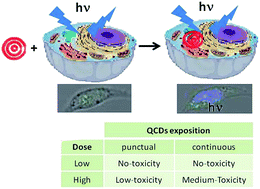
In the present work, two carbon quantum dots with onion ring morphology, C-NOR and C-NOR(Eu) with an average size of 40 nm differing in the absence or presence of Eu3+ as Lewis acids during their preparation were synthesized and fully characterized by several techniques. These nanoparticles can be internalized into human HeLa and Hep3B carcinoma cells where they exhibit interesting photoluminescent properties, in the same manner as in solution, confirming their utility as bioimaging agents. To address this possibility, a complete in vitro toxicological study has been performed here. Viability, proliferation, apoptosis and oxidative stress assessments upon limited or continuous exposure were done. It was observed that both nanoparticles did not show toxicity in both situations at low concentration, although some toxicity has been determined at higher concentrations under continuous exposure. These results support the possible use of C-NOR and C-NOR(Eu) nanoparticles as bioimaging agents.
Introduction
The interest in applying nanotechnology to biomedicine has increased during the last few years.1,2 In fact, nanomedicine has emerged during the last few years as a new area of medicine, focusing on the medical development of nanometric systems. The potential of these nanoparticles is related to their structure, which could serve as a platform for drug delivery systems as well as their intrinsic physicochemical properties, which could be used for several purposes such as bioimaging and antioxidant activities.3–6 Other proposed applications of nanoparticles include their use as gene delivery systems, phototherapy, thermotherapy, scaffolds for growing cells or tissues, and biosensors.7–14
To explore the biomedical applicability of a new type of nanoparticles the fulfillment of toxicological studies is mandatory.15,16 Thus, despite the high potential that nanoparticles have and the possibilities to use them for several applications in biomedicine, sometimes their applicability is compromised by their toxicity.17 There are numerous examples in the literature reporting the toxicological effects of different nanoparticles and considerable effort has been directed to the preparation of easily available, harmless nanoparticles to use them for bioimaging.18,19 In this context, there is much current interest in obtaining carbon-based nanoparticles, carbon quantum dots (CQDs) and other type of carbon nanoforms with suitable fluorescent or luminescence properties that can replace favorably metal-containing quantum dots for optical imaging and other applications in biological systems, avoiding the use of toxic metals and increasing biocompatibility of the imaging agents.20,21 Thus, some fullerenes, carbon nanotubes, nanodiamonds, and others carbon nanomaterials have been proposed as bioimaging agents without showing toxicity. Some authors attribute this lack of toxicity to the all-carbon composition of these materials, carbon being an element present in all living body. This argument is naïve in a certain way, since as the size and morphology of the carbon nanoforms are different and these nanomaterials are not present in living organisms, the properties may also vary and certainly should be totally different than those of natural biomolecules. Therefore, carbon nanomaterials have shown toxicological effects in function of their shape, size, functional groups of their surface, or other physicochemical parameters. In addition, diverse toxicological data have been reported for the same nanomaterial depending on the concentration used and its exposure time with cells, organs or tissues. Thus, the influence of these parameters should be determined in order to gain a better information on the toxicity of this type of carbon nanomaterials and advance in their biomedical use for different purposes. Regarding carbon quantum dots, this type of nanomaterial has shown lower toxicity compared with other carbon nanoforms and their relatively toxicity has sometimes been ascribed to the functional groups that contain their surface.22–24
CQDs were first reported in 2004 by purification of single-wall carbon nanotubes through electrophoresis.25 Later, in 2006 these carbon nanomaterials were obtained by laser ablation of graphite powder.26 Since then, several methods have been developed to obtain new carbon nanomaterials without aggregation, controlling their size and uniformity, and reaching desirable properties such as solubility. The interest of CQDs derives from their unique photoluminescent properties, their presumed biocompatibility due to the absence of metals and their great potential in various applications. Unlike the rest of carbon material, CQDs show good solubility, strong photoluminescence that varies depending on the excitation wavelength, and they can exhibit a particle size ≤10 nm.27 These properties make CQDs very suitable for biomedical purposes. CQDs have better properties than traditional quantum dots in terms of luminescence, aqueous solubility, chemical resistance and photobleaching. In addition, CQDs avoid the use of metals and present high flexibility for tuning while exhibiting less toxicity and better biocompatibility than traditional quantum dots. Thus, CQDs have several biomedical applications as drug delivery carriers, bioimaging agents, and biosensors.28–30 In this context, our research group has developed a new class of fluorescent CQDs obtained by thermal treatment of perylenetetracarboxilic anhydride (PTA) in polyethylene glycol (PEG), in the absence or presence of Eu3+ as Lewis acid to promote condensation of PTA with PEG.31 Thereby, a type of CQDs with a defined and uniform morphology of onion rings was obtained, nanoonions rings (C-NORs), which exhibit a remarkable uniformity in morphology and average particle size about 40 nm, with high emission efficiency, having promising applicability in biomedicine. The use of an aromatic organic compound, such as PTA, as precursor of CQDs, offers advantages with respect to common precursors used to obtain luminescent CQDs in the thermolysis process. Thermolysis has generally employed organic precursors that contain non-aromatic sp3 carbon atoms and then, in principle, these precursors do not offer a prearrangement of the carbon atoms in a rigid molecular environment. The rigidity of aromatic compounds could be transferred to resulting CQDs and could increase an emission quantum yield that is the property in which many applications of CQDs are based. Nevertheless, analysis of the potential toxicity of these new nanomaterials in different cell types is necessary to ascertain the suitability of their use in biomedicine, and thus, C-NORs must be tested in vitro and their effects on important cellular processes assessed before confirming their biomedical applicability.
The current manuscript aims to characterize the toxicological profile of recently reported C-NORs31 in two types of human cell lines, HeLa and Hep3B, by evaluating their effects on cellular proliferation and viability, cell cycle and apoptosis, and oxidative stress generation. This information on the toxicological effects can serve to advance in the biomedical application of these nanomaterials due to their strength as bioimaging agents as we will also demonstrate. These studies may be helpful to establish safe concentrations and protocols in C-NORs use and, thus, to increase the applicability of these nanoobjects.
Experimental
Nanoparticles
All the reactants for C-NOR synthesis were purchased in Sigma-Aldrich (Madrid, Spain) and Scharlab (Sentmenat, Spain).
C-NOR and C-NOR(Eu) preparation
The synthesis was performed following the methodology described by our group.31 Briefly, 100 mg of PTA were suspended in 8 mL of PEG 400 in the absence (for C-NOR) or presence of 100 mg Eu(OAc)3·3H2O (for C-NOR(Eu)). The mixture was vigorously stirred at room temperature for 1 h. Then, the homogeneous mixture was placed in an oven preheated at 400 °C. Subsequently, the oven was cooled down from 400 °C to room temperature at a rate of −20 °C h−1. The resultant residue was diluted with 0.5 mL of CH3CN and purified by silica gel column chromatography using a mixture of CH3CN/CH3OH of increasing methanol content from 0 to 50 vol%. The fluorescent fraction was collected and the solvent was removed under reduced pressure. In this way, 50 and 70 mg of C-NOR and C-NOR(Eu), respectively, were obtained as a viscous oil, depending on whether or not Eu(OAc)3 was used as Lewis acid during the synthesis.
C-NOR and C-NOR(Eu) characterization
High resolution transmission electron microscopy (HR-TEM) images were taken with a JEOL 200 kV model JEM2100F. Images were analysed with INOVA software to determine sample particle, size distribution and interlayer distance. Particle size distribution was determined by measuring the dimensions of more than one hundred nanoparticles from at least three independent batches. AFM measurements were carried out by using a Veeco AFM Multimodel instrument. IR spectra were recorded in a FT-IR spectrophotometer Nicolet 710. Dynamic Light Scattering for particle size and zeta potential of C-NORs in H2O were measured using Malvern ZetaSizer Nano-ZS. Elemental analyses of metals were performed by inductively coupled plasma-optical emission spectroscopy (ICP-OES) in a Varian 715-ES. UV-Vis spectra were recorded in transmission mode on a Shimadzu UV-Vis spectrophotometer using quartz cuvettes of 1 cm path length. Fluorescence measurements were performed on a JASCO FP-8500 spectrofluorometer provided with a monochromator of variable wavelength between 200–900 nm.
Studies in cells
Unless stated otherwise, all the reagents employed for toxicology in vitro analysis were also purchased from Sigma-Aldrich Chemicals (Steinheim, Germany).
Cell culture
Human hepatoblastoma Hep3B cells (ATCC HB-8064), and human cervical carcinoma HeLa cells (ATCC CCL-2) were employed in these experiments and cultured as described previously.3,32 Reagents for cell culture were purchased from Gibco (Life Technology, Madison, WI).
Treatments
Two different experimental procedures were performed: in some experiments cells were exposed to different concentrations of nanoparticles (C-NOR or C-NOR(Eu)) during the whole treatment period (24, 48 and 72 h), while in others this incubation was limited to the first 3 h of treatment, medium was then refreshed and cells maintained until a total 24, 48 or 72 h period. In vehicle control experiments, cells were treated with the same volumes of the solvent (PBS + 5% DMSO, at a final concentration of 0.1% DMSO in cell culture) as those employed for the highest concentration of nanoparticles tested, and used as comparison in the statistical analysis.
Confocal fluorescent microscopy
This imaging was performed in Hep3B cells, seeded at 10.000 cells per well in Nunc 8-well coverslip bottom chamber slides. Treatment with C-NOR or C-NOR(Eu) was performed over 3 h at 20 μg mL−1 in high glucose Dulbecco's Modified Eagle Medium supplemented with 10% fetal bovine serum, 100 U mL−1 penicillin, 100 μg mL−1 streptomycin and 2 mM L-glutamine (all of them from Gibco, Thermo Fisher Scientific, Waltham, MA). After that, medium was removed, the cells were washed twice with HBSS (Sigma-Aldrich) and then cells were further incubated for 30 min at room temperature with 2.5 μM Hoechst 33342 (molecular probes), a blue fluorescent marker which preferentially stains nucleic acids. Then, cells were washed with HBSS twice and immediately used for confocal imaging. Confocal images were acquired using a Leica TCS-SP2 confocal laser scanning unit equipped with argon and helium–neon laser beams and attached to a Leica DM1RB inverted microscope (Leica Microsystems, Germany). The excitation wavelengths were 351 and 364 nm for Hoechst and 488 nm for C-NOR or C-NOR(Eu) and the fluorescent emission were recorded between 400–470 nm for Hoechst and 507–610 nm for C-NOR or C-NOR(Eu). Control experiments were performed incubating cells with the metal-containing quantum dot CdSe/ZnS (Sigma-Aldrich, Steinheim, Germany) whose excitation and emission wavelengths were 488 nm and 507–565 nm, respectively.
Cellular viability assessment
This parameter was studied using the MTT [3-(4,5-dimethylthiazol-2-yl)-2,5-diprenyl tetrazolium bromide] assay, a colorimetric assay based on the ability of cells to reduce a soluble yellow tetrazolium salt to blue formazan crystals.33 This transformation only occurs when mitochondrial reductase enzymes are active, and is thus a marker of mitochondrial function and, by extension, cell viability. Treatment with nanoparticles was carried out in 96-well plates over a 24 h period. MTT reagent (Roche Diagnostics, Mannheim, Germany) was added (20 μL per well) for the last 4 h of treatment. Cells were dissolved in DMSO (100 μL per well, 5 min, 37 °C) and absorbance was measured using a Multiscan plate-reader spectrophotometer (Thermo Labsystems, Thermo Scientific, Rockford, IL).
Fluorescence microscopy and static cytometry
Treatments were performed in duplicate in 48-well plates, and 16–25 images per well were recorded with a fluorescence microscope (IX81, Olympus, Hamburg, Germany) coupled with static cytometry software ‘ScanR’ version 2.03.2 (Olympus).
Cell proliferation/survival and cell cycle
Cells were treated, allowed to proliferate exponentially (24, 48 or 72 h), and counted according to Hoechst fluorescence (2.5 μM Hoechst 33342; 25 images per well). Cell cycle was assessed by analysing total Hoechst fluorescence in Hep3B cells treated for 3 h and 24 h.
Apoptosis
Bivariate Annexin V/PI analysis (Annexin V-FITC apoptosis detection kit, Abcam, Cambridge, UK) was used to assess induction of this parameter. After treatments with C-NORs, the culture medium was refreshed with HBSS containing chromatin-specific dye Hoechst 33342 (1 μM) and Annexin V-Fluorescein (0.9 μL per well) in order to detect phosphatidyl serine exteriorization, and was incubated for 20 min at 37 °C. Then, propidium iodide (0.3 μL per well) was added for 10 min to stain damaged or dead cells. A widely used protein kinase inhibitor, staurosporine (STS 0.5 μM) was employed as a proapoptotic control.
Reactive oxygen species (ROS) production
Total levels of intracellular ROS were assessed in Hep3B cells using the fluorescent probe DCFH-DA (2′,7′-dichlorodihydrofluorescein diacetate, 2.5 μM, Sigma-Aldrich Chemicals), which was added with Hoechst 33342 (1 μM) for the last 30 min of treatment. Rotenone (25 μM, Sigma-Aldrich Chemicals), a complex I inhibitor, was used as a positive control.
Presentation of data and statistical analysis
Statistical analysis was performed by one-way ANOVA, followed by a Newman–Keuls multiple comparison test or a Student's t-test (GraphPad Prism v.3.02 software, La Jolla, CA). All values are mean ± SEM, and statistical significance was *P < 0.05, **P < 0.01 and ***P < 0.001 (for ANOVA test), or #P < 0.05, ##P < 0.01 and ###P < 0.001 (for t-test). In most cases, data are represented as percent of control, with the negative control (untreated cells) being considered 100%.
Results and discussion
Thermolysis in PEG has been reported as a convenient procedure for the formation of CQDs.31,34 In the present case, PTA (see molecular structure in Scheme 1) has been used as precursor and the thermolysis in low molecular-weight PEG was carried out at 400 °C in absence or presence of Eu(OAc)3·3H2O Eu3+, which was added to the reaction mixture as Lewis acid in order to promote the condensation of PTA with PEG in the thermal treatment. The resulting mixtures were purified by column chromatography in silica gel, collecting the fraction corresponding to the fluorescent nanoparticles. Analogous treatment using only PTA or PEG separately did not afford C-NOR as evidenced by TEM images of the corresponding controls.
 |
| | Scheme 1 Molecular structure of PTA and PEG (left square) and preparation procedure of C-NOR and C-NOR(Eu). (i) Thermolysis from 400 °C to room temperature, and (ii) purification by column chromatography in silica gel. | |
Upon thermolysis of PTA in PEG and chromatographic purification, nanoobjects were submitted to different characterization techniques to determine their particle size distribution, their morphology and luminescence properties. The size and morphology of C-NORs were determined by HR-TEM and AFM imaging that show that the samples are constituted by circular or elliptical, flat nanoobjects of about 2.5 nm height and 15 to 30 nm diameter. Fig. 1 shows selected HR-TEM images for C-NOR and C-NOR(Eu). These images show that the flat C-NOR and C-NOR(Eu) particles are constituted by the stacking of concentric rings, separated by an interlayer distance of 0.34 nm. This length correspond to the interlayer distance of neighbor graphene sheets in graphite and is the common distance for π–π stacking of aromatic compounds. The height of these C-NORs was determined by AFM images that show that C-NORs are flat objects with a size of 2.5 nm.31 No differences in the morphology and dimensions between C-NOR and C-NOR(Eu) could be observed and ICP-OES determined the total absence of Eu in the C-NOR(Eu) sample. However, FT-IR spectroscopy does show that the carboxylic functional groups of C-NOR(Eu) have undergone a higher level of esterification of PTA carboxylic anhydride groups when Eu3+ is present in the thermolysis as compared to C-NOR, in accordance of the role of Eu3+ as esterification catalyst.
 |
| | Fig. 1 High resolution transmission electron microscopy recorded for C-NOR (left) and C-NOR(Eu) (right). | |
Regarding to photoluminescence properties, it was found that C-NOR and C-NOR(Eu) have high fluorescence emission intensity that depends on the excitation wavelength.31 The presence of Eu3+ in the thermolysis favors the formation of C-NOR and also increases somewhat the emission intensity band of C-NORs despite the fact that this rare earth metal ion was absent in the resulting nanoparticle. C-NOR and C-NOR(Eu) are highly emissive nanoparticles with an estimated photoluminescence quantum yield about 0.47 and 0.49, respectively. Moreover, C-NORs exhibit a series of emission spectra whose λem depends on the excitation wavelength, reaching λem in the red that is the most wanted emission zone for biological studies due to the higher penetration of long wavelengths in biological tissues. Fig. 2 shows the UV-Vis absorption and photoluminescence spectra recorded for C-NORs.
 |
| | Fig. 2 Excitation (Exc, λexc = 350 nm) and fluorescence spectra recorded for C-NOR (a) (Em, λem 410–700 nm) and C-NOR(Eu) (b) (Em, λem 360–700 nm). The Y axis shows arbitrary unit for absorbance and emission. | |
Internalization of C-NOR and C-NOR(Eu) into HeLa and Hep3B cells
C-NOR and C-NOR(Eu) have promising features for their use as fluorescent probes in biomedical imaging research. To provide useful information about their internalization, some experiments were done to determine their presence in the cytosol and their toxicity in cells. The ability of C-NOR and C-NOR(Eu) to be incorporated in cells as well as their capacity to be used as fluorescent probe for bioimaging purposes was confirmed by confocal fluorescence microscopy. Thus, after incubating C-NORs nanoparticles in HeLa and Hep3B cells during 3 h, nanoparticles could be observed as green fluorescent nanoobjects inside the cells (Fig. 3). As a comparison, we performed similar experiments with CdSe/ZnS quantum dots, which have been used with for different imaging purposes for due to their intense emission.35–37 These nanoparticles were also internalized into Hep3B cells, but at a lesser extent than C-NORs nanoparticles, as demonstrated by the lower fluorescence intensity in the cells (0.457 ± 0.174 a.u. for CdZn/ZnS vs. 1.002 ± 0.116 a.u. for C-NOR(Eu); p < 0.05*), even though higher concentrations of CdSe/ZnS (40 μg mL−1) were used. Fluorescence was barely detectable with lower concentrations of this nanoparticle. Once the incorporation of C-NORs in cells was confirmed, a toxicological assessment of them was performed.
 |
| | Fig. 3 Confocal images obtained from Hep3B cells incubated with a 20 μg mL−1 solution of C-NOR (top row) and C-NOR(Eu) (middle row) and a 40 μg mL−1 solution of CdSe/ZnS quantum dots (bottom row) during 3 h. The blue fluorescence correspond to Hoechst-stained cells and the green fluorescence to C-NOR and C-NOR(Eu). The light corresponds to transmission image and overlay image is the merge of the three previous images. | |
Toxicological profile of C-NOR and C-NOR(Eu)
The toxicity of C-NOR and C-NOR(Eu) was characterized employing several concentrations (10, 20 or 40 μg mL−1) and some incubation periods in two human cell lines, HeLa and Hep3B. Regarding cellular proliferation and viability, Fig. 4a shows the effect of C-NOR and C-NOR(Eu) treatment on cell survival and proliferation (Hep3B, upper panel; HeLa, lower panel). Static cytometry experiments to count cells performed during 3 days revealed differences between proliferation in cells treated with vehicle or with these nanoobjects. Specifically, both nanoparticles reduced cellular proliferation in Hep3B and HeLa cells in a concentration- and time-dependent fashion, an effect which was clearly evident yet at 24 h for low concentrations of C-NOR and C-NOR(Eu) and which was maintained throughout the 72 h period of culture. As it can be seen from these data, compared to the control in absence of nanoparticles, the presence of the highest concentration of C-NOR led to a decrease of approximately 80% in the cell count after 72 h, while the reduction in the cell count promoted by the same concentration of C-NOR(Eu) was 70%. The inhibitory effect exerted by these nanoobjects was somewhat stronger in HeLa cells, while their vehicle (PBS + 5% DMSO) had no significant effect on cell count. Importantly, none of the C-NORs significantly affected cellular viability as it is shown in MTT assays (Fig. 4b); though a slight decreasing trend was observed in the relative absorbance, especially in HeLa cells.
 |
| | Fig. 4 Effects of C-NOR and C-NOR(Eu) nanoparticles on cellular proliferation and viability after continuous treatment exposure. Histograms show cell count over 72 h by static cytometry (a) and viability of exponentially growing cells after 24 h-incubation assessed by MTT assay (b). HeLa and Hep3B cells were treated with different concentrations of C-NOR and C-NOR(Eu) nanoparticles (10, 20, 40 μg mL−1) or with the vehicle (PBS + 5% DMSO). Data (mean ± SEM, n = 3–4) were analyzed by one-way ANOVA multiple comparison test followed by Newman–Keuls test. *p < 0.05, **p < 0.01, ***p < 0.001. | |
In order to ascertain whether these effects were related to the presence of nanoobjects or not, and the time threshold for their appearance, we performed similar experiments incubating cells only for 3 h, and then refreshing the culture medium. The data obtained were a helpful tool to better understand if the origin of the toxicity of C-NOR and C-NOR(Eu) is derived from the punctual or the continuous contact with cells, and is of relevance in certain tissues such as liver where nanoparticles usually remain during longer periods of time. Fig. 5a demonstrates that the inhibition observed in cell count was clearly less severe when exposure to compounds was limited to 3 h, only reaching statistical significance at high concentrations and/or prolonged incubation periods. Here, the decrease induced by CQDs was quite similar in both cell lines and also among themselves. No significant changes were observed in MTT assays, although 40 μg mL−1 of C-NOR(Eu) seemed to decrease cellular viability in Hep3B cells (Fig. 5b). This data need to be taken into account to further pharmacokinetics studies in order to assist the clearance of these nanoparticles from the body to reduce their toxicological effect.
 |
| | Fig. 5 Effects of C-NOR and C-NOR(Eu) nanoparticles on cellular proliferation and viability after 3 h-treatment. Histograms show cell count over 72 h by static cytometry (a) and viability of exponentially growing cells after 24 h-incubation assessed by MTT assay (b) HeLa and Hep3B cells were treated with different concentrations of C-NOR and C-NOR(Eu) nanoparticles (10, 20, 40 μg mL−1) or with the vehicle (PBS + 5% DMSO) for only 3 h, refreshing medium afterwards. Data (mean ± SEM, n = 3–4) were analyzed by one-way ANOVA multiple comparison test followed by Newman–Keuls test. *p < 0.05, **p < 0.01, ***p < 0.001. | |
As these data pointed to alterations in cell cycle, we performed cell cycle analysis assessing total Hoechst fluorescence with static cytometry. The distribution of nuclei fluorescence for both cell types showed a clear disruption in this parameter, characterized by a reduction in G1 peak and a substantial enhancement in the G2/M subpopulation. These effects were induced by both C-NOR and C-NOR(Eu) in a significant concentration-dependent manner following 24 h of incubation (Fig. 6a–d), especially in Hep3B cells, suggesting that this period of incubation produced a severe damage in cellular proliferation. This clear alteration of cell cycle is evident when observing a cytogram representative of 5 independent experiments (Fig. 6e). However, these effects were almost not observed when nanoparticles were maintained in culture medium only for 3 h of incubation instead for the whole time frame of the experiment (24 h) (Fig. 7).
 |
| | Fig. 6 Cell cycle analysis by static cytometry (total Hoechst fluorescence) in HeLa and Hep3B cells treated for 24 h with CQDs. Histograms show percentage of cells in different cell cycle phases: G1 (a and b) and G2M (c and d). Cells were treated with different concentrations of C-NOR and C-NOR(Eu) nanoparticles (10, 20, 40 μg mL−1) or with the vehicle (PBS + 5% DMSO). Data (mean ± SEM, n = 5) were analyzed by a one-way ANOVA multiple comparison test followed by Newman–Keuls test. *p < 0.05, **p < 0.01, ***p < 0.001. (e) Representative cytograms of cell cycle analysis in cells incubated with vehicle or high concentrations of C-NOR and C-NOR (Eu) (40 μg mL−1). | |
 |
| | Fig. 7 Cell cycle analysis by static cytometry (total Hoechst fluorescence) in HeLa and Hep3B cells treated for 3 h with CQDs. Histograms show percentage of cells in different cell cycle phases: G1 (a and b) and G2M (c and d). Cells were treated with different concentrations of C-NOR and C-NOR(Eu) nanoparticles (10, 20, 40 μg mL−1) or with the vehicle (PBS + 5% DMSO) for only 3 h, refreshing medium afterwards. Data (mean ± SEM, n = 5) were analyzed by a one-way ANOVA multiple comparison test followed by Newman–Keuls test. *p < 0.05, **p < 0.01, ***p < 0.001. (e) Representative cytograms of cell cycle analysis in cells incubated with vehicle or high concentrations of C-NOR and C-NOR (Eu) (40 μg mL−1). | |
In order to expand the results obtained in the proliferation experiments, we aimed to analyze whether or not the presence of C-NORs triggers apoptosis. As previously, two sets of experiments were performed analyzing several typical apoptotic parameters by fluorescence microscopy coupled with static cytometry at 24 h of treatment. In one of these experiments nanoparticles were maintained for the whole incubation time, while in the other, cells were incubated with the nanoobjects for 3 h after which the medium was refreshed. Both experiments were performed with the 40 μg mL−1 concentration of C-NOR and C-NOR(Eu). This concentration was chosen because it exhibited clear differences during proliferation experiments in both nanoparticles and, therefore, it could show higher differences versus controls in this parameter. Fig. 8 summarizes the results of a bivariate Annexin V/PI analysis of exponentially growing Hep3B cells (results for HeLa were similar, data not shown). Four different cellular subpopulations were defined and evaluated, i.e., vital (double negative, Annexin−/PI−), apoptotic (Annexin+/PI−), late apoptotic/necrotic (Annexin+/PI+), and damaged cells (Annexin−/PI+). Cytograms show a representative experiment in which STS 0.5 μM-treated cells displayed classical apoptotic features, while the effects exerted by nanoparticles were different (Fig. 8b), as it is also demonstrated in bar charts representing the percentages of cells included in each subpopulation versus untreated cells. Specifically, this analysis revealed a significant, although small, increase in Annexin+/PI− population (early apoptotic cells) with the highest concentrations of C-NOR and C-NOR(Eu), as well as in Annexin−/PI+ and Annexin+/PI+ subpopulations, although these two latter population increases were more evident in cells treated with C-NOR(Eu) (Fig. 8a).
 |
| | Fig. 8 Assessment of apoptosis in Hep3B cells after 24 h incubation with the nanoparticles or the positive apoptotic control, staurosporine (STS). Bar charts representing the percentage of each subpopulation for all the conditions studied. Representative histograms (bivariate Annexin V/PI analysis) of vehicle, C-NOR (40 μg mL−1), C-NOR(Eu) (40 μg mL−1), and 0.5 μM STS-treated cells showing the existence of four cellular subpopulations: AnnV−/PI−, AnnV+/PI−, AnnV−/PI+, and AnnV+/PI+. Hep3B cells were treated for 24 h with CQDs (a), or for 3 h and then kept in refreshed medium (b). Data (mean ± SEM, n = 4) were analyzed by a one-way ANOVA multiple comparison test followed by Newman–Keuls test. *p < 0.05, **p < 0.01, ***p < 0.001 (versus the respective vehicle of each subpopulation). Data for staurosporine were independently analyzed by Student's t-test. #p < 0.05, ##p < 0.01. | |
Interestingly, the pro-apoptotic character of nanoparticles was also observed after 3 h exposure, although the changes observed were less important or trivial when compared to STS effects: exposure to this compound led to an increase in Annexin+/PI− subpopulation (0.9% in vehicle-treated cells versus 57.4% in STS-treated cells), whereas C-NOR and C-NOR(Eu) induced a smaller enhancement in the number of apoptotic cells (3.8% and 3.3%, respectively). In addition, the study of nuclear morphology did not support the hypothesis of these nanoobjects inducing classical apoptosis, as two typical apoptotic features, namely chromatin condensation and nuclear fragmentation (evaluated by quantification of the area and the mean intensity of Hoechst fluorescence in each nucleus), were not altered by incubation with these nanoparticles (data not shown). It is important to note that incubation with high concentrations of C-NOR(Eu) did induce a significant and concentration-dependent increase in PI fluorescence (data not shown), and a much more clear increase in Annexin−/PI+ and Annexin+/PI+ subpopulations than 40 μg mL−1 C-NOR, suggesting that C-NOR(Eu)-treated cells were exposed to some kind of damage that promotes other cell death pathways.
Finally, further characterization of the toxicological profile of these compounds was appraised evaluating ROS production by fluorescence microscopy. Exposure of Hep3B cells to C-NOR and C-NOR(Eu) during 24 h did not significantly increase DCFH-DA fluorescence, with the exception of 40 μg mL−1 of C-NOR, as it is shown in Fig. 9. Conversely, the pro-oxidant stimulus rotenone 25 μM induced a clear augmentation in this parameter. In consequence, these nanoparticles do not cause the generation of harmful ROS species.
 |
| | Fig. 9 Effect of CQDs in ROS production. DCFH-DA fluorescence in Hep3B cells treated with increasing concentrations of C-NOR and C-NOR(Eu) for 24 h, using rotenone 25 μM as a positive control. Data (mean ± SEM, n = 4) were analyzed by one-way ANOVA multiple comparison test followed by Newman–Keuls test. *p < 0.05. Data for rotenone were independently analyzed by Student's t-test. #p < 0.05. | |
Considering these results, the small alterations observed between C-NOR and C-NOR(Eu)-treated cells in cell proliferation and cell cycle experiments could be, thus, attributable to their differential effects on promoting ROS production and non-apoptotic cell death. In fact, both cells lines exhibited more severe changes in cell cycle after C-NOR(Eu) treatment, a deleterious effect which can be due to the activation of different cell death/damage pathways. Moreover, enhancement of ROS production by C-NOR could lead to a progressive increase in the concentration-dependent reduction of cell number/proliferation, an effect especially evident at long incubation periods (72 h). However, these specific toxic actions seem to be of relevance just when incubation with nanoparticles is too intense (high concentrations) or prolonged.
Conclusion
Toxicological studies of two types of carbon quantum dots photoluminescent nanoparticles with onion ring morphology, C-NOR and C-NOR(Eu) have shown that these nanoparticles can be internalized in two human cell lines (HeLa and Hep3B), where they can be detected in the cytosol by confocal fluorescence microscopy, confirming their utility as bioimaging agents. While low concentrations have minor influence in cell viability and proliferation, concentrations about 40 μg mL−1 for continuous exposure have a significant effect reducing cellular proliferation by 50%. Bivariate Annexin/PI tests show that at high concentration C-NOR increases by about 4% the apoptotic population of cells, although this increase cannot be attributed to an increase of the cellular oxidative stress or apparent nuclear morphological changes. For concentrations about 10 μg mL−1 the influence of C-NORs on viability and proliferation is minimal even for continuous exposure.
Acknowledgements
The present work was supported by grants CP13/00252, PI13/1025 from Carlos III Health Institute, and by the European Regional Development Fund (ERDF). In addition, this study was financed by the Spanish Ministry of Economy and Competitiveness (Severo Ochoa and CTQ-2012-32315), Generalitat Valenciana (Prometeo 2013/19), and FISABIO (UGP-14-95). This work was supported by the Ministerio de Economía y Competitividad (JCI-2012-15124 grant to A. B.-G.), and the Conselleria d'Educació, Formació i Ocupació, Generalitat Valenciana (ACIF/2013/136 grant to M. P). V. M. V. is recipient of a contract from the Ministry of Health of the Valencian Regional Government and Carlos III Health Institute (CES10/030).
Notes and references
- C. W. Noorlander, M. W. Kooi, A. G. Oomen, M. V. Park, R. J. Vandebriel and R. E. Geertsma, Nanomedicine, 2015, 10, 1599–1608 CrossRef CAS PubMed.
- B. Y. Kim, J. T. Rutka and W. C. Chan, N. Engl. J. Med., 2010, 363, 2434–2443 CrossRef CAS PubMed.
- C. Menchón, R. Martín, N. Apostolova, V. M. Victor, M. Alvaro and J. R. Herance, Small, 2012, 8, 1895–1903 CrossRef PubMed.
- V. P. Torchilin, Nat. Rev. Drug Discovery, 2014, 13, 813–827 CrossRef CAS PubMed.
- K. C.-W. Wu, Y.-H. Yang, Y.-H. Liang, H.-Y. Chen, E. Sung, Y. Yamauchi and F.-H. Lin, Curr. Nanosci., 2011, 7, 926–931 CrossRef CAS.
- B. P. Bastakoti, Y. C. Hsu, S. H. Liao, K. C. Wu, M. Inoue, S. Yusa, K. Nakashima and Y. Yamauchi, Chem.–Asian J., 2013, 8, 1301–1305 CrossRef CAS PubMed.
- M. E. Favretto, A. Krieg, S. Schubert, U. S. Schubert and R. Brock, J. Controlled Release, 2015, 209, 1–11 CrossRef CAS PubMed.
- J. Verma, S. Lal and C. J. Van Noorden, Int. J. Nanomed., 2014, 9, 2863–2877 Search PubMed.
- I. Elliott Donaghue, R. Tam, M. V. Sefton and M. S. Shoichet, J. Controlled Release, 2014, 190, 219–227 CrossRef CAS PubMed.
- P. D. Howes, R. Chandrawati and M. M. Stevens, Science, 2014, 346, 1247390 CrossRef PubMed.
- S. K. Nitta and K. Numata, Int. J. Mol. Sci., 2013, 14, 1629–1654 CrossRef CAS PubMed.
- M. Okada and T. Furuzono, Sci. Technol. Adv. Mater., 2012, 13, 064103 CrossRef.
- Y. H. Yang, C. H. Liu, Y. H. Liang, F. H. Lin and K. C.-W. Wu, J. Mater. Chem. B, 2013, 1, 2447–2450 RSC.
- Z. Li, T. Wen, Y. Su, X. Wei, C. He and D. Wang, CrystEngComm, 2014, 16, 4202–4209 RSC.
- F. Schrurs and D. Lison, Nat. Nanotechnol., 2012, 7, 546–548 CrossRef CAS PubMed.
- A. Sarkar, M. Ghosh and P. C. Sil, J. Nanosci. Nanotechnol., 2014, 14, 730–743 CrossRef CAS PubMed.
- S. Venkatraman, Nanotechnology, 2014, 25, 372501 CrossRef PubMed.
- S. K. Nune, P. Gunda, P. K. Thallapally, Y. Y. Lin, M. L. Forrest and C. J. Berkland, Expert Opin. Drug Delivery, 2009, 6, 1175–1194 CrossRef CAS PubMed.
- W. J. Akers, C. Kim, M. Berezin, K. Guo, R. Fuhrhop, G. M. Lanza, G. M. Fischer, E. Daltrozzo, A. Zumbusch, X. Cai, L. V. Wang and S. Achilefu, ACS Nano, 2011, 5, 173–182 CrossRef CAS PubMed.
- H. Shi, J. Wei, L. Qiang, X. Chen and X. Meng, J. Biomed. Nanotechnol., 2014, 10, 2677–2699 CrossRef CAS PubMed.
- J. Wen, Y. Xu, H. Li, A. Lu and S. Sun, Chem. Commun., 2015, 51, 11346–11358 RSC.
- J. H. Liu, S. T. Yang, X. X. Chen and H. Wang, Curr. Drug Metab., 2012, 13, 1046–1056 CrossRef CAS PubMed.
- J. Zuo, T. Jiang, X. Zhao, X. Xiong, S. Xiao and Z. Zhu, J. Nanomater., 2012, 831263–831276 Search PubMed.
- Y. Wang, P. Anilkumar, L. Cao, J. H. Liu, P. G. Luo, K. N. Tackett, S. Sahu, P. Wang, X. Wang and Y. P. Sun, Exp. Biol. Med., 2011, 236, 1231–1238 CrossRef CAS PubMed.
- X. Xu, R. Ray, Y. Gu, H. J. Ploehn, L. Gearheart, K. Raker and W. A. Scrivens, J. Am. Chem. Soc., 2004, 126, 12736–12737 CrossRef CAS PubMed.
- Y. P. Sun, B. Zhou, Y. Lin, W. Wang, K. A. Fernando, P. Pathak, M. J. Meziani, B. A. Harruff, X. Wang, H. Wang, P. G. Luo, H. Yang, M. E. Kose, B. Chen, L. M. Veca and S. Y. Xie, J. Am. Chem. Soc., 2006, 128, 7756–7757 CrossRef CAS PubMed.
- Y. Wanga and A. Hu, J. Mater. Chem. C, 2014, 2, 6921–6939 RSC.
- S. Y. Lim, W. Shen and Z. Gao, Chem. Soc. Rev., 2015, 44, 362–381 RSC.
- P. Y. Lin, C. W. Hsieh, M. L. Kung, L. Y. Chu, H. J. Huang, H. T. Chen, D. C. Wu, C. H. Kuo, S. L. Hsieh and S. Hsieh, J. Biotechnol., 2014, 189, 114–119 CrossRef CAS PubMed.
- Y. Song, S. Zhua and B. Yang, RSC Adv., 2014, 4, 27184–27200 RSC.
- H. G. Baldovi, J. R. Herance, V. M. Victor, M. Alvaro and H. Garcia, Nanoscale, 2015, 16, 12484–12491 RSC.
- R. Martín, C. Menchón, N. Apostolova, V. M. Victor, M. Alvaro, J. R. Herance and H. García, ACS Nano, 2010, 4, 6957–6965 CrossRef PubMed.
- T. Mosmann, J. Immunol. Methods, 1983, 65, 55–63 CrossRef CAS PubMed.
- P. Miao, K. Han, Y. Tang, B. Wang, T. Lin and W. Cheng, Nanoscale, 2015, 7, 1586–1595 RSC.
- H. Liu, W. Tang, C. Li, P. Lv, Z. Wang, Y. Liu, C. Zhang, Y. Bao, H. Chen, X. Meng, Y. Song, X. Xia, F. Pan, D. Cui and Y. Shi, Nanoscale Res. Lett., 2015, 10, 959–971 Search PubMed.
- J. Chen, X. Q. Yang, M. Y. Qin, X. S. Zhang, Y. Xuan and Y. D. Zhao, J. Nanobiotechnol., 2015, 13, 76–86 CrossRef PubMed.
- R. Mathur, N. Bag, R. Varshney, F. Hussain, A. Kaul, N. Kumari, R. Chauhan, S. Singh, S. Singha and A. K. Mishra, RSC Adv., 2016, 6, 13562–13571 RSC.
Footnote |
| † These authors have equally contributed to this work. |
|
| This journal is © The Royal Society of Chemistry 2016 |
Click here to see how this site uses Cookies. View our privacy policy here.