DOI:
10.1039/C5RA27243B
(Paper)
RSC Adv., 2016,
6, 12280-12285
Quantification of lactoferrin in breast milk by ultra-high performance liquid chromatography-tandem mass spectrometry with isotopic dilution
Received
20th December 2015
, Accepted 19th January 2016
First published on 25th January 2016
Abstract
We developed a LC-MS/MS method for quantification of human lactoferrin in breast milk based on tryptic peptides and a synthetic isotopic peptide standard. The signature peptides were obtained from tryptic breast milk. They were screened by computational prediction using Biolynx software, and confirmed by database searching after analysis using liquid chromatography-quadrupole-time-of-flight tandem mass spectrometry (LC-Q-TOF-MS). The winged isotopic-labeled signature peptide was used as an internal standard to compensate the matrix effect. The spiking recovery of human lactoferrin ranged from 92.1% to 97.5%, and the relative standard deviation (RSD) was 3.4–4.7%. The limit of detection (LOD) and limit of quantitation (LOQ) were 1 mg/100 g and 3 mg/100 g in tryptic breast milk, respectively. The present testing method was sensitive and selective, and was successfully applied to human breast milk at different lactation stages in Beijing, China. The data revealed that levels of secreted lactoferrin decreased with the extension of lactation.
1. Introduction
Lactoferrin, a member of the transferrin family, has diverse physiological functions, such as antimicrobial/antiviral activities, immunomodulatory activity and antioxidant activity.1–3 It can be found in the milk of most mammalian species.4 As a functional protein in breast milk, lactoferrin accounts for about 25% of the whey.5,6 Noticeably, the level of lactoferrin is affected by many factors, for example lactation stage and individual characteristics.7–9 So, an accurate and fast quantification method for lactoferrin in breast milk is of great interest for nutritional research and commercial design of infant formula.
Common quantification methods can be classified into immunological and non-immunological methods. Reported immunological methods were nephelometric immunoassays,10 enzyme-linked immunosorbent assay (ELISA)11 and surface plasmon resonance (SPR)-based immunosensors.12 Reverse phase high performance liquid chromatography (RP-HPLC)13,14 and capillary electrophoresis (CE)15 were not based on the immunological technique. Immunological methods are high selective and sensitive, but their quantitative reproducibility may be not very well. Furthermore, the degeneration of protein in immunological analysis may cause false negative. RP-HPLC is usually used by a gradient elution on silica-based column with the UV detector. CE has a good resolution to tested proteins based on ratios of their charge to mass. However, the separation of proteins by CE may result in poor reproducibility and low recovery due to lack of electroosmotic flow control and protein adsorption onto the capillary walls.16
In recent years, methods for protein quantification by LC-MS/MS with multiple reaction monitoring (MRM) and tryptic product peptides have been reported.17–21 MRM has emerged as a promising technique for precise protein quantification based on specific peptides.22,23 The synthetic peptide segment as a biological marker can be used as the quantification standards. However, there is obvious signal interference in mass spectrometry due to complicated biological matrix. The usage of isotopic internal standard may compensate for the matrix effect and analyte loss in sample preparation.
In this study, we aim to develop a LC-MS/MS method for determination of human lactoferrin in breast milk based on tryptic peptides. Specific or signature peptides were predicted by Biolynx software (Waters, Milford, MA, USA), and confirmed by database searching after liquid chromatography-quadrupole-time-of-flight tandem mass spectrometry (LC-Q-TOF-MS) analysis. The isotopic-labeled signature peptide as internal standard was employed for avoiding matrix interference in mass spectrometry. The sample preparation of tryptic digestion was also optimized for the accurate quantification. The developed method was accurate, sensitive and efficient in the application of human lactoferrin quantification.
2. Materials and methods
2.1. Chemicals
Ammonium bicarbonate (NH4HCO3), dithiothreitol (DTT), iodoacetamide (IAA) and hydrochloric acid (HCl, 37%) were obtained from Sigma-Aldrich (St. Louis, MO, USA). Acetonitrile (ACN) and formic acid (FA) were purchased from Merck (Darmstadt, Germany). All the reagents used were analytical or HPLC grade. Sequencing grade modified trypsin was from Shanghai Yaxin Biotechnology Co., Ltd (Shanghai, China). All chemical agents were prepared using ultrapure water and without further purification. Ultrapure water was obtained by a Milli-Q Gradient A 10 water purification system (Millipore, Bedford, MA, USA) during all the experiments.
2.2. Sample collection
Human breast milk samples were from mothers of full-term infants (>36th gestational week) in the city of Beijing, China. Mothers who have suspicion of infection or history of smoking were excluded. Sample collection was performed with a manual suction pump in an aseptic fashion.
Twenty six colostrum samples were collected from the 1st to the 7th day post-partum. Forty one transitional milk samples were collected from the 8th to the 16th day. Forty three mature milk samples were collected from 17th to 330th days of lactation. All samples were kept frozen (−20 °C) until analysis. Each participant presented written informed consent for participating in the study. The study was approved by the institutional review board.
2.3. Synthetic peptide standards
The signature peptide VPSHAVVAR (corresponding to amino acid residues 269–277 of human lactoferrin), stable isotope-labeled signature peptide VPSHAV*V*AR, (V*, Val-OH-13C5, 15N), and internal standard FKDCHLARVPSHAV*V*ARSVNGKE were synthesized by ChinaPeptides Co., Ltd. (Shanghai, China). All the peptide standards were synthesized with purity of more than 95%.
2.4. Preparation of tryptic hydrolysates
Prior to tryptic hydrolysis, sample portions of 0.2 g were weighed into 10 mL volumetric flask and diluted to constant volume with deionized water. A 100 μL aliquot of diluent were spiked with 100 μL of 200 nmol L−1 stable isotope-labeled internal standard and then mixed with 665 μL deionized water. A 10 μL aliquot of 50 mmol L−1 DTT solution were added to the mixtures and reduced in 80 °C water bath for 30 min at this stage. In the next step, an alkylation was performed by adding 10 μL of 150 mmol L−1 IAA in the dark for 30 min at room temperature. Subsequently, 100 μL of 500 mmol L−1 NH4HCO3 and 10 μL of 400 μg mL−1 trypsin (freshly prepared) were added and incubated 30 min at 37 °C. The reaction was terminated by addition of 5 μL formic acid. The insoluble substances in tryptic hydrolysates were removed by centrifuging at 13
000g for 10 min. The supernatant was analyzed by LC-MS/MS after passing through a 0.22 μm nylon filter.
2.5. Liquid chromatography
Tryptic hydrolysates were separated using an ACQUITY UPLC System equipped with ACQUITY UPLC binary solvent manager, sample manager, and column manager (Waters, Milford, MA, USA). Chromatographic separation was carried out on a narrow-bore Acquity UPLC BEH 300 C18 column (1.7 μm, 2.1 mm × 100 mm) maintained at 40 °C, equipped with a guard column of the same material (Waters, Milford, MA, USA). The aqueous solution (0.1% FA) (solvent A) and ACN solution (0.1% FA) (solvent B) were used for the mobile phases. Gradient elution was: 3% B to 32% B for 5 min; 100% B for 1 min; re-equilibration at the initial conditions for 2 min. The flow rate for separations was maintained at 0.3 mL min−1 and a 10.0 μL injection volume was used for all standards and samples.
2.6. Mass spectrometry
Time of flight mass spectrometry (TOF-MS) detection was performed on a Synapt G2 HDMS equipped with an electrospray ion (ESI) source (Waters, Milford, MA, USA). All data were acquired in the electrospray positive ion (ESI+) mode with MSE mode. Details of TOF conditions were as follows: capillary voltage, 3 kV; sampling cone voltage, 25 V; extraction cone voltage, 4 V; source temperature, 100 °C; desolvation temperature, 400 °C; cone gas flow, 30 L h−1; desolvation gas flow, 800 L h−1; ramp trap collision energy, 15–35 V; and lockspray reference compound, leucine–enkephalin. The acquired data were analysed using ProteinLynx Global Server version 2.5 software with the followed settings: mode, electrospray-MSE; lockmass for charge 1, 556.2771 Da; minimal fragment ion matches per peptide, 2; minimal fragment ion matches per peptide, 5; allowed missed cleavage, 1; fixed modifications, carbamidomethyl C; and variable modifications, oxidation M. The databank was imported from UniProt Knowledgebase (http://www.uniprot.org).
All quantitative data were obtained using a Xevo TQ MS with ESI source (Waters, Milford, MA, USA) by multiple reaction monitoring (MRM) method. The mass spectrometer was operated in the positive electrospray (ESI+) mode with both quadrupoles tuned for unit resolution. Selected operating parameters were capillary voltage (3.5 kV), desolvation temperature (500 °C), desolvation gas (800 L h−1), cone gas (150 L h−1), argon collision gas pressure (3 × 10⁻³ mbar). Two multiple reaction monitoring (MRM) transitions were monitored for each compound, with cone voltages and collision energies were optimized for each transition. The precursor ion, product ion and their optimal MRM parameters are shown in Table 1.
Table 1 MRM parameters of the precursor ion, product ion, cone voltage, collision energy and type of fragment for each candidate signature peptide and IS
| Peptide |
Precursor ion (m/z) |
Cone voltage (V) |
Product ion (m/z) |
Collision energy (V) |
Fragmentation pattern |
| Quantitative ions. |
| VPSHAVVAR |
312.30 |
15 |
326.60 |
13 |
y6 |
| 418.70a |
10 |
y8 |
| VPSHAV*V*AR |
316.30 |
15 |
333.10 |
13 |
y6 |
| 424.60a |
10 |
y8 |
| DGAGDVAFIR |
510.89 |
25 |
172.90a |
25 |
b1 |
| 506.10 |
20 |
y4 |
| EDAIWNLLR |
565.42 |
25 |
515.20 |
20 |
y4 |
| 701.30a |
18 |
y5 |
| THYYAVAVVK |
575.85 |
25 |
239.05a |
20 |
b2 |
| 912.20 |
20 |
y8 |
| YLGPQYVAGITNLK |
769.08 |
30 |
645.40 |
30 |
y6 |
| 716.10a |
25 |
y7 |
3. Results and discussion
3.1. Signature peptide and internal standard of human lactoferrin
Selection of suitable signature peptides for accurate quantitation of targeted protein is a crucial challenge for developing LC-MS/MS approach. Bioinformatics tool is usually adopted to assist the computational prediction of tryptic products.21 The 52 theoretical tryptic cleavage peptides of human lactoferrin were obtained by computational prediction by Biolynx softwares and online PeptideMass tools provided by UniProt (http://web.expasy.org/peptide_mass).
For further confirmation of signature peptides, UPLC-Q-TOF-MS was applied for comparing the endogenous and theoretical peptides from tryptic lactoferrin. The 26 peptides were identified detected in tryptic breast milk after comparing between acquired data and results of sequence database search. The coverage of the searched peptides from the total human lactoferrin sequence is 53.55%. The candidate peptides were selected based on several critical factors such as specificity of amino acid sequences, reproducibility in sample preparation, intensity of their MS signal.24 Furthermore, the peptides with more amino acids (>14) may be not used due to their expensive synthesize and unfavorable LC properties.24 Therefore, 5 peptides (VPSHAVVAR, THYYAVAVVK, EDAIWNLLR, DGAGDVAFIR and YLGPQYVAGITNL) were selected as possible signature peptides (Table 1).
3.2. Selection of targeted signature peptide
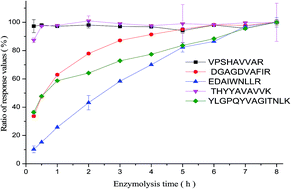
In order to find targeted signature peptide with the property of easy tryptic digestion and high MS intensity, modified experiments of the variable of digestive time were designed. The digestive time were ranged from 0.25 to 8 h at 37 °C. The acquired data of the 8 h pretreatment were considered as the 100% efficiency. The data showed that five candidate peptides had the different cleavage efficiency (Fig. 1). The peptide of VPSHAVVAR and THYYAVAVVK can be completely digested within 1 hour. Other three peptides, DGAGDVAFIR, EDAIWNLLR and YLGPQYVAGITNLK, had more enzymolysis time. Meanwhile, different MS intensity of five peptides was observed (Fig. 2). Peptide VPSHAVVAR had the largest MS intensity. Accordingly, it was selected and synthesized as the targeted signature peptide of human lactoferrin. Our selected signature peptide with high cleavage efficiency can be obtained by less enzymolysis time (<1 h) than reported by previous literatures (>4 h).17,18
 |
| | Fig. 1 Hydrolysis degree curve of different candidate peptides. | |
 |
| | Fig. 2 Quantitative channels of candidate peptides in breast milk after preparation (A) and the fragmentation pattern of targeted signature peptide VPSHAVVAR (B). | |
Efficiencies of tryptic hydrolysis within five peptides were different. Human lactoferrin is composed of 703 amino acid residues, and it is considered as a large molecular protein.25 Although disulfide bonds of lactoferrin were sheared by DTT and IAA in the pretreatment process, the secondary structure main composed of hydrogen bond and van der Waals forces still existed. So, the long digestive time of DGAGDVAFIR, EDAIWNLLR and YLGPQYVAGITNLK may be caused by the wrapped restriction sites.
Besides the selection of signature peptide, proper internal standard is necessary for the method accuracy. Some researchers have reported a winged internal standard which is composed of a stable isotope-labeled signature peptide and other non-targeted amino acid residues on both ends of peptide.18–20 The use of winged internal standard may improve method precision due to its similar tryptic digestion comparing with analyzed protein in samples.19 Accordingly, in this study, isotope-labeled signature peptide VPSHAV*V*AR and its winged peptide internal standard FKDCHLARVPSHAV*V*ARSVNGKE were employed. The results showed that this method was accurate and reproducible for lactoferrin quantification.
3.3. Optimization of preparation procedure for targeted signature peptide
The reduction reaction is the first step of sample preparation, which can damage the tertiary structure of analyzed protein. Generally, the concentration of DTT in the reaction solution is 0.5–5.0 mmol L−1, and the reaction temperature below 60 °C in this process.18–21 However, lactoferrin is difficult to be reduced and digested due to the larger molecular weight and structure.26,27 Therefore, stronger reducing conditions should be needed to destroy the structure of the protein.
The conditions of reduction reaction on concentration of DTT and reaction temperature were optimized by the orthogonal experiments. The concentrations of DTT in the reaction solution and the reduction reaction temperatures were designed as 0.5, 1.0, 2.5, 5.0 mmol L−1 and 50, 60, 70, 80, 90 °C, respectively. Levels of IAA solution in the reaction solution were three times of concentrations of DDT. Our results showed that lactoferrin detection values were decreased with the increasing concentrations of DTT, and improved with the increasing of reduction reaction temperature. Reduction reaction temperature was main factor that influencing the reduction reaction. The detected values reached the peak when the temperature was at 80 °C (Fig. 3). So, the optimized conditions for reduction reaction with orthogonal experiments are 0.5 mmol L−1 DTT in the reaction solution at 80 °C.
 |
| | Fig. 3 Optimization of DTT concentration and temperature in reduction reaction. | |
3.4. Method validation
3.4.1. Specificity. The selected signature peptide VPSHAVVAR only in lactoferrin was showed by the data of online BLAST search in UniProt (http://www.uniprot.org). The chromatograms of the selected signature peptide from tryptic breast milk spiked with internal standard showed the sharp and symmetric peaks without interferences at 2.27 ± 0.05 min (Fig. 4). Without tryptic digestion, there was no targeted peak appeared in the breast milk. All these results indicated that the selected signature peptide VPSHAVVAR had a high specificity for quantitation of human lactoferrin.
 |
| | Fig. 4 MRM chromatograms of human lactoferrin signature peptide VPSHAVVAR and its corresponding isotope-labeled analog VPSHAV*V*AR from a tryptic human milk. | |
3.4.2. Linearity and sensitivity. The linear regression equation for levels of targeted signature peptide ranged from 16 to 160 nmol L−1 was y = 1.06023x − 0.129415. It had good linearity and coefficient of determination (r2 > 0.997). The amounts of the tryptic signature peptide from the digested samples can be obtained from the standard curve made of the synthetic signature peptide. The contents of human lactoferrin in samples were calculated based on the molar equivalent relationship between the signature peptide VPSHAVVAR and human lactoferrin.The LOD and LOQ calculated as the lowest concentration that provided a signal-to-noise ratio of 3 and 10 were 1 mg/100 g and 3 mg/100 g, respectively. The linear range and sensitivity could satisfy the quantification requirements for the different lactoferrin concentrations in various breast milk samples.
3.4.3. Recovery, intra- and inter-day precision. The synthesized signature peptide standards were spiking to the control diluent of breast milk at 120, 240 and 360 mg/100 g, respectively. After pre-treatment analogously with the above optimal preparation, the concentrations of control and spiked samples were quantified and calculated using the theoretical concentrations for the recovery test. The results showed that the current method had good accuracy with 92.1–97.5% of spiked recoveries and 3.4–4.7% of RSD (Table 2). To evaluate the intra-day and inter-day precision of the method, a diluent of breast milk sample was pre-treated with the above optimal preparation each day on four consecutive days. The RSDs of intra- and inter-day precision were 2.59–4.82% and 2.32–3.89%, respectively.
Table 2 Recovery test of the UHPLC-MS/MS method (n = 20)
| Original level (mg/100 g) |
Spiked level (mg/100 g) |
Determined level (mg/100 g) |
Recovery ratea (%) |
RSD (%) |
| Recovery rates = (determined level − original level) × 100%/spiked level. |
| 168.7 ± 5.5 |
120.0 |
285.7 ± 7.5 |
97.5 |
2.6 |
| 240.0 |
400.2 ± 9.4 |
96.5 |
2.4 |
| 360.0 |
500.1 ± 12.7 |
92.1 |
2.5 |
3.5. Method application
All the samples of collection were pretreated and subjected to UHPLC-MS/MS analysis using current optimized method. The results revealed that there were significant differences (P < 0.05) between colostrum (282.6 mg/100 g), transition milk (174.8 mg/100 g) and mature milk ferritin milk (94.2 mg/100 g) (Fig. 5). Levels of secreted lactoferrin in breast milk decreased with the extension of lactation. The change of lactoferrin levels in breast milk from Beijing city, China was consistent to previous report.28 The immune factor, lactoferrin, in human milk undergoes remarkable changes, which may represent adaptations for the recipient infant.29
 |
| | Fig. 5 The content changes of lactoferrin in different duration of lactation. | |
4. Conclusions
In this study, an UPLC-TQ-MS/MS method for the absolute quantification of human lactoferrin was developed based on the signature peptides derived from the tryptic hydrolysis. The tryptic fragment peptide VPSHAVVAR was selected and validated as the signature peptide of human lactoferrin due to its high cleavage efficiency and intensity. A winged peptide containing the isotopically-labeled signature peptide was finally chosen as internal standard to compensate ionization suppression and analyte losses in sample preparation. Furthermore, a fast preparation method was established by optimizing the reduction reaction. The results showed that the method was accurate, sensitive and selective. It was successfully applied to routine determination of human lactoferrin in a group of different stages of breast milk in Beijing, China. The data revealed that secretion levels of lactoferrin have a significant decrease with the extension of lactation.
References
- S. Baveye, E. Elass, J. Mazurier, G. Spik and D. Legrand, Clin. Chem. Lab. Med., 1999, 37, 281–286 CrossRef CAS PubMed , CCLM/FESCC.
- R. Chierici, Adv. Nutr. Res., 2001, 10, 247–269 CAS.
- H. Wakabayashi, K. Yamauchi and M. Takase, Int. Dairy J., 2006, 16, 1241–1251 CrossRef CAS.
- P. L. Masson and J. F. Heremans, Comp. Biochem. Physiol., Part B: Biochem. Mol. Biol., 1971, 39, 119–129 CrossRef CAS.
- J. N. de Wit, J. Dairy Sci., 1998, 81, 597–608 CrossRef CAS PubMed.
- O. M. Conneely, J. Am. Coll. Nutr., 2001, 20, 389S–395S CrossRef CAS PubMed ; discussion 396S-397S.
- P. A. Ronayne de Ferrer, A. Baroni, M. E. Sambucetti, N. E. Lopez and J. M. Ceriani Cernadas, J. Am. Coll. Nutr., 2000, 19, 370–373 CrossRef CAS PubMed.
- O. Ballard and A. L. Morrow, Pediatr. Clin. North Am., 2013, 60, 49–74 CrossRef PubMed.
- M. Broadhurst, K. Beddis, J. Black, H. Henderson, A. Nair and T. Wheeler, Early Hum. Dev., 2015, 91, 7–11 CrossRef CAS PubMed.
- P. M. Montagne, V. S. Tregoat, M. L. Cuilliere, M. C. Bene and G. C. Faure, Clin. Biochem., 2000, 33, 181–186 CrossRef CAS PubMed.
- J. C. Chang, C. H. Chen, L. J. Fang, C. R. Tsai, Y. C. Chang and T. M. Wang, Internet J. Pediatr. Neonatol., 2013, 54, 360–366 CrossRef PubMed.
- L. Campanella, E. Martini and M. Tomassetti, J. Pharm. Biomed. Anal., 2008, 48, 278–287 CrossRef CAS PubMed.
- E. Tsakali, K. Petrotos, A. Chatzilazarou, K. Stamatopoulos, A. G. D'Alessandro, P. Goulas, T. Massouras and J. F. Van Impe, J. Dairy Sci., 2014, 97, 4832–4837 CrossRef CAS PubMed.
- X. Yao, C. Bunt, J. Cornish, S. Y. Quek and J. Wen, Biomed. Chromatogr., 2013, 27, 197–202 CrossRef CAS PubMed.
- M. A. Manso, M. Miguel and R. Lopez-Fandino, J. Chromatogr. A, 2007, 1146, 110–117 CrossRef CAS PubMed.
- A. M. MacDonald and C. A. Lucy, J. Chromatogr. A, 2006, 1130, 265–271 CrossRef CAS PubMed.
- T. M. Campos Motta, R. B. Hoff, F. Barreto, R. B. Andrade, D. M. Lorenzini, L. Z. Meneghini and T. M. Pizzolato, Talanta, 2014, 120, 498–505 CrossRef CAS PubMed.
- J. Zhang, S. Lai, Z. Cai, Q. Chen, B. Huang and Y. Ren, Anal. Chim. Acta, 2014, 829, 33–39 CrossRef CAS PubMed.
- M. M. Kushnir, A. L. Rockwood, W. L. Roberts, D. Abraham, A. N. Hoofnagle and A. W. Meikle, Clin. Chem., 2013, 59, 982–990 CAS.
- Q. Chen, J. Zhang, X. Ke, S. Lai, B. Tao, J. Yang, W. Mo and Y. Ren, Food Addit. Contam., Part A, 2015, 32, 25–34 CrossRef CAS PubMed.
- J. Zhang, S. Lai, Y. Zhang, B. Huang, D. Li and Y. Ren, Anal. Chim. Acta, 2012, 727, 47–53 CrossRef CAS PubMed.
- P. Picotti and R. Aebersold, Nat. Methods, 2012, 9, 555–566 CrossRef CAS PubMed.
- V. Lange, P. Picotti, B. Domon and R. Aebersold, Mol. Syst. Biol., 2008, 4, 222 CrossRef PubMed.
- M. Bronstrup, Expert Rev. Proteomics, 2004, 1, 503–512 CrossRef PubMed.
- P. F. Levay and M. Viljoen, Haematologica, 1995, 80, 252–267 CAS.
- H. A. van Veen, M. E. Geerts, P. H. van Berkel and J. H. Nuijens, Eur. J. Biochem., 2004, 271, 678–684 CrossRef CAS PubMed.
- Y. E. Öztafl and N. Özgünefl, Advances in Molecular Medicine, 2005, 1, 149–154 Search PubMed.
- D. Rai, A. S. Adelman, W. Zhuang, G. P. Rai, J. Boettcher and B. Lonnerdal, Food Sci. Nutr., 2014, 54, 1539–1547 CAS.
- A. S. Goldman, C. Garza, B. L. Nichols and R. M. Goldblum, J. Pediatr., 1982, 100, 563–567 CrossRef CAS PubMed.
|
| This journal is © The Royal Society of Chemistry 2016 |
Click here to see how this site uses Cookies. View our privacy policy here.