The synthesis of chiral triphenylpyrrole derivatives and their aggregation-induced emission enhancement, aggregation-induced circular dichroism and helical self-assembly

Kaichang Lianga, Lichao Donga, Na Jina, Didi Chenb, Xiao Fenga, Jianbing Shib, Junge Zhi*a, Bin Tongb and Yuping Dong*b
aSchool of Chemistry, Beijing Key Laboratory of Photoelectronic/Electrophotonic Conversion Materials, Beijing Institute of Technology, Beijing 100081, China. E-mail: zhijunge@bit.edu.cn
bSchool of Materials Science and Engineering, Beijing Institute of Technology, Beijing 100081, China. E-mail: chdongyp@bit.edu.cn

Received 17th December 2015 , Accepted 17th February 2016

First published on 18th February 2016


Abstract

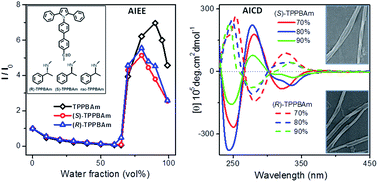
A pair of enantiomers ((R)-TPPBAm and (S)-TPPBAm) and their raceme (rac-TPPBAm) were designed and prepared by conjugating (R)-, (S)- or racemic 1-phenylethylamine to an aggregation-induced emission enhancement (AIEE) active triphenylpyrrole fluorophore. The three target compounds were thoroughly characterized and their optical properties were systematically investigated. The fluorescence analyses indicate that they all retain the AIEE activities originating from the triphenylpyrrole moiety, irrespective of the attaching groups. More importantly, both the enantiomers containing (R)- or (S)-1-phenylethylamine attachment exhibit aggregation-induced circular dichroism (AICD) features with mirror-image signals. Besides, they also exhibit circularly polarized luminescence (CPL) with an emission dissymmetry factor (gem) from 1.5 × 10⁻⁴ to 3 × 10⁻³ for (R)-TPPBAm and −1.3 × 10⁻⁴ to −4 × 10⁻³ for (S)-TPPBAm in aggregate states. As expected, consistent with the variations of their CD signals, (R)-TPPBAm and (S)-TPPBAm could self-assemble into helical nanofibers with the opposite screw direction during the aggregation process in the THF–water mixed solution, while the racemic compound rac-TPPBAm exhibits no CD and CPL signals, and self-assembles to form nanoparticles blocks. These results demonstrate that the morphologies and optical activities can be controlled simultaneously without losing the solid-state emission performance of the material by attaching a chiral group to an AIEE fluorophore, which could shed light on the design of optical active fluorophores for sensitive and time-efficient enantiomer determination.

Introduction

Self-assembly is a common process in nature, and it mirrors individual composition and supramolecular sequences with multiple non-covalent interactions, such as H-bonding, π–π stacking and solvophobic effects, etc.1–3 In recent years, molecular self-assembly has become an excellent approach to form a desirable functional architecture, and it has been widely applied in many subjects including chemistry, biology and materials science.4,5 Among tremendous self-assembly systems, π-conjugated luminescent materials have attracted much attention owing to their excellent optical and electrical properties, and their potential applications in optoelectronic devices and chemo/bio-sensors. However, due to strong π–π stacking interactions, most π-conjugated molecules emit weakly or are non-emissive in high concentration, especially in the solid state, known as aggregation-caused quenching (ACQ), and this restricts their application in the solid state. In 2001, aggregation-induced emission (AIE) was presented by Tang's group.6 AIE and aggregation-induced emission enhancement (AIEE) effect, which exhibit strong fluorescence in aggregation or solid state, provides a powerful means for the daunting ACQ problem. The intramolecular motions of AIE molecules are blocked in the aggregate states and herein their emissions are enhanced.7–13 So, AIE and AIEE molecules are ideal candidates for the fabrication of highly efficient devices for their high luminescence efficiencies in the aggregation, solid and/or film state. This inspiring phenomenon provides a convenient way to fabricate novel luminescent micro/nano-architectures by introduce functional appendant to the peripheries of the AIE scaffold.4,6,13

Chirality is a general phenomenon in the nature. Most biologically important molecules are chiral, and these chiral biomolecules and their self-assembly aggregates play an important role in the life of activities for organisms. Chiral recognition with fluorescence changes has attracted much attention in recent years, because it can provide time-efficient and sensitive method of enantiomer determination and be applied to catalysts, natural products, and drugs.14 Combining the chirality with AIE features organically will endow the materials some significant special properties because it can help to increase the sensitivity and visible tracing ability in enantiomer recognition and biological process observation, during which may involve forming aggregates.14–16 Moreover, chiral organic compounds with CPL feature in solid or film state have attractive applications in photonic devices, i.e. stereoscopic optical processing, optical amplifiers, information storage and light-emitting diodes.9,17–20 Such as, Zheng and colleagues have designed and prepared several AIE enantiomers with carboxylic acids or amines appendants for efficient selective chiral recognition.21–25 Tang's group has also exploited the possibility of endowing the AIE architectures with optical activity by introducing chiral groups into the peripheries of siloles and tetraphenylethylene structures.26–30 However, the families of AIEgens with chirality are still limited, and moreover, systematically investigation of the influences of attaching chiral groups to AIEgens on their optical performance and self-assembling process are required. Therefore, in this research, we attempted to introduce R-, S- or racemic chirality to a newly developed AIEgen, and comprehensively studied their structure–property relationships.

Herein, we chose triphenylpyrrole (TPP) as the luminescent segment and then conjugated R-, S- or racemic 1-phenylethylamine to it to obtain a pair of enantiomers ((R)-TPPBAm, (S)-TPPBAm) and as well as their raceme (rac-TPPBAm) (Scheme 1). TPP derivatives are one of the typical AIE/AIEE families developed by us and could be used as fluorescent chemosensors to detect Al3+, primary amine, and CO2, etc.31–35 After appending chiral groups to TPP segment, all of the target compounds still retain the AIEE properties. Furthermore, (R)-TPPBAm and (S)-TPPBAm possess both aggregation-induced circular dichroism (AICD) and circularly polarized luminescence (CPL) properties. And the existence of chiral attachment imparts these chiral compounds with the ability to realize the helical self-assembling processes and form helical conformation aggregates, coupling with the hydrogen-bond interaction among the chiral amide appendants and the π–π stacking interaction between intramolecular 1-biphenyl-2,5-diphenylpyrrole segments.


image file: c5ra26985g-s1.tif
Scheme 1 Synthesis of the target compounds (a) 4-methoxycarbonylphenyl boronic acid/Pd(PPh3)4/Na2CO3/(toluene + methanol), 80 °C; (b) NaOH/(THF + H2O), refluxing; (c) EDCI/HOBT/TEA/1-phenylethylamine/CH2Cl2, RT.

Experimental section

Materials

(R)-(+)-1-Phenylethylamine, (S)-(−)-1-phenylethylamine, 1-phenylethylamine, 4-(methoxycarbonyl) phenylboronic acid, N-(3-dimethylaminopropyl)-N′-ethyl carbodiimide hydrochloride (EDCI) and 1-hydroxybenzotriazole (HOBT) was purchased from J&K Company and used as received. All other chemicals were purchased from Scientific Alfa Aeser or Beijing Chemical Reagent Company and used as received without further purification. Solvents and reagents with high purities, such as toluene, THF, chloroform, methanol and dichloromethane, were used as received.

Instrumental analysis

1H NMR spectra were measured on a Bruker ARX 400 spectrometer using CDCl3 or DMSO-d6 as solvent and tetramethylsilane (TMS) as an internal standard. Fourier transform infrared (FTIR) spectra were measured with a Shimadzu IR Prestige 21 spectrometer using KBr discs. Matrix-assisted laser desorption/ionization time-of-flight (MALDI-TOF) high-resolution mass spectra (HRMS) were recorded on a Bruker Daltonics Inc. BIFLEX IIIMALDI-TOF mass spectrometer. Absorption spectra were recorded on a Persee TU-1901 UV-vis spectrophotometer. Photoluminescence (PL) spectra were measured on a Hitachi F-7000 spectrofluorometer. The absolute fluorescence quantum yields (ΦF) were determined using a Horiba Jobin Yvon Nanolog® FluoroLog-3-2-iHR320F Infrared fluorescence spectrometer (λex = 335 nm). Optical rotations were estimated with a JASCO Model P-1030 digital polarimeter. CD spectra were recorded on a JASCO J-810 spectrometer, the light pathlength of the quartz cell used was 10 mm, using THF–water mixtures as the solvent with a fixed concentration of 10 μM. Circularly polarized luminescence (CPL) spectra were performed on a JASCO CPL-200 spectrofluoropolarimeter, THF–water mixtures as the solvent, concentration was 10 μM. The morphologies of the targets compounds' aggregations were observed by a field-emission scanning electron microscope (FE-SEM, JEOL S-6700) at an accelerating voltage of 5.0 kV and a transmission electron microscopy (TEM, H-8100) operating at 200 kV accelerating voltage. The SEM and TEM samples were prepared by dropping THF–H2O mixture solution of the target compounds (10 μM) on the surface of a clean silicon wafer or a copper micro grid, respectively, and evaporating solvent under ambient condition.

Synthesis of target compounds

The synthetic route of the target compounds is shown in Scheme 1.
Synthesis of 1-(4′-bromophenyl)-2,5-diphenylpyrrole (1). 1-(p-Bromophenyl)-2,5-diphenyl pyrrole (1) was synthesized by reaction of 1,4-diphenylbutadiyne with p-bromoaniline employing cuprous chloride as catalyzer according to the published procedures with the yield of 70%.33,34
Synthesis of 1-(4′-carboxyl-biphenyl)-2,5-diphenylpyrrole (2). The compound 2 was synthesized by Suzuki cross-coupling reaction of 1 and 4-(methoxycarbonyl) phenylboronic acid, following a hydrolysis reaction of the ester intermediate.

Under a nitrogen atmosphere, methanol (60 mL) and toluene (150 mL) were injected into a 500 mL round-bottom flask containing 2.2 g (5.2 mmol) of 1, 1 g (5.2 mmol) of 4-(methoxycarbonyl) phenylboronic acid, 0.3 g of Pd(PPh3)4 and 6 g of Na2CO3. The solution was stirred at 70 °C for 15 h and cooled down to room temperature. After solvent was evaporated by reduced pressure distillation, the solid residues were dissolved in proper amount of dichloromethane, and the obtained solution was washed with dilute hydrochloric acid and deionized water, respectively. The organic phase was dried over anhydrous MgSO4 and concentrated, the crude product obtained was purified by silica gel column chromatography using dichloromethane/petroleum ether (1/1, v/v) as eluent. The ester intermediate 1-(4′-carbomethoxy-biphenyl)-2,5-diphenylpyrrole was obtained as a white solid in 82.0% yield.

1H NMR (400 MHz, CDCl3), δ (TMS, ppm): 3.94 (s, 3H), 6.50 (d, 2H), 7.10–7.21 (m, 12H), 7.50–7.52 (d, 2H), 7.63–7.65 (d, 2H), 8.08–8.10 (d, 2H). IR (KBr), ν (cm−1): 1715 (C[double bond, length as m-dash]O), 1271 (C–O–C), 3004 (–CH3). Analysis calcd for C30H22NO2: C, 83.89%; H, 5.40%; N, 3.26%; found: C, 83.55%; H, 5.43%; N, 3.25%. MS (MALDI-TOF): m/z = 429 (calcd 429.17).

In a 500 mL round-bottom flask equipped with a reflux condenser, 0.8 g (1.9 mmol) of the above-mentioned ester intermediate was dissolved in THF (100 mL), then 20 mL of NaOH aqueous solution (1.25 M) was added into the flask. The mixture was heated to 75 °C and refluxed for 8 h, and cooled to room temperature. THF was removed by reduced pressure distillation, the residual solution was poured into 100 mL of diluted hydrochloric acid solution (5 wt%). The white precipitates were recrystallized with THF/hexane mixture, and a white solid of compound 2 was obtained in 80% yield.

1H NMR (400 MHz, d6-DMSO), δ (TMS, ppm): 13.01 (s, 1H), 8.01 (d, J = 8.4 Hz, 2H), 7.83 (d, J = 8.5 Hz, 2H), 7.74 (d, J = 8.5 Hz, 2H), 7.25–7.14 (m, 8H), 7.14–7.09 (m, 4H), 6.51 (s, 2H). IR (KBr), ν (cm−1): 2800–3200 (–OH), 1684 (C[double bond, length as m-dash]O). MS (MALDI-TOF): m/z = 415.15 (calcd 415.58).

Synthesis of (R)-TPPBAm. In a 100 mL round-bottom flask, 0.2 g (0.48 mmol) of compound 2 was dissolved in 60 mL of dried dichloromethane at 0 °C, then added triethylamine (200 μL, 1.5 mmol), HOBT (68 mg, 0.57 mmol) and EDCI (0.10 mg, 0.57 mmol) and stirred at 0 °C for 1 h, following the addition of (R)-(+)-1-phenylethylamine (150 μL, 0.57 mmol). The above reaction mixture was stirred at room temperature for 10 h, then washed with 20 mL of dilute hydrochloric acid solution, the organic phase was dried over anhydrous MgSO4 and concentrated. The crude production was recrystallized with CHCl3/hexane (1/5, v/v) mixture, a white powder of (R)-TPPBAm was obtained in 75% yield. Melting point: 259.7 °C, [α]D20 = −283.9° (c = 0.052 g/100 mL THF). The ΦF of (R)-TPPBAm powder is 10.7%.

1H NMR (400 MHz, DMSO-d6), δ (TMS, ppm): 8.88 (d, J = 8.1 Hz, 1H), 7.77 (dd, J = 8.4 Hz, 4H), 7.41 (d, J = 7.4 Hz, 2H), 7.33 (t, J = 7.6 Hz, 2H), 7.29–7.07 (m, 13H), 6.51 (s, 2H), 1.50 (d, J = 7.1 Hz, 3H). IR (KBr), ν (cm−1): 3402 (N–H), 1639 (C[double bond, length as m-dash]O), 1391 (C–N), 3055 (–CH3). Analysis calcd for C37H30N2O: C, 85.68%; H, 5.83%; N, 5.40%; found: C, 83.26%; H, 5.87%; N, 5.35%. MS (MALDI-TOF): m/z = 518.4 (calcd 518.24).

Synthesis of (S)-TPPBAm. The compound (S)-TPPBAm was prepared using a procedure similar to the described detail for the synthesis of (R)-TPPBAm, a white powder was obtained in 70% yield. Melting point: 260.2 °C, [α]D20 = +248.5° (c = 0.052 g/100 mL THF). The ΦF of (S)-TPPBAm powder is 10.8%.

1H NMR (400 MHz, DMSO-d6), δ (TMS, ppm): 8.88 (d, J = 8.1 Hz, 1H), 7.99 (d, J = 8.2 Hz, 2H), 7.81 (d, J = 8.3 Hz, 2H), 7.74 (d, J = 8.3 Hz, 2H), 7.41 (d, J = 7.5 Hz, 2H), 7.32 (d, J = 7.7 Hz, 2H), 7.28–7.03 (m, 12H), 6.50 (s, 2H), 1.50 (d, J = 7.0 Hz, 3H). IR (KBr), ν (cm−1): 3400 (N–H), 1645 (C[double bond, length as m-dash]O), 1384 (C–N), 3055 (–CH3). Analysis calcd for C37H30N2O: C, 85.68%; H, 5.83%; N, 5.40%; found: C, 84.47%; H, 5.98%; N, 5.50%. MS (MALDI-TOF) m/z = 518.4 (calcd 518.24).

Synthesis of rac-TPPBAm. The compound rac-TPPBAm was prepared using a technique similar to the two enantiomers (R)-TPPBAm and (S)-TPPBAm. A white solid of rac-TPPBAm was obtained in 78% yield. The ΦF of rac-TPPBAm powder is 2.2%.

1H NMR (400 MHz, DMSO-d6), δ (TMS, ppm): 8.89 (d, J = 8.0 Hz, 1H), 7.99 (d, J = 8.5 Hz, 2H), 7.77 (dd, J = 27.4, 8.5 Hz, 4H), 7.41 (d, J = 7.3 Hz, 2H), 7.33 (t, J = 7.6 Hz, 2H), 7.27–7.08 (m, 11H), 6.51 (s, 2H), 1.49 (d, J = 7.1 Hz, 3H). IR (KBr), ν (cm−1): 3382 (N–H), 1639 (C[double bond, length as m-dash]O), 1391 (C–N), 3048 (–CH3). Analysis calcd for C37H30N2O: C, 85.68%; H, 5.83%; N, 5.40%; found: C, 85.24%; H, 5.87%; N, 5.37%. MS (MALDI-TOF) m/z = 518.4 (calcd 518.24).

Results and discussion

Synthesis and characterization

The synthesis procedures of the target compounds (S)-TPPBAm, (R)-TPPBAm and rac-TPPBAm are shown in Scheme 1. They were prepared by a four-step reaction from the starting materials. The compound 1 was synthesized by the cyclization reaction of diphenylbutadiyne with p-bromoaniline with a high yield.32,33 Then the palladium-catalyzed Suzuki cross-coupling reaction of compound 1 and 4-(methoxycarbonyl)-phenylboronic acid and following a hydrolysis reaction produced intermediate 2. Finally, the amidation reaction between 2 and chiral (R)-/(S)-1-phenylethylamine and their raceme generated the target compounds (R)-TPPBAm, (S)-TPPBAm and rac-TPPBAm with HOBT and EDCI as the dehydrant in high yields. The compounds obtained were characterized by standard measure techniques including 1H NMR, FT-IR, MS and elemental analysis (Fig. S1–S3 in ESI), the analysis data obtained from the measured results are corresponding to their expected chemical structures. And they all possess high thermal stabilities with decomposition points above 360 °C (Fig. S4 in ESI). The specific rotation of (R)-TPPBAm and (S)-TPPBAm are −283.9° and +248.5° in the same measurement condition, illustrating that the pair of enantiomers exhibit the opposite charity, while the rac-TPPBAm is not optically active. The ΦF values of (R)-TPPBAm, (S)-TPPBAm and rac-TPPBAm solid powder are 10.7%, 10.8% and 2.2%, respectively, and ΦF values of the chiral compounds are higher than that of the raceme. For (R)-TPPBAm, (S)-TPPBAm, the spatial structure of chiral pendant leads to incompact arrangements of the chiral molecules, it will reduce part of the non-radiative energy consumption caused by the intense intermolecular π–π stacking interactions for rac-TPPBAm.13

Aggregation induced emission enhancement (AIEE) properties

The target compounds (R)-TPPBAm, (S)-TPPBAm and rac-TPPBAm, which are aryl-substituted derivates, are expected to show AIE or AIEE phenomena according to previously reported work.13,34,35 Thus their photophysical properties were investigated after being confirmed their structures. The photoluminescence behaviours and UV-vis absorption spectra (Fig. 1 and S5–S7 in ESI) were measured in THF and THF–water mixtures with different volume ratio at a fixed concentration (10 μM).
image file: c5ra26985g-f1.tif
Fig. 1 Fluorescence spectra (a) and UV-vis absorption spectra (b) of (R)-TPPBAm in THF–water mixtures with different water fraction (fw) (λex = 310 nm) (inset plot of (a): plot of relative emission peak intensity (I/I0) versus different fw), (c) the comparison of relative emission peak intensity of the target compounds (I = emission intensity in THF–water mixtures and I0 = emission intensity in pure THF; concentration: 10 μM).

As shown in Fig. 1a, (R)-TPPBAm exhibits weak emission in pure THF solution. When non-solvent water is added to its THF solution, the emission intensity decreases slowly with the increasing of the water fraction (fw) till up to fw = 65%, while the emission enhances sharply when fw is above 65% along with an obvious blue-shift, and the emission intensity reaches the maximum at fw = 80%, which is 5.5-fold higher than that in the pure THF solution, then following a slight decreasing of the emission intensity when water content further increasing (Fig. 1a). Since water is a non-solvent for chiral compound (R)-TPPBAm, the addition of water can induce the formation of aggregation, which blocks the non-radiative energy transfer and enhances the fluorescence emission of the (R)-TPPBAm molecules. It is indicative of the AIEE feature of (R)-TPPBAm.8,13,34,35 The broadened absorption spectra and the obvious light-scattering tails in the visible region at higher water fractions suggest that the (R)-TPPBAm molecules have clustered into nano-aggregates according to the Mie effect in the THF–water mixtures (Fig. 1b).6,8,13 The results are further supported by the significant decreasing of the transmittance of its solution in THF–water mixtures when increasing the water fraction (Fig. S5 in ESI). In addition, the dynamic light scattering (DLS) results of (R)-TPPBAm also confirm the formation of the nano-aggregates, and its mean particle diameter sizes are 1392 nm, 511 nm and 1540 nm when fw is 70%, 80% and 90%, respectively (Fig. S8 in ESI).

The other two compounds, (S)-TPPBAm and rac-TPPBAm, exhibit obvious AIEE properties which are similar to that of (R)-TPPBAm. Their emission intensities decrease a little at lower water content, while increase quickly along with an obvious blue-shift when the fw is higher than 65%, and reach the maximum at fw = 80% for (S)-TPPBAm and fw = 90% for rac-TPPBAm (Fig. 1c, S6 and S7 in ESI), the I/I0 maximums are 5.1 and 7.0 for (S)-TPPBAm and rac-TPPBAm, respectively. Their broadened absorption spectra and light-scattering tails in UV-vis absorption spectra, the decreasing of transmittance at higher fw and the particle size distribution results all suggest the formation of nano-aggregates in THF–water mixtures (Fig. S6–S8 in ESI).8,13,34,35

The compounds (R)-TPPBAm, (S)-TPPBAm and rac-TPPBAm all exhibit AIEE behaviours in the THF–water mixtures, suggesting that the conjugated triphenylpyrrole core can remain its aggregated-induced emission enhancement feature when introduced chiral group to the fluorophore periphery.13,26–30 There are still some differences when comparing their AIEE properties, the I/I0 maximum of rac-TPPBAm (I/I0 = 7.0) is slightly larger than those of (R)-TPPBAm (I/I0 = 5.5) and (S)-TPPBAm (I/I0 = 5.1), and it appears at fw = 90%, while a little lower water fraction for chiral (R)-TPPBAm and (S)-TPPBAm (fw = 80%). These dissimilitude of AIEE behaviours are mainly attributed to the difference of stereochemistry of the three compounds. The intramolecular rotation of the rac-TPPBAm exhibit more freedom than the chiral compounds (R)-TPPBAm and (S)-TPPBAm because the latter have a certain steric hindrance effect of the chiral group. Therefore, the intramolecular rotation is restricted more efficiently at a higher water fraction, and likewise, more non-radiative energy consumption will decline when the molecules aggregating in the THF–water mixtures, which will cause a larger I/I0 at a higher water content for rac-TPPBAm than those of the enantiomers.

Furthermore, the target compounds (R)-TPPBAm, (S)-TPPBAm and rac-TPPBAm also exhibit AIEE properties in THF–hexane mixtures because hexane is a poor-solvent for them. The fluorescence intensities increase slowly with the increase of hexane fraction (fH) at the low hexane fraction range, but following a sharp increase when fH is greater than 80% due to the formation of nano-aggregates, along with a blue-shift of fluorescence emission (Fig. S9 in ESI).

Density functional theory calculations were used to get more information about the optical property at the molecular level by using a suite of Gaussian 09 program. The HOMO and LUMO energy levels of (R)-TPPBAm, (S)-TPPBAm and rac-TPPBAm were calculated by using the B3LYP/6-31+G* method. The energy levels of (R)-TPPBAm are examples as shown in Fig. 2 (other data are summarized in Fig. S10 in ESI). The HOMO energy level of (R)-TPPBAm is located on the pyrrole core ring and the peripheral phenyl rings at 2,5-position, stems from their orbital overlap and electronic communication. The LUMO wave function of (R)-TPPBAm is located mainly on the two phenyl rings of biphenyl at 1-position, and very little is located on the central pyrrole ring, while the other phenyl rings at 2,5-position make no contribution at all, implying that π–π* conjugation plays an important role of molecular energy levels.31,36,37 The energy band gap (ΔE) of (R)-TPPBAm between the LUMO and HOMO is equal to 3.71 eV. The other compounds (S)-TPPBAm and rac-TPPBAm, have very similar HOMO and LOMO energy levels and energy band gap (ΔE) as (R)-TPPBAm (Fig. S10 in ESI), also indicating that the energy level distributions of the compounds are hardly affected by the introduction of chiral appendant at the 1-position of pyrrole core.


image file: c5ra26985g-f2.tif
Fig. 2 HOMO and LUMO energy levels of (R)-TPPBAm.

Aggregation-induced circular dichroism (AICD) and circularly polarized luminescence (CPL)

Circular dichroism (CD) and circularly polarized luminescence (CPL), as the indispensible essential characterizations of the chiral materials, can offer considerable information about the chirality of chiral compounds in the ground and excited states. Moreover, stereochemical, conformational and three-dimensional structure can be identified by CD and CPL as well.17–20

The CD spectroscopy is often used to explore the structural information of the ground electronic state of a chiral chromophore system through measuring the differential absorptions of LCP and RCP light (i.e. Δε(λ) = εL(λ) − εR(λ)).17,26–29,38 As mentioned above, the chiral compounds (R)-TPPBAm and (S)-TPPBAm have specific optical rotations [α]D20 = −283.9° and [α]D20 = +248.5°, respectively, exhibiting the opposite rotatory direction but similar optical rotation value in THF solution. And they all exhibit obvious UV-vis absorption at about 280 nm, attributing to the conjugated 1-biphenyl-2,5-diphenyl pyrrole group in THF solution. Because of forming nano-aggregates in THF–water mixtures, their absorption bands also broadened and red-shifted compared with their absorption bands in pure THF solution. Their optical activities, especially the optical activities in the aggregation states, were investigated by CD spectroscopy and CPL. Fig. 3 shows the CD and UV-vis absorption spectra of (S)-TPPBAm and (R)-TPPBAm in THF–water mixtures with different water fraction. As can be seen from Fig. 3a, (S)-TPPBAm exhibits UV-vis absorption in the range of 250–350 nm, but very weak CD signals are observed in this absorption region in pure THF solution and THF–water mixtures with low water fractions (fw ≤ 60%) due to the random orientation of (S)-TPPBAm molecules which are in an isolated state. However, the intensity of CD signal increases significantly when the water fraction is added to 70%, and reaches to the maximum when fw = 80%. And the aggregation of (S)-TPPBAm molecules leads to the emergence of Cotton effects at about 245, 278 and 338 nm at fw = 80% because the reactant (S)-(−)-1-phenylethylamine is CD-silent in this wavelength region under the same measurement condition. It suggests that the chirality has transferred from the chiral 1-phenylethylamine pendant to the 1-biphenyl-2,5-diphenyl pyrrole segment. And it makes the (S)-TPPBAm molecules arrange in a regular helical structure in the aggregating process, namely (S)-TPPBAm displays aggregation-induced circular dichroism (AICD).26–30,36–39 The intensities of CD signals decrease when the water fraction reaches to 90%, mainly because the addition of overmuch non-solvent water will accelerate the aggregation, which can influence the helical arrangement of (S)-TPPBAm molecules and cause to form more defects inside the aggregates. Furthermore, the variation of CD signal strength is consistent with that of fluorescence intensity when adding non-solvent water into the THF solution of (S)-TPPBAm, indicating that the aggregating process of (S)-TPPBAm in THF–water mixtures is really a regular spiral arrangement of (S)-TPPBAm molecules, which not only induces the emission enhancement but also the emergence of Cotton effect of helical matter.


image file: c5ra26985g-f3.tif
Fig. 3 CD and UV-vis spectra of (S)-TPPBAm (a) and (R)-TPPBAm (b) in THF–water mixtures with different water fraction (concentration: 10 μM).

The similar Cotton effect and its variation are observed obviously in the CD spectra of (R)-TPPBAm in THF–water mixtures when fw is above 60%. Three Cotton effects appear at 254, 282 and 327 nm and the CD signal strength reaches the maximum at fw = 70%, three slightly weak Cotton effects at 248, 278 and 325 nm are observed when fw is 80%, and there are three weaker ones at fw = 90%, suggesting that (R)-TPPBAm exhibits AICD behaviours as well.26–30,36–39 Furthermore, (S)-TPPBAm and (R)-TPPBAm display the mirror-image Cotton effects at the same water fraction in THF–water mixtures (Fig. S11 in ESI) because the chiral amide appendants are a couple of enantiomers and exhibit the same ability to cause AICD feature.38,39 No Cotton effects are observed in CD spectra of rac-TPPBAm at wavelength longer than 270 nm when the water fraction is above 60% (Fig. S11 in ESI). The irregular signals appearing in the shorter wavelength region are more like the noise peaks, it further illustrates that only the chiral compounds (S)-TPPBAm and (R)-TPPBAm can transfer the helical chirality from the chiral amide appendant to 1-biphenyl-2,5-diphenyl pyrrole segment and induce CD signals in the aggregating process.

Circularly polarized luminescence (CPL) spectroscopy is the emission analog of CD, and can provide the specific information about the chirality of the fluorophores in the excited state. CPL is based on the differential spontaneous emission of left and right circularly polarized radiation by luminescent systems. As an essential parameter of CPL, the emission dissymmetry factor (gem) can be obtained from gem = 2ΔI(λ)/I(λ), where ΔI = IL(λ) − IR(λ), I(λ) = IL(λ) + IR(λ), IL and IR denote the intensities of the left (L) and right (R) circularly polarized components of the emitted radiation, respectively.26–28,30,38 As previously mentioned, the chiral compounds (S)-TPPBAm and (R)-TPPBAm exhibit AIEE activity and AICD responses, while they do not display CPL behaviours in pure THF and THF–water mixtures when fw is lower than 70%, however, they exhibit CPL behaviours with the gem values from 1.5 × 10⁻⁴ to 3 × 10⁻³ for (R)-TPPBAm and −1.3 × 10⁻⁴ to −4 × 10⁻³ for (S)-TPPBAm, which are in the range of most organic CPL materials from 10−5 to 10−2, when the water fraction is above 80% (Fig. S12 in ESI).26,27,40–42 No CPL spectra and gem signals were detected for rac-TPPBAm in THF and THF–water mixtures.

The morphologies of the nano-aggregations

The compounds (R)-TPPBAm and (S)-TPPBAm possesses chiral amide appendant that can exert an asymmetric force field on the triphenylpyrrole scaffold and cause the helical conformation. The CD and CPL spectra have indicated that the aggregations of (R)-TPPBAm and (S)-TPPBAm molecules have helical morphologies as mentioned above. So SEM and TEM are used to provide detailed information of the self-assembling behaviours and aggregated morphologies of the chiral compounds. Fig. 4 shows the SEM images of the morphological structures of (R)-TPPBAm (Fig. 4a), (S)-TPPBAm (Fig. 4c) and rac-TPPBAm (Fig. 4e) in aggregation states which formed in their THF–water mixed solution and the TEM images of them on copper grids (Fig. 4b, d and f). As shown in Fig. 4a, (R)-TPPBAm molecules self-assembled and formed helical nanofibers with predominantly right-handed screw sense, and these lank nanofibers further twisted round each other to form thicker ones, which is consistent with the CD and CPL spectra. The amplified image (the insert image of Fig. 4a) further indicates that the elementary fiber is actually nanofiber with a clear right-handed screw sense, and the elementary helical nanofibers have an average width of ∼50 nm and a helical pitch ∼320 nm. The TEM image of (R)-TPPBAm in Fig. 4b also verifies the helical nanofibers forming in the self-assembled process and the combining of the elementary lank nanofibers to become thicker fibers. Analogous to (R)-TPPBAm, (S)-TPPBAm molecules can self-assemble to form helical nanofibers with predominantly left-handed screw sense and an average helical pitch ∼310 nm (Fig. 4c and d) due to the inductive effect of the chiral attachment,26,28,29,38 which is consistent with its CD spectrum too. The two enantiomers (R)-TPPBAm and (S)-TPPBAm are capable of self-assembling to form helical nanofibers, and exhibit similar assembling manners to the reported chiral AIE luminogens26,29 and some chiral amino acid-containing molecules.5,43–45 The helical assemblies of (R)-TPPBAm and (S)-TPPBAm molecules are directed by the chirality of the chiral attachments of the molecules which exerts asymmetric force fields to the triphenylpyrrole scaffold to induce it to twist and form helical nanofibers. In the self-assembling process, the chiral molecules likely form basic chiral fibers or ribbons firstly, followed by another regular arrangement that the basic chiral fibers or ribbons further twist or wrap up to form thick helical nanofibers.5,26,29 Furthermore, intermolecular π–π stacking of the conjugated 1-biphenyl-2,5-diphenyl pyrrole moiety and the hydrogen bonds of the chiral amide appendants cooperatively stabilized the twisting arrangements and helical assembling nanofibers of the chiral molecules.5,29,38,43–45 By comparison, no helical nanofibers but only nanoparticles blocks are observed for the racemic rac-TPPBAm (Fig. 4e and f), mainly because the asymmetric force of chiral group mutually counteracted.
image file: c5ra26985g-f4.tif
Fig. 4 SEM images of the aggregates for (R)-TPPBAm (a), (S)-TPPBAm (c) and rac-TPPBAm (e); TEM images of (R)-TPPBAm (b), (S)-TPPBAm (d) and rac-TPPBAm (f) aggregates formed in THF–water solution (fw = 70%).

According to the above discussion, the chiral attachments play a critical role of determining the self-assembling behaviours and related optical properties of the chiral compounds.5,26,29,43–45 The chiral R-/S-1-phenylethylamine pendants of (R)-TPPBAm and (S)-TPPBAm exert efficient asymmetric force fields to the conjugated 1-biphenyl-2,5-diphenyl pyrrole segment and induce its helical twists more significantly in the molecular self-assembling process to form helical nanofibers. Moreover, intensive CD absorptions of the two enantiomers (R)-TPPBAm and (S)-TPPBAm with mirror-image Cotton effects and CPL properties are expected due to the contribution of the bulky chiral attachments.26,29

Conclusions

In summary, we have modified 1-biphenyl-2,5-diphenyl pyrrole by a couple of enantiomers and their raceme of 1-phenylethylamine, and synthesized two chiral triphenylpyrrole derivatives (R)-TPPBAm and (S)-TPPBAm and a racemic compound rac-TPPBAm. All the target compounds exhibit obvious AIEE properties, and the comparison of their photophysical properties illustrates that the introduction of chiral appendant has little effect on the AIEE behaviors. The pair of enantiomers (R)-TPPBAm and (S)-TPPBAm exhibit both obvious optical-activity with high specific optical activity and outstanding aggregation-induced circular dichroism (AICD), and also display CPL feature with the gem absolute values from about 1.3 × 10⁻⁴ to 4 × 10⁻³. The SEM and TEM images reveal that the two enantiomers can self-assemble to form helical nanofibers during the aggregating processing when a proper portion of non-solvent water is added into their THF solution due to the inductive effect of the chiral appendant. And rac-TPPBAm molecules only formed nanoparticles blocks. The AIEE-active enantiomers, (R)-TPPBAm and (S)-TPPBAm, which with noteworthy optical-activity, would be ideal potential candidates in the application of chiral recognition and separation, or optoelectronic devices.

Acknowledgements

The authors are grateful for the support from the National Natural Science Foundation of China (No. 21374010) and the National Basic Research Program of China (973 Program: 2013CB834704).

References

  1. G. M. Whitesides and B. Grzybowski, Science, 2002, 295, 2418 CrossRef CAS PubMed.
  2. H. Fenniri, M. Packiarajan, K. L. Vidale, D. M. Sherman, K. Hallenga, K. V. Wood and J. G. Stowell, J. Am. Chem. Soc., 2001, 123, 3854–3855 CrossRef CAS PubMed.
  3. G. Tikhomirov, T. Yamazaki, A. Kovalenko and H. Fenniri, Langmuir, 2008, 24, 4447 CrossRef CAS PubMed.
  4. Z. J. Chen, A. Lohr, C. R. Saha-Moller and F. Wurthner, Chem. Soc. Rev., 2009, 38, 564 RSC.
  5. Y. Zang, Y. Li, B. Z. Li, H. K. Li and Y. G Yang, RSC Adv., 2015, 5, 38690 RSC.
  6. J. D. Luo, Z. L. Xie, J. W. Y. Lam, L. Cheng, H. Y. Chen, C. F. Qiu, H. S. Kwok, X. W. Zhan, Y. Q. Liu, D. B. Zhu and B. Z. Tang, Chem. Commun., 2001, 1740 RSC.
  7. J. Z. Liu, Y. C. Zhong, J. W. Y. Lam, P. Lu, Y. N. Hong, Y. Yu, Y. N. Yue, M. Faisal, H. H. Y. Sung, I. D. Williams, K. S. Wong and B. Z. Tang, Macromolecules, 2010, 43, 4921 CrossRef CAS.
  8. Y. N. Hong, J. W. Y. Lam and B. Z. Tang, Chem. Soc. Rev., 2011, 40, 5361 RSC.
  9. Y. Q. Dong, J. W. Y. Lam, A. J. Qin, J. X. Sun, J. Z. Liu, Z. Li, J. Z. Sun, H. H. Y. Sung, I. D. Williams, H. S. Kwok and B. Z. Tang, Chem. Commun., 2007, 3255 RSC.
  10. Y. N. Hong, J. W. Y. Lam and B. Z. Tang, Chem. Commun., 2009, 4332 RSC.
  11. S. L. Deng, P. C. Huang, L. Y. Lin, D. J. Yang and J. L. Hong, RSC Adv., 2015, 5, 19512 RSC.
  12. H. Imoto, K. Nohmi, K. Kizaki, S. Watase, K. Matsukaw, S. Yamamoto, M. Mitsuishic and K. Naka, RSC Adv., 2015, 5, 94344 RSC.
  13. J. Mei, N. L. C. Leung, R. T. K. Kwok, J. W. Y. Lam and B. Z. Tang, Chem. Rev., 2015, 115, 11718 CrossRef CAS PubMed.
  14. X. Zhang, J. Yin and J. Yoon, Chem. Rev., 2014, 114, 4918 CrossRef CAS PubMed.
  15. S. W. Zhang, Y. X. Wang, F. D. Meng, C. H. Dai, Y. X. Cheng and C. J. Zhu, Chem. Commun., 2015, 51, 9014 RSC.
  16. L. H. Wei, Y. B. He, K. X. Xu, S. Y. Liu and L. Z. Meng, Chin. J. Chem., 2005, 23, 757 CrossRef CAS.
  17. F. S. Richardson and J. P. Riehl, Chem. Rev., 1977, 77, 773 CrossRef CAS.
  18. G. L. Law, C. M. Andolina, J. D. Xu, V. Luu, P. X. Rutkowski, G. Muller, D. K. Shuh, J. K. Gibson and K. N. Raymond, J. Am. Chem. Soc., 2012, 134, 15545 CrossRef CAS PubMed.
  19. S. H. Chen, D. Katsis, A. W. Schmid, J. C. Mastrangelo, T. Tsutsui and T. N. Blanton, Nature, 1999, 397, 506 CrossRef CAS.
  20. M. O. Okuom, R. Burks, C. Naylor and A. E. Holmes, J. Anal. Methods Chem., 2015, 865605 Search PubMed.
  21. D. M. Li, H. Wang and Y. S. Zheng, Chem. Commun., 2012, 48, 3176 RSC.
  22. D. M. Li and Y. S. Zheng, Chem. Commun., 2011, 47, 10139 RSC.
  23. Y. S. Zheng and Y. J. Hu, J. Org. Chem., 2009, 74, 5660 CrossRef CAS PubMed.
  24. D. M. Li and Y. S. Zheng, J. Org. Chem., 2011, 76, 1100 CrossRef CAS PubMed.
  25. H. T. Feng, X. Zhang and Y. S. Zheng, J. Org. Chem., 2015, 80, 8096 CrossRef CAS PubMed.
  26. H. K. Li, J. Cheng, Y. H. Zhao, J. W. Y. Lam, K. S. Wong, H. K. Wu, B. S. Li and B. Z. Tang, Mater. Horiz., 2014, 1, 518 RSC.
  27. J. C. Y. Ng, J. Liu, H. Su, Y. Hong, H. Li, J. W. Y. Lam, K. S. Wong and B. Z. Tang, J. Mater. Chem. C, 2014, 2, 78 RSC.
  28. J. C. Y. Ng, H. Li, Q. Yuan, J. Liu, C. Liu, X. Fan, B. S. Li and B. Z. Tang, J. Mater. Chem. C, 2014, 2, 4615 RSC.
  29. H. Li, J. Cheng, H. Deng, E. Zhao, B. Shen, J. W. Y. Lam, K. S. Wong, H. Wu, B. S. Li and B. Z. Tang, J. Mater. Chem. C, 2015, 3, 2399 RSC.
  30. J. Z. Liu, H. M. Su, L. M. Meng, Y. H. Zhao, C. M. Deng, J. C. Y. Ng, P. Lu, M. Faisal, J. W. Y. Lam, X. H. Huang, H. K. Wu, K. S. Wong and B. Z. Tang, Chem. Sci., 2012, 3, 2737 RSC.
  31. T. Y. Han, J. W. Y. Lam, N. Zhao, M. Gao, Z. Y. Yang, E. G. Zhao, Y. P. Dong and B. Z. Tang, Chem. Commun., 2013, 49, 4848 RSC.
  32. H. Wang, D. D. Chen, Y. H. Zhang, P. Liu, J. B. Shi, X. Feng, B. Tong and Y. P. Dong, J. Mater. Chem. C, 2015, 3, 7621 RSC.
  33. X. Y. Shi, H. Wang, T. Y. Han, X. Feng, B. Tong, J. B. Shi, J. G. Zhi and Y. P. Dong, J. Mater. Chem., 2012, 22, 19296 RSC.
  34. X. Feng, B. Tong, J. B. Shen, J. B. Shi, T. Y. Han, L. Chen, J. G. Zhi, P. Lu, Y. G. Ma and Y. P. Dong, J. Phys. Chem. B, 2010, 114, 16731 CrossRef CAS PubMed.
  35. G. G. Liu, D. D. Chen, L. W. Kong, J. B. Shi, B. Tong, J. G. Zhi, X. Feng and Y. P. Dong, Chem. Commun., 2015, 51, 8555 RSC.
  36. Y. J. Cai, K. Samedov, H. Albright, B. S. Dolinar, I. A. Guzei, R. R. Hu, C. C. Zhang, B. Z. Tang and R. West, Chem. Commun., 2014, 50, 12714 RSC.
  37. Z. K. He, L. Shan, J. Mei, H. Wang, J. W. Y. Lam, H. H. Y. Sung, L. D. Williams, X. Gu, Q. Miao and B. Z. Tang, Chem. Sci., 2015, 6, 3538 RSC.
  38. S. W. Zhang, Y. Sheng, G. Wei, Y. W. Quan, Y. X. Cheng and C. J. Zhu, Polym. Chem., 2015, 6, 2416 RSC.
  39. H. K. Zhang, H. K. Li, J. Wang, J. Z. Sun, A. J. Qin and B. Z. Tang, J. Mater. Chem. C, 2015, 3, 5162 RSC.
  40. F. C. Spano, Z. Zhao and S. C. J. Meskers, J. Chem. Phys., 2004, 120, 10594 CrossRef CAS PubMed.
  41. F. Li, Y. X. Wang, Y. Sheng, G. Wei, Y. Cheng and C. J. Zhu, RSC Adv., 2015, 5, 105851 RSC.
  42. N. N. Liu, S. Song, D. M. Li and Y. S. Zheng, Chem. Commun., 2012, 48, 4908 RSC.
  43. H. Lu, J. Wang, Z. Y. Song, L. C. Yin, Y. F. Zhang, H. Y. Tang, C. L. Tu, Y. Lin and J. J. Cheng, Chem. Commun., 2014, 50, 139 RSC.
  44. S. Datta, S. K. Samanta and S. Bhattacharya, Chem.–Eur. J., 2013, 19, 11364 CrossRef CAS PubMed.
  45. H. Cao, Q. Z. Yuan, X. F. Zhu, Y. P. Zhao and M. H. Liu, Langmuir, 2012, 28, 15410 CrossRef CAS PubMed.

Footnote

Electronic supplementary information (ESI) available. See DOI: 10.1039/c5ra26985g

This journal is © The Royal Society of Chemistry 2016
Click here to see how this site uses Cookies. View our privacy policy here.