Effect of fulvic acids with different characteristics on biological denitrification

Mu Li, Yinguang Chen*, Yinglong Su, Rui Wan and Xiong Zheng
State Key Laboratory of Pollution Control and Resource Reuse, School of Environmental Science and Engineering, Tongji University, 1239 Siping Road, Shanghai 200092, China. E-mail: yg2chen@yahoo.com; Fax: +86 21 65986313; Tel: +86 21 65981263

Received 16th December 2015 , Accepted 27th January 2016

First published on 29th January 2016


Abstract

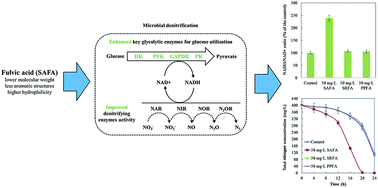
The influences of three fulvic acids, referred to as SAFA (purchased from Shanghai Aladdin Reagent Company), SRFA (Suwannee River Fulvic Acid from International Humic Substances Society (IHSS)) and PPFA (Pahokee Peat Fulvic Acid from IHSS), with different chemical composition, structure, hydrophobicity and aromaticity degree on biological wastewater denitrification were investigated. It was found that SAFA remarkably enhanced the denitrification performance, while SRFA and PPFA had no obvious effect. Mechanistic study revealed that SAFA remarkably improved the metabolism of a carbon source (glucose) by stimulating the activities of key enzymes (hexokinase, 6-phosphofructose kinase, glyceraldehyde-3-phosphate dehydrogenase (GAPDH), and pyruvate kinase) involved in glycolysis. The increase of glucose utilization resulted in the increase of intracellular NADH/NAD+ ratio that favored microbial denitrification. Meanwhile the bacterial growth was significantly improved in the presence of SAFA. Further studies revealed that SAFA also increased the activities of key denitrifying enzymes, including nitrate reductase (NAR), nitrite reductase (NIR), nitric oxide reductase (NOR), and nitrous oxide reductase (N2OR), thus enhancing the reduction of nitrate and transformation of its intermediates, especially nitrite and nitrous oxide. All the above positive effects posed by SAFA might be attributed to its lower molecular weight, less complex aromatic structures with predominantly aliphatic carbons and higher hydrophilicity than SRFA and PPFA, which lead to a more active interaction with denitrifying microorganisms via metabolism process regulation. A better knowledge of the relationship between molecular structure of fulvic acids and microbial denitrification activity may be of practical interest in the nitrogen cycle in nature's niches.

Introduction

Humic substances (mainly composed of humic acids and fulvic acids), derived from the decomposition of plant, animal, and microbial cells, are among the most widely distributed organic materials on the planet.1,2 It has been widely reported that there are humic substances in the influent and effluent of municipal wastewater treatment plants and in almost all aquatic and terrestrial environments. For example, the effluent humic substances concentration in a municipal wastewater treatment plant (WWTP) in Crete (Greece) was around 80 mg L−1, and its average value was 12.6 mg L−1 in a municipal WWTP of Shanghai (China).3,4 The conformational nature of humic substances is supposed to be collections of diverse, relatively small and heterogeneous organic molecules, and possess a variety of functional groups, such as carboxyl, phenolic, alcoholic hydroxyl, ketone, quinone, and aldehyde,5,6 which allows humic substances to interact with natural and anthropogenic chemicals in the environment, and thus play a key role in the transport, fate, and redox conversion of organic and inorganic compounds both in chemically and microbially driven reactions.7–9

Microbial denitrification, a well-known pathway by which fixed nitrogen such as nitrate returns to the atmosphere from terrestrial and aquatic environments, constitutes one of the main branches of the global nitrogen cycle.10,11 In this process, some nitrogen intermediates, such as nitrite and nitrous oxide can be accumulated. Nitrite has been proven to be toxic to aquatic organisms, wastewater treatment microbes and human health,12–14 and nitrous oxide is one of the most important greenhouse gas for having a 300-fold higher global warming potential than carbon dioxide.15 Therefore microbial denitrification is closely related to the occurrence of global environmental problems, ranging from aquatic eutrophication to climate change.16 Although previous studies have shown that humic acids can influence denitrification,17,18 it is well known that the properties of humic substances can vary significantly with the changes of their chemical composition, structure and functional groups.19,20 For example, fulvic acids have lower average molecular weight and less reversible redox sites (such as quinone moieties) than humic acids, whereas humic acids show more aromaticity and color than fulvic acids.20–22 It seems that fulvic acids and humic acids may show different influence on denitrification. In addition, for fulvic acids, their properties are varied with the source.21 Until now, however, the investigation of fulvic acids with different characteristics on denitrifying microorganism has seldom been made.

In this study, the effects of fulvic acids on microbial denitrification was investigated by using three commercially available fulvic acids with differ chemical composition, structure, hydrophobicity and aromaticity degree, which are referred to as SAFA (purchased from Shanghai Aladdin Reagent Company), SRFA (Suwannee River Fulvic Acid from International Humic Substances Society (IHSS)) and PPFA (Pahokee Peat Fulvic Acid from IHSS), respectively. Firstly, the main characteristics of SAFA, SRFA and PPFA were assayed by elemental composition analysis, Fourier transform infrared spectroscopy (FTIR), fluorescence excitation–emission matrix (EEM) and 13C-NMR analysis. Then, the comparison among three fulvic acids affecting denitrification performance was made. Finally, the mechanisms for SAFA significantly enhancing microbial denitrification and reducing the accumulation of nitrogen intermediates were investigated from the aspects of carbon source (glucose) metabolism, reducing power generation, cell proliferation and denitrifying enzymes activity.

Experimental

Fulvic acids

Three available fulvic acids, referred to as SAFA (purchased from Shanghai Aladdin Reagent Company), SRFA (Suwannee river fulvic acid, from IHSS) and PPFA (Pahokee peat fulvic acid, IHSS) were used in this study without further purification.

Experiments of the effect of fulvic acids on denitrification

Paracoccus denitrificans (American Type Culture Collection (ATCC) 19367, USA), was used as the model microbe in this study, owing to its widely appearance in the aquatic and soil environments.23 Prior to experiments, the microorganism was grown in LB (Luria–Bertani) broth at 30 °C in a shaker with constant agitation (160 rpm) for 24 h and harvested in the early stationary growth phase according to our previous publication.24 The cells were then centrifuged at 5000g for 5 min, washed thrice and resuspended with 0.1 M PBS (pH 7.4). The experiments were conducted in serum bottles with the prepared mineral medium. The mineral medium was prepared according to our previous publication with minor modification (g L−1): glucose, 4.0; Na2HPO4, 2.556; KH2PO4, 0.272; MgSO4·7H2O, 0.1; NH4NO3, 1.16; KNO3, 1.45, and trace elements solution of 50 μL L−1.24 The trace elements contained (g L−1): FeSO4·7H2O, 2.50; MnCl2·4H2O, 0.02; ZnCl2, 0.34; Na2MoO4·2H2O, 0.242; CuCl2·2H2O, 0.135; and EDTA-Na2, 7.30. The nitrogen source was 400 mg NO3-N per L. Aqueous solutions of FAs were prepared by dissolving 25 mg of the solid fulvic acid in 50 mL of the mineral medium above, respectively. The fulvic acids concentration of each condition was 0 (control), 10 and 50 mg L−1, respectively. It was observed that the addition of FAs did not significantly affect the pH of the mineral medium. Besides, another set of experiment was carried out using the same medium above expect for the addition of glucose and the same fulvic acid addition conditions were respectively 0 (control) and 50 mg L−1, to evaluate the potential role of FAs as carbon source for denitrification. After the addition of fulvic acid bulk solution, liquid bacteria suspension was added to make the initial OD600 value being 0.01 in each bottle. Gas argon was purged into each bottle for 10 min to ensure the anaerobic condition. All bottles were sealed and placed in a shaker (160 rpm) with constant temperature of 30 °C, and the concentrations of NO3-N, NO2-N, N2O and glucose were measured during the experiments.

Fourier transform infrared (FTIR) spectroscopy

FTIR spectroscopy analysis was applied to obtain the major functional groups information of FAs. The fulvic acid samples were prepared by mixing 1 mg of freeze-dried sample and 300 mg of IR-grade potassium bromide (KBr), grounded and homogenized to reduce light scatter. After grinding, the subsample was compressed in chip module under the pressure of approximately 20[thin space (1/6-em)]000 psi to form a KBr window. The FTIR analysis was set to scan from 4000 to 400 cm−1 with a Nicolet 5700 FTIR spectrometer (Nicolet Instruments, Madison, WI). The spectrum of each sample was acquired by prior deduction of the background spectra (pure KBr) from the spectra of KBr-mixed sample by using the Omnic (Version 3.1) software supplied by Nicolet Instruments.

Fluorescence analysis

Fluorescence measurements were conducted using a luminescence spectrometry (Fluoromax-4 Spectrofluorometer, HORIBA Scientific, France). To obtain the spectra of fluorescence excitation–emission matrix (EEM), the excitation wavelengths were increased from 250 to 550 nm at 5 nm increments, and the emission wavelengths were detected from 350 to 650 nm every 5 nm. 50 mg L−1 of fulvic acids were measured under pH 7.0 ± 0.1 (the pH adjusting process was under N2 atmosphere), and the ionic strength was 0.01 M KCl. The EEM plots were generated from fluorescence spectral data using Origin Pro 8.0 software.

Solid-state 13C-NMR analysis

The solid-state 13C-NMR analysis of three fulvic acids were acquired at 100.69 MHz on a Bruker Avance 400 NMR spectrometer. A standard 7.0 mm magic angle spin (MAS) broad band probe head was used in the experiments and spinning speed of the rotor was set at 5 kHz. The acquisition time and delay time were 1.2 ms and 5 s, respectively. The 13C-NMR spectra were normalized by setting their total area as 100% and the distribution of different carbons in three fulvic acids were compared. The areas of the spectra that were integrated were 0–90 ppm (aliphatic carbon), 90–110 ppm (acetal carbon), 110–160 ppm (aromatic carbon), 160–190 ppm (carboxylic carbon) and 190–220 ppm (carbonyl carbon).

Assays of NADH and NAD+

The assays of NADH and NAD+ was conducted according to the our previous publication.25 Duplicate samples (1 mL each, for both NAD+ and NADH measurement) were centrifuged at 12[thin space (1/6-em)]000g for 5 min. After removing the supernatant, 300 μL of 0.2 M HCl (for NAD+ extraction) or 0.2 M NaOH (for NADH extraction) was added to re-suspend the pellets. The samples were bathed at 50 °C for 10 min afterwards, and then cooled down to 0 °C by ice. Thereafter, the extracts were neutralized by adding 300 μL of 0.1 M NaOH (for NAD+ extraction) or 300 μL of 0.1 M HCl (for NADH extraction) drop-wise while vortexing. Supernatants were obtained by centrifugation at 12[thin space (1/6-em)]000g for 5 min and transferred to new tubes for measurement immediately.

The intracellular NADH and NAD+ concentrations were determined by the enzymatic cycling assay. The mixture of cycling assay consisted of equal volumes of 1.0 M Bicine buffer (pH 8.0), ethanol, 40 mM EDTA (pH 8.0), 4.2 mM thiazolyl blue (MTT), and twice the volume of 16.6 mM phenazine ethosulfate (PES), which was then incubated at 30 °C for 10 min. The reaction mixture was prepared as following: 50 μL neutralized cell extract, 0.3 mL distilled water, and 0.6 mL reagent mixture. The reaction was started by adding 50 μL of alcohol dehydrogenase (ADH, 500 U mL−1). The absorbance at 570 nm was checked every 30 s for 5 min at 30 °C. The concentrations of NADH and NAD+ were calibrated with 0.01–0.05 mM standard solutions of NADH and NAD+. The final NAD+ and NADH levels were calculated as per unit protein and the content of protein was determined according to the reference with bovine serum albumin as standard.26

Enzyme activities assay

In order to get the crude cell extracts for the following enzymes activities assays, cells were harvested at reaction time of 20 h and centrifuged at 5000g for 10 min, which were then washed thrice and resuspended with 0.1 M PBS (pH 7.4). Thereafter, the suspension was disrupted by sonication at 20 kHz for 5 min, and the cell debris was removed by centrifugation at 14[thin space (1/6-em)]000g for 10 min (4 °C). The crude cell extracts were immediately used for the determination of specific enzyme activities. All enzymatic activity was calculated as the amount of converted substrate per minute per milligram of protein, indicating that the enzymatic activities were compared based on the equal protein content.

The assays of HK, PFK, and PK activity, were according to the literature.27 The GAPDH activity was measured by the assay kit, which was purchased from Sciencell Research Laboratories (America). HK activity was determined by measuring the decrease of NADP at 340 nm and the reaction mixture (1 mL) contained 100 mM Tris–HCl (pH 7.5), 60 mM MgCl2, 1 mM DTT, 0.5 mM NADP+, 2 mM ATP, 15 mM glucose, 2 U glucose-6-phosphate dehydrogenase, and 300 μL of cell extract. PFK activity was assayed by monitoring the decrease of NADH in absorbance at 340 nm and the reaction mixture (1 mL) contained 50 mM imidazol-HCl (pH 7.0), 0.05 mM ATP, 5 mM MgCl2, 1 mM EDTA, 0.25 mM NADH, 0.25 mM fructose-6-phosphate (F6P), 0.5 U aldolase, 0.5 U glyceralphosphate dehydrogenase, 0.5 U triosephosphate isomerase, and 300 μL of cell extract. PK activity was measured spectrophotometrically at 340 nm through the oxidation of NADH to NAD+ and the reaction mixture (1 mL) contained 0.1 M Tris–HCl (pH 7.5), 5 mM ADP, 1 mM DTT, 10 mM KCl, 15 mM MgCl2, 0.5 mM phosphoenolpyruvate, 0.25 mM NADH, 10 U lactate dehydrogenase, and 100 μL of cell extract. The specific enzyme activities were determined as the gradient of the absorbance variation divided by protein content.

For determining the activities of denitrifying enzymes (NAR, NIR, NOR, and N2OR), the assay mixture (1.7 mL) contained 10 mM PBS buffer (pH 7.4), 1 mM methyl viologen, 5 mM Na2S2O4, and 5 mM reaction electron acceptor (KNO3, NaNO2, NO or N2O). All the above substances were diluted from stock solution and saturated solutions of NO and N2O. The saturated solutions (2.0 mM for NO and 25 mM for N2O) were prepared by purging pure NO or N2O gas into Milli-Q water continuously for 5 min. The preparation of NO solution was conducted under anaerobic circumstance or Ar protection for preventing NO oxidation. The reaction for each enzymes was started by adding 0.3 mL crude cell extracts into assay mixture. Then the mixture was immediately settled in a 30 °C incubator, and the data were collected every 10 min. The increased or decreased NO2-N concentration was detected by a spectrophotometer for NAR and NIR measurements, and the consumptions of NO or N2O in mixture were recorded by corresponding microsensors (Unisense, Denmark) for determination of NOR and N2OR. The activities of NAR and NIR were expressed respectively as the production and reduction of μmol nitrite per (min mg protein). For NOR and N2OR, the units of enzymatic activities were the consumptions of μmol nitric oxide per (min mg protein) and μmol nitrous oxide per (min mg protein), respectively.

Other analytical methods

The variations of NO3-N and NO2-N during denitrification were obtained by measuring the supernatant after centrifugation of liquid samples at 12[thin space (1/6-em)]000g for 5 min. The determination of N2O was conducted by a gas chromatograph (GC) (Agilent 7820A, USA) with an electron capture detector (ECD). The N2O in gas was directly sampled and injected into the sample inlet of GC by a syringe, and the N2O in aqueous phase was detected after using headspace with equilibrium temperature and time of 25 °C and 3 h, respectively. The glucose utilization by P. denitrificans in the presence of fulvic acids was measured according to the phenol-sulfuric acid method.28 The optical density (OD) at 600 nm was used to evaluate the cellular growth of P. denitrificans. The intracellular reactive oxygen species (ROS) production induced by fulvic acids were determined by a fluorescence assay.25 The C, H, N and O contents of FA were determined by elemental analyzer Vatio EL III (Elementar, German). O content was calculated by difference: O% = 100 − (C + H + N)%. Before analysis, the samples were freeze-dried.

Statistical analysis

All tests were performed in triplicate, and the results were expressed as mean ± standard deviation. An analysis of variance (ANOVA) was used to test the significance of results and p < 0.05 was considered to be statistically significant.

Results and discussions

Chemical and spectroscopic characteristics of different fulvic acids

The elemental compositions and the atomic ratios of the SAFA, SRFA and PPFA are reported in Table 1. Carbon (C) and oxygen (O) were the two major elements of three fulvic acids, and their sum accounted for over 90% of the total elements measured in each fulvic acids. The SRFA and PPFA contained more C than the SAFA (52.96% and 50.19% vs. 41.10%). Compared with the SRFA, the PPFA contained less C, H, and O and more N. The SAFA had the greatest content of O and the lowest C among three fulvic acids, and thus the O/C ratio in SAFA (0.99) was much greater than that in SRFA and PPFA (0.62 and 0.64). It was reported that the O/C ratio was correlated with the oxidation degree of humic substances.29 The lower value of O/C ratio was observed in SRFA and PPFA, suggesting that these two fulvic acids had more condensed aromatic structures than SAFA, and the higher O/C ratio obtained in SAFA was attributed to a relatively high O-alkyl and carboxylic acid composition.29,30 The atomic H/C ratio has been used as a descriptor for the degree of HS aromaticity, the higher value observed in SAFA than SRFA and PPFA indicating the significant portions of aliphatic functional groups in SAFA.29,31 The low value of the C/N ratio in PPFA compared with SAFA and SRFA indicated the presence of a resistant form of N in PPFA was more than SAFA and SRFA, which might derived from protein decomposition products.32,33
Table 1 Comparison of the elemental composition of three fulvic acidsa
  Content (at.%) Atomic ratios
C N H O S H/C O/C C/N
a The data reported are the average value.b Non-detectable.
SAFA 41.10 0.96 3.61 54.33 NDb 1.05 0.99 49.78
SRFA 52.96 0.49 4.26 42.09 NDb 0.96 0.62 86.04
PPFA 50.29 1.69 3.96 43.05 NDb 0.94 0.64 34.67


The relatively simple and cheap Fourier transform infrared (FTIR) spectroscopy is increasingly used for the characterization of HS by offering direct information about the presented functional groups in the fraction analyzed.34 Comparisons of the FTIR spectra of three fulvic acids in Fig. 1 illustrated that both spectra of SRFA and PPFA had bands of 2942 cm−1 (asymmetric and symmetric C–H stretching of alkyl structures),34,35 1722 cm−1 (undissociated carboxyl groups ν(C[double bond, length as m-dash]O) vibrations)30,35 with a shoulder at 1623 cm−1 (the stretching C[double bond, length as m-dash]O of groups amide and quinones, aromatic C[double bond, length as m-dash]C),36,37 1400 cm−1 (CH2 asymmetric bending and carboxylate symmetric stretching motions, C–H deformation of aliphatic and CH3 groups)34 and 1233 (or 1206) cm−1 (C–O stretch vibrations in alcohols, phenols, and carboxyl groups),30,38 indicating there were no significant differences of functional groups between SRFA and PPFA. However, the spectrum of SAFA showed different spectroscopic features from SRFA and PPFA. For example, the broad band of 3400 cm−1 caused by the stretching vibration of H-bonded OH of phenolic, carboxylic and alcoholic groups37,38 present in SAFA but was not observed in both SRFA and PPFA. The intense band at about 1593 cm−1 that only appeared in the SAFA spectrum are due to the aromatic/olefinic C[double bond, length as m-dash]C, and C[double bond, length as m-dash]O in carboxyl, ketone and quinone groups.36,38 Another characteristic band at 1041 cm−1 of the SAFA spectrum was reported to be relevant with C–O stretching of carbohydrates and alcohols, as well as to C–C stretching motions of aliphatic groups.19,39 Moreover, the relationship among the absorbance of the absorption band in the 2928 cm−1 and 1065 cm−1, can be used as the hydrophobicity index (HI) for expressing the relationship among apolar (CH3) and polar (–OH, C–O) groups respectively.37 In our study, the HI value of SAFA, SRFA and PPFA were 0.87, 1.10 and 1.13. The lower HI value was detected in SAFA, suggesting SAFA came out more hydrophilic than SRFA and PPFA.


image file: c5ra26885k-f1.tif
Fig. 1 Comparison of the FTIR spectra of SAFA, PPFA and SRFA.

The fluorescence excitation–emission matrix spectrum of SAFA, PPFA and SRFA are shown in Fig. 2. It can be seen that two apparent fluorophores (i.e., peak A at Ex = 315–335 nm and Em = 425–475 nm, and peak B at Ex = 250–300 nm and Em = 450–500 nm) were observed in PPFA, but only peak A appeared in SAFA and SRFA. These two fluorophores were observed in fulvic fractions analyzed in other publications and mainly composed of carboxylic-like and phenolic-like chromophores,40–42 which is consistent with FTIR analysis. Also, the order of spectrum and peak intensity was PPFA > SRFA > SAFA. It was also reported that the fluorescence intensity is related with the molecular size of the fulvic acid and polycondensation of aromatic compounds within macromolecules.19 Higher intensity of fluorescence peaks suggest the existence of extended, linearly-condensed aromatic ring frameworks and other unsaturated bonds, which are mainly connected with large molecular size, aromatic polycondensation and humification degree; whereas lower peak intensity is associated with the presence of simple structural components, that is, comparatively small molecular size, high content of aliphatic fractions and low degrees of conjugated chromophores, aromatic polycondensation and humification.43,44 Further analysis using 13C-NMR also indicated that SAFA contained more aliphatic carbon than PPFA and SRFA (53.7% vs. 28.2% and 43.2%, Table S1). Therefore, it can be concluded that the aromaticity of PPFA and SRFA is higher than that of SAFA.


image file: c5ra26885k-f2.tif
Fig. 2 Fluorescence excitation–emission matrix spectra of three fulvic acids.

Effects of fulvic acids on denitrification performance

The effects of three fulvic acids on denitrification of Paracoccus denitrificans at different concentrations are shown in Fig. 3. After reaction for 24 h, as seen in Fig. 3a and b, the concentration of nitrate in the control and 10 mg L−1 of SRFA and PPFA were respectively 39.8, 36.2 and 37.2 mg L−1. As the concentrations of SRFA and PPFA increased to 50 mg L−1, the corresponding nitrate concentration were 33.2 and 32.2 mg L−1, which suggested that the presence of SRFA and PPFA exhibited slight effect on nitrate reduction (p > 0.05). Nevertheless, in the test of 10 mg L−1 SAFA, the final nitrate concentration was 0.2 mg L−1. Further increasing SAFA to 50 mg L−1 caused a much higher denitrification performance and the nitrate was observed eliminated at 20 h. So the nitrate reduction process of P. denitrificans was significantly improved by SAFA at the dose investigated in this study (p < 0.05). Moreover, it can be seen from Fig. 3c and d that the variations of nitrite were close to the control after the addition of SRFA or PPFA, and the final nitrite in all SRFA and PPFA tests were almost the same (nearly 75 mg L−1) after 24 of reaction. However, in the presence of SAFA, the accumulation of nitrite was decreased with the increase of SAFA and the nitrite was non-detectable at the end of tests in all SAFA tests. From Fig. 3e and f, the amount of total N2O generated in SRFA and PPFA tests at 10 mg L−1 were similar to the control test (0.230, 0.234 and 0.240 mg N2O-N per mg TN removed, respectively), and were slightly decreased at 50 mg L−1 of SRFA and PPFA (0.209 and 0.204 mg N2O-N per mg TN removed). By contrast, it was also found that the use of SAFA remarkably decreased the generation of N2O during the denitrification. In the SAFA tests, the N2O generation was decreased to 0.138 mg N2O-N per mg TN removed with the dose of 10 mg L−1 SAFA, and a much lower N2O generation (0.068 mg N2O-N per mg TN removed) was observed with further increasing the SAFA to 50 mg L−1. Clearly, the presence of SRFA and PPFA did not affect denitrification of P. denitrificans, while SAFA not only enhanced the denitrification performance, but reduced nitrite accumulation and N2O generation remarkably. In the following text, the mechanisms for three fulvic acids showing different influences on denitrification performance were investigated.
image file: c5ra26885k-f3.tif
Fig. 3 Comparison of three fulvic acids affecting the variations of NO3-N (a and b) and NO2-N (c and d), and total liquid and air phase N2O-N generation (e and f) during denitrification. Error bars represent standard deviations of triplicate tests.

Mechanisms of different fulvic acids affecting denitrification of P. denitrificans

During denitrification, heterotrophic denitrifiers metabolize carbon sources to obtain energy and reducing power.45 Apparently, the utilization of carbon sources is an important factor influencing the denitrification performance. Glucose has been used widely as a carbon source for denitrification, and its metabolism coupling with denitrification is illustrated in Fig. 4a. The data in Fig. 4b showed that the glucose consumption in the presence of 50 mg L−1 SRFA and PPFA was similar to that in the control. However, in the 50 mg L−1 SAFA test the glucose consumption was significantly increased (almost 1.5-fold of the control). The enhancement of carbon source uptake contributed to the significantly higher denitrification performance observed in the test of SAFA.
image file: c5ra26885k-f4.tif
Fig. 4 Schematic diagram of the transformation pathways of glucose (a), and the effects of FAs on the utilizing glucose concentration (b), the relative activities of key enzymes involved in glycolysis (c), and the intracellular NADH/NAD+ ratio (d) at concentration of 50 mg L−1. Error bars represent standard deviations of triplicate tests.

In order to dig out the reason for glucose utilization being affected by fulvic acids, several key enzymes involved in glycolysis were investigated. During glycolysis, glyceraldehyde-3-phosphate dehydrogenase (GAPDH) catalyze the conversion of glyceraldehyde-3-phosphate (G3P) to 1,3-bisphosphoglycerate (1,3BPG), is functioned as the only step for nicotinamide adenine dinucleotide (NADH) generation.46 Meanwhile, hexokinase (HK), 6-phosphofructose kinase (PFK), and pyruvate kinase (PK) catalyze the irreversible reactions, and thus are regarded as the key control points regulating glucose metabolism and transformation of its intermediates, such as G3P and 1,3BPG.47 The data in Fig. 4c showed that the GAPDH activity was increased in the presence of SAFA, and it reached 135% of the control at concentration of 50 mg L−1. As illustrated in Fig. 4a, the formation of G3P can be increased by the improvement of HK and PFK. From Fig. 4c it can be seen that the activities of HK and PFK were improved respectively to 137% and 132% of the control at 50 mg L−1 of SAFA. Both HK and PFK were improved, more G3P was generated for GAPDH catalyzation. In addition, Fig. 4a indicates that during GAPDH catalyzation, the conversion of 1,3BPG is mainly controlled by the activity of PK. In the current study the activity of PK was do enhanced by SAFA, which was 156% of the control (Fig. 4c). Moreover, it was also found in Fig. 4c that the addition of SRFA and PPFA did not cause significant improvement of the activities of these enzymes (p > 0.05). It should be emphasized that all three FAs (10 or 50 mg L−1) used in this study were not utilized as carbon source by P. denitrificans (Fig. S1). The stimulation towards these key enzymes enhanced glycolysis process, then the glucose utilization was therefore increased by SAFA.

Previous publications reported that some intermediates (such as reactive oxygen species (ROS)) produced in microbial process could pose negative influence on key enzymes involved in carbon source metabolism, such as GAPDH and PFK, thus resulted in the decrease of glycolytic activity.25,48 It was also observed in the literatures that the humic substances could relieve this side effect by functioning as the free radical scavenger owing to the presence of less complex structure, such as aliphatic groups.32,49,50 As seen from Table 1 and Fig. 2, SAFA, compared with SRFA and PPFA, had higher O/C and H/C ratios and lower fluorescence intensity, indicating it had a much more simple structures with predominantly aliphatic features and possibly an elevated degree of oxygenated substitutions. In our study, compared with SRFA and PPFA, lower ROS production was observed produced in the presence of SAFA (Fig. S2). It seems that one reason for SAFA increasing key glycolysis enzymes activities was due to its decreasing the oxidative stress generated in metabolism process.

The carbon source metabolism undertakes important functions in denitrifiers, such as the operation of electron transfer chain and the growth of bacteria.25 The NADH/NAD+ cofactor pair plays a major role in microbial catabolism, in which carbon source, such as glucose, is oxidized using NAD+ and producing reducing equivalents in the form of NADH.51 The mutual transformation between reduced NADH and oxidized NAD+ not only maintains the redox balance for continued cell growth, but also is responsible for the reduction of high-valent nitrogen compounds (such as NO3-N, NO2-N, N2O and NO) to N2.23 As seen in Fig. 4d, the intracellular NADH/NAD+ ratio was increased significantly by SAFA (239% of the control), but SRFA and PPFA showed limited effect on intracellular NADH/NAD+ ratio of denitrification (p > 0.05). The presence of SAFA therefore caused a more reductive environment than the control and other fulvic acids added tests, and finally led to the higher denitrification efficiency.

The FTIR analysis (Fig. 1) indicated that there were aromatic C[double bond, length as m-dash]C, carboxyl C[double bond, length as m-dash]O and COO groups in three fulvic acids, which had been reported to be the major components of the quinone-like structure.52 These quinone-like structures can be severed as reduced cofactors like NADH and channel electrons during denitrification.53 It was reported that P. denitrificans employed an effective and complex electron transfer chain to achieve the whole metabolism in cytoplasm, periplasm, and membrane.54 When fulvic acids reach cell periplasm or membrane of the bacteria, fulvic acid may interact with the electron transfer proteins located in the cell membrane and participate in the electron transfer process of denitrification. However, the distribution of hydrophobic and hydrophilic components in fulvic acid may influenced the interaction with microbes.55 The hydrodynamic size of fulvic acid rich in hydrophilic components is small in aqueous solution,56 which benefits the mutual interaction of fulvic acid and bacteria. Also, it has been reported that fulvic acids with greater hydrophobic property are easily self-assembled in larger hydrodynamic dimensions when dissolved in water,57 thus decreased the chance to interact with the microorganisms. According to the HI index, the hydrophilicity of SAFA was higher and hydrophobicity of both SRFA and PPFA was stronger. Compared with SRFA and PPFA, higher hydrophilicity detected in SAFA may offer more possibility for SAFA to interact with the cell membrane thus can functioned as the electron channel during denitrification, while SRFA and PPFA had limited effect on electron transfer owing to their higher hydrophobicity and self-association.

Since the presence of SAFA posed positive effects on glucose metabolism of P. denitrificans, the cellular growth was also possibly influenced. As shown in Fig. 5, there were no obvious differences in bacterial density (optical density at 600 nm, OD600) during the adaptation period (0–8 h) in all fulvic acids added tests. Nevertheless, in the exponential growth phase (8–20 h), the growth rates and bacterial densities in the presence of 50 mg L−1 SAFA became remarkably higher than those in the control and 50 mg L−1 of SRFA and PPFA. At time of 24 h the average OD600 value in the reactor of 50 mg L−1 SAFA was 1.882, which was significantly higher than that of control (1.23), SRFA (1.24) and PPFA (1.22). Similar observation was made when the dosages of fulvic acids were 10 mg L−1 (Fig. S3). Further analysis showed that the cell protein content was also greater in the test of SAFA than in other tests (Fig. S4). Obviously, among three fulvic acids only SAFA significantly improved the growth of P. denitrificans.


image file: c5ra26885k-f5.tif
Fig. 5 Effects of fulvic acids on the growth curves of P. denitrificans at 50 mg L−1. Error bars represent standard deviations of triplicate tests.

Different effects of humic substances on microbial growth behavior were observed in the literatures. Vallini et al. reported that humic acids stimulated the growth of autotrophic nitrifying bacteria, such as Nitrosomonas europaea and Nitrobacter agilis.58 Loffredo et al. found that both humic acids and fulvic acids showed strong inhibitory effect on the activity of Fusarium oxysporum, a kind of fungi strain.59 According to the study of Heil, the growth rate of a dinoflagellate species, Prorocentrum minimum in the presence of fulvic acids was greater than humic acids.60 It seems that the effects of humic substances on microbial growth depend on cell category. Moreover, the inhibitory action of humic substances on Fusarium oxysporum was related to the COOH group content in humic substances,59 while the highest molecular weight (>10[thin space (1/6-em)]000) and lowest molecular weight (<500) fractions of fulvic acid was observed induced the highest growth rate stimulation of Prorocentrum minimum.60 Therefore, the effects on microbial growth can also varied with the differences in the structural properties, molecular weight distribution, chemical composition and main functional groups components of the humic substances.

During denitrification, nitrate reductase (NAR), nitrite reductase (NIR), nitric oxide reductase (NOR), and nitrous oxide reductase (N2OR) are the well-known key enzymes responsible for reductions of nitrate to nitrite, nitrite to nitric oxide, nitric oxide to nitrous oxide, and nitrous oxide to nitrogen, respectively.23,45 As seen in Fig. 6, compared with the control, the presence of 50 mg L−1 SRFA or PPFA did not influence the denitrifying enzymes activities (p > 0.05). All enzymes investigated were improved by 50 mg L−1 SAFA, i.e., the relative activity of NAR, NIR, NOR, and N2OR were 119%, 162%, 146% and 171% of the control. It can be seen that SAFA induced a much faster reduction of nitrite, nitric oxide and nitrous oxide, which was an important reason for less nitrite accumulation and lower N2O generation observed in SAFA tests. The effects of humic substances on denitrifying enzymes activities were seldom reported. Yin et al. found that some quinone compounds can increased the activity of NAR and NIR of denitrifying bacteria,61 however, its mechanism has not been explained. In our study, the presence of SAFA not only increased the activity of NAR and NIR, but also induced higher activities of NOR, and N2OR. It has been extensively reported that NAR and NOR of P. denitrificans are membrane-bound while NIR and N2OR are periplasm-located.23,45 When interacted with the membrane cell of P. denitrificans, SAFA can positively influence the denitrifying enzymes via facilitating the enzyme–substrate interaction,55 thus improving the activities of these enzymes.


image file: c5ra26885k-f6.tif
Fig. 6 Effects of different fulvic acids on the activities of nitrate reductase, nitrite reductase, nitric oxide reductase, and nitrous oxide reductase at concentration of 50 mg L−1. Error bars represent standard deviations of triplicate tests.

Conclusions

In summary, compared with SRFA and PPFA, the presence of SAFA improved the glucose metabolism of P. denitrificans due to the higher activities of key enzymes involved in glycolysis, which resulted in the increase of NADH/NAD+ ratio and the enhancement of cell growth. Also, the SAFA strengthen the activities of denitrifying enzymes, especially NIR, NOR and N2OR. Therefore, improved denitrifying growth and higher nitrogen removal performance with lower nitrite accumulation and N2O generation were observed. The above positive effects posed by SAFA might be attributed to its lower molecular weight, less complex aromatic structures with predominantly aliphatic carbons and higher hydrophilicity than SRFA and PPFA, which lead to a more active interaction with P. denitrificans via metabolism process regulation. A better knowledge of the relationship between molecular structure of fulvic acids and microbial denitrification activity may be of practical interest in nitrogen cycle in nature niches.

Acknowledgements

This work was financially supported by the National Science Foundation of China (51425802, 51278354), the Program of Shanghai Subject Chief Scientist (15XD1503400), and the Fundamental Research Funds for the Central Universities.

References

  1. N. Janot, P. E. Reiller, G. V. Korshin and M. F. Benedetti, Environ. Sci. Technol., 2010, 44, 6782–6788 CrossRef CAS PubMed.
  2. J. A. Leenheer and J. P. Croué, Environ. Sci. Technol., 2003, 37, 18A–26A CrossRef CAS PubMed.
  3. N. Vakondios, E. E. Koukouraki and E. Diamadopoulos, Water Res., 2014, 63c, 62–70 CrossRef PubMed.
  4. J. Zhouying and C. Yinguang, Environ. Sci. Technol., 2010, 44, 8957–8963 CrossRef PubMed.
  5. R. Sutton and G. Sposito, Environ. Sci. Technol., 2005, 39, 9009–9015 CrossRef CAS PubMed.
  6. A. Piccolo, Soil Sci., 2001, 166, 810–832 CrossRef CAS.
  7. T. Borch, R. Kretzschmar, A. Kappler, P. Cappellen, M. Ginder-Vogel, A. Voegelin and K. Campbell, Environ. Sci. Technol., 2010, 44, 15–23 CrossRef CAS PubMed.
  8. K. Watanabe, M. Manefield, M. Lee and A. Kouzuma, Curr. Opin. Biotechnol., 2009, 20, 633–641 CrossRef CAS PubMed.
  9. C. M. Paquete, B. M. Fonseca, D. R. Cruz, T. M. Pereira, I. Pacheco, C. M. Soares and R. O. Louro, Front. Microbiol., 2014, 5, 1–12 Search PubMed.
  10. D. E. Canfield, A. N. Glazer and P. G. Falkowski, Science, 2010, 330, 192–196 CrossRef CAS PubMed.
  11. S. Seitzinger, J. A. Harrison, J. K. BoHlke, A. F. Bouwman, R. Lowrance, B. Peterson, C. Tobias and G. Vancht, Ecol. Appl., 2006, 16, 2064–2090 CrossRef CAS PubMed.
  12. F. B. Jensen, Comp. Biochem. Physiol., Part A: Mol. Integr. Physiol., 2003, 135, 9–24 CrossRef.
  13. Y. Zhou, A. Oehmen, M. Lim, V. Vadivelu and N. Wj, Water Res., 2011, 45, 4672–4682 CrossRef CAS PubMed.
  14. J. Zhao, D. Wang, X. Li, Q. Yang, H. Chen, Y. Zhong, H. An and G. Zeng, Sci. Rep., 2015, 5, 8602 CrossRef CAS PubMed.
  15. A. Ravishankara, J. Daniel and R. Portmann, Science, 2009, 326, 123–125 CrossRef CAS PubMed.
  16. D. J. Wuebbles, Science, 2009, 326, 56–57 CrossRef CAS PubMed.
  17. D. R. Lovley, J. D. Coates, E. L. Blunt-Harris, E. J. Phillips and J. C. Woodward, Nature, 1996, 382, 445–448 CrossRef CAS.
  18. D. R. Lovley, J. L. Fraga and J. D. Coates, Environ. Microbiol., 1999, 1, 89 CrossRef CAS PubMed.
  19. J. Chen, B. Gu, E. J. Leboeuf, H. Pan and S. Dai, Chemosphere, 2002, 48, 59–68 CrossRef CAS PubMed.
  20. I. Christl, H. Knicker, I. Kögel-Knabner and R. Kretzschmar, Eur. J. Soil Sci., 2000, 51, 617–625 CrossRef CAS.
  21. F. J. Rodríguez and L. A. Núnez, Water Environ. J., 2011, 25, 163–170 CrossRef.
  22. R. Nopawan and M. A. Nanny, Environ. Sci. Technol., 2007, 41, 7844–7850 CrossRef.
  23. B. C. Berks, S. J. Ferguson, J. W. Moir and D. J. Richardson, Biochim. Biophys. Acta, Bioenerg., 1995, 1232, 97–173 CrossRef.
  24. X. Zheng, Y. Su, Y. Chen, R. Wan, K. Liu, M. Li and D. Yin, Environ. Sci. Technol., 2014, 48, 13800–13807 CrossRef CAS PubMed.
  25. Y. Su, X. Zheng, A. Chen, Y. Chen, G. He and H. Chen, Chem. Eng. J., 2015, 279, 47–55 CrossRef CAS.
  26. O. H. Lowry, N. J. Rosebrough, A. L. Farr and R. J. Randall, J. Biol. Chem., 1951, 193, 265–275 CAS.
  27. L. Peng and K. Shimizu, Appl. Microbiol. Biotechnol., 2003, 61, 163–178 CrossRef CAS PubMed.
  28. D. Wang, W. Zheng, X. Li, Q. Yang, D. Liao and G. Zeng, Biotechnol. Bioeng., 2013, 110, 827–837 CrossRef CAS PubMed.
  29. L. Zhang, A. Li, Y. Lu, L. Yan, S. Zhong and C. Deng, Waste Manag., 2009, 29, 1035–1040 CrossRef CAS PubMed.
  30. A. Muscolo, M. Sidari, E. Attinà, O. Francioso, S. Nardi and V. Tugnoli, Soil Sci. Soc. Am. J., 2007, 71, 75–85 CrossRef CAS.
  31. H. Jin, D. H. Lee and H. S. Shin, Org. Geochem., 2009, 40, 1091–1099 CrossRef.
  32. A. Muscolo and M. Sidari, Soil Sci. Soc. Am. J., 2009, 73, 1119–1129 CrossRef CAS.
  33. A. Jouraiphy, S. Amir, P. Winterton, M. E. Gharous, J. C. Revel and M. Hafidi, Bioresour. Technol., 2008, 99, 1066–1072 CrossRef CAS PubMed.
  34. T. Michael, S. Michael, S. Heide, K. Christian, H. Georg, M. Axel and M. H. Gerzabek, J. Plant Nutr. Soil Sci., 2007, 170, 522–529 CrossRef.
  35. E. Smidt and M. Schwanninger, Spectrosc. Lett., 2005, 38, 247–270 CrossRef CAS.
  36. K. Liu, Y. Chen, N. Xiao, Z. Xiong and L. Mu, Environ. Sci. Technol., 2015, 49, 4929–4936 CrossRef CAS PubMed.
  37. T. Cunha, E. H. Novotny, B. E. Madari, L. Martin-Neto, D. O. R. Mo, L. P. Canelas and V. D. M. Benites, Amazonian Dark Earths: Wim Sombroeks Vision, Springer, Netherlands, 2009 Search PubMed.
  38. S. Amir, A. Jouraiphy, A. Meddich, M. E. Gharous, P. Winterton and M. Hafidi, J. Hazard. Mater., 2010, 177, 524–529 CrossRef CAS PubMed.
  39. X. Li, M. Xing, Y. Jian and Z. Huang, J. Hazard. Mater., 2011, 185, 740–748 CrossRef CAS PubMed.
  40. D. M. McKnight, E. W. Boyer, P. K. Westerhoff, P. T. Doran, T. Kulbe and D. T. Andersen, Limnol. Oceanogr., 2001, 46, 38–48 CrossRef CAS.
  41. X. Chai, G. Liu, X. Zhao, Y. Hao and Y. Zhao, Waste Manag., 2011, 32, 438–447 Search PubMed.
  42. M. Yan, Q. Fu, D. Li, G. Gao and D. Wang, J. Lumin., 2013, 142, 103–109 CrossRef CAS.
  43. M. Fukushima, A. Kikuchi, K. Tatsumi and F. Tanaka, Anal. Sci., 2006, 22, 229–233 CrossRef CAS PubMed.
  44. X. Li, M. Xing, Y. Jian and Z. Huang, J. Hazard. Mater., 2010, 185, 740–748 CrossRef PubMed.
  45. W. G. Zumft, Microbiol. Mol. Biol. Rev., 1997, 61, 533–616 CAS.
  46. M. A. Sirover, Biochim. Biophys. Acta, Protein Struct. Mol. Enzymol., 1999, 1432, 159–184 CrossRef CAS.
  47. A. R. Saltiel and C. R. Kahn, Nature, 2001, 414, 799–806 CrossRef CAS PubMed.
  48. C. M. Grant, K. A. Quinn and I. W. Dawes, Mol. Cell. Biol., 1999, 19, 2650–2656 CrossRef CAS PubMed.
  49. A. C. García, L. A. Santos, F. G. Izquierdo, M. V. L. Sperandio, R. N. Castro and R. L. L. Berbara, Ecol. Eng., 2012, 47, 203–208 CrossRef.
  50. M. Aeschbacher, C. Graf, R. P. Schwarzenbach and M. Sander, Environ. Sci. Technol., 2012, 46, 4916–4925 CrossRef CAS PubMed.
  51. K. Y. San, G. N. Bennett, S. J. BerríOs-Rivera, R. V. Vadali, Y. T. Yang, E. Horton, F. B. Rudolph, B. Sariyar and K. Blackwood, Metab. Eng., 2002, 4, 182–192 CrossRef CAS PubMed.
  52. R. M. Cory and D. M. McKnight, Environ. Sci. Technol., 2005, 39, 8142–8149 CrossRef CAS PubMed.
  53. H. Liu, J. Guo, J. Qu, L. Jing, W. Jefferson, J. Yang and H. Li, Biodegradation, 2012, 23, 399–405 CrossRef CAS PubMed.
  54. P. John and F. R. Whatley, Nature, 1975, 254, 495–498 CrossRef CAS PubMed.
  55. S. Salati, G. Papa and F. Adani, Biotechnol. Adv., 2011, 29, 913–922 CrossRef CAS PubMed.
  56. D. Šmejkalová and A. Piccolo, Environ. Sci. Technol., 2007, 42, 699–706 CrossRef.
  57. S. Nardi, A. Muscolo, S. Vaccaro, S. Baiano, R. Spaccini and A. Piccolo, Soil Biol. Biochem., 2007, 39, 3138–3146 CrossRef CAS.
  58. G. Vallini, A. Pera, M. Agnolucci and M. M. Valdrighi, Biol. Fertil. Soils, 1997, 24, 243–248 CrossRef CAS.
  59. E. Loffredo, M. Berloco, F. Casulli and N. Senesi, Biol. Fertil. Soils, 2007, 43, 759–769 CrossRef CAS.
  60. C. A. Heil, Harmful Algae, 2005, 4, 603–618 CrossRef CAS.
  61. X. Yin, S. Qiao, J. Zhou and Z. Bhatti, Chem. Eng. J., 2014, 257, 90–97 CrossRef CAS.

Footnote

Electronic supplementary information (ESI) available: This file contains Table S1 and Fig. S1–S4. See DOI: 10.1039/c5ra26885k

This journal is © The Royal Society of Chemistry 2016
Click here to see how this site uses Cookies. View our privacy policy here.