DOI:
10.1039/C5RA25970C
(Paper)
RSC Adv., 2016,
6, 33723-33732
Effect of hybridization of organoclay with carbon black on the transport, mechanical, and adhesion properties of nanocomposites based on bromobutyl/epoxidized natural rubber blends
Received
5th December 2015
, Accepted 20th March 2016
First published on 22nd March 2016
Abstract
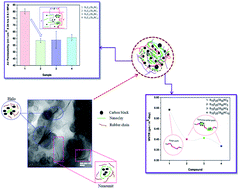
The present work provides extensive insight into the effect of hybridization of organoclay with carbon black and their structure–property relationships on nanocomposites based on bromobutyl rubber (BIIR)/epoxidized natural rubber (ENR) blends. Morphology studies reveal well-dispersed nanoclay with the formation of hybrid nanostructures. Synergistic interaction between carbon black and nanoclay increases the tensile modulus and tear strength of the nanocomposites. The effect of layered clay platelets on the transport properties invokes a drastic reduction in the air permeability of up to 25% and in the water vapor transmission rate of up to 35%, and an increment in the electrical and thermal conductivity of the rubber nanocomposites. The peel strength with the rubberized fabric is found to be good for the nanocomposite with a lower elastic modulus. These unique attributes were found to stem from the formation of well dispersed hybrid nanostructures. Rubber formulations with such suitably tailored nanostructures will find applications in next generation rubber-based industrial products.
1. Introduction
Recently, rubber nanocomposites have attracted research interest due to their superior functional properties. Nanofillers have various applications based on their structures and type.1 Layered clay platelets, such as montmorillonite, bentonite, hectorite, etc. have been used as reinforcing fillers due to their high aspect ratio.2,3 The large surface to volume ratio of the nanoclay plays a vital role in improving the properties of the composites. The large number of tiny nanoparticles has a higher exposed surface area to interact with the rubber matrix than that of a larger particle having the same net microscopic volume. The increase in the interfacial area of the small nanoparticles at lower concentrations contributes to the macroscopic properties.4 However, a well dispersed interfacial area between the nanoclay and the rubber leads to further improvement of the electrical properties, barrier properties, and thermal stability. The partial replacement of the carbon black with the nanoclay may sufficiently reduce the component weight and increase the durability.5 Arroyo et al. reported that a small amount of organoclay may replace the considerable amount of carbon black in a NR compound to give desired end use properties.6
In addition to the increment in the interlayer spacing due to the long organic chains, organic modifications thus provide functional groups that can interact well with the rubber matrix. This also considerably imparts surface hydrophobicity to the clay and thus to the rubber matrix. Bayer et al. developed rubber-toughened biopolymer/organoclay nanocomposite coatings with highly water repellent surface wetting characteristics and firm adhesion to metal surfaces. They noticed that the micro/nano-hierarchal surface features of the organoclay provided the superhydrophobicity of the nanocomposite. The effect is very pronounced providing a self-cleaning attribute in synthetic and fluoroacrylic rubbers. The tethering of montmorillonite platelets with fatty amine quaternary salts causes self-aggregation to form hydrophobic surfaces showing a Cassie–Baxter type wetting mode.7,8 Nielson and Gerlowski stated that nanoclay can effectively decrease the diffusivity and overall transport of water across a film due to the layered platelets.9 Naturally occurring bentonite clay is organically modified for improved compatibility with the organic rubber matrix, thereby achieving the desired benefits of the composites. In addition to becoming an organoclay, modification of nanoclay also increases the interspatial gap and reduces the surface energy, making it more compatible with the rubber matrix. The exfoliation of the nanoclay results in improvement in the properties such as an increase in the tensile properties, enhanced barrier properties, a decrease in the solvent permeability and an increase in thermal stability and flame retardance.3,10,11 Furthermore, the exfoliation of silicate layers into 1,4-polyisoprene (synthetic) natural rubber (NR) and epoxidized natural rubber (ENR) results in a great improvement in the properties.12 In this paper, we intend to use Cloisite 20, a bis(hydrogenated tallow alkyl)dimethyl salt with bentonite, to achieve complete exfoliation of the nanoclay in the rubber matrix due to a high d-spacing and surface modification of the clay. This is, therefore, expected to increase the barrier, thermal, and mechanical properties of the nanocomposites based on rubber blends. Thus, tire inner liners and inner-tubes are included among the potential industrial applications of these nanocomposites.
Bromobutyl rubber (BIIR) is commercially the most important derivative of butyl rubber. The advantage of using BIIR over butyl rubber (IIR) is its enhanced compatibility with unsaturated diene rubbers suitable for co-vulcanization. BIIR also offers better inter-ply adhesion, greater heat resistance, and a faster cure rate.13 BIIR is the most favored rubber for the construction of inner liners of tires, heat resistant tubes, bladders and pharmaceutical ware due to its lower permeability to gases.
On the other hand, epoxidized natural rubber (ENR) has excellent oil resistance, lower air permeability, and good damping characteristics.14,15 Noriko et al. claimed that blending of ENR with brominated butyl rubber significantly reduces the air permeability.16 This material has potential application in tire inner liners with low permeability. ENR is used as a compatibilizer in BIIR/NR blend composites, and it significantly improves blend compatibility, and mechanical and barrier properties.17 The addition of ENR to chlorobutyl rubber (CIIR) composites provides improved blend compatibility and gas barrier properties compared to CIIR/NR blend nanocomposites.18 Hence, ENR is blended suitably with BIIR to improve further the barrier properties of the rubber nanocomposites. However, the effects of hybrid fillers on the technical properties of novel BIIR–ENR blend nanocomposites are hardly found in the contemporary literature.
In this paper, we intend to prepare hybrid nanocomposites of BIIR–ENR blends filled with carbon black and bentonite nanoclay. The effect of the nanoclay and hybrid nanostructures on the morphology, and barrier, conductivity and adhesion properties is studied, keeping the wider scope of industrial applications of the nanocomposites in mind.
2. Experimental
2.1. Materials
ENR 50/Epoxyprene 50 (epoxidized natural rubber with 50 mol% epoxide) was provided by M/S Muang Mai Guthrie PCL, Thailand. BIIR-2255 (bromobutyl rubber) was purchased from M/S ExxonMobil Chemical, USA. Modified bentonite nanoclay (Cloisite 20) was purchased from Byk-Chemie GMBH, Germany. It is a bis(hydrogenated tallow alkyl)dimethyl salt with bentonite. Carbon black (GPF N 660 grade) was supplied by M/S Philips Carbon Black Limited (PCBL), India. Nytex 810 (naphthenic oil) was supplied by M/S Nynas, Belgium lab. Span-60 was procured from M/S Sigma Aldrich, USA. Raw material properties are consolidated in Table 1.
Table 1 Raw material properties
| Material |
Properties |
Value |
Units |
| BIIR |
Mooney viscosity ML(1 + 8) at 125 °C |
52 |
M |
| Density |
0.93 |
g cm−3 |
| Bromine content |
2 |
% |
| ENR |
Mooney viscosity ML(1 + 4) at 100 °C |
100 |
M |
| Density |
0.97 |
g cm−3 |
| Epoxidation |
50 |
mol% |
| Carbon black (GPF N 660) |
Density |
1.80 |
g cm−3 |
| Surface area |
42.2 |
m2 g−1 |
| Cloisite 20 (NC) |
Density |
1.77 |
g cm−3 |
| d-Spacing |
3.16 |
nm |
2.2. Preparation of rubber blend nanocomposites
Rubber nanocomposites were mixed by adopting a melt compounding method in a Brabender Plasticorder. Mixing of the nanocomposite was divided into two stages to achieve better homogenization of the fillers in the rubber matrix. The first stage of mixing (master batch) includes melt mixing of BIIR and pre-masticated ENR followed by the addition of nanoclay (NC) and other functional additives. The nanoclay was added at the beginning of the mix to achieve better dispersion in the rubber matrix. The addition of the curatives in the second stage of mixing provides the final batch. The mixing temperature was set at 90 °C and the rotor speed was kept around 50 rpm. The total mixing time of the rubber nanocomposites was 10 minutes. Rheological characteristics of the samples were obtained by using a moving die rheometer (MDR) at 170 °C. The samples were cured for characterization based on the optimum cure time (OCT) obtained from the MDR. Compound formulations are tabulated in Table 2.
Table 2 Compound formulation (all ingredients are measured in phr, parts per 100 g of rubber)
| Ingredients |
B75E25CB50NC0 |
B75E25CB50NC3 |
B75E25CB50NC5 |
B75E25CB50NC10 |
| Cure package includes ZnO, MBTS, sulphur, MOR, and PVI. |
| BIIR 2255 |
75 |
75 |
75 |
75 |
| ENR 50 |
25 |
25 |
25 |
25 |
| Process promoter |
16.5 |
16.5 |
16.5 |
16.5 |
| CI resin |
2 |
2 |
2 |
2 |
| CB N 660 |
50 |
50 |
50 |
50 |
| Cloisite 20 |
— |
3 |
5 |
10 |
| Cure packagea |
5.1 |
5.1 |
5.1 |
5.1 |
3. Characterization
Structural analysis of nanofillers and rubber vulcanizates with different dosages of nanoclay was performed using XRD (X-PERT PRO) with an angular sweep ranging from 2–12° 2θ and using a Cu anode target (λ = 0.154 nm).
The samples for TEM analysis were carefully made with an ultra cryo-microtome using a Leica ultracut. Since the samples are elastomeric in nature, ultramicrotomy was performed below the glass transition temperature of the blended rubbers (−70 ± 5 °C) using sharpened glass knives with a cutting edge of 45°. The dispersion of the nanoclay in the nanocomposites was analyzed extensively using analytical TEM. The cryotomed sections were supported on a copper grid for capturing photomicrographs. The microscopy was performed using an analytical TEMFEI-TECNAI G2 20S-USA, operating at an accelerating voltage of 120 kV.
Atomic Force Microscopy (AFM) measurements were carried out on a smooth sample surface using tapping mode probes with a constant amplitude. Phase contrasts of the rubber nanocomposites (2D & 3D) were obtained using an Agilent Technologies AFM 5500, Italy. A probe with a resonance frequency of 230 kHz and a spring constant of 48 N m−1 was used. The distribution of the nanoclay was analyzed from the phase image of the rubber blend nanocomposites.
The air permeability of the nanocomposites was measured by referring to GB 1038 using a Labthink permeability tester at 40 ± 1 °C. By measuring the pressure differences, the gas transmission rate (GTR) of the specimen was measured, and average values were reported.
The water vapor transmission rate (WVTR) was determined on a thin sheet using a WVTR SG 3/33, MOCON, USA following ASTM F 1249-06 at a temperature around 40 ± 0.5 °C and at a RH of 90 ± 3%.
The thermal conductivity of flat slab specimens was measured using guarded hot plate apparatus following ASTM C-177. The test temperature ranged from RT to 70 °C working at 220/240 volts AC. The hot surface temperature of the specimen was regulated using an electrical heating system. The thermal conductivity (α) was determined using Fourier’s law as follows:
| | |
q = −α(dT/dx) = α[(T1 − T2)/x]
| (1) |
where
q is the heat flux (W m
−2),
T1 and
T2 are the hot and cold surface temperature in °C,
x is the separated distance or thickness (m), and
α is the thermal conductivity (W (m
−1 K
−1)).
Electrical conductivity was measured using a Quadtech 7600 plus precision LCR meter, the brass electrode (IET Labs, Inc. NY) had a 0.05% basic measurement accuracy at the frequency of 1 MHz.
Tensile stress–strain properties of all the composites were tested using a Universal Testing Machine (UTM), a Hioks-Hounsfield UTM (Test Equipment Ltd, Surrey, England), as per the ASTM D412 standard. Tear strength (Die-C) was measured as per ASTM D624.
The adhesion strength of the composite and a reference rubber ply fabric was determined using an 180° peel test. The peel strength of all composites was determined using a Universal Testing Machine (UTM), a Hioks-Hounsfield UTM (Test Equipment Ltd, Surrey, England), as per the ASTM D413-98 standard.
4. Results and discussion
4.1. Assessment of nanostructural morphology
The X-ray diffractograms of the nanoclay (Cloisite 20) and BIIR–ENR nanocomposites are shown in Fig. 1. The XRD pattern of the nanoclay exhibits a sharp peak (001) at around 2θ = 2.91 (d-spacing of around 3.08 nm). In the nanocomposites, the signature peak of the nanoclay was absent. The pattern of the diffractogram is similar for all the samples revealing an exfoliated state of dispersion of the nanoclay in the rubber matrix. This is due to the existence of van der Waals forces between the long carbon chains of the organically modified clay and the rubber chains.19 Intercalation must register as a shift in the peak, which is not observed in the diffractogram. However, the weight fraction of clay is low in the nanocomposites hence its signature is less apparent.
 |
| | Fig. 1 XRD patterns of Cloisite 20 (NC) and BIIR–ENR nanocomposites with an angular sweep range of 2–12° 2θ. | |
The structural heterogeneities of the nanoclay in the nanocomposites were analyzed using TEM photomicrographs, shown in Fig. 2a–c. From Fig. 2a and b it is noticed that the nanoclay is well dispersed and completely distributed across the entire matrix. At a lower dosage of nanoclay addition, the formed hybrid nanostructures are visible. The development of such nanostructures increases as the dosage of nanoclay increases. The bending of the nanoclay around the carbon black particles (pink dotted box in Fig. 2a) reveals the signature of the ‘nano unit’ whereas the blue dotted circle represents a ‘halo’ in which carbon black particles surround the nanoclay. However, the photomicrograph of B75E25CB50NC10 (Fig. 2c) confirms the formation of agglomerated clay–black clusters due to an overdose of nanoclay. Konishi et al. reported that the hybrid fillers form a ‘nano-unit’ structure in the nylon 6 nanocomposites. The intermolecular interactions between the carbon black/nylon 6/organoclay typically deform the nanoclay platelets allowing them to curve around the CB particles and contours of the aggregates. They observed that the bending tendency of the layered silicates is not only caused by external mechanical forces but also by the relief of internal stresses generated by the geometrical mismatch.20 It is noticed that the inherent mismatches between the octahedral and double tetrahedral sheets induce hexagonal symmetry leading to curvature of the layers, a reflection of relieving the internal stresses. The formation of hybrid nanostructures in the nanocomposites is shown in Scheme 1. Similarly to the nanoclay platelets curving along the contours of the carbon black aggregates, the carbon black particles encompass the nanoclay stacks between them. Etika et al. identified such structures as a ‘halo’ due to the haloing effect of carbon black surrounding the clay platelets. They reported that due to the formation of such structures, the electrical and mechanical properties of epoxy composites filled with both carbon black and organoclay are affected.21 It is observed that synergism is achieved between the carbon black and nanoclay platelets due to the formation of unique ‘halo’ structures. The formation of hybrid nanostructures (NC–CB) and good interaction between the rubber and filler affects the formation of ‘nano-units’, ‘halos’ and ‘nano-channels’ which contribute to the overall improvement in filler interconnectivity.20–23 The formation of ‘nano-units’ and ‘halos’ as well as their significant contribution to the improvement in the properties have also been reported by many researchers. A substantial increment in the tensile properties (increase in the tensile strength of up to 153%) was also observed due to the formation of ‘nano-units’ and intercalated clay structures in SBR based hybrid nanocomposites containing carbon black and organoclay.24 Chattopadhyay et al. reported that the development of hybrid microstructures contributes to the mechanical and dynamic properties and filler effectiveness of ENR/CB/NC based nanocomposites.25
 |
| | Fig. 2 TEM photomicrographs of (a) B75E25CB50NC3, (b) B75E25CB50NC5 and (c) B75E25CB50NC10. | |
 |
| | Scheme 1 Formation of hybrid nanostructures (halo and nanounit) in B75E25CB50NC3. | |
Bhattacharya et al. noticed a significant enhancement in the barrier properties of dual filler system based SBR nanocomposites due to the development of zeta potential driven halos and nano-channels.26 It is noticed that the synergism between nanoclay and carbon black in forming hybrid nanostructures contributes to a significant improvement in the dispersion that in turn improves the overall properties. The formation of these nanostructures is frequent in the presence of well dispersed hybrid filler systems.24,26
The distribution of the nanoclay in the rubber matrix was analyzed using AFM with the tapping mode of operation. The elastic responses of the rubber and nanoclay display the exceptional morphology features of the NC. The phase contrast image of the samples clearly identifies the soft rubber matrix (dark phase) and stiff nanoclay particles (bright phase). AFM images of BIIR–ENR nanocomposites B75E25NC3, B75E25NC5, and B75E25NC10 (without carbon black) recorded in the tapping mode are shown in Fig. 3a–c respectively. In general, composites with a lower dosage of nanoclay exhibit well distributed NC. B75E25NC5 tends to have a unique distribution feature of the NC due to the formation of more hybrid nanostructures.
 |
| | Fig. 3 Phase image of (a) B75E25NC3, (b) B75E25NC5 and (c) B75E25NC10; 3D image of (d) B75E25NC3, (e) B75E25NC5 and (f) B75E25NC10. | |
The distribution of the nanoclay is uniform throughout the entire rubber matrix. The phase morphology of the B75E25NC10 nanocomposite shows the formation of agglomerated clay clusters indicating a poor distribution of the nanoclay in the rubber matrix. The 3D phase images [Fig. 3d–f] clearly depict the nature of the clay distribution in the nanocomposites.
4.2. Influence of hybrid nanostructures on barrier properties
The air permeability of the samples was measured and is presented in Fig. 4. The addition of the nanoclay significantly reduces the air permeability by up to 25% in the nanocomposites. Air permeability in the nanocomposites depends on the tortuous path offered by the nanoclay platelets.27 The addition of layered nanoclay platelets increases the tortuous path and substantially reduces the air permeability of the nanocomposites. The development of hybrid nanostructures further facilitates the reduction of permeability. The air permeation process in the rubber nanocomposites is shown in the inset of the figure. It is noticed that the formation of hybrid nanostructures and clay platelets effectively increases the tortuous path of air permeation (d < d′ < d′′). The addition of nanoclay platelets creates a tortuous path of diffusion d′ from the normal diffusion path (d) of the permeant. The development of hybrid nanostructures further increases the tortuous path to d′′ from d′. However, the dispersion of the nanoclay is significant in reducing the air permeability of the nanocomposites. The higher dosage of nanoclay results in agglomeration at the ENR phase preferentially, leading to an increase in the air permeability. Increase in the elastic modulus as well as the density of the composites also results in a considerable reduction in the air permeability.28 As the tortuous path offered by the clay platelets increases the gas barrier properties, it is important to investigate the effect of nanoclay dosage on water vapor transmissibility.
 |
| | Fig. 4 Air permeation characteristics of the samples with the addition of nanoclay. Inset: extended tortuous path (d′′) due to the formation of nanostructures. | |
Though the passage of water vapor through a rubber composite is dependent on the polar constituent,29,30 the structure–property relationship of the nanoclay must also be considered. Water vapor transmission rate (WVTR) characteristics of the samples were measured and are shown in Fig. 5. It is observed that the addition of nanoclay significantly reduces the WVTR of the nanocomposites (up to 35% reduction). The substantial decrease in the WVTR is attributed to the formation of nanostructures. The inset in the figure depicts the extension of the regular polar path to the tortuous polar path due to the formation of hybrid nanostructures in the nanocomposites. The random formation of hybrid nanostructures reduces the polar differences at the interface of the rubber blend and hence impedes the water vapor transmissibility.
 |
| | Fig. 5 WVTR test results of the BIIR–ENR nanocomposites. Insets (bottom): normal polar path; (top): extension of the normal polar path to a tortuous polar path by the nanostructures. | |
4.3. Thermal conductivity
The thermal conductivity of a material is defined as the ability to conduct heat. For non-metallic materials, the heat gets propagated by phonon carriers. The thermal conductivity is measured by calculating the heat flux developed through the rubber matrix due to the thermal concentration gradient. In general, rubber is a poor conductor of heat or has much less thermal conductivity due to the phonon scattering effect.31–33 The addition of organically modified nanoclay reduces the phonon scattering by minimizing the interfacial thermal resistance and thereby makes the rubber composite thermally conductive.34 Nanoclay has higher thermal conductivity than the rubber and transmits the heat faster. Thermal conduction is necessary for the nanocomposite to dissipate the heat uniformly. Fig. 6 illustrates the thermal conductivity of the nanocomposites at different dosages of nanoclay. It is noticed that the thermal conductivity increases with the increase in the dosage of the nanoclay.
 |
| | Fig. 6 Thermal conductivity as a function of temperature for the nanocomposites. | |
The mechanism of phonon scattering in the nanocomposite is shown in Scheme 2.
 |
| | Scheme 2 The formation of hybrid nanostructures increases the thermal conductivity of the nanocomposite by extending the free path so the phonons can travel before getting scattered at the rubber interface. | |
Due to the low free path (λ) of the phonon and frequent phonon scattering effect at the rubber interface, the net thermal conductivity of B75E25CB50NC0 is less. The scattering effect is attributed to the irregularity in the lattice of atoms located at the rubber interface through which the phonons move. The hybrid nanostructures bridge between the BIIR–ENR interface and act as an extended path for the phonons to travel. The extended free path of phonons now becomes (λ + x) and (λ + y) from λ before they are scattered. The increase in the free path of the phonon corresponds to the increase in the thermal conductivity of the nanocomposites.
4.4. Influence of filler hybridization on polarization
The electrical conductivity of the nanocomposites is reported at the frequency of 1 MHz and is shown in Fig. 7. The increase in the electrical conductivity of the nanocomposites is attributed to the interfacial polarization at the BIIR–ENR–NC–CB interfaces. The bentonite clay due to its layered tetrahedral–octahedral–tetrahedral (TOT) structure contains mobile ions on the platelet surface and exchangeable counter-ions between them. The application of an electric field ionically polarizes the silicate platelets due to the conductivity mismatch with the rubber matrix. Furthermore, the formation of hybrid nanostructures minimizes the strong bonding between the rubber chains and filler surface due to the haloing/shielding effect of carbon black around the nanoclay. The shielding of the nanolayers by hybrid nanostructures makes them available to cause polarization in response to the applied electric field.35 However, the decrease in the conductivity at a higher dosage of nanoclay contributes to the chain immobility at high frequency due to the higher elastic modulus. The formation of a more complicated nanostructure at the higher dosage of NC considerably restricts the chain responses to the polarization from the applied electrical field.36
 |
| | Fig. 7 Electrical conductivity of the nanocomposites at a frequency of 1 MHz. | |
4.5. Tensile stress–strain properties
The effect of the nanoclay on the stress–strain properties displays an interesting trend (Fig. 8). The tensile stress at different strains, ultimate tensile stress, and elongation at break are tabulated in Table 3. The initial addition of nanoclay reinforces the matrix by bridging the rubber blends at the interface. This bridging is effective at a lower dosage of nanoclay due to the formation of a well dispersed hybrid nanostructure. Interestingly, this increases both ultimate tensile stress and elongation. This infers that the lower dosage of nanoclay effectively reinforces the rubber matrix along with maintaining the chain flexibility. As the dosage of nanoclay increases, the compound becomes stiffer due to the higher tensile modulus and reduces the elongation significantly. The formation of the well dispersed hybrid nanostructure at the lower dosage of nanoclay exerts improved mechanical properties, whereas, the formation of clay agglomerates at higher dosage deteriorates the tensile properties.
 |
| | Fig. 8 Tensile stress–strain response of the nanocomposites. | |
Table 3 Mechanical properties of the nanocomposites
| Compound |
Stress at 100% (MPa) |
Stress at 200% (MPa) |
Stress at 300% (MPa) |
Ultimate tensile stress (MPa) |
Elongation at break (%) |
| B75E25CB50NC0 |
2.2 |
3.9 |
5.4 |
7.4 |
442 |
| B75E25CB50NC3 |
2.1 |
3.4 |
4.7 |
8.4 |
578 |
| B75E25CB50NC5 |
2.2 |
3.9 |
5.4 |
8.2 |
518 |
| B75E25CB50NC10 |
3.7 |
5.3 |
6.4 |
6.4 |
300 |
4.6. Tear strength
The tear strength of the composites is shown in Fig. 9. It is observed that the addition of the nanoclay increases the tear strength of the composites. The tear strength is found to be highest for B75E25CB50NC10. A crack originates at the weakest point in the nanocomposite due to the higher stress concentration and propagates across the entire path causing ultimate rupture. The development of hybrid nanostructures impedes the propagation rate and diverts the original path of crack, delaying the process of tear and increasing the strength. The extended path of tear and higher modulus enhance the tear resistance.
 |
| | Fig. 9 Tear strength of the composites with and without nanoclay. | |
4.7. Peel strength
The peel strength between the components is an essential criterion for any composite subjected to dynamic applications. The adhesion may be due to mechanical, physical or chemical forces acting at the interface between the components. The effects of nanoclay on the peel strength of the nanocomposites with rubberized fabric have been analyzed, and the results are shown in Fig. 10. The peel strength increases for B75E25CB50NC3, is maintained for B75E25CB50NC5, and decreases substantially for B75E25CB50NC10 compared to that of the base BIIR–ENR composite (B75E25CB50NC0). The influence of the nanoclay on the peel strength can be better explained by relating it to the elastic stiffness or Young’s modulus of the nanocomposites.37 Young’s modulus at smaller strains for the nanocomposites is shown in Fig. 11.
 |
| | Fig. 10 Peel strength between the rubberized fabric and nanocomposites. | |
 |
| | Fig. 11 Young’s modulus at smaller strains for the nanocomposites. | |
Young’s modulus increases in the following pattern: B75E25CB50NC3 < B75E25CB50NC0 = B75E25CB50NC5 < B75E25CB50NC10. The pattern confirms that a lower elastic modulus leads to higher adhesion strength in the nanocomposites. The reduction in the adhesion strength is attributed to the reduction in the chain mobility. Interestingly, at the lower dosage of nanoclay, the well dispersed nanostructures have a unique dual function. They reinforce the rubber matrix without affecting the chain mobility. In other words, the nanostructures facilitate the chain diffusion and reinforce the neighboring rubberized fabric by bridging effectively at the interface. This corresponds to the increment in both the adhesion strength as well as the ultimate elongation (Table 3) due to the dual action of the well-dispersed hybrid nanostructures at a lower dose of nanoclay. However, at a higher dosage of the nanoclay, the effect of decreased chain mobility predominates.38
5. Conclusions
The influence of organically modified platelet-type nanoclay and its nanostructure on the functional properties of BIIR–ENR rubber blend hybrid nanocomposites were investigated. TEM photomicrographs of the nanocomposites confirmed a well-dispersed nanoclay with the formation of hybrid nanostructures. The development of such ‘nano-units’ and ‘halos’ improves the filler connectivity and mechanical properties of the nanocomposites. The addition of the nanoclay significantly contributes to the barrier properties, thermal conductivity, and electrical conductivity of the rubber nanocomposites by increasing the diffusion path of the permeant, mean free path of the phonons, and interfacial polarization respectively. The peel strength between the rubberized fabric and nanocomposite was found to be good with a lower dosage of nanoclay. The formation of hybrid nanostructures leads to unique attributes, leading to the increased overall performance of the nanocomposites. In a nutshell, the tremendous improvement in the functional properties of the developed blend nanocomposites invokes the possibility of application of these materials for new generation tire inner liners, contributing to the development of green tires. Also, the developed hybrid nanocomposites may have applications as highly impermeable membranes and durable bladders.
Acknowledgements
The authors acknowledge gratefully the management of CEAT LIMITED, Vadodara for funding this work. We also thank Mr M. Praveen Kumar, Research Scholar (Chemical Engineering Department, IIT Kharagpur, India) for his contributions to the thermal conductivity measurements.
References
- T. Sabu and S. Ranimol, Rubber nanocomposites: preparation, properties and applications, John Wiley, Singapore, 2010 Search PubMed.
- Z. Wang and T. J. Pinnavaia, Nanolayer reinforcement of elastomeric polyurethane, Chem. Mater., 1998, 10(12), 3769–3771 CrossRef CAS.
- M. A. López-Manchado, B. Herrero and M. Arroyo, Preparation and characterization of organoclay nanocomposites based on natural rubber, Polym. Int., 2003, 52(7), 1070–1077 CrossRef.
- J. K. Nelson, Dielectric polymer nanocomposites, Springer, New York, 2010 Search PubMed.
- S. Kumar, G. B. Nando, S. Nair, G. Unnikrishnan, A. Sreejesh and S. Chattopadhyay, Effect of organically modified montmorillonite clay on morphological, physicomechanical, thermal stability, and water vapor transmission rate properties of BIIR–CO rubber nanocomposite, Rubber Chem. Technol., 2015, 88(1), 176–196 CrossRef CAS.
- M. Arroyo, M. A. Lopez-Manchado and B. Herrero, Organo-montmorillonite as substitute of carbon black in natural rubber compounds, Polymer, 2003, 44, 2447–2453 CrossRef CAS.
- I. S. Bayer, A. Steele, P. Martorana, E. Loth, S. J. Robinson and D. Stevenson, Biolubricant induced phase inversion and superhydrophobicity in rubber-toughened biopolymer/organoclay nanocomposites, Appl. Phys. Lett., 2009, 95, 063701–063702 Search PubMed.
- J. J. Lin, C. C. Chu, M. L. Chiang and W. C. Tsai, Manipulating assemblies of high-aspect-ratio clays and fatty amine salts to form surfaces exhibiting a lotus effect, Adv. Mater., 2006, 18, 3248–3252 CrossRef CAS.
- A. Bhatia, R. K. Gupta, S. N. Bhattacharya and H. J. Choi, Analysis of gas permeability characteristics of poly(lactic acid)/poly(butylene succinate) nanocomposites, J. Nanomater., 2012, 2012, 1–11 CrossRef.
- A. Okada and A. Usuki, The chemistry of polymer–clay hybrids, Mater. Sci. Eng., C, 1995, 3(2), 109–115 CrossRef.
- E. Giannelis, Thermal stability and mechanical properties of vinyl ester nanocomposites, NIST grant-quarterly report, 1998 Search PubMed.
- Y. T. Vu, J. E. Mark, L. H. Pham and M. Engelhardt, Clay nanolayer reinforcement of cis-1,4-polyisoprene and epoxidized natural rubber, J. Appl. Polym. Sci., 2001, 82, 1391–1403 CrossRef CAS.
- B. Rodgers, S. Solis, N. Tambe and B. B. Sharma, Alkylphenol disulfide polymer accelerators and the vulcanization of isobutylene based elastomers, Rubber Chem. Technol., 2008, 81(4), 600–624 CrossRef CAS.
- A. G. Margaritis and N. K. Kalfoglou, Miscibility of chlorinated polymers with epoxidized poly(hydrocarbons): (1) epoxidized natural rubber/poly(vinyl chloride) blends, Polymer, 1987, 28(3), 497–502 CrossRef CAS.
- P. L. Teh, Z. A. M. Ishak, A. S. Hashim, J. Karger-Kocsis and U. S. Ishiaku, Effects of epoxidized natural rubber as a compatibilizer in melt compounded natural rubber–organoclay nanocomposites, Eur. Polym. J., 2004, 40(11), 2513–2521 CrossRef CAS.
- N. Yagi, K. Muraoka, Y. Minagawa and K. Nishioka, Pneumatic tire, European Pat., EP1479724B1, 2006.
- K. Jiamjitsiripong and C. Pattamaprom, Effects of epoxidized natural rubber on gas barrier and mechanical properties of NR/BIIR composites, J. Elastomers Plast., 2011, 43(4), 341–355 CrossRef CAS.
- L. Li, J. Zhang, J. O. Jo, S. Datta and J. K. Kim, Effects of variation of oil and zinc oxide type on the gas barrier and mechanical properties of chlorobutyl rubber/epoxidised natural rubber blends, Mater. Des., 2013, 49, 922–928 CrossRef CAS.
- S. Sadhu and A. K. Bhowmick, Morphology study of rubber based nanocomposites by transmission electron microscopy and atomic force microscopy, J. Mater. Sci., 2005, 40, 1633–1642 CrossRef CAS.
- Y. Konishi and M. Cakmak, Nanoparticle induced network self-assembly in polymer–carbon black composites, Polymer, 2006, 47(15), 5371–5391 CrossRef CAS.
- K. C. Etika, L. Liu, L. A. Hess and J. C. Grunlan, The influence of synergistic stabilization of carbon black and clay on the electrical and mechanical properties of epoxy composites, Carbon, 2009, 47(13), 3128–3136 CrossRef CAS.
- P. Annadurai, S. Kumar, T. Mukundan, R. Joseph, P. Sarkar and S. Chattopadhyay, Effect of nanostructures of modified clay–carbon black on physico-mechanical, electrical, and acoustic properties of elastomer-based composites, Polym. Compos., 2014, 1–11, DOI:10.1002/pc.23351.
- S. Kumar, S. Chattopadhyay, A. Sreejesh, S. Nair, G. Unnikrishnan and G. B. Nando, Analysis of air permeability and WVTR characteristics of highly impermeable novel rubber nanocomposite, Mater. Res. Express, 2015, 2(2), 1–16 CrossRef CAS.
- S. Praveen, P. Chattopadhyay, P. Albert, V. G. Dalvi, B. C. Chakraborty and S. Chattopadhyay, Synergistic effect of carbon black and nanoclay fillers in styrene butadiene rubber matrix: development of dual structure, Composites, Part A, 2009, 40(3), 309–316 CrossRef.
- P. K. Chattopadhyay, N. C. Das and S. Chattopadhyay, Influence of interfacial roughness and the hybrid filler microstructures on the properties of ternary elastomeric composites, Composites, Part A, 2011, 42(8), 1049–1059 CrossRef.
- M. Bhattacharya, S. Biswas and A. K. Bhowmick, Permeation characteristics and modeling of barrier properties of multifunctional rubber nanocomposites, Polymer, 2011, 52(7), 1562–1576 CrossRef CAS.
- R. K. Bharadwaj, Modeling the barrier properties of polymer-layered silicate nanocomposites, Macromolecules, 2001, 34(26), 9189–9192 CrossRef CAS.
- B. D. Freeman, Y. Yampolskii and I. Pinnau, Materials science of membranes for gas and vapor separation, John Wiley, England, 2006 Search PubMed.
- J. Comyn, Polymer permeability, Elsevier, New York, 1985 Search PubMed.
- S. Kumar, S. Chattopadhyay, R. Padmanabhan, A. Sreejesh, S. Nair, G. Unnikrishnan and G. B. Nando, Tailoring permeation characteristics of bromobutyl rubber with polyepichlorohydrin and graphene nanoplatelets, Mater. Res. Express, 2015, 2(10), 1–17 CrossRef CAS.
- X. Xiong, J. Wang, H. Jia, E. Fang and L. Ding, Structure, thermal conductivity, and thermal stability of bromobutyl rubber nanocomposites with ionic liquid modified graphene oxide, Polym. Degrad. Stab., 2013, 98(11), 2208–2214 CrossRef CAS.
- Y. Hu, J. Shen, N. Li, H. Ma, M. Shi, B. Yan, W. Huang, W. Wang and M. Ye, Comparison of the thermal properties between composites reinforced by raw and amino-functionalized carbon materials, Compos. Sci. Technol., 2010, 70(15), 2176–2182 CrossRef CAS.
- S. S. Al-Juaid, E. H. M El-Mossalamy, H. Arafa, A. A. Al-Ghamdi, A. M. A. Daiem and F. El-Tantawy, Novel functional nitrile butadiene rubber/magnetite nano composites for NTCR thermistors application, J. Appl. Polym. Sci., 2011, 121(6), 3604–3612 CrossRef CAS.
- R. Kochetov, Thermal and Electrical Properties of Nanocomposites, Including Material Properties, TU Delft, Delft University of Technology, Finland, 2012 Search PubMed.
- R. C. Pihu and M. S. Ozmusul, Structure of linear polymeric chains confined between impenetrable spherical walls, J. Chem. Phys., 2003, 118, 11239–11248 CrossRef.
- Y. H. Zhang, Z. M. Dang, S. Y. Fu, J. H. Xin, J. G. Deng, J. Wu, S. Yang, L. F. Li and Q. Yan, Dielectric and dynamic mechanical properties of polyimide–clay nanocomposite films, Chem. Phys. Lett., 2005, 401(4), 553–557 CrossRef CAS.
- J. K. Klosowski, Science and technology of building seals, sealants, glazing and water proofing: second volume, ASTM: Philadelphia, 2011 Search PubMed.
- B. G. Crowther, The Handbook of rubber bonding (Revised Edition), Rapra Technology Limited, UK, 2003 Search PubMed.
|
| This journal is © The Royal Society of Chemistry 2016 |
Click here to see how this site uses Cookies. View our privacy policy here.