2,2′-Bis(trifluoromethyl)biphenyl as a building block for highly ambient-stable, amorphous organic field-effect transistors with balanced ambipolarity

Chi-Jui Chainga, Jyh-Chien Chen*a, Yu-Ju Kuoa, Hsiang-Yen Tsaoa, Kuan-Yi Wub and Chien-Lung Wangb
aDepartment of Materials Science and Engineering, National Taiwan University of Science and Technology, 43, Sec. 4 Keelung Road, Taipei 10607, Taiwan. E-mail: Jcchen@mail.ntust.edu.tw
bDepartment of Applied Chemistry, National Chiao Tung University, 1001 Ta Hsueh Road, Hsin-Chu 30010, Taiwan

Received 4th December 2015 , Accepted 7th January 2016

First published on 12th January 2016


Abstract

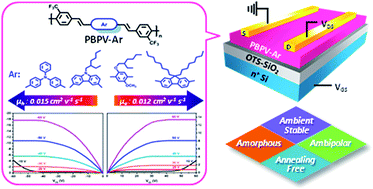
Novel conjugated polymers, PBPV–TPA, PBPV–CBZ, PBPV–MEH and PBPV–FLO, consisting of trifluoromethyl-substituted biphenyl (2,2′-bis(trifluoromethyl)biphenyl, CF3-BP) as the acceptor with various aromatic donors (triphenylamine TPA, carbazole CBZ, 2-(2-ethylhexyloxy)-5-methoxybenzene MEH and fluorene FLO, respectively) have been successfully synthesized. Their amorphous features, confirmed by wide-angle X-ray scattering, small-angle X-ray scattering and atomic force microscopy, are attributed to lateral side chains on the CBZ, MEH and FLO units, and the propeller geometry of the TPA unit. By integration of CF3-BPs into the polymer backbone, the ambipolarities and well-balanced charge mobilities of OFETs based on these polymers were successfully demonstrated. OFETs based on PBPV–FLO exhibit the highest hole mobility of 0.0152 cm2 V−1 s−1 and electron mobility of 0.0120 cm2 V−1 s−1. In addition, these OFETs also exhibit annealing-free characteristics and ambient stability. The OFET performance without encapsulation remained nearly unchanged in ambient conditions for up to 90 days. This could be attributed to the enhanced oxidative stability from their relatively deep HOMO energy levels and better moisture resistance from the trifluoromethyl substitution. Considering the ambipolar, annealing-free and ambient-stable properties of these CF3-BP-based amorphous conjugated polymers, the electron-accepting CF3-BP unit can be considered as a promising building block in preparing the easily processable conjugated polymers used in high-stability optoelectronic applications.

Introduction

Conjugated semiconducting polymers have been regarded as one of the key materials to realize organic electronics1–4 due to their advantageous molecular tailorability,5,6 tunable optoelectronic properties,7,8 solution processability9,10 and compatibility with plastic substrates.11,12 High charge mobility (μ) is essential to achieve high device performances. OFETs based on poly(3-hexylthiophene) (P3HT), which delivered the highest hole mobility of 0.1 cm2 V−1 s−1, were once regarded as the benchmark before 1996.13 The record of charge mobilities based on conjugated polymers has been refreshed over the last two decades. An unprecedentedly high mobility of 47 cm2 V−1 s−1 has been demonstrated by capillary-assisted self-assembly on nanogrooved substrates by Heeger.14 Conjugated polymers with high ambipolar mobilities both exceeding 1 cm2 V−1 s−1 have also been synthesized by various groups.9,15,16 Crystallinity and molecular orientation have proven important for organic field-effect transistors (OFETs).17–19 Molecular aligning processes, such as mechanical rubbing,20 solvent-vapor21 and thermal annealing22,23 have been widely exploited to induce better crystallinity and orientation of the thin-films of conjugated molecules. Although localized crystalline domains in thin films have been demonstrated, extension of these domains across sizable areas and a large number of different discrete devices remains problematic. Moreover, most of these processes are sometimes time-consuming and hard to be modified for roll-to-roll production with reliable reproducibility.

In addition to the morphology and molecular orientation, suitable combination of donor (D) and acceptor (A) conjugated units plays an important role to achieve the ambipolar charge transport characteristics. The ambipolarity of conjugated polymers are generally obtained after efficient acceptors, such as diketopyrrolopyrroles,24,25 isoindigos,26 naphthalene diimides,27,28 and halogens,29 were incorporated. The incorporation of some acceptors also eased the unacceptable long-term ambient stability of conjugated polymer in the presence of oxygen and moisture by deepening the highest occupied molecular orbital (HOMO) energy levels.30 Among the electron-accepting moieties, fluorine atoms have drawn extensive attention.31,32 Due to the strong electronegativity of fluorine atoms, fluorination of conjugated polymers lowers not only the lowest unoccupied molecular orbital (LUMO) but also the HOMO energy levels, which facilitates the electron injection from electrodes33,34 and promotes the oxidative stability,4 respectively.

In our previous research, 2,2′-bis(trifluoromethyl)biphenyl (CF3-BP) was integrated into the backbone to construct a novel thienylene-containing conjugated polymer CF3–PBTV. The n-type characteristic together with balanced ambipolarity and a high on/off ratio was successfully introduced into the p-type thienylenevinylene matrix. High ambient stability without discernable degradation in charge mobility, threshold voltage and on/off ratio was also detected.35 The ambient stability was attributed to the enhanced oxidative stability from its deep HOMO energy level and better moisture resistance from its hydrophobic trifluoromethyl substitution. Moreover, the favorable annealing-independent OFET performance was found due to its amorphous-like morphology introduced by the non-coplanarity of CF3-BPs.

In comparison to electron-accepting units, electron-donating building blocks have also been extensively developed recently. The recent emergence of heterocyclic and ladder-type electron donors, including naphthobisthiadiazole,36 benzodi(cyclopentadithiophene)37 and indacenodiselenophene,38 leads to the impressive progress in OFET performances. Compared with these lately-developed electron-donating units, electron donors such as triphenylamine (TPA), carbazole (CBZ), 2-(2-ethylhexyloxy)-5-methoxybenzene (MEH), fluorene (FLO) and their derivatives can be easily prepared and the synthetic procedures are well-established. These units have been comprehensively investigated and utilized in organic light-emitting diodes (OLEDs) in the early stages of conjugated polymer development. However, reports on the OFET performance and ambient stability of conjugated polymers based on these building blocks have been scarce, compared to those on heterocyclic and fused ones. Moreover, OFETs based on TPA, CBZ, MEH and FLO were generally p-type even when strong electron-accepting units, such as thienoisoindigos, benzothiadiazoles and diketopyrrolopyrroles, were incorporated.39–44

In this study, we report the synthesis and characterization of four novel solution-processable conjugated polymers (PBPV–TPA, PBPV–CBZ, PBPV–MEH and PBPV–FLO, as shown in Scheme 1) with CF3-BP as the electron-accepting unit. The ambipolarity and amorphous characteristics are successfully introduced to the p-type TPA, CBZ, MEH and FLO matrix. The annealing-temperature-independent amorphous features are examined carefully by wide-angle X-ray scattering (WAXS), small angle X-ray scattering (SAXS) and atomic force microscopy (AFM). OFETs based on these four polymers are fabricated and characterized in ambient conditions. All OFETs show excellent stability in ambient conditions up to 90 days. Considering the ambipolar, annealing-free, ambient-stable and amorphous properties of these conjugated polymers, the electron-accepting CF3-BP unit can be considered as a promising building block in preparing the easily processable conjugated polymers used in high-stability optoelectronic applications.


image file: c5ra25884g-s1.tif
Scheme 1 Synthesis of polymers by Horner–Emmons polymerization.

Results and discussion

Synthesis and characterization

The synthetic routes of the four CF3-BP-based conjugated polymers (PBPV–TPA, PBPV–CBZ, PBPV–MEH, PBPV–FLO) are outlined in Scheme 1. To minimize the formation of cistrans isomers and structural defects, such as saturated, non-eliminated and tolane–bisbenzyl defects, during Gilch polymerization, which have been proved to be deleterious to the performance of optoelectronic devices,45 the polymers were prepared by reacting the dimethylenephosphonate of CF3-BP with the dialdehydes of TPA, CBZ, MEH and FLO via Horner–Emmons polymerization.46 The reaction was carried out in N,N-dimethylformamide (DMF) in the presence of potassium tert-butoxide (t-BuOK) as base under nitrogen atmosphere at room temperature (see details in the Experimental section). In order to avoid the end-group effect caused by the aldehyde and methylenephosphonate chain ends, all of the polymers were end-capped with phenyl groups. The repeating units were regarded as respective donor unit (TPA, CBZ, TPA and FLO) at the center, linked by vinylenes then trifluoromethyl-substituted phenyls, as illustrated in Scheme 1. All of the resulted polymers possess moderate number-averaged molecular weights (Mn: 10[thin space (1/6-em)]000–20[thin space (1/6-em)]000 g mol−1) with polydispersity indexes (Mw/Mn) of 1.50–1.90, measured by gel permeation chromatography (GPC) with N,N-dimethylacetamide (DMAc) as eluent calibrated with polystyrene standards, as shown Table 1. The 1H NMR spectra (Fig. S1–S4) in the ESI further confirm the chemical identity of the four novel CF3-BP-based conjugated polymers.
Table 1 Molecular weight and thermal properties of polymers
Polymer Mna [g mol−1] Mwa [g mol−1] PDIa Yield [%] Tgb [°C] Td 5%c [°C] Char yieldd [wt%]
a Obtained from GPC using DMAc as solvent and calibrated with polystyrene standards.b Measured by DSC at a heating rate of 20 °C min−1 in nitrogen.c Measured by TGA at a heating rate of 10 °C min−1 in nitrogen.d Residual weight percentage at 800 °C in nitrogen.
PBPV–TPA 10[thin space (1/6-em)]000 19[thin space (1/6-em)]000 1.90 96 179 460 55
PBPV–CBZ 16[thin space (1/6-em)]000 24[thin space (1/6-em)]000 1.50 76 170 434 47
PBPV–MEH 17[thin space (1/6-em)]000 33[thin space (1/6-em)]000 1.94 85 165 402 50
PBPV–FLO 20[thin space (1/6-em)]000 35[thin space (1/6-em)]000 1.75 72 125 436 10


Owing to the electrostatic repulsion between the fluorine atoms on trifluoromethyl groups at 2 and 2′ positions, the biphenyl units are forced to adapt a non-coplanar conformation. As a result, all of the polymers are organo-soluble, as shown in Table S1. They can be easily dissolved in DMAc, NMP and THF at room temperature. The excellent solubility of polymers leads to the outstanding solution-processability, which is beneficial for device fabrication. The thermal properties of polymers were investigated using differential scanning calorimetry (DSC) and thermogravimetric analysis (TGA). All of the polymers exhibited excellent thermal stabilities with decomposition temperatures higher than 400 °C (5% weight loss under nitrogen atmosphere, as shown in Table 1 and Fig. S5). Owing to the flexibility and rotation-freedom of attached alkyl/alkoxy side chains, the free volume of polymer is generally enhanced. Therefore, glass transition temperatures (Tg) of these polymers decreased with the increasing contents of alkyl/alkoxy side chains. PBPV–FLO with the highest alkyl side chain contents possessed the lowest Tg (125 °C) compared to that of PBPV–TPA (179 °C) which lacked of alkyl/alkoxy side chains.

Optical, electrochemical properties and computational simulation

UV-vis absorption spectra of dilute polymer solutions in THF (10−5 M) and spin-coated thin films on quartz substrates are shown in Fig. 1. The results are summarized in Table 2. The maximum absorption wavelengths of PBPV–TPA, PBPV–CBZ, PBPV–MEH and PBPV–FLO in the dilute solution were 380, 375, 410 and 411 nm, respectively. All polymers showed rather narrow absorption ranging from 300 to 500 nm without the characteristic intramolecular charge transfer (ICT) absorption of the common D–A conjugated polymers.42,47 This can be attributed to the non-coplanar backbone conformation and the weaker acceptor property of the CF3-BP unit. In the case of thin films, maximum absorptions at wavelength λmax = 351, 356, 415 and 390 nm for PBPV–TPA, PBPV–CBZ, PBPV–MEH and PBPV–FLO, respectively, were observed. The maximum absorption of PBPV–MEH in spin-coated thin film was slightly bathochromic-shifted compared to that in the dilute solution. This could be due to the common interchain interaction in the solid state. On the contrary, the hypsochromic-shift in the maximum absorption of the PBPV–TPA, PBPV–CBZ and PBPV–FLO thin films compared to those of their dilute solutions was observed. The hypsochromic-shifted maximum absorption in spin-coated thin films might be due to the H-aggregation of the polymers in the solid state.48
image file: c5ra25884g-f1.tif
Fig. 1 UV-vis spectra of polymers in (a) dilute THF solution (10−5 M) and (b) thin film on quartz plate.
Table 2 Optical and electrochemical properties of polymersa
Polymer Solution λabsb [nm] Film λabsc [nm] HOMOd [eV] LUMOe [eV] Egf [eV]
a s: absorption shoulder.b Measured in THF solution with a concentration of 10−5 M.c Measured with polymer spin-coated on quartz substrate.d EHOMO = −(Eoxonset + 4.80 − 0.09) (eV) measured by cyclic voltammetry.e ELUMO = −(Eredonset + 4.80 − 0.09) (eV) measured by cyclic voltammetry.f Eg = IP (Eoxonset) − EA (Eredonset) (eV).
PBPV–TPA 380 351 −5.31 −2.86 2.45
PBPV–CBZ 338s, 375, 391s 356, 411s −5.57 −3.14 2.43
PBPV–MEH 326s, 410 345s, 415 −5.72 −3.21 2.51
PBPV–FLO 390, 411 390, 404 −5.80 −3.31 2.49


The electrochemical redox properties of the polymers were examined using cyclic voltammetry (CV) with polymer thin films coated on ITO glass. The absolute energy level of ferrocene/ferrocenium (Fc/Fc+) was assumed to be 4.80 eV below vacuum. The external Fc/Fc+ redox standard E1/2 was measured to be 0.09 V versus Ag/Ag+ in anhydrous acetonitrile with our CV system. The cyclic voltammograms of the polymers are shown in Fig. 2. The HOMO and LUMO energy levels were translated from their respective oxidation and reduction onset potentials. The calculated HOMO and LUMO energy levels of the polymers are summarized in Table 2. The relatively deeper HOMO and LUMO energy levels of PBPV–TPA, PBPV–CBZ, PBPV–MEH and PBPV–FLO in comparison to their homopolymer analogues and derivatives49–54 are resulted from the introduction of electron-accepting CF3-BP. The nearly identical HOMO energy levels of PBPV–MEH (−5.72 eV) and PBPV–FLO (−5.80 eV) indicates the electron-donating abilities of MEH and FLO moieties are in the same level. The stronger electron-donating property of the TPA moieties resulted in the highest-lying HOMO energy level of PBPV–TPA (−5.31 eV) relative to those of the other polymers. The narrower bandgap (Eg) and deeper LUMO energy levels of PBPV–MEH (−3.21 eV) and PBPV–FLO (−3.31 eV) in comparison to those of PBPV–TPA (−2.86 eV) and PBPV–CBZ (−3.14 eV) were contributed to the longer conjugation length from the more linear backbones of PBPV–MEH and PBPV–FLO as shown in the DFT-simulated geometries (Fig. S6). The most bended and non-coplanar backbone geometry resulted from the propeller-shaped TPA units leads to the highest-lying LUMO energy level of PBPV–TPA.


image file: c5ra25884g-f2.tif
Fig. 2 Cyclic voltammograms of polymers.

To gain further insight into the molecular geometries and electronic features of the polymers, the frontier orbital distributions, HOMOs and LUMOs, of the polymers were calculated by density functional theory (DFT) method. The DFT calculations were conducted on the repeating units of PBPV–TPA, PBPV–CBZ, PBPV–MEH and PBPV–FLO using the B3LYP functional55 and the 6-31 G** basis set56 as implemented in GAUSSIAN 09. The repeating units were regarded as respective donor units at the center, linked by vinylenes then trifluoromethyl-substituted phenyls, as illustrated in Scheme 1. As shown in Fig. 3 and S6, except PBPV–TPA, which contains propeller-shaped TPA moieties, the optimized molecular geometries of the other three repeating units are close to coplanar. More importantly, unlike most D–A copolymers,57–62 in which the LUMOs are localized at the acceptor units, in the CF3-BP based conjugated polymers, the HOMO and LUMO distribution contours are all uniformly distributed in the respective repeating units (Fig. 3), except the LUMO of PBPV–TPA. The uniformly delocalized HOMO and LUMO distributions are expected to promote the ambipolarity.35 The HOMO contour of PBPV–TPA is more evenly distributed than LUMO contour, which may result in the better p-type than n-type characteristic.


image file: c5ra25884g-f3.tif
Fig. 3 DFT-simulated geometries and electronic contours of (a) PBPV–TPA, (b) PBPV–CBZ, (c) PBPV–MEH and (d) PBPV–FLO.

Molecular orientation and thin-film microstructures

The intermolecular packing and solid-state structures of the active layers are one of the key factors that govern the performance of OFETs. In this regard, thin film morphology and microstructures of these polymers were analyzed by wide-angle X-ray scattering (WAXS), small-angle X-ray scattering (SAXS) and tapping-mode atomic force microscopy (AFM). Fig. 4 and 5 show the WAXS and SAXS curves which were integrated from their 2D ring patterns shown in Fig. S7 and S8, respectively. In our previous study, the CF3–PBTV, which contains a thiophene core unit in its repeat unit, possesses chain-axis periodicity in its solid-state.35 In contrast, no diffraction was found in PBPV–TPA, PBPV–CBZ, PBPV–MEH and PBPV–FLO as shown in Fig. 4 and 5. The lateral side chains on the CBZ, MEH and FLO units, and the propeller geometry of the TPA unit thus hinder the formation of the chain-axis periodicity and make the four conjugated polymers amorphous. To further confirm their amorphous nature, polymers were examined by WAXS after annealed at 120, 180 and 250 °C for 15 min in a temperature-controlled air-circulated oven. The amorphous features of the polymers were found to be independent of the annealing temperatures, as shown in Fig. S9. The annealing-temperature independence of the amorphous polymer thin films is also supported by their relatively smooth morphology revealed by AFM images at the same annealing temperatures as shown in Fig. 6, S10–S12. No discernible changes were observed after thermal-annealing. Furthermore, no grains or crystalline-like features were detected in the AFM phase images. The root-mean-square (RMS) surface roughness of these polymer thin films was determined to be within 1 nm (0.613–0.875 nm) in the AFM height images, which suggests the smooth surface of the polymer thin films. This phenomenon is in good agreement with the annealing-temperature independent performances of OFETs based on these polymers, as described below.
image file: c5ra25884g-f4.tif
Fig. 4 WAXS patterns of (a) PBPV–TPA, (b) PBPV–CBZ, (c) PBPV–MEH and (d) PBPV–FLO.

image file: c5ra25884g-f5.tif
Fig. 5 SAXS patterns of (a) PBPV–TPA, (b) PBPV–CBZ, (c) PBPV–MEH and (d) PBPV–FLO.

image file: c5ra25884g-f6.tif
Fig. 6 AFM height and phase images (1 μm × 1 μm) of spin-coated (a) PBPV–TPA, (b) PBPV–CBZ, (c) PBPV–MEH and (d) PBPV–FLO films on OTS-modified SiO2/Si substrates.

OFET characteristics, ambient stability and annealing-free properties

The OFET characteristics and charge transport properties of these polymers were investigated using the bottom-gate/top-contact device configuration with gold (Au) as electrodes. Thermally-grown SiO2 (200 nm) and heavily n-doped silicon (n+-Si) were used as the dielectric insulator (capacitance Ci = 11 nF cm−2) and the gate electrode, respectively. The n-octadecyltrichlorosilane (OTS) self-assembly monolayer was casted onto the SiO2 dielectric insulator to passivate the SiO2 surface and prevent electron-trapping OH species. Anhydrous polymer solutions (5 mg L−1) in DMAc were spin-coated (1000 rpm for 30 s) onto the OTS-modified SiO2 surfaces at room temperature. The thermally-evaporated gold source and drain electrodes were deposited through a shadow mask. The channel length (L) and width (W) were 50 μm and 2000 μm, respectively. All the fabrication processes and characterizations, except SiO2 growth and gold evaporation, were performed in ambient conditions. The OFET characteristics, including hole mobility (μhole), electron mobility (μelectron), threshold voltage (Vth) and on/off ratio (Ion/Ioff) are shown in Fig. 7 and S13, Tables 3 and 4. The ambipolar mobilities of OFETs were extracted from their respective saturation regimes and averaged over 20 devices.
image file: c5ra25884g-f7.tif
Fig. 7 Ambipolar output and transfer characteristics of OFET based on (a) PBPV–MEH and (b) PBPV–FLO.
Table 3 OFET characteristics and ambient stability of polymers
Polymer Channel As-fabricated 30 dayb 90 dayb
Mobilitya [cm2 V−1 s−1] Vth [V] Ion/Ioff Mobilitya [cm2 V−1 s−1] Vth [V] Ion/Ioff Mobilitya [cm2 V−1 s−1] Vth [V] Ion/Ioff
a Mobilities were calculated using equation μ = 2IDSL [CiW(VGSVth)2]−1, (μ = mobility, L = length, Ci = capacitance, W = width, Vth = threshold voltage).b Long-term stability of OFET was investigated under ambient conditions.
PBPV–TPA p 0.0075 −13 105 0.0070 −15 105 0.0065 −15 104
n 0.0043 11 106 0.0042 11 105 0.0038 13 105
PBPV–CBZ p 0.0053 −15 104 0.0051 −15 104 0.0047 −17 104
n 0.0068 14 105 0.0064 15 105 0.0059 16 105
PBPV–MEH p 0.0131 −15 106 0.0128 −16 106 0.0123 −17 105
n 0.0086 13 106 0.0082 15 106 0.0080 15 105
PBPV–FLO p 0.0152 −14 106 0.0147 −16 106 0.0145 −17 106
n 0.0120 15 106 0.0117 16 106 0.0113 18 105


Table 4 OFET characteristics with various annealing temperatures
Polymer Channel Annealed ata 120 °C Annealed ata 180 °C Annealed ata 250 °C
Mobilitya [cm2 V−1 s−1] Vth [V] Ion/Ioff Mobilitya [cm2 V−1 s−1] Vth [V] Ion/Ioff Mobilitya [cm2 V−1 s−1] Vth [V] Ion/Ioff
a OFETs were thermally annealed on a temperature-controlled hot plate for 15 min under ambient conditions.
PBPV–TPA p 0.0075 −14 105 0.0074 −15 105 0.0070 −16 105
n 0.0042 13 106 0.0040 12 104 0.0039 13 104
PBPV–CBZ p 0.0051 −15 104 0.0052 −15 104 0.0051 −16 104
n 0.0065 15 105 0.0065 15 104 0.0063 15 104
PBPV–MEH p 0.0125 −15 106 0.0123 −15 106 0.0120 −16 105
n 0.0080 15 106 0.0080 15 106 0.0075 16 105
PBPV–FLO p 0.0148 −15 106 0.0148 −15 106 0.0144 −16 105
n 0.0115 16 106 0.0112 15 106 0.0105 16 105


As summarized in Table 3, OFETs based on these polymers exhibited typical ambipolar transfer and output characteristics with well-balanced hole (μhole) and electron (μelectron) mobilities in ambient conditions. PBPV–FLO exhibited the highest hole mobility of 0.0152 cm2 V−1 s−1 and electron mobility of 0.0120 cm2 V−1 s−1. Compared to those of PBPV–FLO and PBPV–MEH, the relatively low hole and electron mobilities (in the magnitude of 10−3) of PBPV–TPA and PBPV–CBZ might be due to their more bended backbones as shown from the results of DFT calculation and UV-vis absorption spectra. The transfer characteristics of all the devices performed negligible hysteresis suggesting the low contents of charge-transporting traps in the interface between active layer and dielectric insulator. The well-balanced ambipolar OFET characteristics, as depicted in the transfer and output curves in Fig. 7 and S13, might be due to the unique match of donors and CF3-BP acceptor. TPA-, CBZ- MEH- and FLO-based conjugated polymers are generally classified as p-type semiconductors. Moreover, OFET characteristic remained to be p-type even when strong acceptor, such as isoindigos, benzothiadiazoles, diketopyrrolopyrroles, were incorporated in the polymer backbone.42–44 Therefore, it is worth mentioning that trifluoromethyl-containing CF3-BP could be one of the potential acceptor building blocks for the lately developed donors, such as naphthobisthiadiazole,36 benzodi(cyclopentadithiophene)37 and indacenodiselenophene,38 for the future investigation of high performance ambipolar OFETs. As shown in Fig. 7 and S13, the smooth and non-s-shaped linear regimes for both p- and n-channel in output characteristics reveal the comparatively low contact resistance at the active layer/dielectric insulator interface.

Among the OFETs, remarkably high on/off ratios of 106 for both p- and n-channel were obtained from devices based on PBPV–MEH and PBPV–FLO, as summarized in Table 3. In comparison with the on/off ratios of ambipolar OFETs based on low-bandgap (0.96–1.87 eV) conjugated polymers, the relatively high on/off ratios of OFETs based on PBPV–MEH and PBPV–FLO might be due to their comparatively large bandgaps. The high on/off ratios are attributed to the reduced off-current leakage by large bandgaps and excluded detrimental oxygen-doping processes by deep HOMO energy levels.63

As OFETs are now close to practical applications, the issues regarding the reliability in ambient conditions have to be addressed. As provided in Fig. 8 and Table 3, the characteristics of OFETs remained nearly unchanged in ambient conditions up to 90 days. All of the charge mobilities were marginally decreased within 0.001 cm2 V−1 s−1 for both p- and n-channels. The performance degradation of bottom-gate OFETs without encapsulation in ambient conditions was believed to be caused by the diffusion of moistures and oxygen from the surface of active layers.64 Therefore, the remarkable ambient stability of OFETs based on these polymers could be resulted from the better resistance to the diffusion of moisture by the enhanced hydrophobicity of fluorine atoms on the CF3-BPs. Moreover, the enhanced oxidative stability from the relatively deep HOMO energy levels (−5.31 to −5.80 eV), which are resulted from the insertion of electron-accepting trifluoromethyl-substituted CF3-BPs, might also contribute to the superior ambient stability. The stability of ambipolar and amorphous OFETs based on polymers containing TPA, CBZ, MEH and FLO as donors in ambient conditions has never been examined. In this study, the ambient stability of these ambipolar amorphous OFETs is demonstrated for the first time. The ambient stability of PBPV–TPA, PBPV–CBZ, PBPV–MEH and PBPV–FLO might lead to a more efficient device fabrication in the relatively uncritical environment with simplified encapsulation.


image file: c5ra25884g-f8.tif
Fig. 8 Ambient stability of OFETs based on PBPV–TPA, PBPV–CBZ, PBPV–MEH and PBPV–FLO.

Since most of the charge transport in OFET was reported to be strongly influenced by the molecular orientation and thin film morphology,17–19 polymer backbone aligning processes through thermal annealing are considered a necessity to achieve high device performance. For example, post thermal treatment were reported to sufficiently induce morphological changes in poly(3-hexylthiophene) thin films, which led to significant variation of their OFET performances.65 The hole and electron mobilities were found to be around 10-fold higher for the OFET based on a benzodipyrorolidone-containing conjugated polymer after thermal annealing at 250 °C.66 The similar trend after thermal annealing was also found on a naphthalene-based OFET.67 In this regard, OFETs based on PBPV–TPA, PBPV–CBZ, PBPV–MEH and PBPV–FLO were thermally annealed at various temperatures (120, 180 and 250 °C) for 15 min on a temperature-controlled hot plate. OFET characteristics, including ambipolar mobilities, threshold voltages and on/off ratios, remained almost identical after thermal annealing, as shown in Table 4. The annealing-temperature-independent characteristics of the OFETs are believed to be ascribed to the unchanged morphology and molecular orientation of the polymers after thermal annealing. Therefore, OFETs based on these polymers can function without considering the molecular orientation and morphological issues, which creates consistent OFET performances regardless the fabrication processes. In other words, highest mobilities were achieved, once the devices are fabricated without further time-consuming thermal annealing. Such invulnerability in film morphology and molecular orientation to temperature not only improves the thermal stability of devices during operation, but enhances the fabrication reproducibility and simplicity as well. Thus, CF3-BP could be a promising acceptor for the lately-developed high mobility donors to achieve annealing-free and ambient-stable OFETs with ambipolarity and high performance.

Conclusion

We have successfully synthesized four novel conjugated polymers, PBPV–TPA, PBPV–CBZ, PBPV–MEH and PBPV–FLO, consisting of CF3-BP as the acceptor with various donors (TPA, CBZ, MEH and FLO). The polymers show good solution-processability in common organic solvents. Their amorphous structures, which were confirmed by WAXS, SAXS and AFM, are attributed to lateral side chains on the CBZ, MEH and FLO units, and the propeller geometry of the TPA unit. By the integration of CF3-BPs, the ambipolarities with well-balanced charge mobilities were successfully introduced to the p-type TPA, CBZ, MEH and FLO materials. OFET based on PBPV–FLO exhibits the highest hole mobility of 0.0152 cm2 V−1 s−1 and electron mobility of 0.0120 cm2 V−1 s−1. Through the introduction of CF3-BPs, annealing-free, amorphous ambipolar OFETs are realized. OFETs based on these polymers also demonstrate outstanding ambient stability. Their performances remain nearly unchanged after stored in ambient conditions for 90 days without encapsulation. This could be attributed to the enhanced oxidative stability from their relatively deep HOMO energy levels and better resistance to moistures from their trifluoromethyl substitution. Though the hole and electron mobilities of these polymers are not as high as the state-of the-art records (10–0.1 cm2 V−1 s−1) of recently-developed materials, the multiple functions, including balanced ambipolarity, amorphous, ambient-stable and annealing-free characteristics, induced by CF3-BP unit demonstrated its potential as an efficient acceptor building block. With careful selection of the high-performance donor units, OFETs with high ambipolar mobilities and ambient-stable, annealing-free characteristics might be realized based on CF3-BP unit.

Experimental

General

Tetrabutylammonium perchlorate (TBAP) used in cyclic voltammetric measurements was recrystallized twice with ethyl acetate and dried at 120 °C under reduced pressure for 48 h. All of the other reagents were purchased from commercial companies and used as received. All of the solvents used were purified according to standard method prior to use. All melting points were determined on a Mel-Temp capillary melting point apparatus. 1H NMR and 13C NMR spectra were measured at 500 and 125 MHz on a Bruker Avance-500 spectrometer, respectively, using CDCl3 and DMSO-d6 as solvent and tetramethylsilane (TMS) as internal standard. Elemental analyses were performed on Heraeus Vario analyzer. Number-average (Mn) and weight-average (Mw) molecular weights of polymers were measured on a JASCO GPC system (PU-980) equipped with an RI detector (RI-930), a Jordi Gel DVB Mixed Bed column (250 mm × 10 mm) column, using N,N-dimethylacetamide (DMAc) as the eluent and calibrated with polystyrene standards. Thermogravimetric analysis (TGA) was performed with a TA TGA Q500 thermogravimetric analyzer using a heating rate of 10 °C min−1 under N2 atmosphere. Differential scanning calorimetry (DSC) measurements were carried out under N2 atmosphere using a PerkineElmer DSC 4000 analyzer at a heating rate of 20 °C min−1. UV-vis spectrometry was carried out on a JASCO V-670 UV-vis/NIR spectrophotometer. Cyclic voltammetric (CV) measurements were carried out on a CH Instrument 611C electrochemical analyzer at room temperature in a three-electrode electrochemical cell with a working electrode (polymer film coated on ITO glass), a reference electrode (Ag/Ag+, referenced against ferrocene/ferrocenium (Fc/Fc+), 0.09 V), and a counter electrode (Pt gauze) at a scan rate of 100 mV s−1. CV measurements for polymer films were performed in an electrolyte solution of 0.1 M tetrabutylammonium perchlorate (TBAP) in anhydrous acetonitrile. The potential window at oxidative scan and reductive scan was 0–1.5 V and 0 to −2.4 V, respectively. The HOMO energy levels were calculated from the equation EHOMO = −(Eoxonset + 4.80 − 0.09) (eV). The LUMO energy levels were calculated from the equation ELUMO = −(Eredonset + 4.80 − 0.09) (eV).68 Density functional theory (DFT) calculations were performed using the B3LYP functional55 and the 6-31 G** basis set56 as implemented in GAUSSIAN 09. The wide-angle X-ray scattering (WAXS) and small-angle X-ray scattering (SAXS) powder patterns were performed on a Bruker AXS GmbH/NANOSTAR U diffractometer operated at a voltage of 50 kV and a current of 50 mA with Cu Kα radiation (λ = 1.542 Å) using a FLA 7000 image plate and Vantec-2000 detector, respectively. Polymer powders were thermally annealed in an temperature-controlled air-circulated oven under ambient conditions for the annealing-temperature-independent measurement.

Organic field-effect transistor fabrication and characterization

All fabrication processes, except SiO2 growth and gold evaporation, were performed in ambient conditions in a conventional hood. OFET devices were fabricated with a bottom-gate, top-contact configuration. Thin conjugated polymer thin films were deposited by spin-coasting at 1000 rpm for 30 s onto n-octadecyltrichlorosilane (OTS)-modified heavily doped n+-Si wafer with thermally grown SiO2 dielectric layer (200 nm). The polymer solution was (5 mg mL−1) was prepared in anhydrous DMAc and filtered through a 0.22 μm syringe filter. The capacitance of SiO2 gate insulator was 11 nF cm−2. Prior to the treatment of OTS, the wafers were sonication-cleaned by acetone and isopropanol, sequentially, and were then dried at 100 °C for 10 min in vacuum oven. The source and drain electrode were obtained by thermally evaporated gold (Au, 30 nm) through a shadow mask. The channel width (W) and length (L) were 2000 and 50 μm, respectively. All the OFET characteristics were measured with a Keithley 4200-SCS semiconductor characterization system at room temperature in ambient conditions. Key device parameters, such as charge mobilities (μ) and on/off ratio (Ion/Ioff) were obtained from the source–drain current (IDS) versus gate–source voltage (VGS) characteristics employing standard procedures. Mobilities were extracted from the formula defined by saturation regime in transfer plots, μ = 2IDSL [CiW(VGSVth)2]−1, where Vth is the threshold voltage. Threshold voltage was obtained from the intercept of VGS versus IDS1/2 plots. OFETs were stored under ambient conditions for 90 days in a conventional hood for the long-term ambient stability measurement. OFETs were thermally annealed on a temperature-controlled hot plate under ambient conditions in a conventional hood for the annealing-temperature-independent measurement.

Monomer synthesis

2,2′-Bis(trifluoromethyl)-4,4′-bis(diethyl methylenephosphonate)biphenyl (dimethylenephosphonate of CF3-BP) was synthesized through an eight-step synthetic route according to our previous publication as shown in the ESI. 35 4,4′-Diformyltriphenylamine (DA–TPA), 9-(2-ethylhexyl)-3,6-diformylcarbazole (DA–CBZ), 2-(2-ethylhexyloxy)-5-methoxybenzene-1,4-dicarbaldehyde (DA–MEH) and 9,9-dioctylfluorene-2,7-dicarbaldehyde (DA–FLO) were synthesized as described in the ESI according to the procedures published in literature.

Polymer synthesis

PBPV–TPA. To a 100 mL, three-necked, round-bottomed flask were added dimethylenephosphonate of CF3-BP (0.27 g, 0.46 mmol), DA–TPA (0.14 g, 0.46 mmol) and anhydrous DMF (21.00 mL). 1.0 M t-BuOK (4.00 mL, 4.00 mmol, in THF solution) was slowly added with a syringe at room temperature under nitrogen atmosphere. The reaction mixture was further stirred at room temperature for 48 h under nitrogen atmosphere. Benzaldehyde (0.01 mL, 0.1 mmol) was added to the mixture. 1.0 M t-BuOK (0.5 mL, 0.5 mmol, in THF solution) was slowly added with a syringe. After the reaction was stirred for 6 h, diethyl benzylphosphonate (0.02 mL, 0.1 mmol) was added to the mixture. 1.0 M t-BuOK (0.5 mL, 0.5 mmol, in THF solution) was slowly added with a syringe and the reaction was further stirred for 6 h. The reaction mixture was then poured into water. The precipitate that formed was collected by filtration and washed with hot methanol (Soxhlet apparatus) for 24 h and dried at 100 °C overnight under reduced pressure to afford 0.32 g of light-yellow solids (yield: 96%). 1H NMR (500 MHz, DMSO-d6, δ, ppm): 8.00 (s, 2H; Hc), 7.86 (s, 2H; Hb), 7.72 (s, 4H; Hf), 7.48 (dd, 2H; Hi), 7.38 (s, 2H; Ha), 7.33 (s, 1H; Hj), 7.24 (s, 2H; Hh), 7.18 (s, 2H; Hd), 7.12 (s, 4H; Hg), 6.95 (s, 2H; He), as shown in Fig. S1; anal. calcd for C36H23F6N: C 74.08, H 3.97, N 2.40; found: C 72.13, H 2.99, N 2.01.
PBPV–CBZ. To a 100 mL, three-necked, round-bottomed flask were added dimethylenephosphonate of CF3-BP (0.34 g, 0.58 mmol), DA–CBZ (0.19 g, 0.58 mmol) and anhydrous DMF (27.00 mL). 1.0 M t-BuOK (5.00 mL, 5.00 mmol, in THF solution) was slowly added with a syringe at room temperature under nitrogen atmosphere. The reaction mixture was further stirred at room temperature for 48 h under nitrogen atmosphere. Benzaldehyde (0.01 mL, 0.1 mmol) was added to the mixture. 1.0 M t-BuOK (0.5 mL, 0.5 mmol, in THF solution) was slowly added with a syringe. After the reaction was stirred for 6 h, diethyl benzylphosphonate (0.02 mL, 0.1 mmol) was added to the mixture. 1.0 M t-BuOK (0.5 mL, 0.5 mmol, in THF solution) was slowly added with a syringe and the reaction was further stirred for 6 h. The reaction mixture was then poured into water. The precipitate that formed was collected by filtration and washed with hot methanol (Soxhlet apparatus) for 24 h and dried at 100 °C overnight under reduced pressure to afford 0.50 g of light-yellow solids (yield: 76%). 1H NMR (500 MHz, DMSO-d6, δ, ppm): 8.10 (s, 2H; Hc), 7.92 (s, 2H; Hb), 7.73–7.78 (m, 4H; Hh & Hd), 7.35 (s, 2H; Ha), 7.21 (s, 2H; Hf), 7.17 (s, 2H; He), 7.07 (s, 2H; Hg), 4.43 (s, 2H; Hi), 2.03 (m, 1H; Hj), 1.15–1.38 (m, 8H; Hk, Hm, Hn, Ho), 0.75–0.86 (m, 6H; Hl, Hp), as shown in Fig. S2; anal. calcd for C40H37F6N: C 74.39, H 5.78, N 2.17; found: C 73.25, H 5.22, N 1.98.
PBPV–MEH. To a 100 mL, three-necked, round-bottomed flask were added dimethylenephosphonate of CF3-BP (0.17 g, 0.30 mmol), DA–MEH (0.09 g, 0.30 mmol) and anhydrous DMF (15.20 mL). 1.0 M t-BuOK (2.30 mL, 2.30 mmol, in THF solution) was slowly added with a syringe at room temperature under nitrogen atmosphere. The reaction mixture was further stirred at room temperature for 48 h under nitrogen atmosphere. Benzaldehyde (0.01 mL, 0.1 mmol) was added to the mixture. 1.0 M t-BuOK (0.5 mL, 0.5 mmol, in THF solution) was slowly added with a syringe. After the reaction was stirred for 6 h, diethyl benzylphosphonate (0.02 mL, 0.1 mmol) was added to the mixture. 1.0 M t-BuOK (0.5 mL, 0.5 mmol, in THF solution) was slowly added with a syringe and the reaction was further stirred for 6 h. The reaction mixture was then poured into water. The precipitate that formed was collected by filtration and washed with hot methanol (Soxhlet apparatus) for 24 h and dried at 100 °C overnight under reduced pressure to afford 0.15 g of orange solids (yield: 85%). 1H NMR (500 MHz, DMSO-d6, δ, ppm): 7.97 (d, 2H; Hc), 7.82 (s, 2H; Hb), 7.51 (d, 2H; Hd), 7.30 (s, 2H; Ha), 7.20 (s, 2H; He), 7.00 (s, 2H; Hf), 3.89 (d, 2H; Hh), 3.82 (s, 3H; Hg), 1.70 (m, 1H; Hi), 1.23–1.42 (m, 8H; Hj, Hk, Hl, Hn), 0.84 (m, 6H; Hm & Ho), as shown in Fig. S3; anal. calcd for C33H32F6O2: C 68.96, H 5.62; found: C 66.85, H 4.57.
PBPV–FLO. To a 100 mL, three-necked, round-bottomed flask were added dimethylenephosphonate of CF3-BP (0.17 g, 0.30 mmol), DA–FLO (0.13 g, 0.30 mmol) and anhydrous DMF (15.20 mL). 1.0 M t-BuOK (2.30 mL, 2.30 mmol, in THF solution) was slowly added with a syringe at room temperature under nitrogen atmosphere. The reaction mixture was further stirred at room temperature for 48 h under nitrogen atmosphere. Benzaldehyde (0.01 mL, 0.1 mmol) was added to the mixture. 1.0 M t-BuOK (0.5 mL, 0.5 mmol, in THF solution) was slowly added with a syringe. After the reaction was stirred for 6 h, diethyl benzylphosphonate (0.02 mL, 0.1 mmol) was added to the mixture. 1.0 M t-BuOK (0.5 mL, 0.5 mmol, in THF solution) was slowly added with a syringe and the reaction was further stirred for 6 h. The reaction mixture was then poured into water. The precipitate that formed was collected by filtration and washed with hot methanol (Soxhlet apparatus) for 24 h and dried at 100 °C overnight under reduced pressure to afford 0.15 g of light-yellow solids (yield: 72%). 1H NMR (500 MHz, DMSO-d6, δ, ppm): 8.25 (s, 2H; Hf), 8.16 (s, 2H; Hc), 8.03 (s, 2H; Hb), 7.79 (s, 2H; Hd), 7.62–7.71 (m, 4H; Hg & Hh), 7.44 (s, 2H; Ha), 7.17 (s, 2H; He), 2.09 (m, 4H; Hi), 1.21–1.38 (m, 20H; Hk, Hl, Hm, Hn, Ho), 0.80 (s, 6H; Hp), 0.55–0.61 (m, 4H; Hj), as shown in Fig. S4; anal. calcd for C47H50F6: C 77.43, H 6.92; found: C 75.29, H 6.00.

Notes and references

  1. K.-J. Baeg, M. Caironi and Y.-Y. Noh, Adv. Mater., 2013, 25, 4210 CrossRef CAS PubMed.
  2. H.-C. Wu, C.-L. Liu and W.-C. Chen, Polym. Chem., 2013, 4, 5261 RSC.
  3. H. Li, F. S. Kim, G. Ren and S. A. Jenekhe, J. Am. Chem. Soc., 2013, 135, 14920 CrossRef CAS PubMed.
  4. E. J. Meijer, D. M. de Leeuw, S. Setayesh, E. van Veenendaal, B. H. Huisman, P. W. M. Blom, J. C. Hummelen, U. Scherf and T. M. Klapwijk, Nat. Mater., 2003, 2, 678 CrossRef CAS PubMed.
  5. I. McCulloch, R. S. Ashraf, L. Biniek, H. Bronstein, C. Combe, J. E. Donaghey, D. I. James, C. B. Nielsen, B. C. Schroeder and W. Zhang, Acc. Chem. Res., 2012, 45, 714 CrossRef CAS PubMed.
  6. C. Wang, H. Dong, W. Hu, Y. Liu and D. Zhu, Chem. Rev., 2012, 112, 2208 CrossRef CAS PubMed.
  7. J.-M. Jiang, H.-K. Lin, Y.-C. Lin, H.-C. Chen, S.-C. Lan, C.-K. Chang and K.-H. Wei, Macromolecules, 2014, 47, 70 CrossRef CAS.
  8. J. Terao, A. Wadahama, A. Matono, T. Tada, S. Watanabe, S. Seki, T. Fujihara and Y. Tsuji, Nat. Commun., 2013, 4, 1691 CrossRef PubMed.
  9. J. Lee, A. R. Han, H. Yu, T. J. Shin, C. Yang and J. H. Oh, J. Am. Chem. Soc., 2013, 135, 9540 CrossRef CAS PubMed.
  10. J. Liu, R. Zhang, G. Sauvé, T. Kowalewski and R. D. McCullough, J. Am. Chem. Soc., 2008, 130, 13167 CrossRef CAS PubMed.
  11. C. M. Amb, M. R. Craig, U. Koldemir, J. Subbiah, K. R. Choudhury, S. A. Gevorgyan, M. Jørgensen, F. C. Krebs, F. So and J. R. Reynolds, ACS Appl. Mater. Interfaces, 2012, 4, 1847 CAS.
  12. F. C. Krebs and K. Norrman, ACS Appl. Mater. Interfaces, 2010, 2, 877 CAS.
  13. Z. Bao, A. Dodabalapur and A. J. Lovinger, Appl. Phys. Lett., 1996, 69, 4108 CrossRef CAS.
  14. C. Luo, A. K. K. Kyaw, L. A. Perez, S. Patel, M. Wang, B. Grimm, G. C. Bazan, E. J. Kramer and A. J. Heeger, Nano Lett., 2014, 14, 2764 CrossRef CAS PubMed.
  15. Z. Chen, M. J. Lee, R. S. Ashraf, Y. Gu, S. Albert-Seifried, M. M. Nielsen, B. Schroeder, T. D. Anthopoulos, M. Heeney, I. McCulloch and H. Sirringhaus, Adv. Mater., 2012, 24, 647 CrossRef CAS PubMed.
  16. C. B. Nielsen, M. Turbiez and I. McCulloch, Adv. Mater., 2013, 25, 1859 CrossRef CAS PubMed.
  17. R. Noriega, J. Rivnay, K. Vandewal, F. P. V. Koch, N. Stingelin, P. Smith, M. F. Toney and A. Salleo, Nat. Mater., 2013, 12, 1038 CrossRef CAS PubMed.
  18. T. Schuettfort, B. Watts, L. Thomsen, M. Lee, H. Sirringhaus and C. R. McNeill, ACS Nano, 2012, 6, 1849 CrossRef CAS PubMed.
  19. A. Saeki, Y. Koizumi, T. Aida and S. Seki, Acc. Chem. Res., 2012, 45, 1193 CrossRef CAS PubMed.
  20. M. M. Islam, S. Pola and Y.-T. Tao, ACS Appl. Mater. Interfaces, 2011, 3, 2136 CAS.
  21. K. C. Dickey, J. E. Anthony and Y. L. Loo, Adv. Mater., 2006, 18, 1721 CrossRef CAS.
  22. Q. Bao, J. Li, C. M. Li, Z. L. Dong, Z. Lu, F. Qin, C. Gong and J. Guo, J. Phys. Chem. B, 2008, 112, 12270 CrossRef CAS PubMed.
  23. A. Zen, J. Pflaum, S. Hirschmann, W. Zhuang, F. Jaiser, U. Asawapirom, J. P. Rabe, U. Scherf and D. Neher, Adv. Funct. Mater., 2004, 14, 757 CrossRef CAS.
  24. C. Kanimozhi, N. Yaacobi-Gross, K. W. Chou, A. Amassian, T. D. Anthopoulos and S. Patil, J. Am. Chem. Soc., 2012, 134, 16532 CrossRef CAS PubMed.
  25. C. B. Nielsen, M. Turbiez and I. McCulloch, Adv. Mater., 2013, 25, 1859 CrossRef CAS PubMed.
  26. T. Lei, J.-Y. Wang and J. Pei, Acc. Chem. Res., 2014, 47, 1117 CrossRef CAS PubMed.
  27. H. Yan, Z. Chen, Y. Zheng, C. Newman, J. R. Quinn, F. Dotz, M. Kastler and A. Facchetti, Nature, 2009, 457, 679 CrossRef CAS PubMed.
  28. X. Zhan, A. Facchetti, S. Barlow, T. J. Marks, M. A. Ratner, M. R. Wasielewski and S. R. Marder, Adv. Mater., 2011, 23, 268 CrossRef CAS PubMed.
  29. M. L. Tang and Z. Bao, Adv. Mater., 2011, 23, 446 CAS.
  30. O. Knopfmacher, M. L. Hammock, A. L. Appleton, G. Schwartz, J. Mei, T. Lei, J. Pei and Z. Bao, Nat. Commun., 2014, 5, 2954 Search PubMed.
  31. S. C. Price, A. C. Stuart, L. Yang, H. Zhou and W. You, J. Am. Chem. Soc., 2011, 133, 4625 CrossRef CAS PubMed.
  32. N. Wang, Z. Chen, W. Wei and Z. Jiang, J. Am. Chem. Soc., 2013, 135, 17060 CrossRef CAS PubMed.
  33. B. Lim, K.-J. Baeg, H.-G. Jeong, J. Jo, H. Kim, J.-W. Park, Y.-Y. Noh, D. Vak, J.-H. Park, J.-W. Park and D.-Y. Kim, Adv. Mater., 2009, 21, 2808 CrossRef CAS.
  34. T. Lei, J.-H. Dou, Z.-J. Ma, C.-H. Yao, C.-J. Liu, J.-Y. Wang and J. Pei, J. Am. Chem. Soc., 2012, 134, 20025 CrossRef CAS PubMed.
  35. C.-J. Chiang, J.-C. Chen, H.-Y. Tsao, K.-Y. Wu and C.-L. Wang, Adv. Funct. Mater., 2015, 25, 606 CrossRef CAS.
  36. I. Osaka, M. Shimawaki, H. Mori, I. Doi, E. Miyazaki, T. Koganezawa and K. Takimiya, J. Am. Chem. Soc., 2012, 134, 3498 CrossRef CAS PubMed.
  37. Y.-L. Chen, C.-Y. Chang, Y.-J. Cheng and C.-S. Hsu, Chem. Mater., 2012, 24, 3964 CrossRef CAS.
  38. H.-H. Chang, C.-E. Tsai, Y.-Y. Lai, W.-W. Liang, S.-L. Hsu, C.-S. Hsu and Y.-J. Cheng, Macromolecules, 2013, 46, 7715 CrossRef CAS.
  39. Y. Zhu, A. Babel and S. A. Jenekhe, Macromolecules, 2005, 38, 7983 CrossRef CAS.
  40. J.-C. Chen, H.-C. Wu, C.-J. Chiang, T. Chen and L. Xing, J. Mater. Chem. C, 2014, 2, 4835 RSC.
  41. Z. Chen, J. Fang, F. Gao, T. J. K. Brenner, K. K. Banger, X. Wang, W. T. S. Huck and H. Sirringhaus, Org. Electron., 2011, 12, 461 CrossRef CAS.
  42. Y. Koizumi, M. Ide, A. Saeki, C. Vijayakumar, B. Balan, M. Kawamoto and S. Seki, Polym. Chem., 2013, 4, 484 RSC.
  43. J.-H. Kim, H. U. Kim, I.-N. Kang, S. K. Lee, S.-J. Moon, W. S. Shin and D.-H. Hwang, Macromolecules, 2012, 45, 8628 CrossRef CAS.
  44. F. Liu, C. Wang, J. K. Baral, L. Zhang, J. J. Watkins, A. L. Briseno and T. P. Russell, J. Am. Chem. Soc., 2013, 135, 19248 CrossRef CAS PubMed.
  45. A. Fleissner, K. Stegmaier, C. Melzer, H. von Seggern, T. Schwalm and M. Rehahn, Chem. Mater., 2009, 21, 4288 CrossRef CAS.
  46. H.-H. Hörhold, M. Helbig, D. Raabe, J. Opfermann, U. Scherf, R. Stockmann and D. Weiß, Z. Chem., 1987, 27, 126 CrossRef.
  47. D. Mori, H. Benten, I. Okada, H. Ohkita and S. Ito, Adv. Energy Mater., 2014, 4, 1301006 Search PubMed.
  48. A. Eisfeld and J. S. Briggs, Chem. Phys., 2006, 324, 376 CrossRef CAS.
  49. J. N. de Freitas, R. W. C. Li, A. F. Nogueira and J. Gruber, Mater. Chem. Phys., 2011, 130, 223 CrossRef CAS.
  50. C. Deng, P. Gong, Q. He, J. Cheng, C. He, L. Shi, D. Zhu and T. Lin, Chem. Phys. Lett., 2009, 483, 219 CrossRef CAS.
  51. V. Gowrishankar, S. R. Scully, M. D. McGehee, Q. Wang and H. M. Branz, Appl. Phys. Lett., 2006, 89, 252102 CrossRef.
  52. M. Grigoras, A. M. Catargiu, T. Ivan, L. Vacareanu, B. Minaev and E. Stromylo, Dyes Pigm., 2015, 113, 227 CrossRef CAS.
  53. H. Wang, J.-T. Ryu and Y. Kwon, J. Appl. Polym. Sci., 2011, 119, 377 CrossRef CAS.
  54. T.-Y. Wu and Y. Chen, J. Polym. Sci., Part A: Polym. Chem., 2002, 40, 3847 CrossRef CAS.
  55. A. D. Becke, J. Chem. Phys., 1993, 98, 1372 CrossRef CAS.
  56. M. M. Francl, W. J. Pietro, W. J. Hehre, J. S. Binkley, M. S. Gordon, D. J. DeFrees and J. A. Pople, J. Chem. Phys., 1982, 77, 3654 CrossRef CAS.
  57. Q. Tao, Y. Xia, X. Xu, S. Hedström, O. Bäcke, D. I. James, P. Persson, E. Olsson, O. Inganäs, L. Hou, W. Zhu and E. Wang, Macromolecules, 2015, 48, 1009 CrossRef CAS.
  58. B. Pépin-Donat, C. Ottone, C. Morell, C. Lombard, A. Lefrançois, P. Reiss, M. Leclerc and S. Sadki, J. Phys. Chem. C, 2014, 118, 20647 Search PubMed.
  59. P. M. Beaujuge, H. N. Tsao, M. R. Hansen, C. M. Amb, C. Risko, J. Subbiah, K. R. Choudhury, A. Mavrinskiy, W. Pisula, J.-L. Brédas, F. So, K. Müllen and J. R. Reynolds, J. Am. Chem. Soc., 2012, 134, 8944 CrossRef CAS PubMed.
  60. J. S. Wu, Y. J. Cheng, T. Y. Lin, C. Y. Chang, P. I. Shih and C. S. Hsu, Adv. Funct. Mater., 2012, 22, 1711 CrossRef CAS.
  61. B. Nketia-Yawson, H.-S. Lee, D. Seo, Y. Yoon, W.-T. Park, K. Kwak, H. J. Son, B. Kim and Y.-Y. Noh, Adv. Mater., 2015, 27, 3045 CrossRef CAS PubMed.
  62. J. Kim, M. H. Yun, G.-H. Kim, J. Lee, S. M. Lee, S.-J. Ko, Y. Kim, G. K. Dutta, M. Moon, S. Y. Park, D. S. Kim, J. Y. Kim and C. Yang, ACS Appl. Mater. Interfaces, 2014, 6, 7523 CAS.
  63. I. Osaka, R. Zhang, G. Sauvé, D.-M. Smilgies, T. Kowalewski and R. D. McCullough, J. Am. Chem. Soc., 2009, 131, 2521 CrossRef CAS PubMed.
  64. H. Sirringhaus, Adv. Mater., 2009, 21, 3859 CrossRef CAS.
  65. S. Cho, J. Yuen, J. Y. Kim, K. Lee and A. J. Heeger, Appl. Phys. Lett., 2006, 89, 153505 CrossRef.
  66. N. B. Kolhe, A. Z. Ashar, K. S. Narayan and S. K. Asha, Macromolecules, 2014, 47, 2296 CrossRef CAS.
  67. F. S. Kim, X. Guo, M. D. Watson and S. A. Jenekhe, Adv. Mater., 2010, 22, 478 CrossRef CAS PubMed.
  68. T. Yasuda, T. Imase and T. Yamamoto, Macromolecules, 2005, 38, 7378 CrossRef CAS.

Footnote

Electronic supplementary information (ESI) available: Monomer synthesis, solubility, thermal properties, DFT-optimized molecular geometries, AFM, WAXS ring patterns, SAXS ring patterns and additional figures. See DOI: 10.1039/c5ra25884g

This journal is © The Royal Society of Chemistry 2016
Click here to see how this site uses Cookies. View our privacy policy here.