DOI:
10.1039/C5RA25507D
(Paper)
RSC Adv., 2016,
6, 12584-12591
Novel simultaneous Fe(III) reduction and ammonium oxidation of Klebsiella sp. FC61 under the anaerobic conditions
Received
1st December 2015
, Accepted 11th January 2016
First published on 14th January 2016
Abstract
A simultaneous Fe(III) reduction and ammonium oxidation of strain FC61 was isolated from the Tang Yu oligotrophic reservoir of Xi'an (China). Strain FC61 was identified to be a species of Klebsiella sp. The Fe(III) source and carbon source were optimized as Fe(III)-citrate and glucose in the study, and it could not only reduce Fe(III), but also remove NH4+-N under anaerobic conditions. The results showed that more than 75% of NH4+-N was removed after 36 h. Furthermore, the reducing ratio of Fe(III) was approximately 95% by 32 h at 30 °C. The optimal conditions of strain FC61 was observed at pH of 6.0, inoculation of 10% (v/v), C/N ratio of 6 and temperature of 30 °C. This study proved that the strain FC61 had the notable capability of simultaneous Fe(III) reduction and ammonium oxidation under the anaerobic conditions.
1. Introduction
Nowadays, numerous studies have indicated that iron-reducing bacteria commonly occur in anaerobic systems and play an essential role in iron cycling1 and iron-reducing bacteria may also be an important group of Fe(III) reducers in paddy soil.2 As we know, at circum-neutral pH, Fe(II) rapidly oxidizes to Fe(III) and forms solid phase Fe(III) minerals; however, it is not easy to reduce Fe(III) to Fe(II) with a biological method. In the presence of highly bioavailable (or less stable) Fe(III) phases, such as amorphous Fe(OH)3, iron reduction is favored, and the stability of iron phases is increased.3 In contrast, iron-reducing bacteria use Fe(III) as an electron acceptor in anaerobic conditions, reducing Fe(III) to Fe(II) easily.4 Reduction of Fe(III) is closely related to bacterial growth and in many cases significant anaerobic growth does not occur in the absence of Fe(III). Many of the bacteria using anaerobic respiration for reduction of ferric ion can also use nitrate as a terminal electron acceptor.5
On the other hand, many sedimentary systems, Fe(III) is the most abundant electron acceptor and can be used by microorganisms at neutral and acid pH, and under oxic and anoxic conditions.6 Microbial Fe(III) reduction is considered to be one of the earliest forms of microbial respiration on earth and iron reduction bacteria are microorganisms, which can grow with Fe(III) as the electron acceptor and organic matter or hydrogen as the electron donor.7,8 It has been demonstrated that iron oxyhydroxide and ferric citrate can be reduced by anammox bacteria in combination with formate as electron donor, which involves the reduction of NO2 to NO and there will be an accumulation of NO3− in the process. Moreover, it was found that ammonium oxidation microorganisms were adapted to the alkaline environment of the suitable pH 7.0–8.5, and it grew slowly in an oligotrophic reservoir.9–11 It was reported that addition of Fe(III) oxides could enhance microbial reduction of Fe(III) through enrichment of iron-reducing bacteria.12 As a consequence of Fe(III) reduction, high concentrations (10–100 mg L−1) of dissolved Fe(II) are frequently observed in anaerobic aquifer environments.13 A variety of iron-reducing bacteria have been discovered in anaerobic environments, including fresh water.14 The acidity of these water bodies derives from the microbially accelerated oxidative dissolution of pyrite and other sulphide minerals.15 With scientific research towards exploring some of the processes in which the iron reducers derive their energy to carry out the reduction process, further profound research is essential towards elucidating the underlying mechanisms for a possible industrial application.16
In the present study, we isolated a newly efficient iron-reducing bacterium Klebsiella sp. FC61 and verified its iron-reducing capability as well as the optimum iron source, carbon source and the effect of different pH, inoculation, temperature and the C/N ratio, which were used for simultaneous Fe(III) reduction and ammonium oxidation under anaerobic conditions.
2. Materials and methods
2.1. Media
All chemical reagents used were analytical grade without further purification. Solutions used in this experiment were prepared using ultra-pure water that was produced using a Milli-Q device (Millipore, USA). The media used in iron-reducing bacteria isolation were enrichment medium (EM), basal medium (BM), and Luria Bertani medium (LBM), trace element (TE), which are presented in Table 1. The final pH values were adjusted to 7 by 1 mol L−1 NaOH or HCl solutions. All the mediums were prepared by heating the solution to 121 °C for 30 min and immediately cooling it to room temperature under an anoxic atmosphere (100% N2 head space).
Table 1 The component of the mediums that are used in iron-reducing bacteria isolation
| TE |
g L−1 |
EM |
g L−1 |
BM |
g L−1 |
LBM |
g L−1 |
| MgSO4·7H2O |
0.5 |
Glucose |
0.45 |
Glucose |
0.15 |
Peptone |
10 |
| EDTA |
1 |
NH4Cl |
0.15 |
NH4Cl |
0.05 |
Yeast extraction |
5 |
| ZnSO4 |
0.2 |
KH2PO4 |
0.3 |
KH2PO4 |
0.05 |
NaCl |
10 |
| MnCl2·4H2O |
0.1 |
Fe(III)-citrate |
0.39 |
Fe(III)-citrate |
0.13 |
|
|
| FeSO4·7H2O |
0.5 |
MgSO4·7H2O |
0.15 |
MgSO4·7H2O |
0.05 |
|
|
| CuSO4·5H2O |
0.5 |
CaCl2 |
0.15 |
CaCl2 |
0.05 |
|
|
| CoCl2·6H2O |
0.2 |
TE |
2 mL |
TE |
2 mL |
|
|
2.2. Isolation of iron-reducing bacteria
A sludge sample was collected from Tang Yu oligotrophic reservoir (Shanxi Province, China) and used to isolate iron-reducing bacteria. The sludge (10 mL) was cultured at 30 °C in 100 mL EM medium for 2 weeks. The 1 mL sludge suspension was sampled via gradient dilution, and the diluent was streaked on a fresh agar (18 g L−1) BM medium plate. Then, selected single colonies were applied on fresh agar (18 g L−1) LBM plates at 30 °C for 48 h to expand the culture. These procedures were repeated three times. The single colony of iron-reducing bacteria was identified through reducing Fe(III) to Fe(II). The effective isolates with 80% reduced Fe(III) were isolated. All enrichment steps were carried out under sterilized conditions. After these procedures, bacteria that could reduce Fe(III) to Fe(II) under the anaerobic conditions were obtained. The most promising one was named strain FC61. After purification it was stored in tubes at −20 °C.
2.3. Strain identification
The 16S rRNA gene of the isolate FC61 was PCR amplified using bacterial universal primers F27 (5′-AGAGTTTGATCMTGGCTCAG-3′) and R1492 (5′-TTG GYTACCTTGTTACGACT-3′), under the conditions as follows: 5 min at 94 °C, 30 cycles of 1 min at 94 °C, 1 min at 53 °C, 1.5 min at 72 °C and a final step of 10 min at 72 °C. PCR products were run and visualized on a 1% agarose gel electrophoresis with ethidium bromide staining. The amplified products were purified and sequenced by a TaKaRa Biotechnology Co. Ltd (Dalian, China). The sequence was compared with available 16S rRNA gene sequences in GenBank by BLAST.
2.4. The processes of the investigation of its characteristics
Iron oxide, ferric chloride, ferric sulfate, Fe(III)-citrate and sodium bicarbonate, sodium acetate, sodium succinate, glucose were selected as the Fe(III) sources and carbon sources for evaluating the optimal iron and carbon source for strain FC61. Moreover, the BM (Table 1) was used in the study by fixing other chemical reagents by changing to different Fe(III) and carbon sources through converting Fe(III) (controlled at 30 mg L−1) and carbon with the same quality in different experimental groups. Then, the growth of the strain FC61 was recorded in a week by monitoring the removal of ammonia, the changes for NO3−, NO2−, OD600 and pH. On the other hand, the effects of different pH, inoculation, temperature and C/N ratio on the iron-reducing and NH4+-N removal capability of strain FC61 were also investigated. The BM was used in above study; bacteria were grown in 280 mL bottles, with each bottle containing 250 mL of medium. All chemicals used in the preparation of stock solutions were analytical grade. The bottles were sealed, thus limiting the amount of available oxygen to that in the bottle headspace. This ensured that the experiments were carried out in an anaerobic environment.
2.5. Analytical methods
The growth of isolate was tested by spectrophotometry (DR 5000, HACH, USA) at a wavelength of 600 nm and pH (HQ11d, HACH, USA) was monitored in the samples taken from the bottles at 4 h or 1 d intervals. In addition, culture samples were centrifuged at 4000 rpm for 10 min to allow for chemical analysis. Fe(II) concentration was measured spectrophotometrically with phenanthroline at 510 nm.17 For Fe(II) concentration measurement, the samples were immediately transferred to 25% (v/v) HCl solution to avoid Fe(II) oxidation. The presence of dissolved Fe(III) was evaluated as the difference between dissolved Fe(II) concentrations after and before reduction with excess hydroxylamine hydrochloride. The ammonia concentration was then determined by a Nessler assay at a wavelength of 420 nm. Nitrate-N concentration was determined by an UV spectrophotometric screening method by calculating the difference between OD220 and 2 × OD275. Nitrite-N concentration was determined by colourimetry at 540 nm using N-(1-naphthyl)-1,2-diaminoethane dihydrochloride.
2.6. Statistical analysis
Samples were withdrawn at 4 h intervals for estimating the changes in optical density (OD600), the concentration of Fe(III), Fe(II), ammonia, nitrate and nitrite concentration as per standard methods (APHA AWWA WPCF, 2005). Fe(III) reducing ratio formula was Cn/C0 × 100%. C0 is initial Fe(III) or NH4+-N concentration and Cn is the concentration of Fe(II) or NH4+-N.
3. Results and discussion
3.1. Isolation and identification of strain FC61
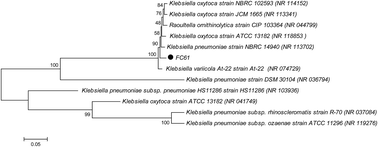
Hundreds of bacteria were analyzed in this study, only one effective isolate that reduced 80% Fe(III) was isolated, named as FC61. Approximately 1460 bp of 16S rRNA sequences were obtained via PCR and sequencing. A phylogenetic tree was reconstructed based on the 16S rRNA gene sequence of the isolate and some other phylogenetically related strains (Fig. 1). A phylogenetic tree was constructed based on the 16S rRNA gene sequence of the isolate and other related strains. Homology searches of the 16S rRNA gene sequence of strain FC61 in GenBank by BLAST revealed that the strain FC61 was most closely related to Klebsiella sp. At present, very few reports are available regarding iron-reducing by Klebsiella. The nucleotide sequence of strain FC61 was submitted to GenBank nucleotide sequence databases under the accession number KT860061.
 |
| | Fig. 1 The phylogenetic tree derived from neighbour-joining analysis of partial 16S rRNA sequences. | |
3.2. Iron-reduction with different Fe(III) and carbon sources
The effects of different Fe(III) sources were investigated. All of the initial Fe(III) were measured at about 30 mg L−1 in the medium (the data are not shown in the figure), which was 29.17 mg L−1 Fe(III) of iron oxidation, 30.21 mg L−1 Fe(III) of ferric chloride, 30.49 mg L−1 Fe(III) of ferric sulfate, 29.34 mg L−1 Fe(III) of Fe(III)-citrate and a carbon source of iron-reduction are shown in Fig. 2. As shown in Fig. 2a, the optimal Fe(III) source (Fe(III)-citrate) was obtained, it was at about the 3rd day, the iron reduction ratio was 95.09%, which was a peak corresponding to a 27.90 mg L−1 Fe(II) concentration. Compared to the other experimental groups, the concentration of reducing Fe(III) to Fe(II) had been increasing in seven days, however, which was far from the source of Fe(III)-citrate, seven days later the concentration of the other reduced Fe(III) in the experimental group was 9.83 mg L−1 (Fe2O3), 12.36 mg L−1 (FeCl3), and 16.89 mg L−1 (Fe2(SO4)3), corresponding to reduced Fe(III) of 33.70%, 40.91%, and 55.43%.
 |
| | Fig. 2 The effects of different (a) iron source and (b) carbon source on the iron-reduction efficiency. | |
The concentration of Fe(II) in the control group was changing very little. In the course of the study, the initial pH was adjusted to 7.0, and in the neutral condition Fe(III)-citrate was in a dissolved state, Fe2O3 was in a solid state and FeCl3 and Fe2(SO4)3 were easily hydrolyzed to solid Fe(OH)3.18 As the secondary ionization of sulfuric was incomplete, the secondary ionization of sulfuric K2 = 10−2, which was the equivalent of a strong acid.19 In the study, it was found that at the same conditions the degree of hydrolysis FeCl3 was much less than Fe2(SO4)3, thus the solid state of Fe(III) might be harmful to the process of reducing Fe(III) to Fe(II), and Fe(III)-citrate was selected as the optimal Fe(III) source in the subsequent study.
As shown in Fig. 2b, sodium bicarbonate, sodium acetate, sodium succinate, and glucose were selected as the carbon sources for evaluating the optimal carbon source (the initial total Fe(III) was measured to be 29.89 mg L−1). The results showed that the iron-reducing ratio reached its peak of 95.35% in glucose medium. Sodium bicarbonate and no carbon source were shown to be poor stimulants for iron-reduction, which were 39.28% and 37.50% after seven days, thus Klebsiella sp. FC61 could also utilize organic carbon to reduce Fe(III). Moreover, sodium acetate and sodium succinate were at the intermediate state, which were 50.02% and 64.77% after seven days. Comparing the structures of these four carbon sources, it was found that the greater the relative molecular mass, the better the iron-reducing efficiency.20 The complete oxidation of molecules with larger structures could obtain higher energy conversion rates.21 Therefore, a big molecular structure might be beneficial to provide enough energy for strain FC61 to reduce Fe(III). Thus, the optimal carbon source was glucose in this study.
3.3. The growth of strain FC61 with iron-reduction and ammonium removal
Iron-reduction and NH4+-N removal of strain FC61 were presented in Fig. 3, wherein the stable time of reducing Fe(III) and removing NH4+-N were at 32–40 h and 64–72 h, and the concentration ranged between 26.95–27.36 mg L−1 and 2.88–3.39 mg L−1, the average reduction and removal ratio of which were 89.64% and 75.79% (the initial total Fe(III) was measured 30.11 mg L−1), respectively. This corresponded well with the previous studies that the removal of NH4+-N was contributed to not only from the anaerobic ammonia oxidation reaction but also to the Fe(III) reduction.22 On the other hand, the OD600 value of strain FC61 increased significantly in 0–28 h without a lag phase (Fig. 3), which was the best phase for iron reduction. As in the growth process, iron-reducing bacteria would convert trivalent iron into divalent iron for its own growth, and the reduction of ferric to ferrous iron became an essential process for life.23 Moreover, low accumulation of nitrite was observed during the experiment, and the nitrate and nitrite concentrations reached a maximum value of 2.92 mg L−1 and 0.24 mg L−1, respectively. After 72 h, there were almost no nitrate and nitrite in the media (Fig. 3). At the same time, the value of pH had been decreasing at the first 28 h, especially in the 8 to 12 hours it decreased more obviously, and twenty-eight hours later, the value of pH remained in a stable state with a slight fluctuation (Fig. 3). This phenomenon was consistent with the decrease of pH in the growth process of most iron-reducing bacteria.24,25
 |
| | Fig. 3 The growth of strain FC61 and ammonium removal under anaerobic conditions. | |
According to the previous study of iron and nitrogen cycling in soil.26,27 The pathway of nitrogen removal in strain FC61 was proposed: part of nitrogen was assimilated into the intracellular material; part of nitrogen was reduced to gas products through simultaneous Fe(III)-reduction and NH4+-N removal.
| | |
NH4+ + 2H2O + 6Fe(III) → NO2− + 6Fe(II) + 8H+,
| (1) |
| | |
NH4+ + NO2− + (carbon source) + H+ → N2 + NO3− + C–N (carbonitrides) + H2O,
| (2) |
3.4. Iron-reduction and ammonium removal of strain FC61 under different conditions
3.4.1. Effect of pH. The growth of iron-reducing bacteria was favored at a wide range of pH values.28 The initial pH of the medium was set to 4.0, 5.0, 6.0, and 7.0 (Fig. 4a), and the initial total Fe(III) was measured 29.62 mg L−1. After four days of cultivation, the iron-reducing ratios were 36.56% (pH of 4.0), 78.09% (pH of 5.0), 91.40% (pH of 6.0) and 64.58% (pH of 7.0). Thus, after 4 d of cultivation, the maximum iron-reducing activity was observed at pH 6.0. These results correspond well with most of the previous findings that the maximum reducing rate of iron-reducing bacteria were under the weakly acidic conditions.29,30 In this study, strain FC61 showed good iron-reducing capability under weakly acidic conditions.
 |
| | Fig. 4 The effects of different (a) pH, (b) inoculation, (c) temperature and (d) C/N on the Fe(III) reduction. | |
On the other hand, strain FC61 performed efficient NH4+-N removal ability at initial pH of neutral or slightly acidic conditions. As shown in Fig. 5a, it was found that acidic (pH of 4.0) conditions were harmful to the NH4+-N removal ability of strain FC61, neutral (pH of 7.0) or slightly acidic (pH of 5.0 and 6.0) had a NH4+-N 50.12% removal efficiency (pH of 4.0), 75.02% (pH of 5.0), 78.44% (pH of 6.0), and 82.72% (pH of 7.0) (Fig. 5a). Neutral or slightly acidic conditions in the environment were beneficial to NH4+-N removal with more free ammonia (NH3) contained in the medium, and the substrate that was taken advantage of by anaerobic ammonium oxidation was NH3 and not NH4+-N.31,32 Therefore, taking Fe(III)-reduction and NH4+-N removal into consideration the optimal pH for strain FC61 was 6.0.
 |
| | Fig. 5 The effects of different (a) pH, (b) inoculation, (c) temperature and (d) C/N on the NH4+-N removal efficiency. | |
3.4.2. Effect of inoculation. As shown in Fig. 4b, different inoculations (1%, 5%, 10%, and 15% (v/v)) were selected to evaluate their suitability in supporting iron-reduction. The initial total Fe(III) was measured to be 30.22 mg L−1. It was found that the reduction of Fe(III) in the first day from the inoculation from 1% to 15%, it seemed that the more the inoculation, the better the iron-reduction. However, two days later the inoculation of 15%, reduction of Fe(III) increased more slowly than the other experimental groups, this behavior might be caused by the competition among a large number of bacteria.33 Four days later, the concentrations of Fe(II) were 19.19 mg L−1 (1%), 25.60 mg L−1 (5%), 26.84 mg L−1 (10%) and 21.54 mg L−1 (15%). The corresponding iron-reducing ratios were 63.50%, 84.71%, 88.82%, and 71.28%, respectively.Moreover, as shown in Fig. 5b, it could be concluded that the more strain FC61 was inoculated in the medium, the higher the ammonium removal efficiency after 4 days, 68.73% at inoculation of 1% (v/v), 78.61% at inoculation of 5% (v/v), 81.03% at inoculation of 10% (v/v), 84.25% at inoculation of 15% (v/v) were achieved. It might be part of the nitrogen source for the growth of the bacteria, another part of the nitrogen source for the nitrification of bacteria,34 and the more strain FC61 present in the medium, the more NH4+-N was used as the nitrogen source for its growth. The iron-reducing decreased at 15% (v/v) inoculation, as shown in Fig. 4b. Therefore, taking cost and iron-reducing efficiency into consideration, the optimal inoculation was 10% (v/v) for strain FC61.
3.4.3. Effect of temperature. The iron-reducing process was sensitive to temperature variation, some strains were found to grow in the temperature range of 25–45 °C.35 As shown in Fig. 4c, the initial temperature of the medium was set to 20 °C, 25 °C, 30 °C and 35 °C. The initial total Fe(III) was measured to be 29.87 mg L−1. After four days of cultivation, the optimum temperature for iron-reducing was 30 °C. The concentration of Fe(II) were 19.21 mg L−1 (20 °C), 22.55 mg L−1 (25 °C), 26.12 mg L−1 (30 °C) and 24.12 mg L−1 (35 °C). A maximum iron-reducing ratio of 87.45% was obtained at 30 °C. As indicated in Fig. 4c, the high temperature of 35 °C did not cause an increase in iron-reduction, in fact the iron-reducing ratio decreased, which compared to the 30 °C temperature. The significant difference occurred might be due to high temperature and was harmful to the process of iron reducing, as high temperature could inhibit iron-reductase and effective iron reduction required an appropriate temperature.36These changes were similar to the removal of NH4+-N in Fig. 5c, which showed that the NH4+-N removal efficiency was increased as the temperature increased from 20 to 30 °C (74.48% at 20 °C, 83.65% at 25 °C 86.74% at 30 °C), and it was slightly decreased to 86.20% at 35 °C. This also might be due to the decrease of the enzyme activity of nitrification at a high temperatures.37 Therefore, the optimal temperature for strain FC61 in this study was 30 °C.
3.4.4. Effect of C/N ratio. This study the initial total Fe(III) was measured to be 30.43 mg L−1. In Fig. 4d, the effect of different C/N ratios on the iron-reducing process of strain FC61 is shown. After four days, the iron-reducing efficiency increased when the C/N ratio was increased from 2 (74.27%) to 6 (86.26%). However, when the ratio reached 8 there was almost no effect on the iron-reducing efficiency from the second day (57.61%) to the fourth (66.15%). This indicated that the growth of bacteria required a higher concentration of organic carbons, but too many organic carbons could cause the bacteria to enter a nutritional status, which was not advantageous to their own special abilities.38,39Moreover, as shown in Fig. 5d, the NH4+-N removal was not significantly different for C/N ratios between 2 and 6, all of which could reach a high level (>75%). When the C/N ratio was as high as 8, which was enough for the growth of bacteria,40 strain FC61 still was able to present an 82.85% ability for NH4+-N removal efficiency. These results suggest that the C/N ratio did not play an important role in the process of NH4+-N removal for strain FC61. Therefore, taking cost effectiveness and iron-reducing efficiency into consideration, the optimal C/N ratio was 6 in this study.
4. Conclusions
In this investigation, a new strain FC61 was isolated from an oligotrophic reservoir; it was preliminary identified as Klebsiella sp. Based on the analysis of its 16S rRNA gene sequence. The optimal Fe(III) source and carbon source were Fe(III)-citrate and glucose. Moreover, the optimum conditions with Fe(III)-reducing and NH4+-N removal efficiency of Klebsiella sp. FC61 were observed at pH of 6 (the ratios were 91.40% and 78.44%), inoculation of 10% (v/v) (the ratios were 88.82% and 81.03%), C/N ratio of 6 (the ratios were 87.45% and 86.74%) and temperature of 30 °C (the ratios were 86.26% and 82.21%), and it was the first time reported for simultaneous dual capability for both Fe(III)-reduction (about 90%) and NH4+-N removal (>75%). Therefore, the strain FC61 showed potential for future applications in water treatment.
Acknowledgements
This study was partly supported by the National Key Technology Research and Development Program of the Ministry of Science and Technology of the People's Republic China (No. 2012BAC04B02), Supported by Open Project of State Key Laboratory of Urban Water Resource and Environment, Harbin Institute of Technology (No. QA201518) and the Key Laboratory of the Education Department of Shan Xi Province (No. 12JS051).
References
- S. J. Kim, S. J. Park, I. T. Cha, D. Min, J. S. Kim, W. H. Chung, J. C. Chae, C. O. Jeon and S. K. Rhee, Metabolic versatility of toluene-degrading, iron-reducing bacteria in tidal flat sediment, characterized by stable isotope probing-based metagenomic analysis, Environ. Microbiol., 2014, 16, 189–204 CrossRef CAS PubMed.
- H. J. Li, J. J. Peng, A. W. Karrie and Y. J. Zhu, Phylogenetic diversity of Fe(III)-reducing microorganisms in rice paddy soil: enrichment cultures with different short-chain fatty acids as electron donors, J. Soils Sediments, 2011, 11, 1234–1242 CrossRef CAS.
- B. H. Gu, H. Yan, P. Zhou, D. B. Watson, M. Park and J. Istok, Natural humics impact uranium bioreduction and oxidation, Environ. Sci. Technol., 2005, 39, 5268–5275 CrossRef CAS PubMed.
- H. Y. Shin, N. Singhal and J. W. Park, Regeneration of iron for trichloroethylene reduction by Shewanella alga BrY, Chemosphere, 2007, 68, 1129–1134 CrossRef CAS PubMed.
- H. A. Videla and L. K. Herrera, Understanding microbiol corrosion inhibition. A comprehensive overview, Int. Biodeterior. Biodegrad., 2009, 63, 896–900 CrossRef CAS.
- D. R. Lovley, Fe(III) and Mn(IV) reduction, Environ. Microbe-Met. Interact., 2000, 3, 30 Search PubMed.
- C. Achtnich, F. Bak and R. Conrad, Competition for electron donors among nitrate reducers, ferric iron reducers, sulfate reducers, and methanogens in anoxic paddy soil, Biol. Fertil. Soils, 1995, 19, 65–72 CrossRef CAS.
- M. Vargas, M. Kashefi, E. L. Blunt-Harris and D. R. Lovley, Microbiological evidence for Fe(III) reduction on early earth, Nature, 1998, 395, 65–67 CrossRef CAS PubMed.
- M. Strous, J. A. Fuerst, E. H. Kramer, S. Logemann, G. Muyzer, D. P. Van, R. Webb, J. G. Kuenen and M. S. Jetten, Missing lithotroph identified as new planctomycete, Nature, 1999, 400, 446–449 CrossRef CAS PubMed.
- W. R. L. van der Star, M. J. van de Graaf, B. Kartal, C. Picioreanu, M. S. M. Jetten and M. C. M. Van Loosdrecht, Response of anaerobic ammonium-oxidizing bacteria to hydroxylamine, Appl. Environ. Microbiol., 2008, 74(14), 4417–4426 CrossRef CAS PubMed.
- K. Glaser, E. Hackl, E. Inselsbacher, J. Strauss, W. Wanek, S. Zechmeister-Boltenstern and A. Sessitsch, Dynamics of ammonia-oxidizing communities in barleyplanted bulk soil and rhizosphere following nitrate and ammonium fertilizer amendment, FEMS Microbiol. Ecol., 2010, 74, 575–591 CrossRef CAS PubMed.
- V. P. Stabnikov, S. T. L. Tay, D. K. Tay and V. N. Ivanov, Effect of iron hydroxide on phosphate removal during anaerobic digestion of activated sludge, Appl. Biochem. Microbiol., 2004, 40, 376–380 CrossRef CAS.
- B. K. Choi, D. C. Koh, K. Ha and S. H. Cheon, Effect of redox processes and solubility equilibria on the behavior of dissolved iron and manganese in groundwater from a riverine alluvial aquifer, Economic and Environmental Geology, 2007, 40, 29–45 Search PubMed.
- L. Y. Stein, D. M. T. La, T. J. Grundl and K. H. Nealson, Bacterial and archaeal populations associated with freshwater ferromanganous micronodules and sediments, Environ. Microbiol., 2002, 3, 10–18 CrossRef.
- M. Vera, A. Schippers and W. Sand, Progress in bioleaching: fundamentals and mechanisms of bacterial metal sulfide oxidation part A, Appl. Microbiol. Biotechnol., 2013, 97, 7529–7541 CrossRef CAS PubMed.
- J. Esthe, L. B. Sukla, N. Pradhan and S. Panda, Fe(III) reduction strategies of dissimilatory iron reducing bacteria, J. Chem. Eng., 2015, 32, 1–14 Search PubMed.
- Y. Gendel and O. Lahav, Accurate determination of Fe(II) concentrations in the presence of a very high soluble Fe(III) background, Appl. Geochem., 2008, 23, 2123–2129 CrossRef CAS.
- A. J. Easteal, R. Malhotra, E. P. Wiliam and L. A. Woolf, Intradiffusion and viscosity measurements in acidified iron(III) chloride solutions at 25 °C, J. Solution Chem., 1991, 20, 319–334 CrossRef CAS.
- R. O. L. Rachel, R. Lakshmanan and A. L. Joseph, What protein charging (and supercharging) reveal about the mechanism of electrospray ionization, J. Am. Soc. Mass Spectrom., 2014, 25, 1675–1693 CrossRef PubMed.
- Q. X. He, M. R. Guo, Y. M. Lin and Z. L. Chen, Fe(III) removal characteristics of dissimilatory iron reducing bacteria from Kaolin, Non-Met. Mines, 2009, 32, 3–16 CAS.
- J. T. Zhang, J. R. Ni and S. G. Zhou, Progress in research of microbial fuel cells based on Fe(III)-reducing bacteria, Chin. J. Appl. Environ. Biol., 2008, 4, 290–295 Search PubMed.
- W. Park, Y. K. Nam, M. J. Lee and T. H. Kim, Anaerobic ammonia-oxidation coupled with Fe3+ reduction by an anaerobic culture from a piggery wastewater acclimated to NH4+/Fe3+ medium, Biotechnol. Bioprocess Eng., 2009, 14, 680–685 CrossRef CAS.
- J. L. Pierre, M. Fontecave and R. R. Crichton, Chemistry for an essential biological process: the reduction of ferric iron, BioMetals, 2009, 15, 341–346 CrossRef.
- G. Catherine, B. Noureddine, V. Gilles and J. M. Mouchel, Influence of the iron-reducing bacteria on the release of heavy metals in anaerobic river sediment, Water, Air, Soil Pollut., 2010, 212, 123–139 CrossRef.
- J. F. Samuel, T. I. Burke, G. G. D. McMillan, W. X. Ding and I. S. Douglas, Population changes in a community of alkaliphilic iron-reducing bacteria due to changes in the electron acceptor: implications for bioremediation at alkaline Cr(VI)-contaminated sites, Water, Air, Soil Pollut., 2015, 226, 180 CrossRef PubMed.
- J. Clement, J. G. E. Shrestha and P. R. Jaffe, Ammonium oxidation coupled to dissimilatory reduction of iron under anaerobic conditions in wetland soils, Soil Biol. Biochem., 2005, 37, 2323–2328 CrossRef CAS.
- X. F. Huang, W. G. Li, D. Y. Zhang and W. Qin, Ammonium removal by a novel oligotrophic Acinetobacter sp. Y16 capable of heterotrophic nitrification-aerobic denitrification at low temperature, Bioresour. Technol., 2013, 146, 44–50 CrossRef CAS PubMed.
- V. C. Eduardo, H. C. Erasto, V. B. Crisanto, E. L. M. Joel, A. C. Ruth and L. B. José, Geosporobacter ferrireducens sp. nov., an anaerobic iron-reducing bacterium isolated from an oil-contaminated site, Plant Soil, 2015, 291, 263–273 Search PubMed.
- H. A. Barker, Amino acid degradation by anaerobic bacteria, Annu. Rev. Biochem., 1981, 50, 23–40 CrossRef CAS PubMed.
- J. Y. Yang, X. E. Yang, Z. L. He, T. Q. Li, J. L. Shentu and P. J. Stoffella, Effects of pH, organic acids, and inorganic ions on lead dissolution from soils, Environ. Poll., 2006, 143, 9–15 CrossRef CAS PubMed.
- G. Mevel and D. Prieur, Heterotrophic nitrification by a thermophilic Bacillus species as influenced by different culture conditions, Can. J. Microbiol., 2000, 46, 465–473 CrossRef CAS PubMed.
- Q. L. Zhang, Y. Liu, G. M. Ai, L. L. Miao, H. Y. Zheng and Z. P. Liu, The characteristics of a novel heterotrophic nitrification-aerobic denitrification bacterium, Bacillus methylotrophicus strain L7, Bioresour. Technol., 2012, 108, 35–44 CrossRef CAS PubMed.
- D. Hahn, M. J. C. Starrenburg and A. D. L. Akkermans, Growth increment of Alnus glutinosa upon dual inoculation with effective and ineffective Frankia strains, Plant Soil, 1990, 122, 121–127 CrossRef.
- C. Wan, X. Yang, D. J. Lee, M. Du, F. Wan and C. Chen, Aerobic denitrification by novel isolated strain using as nitrogen source, Bioresour. Technol., 2011, 102, 7244–7248 CrossRef CAS PubMed.
- H. J. Hong, S. J. Kim, U. G. Min, Y. J. Lee, S. G. Kim, M. Y. Jung, Y. S. Seo and S. K. Rhee, Geosporobacter ferrireducens sp. nov., an anaerobic iron-reducing
bacterium isolated from an oil-contaminated site, Antonie van Leeuwenhoek, 2015, 107, 971–977 CrossRef CAS PubMed.
- R. Zhao, H. M. Zhang, Y. F. Li, T. Jiang and F. L. Yang, Research of iron reduction and the iron reductase localization of anammox bacteria, Curr. Microbiol., 2014, 69, 880–887 CrossRef CAS PubMed.
- R. T. Kelly, I. D. S. Henriques and N. G. Love, Chemical inhibition of nitrification in activated sludge, Biotechnol. Bioeng., 2004, 85, 683–694 CrossRef CAS PubMed.
- S. B. C. Schoemann, The role of iron in the bacterial degradation of organic matter derived from phaeocystis antarctica, Biogeochemistry, 2007, 83, 119–135 CrossRef.
- P. H. Dimberg and A. C. Bryhn, Predicting total nitrogen, total phosphorus, total organic carbon, dissolved oxygen and iron in deep waters of Swedish lakes, Environ. Model. Assess., 2015, 20, 411–423 CrossRef.
- J. F. Su, K. Zhang, T. L. Huang, G. Wen, L. Guo and S. F. Yang, Heterotrophic nitrification and aerobic denitrification at low nutrient conditions by a newly isolated bacterium, Acinetobacter sp. SYF26, Microbiology, 2015, 161, 829–837 CrossRef CAS PubMed.
|
| This journal is © The Royal Society of Chemistry 2016 |
Click here to see how this site uses Cookies. View our privacy policy here.