
Plasma-assisted electrolytic synthesis of In(OH)3 nanocubes for thermal transformation into In2O3 nanocubes with a controllable Sn content

Tae Hyung Kim, Nu Si A. Eom, Sung-Oong Kang* and Yong-Ho Choa*
Department of Fusion Chemical Engineering, Hanyang University, Ansan 426-791, Republic of Korea

Received 1st December 2015 , Accepted 9th February 2016

First published on 10th February 2016


Abstract

In addition to conventional wet-chemical methods for producing Sn-doped indium oxide (ITO) nanostructures, structural transformation from an ionic compound of indium hydroxide (In(OH)3) into indium oxide (In2O3) is a facile route for tailoring the dimensions, morphologies and compositions of In2O3 nanostructures. As a novel wet-chemical approach for the synthesis of In(OH)3 nanostructures, here we report a plasma-assisted electrolytic process where the In3+ and Sn4+ generated by plasma discharges on the surface of an In/Sn alloy anode hydroxylate, nucleate and grow to form single crystal In(OH)3 nanocubes. It was found that the In(OH)3 nanocubes reconstructively decomposed into small crystallites of bixbyite-type c-In2O3 with a diameter of ∼5–10 nm during the thermal transformation while the parent cube-shaped morphology of the In(OH)3 nanocubes remained unchanged. Compositional analysis revealed that the content of Sn in the final ITO nanocube product could be effectively controlled by the starting In/Sn ratio of the alloy anode. As a result, the doping-level of Sn significantly influenced the electrical conductivity of the ITO nanocubes with the optimal conductivity of 10.47 S cm−1 with a 15 wt% Sn content. The liquid-phase plasma technique is cost-effective and a continual process, and a high yield of 3.6 g hour−1 could be achieved in our simple lab-scale synthetic setup, suggesting great potential for industrial mass-production of high-quality ITO nanoparticles.

1. Introduction

Tin-doped indium oxide (Sn-doped In2O3, ITO) with low electrical resistivity and high optical transmittance has stood at the centre of transparent conductive oxides (TCOs) in a broad range of optoelectronic devices such as liquid crystal displays, organic light emitting diodes, sensors and photovoltaic cells.1–6 The most preferred technique for fabricating ITO films in industrial production lines is sputtering of ITO ceramic targets moulded and sintered from ITO nanoparticles. A number of wet-chemical routes including microwave-assisted synthesis in ionic liquids, co-precipitation, sol–gel, solvothermal and hydrothermal processes have been used to prepare high-quality ITO nanoparticles.4,7–11 The optical transparency and electrical properties of ITO films are reported to depend on the densification and purity of ITO targets originating from the sizes, morphologies, atomic arrangements of metal cations, and intrinsic and introduced defects in ITO nanoparticles.1,12,13 As an effective route to control the morphologies and compositions of ITO nanostructures, indium hydroxide (In(OH)3) nanostructures prepared through wet-chemical methods have been thermally transformed into ITO nanostructures with controllable dimensions and compositions.14–20

In addition, plasma-enhanced electrolytic methods are another effective way for production of metal and metal oxide nanoparticles with variable compositions and morphologies.21,22 Firstly, a gas-phase microplasma process denoted as a “microplasma jet” produces metal and metal oxide nanoparticles through the dissociation of molecular precursors and the nucleation/growth of atomic constituents evaporated from metal wire sources, in which the vaporized atoms are reduced/oxidized to metal/metal oxide nanoparticles by different flowing plasma gas species.23–26 In parallel, colloidal metal nanoparticles could be produced using a solution plasma technique, which utilises plasma-assisted electrochemical reactions including anodic dissolution of a bulk metal electrode and cathodic reduction of metal cations using electrons from the glow discharges of microplasma.27–29

Motivated by the plasma electrolysis technique, here, we report the plasma-assisted electrolytic synthesis of single crystal In(OH)3 nanocubes to be thermally transformed into polycrystalline ITO nanocubes with a controllable content of Sn. The plasma-assisted electrochemical reaction and diffusion process in the aqueous electrolyte solution leads to the growth of an oxide layer on the surface of the In/Sn alloy anode. In parallel, the plasma discharges generated at the interface of the electrolyte/oxide layer dissolve the cations to be spontaneously hydroxylated in the electrolyte solution, which further nucleate and grow to form single crystal In(OH)3 nanocubes. Stemming from the plasma-enhanced thermo- and electrochemical reactions, a high-yield of 3.6 g hour−1 could be achieved in our simple lab-scale setup through a continuous process without the use of any organic reagents and/or solvents. The as-synthesized In(OH)3 nanocubes were thermally transformed into In2O3 nanocubes. A study on the phase composition, morphology and crystal structure discloses that the thermal transformation process reconstructively decomposes single crystal In(OH)3 nanocubes into polycrystalline In2O3 nanocubes composed of small grains. Analysis of the chemical compositions reveals that the content of Sn in the final ITO nanocubes could be effectively controlled by tuning the starting In/Sn ratio of the anode used in our plasma-assisted electrolytic system. As a consequence, the controllable doping-level of Sn was shown to be critical to the resultant electrical conductivity of the ITO nanocubes with the optimal value of 10.47 S cm−1 with the Sn content of 15 wt%.

2. Experimental

2.1. Preparation of In(OH)3 nanocubes and In2O3 nanocubes

We purchased the starting precursors of indium (In, purity 99.9999%, Nama Tech) and tin (Sn, purity 99.99%, MSC Co.) metal plate and used them without further purification. In and Sn metal plates with different Sn content values of 5, 15, 25 wt% were molded into the In/Sn alloy electrode with the dimensions of 10 mm × 50 mm × 2 mm by melting at 200 °C in an alumina tube followed by cooling down to room temperature. As illustrated in a scheme of the experimental system (Fig. S1 in the ESI), the In/Sn alloy and a round mesh of stainless steel (60 mesh, a diameter of 40 mm, a length of 100 mm) were used as the anode and the cathode, respectively. Both electrodes were immersed in a 1 liter glass cell containing aqueous potassium hydroxide (KOH) electrolyte solution, in which the In/Sn anode was placed at the center of the stainless steel cathode. An increasing DC pulse (100 Hz) liberated gas vapors on the surface of the In/Sn anode at the initial stage of the process and the plasma discharge could be ignited at the applied voltage of 420 V between the surface of the anode and the electrolyte. Once the plasma discharges were induced on the surface of the anode, the plasma-assisted electrolytic process was carried out at a constant voltage of 420 V for 30 min. As the plasma discharges formed on the surface of the anode, the color of the solution turned turbid indicating the growth of colloidal nanoparticles. The synthesized powder was collected through centrifuging at 13[thin space (1/6-em)]000 rpm, rinsed with distilled water and dried overnight at 80 °C. The as-obtained In(OH)3 nanocubes were heat-treated in air at 500 °C for 2 h to be thermally transformed into In2O3 nanocubes.

2.2. Characterization

The crystal phase, morphology and microstructure of the samples were characterized using a powder X-ray diffraction (XRD) instrument with Cu KR radiation (λ = 1.54178 Å, Rigaku D/MAX-2500/PC, Japan), field-emission scanning electron microscopy (SEM, Hitachi S-4800/Horiba EX-250, Japan) and transmission electron microscopy (TEM) at 200 kV using an Analytic Scanning TEM (JEM-2100F, Cs corrector, JEOL/CEOS, Japan). The as-synthesized ITO nanocubes were molded into a pellet with a diameter of 10 mm and the thickness of 2 mm by pressing under a pressure of 10 ton. The electrical conductivity was measured using a 4 point probe system (CMT-SR1000N, Advanced Instrument Technology, Rep. Korea). The chemical compositions of the products were analyzed using X-ray photoelectron microscopy (XPS, AXIS-NOVA, United Kingdom).

3. Results and discussion

The SEM image in Fig. 1a represents the typical morphology of the product prepared through the plasma-assisted electrochemical reaction in the 10 mM KOH electrolyte solution. The nanocubes have a regular shape of rectangular and square cubes with a mean edge length of 86 ± 19 nm measured from 300 nanocubes in the SEM images. Within a range of electrolyte concentration from 2.5 to 20 mM, the products have the same cube-shaped morphology while the size of the nanocubes increases with the electrolyte concentration (Fig. S2 in the ESI). At electrolyte concentrations higher than 25 mM, the In/Sn alloy anode melted down without producing colloidal nanocubes. The phase composition of the nanocubes was identified using powder X-ray diffraction (XRD). The XRD pattern of the In(OH)3 nanocubes in Fig. 1b indicates that all reflection peaks are indexed to a pure body-centered cubic (bcc) of In(OH)3 with a lattice constant of a = 0.797 nm (JCPDS card no. 85-1338) without any impurity and metal phase.
image file: c5ra25489b-f1.tif
Fig. 1 (a) The representative SEM image of the In(OH)3 nanocubes synthesized from the In/Sn alloy with a 15 wt% content of Sn. The plasma-assisted electrolytic process was conducted for 30 min in an electrolyte concentration of 10 mM. (b) The XRD pattern of the as-prepared In(OH)3 nanocubes with all diffractions indexed to body-centered cubic In(OH)3.

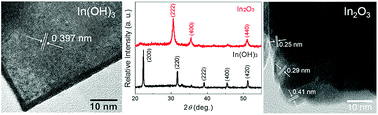
The microstructure of the In(OH)3 nanocubes was investigated using transmission electron microscopy (TEM). As depicted in Fig. 2, the low-magnification TEM image clearly shows the specific morphology of the In(OH)3 nanocubes and the high-resolution TEM (HRTEM) image shows the lattice fringes with an interlayer spacing of 0.397 nm, corresponding to the (220) plane of the bcc In(OH)3 crystal. The selected area electron diffraction (SAED) pattern in Fig. 2c displays the diffraction spots of the (220), (400) and (220) planes of bcc In(OH)3. The results of the XRD and TEM studies demonstrate the pure phase and single crystallinity of the In(OH)3 nanocubes synthesized in the plasma-assisted electrolytic process.


image file: c5ra25489b-f2.tif
Fig. 2 TEM study on the morphology and crystal structure of the In(OH)3 nanocubes prepared from the In/Sn alloy with a 15 wt% content of Sn. The plasma-assisted electrolytic process was conducted for 30 min in an electrolyte concentration of 10 mM. (a) The low-magnification TEM image presents the specific cube-shaped morphology of the product. (b) The HRTEM image of a single nanocube shows the well-aligned lattice fringes with an interplanar spacing of 0.397 nm corresponding to the (220) plane of bcc In(OH)3. (c) The SAED pattern shows the diffraction spots with an electron beam projected along the [001] direction.

The technique of ‘plasma electrolysis’ is a well-known surface engineering process for electrochemical modification and coating of the surfaces of metals. During plasma electrolytic reactions, plasma-assisted chemical interactions generate complex anti-corrosion compounds and mechanically robust surface layers which have high adhesion to the metal substrate, and spark or arc plasma discharges ionize gaseous species in the aqueous electrolyte solutions.30,31 Specifically, the plasma plays the role of a conducting fluid consisting of ions and electrons and induces high-voltage electrochemical reactions at the interface of the electrode and electrolyte.32 In our plasma-assisted electrolytic scheme, it is first expected at the initial stage of plasma electrolysis with a low applied voltage that the electric field near the anode would be much higher due to the relatively much larger surface area of the cathode to that of the anode. Such a high electric field in the vicinity of the anode derives a strong Joule heating near the anode electrode and thus leads to the formation of vapor sheaths (gas bubbles) on the anode surface by liberation of gas species from the aqueous electrolyte solution. Applying a voltage above the dielectric breakdown of gas vapor produces various active species of radicals and ions due to electron impact dissociation, excitation and ionization, which generates the plasma discharges at the interface of the gas vapor and the surface of the anode.33 Because the plasma discharges cause thermochemical reactions and diffusion processes at the surface of the anode, the activated species of oxygen radicals and oxygen ions would diffuse into the anode electrode. As a result, the oxide layer of the In2O3 phase is first expected to grow on the surface of the anode through the plasma discharge of gas vapor. The growth of a surface oxide layer is confirmed through cross-sectional SEM observations and XRD measurements of the surface layer on the anode. The cross-sectional SEM image of the In/Sn anode processed for 10 min at the electrolyte concentration of 10 mM presents a porous oxide layer on the anode surface with the thickness of approximately 5.2 μm (Fig. 3a). The crystal phase of the oxide layer identified using XRD (Fig. 3b) is indexed to body-centered cubic (bcc) In2O3 with a lattice constant of a = 1.01 nm (JCPDS card no. 89-4959). The In2O3 oxide layer grown on the surface of the In/Sn anode would concentrate the IR-drop at the interface of the electrolyte and oxide layer, which importantly induces plasma discharges on the surface of the anode. Since the plasma-assisted thermochemical reactions were found to occur at high instantaneous pressure and temperatures,30–33 the plasma discharges at the interface of the oxide layer and electrolyte may result in the dissolution of the oxide layer (Sn-doped In2O3 layer) into In3+, Sn4+ and O2− ions in the electrolyte.23 Once the cations of In3+ and Sn4+ dissolve into the aqueous KOH electrolyte solution, the isotropic growth of cube-shaped In(OH)3 initiated from the hydroxylation of cations appears to be reasonable without the use of growth-directing surfactants due to the intrinsic bcc structure of In(OH)3. The scenario for the growth mechanism of In(OH)3 nanocubes initiated from the dissolution of cations could be understood by the growth of alloy metal particles in the acidic electrolyte solution. In the same plasma-assisted electrolytic reaction processed with an acidic electrolyte of 10 mM H2SO4 for 30 min, the solution remains transparent instead of producing colloidal nanoparticles. Adding a reducing agent, 20 mM sodium borohydride (NaBH4) solution, into the as-processed solution precipitated the nanoparticles from the transparent electrolyte solution. The precipitates reduced from the acidic electrolyte were identified to be body-centered tetragonal In (JCPDS card no. 85-1409) with the morphology of polyhedrons (Fig. S3 and S4 in the ESI).


image file: c5ra25489b-f3.tif
Fig. 3 (a) The cross-sectional SEM image of the porous oxide layer grown on the surface of the In/Sn alloy anode with a 15 wt% content of Sn and processed in an electrolyte concentration of 10 mM for 10 min. (b) The phase of the porous oxide layer on the surface of the In/Sn alloy anode measured using XRD is identified as bixbyite body-centered cubic In2O3.

The growth of a specific cube-shaped morphology may be explained by the oriented attachment mechanism for the growth of In(OH)3 nano/microcubes in an aqueous solution; zero-dimensional nanoparticles first assemble to form one-dimensional nanorods and then the nanorods fuse in an oriented fashion to form three dimensional rectangular and square nanocubes.34,35 The growth behavior of In(OH)3 nanocubes based on the oriented growth mechanism is observed in the high-magnification SEM and TEM images, showing the small nanorods/cubes attach on the as-grown large-sized nanocubes (Fig. S5 in the ESI). In addition, the size dependence of nanocubes on the electrolyte concentration is also comprehensive; the plasma electrolytic reactions with higher concentrations of electrolyte induce higher densities of plasma discharge and the fast growth of the oxide layer due to the more active plasma-enhanced electrochemical reactions, producing higher concentrations of cations being dissolved into the electrolyte solution. Because higher cation concentrations mean higher degrees of supersaturation of cations, the fast nucleation and growth rates of In(OH)3 nanocubes increase the size of the nanocubes prepared with higher concentrations of electrolyte (Fig. S2 in the ESI). Through the plasma-assisted electrochemical reaction, single crystals of In(OH)3 nanocubes could be produced with a yield of 3.6 g hour−1 at the electrolyte concentration of 20 mM, which holds great potential for industrial mass-production. Here, the role of plasma in our synthetic system could be summarized as follows: (i) the plasma induced by the breakdown of gas vapor generates the plasma discharge on the surface of the anode and thus leads to the growth of a surface oxide layer on the anode electrode; (ii) because the plasma discharges directly on the surface layer generate high instantaneous pressures and temperatures (p ≈ 102 GPa and T ≈ 2 × 10⁴ °C) near the surface of the electrode,30 the plasma discharges on the surface oxide layer of the anode electrode decompose the as-grown surface oxide layer into metal ions in our plasma-assisted electrochemical cell; (iii) such high pressures and temperatures generated by the plasma discharges could be a driving factor for the as-dissolved cations to be spontaneously nucleated, crystallized and grown into single-crystal In(OH)3 nanocubes near the surface of the anode; (iv) the current density induced by the plasma discharges primarily depends on the concentration of the electrolyte solution and thus influences the degree of supersaturation, which play a critical role in determining the final size (edge length) of the In(OH)3 nanocubes.

The as-prepared In(OH)3 nanocubes were thermally transformed into In2O3 nanocubes at 500 °C for 2 h in air. As recognized in the SEM image in Fig. 4a, the specific cube-shaped morphology of the In(OH)3 precursor is retained in the In2O3 nanocube product while the mean edge lengths of the In2O3 nanocubes were found to slightly shrink to 79 ± 18 nm from that of the In(OH)3 precursor (86 ± 19 nm). All of the diffraction peaks in the XRD pattern of the product were indexed to bixbyite-type indium oxide (c-In2O3) with a lattice constant of a = 1.01 nm (JCPDS card no. 89-4959), which indicates a complete phase transition from bcc In(OH)3 through the thermal transformation. In addition, the XRD reflections in the In2O3 nanocubes are observed to be broader than those of the In(OH)3 precursor, signifying the formation of small crystallites in the In2O3 nanocubes (Fig. 4b).


image file: c5ra25489b-f4.tif
Fig. 4 (a) The SEM image of In2O3 nanocubes thermally transformed from the precursor of In(OH)3 nanocubes prepared from the In/Sn alloy with a 15 wt% content of Sn. The parent cube-shaped morphology of the In(OH)3 nanocubes is observed as being retained during the thermal transformation step. (b) The XRD pattern of the as-prepared nanocubes is indexed to the bixbyite body-centered cubic In2O3.

The crystalline structure of the In2O3 nanocubes was explored through a TEM study. As depicted in the low-magnification TEM image (Fig. 5a), the specific rectangular and square cube morphology of the In(OH)3 precursor is inherited to the In2O3 nanocubes during the thermal transformation. However, the crystalline structure investigated using HRTEM (Fig. 5b) illustrates that the In2O3 nanocubes consist of randomly oriented crystallites with diameters of approximately 5–10 nm, presenting lattice spacings of 0.25, 0.29 and 0.41 nm corresponding to the (211), (222) and (310) planes of bcc In2O3, respectively. Such a polycrystalline nature of the In2O3 nanocubes is further confirmed by the SAED pattern with strong ring patterns of the (222), (310) and (440) planes of the bcc In2O3 phase (Fig. 5c). As a result, the single-crystalline nature of the In(OH)3 precursor was transformed into the small crystallites in the polycrystalline In2O3 nanocubes while the parent cube-shaped morphology of the In(OH)3 nanocubes remains unchanged. The morphological and crystalline features observed during the thermal transformation can be explained by the reconstructive decomposition growth, in which the structure of vertices-shared In–O octahedra in bcc In(OH)3 transforms into the vertices- and edge-shared octahedra in bcc In2O3. The structural transformation stems from breaking of the In–O bonds in In(OH)3 resulting in the removal of oxygen atoms from H2O molecules, from which nanosized single crystals of In(OH)3 thermally decompose into nanograins of In2O3 within the parent matrix of In(OH)3.36,37 The polycrystalline nature and the reduced volume fraction of In2O3 nanocubes composed of small grains provide evidence of the reconstructive decomposition model for the structural transformation.


image file: c5ra25489b-f5.tif
Fig. 5 (a) A low-magnification TEM image of In2O3 nanocubes thermally transformed from the precursor of In(OH)3 nanocubes synthesised from an In/Sn alloy with a 15 wt% content of Sn, depicting that the specific cube-shaped morphology of the precursor is inherited to the In2O3 nanocubes during the thermal transformation. (b) HRTEM image showing that the microstructure of the In2O3 nanocubes is composed of small grains with diameters of approximately 5–10 nm. (c) SAED pattern recorded on a single In2O3 nanocube displaying the strongly textured ring pattern of polycrystalline In2O3 nanocubes.

The chemical compositions and atomic ratios of In, Sn and O in the ITO nanocubes were analyzed using X-ray photoelectron spectroscopy (XPS). The Sn-content values of 5, 15 and 25 wt% were initially controlled through the starting In/Sn ratio in the In/Sn alloy anode. Fig. 6 displays high-resolution spectra of In 3d and Sn 3d of the core level consisting of a single doublet at binding energies of 451.8 eV for In 3d3/2, 444.2 eV for In 3d5/2, 494.7 eV for Sn 3d3/2 and 486.2 eV for Sn 3d5/2. Such XPS data on the In 3d and Sn 3d regions demonstrate that In and Sn were in the III and IV oxidation states without any metallic components.38 The atomic ratios of In/Sn obtained through an area calculation were 18.45, 5.77 and 3.15 for the nanocubes synthesized from the In/Sn alloy with Sn content values of 5, 15 and 25 wt%, respectively. From the atomic ratios of In/Sn, the doping-levels of Sn in the ITO nanocubes could be calculated to be 5.14, 14.78 and 24.23%, which are consistent with the starting content of Sn in the alloy anode. Hence, we may draw a conclusion that the doping-level of Sn in the ITO nanocubes could be effectively tailored by adjusting the initial In/Sn ratio of the starting In/Sn alloy electrode in our plasma-assisted electrolytic process and the following thermal transformation process. In addition to the intrinsic oxygen vacancies in In2O3, the doping of Sn atoms in ITO is critical in determining the resultant electrical conductivity where the Sn4+ ions substitute the In3+ ions in the In–O octahedra. As the Sn dopes into In2O3, free-electrons are released into the conduction band to balance extra-charges attributed to the additional positive charge of the Sn4+ cations so the electrical conductivity increases.39,40 Meanwhile, the doping of Sn beyond a certain doping-level decreases the electrical conductivity, ascribed to the formation of stable In–O related to the high Sn doping-levels.41–43 In the products prepared through our plasma-assisted electrolytic approach, the optimum electrical conductivity of 10.47 S cm−1 could be obtained in the ITO nanocubes incorporated with a Sn content of 15 wt%. In comparison, the electrical conductivities of products synthesized with the Sn content of 5 and 25 wt% were measured to be 1.07 × 10⁻⁴ S cm−1 and 5.88 S cm−1, respectively. It has been reported that doping of Sn into the In2O3 matrix at low concentrations mainly produces loosely bounded Sn–O defects that increase the carrier concentration and the electrical conductivity. On the contrary, high Sn concentrations additionally lead to the formation of strongly bound Sn2O4 complexes, which does not appreciably contribute to the electrical conductivity of ITO thin films.44–46 Differently from the high Sn content and electrical conductivity in the ITO thin films, the doping-level of Sn atoms and the resultant electrical properties in the ITO nanoparticles have been limited by the low Sn solubility, inhomogeneous distribution of Sn dopants in the In2O3 matrix, and charge scattering at the grain boundaries between the ITO nanoparticles.7–9,39,41,45,47 As a result, the relatively higher electrical conductivity and the Sn content of the ITO nanoparticles synthesized in this work compared to those of conventional wet-chemical approaches could indicate a larger Sn solubility and a homogenous distribution of Sn dopants were attained in our plasma-assisted electrolysis process.


image file: c5ra25489b-f6.tif
Fig. 6 XPS investigations of ITO nanocubes processed with the In/Sn alloy electrode with the Sn content values of of 5, 15 and 25 wt%. (a) High-resolution In 3d spectrum of the core level and (b) high-resolution Sn 3d spectrum of the core level.

4. Conclusion

Through a plasma-assisted electrolytic process, we synthesized single crystal In(OH)3 nanocubes for thermal transformation into polycrystalline ITO nanocubes. Based on the plasma-enhanced thermo- and electrochemical reactions, the continual and high-yield production of single crystal In(OH)3 nanocubes could be attainable with the yield of 3.6 g hour−1 achieved from an anode electrode with an area of 5 cm2 in our simple lab-scale setup. A study on the phase composition, morphology and microstructure of the products disclosed that the single crystal In(OH)3 nanocube precursor reconstructively decomposes into small grains of c-In2O3 during the thermal transformation while maintaining the parent cube-shaped morphology of the In(OH)3 nanocubes. In addition, the doping-level of Sn in the final ITO nanocubes was investigated and found to be effectively controllable by adjusting the initial In/Sn ratio of the starting In/Sn alloy electrode used in our plasma-assisted electrolytic process, which further determines the resultant electrical conductivity of the ITO nanocubes, producing the optimal value of 10.47 S cm−1 when incorporated with the Sn content of 15 wt%. We believe that the synthetic route reported in this work would contribute to opening the way to industrial-scale mass-production of high-quality metal oxide nanoparticles.

Acknowledgements

This work was supported by the Industrial Strategic Technology Development Program (10045177, Development of Resistive Ceramic Thin Film using Solution Process and Low Temperature Thin Film Vacuum Getter), the Fundamental R&D Program for Core Technology of Materials (10050890, Chalcogenide nanostructure-based room-temperature (25 °C) H2 & H2S gas sensors with low power consumption) and the Human Resources Development program (No. 20154030200680) of the Korea Institute of Energy Technology Evaluation and Planning (KETEP) grant funded by the Korea government Ministry of Trade, Industry and Energy.

References

  1. C. G. Granqvist and A. Hultaker, Thin Solid Films, 2002, 411, 1–5 CrossRef CAS.
  2. T. Minami, Thin Solid Films, 2008, 516, 5822–5828 CrossRef CAS.
  3. Y. Yang, Q. Huang, A. W. Metz, J. Ni, S. Jin, T. J. Marks, M. E. Madsen, A. Divenere and S. T. Ho, Adv. Mater., 2004, 16, 321–324 CrossRef CAS.
  4. K. Soulantica, L. Erades, M. Sauvan, F. Senocq, A. Maisonnat and B. Chaudret, Adv. Funct. Mater., 2003, 13, 553–557 CrossRef CAS.
  5. A. Gurlo, N. Barsan, U. Weimar, M. Ivanovskaya, A. Taurino and P. Siciliano, Chem. Mater., 2003, 15, 4377–4383 CrossRef CAS.
  6. H. Schmidt, H. Flügge, T. Winkler, T. Bülow, T. Riedl and W. Kowalsky, Appl. Phys. Lett., 2009, 94, 243302 CrossRef.
  7. G. Bühler, D. Thölmann and C. Feldmann, Adv. Mater., 2007, 19, 2224–2227 CrossRef.
  8. J. L. Cuya Huaman, K. Tanoue, H. Miyamura, T. Matsumoto and B. Jeyadevan, New J. Chem., 2014, 38, 3421–3428 RSC.
  9. K. Y. Kim and S. B. Park, Mater. Chem. Phys., 2004, 86, 210–221 CrossRef CAS.
  10. C. P. Udawatte and K. Yanagisawa, J. Am. Ceram. Soc., 2001, 84, 251–253 CrossRef CAS.
  11. T. Sasaki, Y. Endo, M. Nakaya, K. Kanie, A. Nagatomi, K. Tanoue, R. Nakamura and A. Muramatsu, J. Mater. Chem., 2010, 20, 8153–8157 RSC.
  12. B. H. Lee, I. G. Kim, S. W. Cho and S. H. Lee, Thin Solid Films, 1997, 302, 25–30 CrossRef CAS.
  13. H. Liu, V. Avrutin, N. Izyumskaya, U. Ozgur and H. Morkoc, Superlattices Microstruct., 2010, 48, 458–484 CrossRef CAS.
  14. Y. Fang, X. Wen and S. Yang, Angew. Chem., Int. Ed., 2006, 45, 4655–4658 CrossRef CAS PubMed.
  15. B. Li, Y. Xie, M. Jing, G. Rong, Y. Tang and G. Zhang, Langmuir, 2006, 22, 9380–9385 CrossRef CAS PubMed.
  16. J. Du, M. Yang, S. N. Cha, D. Rhen, M. Kang and D. J. Kang, Cryst. Growth Des., 2008, 8, 2312–2317 CAS.
  17. J. Yang, C. Lin, Z. Wang and J. Lin, Inorg. Chem., 2006, 45, 8973–8979 CrossRef CAS PubMed.
  18. X. Liu, L. Zhou, R. Yi, N. Zhang, R. Shi, G. Gao and G. Qiu, J. Phys. Chem. C, 2008, 112, 18426–18430 CAS.
  19. S. Avivi, Y. Mastai and A. Gedanken, Chem. Mater., 2000, 12, 1229–1233 CrossRef CAS.
  20. S. E. Lin and W. C. J. Wei, J. Am. Ceram. Soc., 2006, 89, 527–533 CrossRef CAS.
  21. W. H. Chiang, C. Richmonds and R. M. Sankaran, Plasma Sources Sci. Technol., 2010, 19, 034011 CrossRef.
  22. D. Mariotti and R. M. Sankaran, J. Phys. D: Appl. Phys., 2010, 43, 323001 CrossRef.
  23. A. C. Bose, Y. Shimizu, D. Mariotti, T. Sasaki, K. Terashima and N. Koshizaki, Nanotechnology, 2006, 17, 5976–5982 CrossRef CAS.
  24. Y. Shimizu, K. Kawaguchi, T. Sasaki and N. Koshizaki, Appl. Phys. Lett., 2009, 94, 191504 CrossRef.
  25. Y. Shimizu, A. C. Bose, D. Mariotti, T. Sasaki, K. Kirihama, T. Suzuki, K. Terashima and N. Koshizaki, Jpn.J. Appl. Phys., 2006, 45, 10 Search PubMed.
  26. Y. Shimizu, T. Sasakia, A. C. Bose, K. Terashima and N. Koshizaki, Surf. Coat. Technol., 2006, 200, 4251–4256 CrossRef CAS.
  27. C. Richmonds and R. M. Sankaran, Appl. Phys. Lett., 2008, 93, 131501 CrossRef.
  28. W. G. Graham and K. R. Stalder, J. Phys. D: Appl. Phys., 2011, 44, 174037 CrossRef.
  29. G. Saito, S. Hosokai, M. Tsubota and T. Akiyama, J. Appl. Phys., 2011, 110, 023302 CrossRef.
  30. A. L. Yerokhin, X. Nie, A. Leyland, A. Matthews and S. J. Dowey, Surf. Coat. Technol., 1999, 122, 73–93 CrossRef CAS.
  31. A. L. Yerokhin, L. O. Snizhko, N. L. Gurevina, A. Leyland, A. Pilkington and A. Matthews, J. Phys. D: Appl. Phys., 2003, 36, 2110–2120 CrossRef CAS.
  32. X. F. Wang, J. J. Xu and H. Y. Chen, J. Phys. Chem. C, 2008, 112, 7151–7157 CAS.
  33. J. L. Brisset, D. Moussa, A. Doubla, E. Hnatiuc, B. Hnatiuc, G. K. Youbi, J. M. Herry, M. Naitali and M. N. B. Fontaine, Ind. Eng. Chem. Res., 2008, 47, 5761–5781 CrossRef CAS.
  34. S. T. Jean and Y. C. Her, CrystEngComm, 2011, 13, 2324–2330 RSC.
  35. R. L. Penn and J. F. Banfield, Science, 1998, 281, 969 CrossRef CAS PubMed.
  36. L. Schlicker, R. Riedel and A. Gurlo, Nanotechnology, 2009, 20, 495702 CrossRef CAS PubMed.
  37. G. Miehe, S. Lauterbach, H. J. Kleebe and A. Gurlo, J. Solid State Chem., 2013, 198, 364–370 CrossRef CAS.
  38. J. Ba, D. F. Rohlfing, A. Feldhoff, T. Brezesinski, I. Djerdj, M. Wark and M. Niederberger, Chem. Mater., 2006, 18, 2848–2854 CrossRef CAS.
  39. N. Nadaud, N. Lequeux and M. Nanot, J. Solid State Chem., 1998, 135, 140–148 CrossRef CAS.
  40. A. J. Freeman, K. R. Poeppelmeier, T. O. Mason, R. P. H. Chang and T. J. Marks, MRS Bull., 2000, 25, 45–51 CrossRef CAS.
  41. M. J. Alam and D. C. Cameron, Thin Solid Films, 2002, 420–421, 76–82 CrossRef CAS.
  42. G. B. Gonzalez, J. B. Cohen, J. H. Hwang, T. O. Mason, J. P. Hodges and J. D. Jorgensen, J. Appl. Phys., 2001, 89, 2550–2555 CrossRef CAS.
  43. G. B. Gonzalez, T. O. Mason, J. P. Quintana, O. Warschkow, D. E. Ellis, J. H. Hwang, J. P. Hodges and J. D. Jorgensen, J. Appl. Phys., 2004, 96, 3912–3920 CrossRef CAS.
  44. G. Franck and H. Köstlin, Appl. Phys. A, 1982, 27, 197 CrossRef.
  45. P. Parent, H. Dexpert and G. Tourillon, J. Electrochem. Soc., 1992, 139, 282 CrossRef CAS.
  46. M. Quaas, C. Eggs and H. Wulff, Thin Solid Films, 1998, 332, 277 CrossRef CAS.
  47. S. Seki, Y. Sawada and T. Nishide, Thin Solid Films, 2001, 388, 22–26 CrossRef CAS.

Footnote

Electronic supplementary information (ESI) available: SEM, TEM and XRD of the products. See DOI: 10.1039/c5ra25489b

This journal is © The Royal Society of Chemistry 2016
Click here to see how this site uses Cookies. View our privacy policy here.